
Latest Sectors News
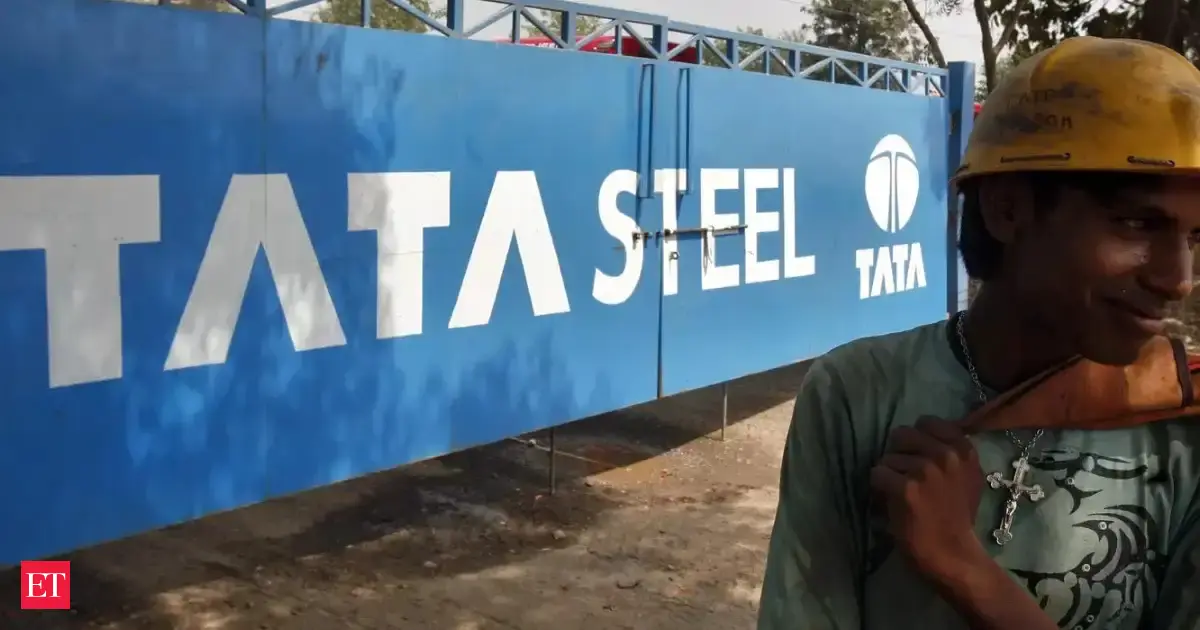
Tata Steel will invest eleven thousand crore rupees in Jharkhand. This investment is for developing advanced green steel technology at its Jamshedpur facility. Tata Motors will also invest in hydrogen trucks at the same location. The Tata Group will form an experts' panel to explore further investments in Jharkhand's development. View More
Tata Steel will invest Rs 11,000 crore in Jharkhand for developing advanced grade steel at its Jamsehdpur facility, Tata Group Chairman N Chandrasekaran said on Monday. The technology developed by the Tata Group for advanced steel production will benefit other steelmakers, too, he said. "Tata Steel will invest Rs 11,000 crore in Jharkhand for developing advanced green steel technology, pioneered by it with low carbon production," Chandrasekaran said, sharing the stage with CEO T V Narendran and Chief Minister Hemant Soren. Besides, Tata Motors will also invest in hydrogen trucks at the Jamshedpur facility, he said. "Tata Motors' investment in hydrogen trucks is strategically important, the scope of which is significant for domestic and global players," Chandrasekaran said. Live Events He also said the Tata Group will form an experts' panel to explore investment in various sectors for the development of Jharkhand, "as suggested by the chief minister". .Pbanner{display:flex;justify-content:space-between;align-items:center;background-color:#ec1c40;margin-top:20px;padding:5px 10px;border-radius:4px;color:#fff;line-height:10px;} .Pbannertext{display:flex;align-items:center;font-size:16px;font-weight:600;font-family:'Montserrat';} .Pbannertext img{height:20px;margin:0 6px} .Pbannerbutton a{display:flex;align-items:center;background-color:#fff;color:#ec1c40;text-decoration:none;font-weight:600;padding:4px 8px;border-radius:6px;font-size:15px;font-family:'Montserrat';} .Pbannerbutton img{height:20px;margin-right:6px} .Pbannerbutton a:hover{background-color:#f7f7f7} Add as a Reliable and Trusted News Source Add Now! (You can now subscribe to our Economic Times WhatsApp channel) (You can now subscribe to our Economic Times WhatsApp channel)

“Tata Steel will invest ?11,000 crore in Jharkhand to develop advanced low-carbon green steel technology,” said Chandrasekaran, alongside CEO T V Narendran and Chief Minister Hemant Soren View More
Rajputana Stainless will open its Rs 255 crore IPO on March 9 with a price band of Rs 116-122 per share. The issue includes a fresh issue and OFS. Proceeds will fund expansion and debt repayment. The company manufactures stainless steel products and reported steady revenue growth and improved profitability in FY25. View More
The Rs 255 crore IPO of Rajputana Stainless Limited is set to open for subscription on March 9, 2026, with the company fixing its price band at Rs 116 to Rs 122 per share. Investors can bid for a minimum lot size of 110 shares, which translates to a minimum investment of Rs 13,420 at the upper price band. The IPO comprises a fresh issue of 1.47 crore shares aggregating to Rs 178.73 crore and an offer for sale of 0.63 crore shares worth Rs 76.25 crore. For non-institutional investors, the investment thresholds are higher. Small NIIs (sNII) are required to apply for at least 15 lots (1,650 shares), amounting to Rs 2,01,300, while big NIIs (bNII) must apply for a minimum of 75 lots (8,250 shares), amounting to Rs 10,06,500 at the upper band. The issue will close on March 11, 2026, with allotment expected on March 12, 2026. The shares are proposed to be listed on the Bombay Stock Exchange and the National Stock Exchange of India on March 16, 2026. The issue is being managed by Nirbhay Capital Services Pvt. Ltd. as the book-running lead manager, and Kfin Technologies Limited is acting as the registrar. Live Events Also Read | Flexi-cap, mid-cap, small-cap and gold ETF. Is this a balanced mutual fund portfolio for young investors? Rajputana Stainless IPO - Use of Proceeds The company plans to utilise the proceeds primarily to strengthen and expand its operations. Around Rs 18.57 crore will be used to set up a new manufacturing facility for stainless steel seamless pipes, aimed at expanding its product portfolio. Additionally, Rs 98 crore will be allocated towards the repayment or prepayment of certain outstanding secured borrowings, with the remaining funds earmarked for general corporate purposes. About the Company Incorporated in 1991, Rajputana Stainless Limited is engaged in the manufacturing of long and flat stainless steel products. The company offers a wide range of products, including billets, forging ingots, rolled black and bright bars, flat and patti products, and other ancillary items across more than 80 grades. It primarily serves domestic customers through direct sales and traders, while also exporting to countries such as the UAE, USA, Turkey, Kuwait and Poland. Its products cater to industries including aerospace, oil and gas, defence, automotive, aviation, seamless pipes and precision engineering. The company operates a manufacturing facility spread over 35,196.98 square metres in Kalol, Gujarat, equipped with infrastructure such as an induction furnace, AOD, CCM, heat treatment facilities, a rolling mill and a bright bar shop. On the financial front, the company reported revenue of Rs 937.49 crore in FY25, marking a 2% increase from Rs 915.50 crore in FY24. Profit after tax rose by 26% to Rs 39.85 crore in FY25 compared to Rs 31.63 crore in the previous financial year. ( Disclaimer : Recommendations, suggestions, views and opinions given by the experts are their own. These do not represent the views of The Economic Times.) .Pbanner{display:flex;justify-content:space-between;align-items:center;background-color:#ec1c40;margin-top:20px;padding:5px 10px;border-radius:4px;color:#fff;line-height:10px;} .Pbannertext{display:flex;align-items:center;font-size:16px;font-weight:600;font-family:'Montserrat';} .Pbannertext img{height:20px;margin:0 6px} .Pbannerbutton a{display:flex;align-items:center;background-color:#fff;color:#ec1c40;text-decoration:none;font-weight:600;padding:4px 8px;border-radius:6px;font-size:15px;font-family:'Montserrat';} .Pbannerbutton img{height:20px;margin-right:6px} .Pbannerbutton a:hover{background-color:#f7f7f7} Add as a Reliable and Trusted News Source Add Now! (You can now subscribe to our ETMarkets WhatsApp channel) (You can now subscribe to our ETMarkets WhatsApp channel)

Key stocks like Fino Payments, Adani Green, and Tata Steel will be in focus on Monday amid diverse market developments. View More

Proterial, a Japanese supplier of advanced materials, is exploring India as a site to manufacture rare?earth magnets and cutting?edge EV magnets. With government incentives underpinning investment, the move could strengthen local production and supply?chain resilience. India is part of Proterial’s broader market assessment as it maps out a major manufacturing expansion. View More
Kolkata: Japanese metal maker Proterial is evaluating plans to manufacture its key products in India, including rare earth magnets and its newly developed electric vehicle magnets that do not require heavy rare earth elements, its global president and chief executive officer Sean M Stack said. In an interview with ET during his India visit on Friday, Stack said the company sees significant potential to localise production of several high-end materials in the country. These include superalloys used in aerospace, advanced tooling and moulding materials, components for power electronics, high-speed rail cables currently supplied in Japan and China, and a range of automotive components. "A number of our manufacturing plans, including magnets, are currently under evaluation in India and a few other markets as we assess where to deploy capital," Stack said. "We believe this is the right time to localise, given the transition and acceleration underway in the Indian economy. Incentive schemes at both the central and state levels give us confidence to invest and generate sustainable returns." Proterial has recently expanded its portfolio of heavy rare earth-free magnet technologies, aimed at enabling more sustainable and scalable production. Stack said local manufacturing of these magnets is under evaluation in India, particularly as the country lacks significant deposits of heavy rare earth elements. The company is currently supplying the product to an Indian customer from Japan. "Magnets have become a geopolitical issue, with companies and governments increasingly focused on economic, supply and national security," Stack said. "The Indian government has outlined clear parameters for building a domestic ecosystem. We already have customers here and are assessing the market opportunity and competitive landscape." Live Events Stack said the company is assessing India alongside a few other markets for these manufacturing investments, and no final decision has been taken. "There is a strong push from multiple governments to build supply-chain resilience. However, unless a company has the technology to develop magnets without heavy rare earth elements, it cannot meaningfully decouple from China-linked supply chain risks," he said. Meanwhile, Proterial India, formerly Hitachi Metals India, is setting up the country's first domestic amorphous electrical steel manufacturing facility in Andhra Pradesh . At present, a significant portion of electrical steel used in transformers is imported. .Pbanner{display:flex;justify-content:space-between;align-items:center;background-color:#ec1c40;margin-top:20px;padding:5px 10px;border-radius:4px;color:#fff;line-height:10px;} .Pbannertext{display:flex;align-items:center;font-size:16px;font-weight:600;font-family:'Montserrat';} .Pbannertext img{height:20px;margin:0 6px} .Pbannerbutton a{display:flex;align-items:center;background-color:#fff;color:#ec1c40;text-decoration:none;font-weight:600;padding:4px 8px;border-radius:6px;font-size:15px;font-family:'Montserrat';} .Pbannerbutton img{height:20px;margin-right:6px} .Pbannerbutton a:hover{background-color:#f7f7f7} Add as a Reliable and Trusted News Source Add Now! (You can now subscribe to our Economic Times WhatsApp channel) (You can now subscribe to our Economic Times WhatsApp channel)
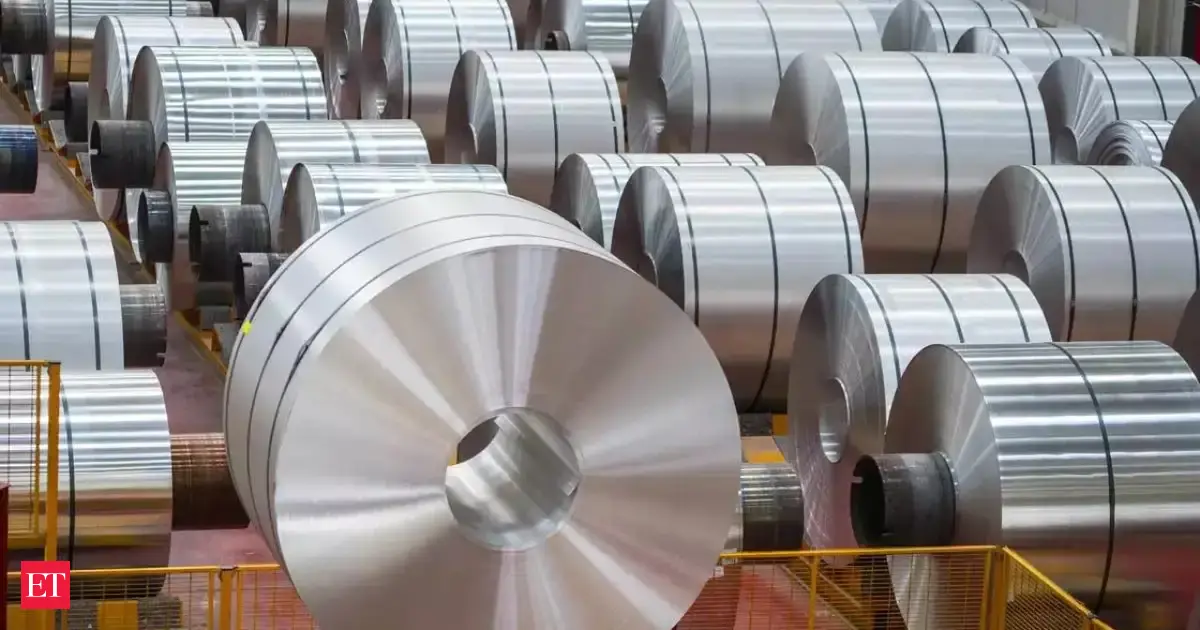
Spread across 115 acres in Kalinganagar, the newly-acquired facility consists of four furnaces capable of producing 100,000 tonnes per annum (tpa) annually which will further increase to 150,000 tpa when thepartially built fifth furnace is commissioned in approximately one year, IMFA said in a statement. View More
New Delhi: Indian Metals & Ferro Alloys has completed the acquisition of a ferrochrome plant in Odisha from Tata Steel at a transaction cost of Rs 707.26 crore. Spread across 115 acres in Kalinganagar, the newly-acquired facility consists of four furnaces capable of producing 100,000 tonnes per annum (tpa) annually which will further increase to 150,000 tpa when thepartially built fifth furnace is commissioned in approximately one year, IMFA said in a statement. "The transaction is valued at Rs 707.26 crore comprising base consideration of Rs 610 crore along with GST and net working capital, and has been funded entirely from internal accruals," the company said. Bhubaneswar-headquartered Indian Metals & Ferro Alloys Ltd (IMFA) is India'slargest fully integrated producer of value-added ferro chrome. .Pbanner{display:flex;justify-content:space-between;align-items:center;background-color:#ec1c40;margin-top:20px;padding:5px 10px;border-radius:4px;color:#fff;line-height:10px;} .Pbannertext{display:flex;align-items:center;font-size:16px;font-weight:600;font-family:'Montserrat';} .Pbannertext img{height:20px;margin:0 6px} .Pbannerbutton a{display:flex;align-items:center;background-color:#fff;color:#ec1c40;text-decoration:none;font-weight:600;padding:4px 8px;border-radius:6px;font-size:15px;font-family:'Montserrat';} .Pbannerbutton img{height:20px;margin-right:6px} .Pbannerbutton a:hover{background-color:#f7f7f7} Add as a Reliable and Trusted News Source Add Now! (You can now subscribe to our Economic Times WhatsApp channel) (You can now subscribe to our Economic Times WhatsApp channel)

The system captures and stores high-temperature waste heat from the sintering process to efficiently warm process water View More

The industry readiness assessment, developed by CII’s Green Business Centre with support from Climate Catalyst, says a higher 37% mandate could create demand for up to 24mt of green steel by 2029-30. View More

The MNRE's new strategy aims to boost domestic production of wafers, ingots, and polysilicon, addressing gaps in previous incentive schemes. This move is crucial for India's ambitious green energy targets. View More
Schemes announced by the government, especially the Market Access Scheme is estimated to be a big enabler of Indian exports, says EEPC India Chairman. View More
New Delhi: Driven primarily by copper, iron & steel, and motor vehicles, India's engineering goods exports recorded a 10.4% year-on-year rise in January 2026 to US$10.40 billion even as shipments to the US recorded a decline during this period. Engineering goods exports to the US, India's top market, fell 6.8% year-on-year to US$1.51 billion in January 2026, as against US$1.62 billion in January 2025. Cumulatively, engineering goods exports from India grew by 4.52% year-on-year to US$101.13 billion during the April-January period of 2025-26, crossing the US$100 billion mark for the first time in the current fiscal. Commenting on January engineering export data, Pankaj Chadha, Chairman EEPC India, said, in a statement, "Favourable base was one of the major reasons behind the double-digit growth in January this year. Notably, Indian engineering exports also bounced back in most of the regions. This is very positive news, especially at a time when global trade is going through realignments pushed by changing geopolitics." He hoped that Indian engineering exports would continue to grow in the coming months and surpass US$120 billion in FY26. Live Events "The recent schemes announced by the government, especially the Market Access Scheme, are estimated to be a big enabler of Indian exports. This is crucial at a time when more Indian exporters are eager to participate in global exhibitions and exhibit their products to global markets," Chadha added. EEPC India has urged the government to reconsider its decision to reduce RoDTEP benefits by half, considering the ongoing challenges and uncertainties prevailing on the external front. As per the quick estimates, the share of engineering goods in total merchandise exports was recorded at an impressive 28.5% in January 2026. The share was recorded at 27% on a cumulative basis during the April-January period of 2025-26. Among the top 25 key markets for Indian engineering goods, shipments to as many as 19 countries recorded positive growth during Jan.,2026, while in the case of six countries, the growth was negative. Despite a decline in shipments to the US in January this year, it remained India's top market for engineering goods. Engineering goods exports to some of the major markets, such as the UAE, Saudi Arabia, Germany, the UK, Singapore, and China, registered impressive growth during this period. Engineering goods exports to the UAE went up 42.4% in January 2026 to US$871.48 million. In the case of Saudi Arabia, exports were up 33.3% at US$518.58 million. While engineering exports to Germany rose 23% year-on-year to US$443.49 million in January 2026, the UK saw 17.6% increase to US$408.91 million during this period. Engineering goods exports to China grew 26.7% to US$304.85 million. Apart from the US, the key countries that witnessed lower engineering goods shipments from India during the month of January this year included Mexico, France, Bangladesh, Turkey, and Thailand. Among the engineering panels that recorded impressive exports in January this year were copper, iron & steel, motor vehicles and ships, boats, and floating products and parts. Exports of copper and products jumped 52% year-on-year to US$346.9 million in January 2026. Iron & steel exports recorded 22% year-on-year growth to US$912 million during this period. Motor vehicle/cars exports rose 28% to US$876.9 million in January 2026, as against US$687 mil lion in January 2025. In January 2026, 28 of 34 engineering panels showed positive year-on-year growth. The six panels that witnessed a year-on-year decline in shipments during this period included nickel and its products, aircraft, spacecraft and parts, hand tools and cutting tools, and prime mica and products. Region-wise, North America and the European Union (EU) remained the top two exporting regions for Indian engineering goods in January this year. Also, export growth was recorded across all regions in January 2026, except North America, Sub-Saharan Africa (SSA), Latin America, and the CIS (Commonwealth of Independent States). In cumulative terms, the increase was noted in all regions barring WANA (West Asia-North Africa), Other Europe, and CIS. .Pbanner{display:flex;justify-content:space-between;align-items:center;background-color:#ec1c40;margin-top:20px;padding:5px 10px;border-radius:4px;color:#fff;line-height:10px;} .Pbannertext{display:flex;align-items:center;font-size:16px;font-weight:600;font-family:'Montserrat';} .Pbannertext img{height:20px;margin:0 6px} .Pbannerbutton a{display:flex;align-items:center;background-color:#fff;color:#ec1c40;text-decoration:none;font-weight:600;padding:4px 8px;border-radius:6px;font-size:15px;font-family:'Montserrat';} .Pbannerbutton img{height:20px;margin-right:6px} .Pbannerbutton a:hover{background-color:#f7f7f7} Add as a Reliable and Trusted News Source Add Now!