
Latest Sectors News

In his Sunday column for Investing Club subscribers, Jim Cramer explains how investors should navigate a continued surge in oil prices. View More
So, you are telling me that our continent is energy self-sufficient and yet, last week oil screamed higher faster than we have ever seen ? Or that all that new Permian Basin oil doesn't matter? Or that cars guzzle a lot less now than they did in previous oil shocks? Short term, the answer is, sadly, yes. It doesn't matter because our country is based on free enterprise. We are not a command economy. The president of the United States, even this president, cannot decide that Canada has to send all of its exports here. He cannot block the some 10 million barrels of crude and refined products we send overseas every day. If he did, theoretically we would be immune from supply shocks elsewhere. The "theoretically" stems from the possibility, one day, of having enough refinery capacity to match the type of oil we pull out of the ground and send internationally. Our refineries still need imported crude , too. We do not have a closed-loop oil market in this country. It is open looped. The U.S. oil standard, known as West Texas Intermediate crude , trades at a discount to global benchmark Brent crude . But our companies can sell at the higher world price if they want to, so the two are intertwined. We are not going to get our price to decouple unless the president bans all exports, and we put up refineries overnight that cater to the light sweet crude found in places like the prolific Permian. So, forget about energy independence when it comes to the oil price. What you see with the posted price every day is what you get. The U.S.-Iran war-fueled rally is not "phony" based on a giant short squeeze, although there is a lot of squeezing going on. But there is good news. The world can, over time, handle a closure of the Strait of Hormuz , a vital waterway for global crude supplies leaving the Persian Gulf. The world does have the spare capacity and the equipment to boost production rather quickly. But the producers can't flick a switch, and it's only been a week of war. That's why talk of $150 or even $200 barrel a day oil will be in the news over the next few weeks if this Middle East conflict continues. Steel yourself; the pessimists will have gravitas. Some of the talk of $150 to $200 will just be of the usual scare variety. I can see the parade of bears who will be on display with their glum faces and their sheen of expertise, a veritable firehose of negativity. The usual gang of never-to-be-defrocked charlatan "experts" who had a couple of good years and nothing more will shout negativity to the rooftops until their larynx's give out. Good for their flagging businesses, I figure. Why will their voices will resonate? Why won't they be refuted easily? Because of 2022, that's why. Consider what happened in late February and March 2022, when Russia invaded Ukraine . As soon as Russia moved on Ukraine, traders presumed that an oil embargo of Russia would remove some 7 million barrels a day from the world supply (including both oil and other petroleum products). That caused Brent crude to spike from about $95 a barrel to $139 in mere weeks . It took roughly six months for oil to return to pre-war prices as Russian oil seeped into the market and production ramped globally. Now that the Strait of Hormuz is effectively closed, it will remove double the amount of oil that traders feared we would lose in a Russian embargo. That's right. Last year, over 14 million barrels a day traveled through the Strait on average. Now it simply can't be brought to the market. It is stranded. Just gone. For now. So, it is reasonable to believe that if oil could spike from $90 to $139 in a few weeks in 2022 on a loss of 7 million barrels, it could go up a lot more on a loss of double that amount. That's why a price of $150 or $200 a barrel has to be considered possible. Or, at least, you will be hearing and reading about that range from commentators starting next week, and it will be within the realm. No one will scoff at these projections. They cannot be shot down because of what happened in 2022. Now, will it stay there? No one knows. It is as if something as predictable as the closure of the Strait was not thought about by President Donald Trump before the war started. It's not like he completely refilled the Strategic Petroleum Reserve. It's almost a little more than half filled, having been drained down by President Joe Biden to help stop the 2022 price surge. That gambit actually worked back then. It helped to slow the increase and ultimately blunt it. This president has downplayed the need to tap the SPR this time around. But when it comes to oil, ultimately, what goes up, must come down. That's because oil at $150 causes rapid demand destruction, followed by slow supply increases and, ultimately, a return to where we started. The operative term is "ultimately." We can't determine when that will be. Which means, to me at least, that without a plan, just using the 2022 scenario, we are going to be stuck with much higher prices, perhaps for as long as the next six months â the time it took for the market to calm after the Russian invasion of Ukraine â unless the Strait can be opened quickly. The 2022 paradigm was pretty nightmarish when you think about it. The S & P 500 fell about 25% from its January 2022 closing peak to its October closing low, brought on by both the spike in oil and a Federal Reserve rapidly hiking interest rates to squash surging inflation. The consumer price index got a s high as 9.1% in June 2022 , which President Trump says was the worst inflation in U.S. history, although it was the highest since 1981 . Counterfactual. Now we don't have the Covid supply constraints or a Fed that is about to jack up rates at a historic pace, which in 2022 included four straight supersized 75 basis point hikes . But oil at $150 to $200, for even a short period of time, could throw a lot of the world into a pretty severe economic slowdown. The U.S. economy is two-thirds service, one-third industrial. Still, those people who live in either of these two orbs will see prices go higher. Oddly, though, an oil spike like that, while inflationary, would reduce economic activity in this country and give Trump's Fed chair nominee , Kevin Warsh, cover to cut rates when he (likely) succeeds Chair Jerome Powell, whose term expires in May. Don't get all that bearish about stocks because of oil. Our market reacts to rate cuts more than any other stimulus. Still, I want you to be realistic. We had $60 a barrel prices when the world produced in the ballpark of 105 million barrels a day. If you take offline 14 million barrels a day from the closure of the Strait, there will be consequences that certainly boost oil well beyond the $100 we are facing now. Consider it a given. So, does it mean that we should be worried about something at least somewhat like 2022, maybe a big spike without a harsh Fed? It's possible, because it's not clear whether the White House can quickly resolve the Strait snarl. Energy Secretary Chris Wright said Sunday on Fox News that the U.S. is working to limit Iran's "ability to strike with missiles and drones, and that rate of attrition will increase in the coming days." He continued, "So we'll be cautious, we'll be careful, but energy will flow soon." We also hear about insurance , but no takers. We hear about the U.S. Navy being used to escort tankers through the Strait. But "opening" it doesn't necessarily mean that it will be used. Too fraught. Unless the Navy is going to pilot the oil tankers themselves, we have to presume we are going to $150 to $200, at least in terms of chatter â if not reality. But, like so many of the travails that have faced our markets over time, if you sell Monday based on this negative scenario that I have just traced, history says you will regret it. Go back to 2022 again. It would have been terrific to sidestep the decline in the S & P 500. You would have had to sell on day one of the Russian incursion in February and then get back in at the bottom â as if it's easy to know when that is in the moment. While not the official bottom of 2022, it turned out that June of that year was a good time to get in because that was pretty close to the lowest levels of the year. But how would you have known? There was no real sign of anything about to go right. Oil was still high. The Fed was still tightening. It would have taken a level of clairvoyance well beyond the ken of even the best traders with the best machines. Far better just to have ridden that one out, even with the Fed's dramatic moves in front of you. I think the same is true now. That's because the loss of those 14 million barrels has to be considered temporary no matter what. Oil will find its way into the market somehow at dramatically higher prices, both from the Mideast and from around the globe. It's a bad reason to sell stocks â even if it might be a good reason to expect a decline â simply because you will not be able to predict when the decline is over and the rally will resume. And if the pressure on stocks during the war is really just about the price of oil, then the rally should eventually resume. So what do you do? I think the main thing you can do is lose your fear of the $150 to $200 circes. They will do their best to scare you out. Think of it as their job. Your job, as I make clear in "How to Make Money in Any Market," is to stay in. You can raise some cash if you want, like we have done for the Club, but now that the market is basically oversold, according to my trusted S & P Short Range Oscillator , we are more interested in buying rather than selling. We recapped our week of trades in a piece Saturday for members. The thing you must not do is panic. My estimate of a 14 million barrel removal because of the Strait closure represents the maximum that can be taken off. That we could not see a few million barrels made up almost immediately by other countries simply can't be ruled out. So, once the oil market settles, the rip will be sold and oil will come back down. If you get out of the stock market, I can promise you that you will be left behind by the rally that comes from lower rates and lower oil. I know it is a big hump to peer over, especially as we deal with the fears that come from worries of a crisis in the multi-trillion private-credit market, something I hit in a recent Sunday think piece . But you must do so. No, it is not bullish to see oil go to $150 or $200. But the response to those market prices is bullish, so bullish even that to leave ahead of time is to risk missing out on the opening of the Strait, or the opening of the spigots worldwide, while rates are coming down. So, once again, steel yourself. Like so many other times since 1981, get ready for the sell-off that you can't really avoid without missing the move up in its aftermath. (See here for a full list of the stocks in Jim Cramer's Charitable Trust.) As a subscriber to the CNBC Investing Club with Jim Cramer, you will receive a trade alert before Jim makes a trade. Jim waits 45 minutes after sending a trade alert before buying or selling a stock in his charitable trust's portfolio. If Jim has talked about a stock on CNBC TV, he waits 72 hours after issuing the trade alert before executing the trade. THE ABOVE INVESTING CLUB INFORMATION IS SUBJECT TO OUR TERMS AND CONDITIONS AND PRIVACY POLICY , TOGETHER WITH OUR DISCLAIMER . NO FIDUCIARY OBLIGATION OR DUTY EXISTS, OR IS CREATED, BY VIRTUE OF YOUR RECEIPT OF ANY INFORMATION PROVIDED IN CONNECTION WITH THE INVESTING CLUB. NO SPECIFIC OUTCOME OR PROFIT IS GUARANTEED.
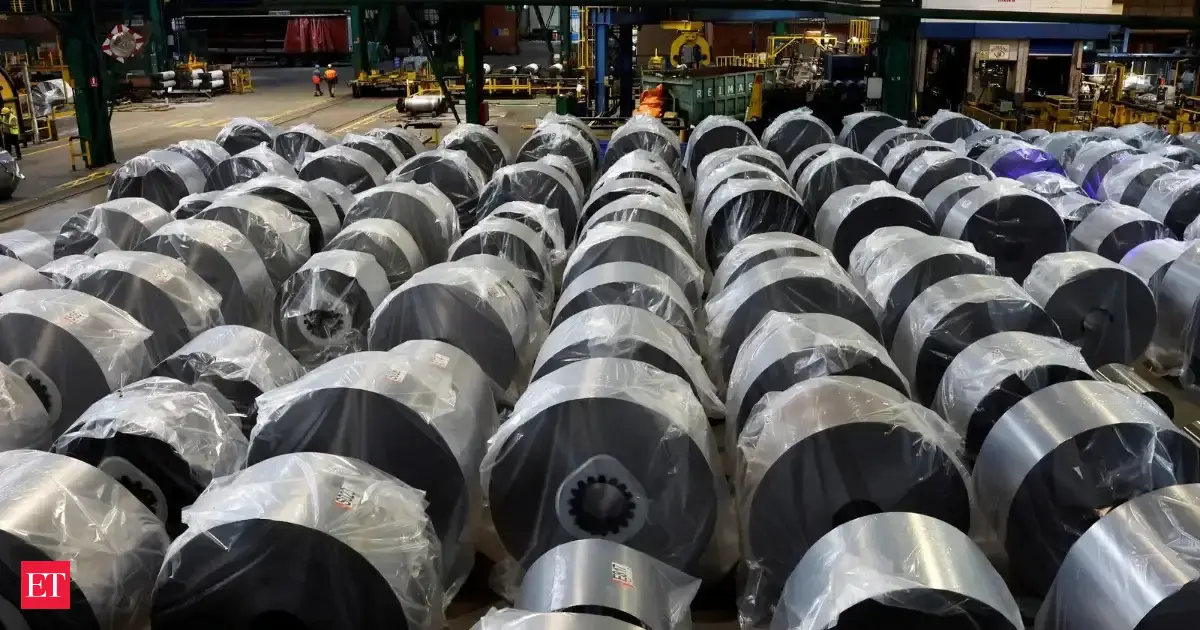
India's stainless steel sector is preparing for significant growth. Producers are expanding capacity to meet rising domestic demand. The industry is urging the government to improve raw material access and shield it from unfair competition. Key measures include designating chromium as a critical mineral and reducing import duties on essential inputs. View More
New Delhi: The domestic stainless steel industry is seeking government intervention to safeguard its interests as it prepares to scale up output by the end of the decade. According to a presentation by the Indian Stainless Steel Developers Association (ISSDA), improving raw material availability and protecting the sector from Chinese dumping are key priorities. "We are at an inflection point in Indian stainless steel growth story," Karan Pahuja, former president of ISSDA, told ET, adding that domestic consumption is growing 7-8% annually and exceeded 5 million tonnes (mt) last year. To keep pace with demand, producers are expanding capacity from about 7 mt to 11 mt. Subhrakant Panda, managing director at Indian Metals & Ferro Alloys Ltd (IMFA), said India's per capita consumption of about 3 kg "will easily double" over the next decade. IMFA is doubling its ferrochrome output to nearly 500,000 tonnes by FY28 and shifting its sales mix from 90% exports to a 60:40 split to "cater substantially to the domestic market where space is opened up". Sector facing global pressure from rising imports, trade barriers in western mkts India currently meets only 15-18% of its nickel requirement domestically. Live Events To secure the supply chain, ISSDA is urging the government to designate chromium as a Critical Mineral, allowing the centre to usher speedier operationalisation of auctioned mines. Pahuja also said " customs duty on imported inputs like scrap and ferro alloys should be made zero permanently" to keep costs competitive. The sector is also facing pressure globally from rising imports and trade barriers in Western markets. According to ISSDA, China has excess melting capacity of over 8 mt, much of which is being diverted to India. There are also instances of shipments being rerouted through countries like Vietnam to bypass existing safeguards. .Pbanner{display:flex;justify-content:space-between;align-items:center;background-color:#ec1c40;margin-top:20px;padding:5px 10px;border-radius:4px;color:#fff;line-height:10px;} .Pbannertext{display:flex;align-items:center;font-size:16px;font-weight:600;font-family:'Montserrat';} .Pbannertext img{height:20px;margin:0 6px} .Pbannerbutton a{display:flex;align-items:center;background-color:#fff;color:#ec1c40;text-decoration:none;font-weight:600;padding:4px 8px;border-radius:6px;font-size:15px;font-family:'Montserrat';} .Pbannerbutton img{height:20px;margin-right:6px} .Pbannerbutton a:hover{background-color:#f7f7f7} Add as a Reliable and Trusted News Source Add Now! (You can now subscribe to our Economic Times WhatsApp channel) (You can now subscribe to our Economic Times WhatsApp channel)

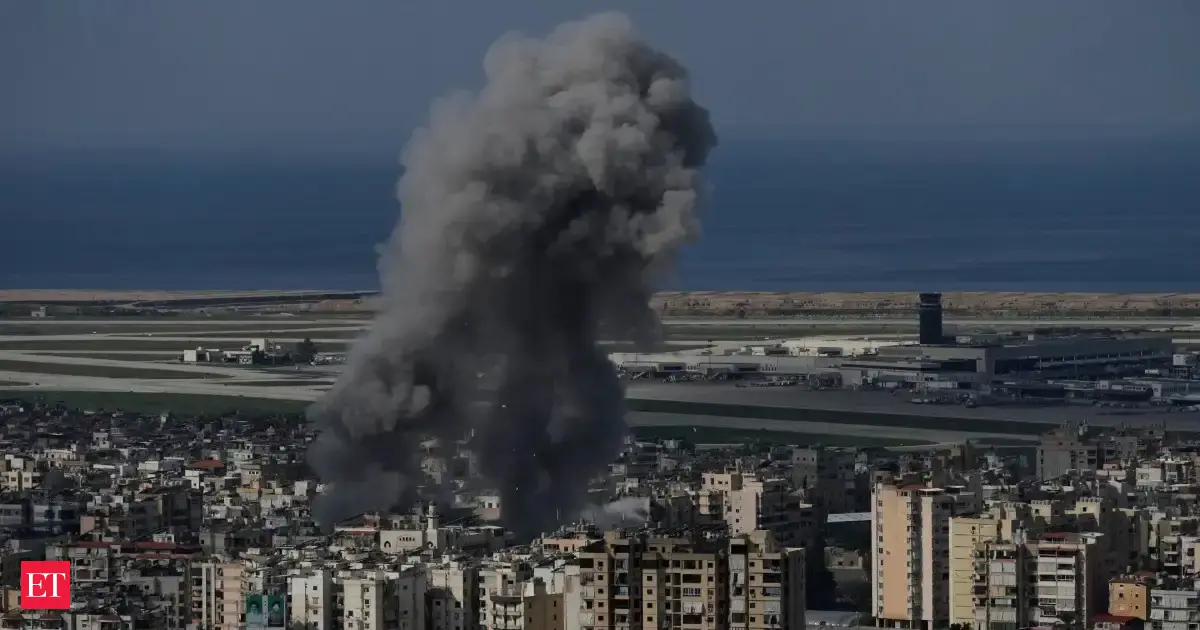
The global steel industry, including India, faces rising costs. Escalating Middle East tensions are pushing up fuel and freight rates. Crude oil and LNG prices are climbing, directly impacting steel commodity markets. This situation is expected to lead to sustained input cost inflation for steelmakers. View More
New Delhi: The global steel industry, including India, is expected to face multiple market-related issues in the coming days as the escalating crisis in the Middle East impacts fuels cost that has lead to increased freight rates, according to BigMint Research . Military tensions in the region are increasing as both Iran, and the US, along with Israel, continue to attack each other. BigMint analysts said crude oil, LNG, and freight costs are rising simultaneously, transmitting cost pressure directly into steel and steel-related commodity markets. From an average of USD 70 a barrel before the war, crude oil prices have risen to about USD 90/per barrel, an analyst said, adding that the cost is expected to continue to rise in the coming days. War has also impacted freight cost, which jumped almost 40 per cent in recent times. In the absence of insurance cover, marine operators are also offering freight at non-negotiable prices as per the availability of the vessel. Live Events On the impact of the US-Iran conflict on steel markets, including India, they said the industry would face sustained input cost inflation across coal, scrap and ore, with freight and energy reinforcing one another. "The players are expected to pass on the increased cost to customers. However, if market is not ready to absorb the cost, steel demand can also be affected," an expert said. Extended disruption could push prices of coking coal -- a key steel making raw material -- from major supplying markets such as Australia, Russia, and the US. Increased input cost, coupled with higher freight cost, will also put pressure on the margins, the analysts added. .Pbanner{display:flex;justify-content:space-between;align-items:center;background-color:#ec1c40;margin-top:20px;padding:5px 10px;border-radius:4px;color:#fff;line-height:10px;} .Pbannertext{display:flex;align-items:center;font-size:16px;font-weight:600;font-family:'Montserrat';} .Pbannertext img{height:20px;margin:0 6px} .Pbannerbutton a{display:flex;align-items:center;background-color:#fff;color:#ec1c40;text-decoration:none;font-weight:600;padding:4px 8px;border-radius:6px;font-size:15px;font-family:'Montserrat';} .Pbannerbutton img{height:20px;margin-right:6px} .Pbannerbutton a:hover{background-color:#f7f7f7} Add as a Reliable and Trusted News Source Add Now! (You can now subscribe to our Economic Times WhatsApp channel) (You can now subscribe to our Economic Times WhatsApp channel)

The 2026 midterm election will determine whether Democrats can win back majorities in both chambers of Congress, and check President Donald Trump's policies. View More
In this articleFollow your favorite stocksCREATE FREE ACCOUNT U.S. President Donald Trump points his finger as he arrives to deliver remarks on the U.S. economy and affordability at the Mount Airy Casino Resort in Mount Pocono, Pennsylvania, U.S. December 9, 2025. Jonathan Ernst | Reuters November's midterm elections were always supposed to be about affordability. Then, the bombs began falling in Iran. The expanding U.S. war in the Middle East threatens to scramble the cost-of-living narrative that has so far defined the contest for control of Congress. The election, now less than eight months away, will determine whether President Donald Trump retains his iron grip on Washington or spends his last two years in office fending off Democratic congressional majorities. Both parties have sought to capitalize on kitchen-table issues, as Americans struggle to keep up with the rising costs of ordinary goods and services. The war in Iran now threatens to exacerbate those concerns â and Democrats are seizing on the opportunity to pillory Trump and Republicans for beginning a conflict that could make life even more expensive for ordinary Americans. "Because there was no plan going in, I think there will be lots of things that are unforeseen consequences of this," Sen. Martin Heinrich, D-N.M, the top Democrat on the Senate Energy and Natural Resources Committee, said in an interview with CNBC. "I mean you saw how much gas has gone up in a day, oil futures have gone up, there are going to be a lot of knock-on effects." Read more CNBC politics coverageTrump vows executive order to 'fix' college sports NIL payments 'mess'Trump says defense CEOs agree to quadruple production of 'Exquisite Class' weaponryTrump tariffs: Customs and Border Protection tells judge it can't comply with refund orderAnalysis: Tough jobs report puts Trump's Iran war plans to the test Some of those knock-on effects have already been evident. U.S. crude oil has jumped past $90 per barrel, up from $67 the day before the war broke out. The global market index Brent has skyrocketed to more than $90 per barrel. That's caused gas prices to spike to about $3.38 per gallon, according to a national average from Gasbuddy, up more than 35 cents from the week before the war.Rep. Jared Huffman, D-Calif., the ranking member of the House Natural Resources Committee, was quick to point out in an interview that liquefied natural gas prices have also spiked. Though U.S. increases have been modest so far, global LNG supply has been squeezed by a shutdown in Qatar, one of the world's top LNG-producing countries. Natural gas is the largest electricity generator in the U.S., which is critical as the booming data center industry stresses the electric grid and increases utility costs. "I think what American families have been feeling most acutely for the past year-plus is their energy bills, their utility bills rising," Huffman said. "A big part of the utility bill increase is that natural gas is getting more and more expensive ... a lot of our effort has been pushed into LNG exports instead of strategies that would lower bills for American consumers. That problem is only more amplified by this conflict." Wrapping up the Iran war Some Republicans are banking on the conflict in Iran wrapping up quickly to mitigate economic damage. Sen. John Hoeven, R-N.D., a member of the Energy and Natural Resources Committee, said taming energy prices will depend on the U.S. destroying Iran's ballistic missiles, drones and nuclear capacity."Once we've done that, I think you'll see oil prices start back down because you won't have that interruption in the Arabian Gulf," Hoeven said. "But the real key is that we achieve our objectives and then you have oil continue to come out of the Gulf." "I'm talking relatively shorter term, I'm talking weeks, not months, and I think that's going to be the key in terms of oil prices," he said. But a quick operation in Iran is far from certain, and any extended conflict could create an election-year quagmire for Republicans, said Brittany Martinez, executive director at Principles First and a former aide to then-House Speaker Kevin McCarthy, R-Calif."If energy prices rise or markets stay volatile, affordability becomes a harder message for Republicans to carry cleanly," Martinez said. "Republicans will argue that projecting strength abroad prevents greater instability, while Democrats will try to link any sustained price increases to foreign policy decisions. The real question is whether this turns into a prolonged conflict that voters feel in their household budgets."Many believe the military intervention in Iran has the potential to drag on, including Sen. Andy Kim, D-N.J., a national security advisor in the Obama White House."This administration doesn't seem to think about this at all," Kim said when asked about a potential power vacuum keeping the U.S. in the region longer. "The intelligence community has done a whole range of assessments that very much keep me up at night, and the fact that this White House, I assume, read the same things I read and still went through with this, I just find that to be absolutely reckless." Iran offensive unpopular with voters Complicating matters more for the GOP is that the war in Iran is unpopular. A CNN poll released March 2 found that nearly 60% of those surveyed disapproved of the U.S. taking military action in Iran. That comes as Trump's economic approval remains underwater: A Fox News poll released March 4 found that 61% of voters disapproved of Trump's job on the economy. "We don't see it as an opportunity, but I do think it's our responsibility to tell the American people exactly the decision that Donald Trump is making," said House Democratic Caucus Chair Pete Aguilar, D-Calif. "He's sending billions of our tax dollars to the Middle East for another war while he's kicking people off of healthcare and ⦠eliminating nutrition programs."Rep. Zach Nunn, an Iowa Republican seeking reelection in a district Cook Political Report with Amy Walter has labeled a "toss up," said he is not concerned the war could drown out the GOP's affordability message. He pointed to the sprawling tax and spending bill signed into law last year, increased domestic energy production, and housing legislation that advanced out of the House last month as examples of things the party will use to show action on rising costs.War in the Middle East does not necessarily preclude Republicans from continuing to try to bring prices down, he argued."A more fulsome conversation would be, how do we make sure that we still deliver on affordability?" Nunn said in an interview. "I think this is the absolute right spot for us to be in." America First But Trump, the "America First" president who campaigned on ending the U.S.'s foreign entanglements, risks alienating his base with his Iran offensive.Democrats see the war as evidence of what they have been telling voters about Trump all along: he does not care about affordability."We have a president who has campaigned on ending forever wars, and he has jumped into war without justification or explanation to the American people," said Rep. Suzan DelBene, D-Wash., chair of the Democratic Congressional Campaign Committee."So this has been broken promise after broken promise," DelBene said. "This has been at the expense of the needs of everyday Americans. And I do think voters will hold them accountable in November." Choose CNBC as your preferred source on Google and never miss a moment from the most trusted name in business news.

India's primary market gears up for a busy week with five IPOs aiming to raise over Rs 6,578 crore, led by Raajmarg Infra Investment Trust's Rs 6,000 crore offering. Despite the influx, investor sentiment remains cautious due to recent weak listings and muted grey market premiums, signaling a challenging period for new issuances. View More
India's primary market will see a busy week ahead with five IPOs looking to raise more than Rs 6,578 crore, even as investor sentiment remains cautious after a string of weak listings. The upcoming IPOs include four mainboard offerings and one SME IPO, led by the Rs 6,000 crore infrastructure investment trust (InvIT) of Raajmarg Infra Investment Trust. The other mainboard IPOs include Innovision, Rajputana Stainless and Skyways Air Services, while SME player Apsis Aerocom will also open its public issue during the week. The fresh slate of IPOs comes at a time when the primary market is struggling to maintain momentum. In recent weeks, seven out of the last eight IPOs have delivered negative listing gains, reflecting broader weakness in equity markets and cooling investor appetite for new listings. Grey market premiums (GMPs), which often signal investor enthusiasm ahead of listings, have also been largely muted for the upcoming issues. Rajputana Stainless IPO Live Events The IPO calendar begins with Rajputana Stainless, which will open for subscription on March 9 and close on March 11. The stainless steel manufacturer is looking to raise Rs 255 crore through a mix of fresh issue and offer for sale. The IPO is priced in the band of Rs 116 to Rs 122 per share, valuing the company at around Rs 1,019 crore at the upper end. Rajputana Stainless manufactures a range of long and flat stainless steel products including billets, forging ingots and rolled bars used in sectors such as oil and gas, aerospace, automotive and precision engineering. The company operates a manufacturing facility in Gujarat and exports to markets including the US, UAE, Turkey and Poland. Innovision IPO The next issue will be from manpower services provider Innovision, which plans to raise about Rs 323 crore through its IPO opening March 10 and closing March 12. The IPO consists of a fresh issue worth Rs 255 crore and an offer for sale of Rs 68 crore. The price band has been fixed at Rs 521-548 per share. Founded in 2007, Innovision provides services such as private security, facility management and manpower sourcing. The company operates across 23 states and five union territories and serves over 180 clients across sectors including logistics, healthcare and BFSI. Raajmarg InvIT IPO The biggest offering next week will come from Raajmarg Infra Investment Trust, which plans to raise Rs 6,000 crore through its InvIT issue opening March 11 and closing March 13. Sponsored by the National Highways Authority of India (NHAI), the InvIT will own and operate a portfolio of five toll road assets developed under the government’s toll-operate-transfer (TOT) model. The assets include stretches such as Gorhar–Barwa Adda, Chilakaluripet–Vijayawada, Chennai Bypass, Chennai–Tada and Nelamangala–Tumkur, covering a total road length of about 260 km across several states. The InvIT is priced in the band of Rs 99-100 per unit and the proceeds will primarily be used to fund the concession value payable to NHAI. Skyways Air Services IPO Air freight forwarding and logistics company Skyways Air Services will open its IPO on March 18 and close on March 20, with the listing expected on March 25. The company is issuing 4.22 crore shares, including a fresh issue of 2.89 crore shares and an offer for sale of 1.33 crore shares. Skyways Air Services provides logistics solutions including air freight, ocean freight, trucking, warehousing and customs clearance. It has partnerships with major international airlines such as Air India Cargo, Turkish Airlines and Lufthansa, and operates a global logistics network through international alliances. The IPO price band and issue size in rupee terms are yet to be announced. SME IPO segment Alongside the mainboard issues, SME company Apsis Aerocom is expected to open its IPO on March 11, adding to the primary market activity during the week. SME offerings have remained relatively active in recent months, although they too have seen mixed listing performances amid volatile market conditions. Muted GMP signals cautious sentiment Despite the busy calendar, grey market premiums for most of the upcoming IPOs remain subdued, suggesting limited expectations of strong listing gains. The cautious tone follows a difficult period for the IPO market. Over the past few weeks, seven of the last eight companies that debuted on the exchanges have delivered negative listing returns, reflecting broader market volatility and concerns over valuations. Weak secondary market performance has also weighed on investor appetite. The benchmark Nifty index has remained under pressure this year, prompting many investors to adopt a more selective approach toward new listings. For issuers and bankers, the coming week will therefore be an important test of whether the IPO pipeline can regain momentum despite the recent run of disappointing debuts. ( Disclaimer : Recommendations, suggestions, views and opinions given by the experts are their own. These do not represent the views of Economic Times) .Pbanner{display:flex;justify-content:space-between;align-items:center;background-color:#ec1c40;margin-top:20px;padding:5px 10px;border-radius:4px;color:#fff;line-height:10px;} .Pbannertext{display:flex;align-items:center;font-size:16px;font-weight:600;font-family:'Montserrat';} .Pbannertext img{height:20px;margin:0 6px} .Pbannerbutton a{display:flex;align-items:center;background-color:#fff;color:#ec1c40;text-decoration:none;font-weight:600;padding:4px 8px;border-radius:6px;font-size:15px;font-family:'Montserrat';} .Pbannerbutton img{height:20px;margin-right:6px} .Pbannerbutton a:hover{background-color:#f7f7f7} Add as a Reliable and Trusted News Source Add Now! (You can now subscribe to our ETMarkets WhatsApp channel) (You can now subscribe to our ETMarkets WhatsApp channel)


Karnataka aims to collect Rs 3,000 crore from a new mining tax in 2026-27. The state government amended its mineral rights law to introduce this levy. However, the legislation requires central government approval. Union Steel Minister HD Kumaraswamy opposes the tax, citing potential impact on the steel sector. The Supreme Court ruling allows states to tax mineral-bearing land and rights. View More
Bengaluru: Chief Minister Siddaramaiah has pencilled in Rs 3,000 crore in revenues from a proposed mining levy for 2026-27, but the plan remains stalled as the legislation awaits approval from the Centre amid opposition from Union Steel Minister HD Kumaraswamy. The state government amended its mineral rights law in December 2024 to introduce a tax on mineral rights and mineral-bearing land. But the bill has been pending with the Union government for over a year. “The State Government will continue to engage with the Government of India for an early resolution in this regard,” Siddaramaiah said in his budget speech on Friday, while including ₹3,000 crore from the levy in projected revenues for the next fiscal. The proposed tax has faced strong resistance from Kumaraswamy, whose ministry oversees the steel sector. Governor Thawar Chand Gehlot returned the Karnataka (Mineral Rights and Mineral Bearing Land) Tax Bill, 2024, in January last year, to the government without assenting it, amid the controversy. Kumaraswamy had publicly criticised the move, arguing that additional taxation could undermine Prime Minister Narendra Modi ’s vision for expanding the steel sector. He also discussed concerns raised by mining companies with Union Law Minister Arjun Ram Meghwal after industry players protested the levy. Live Events The proposed tax follows a landmark Supreme Court ruling on August 14, 2024, which allowed states to impose taxes on mineral-bearing land and mineral rights with retrospective effect from April 1, 2005. The court, however, waived interest and penalties on dues prior to July 25, 2024, and allowed mining leaseholders to pay arrears in instalments over 12 years starting April 1, 2026. The judgment clarified that Parliament’s Mines and Minerals (Development and Regulation) Act, 1957 does not limit states’ powers to tax mineral rights. It also held that the value of minerals or mineral output could serve as the basis for such taxation. Karnataka estimates that the new levy could generate about Rs 4,208 crore annually from taxes on mineral rights and another Rs 506 crore from owners of mineral-bearing land. Under the proposed structure, the state plans to impose a tax of Rs 100 per tonne on bauxite, laterite ore, chromite, iron ore, magnesite and mineral concentrates; Rs 50 per tonne on copper ore and gold (both primary and by-product); Rs 25 per tonne on limestone; Rs 20 per tonne on lime shell; and Rs 40 per tonne on other unspecified major minerals. The draft legislation was cleared by the state cabinet chaired by Siddaramaiah in December 2024, following the Supreme Court’s 8–1 ruling on July 25, 2024, that overturned a 1989 judgment which had held that only the Centre could impose royalty on minerals and mineral-bearing land. .Pbanner{display:flex;justify-content:space-between;align-items:center;background-color:#ec1c40;margin-top:20px;padding:5px 10px;border-radius:4px;color:#fff;line-height:10px;} .Pbannertext{display:flex;align-items:center;font-size:16px;font-weight:600;font-family:'Montserrat';} .Pbannertext img{height:20px;margin:0 6px} .Pbannerbutton a{display:flex;align-items:center;background-color:#fff;color:#ec1c40;text-decoration:none;font-weight:600;padding:4px 8px;border-radius:6px;font-size:15px;font-family:'Montserrat';} .Pbannerbutton img{height:20px;margin-right:6px} .Pbannerbutton a:hover{background-color:#f7f7f7} Add as a Reliable and Trusted News Source Add Now! (You can now subscribe to our Economic Times WhatsApp channel) (You can now subscribe to our Economic Times WhatsApp channel)
India's Jindal Stainless anticipates potential near-term delays in steel shipments to the Middle East due to regional conflict. While the Middle East is a small export market, the company is monitoring the situation and prepared to mitigate supply chain disruptions. Availability of industrial gases and raw materials from the region is also a focus. View More
Jindal Stainless said on Friday there may be some delays in steel shipments to the Middle East in the near term due to the conflict in the region. The country's biggest stainless steel producer said the Middle East accounted for a small share of its export market but that the company remained committed to serving the region. "Given the escalating conditions, there may be some delays in shipment arrivals in the near term, due to extended transit timelines across certain international shipping routes and air spaces," Abhyuday Jindal , managing director of Jindal Stainless, told Reuters. He said it was premature to comment on any kind of surcharges. The company was closely monitoring the evolving geopolitical situation and was prepared to ensure minimal disruption to its supply chain and operations, Jindal said. Live Events "One focus area currently is the availability of certain industrial gases and raw materials, such as limestone and dolomite, sourced from the (Middle East)," Jindal added, saying that while the company maintained adequate inventory levels, they were prepared to tap other sourcing options to prevent any impact on production. Some steel companies are also bracing to pay higher prices for gas. Reuters reported on Thursday that India's Adani Total Gas has sharply raised prices for supplies to industrial clients, citing lower availability of gas due to the conflict in the Middle East. .Pbanner{display:flex;justify-content:space-between;align-items:center;background-color:#ec1c40;margin-top:20px;padding:5px 10px;border-radius:4px;color:#fff;line-height:10px;} .Pbannertext{display:flex;align-items:center;font-size:16px;font-weight:600;font-family:'Montserrat';} .Pbannertext img{height:20px;margin:0 6px} .Pbannerbutton a{display:flex;align-items:center;background-color:#fff;color:#ec1c40;text-decoration:none;font-weight:600;padding:4px 8px;border-radius:6px;font-size:15px;font-family:'Montserrat';} .Pbannerbutton img{height:20px;margin-right:6px} .Pbannerbutton a:hover{background-color:#f7f7f7} Add as a Reliable and Trusted News Source Add Now! (You can now subscribe to our Economic Times WhatsApp channel) (You can now subscribe to our Economic Times WhatsApp channel)

Aditya Birla Group suspended its iron ore business in 2022 and is returning ?to focus on ?the Chinese market View More