
Latest Sectors News

A BJP member brought up the “glorification” of anti-Sikh riots convict Sajjan Kumar to counter the Congress’s move to raise a matter that was not part of the agenda of “crimes against children”. Chugh’s remarks drew a sharp reaction from Congress MP Jai Prakash, who said the issue was not relevant at all. BJP has accused Congress MP Deepender Hooda of being laudatory in his tribute to Kumar. View More

Canadian trade negotiators left the U.S. last week after failing to clinch a trade deal that would stop President Donald Trump's new tariffs from taking effect. View More
watch nowVIDEO4:1504:15Canadian finance minister announces response to U.S. tariffsSquawk on the Street Canada on Tuesday announced retaliatory tariffs against the United States, matching "dollar for dollar" the 50% duties that President Donald Trump imposed over the weekend after a breakdown in trade talks.Ottawa's new tariffs encompass more than 700 U.S. goods and are worth about $20 billion, mirroring the size of Trump's latest import taxes on Canadian wine, cement, hockey sticks and more.The counter tariffs range from 15% to 50% and target a wide array of Canadian imports from the U.S., including dairy, seafood, appliances, wood and paper products, and clothes.Among the most significant are 50% tariffs on American steel and aluminum, doubling the current rate. The duties on metals and wood were chosen to respond to previously imposed U.S. tariffs on steel, aluminum, lumber and other products.The new tariffs are set to take effect Sept. 8. Canada also unveiled an additional $7.5 billion package to support businesses and workers being harmed by the U.S. tariffs."When the United States of America asked too much and offered too little, we made a choice. We chose Canada," said Canadian Finance Minister François-Philippe Champagne at a news conference Tuesday morning. watch nowVIDEO10:2910:29Canadian Minister LeBlanc on retaliating against Trump tariffs: âWeâre not waiting by the phoneâSquawk Box The new duties would have been averted if the two sides struck a trade deal before they took effect on Saturday. Trump had claimed earlier that week that a deal was all but complete â but Canada suspended negotiations on Friday evening, contending that the U.S. made unreasonable demands and "last-minute changes." The Trump administration has likewise accused Ottawa of blowing up the talks by seeking last-minute changes to the deal.Trump, asked in a call with CNN about Canada's claim that the U.S. made eleventh-hour demands, said, "That sounds like me."When pressed to clarify that he does not deny Canada's account of the collapse in trade talks, Trump said, "No, no, I don't deny anything," CNN reported Tuesday afternoon "So no, they have to pay a fair amount. And if they don't pay a fair amount, we won't make a deal. That's fine," Trump said, according to CNN.The Office of the U.S. Trade Representative did not immediately respond to CNBC's request for comment on CNN's report.The collapse of the negotiations has opened a bitter new chapter in the top allies' trade war, raising tensions that were already inflamed by Trump's heavy use of tariffs and inflammatory comments toward Canada. The new tit-for-tat tariffs could also exacerbate widespread concerns about high costs, as businesses warn they will cause major uncertainty and could make it prohibitively expensive for some sellers to trade across the border. Prime Minister Mark Carney, in a speech following the failed trade talks, acknowledged that the decision to retaliate "will raise costs and reduce choice for Canadians." Read more CNBC politics and policy coverageCanada unveils retaliatory tariffs on about $20B of U.S. goodsTrump targets Iran's trade lifelines â here are the countries most exposedMark Walter's TWG Global hires Goldman vet Markowitz as top lawyer amid probeTrump oil and gas stocks gained up to $15.5 million, Democrats sayTrump admin unveils anti-Iran global sanctions plan, signals China not exempt Carney, who became prime minister last year after previously leading the Bank of Canada, has expressed a desire to diversify his country's economy in order to reduce dependence on the U.S., which he says has "changed" under Trump.Trump has placed tariffs at the center of his agenda throughout his second term in the White House, though his use of the economic tool has faced some major legal setbacks and stoked heated pushback from other countries.Trump lashed out at Canada on Tuesday morning, suggesting on Truth Social that the U.S. would halt business with Ontario, and repeatedly floating the prospect of renaming Lake Ontario to "Lake America." watch nowVIDEO4:5304:53Why Trump slapped 50% tariffs on CanadaEconomy In more Truth Social posts, Trump accused Canada of targeting U.S. farmers, and complained about America's trade deficit with Canada â though that is primarily due to the U.S. making heavy purchases of Canadian crude oil."I deal with many countries, and Canada is easily the most difficult and unreasonable," Trump wrote in one post.Canada's trade minister, Dominic LeBlanc, told CNBC's "Squawk Box" earlier Tuesday morning that Ottawa did not want to abandon trade talks with the U.S."Our preference was to find a deal that benefits both countries," he said. "We still believe that's possible. But in the meantime, we're not waiting by the phone." Choose CNBC as your preferred source on Google and never miss a moment from the most trusted name in business news.
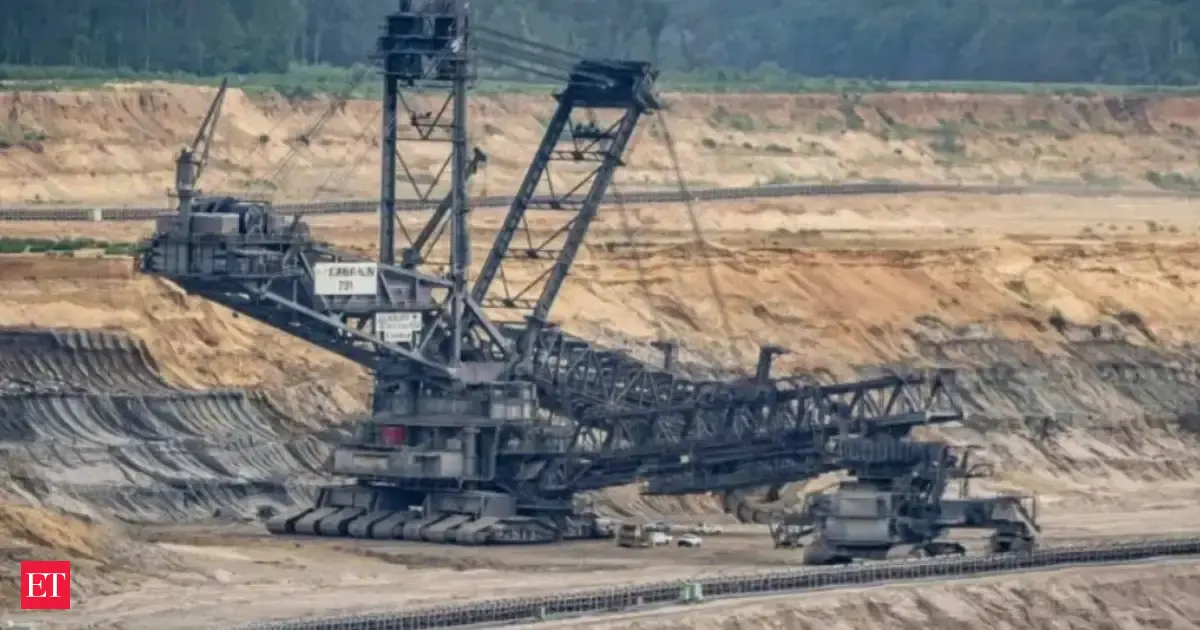
A new Mines and Minerals Act, 2026, aims to standardize mining taxation across India. This legislation seeks to bring uniformity and predictability to financial viability for mining activities. It addresses pending retrospective levies, providing greater certainty and confidence to the industry. The move follows a Supreme Court verdict allowing states to levy additional taxes. View More
New Delhi: The new Mines and Minerals (Development) Act, 2026, which came into effect over the weekend, seeks to bring greater uniformity and predictability in taxation for the mining sector, which is needed for the financial viability of mining activities, industry executives said. State governments collect about 14 types of taxes, charges, fees and other levies, including royalty, auction premium, dead rent, payments to district mineral foundations (DMFs), goods and services tax (GST) and transit fees. Some states have also introduced taxes on mineral-bearing lands, adding to the financial burden on mining companies. In certain cases, these additional taxes are as high as 20%. The latest amendment "provides greater clarity and uniformity in mineral taxation and levies. It also addresses pending retrospective levies, thereby providing greater certainty and confidence to the mining industry," Steel Authority of India Ltd (SAIL) said in a commentary on the change in law. Also read: Industry insists on assured offtake for coal gasification The move follows a 2024 Supreme Court verdict allowing states to levy additional taxes on mining operations in their territories. The verdict was followed by fresh mining taxes in Karnataka, Jharkhand and Tamil Nadu . Live Events By conservative estimates, public sector undertakings were facing an additional hit of ₹1.5 lakh crore because of the states' power to impose such levies. The new law is expected to directly resolve "long-standing operational bottlenecks by curbing non-uniform state taxes and unexpected cesses that burdened mineral extraction", according to Amitava Mukherjee , chairman and managing director of NMDC . .Pbanner{display:flex;justify-content:space-between;align-items:center;background-color:#ec1c40;margin-top:20px;padding:5px 10px;border-radius:4px;color:#fff;line-height:10px;width: 100%;box-sizing: border-box} .Pbannertext{display:flex;align-items:center;font-size:16px;font-weight:600;font-family:'Montserrat';} .Pbannertext img{height:20px;margin:0 6px} .Pbannerbutton a{display:flex;align-items:center;background-color:#fff;color:#ec1c40;text-decoration:none;font-weight:600;padding:4px 8px;border-radius:6px;font-size:15px;font-family:'Montserrat';} .Pbannerbutton img{height:20px;margin-right:6px} .Pbannerbutton a:hover{background-color:#f7f7f7} Add as a Reliable and Trusted News Source Add Now! (You can now subscribe to our Economic Times WhatsApp channel) (You can now subscribe to our Economic Times WhatsApp channel)


The demand was made for alleged excess extraction of 1.62 crore tonnes of mineral coal from the West Bokaro Colliery beyond permissible limits from FY01 to FY07 View More
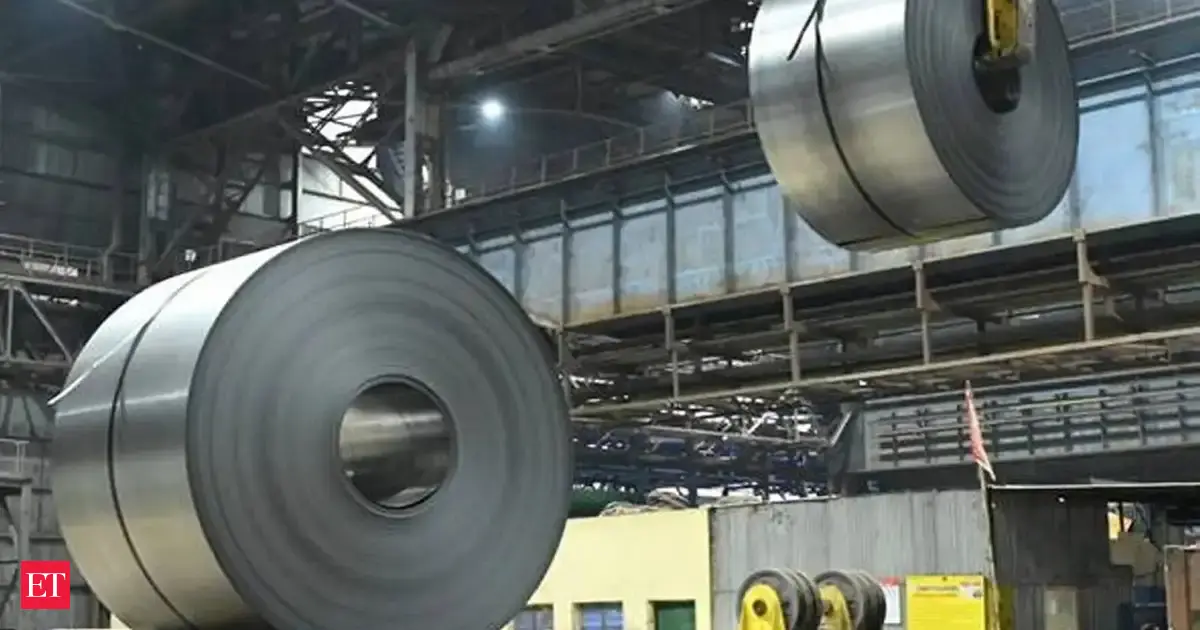
India's steel industry is likely to see a volume-led recovery in the second half of FY27, supported by lower input costs, easing maintenance disruptions and strong domestic demand, according to Yes Securities Institutional Equities. View More
New Delhi [India]: India's steel industry is likely to see a volume-led recovery in the second half of FY27, supported by lower input costs, easing maintenance disruptions and strong domestic demand, according to Yes Securities Institutional Equities . The brokerage said Indian steel producers continue to benefit from strong domestic fundamentals, with industry growth expected to reach up to 9 per cent in FY27. Also Read: Tata Steel gets interim relief in Rs 1,755 crore Jharkhand coal mining demand case Steel demand is also expected to improve further after the monsoon season. " H2FY27 recovery to be led by volumes and lower input costs Management commentary across steel producers remained constructive on the medium-term outlook despite expecting a seasonally softer Q2FY27," it said. Live Events The report further noted that capacity utilisation remains robust across steel producers, with major expansion projects, debottlenecking initiatives and downstream investments progressing as planned. However, it flagged - import trends, particularly from China, Japan and Russia - remain a key monitorable, although the sector has also continued to benefit from the 12 per cent safeguard duty. Also, there is a possibility of domestic steel realisations softening marginally in Q2FY27, but lower coking coal costs from August coupled with the normalisation of maintenance shutdowns and continued cost optimisation may support profitability and margins. Also Read: Piyush Goyal urges Japanese firms to source steel from India "Overall, the investment narrative remains centred on volume recovery in H2FY27, declining raw material costs, downstream value addition and disciplined capital allocation, while sustained domestic steel demand and execution of ongoing expansion projects will be the key determinants of earnings growth," the report noted. Apart from steel, the brokerage house remains constructive for "non-ferrous" players. "Management commentary across the non-ferrous space remains supported by a favourable outlook for aluminium, zinc and silver prices," it said. As per the report, the industry may face supply-side disruptions, including the closure of the Mozal smelter and ongoing geopolitical tensions, to keep the global aluminium market in deficit, supporting prices through the remainder of FY27. Overall, "supportive metal prices, structural cost advantages and capacity expansion will remain the key earnings drivers over the medium term," it noted. .Pbanner{display:flex;justify-content:space-between;align-items:center;background-color:#ec1c40;margin-top:20px;padding:5px 10px;border-radius:4px;color:#fff;line-height:10px;width: 100%;box-sizing: border-box} .Pbannertext{display:flex;align-items:center;font-size:16px;font-weight:600;font-family:'Montserrat';} .Pbannertext img{height:20px;margin:0 6px} .Pbannerbutton a{display:flex;align-items:center;background-color:#fff;color:#ec1c40;text-decoration:none;font-weight:600;padding:4px 8px;border-radius:6px;font-size:15px;font-family:'Montserrat';} .Pbannerbutton img{height:20px;margin-right:6px} .Pbannerbutton a:hover{background-color:#f7f7f7} Add as a Reliable and Trusted News Source Add Now! (You can now subscribe to our Economic Times WhatsApp channel) (You can now subscribe to our Economic Times WhatsApp channel)

The case relates to alleged excess extraction of coal from Tata Steel's West Bokaro Colliery in Jharkhand during FY2000-01 to FY2006-07 View More
Tata Steel received interim relief from a Rs 1,755 crore demand by Jharkhand. The Ministry of Coal's Revisional Authority will consider the company's challenge. Authorities are barred from taking coercive action against Tata Steel for now. This order protects the company while its dispute is pending. The underlying demand remains under review by the Revisional Authority. View More
New Delhi: Tata Steel has received interim relief in a dispute over a Rs 1,755 crore demand raised by Jharkhand government, with the Revisional Authority under the Ministry of Coal directing the state authorities not to take any coercive action against the company while its challenge to the demand is pending. In an exchange filing on Tuesday, Tata Steel said the Revisional Authority has also admitted its revision application challenging the demand for consideration. The case relates to alleged excess extraction of coal from Tata Steel's West Bokaro Colliery in Jharkhand during FY2000-01 to FY2006-07. The District Mining Office (DMO), Ramgarh, had issued a demand notice dated March 30, 2026, seeking an aggregate amount of Rs 1,755.10 crore from the company. Tata Steel received the notice on April 3. According to the filing, the DMO alleged that Tata Steel had extracted approximately 1.62 crore metric tonnes of coal beyond permissible limits at the West Bokaro Colliery during the seven-year period. The demand was raised on grounds similar to those noted by the Supreme Court in the Common Cause vs Union of India case. Live Events Tata Steel, however, disputed the demand and maintained that it "lacks justification and substantive basis". The company subsequently filed Revision Application before the Revisional Authority, Ministry of Coal, on April 24, challenging the demand notice. The State of Jharkhand, through its Secretary, Department of Mines and Geology, and the District Mining Officer, Ramgarh, are the respondents in the proceedings. The Revisional Authority heard Tata Steel's application on August 20, and the company received a copy of its order on August 24. "The Revision Application filed by Tata Steel Limited ('Applicant') has been admitted for consideration," the company said, citing the order. It further said the respondents have been directed "not to take any coercive steps against the Applicant pursuant to the impugned demand notices/letters, during the pendency of the present Revision Application." The order provides Tata Steel protection from enforcement action for now, but does not set aside the Rs 1,755 crore demand. The underlying dispute will remain before the Revisional Authority until it decides the company's challenge. The latest order therefore represents an interim development rather than a final decision in the case. .Pbanner{display:flex;justify-content:space-between;align-items:center;background-color:#ec1c40;margin-top:20px;padding:5px 10px;border-radius:4px;color:#fff;line-height:10px;width: 100%;box-sizing: border-box} .Pbannertext{display:flex;align-items:center;font-size:16px;font-weight:600;font-family:'Montserrat';} .Pbannertext img{height:20px;margin:0 6px} .Pbannerbutton a{display:flex;align-items:center;background-color:#fff;color:#ec1c40;text-decoration:none;font-weight:600;padding:4px 8px;border-radius:6px;font-size:15px;font-family:'Montserrat';} .Pbannerbutton img{height:20px;margin-right:6px} .Pbannerbutton a:hover{background-color:#f7f7f7} Add as a Reliable and Trusted News Source Add Now! (You can now subscribe to our Economic Times WhatsApp channel) (You can now subscribe to our Economic Times WhatsApp channel)

Markets are bracing for more tests this week, including Nvidia's earnings, an inflation reading, and the Fed's Jackson Hole symposium. View More
In this article.SPX.IXIC.DJI@LCO.1@LCO27FFollow your favorite stocksCREATE FREE ACCOUNT U.S. Treasury Secretary Scott Bessent speaks during a press conference at the Cash Room of the Treasury Department in Washington, D.C., on Aug. 24, 2026.Mehmet Eser | Anadolu | Getty Images Hello, this is Anniek Bao writing to you from Singapore. Welcome to another edition of CNBC's Daily Open.Two fights Washington has been building toward this year came to a head Monday. The Trump administration rolled out its toughest sanctions campaign yet against Iran and made clear China won't be spared, while the U.S.-Canada trade relationship deteriorated further as Washington threatened to double auto tariffs to 50%. Markets, meanwhile, are bracing for more tests this week: Nvidia's earnings on Wednesday, an inflation reading, and the Fed's Jackson Hole symposium.Bessent unveils Iran sanctions plan The Trump administration is threatening a forceful economic blow to force capitulation from Iran, which has long refused to bow to U.S. demands despite months of military hostilities and decades of sanctions. Treasury Secretary Scott Bessent threatened economic punishment against any country doing business with Iran as part of what he called an "economic D-Day" campaign to isolate the Islamic Republic. "We are launching an economic onslaught against Iran's financial connections around the globe," Bessent said at a press conference on Monday.The U.S. will start by sharing deadlines with individual countries to "shut down activities we have identified," Bessent said. "Any entity that facilitates money laundering on behalf of Iran will be removed from the U.S. dollar system," he said. "The clock just started ticking."U.S.-Canada trade war escalatesThe U.S.-Canada trade relationship deteriorated further Monday, with President Donald Trump vowing to double tariffs on Canadian autos, trucks, auto parts and steel to 50%, effective Jan. 1, 2027, following a breakdown in trade negotiations last week."Canada has been ripping off the United States of America for years," Trump wrote in a Truth Social post, accusing the longtime trading partner of hurting U.S. farmers through its own tariff policies.U.S. Trade Representative Jamieson Greer shifted the blame to Ottawa in an interview with CNBC on Monday. "They wanted more," Greer said, arguing that Canada's domestic politics derailed the deal that was close to completion. Canadian Prime Minister Mark Carney similarly accused the U.S. of upending the deal by proposing "last-minute changes" that were "unfair, uneconomic." Markets wobble into a big weekWall Street traders started the week on a downbeat note. The S&P 500 index fell 0.28%, while the Nasdaq Composite lost 0.76%, weighed down by chip stocks, while the Dow Jones Industrial Average bucked the trend, edging up 0.26%.Stock futures steadied as investors turned cautious ahead of Nvidia's earnings, which could set the tone for the AI trade heading into the fall.Traders will be keeping a close tab on inflation as well, with the personal consumption expenditure price index reading for July out on Wednesday. Investors have another date circled with Fed Chairman Kevin Warsh, who is taking the stage at Jackson Hole, Wyoming, on Friday. His remarks could send fresh ripples through both equities and Treasuries. Bessent eyes the Treasury's war chestBessent could tap the Treasury General Account â which holds close to $1 trillion â to help fund an expanded bond-buyback program, according to two senior Treasury officials. Using the TGA would provide the Treasury with considerable firepower to influence long-term bond yields. Treasury has already moved to expand its buyback operations, doubling the size of liquidity-support purchases in the 10- to 30-year sector â over the next quarter to at least $4 billion. The department made no mention of how it would fund the purchases, prompting speculations that it would do so by selling short-term bills. Groq racks to come onlineNvidia said the first computing racks built on technology from its $20 billion Groq deal, the Groq 3 LPX, will be operational later this year, with Nebius as the launch customer. In December, Nvidia bought assets from the AI chip startup for about $20 billion in its largest deal on record and hired Groq founder Jonathan Ross, president Sunny Madra and a group of engineers.The race to get Groq chips into customers' hands underscores the growing premium on low-latency inference, the speed that keeps AI agents feeling responsive, especially for coding tools.With Nvidia's earnings due Wednesday, investors will be listening for how much of that inference opportunity â and the Groq investment â shows up in the guidance. â Anniek Bao And finally... Here's what Jim Cramer says stock investors need to know about the bond marketCNBC's Jim Cramer said Monday investors can't ignore the bond market as stubborn inflation and surging corporate borrowing are keeping long-term rates elevated and pressuring stocks."Normally, I don't like to talk about bonds, because you don't want to hear about bonds," the "Mad Money" host said. "Unfortunately, it's very important now that long-term interest rates are on the rise."The 10-year Treasury yield has climbed from below 4% in February to nearly 4.7%, while the 30-year Treasury yield recently topped 5.3%, its highest level in nearly two decades. Concerns intensified earlier this month when a 30-year Treasury auction drew weaker demand than the prior month, despite elevated yields.â Alexa LoMonaco Choose CNBC as your preferred source on Google and never miss a moment from the most trusted name in business news.