
Latest Sectors News

President Donald Trump said the U.S. will raise tariffs on imports of cars, trucks and auto parts from Canada to 50% on Jan. 1, 2027. View More
watch nowVIDEO4:5304:53Why Trump slapped 50% tariffs on CanadaEconomy President Donald Trump on Monday said the U.S. will raise tariffs on imports of cars, trucks and auto parts from Canada to 50% on Jan. 1, 2027, following a breakdown in trade negotiations last week."Canada has been ripping off the United States of America for years," Trump wrote in a Truth Social post, accusing the longtime trading partner of hurting U.S. farmers through its own tariff policies. "Not sustainable, and NOT ANYMORE!" he wrote. "On January First, 2027, Tariffs on all Cars, Trucks, both large and small, Automotive Parts, and Steel, will be increased to 50%." watch nowVIDEO5:0105:01On three fronts weâre watching U.S. global leadership capability, says Atlantic Council's Fred KempeSquawk on the Street Trump returned to Truth Social later Monday to lash out at Ontario Premier Doug Ford, who threatened to escalate the U.S.-Canada trade war by cutting off America's access to electricity and critical minerals."Someone should get these clowns to 'fall in line' or, the consequences for Canada will be far WORSE!" Trump wrote, panning Ford as a "Flunky" of Canadian Prime Minister Mark Carney.Ford later replied, calling Trump a "bully" and a "dictator."Trump's latest tariff threat would double top-line U.S. duties on Canadian auto imports, which currently sit at 25%. Canada sought to lower those tariffs as part of a new trade deal with the U.S., which appeared to be inches from completion before falling apart Friday night.U.S. tariffs on Canadian steel imports are already at 50%.On Saturday, the U.S. imposed 50% tariffs on about $20 billion of Canadian goods, including wine, cement and hockey sticks. Those duties came in retaliation for alleged Canadian trade discrimination against U.S. cars, alcohol and dairy.They would have been averted if the two sides reached a trade deal, but Canada's negotiators left Washington empty-handed on Friday evening. The parties have blamed each other for trying to make unreasonable last-minute changes to their agreement."In the last hours, I think there were things that the Canadians just â you know, they wanted more," U.S. Trade Representative Jamieson Greer told CNBC's "Squawk Box" on Monday morning.Carney has vowed to retaliate "dollar for dollar" against the new U.S. tariffs.Trump, in his Truth Social post Monday, declared that Canada "will be treated like a State no longer!" He went on to attack Canada as being "among the worst Nations in the World to deal with" on trade and elsewhere."They feel entitled, and yet, WE DON'T NEED CANADA, THEY NEED US! They do 95% of their business with the U.S., with us, the exact opposite!" Trump wrote. Read more CNBC politics and policy coverageSupreme Court allows Trump to continue White House ballroom construction for nowHusted defends energy policy as GOP warns data centers put Ohio seat at riskTrump to allow import of 300,000 metric tons of ground beef without tariffTrump tariff deadline looms, Canada says resolving 'trade issues' with U.S.Trump touted a deal to avert new tariffs on Canada. Here's what we know so far The Canadian auto market is small compared with the U.S.: Fewer than 2 million new vehicles were sold there in 2025, versus more than 16 million sold in the U.S. Vehicles produced in Canada accounted for only 5.4%, or 861,000, of total sales in the U.S. last year, according to GlobalData.The Detroit automakers have grown smaller when it comes to vehicle assembly in Canada, while Japanese automakers Toyota and Honda have significantly grown production in recent years.Toyota and Honda represented 76.5% of Canada's vehicle production in 2025, and each of Toyota and Honda produced more vehicles in Canada than Ford, General Motors, and Stellantis combined, according to a leading trade organization representing non-Detroit automakers.Trump's mercurial tariff agenda has been a major source of uncertainty for automakers, whose supply chains were built on free trade between the countries. Automotive parts can cross borders several times in different forms before finally being installed in a new vehicle, potentially exposing them to multiple tariff charges. Choose CNBC as your preferred source on Google and never miss a moment from the most trusted name in business news.
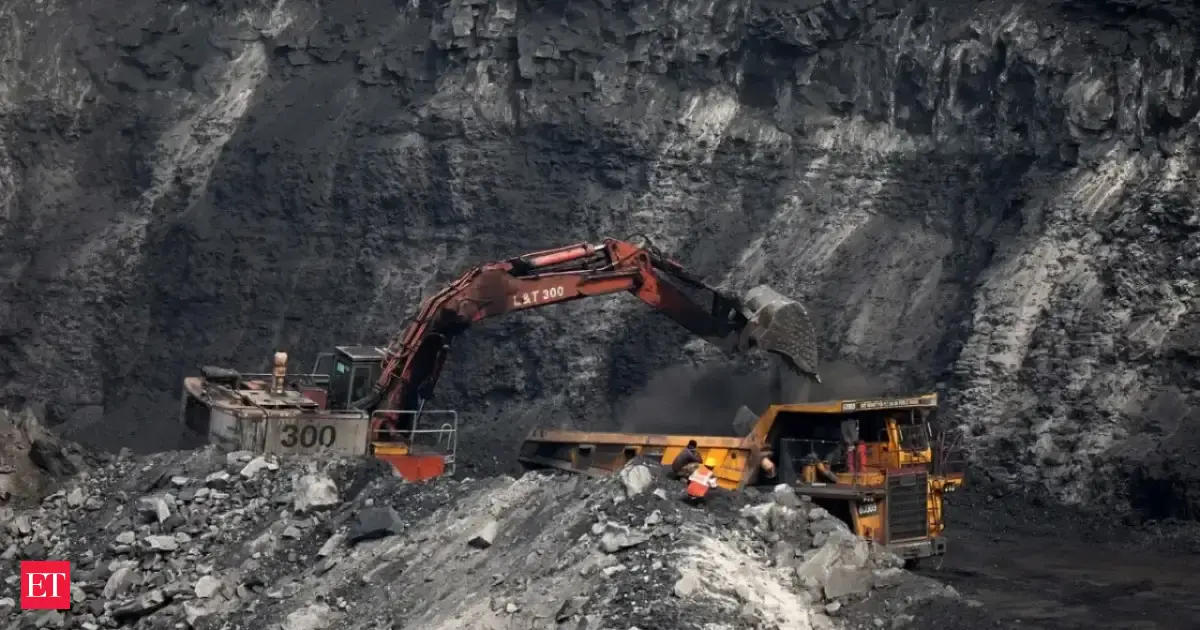
The energy industry seeks assured offtake commitments for coal gasification projects. Viability gap funding alone may not be enough to unlock investments in capital-intensive plants. Project developers require certainty on demand and pricing for gasification output. The government has rolled out a ?37,500 crore incentive scheme for coal gasification. Industry also seeks freight support and land allocation near mines or ports. View More
New Delhi: The energy industry is seeking assured offtake commitments from the government for coal gasification projects, arguing that viability gap funding (VGF) alone may not be enough to unlock investments in capital-intensive plants. The investment case remains weak even with government support, if project developers have to commit thousands of crores without certainty on demand, on who would buy the gasification output and at what volumes and prices, industry executives said. "If you are putting in ₹10,000 crore and there is no assured place to sell the output, the arithmetic does not work," a senior industry executive told ET. Coal gasification is a process that converts solid coal into synthetic gas, which has multiple uses. The comments come as the government rolls out a ₹37,500 crore incentive scheme aimed at scaling up surface coal and lignite gasification and building a domestic coal-to-chemicals ecosystem . The industry is also seeking freight support or allocation of land near the mine head and ports for gasification projects supplying fertiliser and steel plants, saying logistics costs could further weaken the economics of these projects. While the new scheme provides a financial incentive of up to 20% of the cost of plant and machinery, industry executives said a capital subsidy alone would not address the demand and market risks associated with projects that require large upfront investments and have long gestation periods. Live Events The experience of the Talcher fertiliser project in Odisha has also highlighted some of the execution challenges associated with coal gasification. .Pbanner{display:flex;justify-content:space-between;align-items:center;background-color:#ec1c40;margin-top:20px;padding:5px 10px;border-radius:4px;color:#fff;line-height:10px;width: 100%;box-sizing: border-box} .Pbannertext{display:flex;align-items:center;font-size:16px;font-weight:600;font-family:'Montserrat';} .Pbannertext img{height:20px;margin:0 6px} .Pbannerbutton a{display:flex;align-items:center;background-color:#fff;color:#ec1c40;text-decoration:none;font-weight:600;padding:4px 8px;border-radius:6px;font-size:15px;font-family:'Montserrat';} .Pbannerbutton img{height:20px;margin-right:6px} .Pbannerbutton a:hover{background-color:#f7f7f7} Add as a Reliable and Trusted News Source Add Now! (You can now subscribe to our Economic Times WhatsApp channel) (You can now subscribe to our Economic Times WhatsApp channel)

Commerce Minister Piyush Goyal asked Japanese companies to source steel from India. He questioned trade protection for firms not supporting Indian domestic producers. India has imposed a safeguard duty only on lower grades of steel. This measure aims to protect domestic manufacturers from dumping. Goyal highlighted India's ongoing need to expand its steel capacity. View More
Tokyo: Commerce and industry minister Piyush Goyal has urged Japanese firms to source steel from India and asked how could India be expected to protect foreign companies from trade measures when they do not support Indian domestic producers by sourcing from the country. He also said that India has taken a balanced approach by imposing the safeguard duty only on lower grades of steel, and higher grades can be imported from India freely. Also read: Commerce minister Piyush Goyal asks Japanese companies to deepen localisation in India “Those steel products that are manufactured in India, why do you want to import from Japan ?” Goyal said. Highlighting that he has been urging Japanese industry over the last seven years to source from India especially those steel products that are competitively priced and meet Japanese quality standards, he said: Live Events “Even if they are cheaper or of the same quality as Japanese steel...somehow they do not buy from India”. Questioning how India could be expected to protect foreign companies from trade measures when they do not support Indian domestic producers by sourcing from the country, Goyal said: “It is a matter of concern for me…that is not a fair trade.” He suggested the Japanese firms to approach the directorate general of trade remedies on the antidumping and safeguard duties related issues. Goyal said countries across the world are experiencing surplus steel capacity and are consequently taking safeguard measures to protect their domestic industries. Indian industry has flagged concerns about excess capacity of steel in countries like China. Also read: Piyush Goyal leads India's largest business delegation to Japan for trade and investment talks In December 2025, India extended 12% safeguard duty on imports of certain steel products for three years to curb dumping from countries like China and protect domestic manufacturers. “India, even today, is a net importer of steel. So we have enough scope to expand our capacity, in fact double our capacity and people are investing money. When they are investing money, they want protection, so that tomorrow they do not face dumping,” Goyal said. He said that India imposed only a 12% safeguard duty on low-grade steel compared to 50% levied by the US. .Pbanner{display:flex;justify-content:space-between;align-items:center;background-color:#ec1c40;margin-top:20px;padding:5px 10px;border-radius:4px;color:#fff;line-height:10px;width: 100%;box-sizing: border-box} .Pbannertext{display:flex;align-items:center;font-size:16px;font-weight:600;font-family:'Montserrat';} .Pbannertext img{height:20px;margin:0 6px} .Pbannerbutton a{display:flex;align-items:center;background-color:#fff;color:#ec1c40;text-decoration:none;font-weight:600;padding:4px 8px;border-radius:6px;font-size:15px;font-family:'Montserrat';} .Pbannerbutton img{height:20px;margin-right:6px} .Pbannerbutton a:hover{background-color:#f7f7f7} Add as a Reliable and Trusted News Source Add Now! (You can now subscribe to our Economic Times WhatsApp channel) (You can now subscribe to our Economic Times WhatsApp channel)

Canadian negotiators left Washington on Friday without a deal to prevent President Trump from enacting new 50% tariffs on about $20 billion worth of goods. View More
watch nowVIDEO11:0411:04U.S. Trade Rep. Jamieson Greer on failed U.S.-Canada trade talks: 'They wanted more'Squawk Box U.S. Trade Representative Jamieson Greer on Monday said Canada was responsible for the collapse of trade deal negotiations last week, telling CNBC that Ottawa changed its demands at the eleventh hour."We progressed to a point Tuesday night where we had enough agreement among the parties to announce that we had ... found the way to a deal," Greer told CNBC's "Squawk Box.""Then we set about to finalize it, and then in the last hours, I think there were things that the Canadians just â you know, they wanted more," he said.The comments mirror those offered by Canadian Prime Minister Mark Carney, who had accused the U.S. of proposing "last-minute changes" that were "unfair, uneconomic, and called into question the reliability of any deal."Greer spoke to CNBC three days after Canadian negotiators left Washington without a deal to prevent President Donald Trump from enacting new 50% tariffs on about $20 billion worth of goods, including imports of wine, hockey sticks, cement and more. Those duties took effect at 12:01 a.m. ET on Saturday, stoking alarm from business groups in the U.S. and Canada alike who warn that they could raise costs and wreak havoc on exposed industries.Carney said Canada will retaliate with "dollar for dollar" tariffs against the U.S.Greer said Monday morning that the trade clash "started" with Canada restricting sales of U.S. alcohol, autos and dairy last year. Canada imposed those trade barriers in response to tariffs from Trump, who has questioned free trade deals and championed the heavy use of import taxes. Read more CNBC politics and policy coverageSupreme Court allows Trump to continue White House ballroom construction for nowHusted defends energy policy as GOP warns data centers put Ohio seat at riskTrump to allow import of 300,000 metric tons of ground beef without tariffTrump tariff deadline looms, Canada says resolving 'trade issues' with U.S.Trump touted a deal to avert new tariffs on Canada. Here's what we know so far Greer said that in response to Canada's refusal to eliminate those barriers, "we proposed some very tailored tariffs, covering about 5% of what they send us."While the new 50% tariffs cover just a fraction of total U.S.-Canada trade, business groups contend the consumer-focused list of targeted products will take a major toll on exposed sellers."The impact on small businesses will be immediate and significant," said Dan Kelly, president of the Canadian Federation of Independent Business, in a statement Saturday.Greer said that the U.S. "sought to accommodate the Canadians" during the recent negotiations "by cutting tariffs in half on steel, on aluminum, and extensively reducing them on ... autos, and even on things like like softwood lumber, accommodating some element of that.""Simply, they wanted more," he said."I don't know if it was political for them. It certainly doesn't make economic sense, but perhaps for political reasons," Greer added. "I don't know, but they came in and they wanted they wanted more, and we were prepared to do that."The Canadian dollar fell against the U.S. dollar on Monday morning. Choose CNBC as your preferred source on Google and never miss a moment from the most trusted name in business news.

Trump also urged companies to manufacture in the United States, saying products built domestically would face no tariffs. View More

"As a smaller, more open economy, Canada has more to lose from this," ING strategists said Monday. View More
watch nowVIDEO4:4204:42Why Trump slapped 50% tariffs on CanadaEconomy The Canadian dollar dropped on Monday morning after trade talks between Ottawa and Washington fell apart, leaving both sides facing higher prices on a wide array of imported goods and threatening Canada's economic growth. The U.S. on Saturday slapped 50% tariffs on around $20 billion worth of imports from Canada, its second-biggest trading partner after Mexico. The affected goods span dairy, wine, wood products, furniture, cement, ceramics and a slew of other areas. Canadian Prime Minister Mark Carney said he would retaliate "dollar for dollar" with tariffs starting Sept. 8, targeting sectors such as steel, dairy, agricultural equipment, paper and electronics. Details will be released "in the coming days," Carney added. The Canadian dollar was 0.58% lower against the U.S. dollar at 8 a.m. ET. The loonie also dipped against the euro, pound and yen. 'We got attacked' Negotiators had been scrambling to strike a deal all week. But rhetoric turned sour by the weekend, with each side blaming the other for failing to reach an agreement and for unfair trade practices. Speaking to CNBC on Monday, U.S. Trade Representative Jamieson Greer said a deal was close, but that in the "last hours," the Canadians "wanted more" than Washington was willing to offer. "We offered them the best access to the United States of any country in the world. Obviously, there's always going to be tariffs, and there's going to be that protection for American workers and companies." "But we sought to accommodate the Canadians by ... cutting tariffs in half on steel, on aluminum, and extensively reducing them on autos, and even on things like softwood lumber, accommodating some element of that. Things that are sensitive for the Canadians. They simply ... wanted more," Greer said."I don't know if it was political for them. It certainly doesn't make economic sense." Markets "understand that this affects a very small amount of trade," Greer added. The tariffs come to around 0.6% of total U.S. goods imports. U.S. Trade Rep Greer blames Canada for failed tariff talks: 'They wanted more' Carney said Saturday that the U.S. had "asked too much and offered too little." "We were not prepared to compromise Canada's sovereignty or undermine our key industries," he said. When asked by a reporter why it felt like Canada was entering into a trade war, Carney replied: "Because we got attacked. You're at war when you get attacked. We got attacked."Tariff details in major sectors including autos, steel and aluminum were a sticking point, along with Canadian protections over use of the French language and the ability for the country to strike separate trade deals, Carney indicated in his remarks.The U.S. and Canada export tens of billions in agricultural products to one another each year, while their auto industries are deeply entwined. The U.S.' $48.3 billion trade deficit with Canada is in large part due to its significant imports of Canadian natural gas, electricity and crude oil. Like the European Union during its own protracted trade negotiations with the Trump administration, Ottawa contends that its trade relationship with the U.S. shifts into deficit once services are included."Canada wants the benefits of being a State, without being one!!!" U.S. President Donald Trump said in a post on Truth Social on Sunday. "They have also charged our great farmers, for many years, massive amounts of Tariffs. No more!!!" As U.S.-Canada trade talks collapse, Carney says retaliatory tariffs will start Sept. 8 Economic impact Canada's smaller trade-oriented economy is more vulnerable to the escalation than that of the U.S., economists said Monday. Despite suggestions that he will enact fiscal measures to support businesses, Carney said this weekend that the duties would "raise costs and reduce choice for Canadians."The tariffs only apply to 5% of Canada's goods exports to the U.S., meaning "it isn't a hammer blow, but for many individual companies it will be devastating," ING's chief international economist, James Knightley, said."For many small and medium-size companies, particularly in border states," of the U.S., meanwhile, "this is very bad news," Knightley said.Bradley Saunders, North America economist at Capital Economics, said that the most exposed industries in Canada "could be crippled" by the high levies. There is no longer an exemption for goods that comply with production rules set out in the United States-Mexico-Canada Agreement, or USMCA â a trilateral deal that is currently under renegotiation â as there has been in previous rounds of tariffs since Trump's "liberation day" in April 2025.Though the targeted goods only comprise around 0.6% of Canada's gross domestic product, "a collapse in exports would still be enough to push already-weak GDP growth back towards zero," Saunders said."This would especially be the case if weaker U.S. demand for finished items such as furniture and electrical equipment had knock-on effects on upstream primary industries, which are already struggling under the strain of Section 232 tariffs."The situation could escalate further if Trump retaliates against Canada's countermeasures, Saunders added, estimating that extending a 50% tariff rate to a fifth of Canada's U.S. goods exports, from 5% currently, could knock around 2% from Canadian GDP and push it into recession territory.Christian Lawrence, chief cross-asset strategist and head of Americas and energy markets research at Rabobank, said the existing package would have little impact on the U.S., but there was a risk if Ottawa opted to take a more aggressive stance on other goods. "But, this is where lies Canada's difficulty. Diversifying away from the world's largest consumer sitting on your doorstep is impossible to do in a truly meaningful way," Lawrence said.Despite the potential economic hit, Carney's stance was welcomed by many in Canada, where recent polling suggests a majority of the public support a hard line in U.S. negotiations, but a growing number are fearful of their job security. Ongoing U.S. tariffs of 50% could cause around 90,000 job losses, according to Canadian economist Trevor Tombe.Carney was elected in March 2025 in large part on a pledge to stand up to the White House. It came as reports of Canadians removing U.S. alcohol from store shelves highlighted the sour relations between the North American neighbors.Pierre Poilievre, leader of the opposition Conservatives, said on social media on Saturday that Canada "cannot accept one-sided tariffs that will deindustrialize our country." Choose CNBC as your preferred source on Google and never miss a moment from the most trusted name in business news.

MP Steel Limited has submitted its Draft Red Herring Prospectus (DRHP) to SEBI as it prepares for its initial public offering. The company aims to generate capital via a fresh issuance of shares and an offer for sale. The funds raised will go towards establishing a new billet manufacturing facility, thereby boosting its backward integration. View More
MP Steel Limited, a manufacturer of stainless-steel products, has filed its Draft Red Herring Prospectus (DRHP) with market regulator Securities and Exchange Board of India (SEBI), marking its entry into the public markets. The proposed initial public offering (IPO) comprises a fresh issue of equity shares aggregating up to Rs 95 crore and an offer for sale (OFS) of up to 23,07,290 equity shares by the promoters, according to the DRHP. The company plans to use the net proceeds from the fresh issue to set up a manufacturing facility for billets as part of its backward-integration strategy , fund a portion of its incremental working capital requirements and meet general corporate purposes. MP Steel manufactures stainless-steel products, including black and bright bars in round, hexagonal, square, angle and flat/patti forms. Its product portfolio also includes forging ingots, channels, fasteners and other ancillary products. The company primarily operates in the business-to-business (B2B) segment, supplying traders and manufacturers serving industries such as defence, pharmaceuticals, infrastructure, automotive, hardware, shipbuilding, ports, power plants and refineries. Live Events For the financial year ended March 31, 2026, the company reported revenue of Rs 413.41 crore and profit after tax (PAT) of Rs 15.81 crore. MP Steel's manufacturing facility is located in Mehsana, Gujarat, and is spread across approximately 80,374 square metres. Of this, around 32,492 square metres remains unutilised, according to the DRHP. The facility is accredited with ISO 9001:2015. As of March 31, 2026, the company had an installed ingot capacity of 19,151 metric tonnes per annum (MTPA), rolling capacity of 63,030 MTPA and bright bar capacity of 27,500 MTPA. The planned billet facility is expected to strengthen the company's manufacturing chain by adding an upstream production capability. Domestic and export markets MP Steel currently sells its products across 16 states and three Union Territories through its trader network and direct sales channels. The company also has an international footprint, exporting its products to 21 countries. The UAE, Germany, Turkey, Egypt, Brazil and Poland are among its key export markets. The combination of domestic distribution and exports gives the company exposure to demand from multiple industrial and manufacturing segments. IPO structure and advisors The fresh issue is intended to provide capital for capacity expansion and working capital, while the OFS will allow existing promoter shareholders to sell part of their holdings. Monarch Networth Capital Limited is the sole Book Running Lead Manager to the issue, while KFin Technologies Limited is the Registrar to the Offer. (Disclaimer: Recommendations, suggestions, views and opinions given by the experts are their own. These do not represent the views of Economic Times) .Pbanner{display:flex;justify-content:space-between;align-items:center;background-color:#ec1c40;margin-top:20px;padding:5px 10px;border-radius:4px;color:#fff;line-height:10px;width: 100%;box-sizing: border-box} .Pbannertext{display:flex;align-items:center;font-size:16px;font-weight:600;font-family:'Montserrat';} .Pbannertext img{height:20px;margin:0 6px} .Pbannerbutton a{display:flex;align-items:center;background-color:#fff;color:#ec1c40;text-decoration:none;font-weight:600;padding:4px 8px;border-radius:6px;font-size:15px;font-family:'Montserrat';} .Pbannerbutton img{height:20px;margin-right:6px} .Pbannerbutton a:hover{background-color:#f7f7f7} Add as a Reliable and Trusted News Source Add Now! (You can now subscribe to our ETMarkets WhatsApp channel) (You can now subscribe to our ETMarkets WhatsApp channel)
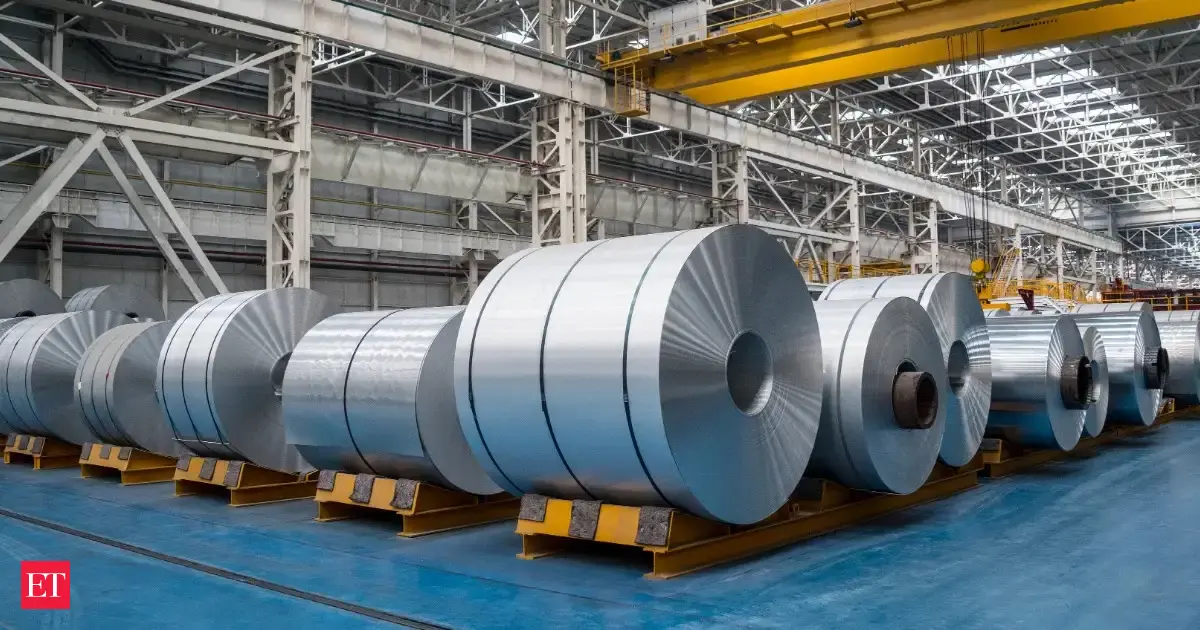
JTL Engineering Limited will expand its narrow-width HR coil manufacturing capacity. This capital expenditure of Rs 15 crore will double production to 10,000 MT monthly. The expansion will increase the maximum coil width from nine to eleven inches. This enhancement allows the company to meet broader customer product specifications. The new facility is expected to be commissioned in the fourth quarter of fiscal year 2027. View More
JTL Industries Limited announced on Monday that its subsidiary, JTL Engineering Limited , will undertake a capital expenditure of approximately Rs 15 crore to expand its narrow-width hot-rolled (HR) coil manufacturing capacity. According to the company’s statement, the increased width capability will broaden the range of narrow-width HR coils that can be manufactured by the company, enabling JTL Engineering Limited to address a wider set of product specifications and customer requirements. Read more: L&T-Mitsubishi to build world's largest APM system for Dubai's Al Maktoum International Airport The engineering firm claims that the proposed expansion will enhance its capability to manufacture wider narrow-width HR coils. The maximum coil width will increase from the current 9 inches (228.6 mm) to 11 inches (279.4 mm). The company said its manufacturing process uses sponge iron and steel scrap as key raw materials. The use of scrap supports efficient utilisation of raw materials and forms an important part of the company’s approach towards recycling and more circular manufacturing . Live Events According to the release, the planned expansion will double JTL Engineering Limited’s HR coil manufacturing capacity from the current 5,000 MT per month to 10,000 MT per month. The expanded facility is expected to be commissioned in Q4 FY27. Read more: L&T wing secures $75 million deal for EI services from international entity “The proposed expansion reflects our focus on strengthening JTL Engineering Limited’s manufacturing capabilities and expanding the range of products that we can offer. The additional capacity and wider coil capability will enable us to cater to a broader range of product specifications and customer requirements,” said Madan Mohan, Managing Director, JTL Industries Limited. According to JTL Industries, it operates manufacturing facilities in Punjab, Maharashtra, Chhattisgarh and Himachal Pradesh (including its subsidiaries). Its cumulative pipe manufacturing capacity is approximately 9,36,000 MTPA, with around 3,00,000 MTPA dedicated to backward integration. The company is a recognised Three Star Export House. Its product range includes DFT Structural Pipes, GI Pipes, MS Black Pipes, Hollow Sections, Solar Structures, HR Coils and Phosphorous Bronze, Copper and Brass Alloys, catering to industrial and infrastructural applications. .Pbanner{display:flex;justify-content:space-between;align-items:center;background-color:#ec1c40;margin-top:20px;padding:5px 10px;border-radius:4px;color:#fff;line-height:10px;width: 100%;box-sizing: border-box} .Pbannertext{display:flex;align-items:center;font-size:16px;font-weight:600;font-family:'Montserrat';} .Pbannertext img{height:20px;margin:0 6px} .Pbannerbutton a{display:flex;align-items:center;background-color:#fff;color:#ec1c40;text-decoration:none;font-weight:600;padding:4px 8px;border-radius:6px;font-size:15px;font-family:'Montserrat';} .Pbannerbutton img{height:20px;margin-right:6px} .Pbannerbutton a:hover{background-color:#f7f7f7} Add as a Reliable and Trusted News Source Add Now! (You can now subscribe to our Economic Times WhatsApp channel) (You can now subscribe to our Economic Times WhatsApp channel)

The stakes are incredibly high for the U.S. to maintain its lead in data centers. It seems to be getting harder and harder in this election year. View More
Nine thousand people working long hours, six days a week, to meet a deadline for full production of memory chips by the first quarter of 2027. The workers know they can each make $200,000, maybe more. They seem united in their mission; no Potemkin village going up in Boise, Idaho. Just two state-of-the-art fabs for the number three producer of dynamic random access memory (DRAM), Micron . All for one reason: Demand for DRAM is so strong that this proud American company â which stuck with memory-chip manufacturing even as peers, including Intel, closed U.S. factories â needs to get more chips into data centers as quickly as possible. Sanjay Mehrotra, Micron's CEO since 2017, does not want his company to be the bottleneck in the great AI build-out in the U.S. and around the world. He cares passionately about how well Micron is doing, how many thousands of patents this innovative company amasses, and how specialized and powerful his semiconductors are, especially high-bandwidth devices. Mehrotra hears the argument from influential voices, including Tesla and SpaceX CEO Elon Musk, that the balance of power in the data center buildout is shifting toward DRAM makers. Maybe he reads the postings. But one look at the commitment you see in Boise, the kind of job you might think could only be done by China's fabled Eighth Route Army, tells you he doesn't want that kind of chokehold power. Sanjay, as everyone knows him, would rather have it stem from better, more powerful chips and the proprietary intellectual property they contain. He wants to take share from Samsung and the all-powerful SK Hynix, rather than wield the de facto power that comes from being a bottleneck. He wants to beat the Koreans, not hold Musk or any other hungry data center or neo-hyperscaler CEO hostage to tight memory supply. He believes Micron can do that even as its rivals make their chips in the obviously lower-cost geographies. Sure, the U.S. is a higher-cost producer. But Mehrotra says technology can make up the difference. Two massive fabs are taking shape in Boise, and their importance can't be overstated. On top of that, Micron is building two fabs in Clay, New York, near Syracuse, this time hiring both union and non-union employees, as in Boise. They could be tougher. Will the unions allow employees who want to work six days a week to do so? Will it matter that it's a CHIPS and Science Act project? How does that cut? Micron's putting up $100 billion here. Will the $6 billion that the government is putting up matter in this ten-year project? Mehrotra is hopeful. No matter what, I saw a true marvel when I visited Boise last week. There was a spirit at our luncheon that I have not seen in any of our site visits. They get the high stakes. I think they will deliver. Their cause seemed so meaningful to so many that I felt like a mental Lilliputian when I asked when he would start buying back stock in companies like Sandisk , Western Digital , and Seagate . Technically, he can't until December, when the CHIPS Act allows him to begin. However, he could say he was going to if he felt it was the right thing to do. He didn't seem to mind the recalcitrance of these other players even as they are the true bottlenecks. They have chosen to return shareholders' money rather than use it to build more plants. Perhaps they are mindful that, in the past, doing so left them with a surfeit of product and a valley of earnings, like the shadow of death. Mehrotra doesn't mind. He's on a mission to grow, and he is certainly growing, as befits the company's trillion-dollar status. The stakes are incredibly high for the U.S. to maintain its lead in data centers. It seems to be getting harder and harder in this election year. The governors of Texas and Pennsylvania, one solidly red state, the other a key battleground, have taken steps to slow things down. If this turns into something like the Biden administration's restrictions on new LNG export projects, these states risk losing future investment. Virginia, already home to some 250 data centers, might be willing to take more. But the opposition to data centers â projects backed by companies that will fold if communities make development difficult â now seems to know few bounds. There's a loose coalition of data center companies, but to me it's too loose. What's needed is a common code of conduct that puts cooperation ahead of naked competition if the U.S. is going to stay ahead. A president who says he would welcome data centers if he were a local politician, perhaps demanding that developers help pay for the infrastructure they require, doesn't do the job. That's laissez-faire, and laissez-faire just isn't working. Which brings me to last week. We saw what can happen when the data center thesis gets bogged down. We bought some GE Vernova because we thought it was down enough. That seemed like a decent bet at the beginning of the week. By the end, I wish we had sold it. Broadcom is helping to arrange debt financing to accelerate the AI buildout, something the market didn't mind but I sure did. I want Broadcom to use its capital to buy back stock as it falls. It still had $10 billion of authorized share repurchases as of May 3. I would have preferred a reload. But if that money instead led to more AI infrastructure being built, that may matter more, especially as many investors seem to be questioning the data center thesis. Corning and Qnity Electronics were standout losers, the latter with a personnel change well chronicled by my colleague Jeff Marks in his Homestretch. It was bad. Oh, and don't get me started on my favorite stock, Intel , the one that can't stop going down, perhaps because of a looming overhang. The government's stake in the chipmaker becomes eligible for sale on Aug. 27, and it's unclear how that block may be sold. A tight syndication would do the trick and let the stock rally. I had thought it would be a clearing event that would restore interest in the stock. The revulsion for the data center makes it a tougher sell. I believe the data center issue will be resolved by the election. Those with a strong anti-data-center slate of victors will most likely spell the end of data center growth in their states. If it is too many, then I will have been resoundingly mistaken and will have to pay the price for a lack of vision. I didn't see it coming. I knew there was a backlash, but I presumed there were enough states and enough locales that it wouldn't matter. In a moment of despair, I called my Mexican contacts for my wife's agave spirits business and asked whether Querétaro, the home of giant plants that make parts for data centers, couldn't welcome the data centers themselves. They were looking into it, but the inquiry smacks of desperation, given the state of play regarding the stability of the country needed to protect the projects. I find myself reluctant to do what I typically would do: buy down in a pyramid-style bet that the selling will overshoot the event. However, now we may just have to watch and wait. Let the drumbeat take its toll. And yes, it has crossed my mind that it is not too late to cut our gains. Selling more Corning or more Broadcom makes sense. I don't know what to make of Qnity. The hyperscalers themselves no longer trade with each other. That move above $600 by Meta on a mere musing by CEO Mark Zuckerberg about using compute for a web service says to me you've got to stay long. That resilience of Eaton , to be sure, says not everything in the data center will suffer equally. There's trepidation for certain. With the political drumbeat so loud, I sense more pain. I don't want to cut and run from an unstoppable story. I don't think progress can be stopped. But if the majority of shareholders think otherwise, I know the pain will be the worst we have suffered this year. Micron's demand gives me confidence in the AI buildout and makes me want to steel myself. We most likely will. However, I know it's no longer a given; the demand isn't the problem, but the powerful political backlash that could prevent projects from getting built. In some ways, it is the data center companies' fault. Had they gotten together and given out palatable game plans, it would have made a great deal of difference. Right now, no one is canceling an order that I can tell to GE Vernova and its derivatives. That's heartening. I just hope the desire to have data centers in some states obliterates Friday's pain. I had thought I would be celebrating Micron breaching $1,250, but instead saw it fall less than 1% to $963. I wish I could say that was the worst we were hit. Instead, when it came to the data centers, it was among the softer of punishments. We need to see if some politicians speak out in favor of AI this week. If they don't, we will look intransigent. I don't like being intransigent. You know I have said that I like some more than others. You know we have ample cash, but I don't want to buy to offset these stocks. It's a new development, and it's not gameable. Let's see what happens. No matter what, though, Micron will be the one we buy more of. Intel? Only if the government sells it. Everything else? Too risky. We have to see if mob rule takes over. (See here for a full list of the stocks in Jim Cramer's Charitable Trust.) As a subscriber to the CNBC Investing Club with Jim Cramer, you will receive a trade alert before Jim makes a trade. Jim waits 45 minutes after sending a trade alert before buying or selling a stock in his charitable trust's portfolio. If Jim has talked about a stock on CNBC TV, he waits 72 hours after issuing the trade alert before executing the trade. THE ABOVE INVESTING CLUB INFORMATION IS SUBJECT TO OUR TERMS AND CONDITIONS AND PRIVACY POLICY , TOGETHER WITH OUR DISCLAIMER . NO FIDUCIARY OBLIGATION OR DUTY EXISTS, OR IS CREATED, BY VIRTUE OF YOUR RECEIPT OF ANY INFORMATION PROVIDED IN CONNECTION WITH THE INVESTING CLUB. NO SPECIFIC OUTCOME OR PROFIT IS GUARANTEED.
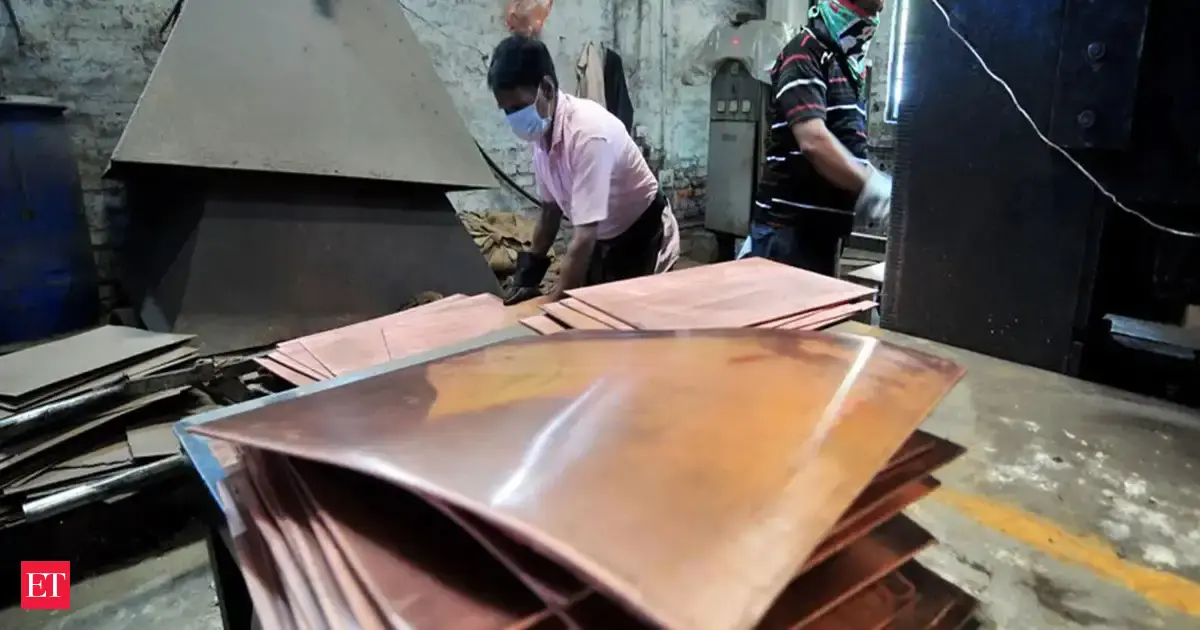
India's metals and mining sector outlook is improving significantly. Non-ferrous companies are expected to lead earnings growth and performance. Select primary steel producers will see support from capacity expansion and volume recovery. Raw material costs and commodity prices remain key risks for the industry. Overall EBITDA margins increased, showing positive sector momentum. View More
New Delhi: The outlook for India's metals and mining sector is improving, with non-ferrous companies likely to remain the key earnings drivers, while capacity expansion , volume recovery and improving realisations could support select primary steel producers , according to brokerage firm Systematix . The brokerage expects companies with strong expansion pipelines, cost optimisation and operating leverage to outperform, although raw-material costs, commodity prices and geopolitical disruptions remain key risks. Also read: Coal India plans Singapore trading hub in hunt for critical mineral assets: Sources Systematix said the first quarter of FY27 delivered divergent trends across its metals and mining coverage. Non-ferrous companies led earnings growth, benefiting from favourable commodity prices, lower costs, stronger copper earnings and improved alumina realisations. Primary steel producers reported resilient margins despite seasonally weaker volumes and higher coking-coal costs, while mining and steel-pipe companies delivered mixed performances. The overall EBITDA margin for the companies under Systematix's coverage increased to 21.6 per cent in 1QFY27 from 19.5 per cent in 4QFY26 and 18.6 per cent a year earlier. Non-ferrous companies recorded the strongest improvement, with margins rising to 23.2 per cent from 21.1 per cent sequentially and 17.8 per cent year-on-year. Live Events Also read: Copper emerges largest contributor for BHP’s EBITDA in fiscal 2026 In mining, Systematix remains positive on NMDC , supported by incremental volumes from Deposit 4 and 13, mine debottlenecking and improved logistics. Coal India , however, faces weaker volumes and pricing pressure despite rising power demand, while MOIL remains a recovery play dependent on improving production and manganese realisations. Systematix expects volume recovery, capacity expansion and operating leverage to support earnings, but steel realisations, coking-coal and base-metal prices, monsoon-related demand weakness and execution of new capacity will remain critical monitorables. .Pbanner{display:flex;justify-content:space-between;align-items:center;background-color:#ec1c40;margin-top:20px;padding:5px 10px;border-radius:4px;color:#fff;line-height:10px;width: 100%;box-sizing: border-box} .Pbannertext{display:flex;align-items:center;font-size:16px;font-weight:600;font-family:'Montserrat';} .Pbannertext img{height:20px;margin:0 6px} .Pbannerbutton a{display:flex;align-items:center;background-color:#fff;color:#ec1c40;text-decoration:none;font-weight:600;padding:4px 8px;border-radius:6px;font-size:15px;font-family:'Montserrat';} .Pbannerbutton img{height:20px;margin-right:6px} .Pbannerbutton a:hover{background-color:#f7f7f7} Add as a Reliable and Trusted News Source Add Now! (You can now subscribe to our Economic Times WhatsApp channel) (You can now subscribe to our Economic Times WhatsApp channel)