Accordion with Database Data

Latest Sectors News

× Policy & Standard Operating Procedures Empanelment | Engagements | Association Valuations Terms Of References (TOR) R.K Associates Best Policies Other Company Credentials Valuers Remark's
India's clean energy journey is gaining momentum. Bioenergy is now a key pillar, moving beyond electricity. It helps rural livelihoods, waste management, and pollution reduction. The MSME sector can adopt biomass for green steam and heat. This offers a practical, scalable solution. Government initiatives support this transition. A new report provides a roadmap for industries. View More

NEW DELHI: Renewable Energy Minister Shripad Yesso Naik on Friday highlighted the pivotal role of bioenergy in India’s clean energy transition , particularly in decarbonising industrial process heat in the MSME sector. The Minister of State for New and Renewable Energy and Power was delivering the keynote address at a national workshop on Introduction and Adoption of Biomass for Green Steam and Heat Applications in MSMEs, organised by the Ministry of New and Renewable Energy in collaboration with the German Agency for International Cooperation (GIZ) and Grant Thornton Bharat. On the occasion, the minister also jointly released the report titled " Decarbonising MSMEs : Use of Biomass for Green Steam and Heat Application". Naik said that under the leadership of Prime Minister Narendra Modi, India’s renewable energy journey has witnessed unprecedented momentum over the past decade, with bioenergy emerging from a peripheral role to become a strategic pillar of the country's clean energy transition. The minister noted that bioenergy today extends far beyond electricity generation and contributes simultaneously to multiple national priorities, including energy security, rural livelihoods, waste management, pollution reduction and climate action. Live Events Highlighting the challenge of industrial decarbonisation, particularly in the MSME sector, he pointed out that while MSMEs contribute nearly one-third of India’s manufacturing output and employ millions, a significant share of their energy demand for steam and heat continues to be met through fossil fuels like coal, furnace oil and pet coke. Emphasising that biomass-based green steam and heat solutions offer a practical, scalable and India-specific pathway, the minister said India's abundant availability of agricultural residue, animal waste and municipal solid waste presents a unique opportunity to convert waste into value, reduce emissions and generate additional income for farmers and rural entrepreneurs. He outlined the government's integrated approach through initiatives such as the National Bioenergy Programme, SATAT and GOBARdhan, which support biomass briquettes and pellets, non-bagasse-based cogeneration, industrial applications and decentralised solutions tailored to MSMEs, while also strengthening linkages with the National Green Hydrogen Mission. Highlighting the significance of the report released during the workshop, Naik said that it provides a data-driven, sector-specific roadmap for adopting biomass-based green heat and steam solutions across industries, such as textiles, food processing, chemicals, foundries and pharmaceuticals. The report also brings out key policy and market enablers, including biomass deployment obligations, standardised steam supply agreements, biomass exchanges and strengthened supply-chain coordination, and is expected to serve as a valuable reference for policymakers, industry and financial institutions. He underlined that technology alone cannot drive transformation and called for close collaboration across the entire value chain, from farmers and FPOs supplying biomass to aggregators, logistics providers, boiler manufacturers, energy service companies, financiers and regulators. He stressed that MSMEs require confidence in fuel availability, pricing stability, operational reliability and supportive policies, and noted that platforms such as this workshop are critical for trust-building, knowledge-sharing and co-creation of solutions. The minister said that bioenergy truly embodies the spirit of Sabka Saath, Sabka Vikas. He expressed confidence that the outcomes of the workshop and the insights from the report would accelerate the adoption of green steam and heat solutions across the MSME sector and urged all stakeholders to convert intent into action. .Pbanner{display:flex;justify-content:space-between;align-items:center;background-color:#ec1c40;margin-top:20px;padding:5px 10px;border-radius:4px;color:#fff;line-height:10px;} .Pbannertext{display:flex;align-items:center;font-size:16px;font-weight:600;font-family:'Montserrat';} .Pbannertext img{height:20px;margin:0 6px} .Pbannerbutton a{display:flex;align-items:center;background-color:#fff;color:#ec1c40;text-decoration:none;font-weight:600;padding:4px 8px;border-radius:6px;font-size:15px;font-family:'Montserrat';} .Pbannerbutton img{height:20px;margin-right:6px} .Pbannerbutton a:hover{background-color:#f7f7f7} Add as a Reliable and Trusted News Source Add Now!
State-owned Nalco is exploring entry into rare earth element (REE) mining as part of its diversification beyond bauxite and alumina, with a bid advisor conducting due diligence on domestic auctions for REEs, magnesium and chromite blocks. The move aligns with India’s push to reduce import dependence and curb China’s dominance in critical minerals used in electronics, defence, renewables and electric vehicles. View More

State-owned Nalco is open to venturing into mining of rare earth elements (REEs) with its bid advisor conducting due diligence on domestic auctions for REEs, magnesium and chromite blocks, its CMD Brijendra Pratap Singh Monday said. The move signals National Aluminium Company Ltd 's (Nalco) diversification strategy beyond bauxite and alumina, targeting high-value critical minerals essential for electronics, defence, renewables and electric vehicles . REEs are important for magnets in wind turbines, EV motors and missile guidance systems. India, heavily import-dependent with negligible domestic output, views REE self-reliance as key to Atmanirbhar Bharat and reducing China's 80 per cent global dominance amid US-China trade tensions. In an interview to PTI here, the Chairman-cum-Managing Director (CMD) said the bid advisor will assess mine viability, optimal acquisition premiums and participation in upcoming auctions. "The bid advisor will assess if we should participate in domestic auctions of REEs," Singh said. Live Events Nalco, Singh said, is also conducting due diligence for acquiring a stake in an operational lithium mine in Australia through Khanij Bidesh India Ltd (KABIL). KABIL is a joint venture between Nalco, Hindustan Copper Ltd and Mineral Exploration and Consultancy Ltd. All three are PSUs under Ministry of Mines. The stake purchase would ensure a minimum guaranteed offtake of lithium for import to India, bolstering domestic supply for EV batteries and renewables amid global shortage. "The due diligence is going on," he explained. Lithium, a cornerstone of the clean energy transition, faces supply constraints with demand surging for India's EV push and net-zero goals. Nalco, with a 40 per cent stake in KABIL, plans to potentially raise it to 50 per cent to fund overseas critical mineral acquisitions. The company, he said, has prioritised maximising volumes, cutting costs and ensuring customer satisfaction in 2026, while fast-tracking key expansion projects. "Our first priority is to see our existing operations operate to the fullest capacities. We will maximise our volumes and reduce our costs. Customer satisfaction is one area where we have to focus -- be it quality, packaging or cost -- and align all our operations as per customer requirements," the CMD said. On expansion plans, he said the fifth stream refinery would be commissioned in June 2026, making it the "topmost priority". "We also target to start the Pottangi bauxite mines in June 2026," he added. The official further outlined the next phase of expansion involving a 0.5 million tonne smelter capacity along with a 1,080 MW power plant. National Aluminium Company Ltd, a 'Navratna' public sector undertaking, is one of country's leading integrated complexes in the aluminium value chain having bauxite mining, alumina refining, aluminium smelting including power generation and coal mines. .Pbanner{display:flex;justify-content:space-between;align-items:center;background-color:#ec1c40;margin-top:20px;padding:5px 10px;border-radius:4px;color:#fff;line-height:10px;} .Pbannertext{display:flex;align-items:center;font-size:16px;font-weight:600;font-family:'Montserrat';} .Pbannertext img{height:20px;margin:0 6px} .Pbannerbutton a{display:flex;align-items:center;background-color:#fff;color:#ec1c40;text-decoration:none;font-weight:600;padding:4px 8px;border-radius:6px;font-size:15px;font-family:'Montserrat';} .Pbannerbutton img{height:20px;margin-right:6px} .Pbannerbutton a:hover{background-color:#f7f7f7} Add as a Reliable and Trusted News Source Add Now! (You can now subscribe to our Economic Times WhatsApp channel) (You can now subscribe to our Economic Times WhatsApp channel)
Domestic steelmakers raised prices twice in January after India imposed a safeguard duty, as construction demand revived, inventories stayed lean and mills sought to recover margins. View More

Britain faces significant job losses in its clean-energy sector. The country's dependence on China for crucial components like batteries poses a major risk. A year-long disruption could cost 90,000 jobs and halt electric vehicle production. View More

Britain risks widespread job losses across the clean-energy sector if global supply chains are hit by shocks, according to a new report that warns the country is too reliant on China for its climate ambitions. The UK currently sources about a third of its battery imports from China, and Japan is the leading supplier of cathodes and anodes, the two major components that go into battery cells. It means plans to ramp up domestic battery manufacturing by 2030 will remain heavily reliant on parts made overseas. Modelling by the Institute for Public Policy Research found that a yearlong interruption at the main suppliers of battery parts could cost as many as 90,000 UK jobs and wipe out production of more than 580,000 electric vehicles from 2030. Such a shock would leave domestic carmakers ceding ground to Chinese electric-vehicle manufacturers, with BYD Co. already increasing its UK market share from 0.5% to 2.5% in 2025, and would ripple into other industries such as rail, aerospace and defense manufacturing, the think tank warned in a report published Friday. Batteries are just one of the clean-energy areas where the UK is exposed to global markets, just as tensions intensify following US President Donald Trump’s tariffs. Disruptions to supplies of solar panels, steel and critical minerals also threaten the transition to net zero carbon emissions and jobs in regions already weakened by industrial decline, the report said. “Trump’s trade war with China, the rise of conflicts around the world – these shocks ultimately hurt the UK economy because we rely so much on trade to source the essentials, including clean energy technologies,” said Pranesh Narayanan, senior research fellow at the IPPR. Live Events The situation around critical minerals, which are key inputs for manufacturing clean-energy equipment, from battery components to permanent magnets used in wind turbines, is particularly concerning, the report said. China dominates the refinement of most critical minerals and has reverted to export controls for those that are in scarce supply. The IPPR also estimated that delays to solar deployment and continued reliance on gas could also add about £1.5 billion ($2 billion) a year to energy import costs. The researcher offered some policy recommendations to increase the UK’s energy resilience. It said the government should invest in domestic production, diversify supply with allies, build strategic stockpiles and set out a clear stance on Chinese involvement in the most critical supply chains. “The UK is a small open trading nation sailing through an international economy whose waters are getting choppier by the day,” Narayanan said. .Pbanner{display:flex;justify-content:space-between;align-items:center;background-color:#ec1c40;margin-top:20px;padding:5px 10px;border-radius:4px;color:#fff;line-height:10px;} .Pbannertext{display:flex;align-items:center;font-size:16px;font-weight:600;font-family:'Montserrat';} .Pbannertext img{height:20px;margin:0 6px} .Pbannerbutton a{display:flex;align-items:center;background-color:#fff;color:#ec1c40;text-decoration:none;font-weight:600;padding:4px 8px;border-radius:6px;font-size:15px;font-family:'Montserrat';} .Pbannerbutton img{height:20px;margin-right:6px} .Pbannerbutton a:hover{background-color:#f7f7f7} Add as a Reliable and Trusted News Source Add Now!
The September quarter is typically the weakest for steel producers because of the impact of monsoon rains on both prices and demand, but steel prices have corrected further from these levels. Average prices of flat-rolled products fell 4-5% in October-December from a quarter ago, while those of long products were 1-2% lower. View More

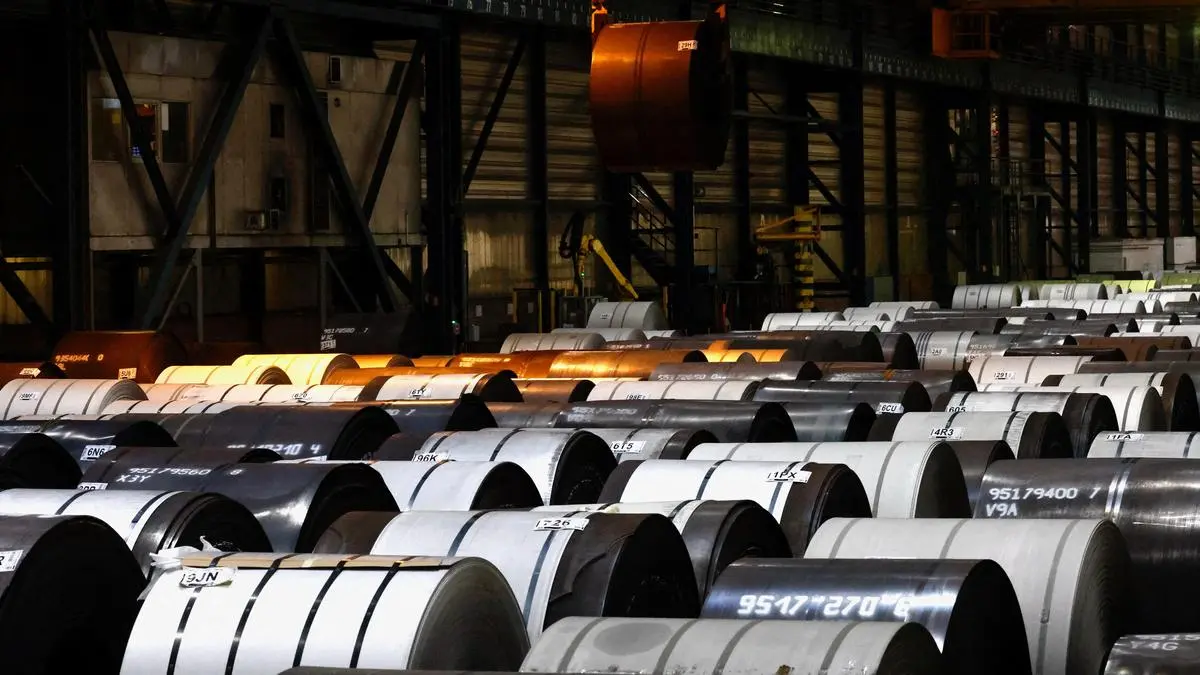
MUMBAI: Steel producers are set to see a sequential fall in profits in the December quarter weighed down by the continued weakness in prices of the alloy. The September quarter is typically the weakest for steel producers because of the impact of monsoon rains on both prices and demand, but steel prices have corrected further from these levels. Average prices of flat-rolled products fell 4-5% in October-December from a quarter ago, while those of long products were 1-2% lower. Analysts estimate the blended realisations for steel companies to fall by Rs 1,500-3, 500 per tonne as compared to the September quarter. This, along with an increase in the cost of coking coal , is expected to weigh on the profitability of companies. As a result, earnings before interest, tax, depreciation and amortization made by companies on each tonne of steel sold will fall by Rs 1,000-2,400 per tonne. "We reckon Q3FY26 Ebitda for all steel companies shall fall 10-21% QoQ due to lower steel prices," Nuvama Institutional Equities said in a pre-earnings note. Net profit for the December quarter, meanwhile, is seen 10-40% lower sequentially, with Steel Authority likely to take the sharpest hit. Live Events .Pbanner{display:flex;justify-content:space-between;align-items:center;background-color:#ec1c40;margin-top:20px;padding:5px 10px;border-radius:4px;color:#fff;line-height:10px;} .Pbannertext{display:flex;align-items:center;font-size:16px;font-weight:600;font-family:'Montserrat';} .Pbannertext img{height:20px;margin:0 6px} .Pbannerbutton a{display:flex;align-items:center;background-color:#fff;color:#ec1c40;text-decoration:none;font-weight:600;padding:4px 8px;border-radius:6px;font-size:15px;font-family:'Montserrat';} .Pbannerbutton img{height:20px;margin-right:6px} .Pbannerbutton a:hover{background-color:#f7f7f7} Add as a Reliable and Trusted News Source Add Now! (You can now subscribe to our Economic Times WhatsApp channel) (You can now subscribe to our Economic Times WhatsApp channel)
Allegations of price collusion must be seen through View More

Bharat Coking Coal’s IPO listing has been postponed to January 19, but strong investor interest persists. The issue continues to command a grey market premium of around 56%, backed by heavy subscription and the company’s dominant position in India’s coking coal segment. View More

The listing date for Bharat Coking Coal Limited (BCCL), a subsidiary of PSU Maharatna Coal India , is being keenly watched after it was rescheduled to January 19, 2026, from the earlier listing date of January 16. The postponement came in the wake of the BMC election results, as mentioned in updated stock exchange communications. Despite the delay, investor sentiment remains robust as the IPO continues to reflect a strong grey market premium (GMP). The issue is currently commanding a GMP of Rs 13 to Rs 14, implying a listing price of around Rs 36 to Rs 37 per share, compared with the issue price of Rs 23. This translates into a potential premium of about 56.2%, as indicated by data from the unofficial grey market. Bharat Coking Coal subscription status The public offering of Bharat Coking Coal witnessed an overwhelming response from investors. The IPO attracted bids worth over Rs 1.17 lakh crore, making it one of the most heavily subscribed PSU IPOs in recent memory. More than 50.93 crore shares were bid for at the upper price band, resulting in an overall subscription of nearly 147 times. Live Events Over 90 lakh applications were received, underlining strong participation across retail, non-institutional and institutional investor categories. Qualified institutional buyers and the non-institutional investor segment were key drivers of demand, while retail investors and shareholder quota applicants also contributed meaningfully. Bharat Coking Coal issue details IPO Price: Rs 23 per share Lot Size: 600 shares Total Investment for One Lot: Rs 13,800 Allotment Date: January 14, 2026 Revised Listing Date: January 19, 2026 Investors were able to check the allotment status starting January 14. The delay in listing has not dampened sentiment in unofficial markets, where the stock continues to trade at a strong premium. About Bharat Coking Coal Bharat Coking Coal holds a significant position in India’s energy and industrial ecosystem. As per the company’s offer documents, it is India’s largest producer of coking coal, contributing 58.5% of domestic output in FY25. It operates 34 mines across Jharkhand and West Bengal, with an estimated reserve base of 7.91 billion tonnes as of April 2024, accounting for over 20% of India’s total coking coal reserves. The company is the only meaningful domestic source of prime coking coal, a critical input for the steel manufacturing sector. Its operations play a pivotal role in reducing India’s dependence on imported coking coal. Also read: Infosys shares climb 5% on FY26 guidance hike post Q3 results. Is more upside left? (Disclaimer: Recommendations, suggestions, views and opinions given by the experts are their own. These do not represent the views of The Economic Times) .Pbanner{display:flex;justify-content:space-between;align-items:center;background-color:#ec1c40;margin-top:20px;padding:5px 10px;border-radius:4px;color:#fff;line-height:10px;} .Pbannertext{display:flex;align-items:center;font-size:16px;font-weight:600;font-family:'Montserrat';} .Pbannertext img{height:20px;margin:0 6px} .Pbannerbutton a{display:flex;align-items:center;background-color:#fff;color:#ec1c40;text-decoration:none;font-weight:600;padding:4px 8px;border-radius:6px;font-size:15px;font-family:'Montserrat';} .Pbannerbutton img{height:20px;margin-right:6px} .Pbannerbutton a:hover{background-color:#f7f7f7} Add as a Reliable and Trusted News Source Add Now! (You can now subscribe to our ETMarkets WhatsApp channel) (You can now subscribe to our ETMarkets WhatsApp channel)
Former U.S. special forces officer Gene Yu is now the co-founder and CEO of cybersecurity startup Blackpanda. The company has raised about $22 million to date. View More

Gene Yu is the co-founder and CEO of Blackpanda.Courtesy of Gene Yu At age 46, startup founder Gene Yu seems to have lived several lives in one.Before he started his own company, he was a Division 1 tennis player, graduated with a computer science degree from the United States Military Academy, commonly known as West Point, served as a "Green Beret" in the U.S. Army Special Forces, led the rescue of a family friend from a hostage situation and authored a book. Today, he is also the co-founder and CEO of cybersecurity startup Blackpanda which has raised over $21 million to date, according to an official company announcement.While he's undergone extremely rigorous military training, served on battlefields and led major counter-terrorism missions, he said his hardest battle was internal. Growing up Asian American Yu was born in Concord, Massachusetts, where he says he was the only Asian kid in his town. He then moved to Cupertino, California when he was 10. His family background is unique and, in some ways, high-profile: his uncle is Ma Ying-jeou who served as the president of Taiwan from 2008 to 2016. Growing up as an Asian male in America, he says that he often internalized the messages he was told by society that "you are inferior, you are unattractive, you are not desired, you are not equal." This took a toll on Yu's self-esteem. These feelings of inferiority were, at times, amplified at home. He learned early on to prioritize achievement. "In Asian culture, what we learn is performance equals love, right? Or even better yet, lack of performance equals the absence of love," Yu told CNBC Make It. Yu says his early experiences led him to chase achievement as a way of protecting a younger version of himself. "It's like you are a wounded child, and you're wearing the Iron Man suit," he said. "You're armoring yourself as a traumatized person." "I hated my own identity, because it was wounded, right? I wanted to create a new one, and that's what the military does for you," he said. So, at age 17 after graduating from high school, he left home and went straight to West Point, which is known to be a highly prestigious and selective military academy. After that, he joined the U.S. Army Special Forces where he served as an officer and commander.From his high school years to his time at West Point, he was working approximately 16 to 20 hours a day. That intensity shaped his work ethic which he still carries today."At West Point, you're up at like 5 a.m., and then you're down at like [midnight] ... And it's six days a week of school, no summer breaks," he said. "So I definitely know how to work hard, that's for sure, which I think [helped] at Blackpanda." From special forces to startup CEO In 2009, Yu's military career came to a crossroads when his uncle, Ma Ying-jeou, was elected as the president of Taiwan."There was [an] investigation around ... the fact that my uncle was the sitting president of Taiwan, which had occurred while I was in Special Forces," said Yu. This period prompted difficult questions about his future.Ultimately, Yu made the decision to leave the army, which left him feeling disoriented and exiled. "I had a massive loss of identity," he said. "I had waves of deep survivor's guilt, because I knew that I was in my prime as one of the best Special Forces captains the U.S. Army had, and that our boys were overseas, dying and fighting, and I was just chilling out."In the years that followed, he struggled to find a new sense of identity. He spent a few years studying Chinese and going back to graduate school at Johns Hopkins University, where he was recruited to work as an equity trader at Credit Suisse. Eventually, in 2012, he joined Palantir Technologies which he grew to love, only to get retrenched in 2013. "After Palantir let me go ... that was the hardest time in my life, by far. And I was also broke...so financially stressed, and couch surfing," he said. Then, a crisis involving a family friend named Evelyn Chang pulled him back into action.In 2013, Chang was taken hostage abroad by terrorist group Abu Sayyaf. Yu helped orchestrate the rescue: He put a team together, went into the Philippines and rescued her after 35 days. Notably, this mission was what helped inspire the idea for Yu's company today, Blackpanda. He realized that companies or entities facing cyberattacks needed the same kind of fast, 24/7 support that crisis insurance and services provide during kidnappings and ransom situations. "So the same models that are [used in] the physical safety and security world need to be copied in the digital world. That's what's missing in cyber security," he said. He teamed up with some former Green Berets and they all went on to build Blackpanda, an idea shaped from Yu's unique background.Today, in reflection, Yu says that attaching identity to accomplishments is "a rigged game." "Because every time that you strive for the next achievement, you think that ... Everything is going to be all good, right? But the problem is that if you never heal the original trauma wound, then anyone can still come hurt you from a different angle," he said. Want to give your kids the ultimate advantage? Sign up for CNBC's new online course, How to Raise Financially Smart Kids. Learn how to build healthy financial habits today to set your children up for greater success in the future. VIDEO8:3808:38I left Atlanta for the Middle East — here’s why I'm much happierMake It
Indian steel tube makers are asking the government to keep restrictions on Chinese companies and equipment in power projects. They warn that lifting these rules would harm domestic manufacturing and lead to job losses. The industry is vital for thermal power plants. Allowing Chinese imports could result in underpriced products and banking stress. View More

New Delhi: The Indian steel tube and pipe manufacturing industry has urged the government not to remove existing restrictions on participation of Chinese firms and import of Chinese equipment in power sector projects, as it would hurt the domestic industry. In a recent letter to the steel ministry, the Seamless Tube Manufacturers' Association of India (STMAI) said the proposed easing of existing restrictions on participation of Chinese firms will jeopardise domestic manufacturing , create banking stress and cause mass unemployment. ET Budget Survey: Tell us your wishlist The steel tube and pipe industry is a critical backbone of thermal power projects, supplying boiler tubes, high-pressure, high-temperature seamless tubes, and alloy and carbon-steel pipes for balance-of-plant systems. "We wish to submit this representation with a deep sense of concern and urgency regarding the recent... reports indicating that the government is considering easing existing restrictions on participation of Chinese firms and import of Chinese equipment in power sector projects," the letter said. It said that if Chinese components and systems are allowed, Chinese suppliers will dump underpriced tubes and pipes, leaving domestic manufacturers with under utilised capacity, leading to the shutdown of advanced facilities. Live Events "Such a policy reversal will directly result in the inability of manufacturers to service term loans taken for capacity expansion, a sharp increase in non-performing assets (NPAs) in PSU and private banks, stress on MSMEs and... suppliers linked to the steel tube ecosystem," it said. The steel tube and pipe sector, it said, is highly employment-intensive, supporting skilled engineers and metallurgists, among others, and permitting Chinese imports will result in large-scale job losses and the closure of domestic units, the letter said. "We strongly urge the government to reconsider this proposal and continue to uphold the spirit and substance of Make in India and DPIIT policies, which have enabled India to build credible domestic capabilities in the power sector supply chain," the letter said. .Pbanner{display:flex;justify-content:space-between;align-items:center;background-color:#ec1c40;margin-top:20px;padding:5px 10px;border-radius:4px;color:#fff;line-height:10px;} .Pbannertext{display:flex;align-items:center;font-size:16px;font-weight:600;font-family:'Montserrat';} .Pbannertext img{height:20px;margin:0 6px} .Pbannerbutton a{display:flex;align-items:center;background-color:#fff;color:#ec1c40;text-decoration:none;font-weight:600;padding:4px 8px;border-radius:6px;font-size:15px;font-family:'Montserrat';} .Pbannerbutton img{height:20px;margin-right:6px} .Pbannerbutton a:hover{background-color:#f7f7f7} Add as a Reliable and Trusted News Source Add Now! (You can now subscribe to our Economic Times WhatsApp channel) (You can now subscribe to our Economic Times WhatsApp channel)
Bharat Coking Coal IPO’s grey market premium remains near 60% despite a delay in listing due to a trading holiday. The issue saw massive investor interest, strong subscription levels, and sustained optimism ahead of the revised January 19 debut. View More

The grey market premium (GMP) for the Bharat Coking Coal IPO continues to remain elevated even as the company’s listing has been pushed back due to a trading holiday this week. As per market trackers, the latest GMP for Bharat Coking Coal stands at Rs 13.65. Against the issue price of Rs 23 per share, this indicates an estimated listing price of around Rs 36.65, translating into an expected listing gain of about 60%. The strong GMP reflects sustained optimism around the issue despite the delay in listing. The stock was earlier scheduled to debut on January 16, but the listing has now been postponed to January 19 as stock exchanges will remain shut on January 15 due to municipal corporation elections in Maharashtra. The allotment was finalised on January 14, while refunds are expected to be processed on January 16. Bharat Coking Coal’s IPO attracted bids worth over Rs 1.17 lakh crore, making it one of the most heavily subscribed IPOs in recent years. Investors bid for more than 50.93 crore shares at the upper price band, resulting in an overall subscription of nearly 147 times. The issue also saw record investor participation, with over 90 lakh applications, underscoring broad-based demand across retail, non-institutional, and institutional categories. The non-institutional investor segment and qualified institutional buyers led the demand, while the shareholder quota also witnessed strong interest. Analysts attribute the sustained grey market interest to Bharat Coking Coal’s dominant position in India’s coking coal segment, its strategic importance to the steel sector, and the scarcity value of a pure-play coking coal producer in the listed space. Live Events The company is a subsidiary of Coal India and plays a critical role in domestic coking coal supply, which continues to face a structural demand-supply gap. That said, grey market premiums are unofficial indicators and tend to be volatile. While a high GMP signals positive sentiment and expectations of listing gains, the actual listing price will depend on broader market conditions and investor demand on the day of listing. With the revised listing now set for January 19, investor focus will remain on whether the strong grey market enthusiasm sustains through to the stock’s market debut. Also Read | Quant Mid Cap Fund makes complete exit from IRCTC and increases stake in Anthem Biosciences and 4 other (Disclaimer: The recommendations, suggestions, views, and opinions given by experts are their own. These do not represent the views of The Economic Times.) .Pbanner{display:flex;justify-content:space-between;align-items:center;background-color:#ec1c40;margin-top:20px;padding:5px 10px;border-radius:4px;color:#fff;line-height:10px;} .Pbannertext{display:flex;align-items:center;font-size:16px;font-weight:600;font-family:'Montserrat';} .Pbannertext img{height:20px;margin:0 6px} .Pbannerbutton a{display:flex;align-items:center;background-color:#fff;color:#ec1c40;text-decoration:none;font-weight:600;padding:4px 8px;border-radius:6px;font-size:15px;font-family:'Montserrat';} .Pbannerbutton img{height:20px;margin-right:6px} .Pbannerbutton a:hover{background-color:#f7f7f7} Add as a Reliable and Trusted News Source Add Now! (You can now subscribe to our ETMarkets WhatsApp channel) (You can now subscribe to our ETMarkets WhatsApp channel)