
Latest Sectors News

The stakes are incredibly high for the U.S. to maintain its lead in data centers. It seems to be getting harder and harder in this election year. View More
Nine thousand people working long hours, six days a week, to meet a deadline for full production of memory chips by the first quarter of 2027. The workers know they can each make $200,000, maybe more. They seem united in their mission; no Potemkin village going up in Boise, Idaho. Just two state-of-the-art fabs for the number three producer of dynamic random access memory (DRAM), Micron . All for one reason: Demand for DRAM is so strong that this proud American company â which stuck with memory-chip manufacturing even as peers, including Intel, closed U.S. factories â needs to get more chips into data centers as quickly as possible. Sanjay Mehrotra, Micron's CEO since 2017, does not want his company to be the bottleneck in the great AI build-out in the U.S. and around the world. He cares passionately about how well Micron is doing, how many thousands of patents this innovative company amasses, and how specialized and powerful his semiconductors are, especially high-bandwidth devices. Mehrotra hears the argument from influential voices, including Tesla and SpaceX CEO Elon Musk, that the balance of power in the data center buildout is shifting toward DRAM makers. Maybe he reads the postings. But one look at the commitment you see in Boise, the kind of job you might think could only be done by China's fabled Eighth Route Army, tells you he doesn't want that kind of chokehold power. Sanjay, as everyone knows him, would rather have it stem from better, more powerful chips and the proprietary intellectual property they contain. He wants to take share from Samsung and the all-powerful SK Hynix, rather than wield the de facto power that comes from being a bottleneck. He wants to beat the Koreans, not hold Musk or any other hungry data center or neo-hyperscaler CEO hostage to tight memory supply. He believes Micron can do that even as its rivals make their chips in the obviously lower-cost geographies. Sure, the U.S. is a higher-cost producer. But Mehrotra says technology can make up the difference. Two massive fabs are taking shape in Boise, and their importance can't be overstated. On top of that, Micron is building two fabs in Clay, New York, near Syracuse, this time hiring both union and non-union employees, as in Boise. They could be tougher. Will the unions allow employees who want to work six days a week to do so? Will it matter that it's a CHIPS and Science Act project? How does that cut? Micron's putting up $100 billion here. Will the $6 billion that the government is putting up matter in this ten-year project? Mehrotra is hopeful. No matter what, I saw a true marvel when I visited Boise last week. There was a spirit at our luncheon that I have not seen in any of our site visits. They get the high stakes. I think they will deliver. Their cause seemed so meaningful to so many that I felt like a mental Lilliputian when I asked when he would start buying back stock in companies like Sandisk , Western Digital , and Seagate . Technically, he can't until December, when the CHIPS Act allows him to begin. However, he could say he was going to if he felt it was the right thing to do. He didn't seem to mind the recalcitrance of these other players even as they are the true bottlenecks. They have chosen to return shareholders' money rather than use it to build more plants. Perhaps they are mindful that, in the past, doing so left them with a surfeit of product and a valley of earnings, like the shadow of death. Mehrotra doesn't mind. He's on a mission to grow, and he is certainly growing, as befits the company's trillion-dollar status. The stakes are incredibly high for the U.S. to maintain its lead in data centers. It seems to be getting harder and harder in this election year. The governors of Texas and Pennsylvania, one solidly red state, the other a key battleground, have taken steps to slow things down. If this turns into something like the Biden administration's restrictions on new LNG export projects, these states risk losing future investment. Virginia, already home to some 250 data centers, might be willing to take more. But the opposition to data centers â projects backed by companies that will fold if communities make development difficult â now seems to know few bounds. There's a loose coalition of data center companies, but to me it's too loose. What's needed is a common code of conduct that puts cooperation ahead of naked competition if the U.S. is going to stay ahead. A president who says he would welcome data centers if he were a local politician, perhaps demanding that developers help pay for the infrastructure they require, doesn't do the job. That's laissez-faire, and laissez-faire just isn't working. Which brings me to last week. We saw what can happen when the data center thesis gets bogged down. We bought some GE Vernova because we thought it was down enough. That seemed like a decent bet at the beginning of the week. By the end, I wish we had sold it. Broadcom is helping to arrange debt financing to accelerate the AI buildout, something the market didn't mind but I sure did. I want Broadcom to use its capital to buy back stock as it falls. It still had $10 billion of authorized share repurchases as of May 3. I would have preferred a reload. But if that money instead led to more AI infrastructure being built, that may matter more, especially as many investors seem to be questioning the data center thesis. Corning and Qnity Electronics were standout losers, the latter with a personnel change well chronicled by my colleague Jeff Marks in his Homestretch. It was bad. Oh, and don't get me started on my favorite stock, Intel , the one that can't stop going down, perhaps because of a looming overhang. The government's stake in the chipmaker becomes eligible for sale on Aug. 27, and it's unclear how that block may be sold. A tight syndication would do the trick and let the stock rally. I had thought it would be a clearing event that would restore interest in the stock. The revulsion for the data center makes it a tougher sell. I believe the data center issue will be resolved by the election. Those with a strong anti-data-center slate of victors will most likely spell the end of data center growth in their states. If it is too many, then I will have been resoundingly mistaken and will have to pay the price for a lack of vision. I didn't see it coming. I knew there was a backlash, but I presumed there were enough states and enough locales that it wouldn't matter. In a moment of despair, I called my Mexican contacts for my wife's agave spirits business and asked whether Querétaro, the home of giant plants that make parts for data centers, couldn't welcome the data centers themselves. They were looking into it, but the inquiry smacks of desperation, given the state of play regarding the stability of the country needed to protect the projects. I find myself reluctant to do what I typically would do: buy down in a pyramid-style bet that the selling will overshoot the event. However, now we may just have to watch and wait. Let the drumbeat take its toll. And yes, it has crossed my mind that it is not too late to cut our gains. Selling more Corning or more Broadcom makes sense. I don't know what to make of Qnity. The hyperscalers themselves no longer trade with each other. That move above $600 by Meta on a mere musing by CEO Mark Zuckerberg about using compute for a web service says to me you've got to stay long. That resilience of Eaton , to be sure, says not everything in the data center will suffer equally. There's trepidation for certain. With the political drumbeat so loud, I sense more pain. I don't want to cut and run from an unstoppable story. I don't think progress can be stopped. But if the majority of shareholders think otherwise, I know the pain will be the worst we have suffered this year. Micron's demand gives me confidence in the AI buildout and makes me want to steel myself. We most likely will. However, I know it's no longer a given; the demand isn't the problem, but the powerful political backlash that could prevent projects from getting built. In some ways, it is the data center companies' fault. Had they gotten together and given out palatable game plans, it would have made a great deal of difference. Right now, no one is canceling an order that I can tell to GE Vernova and its derivatives. That's heartening. I just hope the desire to have data centers in some states obliterates Friday's pain. I had thought I would be celebrating Micron breaching $1,250, but instead saw it fall less than 1% to $963. I wish I could say that was the worst we were hit. Instead, when it came to the data centers, it was among the softer of punishments. We need to see if some politicians speak out in favor of AI this week. If they don't, we will look intransigent. I don't like being intransigent. You know I have said that I like some more than others. You know we have ample cash, but I don't want to buy to offset these stocks. It's a new development, and it's not gameable. Let's see what happens. No matter what, though, Micron will be the one we buy more of. Intel? Only if the government sells it. Everything else? Too risky. We have to see if mob rule takes over. (See here for a full list of the stocks in Jim Cramer's Charitable Trust.) As a subscriber to the CNBC Investing Club with Jim Cramer, you will receive a trade alert before Jim makes a trade. Jim waits 45 minutes after sending a trade alert before buying or selling a stock in his charitable trust's portfolio. If Jim has talked about a stock on CNBC TV, he waits 72 hours after issuing the trade alert before executing the trade. THE ABOVE INVESTING CLUB INFORMATION IS SUBJECT TO OUR TERMS AND CONDITIONS AND PRIVACY POLICY , TOGETHER WITH OUR DISCLAIMER . NO FIDUCIARY OBLIGATION OR DUTY EXISTS, OR IS CREATED, BY VIRTUE OF YOUR RECEIPT OF ANY INFORMATION PROVIDED IN CONNECTION WITH THE INVESTING CLUB. NO SPECIFIC OUTCOME OR PROFIT IS GUARANTEED.
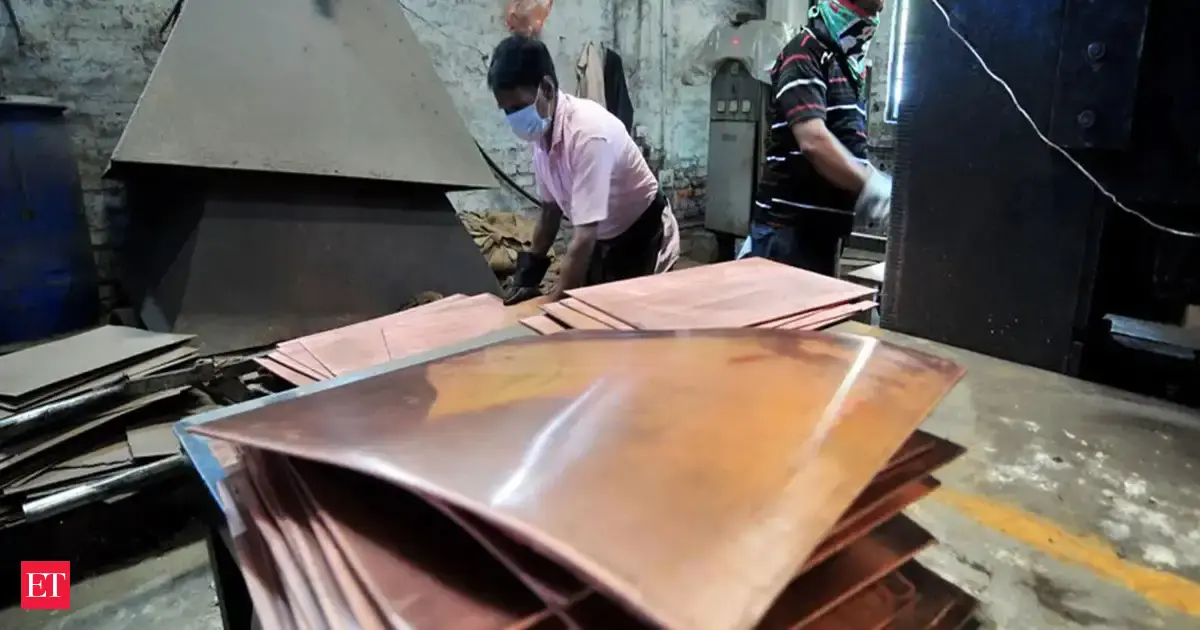
India's metals and mining sector outlook is improving significantly. Non-ferrous companies are expected to lead earnings growth and performance. Select primary steel producers will see support from capacity expansion and volume recovery. Raw material costs and commodity prices remain key risks for the industry. Overall EBITDA margins increased, showing positive sector momentum. View More
New Delhi: The outlook for India's metals and mining sector is improving, with non-ferrous companies likely to remain the key earnings drivers, while capacity expansion , volume recovery and improving realisations could support select primary steel producers , according to brokerage firm Systematix . The brokerage expects companies with strong expansion pipelines, cost optimisation and operating leverage to outperform, although raw-material costs, commodity prices and geopolitical disruptions remain key risks. Also read: Coal India plans Singapore trading hub in hunt for critical mineral assets: Sources Systematix said the first quarter of FY27 delivered divergent trends across its metals and mining coverage. Non-ferrous companies led earnings growth, benefiting from favourable commodity prices, lower costs, stronger copper earnings and improved alumina realisations. Primary steel producers reported resilient margins despite seasonally weaker volumes and higher coking-coal costs, while mining and steel-pipe companies delivered mixed performances. The overall EBITDA margin for the companies under Systematix's coverage increased to 21.6 per cent in 1QFY27 from 19.5 per cent in 4QFY26 and 18.6 per cent a year earlier. Non-ferrous companies recorded the strongest improvement, with margins rising to 23.2 per cent from 21.1 per cent sequentially and 17.8 per cent year-on-year. Live Events Also read: Copper emerges largest contributor for BHP’s EBITDA in fiscal 2026 In mining, Systematix remains positive on NMDC , supported by incremental volumes from Deposit 4 and 13, mine debottlenecking and improved logistics. Coal India , however, faces weaker volumes and pricing pressure despite rising power demand, while MOIL remains a recovery play dependent on improving production and manganese realisations. Systematix expects volume recovery, capacity expansion and operating leverage to support earnings, but steel realisations, coking-coal and base-metal prices, monsoon-related demand weakness and execution of new capacity will remain critical monitorables. .Pbanner{display:flex;justify-content:space-between;align-items:center;background-color:#ec1c40;margin-top:20px;padding:5px 10px;border-radius:4px;color:#fff;line-height:10px;width: 100%;box-sizing: border-box} .Pbannertext{display:flex;align-items:center;font-size:16px;font-weight:600;font-family:'Montserrat';} .Pbannertext img{height:20px;margin:0 6px} .Pbannerbutton a{display:flex;align-items:center;background-color:#fff;color:#ec1c40;text-decoration:none;font-weight:600;padding:4px 8px;border-radius:6px;font-size:15px;font-family:'Montserrat';} .Pbannerbutton img{height:20px;margin-right:6px} .Pbannerbutton a:hover{background-color:#f7f7f7} Add as a Reliable and Trusted News Source Add Now! (You can now subscribe to our Economic Times WhatsApp channel) (You can now subscribe to our Economic Times WhatsApp channel)

New 50% Trump administration tariffs on some Canadian exports went into place after the U.S. and Canada failed to reach a deal on Friday. View More
US President Donald Trump speaks with Canada's Prime Minister Mark Carney during a work lunch as part of the G7 summit, in Evian, eastern France, on June 16, 2026. A G7 summit is set to take place June 15 to 17 in the French town of Evian-les-Bains near Switzerland and it will be attended by country leaders as well as the EU's foreign policy chief and ministers from Brazil, Canada, the United Arab Emirates and Turkey. (Photo by Evelyn Hockstein / POOL / AFP via Getty Images)Evelyn Hockstein | Afp | Getty Images The U.S. imposed 50% tariffs on some Canadian products on Saturday after trade talks between the two countries fell apart on Friday.In response, Canada said it would impose its own retaliatory tariffs beginning on Sept. 8.Negotiators for both sides had been working on a deal all week, at times signaling that an agreement was near. President Donald Trump had postponed the original deadline of Wednesday just hours ahead of it being imposed, saying that there was a soon-to-be finalized deal. Dominic LeBlanc, Canada's trade minister for the U.S., told reporters on Thursday that a deal was "very close."However, both sides blamed the other for not reaching a deal as the tariffs, impacting roughly $20 billion in Canadian exports, including wine, furniture, dairy products, cement, clothing, fishing rods, hockey equipment, went into effect on Saturday morning.U.S. Trade Representative Jamieson Greer, in a post on X early Saturday morning, that "Canada declined to finalize the trade deal under the terms agreed earlier this week."Canadian Prime Minister Mark Carney said in a statement released on Friday that despite working toward a deal, "that progress has not been enough to meet our objectives for Canadians," saying that "last-minute changes in the U.S. proposed terms were unfair, uneconomic, and called into question the reliability of any deal."In a Saturday press conference in Ottawa, Ontario, Carney said that the U.S. demands had gone too far. "They asked too much and offered too little," he said, adding that Canada had been willing to drop its remaining retaliatory tariffs on steel, aluminum and autos if the United States lowered its own.As a result, Carney said Canada would put its own retaliatory tariffs into effect on Sept. 8, and those duties will target sectors such as steel, dairy, agricultural equipment, and pulp and paper, among others. He said additional details on those new measures would be released in the coming days, previously noting that the retaliatory measures would be "dollar for dollar."Carney also highlighted the energy relationship between the two countries: "Canada fuels American growth ⦠I don't think they want us to stop sending any of that energy."Senate Minority Leader Chuck Schumer, D-N.Y., criticized the retaliatory U.S. tariffs in a post on X."Trump just slapped another bill on hardworking American families â who are already crushed by his skyrocketing costs. This nonsense with Canada should have never gone into effect. It must end now," Schumer wrote.Sen. Susan Collins, R-Maine, highlighted the impact to her state of what she called the "on-again/off-again trade talks between the U.S. and Canada" in a post on X, writing that "Maine imports approximately $2 billion in non-petroleum products from Canada each year.""The Administration must consider the negative impact tariffs would have on Maine businesses, communities, and families and work to reach a fair agreement with our Canadian neighbors," she wrote, urging both sides to return to negotiations.In a statement issued on Saturday, Business Roundtable CEO Joshua Bolten said that while the "Business Roundtable appreciates the Trump Administration's focus on addressing barriers facing American exporters ... new tariffs and retaliation risk raising costs for American businesses and families, disrupting vital supply chains, and straining the important economic relationship between the United States and Canada."However, Greer, in an appearance on Fox News on Saturday, said that there are no new planned talks with the Canadians. "They've always had the best deal, and they still would have an even better deal, but they didn't want that," he said. Read more CNBC politics and policy coverageSupreme Court allows Trump to continue White House ballroom construction for nowHusted defends energy policy as GOP warns data centers put Ohio seat at riskTrump to allow import of 300,000 metric tons of ground beef without tariffTrump tariff deadline looms, Canada says resolving 'trade issues' with U.S.Trump touted a deal to avert new tariffs on Canada. Here's what we know so far The Trump administration signed three proclamations to impose the additional 50% tariffs on a range of Canadian goods in July, a response it said was due to trade discrimination against multiple U.S. products and industries such as motor vehicles, alcohol and dairy. The tariffs fell under Section 338 of the Tariff Act of 1930, which gives the president the power to impose tariffs of up to 50% on the goods of countries found to be discriminating against the U.S., and which had not been used since 1949.The failure to reach a deal adds another complication to the increasingly tense relationship between the U.S. and Canada. The two sides had already been at the negotiating table regarding their trilateral trade pact with Mexico, known as USMCA, which was not renewed in July over concerns with U.S. trade deficits â a deal that Trump once called "the best agreement we've ever made." watch nowVIDEO4:4204:42Why Trump slapped 50% tariffs on CanadaEconomy Choose CNBC as your preferred source on Google and never miss a moment from the most trusted name in business news.

From McDonald's to Wendy's, longtime Coke customers have been expanding their beverage offerings to boost their profit margins. View More
In this articleMNSTAMCKOFollow your favorite stocksCREATE FREE ACCOUNT Coca-Cola used its new Mixology dispenser to make refreshers at the National Restaurant Association show.Source: Coca-Cola ATLANTA â Coca-Cola is branching out into new customizable drinks and trend-driven equipment as consumers â and food service operators â increasingly want more options.Tucked away in an anonymous office park not far from its global headquarters here, Coke has been working on a flood of innovation at its secretive labs, including a way for its Freestyle drink dispensers to make dirty sodas, which combine pop with flavored syrups, cream or other ingredients. In partnership with AMC Theatres, it is testing a Micro Matic dispenser that can make brightly colored refreshers. And Coke has more white-label beverage options on the way, like an energy drink that can be customized by color and flavor.For many restaurants, handcrafted drinks like refreshers or iced coffee have become an important way to drive traffic and sales, even as diners broadly cut their spending. In the second quarter of this year, beverage servings at restaurants outpaced both servings of food alone and food with beverages, according to Circana data. When consumers are away from home, a drink often represents more than hydration, particularly for Generation Z."Oftentimes these beverages are an opportunity to take a break, get some energy or protein, have a treat, at a lower price point," David Portalatin, Circana senior vice president and food service industry advisor, told CNBC.From McDonald's to Wendy's, longtime Coke customers have been expanding their beverage offerings to meet the shift in consumer behavior and boost their profit margins. As operators seek to add more drinks to their menus, Coke must add more convenient beverage options â or risk losing sales to a competitor."It's our job to ensure that we're providing unique experiences and beverages because it's not a bonus now with consumers â it's the norm, they expect it," said Megan Tallman, Coke's vice president of dispensed equipment and innovation for its North American business. "When you think about Gen Z, they are okay paying $10 for a drink that is craveable and that they can show on their Instagram or on TikTok, which is helping our customers drive margin and also beverage attachment." Beyond Freestyle This July, Coca-Cola's Freestyle drink dispenser celebrated its 17th anniversary. "Honestly, if you fast forward to today, Freestyle is more relevant today than probably it was over a decade ago," Tallman said, crediting the machine's dozens of flavors.Even with the variety it offers, Coke is still trying to evolve to keep up.In the time since the Freestyle was introduced, the number of specialty beverage chains has exploded, offering customers nearly unlimited ways to customize their drinks, from sugar content to toppings. Market research firm Technomic tracks more than 100 different chains, with more than 41,000 locations across the U.S. combined, selling everything from coffee to juice to boba. Ever since Freestyle began popping up in restaurants and movie theaters, the dispensers have poured more than 67 billion 8-ounce servings of beverages; Coke has been able to track them all, thanks to the equipment's real-time data collection. That data is coming in handy now. Inside its Equipment Innovation Center in Atlanta, a massive television screen displays real-time data showing what drinks dispensed by the Freestyle are trending, what time of day and where â from the region to the type of business. AHA sparkling water, for example, is trending up at office buildings and hospitals.Insights from Freestyle dispensers also help the company discover new drinks that it can launch in grocery stores, like the limited-time Coca-Cola Orange Cream, which combines its namesake soda with vanilla and orange syrup. "If we see that the flavors that we're offering to consumers in food service are actually resonating â it's the largest testing platform out there," Tallman said.But Coke has more ideas in store. First is the Freestyle Mini, which initially launched in Europe. Intended for bars and restaurants with limited space, the dispenser holds up to 16 drink options, more than double the choices available in a traditional soda gun. Coke unveiled the new smaller machine at the National Restaurant Association Show in Chicago this spring, but the company has not yet sold it to customers in the U.S. The Coca-Cola Freestyle Mini offers more drink options than the traditional soda gun found behind the bar.Coca-Cola And then there are other equipment ideas that aren't as far along, inspired by Coke's desire to branch out into dirty soda, refreshers and coffee. To automate dirty soda, Coke has created a prototype that adds a dairy module to the classic Freestyle dispenser. Utah-based chain Swig takes credit for its invention of the dirty soda, although the trendy drink has now spread far and wide, from KFC restaurants to grocery store shelves.The trend has helped to change soda's image from a tired, mass-market drink to a handcrafted beverage that can be a treat. "Gen Z is the first generation raised to believe that nothing you consume is neutral, so everything is either helping you or costing you," said Matthew Greer, food, agribusiness and beverage analyst for Truist. "So, traditional soda does nothing for me, and it gives me 40 grams of sugar, so that fails the test."The rise of a dirty soda is boon for Coke, because pop is still its number one category. Coke's sparkling soft drinks business, which houses soda brands like Sprite, Schweppes and Fanta, still accounts for 69% of the company's overall unit case volume, even as other ventures like coffee and dairy-based beverages have grown. Coke's namesake soda alone accounted for 47% of global unit case volume and 42% of U.S. unit case volume in 2025, according to a company filing.Coke's prototypical dispensed dirty soda comes with a preprogrammed recipe, allowing for little customization but eliminating mess. The prototype, which took roughly three weeks to create, keeps the recognizable drip down the sides of the cup, giving the dirty soda its trademark visual appeal. Refreshing its offerings Beyond the Freestyle, Coke is also testing Micro Matic "mixology" dispensers to make refreshers and iced coffee drinks. Starbucks created the refresher back in 2012 to appeal to non-coffee drinkers who wanted a boost, especially in the afternoon, when traffic to its cafes slowed. Customers can pick their bases, flavors and even caffeine level. Refreshers now represent about $2 billion in annual sales for Starbucks.Other restaurant chains, such as Panera Bread to Dunkin', have taken note. Refreshers can be found on 8.1% of menus at national restaurant chains, according to Datassential. "It's almost, I think, a compliment, the fact that our Refresher business is being imitated in so many places," Starbucks CEO Brian Niccol said on the company's earnings conference call in late April.For its part, Coke is hoping to make its mark on the refresher category â whatever that means."There's no real definition for what a refresher is, so we're trying to take a stand on what that can be and what function that we believe it should deliver to the guest," said Sarah Kate Sims, director of dispensed innovation for Coca-Cola North America. To Sims, a refresher is a "healthier" beverage that delivers some kind of pick-me-up without a traditional coffee caffeine base, instead using a green tea or a natural coffee extract as a base. And a refresher must look good, too, she said."So that's what I'm working on for next year," Sims said. Inside 'The Vault' Coke's innovation efforts aren't restricted to equipment either. Across the parking lot from its Global Equipment Platforms office is "The Vault," where the company tests new drinks."We bring a lot of our top customers here to showcase our innovation and mixology, but also to collaborate and problem-solve and tackle the biggest challenges in the business," said Caroline Zambataro, collaboration architect at Coke.One of those customers is Whataburger. Coke worked with the Texas-based burger chain for about 18 months on its line of "Whatafreshers," which launched in July.In some cases, consumers might not even realize that they are drinking a Coke product. For example, the company considers itself a "pioneer" of premium lemonade after launching a white-label version more than a decade ago. More than 40,000 bubbler dispensers carry the drink, according to Tallman. That number includes Wendy's, which sells it under "Dave's Craft Lemonade," after founder Dave Thomas. Megan Tallman, vice president of dispensed equipment and innovation for Coca-Cola's North American business.Source: Coca-Cola These days, lemonade is a popular base for a lot of refreshers and other brightly colored drinks. So, too, is Sprite, which ranked fifth among U.S. carbonated soft drink brands by 2025 sales volume, according to Beverage Digest.But Coke is also working on a new blank slate for handcrafted beverages: a colorless, relatively unflavored energy drink that comes in frozen or liquid form. The company plans to launch the beverage with food service operators in the first half of 2027.Energy drinks are a much smaller category than sparkling beverages, but the segment has the highest expected growth projections for the next 10 years, according to Tallman. "We believe this solution really meets many consumers because more female consumers are interested in energy if it's a handcrafted solution," Tallman said.Starting with Celsius, the conversation around energy drinks has changed, widening their audience and the number of occasions where they can be consumed, Truist's Greer said. Rather than a beverage that you buy at the gas station for a pick-me-up, now energy drinks can become a part of some consumers' workout routines.Coke's take on energy drinks will be designed to be served by employees to "limit consumption," according to Tallman. A 12-ounce serving of Coke's version contains 106 milligrams of caffeine, roughly the same amount as the same size can of Red Bull and half of the caffeine content of a Celsius can. Excessive caffeine consumption has become a liability concern after Panera Bread's Charged Lemonade was named in at least two wrongful death lawsuits. A golden opportunity Broadly, Coke has been fielding more inquiries from food service partners these days about customizable drinks, according to Melinda Pritchett, director of innovation for Coke's North American business. "If you're looking at what McDonald's is doing with the handcrafted beverages, all of our customers are saying, 'We should be in that as well,'" she said. As the largest U.S. restaurant chain by system sales, McDonald's playbook is often replicated elsewhere. In May, the fast-food giant expanded its McCafe menu in the U.S. to include refreshers and crafted sodas, including Coke's Sprite and Hi-C, as part of its broader strategy to lean into beverages."In the U.S., [drink] sales are ahead of plan. Guest checks are higher, and we're seeing new occasions emerge throughout the day," McDonald's CEO Chris Kempczinski said on the company's earnings conference call earlier in August. "We've also seen strong food attachment rates on these orders."But the drink launch arrived during what was otherwise a lackluster quarter for McDonald's U.S. business, which reported same-store sales growth of just 0.8%. The company has replaced its U.S. president in the hopes of accelerating its domestic division.On Monday, McDonald's further expanded its beverage options with the Red Bull Dragonberry Energizer. Red Bull is privately owned, with no connection to Coke. The chain's choice to partner with a competitor rather than using an energy drink affiliated with Coke, like Monster, has sparked speculation about the state of the companies' more than 70-year-long relationship."We have a fantastic and very long-standing partnership with McDonald's, and that's intact, right? We continue to be very happy with that partnership," Coke CEO Henrique Braun said on the company's earnings conference call in late April, answering an analyst question about the partnership. "⦠We do respect the decisions on other choices about their relationships with other companies."Ultimately, the most important part of any business relationship is the effect on sales. When testing a new beverage with a food service partner, Coke tracks a couple of different performance metrics, like "incremental volume." In other words, would a customer buy one of the new refreshers even if they wouldn't otherwise buy a drink?A survey of several dozen U.S. McDonald's franchisees conducted by Kalinowski Equity Research found that more than half of operators said the specialty drinks are performing in line with their expectations."They are selling great, but most of it is a trade-off from other beverages," one anonymous franchisee said in the survey. "Not many new transaction counts." Choose CNBC as your preferred source on Google and never miss a moment from the most trusted name in business news.

Vice President JD Vance joined Sen. Jon Husted and other GOP leaders at a Middletown, Ohio, steel plant, as data center fears loom. View More
Sen. Jon Husted, R-Ohio, speaks during a Senate Appropriations committee hearing in the Dirksen Senate Office Building in Washington, July 21, 2026.Finn Gomez | Getty Images Sen. Jon Husted, R-Ohio, defended President Donald Trump's energy and economic agenda on Friday during an appearance at a southwestern Ohio steel mill with Vice President JD Vance, as Republicans warn that backlash over data centers could be putting his seat in jeopardy.Husted's comments come days after the National Republican Senatorial Committee, or NRSC, warned in a memo that data centers have become a "sleeper issue" this election cycle, as Americans increasingly worry about the impact they could have on their utility costs.Ohio is home to several large data center projects, including a proposed 10-gigawatt campus in Pike County that could cost more than $500 billion.But higher electricity costs, Husted said, are the result of Democratic policies, not data center construction."You want to have lower electricity prices â I want to tell you why they're rising. Because Congress and, under the Obama administration, under the Biden administration, they closed 23 power plants in the state of Ohio, representing half the electricity we use on a daily basis," Husted said at the Cleveland-Cliffs steel plant, in Middletown, Ohio. "Radical climate policies did that."Aging power plants have been closed in the state under both Democratic and Republican presidential administrations in recent years. Read more CNBC politics and policy coverageSupreme Court allows Trump to continue White House ballroom construction for nowHusted defends energy policy as GOP warns data centers put Ohio seat at riskTrump to allow import of 300,000 metric tons of ground beef without tariffTrump tariff deadline looms, Canada says resolving 'trade issues' with U.S.Trump touted a deal to avert new tariffs on Canada. Here's what we know so far Husted and Vance were joined by other GOP candidates, including Vivek Ramaswamy, the Republican candidate for Ohio governor who is locked in a close race with Democrat Amy Acton. According to recent polling, Husted is narrowly trailing former Democratic Sen. Sherrod Brown in his bid for reelection. Lauren Chou, a spokesperson for Brown's campaign, said in a statement that Husted had played a pivotal role during his time as the state's lieutenant governor in securing tax breaks for data centers, which she said were the true cause of higher utility bills. Husted's campaign did not immediately respond to a request for comment in response.Husted's seat is seen as crucial for Republicans if they want to retain their majority in the Senate in the next Congress. The GOP is widely favored to keep the Senate, though Trump's falling approval ratings, rising inflation, the ongoing Iran war and growing data center anxieties are causing concerns within the party."If voters' perceptions of data centers are not fixed quickly, the campaign against them will expand far beyond Ohio," the NRSC wrote in the Tuesday memo, which was obtained by CNBC and first reported by Axios. Husted, meanwhile, touted the Trump administration's investment in manufacturing in Ohio, including a $500 million Department of Energy grant to Cleveland-Cliffs, which was initially awarded by the Biden administration to finance a hydrogen-powered furnace at the Middletown facility, but now will be used for other upgrades, including to its blast furnace and artificial intelligence technologies.Cleveland-Cliffs said in a statement it will match the DOE's funding, for a total $1 billion investment in the facility. The company said the project would employ more than 1,500 workers during construction."We can bring back manufacturing to this great country, in places like Middletown and across our great state," Husted said. "And why is it important that we do this? Investments like this, a billion-dollar investment right here? Because it's job security, it's economic security, it's national security." Choose CNBC as your preferred source on Google and never miss a moment from the most trusted name in business news.

Trump had already postponed the 50% tariffs on a range of Canadian goods so Washington and Ottawa could finalize a tentative deal. View More
Dominic LeBlanc (C), Canada's minister in charge of US-Canada trade, arrives to meet with US Trade Representative Jamieson Greer at the headquarters of the Office of the United States Trade Representative in Washington, DC, on August 20, 2026. Mandel Ngan | AFP | Getty Images The U.S. and Canada continued trade talks Friday, as the clock ticked down to reach a deal before President Donald Trump's new tariffs on hockey sticks, wine and other Canadian goods take effect.As of 5:30 p.m. ET, negotiators in Washington had yet to emerge from the Office of the U.S. Trade Representative with a final agreement in hand. If no deal is reached by 12:01 a.m. ET on Saturday, the 50% tariffs on roughly $20 billion worth of imports will switch on. Trump, when asked Friday afternoon if the two countries have reached a deal that would avert the looming duties, said, "I think so. We'll see.""We have to take care of our farmers. Our farmers are very important to me," Trump said before boarding Air Force One. "The deal with Canada is moving along," he added. "We should be able to have a deal with Canada."Trump's latest comments differed from his declaration three days earlier that the U.S. and Canada "have a deal" that merely needed to be finalized.Earlier Friday afternoon, Canada said it is still working to "resolve outstanding trade issues" with the U.S.The "intensive discussions" are continuing "for the mutual benefit of both countries," a spokesperson for Dominic LeBlanc, Canada's trade minister for the U.S., said in a statement after 1 p.m. ET.LeBlanc and chief Canadian trade negotiator Janice Charette had arrived at Greer's office around noon. LeBlanc did not speak to reporters on his way into the building.The 50% retaliatory tariffs were initially set to kick in Wednesday â until Trump, in an eleventh-hour post on Truth Social, said he would postpone them for three days so Washington and Ottawa could finalize a tentative deal.Trump's post signaled that the agreement was all but complete, "subject to the finalization of documents." But trade officials emerged from additional rounds of talks in Washington on Wednesday and Thursday without a final deal in hand."We're very close," LeBlanc told reporters Thursday afternoon. "We continue to make progress, and we're going to stay here and do the work that's necessary until we get to that point."He said that at that time Charette was still engaged in talks with Greer and other Trump administration officials."Canadians expect us to get a deal that's in the economic interest of Canada and Canadian workers," LeBlanc said. Read more CNBC politics and policy coverageSupreme Court allows Trump to continue White House ballroom construction for nowHusted defends energy policy as GOP warns data centers put Ohio seat at riskTrump to allow import of 300,000 metric tons of ground beef without tariffTrump tariff deadline looms, Canada says resolving 'trade issues' with U.S.Trump touted a deal to avert new tariffs on Canada. Here's what we know so far Businesses have warned that the duties could cripple their sales and that the threat alone has already taken a toll.Negotiators have been tight-lipped about the specifics of a deal, as well as the remaining sticking points. Trump's existing tariffs on imports of Canadian steel, aluminum and lumber are a central concern, The New York Times reported Thursday, citing people familiar with the talks.LeBlanc and his office have declined to comment to CNBC on how the metals tariffs factor into the negotiations.Trump said Wednesday that the U.S. might agree to lower those duties and suggested that lower tariffs on Canadian autos might also be on the table. Trump has also suggested that the deal could revive Keystone XL, the planned oil pipeline from Alberta to Nebraska that was scrapped in 2021 by then-President Joe Biden.The Trump administration has said that Canada has committed to lower its trade barriers on the U.S., without offering specifics. Trump said Wednesday that Canadian tariffs "will be nonexistent for our farmers." The looming 50% tariff threat was partly based on the administration's allegation that Canada discriminates against the U.S. dairy industry. Canada has not confirmed Trump's claim.Prime Minister Mark Carney said in an X post Wednesday, "We are now moving towards an agreement that reinforces that Canadian advantage, including by securing the best terms in each of Canada's most important strategic sectors and providing greater certainty about our future trading relationship."The looming 50% tariffs were invoked last month under Section 338 of the Tariff Act of 1930, which lets the president impose duties in response to discrimination or unfair commerce. But the Great Depression-era law has rarely, if ever, been invoked, and it has been neglected for decades. Choose CNBC as your preferred source on Google and never miss a moment from the most trusted name in business news.


The Delhi Police on Friday registered an FIR following a complaint about the alleged use of pellet guns during the 20 July CJP protests. Rahul Gandhi visited the Parliament Street police station and staged a sit-in, which ended after the FIR was filed. View More