
Latest Sectors News
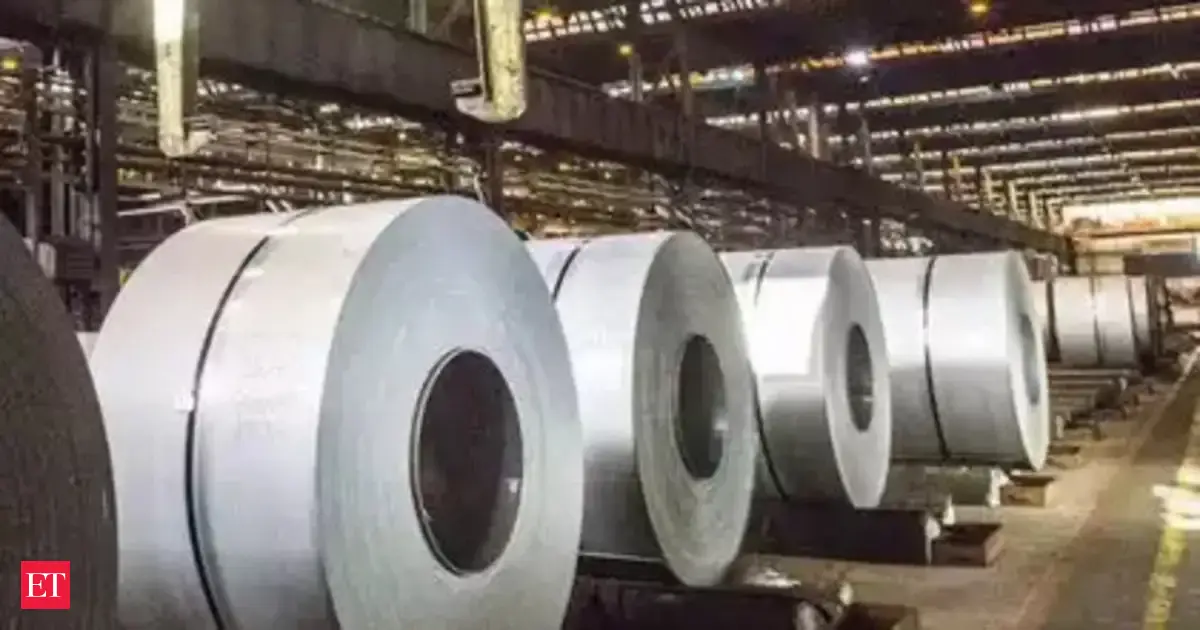
India is actively exploring new export destinations for its steel in the Middle East and Asia. This strategic shift aims to mitigate the effects of the European Union's carbon tax. The nation is also focusing on securing essential raw materials through long-term agreements and asset acquisitions. View More
India is seeking new steel export markets in the Middle East and Asia to offset the impact of the European Union's carbon tax that took effect in January, a government source said. India, the world's second-biggest producer of crude steel, ships roughly two-thirds of its steel exports to Europe, where flows have come under pressure following the EU's Carbon Border Adjustment Mechanism. Last week, Steel Secretary Sandeep Poundrik said the government would have to take action to support exports hit by Europe's carbon tax. "For exports, we are looking at new markets and we are trying to get agreements with countries in the Middle East where a lot of infrastructure is coming up, and also in Asia," said the source directly involved in decision-making, declining to be identified as the deliberations are confidential. "Till now, our exports were focussed on Europe but we are trying to diversify," the source added. Live Events India's federal Ministry of Steel did not respond to an email seeking comment. Mills are looking for government support to help them compete in non-EU markets where China has been dominant, a senior executive at a major steel firm said. Steel exports from China, the world's largest producer, have been resilient since 2023 and hit a record monthly high in December. Beijing plans to roll out a licence system this year to regulate alloy exports, as strong shipments have fuelled a growing protectionist backlash globally. SECURING RAW MATERIAL Explaining India's widening efforts to secure supplies of raw materials such as coking coal, limestone, manganese and other critical minerals, the source said New Delhi was increasingly pursuing long-term offtake agreements and asset acquisitions. State-run Steel Authority of India ( SAIL ) and miner NMDC are looking at Brazil, Argentina, Australia and the Middle East, the source said. SAIL and NMDC did not respond to emails seeking comment. "For coking coal asset acquisition, we are looking at Australia," the source said. Currently, around 95% of the sector's coking coal requirements is met through imports, with Australia supplying more than half. Last year, NMDC said it was exploring coking coal assets in Indonesia and Australia. .Pbanner{display:flex;justify-content:space-between;align-items:center;background-color:#ec1c40;margin-top:20px;padding:5px 10px;border-radius:4px;color:#fff;line-height:10px;} .Pbannertext{display:flex;align-items:center;font-size:16px;font-weight:600;font-family:'Montserrat';} .Pbannertext img{height:20px;margin:0 6px} .Pbannerbutton a{display:flex;align-items:center;background-color:#fff;color:#ec1c40;text-decoration:none;font-weight:600;padding:4px 8px;border-radius:6px;font-size:15px;font-family:'Montserrat';} .Pbannerbutton img{height:20px;margin-right:6px} .Pbannerbutton a:hover{background-color:#f7f7f7} Add as a Reliable and Trusted News Source Add Now! (You can now subscribe to our Economic Times WhatsApp channel) (You can now subscribe to our Economic Times WhatsApp channel)


Free breakfast is a staple of the hospitality industry, but from Hyatt to Holiday Inn and Marriott, the economics and hotel business models are changing. View More
Jeff Greenberg | Universal Images Group | Getty Images At some point in the 1980s and 90s, the free hot breakfast became a staple of the hospitality industry. At many a Holiday Inn or Hampton Inn, the lobby at 8 a.m. is a pinwheel of pajama-clad kids, frazzled parents, and solo business travelers jockeying for position in front of the waffle maker. Meanwhile, self-serve cereal bars dispense Froot Loops and Lucky Charms, and hot platters of endless eggs and turkey sausage steam under heat lamps. For many, this breakfast spread is part of the appeal of travel. It endures to this day, but it is facing new economic threats and evolving hotel business models. At hotels, which have been ditching items like free soaps and even bathroom doors to economize, the free breakfast is a sacred cow that some worry will not survive, increasingly seen by hotel operators as an money pit eating into the thin margins of the business. Last year, Hyatt Hotels' Hyatt Place brand removed free breakfast from 40 of its properties. Holiday Inn, owned by IHG, has adopted a breakfast buffet model across the majority of its U.S. operations with a la carte items still available at select locations â a cost-cutting measure that preserves the breakfast offering while reducing labor and food waste. Gary Leff, who runs the travel blog View from the Wing and first reported on Holiday Inn's breakfast changes, said that the threat to the free breakfast should be viewed within the broader trend in the lodging industry to look for ways to cut costs for owners. "That goes far beyond breakfasts, to things like housekeeping â less often during a stay, less extensive when it's done during a stay â to bulk toiletries rather than individual mini-bottles to eliminating products like alarm clocks in rooms," Leff said. Despite the free breakfast's staying power, the math never added up for the business, according to Curtis Crimmins, the CEO and founder of boutique hotel concept Roomza. "It was a loyalty play â a loss leader meant to drive signups, repeat bookings, and extended brand loyalty. I would argue that once free breakfast makes the shift from being a 'surprise and delight' endearing moment to an expectation, then its days are numbered," Crimmins said. "Looking for proof of this slow demise in your average Holiday Inn Express breakfast area? Look no further than the recent explosion of 'Grab and Go' options. That's not a coincidence," he said. Leff says that catering to a more affluent customer, as in the case of Hyatt Hotels, may offer operators more latitude to eliminate breakfast. A Hyatt spokesperson said while the company has "tested breakfast options at selectâ¯Hyattâ¯Place hotels that offer guests the ability to book rates that do not include breakfast ... Mostâ¯Hyattâ¯Place hotels in the U.S. continue to offer complimentary breakfast to all guests."Evaluations are ongoing. "As part of our ongoing commitment to delivering value to our guests, including World ofâ¯Hyattâ¯members, we are continually evaluating breakfast options that best serve our guests and our hotels," the Hyatt spokesperson said.    Leff says Hyatt has not released data on the trial, and many guests probably just assume breakfast will be free when they book at this point. "Unclear yet whether Hyatt can get away with not doing limited-service breakfast," he said. In the current economy with higher-income consumers leading the spend, luxury has been a bright spot within travel. Marriott International CEO Anthony Capuano describes the hotel business right now as being emblematic of the K-shaped economy receiving so much attention. "There are economic headwinds and some uncertainty but we continue to see the consumer prioritizing travel and experiences," Capuano told CNBC's "Squawk on the Street" last week after its most recent earnings. "Luxury was a real highlight for us," Capuano said, adding that 10 percent of Marriott's portfolio is in the luxury tier.  watch nowVIDEO3:3203:32Marriott CEO Anthony Capuano: The K-shaped economy is impacting the travel verticalSquawk on the Street Marriott has made breakfast changes in some overseas luxury locations. For instance, the Regis Macao eliminated free breakfast for Platinum, Titanium, and Ambassador loyalty members as of March 2025 and replaced it with bonus points or discounted breakfast instead. Some Reddit users have posted this month about free omelettes disappearing from Marriott breakfast bars and now being part of the paid full breakfast buffet, but a Marriott spokesman said that is not a company-wide policy and, if true, would be individual hotel operators making that decision. The majority of travelers expect free breakfastThe consumer split is leading to a bifurcation of breakfast models, with higher-end customers going towards paid eggs benedict and homemade croissants while middle- and lower-income consumers crowd the free buffet.To be sure, Americans like their hotel breakfast. Among guests who partake of hotel food and beverage during their stay, the vast majority (78%) eat breakfast in the hotel, according to the 2025 JD Power North America Hotel Guest Satisfaction Study. Of that 78 percent, only 8 percent is paid, primarily at upper tier hotels where the trend is taking root. Andrea Stokes, hospitality practice lead at JD Power, said that data suggests guests continue to rate breakfast as an important part of their hotel stay. "This proportion is even higher at limited-service upper midscale and midscale hotel brands where complimentary breakfast is typically part of the hotel brand's standard offering," Stokes said. When JD Power asks upper midscale and midscale hotel guests to rate the importance of hotel features or amenities, about half (47%) rate complimentary breakfast as "need-to-have" (versus only nice-to-have). Jeff Greenberg | Universal Images Group | Getty Images Mitchell Murray, CEO of Station House Inn and three other boutique hotels in Lake Tahoe, California, says while large chain hotels can offer economies of scale, free breakfast can account for roughly 5% of total revenue, closer to 6â7% once labor is included. "That's a meaningful cost, and many operators are asking, 'Does free breakfast actually generate 5% more revenue or bookings?' In many cases, the answer is no," Murray said. He added that when breakfast is free, quality often suffers â think mediocre coffee, watery eggs, frozen potatoes. "It's edible, but rarely memorable or value-adding," Murray said. One of Murray's properties is a Holiday Inn Express which he is transitioning to an independent hotel this year and where he plans to do away with the free breakfast after the change, once freed from corporate mandates. Major hotel brand franchisors have specific brand standards that franchisees must adhere to, and this includes food and beverage standards. Best Western, though, has no plans to unplug the waffle iron. "Offering a complimentary breakfast is an important part of our guest experience across much of our portfolio," said the hotel chain's CEO Larry Cuculic. "For travelers, free breakfast simplifies the stay, delivers meaningful value and influences booking and loyalty decisions, especially in the midscale and upper-midscale segments," Cuculic said. Cuculic says the economics still make sense: breakfast supports guest satisfaction and repeat business, by leveraging the purchasing power of its extensive hotel network, Best Western can help hotels manage costs while maintaining quality and consistency, "making breakfast both a friendly touchpoint for guests and a driver of long-term loyalty," he said. Holiday Inn Express is also standing by the free breakfast bar. "Breakfast plays a critical role in our value proposition and continues to be a major reason why travelers choose to stay with us â it's something they know, trust, and expect from our brand, "said Justin Alexander, vice president, global brand management for Holiday Inn Express, Staybridge Suites & Candlewood Suites. How changes to hotel menu will influence travel planningHotel breakfast factors into the travel planning of Aimee Misovich and her family. The Holland, Michigan, resident said that her family are Hilton Honors members. "So we always stay at their properties â typically, Embassy Suites, Homewood or Hampton Inn. All three still offer free hotel breakfasts," Misovich said, adding that she likes the variety offered. "Homewoods began offering overnight oats and chia puddings. I do partake of the latter. Other times I'll just have a bagel with cream cheese, or a sausage patty inside a bagel for a breakfast sandwich of sorts," Misovich said. While she added that the quality can vary from property to property, the breakfasts are still appealing. "I certainly hope Hilton keeps their free breakfasts! After all, they're not really 'free'âI'm sure they're factored somehow into room prices," Misovich said. She also noted that foods she eats at hotel breakfasts are rarely ones she eats at home, "so they're a treat to me when we travel." The food and beverage offering, even if only for breakfast service, can be a key differentiator for limited-service hotel brands. "Any hotels that consider scaling back or eliminating free breakfast must focus on demonstrating value in other ways," Stokes said. Rita Chaddad, a faculty member who teaches courses on tourism and hospitality management at Columbia Southern University, predicts that free breakfast will continue to be eliminated in the luxury brands but remain in some form elsewhere, though travelers should expect more changes to come. "Breakfast is likely to remain, but the model may become more segmented," Chaddad said. In upper-midscale settings, hotels may be more willing to offer breakfast through credits, optional add-ons, or targeted inclusion â for example, through packages or loyalty benefits. "In these tiers, hotels may have more flexibility to replace 'free' with perceived value in other forms, provided it is communicated well and the guest feels the trade-off is fair," Chaddad said. But she added that many of the middle-tier hotels compete on simple, visible value, and breakfast is one of the clearest signals of that value, so there is risk of backlash if it is completely eliminated. "Removing it can create a perceived loss that may outweigh operational savings, even if the hotel's overall cost structure improves behind the scenes. For value-oriented travelers, breakfast is often interpreted as part of the 'deal,' and losing it can complicate the guest's mental math when comparing properties," Chaddad said. Chaddad said hotels will increasingly play with the offering, and beyond higher-tier hotels, travelers should be on the lookout for new models showing up as room-only versus breakfast-included choices, breakfast offered through packages or loyalty benefits, or other redesigned formats that control costs while keeping the benefit visible to guests. "The shift may be less about eliminating breakfast and more about adjusting who receives it, how it is delivered, and how clearly it is priced or bundled," she said.While some of those changes may add to the hotel bottom line, they could come with an added emotional cost. "My kids and I would be really sad if they discontinue free hotel breakfasts. It's part of the fun of traveling," said East Tennessee resident Joanne Peterson.Â

BHP Group’s earnings for the six months to the end of December rose by more than a fifth thanks to a surge in copper prices, even as plateauing demand in China weighed on its iron ore and steelmaking coal businesses. View More

Stock markets in Europe began the week in positive territory after edging lower on Friday. View More
In this articleRNO-FRNES.N-CHAIR-FRBHP-GBBHP-AUFollow your favorite stocksCREATE FREE ACCOUNT European markets closed higher on Monday, as investors digested the key points from this year's Munich Security Conference.The pan-European Stoxx 600 was up 0.1% by market close, with major bourses and most sectors in the region in positive territory. Trading of Dassault Systemes shares were briefly halted Monday after the company fell sharply. The pause came as broker AlphaValue cut its rating from Buy to Reduce amid renewed concerns over AI monetization and a "worrying loss of momentum" at the French software group. Its shares were 10% lower by the end of the trading session. Geopolitics and defense returned to the spotlight as investors focused on this year's Munich Security Conference. The event saw several European leaders and policymakers reiterate the need for greater defense spending to accelerate the continent's strategic autonomy, with discussions of a common nuclear shield.Despite U.S. Secretary of State Marco Rubio striking a markedly more conciliatory tone towards European allies in his speech Saturday, German Chancellor Friedrich Merz acknowledged a "deep divide" in the transatlantic partnership, warning that the post-World War Two rules-based order "no longer exists." watch nowVIDEO7:0007:00'Appeasement always brings new wars', says EU's Kaja KallasSquawk Box Europe Also speaking at the MSC, Ukrainian leader Volodymyr Zelenskyy said his country would be ready to join the EU by 2027, and said a date for accession should be included in any peace agreement with Russia.Meanwhile, U.K. lender NatWest Group gained 4.7% as it began a £750 million ($1.02 billion) share buyback program on Monday.Elsewhere, European mining stocks saw some of the biggest moves to the downside in morning dealmaking. Rio Tinto lost 1% after the multinational mining company suspended work at its Simandou iron-ore mine in Guinea following a fatality at the SimFer project late Sunday.Ahead of its latest earnings update Tuesday, BHP Group fell 0.7%, while Glencore, which had been set to merge with Rio Tinto until the tie-up was abandoned earlier this month, also lost ground, falling over 0.3%. Fresnillo retreated 1%, and Anglo American was 0.2% lower.The FTSE Industrial Metals and Mining Index was last seen down nearly 0.6%.In corporate earnings, Airbus, Nestlé and Renault are among the names reporting results later this week.In Asia, Japan's Nikkei advanced 0.2%, as economic growth in the country came in at 0.2% annualized for the December quarter, lagging an expected 1.6% print. Trading was thin elsewhere in the region, as markets in China, South Korea and Taiwan were closed for the Lunar New Year holiday.Stock markets in the U.S., meanwhile, are closed on Monday for Presidents' Day.

The launch aligns with the company’s growing focus on value-added products and its belief that downstream steel is the future. View More

Star ratings based on carbon emissions are being issued to encourage low-carbon steelmaking, while PSUs will be mandated to use certified green steel View More

ByteDance's Seedance 2.0 model that created the viral Tom Cruise and Brad Pitt fight videos got the attention of Elon Musk. View More
In this articleBIDUTMEBABAFollow your favorite stocksCREATE FREE ACCOUNT A dozen actors perform a traditional lion dance in front of Todtown shopping mall ahead of the Chinese Lunar New Year in Shanghai, China, on Feb. 13, 2026, during the opening of the Xinzhuang Lantern Festival.Ying Tang | Nurphoto | Getty Images The Year of the Horse kicks off this weekend, and China's artificial intelligence companies are splashing out the cash in what is being called "The Lunar New Year AI War."To land prime placement for its Doubao AI model, TikTok owner ByteDance is handing out 100,000 prizes during the country's main holiday TV gala, including luxury cars. It is giving away money packets, too, with some an auspicious CNY8,888, about $1,280.Baidu, Tencent and Alibaba are offering even bigger digital red envelopes, with some as high as CNY10,000, about $1,450, as well as vouchers, gadgets, and other freebies. Baidu has allocated CNY500 million, about $72 million, to promote its Ernie chatbot. Tencent doubled that at CNY1 billion, about $145 million, for its Yuanbao model. Alibaba is spending a whopping CNY3 billion, about $434 million, to get users to try out Qwen. The giveaways have created such a commotion that Alibaba admitted it had to "urgently add resources" to end outages on its Qwen app.Analysts say companies see this moment as key to grab AI-curious customers for their own survival."They are in a high-stakes race to capture users and build developer ecosystems before rivals lock in market dominance," Charlie Dai, principal analyst at research group Forrester, told CNBC. "The issue is that profitability and sustainable business models remain unclear, for every major player in the global market." Read more CNBC tech newsTech IPO hype gets drowned out on Wall Street by prospect of $1 trillion in debt salesFTC tells Tim Cook to look into reports Apple News is censoring conservativesAnthropic closes $30 billion funding round as cash keeps flowing into top AI startupsWaymo begins deploying next-gen Ojai robotaxis to extend its U.S. lead Companies are upgrading their models as well. On Thursday, ByteDance officially unveiled a new video generation model Seedance 2.0, which the company said is designed for professional film production. An AI-generated video of Tom Cruise and Brad Pitt fighting made on the platform quickly went viral and turned heads in Hollywood.The new AI release has already gotten the attention of Elon Musk, who replied to a post about the release on his social media platform X with the comment, "It's happening fast." On Wednesday, Startup Zhipu AI, or Z.ai outside of China, rolled out a new AI model GLM-5 to compete with rivals like Anthropic's Claude Opus 4.5 on coding and other tasks. Shanghai-based MiniMax has released its M2.5 model for the public to test. The industry expects DeepSeek and Alibaba to announce next-generation models around the holidays, too.Lunar New Year traditionally is a time when people spend and companies create buzz around new products. A year ago, Chinese startup DeepSeek shocked the industry globally when it released its low-cost AI modelâa development often referred to as the "DeepSeek moment."The cash incentives and cutthroat competition are reminiscent of the early stages in other industries Beijing aimed to dominate globally, like steel, solar panels, and EVs, that eventually led to pushback from its trading partners for flooding world markets with unfairly cheap products.In 2015, Lunar New Year promotions for tech giant Tencent led to explosive growth for the company's now dominant messaging app WeChat.Amid the aggressive AI promotions, Beijing is also joining the push.Premier Li Qiang chaired a government study session on AI, calling for stronger coordination of data, computing, power and the internet, saying China should accelerate the "large-scale commercial application" of AI. watch nowVIDEO2:1102:11Inside Chinaâs growing consumer gloomMarkets and Politics Digital Original Video
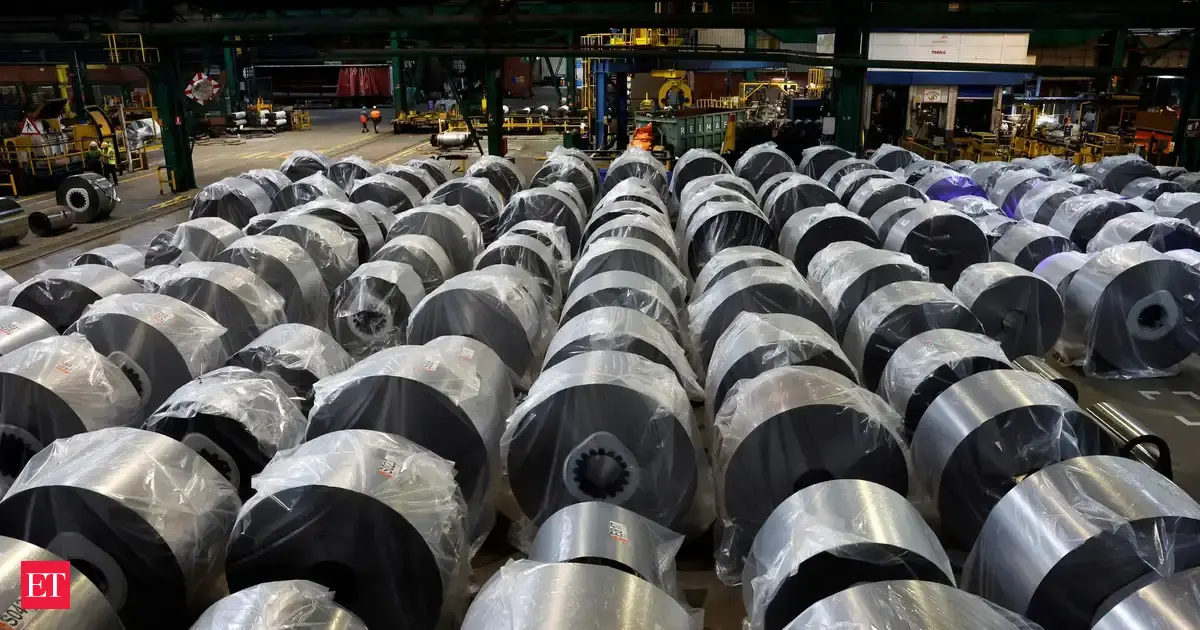
Jindal Stainless is collaborating with Indian Railways to produce stainless steel salt containers. This initiative marks a significant step towards using corrosion-free steel in railway logistics. A prototype container made from 304 grade stainless steel has successfully completed loading and unloading trials. View More
New Delhi: Jindal Stainless has partnered with the Indian Railways to manufacture stainless steel salt containers in the country. The integration of stainless steel into salt transport logistics marks remarkable milestone indicating growing consumption of corrosion free value-added steel in the Railways industry, Jindal Stainless said. In a statement, the company said it has partnered with Indian Railways to develop India's first corrosion-resistant stainless steel salt container. A prototype successfully underwent loading and unloading trials at Bhimasar, Gandhidham, Gujarat on February 10, 2026. The 20-foot salt container has been fabricated entirely in 304 grade stainless steel. Live Events Commenting on the partnership, company's Managing Director Abhyuday Jindal said salt transportation is highly vulnerable to corrosion, particularly in coastal environments, leads to frequent repairs, premature asset failure, and significant resource wastage. "With India's container market growing steadily, driven by infrastructure expansion, port-led developments, and rising bulk commodity movement, the sector requires materials that can withstand harsh operating conditions while ensuring long-term sustainability," he said. Jindal Stainless is India's largest stainless steel manufacturing player. The company has signed an agreement with Ministry of Steel under the newly launched Production Linked Incentive (PLI) 1.2 scheme for speciality steel, to manufacture high-end steel for critical applications. .Pbanner{display:flex;justify-content:space-between;align-items:center;background-color:#ec1c40;margin-top:20px;padding:5px 10px;border-radius:4px;color:#fff;line-height:10px;} .Pbannertext{display:flex;align-items:center;font-size:16px;font-weight:600;font-family:'Montserrat';} .Pbannertext img{height:20px;margin:0 6px} .Pbannerbutton a{display:flex;align-items:center;background-color:#fff;color:#ec1c40;text-decoration:none;font-weight:600;padding:4px 8px;border-radius:6px;font-size:15px;font-family:'Montserrat';} .Pbannerbutton img{height:20px;margin-right:6px} .Pbannerbutton a:hover{background-color:#f7f7f7} Add as a Reliable and Trusted News Source Add Now! (You can now subscribe to our Economic Times WhatsApp channel) (You can now subscribe to our Economic Times WhatsApp channel)