Latest Sectors News
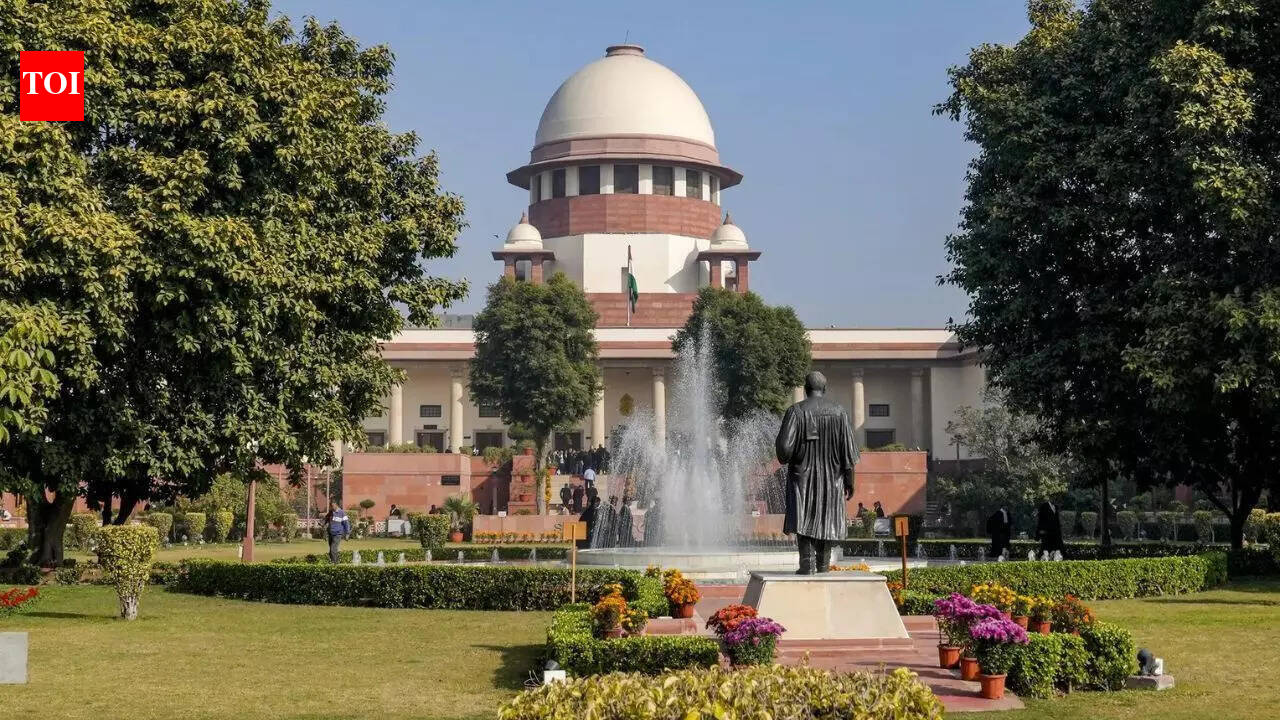
The Supreme Court has strongly condemned government authorities and litigants for routinely defying court orders and resorting to delayed appeals when facing contempt. Justices Ahsanuddin Amanullah and R Mahadevan emphasized that such practices erode public faith in the judiciary, urging strict action against disobedient parties, especially state entities, to uphold the rule of law. View More

After years on the front lines of Russia's invasion of Ukraine, the Iranian Shahed-136 drone is at the center of Tehran's retaliation against recent U.S. strikes. View More
A Shahed-136 drone is displayed at a rally in western Tehran, Iran, on February 11, 2026.Nurphoto | Nurphoto | Getty Images In the aftermath of the Israeli-U.S. strikes on Iran, American allies in the Persian Gulf are hearing a sound that Ukrainian soldiers have long come to dread: the foreboding hum of the Shahed-136 'kamikaze' drone. First designed in Iran, the Shahed has already become a fixture of modern warfare, with Tehran's strategic partner, Russia, utilizing the technology in its years-long invasion of Ukraine.Now, the drones â the most advanced of which is the long-ranged Shahed-136 â have become central to Iran's retaliation strategy against the U.S. and its regional allies, with thousands unleashed so far. At first glance, the Shahed is unremarkable compared with cutting-edge weapon technologies, with analysts sometimes referring to it as "the poor man's cruise missile." But while American allies have managed to intercept the vast majority of incoming drones with the help of U.S.-provided defense systems such as the 'Patriot' missile, many Shaheds have still managed to hit their targets. The United Arab Emirates Ministry of Defence said on Tuesday that out of 941 Iranian drones detected since the start of the Iran war, 65 fell within its territory, damaging ports, airports, hotels and data centers. The Shahed ... has allowed states like Russia and Iran a cheap way to impose disproportionate costsPatrycja BazylczykAnalyst at the Center for Strategic and International Studie Analysts say the key to their effectiveness lies in the numbers. The drones are relatively cheap and easy to mass-produce, especially compared to the sophisticated systems used to defend against them. Those factors make the drone ideal for swarming and overburdening aerial defenses, with each drone intercepted also representing a more valuable defense asset expended. "The Shahedâ136, among other unmanned aerial systems, has allowed states like Russia and Iran a cheap way to impose disproportionate costs," said Patrycja Bazylczyk, analyst with the Missile Defense Project at the Center for Strategic and International Studies in Washington DC."They force adversaries to waste expensive interceptors on lowâcost drones, project power, and create a steady psychological burden on civilian populations." The cost imbalance U.S. government reports describe the Shahed-136 as a one-way attack unmanned aerial vehicle produced by Iranian entities tied to the Islamic Revolutionary Guard Corps.Compared with ballistic missiles, the drones fly low and slow, deliver a relatively modest payload, and are limited to mostly fixed targets, Behnam Ben Taleblu, senior director of the Iran program at the Foundation for Defense of Democracies, told CNBC.Public estimates suggest individual Shahed drones can cost between $20,000 and $50,000. Ballistic and cruise missiles, by contrast, can cost millions of dollars each.In that sense, the Shahed and its equivalents "basically serve as 'the poor man's cruise missile' offering a way to strike and harass adversaries "on the cheap," said Taleblu.For Iran, which faces both international sanctions and limitations on acquiring advanced weapons, that cost advantage is significant.Meanwhile, air defense systems used by Gulf states and Israel can cost between $3 million and $12 million per interceptor, according to U.S. Department of Defense budget documents.This cost discrepancy raises a serious issue for Iran's enemies: Air defense systems have finite numbers of defense missiles, with each target intercepted representing a valuable asset expended. Pimary technical data from the U.S. Armyâs ODIN database and Iranian military disclosures describe the Shahed-136 as about 3.5 metres long with a 2.5-metre wingspan.Sergei Supinsky | Afp | Getty Images Thus, in a war of attrition, the drones could be used by Tehran to wear down air defenses, opening them up to more damaging attacks, analysts say. "The logic is to expend drones early while preserving ballistic missiles for the long haul," said CSIS's Bazylczyk.She added that Iran's ability to sustain massâdrone use will depend on its stockpiles, how well it can protect or restore its supply chain, and whether the U.S. and Israel can meaningfully disrupt the flow of components or production sites. The U.S. has long sought to disrupt Iran's production of the Shahed-136, and recently imposed new sanctions targeting suspected component suppliers across Turkey and the UAE.However, Russia's production of Shahed drones shows that such systems can be manufactured at scale during wartime and amid targeted sanctions. U.S. officials claim Iran had launched over 2,000 drones in the conflict as of Wednesday. However, the country is understood to have large stockpiles and may be capable of producing hundreds more each week, military experts reportedly told The National newspaper."Gulf countries are at risk of depleting their interceptors unless they are more prudent about when it fires those interceptors," said Joze Pelayo, a Middle East security analyst with the think tank Atlantic Council."The depletion is not imminent, but it remains an urgent issue," he said. However, attacks on multiple fronts by Iranian allies such as Hezbollah and the Houthis could put stockpiles at risk of being depleted within days, he added. A new staple of the modern battlefield? The Shahedâ136 was first unveiled around 2021 and gained global attention after Russia began deploying the Iranian-supplied weapons during its invasion of Ukraine in 2022. The Kremlin has since received thousands of the drones and begun producing them based on Iranian blueprints, highlighting their replicable and scalable design.Some analysts have suggested that Iran has drawn from Russia's extensive battlefield experience with the drones, including modifications such as anti-jamming antennas, electronic warfare-resistant navigation, and new warheads. Those warheads typically carry 30 kg to 50 kg of explosives and can pack a punch, particularly when used in large swarms, with advanced versions capable of a range of up to 1,200 miles.Michael Connell, a Middle East specialist at the Center for Naval Analyses, said that the Shahed-136 has proven so effective that the U.S. has reverse-engineered it and deployed its own version on the battlefield against Iranian targets. In its Iran attacks over the weekend, the U.S. Central Command confirmed that it had used its drones modeled on the Shahed for the first time in combat. watch nowVIDEO9:4809:48Chinese drone maker DJI dominates the market â despite being on a U.S. blacklistInternational Originals With unmanned attack drones becoming a fixture of the modern battlefield, methods for dealing with them are also evolving.According to Taleblu from the Foundation for Defense of Democracies, Ukraine has found some success in downing drones with fighter jet cannon fire, a more sustainable deterrent than missile interceptors. Ukraine also recently pioneered the development of cheaper mass-produced interceptors, which Kyiv claims can stop the Shahed. Gulf states are also expected to adopt more sustainable approaches. The Pentagon and at least one Gulf government are reportedly in talks to buy the cheaper Ukrainian-made interceptors. Meanwhile, Qatar's Ministry of Defense says it is using its air force jets to intercept Iranian attacks, including Shahed drones, alongside ground-based air defenses.Electronic warfare targeting the Shahed's GPS, as well as short-range missiles and directed-energy systems such as Israel's Iron Beam, are also significantly cheaper to operate than traditional interceptors.Still, Gulf states currently lack fast, high-volume anti-drone capabilities, and developing and deploying such systems will likely take years, said Atlantic Council's Pelayo. Choose CNBC as your preferred source on Google and never miss a moment from the most trusted name in business news.

The investment will be made through IMR’s Indian entities — India Coke and Power and IMR Steel View More
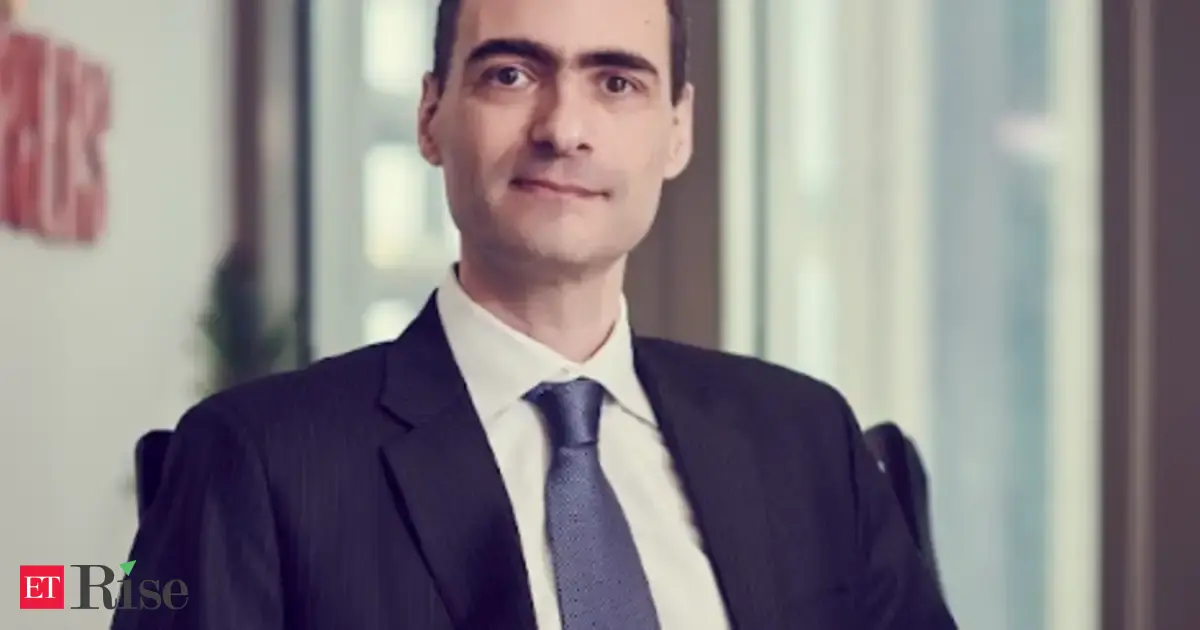
Guillaume Dourdin, CEO & Country Director of Veolia India, on the company’s 25-year journey, Mumbai’s water ambitions, and why compliance is becoming the ultimate licence to operate in India. View More
Confidence can grow with the passage of time. Veolia ’s Indian operations have been under the leadership of French executive Guillaume Dourdin for the last 10 years, and he handles them with remarkable ease. His discussion of India’s water infrastructure reflects deep, long-term involvement, not detached observation, highlighting his experience in negotiating with officials, adapting to brief construction windows due to monsoons, and successfully expanding a pilot project in Nagpur into a vast continental water treatment initiative. Veolia established its presence in India during the late 1990s, preceding the widespread recognition of sustainability as a key business concern. Initially, the company's proposal was straightforward: round-the-clock water availability, a goal that felt almost unattainable in India back then. The Nagpur pilot in 2005 proved the sceptics wrong. Twenty years on, this city exemplifies advanced digital water management. It features a control centre that provides real-time visibility of all pipes, valves, and leakages, enabling a municipal commissioner to oversee the city’s water supply from one display. The Mumbai projects Dourdin is overseeing today are of a different order of magnitude. The Bhandup plant’s 2,000 MLD (million litres per day) capacity will make it Asia’s largest water treatment facility. This, along with the 910 MLD Panjrapur facility, will supply close to 60% of Mumbai’s water requirements. These are not marginal infrastructure upgrades; they are city-defining investments being delivered through a three-way partnership between Veolia, Welspun Enterprises , and Mumbai's municipal authority, with each focused on what they do best. Live Events The most striking aspect of Dourdin’s perspective is its lack of the immediate, deal-focused thinking prevalent in India’s infrastructure discussions. In a chat with Economic Times Digital , he discusses transforming sludge into a resource, implementing carbon capture in steel factories, and utilising AI for leak detection, all within the framework of a 30-year outlook for India’s environmental economy. He is, in a sense, a patient capitalist in an impatient market. And in that patience, Veolia may have found its most durable competitive advantage in India. Edited excerpts. The Economic Times (ET): Veolia has been in India for 25 years. How has the journey evolved? Guillaume Dourdin (GD): Twenty-five years ago, we launched in India our municipal water business, our historical area of expertise. The goal was to determine if a 24X7 water supply could be implemented here, a concept already proven globally. The first project we undertook was in Nagpur in 2005, serving as a demonstration to prove the technical feasibility of a consistent water supply within a single district. The success we achieved emboldened us to proceed. The demo resulted in our first complete water concession in Nagpur in 2012, and from there, we expanded, developing a similar model in Delhi and building network management capabilities in Karnataka. For roughly the first 15 years of our India journey, we were purely focused on the municipal sector. When I joined in 2017, we made a deliberate strategic shift where, along with what we already do in water, we wanted to build capabilities for industrial customers. At that time, Veolia Group aimed for a 50-50 balance between municipal and industrial operations globally. We then considered potential starting points, and hazardous waste treatment in Gujarat emerged as the solution. It’s a strong industrial state with a significant chemical sector, and we acquired a majority stake in Detox India Private Limited, where we now hold 70%, and used that as a platform to expand our industrial services and geographic footprint across India. After that, we started offering onsite services, assisting industrial clients with managing their water and utilities at their own locations. And we have also been exploring something more innovative, which is carbon capture. In 2021, we entered a partnership with a start-up, leading to a commercial carbon capture project trial at Tata Steel’s Jamshedpur plant. We collect 5 tonnes of CO2 daily. While the figure is small compared to a steel mill’s overall emissions, it demonstrated the concept’s technical and financial practicability. The goal was to create a scalable model that Tata Steel and other companies could use for their decarbonisation plans. ET: Veolia has deep experience in ultra-pure water for microelectronics globally. Given India’s push into semiconductors, is this a space you’re actively targeting here? GD: India currently lacks our ultra-pure water operations, yet our worldwide references are exceptionally strong, especially in South Korea, where we partner with leading chip producers SK Hynix and Magnachip. We handle their complete water cycle at their main sites, including producing ultra-pure water, recycling it, and managing the entire process. It’s a domain where Veolia has deep expertise. The 'Hubgrade' control center at Veolia's Orange City Water (OCW) Head Office in Nagpur. This advanced digital system provides real-time monitoring, significantly reducing non-revenue water and ensuring transparent, efficient service for citizens. India is absolutely on our radar for this, and we think our contributions extend beyond technology to encompass significant long-term operational capacity. Water is vital to chip manufacturing. The quality requirements are extraordinarily stringent and must be maintained consistently. A significant challenge for semiconductor fabs, beyond quality, is their immense water consumption and the need to access it responsibly without compromising other water supplies. For this industry to operate sustainably in India, reusing and purifying water to extremely high standards will be essential. The same logic applies to data centres, which are massive water consumers. We have successfully implemented solutions globally and anticipate strong opportunities for their deployment here. India is currently the subject of several ongoing discussions; once they progress, we will act swiftly. ET: The Bhandup and Panjrapur water treatment projects in Mumbai are massive undertakings. How significant are these for Veolia, both in India and globally? GD: These projects are truly groundbreaking, both for India and for the Veolia Group worldwide. The Bhandup plant, with its 2,000 MLD capacity, is poised to become Asia’s largest water treatment facility and possibly one of the world’s biggest. The immense size is crucial for showcasing our ability to handle intricate, extensive infrastructure projects. Mumbai faces growing resource limitations, including water, land, energy, and waste management, due to its rapid urbanisation. We are committed to being a true partner to Mumbai in tackling these challenges. Once they are operational, projects in Bhandup and Panjrapur will supply almost 60% of Mumbai’s water. That’s a material contribution to the city’s water security, and we are also doing this in a way that conserves land because the technology we use is compact. A plant of equivalent capacity using conventional technology would occupy far more space. We are also optimising for energy and chemical efficiency, which means we are conserving multiple resources simultaneously. The 240MLD water treatment plant featuring Veolia's patented advanced technologies designed, built and operated by Veolia in Nagpur to support the city's enhanced 24X7 water supply. Bhandup’s projected operational date is 2029, with construction started in 2025, and Panjrapur is due to come online in 2030. This four-year construction timeline is typical, considering detailed design, permits, site preparation, and the monsoon season. In India, you can realistically anticipate nine months of useful construction annually. Factor that in, and the timeline is logical. ET: These projects are being delivered through a subcontracting model with Welspun Enterprises. How effective is this partnership model, and what must Indian cities get right to make such arrangements work? GD: This model is truly beneficial for everyone involved, aligning with our approach to integrating into local systems when expanding internationally. Working with local partners is something we are quite comfortable with. The reason for its effectiveness lies in each partner dedicating themselves to their primary strength. Welspun possesses the project management expertise for a construction project of this scale. Despite being a massive group with €44.7 billion in global revenue and 230,000 employees, we do not have the necessary India-specific workforce and construction capabilities to undertake a project of this magnitude independently. This is where Welspun fills that gap. What we bring is the technology, where Veolia’s advanced water treatment systems are, if you like, the engine of the plant and, critically, our long-term operations and maintenance capability. Our core strength lies in decades of operating facilities at their best, rather than just building them. The Mumbai municipality’s role in policy and governance includes making decisions on project financing, tariff structures, and the distribution of benefits to citizens. For PPP models to succeed, the contract needs to be truly equitable, assigning risks to the parties best equipped to manage them. The model becomes highly effective when that alignment is correct, and when it isn’t, you get disputes. The primary focus for Indian cities should be achieving the correct contractual balance. ET: For years, Indian cities have aimed for a 24X7 water supply. What are the biggest obstacles to actually achieving it? GD: The fundamental challenge is that we are never starting from scratch. A greenfield project offers a straightforward approach, ensuring continuous supply from its inception. What we face is a living, evolving system that was not originally designed for uninterrupted service, where you cannot simply replace everything. The process involves gradual intervention, upgrading, and redesign, all within the city’s ongoing operations. Veolia's 91 MLD Sewage Treatment Plant in Nilothi, Delhi a model of sustainable urban infrastructure, generates 50% of its energy on-site from municipal wastewater sludge, showcasing innovative resource recovery. The evolutionary journey of a city like Mumbai, with its scale and intricacy, is a lengthy and arduous process. Very often, the first challenge is even more basic: understanding exactly where the network is. Over many decades of gradual expansion, numerous cities have failed to develop a comprehensive understanding of their pipe systems. The initial efforts involved in setting up GIS systems, evaluating the state of pipes and valves, and ranking which ones need replacing are considerable on their own. The second challenge is that the ecosystem doesn’t stand still. The population grows, new industries arrive, and demand patterns shift, yet your strategy has to accommodate that dynamism. The third challenge, a governance issue, involves shifting from a system lacking universal metering, delivery, and payment for water to one with accountability at all stages. Sustained policy commitment is necessary to get all stakeholders, including citizens, utilities, and political leadership, on board with that transition. We have observed the process in Nagpur, where we manage the entire city water concession. Between 2011 and now, we’ve nearly quintupled the number of connected households, doubled the network’s size, and reduced non-revenue water from 70% to 30%. It is achievable, but it will take years of synchronised investment and hard work. ET: Energy efficiency and decarbonisation are becoming central to water treatment. How is Veolia integrating digital tools, AI, and low-carbon practices into large-scale operations? GD: Energy efficiency is a key consideration in our technology development and our day-to-day operations. In Nagpur, for example, we have deployed what we call Hubgrade, a fully digital monitoring and control system for the entire water concession. Visiting our control room would give you a real-time overview of everything, including treatment plants, the distribution network, and water loss locations. This provides full insight into your system, which is the basis for optimisation. We also utilise Digital Twin technology, a virtual copy of the physical system, for monitoring. This allows us to simulate various operational scenarios and pinpoint optimisation strategies before applying them. And the platform is fully transparent to the municipality, where the client has complete visibility into their own water infrastructure, which many municipal commissioners had never had before. Today, the commissioner in Nagpur can see the entire city's water supply on a screen in their office. Such accountability transforms system management. Regarding AI, yes, we are developing various applications, with a primary focus on leakage detection. By integrating network data analytics with specific field inspections, we can accurately pinpoint leak locations down to the street level. It greatly cuts down on the expense and duration of physical checks. To be upfront, like many businesses, we're still figuring out how to best integrate AI into our daily work, but the potential is considerable, and we are investing in it. ET: You have been in India for a decade. How have you seen the country’s approach to sustainability and decarbonisation evolve? GD: My optimism is real, and it stems from my in-depth understanding of this, not from political politeness. People tend to focus on what isn’t working, but if you step back, the transformation is real. We conduct the Barometer of Ecological Transformation every two years, surveying citizens, policymakers, and business leaders in various countries. The India results consistently impress me. There’s a high level of environmental consciousness here, and crucially, people say they are willing to pay more for better environmental outcomes. They understand that failing to address these challenges is itself a threat to India’s growth trajectory. At the policy level, we are seeing movement, too. The new MSW regulations, the government’s bio-CNG initiatives, and the Union Budget’s focus on CCUS all indicate a significant change. And I believe personal experience plays a role in that. Experiencing 50-degree summers in Delhi makes the reality of climate change undeniable. People feel it. An aerial view of Veolia's Integrated Common Hazardous Waste Landfill Facility in Kutch, Gujarat provides safe disposal for industrial hazardous waste. The regulatory environment has also strengthened, where the Pollution Control Boards, with oversight from the National Green Tribunal (NGT), are exerting much more pressure on industrial compliance than they were a decade ago. It’s still imperfect, but the direction is right. This is important for us, as Veolia is dedicated to complete adherence, not only to local laws but also to our own internal benchmarks, which are often more stringent. That is what we bring to our customers: the assurance that we will not cut corners. There is also a broader dynamic at play. With Indian companies increasingly involved in worldwide supply chains across industries like pharmaceuticals and manufacturing, adhering to regulations is now a business imperative, not solely a legal requirement. Global partners and shareholders will raise enquiries that regulators might overlook, and I see more and more of our industrial customers internalising this. Compliance is becoming a licence to operate and to survive. ET: Many municipalities struggle with the human capacity to sustain complex water systems over time. How do global operators like Veolia help bridge that gap? GD: This is really at the heart of what we do, our core strength and what differentiates us, which is long-term operational capability. We have seen this pattern repeatedly: infrastructure gets built, then it underperforms because no one is managing it to its potential. You build a hundred plants operating at 30% capacity, and the answer seems to be to build more plants. That logic has to change, and the imperative now is to operate existing infrastructure at its optimum. When we operate a facility, we train our own people, but we also invest in the broader ecosystem. We train subcontractors and we build capability within the municipalities we partner with. We have been here 25 years, and our intention is to be here for the next 30 or more. Considering the long-term perspective, developing human capital, and enhancing the industry's capacity is both morally correct and economically advantageous. A more capable municipal customer, one that asks harder questions and holds us to higher standards, makes us better too, and that is the kind of ecosystem we want to help build. ET: How critical is India to Veolia’s global strategy, and what are your growth plans here? GD: I firmly believe India’s importance cannot be overstated, and this is not a corporate cliché. That is why I have been here for 10 years, and there is enormous potential here for a company like Veolia that can deliver integrated solutions across multiple environmental challenges. We have competitors in water, and we have competitors in waste management. However, there are significantly fewer companies capable of generating value by integrating water, waste, and decarbonisation. That is what makes us different. The broader strategic context matters too, and the global search for alternatives to China as a manufacturing and supply chain hub has put India in a unique position. This market, characterised by a young, growing populace and an expanding middle class, is among the few truly large global markets currently accessible. For the Group, being present and invested in India is important, as the coming 20 years belong to the nation. Our ambition is to double our size in India by 2030, which is ambitious but achievable, given the market dynamics. We will pursue it across several fronts, which includes expanding our municipal water business with a focus on water reuse and recycling; scaling our hazardous waste platform with our next facility is likely to be in Maharashtra, with investment beginning in the second half of this year. We will also support industrial decarbonisation through energy optimisation and alternatives to coal and bio-CNG from sludge management, which I see as a significant emerging opportunity. Sludge, in particular, is emerging as a major obstacle for Indian municipal bodies, while simultaneously being a valuable asset. Sludge contains energy and can be converted into fertiliser. Right now, India imports them both at considerable cost. Economically and environmentally, the capacity to produce these locally from waste streams represents an ideal circular solution. .Pbanner{display:flex;justify-content:space-between;align-items:center;background-color:#ec1c40;margin-top:20px;padding:5px 10px;border-radius:4px;color:#fff;line-height:10px;} .Pbannertext{display:flex;align-items:center;font-size:16px;font-weight:600;font-family:'Montserrat';} .Pbannertext img{height:20px;margin:0 6px} .Pbannerbutton a{display:flex;align-items:center;background-color:#fff;color:#ec1c40;text-decoration:none;font-weight:600;padding:4px 8px;border-radius:6px;font-size:15px;font-family:'Montserrat';} .Pbannerbutton img{height:20px;margin-right:6px} .Pbannerbutton a:hover{background-color:#f7f7f7} Add as a Reliable and Trusted News Source Add Now!

A prolonged supply disruption exceeding a few weeks from Hormuz forces either a switch to domestic or imported coal or a sourcing pivot to the US Gulf pet coke, says Kpler View More

The Indian stock market experienced a significant sell-off, with major indices dropping over 1.5% amid escalating Middle East conflict. The Nifty 50 closed 1.55% lower and the Sensex lost 1.40%. Broader markets fell over 2%. View More

The Nifty Metal index fell nearly 5 per cent to an intraday low of 11,690.30, down from its previous close of 12,269.80, reflecting heavy selling across industrial, base and mining metal counters View More
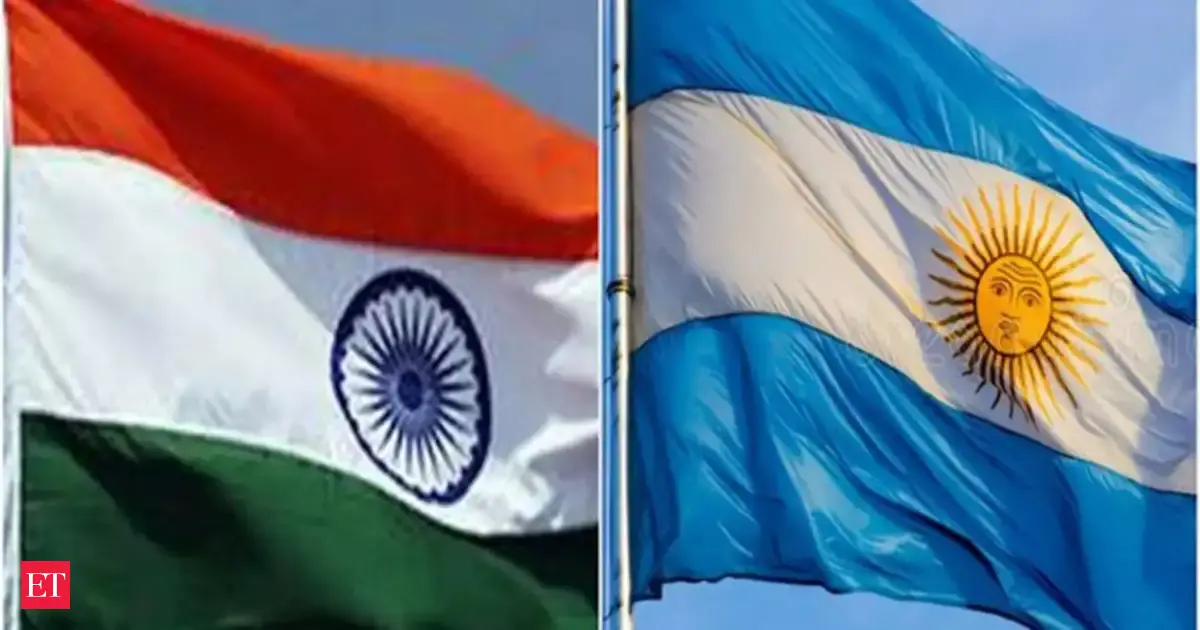
Argentina and India are strengthening economic ties. Mining cooperation is a key focus, with Argentina offering a favorable framework for Indian investment in critical minerals. Agreements are already in place for lithium exploration. India is a growing partner for Argentina, with bilateral trade increasing. Future collaborations are expected at events like Bharat Steel 2026. View More
Argentine Ambassador Mariano Caucino has stated that mining cooperation is one of the “key milestones of our bilateral economic relationship”. He was speaking at the Bharat Steel 2026 pre-gathering organized by the Ministry of Steel. “Argentina and India are natural partners thanks to a high degree of economic complementarity”, Caucino stated and reminded that “India is the fastest growing economy in today’s world and has already became Argentina’s sixth largest partner”. Caucino recalled that “in 2025, India's Steel Secretary led a high-level delegation to Argentina, accompanied by leading Indian mining companies. That visit was showed that India sees Argentina as a strategic partner to source of the critical minerals that power modern steelmaking”. Live Events The Argentine envoy emphasized that “our government is committed to provide the adequate framework for that relationship: our RIGI regime (the Large Investment Incentive Regime) offers investors the legal stability, tax predictability, and long-term protection they need to commit to large-scale mining and industrial projects”. Caucino stated that “thee early fruits of that shared vision are showing: in early 2024, CAMYEN (the mining and energy company of the province of Catamarca) and KABIL (India's Critical Minerals joint venture company) signed an agreement to explore and develop lithium blocks in Catamarca province (a state in northern Argentina), which is a concrete expression of what Argentina-India cooperation looks like in practice”. The envoy affirmed that “this was followed by the recent visit to India by JEMSE (Jujuy’s Energy and Mining State Company, a province (another northern Argentine state) that holds some of the world's richest lithium reserves”. Caucino said that “all of that was just the beginning. I am delighted to share that Argentine governors representing some of our most dynamic mining provinces will be present here at Bharat Steel 2026”. The envoy concluded “Argentina and India are natural partners. You need the minerals; we have them in abundance. And now, with the proper regulatory framework we can make it happen. We expect that Bharat Steel 2026 will help us go a step further”. Earlier speaking at the 27th Trans-Asian Chamber of Commerce and Industry Conference in Mumbai last week, Caucino, highlighted the "strong complementarity between the two economies". Caucino indicated that India has now become Argentina's sixth largest trading partner. "Despite the enormous distance between our nations and the fact that we belong to different cultures, the friendship between Argentina and India is based on common values such as democracy and on an increasingly high complementarity between our economies," the ambassador explained. The envoy stated that “In the agricultural sector, our country has become the leading supplier of vegetable oils to India, which is the world's largest importer of vegetable oils. 2025 marked a new record in this area, and Argentina solidified its position as a reliable food security provider for the enormous Indian market”. Caucino highlighted that “In the area of mining and critical minerals, there is a very important complementarity that has strengthened Argentine-Indian cooperation. For example, Argentina has one of the world's largest lithium reserves, in the so-called Lithium Triangle, which we share with Bolivia and Chile”. Caucino stated that “Indian companies are already working and investing in Argentina and more cooperation in this field will probably surge in the next future”. Caucino emphasized that “India is becoming more and more important for us and for the entire world, as a consequence of its rise in the global context and due to the great complementarity between our economies”. The envoy emphasised that "since elevating our relationship to the status of strategic partners in 2019, we have significantly increased the volume of our economic and trade ties". Currently, the bilateral trade volume is around 5 billion US dollars, the release stated. .Pbanner{display:flex;justify-content:space-between;align-items:center;background-color:#ec1c40;margin-top:20px;padding:5px 10px;border-radius:4px;color:#fff;line-height:10px;} .Pbannertext{display:flex;align-items:center;font-size:16px;font-weight:600;font-family:'Montserrat';} .Pbannertext img{height:20px;margin:0 6px} .Pbannerbutton a{display:flex;align-items:center;background-color:#fff;color:#ec1c40;text-decoration:none;font-weight:600;padding:4px 8px;border-radius:6px;font-size:15px;font-family:'Montserrat';} .Pbannerbutton img{height:20px;margin-right:6px} .Pbannerbutton a:hover{background-color:#f7f7f7} Add as a Reliable and Trusted News Source Add Now! (You can now subscribe to our Economic Times WhatsApp channel) (You can now subscribe to our Economic Times WhatsApp channel)

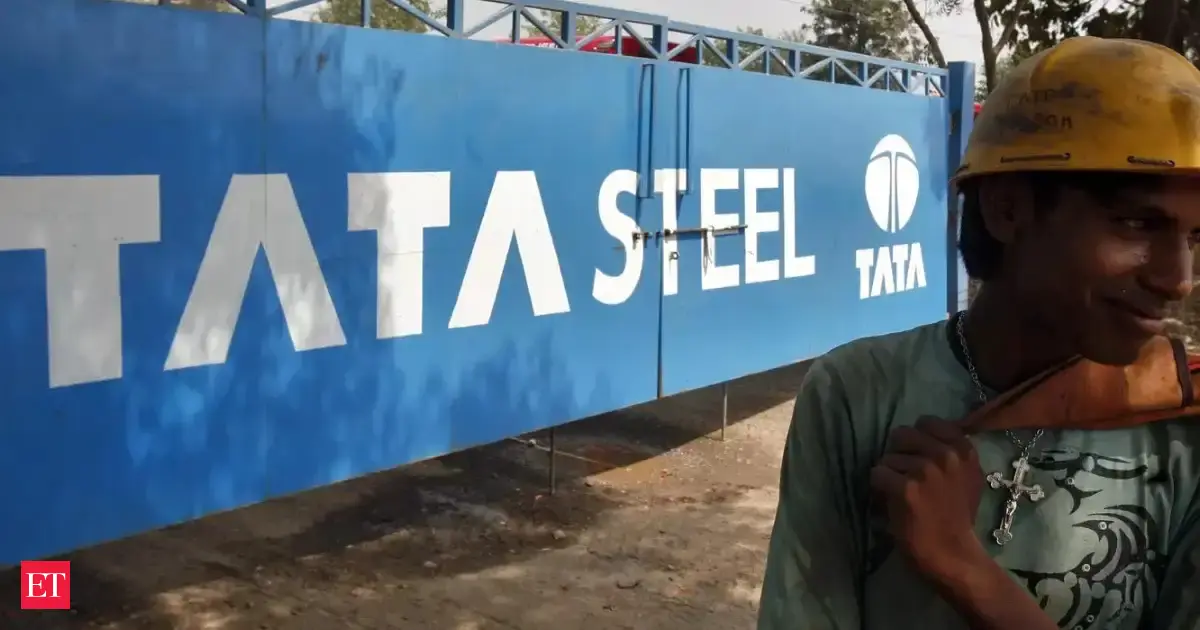
Tata Steel will invest eleven thousand crore rupees in Jharkhand. This investment is for developing advanced green steel technology at its Jamshedpur facility. Tata Motors will also invest in hydrogen trucks at the same location. The Tata Group will form an experts' panel to explore further investments in Jharkhand's development. View More
Tata Steel will invest Rs 11,000 crore in Jharkhand for developing advanced grade steel at its Jamsehdpur facility, Tata Group Chairman N Chandrasekaran said on Monday. The technology developed by the Tata Group for advanced steel production will benefit other steelmakers, too, he said. "Tata Steel will invest Rs 11,000 crore in Jharkhand for developing advanced green steel technology, pioneered by it with low carbon production," Chandrasekaran said, sharing the stage with CEO T V Narendran and Chief Minister Hemant Soren. Besides, Tata Motors will also invest in hydrogen trucks at the Jamshedpur facility, he said. "Tata Motors' investment in hydrogen trucks is strategically important, the scope of which is significant for domestic and global players," Chandrasekaran said. Live Events He also said the Tata Group will form an experts' panel to explore investment in various sectors for the development of Jharkhand, "as suggested by the chief minister". .Pbanner{display:flex;justify-content:space-between;align-items:center;background-color:#ec1c40;margin-top:20px;padding:5px 10px;border-radius:4px;color:#fff;line-height:10px;} .Pbannertext{display:flex;align-items:center;font-size:16px;font-weight:600;font-family:'Montserrat';} .Pbannertext img{height:20px;margin:0 6px} .Pbannerbutton a{display:flex;align-items:center;background-color:#fff;color:#ec1c40;text-decoration:none;font-weight:600;padding:4px 8px;border-radius:6px;font-size:15px;font-family:'Montserrat';} .Pbannerbutton img{height:20px;margin-right:6px} .Pbannerbutton a:hover{background-color:#f7f7f7} Add as a Reliable and Trusted News Source Add Now! (You can now subscribe to our Economic Times WhatsApp channel) (You can now subscribe to our Economic Times WhatsApp channel)