
Latest Sectors News

The development underscores Tata Steel’s delicate balancing act in the UK, where it has struggled with structurally higher costs, including energy and logistics, even as market conditions begin to improve. View More
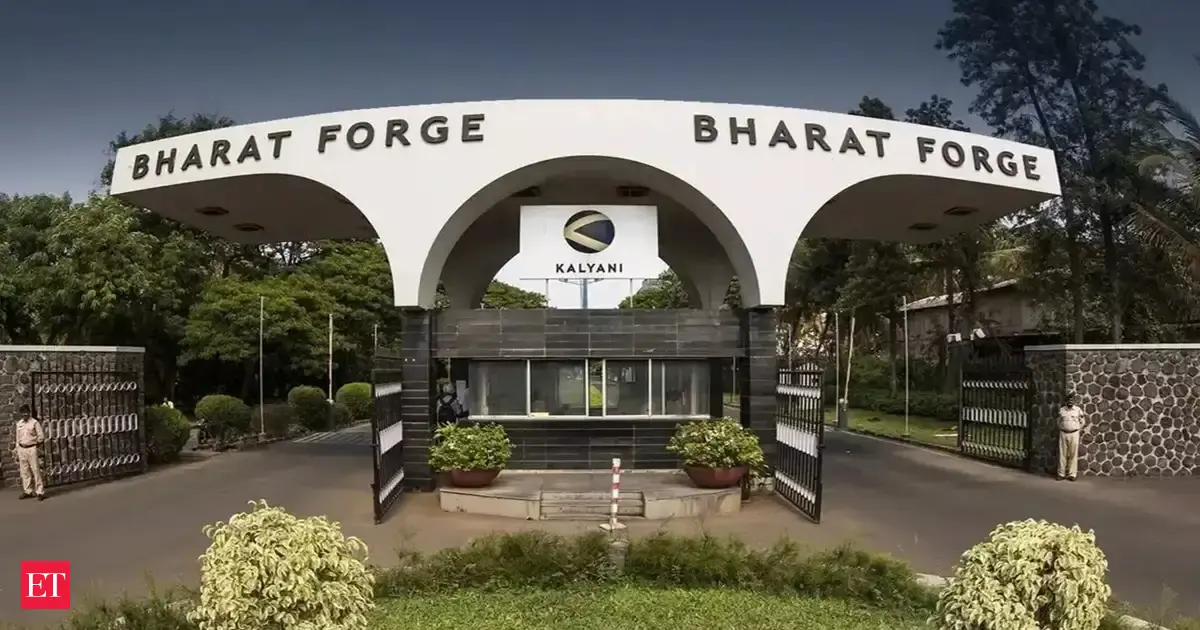
Bharat Forge's board has approved a significant restructuring of its German steel forging arm, Bharat Forge CDP GmbH. The company is considering closing down operations in Ennepetal, Germany. This move stems from ongoing market challenges and cost disadvantages faced by the subsidiary. View More
New Delhi, Bharat Forge Ltd on Thursday said its board has approved the restructuring of the steel forging operations of its arm in Germany , including the consideration of closing it down due to market challenges and the associated cost disadvantages. The company's board, which met on Thursday, has also approved a financing arrangement of up to EUR 30 million for the restructuring, Bharat Forge said in a regulatory filing. The board reviewed and evaluated a proposal for the phased restructuring of the steel forging operations of Bharat Forge CDP GmbH (BF CDP), its wholly-owned subsidiary located in Ennepetal, Germany, it said. "The proposal may include an orderly wind-down and solvent liquidation of BF CDP, in accordance with applicable German laws," it said. The company further said, "This is being considered in light of the market challenges and the associated cost disadvantages faced by BF CDP in Germany." Live Events To facilitate the proposed restructuring, the board has approved a financing arrangement of up to EUR 30 million and has delegated the necessary authorities to its sub-committee to oversee further evaluation and implementation, it added. .Pbanner{display:flex;justify-content:space-between;align-items:center;background-color:#ec1c40;margin-top:20px;padding:5px 10px;border-radius:4px;color:#fff;line-height:10px;} .Pbannertext{display:flex;align-items:center;font-size:16px;font-weight:600;font-family:'Montserrat';} .Pbannertext img{height:20px;margin:0 6px} .Pbannerbutton a{display:flex;align-items:center;background-color:#fff;color:#ec1c40;text-decoration:none;font-weight:600;padding:4px 8px;border-radius:6px;font-size:15px;font-family:'Montserrat';} .Pbannerbutton img{height:20px;margin-right:6px} .Pbannerbutton a:hover{background-color:#f7f7f7} Add as a Reliable and Trusted News Source Add Now! (You can now subscribe to our Economic Times WhatsApp channel) (You can now subscribe to our Economic Times WhatsApp channel)

A fresh bump in ore prices has lifted the miner’s stock, yet record output, a 100-MT expansion plan and a pivot towards critical minerals may matter more for the longer-term rerating. View More
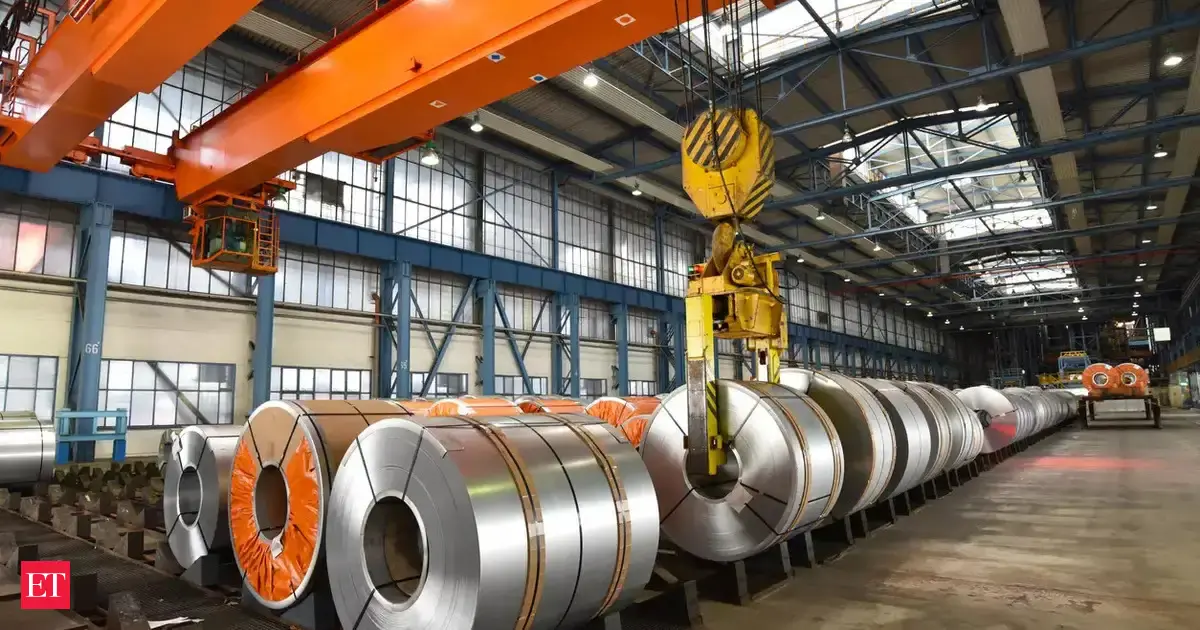
India is set to boost its steel production significantly by 2035-36. The new National Steel Policy 2025 targets a substantial reduction in carbon emissions from steel mills. This ambitious plan includes increasing steel capacity and exports. The policy also focuses on reducing reliance on coal and promoting cleaner steelmaking methods. This initiative is crucial for India's net-zero emissions goal. View More
New Delhi: India's steel mills aim to cut carbon emissions by about a quarter over the next decade and reduce reliance on coal, while the world's second-biggest producer of the alloy plans to more than double output, according to a document seen by Reuters. Under the proposed " National Steel Policy 2025 ", India aims to cut emissions from steel mills to 2 metric tons of carbon dioxide per ton of finished steel by 2035-36, according to a draft cabinet note dated March 10, reviewed by Reuters. The new emissions reduction target has not been previously reported. Steelmakers in India emit about 2.65 tons of carbon dioxide per ton of finished steel, roughly 32% higher than the global average of 2 tons, and account for 10-12% of the country's total emissions, the document showed. India has been hit by the European Union's carbon border tariff, which from January this year imposed fees on imports of steel, cement and other high-carbon goods, forcing New Delhi to scout for alternative export markets. Live Events The policy proposes promoting gas-based steelmaking, increasing the use of steel scrap, and offering incentives for continuous emission reduction. It also calls for collaboration with the oil ministry to secure overseas gas supplies and partnerships. The steel ministry did not respond to a Reuters email seeking comments. Only 21% of blast furnace capacity and 5% of direct reduced iron (DRI) capacity - or sponge iron produced using gas or coal without melting it - have access to gas pipeline infrastructure, the document said. "As steelmaking capacity grows, decarbonising the sector is crucial for meeting India's net-zero emissions target by 2070," the document said. Buoyed by rapid economic expansion and increasing infrastructure spending, India has set a target to expand crude steel capacity to 400 million tons by 2035-36, up from current output of about 168 million tons. The country also aims to more than double exports to 20 million tons. Capacity expansion is expected to boost jobs in the steel sector, which employs 2.8 million people and accounts for 2.5% of the country's nearly $4 trillion economy. India will need capital investment of around 17 trillion rupees ($183.41 billion) to reach 400 million tons of crude steel capacity, potentially creating over 3 million jobs by 2035-36, the document said. The policy also calls for cutting import dependence on coking coal, a key raw material, to 80% by 2035-36 from about 90% currently. India has identified 19 countries for collaboration, including Australia, Russia, Japan, Germany and the United States. .Pbanner{display:flex;justify-content:space-between;align-items:center;background-color:#ec1c40;margin-top:20px;padding:5px 10px;border-radius:4px;color:#fff;line-height:10px;} .Pbannertext{display:flex;align-items:center;font-size:16px;font-weight:600;font-family:'Montserrat';} .Pbannertext img{height:20px;margin:0 6px} .Pbannerbutton a{display:flex;align-items:center;background-color:#fff;color:#ec1c40;text-decoration:none;font-weight:600;padding:4px 8px;border-radius:6px;font-size:15px;font-family:'Montserrat';} .Pbannerbutton img{height:20px;margin-right:6px} .Pbannerbutton a:hover{background-color:#f7f7f7} Add as a Reliable and Trusted News Source Add Now! (You can now subscribe to our Economic Times WhatsApp channel) (You can now subscribe to our Economic Times WhatsApp channel)
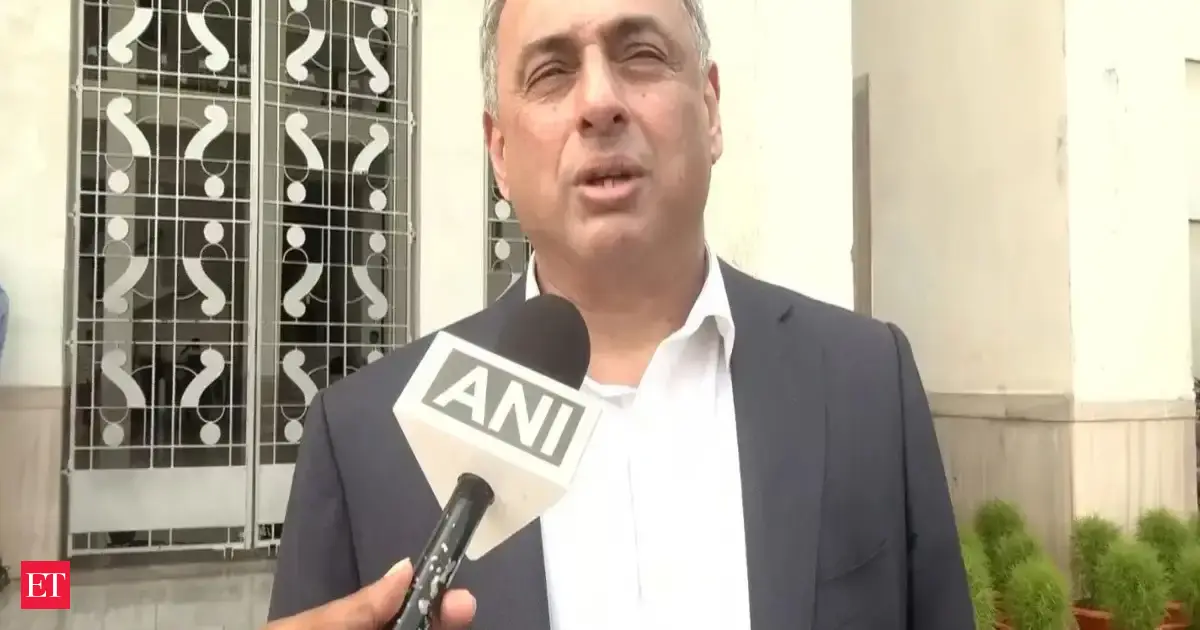
India is diversifying its energy and critical mineral sources. This move offers significant economic opportunities as the world seeks trusted partners. However, it also introduces new challenges. The country is exploring solar, wind, hydro, nuclear, and green hydrogen. India has also identified key minerals like lithium and cobalt. View More
New Delhi: India's diversification of energy sources and enhancing access to critical minerals are crucial for the country's economy, but this shift has introduced new challenges, Tata Steel CEO and Managing Director T V Narendran said on Thursday. Addressing the AIMA Leadership Conclave, Narendran termed India's energy and critical minerals diversification move as a "layered vulnerability". "The challenge is obvious while we are diversifying our sources of energy and critical minerals, and we must; this diversification is also a layered vulnerability, not just dependence on imports but also dependence on political goodwill that allows these imports to flow," he said. He further noted that this decade began with the pandemic, an enormous disruption that forced governments to act swiftly, spurred rapid advances in science and pushed businesses and societies to adapt and find ways to cope. Referring to the Covid-19 crisis, he said the pandemic was followed by a succession of shocks -- fractured global supply chains , the Russia-Ukraine conflict and the resulting energy and commodity volatility, rising trade barriers, sharper technology controls and in the recent West Asia crisis, there were growing disruptions in key shipping routes. Live Events Narendran, who is also the President of All India Management Association (AIMA), said there is a real opportunity for India and the country can strengthen its position significantly as the world is looking for trusted partners, diversified supply chains and a stable growth market. "The opportunity for India is not only to make itself but also to sell to the world. The real test is to be good enough to be able to do that," he said. India is actively diversifying its sources of energy and critical minerals to include large-scale solar and wind, hydro, nuclear, biofuels, gas, and green-hydrogen projects. In parallel, India has identified about 30 minerals as critical -- such as lithium, cobalt, and rare earths -- and has launched the National Critical Mineral Mission to boost domestic exploration, streamline mining regulations, and encourage overseas acquisitions and processing capacity. Critical minerals are those essential for modern economies and national security, especially for clean-energy technologies, defence systems and advanced electronics. They include metals and non-metals such as lithium, cobalt, rare earth elements (REEs), nickel, copper, graphite, gallium, germanium, titanium, tungsten and many others that are used in batteries, solar panels, wind turbines, semiconductors and high-performance magnets. Global demand for critical minerals is rising sharply as countries push the energy transition and digitalisation. .Pbanner{display:flex;justify-content:space-between;align-items:center;background-color:#ec1c40;margin-top:20px;padding:5px 10px;border-radius:4px;color:#fff;line-height:10px;} .Pbannertext{display:flex;align-items:center;font-size:16px;font-weight:600;font-family:'Montserrat';} .Pbannertext img{height:20px;margin:0 6px} .Pbannerbutton a{display:flex;align-items:center;background-color:#fff;color:#ec1c40;text-decoration:none;font-weight:600;padding:4px 8px;border-radius:6px;font-size:15px;font-family:'Montserrat';} .Pbannerbutton img{height:20px;margin-right:6px} .Pbannerbutton a:hover{background-color:#f7f7f7} Add as a Reliable and Trusted News Source Add Now! (You can now subscribe to our Economic Times WhatsApp channel) (You can now subscribe to our Economic Times WhatsApp channel)
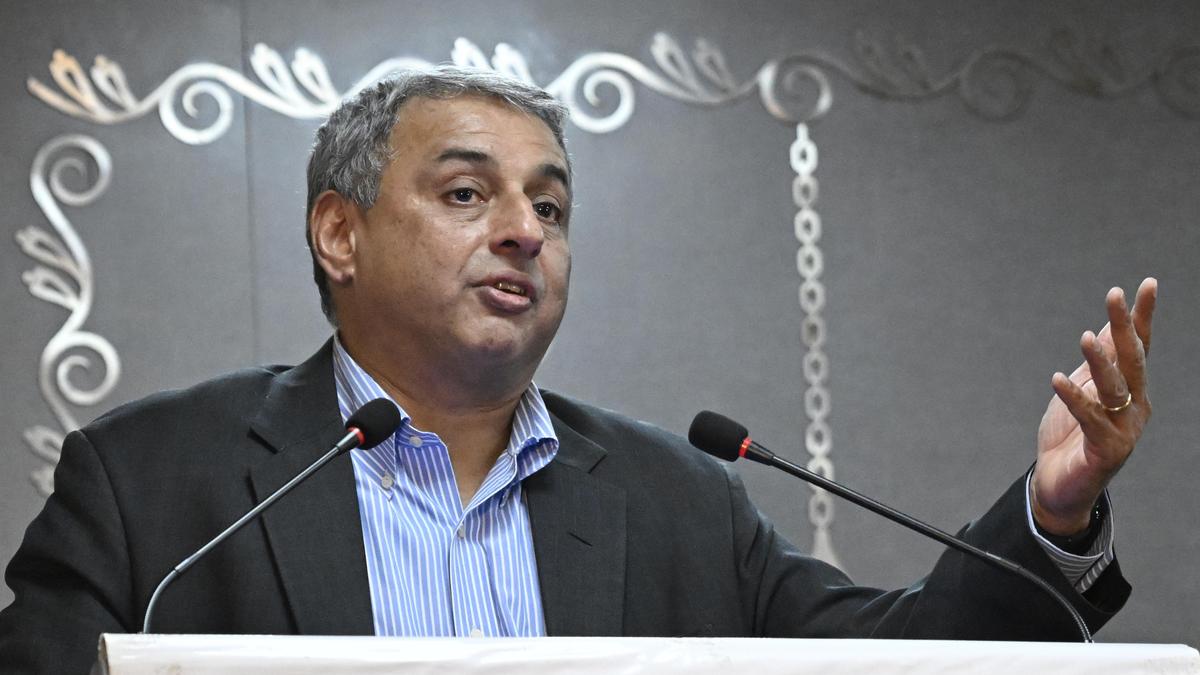
He further noted that this decade began with the pandemic, an enormous disruption that forced governments to act swiftly, spurred rapid advances in science and pushed businesses and societies to adapt and find ways to cope View More
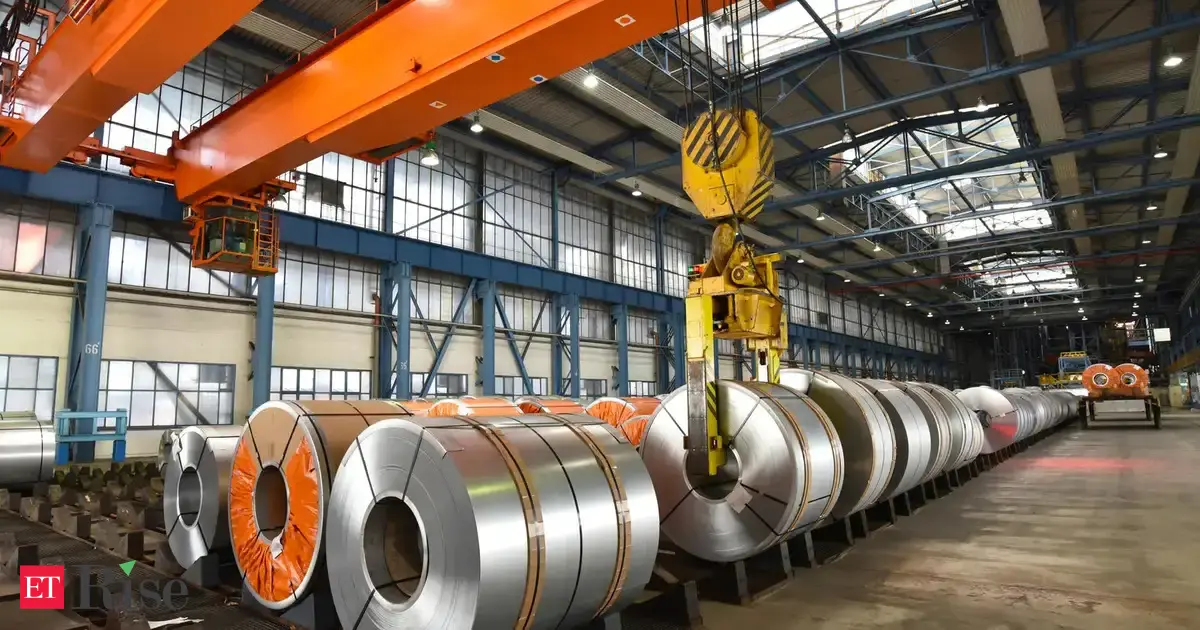
India's finished steel consumption grew 7-8% to 164 million tonnes in FY26, driven by infrastructure and manufacturing. Crude steel output also rose over 10.7% to 168.4 million tonnes. View More
The domestic consumption of finished steel grew by 7-8 per cent to 164 million tonnes in FY26 on the back of increased activity in infrastructure , construction, railways, and manufacturing sectors. The country's crude steel output grew by over 10.7 per cent to around 168.4 million tonnes during the financial year, reflecting sustained industrial momentum. "Domestic demand remained the key growth driver with finished steel consumption (164 MnT), expanding by about 7-8 per cent, driven by increased activity in infrastructure, construction, railways, and manufacturing sectors," the steel ministry said in a statement. Exports of finished steel products also increased by 35.9 per cent, reaching over 6 million tonnes during the fiscal year ended March 2026, while imports declined sharply by 31.7 per cent, it said. The industry witnessed continued investments aimed at expanding production capacity. India's total steel capacity, which stood at about 220 million tonnes in 2025-26, is projected to reach 300 million tonnes by 2030, supported by both public and private sector investments. Live Events Major players such as SAIL, Tata Steel and JSW Steel continued to invest in capacity expansion, technology upgrades, and value-added steel production, reflecting confidence in long-term demand growth. Steel prices in the country followed a downward trend over the past three years before recovering in early 2026. However, the profitability of steel makers remained under pressure due to fluctuating raw material costs, especially coking coal, and volatile global prices. Increased logistics and freight costs also affected margins towards the end of the year due to the geopolitical crisis, the ministry said. Disruptions in gas supplies from the Middle East led to shortages of industrial fuels such as LPG, threatening production continuity for several steel manufacturers. The government intervened by increasing LPG allocations to key sectors, including steel, to cushion the impact and maintain output levels. Additionally, rising energy costs and supply chain disruptions highlighted the sector's vulnerability to global shocks, it said. About the outlook, the ministry said that looking ahead, the Indian steel industry is expected to maintain its growth momentum, with production projected to rise further and demand remaining robust. However, the sector will need to navigate challenges related to energy security, input costs, and global market volatility. "With continued policy support, infrastructure expansion, and investments in green steel technologies , the industry is well-positioned to remain a key pillar of India's industrial and economic development," it said. .Pbanner{display:flex;justify-content:space-between;align-items:center;background-color:#ec1c40;margin-top:20px;padding:5px 10px;border-radius:4px;color:#fff;line-height:10px;} .Pbannertext{display:flex;align-items:center;font-size:16px;font-weight:600;font-family:'Montserrat';} .Pbannertext img{height:20px;margin:0 6px} .Pbannerbutton a{display:flex;align-items:center;background-color:#fff;color:#ec1c40;text-decoration:none;font-weight:600;padding:4px 8px;border-radius:6px;font-size:15px;font-family:'Montserrat';} .Pbannerbutton img{height:20px;margin-right:6px} .Pbannerbutton a:hover{background-color:#f7f7f7} Add as a Reliable and Trusted News Source Add Now!

President Donald Trump says the U.S. will impose tariffs of 50% on goods imported to the country from any nation "supplying military weapons to Iran." View More
US President Donald Trump looks on during a press conference about the conflict in Iran in the James S. Brady Press Briefing Room of the White House on April 6, 2026, in Washington, DC.Saul Loeb | Afp | Getty Images The U.S. will impose tariffs of 50% on "any and all" goods imported to the country from any nation "supplying military weapons to Iran," President Donald Trump said Wednesday. Trump said in a Truth Social post that any country found to be supplying Iran with weapons would be subject to the levy "immediately," with no "exclusions or exemptions." The president wrote: "A Country supplying Military Weapons to Iran will be immediately tariffed, on any and all goods sold to the United States of America, 50%, effective immediately. There will be no exclusions or exemptions!"It came as Trump said the U.S. would "work closely" with Iranian authorities, following the ceasefire agreement announced on Tuesday and what Trump called "very productive regime change." Trump said in a separate Truth Social post that "there will be no enrichment of uranium" and that many of the 15 points in the U.S. peace proposals have already been agreed.The U.S. and Iran will discuss tariffs and sanctions relief, Trump added.The vast bulk of Trump's "reciprocal" tariffs, imposed last year, were struck down by the Supreme Court in February.However, the White House has effectively rebuilt its tariff regime with its application of mechanisms within existing trade laws  â such as Section 301 probes.Metals are a key feature of the existing tariff regime, which currently imposes a 50% levy on products made entirely or almost entirely of steel, aluminum, or copper. There is a 25% tariff on derivative products "substantially made" of these metals.From late July 2026, larger firms will face a 100% tariff on patented pharmaceutical products and ingredients. Smaller pharma companies will face the new tariff rate from late September. Choose CNBC as your preferred source on Google and never miss a moment from the most trusted name in business news.
The revised prices are excluding statutory levies such as royalty, GST, environmental cess and other taxes View More
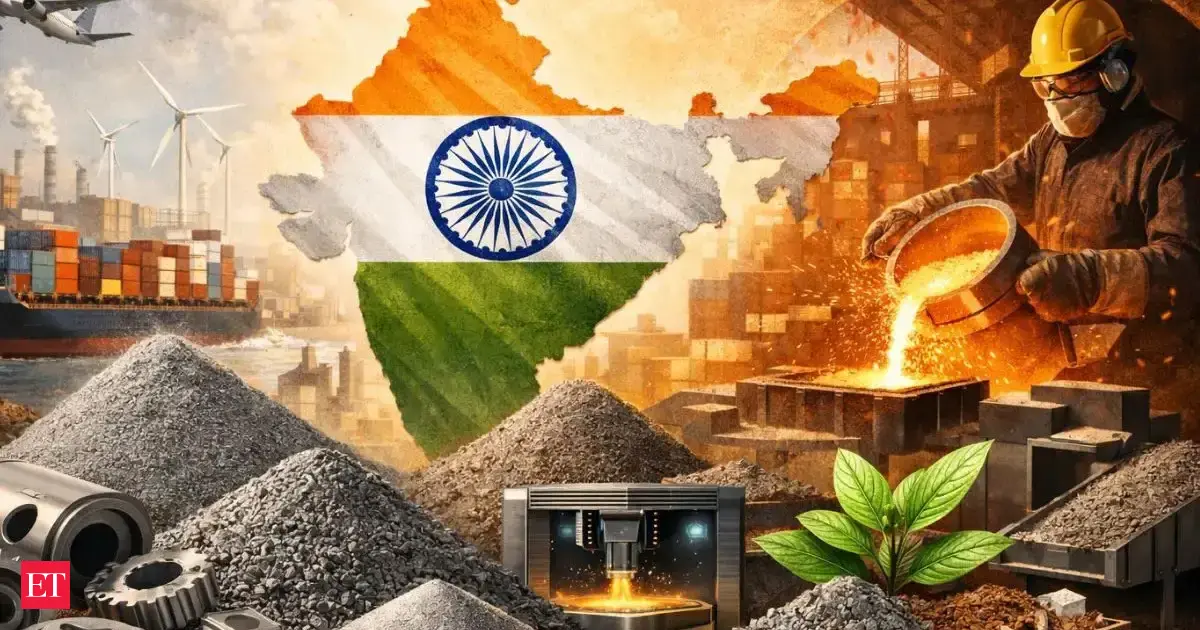
Metal powders are becoming vital for India's industries. They enable efficient manufacturing and sustainable practices. India is focusing on boosting domestic production to reduce import dependence. Converting industrial waste into usable metal powders is a key development. This approach aligns with circular economy principles. View More
The increasing demand for metal powders across industries such as automotive, engineering, electronics, and energy is reshaping their importance within India’s industrial ecosystem. Once considered a niche material, metal powders are now emerging as a strategic resource, supporting advanced manufacturing and sustainable production practices. Metal powders are widely used in powder metallurgy , a process that enables the production of high-precision components with minimal material wastage. Their applications range from automotive parts and electrical components to specialized engineering materials. As industries move toward efficiency and cost optimization, the reliance on powder-based manufacturing is steadily increasing. However, a significant portion of India’s metal powder requirement is still fulfilled through imports, leading to supply chain dependencies. This has highlighted the need to strengthen domestic production capabilities and develop indigenous solutions that can meet both quality and scale requirements. At the same time, there is a growing focus on sustainability and resource efficiency. “One of the emerging approaches within the sector is the conversion of industrial waste and low-grade raw materials into usable metal powders. This ‘waste-to-wealth’ model aligns with circular economy principles, where by-products such as iron ore tailings and industrial residues are processed and reintegrated into the manufacturing cycle,” said a company official at Involute Metal Powders Technologies, which operates in powder metallurgy and material processing. The shift is also being supported by improvements in manufacturing processes. “There is increasing focus on controlled and scalable production systems, particularly using reduction-based techniques, to ensure consistent particle size and material properties required for industrial applications,” the official added, noting that such materials are used across automotive, electrical, and engineering sectors. Live Events Efforts have also been made to process alternative inputs like iron ore tailings. Through comparatively less complex processes than traditional methods such as acid leaching, these approaches aim to recover usable materials like magnetite or iron while reducing operational complexity and costs. Such methods are also seen as contributing to the management of mining waste and reducing environmental impact. The materials produced through these processes are used across multiple sectors, including automotive manufacturing, electrical systems, and general engineering. Industry observers note that expanding domestic production, along with the adoption of sustainable practices, could play a significant role in reducing import dependence while strengthening India’s manufacturing capabilities. As India continues to focus on self-reliance and industrial growth, metal powders are increasingly being viewed not just as a raw material, but as a strategic asset. Their role in enabling efficient production, supporting sustainability, and unlocking value from waste positions them as a critical component in the country’s evolving materials landscape. As India continues to focus on self-reliance and industrial growth, metal powders are increasingly being viewed not just as a raw material, but as a strategic asset. Their role in enabling efficient production, supporting sustainability, and unlocking value from waste positions them as a critical component in the country’s evolving materials landscape. .Pbanner{display:flex;justify-content:space-between;align-items:center;background-color:#ec1c40;margin-top:20px;padding:5px 10px;border-radius:4px;color:#fff;line-height:10px;} .Pbannertext{display:flex;align-items:center;font-size:16px;font-weight:600;font-family:'Montserrat';} .Pbannertext img{height:20px;margin:0 6px} .Pbannerbutton a{display:flex;align-items:center;background-color:#fff;color:#ec1c40;text-decoration:none;font-weight:600;padding:4px 8px;border-radius:6px;font-size:15px;font-family:'Montserrat';} .Pbannerbutton img{height:20px;margin-right:6px} .Pbannerbutton a:hover{background-color:#f7f7f7} Add as a Reliable and Trusted News Source Add Now! (You can now subscribe to our Economic Times WhatsApp channel) (You can now subscribe to our Economic Times WhatsApp channel)