
Latest Sectors News

CNBC's Jim Cramer explained why the stock market keeps shrugging off the Iran war. View More
In this article.DJI.SPX.IXIC@CL.1Follow your favorite stocksCREATE FREE ACCOUNT watch nowVIDEO2:1102:11Jim Cramer explains why the market keeps shrugging off the Iran warMad Money with Jim Cramer CNBC's Jim Cramer said the stock market's muted reaction to escalating tensions in the Middle East shows investors are focused on forces far bigger than geopolitics."When you saw the newsâ¦you had to believe we were just going to get clobbered today," the "Mad Money" host said, referring to headlines over the weekend that Iran closed the Strait of Hormuz again. Despite the U.S. oil benchmark, West Texas Intermediate crude, jumping more than 5% Monday, stocks "barely blinked." The Dow Jones Industrial Average remained relatively unchanged, only down 4.87 points, the S&P 500 fell 0.2.4%, and the Nasdaq dropped 0.26%.The resilience comes after a powerful rally, with the S&P 500 and the Nasdaq closing at record highs on April 17. At the start of the Iran war, single-day spikes in oil of today's magnitude would've rattled equities more. Cramer laid out four reasons why that didn't happen. First, he pointed to the bond market, which he has repeatedly called the true driver of stocks. "The stock market is responding to the bond market," Cramer said, noting that interest rates remained unchanged even as oil climbed. That stability suggests investors aren't bracing for a surge in inflation and are expecting rate cuts when Kevin Warsh, President Donald Trump's nominee to replace Jerome Powell as chair of the Federal Reserve, takes over. Second, Cramer said the direct economic impact of higher oil prices may be less significant than in the past. While industries like airlines and cruise operators can feel pressure from rising fuel costs, the broader market appears less sensitive. "It is beginning to dawn on people that gasoline simply isn't as important in our lives as it once was," he said, citing improved fuel efficiency and the U.S.' reliance on cheaper domestic natural gas. "Natural gas heats and air conditions most homes ⦠our utility bills may actually be going down." He also highlighted strong corporate earnings as a stabilizing force. Results from companies like Cleveland-Cliffs pointed to a healthy manufacturing backdrop. Its CEO Lourenco Goncalves said the company's "order book is full and the automotive original equipment manufacturers are booking more and more steel from Cliffs," underscoring steady demand conditions despite broader uncertainty. Finally, Cramer said the market continues to be powered by what he described as the AI revolution. "This AI revolution does not know anything about Iran. It doesn't know about bombing. It doesn't run on gasoline. And it stops for no one," he said. He pointed to a broad ecosystem of companies benefiting from the AI buildoutâfrom chipmakers like Nvidia and Advanced Micro Devices to cloud providers like Microsoft and Alphabet. Cramer's Charitable Trust, the portfolio used by the CNBC Investing Club, owns Alphabet, Microsoft, and Nvidia. "Here's the bottom line: I'm not saying that the Iran war doesn't matter. If something catastrophic happens ... it'll impact the markets... [But] until the war gets bad enough to impact the bond market, don't expect it to matter to the stock market." watch nowVIDEO11:3511:35Jim Cramer talks key market drivers that are separate from the Iran warMad Money with Jim Cramer Jim Cramer's Guide to InvestingClick here to download Jim Cramer's Guide to Investing at no cost to help you build long-term wealth and invest smarter. Sign up now for the CNBC Investing Club to follow Jim Cramer's every move in the market.DisclaimerQuestions for Cramer? Call Cramer: 1-800-743-CNBCWant to take a deep dive into Cramer's world? Hit him up! Mad Money Twitter - Jim Cramer Twitter - Facebook - InstagramQuestions, comments, suggestions for the "Mad Money" website? madcap@cnbc.com Choose CNBC as your preferred source on Google and never miss a moment from the most trusted name in business news.
The proposed integrated steel project of 6 mtpa will comprise steelmaking, hot rolling, and cold rolling/coating processes View More

USA Rare Earth on Monday announced plans to buy Brazilian rare earths miner Serra Verde in a deal worth $2.8 billion in cash and shares. View More
watch nowVIDEO8:0408:04USA Rare Earth CEO: Serra Verde deal gives us access to a mine producing all 4 magnetic rare earthsSquawk Box USA Rare Earth has announced plans to buy Brazilian rare earths miner Serra Verde in a deal worth $2.8 billion in cash and shares, as it seeks to challenge China's dominance of the supply chain.The Oklahoma-headquartered company said it will pay $300 million in cash and $126.9 million in its own newly issued stock for the transaction, which it expects to complete in the third quarter of 2026, subject to closing conditions and regulatory approvals.Rare earths have come to the fore as a key bargaining chip in the ongoing geopolitical rivalry between the U.S. and China, which produces nearly 70% of the world's rare earths from mines and almost 90% of refined rare earths, which includes materials imported from other countries.Western officials have repeatedly flagged Beijing's supply chain dominance as a strategic challenge, particularly given that critical mineral demand is expected to grow exponentially, as the clean energy transition picks up pace."The world has become too dependent on a single source and it's high time to break that dependency," USA Rare Earth CEO Barbara Humpton told CNBC's "Squawk Box" on Monday.She added the deal would allow "access to a producing mine that produces the four magnetic rare earths that are going to be serving our industry." Neodymium is displayed at the Inner Mongolia Baotou Steel Rare-Earth Hi-Tech Co. factory in Baotou, Inner Mongolia, China, on Wednesday, May 5, 2010.Bloomberg | Bloomberg | Getty Images Rare earths refer to 17 elements on the periodic table that have an atomic structure that gives them special magnetic properties. These materials are vital components to a vast array of modern technologies, from everyday electronics, such as smartphones, to electric vehicles and military equipment. 'A strategic nexus' USA Rare Earth's CEO said Serra Verde's global importance was underscored by its 15-year offtake agreement with a special purpose vehicle by various U.S. government entities, as well as private capital sources, for 100% of its production of four rare magnetic rare earth elements: neodymium, praseodymium, dysprosium and terbium.These are all critically important to the manufacture of high-performance permanent magnets. Las Vegas-based company MP Materials conducts mining operations on April 29, 2021, at Mountain Pass Rare Earth Facility in Mountain Pass, California. Benjamin Hager | Las Vegas Review-journal | Getty Images Speaking to CNBC about the announcement, Serra Verde Group CEO Thras Moraitis said the U.S. government has been "very active" in trying to spur upstream investment, particularly when it comes to creating floor prices for rare earths."Rare earths represent a strategic nexus where national and energy security, and technological supremacy, converge," he added in a statement."The Western rare earth sector stands at a critical inflection point, as governments and strategic industries urgently seek reliable sources of critical rare earths â particularly scarce heavy rare earths."Shares of USA Rare Earth fell 3.4% in premarket trading. The stock is up around 68% year-to-date through to Friday's close, however. Choose CNBC as your preferred source on Google and never miss a moment from the most trusted name in business news.
Jindal Stainless Ltd has entered the retail market with Jindal Infinity, a new stainless steel rebar. This move allows the company to connect directly with builders and consumers. The product offers superior corrosion resistance for enhanced durability. Jindal Stainless is expanding its manufacturing capacity and network to meet growing demand for high-performance construction materials. View More
New Delhi, Jindal Stainless Ltd on Monday announced its retail foray with the launch of stainless steel rebar Jindal Infinity, marking a strategic extension into the construction value chain . The move will allow the company to directly reach end-consumers, builders and fabricators, moving beyond its traditional B2B model. "Our entry into the retail segment with Jindal Infinity marks a strategic extension of our capabilities into the construction value chain...we aim to bring these advanced solutions closer to the Indian consumer. This is aligned with our larger vision of supporting a quality-first, safer, and more resilient environment,"company's Managing Director Abhyuday Jindal said.' Compared to conventional rebars, stainless steel rebars offer significantly higher resistance to corrosion, including a higher critical chloride threshold, which enhances durability in aggressive environments. "With a growing distributor and dealer network, we are creating the foundation for scale. The initial response underscores the need for high-performance, differentiated materials, particularly in applications where long-term durability and reliability are critical," Jindal Stainless Head of Sales Rajeev Garg said. Live Events Jindal Stainless had an annual turnover of Rs 40,182 crore in FY25. The company is ramping up its facilities to reach 4.2 million tonnes of annual melt capacity in FY27. It has 16 stainless steel manufacturing and processing facilities in India and abroad, including in Spain and Indonesia, and a worldwide network in 12 countries, as of March 2025. In India, there are 10 sales offices and six service centres, as of March 2025. .Pbanner{display:flex;justify-content:space-between;align-items:center;background-color:#ec1c40;margin-top:20px;padding:5px 10px;border-radius:4px;color:#fff;line-height:10px;} .Pbannertext{display:flex;align-items:center;font-size:16px;font-weight:600;font-family:'Montserrat';} .Pbannertext img{height:20px;margin:0 6px} .Pbannerbutton a{display:flex;align-items:center;background-color:#fff;color:#ec1c40;text-decoration:none;font-weight:600;padding:4px 8px;border-radius:6px;font-size:15px;font-family:'Montserrat';} .Pbannerbutton img{height:20px;margin-right:6px} .Pbannerbutton a:hover{background-color:#f7f7f7} Add as a Reliable and Trusted News Source Add Now! (You can now subscribe to our Economic Times WhatsApp channel) (You can now subscribe to our Economic Times WhatsApp channel)
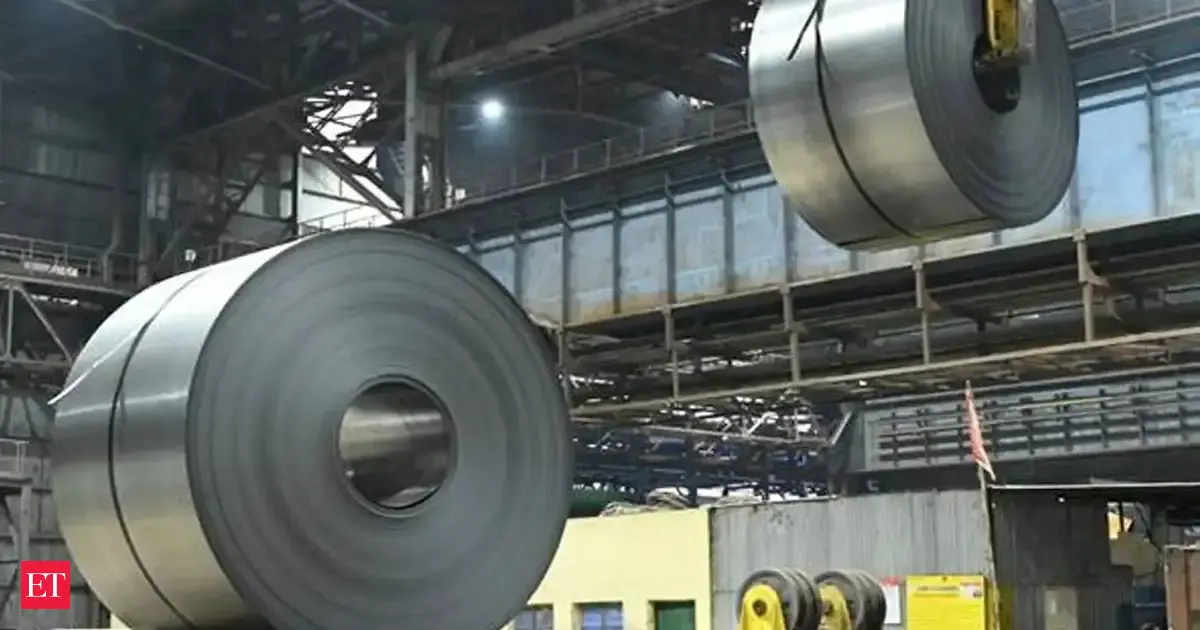
JSW Steel and South Korea's POSCO Group are partnering to build a new steel plant in Odisha. This joint venture will have a production capacity of 6 million tonnes per annum. The deal signifies deepening strategic ties between the two major steel producers. This collaboration aligns with JSW Steel's expansion goals. View More
New Delhi: JSW Steel Limited and South Korea's POSCO Group have entered into a Joint Venture Agreement to establish a greenfield integrated steel plant in Odisha. According to a regulatory filing, the partnership will be executed through Saffron Resources Private Limited, a wholly owned subsidiary of JSW Steel, which will now become a 50:50 joint venture between the two companies. The Board of Directors of JSW Steel approved the Share Subscription and Joint Venture Agreement during a meeting held on Friday, April 17. Also read: Don't short-change stakeholders; stay upbeat in tough times: JSW's Sajjan Jindal The proposed facility is designed to have a production capacity of 6 million tonnes per annum (MTPA). Saffron Resources currently possesses 887 acres of land in Odisha, comprising approximately 595 acres of freehold land and 292 acres of leasehold land, which is intended for the setup of the new plant. Under the terms of the agreement, both JSW Steel and the POSCO Group will have the right to appoint an equal number of directors to the board of the joint venture entity. Live Events As part of the financial arrangement detailed in the filing, the POSCO Group will subscribe to shares in Saffron Resources for a consideration of approximately Rs 508.8 crore, subject to standard closing adjustments. The filing stated that the companies expect to complete the sale and share issuance by December 31, 2026, unless the parties mutually agree to an extension. The transaction is being conducted at arm's length and does not fall within the ambit of related party transactions. The disclosure also noted that the collaboration aims to deepen strategic ties between the two major steel producers. For JSW Steel, which currently has a crude steel production capacity of 35.7 MTPA, the venture aligns with its broader goal to reach a capacity of 50 MTPA in India by the 2031 fiscal year. POSCO, headquartered in Pohang, South Korea, maintains a manufacturing capacity of approximately 45 MTPA and is recognized as the largest steel producer in its home country. The statement came ahead of President of South Korea, Lee Jae-myung , accompanied by First Lady Kim Hea-kyung, arriving in India on Sunday, marking a significant pivot in New Delhi-Seoul relations, being the first state visit by a South Korean leader in over eight years. The visit is being framed as a crucial step for South Korea's "Global South" diplomacy and a "reboot" of the Special Strategic Partnership . India and South Korea elevated their ties to a "Special Strategic Partnership" in 2015, and since then, cooperation between the two countries has broadened significantly. Both sides have focused on enhancing collaboration in areas such as advanced manufacturing, semiconductors, defence production, green energy, infrastructure development, and digital innovation. South Korean companies have also played a growing role in India's industrial and consumer sectors, while Indian firms have deepened their presence in the Korean market. The arrival of the South Korean President is expected to provide fresh momentum to ongoing bilateral initiatives and open discussions on expanding trade and investment opportunities. India has been actively working to strengthen its engagement with Indo-Pacific partners, and South Korea remains a key pillar in this broader regional vision. The President's itinerary is packed with high-level engagements designed to solidify ties between Seoul and New Delhi. External Affairs Minister (EAM) S Jaishankar on Sunday called on South Korean President Lee Jae-myung and said that the talks with Prime Minister Narendra Modi tomorrow will further the Special Strategic Partnership between the two countries. In a post on X, he praised President Lee Jae-myung's commitment to deepen ties and said, "Honoured to call on President @Jaemyung_Lee of the Republic of Korea as he begins his State Visit to India. Value his commitment to deepen India - Korea relations across multiple domains. Confident that his talks tomorrow with PM @narendramodi will further strengthen our Special Strategic Partnership." The centrepiece of the visit will be a bilateral summit at Hyderabad House, where President Lee will hold extensive talks with Prime Minister Narendra Modi. The discussions are expected to culminate in the exchange of several Memorandums of Understanding (MoUs), likely focusing on critical technologies: cooperation in semiconductors and green energy; defence production by strengthening the "Make in India" initiative through Korean engineering; and economic trade by expanding the Comprehensive Economic Partnership Agreement (CEPA). Following the summit, the leaders will issue joint press statements to outline their shared vision for a stable and prosperous Indo-Pacific. Recognising the vital role of the private sector, President Lee will participate in a Business Forum at the iconic Bharat Mandapam. This forum will bring together industry titans from both nations to explore investment opportunities and supply chain resilience. The state visit will conclude with a meeting with President Droupadi Murmu at Rashtrapati Bhavan, signifying the deep cultural and political respect between the two nations, the MEA said in a statement. .Pbanner{display:flex;justify-content:space-between;align-items:center;background-color:#ec1c40;margin-top:20px;padding:5px 10px;border-radius:4px;color:#fff;line-height:10px;} .Pbannertext{display:flex;align-items:center;font-size:16px;font-weight:600;font-family:'Montserrat';} .Pbannertext img{height:20px;margin:0 6px} .Pbannerbutton a{display:flex;align-items:center;background-color:#fff;color:#ec1c40;text-decoration:none;font-weight:600;padding:4px 8px;border-radius:6px;font-size:15px;font-family:'Montserrat';} .Pbannerbutton img{height:20px;margin-right:6px} .Pbannerbutton a:hover{background-color:#f7f7f7} Add as a Reliable and Trusted News Source Add Now! (You can now subscribe to our Economic Times WhatsApp channel) (You can now subscribe to our Economic Times WhatsApp channel)
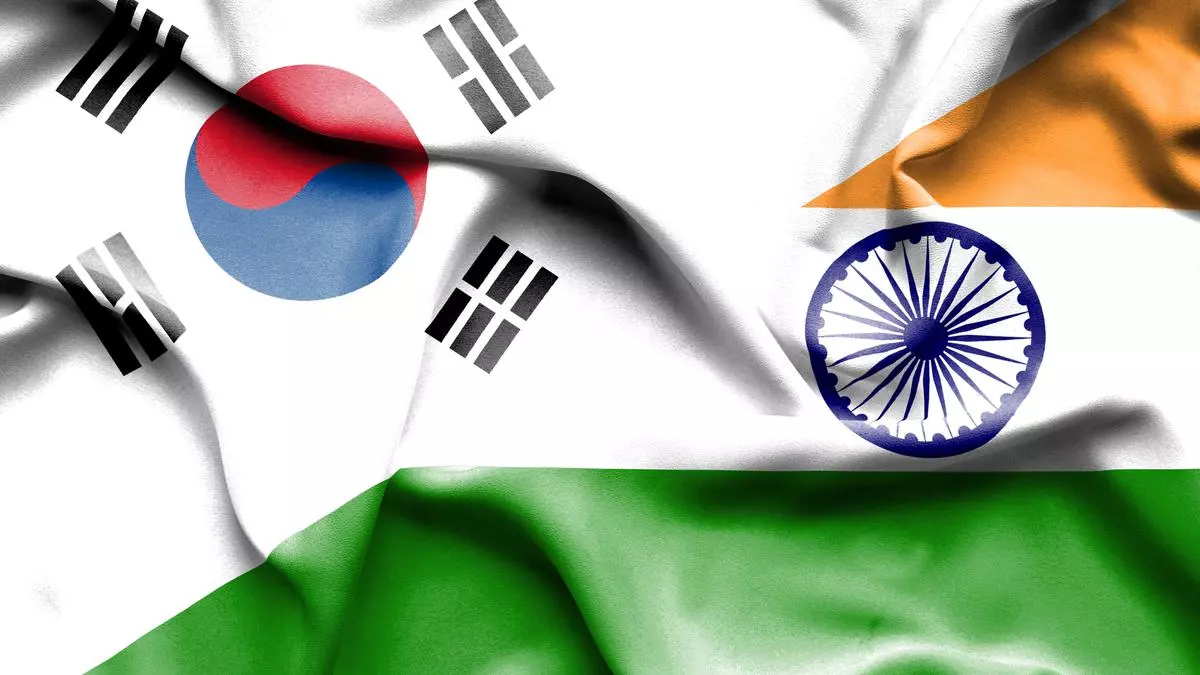
The move aligns with JSW Steel’s capacity expansion plans and reflects strengthening India–South Korea economic ties, coinciding with high-level diplomatic engagements during President Lee Jae-myung’s visit View More

The government is considering mandating up to 30% blending of domestic coking coal with imported coal for all new steel capacities expected to be commissioned by 2030, as it looks to reduce import dependence and boost local coal usage, according to two people aware of the development. View More
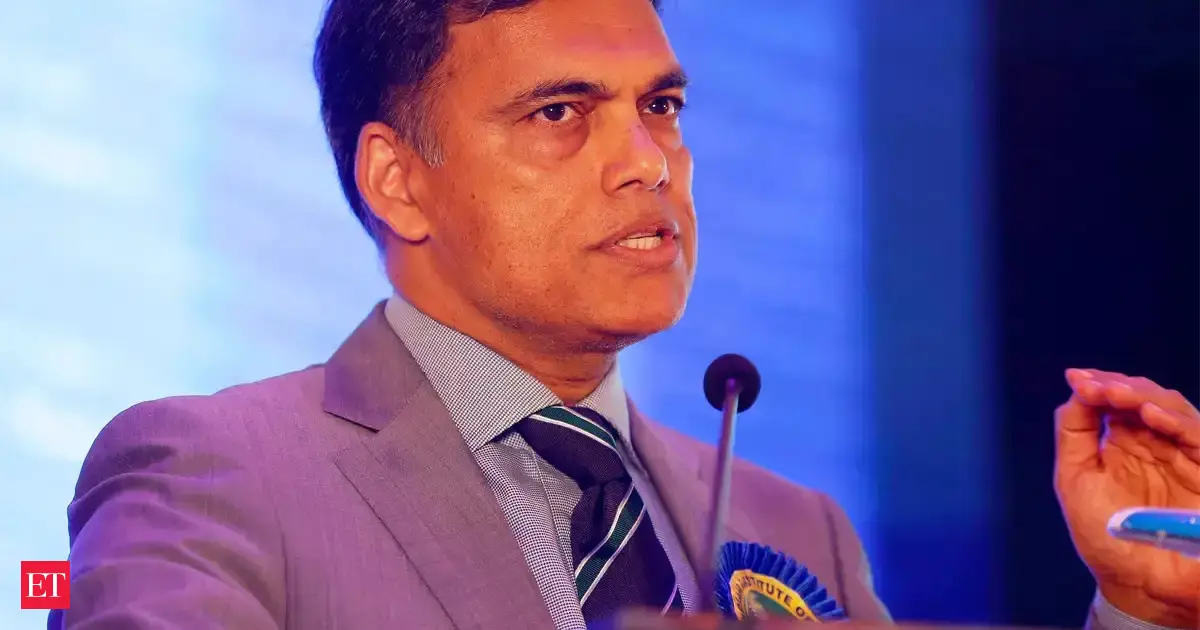
Sajjan Jindal, Business Leader of the Year, shares his four-decade journey. He built JSW with passion and bold decisions. Jindal emphasizes stakeholder care and corporate governance for young entrepreneurs. He expanded into cement and paints, seeing potential beyond steel. Takeovers are a key growth strategy. The Economic Times Awards for Corporate Excellence will be presented on April 25. View More
Few have achieved what JSW 's Sajjan Jindal has in the past decade. In an interview with Nikita Periwal and MC Govardhana Rangan, Jindal, the Business Leader of the Year (2025) at The Economic Times Awards for Corporate Excellence , shares his journey of ups and downs. Edited excerpts: What has been the most important driving factor behind your growth in the past four decades? It is difficult to pinpoint one instance, but the whole journey has been driven by passion, the desire to build big, and to make India industrialised. I have never shied away from working hard or taking big risks, bold and quick decisions. The first three-four years were very formative because I was just struggling to turn around the business I was given.Once that happened, I started thinking about the Vijayanagar Steel Plant. The preparation to build the plant and the IPO took me three years because it was to be a mammoth complex, and integrated steel plants were generally done by the government then. I had the vision and the confidence that I would be able to execute the project, and that too at a lower cost than competition. That is what made us sustain difficult times. What was it like stepping into the business at a time when Tata Steel had already been there for several decades? I was asked this question even then. Tata was, of course, the idol for me. We wanted to be more flexible and do things better. And because India is a growing market, we would need much more steel. Live Events What was the inspiration for thinking big in a country that was still coming out of poverty at that time? Mumbai! After I did my engineering in Bangalore and moved to Mumbai, I realised that whatever I want to do, it must be larger than life. And I was a student of Dhirubhai Ambani, JRD Tata and Aditya Birla then. I used to attend their AGMs alone as a young kid, and used to observe what they were doing. Even today I am a student of what is happening in the world. I would travel and bring in new technology, even for my small business, because I always wanted to be ahead-of-the-curve on the technology front. You have built an empire with a lot of sweat. What would you tell young entrepreneurs? The first is to take care of stakeholders, don't short-change them. Corporate governance should not be taken for granted. The second is that India is a massive market, so stay positive, even through difficulties. It is a part and parcel of the growth. India is a market which absorbs and accepts mistakes. Not dishonestly and diversion, of course. You have to be honest with your stakeholders, including banks. Many groups used to say banks will have to restructure your debt, but I would never allow a single bank to write off for me. Also, work really hard for the purpose that you have set for yourself. You were a big steel maker. What made you get into others too, like cement, paints? When we were building Vijayanagar, we realised that building an integrated steel plant is like building a universe-power, oxygen, roads, airports, townships etc. And I realized that while steel is our mainstay, power, cement, paints are also required in the country, and have a lot of potential. By the end of this decade, the steel business which is abut 80% of the top line and bottom line currently, will become 50-55%, as other businesses grow rapidly. Did do you overleverage at Vijayanagar? No. I was learning the business at that time and it was a big bite to chew. When we were in deep problems, Saibal Gupta, the CEO of JSW Vijayanagar then, told me that it is like a mouse is giving birth to an elephant. So that is the pain we were going through because we wanted to build a mammoth company from a small company. The point is, yes, I took a big bite. Delays led to losses which were not factored in. But the market was very forgiving with the cost overruns. So, when the markets turned around, we were out. You have done more takeovers than some who are prominent for takeovers. What is your takeaway from these? Some takeovers are smooth, and some take time. But then eventually they move on and we get it done. But takeovers are a very good way to grow, if you can find the right thing.For example, we took over the paints business of Akzo. Now we paid a very high market price. But we feel that this will very quickly make us the number two paint company in the country after Asian Paints . The Economic Times Awards for Corporate Excellence 2025 will be presented on Saturday, April 25, in Mumbai .Pbanner{display:flex;justify-content:space-between;align-items:center;background-color:#ec1c40;margin-top:20px;padding:5px 10px;border-radius:4px;color:#fff;line-height:10px;} .Pbannertext{display:flex;align-items:center;font-size:16px;font-weight:600;font-family:'Montserrat';} .Pbannertext img{height:20px;margin:0 6px} .Pbannerbutton a{display:flex;align-items:center;background-color:#fff;color:#ec1c40;text-decoration:none;font-weight:600;padding:4px 8px;border-radius:6px;font-size:15px;font-family:'Montserrat';} .Pbannerbutton img{height:20px;margin-right:6px} .Pbannerbutton a:hover{background-color:#f7f7f7} Add as a Reliable and Trusted News Source Add Now! (You can now subscribe to our Economic Times WhatsApp channel) (You can now subscribe to our Economic Times WhatsApp channel)
While ?1,750 crore will be used to pare debt, ?250 crore will be set aside to complete ongoing projects and adding new lines, official says View More