
Latest Sectors News

A growing number of Gen Zers and millennial consumers with disposable income are shifting away from both luxury- and discount-priced retail items alike. View More
When Jenny Lei launched her handbag company Freja, she thought about how much she'd personally want to spend on a work tote as a 20-something in New York City, she says. "I think a justifiable treat is less than $300. Above that, I start bargaining with myself," says Lei, now 30, who launched Freja in 2019 after struggling to find an appropriate work tote for a job interview. Freja bags, made with vegan leather, now sell for $258 to $398 â more expensive than $62 nylon option from Baggu, but less than a $2,700 pre-owned Goyard carryall â to tens of thousands of customers each year, primarily in their 20s and 30s, says Lei.A growing number of Gen Z and millennial shoppers are ditching budget and luxury brand products alike â and gravitating toward mid-priced retail items across a wide range of industries including clothing, jewelry and homeware, some marketing and retail experts say. The products are never the most expensive option, but they cost just enough to count as a splurge for young shoppers who've advanced enough in their careers to have some extra cash to spend.Mid-priced products allow zillennial consumers, who aren't immune to rising costs of living, the opportunity to treat themselves more frequently â compared with saving up for years to splurge on a single luxury item, says Jennie Liu, a Yale School of Management lecturer who researches branding. "Today's consumer doesn't want to wait, they don't want to save up," Liu says.Nearly a third of global customers say they're willing to splurge on fashion, according to a McKinsey and Business of Fashion report published in January. But while a $5,000 earrings from a luxury brand might be difficult for a young shopper to justify, a $150 pair, still made in gold, could be an easier sell â especially from a brand advertising millennial-chic qualities like artisan craftsmanship, eco-conscious materials or humane factory conditions.DON'T MISS: The communication skill that can help you accelerate your career growthAlternatively, that shopper might buy a small item from a luxury brand â like a $60 hat from outdoor apparel retailer Arc'teryx or $160 lipstick from Louis Vuitton â just to own something from a culturally significant retailer. The businesses can benefit: Luxury labels can still hook new customers with their least expensive products, while raising prices on the rest of their catalogue.Mid-priced products â sometimes referred to as "affordable luxury" or "advanced contemporary items" â aren't necessarily outpacing the rest of the retail industry, but their popularity is reflective of zillennial consumers' shopping priorities, says Marni Shapiro, a co-founder and managing partner of research and consulting firm The Retail Tracker. The more popular these items become, the more they pressure the budget and luxury ends of their markets to shift toward a middle ground, Shapiro says.Some fast fashion brands, like H&M and Spain-based Bershka, have reduced the number of products in their lowest price tiers in the UK, according to the McKinsey and Business of Fashion report. Their intent is likely to separate themselves from ultra-low-cost options, like Shein and Temu, and give the appearance of the same "affordable aspiration" that mid-priced brands offer to "trend-focused shoppers," the report found."The meaning of luxury has changed a lot," for this generation, says Lei. "In the past it was, 'I buy luxury because I want to be someone else and that item gives me status.' Now, luxury is luxury of choice. What I invest in is what my taste is, instead of [an identity] I'm trying to fit into." A shifting market, a new class of consumers Companies that sell mid-priced products aren't new, but the sector's popularity has historically ebbed and flowed. In fashion, for example, 2000s-era brands like Coach, Kate Spade and Michael Kors reached non-wealthy shoppers in department stores â until many of those consumers turned to fast fashion after the 2008 financial crisis, says Thomaï Serdari, an associate professor of marketing at New York University Stern School of Business who studies the luxury goods market.For about a decade, that sector remained K-shaped: Luxury brands attracted wealthy consumers and fast fashion provided a popular outlet for everyone else, says Serdari. And the post-recession economy made it difficult for would-be entrepreneurs to start mid-priced competitors, says Shapiro. Today, you can buy a $970 stainless steel eight-piece cookware set from All-Clad, a similar-looking nine-piece version from Ikea for $100, or one of several mid-priced options â a 10-piece titanium set from Our Place for $490 or 12-piece HexClad set for $700, for example. The variety of mid-priced choices would've been harder to find a decade ago, Shapiro says.Our Place, like multiple other modern mid-priced brands, gained popularity after launching in 2019 by advertising a single product â its "Always Pan" â on social media. "Some of these brands [become popular] by utilizing one product as the brand," says Liu. "Whether or not you know the brand name, the product becomes very visible on social media, and kind of serves as the brand [before the company] gradually expands their product line." The meaning of luxury has changed a lot ... Now, luxury is luxury of choice.Jenny LeiFounder and CEO, Freja Social media, in general, has supercharged this generation of mid-priced brands, says Americus Reed, a marketing professor at The Wharton School of the University of Pennsylvania. "There are more channels to explore and distribute who we are," he says. In a way, young shoppers use the brands they see on social media to develop their sense of self and signal it to others â similar to how some people build their identities around volunteering at church or playing sports in a local rec league, he adds.Social media shopping services like TikTok Shop have also recalibrated consumer expectations, similar to how on-demand platforms like DoorDash, Uber and Amazon Prime did a decade ago, says Liu: "You can go from awareness of a brand to purchase within minutes." Consumer willingness to engage with brands on social media enables retailers to pull tactics "from the luxury playbook," she notes, including "talking about how the products are made, that they're made in a small town, that they're crafted slowly."Notably, a mid-range price tag doesn't necessarily promise high quality, says Sedari. Recently, one of her MBA students was showing off her blazer, a trending product from a mid-priced brand, she says."I got very curious about the blazer and went to check it out online. It's polyester," says Sedari. "I'm not willing to pay $400 for a polyester jacket."Want to get ahead at work? Then you need to learn how to make effective small talk. In CNBC's new online course, How To Talk To People At Work, expert instructors share practical strategies to help you use everyday conversations to gain visibility, build meaningful relationships and accelerate your career growth. Sign up today! Use coupon code EARLYBIRD for 20% off. Offer valid from April 20, 2026 to May 4, 2026. Terms apply. Take control of your money with CNBC Select CNBC Select is editorially independent and may earn a commission from affiliate partners on links.Nearly half of Americans feel homeownership is impossibleAmazon Prime is offering a 20-cent-per-gallon discount. Stack those savings with a credit cardHow to use credit cards to access presale and VIP tickets Travel insurance is gaining popularity among spring breakers this year â how to protect your tripWhat is a good monthly retirement income in 2026? VIDEO9:1009:10I spent $20K to open a store in NYCânow it brings in $1.6 million a yearHow I Made It


An Indian court has halted an antitrust probe into state-run SAIL after the company alleged procedural irregularities by the Competition Commission of India. SAIL argued it was initially cleared but a subsequent investigation, using the same evidence, found wrongdoing. The case will be heard again in June. View More
NEW DELHI: An Indian court has put an antitrust investigation into state-run Steel Authority of India on hold after the company challenged the Indian watchdog for procedural lapses, according to court records and the company's legal filings. In the most high-profile antitrust case involving India's steel sector, an investigation by the Competition Commission of India found 28 firms colluded on steel prices, Reuters exclusively reported in January. These included Tata Steel , JSW Steel and state-run SAIL and RINL . Online Madras High Court records show the judge in an April 21 hearing put the investigation into SAIL on hold. The ruling and SAIL's arguments in court are being reported for the first time by Reuters. SAIL did not respond to a request for comment. SAIL's non-public filing reviewed by Reuters on Friday showed it told the Madras High Court that it was "exonerated" in the first investigation report drafted by investigators in January 2024, but senior CCI officials "wrongfully" invoked Indian law provisions to conduct a further investigation. Live Events The watchdog's investigation team then drafted a supplementary report last year which found wrongdoing by SAIL, but used the same material that was earlier cited in exonerating the company, the company argued. "Principles of natural justice mandate that any adverse or prejudicial action, including the re-opening of an investigation after exoneration, must necessarily be preceded by notice," SAIL said in the filing. The CCI did not respond to Reuters queries. The case will next be heard on June 10. The CCI investigation had found that Tata Steel, JSW Steel, SAIL and RINL disclosed their pricing plans to rivals and coordinated production cuts to reduce supplies, Reuters has reported. The watchdog had reviewed dozens of WhatsApp chats, including from groups named "Friends of Steel", "Tycoons" and "Steel Live Market". .Pbanner{display:flex;justify-content:space-between;align-items:center;background-color:#ec1c40;margin-top:20px;padding:5px 10px;border-radius:4px;color:#fff;line-height:10px;} .Pbannertext{display:flex;align-items:center;font-size:16px;font-weight:600;font-family:'Montserrat';} .Pbannertext img{height:20px;margin:0 6px} .Pbannerbutton a{display:flex;align-items:center;background-color:#fff;color:#ec1c40;text-decoration:none;font-weight:600;padding:4px 8px;border-radius:6px;font-size:15px;font-family:'Montserrat';} .Pbannerbutton img{height:20px;margin-right:6px} .Pbannerbutton a:hover{background-color:#f7f7f7} Add as a Reliable and Trusted News Source Add Now! (You can now subscribe to our Economic Times WhatsApp channel) (You can now subscribe to our Economic Times WhatsApp channel)

The plant is likely to be commissioned within 24 months and create over 2,100 direct and indirect jobs. View More

Scientists attribute these changes to human-caused carbon dioxide emissions and urbanization. The early blooms serve as a visible sign of broader climate impacts affecting agriculture and weather patterns. View More
Earlier this month, a group of climate-change deniers gathered at the Hotel Washington in the US capital to celebrate their takeover of the government. Their conference’s theme was “Climate Realism Rising.” About a mile away, circling the Tidal Basin next to the National Mall, were thousands of Yoshino cherry trees in declining bloom. The genus to which they belong offers a far different, and far more realistic, version of climate realism. The Washington cherry blossoms peaked on March 26 this year, not long after the start of the National Cherry Blossom Festival. It was the seventh consecutive year in which the trees flowered earlier than their 20-year average. And that average has fallen by about eight days since the 1940s. When the US entered World War II, peak blossom happened around April 6. Now, it happens around March 29. Bloomberg Cherry Blossoms Keep Arriving Earlier | The Yoshino cherry trees around the Tidal Basin in Washington, DC, reach peak bloom about eight days earlier, on average, than they did in the 1940s But 80 years is barely longer than a human life, which is arguably not enough to establish a real trend. Fortunately, we have a 1,200-year data set that tells the same story even more convincingly. The late Japanese climate scientist Yasuyuki Aono stitched together records of the blooms of Japanese mountain cherry trees in Kyoto going back to 812. His time series shows several big, climate-driven swings in peak-bloom dates over the centuries. But none of those are anything like what has happened since the 20th century began. The 30-year average peak bloom date has dropped from about April 16 on 1900 to April 4 this year. In 2023, Kyoto’s cherry blossoms peaked on March 25, the earliest in all 1,214 years of Aono’s data. Bloomberg Japan's Blossoms Have Never Arrived Earlier | The average peak-bloom date of Kyoto's cherry trees has tumbled by about 12 days since the 19th century to dates unseen in at least 1,200 years Live Events Climate change is the main reason for these drastic changes, according to science, something the Environmental Protection Agency under previous presidents once acknowledged. The planet has heated by about 1.4 degrees Celsius above preindustrial averages because of humanity’s carbon-dioxide emissions, raising the average March temperatures in Washington and Kyoto and encouraging trees to bloom earlier. The “heat-island” effect of urbanization has played a role. A 2022 study by Aono and other scientists found urban heat accounted for about half of the shift in Kyoto’s peak-bloom dates. But they also found that climate change intensified urban heat and made extremely early blossom days 15 times more likely. More warming in the decades ahead will mean even earlier blossom dates and extremes becoming normal. Some of the attendees of that “Climate Realism” conference at the Hotel Washington, sponsored by fossil-fuel-friendly groups such as the Heartland Institute and the CO2 Coalition, would deny any of this. Current EPA Administrator Lee Zeldin, who addressed the reported dozens of attendees, once acknowledged the reality of a changing climate. But lately he has helped marshal President Donald Trump’s attacks on every government effort to ameliorate it, including by rescinding his agency’s finding that carbon dioxide is a dangerous pollutant that needs regulation. Zeldin and climate skeptics have shifted tactics in recent years, from questioning climate change’s reality to questioning its seriousness. Conveniently, both stances argue for the continued use of fossil fuels . Cherry blossoms arriving a couple of weeks early would seem to fall on the “not very serious” end of the spectrum of climate consequences — at least until you remember that cherry trees are plants, as are corn, wheat and other food crops also being affected by warped growing seasons. Cherry blossoms are just photogenic bellwethers of an atmosphere going awry. You don’t have to look far to see other effects that are far less cheerful, including droughts, wildfires, destructive storms, soaring insurance costs and more. Climate deniers are famous for ignoring the facts beyond their noses, including flowers they can see from their hotel rooms. The rest of us can take a wider view. .Pbanner{display:flex;justify-content:space-between;align-items:center;background-color:#ec1c40;margin-top:20px;padding:5px 10px;border-radius:4px;color:#fff;line-height:10px;} .Pbannertext{display:flex;align-items:center;font-size:16px;font-weight:600;font-family:'Montserrat';} .Pbannertext img{height:20px;margin:0 6px} .Pbannerbutton a{display:flex;align-items:center;background-color:#fff;color:#ec1c40;text-decoration:none;font-weight:600;padding:4px 8px;border-radius:6px;font-size:15px;font-family:'Montserrat';} .Pbannerbutton img{height:20px;margin-right:6px} .Pbannerbutton a:hover{background-color:#f7f7f7} Add as a Reliable and Trusted News Source Add Now!
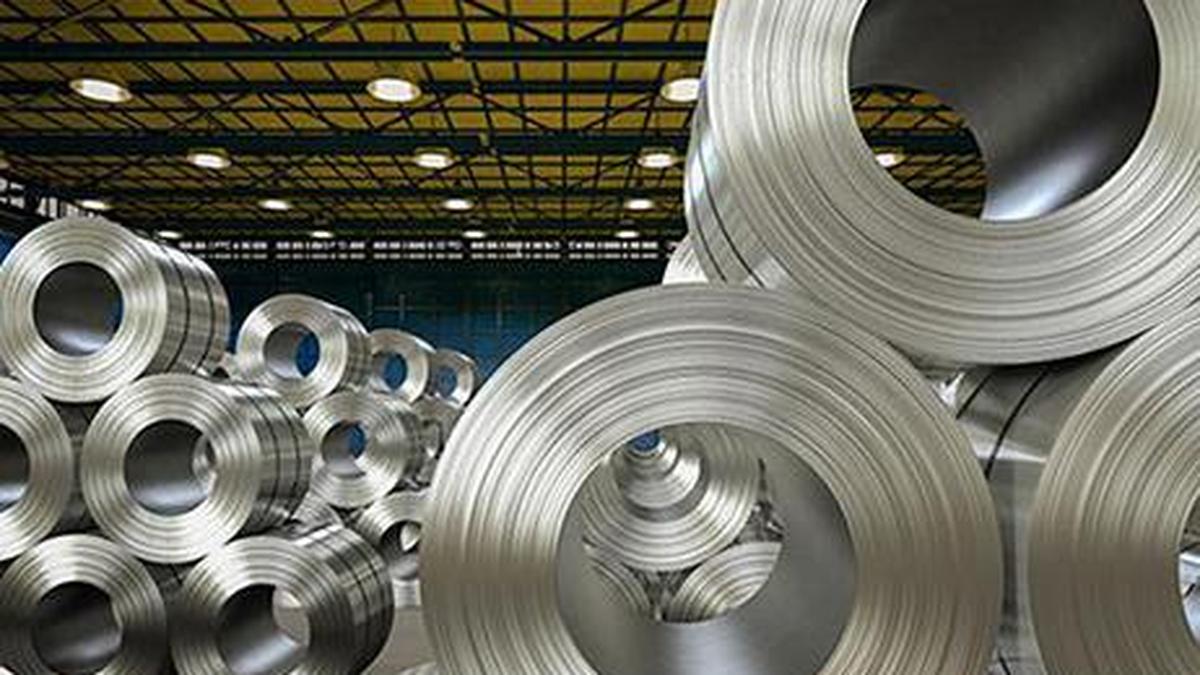
While Asia and Europe saw contractions, India and the US recorded strong growth, with India emerging as the fastest-growing major steel producer View More

March brought challenges for Indian engineering exports, particularly to the UAE and Saudi Arabia, where shipments were significantly hampered by the ongoing crisis in West Asia impacting cargo routes. View More
India’s engineering exports plunged 66.8% to the UAE and 45% to Saudi Arabia in March due to the West Asia crisis, which has impacted cargo ships movement in international waters, industry body EEPC India said Thursday even as the outbound shipments in FY26 were up 4.86% to $122.43 billion, the highest so far. Outbound shipments to the UAE fell to $237.4 million in March from $714.8 million in the same period of the previous year while to Saudi Arabia, they fell to $247.7 million from $450.5 million in the same period. Despite the hit in key West Asian markets, the overall engineering sector exports in March were up 1.13% to $10.94 billion. “The export growth came at a time when global trade faced unprecedented challenges in the form of the geopolitical crisis in the Middle East and West Asia, which blocked one of the key sea routes in the region. Despite these external pressures, India’s overall engineering exports remained positive in FY26 in North America, Europe, Latin America, etc,” said Pankaj Chadha, Chairman, EEPC India. The US remained the biggest market for Indian engineering exports despite the additional tariff pressures, which were as high as 50%. The shipments rose 2.3% to $19.6 billion. Live Events The share of engineering goods exports in the India’s total merchandise exports in FY26 was 27.71%. The share in March 2026 was 28.11%. High exports of motor vehicles/cars, copper and its products, iron and steel, electric machinery and equipment, two- and three-wheelers, products of iron and steel, industrial machinery, other construction machinery, and auto components/parts among others drove the engineering goods exports. Among the major exported product groups, 'aircraft spacecraft and parts', 'medical and scientific instruments' and 'ships, boats and floating structures' witnessed a decline in exports during the fiscal. “Going forward, the combination of sectoral resilience, market diversification, and targeted policy interventions will remain critical for sustaining export momentum and progressing towards long-term export targets” he said. .Pbanner{display:flex;justify-content:space-between;align-items:center;background-color:#ec1c40;margin-top:20px;padding:5px 10px;border-radius:4px;color:#fff;line-height:10px;} .Pbannertext{display:flex;align-items:center;font-size:16px;font-weight:600;font-family:'Montserrat';} .Pbannertext img{height:20px;margin:0 6px} .Pbannerbutton a{display:flex;align-items:center;background-color:#fff;color:#ec1c40;text-decoration:none;font-weight:600;padding:4px 8px;border-radius:6px;font-size:15px;font-family:'Montserrat';} .Pbannerbutton img{height:20px;margin-right:6px} .Pbannerbutton a:hover{background-color:#f7f7f7} Add as a Reliable and Trusted News Source Add Now! (You can now subscribe to our Economic Times WhatsApp channel) (You can now subscribe to our Economic Times WhatsApp channel)

Firm demand and higher prices set up a strong Q4 for steel companies, but a mid-May cooling may cap further gains. View More

Trudeau reiterated Ottawa's call for world leaders to unite and adopt "microlateralism" where a small group of countries identify shared interests. View More
Former Canadian Prime Minister Justin Trudeau speak to Mandy Drury at CNBC CONVERGE LIVE in Singapore on April 23, 2026.CNBC Canada's former Prime Minister Justin Trudeau said at CNBC's CONVERGE LIVE that international institutions were "spectacularly ill-adjusted" to respond to modern-day issues, while advocating that middle powers form new alliances as they face pressure from large powers. "You can look to different places around the world to realize that those institutions, whether it was the WTO or the IMF or what have you, aren't necessarily fit for purpose in our decades now," Trudeau told CNBC's Mandy Drury in Singapore on Thursday. watch nowVIDEO2:5702:57International organizations may no longer be fit for purpose, Justin Trudeau tells CNBCConverge Trudeau called out "great powers," naming the U.S., China, Russia, and India, saying they had decided they can "opt in or opt out of pieces of the rules-based order." "The question of what do the rest of us do if we don't have them on board, driving a renewed world-based order is, I think, at the heart of the conversations people are having now," he said. Canada has sought to recalibrate its diplomatic relationships amid the geopolitical shifts triggered by U.S. President Donald Trump's trade and foreign policies, with Prime Minister Mark Carney declaring a "rupture" in the American-led world order, calling on middle powers to band together and chart their own course. Microlateralism Trudeau reiterated Ottawa's call for world leaders to unite and adopt "microlateralism" where a small group of countries identify shared interests as opposed to multilateralism evident in large organization such as the United Nations, WTO and IMF.His comments come against the backdrop of the U.S.-Israeli war against Iran, and the American operation in January that captured Venezuela's President Nicolas Maduro and his wife, with Washington seizing control of the country's oil industry.Responding to the Middle East conflict for the first time, Trudeau cautioned that the warring powers remained far apart on terms for ending the war. "I think the parties involved all want to see a path through this. I don't think they're yet at the place where they can share a path through this. I think, unfortunately, this instability is going to last a while."Carney had issued a statement at the start of the war that appeared largely supportive of U.S. military action in Iran, before adding more nuances to that stance in March, saying that Canada's backing came "with regret," calling the current conflict another example of the failure of the international order.In a widely watched speech at the World Economic Forum in Davos in January, Carney urged middle powers to forge new alliances and build collective resilience against coercion by larger powers. "If you're not at the table, you're on the menu," he said. Diversifying away from the U.S. Canada has faced mounting pressure to reassess its economic and security dependence on Washington, accelerate its efforts to diversify its trade and diplomatic ties with countries such as China and India, as the Trump administration pushes an increasingly transactional approach to trade and foreign policy. Trudeau put it bluntly, saying that "we're now having to look at working with China because the American industry doesn't want to work with us anymore." Canada has sought to reset its ties with China after eight years of a frosty relationship. "That uncertainty of 'are you going to throw tariffs on us again?' means that we found better partners ... and that's a way of getting around some of that economic coercion," Trudeau said. Canada was among the first countries to be targeted by Trump's tariffs, prompting retaliatory duties by Ottawa on U.S. steel, aluminum, auto imports. Trump also warned of 100% duties on Canada if Ottawa struck a deal with China.Trump has kept in place a 50% duty on commodity imports, including aluminum and steel from Canada, causing U.S. aluminum imports from Canada to drop 27% since tariffs doubled from 25% last year, according to S&P Global, with Ottawa diversifying shipments to Europe. "We'd much prefer to sell our aluminum a few hundred kilometers away rather than a few thousand kilometers across the ocean â but that's not a big enough impediment for us to sit back and not act to diversify," Trudeau said, stressing that "building reliable relationships is the way to stay safe." The U.S.-Mexico-Canada free trade agreement, under which Canada has averted a raft of Trump's global tariffs, is due for a formal review by July 1. Concerns have mounted over the slow pace of negotiations between Washington and Ottawa, with Canada's chief trade negotiator Janice Carette saying Tuesday that it was unlikely to address all issues by that deadline. AI warnings Trudeau said that the rapid development of artificial intelligence could create enormous wealth but warned that if it benefits a narrow elite while leaving ordinary workers behind, then it will sow disaffection among people."If we have 1,000 trillionaires, something will be fundamentally wrong with the world â and everyone will be right in saying this system doesn't work."The resistance to trade sweeping democracies, he argued, was a preview of what awaited if AI's gains were not more broadly shared. "The anti-trade backlash we're experiencing politically is actually an anti-prosperity backlash," he said. The stakes this time, Trudeau cautioned, were far higher, suggesting if AI leads to concentration of wealth in a few hands it would make the inequalities of the trade-led globalization era look modest by comparison. Choose CNBC as your preferred source on Google and never miss a moment from the most trusted name in business news.

The benchmark May ?iron ore on the Singapore
Exchange was 0.18% lower at $107.1 a ton, as of ?0102 GMT. It hit
the highest level ?since ?March 30 at $107.5 earlier in the
session View More