
Latest Sectors News
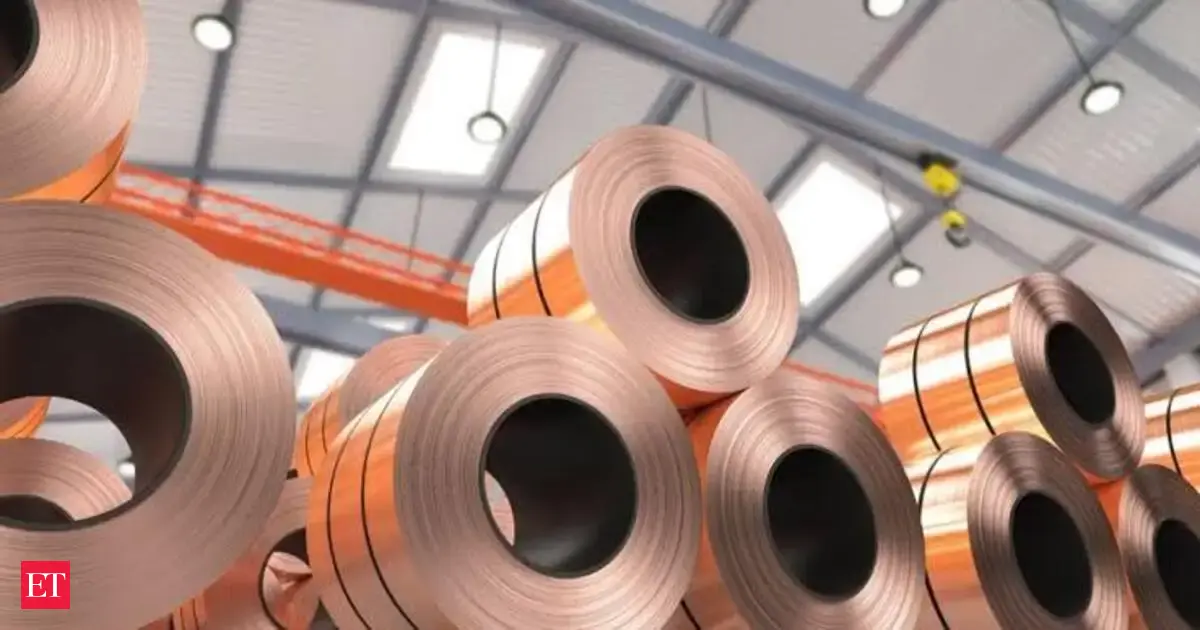
Hindustan Copper Limited is advancing positively on acquiring four Chilean copper blocks. Transaction advisors are studying data and regulatory issues are being examined. This move aims to secure critical raw materials for India's green energy transition. The company is bidding jointly with NTPC Mining and Coal India Limited. View More
New Delhi, State-run Hindustan Copper Ltd (HCL) on Friday said it was moving in a "positive direction" over the proposed takeover of four Chilean copper blocks from state-owned Codelco, with transaction advisors already appointed to study the data and regulatory issues being examined on both sides. The development assumes significance as India seeks to secure critical raw materials for its green-energy transition and reduce reliance on imports for copper used in electrification and electric vehicles . "The transaction advisors... are studying data and there are a lot of regulatory things not only this side but from that side as well... we are moving in the positive direction," Hindustan Copper Ltd (HCL) Chairman & Managing Director (CMD) Anupam Misra told reporters on the sidelines of Ficci conference on 'enhancing competitiveness of mining and metals'. About prospects for copper demand and supply , the CMD said it was "anybody's guess" and pointed to a persistent global gap between demand and supply. "There is always a gap between demand and supply not only here but everywhere. So we are very small contributor to the refining sector. Only 5 per cent of the concentrate goes for us so for us enough demand is there and as far as the LME is there it is supporting us so we are in good position," he said. Live Events Asked if the company was eyeing Navratna status, he said, "This is in the pipeline. Government takes its own time to do it." Mines Secretary Piyush Goyal had earlier said HCL is in the "final stages" of taking over four copper blocks from Chile's Codelco. HCL, he had said, had initially planned to bid for one block but, after assessing India's large copper requirement and limited domestic availability, the company decided to pursue four blocks in collaboration with other public sector undertakings. The copper major is bidding jointly for these blocks along with NTPC Mining and Coal India Ltd (CIL). Hindustan Copper is Mini-Ratna PSU under the administrative control of the mines ministry. HCL is the only company in the country engaged in copper ore mining and holds all the operating mining leases for copper ore in the country. .Pbanner{display:flex;justify-content:space-between;align-items:center;background-color:#ec1c40;margin-top:20px;padding:5px 10px;border-radius:4px;color:#fff;line-height:10px;width: 100%;box-sizing: border-box} .Pbannertext{display:flex;align-items:center;font-size:16px;font-weight:600;font-family:'Montserrat';} .Pbannertext img{height:20px;margin:0 6px} .Pbannerbutton a{display:flex;align-items:center;background-color:#fff;color:#ec1c40;text-decoration:none;font-weight:600;padding:4px 8px;border-radius:6px;font-size:15px;font-family:'Montserrat';} .Pbannerbutton img{height:20px;margin-right:6px} .Pbannerbutton a:hover{background-color:#f7f7f7} Add as a Reliable and Trusted News Source Add Now! (You can now subscribe to our Economic Times WhatsApp channel) (You can now subscribe to our Economic Times WhatsApp channel)
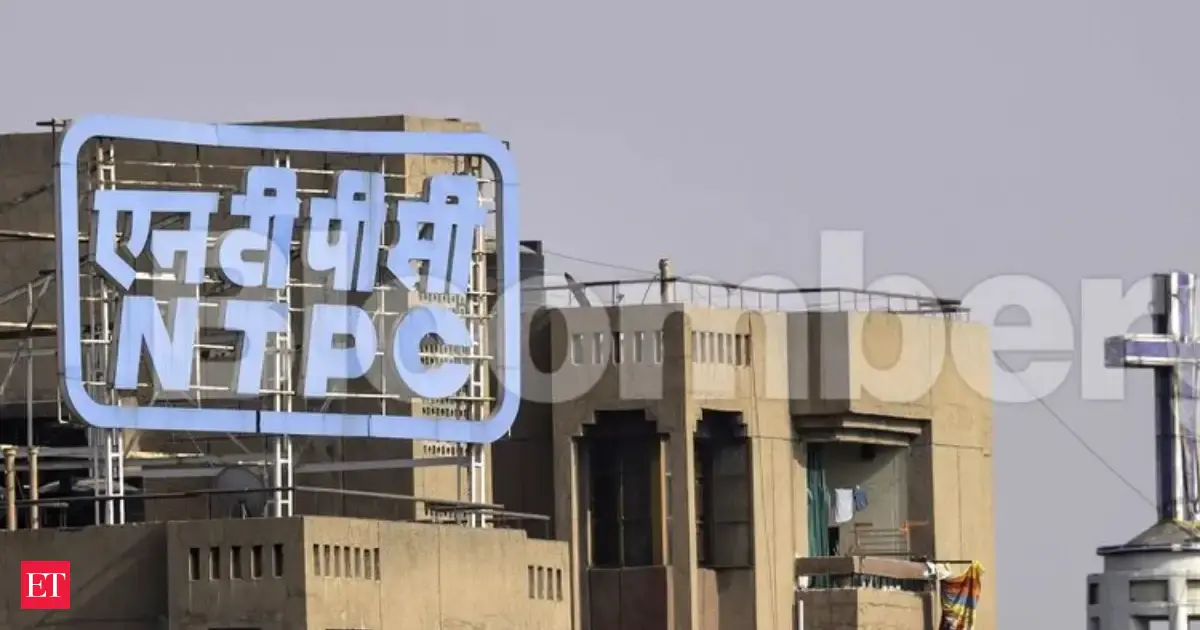
India's largest power producer seeks overseas uranium mines for future nuclear capacity. NTPC plans to build thirty gigawatts of nuclear power over two decades. This move supports India's broader push to decarbonize its economy. The company is looking at assets in Canada, Australia, and Kazakhstan. This strategy addresses domestic fuel limitations and growing energy needs. View More
India’s largest power producer is seeking to invest in overseas uranium mines to secure supplies needed to fuel 30 gigawatts of nuclear power capacity it plans to build over the next two decades. State-controlled NTPC Ltd. issued a tender to appoint consultants that will help identify potential assets in uranium-mining countries including Canada, Australia, Kazakhstan and South Africa, according to documents posted on its tender website. Bids are due July 16. The search for uranium marks the latest step in India’s ambition to grow atomic power capacity more than elevenfold by 2047, part of a broader push to decarbonize an economy that’s driven largely by coal and other fossil fuels. NTPC aims to build around 30% of the country’s 100-gigawatt target. In December, the Indian parliament passed a law that will end a decades-old state monopoly in atomic power generation and open the industry up to private firms. The new legislation also envisages sweeping changes to the country’s liability provisions that had spooked investors. “The scale of planned capacity addition necessitates securing a sustainable fuel supply of uranium,” NTPC said in the bid document. “Considering the limitations of domestic fuel and mining reserves, overseas exploration and the acquisition of uranium mines are required.” Live Events At present, India relies on another state-controlled company – Uranium Corp. of India – for domestic supplies of the metal. The country’s only producer mines mainly in the states of Jharkhand and Andhra Pradesh. New Delhi has already been diversifying its overseas supplies, agreeing during Prime Minister Narendra Modi’s visit to Melbourne this week to import uranium from Australia. India also buys the atomic mineral from Uzbekistan and Russia, while shipments from Canadian miner Cameco Corp. are due to begin next year. Global uranium mining is relatively concentrated, with the top five producers accounting for almost 70% of the world’s output in 2024, according to the World Nuclear Association. Kazakhstan’s NAC Kazatomprom was the biggest producer in that year, followed by Cameco. .Pbanner{display:flex;justify-content:space-between;align-items:center;background-color:#ec1c40;margin-top:20px;padding:5px 10px;border-radius:4px;color:#fff;line-height:10px;width: 100%;box-sizing: border-box} .Pbannertext{display:flex;align-items:center;font-size:16px;font-weight:600;font-family:'Montserrat';} .Pbannertext img{height:20px;margin:0 6px} .Pbannerbutton a{display:flex;align-items:center;background-color:#fff;color:#ec1c40;text-decoration:none;font-weight:600;padding:4px 8px;border-radius:6px;font-size:15px;font-family:'Montserrat';} .Pbannerbutton img{height:20px;margin-right:6px} .Pbannerbutton a:hover{background-color:#f7f7f7} Add as a Reliable and Trusted News Source Add Now! (You can now subscribe to our Economic Times WhatsApp channel) (You can now subscribe to our Economic Times WhatsApp channel)

The power authority warned of fire risks from prolonged use of cooling appliances, asking discoms to prepare for higher summer loads. View More

The Chief Economic Adviser urged companies to invest in skills and innovation, saying artificial intelligence raises the value of workers while the government has already laid the policy groundwork View More

The Indian stock market showed a modest recovery on July 9, with major indices ending slightly higher after a significant decline. Positive momentum early on faded as investors took profits, resulting in the Nifty 50 rising 0.34% and the Sensex up 0.31%. The broader market performed better. View More

Observing that AI has exposed old model, Nageswaran said it is likely to displace routine, repetitive and rule-based tasks, and it would be unrealistic to deny the risks posed to business models built solely around low-cost execution. View More

About 36% of employers said they provide coverage of GLP-1s for both diabetes and weight loss, the same percentage as 2025 and up from 34% in 2024, the survey said. View More
In this articleLLYNVONVOFollow your favorite stocksCREATE FREE ACCOUNT Photo illustration of a group of weight loss medications on a white background.Ucg | Universal Images Group | Getty Images A version of this article first appeared in CNBC's Healthy Returns newsletter, which brings the latest health-care news straight to your inbox. Subscribe here to receive future editions.As new GLP-1 drugs enter the U.S. market and landmark Medicare coverage rolls out, one thing remains the same: Most employers still aren't covering those drugs for weight loss. Many health plans are actually finding ways around it."It's a battle to try to keep costs down," Justin Held, director of educational programs at the nonprofit organization International Foundation of Employee Benefit Plans, said in an interview. "It seems like they're not necessarily offering coverage for weight loss, but they're instead focusing on how to support the overall health of their workers."The findings are from a survey released Tuesday by the IFEBP, which includes more than 33,000 member companies or public institutions. It was conducted in June on almost 300 employer health plans in the U.S.Around 36% of employers said they provide coverage of GLP-1s for both diabetes and weight loss, the same percentage as 2025 and up from 34% in 2024, the survey said. Meanwhile, 60% of employers said they offer coverage for diabetes only, up from 55% in 2025 and 57% in 2024. Roughly 45% of plans said they cover GLP-1s for other approved conditions, such as obstructive sleep apnea and heart disease.The fact that employer coverage of weight loss is flat compared with last year is no surprise. Health plans have long balked at the high costs involved with covering GLP-1 drugs from Eli Lilly and Novo Nordisk, especially as demand soars in the U.S. To curb costs, plans have restricted coverage or stopped it entirely.Cost remains a primary driver in employer decisions around GLP-1 coverage, Held said. In 2026, respondents said the drugs accounted for 11.4% of annual claims, up from 6.9% in 2023. But employers are finding other ways to support workers who want to use those drugs. "The cost burden is so great that they're saying, there's other ways you can do this while still wanting to use those benefits to recruit and retain those folks," Held said. Around 27% of employers encourage employees to obtain GLP-1s through a direct-to-consumer platform, while 21% are pushing workers to use their FSA, HSA or integrated HRA dollars for the treatments. Held said as costs go up, it becomes a "great opportunity for employers to communicate the benefits that they're already offering in this space." For example, 74% of plans said they offer disease and chronic care management, 61% provide nutritional counseling, and another 61% offer bariatric surgery. Employers said they also cover benefits such as lifestyle modification programs, other non-GLP-1 drugs and medication-free interventions for weight loss. So, what will it take for more employers to adopt coverage of GLP-1s for obesity and foot the bill? What could move the needle, according to Held, is evidence that covering those drugs ultimately reduces costs in other areas. That might look like fewer knee replacements and bariatric surgeries or higher productivity and better wellness outcomes. "If those things are happening, then they might say it's worth it to offer full coverage for weight loss as well, because the impact on the other areas of our organization is so positive," he said. "But we just haven't seen that yet."While some studies and estimates suggest that the downstream savings of GLP-1 could offset the high costs to the healthcare system, there has yet to be any widespread measured proof of that based on real-world data. We may get a first glimpse of what savings are like after a newly launched 18-month program that is allowing Medicare to cover GLP-1s for obesity for the first time. Until then, around 9% of employers are considering adopting coverage of GLP-1s for obesity. We'll keep watching to see how that might change over time. Feel free to send any tips, suggestions, story ideas and data to Annika at a new email: annika.constantino@versantmedia.com. Choose CNBC as your preferred source on Google and never miss a moment from the most trusted name in business news.
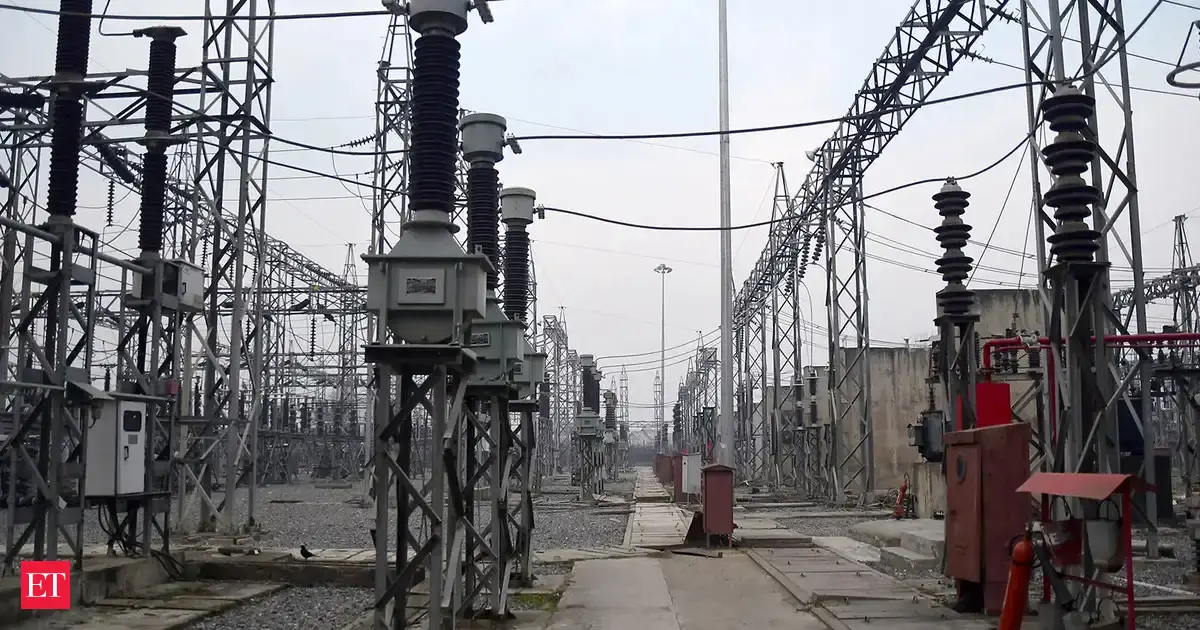
Speaking at the 12th India Energy Storage Week (IESW) 2026 in the national capital, the minister highlighted that according to estimates, India has already reached (peak power demand of) 271 GW, and projections suggest the peak may rise even further this year. View More
New Delhi: India's peak power demand is set to hit a new high of 300 GW next year on the back of rapid expansion of data centres, artificial intelligence, and electric vehicles, Power Minister Manohar Lal said on Wednesday. Speaking at the 12th India Energy Storage Week (IESW) 2026 in the national capital, the minister highlighted that according to estimates, India has already reached (peak power demand of) 271 GW, and projections suggest the peak may rise even further this year. India's peak power demand jumped to a record high of 270.82 GW in May 2026, according to power ministry data. India's available capacity has grown to 284 GW, which enables us to meet all types of demand, the minister said. But with the accelerating pace of electrification, we must prepare for 300 GW peak demand next year, he pointed out. Live Events "India's peak power demand is set to reach 300 gigawatts next year, driven by the rapid expansion of data centres, artificial intelligence, and electric vehicles." As people's needs rise, energy storage becomes a national imperative, ensuring the power generated can be used whenever and wherever it is needed, he noted. Reflecting on India's energy journey, the minister said energy is constant, but today, the principle is evolving; power can be stored. While earlier, consumption happened instantly upon generation, now, through advanced storage and grid solutions, we can shift and utilise energy according to our needs, he stated. The minister further emphasised the country's commitment to environmental reforms and net-zero carbon emissions by 2070, noting that non-fossil fuel capacity has soared from 81 GW to 291 GW in just over a decade. The minister also underscored the necessity of indigenisation and self-reliance. 'Vocal for Local' and 'Make in India' are crucial for the power sector, especially in solar cells, batteries, and containers, he noted. Touching on global collaborations, the minister referenced the 'One Sun, One World, One Grid' vision, highlighting India's efforts to build transnational green energy corridors, including a proposed 1,600-kilometre undersea cable to the UAE with an estimated cost of Rs 40,000 crore, and expansion plans for connections to Sri Lanka, Singapore, and Europe. He emphasised that as the world moves to green energy, India's leadership in storage, manufacturing, and R&D will benefit not just the nation, but the world. Vinayak Walimbe, Managing Director, Customized Energy Solutions, said the scale and speed of India's battery storage expansion are truly remarkable. This year alone, "we have seen an 11-fold jump in installed BESS capacity, he added. Organised by the India Energy Storage Alliance, the three-day event is expected to bring together over 200 exhibitors and more than 10,000 industry leaders for policy discussion, technical exchange, and announcements that will define India's clean energy transition . Ghanshyam Prasad, Chairperson, Central Electricity Authority (CEA), said India is targeting around 160 GW of storage by 2035, with clear roadmaps for both battery and pumped hydro storage. India's energy storage sector stands at the heart of the nation's clean energy revolution, powered by innovation, partnership, and a shared commitment to Atmanirbhar Bharat and global leadership. .Pbanner{display:flex;justify-content:space-between;align-items:center;background-color:#ec1c40;margin-top:20px;padding:5px 10px;border-radius:4px;color:#fff;line-height:10px;} .Pbannertext{display:flex;align-items:center;font-size:16px;font-weight:600;font-family:'Montserrat';} .Pbannertext img{height:20px;margin:0 6px} .Pbannerbutton a{display:flex;align-items:center;background-color:#fff;color:#ec1c40;text-decoration:none;font-weight:600;padding:4px 8px;border-radius:6px;font-size:15px;font-family:'Montserrat';} .Pbannerbutton img{height:20px;margin-right:6px} .Pbannerbutton a:hover{background-color:#f7f7f7} Add as a Reliable and Trusted News Source Add Now! (You can now subscribe to our Economic Times WhatsApp channel) (You can now subscribe to our Economic Times WhatsApp channel)
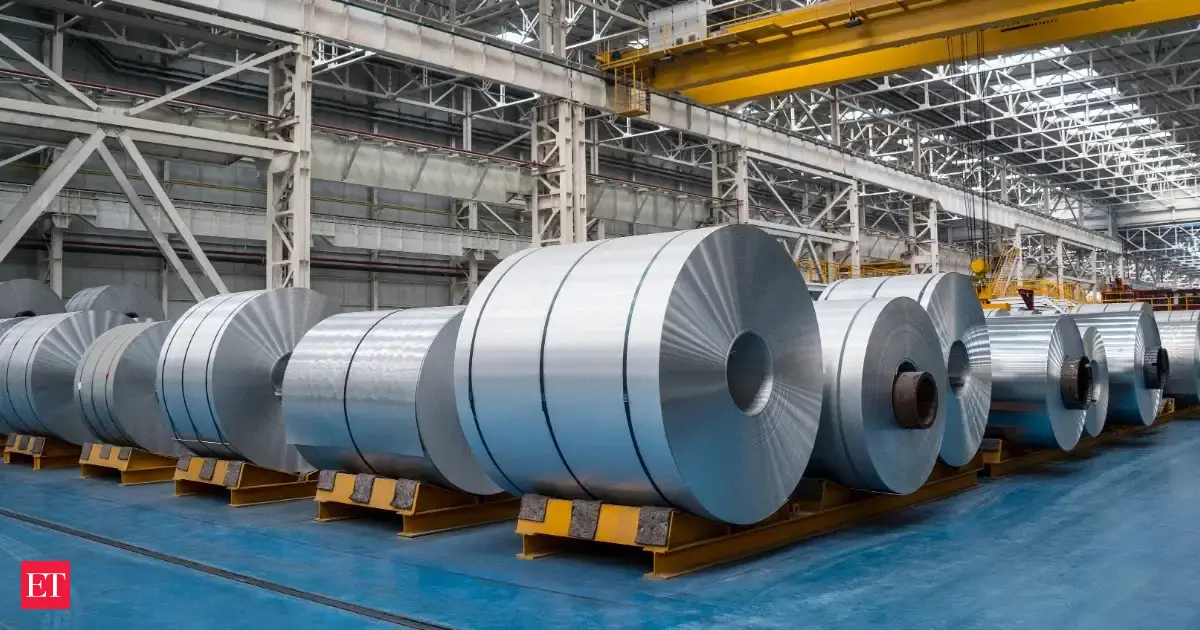
National Aluminium Company and NLC India have signed a joint venture agreement. They will jointly establish a 1,080 MW thermal captive power plant in Odisha. This new plant will supply essential power to Nalco's aluminium smelter expansion project. The collaboration also aims to explore renewable energy and secure coal supply. This strategic partnership will enhance Nalco's power generation capabilities. View More
New Delhi: State-owned National Aluminium Company Ltd ( Nalco ) on Wednesday announced entering into a joint venture agreement with NLC India Ltd (NLCIL) to set up a 1,080 MW thermal captive power plant in Odisha. The joint venture-cum-shareholders' agreement (JVA) has been signed for the formation of a 50:50 joint venture company to develop a 4x270 MW (1,080 MW) thermal captive power plant in Anugola, Odisha, Nalco said in a regulatory filing. Read more: Nalco eyes 200-300 MW green power capacity backed by battery storage for low-carbon aluminium The plant will supply captive power to Nalco's 0.5 MTPA aluminium smelter expansion project. Nalco said the collaboration will also explore long-term arrangements for 200-250 MW of firm renewable energy (RE-RTC) and secure long-term coal supply agreements . Live Events The JV entity will "execute a 25-year Power Purchase Agreement (PPA) with NALCO for 100 per cent offtake of power under Section 62 of the Electricity Act, 2003, and a Fuel Supply Agreement (FSA) with NLCIL for coal at Coal India notified prices, the filing said. Read more: Nalco eyes foray into rare earths, magnesium, chromite amid critical minerals push Nalco is a 'Navratna' company under the Ministry of Mines. It is one of the country's largest bauxite, alumina, aluminium and power complex. Currently, the Centre owns 51.28 per cent equity share in Nalco. The company has its captive Panchpatmali bauxite mines for the pit-head alumina refinery at Damanjodi in Koraput district of Odisha and an aluminium smelter, captive power plant and captive coal mines in Anugola. .Pbanner{display:flex;justify-content:space-between;align-items:center;background-color:#ec1c40;margin-top:20px;padding:5px 10px;border-radius:4px;color:#fff;line-height:10px;} .Pbannertext{display:flex;align-items:center;font-size:16px;font-weight:600;font-family:'Montserrat';} .Pbannertext img{height:20px;margin:0 6px} .Pbannerbutton a{display:flex;align-items:center;background-color:#fff;color:#ec1c40;text-decoration:none;font-weight:600;padding:4px 8px;border-radius:6px;font-size:15px;font-family:'Montserrat';} .Pbannerbutton img{height:20px;margin-right:6px} .Pbannerbutton a:hover{background-color:#f7f7f7} Add as a Reliable and Trusted News Source Add Now! (You can now subscribe to our Economic Times WhatsApp channel) (You can now subscribe to our Economic Times WhatsApp channel)

Discover key stocks to watch on July 12, including major developments in defense, infrastructure, and automotive sectors View More