
Latest Sectors News

AI data centers powered by off-grid power plants took a major step forward this week, a good sign for GE Vernova as industry challenges pile up. View More
AI data centers powered by off-grid power plants took a major step forward this week, a good sign for GE Vernova as industry challenges pile up. Monday's announcement from Chevron that Microsoft has signed a long-term energy purchase agreement to fuel a massive new data center project couldn't have come at a better time. Microsoft will use energy from a planned Chevron power plant in West Texas, and will be largely powered by natural gas turbines from Club name GE Vernova. These turbines, which are essentially massive engines, are a top choice to create so-called behind-the-meter energy, which prevents stresses on local power grids. The push to build data centers across the country to meet the enormous demand to run AI workloads has not been met everywhere with open arms. Wells Fargo highlighted political resistance as a pillar of the bear case against GE Vernova. The analysts also cited increased turbine competition from rivals such as Mitsubishi and a slowdown in the artificial intelligence trade, which was evident in Tuesday's sharp slide in the tech-heavy Nasdaq . Shares of GE Vernova, which are still up 60% year to date, dropped more than 7% on the day. "The bears are getting louder," Wells Fargo wrote in a Tuesday note to clients. The analysts qualified that their base case on GE Vernova remains positive. "We expect GEV will continue to 'work' as long as the company continues its 'beat and raise' momentum," they said. Wells Fargo also kept a buy-equivalent rating and a $1,259-per-share price target, implying around 20% upside from Tuesday's late-session levels. The analysts also pointed to the enormous market share that GE Vernova's equipment has in energy markets. They estimate that the company, which makes steam and gas turbines, hydro generators, and nuclear reactors, generates roughly 25% of the world's electricity. That market share has insulated GE Vernova's hefty backlog â essentially a waitlist for customer orders where every added turbine could translate to future revenue. Wells Fargo expects pricing for the heavy-duty machinery to trend higher as big tech firms fight for a spot in line. In fact, analysts noted the company has "yet to hit a ceiling on price." Inside Project Kilby The Chevron power plant â which will be built in Reeves County and will power Microsoft's planned data center â has been dubbed Project Kilby. The facility is expected to deliver roughly 2.7 gigawatts of capacity. That's equivalent to the power needed for 2 million households. Chevron will supply the natural gas, while GE Vernova will provide the majority of the large turbines to support the plant. It's not a surprise, as the two have been partners on the project since it was announced in January 2025. Caterpillar is expected to provide the remainder of the turbines. Crucially, the plant will be located beside the Microsoft-operated data center and won't run off the public grid. Jeff Gustavson, president of the Chevron New Energies unit, told CNBC in an interview Monday, "There's really no competition with local electricity consumers." He added that "over time, as we have excess power, we plan to push that into the grid to help stabilize it." Gustavson said there are dozens of these types of projects announced around the nation, but few are as far along as Project Kilby. He said Project Kilby has the support of the community, where Chevron has a long history, arguing they see the benefits to the local economy that new jobs will bring. Multiyear backlog Project Kilby won't take place overnight: The Microsoft data center isn't expected to start receiving power from the plant until 2028. That timeline highlights the broader supply crunch facing the industry. A spokesperson for GE Vernova told CNBC that the Project Kilby turbines are currently factored into the company's backlog, which totaled $163 billion at the end of March. The company expects that number to reach $200 billion by the end of 2027, a year earlier than previously expected. The backlog continues to grow because GE Vernova is sold out of the heavy-duty turbines through at least 2028, with little capacity across 2029 and 2030. Bernstein analyst Sunaina Ocalan called Project Kilby "just another proof point of the enormous power demand that we're seeing" in the AI boom. "Higher demand is driving better pricing power for GE Vernova that is translating into margin expansion," Ocalan added. The big question for investors: Are there more big projects like this to come? "As we usually see with these hyperscalers [like Microsoft], one announces a deal, then you tend to get more down the road," Jeff Marks, director of portfolio analysis for the Club, speculated. Jeff pointed to fellow Club name Corning as an example of the domino effect. Corning announced in January a $6 billion supply agreement with Meta Platforms for fiber optic cables to be used in the Facebook and Instagram company's data centers. In May, Corning inked a deal with Nvidia ; then another one with Amazon in June. All of those tech giants are Club holdings. Bottom line There's no doubt about it: Project Kilby bringing Microsoft on board is a major win for not only Chevron but also for GE Vernova. Attaching a hyperscaler to the Texas power plant project increases the possibility for a boost in sales for GE Vernova's crucial power division â its largest by revenue, and a key reason we got into the stock. We would be remiss if we didn't further address Tuesday's big selloff, which took down GE Vernova as well as Club chipmakers Nvidia and Arm and the broader tech sector. We're not concerned about the dip. The fundamentals for GE Vernova are outstanding, and so are the fundamentals underpinning the AI boom. GE Vernova's incredible backlog and persistent demand for its turbines and other electrification solutions are unmatched. (See here for a full list of the stocks in Jim Cramer's Charitable Trust, including GEV, MSFT, GLW, META, NVDA, AMZN, ARM.) As a subscriber to the CNBC Investing Club with Jim Cramer, you will receive a trade alert before Jim makes a trade. Jim waits 45 minutes after sending a trade alert before buying or selling a stock in his charitable trust's portfolio. If Jim has talked about a stock on CNBC TV, he waits 72 hours after issuing the trade alert before executing the trade. THE ABOVE INVESTING CLUB INFORMATION IS SUBJECT TO OUR TERMS AND CONDITIONS AND PRIVACY POLICY , TOGETHER WITH OUR DISCLAIMER . NO FIDUCIARY OBLIGATION OR DUTY EXISTS, OR IS CREATED, BY VIRTUE OF YOUR RECEIPT OF ANY INFORMATION PROVIDED IN CONNECTION WITH THE INVESTING CLUB. NO SPECIFIC OUTCOME OR PROFIT IS GUARANTEED.

The move allows eligible projects to generate, inject, wheel, bank and settle electricity during the interim period View More

Childcare can be expensive for both parents and their employers. Yet existing tax incentives to help defray those costs may go unused, a new report finds. View More
Alvaro Gonzalez | Moment | Getty Images A lack of available childcare could cost the U.S. economy up to $329 billion over the next 10 years, a 2025 Bipartisan Policy Center report found.One untapped way for families and the businesses that employ them to save on those costs could be through existing tax incentives, according to a new report from the U.S. Congress Joint Economic Committee â Minority. Just 13% of private sector workers have access to childcare benefits through their employers, according to the report. Moreover, existing childcare tax incentives are underused or difficult for businesses and their employees to navigate, the report states. Tax incentives to reduce the cost of childcare Eligible workers may be able to offset their childcare expenses by claiming the child and dependent care tax credit, or CDCTC. The CDCTC lets families who meet certain criteria offset a portion of their childcare and dependent care expenses against their federal income tax liability. The credit can partially offset up to $3,000 in care expenses for one qualifying individual and up to $6,000 for two or more qualifying individuals.Yet only about 12% of taxpayers with children claim the credit, according to the report. Some workers who are eligible may have difficulty navigating the credit, and therefore don't claim it, the report said, while others may be ineligible due to not having qualifying expenses, owing no federal taxes or earning too much money. More from Women and Wealth:Women tend to be 'risk-appropriate' investors, expert says: How that helps35% of Gen Z homebuyers are single women. Here's why they need an estate planMillions of people with disabilities may be missing out on this little-known savings toolOlder women may inherit most of $54 trillion in spousal 'great wealth transfer''Survivor's penalty' can affect retirees after a spouse dies. What to expect Businesses may set up dependent care assistance program, or DCAP, accounts for employees. Those accounts enable families to set aside up to $7,500 in pretax income for childcare expenses. That money is not subject to taxes so long as it is used on childcare or other qualifying expenses. Fewer than half of private-sector workers have access to these accounts, according to the report. The DCAP, also called a dependent care FSA, is an "immediate tax saving win," said Sean Lovison, a certified financial planner, certified public accountant and founder of Purpose Built, an independent financial planning firm in Moorestown, New Jersey. It can be especially helpful for high earners to shield a portion of their income, he said. But it's important to remember that it's a use-it-or-lose-it account, which means the balance must be spent during the plan year on qualifying expenses such as preschool or summer day camps, according to Lovison. And it's important to also remember there are exceptions, like sleepover camps, he said. A separate employer-provided tax credit, known as 45F, helps businesses offset the cost of providing childcare. Businesses that invest in childcare for their employees, either by building and operating a childcare facility or partnering with a childcare provider, can subtract 40% of eligible expenses â or 50% for small businesses â from what they owe in taxes. That may provide up to a maximum of $500,000 annually in tax savings through a nonrefundable credit, or up to $600,000 for small businesses. Despite those savings, less than 1% of corporate returns used the 45F program, according to the report, which cites the latest available tax filing data from 2016.By fully using available tax incentives for childcare, a hypothetical business could save $820,000 in taxes over five years and generate more than $8 million in return on investment through reduced employee turnover and increased productivity, according to an example scenario in the report. Meanwhile, a parent employed at that business could save almost $10,000 over five years. The report comes a few months after ranking member of the committee, Democratic Sen. Maggie Hassan of New Hampshire, proposed a bill with Republican Sen. Dan Sullivan of Alaska, to create a business childcare liaison at the IRS who would educate businesses about existing childcare tax incentives. Choose CNBC as your preferred source on Google and never miss a moment from the most trusted name in business news.
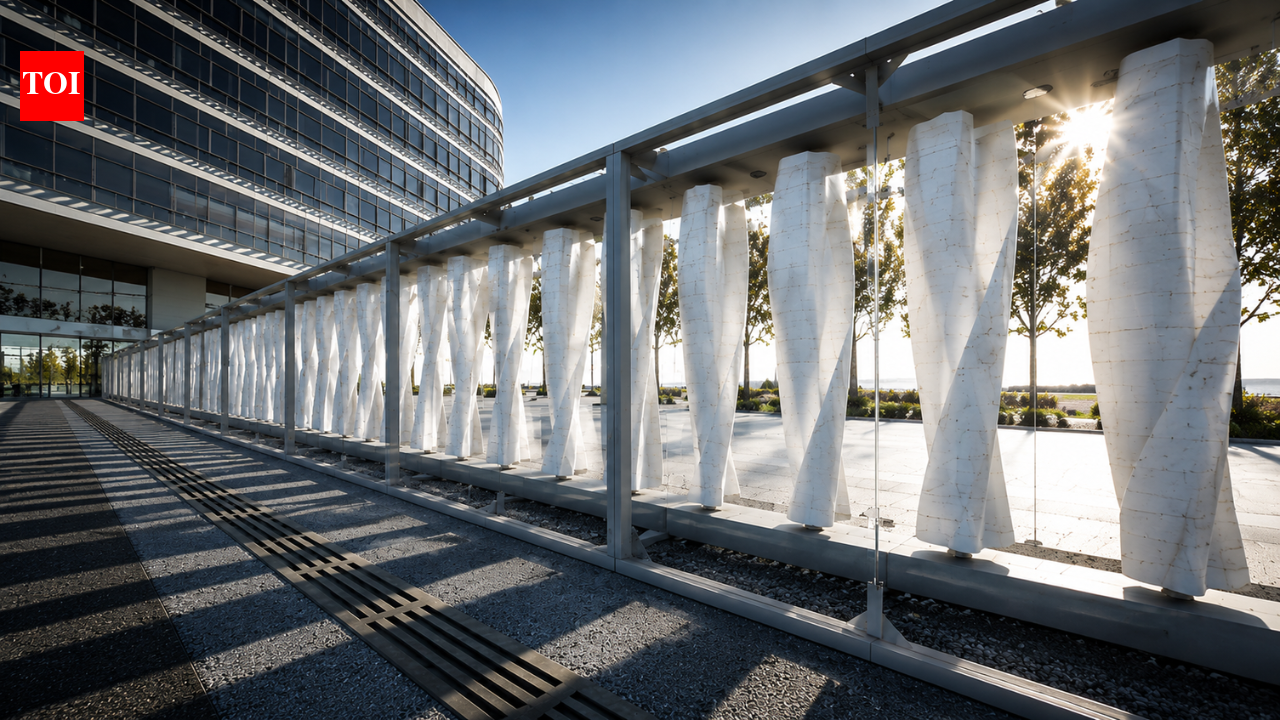
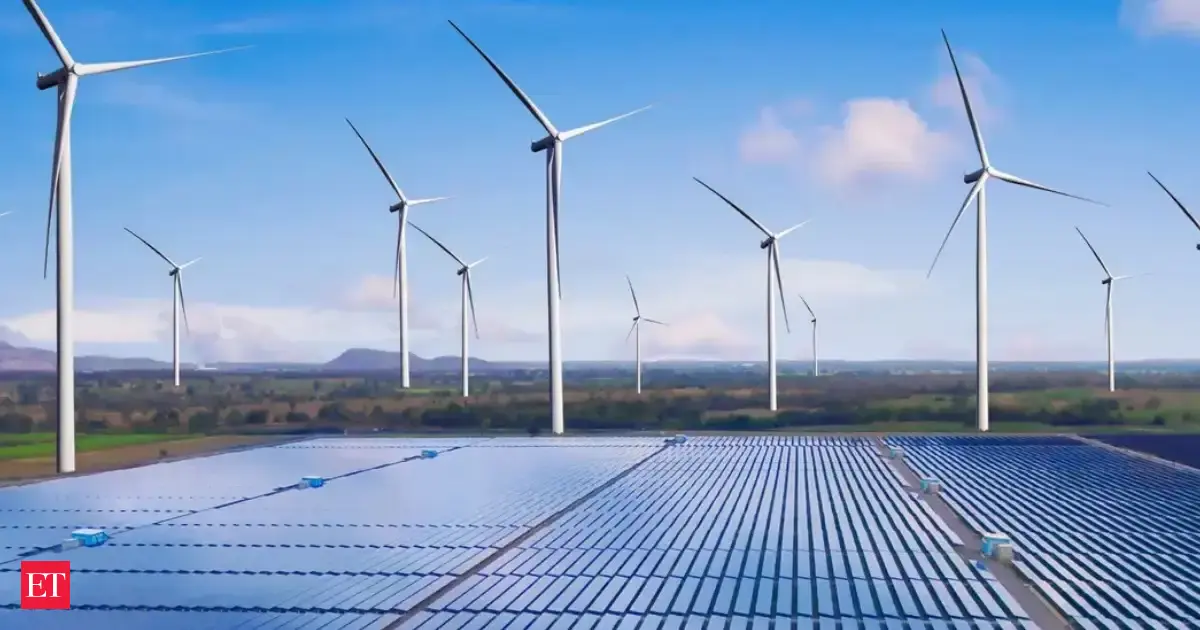
Resonia, formerly Sterlite Power's transmission arm, has secured a significant project in Telangana from Power Finance Corporation. This initiative aims to bolster power transmission links between Andhra Pradesh and Telangana, improving grid flexibility and facilitating the integration of renewable energy from the Kurnool REZ. The project involves establishing a new substation and enhancing existing infrastructure to support this crucial connectivity. View More
New Delhi: Resonia , the power transmission infrastructure business of the erstwhile Sterlite Power, on Monday said it has bagged a transmission project in Telangana from the Power Finance Corporation . The project will significantly strengthen transmission connectivity between Andhra Pradesh and Telangana, enhance grid flexibility, and support large-scale integration of renewable energy from the Kurnool Renewable Energy Zone (REZ), the company said in a statement. The company, however, did not disclose the financial details of the order. Also Read: India sets transmission project deadlines to speed up renewable energy expansion The scope of the project includes the establishment of a 765/400 kV Doma substation, augmentation of the existing Kurnool-IV pooling station, and development of associated high-capacity transmission infrastructure. Live Events "As renewable energy capacity scales rapidly, resilient and high-capacity transmission systems are critical for seamless power evacuation and grid stability," said Prashant Sinha, CEO, Resonia Ltd. Resonia Ltd is a leading power transmission company with a network of over 14,499 circuit kilometres (CKM). .Pbanner{display:flex;justify-content:space-between;align-items:center;background-color:#ec1c40;margin-top:20px;padding:5px 10px;border-radius:4px;color:#fff;line-height:10px;} .Pbannertext{display:flex;align-items:center;font-size:16px;font-weight:600;font-family:'Montserrat';} .Pbannertext img{height:20px;margin:0 6px} .Pbannerbutton a{display:flex;align-items:center;background-color:#fff;color:#ec1c40;text-decoration:none;font-weight:600;padding:4px 8px;border-radius:6px;font-size:15px;font-family:'Montserrat';} .Pbannerbutton img{height:20px;margin-right:6px} .Pbannerbutton a:hover{background-color:#f7f7f7} Add as a Reliable and Trusted News Source Add Now! (You can now subscribe to our Economic Times WhatsApp channel) (You can now subscribe to our Economic Times WhatsApp channel)

A significant Rs 25,000 crore investment by BHEL and Coal India Limited is set to transform Odisha's coal sector. This ambitious project will explore coal gasification, moving beyond traditional power generation to unlock new opportunities in fertilizer production and boost downstream industries. View More
Jharsuguda: Union Coal and Mines Minister G Kishan Reddy on Saturday said Bharat Heavy Electricals Limited (BHEL) and Coal India Limited (CIL) are jointly investing Rs 25,000 crore in a coal gasification project in Odisha, marking a major step towards expanding the use of coal beyond conventional power generation. Speaking to reporters in Jharsuguda during an event attended by Prime Minister Narendra Modi and President Droupadi Murmu, the Minister said the initiative would open new opportunities in fertiliser production while creating jobs in the region. "Today, Prime Minister Narendra Modi and the President Droupadi Murmu have ushered in a new chapter for Odisha's coal sector. Moving beyond the traditional use of coal, new avenues will now open up through coal gasification," Reddy said. Highlighting the scale of investment, the Minister said, "Today, BHEL and Coal India Limited are jointly investing Rs 25,000 crore in this initiative." He said the project is expected to strengthen downstream industrial activity in the state and generate employment opportunities. Live Events "This will facilitate fertiliser production and create employment opportunities for local people, proving highly beneficial for Odisha," Reddy added. The Minister also underlined the Centre's broader push towards coal gasification as part of efforts to diversify coal utilisation and reduce import dependence in sectors such as fertilisers and chemicals. "The Central Government is providing Rs 46,000 crore for coal gasification," he said. Coal gasification converts coal into synthesis gas, or syngas, which can be used to produce chemicals, fertilisers, synthetic fuels and other industrial products. The technology is seen as a way to enhance the value of India's vast coal reserves while supporting industrial development. The Centre has been promoting coal gasification projects to encourage cleaner and more efficient utilisation of domestic coal resources and reduce reliance on imported feedstock for key industries. .Pbanner{display:flex;justify-content:space-between;align-items:center;background-color:#ec1c40;margin-top:20px;padding:5px 10px;border-radius:4px;color:#fff;line-height:10px;} .Pbannertext{display:flex;align-items:center;font-size:16px;font-weight:600;font-family:'Montserrat';} .Pbannertext img{height:20px;margin:0 6px} .Pbannerbutton a{display:flex;align-items:center;background-color:#fff;color:#ec1c40;text-decoration:none;font-weight:600;padding:4px 8px;border-radius:6px;font-size:15px;font-family:'Montserrat';} .Pbannerbutton img{height:20px;margin-right:6px} .Pbannerbutton a:hover{background-color:#f7f7f7} Add as a Reliable and Trusted News Source Add Now! (You can now subscribe to our Economic Times WhatsApp channel) (You can now subscribe to our Economic Times WhatsApp channel)
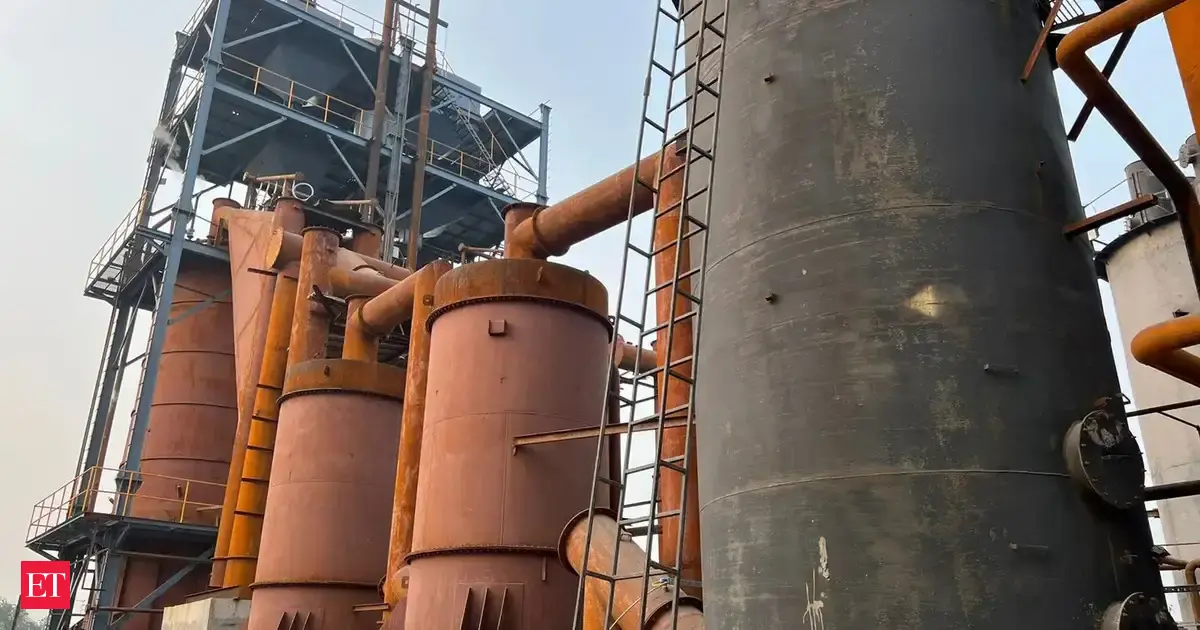
A significant Rs 25,016-crore coal gasification project in Odisha, recently inaugurated by President Murmu and PM Modi, is set to fulfill nearly 35% of India's ammonium nitrate needs by 2030. This pioneering initiative, utilizing indigenous technology, promises to slash imports by 0.66 million tonnes annually, saving over USD 360 million in foreign exchange each year and bolstering India's self-reliance in strategic industrial products. View More
New Delhi, Jun 20 (PTI) The Rs 25,016-crore coal gasification project in Odisha, whose foundation stone was laid on Saturday, is expected to meet nearly 35 per cent of India's projected ammonium nitrate demand by 2030, industry experts said. Once operational, the plant would reduce imports by about 0.66 million tonnes annually and generate foreign exchange savings of more than USD 360 million every year, they added. Over its operating life, cumulative savings from import substitution could exceed USD 9 billion, the industry said. President Droupadi Murmu and Prime Minister Narendra Modi jointly laid the foundation stone for the Bharat Coal Gasification and Chemicals Ltd (BCGCL) project at Lakhanpur in Jharsuguda district of Odisha. The project, being developed by Bengal Coal and Gasification Company Ltd -- a joint venture of Bharat Heavy Electricals Ltd (BHEL) and Coal India Ltd (CIL) -- will use indigenous coal gasification technology to convert locally available coal into synthesis gas, which will then be processed into ammonium nitrate -- a crucial feedstock for fertiliser and industrial explosives. Live Events You Might Also Like:President Droupadi Murmu, PM Modi unveil projects worth over Rs 47,600 crore in Odisha "Today's foundation stone laying of the BCGCL Coal-to-Ammonium Nitrate Project marks a defining moment in India's industrial evolution. This is not merely the inauguration of an ammonium nitrate plant; it is the emergence of a new coal-to-chemicals ecosystem that demonstrates how India's abundant coal resources can be transformed into strategic industrial products," Balasaheb Darade, Founder & Managing Director, New Era Cleantech Solution Pvt Ltd, said. The Prime Minister deserves immense credit for recognising that true energy security in the 21st century extends beyond fuels to strategic molecules, he said, adding that his vision has transformed the national conversation from 'mines and megawatts' to "molecules and manufacturing". The National Coal Gasification Mission and the target of 100 million tonnes of coal gasification by 2030 have created the foundation for a new industrial revolution. "If the refinery revolution unlocked value from crude oil, coal gasification can unlock similar value from India's vast coal reserves through ammonia, ammonium nitrate, methanol, hydrogen, synthetic fuels and downstream chemicals. India's coal is no longer just a fuel -- it is becoming a strategic industrial resource capable of powering the nation's journey towards Atmanirbhar Bharat and Viksit Bharat," he said. Gasification Technologies & Research Council (GTRC) Chairman Amrit Lal Meena, former coal secretary, said at a time when geopolitical uncertainties continue to impact energy security, fertiliser and chemical markets, coal gasification offers India a pathway to greater resilience. Prime Minister's vision for coal gasification is timely and transformational. By positioning coal gasification as a national mission, the government has created the framework for India to convert its natural resource advantage into economic strength. The BCGCL project represents one of the most important milestones in India's coal sector. For decades, coal was primarily fuelling power. BCGCL demonstrates that coal can also become a source of high-value chemicals, fertilisers, industrial feedstocks, and strategic manufacturing growth, Meena said. The significance of this project extends far beyond its production capacity. It showcases India's first indigenous pressurised fluidised bed coal gasification technology developed by BHEL, establishing a technological foundation for future coal-to-chemicals investments across the country. Every successful gasification project strengthens India's capability to build domestic technology, manufacturing and supply chain, he added. Coal gasification is emerging as a key pillar of India's strategy to strengthen energy security, reduce dependence on imported critical feedstocks, promote value addition to domestic coal resources and support the development of downstream industries. The process converts coal into synthesis gas (syngas), which can be used to produce a wide range of value-added products such as methanol, urea, ammonium nitrate, synthetic natural gas, and other chemical feedstocks. Recognising the transformative potential of coal gasification, the government has approved incentive schemes with a cumulative outlay of up to Rs 46,000 crore to promote surface coal and lignite gasification projects across the country. The initiative aims to accelerate the establishment of coal gasification projects across the country, encourage the use of domestic coal for strategic industrial and chemical outputs, and reduce dependence on imports of natural gas, methanol, ammonia, and other critical feedstocks. .Pbanner{display:flex;justify-content:space-between;align-items:center;background-color:#ec1c40;margin-top:20px;padding:5px 10px;border-radius:4px;color:#fff;line-height:10px;} .Pbannertext{display:flex;align-items:center;font-size:16px;font-weight:600;font-family:'Montserrat';} .Pbannertext img{height:20px;margin:0 6px} .Pbannerbutton a{display:flex;align-items:center;background-color:#fff;color:#ec1c40;text-decoration:none;font-weight:600;padding:4px 8px;border-radius:6px;font-size:15px;font-family:'Montserrat';} .Pbannerbutton img{height:20px;margin-right:6px} .Pbannerbutton a:hover{background-color:#f7f7f7} Add as a Reliable and Trusted News Source Add Now! (You can now subscribe to our Economic Times WhatsApp channel) (You can now subscribe to our Economic Times WhatsApp channel)

Tiger Logistics (India) Ltd has secured a new import logistics mandate worth ?4 crore from Bharat Heavy Electricals Ltd for transporting 13 over-dimensional cargo units from Italy to India, reinforcing their partnership and showcasing the firm's logistics capabilities. View More
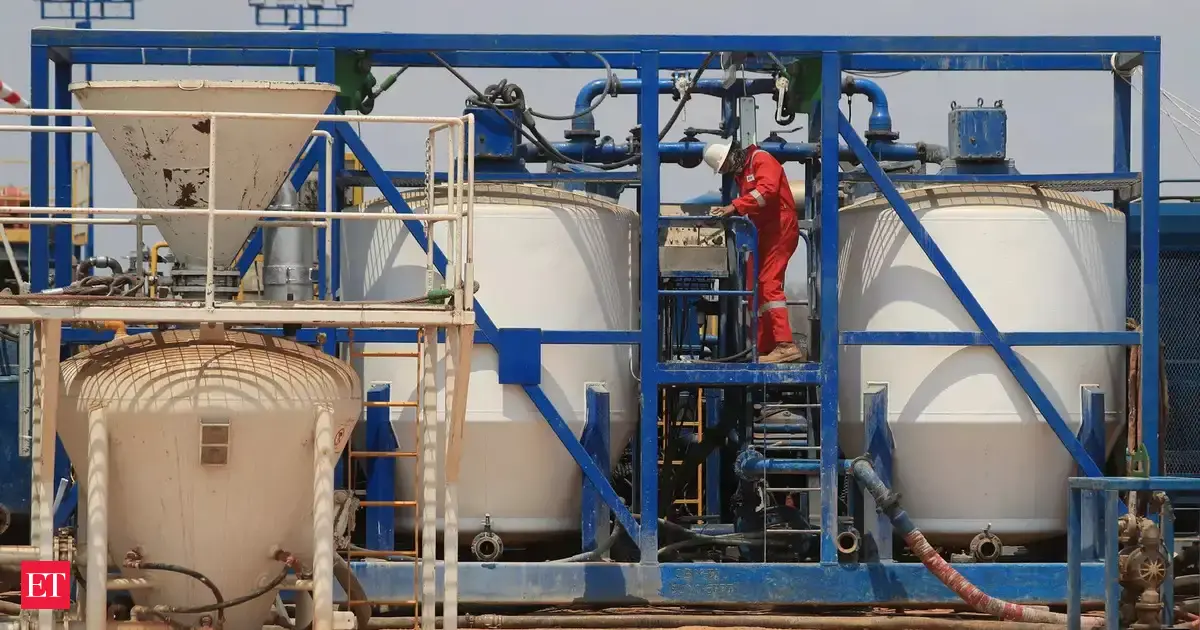
Chennai Petroleum Corporation Ltd (CPCL) has achieved Navratna status, a significant upgrade granting it greater financial and operational autonomy. This elevation, approved by the Union Finance Minister, makes CPCL the 28th such enterprise in India. The company, a subsidiary of IndianOil, boasts a substantial refining capacity and a diverse product range, underscoring its growing importance in the energy sector. View More
Chennai Petroleum Corporation Ltd (CPCL) has been upgraded to Navratna Central Public Sector Enterprise (CPSE) status, with Union Finance Minister Nirmala Sitharaman approving the elevation. The announcement was made by the Department of Public Enterprises (DPE) under the Ministry of Finance. With this, CPCL becomes the 28th Navratna among all CPSEs in India. CPCL, which operates under the Ministry of Petroleum and Natural Gas, posted an annual turnover of Rs 59,400 crore in FY 2025-26. Prior to this upgrade, the company held Miniratna Category-I status. Also read: Oil cos weigh refinery price freeze; move may hit MRPL, CPCL What the Navratna tag means The Navratna classification, introduced by the government in 1997, grants Central Public Sector Enterprises significantly enhanced financial and operational autonomy. A Navratna CPSE can invest up to Rs 1,000 crore or 15% of its net worth on a single project without seeking prior government approval. The status also empowers companies to establish joint ventures overseas, access new markets, leverage local expertise, foster innovation through technological alliances, and facilitate mergers and acquisitions. Live Events — DPE_GoI (@DPE_GoI) To qualify for the status, a CPSE must be a Miniratna-I entity with a positive net worth, must have secured an "Excellent" or "Very Good" MoU rating in three of the last five years, and must score 60 or more points on key financial indicators including net profit, net worth, and manpower cost. CPCL, formerly known as Madras Refineries Limited, was formed as a joint venture between the Government of India, AMOCO, and the National Iranian Oil Company in 1965. The Government of India later transferred its equity to Indian Oil Corporation , and CPCL became a subsidiary of IndianOil in 2001. Also read: Chennai Petroleum announces Rs 8 per share dividend, sets April 2 as record date. Check dividend yield CPCL was conceived as a grassroot refinery in 1969 with an installed refining capacity of 2.5 million metric tonnes per annum (MMTPA). Today, it is one of the largest refining corporations in South India, with an installed refining capacity of 10.5 MMTPA. The Manali refinery is one of the most complex refineries in India, with fuel, lube, wax, and petrochemical feedstock production facilities. The company also set up a 5.8 million gallons per day sea water desalination plant, the first of its kind in the industry to augment the water requirements of the refinery. The company's product range spans diesel, petrol, LPG, kerosene, aviation turbine fuel, lubricants, petrochemical feedstocks, and specialty products including JP-5 fuel for fighter jets and missile fuels. IOCL holds a 51.89% stake in CPCL, making it the majority shareholder and parent company. .Pbanner{display:flex;justify-content:space-between;align-items:center;background-color:#ec1c40;margin-top:20px;padding:5px 10px;border-radius:4px;color:#fff;line-height:10px;} .Pbannertext{display:flex;align-items:center;font-size:16px;font-weight:600;font-family:'Montserrat';} .Pbannertext img{height:20px;margin:0 6px} .Pbannerbutton a{display:flex;align-items:center;background-color:#fff;color:#ec1c40;text-decoration:none;font-weight:600;padding:4px 8px;border-radius:6px;font-size:15px;font-family:'Montserrat';} .Pbannerbutton img{height:20px;margin-right:6px} .Pbannerbutton a:hover{background-color:#f7f7f7} Add as a Reliable and Trusted News Source Add Now! (You can now subscribe to our Economic Times WhatsApp channel) (You can now subscribe to our Economic Times WhatsApp channel)

The portal will facilitate transparent certification and regulatory compliance under the Green Hydrogen Certification Scheme of India View More