
Latest Sectors News
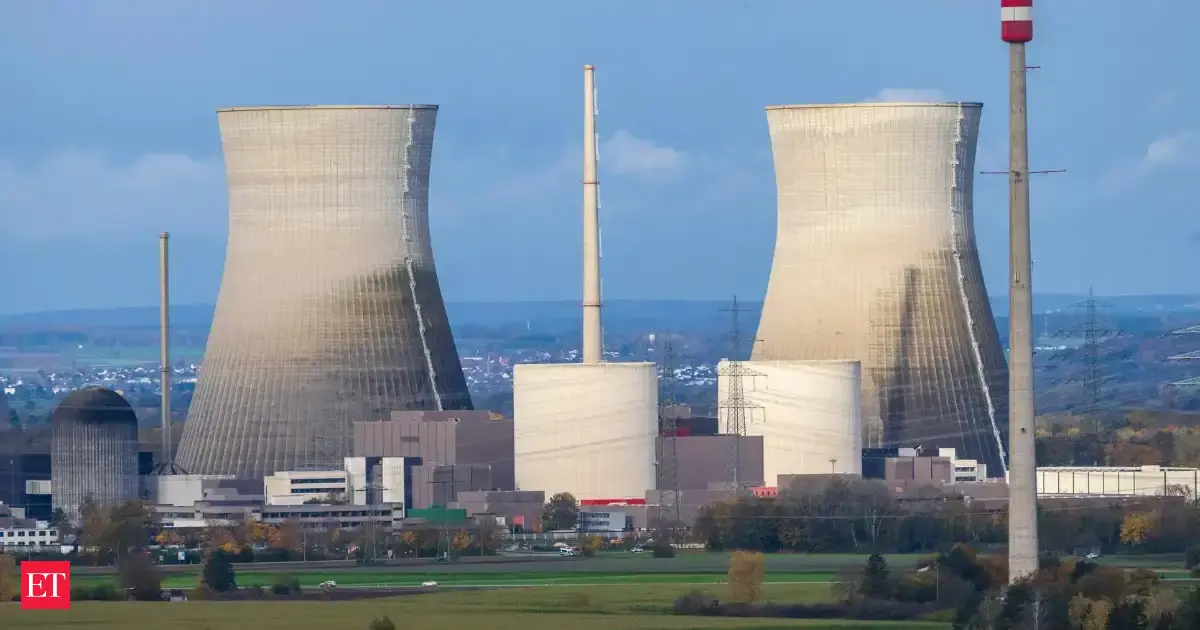
NTPC is setting ambitious goals with a proposed investment of ?16.68 lakh crore over the next eleven years. By 2037, the company aims to nearly triple its energy generation capacity, focusing on renewable sources to achieve 136 GW. Additionally, plans include establishing 30 GW of nuclear power by 2047, alongside the development of a significant green hydrogen hub near Visakhapatnam. View More
NTPC is set to make its biggest ever investment, earmarking ₹16.68 lakh crore ($175 billion) over the next 11 years, as it accelerates its transition from a coal-fired power producer to a diversified clean energy company. The state-run utility plans to nearly triple its generation capacity to 250 GW by 2037 and build 30 GW of nuclear power by 2047. It has begun nuclear site studies in 10 states, including Andhra Pradesh, Gujarat, Maharashtra and Tamil Nadu, to identify locations to build reactors. "If we consider up to FY37, almost in the next 10 years we are going to incur around ₹16.68 lakh crore. That is the kind of size of the investment," chairman and managing director Gurdeep Singh told ET after the company announced its quarterly results. Nuclear power will form the next leg of growth after FY32, he said. The company is simultaneously pursuing conventional pressurised heavy water reactors as well as other advanced reactor technologies. The investment will be made in three phases. It plans to spend ₹1.08 lakh crore during FY26-27, of which ₹56,000 crore has already been deployed, followed by ₹5.97 lakh crore between FY28 and FY32, largely on renewable energy, before stepping up investments in nuclear power with another ₹9.63 lakh crore between FY33 and FY37. The company's annual capex has so far been around ₹35,000-40,000 crore. Live Events "Renewable energy, of course, would be the key driver of NTPC's future growth," Singh said, outlining a plan to scale renewable capacity from 12 GW currently to 60 GW by FY32 and 136 GW by FY37. The expansion will be backed by a 38.9 GWh battery energy storage pipeline and an ambition to develop more than 80 GW of pumped-storage projects. The company is also building a ₹1 lakh crore green hydrogen hub on 1,200 acres at Pudimadaka near Visakhapatnam to produce hydrogen and downstream green fuels and chemicals. India's peak power demand touched a record 271 GW in June and the Niti Aayog projects it to nearly triple to 750 GW by 2050. NTPC's own generation is climbing 24% year-on-year even after accounting for renewables-led backing down of coal plants. "There is no reason that we will be left behind," Singh said. Anushakti Vidhyut Nigam Ltd (Ashwini), NTPC's joint venture with Nuclear Power Corporation of India, is already developing a 2,800 MW project at Mahi Banswara in Rajasthan. .Pbanner{display:flex;justify-content:space-between;align-items:center;background-color:#ec1c40;margin-top:20px;padding:5px 10px;border-radius:4px;color:#fff;line-height:10px;width: 100%;box-sizing: border-box} .Pbannertext{display:flex;align-items:center;font-size:16px;font-weight:600;font-family:'Montserrat';} .Pbannertext img{height:20px;margin:0 6px} .Pbannerbutton a{display:flex;align-items:center;background-color:#fff;color:#ec1c40;text-decoration:none;font-weight:600;padding:4px 8px;border-radius:6px;font-size:15px;font-family:'Montserrat';} .Pbannerbutton img{height:20px;margin-right:6px} .Pbannerbutton a:hover{background-color:#f7f7f7} Add as a Reliable and Trusted News Source Add Now! (You can now subscribe to our Economic Times WhatsApp channel) (You can now subscribe to our Economic Times WhatsApp channel)
Gurdeep Singh's term as NTPC chairman and managing director has been extended. The government approved a six-month extension for the top power company leader. This extension begins on August 1 and lasts for six months. It allows Singh to continue leading NTPC while a successor is selected. The selection process is currently underway for his replacement. View More
The government has approved a six-month extension for Gurdeep Singh as chairman and managing director of NTPC Ltd . Singh's current term with India's largest power company was scheduled to end on July 31. The extension comes into effect from August 1. Singh will continue in the post for six months, or until a regular incumbent assumes charge, or until further orders, whichever is earlier, as per the government order seen by ET. The six-month extension will allow Singh to continue leading the company while the Ministry of Power's search-cum-selection committee completes the selection of his successor from 18 shortlisted candidates. The selection process is currently underway, according to people aware of the matter. Singh's extension has been approved by the appointments committee of the cabinet following a proposal from the power ministry . Live Events Singh, who has headed India's largest power producer since 2016, had also received a one-year post-retirement extension last year after attaining the age of superannuation. Before taking charge as the chairman of the public sector undertaking, Singh had served as the managing director of Gujarat State Electricity Corporation. .Pbanner{display:flex;justify-content:space-between;align-items:center;background-color:#ec1c40;margin-top:20px;padding:5px 10px;border-radius:4px;color:#fff;line-height:10px;width: 100%;box-sizing: border-box} .Pbannertext{display:flex;align-items:center;font-size:16px;font-weight:600;font-family:'Montserrat';} .Pbannertext img{height:20px;margin:0 6px} .Pbannerbutton a{display:flex;align-items:center;background-color:#fff;color:#ec1c40;text-decoration:none;font-weight:600;padding:4px 8px;border-radius:6px;font-size:15px;font-family:'Montserrat';} .Pbannerbutton img{height:20px;margin-right:6px} .Pbannerbutton a:hover{background-color:#f7f7f7} Add as a Reliable and Trusted News Source Add Now! (You can now subscribe to our Economic Times WhatsApp channel) (You can now subscribe to our Economic Times WhatsApp channel)

MV Electrosystems has fixed the price band for its Rs 290 crore IPO at Rs 400-425 per share. The issue, opening on July 30, will fund working capital, R&D and corporate needs as the railway electronics manufacturer expands its manufacturing capacity and order book. View More
MV Electrosystems Limited, a technology-driven manufacturer of advanced electrical and power electronics systems for the railway sector, has announced the price band for its Initial Public Offering (IPO) at Rs 400-425 per equity share of face value Rs 5 each. The public issue will open for subscription on Thursday, July 30, 2026, and close on Monday, August 3, 2026, while the anchor investor bidding is scheduled for Wednesday, July 29, 2026. Investors can bid for a minimum of 34 equity shares and in multiples of 34 thereafter. The company currently has 20,459,200 outstanding equity shares of face value Rs 5 each. IPO proceeds to fuel expansion and innovation The IPO consists entirely of a fresh issue of equity shares aggregating up to Rs 2,900 million. The proceeds will primarily be utilised to strengthen the company's growth strategy through: Rs 1,800 million for long-term working capital requirements. Rs 210 million towards research, design and development of next-generation power electronic equipment. The remaining amount for general corporate purposes. Live Events The issue is being offered through the book-building process, with not less than 75% reserved for Qualified Institutional Buyers (QIBs), up to 15% for Non-Institutional Investors (NIIs), and up to 10% for Retail Individual Investors (RIIs). MV Electrosystems has established itself as a specialist in designing, developing, assembling and manufacturing sophisticated electrical and power electronics equipment used in railway rolling stock. Its product portfolio includes IGBT-based three-phase drive propulsion systems for electric locomotives, switchgear panels for railway coaches and EMUs, cable protection systems, and a range of electrical components, systems and sub-systems. The company is strategically positioned to benefit from India's growing focus on rail electrification, indigenous manufacturing and sustainable transportation, aligning with national initiatives and promoting self-reliance and decarbonization. A significant achievement for the company came in September 2025, when it received approval from Chittaranjan Locomotive Works (CLW) for its IGBT-based three-phase drive propulsion equipment. Commercial supplies to Indian Railways commenced in March 2026. The company's indigenously designed and developed propulsion package comprises a comprehensive suite of advanced railway systems, including traction converter-inverter systems, auxiliary converters, Vehicle Control Units (VCU), Train Control Management Systems (TCMS), and Driver Display Units (DDUs). Engineered entirely in-house, these critical components are designed to meet international safety and performance standards while supporting the modernisation and localisation of India's railway network. These systems have been engineered to meet international safety and performance standards while supporting India's localisation goals. Expanding beyond rolling stock, MV Electrosystems has entered into a three-year exclusive Business Cooperation Agreement with PNC Technologies Co. Ltd., South Korea, for the manufacturing, supply and distribution of Auto Fault Locator systems for 25 KV railway overhead electrification lines across India. The partnership marks the company's entry into the rapidly growing rail electrical infrastructure segment. Secures major MEMU propulsion order Further strengthening its order pipeline, the company received a Letter of Acceptance on June 27, 2026, from the Modern Coach Factory, Raebareli, for the design, development, manufacture, supply, testing and commissioning of microprocessor-controlled IGBT-based three-phase propulsion equipment for six MEMU trains. The order comprises Rs 865.46 million for propulsion equipment and Rs 46.86 million for a five-year comprehensive annual maintenance contract. This project represents the company's entry into propulsion systems for distributed power supply trains. Innovation remains central to MV Electrosystems' growth strategy. Its DSIR-recognized in-house Research, Design and Development Centre in Faridabad, Haryana, serves as the technological backbone of the company, focusing on high-performance power electronics and advanced railway systems. The R&D centre received official recognition from the Department of Scientific and Industrial Research (DSIR), Ministry of Science and Technology, Government of India, on June 12, 2026. To support future product development, particularly for distributed power propulsion systems, the company has also initiated the establishment of a new R&D centre. Manufacturing capacity expansion underway MV Electrosystems currently operates its integrated manufacturing and assembly facility at Baghola, Palwal, Haryana (Unit 1), equipped with fabrication, testing and a high-speed Surface Mount Technology (SMT) electronics manufacturing line. To meet rising demand, the company has secured regulatory approvals for a second manufacturing facility at Nangla Bhiku, Palwal (Unit 2), which will function in an integrated production model alongside the existing unit. The company maintains stringent quality assurance systems across its manufacturing operations to ensure compliance with railway safety and quality standards. Financial performance As of June 30, 2026, MV Electrosystems had an executable order book comprising 564 three-phase propulsion equipment systems from Chittaranjan Locomotive Works, Banaras Locomotive Works and Patiala Locomotive Works, with: Equipment orders worth Rs 9,216.40 million. Annual Maintenance Contracts worth Rs 676.78 million. In addition to its confirmed order book, the company has secured developmental orders for microprocessor-controlled IGBT-based three-phase propulsion equipment for MEMU trains, along with composite converters and Hotel Load Converters. These developmental projects have a combined order value of Rs 898.57 million, complemented by Annual Maintenance Contracts (AMC) worth Rs 48.64 million, further strengthening the company's future revenue pipeline. Issue management Sundae Capital Advisors Private Limited is acting as the Book Running Lead Manager to the issue, while KFin Technologies Limited is the Registrar. The company's equity shares are proposed to be listed on both the NSE and BSE. (Disclaimer: Recommendations, suggestions, views and opinions given by the experts are their own. These do not represent the views of Economic Times) .Pbanner{display:flex;justify-content:space-between;align-items:center;background-color:#ec1c40;margin-top:20px;padding:5px 10px;border-radius:4px;color:#fff;line-height:10px;width: 100%;box-sizing: border-box} .Pbannertext{display:flex;align-items:center;font-size:16px;font-weight:600;font-family:'Montserrat';} .Pbannertext img{height:20px;margin:0 6px} .Pbannerbutton a{display:flex;align-items:center;background-color:#fff;color:#ec1c40;text-decoration:none;font-weight:600;padding:4px 8px;border-radius:6px;font-size:15px;font-family:'Montserrat';} .Pbannerbutton img{height:20px;margin-right:6px} .Pbannerbutton a:hover{background-color:#f7f7f7} Add as a Reliable and Trusted News Source Add Now! (You can now subscribe to our ETMarkets WhatsApp channel) (You can now subscribe to our ETMarkets WhatsApp channel)
The government has extended the tenure of NTPC Chairman and Managing Director Gurdeep Singh by six months beyond July 31, or until further orders or a successor is appointed. Singh has led the state-run power producer since 2016 and was previously granted a post-retirement extension. View More
NEW DELHI: Government has extended the tenure of NTPC Chairman and Managing Director Gurdeep Singh by six months beyond July 31, according to a government order seen by Reuters. Singh, who has headed the state-run power producer since 2016, was given an extension after retirement last year. His current term was due to end on July 31. The latest extension will be in force until further orders or until another appointment is made, the order said. .Pbanner{display:flex;justify-content:space-between;align-items:center;background-color:#ec1c40;margin-top:20px;padding:5px 10px;border-radius:4px;color:#fff;line-height:10px;width: 100%;box-sizing: border-box} .Pbannertext{display:flex;align-items:center;font-size:16px;font-weight:600;font-family:'Montserrat';} .Pbannertext img{height:20px;margin:0 6px} .Pbannerbutton a{display:flex;align-items:center;background-color:#fff;color:#ec1c40;text-decoration:none;font-weight:600;padding:4px 8px;border-radius:6px;font-size:15px;font-family:'Montserrat';} .Pbannerbutton img{height:20px;margin-right:6px} .Pbannerbutton a:hover{background-color:#f7f7f7} Add as a Reliable and Trusted News Source Add Now! (You can now subscribe to our Economic Times WhatsApp channel) (You can now subscribe to our Economic Times WhatsApp channel)


Saudi Arabia faces a challenge rerouting oil exports due to Houthi attacks. An existing pipeline bypasses the Strait of Hormuz, but a new detour is needed. This new bypass requires additional pipelines and significant diplomatic efforts. The kingdom must now push its oil north to avoid the Bab el-Mandeb strait. Urgent action is required as Houthi attacks have already impacted oil tankers. View More
Early on in the Iran war, a long-forgotten pipeline built across Saudi Arabia 40 years ago became a lifesaver for the global economy. The East-West conduit allowed the kingdom to bypass the Strait of Hormuz, keeping some of its oil flowing. Now that the Houthis of Yemen are trying to close an essential chokepoint for that workaround, the Saudis may need a bypass for the bypass. Engineering a new detour that avoids the Bab el-Mandeb strait on the southern end of the Red Sea would be a tall task. It would require the use of one, perhaps two, extra pipelines, quite a lot of oil tankers and a good dosage of Middle Eastern cloak-and-dagger diplomacy to keep everything running despite the threat of missiles and drones. It won’t be easy — or cheap. Also Read: Red Sea shipping slows after Houthi attack on Saudi Arabia But it is possible. The good news is that the Saudis, who now export most of their oil from the Red Sea via the East-West bypass pipeline rather than through the Persian Gulf, have a natural way to avoid the strait. Rather than sending the oil south toward the chokepoint, the kingdom can push the barrels north. The bad news is that's not a simple as it sounds. Worse, arranging the new bypass is urgent: The Houthis made good on their threat to close the strait earlier this week, attacking two Saudi-flagged oil tankers in the southern Red Sea. Bloomberg Going north means taking the Suez Canal to reach the Mediterranean Sea, and from there, the high seas. Putting aside the fact this route means Asia-bound ships emerge on the wrong side of the map, there’s still the problem of depth: The waterway is only an option for medium-sized oil tankers. The largest ones, uncreatively known as Very Large Crude Carriers, or VLCCs, and able to carry two million barrels, cannot sail the canal fully laden. That’s an issue because the VLCCs are the workhorse of the oil industry, carrying most of the Saudi crude. The only solution is to lighten the supertankers, so their draft is reduced. Live Events Enter a new workaround: the 50-year-old Suez-Mediterranean pipeline, or Sumed, a 320-kilometer-long pair of pipes that connects Ain Sukhna, an Egyptian town at the north end of the Red Sea, with Sidi Kerir, a port near the Egyptian metropolis of Alexandria on the coast of the Mediterranean Sea. Also Read: Oil crosses $100: A 'perfect hurricane' can trigger bigger shock soon Another set of pipelines, owned by Israel, offers a second option, also linking the Red Sea with the Mediterranean. Known as the Eilat-to-Ashkelon pipeline, it was built even earlier, in the 1960s, as a joint-venture between Israel and the country that would go to become its bitterest enemy: Iran. The pipeline became a cash machine for one of the best commodity traders ever born, Marc Rich, during the first oil crisis in 1973-1974. After the Iranian Revolution of 1979, the Israelis kicked the Iranians off the project. Can the Saudis use the Eilat-to-Ashkelon route to bypass the Houthi threat? In the past, it would had been unthinkable, as Riyadh doesn’t recognize the Jewish state. But desperate times may call for desperate measures. I wouldn’t rule it out, even if neither the Saudis nor the Israelis would never publicly admit to it. It helps that, to this day, the operations of the Eilat-to-Ashkelon pipeline are top secret. Everyone in this conflict has a lot at stake. By threatening the Bab el-Mandeb, the Houthis are endangering the flow of more than 5 million barrels a day of Saudi crude that pass through the Red Sea — the supply that many in the commodity market credit as one of the reasons oil prices haven’t jumped to $200-a-barrel as some feared. Also Read: Cutting off Red Sea oil route may be one crisis too many Bloomberg To keep the oil flowing, Saudi Arabia will likely resort to two systems — probably simultaneously. First, it can enlist a small armada of tankers to shuttle crude from its oil port in the Red Sea to the Sumed pipeline, a sort of conveyor belt of tankers. Asian refiners would simply pick up the crude on the other side, without their tankers having to cross the canal. The kingdom has already opened talks with some of these refiners to change the delivery of its crude from Yanbu to Sidi Kerir. The problem? The Sumed pipeline has a capacity of about 2.5 million barrels a day, roughly half of the current flow from Yanbu. Adding the Israeli pipeline would bring an extra 1.2 million barrels a day of transport capacity, narrowing — but not closing — the gap. That’s where the second part of the Saudi plan could come into play. Supertankers could use the Sumed pipeline to offload part of their cargo, making it possible to navigate the Suez Canal with the rest. After emerging in the Mediterranean, they would pick up the rest on the haul other side of the pipeline. (The Saudis would likely also use some medium-sized oil tankers, called Suezmax, that can carry a million barrels across the canal without lightering.) Combined, the pipelines and tankers can do the trick — though the maneuver will be costly and logistically complex. The result: Much higher freight costs. Oil tankers heading to Asia would emerge in the eastern Mediterranean rather than near the Indian Ocean, adding 25 days to their trip from Saudi Arabia to Japan. The return trip would be lengthened by the same amount, tying up a huge number of tankers. Whether the Saudis need to go all in on this bypass to the bypass, or just shift a few cargoes around, depends on what the Houthis do. Over the weekend, several tankers heading into China, Pakistan and India, which account for a large part of what the kingdom exports via the strait, crossed the chokepoint without any problem, with a few more heading on Monday morning in the same direction. The tankers typically broadcast on their location systems messages indicating their nationality. One, for example, said: “CHINA/FLAG/OWNR/CREW.” Several others have also crossed with their location beacons turned off. Some tankers, however, have U-turned, heading north into the Red Sea. Regardless, geography makes a blockade easy: The Bab el-Mandeb strait, which lies between war-torn Yemen on the Arabian Peninsula and the poor African nations of Djibouti and Eritrea on the Horn of Africa, is around 14 nautical miles wide — narrower than the 21 nautical miles of Hormuz; its name roughly translates to “Gate of Tears” in recognition of its difficult navigational challenges. Bloomberg The Houthis, who have been long equipped, trained and groomed by Iran, have closed the strait in the past, sinking several merchant vessels between 2023 and 2025. Back then the closure didn’t impact oil as the Strait of Hormuz was open. For the last year, a tenuous truce has allowed tankers and other commercial ships to cross. But earlier this week, the Houthis said in a statement that they would impose a naval blockade on Saudi Arabia, including foreign ships calling at the kingdom’s oil ports in the Red Sea. The blockade was announced days after Saudi Arabia bombed the airport of the Yemeni capital, Saan’a. Since the Houthis made good on their threat on Wednesday night, oil prices have climbed back to $100 a barrel. As the industry scrambles to react, the countries most likely to be affected by the disruption are India, South Korea, China and Japan, which have loaded a significant amount of Saudi crude from Yanbu. For more than 100 days, Saudi Arabia has successfully bypassed the Strait of Hormuz via its East-West pipeline. With that workaround now threatened it needs a new route. It exists, but is far less straightforward than the original detour. The more stopgap measures added, the bigger the risk — and the cost. Nothing replaces fully opening the Strait of Hormuz. (Disclaimer: The opinions expressed in this column are that of the writer. The facts and opinions expressed here do not reflect the views of economictimes.com.) .Pbanner{display:flex;justify-content:space-between;align-items:center;background-color:#ec1c40;margin-top:20px;padding:5px 10px;border-radius:4px;color:#fff;line-height:10px;width: 100%;box-sizing: border-box} .Pbannertext{display:flex;align-items:center;font-size:16px;font-weight:600;font-family:'Montserrat';} .Pbannertext img{height:20px;margin:0 6px} .Pbannerbutton a{display:flex;align-items:center;background-color:#fff;color:#ec1c40;text-decoration:none;font-weight:600;padding:4px 8px;border-radius:6px;font-size:15px;font-family:'Montserrat';} .Pbannerbutton img{height:20px;margin-right:6px} .Pbannerbutton a:hover{background-color:#f7f7f7} Add as a Reliable and Trusted News Source Add Now! (You can now subscribe to our Economic Times WhatsApp channel) (You can now subscribe to our Economic Times WhatsApp channel)

A host of listed companies announced key business developments, including fresh project wins, fundraising plans, strategic investments, executive appointments and infrastructure contracts, with deals spanning renewable energy, pharmaceuticals, railways, defence, hospitality and technology, reflecting strong order momentum across sectors View More

The commercial power generation rose to 93.63 billion units (BU) in the quarter from 91.06 BU in the same period a year ago View More

Google, Amazon and Meta are seeing credit spreads widen as fixed-income investors demand more reward on companies they lend to. View More
watch nowVIDEO4:3404:34Investors punish heavy AI spenders, while rewarding the capex-lite business modelsTechCheck Investors are getting increasingly uncomfortable with the amount of capital needed to make the artificial intelligence buildout a reality. It's playing out in real time in the bond market, where the biggest names involved in the blitz â Google, Amazon and Meta â are seeing credit spreads widen as fixed-income investors demand more reward to lend to the companies.Yields ticked higher this week after Alphabet lifted its capex forecast, raising concerns that other hyperscalers could follow suit.Part of the reason capex budgets are going up is the rising cost of power. Energy is a major expense for all of the hyperscalers, which are constructing large data centers across the U.S. at breakneck speed. GE Vernova CEO Scott Strazik told CNBC he expects the current inflationary environment to remain, driven in part by the heightened geopolitical backdrop. Just this week, oil broke above $100 a barrel. The move in treasury yields is also inducing anxiety among fixed-income investors. Mizuho wrote to clients Friday morning that capex raises are testing investor limits as the companies, once seen as capital fortresses, are now seeing a dramatic rise in AI-tied costs.The analysts added that the hyperscalers are currently on track to collectively spend more on capex than they generate in free cash flow by next year."It's creating intense discussions between bond and equity investors who have exposure to the biggest names in tech," said the portfolio manager of a credit fund, who asked to remain anonymous in order to discuss sensitive conversations. Read more CNBC tech newsMoonshot AI accessed Nvidia's chips despite Chinese export ban, White House official saysAlphabet and Tesla test Wall Street's patience as AI spending overshadows growthAlphabet earnings takeaways: Q2 revenue beats, GOOGL stock sinks on 2026 capex hikeTesla misses on earnings, as free cash flow turns negative and margins slide As concerns grow, Oracle's 5-year credit default swap, or CDS, is once again trading at a multi-year high. In a note to clients published on Wednesday, Barclays credit analyst Andrew Keches wrote that Oracle's CDS is once again being seen as a proxy for AI debt fears. "The appeal of ORCL CDS in recent history has extended beyond company-specific fundamentals, reflecting its role as a liquid hedge on AI capex, OpenAI execution and broader data-center spending narratives," wrote Keches.Oracle is facing questions from investors about how active it plans to be in the debt market in the coming years, as the buildout and leasing of data centers continue to become more capital intensive.Earlier this month, ratings agency S&P Global downgraded Oracle's credit rating to BBB-, just one notch above junk status.Yet executives at the company remain confident in Oracle's ability to win the AI race. The company has a growing relationship with OpenAI and hyperscalers like Meta and Nvidia, which are also working with Oracle on cloud architecture.Still, portfolio managers who spoke to CNBC said the move in tech bond yields could impact financing future deals. Meta is looking to finance its $12 billion Texas data center with pricing expected to be finalized early next week, according to a source familiar with the talks, who asked not to be named in order to discuss the company's plans. The Financial Times reported that the deal will be priced at a higher borrowing rate than previous projects, a sign that investors want not only demand more, but are questioning the return on investment. watch nowVIDEO3:4403:44How the AI data center buildout is creating boom for the gas turbine industryTech Choose CNBC as your preferred source on Google and never miss a moment from the most trusted name in business news.

India will soon cross the landmark of 300 gigawatt (GW) of installed non-fossil fuel capacity. View More