
Latest Sectors News

CoreWeave is seeing strong demand for six-year-old Nvidia chips, helping justify all the current AI capex. View More
CoreWeave has delivered a shot in the arm for Club name Nvidia and other data center stocks, offering evidence that AI chips may be an even better investment than previously thought. The AI compute provider's commentary on the longevity of Nvidia's chips â first on Tuesday night's earnings call and again Wednesday morning on CNBC â lends support to the artificial intelligence infrastructure trade in a couple of ways. It starts with giving the data center builders, like Amazon and Microsoft , more confidence in the return on their current spending, likely increasing the sustainability of the capital expenditure cycle. The added sustainability is a good thing for the future revenues of data center suppliers, from chipmakers to electrical and power companies. It also offers validation for Nvidia's splashy, $500 billion financing initiative announced Monday night in partnership with Wall Street's biggest firms. These implications are reflected in Wednesday's trading, with Nvidia shares up 3%, networking cable provider Corning up 5.2%, turbine maker GE Vernova up 2.7%, and memory supplier Micron , our newest position, jumping 4.9%. For its part, CoreWeave's own stock is surging nearly 20%, thanks to what Jim Cramer called "a true breakout quarter." Revenue topped expectations, losses were narrower than expected, and the company increased its top-line outlook for the year. One of the biggest bear cases around the AI trade has been technological obsolescence â the idea that Nvidia's graphics processing units (GPUs) and other AI chips may have much shorter useful lives than operators assume. As a result, the argument goes, today's spending is irrational because the hardware would need to be replaced too frequently to generate an attractive return on investment, known as ROI. CoreWeave suggests the opposite may be true. "Older generations of GPUs are going to have a longer useful life than anyone anticipated," CEO Mike Intrator told Jim and his "Squawk on the Street" co-hosts Wednesday morning. "They are going to contract for a longer term, and they are going to contract at a higher price." Finance chief Nitin Agrawal got into the specifics on Tuesday's earnings call, saying the company "recently signed an A100 contract that extends into 2029 at an attractive price. As a reminder, this SKU was introduced in 2020." That's the same year CoreWeave started renting GPUs in the cloud. The A100 belongs to Nvidia's Ampere generation of hardware â it's the chip that OpenAI used to train the first iteration of ChatGPT , which launched in late 2022 and kicked off this historic AI boom. Nvidia has since followed up Ampere with its Hopper family of GPUs, the Blackwell lineup, and now the Rubin generation, which entered full production earlier this year. CoreWeave was the first cloud computing provider to have a Rubin system online, according to a June 1 announcement . Demand for AI computing is so strong that, despite all these newer Nvidia GPUs in the world, the six-year-old A100s are still a hot commodity. Now consider what we recently learned from Amazon CEO Andy Jassy on the company's earnings call about breakeven times on AI computing hardware. "For servers and networking equipment, on average, it takes a little less than three years to break even on that investment," Jassy said. "The servers currently have a useful life of at least five to six years, and most of our AI capacity these days is being contracted for at least five-year terms." If operators can earn an acceptable return during the initial contract term, every additional year of economically productive life represents upside that wasn't required to justify the original investment â creating a very material "call option" embedded in the infrastructure. This is what CoreWeave is seeing with these A100s now on the books to be used for three more years, at least. Indeed, CoreWeave's business was never designed to rely on customer re-contracting, according to Agrawal. "While we have built a business whose economics do not rely on re-contracting after initial customer term, increasingly we are seeing longer utilization at higher prices, offering the potential for significant further upside." The most cutting-edge models and applications may require the latest and greatest hardware âat this moment, that is Nvidia's Rubin racks. But the reality is, there are still a ton of profitable use cases for older-generation chips, such as the aforementioned Ampere and Hopper generation silicon. We may all use AI one day, but not all of us are going to require a world-class coding model like Anthropic's Fable 5, supported by the world's most advanced hardware, at our every beck and call. This is where the bears' argument on obsolescence comes up short. They also miss that continued innovation in hardware and software is actually extending the economic life of older chips, even as newer generations become considerably more capable. In Wednesday's CNBC interview, Intrator laid out three factors that make the extended useful life possible: The Nvidia hardware, which he referred to as "the best solution in the market." Nvidia's developer software, known as CUDA, which Intrator said enables its chips to be fungible (think the ability to be repurposed from one customer to the next). Delivery via the CoreWeave cloud, which Intrator argued is the best software solution to deliver Nvidia's infrastructure. Intrator is obviously talking his book with that third point. That's not to say he's wrong, but his first two reasons are the most important and carry far-reaching implications for investors in AI names. If CoreWeave can still sign attractive contracts for capacity powered by Ampere chips released roughly six years ago, it stands to reason that so, too, can the hyperscale cloud providers â namely, Amazon, Microsoft and Google parent Alphabet . You can also throw smaller cloud provider Oracle in there, as well as Meta Platforms . The social-media giant doesn't have a cloud business ( at least not yet ) but still spends a ton on AI infrastructure for its own workloads, so we figure it can find some ROI-positive use cases for older-generation chips. Under this assumption, capex being on chips today likely results in years of cash generation beyond what many had thought possible â and what the buyers of those chips thought necessary to justify the purchases. That means the capex benefits will last longer than we thought, giving these big AI spenders a margin of safety of sorts. They will have even more time than previously thought to generate the positive ROIs Wall Street wants to see. As a result, investors may be a bit more understanding (and forgiving) of these high levels of capex, given there is more time to make good on the investments. This translates into good news for the companies on the receiving end of all the capex. We own plenty of them, starting with semiconductor players â Nvidia, Broadcom , Intel , Micron and materials supplier Qnity â and extending into the likes of Corning, Eaton and GE Vernova, which in their own ways keep data centers powered and running smoothly. The more clarity that management teams and investors have on the ROI potential of that spending, the more sustainable it will be. Yes, we will eventually reach a point where supply catches up to demand, but we don't think that's a near-term risk. On the call, Intrator said, "We have excellent visibility to our target of at least 8 gigawatts by 2030. We expect demand to meaningfully exceed supply for years." The longer useful life is going to be a crucial factor â arguably, the most crucial â in selling investors on the idea of compute as an asset class to help finance more data centers. That idea is at the heart of Nvidia's funding partnership with BlackRock, Blackstone, Brookfield Asset Management, Goldman Sachs and KKR â a major development in the AI buildout. Unlike past funding rounds , which were a bit more straightforward in that the goal was simply to raise cash (via debt or equity) and then deploy it, this initiative appears to be working on a new asset-backed security that will leverage data centers as cash-generating collateral that supports new asset-backed securities. These securities can then be sold to a much broader group of investors, making it easier to fund the massive buildout. While there is still a lot we don't know, the roundtable with the executives involved, hosted by CNBC's Becky Quick , made it seem like the idea is to create a financial product similar to a mortgage-backed security (MBS). The reason an MBS works is that the house collateralizing the loan is not expected to decline materially in value; long-term, the value likely increases, if properly maintained. The same needs to be true for a data center. That's not to say that the chips need to last 30 years, but the underlying principle is similar in that investors need confidence that the collateral can continue generating economic value for long enough to support the financing. The longer the chips last inside an individual data center, the less frequently they need to be replaced. As a result, the more revenue and cash flow they can produce for the holders of these new "compute-backed securities." All of that amounts to greater certainty on the part of the lender, which, especially in the earlier days, will be a crucial factor in garnering interest for these yet-to-be released financial products. Bottom line This is a bad day for the bears, and not just because of Wednesday's stock moves are in the bulls' favor. CoreWeave's bullish update on A100 longevity adds to the important insight that Jassy provided this earnings season. It also shows why some of the smartest and most powerful financiers in the world have also come around to the idea of compute as an investable asset class. Putting these together, the AI trade looks like it has plenty of room to run into 2027 and very possibly beyond. (See here for a full list of the stocks in Jim Cramer's Charitable Trust.) As a subscriber to the CNBC Investing Club with Jim Cramer, you will receive a trade alert before Jim makes a trade. Jim waits 45 minutes after sending a trade alert before buying or selling a stock in his charitable trust's portfolio. If Jim has talked about a stock on CNBC TV, he waits 72 hours after issuing the trade alert before executing the trade. THE ABOVE INVESTING CLUB INFORMATION IS SUBJECT TO OUR TERMS AND CONDITIONS AND PRIVACY POLICY , TOGETHER WITH OUR DISCLAIMER . NO FIDUCIARY OBLIGATION OR DUTY EXISTS, OR IS CREATED, BY VIRTUE OF YOUR RECEIPT OF ANY INFORMATION PROVIDED IN CONNECTION WITH THE INVESTING CLUB. NO SPECIFIC OUTCOME OR PROFIT IS GUARANTEED.

Heat and drought are curbing nuclear output across Europe, with Romania facing a possible reactor shutdown and France reducing generation. View More
A view of the Cernavoda Nuclear Power Plant as low flow rate of the Danube River has raised the risk of a shutdown of both operating reactors in Cernavoda, Constanta, Romania, on August 4, 2026. The Cernavoda Nuclear Power Plant, Romania's only nuclear power facility, produces about 20% of the country's electricity.Anadolu | Anadolu | Getty Images A hot and exceptionally dry summer has disrupted Europe's nuclear power plants, prompting governments to take extraordinary measures to keep energy supplies running. In Romania, the state-owned nuclear power producer Nuclearelectrica warned it may shut down its last working reactor as soon as Thursday as water levels on the Danube, a vital economic artery that stretches 1,770 miles, continue to fall.Romania, which has declared an energy emergency through August, has taken some unprecedented measures, including dredging the channel and sinking rock-filled barges.Romanian naval forces carried out a controlled underwater explosion on the riverbed last week, seeking to improve water flow to the cooling systems of its Cernavoda power plant.The two reactors of Romania's one active nuclear power plant, operated by Nuclearelectrica, typically supply about a fifth of the country's electricity. watch nowVIDEO1:4301:43Searing heat is threatening Europeâs power supplies and economic growthSquawk Box Europe In Hungary, the government has enjoyed something of a reprieve as rainfall has helped lift water levels on the Danube, allowing it to restart another turbine at its Paks nuclear power plant. Two of the power plant's eight turbines are now producing electricity again, Hungarian Prime Minister Péter Magyar said via social media on Monday, offering some relief to a facility that supplies nearly half the country's electricity. In France, where nuclear provides about 70% of the country's electricity, utility provider EDF said Wednesday that it had reduced output at multiple reactors due to environmental issues.EDF also shut down three reactors at its Gravelines nuclear power plant in northern France earlier in the week due to a "massive influx of jellyfish," triggering automatic preventative measures. It marked the second successive year that a jellyfish swarm shuttered reactors at the facility, which is one of the largest in the country. A controlled underwater explosion is pictured on the riverbed of the Danube River in Izvoarele village, on August 3, 2026. The blast aimed at deepening the channel and diverting a higher volume of water toward the cooling systems of the Cernavoda Nuclear Power Plant.Daniel Mihailescu | Afp | Getty Images France has reportedly been forced to shut down a record number of nuclear power plants this summer amid a prolonged bout of extreme heat, wildfires and droughts. To be sure, nuclear power plants are often built near rivers or coastlines, so they use nearby water sources to cool their reactors. European governments are exploring a range of options to mitigate the impact of nuclear power's vulnerability to heat waves and low water levels, such as additional or upgraded cooling systems or scheduling maintenance around periods of extreme heat. Treating this as an emergency 'a little overdue' In the U.K., Prime Minister Andy Burnham on Wednesday called a meeting of the government's emergency Cobra committee in response to extreme heat, wildfires and drought.The move marks the second Cobra meeting this year on heat waves and comes as the country braces for temperatures of up to 38 degrees Celsius (100.4 degrees Fahrenheit) on Thursday."I think many would suggest that treating this as an emergency is perhaps a little overdue," Gareth Remond-King, head of international program at the Energy and Climate Intelligence Unit, told CNBC's "Squawk Box Europe" on Wednesday. Read moreEurope is blowing up riverbeds as an extreme drought wreaks havoc on its economyBuilding for 131°F: Europe races to protect its infrastructure from a âquiet catastropheâFrom war to weather: A 'super El Niño' event poses fresh risks to global food costs "What this extreme heat and all of these knock-on impacts, including the wildfires as well as the drought that's affecting the rivers, what they tell us is that our climate system is in crisis. This is not something that is simply going to pass," Remond-King said."This promises to continue not just as we're seeing it this summer but continue to get worse and worse, if we continue to burn fossil fuels, add greenhouse gases to the atmosphere and drive that temperature even higher, then we push the climate system into even greater crisis," he added. Extreme heat could erase EU economic growth in 2026 Europe's summer of weather extremes is not just threatening its energy infrastructure. The fallout is also likely to hamper its economic growth.An analysis published by Dutch bank Triodos on Aug. 8 found that the adverse effects of Europe's searing summer heat could amount to an economic cost of 180 billion euros ($207.7 billion), driven primarily by weaker labor productivity. A bulk carrying cargo vessel navigates a channel on the River Rhine past the exposed riverbed during low water levels in Kaub, Germany, on Monday, Aug. 10, 2026.Bloomberg | Bloomberg | Getty Images This is the equivalent to about 1% of the European Union's gross domestic product, which is exactly the expected level of economic growth for the 27-nation bloc this year."The main ways in which heat affects EU GDP are lower agricultural output and higher food prices, constrained energy production and higher electricity prices, transport disruption and increased transportation costs, and reduced labour productivity," Triodos said in the report. Choose CNBC as your preferred source on Google and never miss a moment from the most trusted name in business news.

Nemotron 3.5 Lightning is free for companies to download, use and modify without getting permission or paying Nvidia. View More
In this articleNVDAFollow your favorite stocksCREATE FREE ACCOUNT Jensen Huang, chief executive officer of Nvidia Corp., speaks next to a BlueField-4 STX Storage tray, from left, Vera CPU compute tray, and Spectrum-X Ethernet Photonics Switch System while holding a Spectrum-X Ethernet Photonics chip during a keynote address at the Nvidia GTC conference in San Jose, California, US, on Monday, March 16, 2026. Bloomberg | Bloomberg | Getty Images In late July, Nvidia CEO Jensen Huang posted on X for the first time to defend open-source models in artificial intelligence, inserting himself into a debate that was raging across the industry.Less than three weeks later, Nvidia is releasing Nemotron 3.5 Lightning, which the company says is "lightweight" and can run on a single graphics processing unit on a PC. It's Nvidia's first open-source model since Huang joined most of his tech peers in urging the U.S. government to support open models while "avoiding premature restrictions" that could push innovation overseas. The new Nemotron offering is free for companies to download, use and modify without getting permission or paying Nvidia. For Nvidia, open-source AI is a boon for chip sales, because the models still need to run on GPUs, and the lower prices can serve to boost usage over proprietary models from the likes of OpenAI and Anthropic. "Free AI should be great for hardware," Huang told Axios in an interview last month. "Free AI should be great for chips." Huang jumped headfirst into a debate that had sprung up in Washington following the announcement of Kimi K3, a model developed by China's Moonshot AI that narrowed the gap with the most powerful American models. Politicians worried that Kimi K3 was potentially troublesome for national security, and that it represented intellectual property theft via a technique called distillation, which involves the use of answers from an advanced AI model's service to train a lighter model. watch nowVIDEO2:1402:14Nvidia CEO Jensen Huang: Computing industry is going through a fundamental platform shiftClosing Bell: Overtime Policymakers questioned whether Chinese model developers could be subject to sanctions or other restrictions, similar to the rules placed on chip sales. Huang posted an open letter, which argued that open-weight models allow companies greater control over their future, spur competition and bring down pricing. "Open models strengthen safety and cybersecurity, accelerate innovation and diffusion, and enable sovereignty," Huang wrote in his debut X post. Days later, Nvidia launched an AI safety consortium with companies including Microsoft that would focus on using open models and open-source software for cybersecurity. Open-source AI is one of the hottest topics in Silicon Valley. On Monday, Meta CEO Mark Zuckerberg published a lengthy manifesto arguing for open-source AI, as his company released a coding model called Muse Spark. "Our goal should be for American open source models to be the best globally," Zuckerberg wrote. Nvidia said companies including CrowdStrike, CodeRabbit and Harvey have tested and customized its latest model. The chipmaker said it was developed particularly for agents, or AI programs that can run autonomously in the background. Nemotron 3.5 Lightning will also be available on HuggingFace and Nvidia's website. Additionally, Nvidia released software called NeMo Switchyard that can determine the cheapest and most appropriate AI model for any given task. Nvidia representatives said Monday that the company had used distillation to give Nemotron 3.5 Lightning similar capabilities to its larger Nemotron models.WATCH: Sen. Warner on open-source AI watch nowVIDEO1:5701:57Sen. Warner on open-source AI: I'm not sure this is a genie we can put back in the bottleThe Exchange Choose CNBC as your preferred source on Google and never miss a moment from the most trusted name in business news.

JPMorgan Chase says the global gas turbine orders hit a record in the April-to-June quarter on surging growth in power demand; about 38 gigawatts of orders were placed in the three months View More
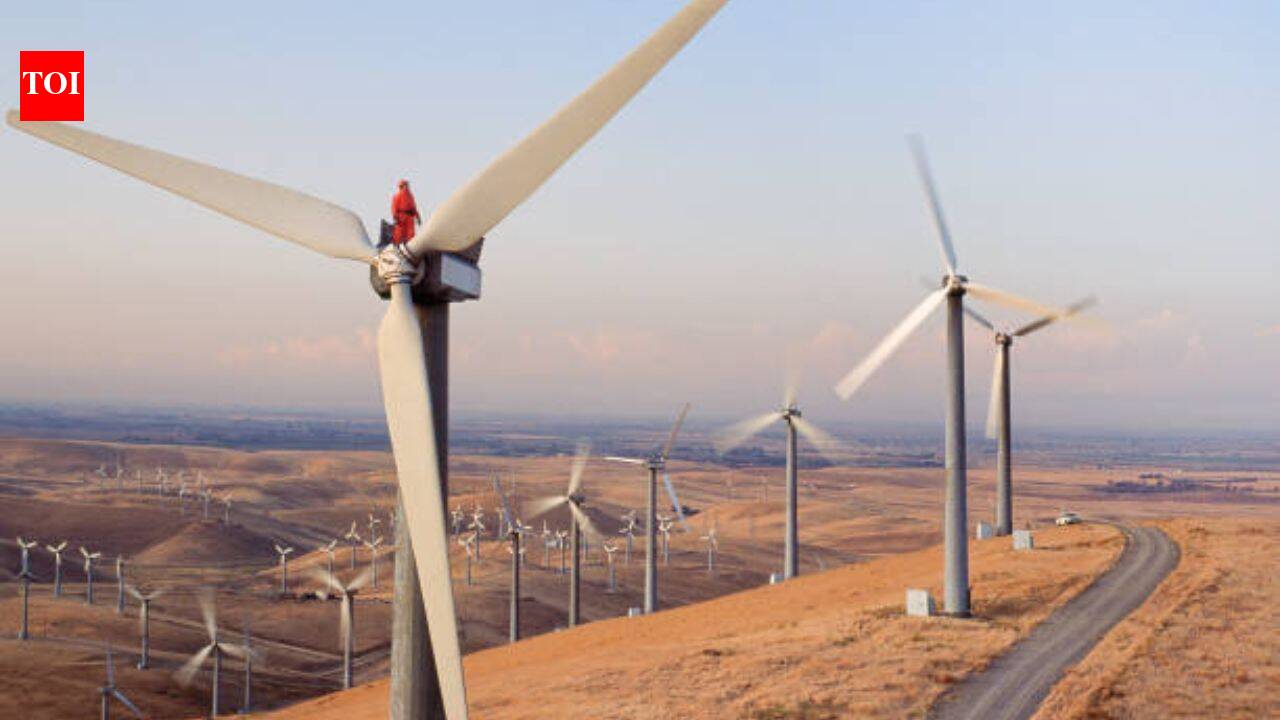
Repurposing decommissioned wind turbine blades is becoming a promising trend, moving away from traditional landfill disposal. These large fiberglass structures are now being shredded and incorporated into cement production. Furthermore, innovative designs have led to the transformation of some blades into pedestrian bridges. While these initiatives are commendable, they signal just the beginning. View More

Hindustan Copper plans to sell copper concentrate from acquired mines to Hindalco and Adani. The company is also discussing a joint venture with Chile's Codelco for mining operations. India's mines secretary confirmed discussions for four copper mining blocks from Codelco. Due diligence is ongoing for a potential joint venture with partners like Coal India. Mining operations are expected to commence within a decade, securing future supply. View More
State-run Hindustan Copper plans to sell copper concentrate produced by mines it is acquiring from Chile's Codelco to Hindalco and Adani, aiming to meet India's growing appetite for the red metal, two sources familiar with the matter said. It is also in talks to form a joint venture with state-run Codelco to mine and sell copper, three sources said, declining to be identified as the deliberations were confidential. Also Read: Hindustan Copper to seek Navratna status, eyes threefold ore output by 2029 Hindustan Copper, Coal India and NTPC Mining are in discussions to secure four copper mining blocks from Codelco, India's mines secretary said in April. Last year, Hindustan Copper signed a preliminary agreement with Codelco about looking at mutually beneficial opportunities in exploration and mining. In May this year, it signed a non-disclosure agreement with Codelco and appointed a deal advisor. Live Events It did not respond to a Reuters request for comment. It has previously denied that it is in talks about a joint venture. Codelco, NTPC Mining and Coal India also did not immediately respond to a Reuters request for comment. India, the world's second-biggest refined copper importer, may have to import 91% to 97% of its copper concentrates by 2047, the government has said. Also Read: Hindustan Copper to raise output by 30% as global demand zooms Hindalco, an Aditya Birla Group-owned firm, is one of India's biggest aluminium and copper producers. The Adani conglomerate runs Kutch Copper, a $1.2 billion smelter in the western state of Gujarat that it says is the world's biggest single-location plant of its type. According to two of the sources, due diligence is ongoing and Hindustan Copper is open to having partners for the JV such as Coal India and NTPC Mining. Early this year, a technical team from Hindustan Copper and executives from NTPC Mining and Coal India visited Chile, the sources said, adding that it would still take a decade before mining could begin and concentrate is produced. India plans to include a chapter on copper in free trade pact talks with Chile to secure a fixed quantity of copper concentrate, the government said last year. India produces an estimated 573,000 metric tons of refined copper annually but demand is much greater at around 1.8 million tons. .Pbanner{display:flex;justify-content:space-between;align-items:center;background-color:#ec1c40;margin-top:20px;padding:5px 10px;border-radius:4px;color:#fff;line-height:10px;width: 100%;box-sizing: border-box} .Pbannertext{display:flex;align-items:center;font-size:16px;font-weight:600;font-family:'Montserrat';} .Pbannertext img{height:20px;margin:0 6px} .Pbannerbutton a{display:flex;align-items:center;background-color:#fff;color:#ec1c40;text-decoration:none;font-weight:600;padding:4px 8px;border-radius:6px;font-size:15px;font-family:'Montserrat';} .Pbannerbutton img{height:20px;margin-right:6px} .Pbannerbutton a:hover{background-color:#f7f7f7} Add as a Reliable and Trusted News Source Add Now! (You can now subscribe to our Economic Times WhatsApp channel) (You can now subscribe to our Economic Times WhatsApp channel)
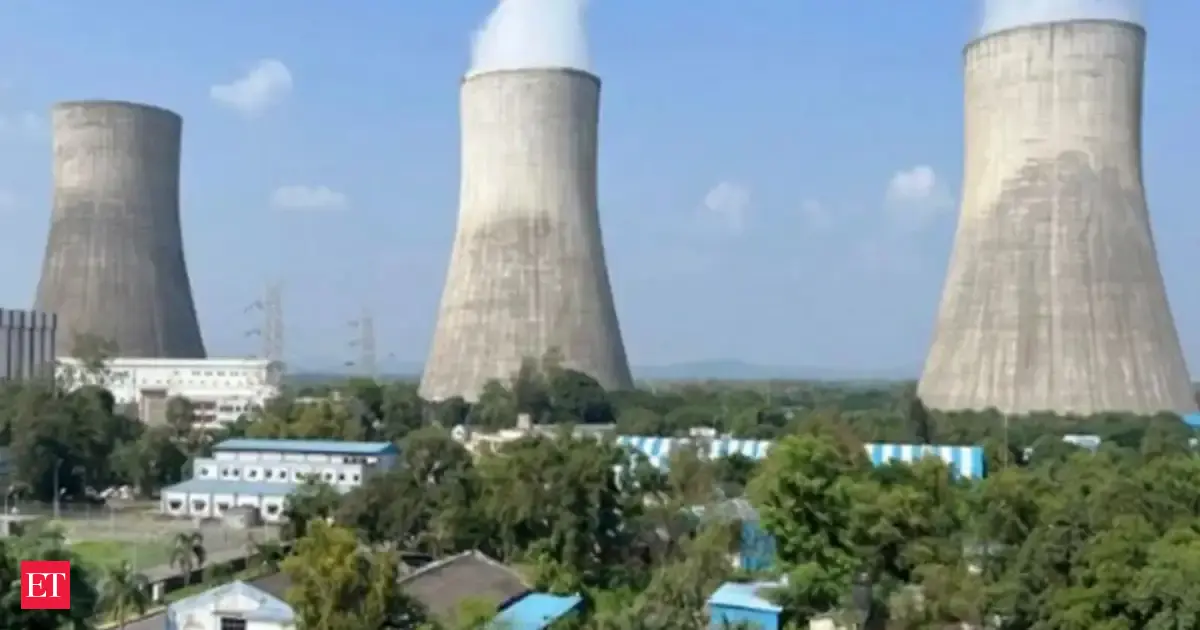
India’s nuclear expansion could sharply raise uranium demand, with PHWRs alone expected to require around 5,400 tonnes of uranium oxide annually. A Parliamentary Committee flagged that domestic production currently meets only 30% of this requirement and urged faster mining, strategic stockpiles, overseas sourcing and clearer timelines to secure long-term fuel supplies. View More
New Delhi: India's planned expansion of nuclear power capacity could significantly increase its uranium requirement, with Pressurised Heavy Water Reactors (PHWRs) alone expected to need around 5,400 tonnes of uranium oxide annually, while domestic production currently meets about 30 per cent of this requirement, according to a Parliamentary Committee's findings. The Committee on Public Undertakings, in its report on action taken by the government on the performance of Nuclear Power Corporation of India Limited (NPCIL), highlighted the country's continued dependence on imported uranium and called for faster expansion of domestic production. "Given that future PHWR expansions will require approximately 5,400 tonnes of U3O8 per annum, and domestic output currently satisfies about 30% of this baseline, accelerating domestic production remains an essential priority for comprehensive fuel assurance," the Committee said. The panel noted that the Nuclear Fuel Complex manufactures fuel assemblies for PHWRs in India using uranium concentrate supplied by Uranium Corporation of India Limited (UCIL) or through imports arranged under government oversight. According to the report, uranium imports currently come from Kazakhstan, Russia, Uzbekistan and Canada, while a long-term supply contract with Uzbekistan is valid up to 2026. Live Events The Committee also noted that a proposed joint venture between UCIL and NTPC to acquire stakes in overseas uranium assets could help secure supplies and reduce exposure to fluctuations in the international market. "The proposal for a joint venture between UCIL and NTPC to acquire stakes in overseas uranium assets is a constructive and encouraging step toward stabilizing long-term fuel costs and supporting the domestic nuclear fleet against market fluctuations and uncertainties," it said. However, the panel sought a more detailed plan and definite timelines from the Department of Atomic Energy (DAE). It asked DAE to provide a report detailing timelines for the UCIL-NTPC joint venture, future uranium sourcing strategies and a framework for participation of Mine Developer-cum-Operators in domestic uranium production . The Committee also stressed the need for strategic uranium reserves to protect reactor operations against possible supply disruptions. "Establishing strategic uranium stockpiles, calibrated to refueling cycles and outage risks, is essential to sustaining reactor operations during supply disruptions," the Committee said. On domestic availability, the report noted that the Atomic Minerals Directorate for Exploration and Research has established around 4.31 lakh tonnes of uranium oxide resources in the country. Of around 80,423 tonnes transferred to UCIL, about 39.22 per cent has already been depleted. At current production rates, the remaining reserves could last around 40 years if no new reserves are added. In its response to the Committee, DAE said UCIL plans to double uranium production by expanding existing mine capacity and setting up mining projects in Jharkhand, Rajasthan and Chhattisgarh. The uranium requirement assumes significance as India expands its nuclear power programme. NPCIL currently operates 25 reactors with an installed capacity of 8,780 MW, while another 17 reactors totalling 13,100 MW are under various stages of execution. The government has set a target of reaching 100 GW of nuclear power capacity by 2047, with NPCIL expected to contribute nearly half of it. .Pbanner{display:flex;justify-content:space-between;align-items:center;background-color:#ec1c40;margin-top:20px;padding:5px 10px;border-radius:4px;color:#fff;line-height:10px;width: 100%;box-sizing: border-box} .Pbannertext{display:flex;align-items:center;font-size:16px;font-weight:600;font-family:'Montserrat';} .Pbannertext img{height:20px;margin:0 6px} .Pbannerbutton a{display:flex;align-items:center;background-color:#fff;color:#ec1c40;text-decoration:none;font-weight:600;padding:4px 8px;border-radius:6px;font-size:15px;font-family:'Montserrat';} .Pbannerbutton img{height:20px;margin-right:6px} .Pbannerbutton a:hover{background-color:#f7f7f7} Add as a Reliable and Trusted News Source Add Now! (You can now subscribe to our Economic Times WhatsApp channel) (You can now subscribe to our Economic Times WhatsApp channel)

Polysilicon is ?a key raw material used in solar photovoltaic ?panels, ?and India relies entirely on imports ?from China View More

The hedge fund's forced selling was a clearing event, but earnings are sustaining the AI trade View More
It was a clearing event after all. It's been just over a week since the forced unwind of the high-flying Situational Awareness hedge fund, and the artificial intelligence trade is now standing on solid ground after a turbulent July battered the market's old leaders. The best part is that the hedge fund's reckoning last Thursday isn't the only reason for the sustained reversal of fortunes. The biggest winners of late in our portfolio tell the story of a sturdier AI trade: Microsoft , Corning , Eaton , Intel and Amazon . This covers the performance since the July 29 close through Thursday of this week. The entire top 10 consists of AI winners, in some form or another. Prior to the Situational Awareness meteor, nine of the 10 stocks were lower during the month of July. The lone exception was Microsoft , which had been crushed in June and had started to perk up into July. Jim Cramer figured this may be the case on the morning of July 30, as reports emerged that Situational Awareness was facing a margin call and its brokers were seeking buyers for its public stock portfolio. The fund, run by former OpenAI researcher Leopold Aschenbrenner, was using a lot of borrowed money to make bullish bets on AI infrastructure providers, including chipmakers, and to bet against companies with perceived disruption risk, like enterprise software vendors. In recent weeks, those previously successful trades went wayward â hardware names were falling, and software was rising â culminating in the forced unwind. "I have always believed that when you clear out the people who have to sell, like this gentleman, you get a bottom," Jim said before the market opened. "This is a clearing event ... because he's not the only one." The market ripped higher last Thursday, with semiconductor stocks and data center suppliers soaring, while the rebounding software group took a breather. But the comeback for stocks like networking cable maker Corning and chipmaker Intel didn't stop there because the news that followed reinforced the notion that the AI buildout is alive and well. That has given investors the confidence to step back into stocks that looked like damaged goods just a few weeks earlier. We've done the same , buying more of Corning, Intel and semiconductor materials supplier Qnity Electronics this week. On Thursday, we also added memory-chip maker Micron Technology to our Bullpen watchlist . Of course, some of the AI winners grew to become overheated in late June and were due for a pullback anyway. Speculation that perhaps the Federal Reserve could hike interest rates at its late July meeting added to the profit-taking last month. But the revelations from Situational Awareness ultimately put the past few weeks of trading in a different light. In certain cases, non-fundamental forces were likely at play to the upside â and to the downside. Then came the earnings reports, which have helped support most of our top 10 recent winners beyond just last Thursday's session. The market has refocused on the underlying businesses of AI infrastructure providers, and the companies that are performing well are getting rewarded for it. Among the most notable reports came from the company at the top of the leaderboard: Microsoft. The tech giant last Wednesday night delivered an impressive number for its Azure cloud unit and, on the software side, showed surprising traction for its AI assistant Copilot. The Azure and Copilot performance, coupled with relatively strong free cash flow compared to its hyperscaler peers, helped soothe investor concerns about all its AI spending. The stock surged 15.5% last Thursday and from there added another 11% through this Thursday's close. Amazon's earnings report last week is another seminal event in the AI trade resurgence. While Amazon Web Services growing a better-than-expected 37% was nice, CEO Andy Jassy's earnings call defense of the company's aggressive AI investments was the real story. It gave investors a better appreciation for the potential return on all this AI spending â and, by extension, offered support for the durability of the investment cycle. That has benefited not just Amazon's stock, but also the data center suppliers like chipmakers, Corning, gas turbine maker GE Vernova , and Eaton, which supplies electrical equipment and cooling technology for AI servers. The suppliers have also benefited from Amazon, Google parent Alphabet , and Meta Platforms raising their capital expenditure forecasts for this year, and from Microsoft suggesting it plans to invest more next year. These signals, coupled with the Jassy masterclass, made the market feel more confident that capex from the spenders hasn't peaked yet, which is good for the vendors. Eaton's own strong earnings report last Friday offered concrete evidence of how it's benefiting from all this spending. No need to assume. Nvidia's presence in the top 10 performers is especially heartening, considering the leading maker of AI chips has been in a frustrating position all year long . Up until the July 29 close, the stock had advanced a mere 2% year to date. It's been off to the races since, and some of the gains this week can be attributed to SpaceX's earnings report after the close Tuesday. CEO Elon Musk said the rocket-and-AI company would exclusively use Nvidia chips for its data centers, while also signaling massive investments in new computing power next year. That's great news for Nvidia, of course, and supportive of data center suppliers more broadly. The only companies in our top 10 that do not provide AI infrastructure are CrowdStrike and Palo Alto Networks . The cybersecurity providers have emerged as AI winners in their own right, though, thanks to heightened risk of cyberattacks in the age of AI. Their stocks had incredible rallies beginning in the spring into July as the market came around to this view, before cooling off in July. They've heated back up amid reports that advanced AI systems from OpenAI, Anthropic and Meta Platforms have unknowingly hacked into other companies. The bottom line? The AI trade is in a different place than it was earlier this year, with at least one leveraged buyer on the sidelines. But its recent resurgence is more than justified by the facts on the sturdier ground. (See here for a full list of the stocks in Jim Cramer's Charitable Trust.) As a subscriber to the CNBC Investing Club with Jim Cramer, you will receive a trade alert before Jim makes a trade. Jim waits 45 minutes after sending a trade alert before buying or selling a stock in his charitable trust's portfolio. If Jim has talked about a stock on CNBC TV, he waits 72 hours after issuing the trade alert before executing the trade. THE ABOVE INVESTING CLUB INFORMATION IS SUBJECT TO OUR TERMS AND CONDITIONS AND PRIVACY POLICY , TOGETHER WITH OUR DISCLAIMER . NO FIDUCIARY OBLIGATION OR DUTY EXISTS, OR IS CREATED, BY VIRTUE OF YOUR RECEIPT OF ANY INFORMATION PROVIDED IN CONNECTION WITH THE INVESTING CLUB. NO SPECIFIC OUTCOME OR PROFIT IS GUARANTEED.
