
Latest Sectors News

From leaving corporate careers to building a Rs 115-crore omnichannel brand, Nestasia’s journey reflects the rise of India’s new-age home and lifestyle entrepreneurs. View More
Aditi Murarka Agrawal and Anurag Agrawal transitioned from prosperous careers in finance and e-commerce to establish Nestasia, a design-focused home and lifestyle company . Nestasia has evolved from an online startup into an omnichannel enterprise, achieving Rs 115 crore in revenue for FY25 and holding significant aspirations for continued expansion. In this conversation with The Economic Times, co-founder Aditi Murarka Agrawal talks about the entrepreneurial leap, the company’s growth drivers, differentiation in a crowded market, the evolving online-offline mix, and the journey toward building a profitable, IPO-ready consumer brand. Edited excerpts. The Economic Times (ET): Both of you had successful corporate careers in finance and e-commerce. What was the defining moment that convinced you to leave those careers behind and start Nestasia? How did you fund the business initially, and how much did you invest? Aditi Murarka Agrawal (AA): My passion for home decor is deeply personal, rooted in childhood memories of accompanying my mother on shopping trips to find the perfect pieces for our home during festivals. As I travelled across Southeast Asia, I was captivated by local craftsmanship and the untapped potential of regional artisans, which ultimately sparked the vision for Nestasia: a platform to celebrate extraordinary creativity and bring it to the forefront of contemporary home design Inspired by our shared experience of building three homes across Southeast Asia, Anurag co-founded Nestasia to translate that personal design journey into a brand accessible to everyone. At Nestasia, he leads customer-centric strategy, e-commerce expansion, and operational efficiency, ensuring the brand remains commercially robust while staying closely attuned to evolving customer needs and market trends. ET: Nestasia has scaled to achieve annual revenues of Rs 115 crore in FY25. What have been the biggest growth drivers behind this journey, and what milestones are critical as you target Rs 1,000 crore in annual revenues? AA: Our growth has largely been driven by the strength and evolution of our product assortment. While we started as a home décor brand, today our kitchen and dining category has emerged as our largest and fastest-growing segment, reflecting changing consumer preferences and our ability to expand into adjacent lifestyle categories. Another key driver has been accelerating our in-house manufacturing capabilities, which has enabled us to bring products to market faster, maintain greater control over quality and design, and respond more quickly to evolving consumer trends. As we work towards our Rs 1,000 crore revenue goal, continuing to expand our product portfolio, strengthening our manufacturing capabilities, and staying agile in meeting customer demand will remain critical to our growth journey. ET: The Indian home décor market is becoming increasingly crowded, with both legacy brands and new-age startups vying for consumers. How does Nestasia differentiate itself in such a competitive landscape? AA : The biggest challenge for consumers today is finding a trusted destination where they can discover thoughtfully designed products across every aspect of the home, without having to sift through an overwhelming number of options. At Nestasia, we have focused on solving exactly that by creating a curated, design-led one-stop shop for all things home. Rather than offering an endless catalogue, we handpick products that align with our aesthetic, quality standards, and evolving consumer preferences. This approach not only simplifies the shopping experience but also helps customers discover pieces they genuinely love. Our emphasis on curation, design, and a cohesive brand experience continues to be one of our strongest differentiators in an increasingly competitive home décor market. Live Events ET: Your website contributes nearly 55% of overall revenue, while marketplaces, quick commerce, and offline stores are also growing. How do you see the revenue mix evolving over the next three to five years? AA : While we are enabling greater access to the brand through third-party platforms, including marketplaces and quick commerce, our owned channels will remain the largest contributor to our business. They allow us to build deeper customer relationships, offer a more immersive brand experience, and retain greater control over the overall consumer journey. ET: Nestasia has transitioned from a digital-first startup to an omnichannel brand with 14 exclusive stores across multiple cities. What has been your experience in offline retail, and how important will physical stores be for future sales growth? AA : We are continuing to expand our physical retail presence because we see offline as being just as important as digital. There are customers who prefer shopping in stores and others who prefer shopping online, and our focus is not to change that behaviour but to deliver a world-class experience across both channels. We want to be wherever our customers choose to shop. That said, in a design-first category like home and lifestyle, the ability to see, touch, and experience products in person plays a significant role in building trust and confidence, making physical stores an important driver of both brand affinity and long-term growth. ET: New product launches are a key part of Nestasia's strategy. How do you identify emerging consumer trends and ensure that frequent product drops translate into sustained sales and customer loyalty? AA : We have a dedicated team focused on identifying emerging consumer trends and product opportunities. It's a combination of deeply understanding customer problems through continuous feedback and research, while constantly tracking innovations that can enhance the user experience. This approach enables us to introduce products that are not only trend-led but also solve real consumer needs, helping us drive sustained customer engagement and long-term loyalty. ET: With investors such as Stellaris Venture Partners and Susquehanna Asia VC backing the company, how are you balancing rapid growth with profitability and building an IPO-ready business? AA : We are looking forward to making the best home and kitchen products for the Indian consumer market. When we do that, growth and profitability follow. Our investors trust us and hence completely back us on that. .Pbanner{display:flex;justify-content:space-between;align-items:center;background-color:#ec1c40;margin-top:20px;padding:5px 10px;border-radius:4px;color:#fff;line-height:10px;width: 100%;box-sizing: border-box} .Pbannertext{display:flex;align-items:center;font-size:16px;font-weight:600;font-family:'Montserrat';} .Pbannertext img{height:20px;margin:0 6px} .Pbannerbutton a{display:flex;align-items:center;background-color:#fff;color:#ec1c40;text-decoration:none;font-weight:600;padding:4px 8px;border-radius:6px;font-size:15px;font-family:'Montserrat';} .Pbannerbutton img{height:20px;margin-right:6px} .Pbannerbutton a:hover{background-color:#f7f7f7} Add as a Reliable and Trusted News Source Add Now!

The regulator has relaxed some provisions of the GNA Regulations providing developers with a 60-day window to choose one of the four options. View More


Power producers must surrender unused transmission rights or post higher bank guarantees to free up grid capacity View More


NTPC's board approved a Rs 20,456.70 crore investment for its Lara Super Thermal Power Project Stage-III. This significant project will add 1,600 MW capacity in Chhattisgarh state. Earlier, NTPC sought bids for technology solutions to enhance thermal unit flexibility. These solutions aim to improve integration of renewable energy sources. The company seeks to operate sub-critical thermal units more efficiently. View More
New Delhi: State-run power giant NTPC board has approved Rs 20,456.70-crore investment for 1,600 MW Lara Super Thermal Power Project Stage-III in Chhattisgarh. "The Board of Directors of NTPC Limited in its meeting held today, i.e. 11th July 2026 has, inter-alia, approved investment proposal for Lara Super Thermal Power Project, Stage-III (2x800 MW) at current estimated cost of Rs 20,456.70 crore," the company said in an exchange filing on Saturday. Also read: NITI Aayog begins consultations on implementing SHANTI Act On June 5, the NTPC had sought bids from technology solutions players to help its sub-critical thermal power units operate at lower load and ensure flexibility for the electricity distribution network to use both thermal and renewable energy more efficiently. The project will require providing technical support to sub-critical thermal units ranging between 150 MW and 250 MW, enabling them to operate in two shifts and at a minimum technical load of 25 per cent, NTPC had said in a statement. Live Events Sub-critical thermal units can offer greater flexibility compared to supercritical and ultra-supercritical technologies for certain grid-balancing requirements because of less parameter swings and hence low fatigue, NTPC had said, adding that their ability to operate efficiently at lower loads and adapt to frequent cycling makes them a potential enabler for higher renewable energy integration in the future. .Pbanner{display:flex;justify-content:space-between;align-items:center;background-color:#ec1c40;margin-top:20px;padding:5px 10px;border-radius:4px;color:#fff;line-height:10px;width: 100%;box-sizing: border-box} .Pbannertext{display:flex;align-items:center;font-size:16px;font-weight:600;font-family:'Montserrat';} .Pbannertext img{height:20px;margin:0 6px} .Pbannerbutton a{display:flex;align-items:center;background-color:#fff;color:#ec1c40;text-decoration:none;font-weight:600;padding:4px 8px;border-radius:6px;font-size:15px;font-family:'Montserrat';} .Pbannerbutton img{height:20px;margin-right:6px} .Pbannerbutton a:hover{background-color:#f7f7f7} Add as a Reliable and Trusted News Source Add Now! (You can now subscribe to our Economic Times WhatsApp channel) (You can now subscribe to our Economic Times WhatsApp channel)
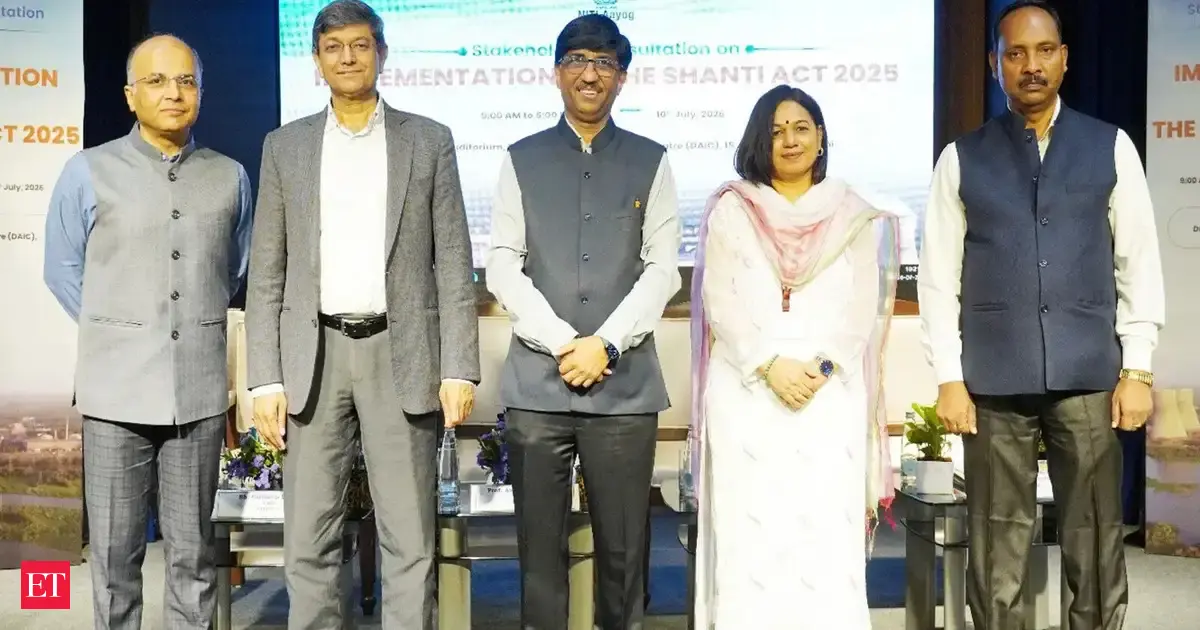
NITI Aayog convened a stakeholder consultation on the SHANTI Act 2025, with discussions focusing on legislative and regulatory frameworks for the landmark Act. Financial mechanisms and public perception were also key areas of deliberation. View More
New Delhi: NITI Aayog convened a Stakeholder Consultation on Implementation of the SHANTI Act 2025 at Samrasta Auditorium, Dr. Ambedkar International Centre, New Delhi. The consultation held on Friday brought together key leaders, policymakers and experts from the government, research institutions and industry to deliberate on the operational framework of the landmark Act. The stakeholder consultation was chaired by Prof. Abhay Karandikar (Member, NITI Aayog). Other prominent dignitaries included Pankaj Agrawal (Secretary, MoP), Sh. Ghanshyam Prasad (Chairperson, CEA), Gurdeep Singh (CMD, NTPC Ltd. ), Dr. Anshu Bharadwaj (Programme Director, NITI Aayog), Rajnath Ram (Adviser, NITI Aayog), Dr. Garima Sharma (Head, SSSD, DAE) and Hari Kumar (Distinguished Scientist and Director, AERB). Also read | SHANTI Act: The law ....may've started to show results The technical discussions were structured around three critical pillars vital to the Act's successful rollout: Live Events Legislative & Regulatory Framework: Deliberations focused on the SHANTI Act's draft rules, regulations and related FDI policy provisions, with the opening technical segment presenting the statutory compliance mechanisms under SHANTI Act, 2025 and highlighting how foreign capital can be attracted while safeguarding domestic interests. Finance, Insurance & Public Perception: Stakeholders examined the financial mechanisms and risk-mitigation frameworks needed to support the Act's implementation. The discussion also covered suitable insurance arrangements for long-term projects, along with strategies to strengthen public awareness, community trust and broader acceptance of nuclear energy projects. Manufacturing, Operations & Capacity Building: The focus was on the operationalization phase, with emphasis on strengthening domestic manufacturing capabilities, ensuring operational readiness and building a skilled workforce to sustain the ecosystem. Stakeholders also discussed enhancing supply chain resilience and designing dedicated capacity-building programmes to support industrial scaling and develop a highly competent human resource base. Also read | Nuclear power output to rise 44% in 10 years; India, China key drivers Stakeholders provided a range of views across all three critical areas, which will be useful in strengthening the implementation framework of the SHANTI Act, 2025. .Pbanner{display:flex;justify-content:space-between;align-items:center;background-color:#ec1c40;margin-top:20px;padding:5px 10px;border-radius:4px;color:#fff;line-height:10px;width: 100%;box-sizing: border-box} .Pbannertext{display:flex;align-items:center;font-size:16px;font-weight:600;font-family:'Montserrat';} .Pbannertext img{height:20px;margin:0 6px} .Pbannerbutton a{display:flex;align-items:center;background-color:#fff;color:#ec1c40;text-decoration:none;font-weight:600;padding:4px 8px;border-radius:6px;font-size:15px;font-family:'Montserrat';} .Pbannerbutton img{height:20px;margin-right:6px} .Pbannerbutton a:hover{background-color:#f7f7f7} Add as a Reliable and Trusted News Source Add Now! (You can now subscribe to our Economic Times WhatsApp channel) (You can now subscribe to our Economic Times WhatsApp channel)
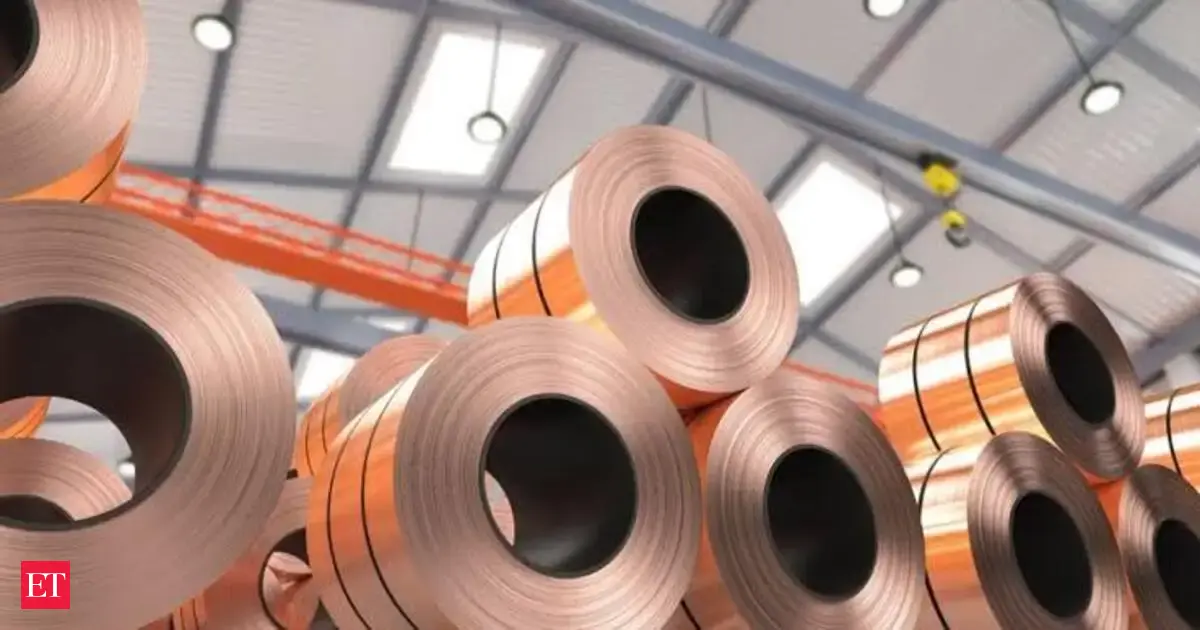
Hindustan Copper Limited is advancing positively on acquiring four Chilean copper blocks. Transaction advisors are studying data and regulatory issues are being examined. This move aims to secure critical raw materials for India's green energy transition. The company is bidding jointly with NTPC Mining and Coal India Limited. View More
New Delhi, State-run Hindustan Copper Ltd (HCL) on Friday said it was moving in a "positive direction" over the proposed takeover of four Chilean copper blocks from state-owned Codelco, with transaction advisors already appointed to study the data and regulatory issues being examined on both sides. The development assumes significance as India seeks to secure critical raw materials for its green-energy transition and reduce reliance on imports for copper used in electrification and electric vehicles . "The transaction advisors... are studying data and there are a lot of regulatory things not only this side but from that side as well... we are moving in the positive direction," Hindustan Copper Ltd (HCL) Chairman & Managing Director (CMD) Anupam Misra told reporters on the sidelines of Ficci conference on 'enhancing competitiveness of mining and metals'. About prospects for copper demand and supply , the CMD said it was "anybody's guess" and pointed to a persistent global gap between demand and supply. "There is always a gap between demand and supply not only here but everywhere. So we are very small contributor to the refining sector. Only 5 per cent of the concentrate goes for us so for us enough demand is there and as far as the LME is there it is supporting us so we are in good position," he said. Live Events Asked if the company was eyeing Navratna status, he said, "This is in the pipeline. Government takes its own time to do it." Mines Secretary Piyush Goyal had earlier said HCL is in the "final stages" of taking over four copper blocks from Chile's Codelco. HCL, he had said, had initially planned to bid for one block but, after assessing India's large copper requirement and limited domestic availability, the company decided to pursue four blocks in collaboration with other public sector undertakings. The copper major is bidding jointly for these blocks along with NTPC Mining and Coal India Ltd (CIL). Hindustan Copper is Mini-Ratna PSU under the administrative control of the mines ministry. HCL is the only company in the country engaged in copper ore mining and holds all the operating mining leases for copper ore in the country. .Pbanner{display:flex;justify-content:space-between;align-items:center;background-color:#ec1c40;margin-top:20px;padding:5px 10px;border-radius:4px;color:#fff;line-height:10px;width: 100%;box-sizing: border-box} .Pbannertext{display:flex;align-items:center;font-size:16px;font-weight:600;font-family:'Montserrat';} .Pbannertext img{height:20px;margin:0 6px} .Pbannerbutton a{display:flex;align-items:center;background-color:#fff;color:#ec1c40;text-decoration:none;font-weight:600;padding:4px 8px;border-radius:6px;font-size:15px;font-family:'Montserrat';} .Pbannerbutton img{height:20px;margin-right:6px} .Pbannerbutton a:hover{background-color:#f7f7f7} Add as a Reliable and Trusted News Source Add Now! (You can now subscribe to our Economic Times WhatsApp channel) (You can now subscribe to our Economic Times WhatsApp channel)
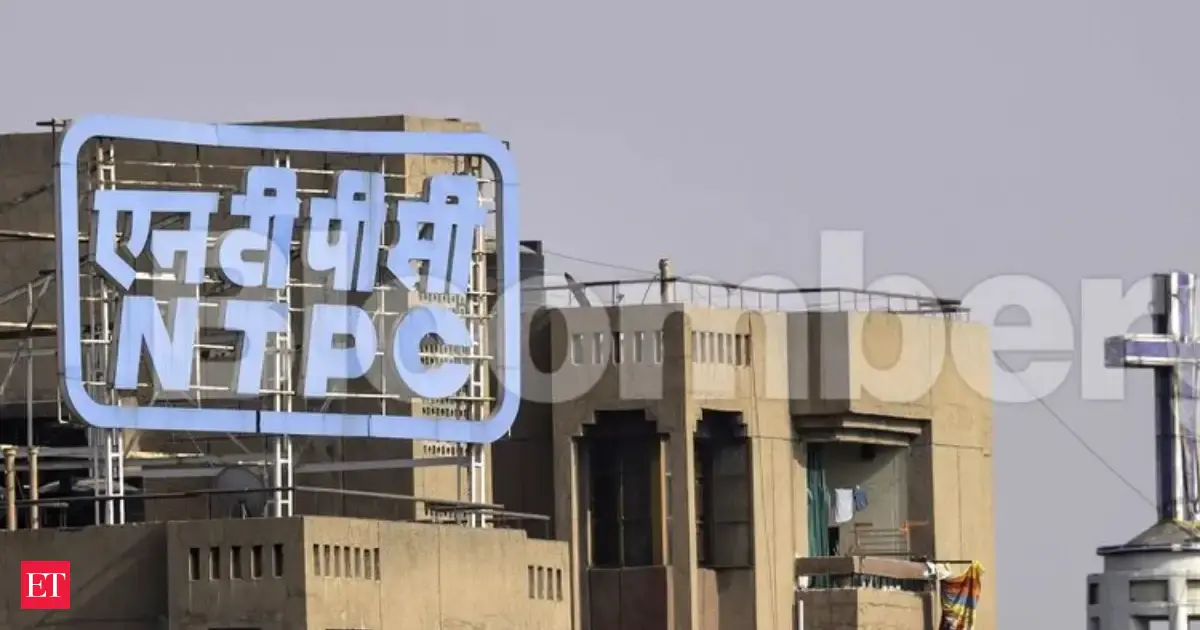
India's largest power producer seeks overseas uranium mines for future nuclear capacity. NTPC plans to build thirty gigawatts of nuclear power over two decades. This move supports India's broader push to decarbonize its economy. The company is looking at assets in Canada, Australia, and Kazakhstan. This strategy addresses domestic fuel limitations and growing energy needs. View More
India’s largest power producer is seeking to invest in overseas uranium mines to secure supplies needed to fuel 30 gigawatts of nuclear power capacity it plans to build over the next two decades. State-controlled NTPC Ltd. issued a tender to appoint consultants that will help identify potential assets in uranium-mining countries including Canada, Australia, Kazakhstan and South Africa, according to documents posted on its tender website. Bids are due July 16. The search for uranium marks the latest step in India’s ambition to grow atomic power capacity more than elevenfold by 2047, part of a broader push to decarbonize an economy that’s driven largely by coal and other fossil fuels. NTPC aims to build around 30% of the country’s 100-gigawatt target. In December, the Indian parliament passed a law that will end a decades-old state monopoly in atomic power generation and open the industry up to private firms. The new legislation also envisages sweeping changes to the country’s liability provisions that had spooked investors. “The scale of planned capacity addition necessitates securing a sustainable fuel supply of uranium,” NTPC said in the bid document. “Considering the limitations of domestic fuel and mining reserves, overseas exploration and the acquisition of uranium mines are required.” Live Events At present, India relies on another state-controlled company – Uranium Corp. of India – for domestic supplies of the metal. The country’s only producer mines mainly in the states of Jharkhand and Andhra Pradesh. New Delhi has already been diversifying its overseas supplies, agreeing during Prime Minister Narendra Modi’s visit to Melbourne this week to import uranium from Australia. India also buys the atomic mineral from Uzbekistan and Russia, while shipments from Canadian miner Cameco Corp. are due to begin next year. Global uranium mining is relatively concentrated, with the top five producers accounting for almost 70% of the world’s output in 2024, according to the World Nuclear Association. Kazakhstan’s NAC Kazatomprom was the biggest producer in that year, followed by Cameco. .Pbanner{display:flex;justify-content:space-between;align-items:center;background-color:#ec1c40;margin-top:20px;padding:5px 10px;border-radius:4px;color:#fff;line-height:10px;width: 100%;box-sizing: border-box} .Pbannertext{display:flex;align-items:center;font-size:16px;font-weight:600;font-family:'Montserrat';} .Pbannertext img{height:20px;margin:0 6px} .Pbannerbutton a{display:flex;align-items:center;background-color:#fff;color:#ec1c40;text-decoration:none;font-weight:600;padding:4px 8px;border-radius:6px;font-size:15px;font-family:'Montserrat';} .Pbannerbutton img{height:20px;margin-right:6px} .Pbannerbutton a:hover{background-color:#f7f7f7} Add as a Reliable and Trusted News Source Add Now! (You can now subscribe to our Economic Times WhatsApp channel) (You can now subscribe to our Economic Times WhatsApp channel)

The power authority warned of fire risks from prolonged use of cooling appliances, asking discoms to prepare for higher summer loads. View More