
Latest Sectors News

India has sufficient coal stocks to meet electricity demand, with 42.8 million tonnes available at thermal power plants as of July 12, enough for 14 days at 85% plant load factor, the government informed the Rajya Sabha. Coal-based plants, with a capacity of 230.8 GW, supplied nearly 70% of the country's electricity between April and June, while coal supplies are being monitored daily by an inter-ministerial committee. View More
India has adequate coal stocks at thermal power plants to meet electricity demand, with 42.8 million tonnes (MT) available as of July 12, 2026, sufficient for 14 days at 85 per cent plant load factor (PLF), the Ministry of Power said on Monday. The Ministry said coal-based generation capacity, including lignite-based capacity, stood at around 230.8 GW and accounted for 69.54 per cent of total electricity supplied between April and June 2026. During non-solar peak demand hours, maximum generation from these plants reached about 188.8 GW, or nearly 75 per cent of the total generation of 251.4 GW. "Also, sufficient coal is being received at present by the Thermal power Plants to meet the daily demands," the Ministry said in a written reply in the Rajya Sabha. The government said coal supply to thermal power plants is being monitored daily through a joint committee comprising the Ministry of Power, the Railways and the Ministry of Coal. Priority has also been accorded to coal rakes and dispatches to power houses. An Inter-Ministerial Committee comprising the Chairman of the Railway Board and the Secretaries of the Ministries of Coal and Power is also meeting regularly to review coal supplies to thermal power plants, the press release mentioned. Live Events The Ministry said scheduled maintenance of thermal units is planned in advance, taking into account the demand scenario for different months. "It is a standard practice to minimize scheduled maintenance during the peak months," it said, adding that the Central Electricity Authority monitors maintenance schedules and permits deferment on a case-to-case basis when increased demand requires such action. The government has also taken steps to improve grid flexibility and integrate renewable energy into the power system. The Central Electricity Authority (Flexible Operation of Coal-based Thermal Power Generating Units) Regulations, 2023 mandate coal-based thermal power units to achieve a minimum technical level of 40 per cent in accordance with the phasing plan specified by the CEA. During FY2025-26, 9,470 MW of thermal capacity was added, while another 2,260 MW has been commissioned during the current financial year. Energy storage is also being expanded to support the grid during non-solar hours. Around 2,669 MW of Battery Energy Storage Systems and 7,426 MW of Pumped Storage Projects have been commissioned so far. These systems store surplus power generated during solar hours and utilise it primarily when solar generation is unavailable. The information was given by Minister of State for Power Shripad Naik in a written reply in the Rajya Sabha. .Pbanner{display:flex;justify-content:space-between;align-items:center;background-color:#ec1c40;margin-top:20px;padding:5px 10px;border-radius:4px;color:#fff;line-height:10px;width: 100%;box-sizing: border-box} .Pbannertext{display:flex;align-items:center;font-size:16px;font-weight:600;font-family:'Montserrat';} .Pbannertext img{height:20px;margin:0 6px} .Pbannerbutton a{display:flex;align-items:center;background-color:#fff;color:#ec1c40;text-decoration:none;font-weight:600;padding:4px 8px;border-radius:6px;font-size:15px;font-family:'Montserrat';} .Pbannerbutton img{height:20px;margin-right:6px} .Pbannerbutton a:hover{background-color:#f7f7f7} Add as a Reliable and Trusted News Source Add Now! (You can now subscribe to our Economic Times WhatsApp channel) (You can now subscribe to our Economic Times WhatsApp channel)
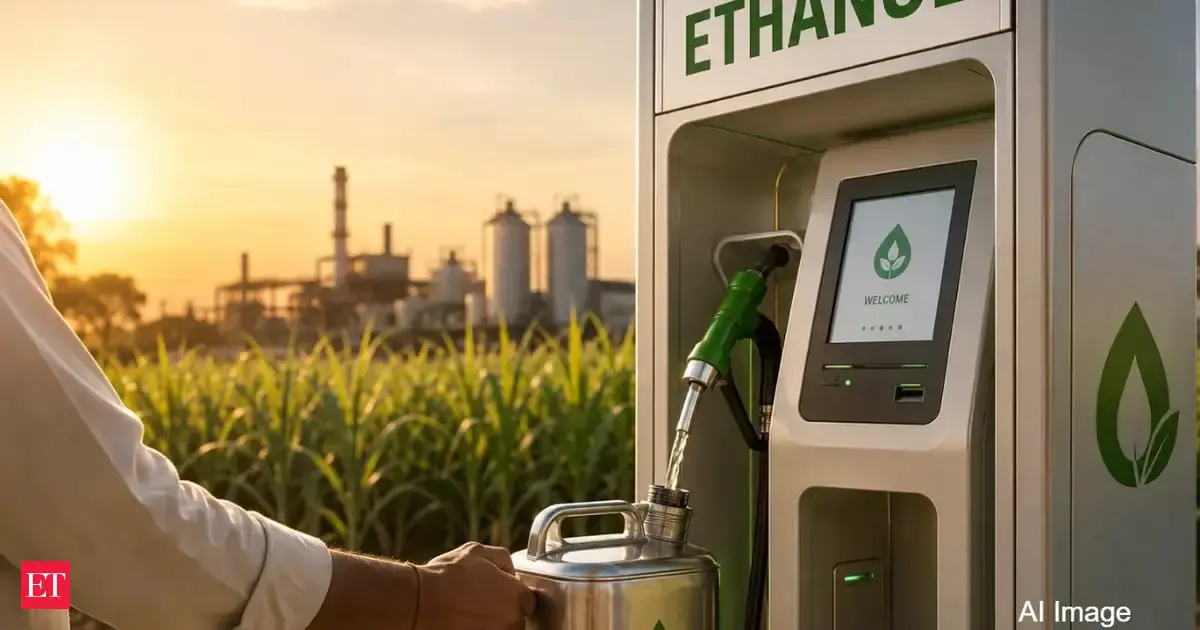
India's ethanol policy is entering a new phase as the government explores ethanol ATMs, ethanol cooking fuel, sustainable aviation fuel (SAF), exports and flex-fuel vehicles after achieving nationwide E20 petrol rollout. With ethanol production capacity outpacing current demand, policymakers are seeking new markets to absorb surplus capacity and expand India's biofuel ecosystem. View More
India's ethanol story is entering a new phase. For more than a decade, the focus was on blending ethanol into petrol and reducing dependence on imported crude oil. Today, policymakers are looking far beyond the fuel tank. ET has reported that the government is working on a framework to introduce ethanol as a mainstream cooking fuel and is even considering a retail model where consumers could buy ethanol through dedicated " ethanol ATMs " in canisters for use in kitchen stoves. The proposal may sound futuristic, but it points to a larger shift underway in India's biofuel strategy. Also Read: Ethanol could soon make its way to Indian kitchens India has already achieved nationwide E20 rollout ahead of schedule. Yet instead of slowing down, the search for new ethanol applications is accelerating. Cooking fuel, flex-fuel vehicles, sustainable aviation fuel and exports are all moving up the agenda. Beneath all these initiatives is the fact that India has built an ethanol production ecosystem that is becoming larger than the demand currently available to absorb it even though the demand is seen to grow fast in near future. The success that created a new challenge The ethanol blending programme has been one of the most ambitious energy initiatives undertaken by the Narendra Modi government. Ethanol blending in petrol has climbed from barely 1.5% a decade ago to 20%, helping reduce crude oil imports, improve farm incomes and create a large domestic biofuel industry. India achieved the E20 target years ahead of schedule and is already discussing the next stage of biofuel adoption. Since 2014-15, ethanol blending has helped save more than Rs 1.4 lakh crore in foreign exchange while generating additional income for farmers and distilleries. The industry responded to these policy signals with massive investments. Sugar mills expanded distillation capacity. Grain-based ethanol producers entered the market aggressively. New projects came up across Uttar Pradesh, Bihar, Maharashtra and several other states. The result is that India may now be facing an ethanol capacity overhang. Live Events Also Read: India's ethanol surplus spurs export push amid E20 backlash The numbers that explain everything The push for ethanol as a cooking fuel makes much more sense when viewed through the lens of capacity. According to a May report by CareEdge Ratings, India's ethanol production capacity has already crossed 20 billion litres annually. Another 4 billion litres of capacity is expected to come onstream during the current financial year, taking total installed capacity to roughly 24 billion litres. Against that, the government's E20 blending programme consumes about 11 billion litres a year. Liquor manufacturers, pharmaceutical companies and chemical producers account for another 3-3.5 billion litres of demand. That still leaves nearly 7 billion litres of unutilised capacity. Industry executives have also begun exploring export opportunities in countries such as Nepal, Bangladesh and Indonesia, which have blending targets but insufficient domestic production capacity. To be sure, India is not necessarily sloshing about in a glut of ethanol. It is sitting on distilleries and investments capable of producing far more ethanol than existing markets currently require. That is why the conversation has shifted from blending targets to consumption targets. Earlier this year, ET reported that distillery capacity was growing much faster than incremental demand under the E20 programme. With discussions around raising the blending cap beyond 20% moving slowly, producers and policymakers have been forced to think beyond petrol. Why the kitchen suddenly matters The proposed move into cooking fuel could potentially open one of the largest new demand pools available to ethanol. India remains heavily dependent on LPG for household cooking. Although domestic production has increased, imports continue to account for a significant share of demand. Every spike in global energy prices affects both the country's import bill and the government's subsidy calculations. Ethanol offers an attractive alternative from a policymaker's perspective. It is produced domestically and supports farmers and rural industry. It reduces dependence on imported fuels. It can also be distributed through a decentralised retail model rather than relying entirely on LPG cylinders. According to the ET report, policymakers are exploring dedicated dispensing points or ethanol ATMs where consumers could refill canisters for specially designed cooking stoves. Such a system would create an entirely new retail ecosystem for ethanol. Even if adoption remains limited initially, the significance lies elsewhere. The proposal shows that ethanol is no longer being viewed merely as a blending agent for petrol. It is being positioned as a standalone energy source. Exports emerge as another outlet Domestic consumption is not the only answer being explored. India is increasingly looking at ethanol exports to neighbouring countries that have blending mandates but lack sufficient feedstock or distillation capacity. Nepal, Bangladesh and Indonesia have all emerged as potential markets. For a country that until recently worried about ethanol shortages, the idea of becoming a regional ethanol supplier marks a dramatic shift. The export option is becoming more important because large investments have already been made across the ethanol value chain. Distilleries that were built to serve a rapidly expanding blending programme now need assurance that demand will continue growing. Aviation could become ethanol's most lucrative market Cooking fuel may be the latest idea, but aviation could eventually emerge as one of the most important new destinations for Indian ethanol. In April this year, the government amended aviation fuel regulations to allow Sustainable Aviation Fuel (SAF) to be blended with conventional Aviation Turbine Fuel. It also approved a roadmap that envisages 1% SAF blending for international flights by 2027, rising to 2% in 2028 and 5% by 2030. The move is part of India's effort to reduce emissions from aviation while building a domestic SAF industry. What makes this relevant for the ethanol industry is the production pathway being favoured by many companies. One of the recognised routes for producing sustainable aviation fuel is the alcohol-to-jet process, which converts ethanol into jet fuel. In other words, ethanol is no longer being viewed only as a transport fuel additive. It is increasingly being positioned as a feedstock for an entirely new category of fuel. The industry has already begun investing on that assumption. India's first ethanol-to-jet fuel plant is being developed near Visakhapatnam by NTPC Green Energy and GPS Renewables. The facility is expected to produce around 1,800 tonnes of sustainable aviation fuel annually using ethanol-based technology. For policymakers, SAF offers something that petrol blending and cooking fuel do not. Airlines across the world are under growing pressure to lower emissions and are willing to pay a premium for sustainable aviation fuel. If ethanol can find its way into aviation at scale, it could create a high-value market for producers at a time when domestic capacity is running ahead of demand. CAFE-III will kick off the next phase The government's recently released draft Corporate Average Fuel Efficiency (CAFE)-III norms provide another clue about the direction of policy. For the first time, the framework proposes incentives linked to ethanol and other biofuels. Traditionally, discussions around fuel-efficiency norms have revolved around electric vehicles. The latest proposals suggest policymakers are increasingly interested in creating a broader ecosystem where ethanol, flex-fuel vehicles and other biofuels play a larger role. The significance of this shift should not be underestimated. Once E20 became a reality, the next challenge was always going to be demand creation. CAFE-III appears designed, at least in part, to ensure that future vehicle technologies can absorb more ethanol. From a sugar policy to an energy strategy Perhaps the most important development is that ethanol is no longer just a by-product of the sugar industry. Grain-based ethanol has expanded rapidly and maize has emerged as a major feedstock. According to industry data, grain-based sources now account for a majority of ethanol supplies. The ethanol ecosystem increasingly includes grain processors, distilleries, technology providers and fuel retailers alongside traditional sugar mills. Shift away from sugarcane can also alleviate ecological concerns as sugarcane is considered a water-intensive crop. Once ethanol was part of sugar policy and now it has evolved to energy policy. That shift is visible in the range of sectors now being discussed. Ethanol is being considered for transportation, cooking, exports and aviation fuel. Every new application serves the same underlying purpose of creating demand for a production ecosystem that has already been built. The real story after E20 The proposed ethanol ATM network may or may not become commonplace across India. Ethanol stoves may or may not challenge LPG in a meaningful way. Sustainable aviation fuel may take years to scale up. But all these initiatives point in the same direction. India's ethanol programme has reached a stage where the challenge is no longer producing enough fuel as an excess capacity is in place. The challenge is creating enough demand. With capacity already above 20 billion litres a year and heading towards 24 billion litres, while existing domestic consumption absorbs only a part of that potential output, policymakers are now looking everywhere for the next consumer. Ethanol ATMs, exports, flex-fuel vehicles and sustainable aviation fuel are all pieces of the same puzzle. The country's distilleries were built for a future larger than E20, and policymakers are now trying to create that future. .Pbanner{display:flex;justify-content:space-between;align-items:center;background-color:#ec1c40;margin-top:20px;padding:5px 10px;border-radius:4px;color:#fff;line-height:10px;width: 100%;box-sizing: border-box} .Pbannertext{display:flex;align-items:center;font-size:16px;font-weight:600;font-family:'Montserrat';} .Pbannertext img{height:20px;margin:0 6px} .Pbannerbutton a{display:flex;align-items:center;background-color:#fff;color:#ec1c40;text-decoration:none;font-weight:600;padding:4px 8px;border-radius:6px;font-size:15px;font-family:'Montserrat';} .Pbannerbutton img{height:20px;margin-right:6px} .Pbannerbutton a:hover{background-color:#f7f7f7} Add as a Reliable and Trusted News Source Add Now! (You can now subscribe to our Economic Times WhatsApp channel) (You can now subscribe to our Economic Times WhatsApp channel)

Subramanian noted that India's macroeconomic foundations are strong and falling crude prices provide a near-term tailwind. View More
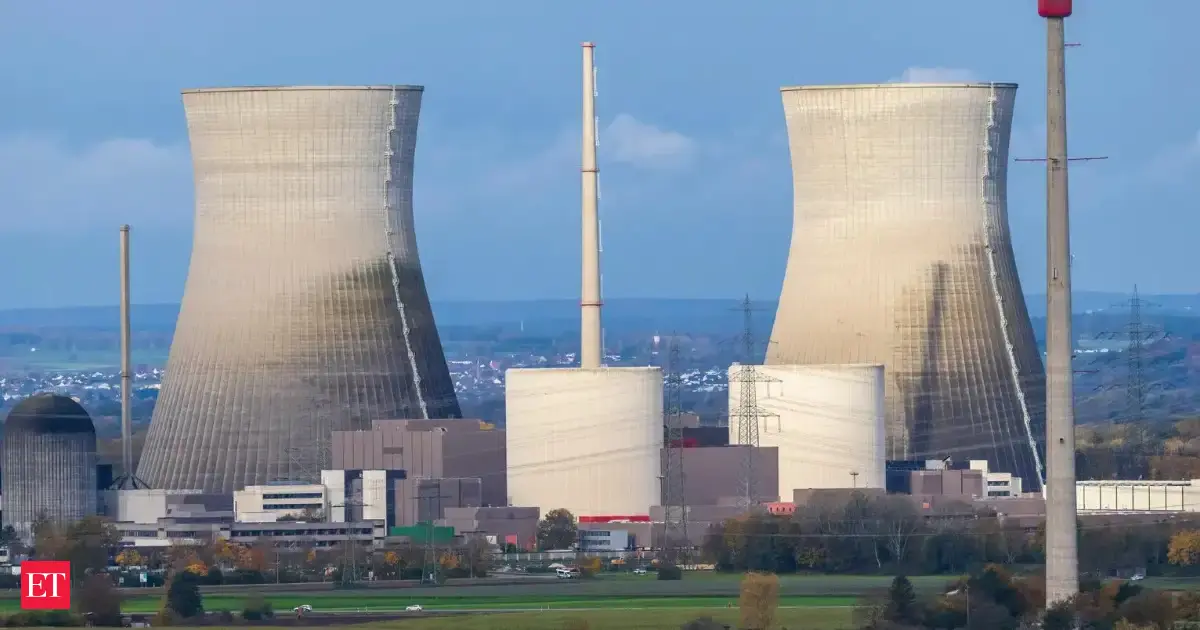
Naveen Jindal Group is discussing nuclear technology with global providers like EDF and Westinghouse. They are also exploring options with NPCIL for large module reactors. The conglomerate plans to develop eighteen gigawatts of nuclear power capacity. This initiative aims to contribute to India's ambitious nuclear energy targets. Discussions involve evaluating advanced reactor technologies for future deployment. View More
New Delhi: Naveen Jindal Group has initiated discussions with global nuclear technology providers including France-based EDF and Westinghouse of the US for its proposed nuclear power projects in India, a person in the know said. The Group is also in discussions with state-owned Nuclear Power Corporation of India ( NPCIL ) to explore possibilities of sourcing technology for future nuclear projects with large module reactors (LMRs) of 700 MW and above. The steel-to-ports conglomerate plans to develop around 18 GW of nuclear power capacity across multiple states with an estimated investment of Rs 2 lakh crore, contributing to the government's target of achieving 100 GW of nuclear power capacity by 2047. While evaluating sites across more than nine states, the Group has simultaneously initiated discussions with leading global nuclear technology providers. These include France's EDF, US-based Westinghouse and several other international technology companies, alongside NPCIL, to evaluate advanced reactor technologies for deployment in India, the person said. The discussions include EDF's 1,650 MW European Pressurised Reactors (EPRs), Westinghouse's 1,150 MW AP1000 reactors, NPCIL's indigenous 700 MW Pressurised Heavy Water Reactor (PHWR) technology, as well as other globally available reactor technologies under evaluation. Live Events The final technology mix will be selected after assessing safety, scalability, commercial viability and long-term operational performance, the person added. Naveen Jindal Group is among the few corporate houses to announce plans to invest in India's nuclear power sector following the legal amendments introduced by the government to facilitate greater private sector participation. Jindal Nuclear Power Private Limited , a wholly-owned subsidiary of Jindal Renewables, is evaluating potential sites in Gujarat, Odisha, Andhra Pradesh, Tamil Nadu, Jharkhand and Chhattisgarh, among other states. The proposed projects will deploy large module reactors of 700 MW and above. Tata Power and NTPC -- which is implementing nuclear projects through a joint venture with NPCIL in Rajasthan -- have also announced plans to develop nuclear power projects of varying capacities by 2047. .Pbanner{display:flex;justify-content:space-between;align-items:center;background-color:#ec1c40;margin-top:20px;padding:5px 10px;border-radius:4px;color:#fff;line-height:10px;width: 100%;box-sizing: border-box} .Pbannertext{display:flex;align-items:center;font-size:16px;font-weight:600;font-family:'Montserrat';} .Pbannertext img{height:20px;margin:0 6px} .Pbannerbutton a{display:flex;align-items:center;background-color:#fff;color:#ec1c40;text-decoration:none;font-weight:600;padding:4px 8px;border-radius:6px;font-size:15px;font-family:'Montserrat';} .Pbannerbutton img{height:20px;margin-right:6px} .Pbannerbutton a:hover{background-color:#f7f7f7} Add as a Reliable and Trusted News Source Add Now! (You can now subscribe to our Economic Times WhatsApp channel) (You can now subscribe to our Economic Times WhatsApp channel)

The update comes as analysts raise concerns about the prospect of global olive oil supplies swinging dramatically from one season to the next. View More
Jaen city and surrounding Olive groves and trees, Jaen is known as the Olive Oil capital producing around 25% of global supply and over half of Spain's olive oil production.Ucg | Universal Images Group | Getty Images Spain's Deoleo, the world's largest olive oil company, says a period of unprecedented volatility has unequivocally given way to more stable market conditions, citing an unlikely catalyst in helping to lift U.S. sales."The highly complex market cycle experienced between 2022 and 2024, which had a severe yet temporary impact on the industry, is now definitively behind us," Deoleo CEO Cristóbal Valdés told CNBC via email.Favorable rainfall trends across major producing nations, including Spain, have paved the way for a solid global yield for the upcoming harvest, Valdés said, consolidating a more robust and balanced global supply.The update comes as analysts raise concerns about the prospect of global olive oil supplies swinging dramatically from one season to the next, particularly as issues such as climate change, water scarcity and pest and disease pressures persist.Deoleo, the maker of household olive oil brands such as Bertolli and Carbonell, previously described the three-year window from 2022 to 2024 as one of the most challenging periods in the sector's history.Severe droughts and searing heat across vast swathes of southern Europe destroyed large parts of the olive oil harvest, culminating in a dizzying price rally that shocked industry veterans and consumers alike. Read more'Liquid gold': An olive oil shortage is fueling record prices and food insecurity fearsWorldâs largest olive oil producer says âliquid goldâ prices on track to halve from record levelsThirsty AI mega projects raise alarm in some of Europeâs driest regions Olive oil prices have since moderated, prompting an increasing number of American consumers to adopt what has long been a staple of a healthy Mediterranean diet into their daily routines."This supply stabilization provides greater predictability across the entire value chain and allows us to anticipate a more stable pricing environment. This, in turn, is driving a recovery in global household demand," Valdés said. Alongside Italy and Greece, Spain is one of the world's leading producers of the precious commodity and a global reference for prices. Extra virgin olive oil (EVOO) prices in Spain stood at about 3.9 euros ($4.47) per kilogram, according to the European Commission's latest weekly data, extending a steady downward trend since the start of the year. It is a far cry from Jan. 2024, when wholesale EVOO prices soared to a record high of 9.3 euros per kilogram. Squeeze bottles Notably, Deoleo's Valdés said that while the firm's sales volumes growth has improved across key markets, the number of olive oil purchasing households in the U.S. has also consistently increased across all income brackets. Perhaps surprisingly, the company credited a packaging redesign with helping to boost U.S. sales, underlining the importance of consumer-focused innovation as Deoleo seeks to expand its market share in the country. Bottles of olive oil on a conveyor on the production line at the Deoleo SA plant Cordoba, Spain, on Friday, Nov. 11, 2022.Bloomberg | Bloomberg | Getty Images "Regarding emerging trends, I believe the primary market driver is innovation tailored to modern culinary habits, especially for younger consumers and those discovering the benefits of olive oil for the first time," Valdés said. "A clear reflection of this is the rise of functional, value-added packaging; in fact, squeeze formats are already driving 40% of the entire category's growth in the country," he added, referring to the company's Bertolli "Dress and Drizz" bottle. Choose CNBC as your preferred source on Google and never miss a moment from the most trusted name in business news.

Reliance Industries increased crude oil sourcing from Russia and Latin America. This strategic move reduced dependence on Arabian Gulf crudes during volatile markets. The company also completed planned turnarounds of key refining units. Global crude markets faced disruptions and supply chain issues. Brent crude prices averaged over one hundred dollars a barrel. View More
Mukesh Ambani-owned Reliance Industries Ltd ( RIL ) increased crude oil sourcing from Russia and Latin America during the June quarter to reduce its dependence on Arabian Gulf (AG) crudes, as the company navigated one of the most volatile periods for global energy markets amid the closure of the Strait of Hormuz and supply chain disruptions. The company said it "diversified crude basket, with higher sourcing from Russia and Latin America which helped reduce dependence on AG crudes," as part of its operational strategy during the quarter. It also completed the planned turnaround of its crude distillation unit (CDU) and coker unit, while stretching operations at secondary units to minimise the impact of lower throughput. Also read: Reliance Jio's ARPU rises to Rs 215.6 as subscriber base crosses 533 million in Q1FY27 The shift came as global crude markets were upended by the Middle East conflict. RIL said Brent crude averaged $104.5 a barrel during the quarter, up $36.7 a barrel year-on-year, following the closure of the Strait of Hormuz, which disrupted an estimated 13 million barrels per day of crude supplies and tightened global oil markets. Despite the challenging backdrop, the company's oil-to-chemicals (O2C) business reported a 17.2% year-on-year increase in EBITDA to Rs 17,010 crore, supported by stronger transportation fuel cracks and downstream petrochemical margins. The company said performance also benefited from crude basket diversification, efficient product placement in deficit markets and favourable ethane cracking economics. Live Events However, RIL cautioned that "multiple headwinds curtailed margin capture including high crude premiums on physical barrels along with higher freight and insurance costs." It added that it diverted propane and butane to boost LPG production and held domestic retail fuel prices steady to protect consumers, resulting in under-recoveries in fuel retailing. The reintroduction of the Special Additional Excise Duty (SAED) on diesel, petrol and aviation turbine fuel also weighed on domestic margins. Also read: RIL Q1 Results: Profit falls 22% YoY to Rs 20,946 crore; revenue up 25% "The O2C business delivered strong performance during the quarter, supported by all-time high middle distillate cracks and improved downstream petrochemical deltas. This was achieved despite a challenging global energy market backdrop with disrupted supply chains," said Chairman and Managing Director Mukesh Ambani. He added that the company navigated the environment with operational agility while ensuring adequate availability of essential fuels and materials in the domestic market. At the group level, Reliance Industries reported O2C EBITDA of Rs 17,010 crore, while consolidated revenue rose 24.5% year-on-year to Rs 3.4 lakh crore in the June quarter. .Pbanner{display:flex;justify-content:space-between;align-items:center;background-color:#ec1c40;margin-top:20px;padding:5px 10px;border-radius:4px;color:#fff;line-height:10px;width: 100%;box-sizing: border-box} .Pbannertext{display:flex;align-items:center;font-size:16px;font-weight:600;font-family:'Montserrat';} .Pbannertext img{height:20px;margin:0 6px} .Pbannerbutton a{display:flex;align-items:center;background-color:#fff;color:#ec1c40;text-decoration:none;font-weight:600;padding:4px 8px;border-radius:6px;font-size:15px;font-family:'Montserrat';} .Pbannerbutton img{height:20px;margin-right:6px} .Pbannerbutton a:hover{background-color:#f7f7f7} Add as a Reliable and Trusted News Source Add Now! (You can now subscribe to our Economic Times WhatsApp channel) (You can now subscribe to our Economic Times WhatsApp channel)

BHEL's first Q1 profit in seven years, stronger execution and a ?2.6 trillion order book have fuelled a sharp turnaround. But rising competition and a 45x valuation could test the rally. View More


BHEL share price rose almost 3% in morning trade on the BSE on Friday, 17 July, to its 52-week high of ?446.75. As per BSE data, BHEL shares have surged nearly 65% in the last six months compared to a 7% fall in the equity benchmark Sensex in the same period. View More

Ajit Mishra of Religare Broking recommends a stock-specific strategy, highlighting Bharat Heavy Electricals, Central Depository Services, and Divi's Laboratories as short-term buy candidates, with target prices and stop-loss levels. View More