
Latest Sectors News

Ten days ahead of the next Federal Reserve meeting, the Trump administration looks to be in a full-court press to halt a rate hike in its tracks. View More
President Donald Trump speaks with the new chairman of the Federal Reserve, Kevin Warsh, after a swearing-in ceremony in the East Room of the White House, in Washington, May 22, 2026.Anna Moneymaker | Getty Images Ten days ahead of a meeting in which the Federal Reserve will likely consider raising interest rates, the Trump administration looks to be in a full-court press to halt the hike in its tracks.In the past week, the president, vice president, Treasury secretary and one of the president's senior economic counselors have all urged the Fed not to raise rates and, in some cases, to cut them â an unusually broad public pressure campaign even by the standards of Trump's long-running criticism of the central bank.While President Donald Trump has avoided directly criticizing his new Fed chairman Kevin Warsh, as he did former chair Jay Powell, he escalated the pressure Friday by threatening to halt trade with countries that run trade surpluses with the U.S. unless the Fed cuts interest rates. Trump had never before directly threatened tariffs if the Fed didn't lower rates. The president's post was followed by an interview that senior economic counselor Peter Navarro gave to former Trump advisor Steve Bannon on Friday in which he warned that a rate hike would be "careless" and "would hit precisely the sectors America needs to prosper most." He called the members of the rate-setting Federal Open Market Committee "clowns" and said Warsh is trying to "do the right thing." Earlier in the week, Vice President JD Vance said, "We believe that the Fed should be lowering interest rates." He added, "We're doing a lot of things to try to keep those interest rates down, but it would be nice to have some help from the Federal Reserve." And Treasury Secretary Scott Bessent, in a CNBC interview, noted that the Fed typically doesn't raise rates during a supply shock until there are second- or third-order inflationary effects. watch nowVIDEO13:2113:21Watch CNBC's full interview with Treasury Secretary Scott BessentSquawk on the Street The administration's pressure comes at a difficult time for Warsh. Markets are barely pricing in a rate hike for the Sept. 15-16 meeting, at about 60% probability, bolstered somewhat by a strong jobs report Friday. The meeting comes just two months before the November midterm elections, in which polls show the administration faces widespread voter dissatisfaction with higher prices and interest rates. But questions also remain about the effect the Trump administration's pressure campaign will have on Warsh. The Wall Street Journal reported last month that Trump talked to Warsh repeatedly, a report publicly backed by several of his aides. However, the president himself denied it, saying he had spoken only once to Warsh while in office.Warsh himself has said the president has had no impact on his decisions and, in July congressional testimony, cited the Fed holding rates steady and not cutting as evidence of the central bank's independence. At the same time, Warsh has said that the president and other politicians have a right to comment on Fed policy. In May 2019, during Trump's first term, Vice President Mike Pence, Treasury Secretary Steve Mnuchin and economic advisor Larry Kudlow all weighed in on the need for the Fed to consider cutting rates. The Fed did not immediately respond to that pressure but did end up cutting rates two months later. The administration's argument was similar: Growth itself does not cause inflation, and additions to the supply side of the economy through tax cuts and strong capital investment expand the economy's capacity to grow without causing inflation. On Friday, Trump said in a post on Truth Social that because the economy is growing so much, the U.S. should have the lowest interest rates in the world.Administration officials have emphasized the recent three-month annualized rate of the cor Consumer Price Index (CPI) running at 1.6%. That compares with the three-month annualized rate of the core Personal Consumption Expenditures (PCE) price index, the Fed's preferred indicator, at just over 3%.But several Fed officials have expressed concern that inflation has run substantially above the Fed's 2% target for five years, and that there are signs of inflation beyond Trump's tariffs and rising energy costs due to the U.S. war with Iran. Three dissented â Beth Hammack, Neel Kashkari and Lorie Logan â in favor of a quarter-point hike at the July meeting, where interest rates were left unchanged.Warsh, in his speech in Jackson Hole, said the Fed's focus needs to be squarely on inflation, noting that 54% of the 199 components in the PCE price measure had risen more than 3% over the previous 12 months. By rejecting the connection between growth and inflation, the administration is challenging a central concept in economics: that an economy growing beyond its productive capacity risks generating inflation. The most famous of these ideas, the Phillips Curve, sees tight labor markets and rising wages as the major conduit for inflation. That's likely why markets raised the probability of a Fed rate hike after Friday's strong jobs report. Yet wages were well contained in the report: Average hourly earnings rose 0.3% in August and 3.1% from a year earlier, while the unemployment rate remained at 4.1%. watch nowVIDEO6:3606:36U.S. payrolls rose 162,000 in August, much more than expected; unemployment rate at 4.1%Squawk Box The administration's argument that increasing the supply side of the economy raises capacity and offsets inflationary pressures could be accurate, but it has a timing problem. The flood of investment into artificial intelligence is projected to eventually increase productivity. But current data shows demand for the equipment needed to build out AI infrastructure is raising prices.Markets will be focused on the Friday CPI report, which Fed officials have said will be a critical gauge of whether inflation is easing or still accelerating â and it could decide whether the Fed hikes or holds. No FOMC member has recently discussed rate cuts publicly. Choose CNBC as your preferred source on Google and never miss a moment from the most trusted name in business news.
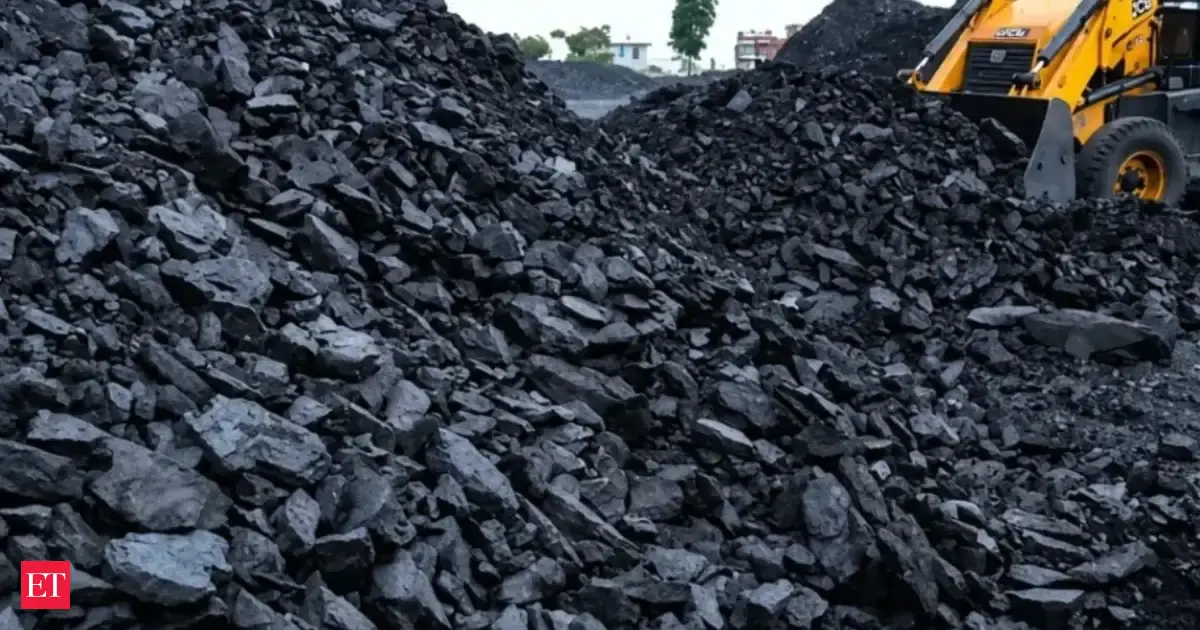
Talcher Fertilisers and NTPC have applied for the innovative coal gasification scheme launched by the government. This initiative focuses on transforming domestic coal into products of greater value, thus supporting India's strategy to lessen dependency on imports. The initial application window remains open until September 7, and more submissions are anticipated as the deadline nears for this significant project. View More
The coal ministry on Saturday said Talcher Fertilisers Ltd and NTPC Ltd have informed that they have submitted applications under the government's coal and lignite gasification scheme. The first application window under the scheme is open until September 7. The ministry said it was also in discussions with other prospective applicants at different stages of project preparation and are in the process of finalising their proposals. The scheme for promotion of surface coal and lignite gasification projects was approved by the Cabinet on May 13 with a total financial outlay of ₹37,500 crore. It is aimed to promote the conversion of domestic coal and lignite into higher-value products, including syngas, methanol, ammonia and urea. The request for proposals under the scheme was issued on July 7. The government expects more applications as the deadline approaches. Applications will be invited through rolling rounds. Once one application window closes, the next round will open from the following day and remain open for two months, allowing companies additional time to prepare projects. The scheme is part of the government's broader effort to expand coal gasification in India and cut the dependence on imports of products that can potentially be produced from domestic coal and lignite. Gasification converts coal into syngas, which can then be used to produce chemicals, fertilisers, fuels and other industrial products. .Pbanner{display:flex;justify-content:space-between;align-items:center;background-color:#ec1c40;margin-top:20px;padding:5px 10px;border-radius:4px;color:#fff;line-height:10px;width: 100%;box-sizing: border-box} .Pbannertext{display:flex;align-items:center;font-size:16px;font-weight:600;font-family:'Montserrat';} .Pbannertext img{height:20px;margin:0 6px} .Pbannerbutton a{display:flex;align-items:center;background-color:#fff;color:#ec1c40;text-decoration:none;font-weight:600;padding:4px 8px;border-radius:6px;font-size:15px;font-family:'Montserrat';} .Pbannerbutton img{height:20px;margin-right:6px} .Pbannerbutton a:hover{background-color:#f7f7f7} Add as a Reliable and Trusted News Source Add Now! (You can now subscribe to our Economic Times WhatsApp channel) (You can now subscribe to our Economic Times WhatsApp channel)

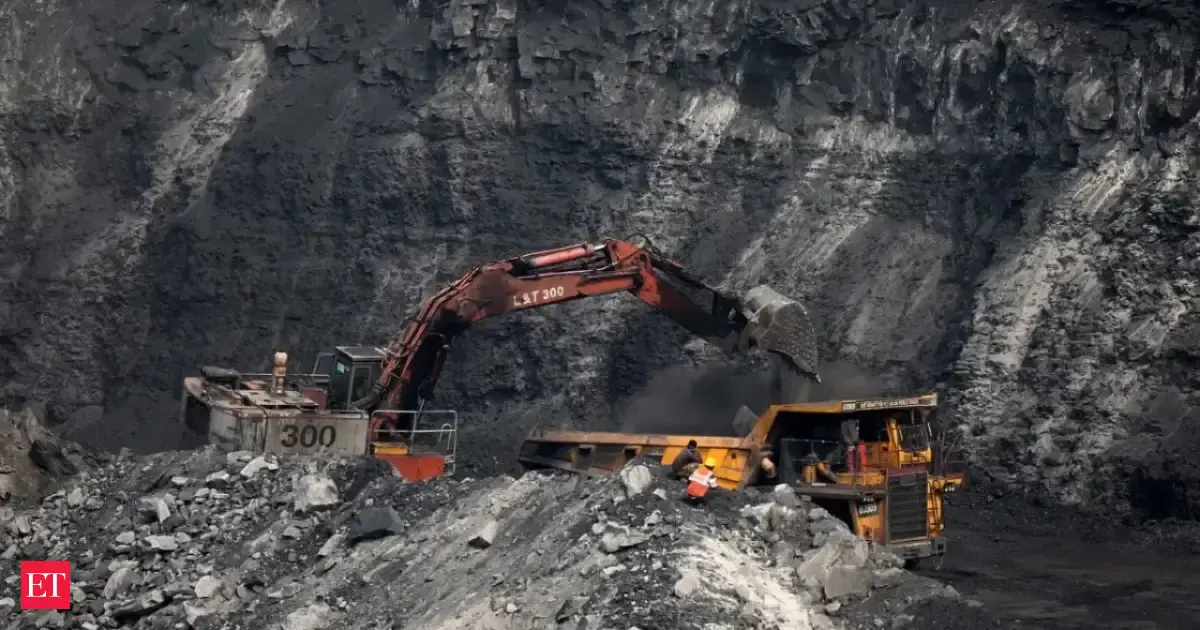
Power demand in the U.S. is rising. Fervo Energy bets that its project in Utah will prove that enhanced geothermal can be part of the power mix going forward. View More
In this articleFRVOFollow your favorite stocksCREATE FREE ACCOUNT A drill rig stands at a Fervo Energy geothermal site under construction near Milford, Utah, Nov. 26, 2023.Ellen Schmidt | AP MILFORD, Utah â Deep in the Utah desert, down miles of gravel roads and hours from a major city, Fervo Energy bets it can economically harness heat from the Earth's core for power, potentially unlocking dozens of gigawatts of baseload, emissions-free electricity at a time when U.S. power demand is meaningfully growing for the first time in decades.Geothermal power is not new. Traditionally, it required specific geological formations, vastly limiting its potential. Now, Fervo aims to prove that, by utilizing the same drilling and hydraulic fracturing techniques developed by the oil and gas industry, what's known as enhanced geothermal can become a key power source for the U.S. The company's Cape Station project in Milford is on track to send power to the grid next month, which would make it the first enhanced geothermal system in the U.S. to reach commercial operation. After an initial public offering in May and a new offtake agreement with Google, Fervo must prove it can provide cost-competitive enhanced geothermal at scale. watch nowVIDEO11:4111:41Inside Fervo Energy's enhanced geothermal project in Utah A transformation in the demand for powerThe company's roots precede the data center power boom. CEO Tim Latimer began his career as a drilling engineer in South Texas, before founding the company in 2017 with Chief Technology Officer Jack Norbeck. As Latimer tells it, when they first tried to raise venture capital funds, a common response was, "'Why would we invest in a power generation company? The electric grid's not growing.'" Oil and gas companies also dismissed Fervo, with the prevailing assumption being that the kind of drilling the company was looking to do â hotter wells through harder granite â wouldn't work. Now, less than a decade later, that narrative has flipped."It's a total transformation from 10 years ago, when people were questioning even the need for more new electricity," Latimer told CNBC. "This is a once-in-a-generation boom moment where hyperscalers, utilities and other customers need [power] now, and it's our power that will be an important part of the electric grid."Recognizing the importance of prime acreage, Latimer, in Fervo's early days, started acquiring geothermal rights on land across the Western U.S., amassing a portfolio of nearly 600,000 acres. The company acquired the rights at an average price of $4 per acre, a move that now seems prescient: The same land can now go for north of $400 per acre. Fervo's land grab included acreage across Beaver County, Utah, which is also where the Department of Energy set out to prove the case for enhanced geothermal via its Frontier Observatory for Research in Geothermal Energy, or Forge, amassing data aimed at helping private players commercialize enhanced geothermal system technology. Cape Station, Fervo's flagship project, sits adjacent to Forge. watch nowVIDEO3:0103:01Fervo looking to launch first commercially-operated enhanced geothermal energy center in the U.S.Closing Bell: Overtime The goal of emissions-free powerOn a tour of Cape Station, Latimer pointed out many of the same things you might see in the Permian Basin, down to drill rigs provided by Helmerich & Payne. The difference is that in Utah, the goal is emissions-free power.While traditional geothermal projects required specific reservoirs, in enhanced geothermal systems companies are creating their own reservoirs.Fervo drills a pair of wells more than 2 miles deep, including a lateral well that can extend for more than a mile horizontally. It creates fractures in the surrounding rock before sending water down the injection well, where it is heated by temperatures above 400 degrees Fahrenheit. The water then returns to the surface via a separate production well, before being sent through a heat exchanger and ultimately producing electricity. The geothermal brine is then cooled by rows of industrial fans that sit atop Fervo's power plant, before it's reinjected into the ground in a closed-loop system. From the moment the non-potable water hits the surface to when it's reinjected into the ground, takes mere minutes.Latimer said Fervo's drilling is a step beyond traditional shale methods, due in part to three challenges: harder rock, hotter temperatures and longer well lives. As a result, the company has developed innovative techniques around drill motors, bit designs â the company uses a polycrystalline diamond compact drill bit â and drilling fluids. Those innovations have led to what he called a "step change in performance for geothermal drilling." watch nowVIDEO1:4201:42Fervo bets big on geothermal energyMorning Call Latimer said Fervo's mission from day one was to push the edge of science and technology â the latter behind the curve, in his view, in the traditional geothermal industry. The company constantly collects data to optimize its operation, since longer drilling times translate to higher costs. In the driller's cabin atop the rig, screens display real-time metrics sent back from underground sensors â data that's simultaneously being monitored from company headquarters in Houston. An on-site geologist analyzes the changing properties of the granite coming out of the ground, all with the goal of maximizing optimal drilling conditions.Cost reductionsFervo has brought down its costs as it drills more wells. But geothermal remains more expensive than other power sources â even with federal tax credits that were preserved for it under President Donald Trump's One Big Beautiful Bill Act.The company's first wells at its pilot facility in Nevada took 70 days to drill to a measured depth of 11,220 feet. At Cape Station Phase I, the average dropped to 21 days and 14,483 feet of measured depth, costing about $7,000 per kW. Now Cape Station Phase II is targeted for $5,500 per kW and the deepest wells yet at 19,448 feet. Along the way, temperatures have grown hotter and pipes have gotten larger, both of which increase the electricity generated by each well.Still, costs need to fall further if geothermal has a shot at being competitive with other forms of power generation. Long term, Latimer said, the company can produce at $3,000 per kW. "[B]ecause we can drill consistently⦠we've removed a lot of the uncertainty and the exploration risk that has plagued geothermal for years," he said. "[We] put geothermal on the kind of learning curve that has yielded dramatic cost reductions in other industries ⦠We're expecting dramatic cost reductions in both the drilling side of the business and the power plant side of the business through that modularity and standardization." watch nowVIDEO4:4604:46Fervo's big geothermal betSquawk on the Street Fervo's costs are split between the subsurface drilling and the power plants that sit adjacent to the wells, where expenses are also coming down. Pieces for the first power plant â 33 MW â were delivered individually. Parts and designs were standardized for the Phase II plants, which are 50 MW and on track for a more than 30% reduction in construction time. Fervo's long-term goal is to be able to put these plants everywhere, including behind-the-meter for data centers. Behind-the-meter refers to having energy production and storage systems on the customer's property. "We are developing a model where we are both going to be pursuing at the right locations transmission and grid-connected projects, as well as customers who want faster delivery. Behind-the-meter is a great opportunity there," Latimer said.Working toward a sustainable gridThe agreement with Google brings Fervo's total contracted power to about 1 GW, and Latimer said the company is in advanced commercial negotiations with several potential buyers. Southern California Edison, Shell Energy and NV Energy will also buy the company's power. watch nowVIDEO3:5303:53Fervo prepares its first enhanced geothermal projectPower Lunch The company hasn't disclosed the terms of its power purchase agreements, but hyperscalers have been willing to pay above-market rates for power, thanks in part to climate goals. Fervo also said its faster timelines set it apart from other sources of generation. The company relies on existing supply chains that have been established by the oil and gas industry, while the Organic Rankine Cycle turbines it uses in its power plant don't face the same backlogs as seen in the gas turbine market, where companies like GE Vernova have said they're sold out for years to come.Fervo went public in May in a hotly anticipated IPO, raising nearly $2 billion in an oversubscribed offering. The stock hit a record high on May 15, but shares are down about 57% since.Fervo said it plans to use the capital from its IPO for expansion."We have project sites throughout the entire Western United States. We now have the capital to pursue it, and we want to repeat these GeoBlocks all over the West and then all over the world until we realize a more reliable, affordable, and sustainable electric grid," Latimer said. Choose CNBC as your preferred source on Google and never miss a moment from the most trusted name in business news.

The government expects nearly 25 projects to attract substantial investment and create around 50,000 direct and indirect employment opportunities. View More
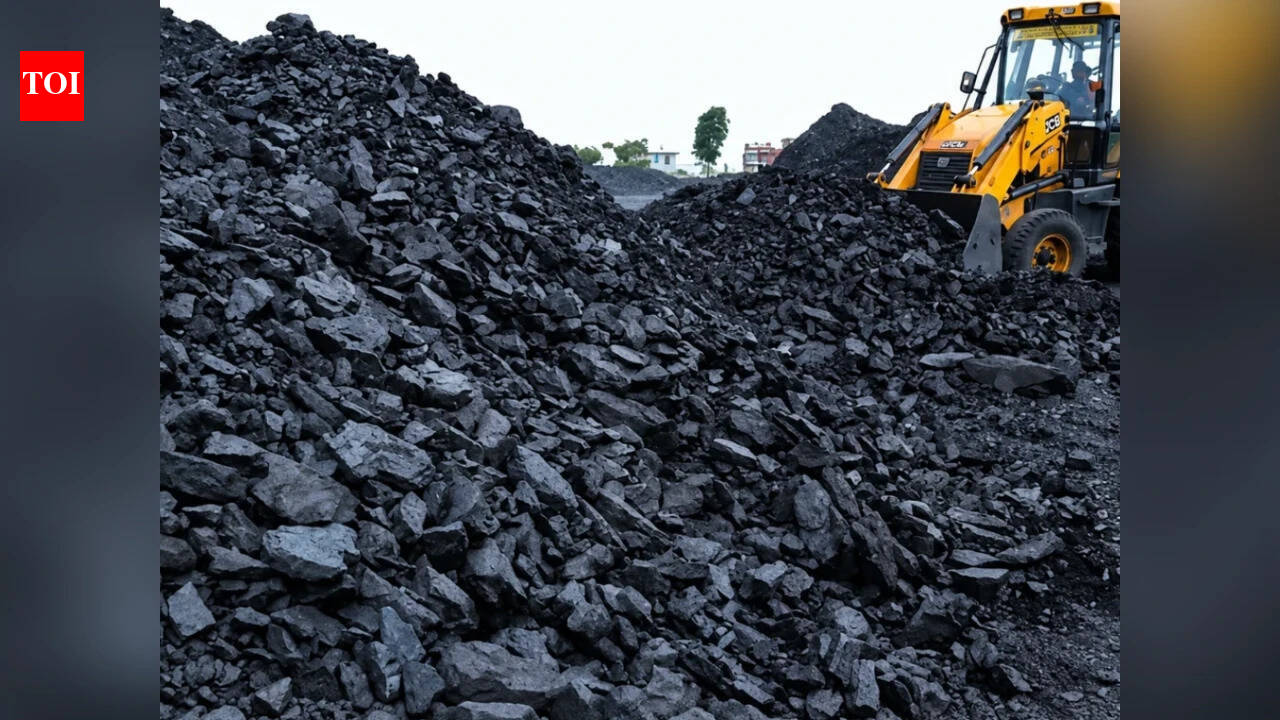
The coal ministry has denied reports of no applications for its coal gasification incentive scheme. Talcher Fertilisers Limited and NTPC Limited have submitted applications, contradicting earlier claims. The application window remains open until September 7, with more expected soon. This scheme aims to reduce import dependence and boost domestic production. It anticipates significant investment and job creation across numerous projects. View More
The coal ministry has pushed back against reports claiming its Rs 37,500 crore coal gasification incentive scheme has failed to attract any applications, saying such reports are premature and do not reflect the actual status of the scheme. In a statement issued on September 5, the ministry said Talcher Fertilisers Limited (TFL) and NTPC Limited have already submitted their applications through the online portal under the Scheme for Promotion of Surface Coal/Lignite Gasification Projects. This, the ministry said, contradicts claims that the scheme has received "no takers." Also read: Government's Rs 37,500-cr coal gasification scheme fails to attract bids The ministry also pointed out that the first-round application window closes only on September 7, and that the number of applications received cannot be conclusively assessed while the window remains open. Scheme background Live Events The scheme was approved by the Union Cabinet on May 13, 2026, with a total financial outlay of ₹37,500 crore. It aims to accelerate the development of coal and lignite gasification in the country by promoting the conversion of domestic coal and lignite into higher-value products such as syngas, methanol, ammonia and urea, reducing dependence on imported feedstock. Following the scheme's approval, the ministry conducted outreach through roadshows in New Delhi on May 28, Hyderabad on June 11, and Mumbai on June 18, bringing together state governments, public and private companies, technology providers, investors and financial institutions. The Request for Proposal (RFP) under the scheme was issued on July 7, after which the online application portal was launched. A pre-application conference was held on July 20 to address queries from prospective applicants on eligibility and process-related matters. The ministry noted that given the scale of the projects involved, applicants require substantial preparatory work, including pre-feasibility reports, technology assessments, feedstock arrangements and project economics evaluations, and said additional applications are expected as the deadline nears. Rolling application rounds The scheme has been structured with rolling application rounds. Once one round's window closes, the next round opens the following day and remains open for two months, allowing companies that need more preparation time to participate in later rounds. Also read: India steps up coal supplies to power plants amid rising demand and falling stocks The ministry said it expects the scheme to catalyse investments of ₹2.5 lakh crore to ₹3 lakh crore across nearly 25 projects and generate around 50,000 direct and indirect jobs. It is also expected to contribute to the government's target of achieving 100 million tonnes of coal gasification capacity by 2030. The current scheme builds on the National Coal Gasification Mission launched in 2021 and an earlier ₹8,500 crore scheme approved in January 2024, under which eight projects worth ₹6,233 crore are currently under implementation. India's import bill for key substitutable products such as LNG, urea, ammonium nitrate, ammonia, coking coal and methanol stood at approximately ₹2.77 lakh crore in FY25, a dependence the government has flagged as a vulnerability amid ongoing geopolitical tensions in West Asia. .Pbanner{display:flex;justify-content:space-between;align-items:center;background-color:#ec1c40;margin-top:20px;padding:5px 10px;border-radius:4px;color:#fff;line-height:10px;width: 100%;box-sizing: border-box} .Pbannertext{display:flex;align-items:center;font-size:16px;font-weight:600;font-family:'Montserrat';} .Pbannertext img{height:20px;margin:0 6px} .Pbannerbutton a{display:flex;align-items:center;background-color:#fff;color:#ec1c40;text-decoration:none;font-weight:600;padding:4px 8px;border-radius:6px;font-size:15px;font-family:'Montserrat';} .Pbannerbutton img{height:20px;margin-right:6px} .Pbannerbutton a:hover{background-color:#f7f7f7} Add as a Reliable and Trusted News Source Add Now! (You can now subscribe to our Economic Times WhatsApp channel) (You can now subscribe to our Economic Times WhatsApp channel)
SEBI has approved IPOs for Cosmic PV Power, Monomark Engineering, and RKB Global, alongside the National Stock Exchange's major public offer. These approvals highlight a significant revival in India’s IPO market during the second half of 2026. View More
Sebi has cleared three IPO s of Cosmic PV Power , Monomark Engineering and RKB Global , along with the long-awaited public offer plan of the National Stock Exchange . Sebi's issuance of observations is a key regulatory step that allows a company to move ahead with its public issue process. Cosmic PV Power IPO Cosmic PV Power has received Sebi observations for its proposed Rs 640 crore IPO. The company had filed its draft papers with the regulator in March this year. The issue comprises a fresh issue of shares worth up to Rs 540 crore and an offer for sale of up to Rs 100 crore by selling shareholders. The company plans to use the fresh issue proceeds mainly for setting up a planned manufacturing facility in Narmadapuram, Madhya Pradesh, and for general corporate purposes. Cosmic PV Power manufactures solar photovoltaic modules and is among the fastest-growing solar PV module makers in India, based on revenue CAGR of 125.8% between FY23 and FY25, according to the Care Report cited by the company. It operates across three verticals: solar PV module manufacturing, EPC services and aluminium frame manufacturing. Also Read: Mega NSE IPO coming as Sebi approves Rs 30,000 crore public offer Live Events The company is also certified under the Ministry of New and Renewable Energy’s Approved List of Module Manufacturers List-I, with an enlisted capacity of 1.30 GW as of September 30, 2025. This allows it to supply solar modules for government and government-assisted renewable energy projects where ALMM-I sourcing is required. Monomark Engineering IPO Monomark Engineering has also received Sebi clearance for its proposed public issue. The IPO will be a fresh issue of 2.7 crore shares. Monomark Engineering is engaged in industrial operations and maintenance services, metal fabrication solutions and industrial project execution. It serves industrial and infrastructure clients across sectors such as metals, cement, ports, engineering and original equipment manufacturers. RKB Global IPO RKB Global has also received Sebi observations for its IPO. The proposed offer comprises up to 1.46 crore equity shares of face value Rs 10 each. This includes a fresh issue of up to 1.26 crore shares and an offer for sale of up to 20.2 lakh shares by selling shareholders. The latest approvals come at a time when India’s IPO market is seeing a sharp revival after a slow first half of 2026. The second half has seen issuers returning to the market as investor sentiment improved and recent listings delivered stronger returns. (Disclaimer: Recommendations, suggestions, views and opinions given by the experts are their own. These do not represent the views of Economic Times) .Pbanner{display:flex;justify-content:space-between;align-items:center;background-color:#ec1c40;margin-top:20px;padding:5px 10px;border-radius:4px;color:#fff;line-height:10px;width: 100%;box-sizing: border-box} .Pbannertext{display:flex;align-items:center;font-size:16px;font-weight:600;font-family:'Montserrat';} .Pbannertext img{height:20px;margin:0 6px} .Pbannerbutton a{display:flex;align-items:center;background-color:#fff;color:#ec1c40;text-decoration:none;font-weight:600;padding:4px 8px;border-radius:6px;font-size:15px;font-family:'Montserrat';} .Pbannerbutton img{height:20px;margin-right:6px} .Pbannerbutton a:hover{background-color:#f7f7f7} Add as a Reliable and Trusted News Source Add Now! (You can now subscribe to our ETMarkets WhatsApp channel) (You can now subscribe to our ETMarkets WhatsApp channel)
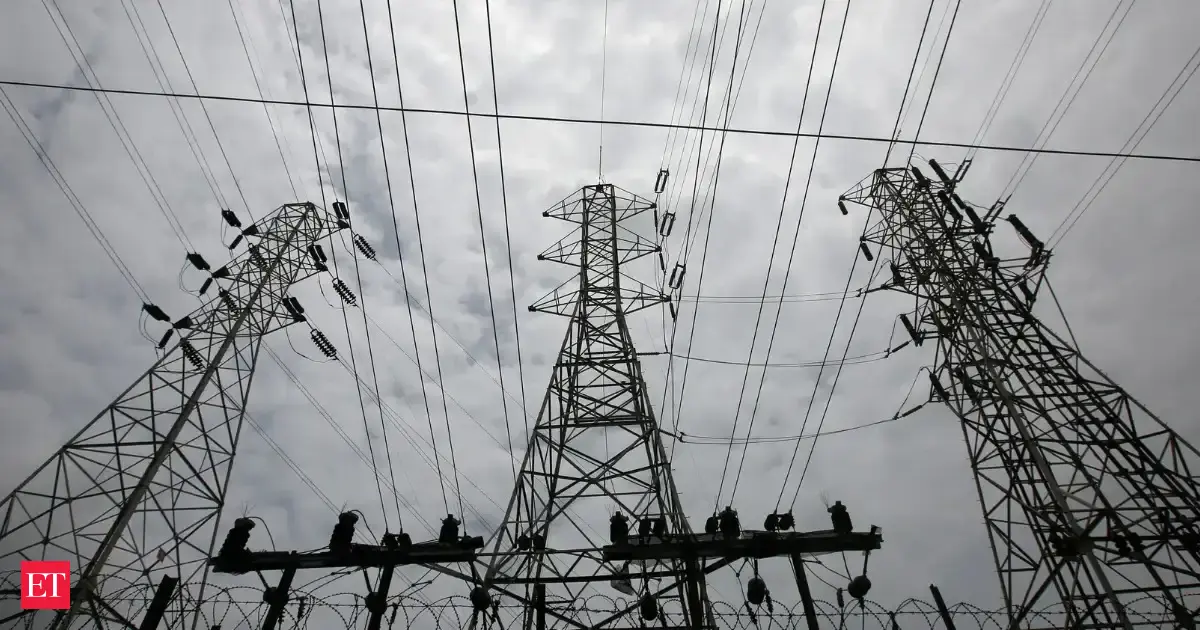
CG Power and Industrial Solutions announced the first power transformer rollout from its new Sehore facility. This facility is India's largest single-location power transformer manufacturing plant. It can produce thirty-five power transformers monthly, ranging from 220 kV to 1,200 kV. The new plant will create over two thousand direct and indirect jobs in Sehore. Madhya Pradesh's Chief Minister attended the event and spoke about development. View More
New Delhi: CG Power and Industrial Solutions on Friday said announced the rollout of the first power transformer from its new greenfield facility at Sehore , Madhya Pradesh . Spread over 50 acres, the facility is India's largest single-location power transformer manufacturing facility , the company said in an exchange filing. It has a capacity to roll out 35 power transformers every month, ranging from 220 kV to 1,200 kV class. Also Read: JSW Energy crosses 15 GW capacity, renewables account for 60% Madhya Pradesh Chief Minister Mohan Yadav , who was the Chief Guest at the event, said the facility will create over 2,000 direct and indirect employment in Sehore. "Our government will continue to ensure that every investment proposal signed in Madhya Pradesh becomes a working factory on the ground and continues to benefit the people of Madhya Pradesh," he said. Live Events Also Read: Share of electricity in India's overall energy mix to reach 45-50 pc by 2047: Official .Pbanner{display:flex;justify-content:space-between;align-items:center;background-color:#ec1c40;margin-top:20px;padding:5px 10px;border-radius:4px;color:#fff;line-height:10px;width: 100%;box-sizing: border-box} .Pbannertext{display:flex;align-items:center;font-size:16px;font-weight:600;font-family:'Montserrat';} .Pbannertext img{height:20px;margin:0 6px} .Pbannerbutton a{display:flex;align-items:center;background-color:#fff;color:#ec1c40;text-decoration:none;font-weight:600;padding:4px 8px;border-radius:6px;font-size:15px;font-family:'Montserrat';} .Pbannerbutton img{height:20px;margin-right:6px} .Pbannerbutton a:hover{background-color:#f7f7f7} Add as a Reliable and Trusted News Source Add Now! (You can now subscribe to our Economic Times WhatsApp channel) (You can now subscribe to our Economic Times WhatsApp channel)

Ahead of Janmashtami celebrations, Noida traffic police issued a traffic advisory, announcing route restrictions and diversions around ISKCON Temple and Sanatan Dharam Temple. Several roads will be affected, while emergency vehicles will be allowed to pass. View More
