
Latest Sectors News

A sustainable market depends on consumers having enough purchasing power to buy the goods and services businesses produce View More

Amid market volatility, Sumeet Bagadia highlights five stocks to watch—Kaynes Technology, GESHIP, NTPC Green Energy, Eternal, and AAVAS—for bullish signals. Each shows improving technical setups and performance patterns, suggesting further upside potential if key risk levels are maintained. View More

Triveni Turbine said that the credit rating agency ICRA has reaffirmed the company's long-term rating at '[ICRA] AA+' with 'stable' outlook. View More

Growth must translate into better jobs, higher wages and greater economic security for ordinary Indians, CEA Nageswaran says View More

The termination is due to the contractor’s failure to meet its contractual obligations and achieve the required project progress View More
NTPC Ltd has terminated a Rs 413.37 crore contract awarded to GR Infraprojects Ltd (GRIL) for a 400 MWh Battery Energy Storage System (BESS) project at its Mouda Super Thermal Power Station in Maharashtra, citing failure to meet contractual obligations and required project progress. View More
New Delhi: NTPC Ltd has terminated a Rs 413.37 crore contract awarded to GR Infraprojects Ltd ( GRIL ) for a 400 MWh Battery Energy Storage System (BESS) project at its Mouda Super Thermal Power Station in Maharashtra, citing failure to meet contractual obligations and required project progress. According to a release by the company, the contract, awarded in March 2026, was scheduled for completion within 15 months. However, the project faced significant delays in critical activities, and GRIL failed to take the required corrective measures after NTPC issued a contractual notice, the company said in a statement. Also read: Mitsubishi moves to exit NTPC project Following the termination, NTPC has encashed available securities amounting to approximately Rs 91 crore in line with the contractual provisions. NTPC said it has already initiated the process to re-tender the project at the risk and cost of GRIL, with measures being taken on priority to facilitate its early re-award and timely implementation. Live Events The Mouda BESS project is intended to strengthen grid flexibility and support the integration of renewable energy, making timely implementation important for NTPC's broader storage deployment plans. The company said the project is part of its wider efforts to deploy battery energy storage alongside its conventional generation assets. NTPC has been pursuing BESS projects across multiple locations as energy storage assumes a larger role in balancing an increasingly renewable-heavy power system. The termination comes after the project failed to meet the required progress despite the contractual notice seeking immediate remedial action. NTPC said the next focus would be on re-awarding the project and ensuring its timely execution. The company had awarded the project for a total contract value of Rs 413.37 crore in March, with the 400 MWh system planned at the Mouda Super Thermal Power Station. Going ahead, NTPC said it is taking necessary measures to facilitate the early re-award and timely implementation of the BESS project, while the project remains part of its broader effort to expand battery storage alongside its conventional power generation assets. .Pbanner{display:flex;justify-content:space-between;align-items:center;background-color:#ec1c40;margin-top:20px;padding:5px 10px;border-radius:4px;color:#fff;line-height:10px;width: 100%;box-sizing: border-box} .Pbannertext{display:flex;align-items:center;font-size:16px;font-weight:600;font-family:'Montserrat';} .Pbannertext img{height:20px;margin:0 6px} .Pbannerbutton a{display:flex;align-items:center;background-color:#fff;color:#ec1c40;text-decoration:none;font-weight:600;padding:4px 8px;border-radius:6px;font-size:15px;font-family:'Montserrat';} .Pbannerbutton img{height:20px;margin-right:6px} .Pbannerbutton a:hover{background-color:#f7f7f7} Add as a Reliable and Trusted News Source Add Now! (You can now subscribe to our Economic Times WhatsApp channel) (You can now subscribe to our Economic Times WhatsApp channel)
The current commercial capacity of NTPC Green Energy Limited group stands at 10,911.08 MW. With the addition of the above, the total installed capacity of the NTPC Green Energy Group will increase to 10,920.53 MW. View More

CEA V Anantha Nageswaran says business schools must focus on judgement, resilience and deep thinking as AI and geopolitical disruptions reshape management View More

Adani Energy, Coal India, Tata Power, NTPC, and Power Grid are set to benefit from upcoming power transmission projects. According to PL Capital, CESC is expected to deliver the highest return of 54%, while NTPC and Power Grid also have positive outlooks. Check target price View More
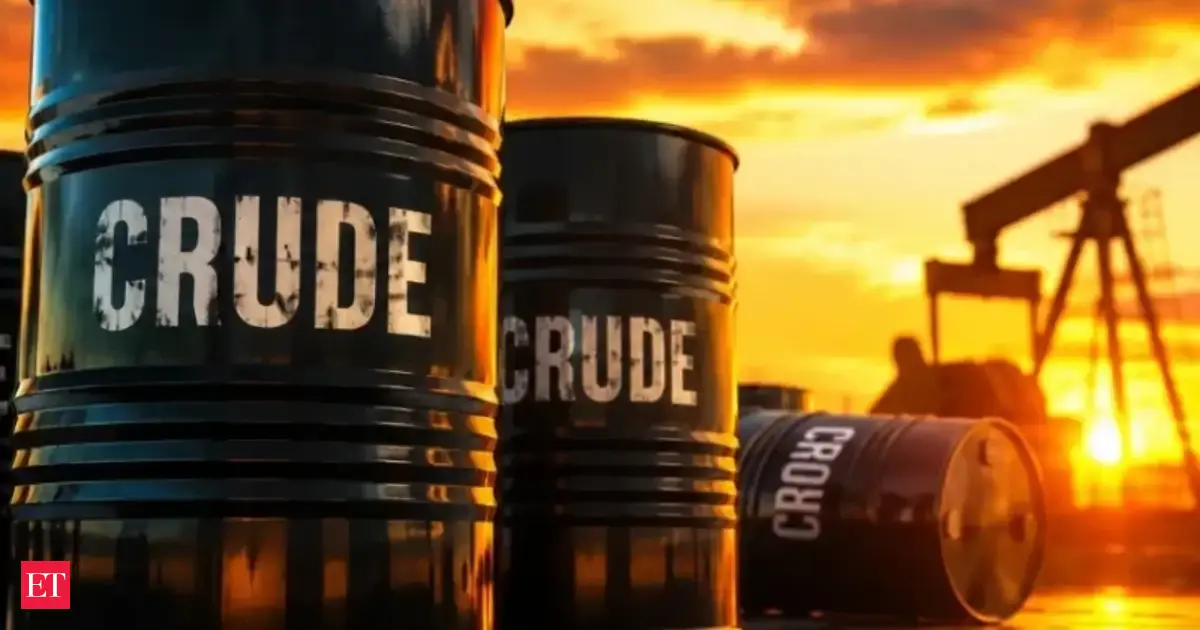
Rising oil prices necessitate energy supply diversification and alternate fuel adoption. India is urging the auto industry for flexi-fuel vehicle timelines and promoting ethanol blending. Exploring iso-butanol and methanol blending offers further emission reduction and import substitution. Second-generation biorefineries are crucial for scaling up compressed biogas production. Strategic oil reserves and domestic exploration are also vital for energy security. View More
Oil prices are flaring up, yet again. Brent Oil futures are now quoting at over $100 per barrel. The way ahead in the energy economy, clearly, is to diversify and derisk supplies, innovate in the policy domain, and concurrently, step-up usage of alternate fuels, fine-tune standards and proactively boost sustainability and environmental norms going forward. Given the ground reality, it would seem sensible to shore up supply of fuel alternatives. Already, the Centre is reportedly urging the autoindustry to put out timelines for the rollout of flexi-fuel vehicles, those that require at least 85% blending of biofuel ethanol produced locally. The availability of 20% ethanol blended petrol (EBP), produced from maize, surplus sugarcane and damaged grains, is now par for the course. But we surely need to better leverage our vast output of agricultural residue, such as paddy straw, bagasse, and municipal bio-waste, to gainfully and sustainably increase the production of ethanol, the alcohol whose molecule has two carbon atoms. The plan should be to ring-fence the food economy even as we rev up output of biofuels. It is true that 20% EBP marginally reduces vehicular mileage, but there are significant reductions in particulate matter and other exhaust emissions as the embedded oxygen in ethanol does bring about more complete combustion of fuel. Given the volumes involved, EBP does bring down imports of crude. However, the most used petroleum product, by far, is high-speed diesel, and there’s much scope to explore its blending with biofuel iso-butanol, the alcohol molecule with four carbon atoms. The idea ought to be to fast-forward the microbial synthesis of cellulosic iso-butanol, to reduce the carbon footprint in transport. Live Events Already, reports say that pilot studies for 2% blending of diesel with iso-butanol have been firmed up. But when it comes to crop residue, plant cell walls are difficult to break down, and do require added enzymes, chemicals and energy inputs to effectively release fermentable sugars for blending. Hence, the pressing need for brownfield expansion of existing biorefineries to produce bioiso-butanol using specialized biocatalysts and innovative technological solutions. It can well lead to such products as renewable diesel and sustainable aviation turbine fuel. The second-generation biorefineries are also essential to step-up supplies of compressed biogas (CBG) at a commercial scale, using agricultural residue, organic matter, and municipal waste. A NITI report earlier this year did underline the huge potential of CBG, as a sustainable substitute for natural gas and liquified natural gas (LNG). In tandem, we do need to duly leverage carbon emissions to efficiently produce fuel substitute methanol, whose molecular structure has a single carbon atom. Note that power generation major NTPC’s Vindhyachal power plant has successfully produced high purity methanol as a byproduct. Now methanol and diesel are immiscible, given different molecular structures, which the mavens label as polarity differences. But in high consumption dual fuel systems, say in marine engines and those for heavy-duty transport, methanol can be injected into the air intake, while diesel is piped directly into the combustion cylinder to act as an igniter. The process is known to avoid physical blending of methanol, while substituting up to 50-70% diesel in marine and heavy-duty engines. Further, we do need to explore the possibility of using dimethyl ether (DME), which is a chemical derivative of methanol, for blending with liquified petroleum gas (LPG) or cooking gas. The physical and thermodynamic properties of DME are said to closely resemble those of propane and butane, which constitute LPG. Besides, in dense urban centres like Delhi National Capital Territory we do need to speedily traverse to zero-emission electric vehicles (EVs) in the domain of policy making, to purposefully improve the air quality index. The game plan is to induct 14,000 EV buses in Delhi, and phase-out the registration of non-EVs sooner rather than later. However, it cannot be gainsaid that EVs are also metal-mining and processing intensive, and bringing the EVs supply chains here may well increase the carbon-footprint domestically, pending breakthroughs, in EV battery technology that use, say, innovative electronics to reduce the need for rare earths and critical minerals, or forays into entirely new battery chemistry. The fact of the matter is India is increasingly and overwhelmingly dependent on imports of oil, and in the backdrop of hardening crude prices and rising geopolitical tensions, it is warranted that we increase our strategic crude oil reserves . And upstream oil major ONGC already plans to increase India’s strategic oil reserves by 12.8 million barrels, which would take the total to just under 52 million barrels of crude. In the medium term and well beyond, it would also make sense to better allocate resources for exploration and production of crude oil in our more prospective and under-explored sedimentary basins. .Pbanner{display:flex;justify-content:space-between;align-items:center;background-color:#ec1c40;margin-top:20px;padding:5px 10px;border-radius:4px;color:#fff;line-height:10px;width: 100%;box-sizing: border-box} .Pbannertext{display:flex;align-items:center;font-size:16px;font-weight:600;font-family:'Montserrat';} .Pbannertext img{height:20px;margin:0 6px} .Pbannerbutton a{display:flex;align-items:center;background-color:#fff;color:#ec1c40;text-decoration:none;font-weight:600;padding:4px 8px;border-radius:6px;font-size:15px;font-family:'Montserrat';} .Pbannerbutton img{height:20px;margin-right:6px} .Pbannerbutton a:hover{background-color:#f7f7f7} Add as a Reliable and Trusted News Source Add Now! (You can now subscribe to our Economic Times WhatsApp channel) (You can now subscribe to our Economic Times WhatsApp channel)