
Latest Sectors News

The 9th U.S. Circuit Court of Appeals ruled that sports-related event contracts are not swaps, contradicting a 3rd Circuit ruling from April. View More
A Kalshi advertisement seen in Washington on March 27, 2026.Paul Lester | CNBC The 9th U.S. Circuit Court of Appeals rejected prediction market platforms' requests for injunctive relief against the Nevada Gaming Control Board, concluding that sports-related event contracts are not a derivative regulated by the federal government. The court rejected appeals by Kalshi and Crypto.com, two prediction market platforms, to stop Nevada from halting their operations which the state claims are gambling offerings outside of the gaming control board's framework. The court also ruled against Robinhood's request for injunctive relief. That firm also features event contracts on its trading platform. Under scrutiny were the platforms' sports-related event contract offerings, which 44 states argue are nothing more than sports betting. However, the platforms â and their federal regulator, the Commodity Futures Trading Commission â claim all event contracts, no matter the topic, are swaps. Swaps are a type of derivative under the purview of the CFTC, and the agency asserts that it has the exclusive jurisdiction to regulate all event contracts. The CFTC has even sued nine states to defend what it believes is its sole right to make rules for prediction markets. But the 9th Circuit rejected that argument. "The sports event contracts were not 'swaps' because they were sports bets," the court said in its opinion against Kalshi. The Nevada Attorney General's office said the ruling was a major victory."Kalshi sought to sidestep Nevada's gaming laws by claiming its sports wagering products were federally regulated financial instruments beyond the reach of state regulators," deputy communications director for the office Alcinia Whiters said in a statement. "The Ninth Circuit rejected that argument and made clear what we have maintained from the beginning: sports betting does not become something else simply because a company calls it an 'event contract' ... Our office is proud to have defended Nevada's authority."In a statement to CNBC, a CFTC spokesperson said that the court understood that swaps are exclusively regulated by the commission, but said it was wrong to believe that sports-related event contracts don't fall under that definition."A derivative contract structured as a swap is a swap regardless of the underlying subject matter â the only exceptions in statute are onions and movie box office receipts," the spokesperson said in a statement. "The Ninth Circuit erred today when it invented a new and atextual exception to the CEA," referring to the Commodity Exchange Act, the law that details which event contracts the CFTC is allowed to permit and reject. Legal experts have widely expected that the question of sports-related event contracts, and whether state gaming regulators or the CFTC has the right to regulate them, will eventually reach the Supreme Court. That now appears very likely, as the ninth circuit's decision contradicts a ruling from the 3rd U.S. Circuit Court of Appeals in early April. In that case, the 3rd Circuit ruled that only the CFTC has the jurisdiction to regulate sports-related event contracts. The Commodity Futures Trading Commission headquarters in Washington, Aug. 20, 2026.Daniel Heuer | Bloomberg | Getty Images "This is a classic circuit split," said Joshua Mitts, a professor at Columbia Law School. Circuit splits are when federal appeals courts rule differently on the same topic. "Ultimately, this is the kind of legal controversy or legal difference of opinion which will make its way to the Supreme Court."In a statement, Robinhood said it plans to appeal the decision. "Every eligible customer should have access to these markets, which are federally regulated by the CFTC and offered through our CFTC-registered Futures Commission Merchant," a spokesperson said. Kalshi and Crypto.com did not immediately respond to requests for comment. Meanwhile, shares of two online sportsbooks, DraftKings and Flutter Entertainment â the parent company of FanDuel â rose in response to the ruling. Both stocks have been hit in the last year over concerns of prediction markets disrupting the industry, and the companies have rushed to get their own prediction market exchanges online. DraftKings jumped 7%, while Flutter was up more than 6%. Disclosure: CNBC and Kalshi have a commercial relationship that includes customer acquisition and a minority investment. Choose CNBC as your preferred source on Google and never miss a moment from the most trusted name in business news.

Every weekday, the Investing Club releases the Homestretch; an actionable afternoon update just in time for the last hour of trading. View More
Every weekday, the CNBC Investing Club with Jim Cramer releases the Homestretch â an actionable afternoon update, just in time for the last hour of trading on Wall Street. The stock market is failing to hold onto its morning gains, as Wall Street digests Federal Reserve Chairman Kevin Warsh's speech at the annual Jackson Hole symposium. The S & P 500 is down about 0.25%, while the tech-heavy Nasdaq is off about 0.4%. The Dow industrials are basically flat. Still, it's been a winning week for markets. Treasury yields are higher across the curve, with the market interpreting Warsh's speech â particularly his comment that the Fed has more "work to do" to tame inflation â as hawkish. Traders now see a nearly 60% probability of a rate hike at the Fed's Sept. 15-16 policy meeting, according to the CME Group's FedWatch tool . One day ago, that probability stood at just 35%. Warsh used his first Jackson Hole address to elaborate on his belief that central bankers shouldn't telegraph future policy moves to the market, a practice known in Fedspeak as "forward guidance." Warsh acknowledged that forward guidance was essential during the Great Recession, when the practice came about (Warsh was a Fed governor during that time). However, he said he believes it has now outrun its usefulness and, in some ways, does more harm than good. He argued it adds to the "noise" and drowns out important market "signals" that the Fed needs appropriately modify monetary policy. Warsh said he wants the market focused less on what central bankers are saying, and more on the underlying state of the economy, availability of credit, commodity prices, and so on. If the markets rely materially on Fed guidance, and the Fed relies on market dynamics in its own thinking on monetary policy adjustments, we end up with what he described as "a hall-of-mirrors problem." That, he added, can result in both parties â the Fed and market participants â being more likely to be blinded to new developments, resulting in an increased likelihood of policy errors. As an example, Warsh said he believes forward guidance offered by the Fed in 2021 contributed to the central bank's delayed reaction to the 40-year high inflation we witnessed coming out of the Covid-19 pandemic. The consequences of policy errors, Warsh said, is felt more acutely on Main Street than on Wall Street. Whereas Wall Street can adjust exposure to any Fed missteps â or even look to take advantage of them â Warsh said it is Main Street that gets stuck with the burden of high inflation and/or a less secure job market. The artificial intelligence boom was another big theme in Warsh's speech. It also is a complicating factor in the outlook for interest rates. We are at a "hinge point in history" thanks to AI, Warsh said, with the potential for higher economic growth on the rise. "AI is a new variable. potentially a new factor of production," Warsh said. While AI will no doubt change the economy as we know it (and how we use policy to regulate it), Warsh said the progress leads to new, crucial questions that we cannot yet answer. "Will the application of AI cause a significant, sustained rise in productivity across the economy? If so, when? Will token usage be complementary or competitive to labor? Will the next generation of AI models demand even greater capital intensity, too, or will the models themselves help devise a capital-light solution?" Warsh rhetorically asked. "Among the other yet unknowns is the resulting market structure: who gets to make the money? It's not obvious where the returns on capital will land, or on what timescale. Early on, how much of the surplus goes to owners of scarce assets â the AI labs or chipmakers, or energy producers or cloud providers? Over time, how much of that value accrues to businesses and consumers? Importantly, what are the broad implications for workers and for the employment side of the Fed's mandate?" Our takeaway here is that while it's too soon to know the answers to these questions, and therefore too soon to act on, it is clear that artificial intelligence will color the Fed's thinking on rates going forward. GE Vernova is getting a new finance chief as Ken Parks plans to retire next year. After the close Thursday, the gas turbine producer said Claire McDonough will take over as CFO on Jan. 1, joining the company from Rivian Automotive, where she's served in the same role at the electric vehicle maker for five years. The most important thing to get out of the way is that Parks' departure is a retirement, and he's staying on at the company through its next two earnings calls. Anytime you see a headline that a CFO is leaving, you want to be able to quickly rule out a worst-case scenario. We can safely do that here, given the orderly transition. Parks is also staying on as an advisor to CEO Scott Strazik through the first quarter of 2027. McDonough has an experienced resume, with plenty of familiarity leading a company involved in manufacturing. She helped lead Rivian through its 2021 initial public offering, secondary capital raises, and the creation of a joint venture with Volkswagen. GE Vernova is no stranger to JVs, either, having a long-standing one with Japan's Hitachi for nuclear. Earlier this week, the company also inked a JV with Korea's LS Electric. "She brings a sophisticated blend of capital markets expertise and hands-on operational leadership. Claire is a highly disciplined, detail-oriented leader who thrives in complex, mission-driven environments," CEO Strazik said in a press release announcing the transition. "I am confident she's the right leader for GE Vernova as we continue to grow profitably as a company and advance the future of energy." Shares of GEV are down over 2%, though we're seeing weakness in other AI infrastructure names including Caterpillar, Club names Corning and Eaton, and Vertiv. Looking ahead to next week, Palo Alto Networks reports Tuesday after the closing bell, followed by Broadcom on Wednesday evening. Other notable earning reports are Dell , Hewlett Packard Enterprise , Snowflake , Five Below , Ciena , Campbell's , Medtronic , Zscaler , and Lululemon . It's also jobs week, culminating Friday with the release of the August nonfarm payrolls report. We often say this is the single most important economic report of the month. The stakes are higher than usual given the fact that there was a negative 23,000 print in July. Some of the weakness may have been related to the end of the FIFA World Cup, so a solidly positive number should help reassure investors about the health of the labor market. While strong job gains may give the Fed more reason to potentially hike interest rates before year-end, we generally prefer to see job gains because, ultimately, we want a healthy economy. The economy is expected to have added 65,000 jobs in August, according to economists polled by FactSet. The unemployment rate is expected to be increase 0.1% from July to 4.2%. (See here for a full list of the stocks in Jim Cramer's Charitable Trust.) As a subscriber to the CNBC Investing Club with Jim Cramer, you will receive a trade alert before Jim makes a trade. Jim waits 45 minutes after sending a trade alert before buying or selling a stock in his charitable trust's portfolio. If Jim has talked about a stock on CNBC TV, he waits 72 hours after issuing the trade alert before executing the trade. THE ABOVE INVESTING CLUB INFORMATION IS SUBJECT TO OUR TERMS AND CONDITIONS AND PRIVACY POLICY , TOGETHER WITH OUR DISCLAIMER . NO FIDUCIARY OBLIGATION OR DUTY EXISTS, OR IS CREATED, BY VIRTUE OF YOUR RECEIPT OF ANY INFORMATION PROVIDED IN CONNECTION WITH THE INVESTING CLUB. NO SPECIFIC OUTCOME OR PROFIT IS GUARANTEED.

Imax's stock and box office are breaking records, but studio conflicts and a soaring valuation complicate the list of who could bid for the company. View More
In this articleAMZNWBDFOXIMAXFollow your favorite stocksCREATE FREE ACCOUNT Moviegoers watch the film "Ne Zha 2" at an Imax GT Cinema on in Guiyang, China, Feb. 23, 2025.China News Service | China News Service | Getty Images In December, Imax CEO Rich Gelfond opened the door to a sale. Almost nine months later, the company's stock has hit an all-time high, its box office is breaking records and the stage is set to carry its momentum through the end of 2026. Yet, no major suitors have appeared.Imax held preliminary talks with potential buyers earlier this year, but as of May hadn't fielded any official pitches, CNBC reported at the time. Imax hasn't hired new bankers and doesn't have a formalized pitch book, according to a person familiar with the company, who spoke on the condition of anonymity to discuss confidential matters. But it's a busy time for dealmaking in the media space. Paramount Skydance is in the midst of a contested merger with Warner Bros. Discovery worth $110 billion, Fox agreed to acquire Roku in a deal worth $22 billion, and Comcast continues its corporate restructuring with the upcoming spinoff of NBCUniversal, which many in the industry say will give both resulting companies more flexibility to do deals. With a nearly $3 billion market cap, Imax is a relatively inexpensive asset in the entertainment landscape. And it's been on a hot streak in the wake of the pandemic as moviegoers have traded up for higher-priced premium large format cinema experiences.The company's momentum has been further fueled by strong box office sales from films like Universal and Christopher Nolan's "The Odyssey." Over the weekend, global Imax ticket sales for the film surpassed $400 million, the first film to exceed the benchmark in the company's history. This haul represents nearly 30% of total global sales for "The Odyssey" â despite the fact that Imax screens represent less than 1% of movie screens worldwide. (function(){function e(){window.addEventListener(`message`,function(e){if(e.data[`datawrapper-height`]!==void 0){var t=document.querySelectorAll(`iframe`);for(var n in e.data[`datawrapper-height`])for(var r=0,i;i=t[r];r++)if(i.contentWindow===e.source){var a=e.data[`datawrapper-height`][n]+`px`;i.style.height=a}}})}e()})(); And then there's the strong pre-sales for the December release of Warner Bros. and Denis Villeneuve's "Dune: Part Three," which has already sold out specialized screenings into January. Wall Street analysts foresee Imax setting a new global box office record in 2026, hot off the heels of the record $1.28 billion the company posted last year. Imax's 2025 ticket sales were more than 40% higher than 2024 and 13% higher than its previous record, set in 2019."The brand value of Imax has never been higher," Eric Handler, managing director and senior research analyst at Roth, told CNBC. "They have done a really good job of situating themselves right in the center of the eco-structure for Hollywood. So, it's been a masterful, long-time-coming situation."Contributing to the momentum is Imax's premium ticket prices, which, despite being higher than for other screenings, have not deterred audiences. So far in 2026, the average adult Imax ticket cost $20.57 in the U.S., according to data from EntTelligence. That's more than 60% higher than the average standard ticket, at $12.75 each, and nearly 18% higher than rival premium large format offerings, which average around $17.46 apiece. (function(){function e(){window.addEventListener(`message`,function(e){if(e.data[`datawrapper-height`]!==void 0){var t=document.querySelectorAll(`iframe`);for(var n in e.data[`datawrapper-height`])for(var r=0,i;i=t[r];r++)if(i.contentWindow===e.source){var a=e.data[`datawrapper-height`][n]+`px`;i.style.height=a}}})}e()})(); The company's slate of "filmed for Imax" content is also accelerating and expected to grow materially through 2028. It's diversifying beyond the Hollywood landscape with partnerships in China, Japan and South Korea to screen local-language content. The company is also actively expanding. Around 160 to 175 Imax systems are expected to be installed in 2026, with contracts to build hundreds more already in place, the company told CNBC last year.The result, then, is less a question of what's for sale and more a question of who would buy. The TCL Chinese Theatre during opening weekend for "The Odyssey" in Imax in Hollywood, California, July 18, 2026.Aaronp/Bauer-Griffin | Gc Images | Getty Images The most â and least â likely suitors Handler noted that a potential buyer would need to balance studio relationships and cinema partnerships, as Imax has for years. The company installs its special format screens in existing theaters and negotiates release windows for top-billed films. Major studios, including Disney, Universal, Paramount and Warner Bros., would have an immediate conflict of interest if they acquired Imax, Wall Street analysts told CNBC.Imax is "studio agnostic, and so they charge every studio the same," said Eric Wold, executive director of equity research at Texas Capital Securities. "If some studio were to purchase them, I think the other studios would always feel that they're kind of second in line for the key release slots in the holidays and summer, and so it may not be received well."Even in the scenario where a deal of that nature passed muster with Hollywood and regulators, a single studio would be hard-pressed to fill a 52-week theatrical calendar with only its own films. Premium large format, or PLF, is intended for blockbuster feature films, which moviegoers are willing to pay a higher price to attend. A smaller-budget film with less spectacle might not draw the same crowds for the same price on that kind of screen.Not to mention, few studios have purchased cinemas even after the Department of Justice rescinded the 1948 Paramount Consent Decrees, which previously disallowed studios from owning movie theater chains. Those restrictions formally sunset in 2022, but so far only Sony has done a major deal for cinemas, acquiring all 35 Alamo Drafthouse locations in 2024.Beyond movie studios, analysts have highlighted potential suitors in entertainment and tech: for example, Netflix, Apple, Amazon or Sony.Netflix long vowed to build growth rather than buy it, but more recently it's gotten a taste for M&A. The company entered into an agreement with Warner Bros. Discovery to buy its studio and streaming businesses before being outbid by Paramount Skydance. Its foray into dealmaking has led many in media to wonder if Netflix could be on the hunt for another opportunity. (function(){function e(){window.addEventListener(`message`,function(e){if(e.data[`datawrapper-height`]!==void 0){var t=document.querySelectorAll(`iframe`);for(var n in e.data[`datawrapper-height`])for(var r=0,i;i=t[r];r++)if(i.contentWindow===e.source){var a=e.data[`datawrapper-height`][n]+`px`;i.style.height=a}}})}e()})(); The streamer doesn't rely on theatrical releases as part of its main programing strategy, therefore its conflict of interest if it were to acquire Imax would be smaller than for traditional Hollywood studios. Additionally, owning Imax would provide any filmmaker that signed on to work with Netflix the opportunity for premium theatrical runs.Of course, Netflix historically has had limited interest in the traditional theatrical model. While the company does release some films in cinemas, it's typically done so for short runs or for eligibility for Academy Awards contention.As for Apple, Amazon and Sony, all three companies have strong technology businesses in addition to theatrical and streaming content, which may align nicely with Imax's tech-heavy business. While Sony does not have its own streaming platform, it partners with Netflix to distribute new content. Meanwhile, Apple has AppleTV and Amazon has Amazon Prime.Taking on a cinema tech firm like Imax could offer each company a new avenue for distribution. There's also the possibility that Imax could draw interest from a company or investor that wants to buy into Hollywood and the broader entertainment universe. Imax has a global presence and connections to most major studios as well as cinema partners worldwide.Analysts also noted that a private equity buyer would eliminate any potential conflict concerns and could be most interested to ride the stock's momentum. Imax Corp. CEO Richard Gelfond attends the New York premiere of 'A Beautiful Planet' at AMC Loews Lincoln Square in New York, April 16, 2016.Jamie McCarthy | Getty Images 'Perfectly fine as a standalone company' Shares of Imax hit an all-time high this week of $54.79. The stock is up almost 80% in the past 12 months.That surge could be among the reasons it's still going it alone, according to Alicia Reese, senior vice president of equity research at Wedbush."It's a lot more expensive than it has been for a long time," Reese said. When Gelfond first floated the idea of a sale last year, the stock was trading at around $36 per share and had a market cap of about $1.95 billion. The price tag is now a billion dollars higher."Maybe those tech companies or potentially [private equity] who had considered it or had been kicking the tires would wait a little while and see what happens to the share price," Reese said. "There's a large probability that it's just going to continue to gain share and gain global growth and remain at these elevated valuation levels for some time, as the growth isn't likely to reverse." (function(){function e(){window.addEventListener(`message`,function(e){if(e.data[`datawrapper-height`]!==void 0){var t=document.querySelectorAll(`iframe`);for(var n in e.data[`datawrapper-height`])for(var r=0,i;i=t[r];r++)if(i.contentWindow===e.source){var a=e.data[`datawrapper-height`][n]+`px`;i.style.height=a}}})}e()})(); Several Wall Street analysts see further stock growth on the horizon, with price targets from some firms as high as $65 a share. On Monday, Drew Crum of B. Riley Securities raised his price target on the stock to $61, up from $52."Taken together, we continue to forecast record financials in 2026, with share gains, higher margins, and healthy cash flow generation, as reflected in our above-consensus estimates," he wrote.Potential suitors would also naturally be looking at what the future holds for the entertainment business at large. The North American box office is still chasing the pre-pandemic levels of 2019, and despite a blockbuster summer, ticket sales are still lagging. Wedbush's Reese noted that Imax is grouped in with the theatrical exhibition space, which is traditionally a slow-growth, dividend-paying business. These types of companies will likely get back to paying those dividends once they can sustain "some very low single-digit growth," she said.And because Imax is not actively seeking a sale, simply entertaining offers, its executives can afford to be choosey."I think the main point is that Imax is perfectly fine as a standalone company," Reese said. "And so they're not desperate in any way, shape or form. So, they're not going to go for just any bid. They want a bid that's a nice premium to where the shares are currently trading. And so it'd be hard to come to a deal, I think, right now." Choose CNBC as your preferred source on Google and never miss a moment from the most trusted name in business news.
NTPC plans to nearly triple its power generation capacity by 2037. The company will invest significantly in renewable and nuclear power expansion. This investment will also cover battery and pumped storage systems. NTPC aims to contribute substantially to the nation's nuclear energy target. View More
New Delhi: NTPC plans to nearly triple its installed power generation capacity to 244 GW by 2037, while expanding renewable energy and nuclear power as part of a broader investment programme spanning generation, storage and fuel security, chairman and managing director Gurdeep Singh said at the company's annual general meeting on Thursday. The power producer is targeting 149 GW of generation capacity by 2032, including 60 GW of renewable energy capacity. NTPC plans to invest around ₹16.86 lakh crore cumulatively through FY37 across thermal, hydro and pumped storage, renewable energy, battery storage, mining and nuclear power. ET BureauInfographic image. Singh said the investment programme would be accompanied by financial discipline, with the company seeking to balance growth, leverage, returns and shareholder distributions. Also read: Companies may get a consult for nuclear power entry Live Events "The next decade will be one of the most significant periods of growth in NTPC's history. We believe the future power system will need three things simultaneously: scale, flexibility and reliability," Singh said. "NTPC is uniquely positioned to bring these three elements together." Nuclear power will be a significant part of the company's expansion plans. NTPC aims to contribute around 30 GW of nuclear capacity towards the national target through its wholly owned subsidiary NTPC Parmanu Urja Nigam and its joint venture Anushakti Vidhyut Nigam with Nuclear Power Corporation of India. Its immediate nuclear focus includes the 2.8 GW Mahi Banswara project in Rajasthan, while studies and discussions are underway for an additional 34 sites across 13 states involving different technologies, the chairman said. Also read: Government directs CEA to prepare roadmap to phase out import of critical power systems by 2030 Nuclear generation, he said, would complement renewable and thermal power by providing reliable, low-carbon, round-the-clock electricity. The company is also building capacity in battery energy storage systems and pumped storage projects as rising renewable energy penetration increases the need for flexibility in the power system. NTPC is exploring long-duration storage technologies, including CO2 storage and redox flow batteries, which could reduce dependence on conventional critical minerals. Singh said NTPC's priorities include completing projects under construction, accelerating renewable energy and storage additions, strengthening fuel security, expanding nuclear operations and improving the efficiency and flexibility of its thermal fleet. NTPC is also progressing on a 5.75 lakh tonnes per annum coal-gasification-based synthetic natural gas project. Once established, it will be the first plant of its kind in India and is intended to directly substitute imported natural gas. .Pbanner{display:flex;justify-content:space-between;align-items:center;background-color:#ec1c40;margin-top:20px;padding:5px 10px;border-radius:4px;color:#fff;line-height:10px;width: 100%;box-sizing: border-box} .Pbannertext{display:flex;align-items:center;font-size:16px;font-weight:600;font-family:'Montserrat';} .Pbannertext img{height:20px;margin:0 6px} .Pbannerbutton a{display:flex;align-items:center;background-color:#fff;color:#ec1c40;text-decoration:none;font-weight:600;padding:4px 8px;border-radius:6px;font-size:15px;font-family:'Montserrat';} .Pbannerbutton img{height:20px;margin-right:6px} .Pbannerbutton a:hover{background-color:#f7f7f7} Add as a Reliable and Trusted News Source Add Now! (You can now subscribe to our Economic Times WhatsApp channel) (You can now subscribe to our Economic Times WhatsApp channel)
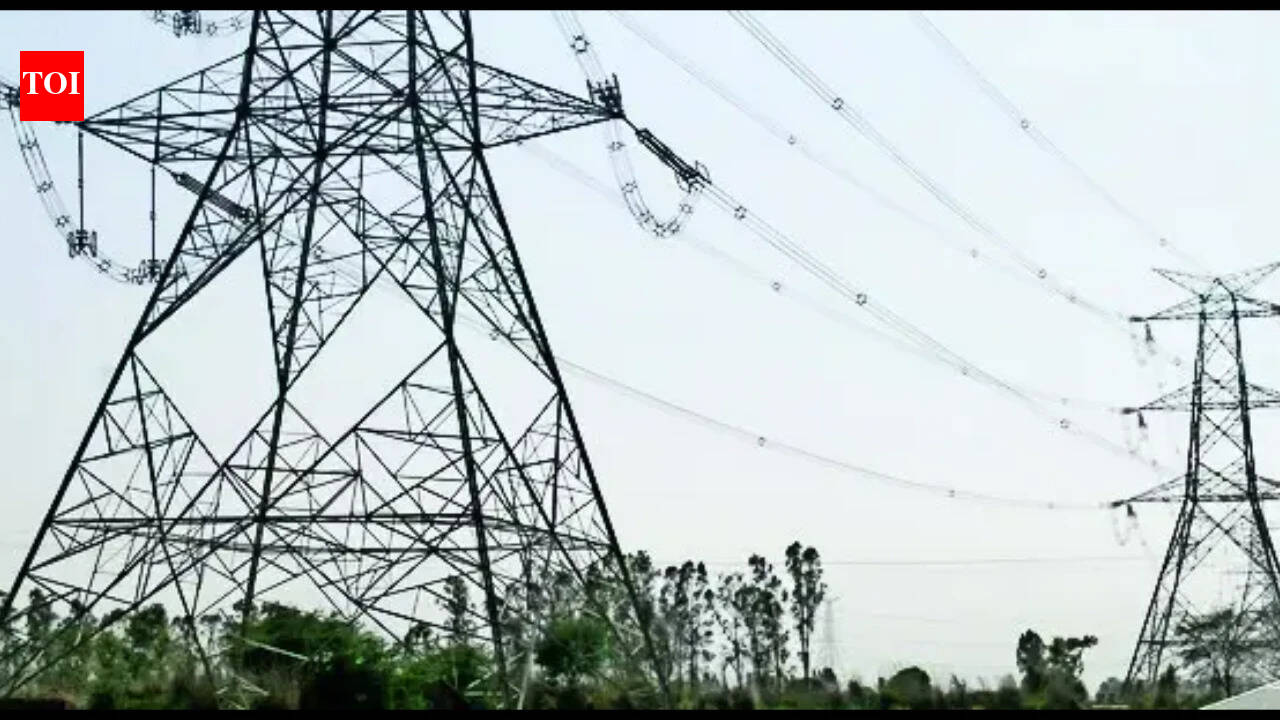


Chairman & MD Gurdeep Singh outlines ?16.86 lakh crore capex plan across thermal, renewable, storage and nuclear projects View More

NTPC expects to build 244 gigawatts of operating capacity and envisage capital expenditure of Rs 16.86 lakh crore by 2037 as it looks to boost the entire energy value chain, the company's Chairman Gurdeep Singh said on Thursday.
The next decade will be one of the most significant periods of growth in NTPC's history, Singh said, noting India's electricity requirement will continue to rise as the economy expands and living standards improve.
At the same time, the composition of the power system will change rapidly, he said while addressing the shareholders at the company's 50th Annual General Meeting (AGM).
"We have raised our long-term capacity ambitions and now target generating capacity of 149 GW by 2032, including 60 GW of renewable energy, with an aspiration to reach 244 GW by 2037 excluding storage," Singh said.
Currently, NTPC has a capacity of around 91 GW.
The company also envisages cumulative capital expenditure of around Rs 16.86 lakh crore up to FY37, across thermal, hyd View More

Forty-five Indian power plants operate with critically low coal inventories now. Monsoon rains disrupt supplies and electricity demand rises amid hotter weather. Coal stocks have fallen significantly, impacting operational requirements for power generation. Heavy rainfall in key coal-rich states has slowed mining and transportation efforts. The power ministry has asked plants to delay maintenance until supply improves. View More
New Delhi: Forty five power plants in India are operating with critically low coal inventories, government data showed, as monsoon rains disrupt supplies and electricity demand rises amid hotter-than-usual weather linked to El Nino. The number of plants with coal stocks below 25% of their required inventory or with critically low stocks to generate power for less than three days has risen sharply from 31 at the end of July, the data as of August 25 showed. Of the affected plants, 40 are domestic coal-fired plants, according to data on the website of Central Electricity Authority, a think tank linked to the federal power ministry. Also read: Industry insists on assured offtake for coal gasification Heavy rainfall in some of the key coal-rich Indian states, including Odisha, Jharkhand and Chhattisgarh has hit mining and slowed the transportation of the fuel for power plants, industry sources said. Live Events "There has been a significant (inventory) drawdown, particularly through August, resulting in stocks falling 19% from end-July levels," commodities consultancy BigMint said. Coal stocks at power plants stood at 30.95 million tons, equivalent to around 10 days of operational requirement, compared with 12 in July, BigMint said. The lower coal stocks come at a time when the South Asian country is headed for its weakest monsoon since 2009, with uneven El Nino-linked rainfall driving up electricity demand in parts of the country. "The uneven monsoon has driven power demand, primarily for air-conditioning. But coal supplies are running hand-to-mouth," an official at the country's largest thermal power producer, NTPC told Reuters. "There is a need for five to six rakes at some plants, but we are receiving only half that number," the NTPC official said. India has received 12% less rainfall than normal so far this monsoon season, leading to greater reliance on coal-fired power generation, particularly during the night when cooling demand remains elevated. As a result, the power ministry has asked some of the coal-fired power plants to delay planned maintenance of units until the supply situation becomes clearer, a senior ministry official said. The sources could not be named because they were not authorised to speak to the media. .Pbanner{display:flex;justify-content:space-between;align-items:center;background-color:#ec1c40;margin-top:20px;padding:5px 10px;border-radius:4px;color:#fff;line-height:10px;width: 100%;box-sizing: border-box} .Pbannertext{display:flex;align-items:center;font-size:16px;font-weight:600;font-family:'Montserrat';} .Pbannertext img{height:20px;margin:0 6px} .Pbannerbutton a{display:flex;align-items:center;background-color:#fff;color:#ec1c40;text-decoration:none;font-weight:600;padding:4px 8px;border-radius:6px;font-size:15px;font-family:'Montserrat';} .Pbannerbutton img{height:20px;margin-right:6px} .Pbannerbutton a:hover{background-color:#f7f7f7} Add as a Reliable and Trusted News Source Add Now! (You can now subscribe to our Economic Times WhatsApp channel) (You can now subscribe to our Economic Times WhatsApp channel)

The move follows concerns over cyberattacks on wind turbines and potential risks to grid operations from remotely managed infrastructure. View More