
Latest Sectors News
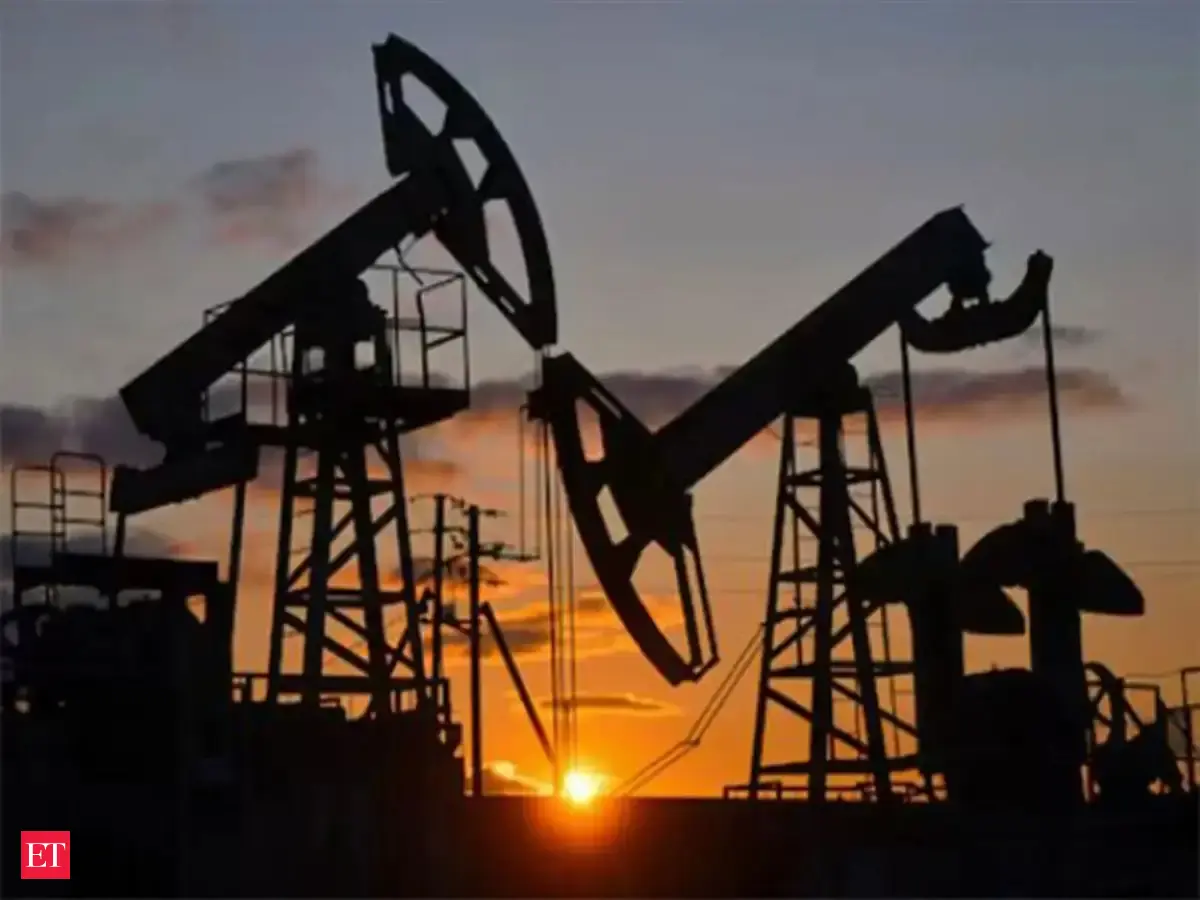
Reliance Industries has redirected fuel exports to Africa, the Mediterranean and other European markets to capitalise on supply disruptions caused by the West Asia conflict, lifting its market share in these regions by about 50%. The strategy helped drive record quarterly earnings for its oil-to-chemicals business as global refining margins surged. View More
Mumbai: Reliance Industries (RIL) redirected fuel exports to East and South Africa , the Mediterranean and other European markets to capitalise on market opportunities caused by supply disruptions due to the West Asia conflict . This helped the private refiner boost its market share in these markets by about 50%, showed the company’s September quarter financial presentation. RIL also tapped opportunities in Australia, Kenya and Tanzania for premium gasoline grades, while enhancing diesel and aviation turbine fuel (ATF) supplies to the Mediterranean. ET Bureau “In the case of diesel and jet fuel, we found opportunities in the Mediterranean market because of the loss of supply,” said Srinivasan Tuttagunta, chief operating officer, supply and trading at RIL, per the presentation. RIL’s oil-to-chemicals (O2C) business emerged as the biggest driver of its fiscal second quarter earnings, reporting a 68% surge in Ebitda to a record Rs 25,203 crore. O2C revenue grew 44% to Rs 231,601 crore, led by high energy prices. The West Asia conflict has disrupted energy supply chains, resulting in a 41% year-on-year rise in crude oil prices and a 50- 78% jump in transportation fuel prices. Live Events RIL said it also supplied lowsulphur ATF to South Africa for the first time, opening up potential new export opportunities. The company’s export strategy comes amid a sharp rise in global refining margins as geopolitical disruptions, refinery outages and declining fuel inventories tighten product supplies. Change in sources too Refining capacity in Russia and West Asia has been affected due to ongoing conflicts, lifting prices of gasoline, diesel and aviation fuel. Gasoline cracks, which measure the difference between refined product and crude oil prices, spiralled to nearly $25 a barrel in the September quarter from $8.4 a barrel a year earlier. Gasoil cracks increased to $65.8 a barrel from $18.7, while aviation fuel cracks climbed to $59.3 from $16. “RIL’s ability to redirect shipments towards markets offering better returns has helped it navigate disruptions to traditional trade flows, including those caused by tensions around the Strait of Hormuz,” said a sectoral analyst, requesting anonymity. On crude sourcing, RIL revised its import basket between the Americas, Gulf and other regions last quarter to take advantage of available supplies and pricing opportunities. This flexibility helped it maintain record crude processing levels despite shipping disruptions. Crude procurement has however turned pricier due to elevated physical crude premiums, freight and insurance costs. Brent crude fluctuated between $70 and $130 a barrel during the quarter, reflecting volatility in global oil markets. RIL said it had deployed more than 20 vessels, with the total number of crude and product vessels approaching 25, to mitigate the impact of sharply higher freight rates. The company also increased normal LPG production nearly twofold to meet domestic demand, curtailing output of other products, including alkylate and some petrol components. Domestic fuel demand remained strong, with India’s gasoline consumption growing 8.5% year-onyear during the quarter and diesel demand rising 7.5%. However, RIL’s margins faced pressure from a special additional excise duty levy and the inability to fully pass on higher international fuel prices to local consumers. Looking ahead, RIL said it expects global product supplies to remain tight in the near term as refinery outages, curbs on Russian fuel exports and uncertainty over Chinese exports constrain availability. Lower-than-average gasoline and diesel inventories are also supporting refining margins. RIL said its priorities would remain high asset utilisation, margin maximisation and end-to-end optimisation of its refining and marketing operations to capture opportunities arising from volatile global markets. .Pbanner{display:flex;justify-content:space-between;align-items:center;background-color:#ec1c40;margin-top:20px;padding:5px 10px;border-radius:4px;color:#fff;line-height:10px;width: 100%;box-sizing: border-box} .Pbannertext{display:flex;align-items:center;font-size:16px;font-weight:600;font-family:'Montserrat';} .Pbannertext img{height:20px;margin:0 6px} .Pbannerbutton a{display:flex;align-items:center;background-color:#fff;color:#ec1c40;text-decoration:none;font-weight:600;padding:4px 8px;border-radius:6px;font-size:15px;font-family:'Montserrat';} .Pbannerbutton img{height:20px;margin-right:6px} .Pbannerbutton a:hover{background-color:#f7f7f7} Add as a Reliable and Trusted News Source Add Now! (You can now subscribe to our Economic Times WhatsApp channel) (You can now subscribe to our Economic Times WhatsApp channel)

The Colossus data centers and a power plant that SpaceXAI is also building in Southaven, Mississippi, have faced community backlash for years. View More
In this articleSPCXFollow your favorite stocksCREATE FREE ACCOUNT SpaceX is building a massive gas turbine power plant in Southaven, Mississippi to power its data centers in the area.SpaceX's AI division, SpaceXAI, lost its bid to dismiss an NAACP lawsuit, which is proceeding in federal court in Mississippi, according to a judge's opinion released late Friday. The lawsuit claims that the AI division of CEO Elon Musk's aerospace and defense tech conglomerate violated the Clean Air Act with its use of gas-fired combustion turbines to power its massive AI data centers in Greater Memphis. The Colossus data centers and a power plant that SpaceXAI is also building in Southaven, Mississippi, have faced community backlash for years.The Southern Environmental Law Center and Earthjustice filed the suit on behalf of the NAACP in the U.S. District Court for the Northern District of Mississippi in April 2026. The suit alleges that between August and December 2025, xAI and its subsidiary MZX Tech, installed and operated 27 gas turbines in Southaven, Mississippi, "without an air permit or regard for the health and safety of people living nearby." (SpaceXAI is owned and operated by SpaceX, which has rebranded it as SpaceXAI or SpaceXSI.)The turbines emit smog-forming pollutants and particulate matter that can increase health risks and cause an unpleasant odor, among other unwanted impacts, according to the suit. Lawyers for SpaceXAI argued in their motion to dismiss, filed in June, that the NAACP suit should be tossed because the company's use of the turbines, which it characterized as "mobile," was exempt from permitting requirements. They also argued that NAACP didn't have a right to sue under the federal Clean Air Act, and suits by such community groups were unconstitutional.The judge presiding over the case rejected those arguments, writing: "Because the plaintiffs have statutory standing under the Clean Air Act, because the combustion turbines are not 'mobile sources' under Mississippi's SIP, and because the citizen suit provision does not violate Article II of the Constitution or the private nondelegation doctrine, the plaintiffs' claims will proceed."The decision comes about two weeks after the same court rejected a Department of Justice's request to end the case against Musk's company. SpaceX did not immediately respond to a request for comment.watch nowVIDEO29:0129:01How Elon Musk's AI empire in Memphis became a cautionary taleTech Choose CNBC as your preferred source on Google and never miss a moment from the most trusted name in business news.

Big Tech earnings reignited AI spending fears, sending investors into defensive stocks. View More
It was a Jekyll-and-Hyde kind of week in the market. Wall Street's enthusiasm for artificial intelligence stocks proved short-lived. A promising week early on gave way to sharp back-to-back selling after a run of disappointing tech earnings. The Nasdaq had climbed more than 2% through Wednesday before losing 1.4% on Thursday and nearly 3% on Friday. The tech-heavy index lost 2% for the week and sank 5.3% for October. The S & P 500 followed a similar pattern, culminating in a nearly 2% decline Friday and a similar loss for the week. The broader market index fared better for the month, only losing nearly 1%. The rotation out of tech and into defensive stocks showed up the most in the Dow , which fell less than 1% for the week and actually gained 1.7% for the month. Semiconductor stocks staged a sharp rebound before renewed concerns about the AI trade sent shares tumbling. It didn't help that expectations remained high for the Federal Reserve to raise interest rates in December. While central bankers held rates steady Wednesday, Fed Chairman Kevin Warsh talked tough on inflation, signalling it's only a matter of time before another hike. The prospect of higher rates only exacerbated investor worries that tech companies may be borrowing too much in the race to keep building out AI. Here's a closer look at the three developments that drove last week's market. What reversed the chip stocks Monday started the week off strong. Anthropic's IPO filing helped reignite enthusiasm for the AI group, while SK Hynix's record quarterly profit on Wednesday reinforced confidence in strong memory demand. The iShares Semiconductor ETF (SOXX) surged roughly 9% over the first three trading sessions. But the rally fizzled as disappointing Big Tech earnings revived concerns about AI spending. Intel added to the pressure with a weak outlook Thursday evening that sent shares plunging more than 28% on Friday, making it our worst performer of the week. We cut our price target and placed our rating under review. Jim Cramer said Friday that he can't rationalize selling Intel after such a big decline. Portfolio director Jeff Marks summed it up in the Homestretch: "The data center story at Intel is still mostly intact, but what we got wrong was the sharp drop in personal computer CPU demand due to the high cost of memory and some execution hiccups." Wall Street's AI priorities changed Earnings from Microsoft , Alphabet , and Amazon reinforced a shift in sentiment: Investors are increasingly prioritizing financial discipline and a line of sight to returns on AI investments over aggressive spending. Microsoft delivered strong results Wednesday, with Azure revenue growing 48% and capital spending coming in below expectations. Shares initially rallied before giving back their gains, but Jim praised management's ability to deliver robust cloud growth while keeping spending in check. We raised our price target to $580 from $550 and maintained our hold-equivalent 2 rating . Microsoft shares only fell 0.5% for the week, certainly a win considering how bad tech performed. Alphabet faced a much harsher reaction. Shares plunged roughly 12% on Thursday, the day after the Google parent missed earnings and revenue expectations and reported negative free cash flow. Strong cloud growth wasn't enough to offset disappointing advertising results and concerns about its massive AI investments. Alphabet was our second-worst performer of the week, down 12.6%. While still encouraged by its cloud business, we were not ready to buy the dip . Amazon also disappointed Thursday evening , missing earnings and revenue expectations as weaker retail and advertising results overshadowed accelerating growth at Amazon Web Services. Shares fell 1.4% on Friday, which was pretty considering it was down over 6% at session lows. Investors scrutinized the company's negative free cash flow and next year's big capital spending plans. AWS remains a bright spot, with revenue growing at its fastest pace in nearly five years. Just after Friday's opening bell, Jim said, " I think you buy Amazon here ." For the week, Amazon lost 3%. Winners (and one loser) away from pure tech Eli Lilly surged more than 6% to a record high Thursday after another beat-and-raise quarter fueled by strong demand for its obesity and diabetes drugs. The stock extended its gains on Friday, making it our second-best performer of the week, up more than 11%. Healthcare was the best sector for the week as the flight from tech benefited more defensive names. We raised our Lilly price target to $1,500 from $1,300 and maintained our hold-equivalent 2 rating after the stock's impressive run. Despite issuing a softer-than-expected current outlook, FedEx shares rallied Thursday and Friday as investors focused on the company's progress improving efficiency and profitability under CEO Raj Subramaniam. Jim said Friday he still sees FedEx as a buy but might not chase it right now. The stock gained nearly 5% last week. FedEx Freight performed even better, surging nearly 15% on Friday and nearly that for the week. In its first official earnings report as a standalone company, Freight topped expectations. Encouraging commentary on pricing and operational improvements made the less-than-truckload stock our best performer last week. We continue to prefer FedEx over its former subsidiary, but both reports reinforced our confidence in their long-term strategies. Linde and Starbucks also delivered encouraging results. Linde posted record quarterly sales and profits , supported partly by semiconductor demand, while Starbucks reported stronger-than-expected profits and comparable sales growth as CEO Brian Niccol's turnaround gained traction. Jim called Starbucks a buy during Friday's Morning Meeting. For the week, Starbucks rose nearly 3%, and Linde gained 1%. GE Vernova initially struggled despite delivering a beat-and-raise quarter Wednesday and announcing a $9 billion acquisition of grid equipment maker Trench Group. Investors appeared concerned about the pace of gas turbine order growth next year, but we believe the reaction overlooked strong underlying demand. GEV is not a pure-play AI stock but is tied to the data center build-out. But the electrification opportunity is looking promising. The Trench deal supports that. GE Vernova rose more than 5% last week, clawing back nearly half the prior week's decline. Moving from the winners to our third-biggest loser last week. Boeing tumbled more than 10% Tuesday after management pushed back its timeline for reaching $10 billion in annual free cash flow to 2029, overshadowing a record $745 billion backlog. While the recovery is taking longer than expected, we view the guidance reset as a potential clearing event . We maintained our buy-equivalent 1 rating but lowered our price target to $225. For the week, Boeing lost nearly 9%. (See here for a full list of the stocks in Jim Cramer's Charitable Trust.) As a subscriber to the CNBC Investing Club with Jim Cramer, you will receive a trade alert before Jim makes a trade. Jim waits 45 minutes after sending a trade alert before buying or selling a stock in his charitable trust's portfolio. If Jim has talked about a stock on CNBC TV, he waits 72 hours after issuing the trade alert before executing the trade. THE ABOVE INVESTING CLUB INFORMATION IS SUBJECT TO OUR TERMS AND CONDITIONS AND PRIVACY POLICY , TOGETHER WITH OUR DISCLAIMER . NO FIDUCIARY OBLIGATION OR DUTY EXISTS, OR IS CREATED, BY VIRTUE OF YOUR RECEIPT OF ANY INFORMATION PROVIDED IN CONNECTION WITH THE INVESTING CLUB. NO SPECIFIC OUTCOME OR PROFIT IS GUARANTEED.

Q2 Results Highlights, 31st October 2026: businessline brings to you latest Q2 announcements, earnings updates and more. View More

NTPC reported Q2 FY27 profit growth of 38.7% to ?7,029.56 crore, while subsidiary NTPC Green Energy’s profit rose 59% to ?137.50 crore. View More

he net profit of the country’s largest power generator rose by 7 per cent on a sequential basis View More

A guide to beginning an art collection, including how to research artists, what to buy, and where to connect, from galleries to fairs to auction houses. View More
Joe Raedle | Getty Images News | Getty ImagesThe decision to invest in any collectibles market should start with curiosity and love, and buying art is no exception. While the rarest works of art in the world have sold for hundreds of millions of dollars, for most collectors, art is unlikely to match the returns offered by traditional investment markets. A recent analysis of 10-year annualized returns including data through 2024 showed that the stock market vastly outperformed art. True, it has been an incredibly strong bull market on a historical basis, but the performance from the art market over the same time period produced some of the worst 10-year returns in seven decades. As with any asset class experiencing a downturn, some experts see the recent weakness as a buying opportunity. The 2025 market did see some improvement, and 2026 has been an ever better year to date, with younger buyers showing up in a big way. But experts also stress that the art world is the least transparent market imaginable, with significant "insider information" involved in anticipating big jumps and the next major wave of hype. "What I tell people is that there is so much inside information in the art world â for instance, who has bought a particular artist or who is getting a museum show in two years â that if you are an outsider, you have little hope" of catching the next big wave early, said Canice Prendergast, economics professor at the University of Chicago, who also oversees that Chicago Booth School of Business Harper Center's contemporary art collection, which houses more than 650 artworks.It is important to understand that generating a repeatable investment strategy can be difficult â if not impossible."Most art is not a good investment," said Magnus Resch, who teaches art economics at Yale University and is widely recognized as a leading art market expert. "If you're buying on a limited budget, you're unlikely to see a financial return," he said. Still, despite the complexities and opacities associated with art, experts advise that for anyone wishing to enter the market there are some basics to understand â from how to research art, to the various mediums, to what to buy at various budgets, and where to buy â before getting started.Learn about galleries, auctions, and how artist values risePrendergast said a fundamental understanding of the market begins with knowing it is divided in two. The primary art market consists of galleries and the secondary market is typically auctions. And significant increases in value typically occur as art moves from one level of gallery to another and finally to auction."It's in anticipating moves between levels that most of the action is," Prendergast said. "There are many collectors trying to work out who is going to turn into a star [and] the key intermediaries here are galleries," he added.Buying in the primary market first requires the squishy "knowing something about art," he said, but also understanding the hierarchy of galleries. The big moves happen as relatively undiscovered talents appear in galleries that have a history of discovering and elevating artists. Inside such jumps â from a lower tier gallery to a mid-tier one â there can be big, embedded returns. A woman visits an infinity mirror room titled "Dreaming of Earth's Sphericity, I Would Offer My Love (2023)", by Japanese artist Yayoi Kusama, at the David Zwirner Gallery in New York City on May 20, 2023. Timothy A. Clary | Afp | Getty ImagesPrendergast gave as one recent example mid-tier gallery David Fierman in New York City that showed artist Louis Fratino several years ago. Fratino's work jumped to New York-based mega-gallery David Zwirner, and is currently featured in a London show. Along with that jump came a 20x increase in the price of Fratino's paintings. Such moves, Prendergast said, are precisely the type of play investors dream about, but the reality is that they take a long time to unfold and are exceedingly hard to predict."The thing that people overlook is actually mid-career artists," Prendergast said. "My advice would be to go to a major art fair â at every art fair, the galleries they put in the corners are the up-and-comers," he said.Keep it local as a beginning collector Resch says that the difficulties in the art market should not necessarily discourage new collectors. Rather, they need to enter the market with clarity of purpose, as well as realistic expectations and aims. "Buy art you love from local galleries, artists you discover on Instagram, or art fairs where artists exhibit directly," he said. The limited possibilities for investment success can actually emphasize other, more essential advantages to the endeavor: "Assume you'll never see your money again. You're not investing for financial returns. You're investing in yourself, the artist, and the gallery," he added.Roman Kräussl, professor of finance at the Bayes Business School in London who specializes in art as an alternative asset class, says that when it comes to art, the greater opportunity is to engage with culture than to beat the market. Toronto Outdoor Art Fair (TOAF) at Nathan Phillips Square in Toronto, Ontario, Canada on July 7, 2023. Established in 1961 to connect Canadian artists directly to the public, TOAF showcases hundreds of emerging and established visual artists, including painters, photographers, sculptors and artists working in ceramics, textiles, jewelry and more. Anadolu | Anadolu | Getty ImagesKräussl's research-based conclusion is that for the most actively engaged investors, art will provide a lower risk-adjusted return than financial market investments, but it can still be a positive return, and it can serve as a hedge against financial market risk. But when considering all the costs and fees associated with buying art, he says picking "winners" is critical.Buyer's premiums, shipping, insurance, framing, storage if necessary, and resale fees, all factor in the overall return on investment.This offers another reason to stick to the galleries and fairs over auction houses, since the atmosphere involves more opportunities for social interaction with other collectors and even the artists themselves. "Art is the most illiquid, nontransparent, opaque investment you can engage with. But it is also tons of fun," Kräussl said. The enrichment is more likely to be to yourself as a person, not to your bank account, with the big payoffs coming from "intellectual, cultural, and human-relevant perspectives." "You will meet the most interesting people of your life," Kräussl said. "Do not 'Spotify' art," he said. "Go to small events. See the artists. Experience. And if you like, go for it. If not, search further. But do not wait for someone to tell you what to buy. Develop your own taste," he said, "and then trust it."How to invest on a $5,000, $10,000 and $100,000 budgetTraditional mediums still dominate in the art market.Painting remains the most popular medium for collectors, according to the 2026 Art Basel and UBS Survey of Global Collecting, which focuses on the high-net-worth end of the market, surveying 3,100 collectors across 10 markets. That is measured by both participation (76% of buyers) and value (31% of total fine art expenditure). Sculpture was the second-largest area of spending (15%), followed by works on paper (10%) and digital art (9%). But that may not necessarily be the best place to start for everyone, and one point emphasized by multiple experts is that the smarter plays happen in the less-hyped areas. Hype can drive extreme pricing disparity and inflation, and it is often evidence that there has already been movement behind the scenes that preceded all of the hype. In other words, hype may indicate already being too late to the table. Another way to approach the art market, according to Resch, is through a focus on prints and editions â multiple, authorized copies of an artwork from an original source â which he says are often overlooked. "They offer access to blue-chip artists at a fraction of the price," he said. That contrasts with investments in emerging artists, which can be riskier. "An artist can sell out every gallery exhibition and still have virtually no resale market," he said, "so don't believe in popularity. Instead, check if an artist has an auction market."A gallery visitor admires prints by Robert Rauschenberg on display and for sale at Gemini G.E.L. (Graphic Editions Limited) art gallery and art publisher in the Chelsea district of New York City in 2017. (Photo by Robert Alexander/Getty Images)Robert Alexander | Archive Photos | Getty ImagesResch says for any individual "willing to gamble at $5,000," he would look for prints or works on paper by blue-chip artists, ideally at auction. At $10,000, he says original works in contemporary art day sales at major auction houses are an option, though works of art on auction at these events can start at much higher prices. At $100,000, Resch says the focus can turn to artists represented by leading galleries who have exhibited at major museums. "I'd rather buy one exceptional work for $100,000 than five mediocre ones for $20,000 each," he said. But no purchase should be made without doing considerable homework: "Visit galleries, research artists, and compare gallery and auction prices. People compare prices when buying a $500 television. Why wouldn't they do the same when buying a $50,000 painting?"Georgina Adam, editor at large for The Art Newspaper and a lecturer at Sotheby's and Christie's in London, said liking a piece remains an essential criterion, especially at lower price points and in areas of the art market that aren't particularly strong. That can lead to buying prices that are lower, but the ability to resell will also be very difficult, she said, adding that many pieces in 19th-century painting, as well as antiques, silver, and porcelain, feature these dynamics. "While it is a sum, $10,000 is not life changing if you lose it, but from the higher price points up, then readers will at least want the art to hold its value."Higher price points are also more typically associated with the benefit of auction records and clearer research to track pricing, provenance, and resales, according to Adam.How to research the art market and choose advice sourcesWhatever you buy, "Don't buy on a whim," Adam said. "Study the artist first." Such study can occur with the assistance of a trusted advisor, but even taking on an advisor takes research, Adam said, who is herself a member of the Association of Professional Art Advisors.She also cautioned that while specialists at auction houses and dealers will be knowledgeable, they all have "skin in the game.""Look for dealers who have a proven track record, and belong to a professional association with a code of ethics. Inclusion in a well-known fair (Frieze, Armory, et cetera) is a sign of seriousness," she said. "Fairs enable the buyer to look around in a less pressured environment and get prices. Galleries will generally be happy to talk about their artists," she said. One platform she strictly advises serious collectors to avoid is eBay. "Don't buy art from eBay, unless you just want a poster that goes with your décor. There are plenty of bad actors out there. Remember that fakes can be accompanied by fake certificates of authenticity," Adam said.Junior specialist of the Impressionist and Modern Art department at Christie's France, Hugues de Bethune, adjusts "Jane Avril au Divan Japonais" painted by French painter Henri de Toulouse-Lautrec (1864-1901), at the Christie's auction house, in Paris on April 2, 2025.Anne-christine Poujoulat | Afp | Getty ImagesChristoph Noe, the co-founder of Larry's List, which covers the current art collectors market, said direct relationships with artists, studio visits, making collections public, and openly rejecting hype and FOMO (fear of missing out) buying are all important practices for collectors. "Notably, not one collector in our listing mentioned TikTok, YouTube or LinkedIn as relevant to their collecting practice/research," he said.According to the Art Basel/UBS report, most collectors did their own research before buying, with 72% undertaking moderate or significant research, and that figure rising to 80% among Gen Z collectors. The most commonly used external sources of advice were auction house experts (31%), art advisors (30%), artists (29%), and dealers (27%).Digital research is being used more often, according to the Art Basel/UBS data, with 58% of respondents using digital resources for advice, led by online publications and press (27%) and apps or AI tools (22%, up from just 4% in 2024). And despite Noe's comments, social media is becoming more influential: 32% of collectors cited either Instagram or X/Twitter as sources of advice, according to the Art Basel/UBS report. While most experts emphasize in-person research and interaction as critical to the collecting process, collectors surveyed in the Art Basel/UBS report were broadly positive about AI's role in finding and buying art, with 67% saying AI made a positive impact on artist and artwork discoverability; 66% citing it for personalized advice and recommendations; 65% on provenance and authenticity verification; and 64% on pricing and valuation analysis."The biggest mistake investor collectors make," according to Prendergast, "is their belief that 'I just know this is great art.' You don't. You cannot evaluate a piece of art without knowing what came before. The art market is also very professionalized in that a good MFA can often copy pretty much anything. So just because something looks nice does not mean it's of much monetary value," he said.When it comes to properly researching art, there is no replacement for getting out into the world. "Get a double espresso in a nice gallery, stay for a glass of red wine, meet the artists, participate," Kräussl said. "Buy your first piece, risk it, and you will have something interesting to say at the next dinner."Kräussl says he concludes all of his art-finance presentations and seminars with the same piece of advice that he would give to a dinner party guest: "'Buy what you like!' After all, they may have to live with it for the rest of their life," he said.watch nowVIDEO4:1704:17Sotheby's CEO: Naive to say AI will not âmeaningfully affectâ our business in some waySquawk on the Street Choose CNBC as your preferred source on Google and never miss a moment from the most trusted name in business news.

NTPC reported a 38.7% year-on-year rise in Q2 FY27 net profit to ?7,029.56 crore, while revenue increased 21.2% to ?54,269.95 crore. The company declared its first interim dividend of FY27 at 30% of face value, with November 6 set as the record date. View More
NTPC’s total income rises to ?54,715.69 crore in Q2 FY27 from ?45,262.10 crore in year-ago period View More

The Indian government has abolished the special additional excise duty on petrol exports as of now. Diesel export levies have been raised to Rs 11.50 per litre from Rs 8.50 per litre. The export duty on aviation turbine fuel has also increased by 50 paise per litre. These adjustments reflect ongoing pressures from international energy market disruptions linked to geopolitical events. View More
The government has scrapped the special additional excise duty on petrol exports while raising the levy on diesel exports by Rs 3 per litre and on aviation turbine fuel (ATF) exports by 50 paise per litre, according to notifications issued by the Finance Ministry on Saturday. Under the revised rates, petrol exports will now attract no duty, down from Rs 2.50 per litre earlier. The diesel exports levy has been increased to Rs 11.50 per litre from Rs 8.50 per litre, while the duty on ATF exports has been raised to Rs 11 per litre from Rs 10.50 per litre. Also Read: Govt revises windfall gains tax for petrol and diesel exports The export levies were introduced in late March as the conflict in the Middle East disrupted global energy supplies and pushed up international crude prices. The government’s stated objective was to discourage refiners from prioritising overseas markets over domestic buyers at a time when global prices were offering stronger export realisations. Live Events Before the conflict began, around 45% of India crude imports passed through the Strait of Hormuz, a major shipping route connecting the Persian Gulf with global markets. The disruption to commercial shipping through the strait forced India to diversify sourcing. Also Read: India earns nearly 50% more from fuel exports in April-September as costlier oil and weak rupee outweigh lower volumes The latest revision comes as India continues to navigate the fallout of the war in West Asia , which has unsettled crude supplies, raised shipping risks and kept global oil prices higher. While the Indian government has sought to protect domestic consumers from feeling the full impact of the shock by keeping retail petrol and diesel prices stable, it has also used export duties to influence how much fuel refiners send overseas. .Pbanner{display:flex;justify-content:space-between;align-items:center;background-color:#ec1c40;margin-top:20px;padding:5px 10px;border-radius:4px;color:#fff;line-height:10px;width: 100%;box-sizing: border-box} .Pbannertext{display:flex;align-items:center;font-size:16px;font-weight:600;font-family:'Montserrat';} .Pbannertext img{height:20px;margin:0 6px} .Pbannerbutton a{display:flex;align-items:center;background-color:#fff;color:#ec1c40;text-decoration:none;font-weight:600;padding:4px 8px;border-radius:6px;font-size:15px;font-family:'Montserrat';} .Pbannerbutton img{height:20px;margin-right:6px} .Pbannerbutton a:hover{background-color:#f7f7f7} Add as a Reliable and Trusted News Source Add Now! (You can now subscribe to our Economic Times WhatsApp channel) (You can now subscribe to our Economic Times WhatsApp channel)