
Latest Sectors News

Older Americans may get bigger tax refunds this year. Here's where to find free services to navigate the complexities of new tax breaks. View More
Alistair Berg | Digitalvision | Getty Images Older Americans stand to benefit from tax changes in President Donald Trump's "big beautiful bill," which went into effect for 2025. "What is the one group of people who are going to be benefiting most from tax changes in the past year? It's almost certainly going to be seniors and retirees," Alex Durante, senior economist at the Tax Foundation, recently told CNBC. But they will have to file their tax returns to see if they qualify and how much they could gain. Where to get free tax help For seniors who need assistance, there are several free tax services that can help them prepare returns in time for the April 15 deadline.Older taxpayers may turn to the IRS' free programs: Volunteer Income Tax Assistance, or VITA, which provides help to low- to moderate-income taxpayers, and Tax Counseling for the Elderly, or TCE, which helps people, especially those ages 60 and over, prepare their tax returns. Read more CNBC personal finance coverageMarket volatility poses a serious risk for new retirees. Here's how to prepareTrump's overtime deduction is a 'home run,' Treasury says. How it could changeStock market is in for 'choppy, bumpy ride,' strategist says. Here's how to play itParents with student loans have limited time to secure forgiveness, affordable billsSocial Security needs more money. The question is, who will pay?Should you 'buy the dip' amid the latest stock market volatility? What experts sayBoston Fed: Credit card APRs have 'economically meaningful' impact on spendingRetirement saver protection rule has died â for the second timeMore than 7 million student loan borrowers face deadline to leave SAVE planDepartment of Labor proposes rules for including alternative assets in 401(k)s31.5% of car buyers underwater on trade-ins; analyst says amount owed 'troubling'Why your tax refund may look different this year, and what's actually driving itExpecting to fight about money with your partner? You might be wrong: studyBelle Burden's 'Strangers' highlights key financial red flags for womenAverage IRS tax refund is up 10.9%, latest filing data showsCNBC's Financial Advisor 100: Best financial advisors, top firms ranked There's also the AARP Foundation's Tax-Aide, which will be open through Tax Day to provide free tax preparation services, with a focus on filers ages 50 and older."We have thousands of volunteers annually that are providing free tax assistance and tax prep services to low- to moderate-income older adults," said Mioshi Moses, vice president of volunteer programs at the AARP Foundation.Tax-Aide is part of the AARP Foundation, the charitable arm of AARP that focuses on reducing senior poverty. By providing free tax preparation services, the program helps taxpayers get their hard-earned refunds and credits, Moses said. Tax changes older Americans need to watch As older Americans prepare to submit their tax filings this year, some big changes could affect their bottom line.The "big beautiful" tax law provides a new senior "bonus" or deduction of up to $6,000 per eligible individual. To qualify this season, taxpayers must have been at least 65 on or before Dec. 31, 2025. Because the senior deduction remains in effect through tax year 2028, older individuals may be able to take advantage of the temporary tax break in future years.The full $6,000 deduction is available to individuals with modified adjusted gross income of $75,000 or less. Married couples in which both individuals are eligible can receive $12,000, provided their modified adjusted gross income is $150,000 or less. watch nowVIDEO4:5304:53Will tax refunds deliver? Here's what to knowSquawk Box The deduction is gradually reduced for incomes above those thresholds, and fully phases out for individuals with $175,000 or more in modified adjusted gross income and couples with $250,000 or more.The tax break may provide an average $670 increase in after-tax income per eligible senior, according to the Council of Economic Advisers, an agency within the president's office.The new senior deduction comes on top of other tax breaks, including an enhanced standard deduction created with the new tax legislation. Older filers may also be eligible for the longstanding senior deduction of $2,000 per individual or $3,200 per married couple.Individual taxpayers eligible for all three deductions could have a total tax break of $23,750, while married couples may see a total of $46,700, according to the CEA.As a result of those changes, an estimated 88% of seniors will not owe taxes on their Social Security benefits, since their total deductions will exceed their taxable benefits, CEA estimates.But another 2025 law, the Social Security Fairness Act, provided certain public pensioners with higher monthly Social Security payments and retroactive lump sum payments. Consequently, those affected by the law may have increased taxable income when they file their taxes this year. What to know before you go Daniel De La Hoz | Moment | Getty Images Older Americans who need help navigating the new tax breaks or assistance with routine filing may turn to the free services provided by the IRS or AARP.The IRS' Volunteer Income Tax Assistance, or VITA, program provides free tax help, particularly to taxpayers who earn $69,000 or less, individuals with disabilities and filers who have limited English speaking proficiency.In addition, the IRS' Tax Counseling for the Elderly, or TCE, program provides free help to individuals, with a focus on those ages 60 and over, particularly with retirement-related issues and pensions, according to the agency.Most TCE sites are operated by the AARP Foundation's Tax-Aide program, according to the IRS. While AARP's Tax-Aide focuses on low- to moderate-income older adults, anyone can use its services, according to Moses, of the AARP Foundation.The AARP's Tax-Aide offers a variety of services, including in-person or drop-off service for tax return preparation; electronic return preparation where no site visit is required; in-person or online coaching to help prepare tax forms with a volunteer's help; and software to independently prepare tax returns.Taxpayers can consult online tools to find nearby VITA or TCE locations or AARP Tax-Aide sites. Tax-Aide is in more than 3,600 communities across the country, Moses said. The IRS provides a list of what to bring to a VITA or TCE site. The AARP has a list of essential documents and more information on what taxpayers can expect. Choose CNBC as your preferred source on Google and never miss a moment from the most trusted name in business news.

Indian state-owned oil companies have decided to reduce the prices they pay refineries for petrol, diesel, and other fuels. This proactive strategy targets the financial strain caused by fixed retail fuel prices. Consequently, refiners will absorb some of the increased costs stemming from the global oil market. The most significant impact will be on independent refineries. View More
New Delhi, In a first since fuel price deregulation, Indian state-run oil marketing companies will pay refineries a discounted price for petrol, diesel, aviation turbine fuel (ATF) and kerosene to limit mounting losses from a self-imposed freeze on retail fuel prices , sources said. The oil marketing companies (OMCs) on March 26 fixed rates for petroleum products that are at a discount of up to Rs 60 per litre to their imported cost, two people with direct knowledge of the matter said. The discounted rates, which are applicable with effect from March 16, will hit standalone refiners such as MRPL, CPCL and HMEL the most. Also Read: Oil India ramps up crude production from Rajasthan's Thar desert International oil prices have risen from about USD 70 per barrel before the Middle East conflict to over USD 100, but retail petrol and diesel prices in India have remained unchanged, forcing OMCs to absorb the impact. With no immediate end to the conflict in sight, OMCs have decided to fix a discount on the refinery transfer price (RTP) - the internal price at which refineries sell fuel to marketing arms - to effectively pay refineries less than the import-parity cost of the fuels like petrol and diesel. Live Events For the second half of March, a discount of Rs 22,342 per kilolitre (Rs 22.34 per litre) was fixed on diesel to bring down the RTP of Rs 85,349 per kl to Rs 63,007 per kl. For the first fortnight of April, the discount on diesel has been fixed at Rs 60,239 per kl to lower RTP from Rs 146,243 per kl to Rs 86,004 per kl. On ATF, the RTP has been slashed to Rs 76,923 per kl from Rs 127,486 per kl after considering a discount of Rs 50,564 per kl. The RTP for kerosene after a discount of Rs 46,311 per kl has been fixed at Rs 77,534 per kl from Rs 123,845 per kl, they said. Indian Oil Corp, Bharat Petroleum Corp and Hindustan Petroleum Corp did not immediately respond to requests for comment. The discounted pricing would prevent refiners from fully passing on higher crude costs through RTP, forcing them to absorb part of the impact of elevated global oil prices. While integrated state-run firms such as Indian Oil Corporation Ltd (IOC), Bharat Petroleum Corporation Ltd (BPCL) and Hindustan Petroleum Corporation Ltd (HPCL) can offset part of the hit between refining and marketing operations, standalone refiners that rely on market-linked RTP for revenue could face a sharper margin squeeze, they said. Also Read: CNG prices hiked by private firms after gas cost rise Mangalore Refinery and Petrochemicals Ltd (MRPL), Chennai Petroleum Corporation Ltd (CPCL) and HPCL-Mittal Energy Ltd (HMEL) - which have negligible retail presence and sell most of the petrol and diesel produced to the three OMCs - would be the most hit by the move. The changes would also impact refiners like Nayara Energy and Reliance Industries Ltd if the discount on RTP is also implemented for private refiners, sources said. The two private refiners sell a bulk of their production of petrol and diesel to OMCs, who own and operate 90 per cent of the over 1 lakh petrol pumps in the country. Traditionally, petrol and diesel in India have been priced on an import parity basis, meaning the fuels are valued as if they were imported, even though it is primarily crude oil that is brought into the country and refined locally. Refinery transfers of these products to oil marketing companies were based on import parity price (IPP) until June 2006, after which the government adopted trade parity pricing (TPP) - a benchmark that assigns 80 per cent weight to import parity price and 20 per cent to export parity price. This pricing protected refinery margins, particularly of standalone refiners who didn't have the cushion of marketing margins on petrol and diesel, whose pricing was deregulated by the government in 2010 and 2014 respectively. Despite being freed, petrol and diesel prices have not exactly moved in line with cost and have been frozen since April 2022, with OMCs absorbing losses when crude oil prices rise and making bumper profits when rates fall. The discount on RTP comes as under-recoveries or losses on petrol and diesel have widened, sources said adding unlike cooking gas LPG, the government does not compensate OMCs for losses on auto fuels. The Ministry of Petroleum and Natural Gas in a post on X on April 1 had stated that, "With global petroleum prices up by up to 100 per cent in the last one month, PSU OMCs are incurring under-recoveries of Rs 24.40 per litre on petrol and Rs 104.99 per litre on diesel at retail selling price (RSP) level as on 01.04.2026." OMCs feel the freezing RTP would effectively distribute the financial burden across the refining ecosystem, but analysts say it could disproportionately affect independent refiners with limited downstream marketing exposure. Also, it will distort the commitment of market price to standalone and private refiners, sources added. .Pbanner{display:flex;justify-content:space-between;align-items:center;background-color:#ec1c40;margin-top:20px;padding:5px 10px;border-radius:4px;color:#fff;line-height:10px;} .Pbannertext{display:flex;align-items:center;font-size:16px;font-weight:600;font-family:'Montserrat';} .Pbannertext img{height:20px;margin:0 6px} .Pbannerbutton a{display:flex;align-items:center;background-color:#fff;color:#ec1c40;text-decoration:none;font-weight:600;padding:4px 8px;border-radius:6px;font-size:15px;font-family:'Montserrat';} .Pbannerbutton img{height:20px;margin-right:6px} .Pbannerbutton a:hover{background-color:#f7f7f7} Add as a Reliable and Trusted News Source Add Now! (You can now subscribe to our Economic Times WhatsApp channel) (You can now subscribe to our Economic Times WhatsApp channel)
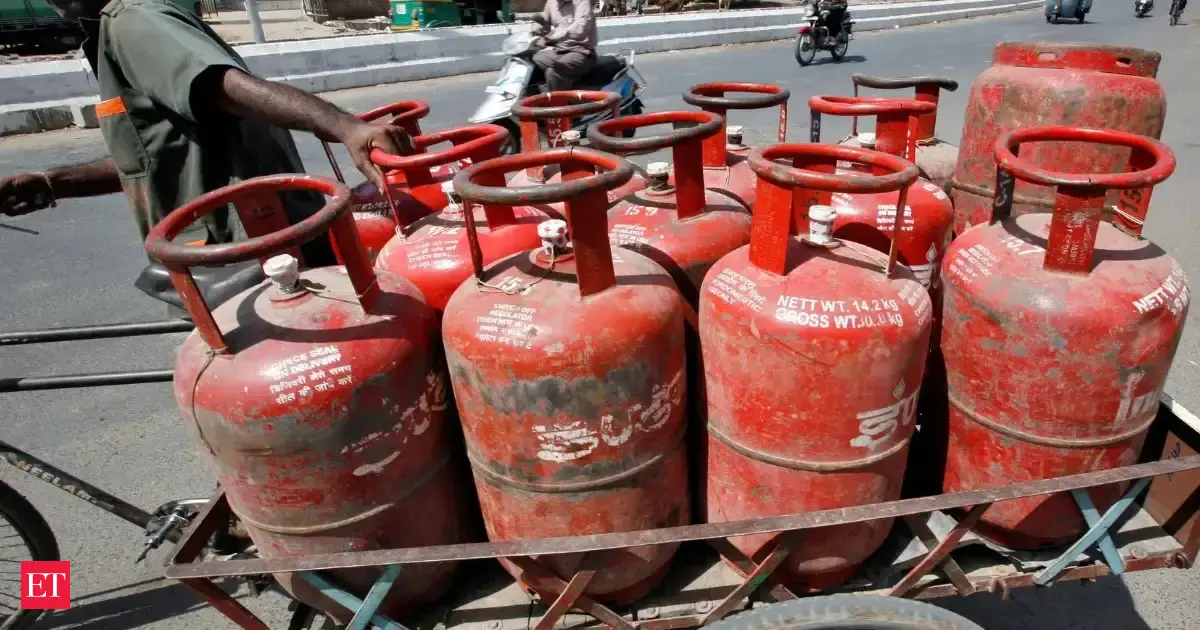
India is bolstering fuel supplies and aiding citizens abroad due to West Asia developments. Authorities assure stable energy chains with high refinery output and ample stock. Relief measures include free LPG cylinders and intensified raids against hoarding. Commercial LPG is capped, prioritizing domestic use. Consumers are urged to avoid panic buying and conserve energy. View More
The government on Saturday outlined a sweeping set of measures to safeguard fuel supplies, expand gas access and support Indian nationals abroad, as it stepped up preparedness in view of the evolving situation in West Asia. Amid concerns over disruptions linked to the closure of the Strait of Hormuz, authorities said India’s energy supply chain remains stable, backed by high refinery output, adequate inventories and calibrated demand management. Also Read: India’s gas shortage will make Dal compete with data Small 5 kg free trade LPG (FTL) cylinders have emerged as a key relief measure, with over 71,000 units sold in a single day and about 5.7 lakh distributed since March 23, according to an official update. These cylinders are available at LPG distributorships on valid ID without requiring address proof. The government has also intensified enforcement against hoarding and black marketing , conducting more than 3,700 raids in a single day. Public sector oil marketing companies (OMCs) have issued around 1,000 show-cause notices to distributors so far, with 27 distributorships suspended. Live Events To ensure steady supply, the Centre has capped commercial LPG allocation at 70% of pre-crisis levels, while prioritising domestic consumption and essential services such as hospitals and educational institutions. " Govt. is making all efforts to ensure availability of Petrol, Diesel and LPG, and citizens are advised to avoid panic purchase of Petrol and Diesel as well as unnecessary booking of LPG," the statement said. Authorities have also urged citizens to rely on official information and conserve energy, while encouraging a shift to alternate fuels such as piped natural gas (PNG), induction and electric cooking solutions. Also Read: Indian LPG vessel Green Sanvi transits Strait of Hormuz; supplies, seafarers under watch: Report PNG expansion has gathered pace, with more than 3.5 lakh new connections gasified since March 2026 and over 3.8 lakh additional customers registered. City gas distribution companies have been directed to prioritise connections for commercial establishments like restaurants and hotels. In the industrial sector, gas supplies are being ramped up. Fertiliser plants, currently receiving 70–75% of their six-month average consumption, will see supplies increase to about 90% from April 6. Supply to other industrial and commercial consumers is also set to rise by an additional 10%. Domestic LPG supply remains under pressure due to geopolitical developments, but there have been no reported dry-outs at distributorships. Around 51 lakh domestic LPG cylinders were delivered in a day, with online bookings rising to 95% and delivery authentication compliance increasing sharply to 89%. On the crude and refining front, all refineries are operating at high capacity with adequate inventories, while domestic LPG production has been stepped up to meet demand. To shield consumers from surging global crude prices, the government has cut excise duties on petrol and diesel by Rs 10 per litre. It has also imposed export levies of Rs 21.5 per litre on diesel and Rs 29.5 per litre on aviation turbine fuel (ATF) to ensure adequate domestic availability. Maritime operations remain stable, with LPG vessel Green Sanvi safely transiting the Strait of Hormuz carrying 46,650 metric tonnes of cargo. A total of 17 Indian-flagged vessels with 460 Indian seafarers remain in the western Persian Gulf region under close monitoring. The Directorate General of Shipping has facilitated the repatriation of over 1,320 Indian seafarers so far, including 190 in the last 24 hours, while handling more than 5,000 calls and over 10,000 emails through its control room. Indian missions across the region continue to operate 24x7 helplines, assisting nationals with travel, visas and emergency support. Since February 28, around 6.75 lakh passengers have travelled from the region to India despite airspace disruptions. The government reiterated that fuel supplies remain adequate and urged citizens to avoid panic buying, while states have been asked to intensify monitoring, counter misinformation and ensure smooth distribution of essential commodities. .Pbanner{display:flex;justify-content:space-between;align-items:center;background-color:#ec1c40;margin-top:20px;padding:5px 10px;border-radius:4px;color:#fff;line-height:10px;} .Pbannertext{display:flex;align-items:center;font-size:16px;font-weight:600;font-family:'Montserrat';} .Pbannertext img{height:20px;margin:0 6px} .Pbannerbutton a{display:flex;align-items:center;background-color:#fff;color:#ec1c40;text-decoration:none;font-weight:600;padding:4px 8px;border-radius:6px;font-size:15px;font-family:'Montserrat';} .Pbannerbutton img{height:20px;margin-right:6px} .Pbannerbutton a:hover{background-color:#f7f7f7} Add as a Reliable and Trusted News Source Add Now! (You can now subscribe to our Economic Times WhatsApp channel) (You can now subscribe to our Economic Times WhatsApp channel)

Engineers have opened the world's second osmotic power plant, generating electricity from the difference in salinity between treated sewage water and concentrated seawater waste. This innovative technology could offer a consistent power source, independent of weather conditions, and potentially combat global warming. View More
A Japanese water plant is harnessing the natural process of osmosis to generate renewable energy that could one day become a common power source. The possibility of generating power from osmosis when water molecules pass from a less salty solution to a more salty one has long been known. But actually generating energy from that has proved more complicated, in part due the difficulty of designing the membrane through which the molecules pass. Engineers in the city of Fukuoka and their private partners think they might have cracked it, and have opened what is only the world's second osmotic power plant. It generates power from the transfer of molecules between treated sewage water and concentrated seawater, a waste product from a desalination plant in the city. Live Events "If osmotic power generation technology advances to the point where it can be practically used with ordinary seawater... this, in turn, would represent a major contribution to efforts against global warming," said Kenji Hirokawa, manager at Sea Water Desalination Plant. Osmosis is familiar to most people. It is the process that, for example, causes water to seep out of a cucumber or eggplant when sprinkled with salt. Water molecules move across membranes from an area of low solution concentration to an area of higher concentrated solution. At scale, that movement can be significant enough to turn a turbine and thereby generate electricity. Desalination solution Fukuoka is particularly well-placed to benefit from the technology because it has a readily available source of extremely salty water the brine leftover from desalination. With no major rivers to sufficiently source its water, the city and wider Fukuoka region of 2.6 million people have relied on a major desalination plant to produce drinking water since 2005. That left the city with large quantities of concentrated saline waste water to deal with. Ordinarily it is diluted and released back to the sea. Previous attempts to find alternatives, including salt making, failed to gain traction. Then engineering firm Kyowakiden Industry approached the city about harnessing the salty wastewater for osmotic power. "When our company rolls this out as a business, we aim to build plants roughly five to 10 times the scale of this current facility," said Tetsuro Ueyama, research and development manager at the Nagasaki-based company. In Fukuoka's system, a generator is attached to a local desalination plant located near a sewage treatment facility. It draws in highly saline waste water from the desalination plant and receives treated sewage. The two separate streams of liquid go through a number of chambers separated by semi-permeable membranes through which water molecules travel from the treated sewage toward the salty water. That process increases the volume, pressure and speed of the saline water flow, spinning a turbine that generates electricity before the now-diluted mixture is discharged to sea. The 700-million-yen ($4.4 million) power generation system came online last August, and once running at full capacity, it should generate up to 880,000 kilowatts annually, equivalent to the electricity consumption of 300 households. However, it will remain devoted to supplying the power-thirsty facility, although it covers just a tiny fraction of its energy needs. Not 'a pipe dream' The engineers involved, however, are dreaming big. The system will go through a five-year test to monitor its performance, including costs and maintenance, particularly for the membrane and other parts exposed to salt. Financial details of the project have not been disclosed, but engineers admitted that for now the system's power costs "a lot more" than either fossil fuel or renewable energy. Pumping the water into the system also uses energy itself, and scaling up osmotic power for grid-level energy production has not yet been done anywhere in the world. Still, officials and experts believe the power source has a future, noting that unlike solar and wind, it is not dependent on weather or light. And the current high costs are partly because the company had to build a one-of-a-kind power plant, Ueyama said. Osmotic power has often been seen as primarily useful for estuary areas, where freshwater river flows meet the salty ocean. But Ueyama said the technique being used in Japan could be useful for countries with large desalination facilities like Saudi Arabia and other Middle Eastern nations. Kyowakiden is also working on technology that could generate similar power levels from less salty regular seawater. "First we want to popularise this technology from Fukuoka to the rest of Japan. In order for us to do that, we want to further upgrade our technology to create osmotic power generation that can use ordinary ocean water to generate electricity," he said. "We don't think this is a pipe dream." .Pbanner{display:flex;justify-content:space-between;align-items:center;background-color:#ec1c40;margin-top:20px;padding:5px 10px;border-radius:4px;color:#fff;line-height:10px;} .Pbannertext{display:flex;align-items:center;font-size:16px;font-weight:600;font-family:'Montserrat';} .Pbannertext img{height:20px;margin:0 6px} .Pbannerbutton a{display:flex;align-items:center;background-color:#fff;color:#ec1c40;text-decoration:none;font-weight:600;padding:4px 8px;border-radius:6px;font-size:15px;font-family:'Montserrat';} .Pbannerbutton img{height:20px;margin-right:6px} .Pbannerbutton a:hover{background-color:#f7f7f7} Add as a Reliable and Trusted News Source Add Now!
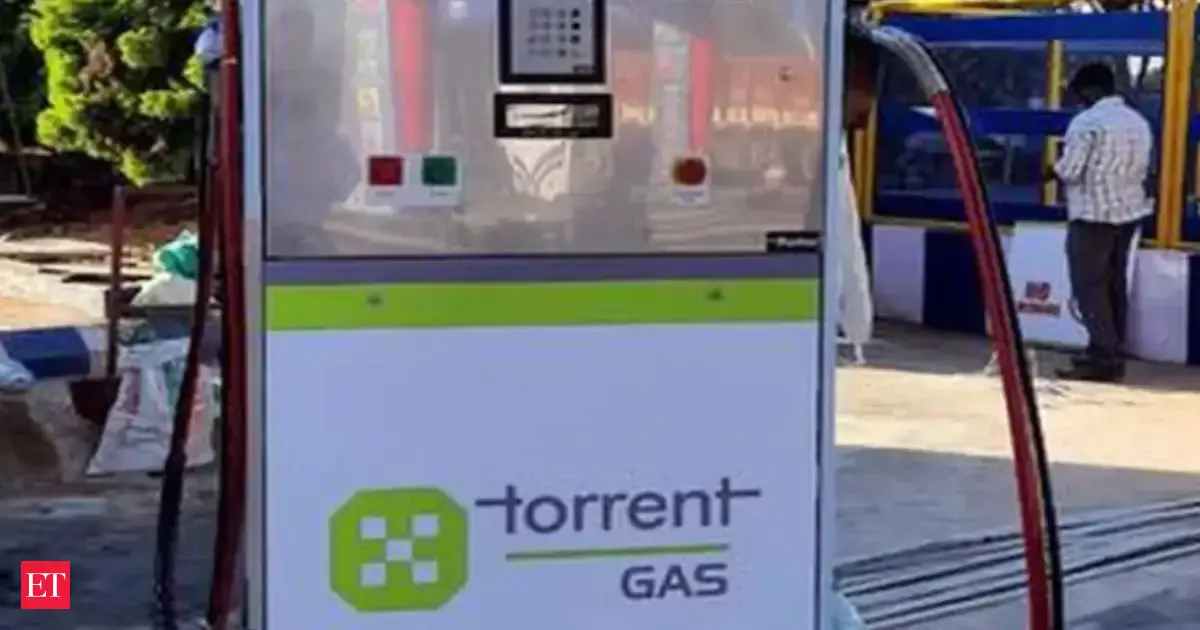
Torrent Gas has increased compressed natural gas prices by Rs 2.50 per kg. This rise is causing concern for residents and auto-rickshaw drivers. Fuel costs are generally increasing. Commercial LPG and aviation turbine fuel prices have also seen hikes. Global energy market pressures are driving these changes. View More
Torrent Gas has increased the price of compressed natural gas (CNG) by Rs 2.50 per kg in the city, PTI reported on Saturday. The hike has sparked concern among residents over rising fuel costs. Some locals said the increase would add to their daily expenses, while auto-rickshaw drivers flagged pressure on their earnings due to shrinking margins. The revision comes amid a broader uptick in fuel prices. Commercial LPG cylinder rates were raised from April 1 across major cities, alongside an increase in aviation turbine fuel (ATF) prices, reflecting a wider trend driven by global energy market pressures. Click here for live updates on the US-Israel Iran War The CNG price revision follows a series of fuel price increases across the country. From April 1, commercial LPG cylinder prices were sharply raised, with a 19-kg cylinder in Delhi now costing Rs 2,078.50 after a hike of Rs 195.50. Smaller 5-kg cylinders have also become costlier, while domestic LPG rates remain unchanged after a recent increase in March. Live Events Fuel prices have been on an upward trajectory due to global factors, particularly escalating geopolitical tensions in West Asia and disruptions in crude oil supply routes, including the Strait of Hormuz. The rise in energy costs has also pushed up aviation turbine fuel (ATF) prices, impacting airlines and airfares. Also Read: Jet fuel prices up 8.5%, not 115%, domestic airlines shielded, IOC clarifies The combined effect of these increases is being felt across sectors, from transport to hospitality, with businesses and consumers alike grappling with higher operating costs. .Pbanner{display:flex;justify-content:space-between;align-items:center;background-color:#ec1c40;margin-top:20px;padding:5px 10px;border-radius:4px;color:#fff;line-height:10px;} .Pbannertext{display:flex;align-items:center;font-size:16px;font-weight:600;font-family:'Montserrat';} .Pbannertext img{height:20px;margin:0 6px} .Pbannerbutton a{display:flex;align-items:center;background-color:#fff;color:#ec1c40;text-decoration:none;font-weight:600;padding:4px 8px;border-radius:6px;font-size:15px;font-family:'Montserrat';} .Pbannerbutton img{height:20px;margin-right:6px} .Pbannerbutton a:hover{background-color:#f7f7f7} Add as a Reliable and Trusted News Source Add Now! (You can now subscribe to our Economic Times WhatsApp channel) (You can now subscribe to our Economic Times WhatsApp channel)

Microsoft said it plans to invest $10 billion in Japan between 2026 and 2029 to build AI infrastructure. View More
In this article9984.T-JP3778.T-JP6702.T-JP6501.T-JPFollow your favorite stocksCREATE FREE ACCOUNT Microsoft's Vice Chair and President Brad Smith (L) and Japan's Prime Minister Sanae Takaichi pose before their meeting at the Prime Minister's Office in Tokyo on April 3, 2026.Kazuhiro Nogi | Afp | Getty Images Shares of Sakura Internet surged as much as 20.2% Friday after Microsoft said it has begun discussions with the Japanese cloud company and SoftBank to develop artificial intelligence infrastructure in Japan.Microsoft said it plans to invest $10 billion in Japan between 2026 and 2029 to build AI infrastructure, strengthen cybersecurity and train 1 million engineers and developers by 2030.Sakura Internet, which provides internet infrastructure services using domestic data centers, and Japanese telecommunications giant SoftBank Corp. will partner with Microsoft to provide AI computing resources, including graphics processing units located in Japan. The announcement came during a visit to Japan by Microsoft Vice Chair and President Brad Smith, who met Prime Minister Sanae Takaichi.Smith said the investment comes as demand for cloud and AI services grows in Japan. Around one in five working-age people in the country use generative AI tools, compared with the global average of about one in six, according to Microsoft's AI Diffusion Report. Stock Chart IconStock chart icon The partnership will allow data to be processed in Japan and support the development of advanced AI systems such as domestic large language models, Microsoft said in a statement. SoftBank and Microsoft Japan are also discussing a joint solution that would allow Microsoft Azure customers to use SoftBank's AI computing platform.Shares of Softbank Group were up 0.22% in Friday trade, while SoftBank Corp. rose 1.02% Stock Chart IconStock chart icon Separately, Microsoft will partner with five other major Japanese IT companies, including NTT Data Corp., NEC, Fujitsu and Hitachi, to train 1 million AI professionals by 2030. Choose CNBC as your preferred source on Google and never miss a moment from the most trusted name in business news.

Association urges civil aviation minister to ensure that any pricing dispensation is applied in a fair, transparent, and non-discriminatory manner across all categories of commercial air operators View More

A host of global investors and Indian firms are positioning themselves to acquire IntelliSmart Infrastructure, signaling a vibrant growth phase for India's smart meter sector. The Indian government's visionary goal of deploying millions of smart meters by 2027 is a major catalyst for this surge. View More
Mumbai: More than half a dozen potential suitors including global investors Brookfield, Macquarie, KKR , and Actis are in early-stage talks to acquire IntelliSmart Infrastructure , said people familiar with the matter, reflecting strong investor interest in India's growing market for smart meters . Homegrown smart meter manufacturers such as Adani Energy Solutions , I Squared Capital-owned Polaris Smart Metering, GIC-backed Genus Power, and Apraava Energy are also evaluating the opportunity, the people said. IntelliSmart is owned 51% by India's sovereign wealth fund National Investment and Infrastructure Fund (NIIF) and 49% by debt-laden Energy Efficiency Services Ltd ( EESL ). Promoters of IntelliSmart are seeking an enterprise valuation of about $700 million (₹6,520 crore), the people said. Deloitte is managing the sale process, with the interested parties expected to submit non-binding bids within a few weeks. Live Events The potential sale coincides with the government's ambitious Revamped Distribution Sector Scheme (RDSS), which aims to install 250 million prepaid smart meters by 2027. The broader rollout is supported by an estimated ₹1.35 lakh crore investment through 2035 aimed at curbing power distribution losses. A spokesperson for Macquarie declined to comment. NIIF, EESL, KKR, Brookfield, Actis, Adani Energy, Apraava, Polaris, and Genus didn't respond to queries. Founded in 2019, IntelliSmart has made steady progress in India's smart metering rollout. The company has secured orders for around 22 million smart meters from various state utilities. However, only around 600,000 meters have been installed in Assam and about 500,000 in Uttar Pradesh so far. EESL-a joint venture of NTPC, Power Finance Corp, Rural Electrification Corp, and Power Grid Corp of India-has presence in multiple areas including electric car charging and smart metering. However, a large debt pile is believed to have prompted the sale of IntelliSmart. EESL had long-term borrowings of ₹6,045 crore as of March 31, 2025, compared to ₹7,070 crore a year earlier. Under RDSS, smart metering projects have been sanctioned for 45 distribution utilities across 28 states and union territories. About 40.5 million smart meters had been installed under the scheme as of January 15. Meter installation delays have been attributed to multiple factors, including right-of-way issues, limited consumer awareness, operational challenges faced by Advanced Metering Infrastructure Service Providers (AMISPs), and deferred inspections by discoms for commissioning approvals, according to a recent Crisil report. The report also noted that the delays could inflate project costs due to rising smart meter prices, potentially impacting projects' annualised returns. Meanwhile, global investors have been turning increasingly aggressive in India's smart meter market. In 2023, Singapore's GIC took a 74% stake in Jaipur-based Genus Power & Infrastructure for $2 billion to establish an AMISP platform. The same year, I Squared Capital acquired a controlling interest in Polaris Smart Metering Pte Ltd., committing up to $100 million to expand its presence. Apraava Energy has also expanded its footprint through subsidiaries Apraava Smart Meter and Apraava Kutch Saurashtra Smart Meter, executing smart metering projects, including a contract to install 690,000 prepaid smart meters in Assam and 2.4 million meters in Gujarat. In December, the company raised ₹800 crore from British International Investment and Standard Chartered to support its advanced metering infrastructure initiatives. Separately, UK-based fund Actis formed a joint venture with EDF India last year to create a dedicated platform for AMISP concessions. .Pbanner{display:flex;justify-content:space-between;align-items:center;background-color:#ec1c40;margin-top:20px;padding:5px 10px;border-radius:4px;color:#fff;line-height:10px;} .Pbannertext{display:flex;align-items:center;font-size:16px;font-weight:600;font-family:'Montserrat';} .Pbannertext img{height:20px;margin:0 6px} .Pbannerbutton a{display:flex;align-items:center;background-color:#fff;color:#ec1c40;text-decoration:none;font-weight:600;padding:4px 8px;border-radius:6px;font-size:15px;font-family:'Montserrat';} .Pbannerbutton img{height:20px;margin-right:6px} .Pbannerbutton a:hover{background-color:#f7f7f7} Add as a Reliable and Trusted News Source Add Now! (You can now subscribe to our Economic Times WhatsApp channel) (You can now subscribe to our Economic Times WhatsApp channel)

NTPC achieved a record capacity addition of 9,619 MW in fiscal year 2025-26. The company generated 432.2 billion units of electricity. Renewable capacity addition reached 5,488 MW. Coal production saw a 6.22 percent year-on-year growth. Power trading also experienced a 13 percent increase. NTPC is expanding its diversified portfolio and aims for 149 GW total capacity by 2032. View More
New Delhi, NTPC on Thursday said it generated 432.2 billion units of electricity and achieved highest every capacity addition of 9,619 MW in fiscal year 2025-26. NTPC added 5,488 MW of renewable capacity in FY26 across solar, wind, and Pumped Storage Projects (PSP), a company statement said. In FY26, NTPC achieved coal production of 48.65 million tonne, registering a steady 6.22 per cent year-on-year (YoY) growth. The company also recorded a strong growth in power trading , with 46.52 billion units traded in FY26, marking 13 per cent year-on-year growth. NTPC achieved 105 per cent ash utilisation, utilising 109 million tonne of ash, it added. Live Events As part of its diversified portfolio, NTPC currently operates more than 89 GW of installed capacity, with another 32 GW under construction. The company has set a target to reach 149 GW of total capacity by 2032, including 60 GW from renewable energy sources. This includes a balanced mix of thermal, hydro, solar, and wind power plants, ensuring supply of reliable, affordable, and sustainable electricity to the country. Along with power generation, NTPC has ventured into various new business areas, including e-mobility, battery storage, pumped hydro storage, waste-to-energy, nuclear power, and green hydrogen solutions. .Pbanner{display:flex;justify-content:space-between;align-items:center;background-color:#ec1c40;margin-top:20px;padding:5px 10px;border-radius:4px;color:#fff;line-height:10px;} .Pbannertext{display:flex;align-items:center;font-size:16px;font-weight:600;font-family:'Montserrat';} .Pbannertext img{height:20px;margin:0 6px} .Pbannerbutton a{display:flex;align-items:center;background-color:#fff;color:#ec1c40;text-decoration:none;font-weight:600;padding:4px 8px;border-radius:6px;font-size:15px;font-family:'Montserrat';} .Pbannerbutton img{height:20px;margin-right:6px} .Pbannerbutton a:hover{background-color:#f7f7f7} Add as a Reliable and Trusted News Source Add Now! (You can now subscribe to our Economic Times WhatsApp channel) (You can now subscribe to our Economic Times WhatsApp channel)

Reliance Industries SEZ refinery will not face new export taxes on diesel and aviation fuel. This exemption stems from judicial pronouncements. The government reintroduced these levies on March 26 to encourage domestic fuel sales. These taxes are reviewed fortnightly. This move aims to manage global energy supply disruptions. Reliance operates two refineries in Jamnagar, Gujarat. View More
The reimposed windfall export taxes on diesel and aviation turbine fuel (ATF) will not apply to Reliance Industries Ltd's SEZ refinery due to judicial rulings, a senior official said on Thursday. Effective March 26, the government revised fuel levies, reintroducing export duties of Rs 21.50 per litre on diesel and Rs 29.50 per litre on ATF, while keeping petrol exports exempt. The move coincided with a Rs 10 per litre cut in excise duty on petrol and diesel. Initially, it was not clear if exports from Reliance's special economic zone (SEZ) refinery - one of the largest contributors to India's refined product exports - would retain exemptions similar to those under the 2022 windfall tax regime. "As per judicial prouncements on this issue, the special additional excise duty and additional excise duty are not applicable on SEZ refineries," Jainendra Singh Kandhari, Joint Secretary in the Tax Research Unit (TRU-1) of the Department of Revenue, said at a media briefing. The government reinstated the windfall export tax amid disruptions to global energy supplies caused by the Middle East conflict. The levy, first introduced in July 2022 following Russia's invasion of Ukraine and withdrawn in December 2024, has been reimposed in the form of a special additional excise duty (SAED) to encourage refiners to prioritise domestic sales over exports. Live Events Reliance owns and operates two refineries at Jamnagar in Gujarat - a 33 million tonnes per year unit catering to the domestic market and a 35.2 million tonnes only-for-exports SEZ unit. The export tax will be reviewed fortnightly -- as was the practice previously -- to align the duty with prevailing rates. According to a Citi Research report, the export taxes are equivalent to USD 36 per barrel on diesel and USD 50 per barrel on jet fuel. "In FY25, 75 per cent of Reliance's diesel production and 35 per cent of its jet fuel production were from its SEZ refinery, which we believe, based on 2022 precedent, could be exempt from this tax. "If we therefore assume the export tax is applicable only on the non-SEZ volumes, the impact should be largely offset by still-elevated diesel/jet fuel cracks vs pre-conflict levels," it had said in the report last week. The government, on March 26, announced the first material reduction in domestic petroleum excise duty since April 2022, offering relief to oil marketing companies (OMCs) that had been incurring huge losses after being unable to raise retail prices of petrol and diesel despite a sharp surge in crude oil costs. In a separate note, Jefferies said the reimposed export duty broadly caps diesel/ATF spreads at USD 20 per barrel for standalone refiners like Reliance. "This is similar to the level of margin caps introduced during the Russia-Ukraine conflict in 2022. However, this time the movement in crude premiums and freight rates has been very stiff, making capturing spreads challenging for global refiners. .Pbanner{display:flex;justify-content:space-between;align-items:center;background-color:#ec1c40;margin-top:20px;padding:5px 10px;border-radius:4px;color:#fff;line-height:10px;} .Pbannertext{display:flex;align-items:center;font-size:16px;font-weight:600;font-family:'Montserrat';} .Pbannertext img{height:20px;margin:0 6px} .Pbannerbutton a{display:flex;align-items:center;background-color:#fff;color:#ec1c40;text-decoration:none;font-weight:600;padding:4px 8px;border-radius:6px;font-size:15px;font-family:'Montserrat';} .Pbannerbutton img{height:20px;margin-right:6px} .Pbannerbutton a:hover{background-color:#f7f7f7} Add as a Reliable and Trusted News Source Add Now! (You can now subscribe to our Economic Times WhatsApp channel) (You can now subscribe to our Economic Times WhatsApp channel)