
Latest Sectors News

Every weekday, the Investing Club releases the Homestretch; an actionable afternoon update just in time for the last hour of trading. View More
Every weekday, the CNBC Investing Club with Jim Cramer releases the Homestretch â an actionable afternoon update, just in time for the last hour of trading on Wall Street. Stocks gave up earlier gains and edged lower Friday afternoon , putting the S & P 500's seven-day winning streak at risk. It's been a strong week for the market, with the S & P 500 up roughly 3.5%, so we're not surprised to see some profit-taking after such a big run. We said on the Morning Meeting that we would have right-sized our Broadcom position into Friday's strength (but we cannot trade a stock that Jim Cramer mentions on CNBC TV for 72 hours). Look out for a trade on Monday if we are not restricted. The rally will be put to the test this weekend when delegates from the U.S. and Iran meet in Pakistan for peace talks on Saturday. As the start of first-quarter earnings season approaches , we're making a handful of changes to stocks trading above or near our price targets. We are nudging up our Dover price target to $230 from $220. We think 2026 is shaping up well for this diversified industrial company, as each of its businesses is expected to grow this year, and it has very limited direct exposure to the Middle East. We are increasing our GE Vernova price target to $1,000 from $875, which is more in line with the recent views of several bullish analysts. In Goldman Sachs' earnings preview, analysts said they are expecting another quarter of strong gas turbine orders and upside in GEV's electrification division, which sells transformers, switchgear and other products found across the electrical grid. We are taking Corning to $180 from $160. On Friday, Lumentum CEO Michael Hurlston talked about the company being almost sold out of optical components through 2028, suggesting strong demand and pricing power for all things fiber. Lumentum's technology helps convert electrical signals into light, and Corning makes the optical fiber that transmits the light across the data center. Besides earnings, another potential catalyst would be Corning announcing another multiyear supply agreement with a hyperscaler, like the one it did with fellow Club name Meta in January. Hyperscalers are racing to secure their AI infrastructure supply chain, and we think more deals to sell optical fiber, cables and connectivity products are likely. One more positive update we are making is on Linde . We are raising our price target to $540 from $510, reflecting our view that the global helium shortage tied to the Middle East conflict will act as a tailwind for the industrial gas supplier's earnings. Over a longer horizon, Linde can gain share in the helium market by creating long-term supply agreements with new customers. On the other side, we are lowering our price target on two software stocks : Salesforce and Microsoft . Both companies are being pressured by the threat of AI and Anthropic taking share from enterprise software. We don't think this overhang will go away any time soon, pressuring price to-earnings multiples across the group. For Salesforce, we are lowering our $250 price target to $215. For Microsoft, we are moving to $500 from $600. We have hold-equivalent 2 ratings on both stocks, and we currently do not plan on adding to either position. Next week, a few portfolio companies kick off first-quarter earnings season . We'll hear from Goldman Sachs on Monday, and both Johnson & Johnson and Wells Fargo on Tuesday. We'll have previews for all three Club names in our week ahead column Sunday. Some other notable reports next week will come from JPMorgan , BlackRock , Citigroup , ASML , Morgan Stanley , Bank of America , PepsiCo , Taiwan Semi , Abbott Labs , and Netflix . (See here for a full list of the stocks in Jim Cramer's Charitable Trust.) As a subscriber to the CNBC Investing Club with Jim Cramer, you will receive a trade alert before Jim makes a trade. Jim waits 45 minutes after sending a trade alert before buying or selling a stock in his charitable trust's portfolio. If Jim has talked about a stock on CNBC TV, he waits 72 hours after issuing the trade alert before executing the trade. THE ABOVE INVESTING CLUB INFORMATION IS SUBJECT TO OUR TERMS AND CONDITIONS AND PRIVACY POLICY , TOGETHER WITH OUR DISCLAIMER . NO FIDUCIARY OBLIGATION OR DUTY EXISTS, OR IS CREATED, BY VIRTUE OF YOUR RECEIPT OF ANY INFORMATION PROVIDED IN CONNECTION WITH THE INVESTING CLUB. NO SPECIFIC OUTCOME OR PROFIT IS GUARANTEED.

India's chemical exporters are struggling despite a ceasefire. Supply chains remain disrupted, and costs are high. Shipping through the Gulf corridor is uncertain, affecting imports and exports. View More
A ceasefire in West Asia has brought a pause in hostilities but not the much-needed relief for India’s chemical exporters, who continue to grapple with supply chain disruptions, elevated input costs, and shipping uncertainties along the critical Gulf corridor. Chemical unit owners say operations linked to the Strait of Hormuz remain strained, with logistics disruptions and volatile raw material prices continuing to impact production planning and export commitments. The war-triggered pressures continue to affect the sector, exposing its reliance on energy imports from the Gulf. “We still await clarity on shipping lines as almost 40–50% of our imports, exports and transshipment volumes are currently at risk due to the conflict,” said Satish Wagh, Chairman of Chemexcil , the apex industry body representing chemical exporters in the country. Wagh told ET Online that over 60% of Chemexcil’s members are SMEs, and that crude oil, LNG, and refined petroleum products are directly dependent on seamless marine traffic through this corridor. Besides, feedstocks used extensively by chemical players, such as naphtha, LPG and ethane, along with intermediates like ethylene, propylene, methanol and ammonia, are dependent on these routes, he added. Live Events Another pain point he highlighted is that, as of now, while the ceasefire has reduced escalation risks, shipping operations have not normalised as before. Insurers continue to classify parts of the region as high-risk zones, keeping war-risk premiums elevated. Vessel rerouting to avoid sensitive areas is increasing transit times and operating costs. “Shipping lines have imposed emergency conflict surcharges of $2,000 per 20-foot container, $3,000 per 40-foot container and $4,000 per reefer container,” Wagh said. The impact is already visible in project timelines, according to industry observers. Delivery schedules linked to chemical projects are slipping by 25–30 days due to delayed imports, Wagh said. On the ground, exporters report a sharper squeeze on raw materials and energy inputs. Rajata Mehra, Convenor, CII Policy Advocacy Panel, and Director, Rajat Chemicals Industry, said several key materials sourced from Gulf Cooperation Council (GCC) countries have become significantly costlier and less predictable in pricing. “Potash-based raw materials such as MOP have witnessed a sharp jump in prices,” Mehra said, adding that imports of helium, urea, sulphur, aluminium and caustic soda are directly impacted, particularly those linked to energy-intensive processes. Due to the volatile trading environment, energy availability has emerged as a key fault line. With liquefied natural gas (LNG) supplies tightening, many chemical manufacturers have shifted to alternative fuels such as light diesel oil (LDO). “Industries meet their process heating requirements through natural gas or light diesel oil. In the wake of LNG shortages, supplies have been restricted and industries have switched to LDO. Prices of both fuels have risen steeply, increasing direct production costs,” he said. The cost pressures extend beyond factories into logistics and financing. Inland freight rates have risen alongside diesel prices, which have crossed Rs 104 per litre in some regions, Mehra said, adding that volatility in product prices is inflating inventory costs and increasing working capital requirements. “MSMEs are facing a double impact of higher inventory costs and rising working capital needs, along with the risk of unpredictable losses if prices suddenly correct,” he said. In the absence of clarity on the ‘fine print’ of the truce, exporters say they are also dealing with shipment delays, rerouting and congestion, which are extending lead times and forcing firms to hold higher inventory levels. This is tightening liquidity and complicating order execution. The business uncertainty is also weighing heavily on pricing power. “The chemical sector operates on wafer-thin margins with minimal room for error. The entire incremental cost has to be passed on to customers, otherwise the business becomes unviable,” Mehra said. Industry's view is that efforts to diversify sourcing and logistics routes are underway but remain costly. Mehra noted that cost differentials vary across products but are substantial and comparable to disruptions seen during the Russia-Ukraine conflict. Looking ahead, exporters warn that the risk to trading consignments and volumes remains elevated. “Organic and inorganic chemicals, including agrochemicals, are at risk over the next 30–60 days if geopolitical disruptions persist in any form,” Wagh said. When asked what the biggest single bottleneck is—raw material availability, logistics, or energy costs—Wagh identified logistics as the primary bottleneck at a sectoral level, while Mehra pointed to raw material availability at viable prices as the most pressing constraint for exporters. Looking ahead, industry experts say recurring geopolitical flashpoints could drive structural shifts in sourcing and risk management. Gaurav Moda Partner and Energy Sector Leader, EY-Parthenon India , said companies are increasingly moving towards risk-adjusted sourcing strategies, even if it means higher costs, as supply disruptions carry greater economic impact. He added that in the near term, disruptions around the Strait of Hormuz are likely to keep freight and insurance costs elevated, while firms focus on building supply chain resilience through supplier diversification, alternative sourcing routes, and greater inventory buffers to manage volatility. .Pbanner{display:flex;justify-content:space-between;align-items:center;background-color:#ec1c40;margin-top:20px;padding:5px 10px;border-radius:4px;color:#fff;line-height:10px;} .Pbannertext{display:flex;align-items:center;font-size:16px;font-weight:600;font-family:'Montserrat';} .Pbannertext img{height:20px;margin:0 6px} .Pbannerbutton a{display:flex;align-items:center;background-color:#fff;color:#ec1c40;text-decoration:none;font-weight:600;padding:4px 8px;border-radius:6px;font-size:15px;font-family:'Montserrat';} .Pbannerbutton img{height:20px;margin-right:6px} .Pbannerbutton a:hover{background-color:#f7f7f7} Add as a Reliable and Trusted News Source Add Now!

Trump said the temporary ceasefire is "subject to the Islamic Republic of Iran agreeing to the COMPLETE, IMMEDIATE, and SAFE OPENING of the Strait of Hormuz." View More
National Economic Council Director Kevin Hassett speaks to the press outside the White House, in Washington, Feb. 11, 2026.Anna Moneymaker | Getty Images President Donald Trump's top economic advisor Kevin Hassett said Thursday that getting even one oil tanker through the Strait of Hormuz would provide a "huge chunk of what's missing" amid a global supply crunch caused by the U.S.-Israel war in Iran.Hassett, director of White House's National Economic Council, made the claim as traffic through the key shipping route remains tightly throttled, despite the U.S. and Iran reaching a fragile ceasefire that ostensibly involves reopening the strait.More than 100 commercial vessels, mostly oil tankers, were passing through the strait each day before the war started on Feb. 28, according to data from Kpler.Matt Smith, Kpler's lead oil analyst, said just two tankers â one of which was Iranian â and a handful of bulk carriers have transited the waterway since the two-week ceasefire was announced Tuesday evening.That's within the meager range of traffic that has been seen throughout the war, providing Iran with a key source of leverage even as it's weathered punishing military strikes from the U.S. and Israel. The blockage of the strait, which normally ferries 20% of the world's oil, sent global energy prices soaring. Oil prices fell sharply following news of the ceasefire, but jumped back above $100 per barrel on Thursday."We have an agreement [with] the Iranians that they're going to open the Strait of Hormuz, and that we'll have a ceasefire," Hassett said in a Fox Business interview Thursday morning."They have said that they're going to start letting many more ships through," Hassett said of Iran. "We'll watch as the day progresses, whether that's true or not, being mindful of the fact that if you get one of those big tankers through, that's 2 million barrels. So that's a huge chunk of what's missing," he said.Before the war, about 20 million barrels of oil were transiting the strait per day. And since the war began Feb. 28, hundreds of millions of barrels have been taken off the market due to an inability to be shipped out of the Persian Gulf, said Amena Bakr, an expert on the Middle East and OPEC at Kpler. watch nowVIDEO9:2709:27Watch CNBC's full interview with NEC director Kevin HassettMoney Movers Hassett said, "In the end, I think we're not going to have complete clarity until we finish the negotiations" set to begin this weekend in Islamabad, Pakistan."We fully expect that we've got so much on the table that we're willing to give to help the Iranian people, if they just act normally, that hopefully there will be cooler heads and sounder minds at the Iranian side, and that will come to a final agreement this weekend," he said.Hassett's comments came one day after Defense Secretary Pete Hegseth said "what has been agreed to, what's been stated is, the strait is open." Read more CNBC politics coverageTrump praises Hungary PM Viktor Orbán after Vance calls him at Budapest rallyBill Gates interview about Jeffrey Epstein by House Oversight set for June 10House Democrats call on federal regulator to crack down on offshore prediction market war bets White House press secretary Karoline Leavitt said later Wednesday that the U.S. has "seen an uptick of traffic in the strait today.""I will reiterate the president's expectation and demand that the Strait of Hormuz is reopened immediately, quickly and safely" amid the ceasefire, Leavitt said. She denied reporting from Iranian state news that oil tanker traffic had been halted following Israeli attacks on Lebanon.Trump announced the two-week ceasefire Tuesday evening, shortly before his deadline for Iran to either make a deal or face the devastation of its "whole civilization." The temporary ceasefire is "subject to the Islamic Republic of Iran agreeing to the COMPLETE, IMMEDIATE, and SAFE OPENING of the Strait of Hormuz," Trump wrote in a Truth Social post.But experts and maritime industry leaders say the strait traffic has not picked up since the ceasefire took effect."Let's be clear: the Strait of Hormuz is not open. Access is being restricted, conditioned and controlled," Sultan Ahmed Al Jaber, CEO of Abu Dhabi National Oil Company, said Thursday.Ships passing through the strait must obtain permission from Iran, which is reportedly planning to impose new tolls on the transiting vessels, Al Jaber said."That is not freedom of navigation. That is coercion," he said.Iran on Wednesday accused the U.S. of breaching the ceasefire by violating parts of Tehran's 10-point proposal for a temporary pause in hostilities. Choose CNBC as your preferred source on Google and never miss a moment from the most trusted name in business news.
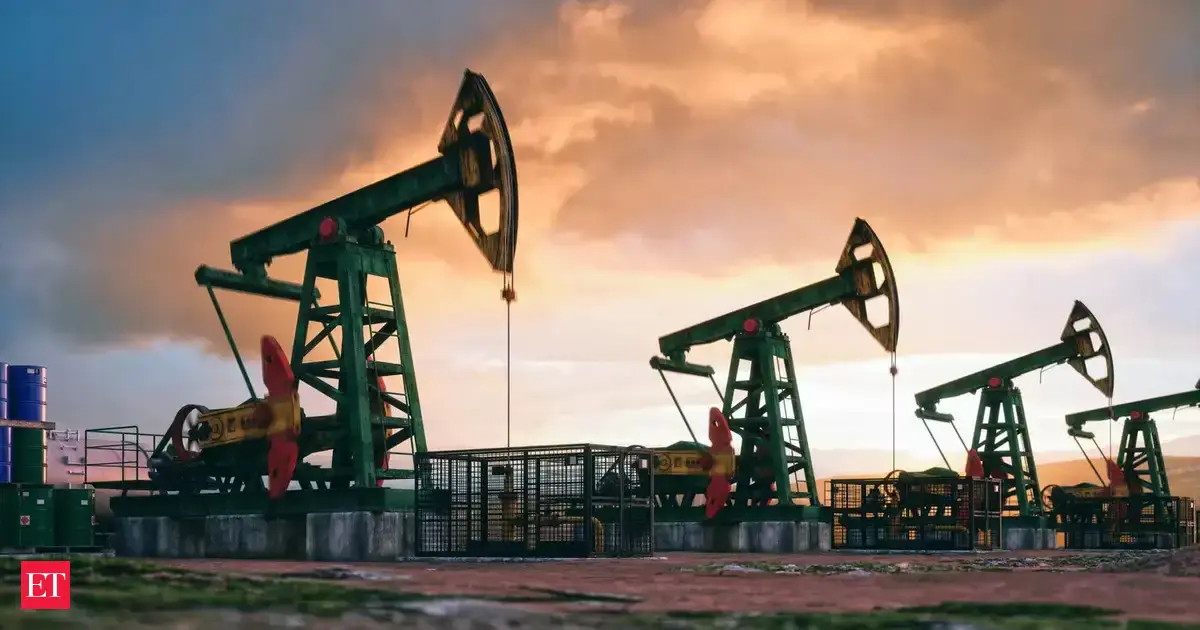
India has capped refinery margins to manage losses on domestic fuel sales. This follows a windfall tax on fuel exports. The move aims to balance record losses on petrol and diesel due to high international oil prices. Refineries will now effectively transfer excess earnings to state-run marketing companies. This adjustment impacts the pricing of diesel, aviation turbine fuel, and kerosene. View More
New Delhi: After imposing a windfall tax on fuel exports, India has moved to cap refinery margins in a bid to offset losses on domestic fuel sales, sources said. The war in West Asia has had two prolonged impacts - spike in international oil prices that has led to record losses on petrol and diesel sales as retail rates have not changed in tandem. Secondly, it has given bumper margins to refineries, who irrespective of retail price freeze, price their products at imported cost. The government last month imposed a Special Additional Excise Duty (SAED) on exports of diesel and aviation turbine fuel (ATF), as part of efforts to curb windfall gains by refiners and boost domestic fuel availability amid tight global markets. Alongside, refining margins have been capped at USD 15 per barrel, with any earnings above that threshold treated as a discount on fuel sold to state-run marketing companies, effectively transferring excess gains to offset retail losses, sources said. Also Read: Iran war doubles Russia's main oil revenue to $9 billion in April Live Events The oil marketing companies (OMCs) on March 26 fixed rates for petroleum products that are at a discount of up to Rs 60 per litre to their imported cost. OMCs have decided to fix a discount on the refinery transfer price (RTP) - the internal price at which refineries sell fuel to marketing arms - to effectively pay refineries less than the import-parity cost of the fuels like petrol and diesel. For the second half of March, a discount of Rs 22,342 per kilolitre (Rs 22.34 per litre) was fixed on diesel to bring down the RTP of Rs 85,349 per kl to Rs 63,007 per kl. For the first fortnight of April, the discount on diesel has been fixed at Rs 60,239 per kl to lower RTP from Rs 146,243 per kl to Rs 86,004 per kl. On ATF, the RTP has been slashed to Rs 76,923 per kl from Rs 127,486 per kl after considering a discount of Rs 50,564 per kl. The RTP for kerosene after a discount of Rs 46,311 per kl has been fixed at Rs 77,534 per kl from Rs 123,845 per kl, they said. Traditionally, petrol and diesel in India have been priced on an import parity basis, meaning the fuels are valued as if they were imported, even though it is primarily crude oil that is brought into the country and refined locally. Refinery transfers of these products to oil marketing companies were based on import parity price (IPP) until June 2006, after which the government adopted trade parity pricing (TPP) - a benchmark that assigns 80 per cent weight to import parity price and 20 per cent to export parity price. This pricing protected refinery margins, particularly of standalone refiners who didn't have the cushion of marketing margins on petrol and diesel, whose pricing was deregulated by the government in 2010 and 2014, respectively. Despite being freed, petrol and diesel prices have not exactly moved in line with cost and have been on a freeze since April 2022, with OMCs absorbing losses when crude oil prices rise and making bumper profits when rates fell. Also Read: India set to get first Iranian oil cargo in 7 years The discount on RTP comes as under-recoveries or losses on petrol and diesel have widened, sources said adding unlike cooking gas LPG, the government does not compensate OMCs for losses on auto fuels. Ministry of Petroleum and Natural Gas in a post on X on April 1 had stated that, "With global petroleum prices up by up to 100 per cent in the last one month, PSU OMCs are incurring under-recoveries of Rs 24.40 per litre on petrol and Rs 104.99 per litre on diesel at retail selling price (RSP) level as on 01.04.2026." OMCs feel the freezing RTP would effectively distribute the financial burden across the refining ecosystem, but analysts say it could disproportionately affect independent refiners with limited downstream marketing exposure. Also, it will distort the commitment of market price to standalone and private refiners, sources added. .Pbanner{display:flex;justify-content:space-between;align-items:center;background-color:#ec1c40;margin-top:20px;padding:5px 10px;border-radius:4px;color:#fff;line-height:10px;} .Pbannertext{display:flex;align-items:center;font-size:16px;font-weight:600;font-family:'Montserrat';} .Pbannertext img{height:20px;margin:0 6px} .Pbannerbutton a{display:flex;align-items:center;background-color:#fff;color:#ec1c40;text-decoration:none;font-weight:600;padding:4px 8px;border-radius:6px;font-size:15px;font-family:'Montserrat';} .Pbannerbutton img{height:20px;margin-right:6px} .Pbannerbutton a:hover{background-color:#f7f7f7} Add as a Reliable and Trusted News Source Add Now! (You can now subscribe to our Economic Times WhatsApp channel) (You can now subscribe to our Economic Times WhatsApp channel)

IT stocks remained under pressure ahead of TCS’s Q4 results, while banking and financial stocks saw broad-based selling. Realty and auto sectors also saw early weakness, according to Ponmudi R, CEO of Enrich Money View More

The BSE Sensex, which closed at ?77,562.90 on Wednesday, opened at ?77,319.33 and was trading at ?77,312.50, down ?250.40 or 0.32%, as of 9.21 am View More

Power, infra and pharma stocks are buzzing after key developments including CEA’s capacity upgrade, major project approvals in Arunachal Pradesh, and global expansion moves by RedTape and Bosch, signalling strong corporate activity across sectors. View More

NTPC Ltd has forged a promising partnership with Electricite de France (EDF) to investigate innovative nuclear power ventures in India. This collaboration focuses on assessing the suitability of EDF's EPR technology, following recent government endorsements. View More
New Delhi: NTPC Ltd has signed a non-binding memorandum of understanding (MoU) with Electricite de France ( EDF ) to explore cooperation in developing new nuclear power projects in India. The move follows approval from the concerned ministries and departments, NTPC said in a statement. Also Read: NTPC records highest ever capacity addition of 9.6GW in FY26 The MoU sets a framework to jointly assess EDF's EPR technology for India, including localisation, project viability, tariff considerations, site evaluation, skill development through training, and provision of technical support, paving the way for potential large-scale nuclear deployment. In January, ET had reported that the power generator had signed non-disclosure agreements with Russia's Rosatom and France's EDF to explore collaboration on deploying large, pressurized water reactor (PWR) projects in the country. Live Events The agreements come around a time when India decided to change its laws to facilitate the entry of the private sector into the nuclear industry, and ease provisions on suppliers' liability that have kept foreign technology providers from participating in the sector. Companies including ROSATOM, Korea Electric Power Company of South Korea, Westinghouse of US and EDF have shown interest in participating in India's nuclear energy sector . Also Read: BHEL gets Rs 13,500 crore order from NTPC for Telangana thermal power project The state-owned power producer has experience in setting up large power plants and working in a joint venture with Nuclear Power Corporation of India (NPCI). It has announced a target capacity of 30 GW by 2047- a major chunk of India's 100 GW roadmap for Viksit Bharat through its subsidiary NTPC Parmanu Urja Nigam. NTPC is the only PSU, apart from NPCI, which is currently building a nuclear power plant. .Pbanner{display:flex;justify-content:space-between;align-items:center;background-color:#ec1c40;margin-top:20px;padding:5px 10px;border-radius:4px;color:#fff;line-height:10px;} .Pbannertext{display:flex;align-items:center;font-size:16px;font-weight:600;font-family:'Montserrat';} .Pbannertext img{height:20px;margin:0 6px} .Pbannerbutton a{display:flex;align-items:center;background-color:#fff;color:#ec1c40;text-decoration:none;font-weight:600;padding:4px 8px;border-radius:6px;font-size:15px;font-family:'Montserrat';} .Pbannerbutton img{height:20px;margin-right:6px} .Pbannerbutton a:hover{background-color:#f7f7f7} Add as a Reliable and Trusted News Source Add Now! (You can now subscribe to our Economic Times WhatsApp channel) (You can now subscribe to our Economic Times WhatsApp channel)
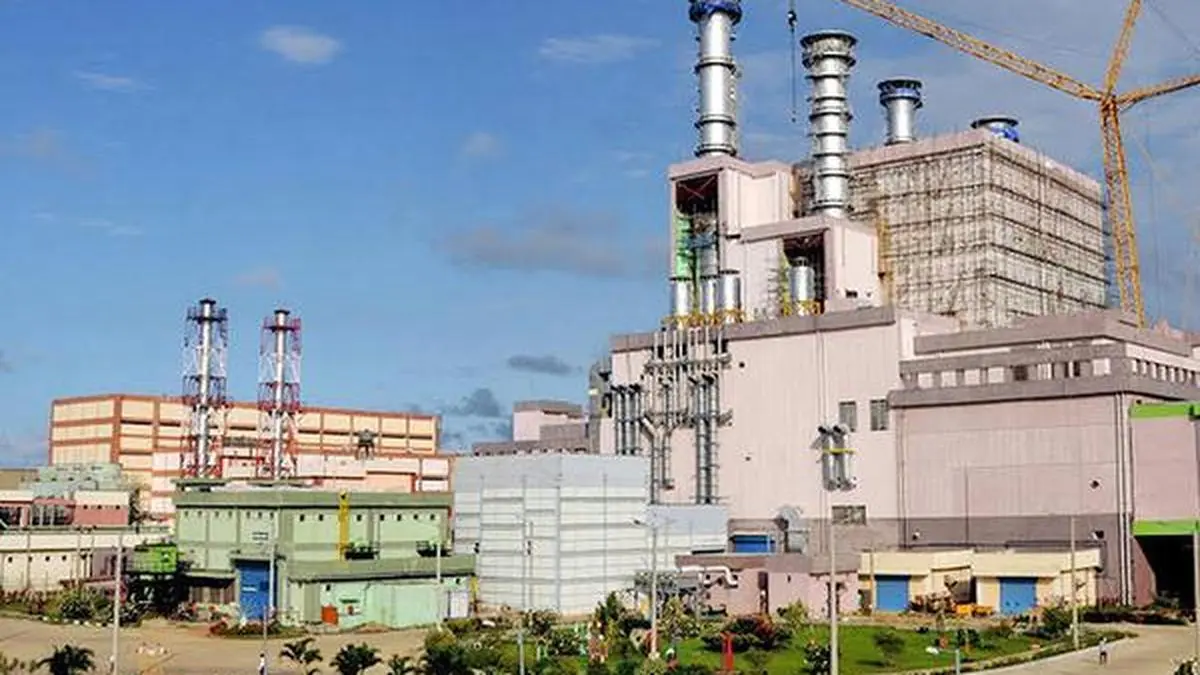
The project, which entails an investment of around ?42,000 crore, will be one of the largest nuclear plants in the country upon completion, supplying reliable base load energy View More

Fuel demand saw a surge in March. Diesel sales climbed 8% as consumers stocked up fearing shortages. Petrol demand also rose above trend. However, LPG sales dropped 13% due to supply restrictions. Aviation fuel consumption remained flat. For the full year, diesel and petrol sales grew, while LPG and ATF saw modest increases. View More
New Delhi: Domestic diesel sales rose 8% year-on-year in March, fuelled by panic buying with the Iran war sparking a global energy crisis. LPG sales however fell 13% due to supply curbs. Petrol demand also rose above trend, up 7.6%, as motorists queued at filling stations in several parts of the country fearing shortages. The government and oil companies, however, repeatedly maintained that refiners are operating at optimal capacity and that adequate stocks of crude, petrol, diesel and LPG are available in the country. Also Read: India doubles 5-kg LPG cylinder quota to ease supply concerns amid Hormuz tensions Live Events Aviation turbine fuel (ATF) consumption remained flat in March as several flights were cancelled following the outbreak of the war. For the full year ended March, diesel sales grew 3.6%, petrol 6.5%, ATF 2%, and LPG 6%. The spike in diesel sales may have been partly driven by bulk consumers rushing to stock up ahead of a steep hike in prices for industrial buyers, an industry executive said. .Pbanner{display:flex;justify-content:space-between;align-items:center;background-color:#ec1c40;margin-top:20px;padding:5px 10px;border-radius:4px;color:#fff;line-height:10px;} .Pbannertext{display:flex;align-items:center;font-size:16px;font-weight:600;font-family:'Montserrat';} .Pbannertext img{height:20px;margin:0 6px} .Pbannerbutton a{display:flex;align-items:center;background-color:#fff;color:#ec1c40;text-decoration:none;font-weight:600;padding:4px 8px;border-radius:6px;font-size:15px;font-family:'Montserrat';} .Pbannerbutton img{height:20px;margin-right:6px} .Pbannerbutton a:hover{background-color:#f7f7f7} Add as a Reliable and Trusted News Source Add Now! (You can now subscribe to our Economic Times WhatsApp channel) (You can now subscribe to our Economic Times WhatsApp channel)