
Latest Sectors News
The Power Ministry is taking proactive steps by establishing a special committee tasked with finding a new head for NTPC, after the Public Enterprise Selection Board's search fell short. The existing chief's tenure has been prolonged, with applications for the vital Chairman and Managing Director role open until March 28, 2026. View More
New Delhi: The power ministry has decided to set up a search-cum-selection committee to look for the head of state-owned electricity generator NTPC , as government headhunter PESB failed to identify a suitable candidate. The Public Enterprise Selection Board (PESB), under the Department of Personnel and Training (DoPT), which is responsible for hiring candidates for top management posts of central public sector enterprises (CPSES), interviewed a dozen of candidates for the post of CMD of NTPC. The incumbent, Gurdeep Singh, was to superannuate on July 31, 2025, but his service as NTPC's CMD was extended till August 1, 2026, in the absence of a successor. The power ministry, in a notice issued on February 28, said the appointment to the post of Chairman and Managing Director, NTPC Limited, will be done through a "Search-cum-selection Committee". Candidates can apply for the post on or before March 28, 2026, it said. Live Events The search-cum-selection committee route is taken when PESB fails to find a suitable candidate. Since 2021, PESB has failed to find a suitable candidate for at least four other public sector enterprises -- Oil and Natural Gas Corporation ( ONGC ), Indian Oil Corporation ( IOC ), Hindustan Petroleum Corporation ( HPCL ), and Bharat Petroleum Corporation Ltd ( BPCL ). Singh, too, was chosen to head NTPC by a search-cum-selection committee in 2016. .Pbanner{display:flex;justify-content:space-between;align-items:center;background-color:#ec1c40;margin-top:20px;padding:5px 10px;border-radius:4px;color:#fff;line-height:10px;} .Pbannertext{display:flex;align-items:center;font-size:16px;font-weight:600;font-family:'Montserrat';} .Pbannertext img{height:20px;margin:0 6px} .Pbannerbutton a{display:flex;align-items:center;background-color:#fff;color:#ec1c40;text-decoration:none;font-weight:600;padding:4px 8px;border-radius:6px;font-size:15px;font-family:'Montserrat';} .Pbannerbutton img{height:20px;margin-right:6px} .Pbannerbutton a:hover{background-color:#f7f7f7} Add as a Reliable and Trusted News Source Add Now! (You can now subscribe to our Economic Times WhatsApp channel) (You can now subscribe to our Economic Times WhatsApp channel)
Petroleum Minister Hardeep Singh Puri said India has sufficient energy reserves to handle disruptions amid Middle East tensions, stressing that availability, affordability and sustainability remain central to the government’s strategy. View More
Amid the evolving geopolitical situation in the Middle East, Petroleum and Natural Gas Minister Hardeep Singh Puri on Tuesday said India is fully prepared to manage any potential disruption to energy supplies, asserting that the country has sufficient crude oil and petroleum product reserves to deal with the current scenario. Briefing the media, Puri said India, the world’s third-largest oil importer, fourth-largest refiner and fifth-largest exporter of petroleum products remains well stocked with crude oil as well as key fuels including petrol, diesel and aviation turbine fuel (ATF). He noted that inventories are adequate to handle short-term disruptions arising from hostilities in the Middle East. — HardeepSPuri (@HardeepSPuri) Describing his interaction with the media as “very positive”, the minister said discussions focused on the energy outlook in light of developments in West Asia and India’s preparedness strategy. He reiterated that the government’s approach continues to be guided by the “energy trilemma” ensuring availability, affordability and sustainability under the leadership of Prime Minister Narendra Modi . “The trilemma of energy availability, affordability and sustainability continues to guide India’s approach, focused on meeting the energy requirements of our citizens,” Puri said, adding that the government remains vigilant and prepared to respond to global supply shocks. Live Events Officials said India has diversified its crude sourcing over the past few years to reduce vulnerability to regional disruptions. Indian energy companies now procure significant volumes from suppliers whose cargoes do not transit through the Strait of Hormuz, providing an added cushion in case of temporary logistical challenges in the Gulf region. The Ministry of Petroleum and Natural Gas has also set up a 24×7 control room to monitor fuel stocks and supply positions across the country in real time. Senior officials and heads of public sector energy companies were present during the media briefing. Despite volatility in global oil markets, the government said fuel supplies across India remain stable. Public sector oil marketing companies are maintaining adequate inventories, while strategic petroleum reserves provide an additional buffer against external shocks. Safeguarding consumer interests and ensuring uninterrupted availability of fuel, the minister said, remain the Centre’s highest priorities as it closely tracks developments in the Middle East. .Pbanner{display:flex;justify-content:space-between;align-items:center;background-color:#ec1c40;margin-top:20px;padding:5px 10px;border-radius:4px;color:#fff;line-height:10px;} .Pbannertext{display:flex;align-items:center;font-size:16px;font-weight:600;font-family:'Montserrat';} .Pbannertext img{height:20px;margin:0 6px} .Pbannerbutton a{display:flex;align-items:center;background-color:#fff;color:#ec1c40;text-decoration:none;font-weight:600;padding:4px 8px;border-radius:6px;font-size:15px;font-family:'Montserrat';} .Pbannerbutton img{height:20px;margin-right:6px} .Pbannerbutton a:hover{background-color:#f7f7f7} Add as a Reliable and Trusted News Source Add Now! (You can now subscribe to our Economic Times WhatsApp channel) (You can now subscribe to our Economic Times WhatsApp channel)

India's crude oil landscape is shifting as Russia retains its title as the top supplier. Meanwhile, Saudi Arabia is ramping up its exports, narrowing the margin. Unfortunately, the ongoing tensions in West Asia are jeopardising key supply routes. This precarious situation compels India to explore alternative sources and possibly face domestic fuel limitations. View More
Russia retained its position as India’s largest crude oil supplier in February, even as Saudi Arabia sharply closed the gap and a widening West Asia conflict now threatens to upend sourcing strategies within weeks. The government and industry are drawing up contingency plans as risks to oil flows through the Strait of Hormuz intensify. Options under discussion include ramping up purchases of Russian crude, ET reported earlier ciitng people familiar with the talks. You can follow our live blog for the latest updates on the war. Data from Kpler shows Russian crude imports at just over 1 million barrels per day (mbd) in February, down from 1.1 mbd in January and 1.2 mbd in December. Saudi Arabia, however, ramped up shipments by nearly 30% month-on-month to cross 1 mbd -- its highest level in almost six years -- significantly narrowing the gap with Moscow. For much of the past two years, Saudi supplies had hovered in the 0.6–0.7 million barrels per day range, making the February spike a notable shift in India’s import mix. Live Events Trump claim vs ground reality The changing balance comes at a politically sensitive moment. US President Donald Trump has claimed Indian refiners would halt purchases of Russian oil, but February’s data suggests otherwise, with Russia still holding the top spot. The Indian government has maintained that commercial considerations -- not geopolitical pressure -- will determine sourcing decisions. West Asia conflict disrupts supply routes That equation, however, is now being stress-tested by conflict in West Asia. Nearly 2.5–2.7 mbd of India’s crude imports pass through the Strait of Hormuz, with a large share sourced from Iraq, Saudi Arabia, the UAE and Kuwait. Ongoing military strikes in the region have disrupted cargo movement, forcing Indian refiners to scout for alternatives even as tanker traffic through the Strait remains sparse. “India's dependence on crude from West Asia increased over the last two-three months as refiners pivoted away from a portion of Russian volumes,” said Sumit Ritolia, lead research analyst at Kpler. “As a result, the relative weight of Gulf-origin crude in India's import basket rose.” That recent pivot toward the Gulf now looks exposed. Also Read: India's oil contingency plan in pipeline amid Iran disruptions: Export curbs, more Russian crude, LPG rationing on table Hormuz disruption threatens supplies With risks to supply mounting, the government and industry are working on a contingency playbook that could reshape fuel flows and domestic consumption if disruptions persist, ET reported. Options under consideration include restricting exports of petrol and diesel, increasing imports of Russian crude, and introducing demand-management measures such as LPG rationing. The urgency reflects the scale of exposure. India exports roughly a third of its petrol, a quarter of its diesel, and about half of its aviation turbine fuel (ATF). In a supply crunch, refiners could divert these volumes to the domestic market. LPG emerges as weakest link The most immediate vulnerability is LPG. India imports nearly two-thirds of its LPG needs, with 85–90% coming from the Gulf. Stock levels -- including cargoes already en route -- are estimated to last less than two weeks if supplies are cut off. State-run refiners Indian Oil , BPCL and HPCL have already begun boosting LPG output at select refineries. Discussions are also underway on targeted rationing, especially for consumers with access to alternative fuels. Also Read: Iran vows to attack any ship trying to pass through Strait of Hormuz Limited buffers, rising market pressure Strategic buffers offer limited comfort. India’s crude reserves can cover about 17–18 days of demand, petrol and diesel stocks about 20–21 days, and LNG roughly 10–12 days. Without fresh arrivals through Hormuz, these reserves would steadily decline. Oil markets are already reacting. Brent crude jumped nearly 10% to around $80 a barrel, while European gas prices surged over 40% following attacks on key energy infrastructure, including Saudi Arabia’s Ras Tanura refinery and a Qatari LNG facility. Still, there is uncertainty over how long disruptions may last. Some officials believe Iran may struggle to sustain prolonged escalation, allowing flows to normalise quickly. Trump, however, has warned the conflict could stretch up to four weeks. “We are continuously monitoring the evolving situation, and all necessary steps will be taken in order to ensure availability and affordability of major petroleum products in the country,” the oil ministry said after a review by oil minister Hardeep Puri. Russia back in focus as fallback If Hormuz disruptions persist, Russia could once again become central to India’s energy security calculus. Officials say additional Russian barrels -- already on the water -- could be redirected relatively quickly. A tightening global supply situation may also soften Washington’s stance, potentially giving Indian refiners more room to step up purchases from Moscow. In effect, the same Russian crude that India had partially dialled down in recent months could return as a critical buffer -- not by design, but by disruption. .Pbanner{display:flex;justify-content:space-between;align-items:center;background-color:#ec1c40;margin-top:20px;padding:5px 10px;border-radius:4px;color:#fff;line-height:10px;} .Pbannertext{display:flex;align-items:center;font-size:16px;font-weight:600;font-family:'Montserrat';} .Pbannertext img{height:20px;margin:0 6px} .Pbannerbutton a{display:flex;align-items:center;background-color:#fff;color:#ec1c40;text-decoration:none;font-weight:600;padding:4px 8px;border-radius:6px;font-size:15px;font-family:'Montserrat';} .Pbannerbutton img{height:20px;margin-right:6px} .Pbannerbutton a:hover{background-color:#f7f7f7} Add as a Reliable and Trusted News Source Add Now! (You can now subscribe to our Economic Times WhatsApp channel) (You can now subscribe to our Economic Times WhatsApp channel)
India is preparing for potential fuel shortages. The government is exploring options like limiting fuel exports and increasing Russian crude imports. Demand management measures, including LPG rationing, are also under consideration. These steps are being taken due to ongoing disruptions in the Strait of Hormuz. View More
New Delhi: India is weighing a range of contingency options including restricting petrol and diesel exports, increasing Russian crude imports , and introducing demand-management measures such as LPG rationing to address potential fuel shortages if traffic through the Strait of Hormuz remains disrupted for weeks, said people familiar with ongoing discussions between the government and industry. Oil and gas prices surged on Monday, with Brent crude futures rising nearly 10% to $80 a barrel and European gas jumping more than 40%, as the widening West Asia conflict and attacks on energy facilities including Saudi Arabia's Ras Tanura refinery and a Qatari LNG plant triggered production shutdowns. Also Read: India unlikely to see petrol, diesel price hike despite global oil prices spiking to $80 Tanker movement through the Strait remained sparse for the second day on Monday, heightening concerns over supply continuity and prompting officials and refiners to review fallback options. Industry executives and oil ministry officials are examining supply and demand management measures. LPG Most Vulnerable However, many believe Iran may struggle to sustain military momentum and any disruption to transit through the Strait could normalise rapidly, said the people cited above. US president Donald Trump has, however, said the conflict in West Asia could last as much as four weeks.“We are continuously monitoring the evolving situation, and all necessary steps will be taken in order to ensure availability and affordability of major petroleum products in the country,” the oil ministry said on X after a review by oil minister Hardeep Puri.Also Read: Trump’s Iran strike risks wider West Asia war as oil prices surge, diplomacy collapsesA key step being considered by the Indian government is curbing exports of petrol and diesel to boost domestic availability in an emergency, the people said.India exports about a third of its petrol, a quarter of its diesel, and about half of its aviation turbine fuel (ATF) output. Refiners could also redirect surplus ATF into other product streams if required, they said. The most immediate vulnerability is LPG, where India depends on imports for nearly two-thirds of consumption and maintains modest inventories. About 85-90% LPG imports come from the Gulf.TWO WEEKS COVERIndustry estimates suggest that stocks—including onshore inventories and cargoes that have already crossed Hormuz—may cover less than two weeks if supplies are interrupted. In response, state-run refiners Indian Oil, HPCL, and BPCL have begun increasing LPG output at select petrochemical integrated refineries.Targeted demand-management steps, including rationing LPG for customers with access to alternative fuels, particularly in rural areas, are also being discussed, people said.India’s crude reserves can cover about 17–18 days of consumption, refined fuels such as petrol and diesel about 20–21 days, and LNG about 10–12 days. In the absence of fresh arrivals through Hormuz, these buffers would steadily decline. In recent months, the Gulf accounted for about half of India’s crude and LNG imports.Boosting imports of Russian oil to compensate for the Gulf supply loss is also being considered, the people said. Significant quantities of Russian oil remain on the water and could be redirected relatively quickly.If global supplies tighten and prices rise sharply, Washington’s stance could soften, letting Indian refiners take more Russian oil, people said. .Pbanner{display:flex;justify-content:space-between;align-items:center;background-color:#ec1c40;margin-top:20px;padding:5px 10px;border-radius:4px;color:#fff;line-height:10px;} .Pbannertext{display:flex;align-items:center;font-size:16px;font-weight:600;font-family:'Montserrat';} .Pbannertext img{height:20px;margin:0 6px} .Pbannerbutton a{display:flex;align-items:center;background-color:#fff;color:#ec1c40;text-decoration:none;font-weight:600;padding:4px 8px;border-radius:6px;font-size:15px;font-family:'Montserrat';} .Pbannerbutton img{height:20px;margin-right:6px} .Pbannerbutton a:hover{background-color:#f7f7f7} Add as a Reliable and Trusted News Source Add Now! (You can now subscribe to our Economic Times WhatsApp channel) (You can now subscribe to our Economic Times WhatsApp channel)
Kaiga units 5 and 6 will be 700 MW pressurised heavy water reactors (PHWRs), part of India's standardised fleet mode programme aimed at accelerating nuclear capacity addition. View More
New Delhi : State-run Nuclear Power Corporation of India Ltd ( NPCIL ) on Thursday started construction of units 5 and 6 with 700 MW reactors at Kaiga in Karnataka . The gestation period of a nuclear power project is calculated from the 'first pour of concrete'. The first of the two units is expected to attain criticality, which is a major commissioning milestone for a new nuclear power plant, in around 60 months, a statement from the company said. Kaiga units 5 and 6 will be 700 MW pressurised heavy water reactors (PHWRs), part of India's standardised fleet mode programme aimed at accelerating nuclear capacity addition. NPCIL said the reactors come with advanced safety features and are among the most robust in their class globally. The Kaiga expansion follows the commissioning of similar 700 MW PHWRs at Kakrapar in Gujarat. Live Events NPCIL is implementing Kaiga 5and 6 through a limited number of large engineering, procurement and construction ( EPC ) packages covering excavation, the nuclear island, turbine island and nuclear instrumentation. The approach is aimed at reducing interface risks and reducing project timelines. The project will draw extensively on domestic manufacturing capabilities, with equipment and components sourced from Indian industry partners and construction handled by local contractors. .Pbanner{display:flex;justify-content:space-between;align-items:center;background-color:#ec1c40;margin-top:20px;padding:5px 10px;border-radius:4px;color:#fff;line-height:10px;} .Pbannertext{display:flex;align-items:center;font-size:16px;font-weight:600;font-family:'Montserrat';} .Pbannertext img{height:20px;margin:0 6px} .Pbannerbutton a{display:flex;align-items:center;background-color:#fff;color:#ec1c40;text-decoration:none;font-weight:600;padding:4px 8px;border-radius:6px;font-size:15px;font-family:'Montserrat';} .Pbannerbutton img{height:20px;margin-right:6px} .Pbannerbutton a:hover{background-color:#f7f7f7} Add as a Reliable and Trusted News Source Add Now! (You can now subscribe to our Economic Times WhatsApp channel) (You can now subscribe to our Economic Times WhatsApp channel)

The primary market will see Sedemac Mechatronics’ Rs 1,087 crore IPO open next week, while nine companies line up for listings across mainboard and SME platforms. Muted grey market premiums and selective investor interest reflect cautious sentiment despite healthy subscription levels. View More
The primary market will see limited new openings next week, with just one company launching its public offer for subscription. However, as many as nine companies are scheduled to list across mainboard and SME platforms. The only new issue opening next week is the Rs 1,087 crore IPO of Sedemac Mechatronics. The offer, which is entirely an offer for sale, will open on March 4 and close on March 6. The price band is set at Rs 1,287-1,352 per share. At the upper end, the company commands a pre-IPO market cap of around Rs 5,971 crore. The minimum retail investment stands at Rs 14,872 for one lot of 11 shares. Sedemac, a Pune-based technology company incorporated in 2007, designs and manufactures control electronics for automotive and industrial applications. It is known for its sensorless commutation-based integrated starter generator ECU technology for two- and three-wheelers. The company has shown steady financial growth, with total income rising to Rs 775 crore for the nine months ended December 2025, and profit after tax at Rs 71 crore. Since the issue is entirely an OFS, the proceeds will go to selling shareholders and not to the company. Market participants will closely track grey market activity and anchor participation to gauge investor appetite, especially given the mixed sentiment seen in recent listings. Live Events Listings to dominate the week While fresh fundraising activity is muted, listings will drive the action. Clean Max Enviro Energy Solutions , which barely scraped through with just about full subscription on the final day due to institutional support, is scheduled to debut. Its grey market premium is currently negative, suggesting a cautious listing. Shree Ram Twistex, which was subscribed nearly 44 times, enters the market with strong retail and NII participation. However, its GMP is flat at 0%, indicating expectations of a listing close to the issue price. PNGS Reva Diamond Jewellery, subscribed 1.3 times overall, is also trading at a negative GMP, hinting at limited listing gains. Omnitech Engineering, with 1.2 times subscription, carries a flat grey market signal. On the SME side, Yaap Digital, Accord Transformer, Mobilise App, Kaisa Retail and Striders Impex will make their debuts. Among these, only Accord Transformer is showing a decent GMP of around 9% over its issue price, suggesting relatively better listing interest. The others are either flat or weak in the unofficial market. This reflects a cautious primary market. High subscription levels are no longer automatically translating into strong grey market premiums. Investors appear selective, focusing on fundamentals, valuations and sector outlook rather than chasing every issue. ( Disclaimer : Recommendations, suggestions, views and opinions given by the experts are their own. These do not represent the views of Economic Times) .Pbanner{display:flex;justify-content:space-between;align-items:center;background-color:#ec1c40;margin-top:20px;padding:5px 10px;border-radius:4px;color:#fff;line-height:10px;} .Pbannertext{display:flex;align-items:center;font-size:16px;font-weight:600;font-family:'Montserrat';} .Pbannertext img{height:20px;margin:0 6px} .Pbannerbutton a{display:flex;align-items:center;background-color:#fff;color:#ec1c40;text-decoration:none;font-weight:600;padding:4px 8px;border-radius:6px;font-size:15px;font-family:'Montserrat';} .Pbannerbutton img{height:20px;margin-right:6px} .Pbannerbutton a:hover{background-color:#f7f7f7} Add as a Reliable and Trusted News Source Add Now! (You can now subscribe to our ETMarkets WhatsApp channel) (You can now subscribe to our ETMarkets WhatsApp channel)
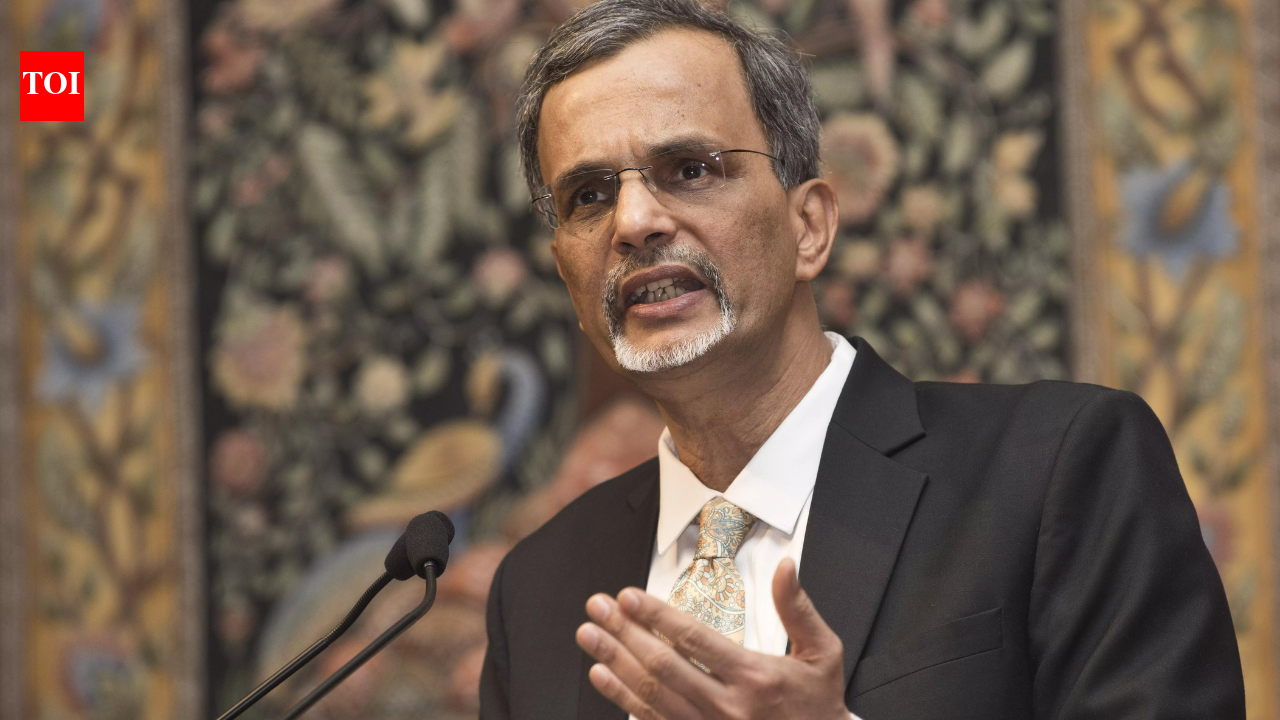
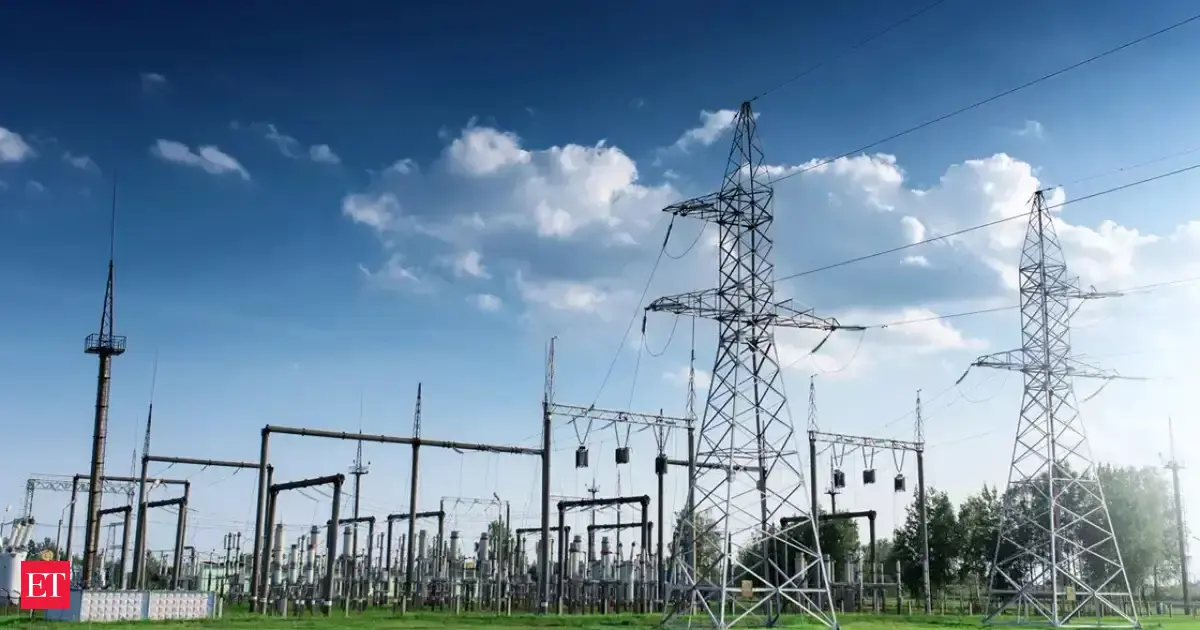
A ceremonial cheque was handed over to Minister of Power Manohar Lal by company officials on February 25, NTPC said in a statement. View More
New Delhi: State-owned electricity generator NTPC on Friday said it has paid the power ministry Rs 2,666.58 crore in second interim dividend for FY26. A ceremonial cheque was handed over to Minister of Power Manohar Lal by company officials on February 25, NTPC said in a statement. " NTPC Ltd paid the second interim dividend of Rs 2,666.58 crore on 25th February 2026 for the financial year 2025-26, being 27.50 per cent of the paid-up equity share capital of the company," it said. This is the 33rd consecutive year that NTPC Ltd has paid a dividend. NTPC is India's largest power generation company, catering to the country's one-fourth of electricity demand . Live Events The company operates more than 87 GW of installed capacity, with another 32 GW under construction . .Pbanner{display:flex;justify-content:space-between;align-items:center;background-color:#ec1c40;margin-top:20px;padding:5px 10px;border-radius:4px;color:#fff;line-height:10px;} .Pbannertext{display:flex;align-items:center;font-size:16px;font-weight:600;font-family:'Montserrat';} .Pbannertext img{height:20px;margin:0 6px} .Pbannerbutton a{display:flex;align-items:center;background-color:#fff;color:#ec1c40;text-decoration:none;font-weight:600;padding:4px 8px;border-radius:6px;font-size:15px;font-family:'Montserrat';} .Pbannerbutton img{height:20px;margin-right:6px} .Pbannerbutton a:hover{background-color:#f7f7f7} Add as a Reliable and Trusted News Source Add Now! (You can now subscribe to our Economic Times WhatsApp channel) (You can now subscribe to our Economic Times WhatsApp channel)


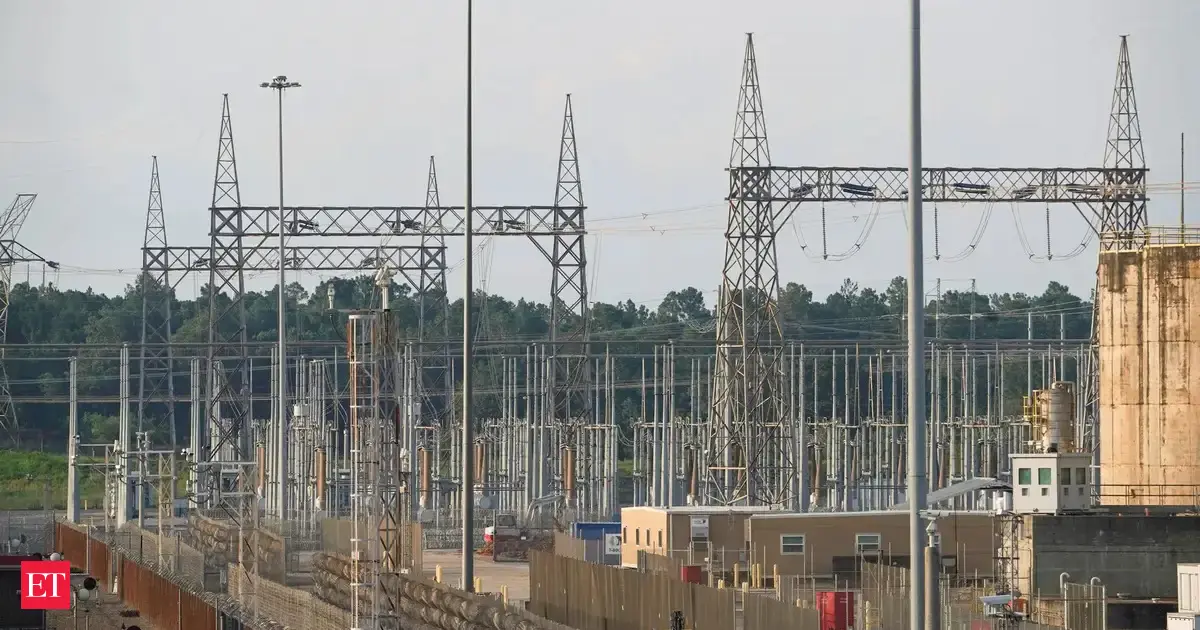
Russian forces have controlled the Zaporizhzhia nuclear power plant since early 2022, shortly after Moscow launched its full-scale invasion of Ukraine. View More
The Director General of the International Atomic Energy Agency (IAEA), Rafael Mariano Grossi (not seen), visits Ukraine's Zaporizhzhya Nuclear Power Plant (ZNPP) in Russian-controlled Energodar, on March 29, 2023.Anadolu | Anadolu | Getty Images Russia and Ukraine agreed to a local ceasefire to allow for repairs of the backup power lines to the Zaporizhzhia nuclear plant, according to the United Nations' nuclear watchdog. The International Atomic Energy Agency, or IAEA, said in a short statement Friday that a truce had taken effect in southern Ukraine to enable the restoration of the 330-kilovolt supply line to Europe's largest nuclear power plant."Demining activities are ongoing to ensure safe access for the repair teams," IAEA Director General Rafael Mariano Grossi said on social media.The local ceasefire, which the IAEA said it had helped to secure, comes shortly after the fourth anniversary of Russia's full-scale invasion of Ukraine.Russian forces have controlled the Zaporizhzhia nuclear plant since the first few weeks of the invasion. Situated in the southeast of the country, the plant is Ukraine's largest and houses six of its 15 operational nuclear power reactors. It has recently been reliant on external power to sustain all essential nuclear safety functions. Both sides have accused each other of raising the risk of a catastrophic accident by staging attacks near to the plant.Russian nuclear power company Rosatom said Friday that IAEA specialists located at the power plant were monitoring repairs to the disconnected power line, according to state news outlet RIA Novosti.Ukraine's Foreign Ministry had not responded to CNBC's request for comment as this article went live. View of Zaporizhzhya Nuclear Power Plant from right bank of Dnipro river. At the moment the left bank of the Dnipro River is occupied by Russian forces including the nuclear plant.Pacific Press | Lightrocket | Getty Images Earlier this month, the IAEA warned the Zaporizhzhia nuclear plant was operating on its last remaining power line, reportedly as a result of military activity near the switchyard operated by the Zaporizhzhia thermal power plant.Analysts at the Institute for the Study of War think tank said Tuesday that the fifth year of Russia's war hadn't started well for President Vladimir Putin, noting Ukrainian forces have recently made the most significant gains on the battlefield since the country's incursion into Russia's Kursk Oblast in August 2024.