
Latest Sectors News
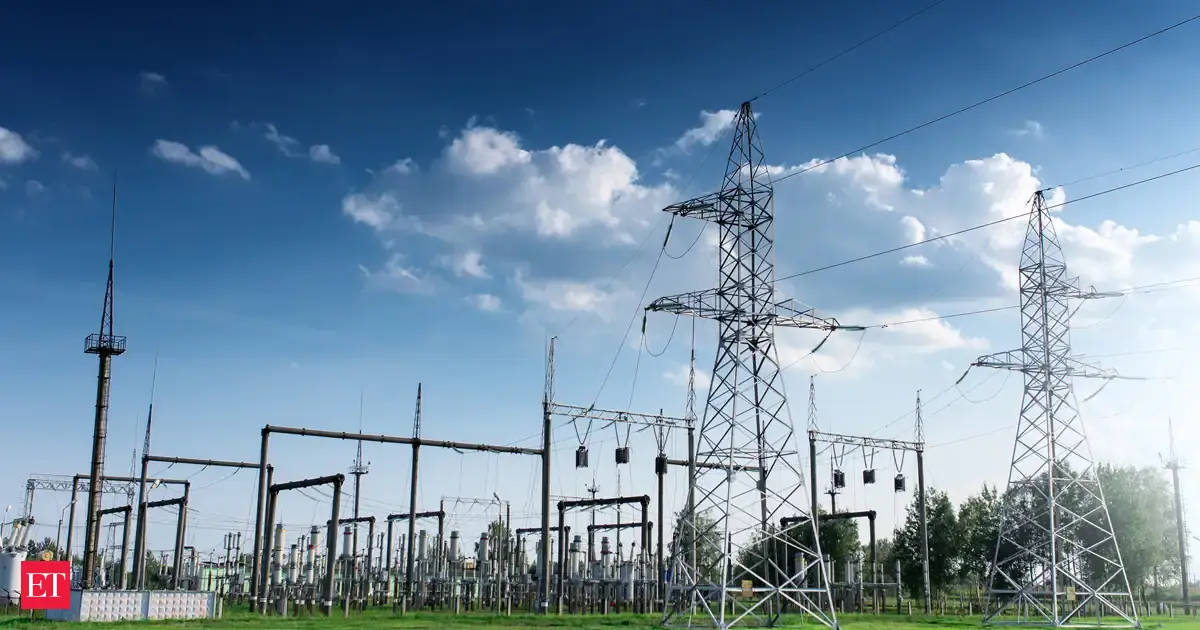
India is focused on eliminating imported SCADA systems by 2030, with the Central Electricity Authority actively developing a comprehensive roadmap for this essential infrastructure. This initiative seeks to bolster self-reliance and enhance the cyber-resilience of the nation’s power grid. By reducing reliance on foreign technology, the government aims to secure national energy interests and foster the growth of local SCADA capacities for utility providers. View More
New Delhi: The government has directed the Central Electricity Authority (CEA) to prepare a roadmap for indigenisation of SCADA systems critical for power infrastructure to phase out imports by 2030. The Centre's move comes as reliance on foreign technologies for critical infrastructure may expose utilities to supply chain disruptions. Supervisory Control and Data Acquisition (SCADA) is crucial for monitoring and controlling the power system in generation, transmission and distribution functional areas. The critical system has the ability to exercise control over a specific device and to confirm its performance in accordance with the directed action. During the Prime Minister's sectoral review meeting held in December last year, indigenisation of SCADA systems, which are presently being imported, was identified as an important action point for enhancing self-reliance and cyber-resilience of the power system, the CEA said in a report dated August 25. The Ministry of Power on December 12, 2025, informed about the decision of the Secretary (Power) that the SCADA system is not to be imported beyond 2030 and efforts have to be initiated for indigenisation of the SCADA system, the report said. Live Events In this regard, CEA said it was requested to suggest a trajectory of SCADA indigenisation after consultations with the concerned stakeholders. Accordingly, with the approval of the competent authority, a committee was constituted under the Chairmanship of Member (Planning), Central Electricity Authority, to formulate the 'Trajectory of Indigenisation of SCADA System ', which is working in this direction, according to the report. On the rationale, CEA said the rapid evolution of power systems necessitates periodic upgrades of SCADA systems due to the obsolescence of hardware and software, shortage of spares and emerging requirements for enhanced visualisation, data storage, analytics and cybersecurity. The body, which advises the Centre on matters relating to the national electricity policy, said SCADA systems serve as the central nervous system of the National Power Grid, enabling the "One Nation, One Grid, One Frequency" framework through real-time monitoring and control. However, heavy dependence on foreign OEMs with proprietary technologies results in interoperability constraints, delays in customisation, limited flexibility in system enhancements and dependence on external support services. In an increasingly complex geopolitical landscape, such dependence poses potential risks to national energy security. Reliance on foreign technologies for critical infrastructure may expose utilities to supply chain disruptions, technology access constraints, delayed availability of upgrades and support, and limited transparency associated with proprietary or "black box" systems, the CEA said. .Pbanner{display:flex;justify-content:space-between;align-items:center;background-color:#ec1c40;margin-top:20px;padding:5px 10px;border-radius:4px;color:#fff;line-height:10px;width: 100%;box-sizing: border-box} .Pbannertext{display:flex;align-items:center;font-size:16px;font-weight:600;font-family:'Montserrat';} .Pbannertext img{height:20px;margin:0 6px} .Pbannerbutton a{display:flex;align-items:center;background-color:#fff;color:#ec1c40;text-decoration:none;font-weight:600;padding:4px 8px;border-radius:6px;font-size:15px;font-family:'Montserrat';} .Pbannerbutton img{height:20px;margin-right:6px} .Pbannerbutton a:hover{background-color:#f7f7f7} Add as a Reliable and Trusted News Source Add Now! (You can now subscribe to our Economic Times WhatsApp channel) (You can now subscribe to our Economic Times WhatsApp channel)

Stock exchanges BSE and NSE together imposed penalties totalling Rs 59.14 crore on public sector power companies NTPC, REC and SJVN for breach of norms.
NTPC, in a regulatory filing, said the company has received notices from BSE and NSE with each imposing a penalty of Rs 5,36,900 (inclusive of GST) on account of non-compliance with Regulation 17(1) of the listing regulations.
In its reply to the exchanges, NTPC said it is a government company and "as per the Articles of Association of the Company, the power to appoint or remove directors vests with the President of India through its administrative ministry, i.e., the Ministry of Power.
BSE and NSE have, thus, been requested not to levy the fines imposed, the power giant said.
SJVN said that both BSE and NSE have separately imposed a fine of Rs 13,44,020 for non-compliance of certain SEBI listing regulations.
The company said that it will submit a request to both the exchanges for a waiver, as the power to appoint or remove direct View More

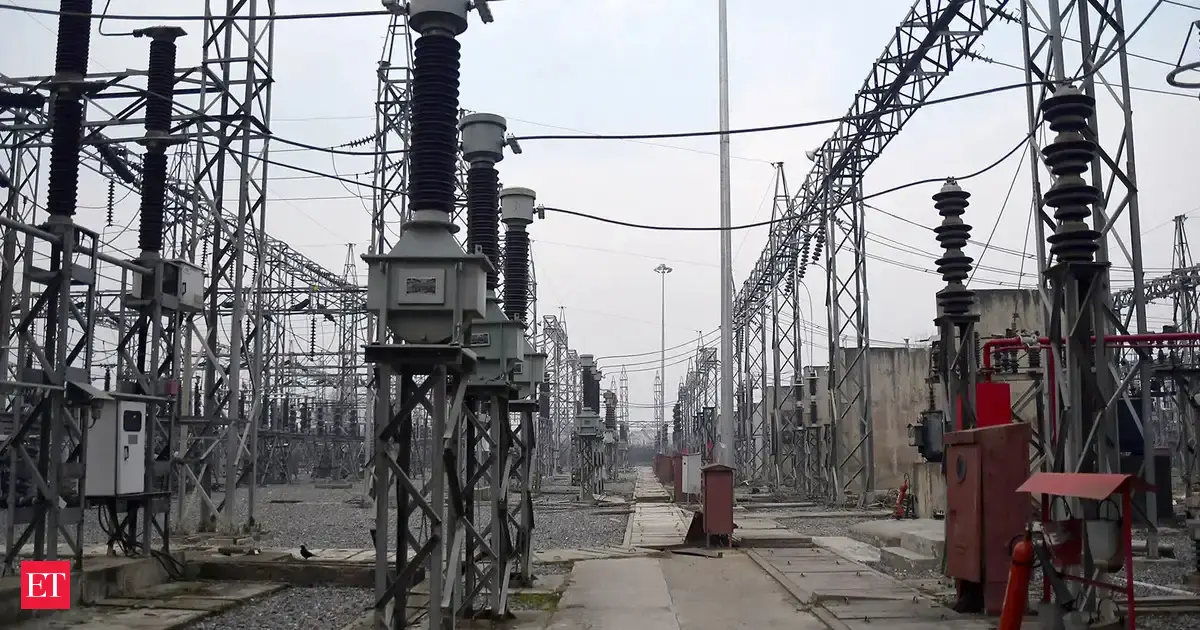
India is drawing up a roadmap to develop indigenous software and hardware for Supervisory Control and Data Acquisition (SCADA) systems used to monitor and control the power network, as it seeks to eliminate dependence on foreign technology in critical electricity infrastructure. The CEA has proposed developing most software and hardware modules by 2028-29, backed by pilot projects, a dedicated testing ecosystem and government funding. View More
The government plans to develop homegrown control systems and equipment for critical power infrastructure , including the national grid, as the government seeks to end reliance on foreign technology and strengthen energy security by 2029. The Central Electricity Authority (CEA) has laid out a roadmap to localise the production of systems that enable real-time monitoring and supervisory control of the electricity network. The plan covers both the software and hardware used in Supervisory Control and Data Acquisition, or SCADA, systems. In a report published on Tuesday, the power ministry body proposed a phased trajectory for developing indigenous SCADA capabilities, with the bulk of the identified software and hardware modules targeted for development by 2028-29. The broader objective is to eliminate import dependence, with the Ministry of Power having decided that SCADA systems should not be imported beyond 2030. Also read: India lets clean-energy projects pay to keep grid access after delays SCADA systems collect and transmit critical data from power plants and substations to control centres, giving grid operators real-time visibility over equipment and enabling supervisory control of the electricity network. They form the front end for Energy Management Systems used in generation and transmission, as well as Distribution Management Systems. Live Events The initiative is part of New Delhi's broader self-reliance push, but the report also flags strategic concerns around dependence on foreign original equipment manufacturers. National grid at the centre of the push The CEA described SCADA systems as the “central nervous system of the National Power Grid”, enabling the “One Nation, One Grid, One Frequency” framework through real-time monitoring and control. It said dependence on foreign OEMs and proprietary technologies has created interoperability constraints, delayed customisation and system upgrades, and increased reliance on external support services. “In an increasingly complex geo-political landscape, such dependence poses potential risks to national energy security,” the report said. “Reliance on foreign technologies for critical infrastructure may expose utilities to supply chain disruptions, technology access constraints, delayed availability of upgrades and support, and limited transparency associated with proprietary or ‘black box’ systems,” it added. The current systems also suffer from vendor lock-in. The CEA said proprietary database architectures and engineering tools can make modifications dependent on OEM intervention, while differences in implementation can limit interoperability and complicate the integration of third-party applications. Also read: Ambani's Rs 2.7 lakh cr underground bet can save India from shocks Local content remains below 20% The power ministry had earlier prescribed a minimum local content requirement of 50% for SCADA systems. However, the CEA's assessment found that actual local content in grid SCADA remains below 20%, with exemptions having been granted in the past. The report noted that software accounts for about 25% of the cost of a SCADA system, while hardware accounts for the remaining 75%, making the localisation of equipment a more gradual and challenging process. The committee's mandate, however, goes beyond meeting minimum local-content thresholds. It has recommended a phased approach aimed at eventually eliminating import dependence and ensuring that SCADA systems are available from Indian entities. Software and hardware roadmap The CEA finalised a timeline covering 38 software modules and 25 hardware components identified by Grid India. The software roadmap includes core SCADA applications, communication systems, historian and data storage platforms, Energy Management System functions such as state estimation and contingency analysis, automatic generation control, cybersecurity applications, load forecasting and network management systems. The committee found that 36 of the 38 software modules could be developed in the short term, although real-time testing and validation through digital twins and parallel operation at State Load Despatch Centres would remain key challenges. The report also said 16 of the 25 identified hardware components were expected to be ready within two years. These include equipment such as servers, routers, switches, storage systems, cybersecurity appliances, workstations and other control-centre infrastructure. For telecom and general IT networking equipment, the power sector will follow the indigenisation trajectory laid down by the Ministry of Electronics and Information Technology and the Department of Telecommunications under their respective Make in India frameworks. Also read: India's power system just passed a historic tipping point Testing, pilots and funding support Besides manufacturing and development, the roadmap calls for a dedicated ecosystem to test and certify indigenous SCADA systems. The committee recommended establishing a testing platform within two years, with government funding, to simulate operating conditions and validate cybersecurity requirements. It also called for pilot projects under State, regional and national load despatch centres to test indigenous software and hardware in real-world conditions alongside existing systems. SLDC Odisha has volunteered to provide a testing environment for pilot implementation. The report said institutions including STQC and CPRI have capabilities in cybersecurity assessment, certification and equipment testing, but a more comprehensive platform would be needed for end-to-end validation of indigenous SCADA modules. Government financial support will also be necessary, the committee said, with the Power System Development Fund, or PSDF, identified as a possible source. National SCADA Mission proposed To drive implementation, the CEA has proposed formalising an institutional mechanism, either through a National SCADA Mission or a specialised working group under the Ministry of Power and the CEA. For development and integration, the report suggested two possible models. Under one, a government PSU or institution with SCADA experience, such as C-DAC, could be nominated. The alternative is a collaboration or consortium model, under which Power Grid or Grid India could invite expressions of interest from capable entities. The final choice of the institutional and development models has been left to the power ministry. The report makes clear, however, that meeting the proposed timeline will depend on adequate funding, a testing ecosystem and coordinated implementation support. .Pbanner{display:flex;justify-content:space-between;align-items:center;background-color:#ec1c40;margin-top:20px;padding:5px 10px;border-radius:4px;color:#fff;line-height:10px;width: 100%;box-sizing: border-box} .Pbannertext{display:flex;align-items:center;font-size:16px;font-weight:600;font-family:'Montserrat';} .Pbannertext img{height:20px;margin:0 6px} .Pbannerbutton a{display:flex;align-items:center;background-color:#fff;color:#ec1c40;text-decoration:none;font-weight:600;padding:4px 8px;border-radius:6px;font-size:15px;font-family:'Montserrat';} .Pbannerbutton img{height:20px;margin-right:6px} .Pbannerbutton a:hover{background-color:#f7f7f7} Add as a Reliable and Trusted News Source Add Now! (You can now subscribe to our Economic Times WhatsApp channel) (You can now subscribe to our Economic Times WhatsApp channel)

The International Monetary Fund in its World Economic Outlook for April 2026 noted India's nominal GDP at $3.92 trillion for 2025-26, which makes India the sixth-largest economy in the world View More
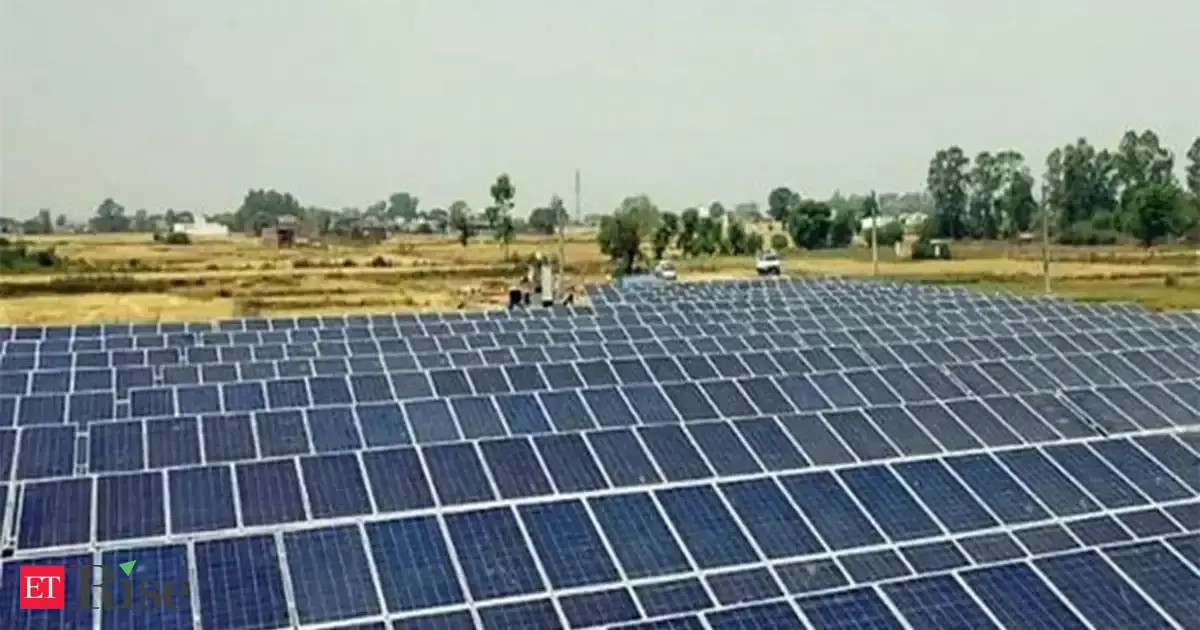
The current grid infrastructure is causing marked energy loss during high-demand summer periods. To combat this, developers are integrating batteries to maintain a stable power supply throughout the day. View More
India is counting on increasing investments in battery storage to help abate the mounting curtailments of solar power that the grid is currently unable to absorb. Projects that are not equipped with battery storage are unlikely to find buyers, with almost 42 gigawatts of planned capacity yet to sign offtake contracts, Renewables Secretary Santosh Kumar Sarangi said on Friday. Among the most at risk are about 18 gigawatts of solar-only projects and another 14 to 15 gigawatts of capacity awarded at high prices, he said at the BNEF Summit in New Delhi. In India, renewables additions have been led by photovoltaic, causing a day-time supply glut, particularly during summers when radiation is stronger. About 11% of solar power generated in India during the hottest months this year was lost to grid curtailments, even as demand hit a record. Grids around the globe are struggling to keep pace with the rapid expansion of solar and wind fleets, creating periods of excess electricity that force operators to shut down a portion of generation capacity to protect equipment and prevent blackouts. Live Events India’s transmission system failed to absorb more than 8 billion kilowatt-hours of power in April to June, when 63 billion actually reached the system. Peak curtailment was seen in May, when scorching heat sent electricity use to all-time high. Solar developers are now adding battery storage to attract buyers that need supplies throughout the day, Sarangi said. Almost 21 gigawatts of the country’s renewable energy projects have only part-time access to the grid, putting them at a greater risk of curtailments, which is hampering expansion and threatening to slow energy transition. States in the northern and western regions have struggled to build grid networks that match the expansion in solar energy. .Pbanner{display:flex;justify-content:space-between;align-items:center;background-color:#ec1c40;margin-top:20px;padding:5px 10px;border-radius:4px;color:#fff;line-height:10px;width: 100%;box-sizing: border-box} .Pbannertext{display:flex;align-items:center;font-size:16px;font-weight:600;font-family:'Montserrat';} .Pbannertext img{height:20px;margin:0 6px} .Pbannerbutton a{display:flex;align-items:center;background-color:#fff;color:#ec1c40;text-decoration:none;font-weight:600;padding:4px 8px;border-radius:6px;font-size:15px;font-family:'Montserrat';} .Pbannerbutton img{height:20px;margin-right:6px} .Pbannerbutton a:hover{background-color:#f7f7f7} Add as a Reliable and Trusted News Source Add Now!

CNBC's Jim Cramer said Monday the data center trade isn't dead, but its next wave of winners could look very different. View More
watch nowVIDEO2:5202:52Speculative builders are driving up the cost of data center construction, says Jim CramerMad Money with Jim Cramer CNBC's Jim Cramer said Monday the data center trade isn't dead, but its next wave of winners could look very different."The data center thesis, perhaps the greatest investment theme in a generation, is now under attack and it may never be the same," the "Mad Money" host said.Data center stocks have come under pressure as politicians and local communities push back against projects over electricity costs, water use and other concerns. Cramer pointed to Pennsylvania and Texas, where governors who previously supported data center development have recently called for stricter requirements. "We know that rules can be crafted and communities can be appeased, but the unbridled buildout is most likely over," Cramer said. With the pace of development now less certain, Cramer said investors may be unwilling to pay premium valuations for data center beneficiaries such as gas turbine maker GE Vernova and memory companies Micron, Sandisk, Western Digital and Seagate, even if underlying demand remains strong. But the changing landscape could benefit Amazon, Alphabet, Microsoft and Meta, he noted. Cramer said the hyperscalers have the financial resources to meet tougher regulatory and community requirements that smaller, speculative data-center developers may struggle to afford. "They're the biggest beneficiaries, because they can afford to compensate local communities and get their warehouses full of servers built," Cramer said. Fewer speculative developers could also reduce competition for land, labor and electricity, potentially lowering costs for hyperscalers as they continue building AI infrastructure.For Cramer, the political backlash doesn't mean abandoning the data center trade. Instead, it could shift the advantage toward the largest technology companies capable of continuing to build despite tougher restrictions."They're the winners," Cramer said. "I think they'll keep winning, as they've been the losers when people extrapolate the costs of building these data centers. This political pushback is a godsend for the hyperscalers."Cramer's Charitable Trust, the portfolio run by CNBC's Investing Club, owns shares of AMZN, GEV, GOOGL, META, MSFT, MU. watch nowVIDEO12:2412:24Jim Cramer tracks the winners from the data center rotationMad Money with Jim Cramer Jim Cramer's Guide to InvestingClick here to read Jim Cramer's Guide to Investing at no cost to help you build long-term wealth and invest smarter Sign up now for the CNBC Investing Club to follow Jim Cramer's every move in the market.DisclaimerQuestions for Cramer? Call Cramer: 1-800-743-CNBCWant to take a deep dive into Cramer's world? Hit him up! Mad Money Twitter - Jim Cramer Twitter - Facebook - InstagramQuestions, comments, suggestions for the "Mad Money" website? madcap@cnbc.com Choose CNBC as your preferred source on Google and never miss a moment from the most trusted name in business news.

The CERC has now replaced the automatic revocation of grid connectivity for delayed renewable energy projects with a compensation based mechanism View More

Avaada Electro is gearing up for an initial public offering aiming to raise up to $800 million. The solar manufacturing company has partnered with several banks to oversee this potential share sale, which will feature new stock along with a secondary sale. This move aligns Avaada Electro with other players in the renewable energy sector striving for capital markets engagement, currently boasting a solar manufacturing capacity of 8.5 gigawatts. View More
Avaada Electro Ltd., the solar manufacturing arm of Avaada Group, is planning to publicly file as early as this month for an initial public offering that could raise as much as $800 million, according to people familiar with the matter. The Brookfield Renewable Partners-backed company has appointed ICICI Securities Ltd., Axis Capital Ltd. , HSBC Holdings Plc, IIFL Capital Services Ltd. and Bank of America Corp. to help manage the potential share sale in India, the people said, asking not to be identified because the information is private. The offering is expected to consist primarily of new shares and also include a secondary sale of shares by existing investors, people said. Deliberations are ongoing and details including the size and timing of the offering could change, the people said. Representatives for Avaada Group and the banks didn’t respond to requests for comment. A representative for Brookfield declined to comment. Avaada Electro filed draft documents through India’s confidential filing route in October 2025 and received regulatory approval in April 2026. Live Events The company is joining a growing list of renewable energy firms seeking to tap India’s capital markets. Continuum Green Energy Ltd. and SAEL Industries Ltd. have received regulatory approval for IPOs, while Sembcorp Green Infra Ltd., Greenko Energies Pvt., Inox Clean Energy Ltd. and Goldi Solar Pvt. are among companies preparing to file draft documents, people familiar with the matters have said. Avaada Electro makes high-efficiency solar photovoltaic cells and modules, according to its website. The company currently operates 8.5 gigawatts of solar-cell manufacturing capacity across Nagpur and Dadri and plans to add 5.1 gigawatts, taking its total module capacity to 13.6 gigawatts. .Pbanner{display:flex;justify-content:space-between;align-items:center;background-color:#ec1c40;margin-top:20px;padding:5px 10px;border-radius:4px;color:#fff;line-height:10px;width: 100%;box-sizing: border-box} .Pbannertext{display:flex;align-items:center;font-size:16px;font-weight:600;font-family:'Montserrat';} .Pbannertext img{height:20px;margin:0 6px} .Pbannerbutton a{display:flex;align-items:center;background-color:#fff;color:#ec1c40;text-decoration:none;font-weight:600;padding:4px 8px;border-radius:6px;font-size:15px;font-family:'Montserrat';} .Pbannerbutton img{height:20px;margin-right:6px} .Pbannerbutton a:hover{background-color:#f7f7f7} Add as a Reliable and Trusted News Source Add Now! (You can now subscribe to our ETMarkets WhatsApp channel) (You can now subscribe to our ETMarkets WhatsApp channel)
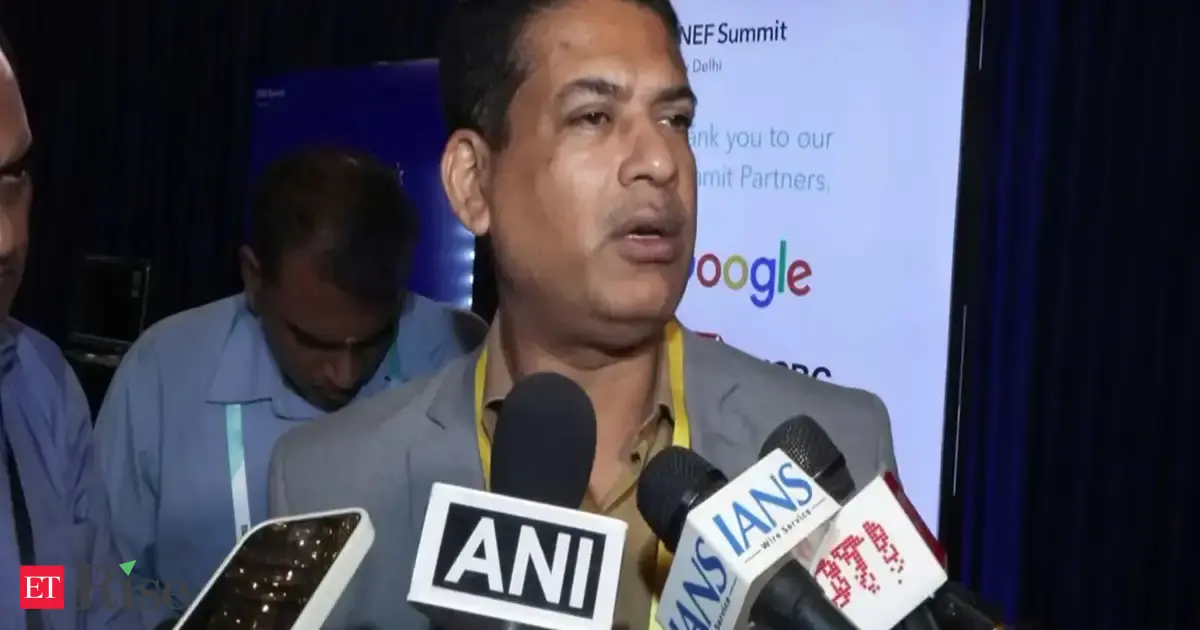
Technology Readiness Level (TRL) is a scale used to assess the maturity of a technology, with TRL 7 indicating that a system prototype has been demonstrated in an operational environment. View More
New Delhi: India is expected to witness significant growth in sodium-ion battery technology as researchers have reached Technology Readiness Level (TRL) 7 and above, Renewable Energy Secretary Santosh Kumar Sarangi said on Friday, noting that the technology could move from pilot projects to commercial production within two to three years. "A lot of research is going on in this area. In sodium-ion batteries , there are researchers who have reached a TRL of 7 and above. Once you reach that stage, moving from a pilot to commercial production should take anywhere between two to three years. So, we should expect significant growth there," Sarangi said responding to a question from on the sidelines of the BNEF Summit. Technology Readiness Level (TRL) is a scale used to assess the maturity of a technology, with TRL 7 indicating that a system prototype has been demonstrated in an operational environment. Sarangi said the government expects alternative battery technologies to play an increasing role as India expands energy storage to support the growing share of renewable energy. On vanadium flow batteries, he said domestic manufacturers are working to develop supply capacity, while growing demand could help bring down costs. Live Events "In vanadium flow batteries, as I mentioned, NTPC Green Energy Limited has placed an order for 100 megawatts. There are domestic manufacturers who are working and ensuring the supply of that capacity," he said. "Once the demand grows and the volume increases, we expect vanadium flow battery prices to fall, and that will be a game changer in the future," Sarangi added. Sarangi said the Central Electricity Authority (CEA) estimates that India would have about 411 GWh of energy storage by 2031-32 and that the country is on track to achieve the requirement earlier. "The CEA estimates suggest that we would have about 411 gigawatt-hours of storage by 2031-32. We are well on track and should, in fact, be able to achieve it before that," he said. He said the current level of storage is lower, but tenders and orders indicate that a significant amount of battery energy storage capacity is already under development. "The current level is less, but if you look at the tenders and placement of orders, about 156 gigawatt-hours of battery energy storage systems are under process and under implementation," Sarangi said. On battery recycling, Sarangi said the government is working on the issue under the existing e-waste framework. "We are working on it. That is part of the e-waste rules. But if further detailing is required, then it will be done," he said. Sarangi also said the government is working on a new scheme to support domestic polysilicon manufacturing, as the capacity expected under the earlier Production Linked Incentive (PLI) scheme would be limited. "The first one was a PLI scheme where polysilicon, wafers, cells and modules were all part of it. So, a very small capacity is likely to come up as part of that. But since we require a much larger capacity, we are thinking about and working on a scheme that will support the manufacturing of polysilicon," he said. He said India would look at adding at least 30 GW of polysilicon capacity by 2030 to strengthen the country's energy security and manufacturing resilience. "To ensure India's energy security and ensure that India's manufacturing resilience is maintained, a capacity of 30 gigawatts and above should be good for the Indian context. So, we would look at least 30 gigawatts of capacity addition by 2030," Sarangi said. .Pbanner{display:flex;justify-content:space-between;align-items:center;background-color:#ec1c40;margin-top:20px;padding:5px 10px;border-radius:4px;color:#fff;line-height:10px;width: 100%;box-sizing: border-box} .Pbannertext{display:flex;align-items:center;font-size:16px;font-weight:600;font-family:'Montserrat';} .Pbannertext img{height:20px;margin:0 6px} .Pbannerbutton a{display:flex;align-items:center;background-color:#fff;color:#ec1c40;text-decoration:none;font-weight:600;padding:4px 8px;border-radius:6px;font-size:15px;font-family:'Montserrat';} .Pbannerbutton img{height:20px;margin-right:6px} .Pbannerbutton a:hover{background-color:#f7f7f7} Add as a Reliable and Trusted News Source Add Now!