
Latest Sectors News

The gross refining margin (GRM) for Indian Oil Corporation (IOC) quadrupled in the third quarter, while that of Bharat Petroleum (BPCL) grew over two-fold, aided by softer crude and stronger product cracks. View More
New Delhi: State-owned oil marketing companies (OMCs)-IOC, BPCL and HPCL-more than doubled their combined quarterly profit to ₹23,743 crore in the December 2025 quarter from ₹10,545 crore in the corresponding period a year ago, buoyed by robust refining margins and lower LPG under-recoveries. The gross refining margin (GRM) for Indian Oil Corporation ( IOC ) quadrupled in the third quarter, while that of Bharat Petroleum (BPCL) grew over two-fold, aided by softer crude and stronger product cracks. According to data from ICICI Securities, GRM for IOC stood at $12.2 per barrel, up from $3 in the year-ago period. It grew to $13.3 from $5.6 for BPCL, and to $8.9 from $6 for Hindustan Petroleum ( HPCL ). During the October-December quarter, crude oil benchmark Brent averaged $63.8 per barrel, down from $74.9 in the year-ago period. The crack spread-the difference between the price of crude oil and those of its refined products-on diesel, petrol and aviation turbine fuel improved from a year earlier. Live Events The benchmark Singapore GRM increased to $6.2 per barrel in the December quarter from $4.9 in the year-earlier period. Marketing margins muted The three state-run refiners, however, experienced a decline in marketing margins as pump prices remained the same. The retail margin on petrol was ₹7.8 per litre during the December quarter, down from ₹12 per litre a year ago, showed ICICI Securities data. Retail margin on diesel was ₹2.9 per litre, down from ₹8. IOC posted a profit of ₹12,126 crore during the quarter under review, while BPCL and HPCL reported profits of ₹7,545 crore and ₹4,072 crore, respectively. Compensation from govt For the three months ended December, the government also started paying the promised compensation to the oil marketing companies for selling cooking gas below market rates. Receipt of compensation, as well as lower liquefied petroleum gas (LPG) prices during the quarter, aided companies' earnings. Inventory gains, too, significantly aided IOC's profit. Of the more than one lakh petrol pumps in the country, 90% are operated by the state-run OMCs. Reliance Industries and Nayara Energy account for the remaining ones. .Pbanner{display:flex;justify-content:space-between;align-items:center;background-color:#ec1c40;margin-top:20px;padding:5px 10px;border-radius:4px;color:#fff;line-height:10px;} .Pbannertext{display:flex;align-items:center;font-size:16px;font-weight:600;font-family:'Montserrat';} .Pbannertext img{height:20px;margin:0 6px} .Pbannerbutton a{display:flex;align-items:center;background-color:#fff;color:#ec1c40;text-decoration:none;font-weight:600;padding:4px 8px;border-radius:6px;font-size:15px;font-family:'Montserrat';} .Pbannerbutton img{height:20px;margin-right:6px} .Pbannerbutton a:hover{background-color:#f7f7f7} Add as a Reliable and Trusted News Source Add Now! (You can now subscribe to our Economic Times WhatsApp channel) (You can now subscribe to our Economic Times WhatsApp channel)
Bharat Heavy Electricals Limited has secured a significant power plant project from Steel Authority of India Limited. The order is valued between Rs 1,200 crore and Rs 1,500 crore. This captive power plant is a crucial part of SAIL's expansion at its IISCO Steel Plant in Burnpur. Project completion is anticipated within 39 months of contract award. View More
New Delhi: State-owned engineering firm BHEL on Tuesday said that it has received a power plant project worth Rs 1,200-1,500 crore from Steel Authority of India Ltd ( SAIL ). The letter of acceptance received for a captive power plant, which is part of a 4.08 MTPA crude steel expansion project of SAIL's IISCO Steel Plant at Burnpur , BHEL said in a regulatory filing. The size of the order is in the range of Rs 1,200 crore to Rs 1,500 crore, excluding GST ( goods and services tax ), it said, adding that the commissioning of the project is expected in 39 months from the date of awarding the contract. .Pbanner{display:flex;justify-content:space-between;align-items:center;background-color:#ec1c40;margin-top:20px;padding:5px 10px;border-radius:4px;color:#fff;line-height:10px;} .Pbannertext{display:flex;align-items:center;font-size:16px;font-weight:600;font-family:'Montserrat';} .Pbannertext img{height:20px;margin:0 6px} .Pbannerbutton a{display:flex;align-items:center;background-color:#fff;color:#ec1c40;text-decoration:none;font-weight:600;padding:4px 8px;border-radius:6px;font-size:15px;font-family:'Montserrat';} .Pbannerbutton img{height:20px;margin-right:6px} .Pbannerbutton a:hover{background-color:#f7f7f7} Add as a Reliable and Trusted News Source Add Now! (You can now subscribe to our Economic Times WhatsApp channel) (You can now subscribe to our Economic Times WhatsApp channel)
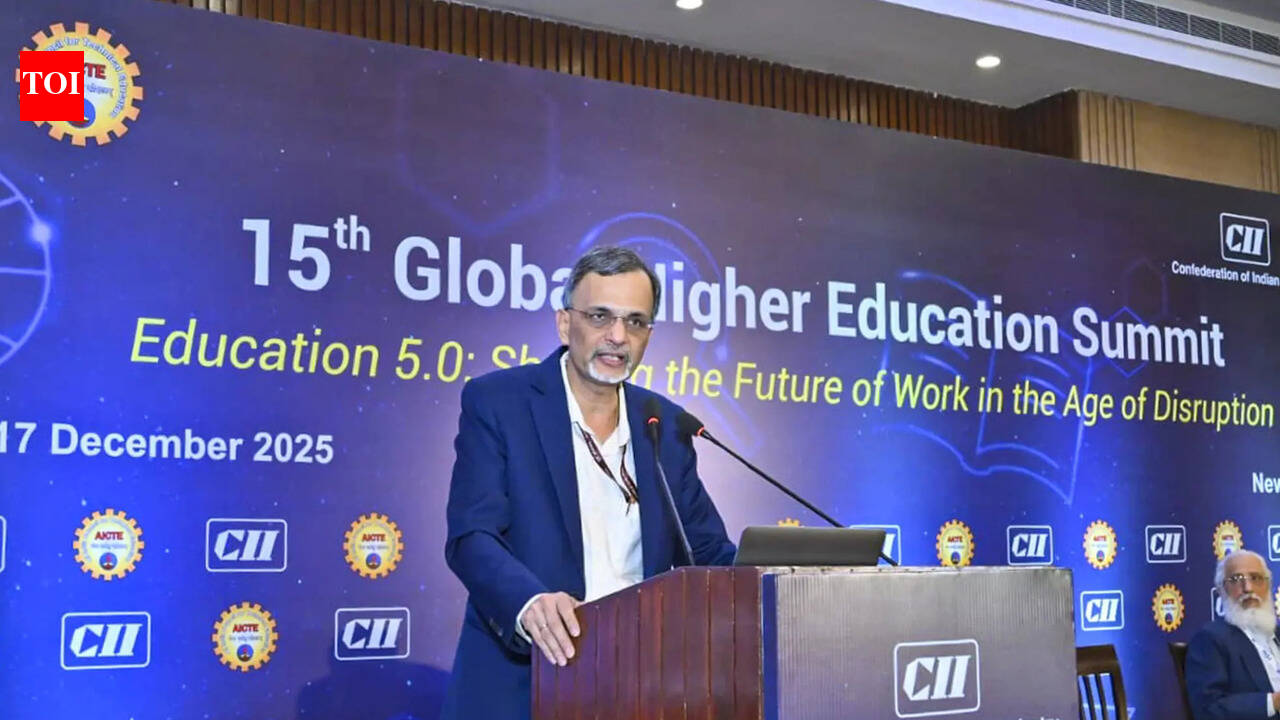
Chief Economic Adviser V Anantha Nageswaran stated that AI's impact on India's demographic advantage hinges on current decisions, urging coordinated national action. He emphasized that technological adoption must be deliberately aligned with mass employability, requiring political will and national commitment to ensure human abundance and machine intelligence reinforce each other for co-created prosperity. View More

Addressing the AI summit 2026, Nageswaran said if AI displaces humans faster than people can be trained, if productivity rises without employment elasticity, and if institutional reform lacks technological adoption, there is a risk that India will squander its demographic window. View More

Law firms representing the NAACP sent xAI a notice of intent to sue over alleged Clean Air Act violations in Mississippi. View More
Nikolas Kokovlis | Nurphoto | Getty Images Elon Musk's xAI, which merged with SpaceX last week, is facing increased pressure from environmental and civil rights groups over pollution concerns, this time at the company's facility in Southaven, Mississippi. On Friday, the Southern Environmental Law Center and Earthjustice, on behalf of the NAACP, sent a notice of intent to sue xAI and subsidiary MZX Tech LLC, saying the company's use of dozens of natural gas-burning turbines requires a federal permit, violates the Clean Air Act and harms nearby communities. Pollution from the turbines, which xAI has also used in Memphis, Tennessee, for its Colossus 1 and Colossus 2 data centers, has been a major source of local contention for more than a year. Plans for a third data center in Southaven, located about 20 miles from Memphis, were announced early this year, when Mississippi Republican Governor Tate Reeves said he expected the project to create "hundreds of permanent jobs throughout DeSoto County."Launched by Musk in 2023, xAI is trying to compete with OpenAI, Anthropic and Google in the booming generative AI market. On Feb. 2, Musk said SpaceX, his rocket maker and defense contractor, acquired xAI in a deal that valued the combined entity at $1.25 trillion. Musk is banking on the area in and around Memphis as the foundation of his AI ambitions, and he's been flouting environmental rules in order to develop as quickly as possible. Musk's social network X, formerly Twitter, is also owned by xAI, which created the Grok AI chatbot and image generator.XAI is currently under a myriad of government investigations in Europe, Asia and the U.S. after Grok enabled users to easily create and share deepfake porn, including explicit imagery depicting child sexual abuse. Last year, residents in the majority-Black community of Boxtown in South Memphis testified at public hearings about a stench in the air, and the impact of worsening smog on their health caused by xAI's use of natural gas turbines. Research by scientists at the University of Tennessee also found that xAI's turbine use added to air pollution woes in the area. Environmental advocates, including the NAACP, had previously said they would sue to stop xAI's un-permitted use of the turbines in Memphis. But they stopped short of filing a legal complaint after Shelby County's health department allowed xAI to treat the turbines as temporary, non-road engines, and issued permits for their use. At the federal level, the EPA recently clarified gray areas of the law and said these turbines can't be categorized as temporary non-road engines. Nonetheless, xAI has been using the turbines across state lines without obtaining federal permits. XAI didn't immediately respond to a request for comment.Noise pollution from the turbines has also been a source of local consternation. Jason Haley, a Southaven resident, told CNBC the turbines make headache-inducing noises around the clock that he can hear inside his home.Haley is part of a group called Safe and Sound which documents the decibel levels, and is pressing local officials to stop xAI from making so much noise, especially overnight, with its turbines.Mississippi officials will hold a public hearing, scheduled for Tuesday, for community members who wish to express their concerns about xAI's expansion plans in the area. The hearing will focus on whether the state should give xAI permission to install and run 41 permanent turbines at its Southaven facility, Mississippi Today previously reported. Similar community dynamics are playing out across the U.S. as tech giants rush to construct massive data centers, which can strain local energy and water supply and cause prices to increase.In November, Microsoft ended efforts to build a data center in Wisconsin due to the community's vocal opposition. Amazon also pulled out of plans for a data center in Arizona after community protests.In terms of Musk's Southaven project, Patrick Anderson, a senior attorney with SELC, said xAI "has to follow the law, just like any other company.""And when it flouts the Clean Air Act's bedrock protections against unpermitted emissions, it puts the health and welfare of ordinary citizens at risk," Anderson said in an email. "That's why we intend to hold xAI accountable here."The Mississippi Department of Environmental Quality did not immediately respond to requests for comment. Read the environmental groups' notice of intent to sue xAI here:

A woman of quiet efficiency and understated energy, Anu Aga embodies the Parsi entrepreneurial spirit tempered by social consciousness. View More
The Appellate Tribunal for Electricity has allowed the Central Electricity Regulatory Commission to proceed with framing regulations for power market coupling, dismissing a plea by the Indian Energy Exchange (IEX). The tribunal deemed IEX's petition premature as regulations are yet to be drafted. Market coupling aims to improve price discovery and efficiency by establishing a uniform price across electricity markets. View More
New Delhi: The Appellate Tribunal for Electricity on Friday allowed the Central Electricity Regulatory Commission to proceed with framing regulations on power market coupling , dismissing a plea by the Indian Energy Exchange ( IEX ) challenging the commission's July order. The tribunal said IEX's petition was not maintainable at this juncture since the rules on coupling were yet to be framed. Market coupling is aimed at improving price discovery and efficiency by ensuring a uniform price in different electricity markets. The commission in July issued a suo motu order to start market coupling in a phased manner in the day-ahead market from January 2026 and in the real-time market after gaining operational experience. "The tribunal dismissed the appeal while holding that once market coupling is implemented, the appellant may challenge it and CERC regulations if they have a valid challenge," said Amit Kapur, Partner, JSA law firm. Live Events IEX, which has a 99.7% market share, had challenged the move, arguing that the proposed framework could disrupt the existing power market structure. Following the tribunal's decision, the power regulator is expected to move ahead with drafting a market coupling framework, under which power prices across exchanges would be discovered through a common mechanism instead of individual exchange-based bidding. Apart from IEX, India has two other power exchanges: Power Exchange India and Hindustan Power Exchange . Industry experts said a uniform price discovery mechanism may reduce the competitive advantages of the leading exchange. IEX had argued that redistribution of market share was the only outcome of market coupling. As per its petition, the commission's order to implement market coupling upended the regulatory framework of the multi-exchange model that had evolved over 17 years, without considering its impact and in the absence of any evidence of its benefits. When the enabling provisions were first introduced in the Power Market Regulations, 2021, for future need of market coupling, a market-based economic dispatch was being considered, it said. In the absence of such mechanisms or any other issues, there was no reason to consider market coupling, it had argued. For the broader power market, proponents argue that coupling could enhance efficiency, reduce price fragmentation and align India's market design with global best practices. .Pbanner{display:flex;justify-content:space-between;align-items:center;background-color:#ec1c40;margin-top:20px;padding:5px 10px;border-radius:4px;color:#fff;line-height:10px;} .Pbannertext{display:flex;align-items:center;font-size:16px;font-weight:600;font-family:'Montserrat';} .Pbannertext img{height:20px;margin:0 6px} .Pbannerbutton a{display:flex;align-items:center;background-color:#fff;color:#ec1c40;text-decoration:none;font-weight:600;padding:4px 8px;border-radius:6px;font-size:15px;font-family:'Montserrat';} .Pbannerbutton img{height:20px;margin-right:6px} .Pbannerbutton a:hover{background-color:#f7f7f7} Add as a Reliable and Trusted News Source Add Now! (You can now subscribe to our Economic Times WhatsApp channel) (You can now subscribe to our Economic Times WhatsApp channel)

He said that the nature of the global system has changed, with trade no longer being reciprocal and supply chains being used as instruments of state power View More

Drip Capital has crossed $8 billion in global trade transactions. The fintech addresses a significant credit gap for Indian MSME exporters. By using data and AI, Drip offers collateral-free financing. This allows small exporters to access working capital quickly and scale their operations. View More
As India steps up its export ambitions amid shifting global supply chains , access to timely working capital remains one of the biggest constraints for small exporters. In an conversation with ET Online, Pushkar Mukewar, Founder and CEO of export focussed fintech Drip Capital , elaborates on how the trade finance platform has crossed $8 billion in global trade transactions, the structural credit gaps facing MSMEs, and why data-led, collateral-free financing could be pivotal in powering the next phase of India’s export growth. Edited excerpts: ET: What has driven Drip Capital crossing $8 billion in trade transactions, and how has SME export financing demand evolved? Pushkar Mukewar (PM): India’s MSMEs contribute roughly 45% of the country’s exports and are shipping to more markets with greater frequency, yet many still struggle to access timely, flexible working capital. Crossing $8 billion in global trade transactions reflects how Drip Capital has helped address this gap, in step with the expansion of India’s SME export ecosystem. With a global trade finance shortfall of about $2.5 trillion, which disproportionately affects SMEs, demand has shifted from one-off funding to embedded, repeat, shipment-linked credit. Our platform underwrites real trade flows using data, automation and AI-driven risk intelligence, enabling exporters to access capital within days and scale without liquidity constraints. ET: With $1.2 billion targeted for the next 12 months, which sectors will drive growth? PM: Growth is expected from export segments with recurring working capital needs and strong global demand, particularly textiles, apparel, agri-commodities, engineering goods, electronics and emerging consumer categories. MSME exporters in these segments are shipping more frequently to diversified markets and require reliable, faster financing embedded into their trade cycles. That recurring, tech-enabled demand represents a significant opportunity. ET: What structural gaps in MSME credit is Drip addressing, and how does collateral-free financing help? PM: India’s MSMEs face a significant credit shortfall. Formal lenders meet only about 20% of total demand, leaving an estimated Rs 20–30 lakh crore gap in working capital and trade finance. Traditional banks largely lend against collateral and balance sheets, sidelining exporters with strong orders but limited fixed assets. Live Events Drip Capital underwrites the trade itself — assessing buyer quality, shipment data and cashflow predictability, supported by automation and risk analytics. For instance, a small apparel exporter with confirmed overseas orders can convert invoices into working capital without pledging property, freeing up cash to procure raw materials and fulfil subsequent shipments. Collateral-free financing enables exporters to take on larger orders and compete globally without asset risk. ET: How does technology help Drip underwrite exporters with limited financial history? PM: Drip Capital is built to finance exporters the way they actually operate — online, fast, and driven by trade flows. Our platform is fully digital end-to-end: applications, KYC, document checks, underwriting, and disbursals all happen online, with no branches or physical paperwork. We assess eligibility using live trade data, not just old financial statements. Shipment records, invoice flows and buyer payment patterns feed into our AI-driven risk models, which helps us understand reliability in real time and extend credit even to younger businesses. A simple example: an exporter shipping two containers a month to repeat buyers can access working capital because our system recognises that pattern and triggers funding within days. That’s how technology turns day-to-day trade performance into immediate, usable credit — and makes financing match the pace of global exports. ET: Which industries or supply-chain clusters could become major export drivers in 3–5 years? PM: We expect the next phase of export growth to come from specialised manufacturing and organised MSME clusters. Along with apparel, home décor, handicrafts, and consumer goods are gaining traction as global buyers diversify sourcing beyond a few geographies. India’s strength lies in its ability to combine cost efficiency with manufacturing depth. MSMEs embedded in these clusters often serve niche global demand but require steady working capital to scale. As supply chains become more fragmented and resilient, these exporters are likely to play a larger role in global trade. Over the next few years, exporters that can deliver consistent quality, compliance, and timely shipments will benefit most, driving sustained demand for trade finance. ET: How does Drip help exporters manage seasonal demand spikes? PM: Seasonal demand around global festivals and sales cycles leads to sharp increases in order volumes and working capital requirements. Exporters must invest in raw materials and production well before payments are received. Drip structures financing around confirmed export orders and shipment timelines, enabling timely access to funds. Faster disbursals help maintain production schedules during peak seasons and ease short-term liquidity pressures. Predictable access to capital during peak cycles allows SMEs to plan expansion more confidently rather than operating conservatively during high-demand periods. ET: How central is your Drip Commerce initiative to the long-term strategy? PM: Drip Commerce is integral to the long-term strategy as global trade becomes more fragmented and complex. Exporters today navigate tariff uncertainty, shifting supply chains and evolving buyer geographies. While financing remains foundational, exporters increasingly require integrated solutions spanning payments, workflows and operational visibility. Drip Commerce consolidates these functions on a single platform, helping exporters manage multi-market operations across regions such as Europe, Africa and Asia. Over time, the objective is to evolve into a broader trade enablement platform where technology and financing work in tandem to help SMEs diversify markets and scale sustainably. .Pbanner{display:flex;justify-content:space-between;align-items:center;background-color:#ec1c40;margin-top:20px;padding:5px 10px;border-radius:4px;color:#fff;line-height:10px;} .Pbannertext{display:flex;align-items:center;font-size:16px;font-weight:600;font-family:'Montserrat';} .Pbannertext img{height:20px;margin:0 6px} .Pbannerbutton a{display:flex;align-items:center;background-color:#fff;color:#ec1c40;text-decoration:none;font-weight:600;padding:4px 8px;border-radius:6px;font-size:15px;font-family:'Montserrat';} .Pbannerbutton img{height:20px;margin-right:6px} .Pbannerbutton a:hover{background-color:#f7f7f7} Add as a Reliable and Trusted News Source Add Now!
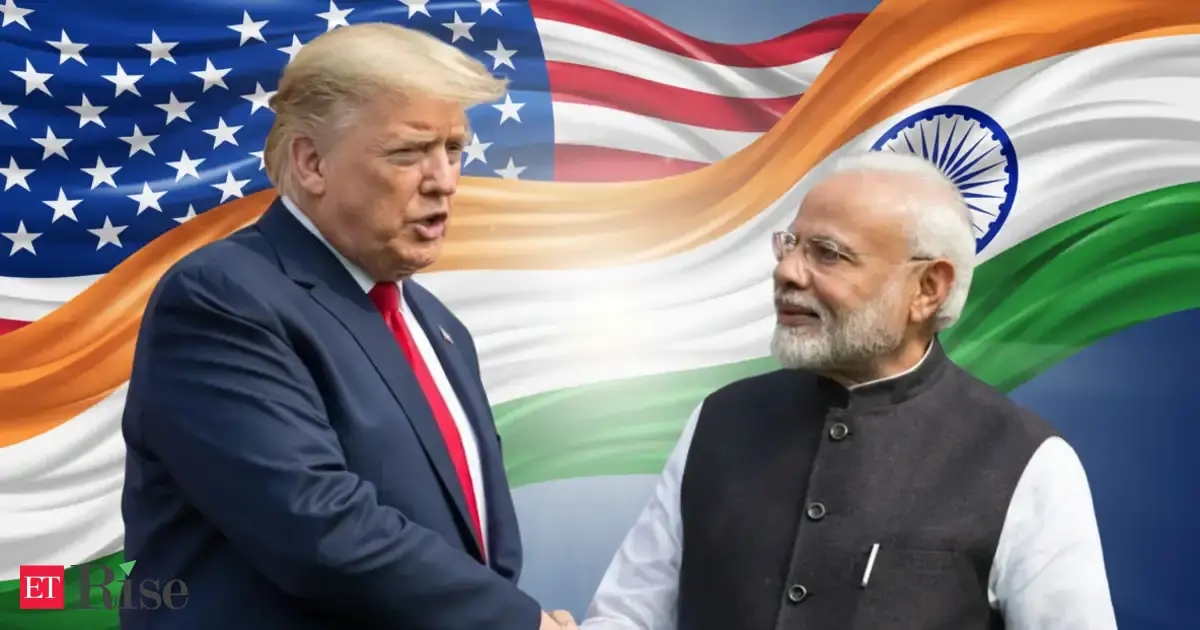
For India, the primary benefit is a significant reduction in US reciprocal tariffs and durable relief from certain national security-related duties. View More
The framework for the US-India Interim Trade Agreement outlines a series of reciprocal market access commitments designed to lower trade barriers and pave the way for a more comprehensive bilateral trade agreement. For India, the primary benefit is a significant reduction in US reciprocal tariffs and durable relief from certain national security-related duties. For the US, the agreement secures broad tariff reductions across industrial and agricultural sectors, coupled with crucial commitments from India to address long-standing non-tariff and regulatory barriers. US Concessions to India The US’s commitments provide immediate tariff relief and pave the way for future duty elimination for key Indian export sectors. The US has agreed to apply a reciprocal tariff rate of 18% on a range of goods originating from India. The sectors poised to benefit from this reduced tariff encompass labour-intensive industries, such as textiles and apparel, leather and footwear, plastics and rubber, organic chemicals, home décor, artisanal products, and certain machinery. Critically, the framework establishes a powerful incentive for the finalisation of the pact by making further concessions contingent upon its successful conclusion. Upon finalisation, the US commits to completely removing the reciprocal tariff on a wide range of high-value Indian exports, including generic pharmaceuticals, gems and diamonds, and aircraft parts. These goods are identified in the “Potential Tariff Adjustments for Aligned Partners Annex”, which lists products for which the US may grant zero-tariff access to aligned trading partners. The most durable concessions secured by India are those related to US Section 232 tariffs, which are predicated on national security grounds. The US will remove Section 232 tariffs on certain Indian aircraft and auto parts. Furthermore, India will receive a preferential tariff-rate quota for automotive parts that are subject to similar national security tariffs. These actions provide a more legally insulated form of market access compared to adjustments in reciprocal tariffs, which are tied to executive findings under different statutory authority. However, the framework adds a layer of conditionality for the pharmaceutical sector, stating that India will receive “negotiated outcomes” for generic pharmaceuticals and ingredients that are contingent on the findings of a pending US Section 232 investigation into that industry. Live Events India’s Concessions to the US India’s concessions under the framework are broad and address both tariff and non-tariff barriers, providing significant new market access for American businesses. India has committed to eliminate or reduce tariffs on all US industrial goods, a sweeping commitment that covers a vast range of manufactured products. In the agricultural sector, India will reduce duties on a wide array of US food and agricultural products. The joint statement explicitly lists several key categories for this improved access: dried distillers’ grains, red sorghum for animal feed, tree nuts, fresh and processed fruit, soybean oil, and wine and spirits, among other products. Beyond tariffs, India has made pivotal commitments on the non-tariff barriers (NTBs) that have historically impeded US exports. These commitments are particularly valuable from a regulatory compliance perspective. India has agreed to address long-standing US concerns regarding market access for medical devices and to eliminate restrictive import licensing procedures for US Information and Communication Technology goods, which have been cited as delaying market entry or functioning as quantitative restrictions. Perhaps the most consequential NTB commitment is India’s agreement to determine, within six months of the agreement’s entry into force, whether US-developed or international standards and testing requirements are acceptable for US exports in identified sectors. This signals a significant step towards regulatory harmonisation and mutual recognition, which can be more critical than tariff rates for ensuring frictionless trade. India also agreed to more broadly address long-standing NTBs affecting US food and agricultural products. In numerous public statements, Piyush Goyal , Union Minister of Commerce and Industry, has categorically affirmed the complete protection of India’s farm and dairy sectors in the trade agreement. He stated, “The agreement reflects India’s commitment to safeguarding the interests of farmers and sustaining rural livelihoods by completely protecting sensitive agricultural and dairy products, including maize, wheat, rice, soya, poultry, milk, cheese, ethanol (fuel), tobacco, certain vegetables and meat. No genetically modified items will be imported to India. No relief or concession has been given on dairy, maize, soya meal, sugar, millets, or citrus fruits.” He has consistently maintained that the interests of farmers are “paramount” and that “no concessions have been extended to sensitive agricultural sector produce in grains, fruits, vegetables, spices, oilseeds, dairy, poultry, and meat, amongst many others." The Interim Agreement framework is a masterfully crafted instrument of economic statecraft, reflecting a nuanced balance of legal durability, negotiating leverage, and strategic signalling. While presented as a reciprocal and mutually beneficial trade arrangement, the structure of concessions reveals a sophisticated and asymmetric architecture. A key observation is the differing nature of the core tariff commitments. India’s pledge to eliminate or reduce tariffs on all US industrial goods is textually absolute and expansive. In contrast, the US commitment is tiered: an immediate reduction of reciprocal tariff to 18% on a specified list of Indian goods, with the more valuable prize of zero-tariff access for high-value sectors like pharmaceuticals and gems being held back as a contingency, dependent on the finalisation of the deal. This back-loaded incentive structure grants the US substantial leverage in ensuring the prompt conclusion of negotiations on terms it finds favourable. From a regulatory and legal perspective, the most significant “win” for India is the relief from Section 232 tariffs on aircraft and auto parts. These tariffs, grounded in US national security law, are politically and legally distinct from the “reciprocal tariffs” imposed under the International Emergency Economic Powers Act, which were justified by a national emergency declaration related to trade deficits. Securing relief from Section 232 duties provides Indian exporters in these strategic sectors with a more stable and predictable legal foundation for market access, less susceptible to shifts in US trade enforcement policy. Conversely, the most significant long-term US “win” may not be the tariff cuts but India’s commitment to addressing non-tariff barriers, particularly the pledge on standards and conformity assessment. For a regulatory affairs professional, the value of this cannot be overstated. Technical barriers to trade, often embedded in domestic standards, testing, and certification requirements, can be far more prohibitive and costly to navigate than tariffs. India’s agreement to formally consider the acceptance of the US or international standards within a fixed timeframe represents a potential breakthrough in regulatory harmonisation. If implemented, this would dramatically lower compliance burdens and accelerate market entry for US exporters in regulated sectors, representing a structural, rather than merely transactional, opening of the Indian market. Finally, the framework’s inclusion of India’s “intention to purchase” $500 billion in US goods should be interpreted not as a binding contractual obligation, but as a crucial political and strategic component of the deal. The non-binding language gives India flexibility, while the headline figure itself serves to rebalance the trade narrative publicly and provide political justification for US concessions. It strategically aligns India’s recognised domestic needs in energy, infrastructure, and technology with America’s high-value export strengths, embedding the commercial relationship within a broader context of strategic partnership. Parishti Kaushik is an independent researcher and Badri Narayanan Gopalakrishnan is Founder of Infisum. Views are personal. .Pbanner{display:flex;justify-content:space-between;align-items:center;background-color:#ec1c40;margin-top:20px;padding:5px 10px;border-radius:4px;color:#fff;line-height:10px;} .Pbannertext{display:flex;align-items:center;font-size:16px;font-weight:600;font-family:'Montserrat';} .Pbannertext img{height:20px;margin:0 6px} .Pbannerbutton a{display:flex;align-items:center;background-color:#fff;color:#ec1c40;text-decoration:none;font-weight:600;padding:4px 8px;border-radius:6px;font-size:15px;font-family:'Montserrat';} .Pbannerbutton img{height:20px;margin-right:6px} .Pbannerbutton a:hover{background-color:#f7f7f7} Add as a Reliable and Trusted News Source Add Now!