
Latest Sectors News
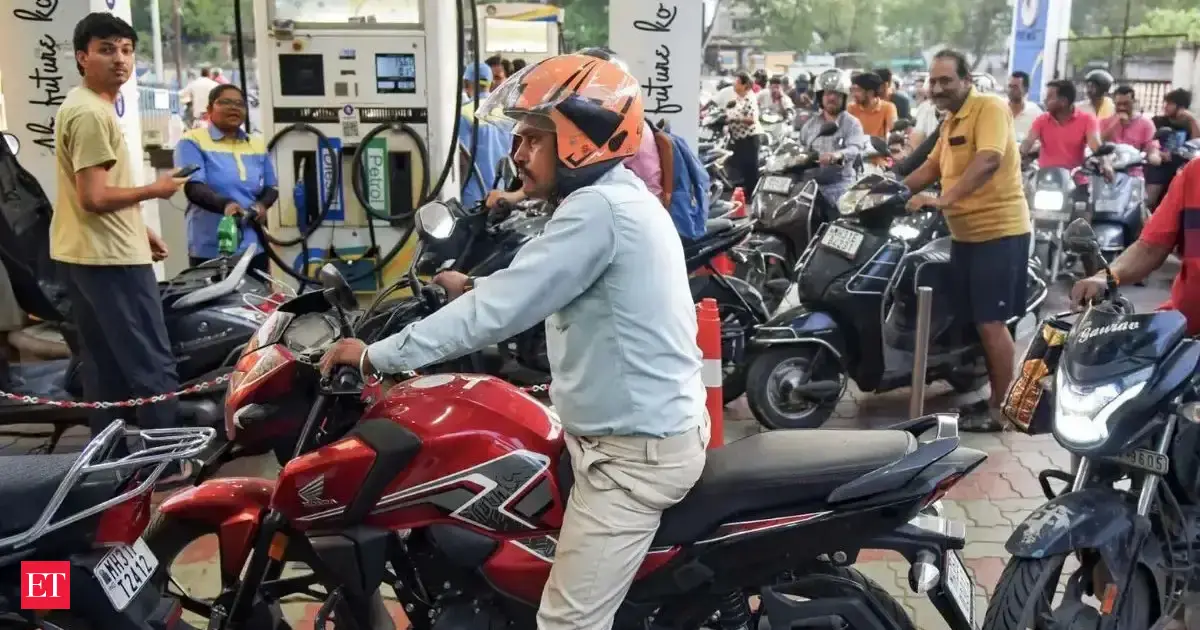
The government has reduced excise duty on petrol and diesel by ?10 per litre. This move aims to protect oil companies from losses due to high global oil prices. Export duties have also been imposed on diesel and aviation fuel. These measures ensure domestic availability of fuel. The government anticipates significant revenue changes from these fiscal adjustments. View More
New Delhi: The Centre has cut excise duty on petrol and diesel by ₹10 per litre to shield refiners from losses amid rising global oil prices due to the Iran war. Pump prices will remain unaffected. The government has also imposed export duties of ₹21.5 per litre on diesel and ₹29.5 per litre on aviation turbine fuel (ATF) to discourage private refiners from diverting supplies entirely to the highly lucrative export market and to keep domestic markets supplied. Such measures were first introduced in the early days of the Russia-Ukraine war four years ago. Central taxes, including excise duty and cess, have now fallen to ₹11.9 per litre for petrol and ₹7.8 per litre for diesel. At current rates of local sales and exports, the government will lose ₹7,000 crore in a fortnight due to the duty cut and gain ₹1,500 crore from the export tax, Central Board of Indirect Taxes and Customs chairman Vivek Chaturvedi said. This translates into an annual revenue loss of ₹1,82,500 crore from duty cuts and a gain of ₹39,100 crore from export taxes. Export tax will be reviewed every fortnight, Chaturvedi said. Oil minister Hardeep Singh Puri in an X said the government has taken a huge hit on its taxation revenues to reduce high losses of oil companies “at this time of sky-high international prices are reduced.” The minister estimated losses of oil marketing companies at “approximately ₹24 per litre for petrol and ₹30 per litre for diesel.” Live Events Since the beginning of the Iran war a month ago, rising crude prices and a weakening rupee have increased procurement costs for Indian refiners, who have not been able to raise pump prices. Brent has averaged $95 per barrel in March, up from $69 in February, while the rupee has fallen to 94.8 against the dollar, from 91.07 before the war. Nayara Energy, a private sector refiner with about 7% of the country’s petrol pumps, raised retail prices on Thursday, effectively shutting out consumers from its outlets. Nayara is also planning a maintenance shutdown next month. Sujata Sharma, joint secretary in the petroleum ministry, did not provide details on handling the likely consequences of Nayara’s price increase, which could shift demand to state-run fuel retailers. .Pbanner{display:flex;justify-content:space-between;align-items:center;background-color:#ec1c40;margin-top:20px;padding:5px 10px;border-radius:4px;color:#fff;line-height:10px;} .Pbannertext{display:flex;align-items:center;font-size:16px;font-weight:600;font-family:'Montserrat';} .Pbannertext img{height:20px;margin:0 6px} .Pbannerbutton a{display:flex;align-items:center;background-color:#fff;color:#ec1c40;text-decoration:none;font-weight:600;padding:4px 8px;border-radius:6px;font-size:15px;font-family:'Montserrat';} .Pbannerbutton img{height:20px;margin-right:6px} .Pbannerbutton a:hover{background-color:#f7f7f7} Add as a Reliable and Trusted News Source Add Now! (You can now subscribe to our Economic Times WhatsApp channel) (You can now subscribe to our Economic Times WhatsApp channel)
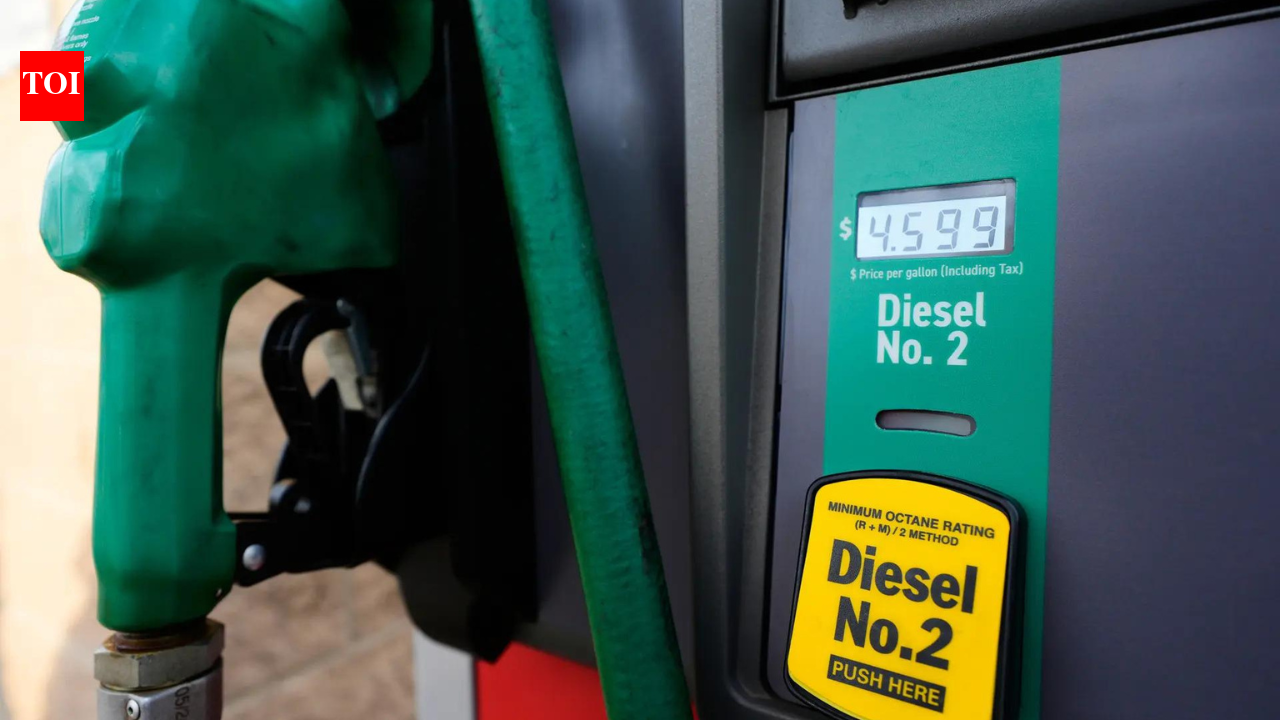
The government has imposed export duties on diesel and turbine fuel to boost domestic availability and energy security, estimating Rs 1,500 crore in revenue. Simultaneously, special excise duties on petrol and diesel were reduced to shield consumers, keeping retail prices stable amid global oil supply concerns. View More

India takes a huge tax revenue hit as it cuts fuel excise duties to shield consumers from soaring oil prices caused by the Iran war. View More
In this articleHSBCFollow your favorite stocksCREATE FREE ACCOUNT People stand in a queue to refill fuel at a gas station in Guwahati, India, on March 26, 2026.David Talukdar | Anadolu | Getty Images The Indian government's tax revenues have taken a "huge hit" after New Delhi slashed central excise duties on fuel for domestic consumption, Petroleum and Natural Gas Minister Hardeep Singh Puri said Friday.The Indian government late Thursday cut central excise duties on petrol and diesel for domestic consumption by 10 rupees ($0.11) per liter each, to keep pump prices from rising as the Iran war disrupts global energy supplies.International crude prices have "gone through the roof" in the last month, from roughly $70 a barrel to around $122, Puri said in a post on X.The government has decided to bear the cost of rising energy prices and keep retail fuel prices from rising, he said, adding that these tax cuts will reduce the losses faced by oil companies, which stand at around 24 rupees per liter for petrol and 30 rupees per liter of diesel.According to a government notice, the excise duty for petrol will be reduced to 3 rupees per liter, down from 13 rupees, while diesel will be zero rupees per liter, down from 10 rupees.As a further safeguard, the government raised duties on diesel exports to 21.5 rupees per liter and on aviation turbine fuel to 29.5 rupees per liter. Finance Minister Nirmala Sitharaman said it was done to "ensure adequate availability of these products for domestic consumption.""This will provide protection to consumers from rise in prices," Sitharaman said in a post on X on Friday. watch nowVIDEO4:5004:50India's farms, domestic demand & growth: Risk analyst on Iran war contagionInside India Oil is a sticky topic As the world's thirdâlargest oil importer and secondâlargest liquefied petroleum gas consumer, India is grappling with rising energy costs and panicâbuying amid tightening supplies due to the closure of the Strait of Hormuz. "The longer the energy supply disruptions persist with oil prices remaining above $100/barrel, the higher the structural risks to the economy, particularly if domestic policy responses are not managed carefully," said Luchnikava-Schorsch, head of Asia-Pacific Economics, S&P Global Market Intelligence, told CNBC.If the Indian government raises retail prices of oil and gas, it could lift inflation and temper growth. However, absorbing the higher costs would widen the fiscal deficit.The impact of the Middle East conflict is already visible in key macroeconomic indicators.HSBC's flash Purchasing Managers' Index, released Tuesday, showed that India's privateâsector activity in March slowed to its lowest level since October 2022 due to softer domestic demand. div {box-sizing: border-box;} .noselect { -webkit-touch-callout: none; /* iOS Safari */ -webkit-user-select: none; /* Safari */ -khtml-user-select: none; /* Konqueror HTML */ -moz-user-select: none; /* Old versions of Firefox */ -ms-user-select: none; /* Internet Explorer/Edge */ user-select: none; /* Non-prefixed version, currently supported by Chrome, Edge, Opera, and Firefox */ } #tcc-wrapper {width: 100%; max-width: 620px; min-width: 300px; cursor: pointer; display: block;} .tcc-widget-content { font-family: Proxima Nova,Helvetica,Arial,sans-serif; font-size: 16px; line-height: 24px; font-weight: 400; color: #000; padding: 16px 0 16px 0; width: 100%; height: auto; border-top: 1px solid #cccccc; border-bottom: 1px solid #cccccc; } .tcc-logo-col { float: left; margin-right: 20px; } .tcc-text-col { } .tcc-text a { color: #0053CF !important; text-decoration: none; font-weight: 600; } Get a weekly roundup of news from India in your inbox every Thursday. Subscribe now Companies surveyed cited the Middle East conflict, unstable market conditions, and intensifying inflationary pressures as factors weighing on growth. Cost inflation is now near a fourâyear high.If oil settles at $85-$95 a barrel after the war, that could lead to incremental outflows of $40 billion to $50 billion â more than 1% of India's GDP â according to Renaissance Investment Managers CEO and Chief Investment Officer Pankaj Murarka, speaking to CNBC's "Inside India" on Friday.This could trim India's economic growth to 6.5% from from 7.2%, he said. Choose CNBC as your preferred source on Google and never miss a moment from the most trusted name in business news.
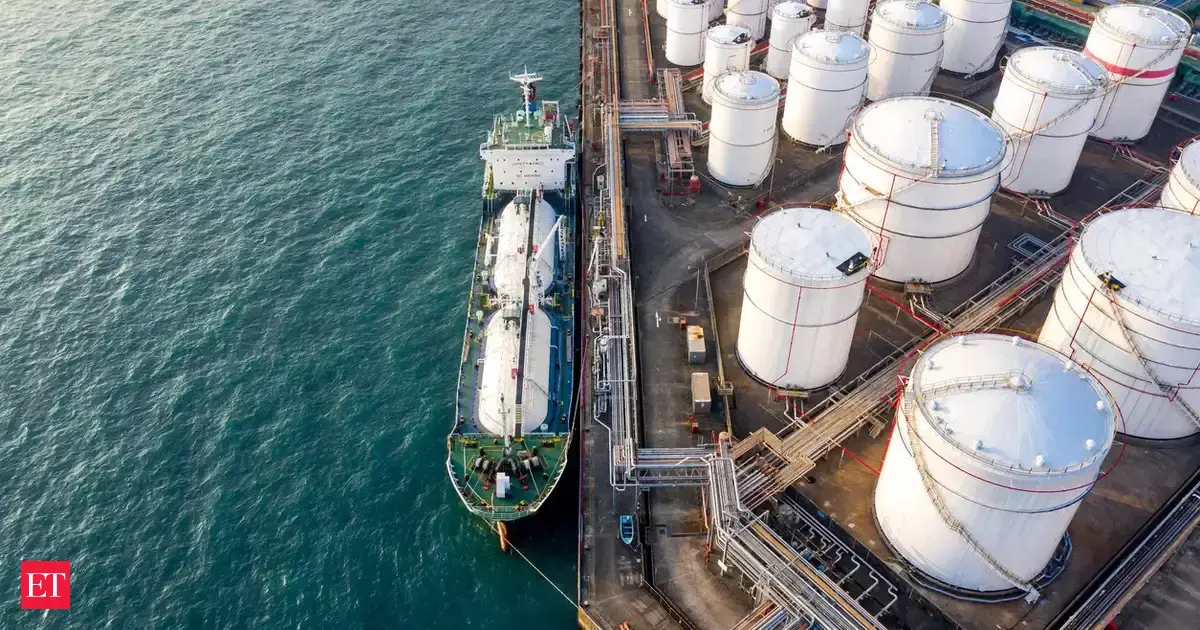
India has reinstated windfall taxes on diesel and aviation turbine fuel exports, with levies of Rs 21.5 and Rs 29.5 per litre respectively. This policy reversal follows the earlier abolition of such taxes in 2024, as global oil markets remain volatile due to geopolitical tensions. View More
India has reintroduced windfall taxes on fuel exports, setting a levy of Rs 21.5 per litre on diesel and Rs 29.5 per litre on aviation turbine fuel (ATF), according to a government order issued on Thursday. The move marks a reversal of the government’s earlier decision to scrap such taxes, as authorities seek to recalibrate revenue from the energy sector amid heightened volatility in global oil markets. The latest notification specifies that the windfall tax will apply to the export of diesel and ATF, key refined products that account for a significant share of India’s outbound petroleum shipments. Also read: India slashes special additional excise duty on petrol, diesel by Rs 10 per litre India had abolished the windfall tax regime in 2024, removing levies on crude oil production as well as exports of petrol, diesel and aviation turbine fuel. The reimposition indicates a renewed policy shift as global crude prices remain sensitive to geopolitical tensions, particularly in the Middle East. Live Events The development comes alongside a broader set of changes to the country’s fuel taxation framework, including revisions to excise duties on petrol and diesel notified separately. Fuel duty cuts, domestic pricing context The reimposition comes alongside a broader reset in India’s fuel taxation framework. The government has cut the special additional excise duty on petrol to Rs 3 per litre and reduced it to nil on diesel, replacing the earlier levy structure with immediate effect. Previously, the duty stood at Rs 13 per litre on petrol and Rs 10 per litre on diesel, implying a reduction of Rs 10 per litre in both cases, based on earlier government notifications. The revised structure lowers the tax burden on petrol and eliminates it entirely on diesel, while excluding fuel meant for export. The intervention follows recent price hikes by private retailer Nayara Energy, which raised petrol prices by Rs 5 per litre and diesel by Rs 3 per litre, highlighting cost pressures in the sector. Petroleum Minister Hardeep Singh Puri said the government had taken a hit on tax revenues to cushion losses of oil companies amid elevated global prices. Also read: India mandates export tax on refineries selling petrol and diesel overseas Global oil volatility drives policy shifts The policy changes come against the backdrop of heightened global oil market volatility triggered by the ongoing West Asia conflict. Crude prices surged to nearly $119 per barrel after US and Israeli strikes on Iran before easing to around $100 levels. Oil prices remained volatile through the week, with Brent crude slipping to about $107 per barrel and US West Texas Intermediate to around $93.6 after US President Donald Trump signalled a temporary pause in strikes on Iran’s energy infrastructure. Despite the recent pullback, supply concerns persist due to disruptions in the Strait of Hormuz, a key transit route for global energy trade. Analysts warn that crude prices could remain elevated in the $85–$110 per barrel range in the near term, with potential spikes to $150 if disruptions continue. .Pbanner{display:flex;justify-content:space-between;align-items:center;background-color:#ec1c40;margin-top:20px;padding:5px 10px;border-radius:4px;color:#fff;line-height:10px;} .Pbannertext{display:flex;align-items:center;font-size:16px;font-weight:600;font-family:'Montserrat';} .Pbannertext img{height:20px;margin:0 6px} .Pbannerbutton a{display:flex;align-items:center;background-color:#fff;color:#ec1c40;text-decoration:none;font-weight:600;padding:4px 8px;border-radius:6px;font-size:15px;font-family:'Montserrat';} .Pbannerbutton img{height:20px;margin-right:6px} .Pbannerbutton a:hover{background-color:#f7f7f7} Add as a Reliable and Trusted News Source Add Now! (You can now subscribe to our Economic Times WhatsApp channel) (You can now subscribe to our Economic Times WhatsApp channel)
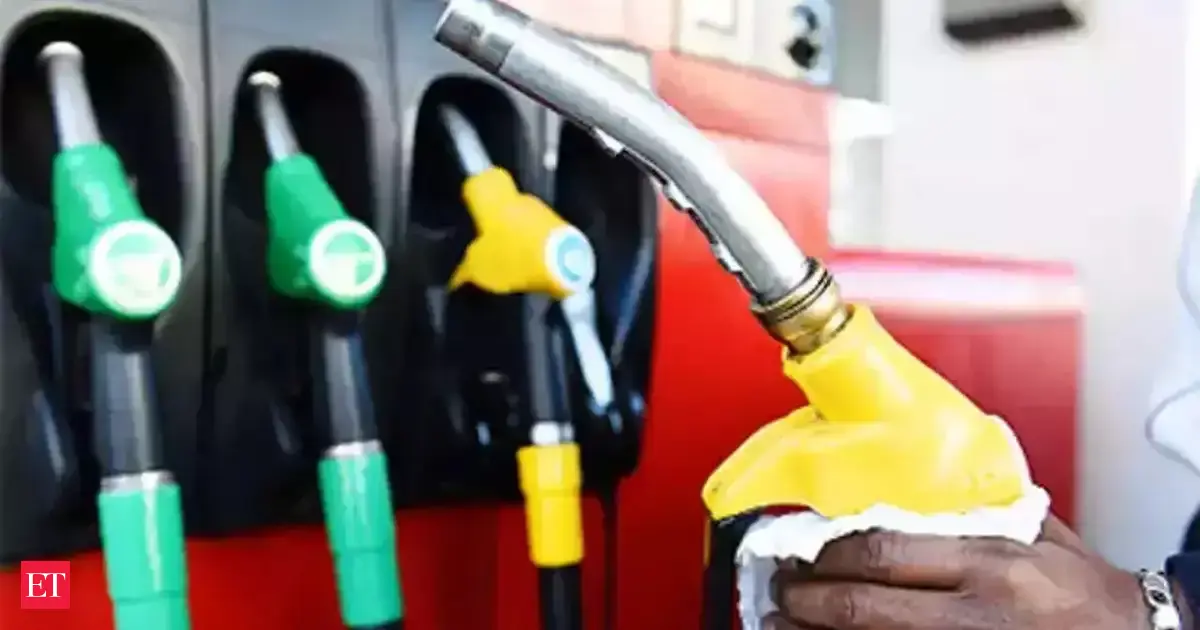
India has significantly reduced excise duties on petrol and diesel, cutting the special additional excise duty on petrol to Rs 3 per litre and eliminating it entirely on diesel. These changes, effective immediately, aim to ease the tax burden on consumers amidst volatile global crude oil prices and supply chain disruptions. View More
India has reduced the special additional excise duty on petrol to Rs 3 per litre and cut it to nil on diesel, according to a government order dated Thursday, which replaces the earlier levy structure with immediate effect, even as global fuel prices remain volatile due to disruptions triggered by the Iran conflict. Based on the latest revision, the duty on petrol has been reduced to Rs 3 per litre from earlier higher levels, while diesel has seen a complete removal of the levy. Previously, the duty stood at Rs 13 per litre on petrol and Rs 10 per litre on diesel, implying a reduction of Rs 10 per litre each, according to prior government notifications. The cuts are effective immediately, according to the Ministry of Finance's notification. Also read: India reimposes windfall tax on diesel, ATF exports; sets rates at Rs 21.5/litre and Rs 29.5/litre The notification amends the existing excise framework to substitute the duty rates, effectively lowering the tax burden on petrol and eliminating it on diesel, while clarifying that the revised rates will not apply to fuel meant for export. Strait of Hormuz's closure triggers supply chain disruption “Government has taken a huge hit on it taxation revenues to ensure very high losses of oil companies (approximately 24 Rs/litre for petrol and 30 Rs/litre for diesel) at this time of sky high international prices are reduced,” Petroleum and Natural Gas Minister Hardeep Puri wrote on X. Live Events CBIC Chairman Vivek Chaturvedi said that the total revenue foregone on petrol and diesel duty slash is Rs 7,000 cr in a fortnight. The duty cuts come as India faces pressure from surging global crude prices and supply disruptions. The U.S.-Israeli war with Iran has led to a near-closure of the Strait of Hormuz, a key conduit for global oil flows, affecting shipping and gas supplies, Reuters reported. India, the world’s third-largest oil importer, meets over 90% of its crude requirements through imports, making it particularly vulnerable to such disruptions. Further, the government has also revised the duty structure on aviation turbine fuel (ATF) through a series of separate notifications. While one notification imposes a special additional excise duty of ₹50 per litre, others provide exemptions or adjusted rates under different provisions. ANI reported that the government has also exempted ATF from certain components of the levy, providing relief to the aviation sector. Also read: India mandates export tax on refineries selling petrol and diesel overseas The changes form part of a broader set of amendments to the central excise regime notified on March 26, 2026, and follow the previous revision carried out in April 2025, when the Centre had raised duties on petrol and diesel by Rs 2 per litre. The move comes amid heightened volatility in domestic fuel pricing, with global crude markets roiled by the war in West Asia and its impact on supply chains. Retail fuel prices in India have remained largely unchanged despite a sharp rise in international oil prices, putting pressure on oil marketing companies. The government intervention also comes a day after India’s largest private fuel retailer Nayara Energy raised petrol prices by ₹5 per litre and diesel by Rs 3 per litre. The increase highlights diverging pricing strategies in the domestic market as input costs rise. International crude oil prices have surged sharply since late February following US and Israeli strikes on Iran, climbing close to $119 per barrel at peak levels before easing to around $100 per barrel. If crude prices rise further, fuel retailers could incur significant losses on petrol and diesel sales. Nayara Energy, majority-owned by Russia’s Rosneft, operates over 7,000 fuel stations across India. Dealers expressed concern over the price hike, warning of potential demand impact and signalling possible protests. Some dealers also indicated that fuel supplies had been curtailed in recent days. Also read: Oil slips marginally, holds above $100 as Donald Trump pauses Iran energy strikes for 10 days. What lies ahead? Global oil volatility persists Oil prices eased in early Friday trade after a volatile week, as US President Donald Trump signalled progress in talks with Iran and announced a temporary pause on strikes targeting energy infrastructure. Brent crude fell to around $107 per barrel, while US West Texas Intermediate dropped to about $93.6, trimming gains from the previous session when prices had surged sharply on escalation fears. Despite recent spikes, both benchmarks of the Indian equity markets--the Sensex and Nifty--are heading for weekly declines amid hopes of a diplomatic breakthrough. However, the conflict has significantly disrupted flows through the Strait of Hormuz, intensifying supply concerns. Analysts warn that even if tensions ease, crude prices are likely to remain elevated, with forecasts suggesting a range of $85–$110 per barrel in the near term, and potential spikes toward $150 if disruptions persist. .Pbanner{display:flex;justify-content:space-between;align-items:center;background-color:#ec1c40;margin-top:20px;padding:5px 10px;border-radius:4px;color:#fff;line-height:10px;} .Pbannertext{display:flex;align-items:center;font-size:16px;font-weight:600;font-family:'Montserrat';} .Pbannertext img{height:20px;margin:0 6px} .Pbannerbutton a{display:flex;align-items:center;background-color:#fff;color:#ec1c40;text-decoration:none;font-weight:600;padding:4px 8px;border-radius:6px;font-size:15px;font-family:'Montserrat';} .Pbannerbutton img{height:20px;margin-right:6px} .Pbannerbutton a:hover{background-color:#f7f7f7} Add as a Reliable and Trusted News Source Add Now! (You can now subscribe to our Economic Times WhatsApp channel) (You can now subscribe to our Economic Times WhatsApp channel)

Amid slowing global sales and store closures in China, Ikea has high hopes for India. View More
In this articleXAU=MANAPPURAM-INMUTHOOTFIN-INUSBFollow your favorite stocksCREATE FREE ACCOUNT .ido-promo__content { box-sizing: border-box; width: 100%; background-color: #f0f0f0; padding: 2px 20px 2px 20px; font-family: Lyon, Helvetica, Arial, sans-serif; font-size: 18px; line-height: 1.66; } This report is from this week's "Inside India" newsletter, which brings you timely, insightful news and market commentary on the emerging powerhouse — Subscribe today Hello, this is Priyanka Salve, writing to you from Singapore. Welcome to the latest edition of Inside India â your one-stop destination for stories and developments from the world's fastest growing large economy. This week, I dive into the world's largest furniture retailer, Ikea, and its big plans in India even as it contends with sluggish sales in key markets as well as store closures in China.Enjoy!Any thoughts on today's newsletter? Share them with the team. The big story Ikea, the world's largest furniture retailer, has seen a slowdown in sales globally. And while it has closed several large stores in China, the Swedish company is doubling down on neighboring India. Patrik Antoni, CEO of Ikea India, has been appearing in playful Instagram reels teasing store launches in India â "a priority market" for the company. Currently, there are six Ikea stores in India, and the company is aiming for around 30 within five years, which will be a mix of large and small stores and pick-up points for online deliveries. Ikea views India not only as a potential major retail market but also as a possible export hub, supported by the IndiaâEU free trade agreement that was finalized on Jan. 26. Further, 30% of the company's India sales currently come from locally sourced raw materials, a figure it aims to lift to 50% by 2030, according to Antoni. This growing local sourcing ecosystem, strengthened by rising domestic demand and exportâfriendly policies, positions India as an increasingly strategic base for Ikea. "India is a long-term market for us, and we are building with the next 100 years in mind," Antoni told CNBC in an email interview. He added that the India-EU trade pact signals "a strong economic alignment between two important markets," and this could boost India's role "as a production and export base within our global network."India's furniture and home décor market, valued at over $25 billion in 2024, is projected to reach $40.8 billion by 2033, as per the Indian commerce ministry-backed organization IBEF. But Ikea forecasts even faster expansion, expecting the market to hit $48 billion by 2030 â momentum the company is keen to capture.Globally, Ikea's retail sales have declined over the past two years, falling to 44.6 billion euros ($51.7 billion) in the financial year ended Aug. 31 2025 from 45.1 billion euros in the prior year. Europe accounts for more than 70% of its sales, followed by North America (17%) and Asia (around 9%). Meanwhile, in China â another major market for the companyâ growth has slowed sharply. Ikea is closing seven large-format stores in the country to focus on smaller outlets as a weak housing market and intensifying competition from online retailers takes a toll. "We will shift from scale-based expansion to precision-driven penetration," the Swedish retailer said. Girls take selfie picture in front of IKEA store in Bangalore, India, 17 September, 2022. IKEA is the world's leading Swedish home furnishing retailer which expands across multiple cities in India. (Photo by Indranil Aditya/NurPhoto via Getty Images)Nurphoto | Nurphoto | Getty Images Banking on India's growth India is dominated by smaller furniture and interiors players, with no domestic brand operating at Ikea's scale, as per the IBEF. Also, housing sales since the pandemic have seen strong growth, with a marginal slowdown in 2025, according to data from real estate consultancy Knight Frank."We are truly inspired by this potential," Antoni said, noting that evolving lifestyles and expanding real estate categories are creating fresh opportunities.Ikea's India sales rose by around 6% in the financial year ended August 2025, with furniture being the leading category, the company said. The company's EBITDA, excluding fixed costs, also improved by over 10%, it said. Although India's current contribution â 18.5 billion rupees ($196.7 million) â to Ikea's global revenue remains modest, the company expects retail operations in the country to turn profitable by its financial year ending Aug. 2028 and is doubling down on its expansion plan.Ikea currently operates three large-format stores in Hyderabad, Navi Mumbai and Bengaluru, as well as city stores in Mumbai and West Delhi. Pune, its newest store, opened earlier this month. A new store format, known as "Lykli," was due to open in the northern city of Gurugram in "late 2025," described by the company as "a key destination for entertainment, social connections and retail therapy," complete with office facilities and community spaces.When asked about the timeline for that store, the company did not disclose details but said that Gurugram will be the first large-format store in North India and will be followed by another Lykli store in Noida in the state of Uttar Pradesh.The inâstore "touch and feel" experience is vital for IKEA in India, where offline outlets generate 70% of sales compared with 30% from eâcommerce, Antoni said.Ikea's expansion strategy will prioritize six key markets: Mumbai, Delhi National Capital Region, Bengaluru, Hyderabad, Pune and Chennai. Last year, Ikea India recorded nearly 110 million "customer interactions," and the Swedish firm now hopes to get a bigger share of their wallets.â CNBC's Anniek Bao contributed to this story.Need to knowUnited Spirits sells its Indian Premier League franchise, RCB. A consortium comprising Blackstone and serial American sports investor David Blitzer among others, has acquired the Indian Premier League's Royal Challengers Bengaluru franchise in a 166 billion rupees ($1.78 billion) deal. India's private sector activity in March slowed to its lowest level since October 2022. HSBC's flash India Composite PMI, which measures the monthly change in the combined manufacturing and services output, slowed to 56.5 in March from 58.9 in February.Novo Nordisk faces competition from Indian generic drugmakers: The first wave of generic versions of Novo Nordisk's GLP-1 weight-loss drugs launched in India over the weekend, with at least five domestic drugmakers undercutting the original price by up to 80%. Coming upMarch 30: External debt data for January to March.March 30: Industrial output data for February.March 31: RBI releases Balance of Payment data for January to March. Choose CNBC as your preferred source on Google and never miss a moment from the most trusted name in business news.

Shares of Ceigall India increased by 4% to ?275 as the company announced two Power Purchase Agreements with MSEDCL for solar projects totaling 337 MW. The projects have an estimated value of ?1,369 crore and are expected to be completed in 18 months. View More
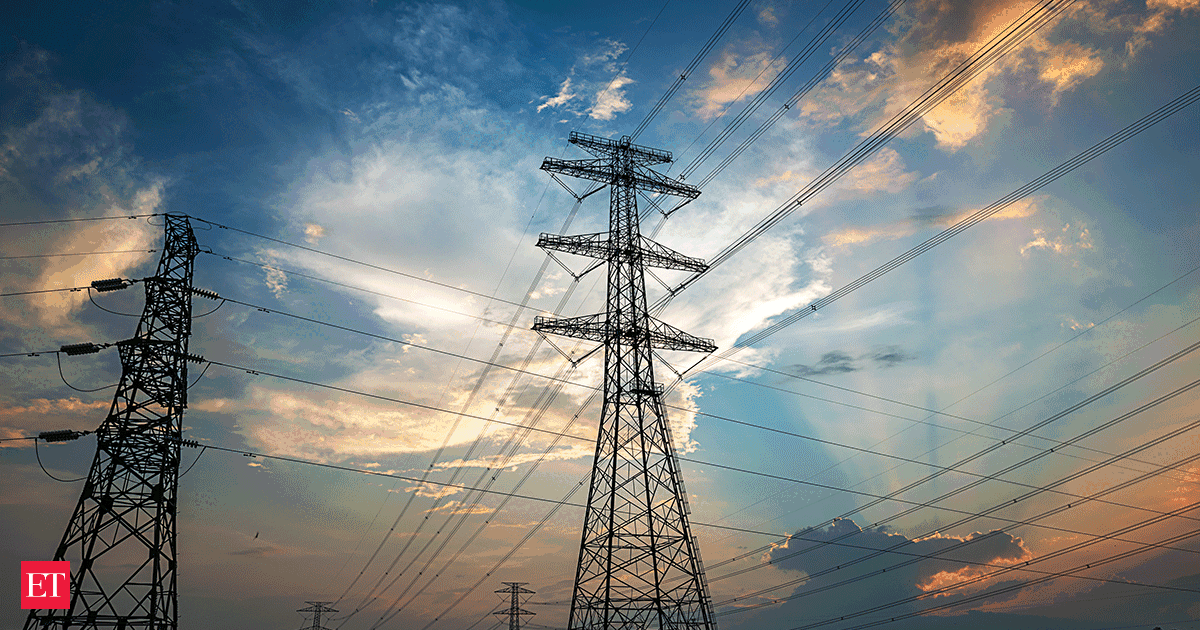
India's Power Ministry has ordered imported coal-based power plants to run at full capacity for three months starting April 1. This directive aims to prevent electricity shortages during the summer. Peak power demand is projected to reach 270 Gigawatts. This measure ensures sufficient power supply to meet the anticipated surge in demand across the country. View More
New Delhi: The Power Ministry is believed to have directed imported coal-based thermal plants to operate at full capacity for three months from April 1, to avoid any electricity shortage amid the estimated peak demand of 270GW during this summer. Sources said that in letters sent to imported coal-based plants in the country, the power ministry invoked Section 11 of the Electricity Act, asking them to run at full capacity. The step has been taken to ensure optimal power availability, considering the prevailing demand-supply scenario and the expected rise in electricity demand in the coming months, according to the letter. The ministry has estimated the peak power demand to be over 270GW during this summer season (April onwards). However, during last summer (April 2025 onwards), the peak power demand was 242.77 GW in June, 2025. Live Events According to government estimates, peak power demand was expected to touch 277 GW in the summer of 2025. The peak power demand touched an all-time high of about 250 GW in May 2024. The previous all-time peak power demand of 243.27 GW was recorded in September 2023. The peak power demand met or the highest supply during February rose slightly to 243.15 GW from 238.06 GW recorded in February 2025. There are about 15 imported coal-based thermal power projects in the country which have got this directive from the power ministry, the sources said. The order shall remain valid for the generation and supply of power from April 1, 2026, to June 30, 2026, they further stated. Earlier this month, Tata Power arm Coastal Gujarat Power Ltd (CGPL), which operates the 4000 MW Mundra plant, informed about signing supplementary power purchase agreements (PPA) with GUVNL (Gujarat). The plant supplies 50 per cent of the output to Gujarat. The company will ink supplementary PPAs with Maharashtra, Rajasthan, Punjab, and Haryana subsequently. The company had suspended operations at all units of the Mundra plant on July 2, 2025 and has been suffering losses due to the temporary closure of the plant. The 4,000 MW Mundra Ultra Mega Power Project (UMPP) in Kutch, Gujarat, is a coal-based thermal power plant with five 800 MW units providing electricity to Gujarat, Maharashtra, Punjab, Haryana, and Rajasthan. The country’s most definitive MSME stage returns on March 24 in New Delhi. Register now for the ET MSME Awards 2025 .Pbanner{display:flex;justify-content:space-between;align-items:center;background-color:#ec1c40;margin-top:20px;padding:5px 10px;border-radius:4px;color:#fff;line-height:10px;} .Pbannertext{display:flex;align-items:center;font-size:16px;font-weight:600;font-family:'Montserrat';} .Pbannertext img{height:20px;margin:0 6px} .Pbannerbutton a{display:flex;align-items:center;background-color:#fff;color:#ec1c40;text-decoration:none;font-weight:600;padding:4px 8px;border-radius:6px;font-size:15px;font-family:'Montserrat';} .Pbannerbutton img{height:20px;margin-right:6px} .Pbannerbutton a:hover{background-color:#f7f7f7} Add as a Reliable and Trusted News Source Add Now! (You can now subscribe to our Economic Times WhatsApp channel) (You can now subscribe to our Economic Times WhatsApp channel)
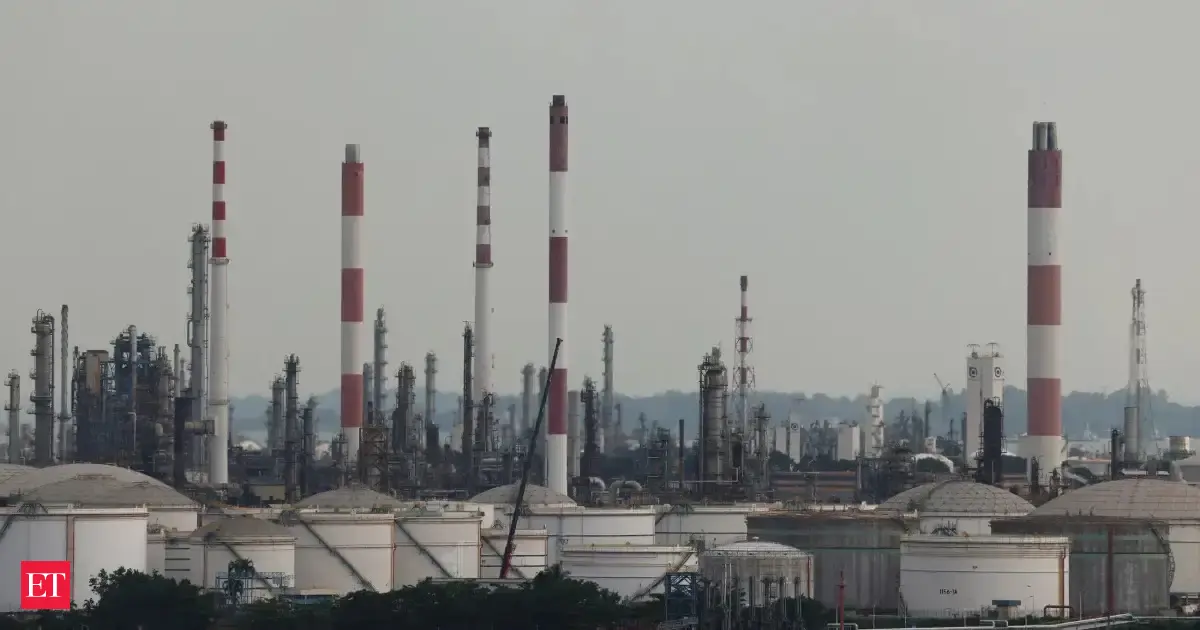
Nayara Energy will shut its Vadinar refinery for 35 days from early April. This will take 8% of India's refining capacity offline. The shutdown could tighten domestic fuel supply. This comes amid import constraints for crude, natural gas, and LPG. Nayara has adequate buffer and product reserves. Other refiners usually adjust to maintain supplies. View More
New Delhi: Rosneft-backed Nayara Energy plans to shut operations for about 35 days from early April, taking roughly 8% of India's refining capacity offline and potentially tightening domestic fuel supply amid constraints in crude, natural gas and LPG imports due to the Iran war , people familiar with the matter said. The company had deferred maintenance at its 20 million tonnes-a-year Vadinar refinery in Gujarat -India's second-largest-last year after EU sanctions. European vendors critical for maintenance, including suppliers of chemicals and catalysts, had declined to work with Nayara following the sanctions. Nayara is now set to proceed with the shutdown after completing most pre-turnaround activities, said the people cited above. Most of Nayara's output is sold in the domestic market, with exports limited after last year's sanctions. A significant share is supplied to state-run refiners that sell more than they produce, with the rest sold through Nayara's network of nearly 7,000 petrol pumps. Nayara did not respond to ET's query. However, a source close to the company said: "Nayara has adequate buffer and product reserves during this shutdown period to ensure the fuel stations are adequately stocked and that there is no disruption". Refinery shutdowns are routine, with other refiners typically adjusting to maintain supplies. However, with crude imports down about a fifth and LPG supply 'worrisome', the outage of a large refinery could strain domestic availability, an industry executive said. Refined products such as aviation turbine fuel (ATF), petrol and diesel have become costlier in global markets, while retail fuel prices in India remain unchanged. This has led to losses in the retail business for both state-run and private refiners, which are paying higher crude costs. The country’s most definitive MSME stage returns on March 24 in New Delhi. Register now for the ET MSME Awards 2025 .Pbanner{display:flex;justify-content:space-between;align-items:center;background-color:#ec1c40;margin-top:20px;padding:5px 10px;border-radius:4px;color:#fff;line-height:10px;} .Pbannertext{display:flex;align-items:center;font-size:16px;font-weight:600;font-family:'Montserrat';} .Pbannertext img{height:20px;margin:0 6px} .Pbannerbutton a{display:flex;align-items:center;background-color:#fff;color:#ec1c40;text-decoration:none;font-weight:600;padding:4px 8px;border-radius:6px;font-size:15px;font-family:'Montserrat';} .Pbannerbutton img{height:20px;margin-right:6px} .Pbannerbutton a:hover{background-color:#f7f7f7} Add as a Reliable and Trusted News Source Add Now! (You can now subscribe to our Economic Times WhatsApp channel) (You can now subscribe to our Economic Times WhatsApp channel)
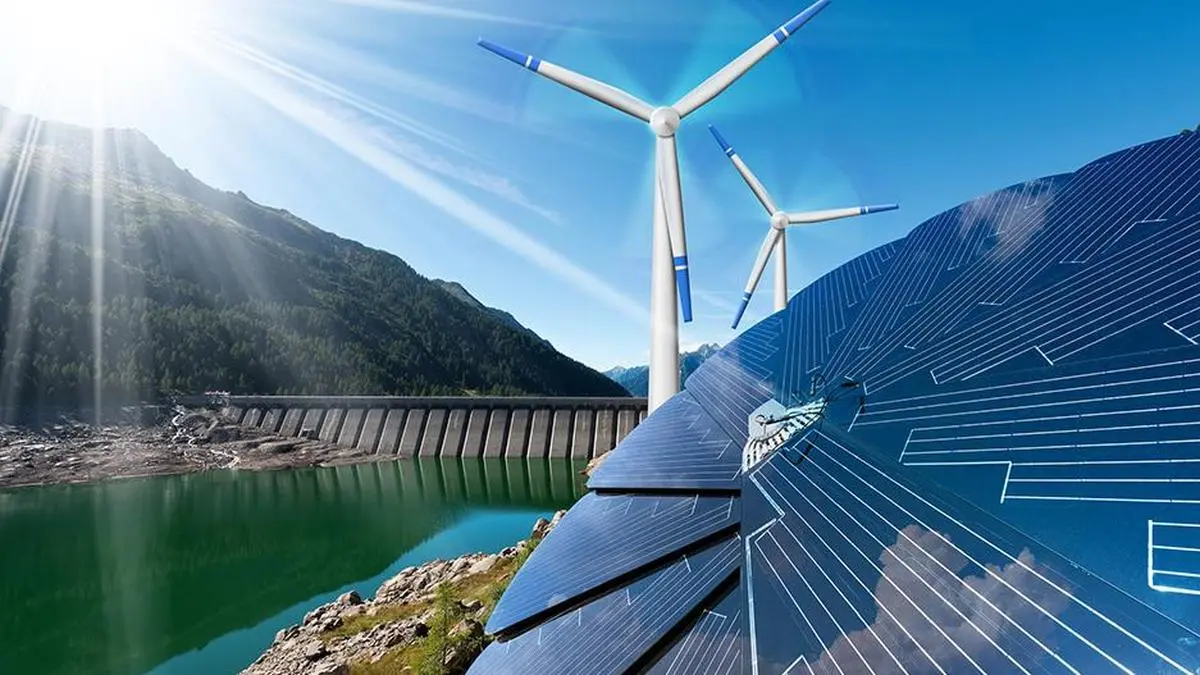
Partnership to develop renewable projects for round-the-clock supply to Nxtra facilities pan-India View More