Latest Sectors News

The fresh funds bring the total investment in Pickleball Inc. to $315 million, as investors continue to look at emerging sports as a place to park their money. View More
In this articleAPOFollow your favorite stocksCREATE FREE ACCOUNT Ben Johns comes over to the right side to hit a dink shot against Anna Bright and Hayden Patriquine in the 2026 PPA Carvana Mesa Cup finals match of the Pro Mixed Doubles Division at Arizona Athletic Grounds on February 22, 2026 in Mesa, Arizona. Bruce Yeung | Getty Images Pickleball Inc., the new parent company of Major League Pickleball and the PPA Tour, said Friday it has raised a record $225 million in new investment, as the paddle sport continues its rapid growth trajectory. The latest investment comes from Apollo Global Management's newly created sports fund, Apollo Sports Capital, and Dundon Capital Partners, owned by billionaire Tom Dundon. Dundon is an owner of the Portland Trail Blazers NBA team and the Carolina Hurricanes NHL team and was an early investor in pickleball. The fresh funds bring the total investment in Pickleball Inc. to $315 million, as investors continue to look at emerging sports as a place to park their money. The raise values Pickleball Inc. at $750 million, according to a person familiar with the matter, who asked to remain unnamed because they were not authorized to speak publicly about the company's valuation. The deal also includes rolling up several pickleball assets under the Pickleball Inc. umbrella, creating what the company called the largest pickleball ecosystem to date. Pickleball Inc. will take on a portfolio of pickleball assets previously owned by Dundon, including Pickleball Central, a leading site for pickleball equipment founded in 2006. The portfolio also includes PickleballTournaments.com, software that powers thousands of tournaments across all levels of play, as well as Just Courts, a pickleball court installer. Pickleball Inc.'s newly merged business verticals combined generated over $140 million in 2025 revenue, the company said. In a release, MLP and PPA Tour CEO Connor Pardoe called the new investment a "seismic day" for pickleball's rapidly growing business at all levels."This investment allows us to fully integrate the sport into one cohesive ecosystem - uniting professional pickleball, consumer goods, technology, and media under a single, unified platform," Pardoe said. Dundon and the Pardoe family will remain majority shareholders in the business after the investment. Pickleball has exploded in popularity in recent years, with more than 24 million U.S. players participating in 2025, making it the fastest growing sport in the country over the last three years, according to the Sports & Fitness Industry Association's Annual Report. At the professional level, the MLP and PPA Tour have seen major growth with a combined $30 million in sponsorship revenue in 2025 and $60 million in combined top line revenue for 2025, according to the United Pickleball Association, which operates both leagues. The MLP and PPA Tour are projecting $74 million in combined revenue in 2026. The new capital for Pickleball Inc. will be used to further integrate the pickleball business at all levels of play and create a streamlined pickleball ecosystem, the company said. "This capital raise will allow us to expand our focus into new and scalable opportunities like content, media, and the development of infrastructure to support our fast growing events," MLP Commissioner Samin Odhwani said in a statement. "The continued and dynamic year-over-year growth data has proven without doubt that pickleball is no longer an emerging sport, and is instead quickly becoming the next tier one sport in America." Get the CNBC Sport newsletter directly to your inboxThe CNBC Sport newsletter with Alex Sherman brings you the biggest news and exclusive interviews from the worlds of sports business and media, delivered weekly to your inbox.Subscribe here to get access today. Choose CNBC as your preferred source on Google and never miss a moment from the most trusted name in business news.

Tokyo's Haneda Airport is beginning a trial of humanoid robots in airport ground services amid chronic labor challenges and a rapidly ageing workforce. View More
In this article9201.T-JPFollow your favorite stocksCREATE FREE ACCOUNT LOS ANGELES, CALIFORNIA - MARCH 7: A Japan Airlines Boeing 787 Dreamliner departs Los Angeles International Airport en route to Tokyo on March 7, 2026 in Los Angeles, California. (Photo by Kevin Carter/Getty Images)Kevin Carter | Getty Images News | Getty Images Japan Airlines began testing humanoid robots for ground operations at Tokyo's Haneda Airport amid chronic labor shortages.The airline is partnering with GMO AI & Robotics to trial robots for tasks such as baggage loading and cabin cleaning starting in May, according to a joint statement Monday.The initiative comes as Japan's aviation sector struggles with rising tourism demand and a shrinking workforce, driven by an aging population. Japan Airlines said the humanoid robots are expected to be deployed progressively across Haneda Airport, with the trial lasting for two years.In a video demonstration of the technology, a humanoid robot produced by China's Unitree can be seen sliding a payload across a conveyor belt, waving to onlookers, and shaking a coworker's hand. Shares of Japan Airlines rose around 3% in the first trading day of May, but were trading around 13% lower so far this year.Unitree, one of China's leading robotics firms, debuted its flagship H1 model in a Kung Fu demonstration at China's Spring Festival Gala in February to much fanfare.It is, however, unclear whether Unitree is directly involved in the Haneda Airport trial or is part of a broader evaluation of commercially available humanoid technologies. In a response to CNBC's queries, Japan Airlines said that "feasibility studies and risk assessments" were ongoing.Unitree did not respond to CNBC's requests for comment. Stock Chart IconStock chart icon Meeting demographic challenges Analysts say demographic trends such as rapidly aging populations and lower fertility rates â typical of metropoles like Tokyo â are driving demand for humanoid robotics."Aging populations, labor shortages, and shifting worker preferences are opening the door for humanoids to take on essential â yet often undesirable â roles in manufacturing, logistics, agriculture, healthcare, and hospitality," Barclays wrote in a January research note.Japan's working-age population is projected to decline by 31% from 2023 to 2060, according to an employment outlook by the Organization for Economic Co-operation and Development. Marc Einstein, research director from Counter Research, expects humanoid robots to play an increasing role in Japan's workforce.With Prime Minister Sanae Takaichi's support base premised on tougher immigration policies, Einstein expects the government to "very much encourage the deployment of humanoids in Japan."In March, Japan's Ministry of Economy, Trade and Industry published guidelines on the use of robotics and artificial intelligence to address workforce challenges, including "decreasing labor caused by a declining birthrate and aging population."Data from Japan's National Tourism Organization showed international arrivals rose 3.5% in March from a year earlier, increasing pressure on airport operations. Hurdles remain Humanoid robot capabilities have advanced considerably in recent years, with developments in joint dexterity and advances in AI software enabling tasks that "they absolutely couldn't have done even a few years ago," Einstein said.Barclays described physical robotics as the "next frontier" in AI development, as firms seek to merge physical automation with artificial intelligence. The bank estimates the physical AI industry â presently valued at $2 billion to $3 billion â could grow to as much as $1.4 trillion by 2035, according to a February research note.Physical AI refers to systems that combine AI with machines capable of performing real-world physical tasks, from robotics to driverless cars. watch nowVIDEO6:0006:00Physical AI is the next frontier in AI & the race for dominanceSquawk Box Asia In China, robotics firms such as Unitree, Agibot, also known as Zhiyuan Robotics, and Galbot are advancing affordable humanoid development and exploring initial public offerings to fund their expansion plans and meet growing demand.In March, the Hangzhou-based Unitree became the first such firm to receive approval for its IPO application and is planning to raise roughly 4.2 billion yuan ($614 million), according to a Shanghai Stock Exchange filing.Despite rapid technological progress, it remains unclear whether humanoid robots can fully address Japan's chronic labor shortage.Analysts have previously told CNBC that humanoids still lack the dexterity for more delicate tasks and precise movements.Einstein said the programming and reasoning involved in humanoid technologies remain largely underdeveloped. The deployment of these humanoid robots will likely still require human involvement, he added."These robots, they're just not very smart yet," Einstein said.Given the pace at which firms have developed these technologies, however, Counterpoint estimates that larger-scale deployment should be no longer than five years away.â CNBC's Evelyn Cheng contributed to this report. Choose CNBC as your preferred source on Google and never miss a moment from the most trusted name in business news.
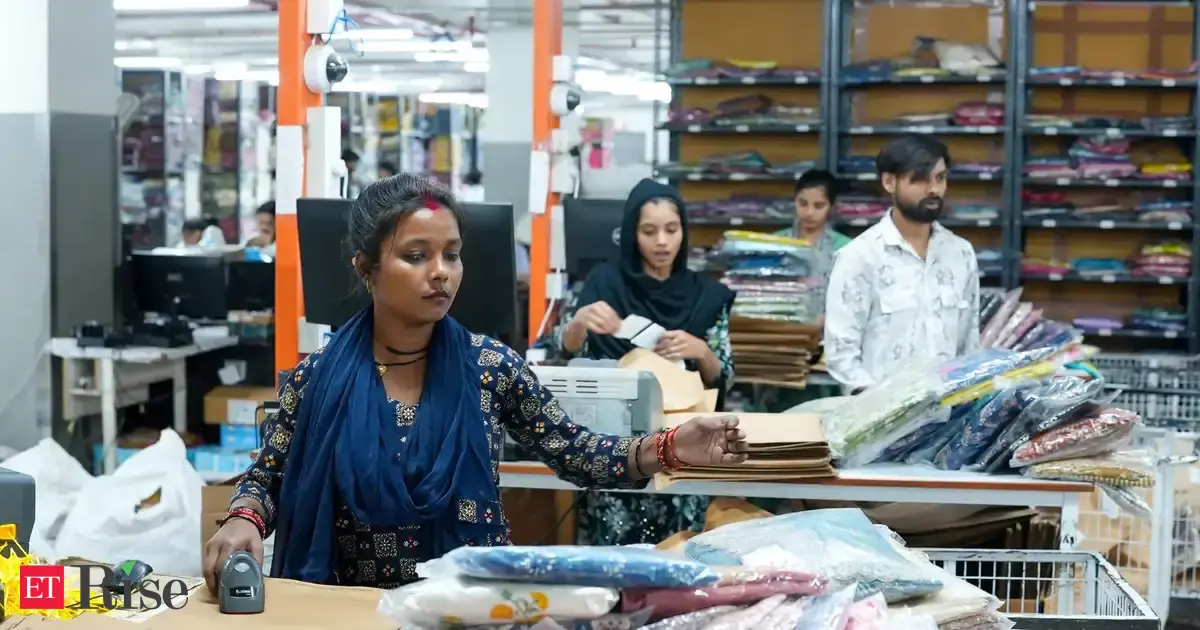
From fast fashion and global aspirations to diversified product categories and lightbulb moments, Keshwani elucidates the journey that helped create a niche for Libas in the minds of the consumer. View More
A look inside the headquarters of D2C fast fashion brand Libas in Noida reflects an element of quirkiness blended with sustainable features all through. Leftover fabrics from production are repurposed into décor elements across the workspace, with a Bollywood-inspired theme which shows off names like Veeru, Basanti, and Mogambo for the respective work cabins. Taking it up a notch, there are posters of Bollywood stars from popular mainstream movies like Dilwale Dulhania Le Jayenge, Sholay, and Andaaz Apna Apna, which hog the limelight. “Innovation has been a part of our ethos for years,” says Sidhant Keshwani , Founder & CEO of Libas, who took over the retail business reins in 2014. He recalls their 2020-21 ‘lightbulb moment’, which led them to a total shift to fast fashion. “We realised that the concept of fast fashion is becoming so big across the world, especially in Western categories. That made us understand that there is a huge gap in the market and we need to innovate to get speed into the picture for Indian wear. Our true fast fashion journey really started after Covid-19. Prior to that, we were essentially a traditional Indian wear brand,” he tells The Economic Times Digital at Libas’ Noida office. Going global There was a period during which Libas’ growth stagnated, remaining between Rs 150 crore and Rs 200 crore for more than three years, Keshwani notes. “We could comprehend that exponential growth as a Rs 5,000 crore or Rs 10,000 crore brand won’t come just by building great products. There has to be some USP. For us, it became creating modernised Indian wear products, which helped us also reach younger audiences. Now we are on the way to building India’s first truly Indian wear brand which goes global,” he says. Sidhant Keshwani, Founder & CEO, Libas, who took over the reins of the retail business in 2014, explains how innovation has been a part of the brand’s ethos over the years. Live Events But why has India not yet been able to create a global brand in this space, and will this be an easy proposition? Kanishk Maheshwari, Co-Founder & Managing Director, Primus Partners, says that Indian wear is culturally specific and therefore has limited global adaptability, while the everyday apparel segment is largely dominated by Western brands. To address this, there is a need to collaborate with global retailers, develop fusion designs that blend Indian aesthetics with Western silhouettes for easier adoption, and introduce policy incentives that extend beyond manufacturing to support brand-building, exports, and marketing,” he says. Libas is in sync with such fusion in designs, he says, which helps them connect with a wider range of consumers. Currently, Libas is working on the narrative to take Indian fashion global, he adds. “We want to create something that is more accessible to the world. This year we will start doing our R&D. We are already looking at markets like the UAE to understand how international markets work. Obviously, we will wait for things to get better. But we won’t stop; we are a hungry brand,” he says, emphatic in his stance. The size of the Indian wear market (ethnic and fusion apparel) is currently estimated at $20 billion, forming about 1/5th of India’s broader apparel market, adds Maheshwari. This sizable market is now being reshaped by changing consumer preferences, especially among younger buyers. The Gen Zs prefer ‘modernised ethnic’ over traditional attire. “They favour Indo-Western hybrids that are easy to mix and match for both casual and festive settings. To resonate with this demographic, brands must shift from occasion-driven collections to lifestyle-focused designs that blend Indian aesthetics into a contemporary, global wardrobe,” he says. For brands like Libas, this is a significant segment to cater to. So, they are keeping an eye on the evolving trends to understand the pulse of the market. “All our marketing campaigns address Gen Z. We try to modernise Indian wear in a way where it looks cool and will continue to be relevant,” Keshwani explains. D2C fast fashion brand Libas' headquarters in Noida reflect an element of quirkiness in its interiors blended with sustainable features all through. Currently, the company is operating at 60-65% supply because of the US-Iran war, which has impacted its supply chain. “The problem initially was raw material prices, but that can still be mitigated by slightly charging the customer extra. For us, a bigger problem is that even at higher prices, there is no guarantee of supply because the factories are not operating. Most of the factories that we work with are operating at about 55 to 60% capacity, which reduces our production capacities by almost 30-40%,” he adds. Building immunity as a brand However, Keshwani is not letting the impact of the war override the sentiment of resilience that has emerged, particularly in light of recent geopolitical upheavals. “We have built so much immunity as a brand and so have other new-age founders due to the kind of cycles witnessed. Be it Covid-19, the India-Pakistan war, the Russia-Ukraine war or now the West Asia conflict, all attest to the agility that is inherently wired within us. There is so much opportunity now and one will always pivot and find a way if they are hungry as a founder,” he says. ET Online On the retail and distribution front, Libas runs 65-70% of its business via e-commerce. Quick commerce is a recent addition to their business model, which accounts for less than 1% of their total sales. “It’s (quick commerce) very small right now, but we expect it to grow over the next 2 years to go from 10% to 12%,” he says. From an offline standpoint, the company works with 600-700 multi-brand outlets, with their newest addition being standalone stores. Currently, Libas operates 51 such stores across the country, which they plan to scale to over 100 stores this year. The brand raised Rs 150 crore from IAF Series 5, a fund managed by ICICI Venture in 2024. Gagandeep S. Chhina, Board Nominee, ICICI Venture IAF5, says that from an investor’s perspective, Libas had scaled up to be a brand with a high focus on supply chain and capital efficiency in the online ethnic wear category. “This presented a growth investment opportunity in an unorganised category which will get increasingly formalised,” he says. Product diversification Going forward, Libas plans to continue to invest in fast fashion, especially in technologies that can help it reach consumers more efficiently. In March 2026, the brand crossed Rs 1000 crore in annual run rate (ARR). In terms of revenues, it expects to close at over Rs 700 crore for FY25-26. Its revenue from operations increased by 38% to Rs 487 crore in FY24, up from Rs 352 crore in FY23, as per its financial statement from the Registrar of Companies (RoC). ET Online The plan is also to increase its portfolio in diversified categories after tasting success in the response received, ranging from sarees to perfumes. In fact, he calls perfumes an “accidental” category that really took off. “From our store business, we want about 3-4% to come from fragrances… it is going to be minuscule right now, but as we set up shop over the next 2-3 years, it will grow further. We want to explore setting up kiosks where a testing and trying experience can be given. It is a very good gift category as well, so overall we feel there is a lot of potential,” he says. According to him, this is the best time to explore the market globally. “More than us being ready as a brand, it is about the fact that there is a lot of demand outside. People want to get into India and know Indian culture. People outside are ready to tell Indian wear stories. We, as Indians, have that complex where we are not confident in selling that story outside. But this is changing now, and new-age founders don’t think like that,” he adds. Libas aims big and now competes more with global brands like Zara and H&M, not just Indian apparel brands. “In our stores, the aesthetics are not comparable with traditional Indian wear brands. It will be like-to-like with brands such as Zara or H&M in its look and feel. We have modernised even how our stores look. That is the kind of story that we want to build from,” he emphasises. .Pbanner{display:flex;justify-content:space-between;align-items:center;background-color:#ec1c40;margin-top:20px;padding:5px 10px;border-radius:4px;color:#fff;line-height:10px;} .Pbannertext{display:flex;align-items:center;font-size:16px;font-weight:600;font-family:'Montserrat';} .Pbannertext img{height:20px;margin:0 6px} .Pbannerbutton a{display:flex;align-items:center;background-color:#fff;color:#ec1c40;text-decoration:none;font-weight:600;padding:4px 8px;border-radius:6px;font-size:15px;font-family:'Montserrat';} .Pbannerbutton img{height:20px;margin-right:6px} .Pbannerbutton a:hover{background-color:#f7f7f7} Add as a Reliable and Trusted News Source Add Now!

As the summer heatwave intensifies, India is preparing for relentless heat well past June. Power networks are under immense strain due to increased temperatures and energy deficits from global disruptions. This unfortunate combination is leading to rolling blackouts, affecting millions as they cope with the dual challenge of sweltering weather and power outages. View More
India is likely to endure a blistering summer until monsoon rains arrive in June, with higher-than-average heat already straining power grids at a time when the country is grappling with energy shortages. The India Meteorological Department — which in March forecast a higher than normal number of heat days and has since issued warnings — is set to provide its May outlook on Friday, covering what is typically the hottest period of the year. Also Read: Powergrid board approves proposal to raise Rs 4,000 cr from SBI Yet the world’s most populous nation is already struggling to cope under the pressure of a warmer-than-usual April and the fallout from the war in the Persian Gulf. With vital energy suppliers cut off from world markets, India has been left short of crude, liquefied natural gas and liquefied petroleum gas, used for cooking. All the while, heat is pushing up electricity demand to unprecedented levels, triggering blackouts as infrastructure and generation struggle to cope. Temperatures have surged beyond 40C (104F) — punishing levels, given the humidity — and nights offer only mild relief, forcing residents to run cooling appliances around the clock. Live Events Data from digital air-quality monitoring platform AQI earlier this week showed that every one of the 50 hottest cities in the world were in India. “India occupied the entire list, from rank 1 to rank 50,” AQI said in a report. “This is not a normal April. And it demands a serious, data-grounded reckoning.” The rankings are based on sustained temperatures through 24 hours of the day on April 27. A city can report a scorching afternoon maximum, but could rank lower if it cools off during the nights, AQI said, explaining the methodology. At the top of the list was Banda, an arid town in the water-starved Bundelkhand region of Uttar Pradesh. According to AQI, it hit a top temperature of 46.2C (just over 115 F) during the day — but its lowest, which typically comes after the midnight, was 34.7C, a level higher than what most of Europe considers a dangerous summer heat wave. (IMD put the maximum on the day at an even loftier 47.6C.) Also Read: Tata Power, Keppel partner Tata Realty to deploy large-scale cooling-as-a-service at Chennai tech park All the while, this sustained heat means round-the clock demand for power and is testing the ability of India’s electricity system to provide uninterrupted supply. The rapid addition of renewable capacity over the past decade and the more recent revival of coal-fired generation have ensured there is enough power-station capacity to meet daytime requirement. But without solar, which accounts for about 30% of total generation capacity, nights are a challenge. All the more so with LNG imports hampered by the war, starving gas-power plants that can provide a vital bridge. Almost 21 gigawatts of coal and nuclear power capacity, meanwhile, is under maintenance shutdowns as of Tuesday, according to government data, mostly due to forced outages. Since temperatures shot up this April, India has reported night-time shortfalls of as high as 5.4 gigawatts — the equivalent of serving 2.7 million rural homes. With blackouts becoming more frequent, residents have aired complaints on social media and, in some cases reported by local media, on the streets. In Punjab, among the earliest provinces to be hit by scheduled blackouts, the main opposition party Shiromani Akali Dal has organized a protest. Generation deficits are just one reason for such blackouts. Another major factor is the impact of high heat on power equipment, as overloading compounds stress created by temperatures. “Consumers need to be more diligent,” said Sarnath Ganguly, senior vice president at Noida Power Co. Ltd., which distributes power in Noida, an industrial city bordering New Delhi. Distribution companies should identify overloaded transformers and improve capacity well before the summer, he said. “Both sides need to maintain such discipline to prevent outages,” Ganguly said. .Pbanner{display:flex;justify-content:space-between;align-items:center;background-color:#ec1c40;margin-top:20px;padding:5px 10px;border-radius:4px;color:#fff;line-height:10px;} .Pbannertext{display:flex;align-items:center;font-size:16px;font-weight:600;font-family:'Montserrat';} .Pbannertext img{height:20px;margin:0 6px} .Pbannerbutton a{display:flex;align-items:center;background-color:#fff;color:#ec1c40;text-decoration:none;font-weight:600;padding:4px 8px;border-radius:6px;font-size:15px;font-family:'Montserrat';} .Pbannerbutton img{height:20px;margin-right:6px} .Pbannerbutton a:hover{background-color:#f7f7f7} Add as a Reliable and Trusted News Source Add Now! (You can now subscribe to our Economic Times WhatsApp channel) (You can now subscribe to our Economic Times WhatsApp channel)

Airline fuel costs are holding steady even as oil firms take the hit from rising global prices to keep fares manageable for travelers. Meanwhile, the rates for petrol, diesel, and domestic LPG cylinders haven’t changed, providing a buffer for nearly 90% of users against the fluctuations of the international market. View More
New Delhi: Aviation turbine fuel (ATF) prices for domestic airlines remained unchanged on Friday as state-owned oil companies decided to absorb the rise in global fuel prices to protect airlines and consumers, IndianOil said. Retail prices of petrol, diesel and domestic LPG cylinders have also been kept steady, insulating consumers from international price volatility. In a statement, IOC said there has been no rate revision in key fuels affecting the general public. ATF prices are, as per practice, revised on the 1st of every month based on input cost. While no change has been made in rates for domestic airlines, there has been an increase in prices for international carriers. Live Events IOC said that retail prices of petrol and diesel remained unchanged for consumers, who account for nearly 90 per cent of total consumption. Similarly, prices of domestic LPG (14.2-kg cylinders) for about 33 crore consumers have not been altered. Prices of kerosene distributed under the public distribution system (PDS) also remained unchanged. Also read | Excise duty on diesel exports cut to Rs 23/ltr, ATF exports to Rs 33/ltr Overall, around 80 per cent of petroleum products have seen no change in prices, ensuring stability for the majority of consumers, the statement said. Price revisions have been limited to select industrial segments, which account for a relatively small share of consumption and are subject to routine monthly adjustments based on global benchmarks, IOC said. Prices of bulk and commercial LPG cylinders (less than 1 per cent of total consumption) have been revised, while bulk diesel and ATF for international airline operations have been increased, it said without elaborating. Also read | OMCs push for increase in LPG, petrol, diesel, ATF prices as losses mount At the same time, nearly 4 per cent of petroleum products have witnessed a price decrease, reflecting fluctuations in global markets. In overall terms, about 80 per cent of products saw no change, 4 per cent recorded a decrease, and 16 per cent - largely industrial fuels - registered an increase in prices. IOC said the measures reflect a calibrated approach by oil marketing companies to align with global trends while protecting domestic consumers and maintaining economic stability. .Pbanner{display:flex;justify-content:space-between;align-items:center;background-color:#ec1c40;margin-top:20px;padding:5px 10px;border-radius:4px;color:#fff;line-height:10px;} .Pbannertext{display:flex;align-items:center;font-size:16px;font-weight:600;font-family:'Montserrat';} .Pbannertext img{height:20px;margin:0 6px} .Pbannerbutton a{display:flex;align-items:center;background-color:#fff;color:#ec1c40;text-decoration:none;font-weight:600;padding:4px 8px;border-radius:6px;font-size:15px;font-family:'Montserrat';} .Pbannerbutton img{height:20px;margin-right:6px} .Pbannerbutton a:hover{background-color:#f7f7f7} Add as a Reliable and Trusted News Source Add Now! (You can now subscribe to our Economic Times WhatsApp channel) (You can now subscribe to our Economic Times WhatsApp channel)
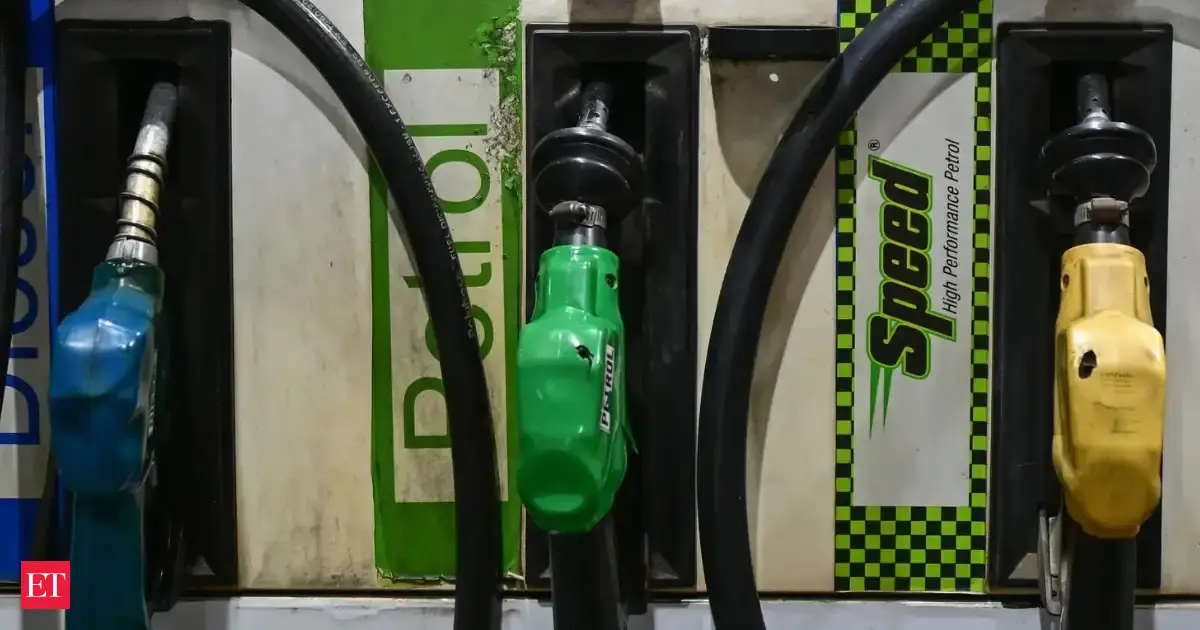
The govt has announced a reduction in the windfall tax for diesel exports to Rs 23 per litre and for aviation fuel to Rs 33 per litre, starting this Friday. This decision comes after a prior increase intended to protect domestic fuel supplies during global price escalations. View More
New Delhi: The government has cut the windfall gains tax on the export of diesel to Rs 23 per litre and aviation turbine fuel to Rs 33/litre, effective Friday. The finance ministry, in a statement, said there will be no change in existing excise duty rates on petrol and diesel for domestic consumption. The special additional excise duty on export of diesel was reduced to Rs 23 per litre from Rs 55.5 per litre, and aviation turbine fuel to Rs 33 per litre from Rs 42 per litre. The road and infrastructure Cess on the export of diesel will be nil for the next fortnight, beginning May 1. The rate of duty on export of petrol will remain nil, said the finance ministry statement issued late on Thursday. Live Events Also read | Commercial gas cylinder rates hiked by Rs 993 The government had, on March 26, imposed an export duty at Rs 21.50 a litre on diesel, and on ATF at Rs 29.5 a litre. In a review on April 11, the duties were hiked to Rs 55.5/litre and Rs 42/litre, respectively. The windfall tax was levied to increase domestic availability of the fuel amid the US-Israel and Iran war. The levies were also aimed at not allowing exporters to take undue advantage due to price differences, as globally crude oil prices had risen since the beginning of the war. Also read | OMCs push for increase in LPG, petrol, diesel, ATF prices as losses mount On February 28, the United States and Israel launched military strikes against Iran, triggering sweeping retaliation from Tehran. Crude oil prices have surged to a four-year high of USD 126 per barrel, from about USD 73 per barrel before the war. The windfall tax was to ensure domestic availability of petroleum products by disincentivising exports in the backdrop of the West Asia crises, the ministry said. .Pbanner{display:flex;justify-content:space-between;align-items:center;background-color:#ec1c40;margin-top:20px;padding:5px 10px;border-radius:4px;color:#fff;line-height:10px;} .Pbannertext{display:flex;align-items:center;font-size:16px;font-weight:600;font-family:'Montserrat';} .Pbannertext img{height:20px;margin:0 6px} .Pbannerbutton a{display:flex;align-items:center;background-color:#fff;color:#ec1c40;text-decoration:none;font-weight:600;padding:4px 8px;border-radius:6px;font-size:15px;font-family:'Montserrat';} .Pbannerbutton img{height:20px;margin-right:6px} .Pbannerbutton a:hover{background-color:#f7f7f7} Add as a Reliable and Trusted News Source Add Now! (You can now subscribe to our Economic Times WhatsApp channel) (You can now subscribe to our Economic Times WhatsApp channel)
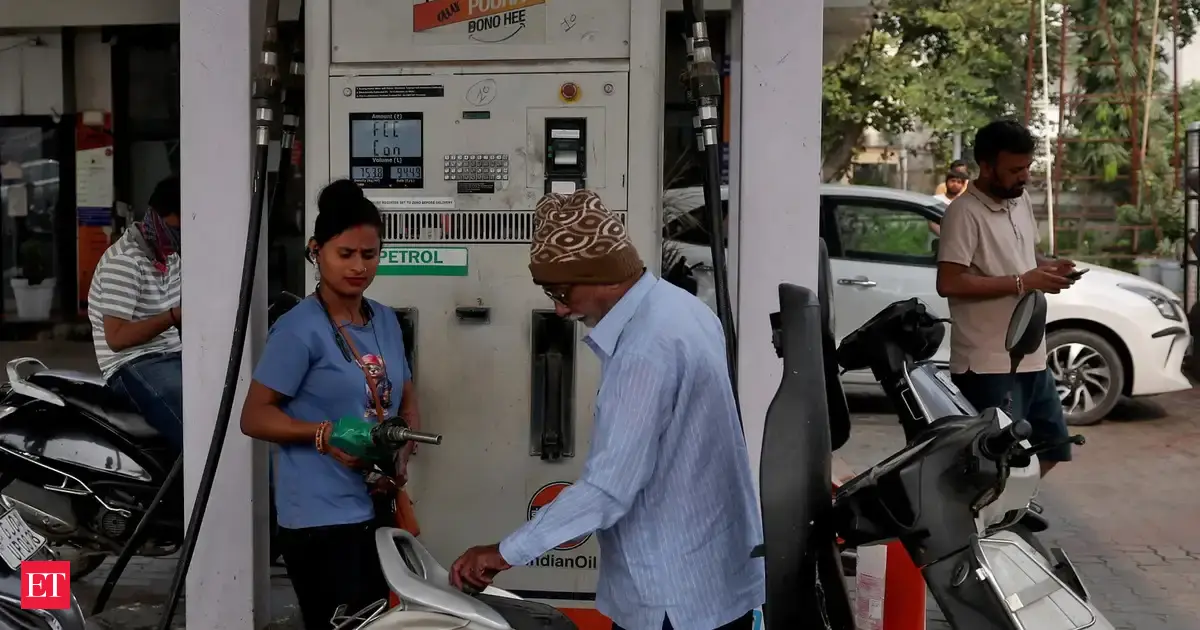
Oil prices are soaring, pushing the government to consider raising fuel costs. State-run companies are facing significant losses due to the sharp increase in crude oil. While elections are over, a decision on price hikes remains pending. Consumers have seen stable prices so far, but this situation may not last. View More
New Delhi: Pressure is mounting on the government to raise pump prices after crude surged past $126 a barrel on Thursday, a spike that will further widen losses at state-run oil marketing companies ( OMCs ) reeling from the effects of the Gulf war. Crude shot up after US President Donald Trump signalled on Wednesday an extended naval blockade of Iran, pointing to prolonged disruption of the Strait of Hormuz and a tighter global supply outlook. With voting in states concluded, OMCs are pushing for a quick pass-through of higher global prices to consumers, people familiar with the matter said. They are incurring losses on petrol, diesel, aviation turbine fuel and LPG and want approval to raise retail prices. ALSO READ | No proposal to hike fuel prices, supplies adequate: Govt The government is unlikely to move quickly, despite a strong case for a hike, one person said, especially given speculation that had attributed the freeze in pump prices to elections. Live Events Read more: Govt sets export duty on diesel at ₹23/litre, ATF at ₹33; petrol levy stays nil “International prices have been volatile and have risen steeply, but it has been the government’s effort to ensure that consumers face the least problem--that’s why our prices are stable,” Sujata Sharma, joint secretary in the ministry of petroleum and natural gas, said on Thursday. “The impact on (oil marketing companies) will be known with time.” On Tuesday, she had denied any plan to raise pump prices from May 1. Prices will eventually have to rise as OMCs cannot sustain such losses for long and may seek compensation from the government, as in the past, people in the know said. With LPG and fertiliser subsidies already swelling, the government is reluctant to absorb petrol and diesel under-recoveries, given the potential hit to public finances. Raising prices would ease OMC finances but that risks stoking inflation and would weigh on growth. In global markets, average diesel and petrol prices in April were 119% and 69% higher than in February. LPG prices rose over 40%, while ATF prices doubled. Brent for June delivery, which expired on Thursday, rose above $126 a barrel, while July futures traded at around $114, as of press time. Before the war that started February 28, Brent was at about $73 per barrel. Brent’s monthly average has exceeded $120 a barrel in just six months on record—three during the run-up to the 2008 global financial crisis, and most recently in June 2022 after the outbreak of the Ukraine war. Domestically, OMCs have selectively raised prices. Prices of premium petrol, bulk diesel and ATF for international flights have been sharply increased in line with global trends. In contrast, regular pump prices for petrol and diesel remain unchanged, ATF for domestic airlines has been only partially raised, and LPG prices have increased by just ₹50 per cylinder. The initial bet after the war-driven price surge was that OMCs could absorb losses, cushioned by strong profits in recent years. Lower crude and elevated retail prices had helped them post robust earnings and dividends. But with no quick end to the Gulf crisis in sight, a pump price hike may be unavoidable, people familiar with discussions between the government and OMCs said. .Pbanner{display:flex;justify-content:space-between;align-items:center;background-color:#ec1c40;margin-top:20px;padding:5px 10px;border-radius:4px;color:#fff;line-height:10px;} .Pbannertext{display:flex;align-items:center;font-size:16px;font-weight:600;font-family:'Montserrat';} .Pbannertext img{height:20px;margin:0 6px} .Pbannerbutton a{display:flex;align-items:center;background-color:#fff;color:#ec1c40;text-decoration:none;font-weight:600;padding:4px 8px;border-radius:6px;font-size:15px;font-family:'Montserrat';} .Pbannerbutton img{height:20px;margin-right:6px} .Pbannerbutton a:hover{background-color:#f7f7f7} Add as a Reliable and Trusted News Source Add Now! (You can now subscribe to our Economic Times WhatsApp channel) (You can now subscribe to our Economic Times WhatsApp channel)
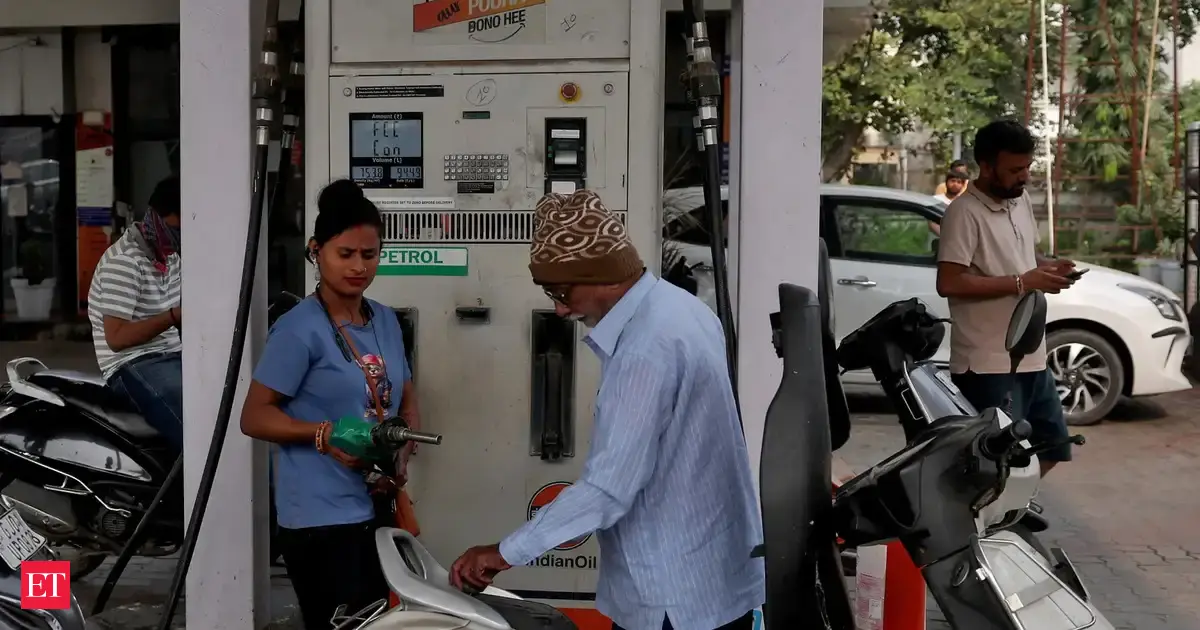
The government has set export duties on diesel at ?23 per litre and on aviation turbine fuel (ATF) at ?33 per litre for the fortnight starting May 1, while keeping petrol exports duty-free. View More
The government on Thursday notified revised export levies for petroleum products for the fortnight starting May 1, 2026, setting the duty on diesel at ₹23 per litre and on aviation turbine fuel (ATF) at ₹33 per litre, while keeping petrol exports duty-free. The Centre said there is no change in excise duty on petrol and diesel for domestic consumption, with export duties continuing to be reviewed every fortnight based on global price trends to ensure local availability. ALSO READ | No proposal to hike fuel prices, supplies adequate: Govt Earlier this week, a government official said that India has no proposal at present to increase retail fuel prices amid recent geopolitical developments in West Asia. Speaking at an inter-ministerial briefing on the evolving situation in the region, Sujata Sharma, Joint Secretary in the Ministry of Petroleum and Natural Gas, said there is currently no plan to revise petrol and diesel prices . Live Events “LPG, petroleum and diesel are available in sufficient amount and the prices have not increased, so please do not panic,” Sharma said, underscoring that supplies remain adequate. She added that while imports of crude, LPG and PNG have been impacted due to the West Asia crisis, the government has taken steps to minimise disruption for domestic consumers. “Accordingly, 100 per cent supply has been ensured for domestic LPG consumers, domestic PNG consumers and CNG transport,” she said. Commercial LPG supply has been restored to about 70 per cent, with priority being given to hospitals and educational institutions. Key sectors such as pharmaceuticals, steel, seeds and agriculture are also being prioritised, she added. The supply of 5 kg FTL cylinders for migrant labour has nearly doubled. .Pbanner{display:flex;justify-content:space-between;align-items:center;background-color:#ec1c40;margin-top:20px;padding:5px 10px;border-radius:4px;color:#fff;line-height:10px;} .Pbannertext{display:flex;align-items:center;font-size:16px;font-weight:600;font-family:'Montserrat';} .Pbannertext img{height:20px;margin:0 6px} .Pbannerbutton a{display:flex;align-items:center;background-color:#fff;color:#ec1c40;text-decoration:none;font-weight:600;padding:4px 8px;border-radius:6px;font-size:15px;font-family:'Montserrat';} .Pbannerbutton img{height:20px;margin-right:6px} .Pbannerbutton a:hover{background-color:#f7f7f7} Add as a Reliable and Trusted News Source Add Now! (You can now subscribe to our Economic Times WhatsApp channel) (You can now subscribe to our Economic Times WhatsApp channel)