Latest Sectors News
Reliance Industries Limited achieved a major milestone by securing the largest Samurai loan ever for an Indian company. It also completed three unique global financing deals in FY 2025-26. These achievements followed a significant credit rating upgrade by S&P Global Ratings. The company successfully tapped diverse international funding sources, demonstrating its financial strength and global reach. View More
New Delhi: Reliance Industries Limited executed the largest-ever Samurai loan raised by an Indian corporate and completed three first-of-their-kind global financing deals in FY 2025-26, as the conglomerate strengthened its access to international capital markets following a credit rating upgrade by S&P Global Ratings. S&P upgraded Reliance's international debt rating to A- from BBB+ in December 2025, placing the company two notches above India's sovereign rating, citing the growing contribution of its consumer-facing businesses and improved earnings stability. The upgrade is expected to widen Reliance's access to overseas capital pools and lower borrowing costs. Moody's Ratings rates the company at Baa2, one notch above sovereign, while domestic agencies CRISIL , CARE Ratings , ICRA Limited and India Ratings and Research maintain AAA (Stable) ratings. Read More: Mukesh Ambani forgoes salary for sixth straight year as Reliance clocks record profit According to the company's latest annual report, Reliance raised JPY 91.9 billion, or about USD 625 million, through a Samurai loan involving 10 Japanese and Taiwanese banks, marking the largest such financing by an Indian corporate and the third-largest by an Asian corporate overall. The proceeds were used to refinance maturing yen-denominated debt. Live Events The company also secured about USD 500 million equivalent in untied financing backed by Korea's export credit agency KSURE, becoming the first corporate globally to access the product. Separately, Reliance tied up about USD 600 million equivalent in untied facilities backed by Japan's export credit agency NEXI to finance its solar photovoltaic and battery gigafactory projects. The transaction marked NEXI's first untied corporate facility globally and carried what the company described as the longest average tenor for an export credit agency-backed financing. The three transactions underscore Reliance's growing ability to tap diversified global funding sources despite volatile market conditions driven by geopolitical tensions , tariff uncertainty, interest rate shifts and the rupee's sharp depreciation against the dollar during FY2025-26. Read More: World faces biggest-ever energy security crisis as Iran war disrupts fuel flows, warns IEA Reliance said it raised multi-currency financing at competitive rates and long tenors even as the rupee weakened to near 95 per dollar and domestic interest rates eased. The company's leverage and coverage metrics improved during the year. Interest coverage ratio rose to 8.83 in FY 2025-26 from 5.59 a year earlier, while debt service coverage ratio more than doubled to 4.03 from 2.06. Return on capital employed increased to 20.7 per cent from 14.6 per cent. As of March 31, 2026, Reliance reported gross debt of Rs 3.74 lakh crore and net debt of Rs 1.25 lakh crore, while maintaining a debt-to-equity ratio of 0.41:1. The company said its liquidity strategy remains focused on maintaining strong cash reserves, diversified financing sources and undrawn credit lines to support long-term capital expenditure and working capital needs. .Pbanner{display:flex;justify-content:space-between;align-items:center;background-color:#ec1c40;margin-top:20px;padding:5px 10px;border-radius:4px;color:#fff;line-height:10px;} .Pbannertext{display:flex;align-items:center;font-size:16px;font-weight:600;font-family:'Montserrat';} .Pbannertext img{height:20px;margin:0 6px} .Pbannerbutton a{display:flex;align-items:center;background-color:#fff;color:#ec1c40;text-decoration:none;font-weight:600;padding:4px 8px;border-radius:6px;font-size:15px;font-family:'Montserrat';} .Pbannerbutton img{height:20px;margin-right:6px} .Pbannerbutton a:hover{background-color:#f7f7f7} Add as a Reliable and Trusted News Source Add Now! (You can now subscribe to our Economic Times WhatsApp channel) (You can now subscribe to our Economic Times WhatsApp channel)
Reliance Industries achieved significant overseas financing milestones in FY26, securing the largest Samurai loan by an Indian company. Chairman Mukesh Ambani voluntarily continued to forgo his salary for the sixth year. The company posted record profits, demonstrating strong financial performance and robust growth. View More
New Delhi: Reliance Industries Ltd (RIL) said it secured multiple landmark overseas financing deals in FY26, including the largest Samurai loan raised by an Indian corporate, while Chairman and Managing Director Mukesh Ambani continued to forgo salary for the sixth consecutive year despite the company posting record profits. According to RIL's Integrated Annual Report 2025-26, S&P Global Ratings upgraded the company's international debt rating from BBB+ to A- in December 2025, reflecting the "rising contribution from less cyclical, consumer-facing businesses resulting in improved earnings stability." Also Read: RIL announces AGM date on June 19; updates on Jio IPO in focus "The rating upgrade will provide RIL access to new pools of capital at finer spreads," the company said in the annual report. The report said FY2025-26 unfolded amid "heightened market fluctuations" driven by tariff uncertainty, geopolitical tensions and volatility in currency and bond markets, but Reliance was still able to raise financing "across currencies and products at competitive cost for long tenors." Live Events Among the key transactions, Reliance tied up a JPY 91.9 billion, or around $625 million equivalent, Samurai loan. "This was the largest Samurai loan ever by an Indian corporate and the third-largest ever by an Asian corporate," the company said. The annual report also highlighted two export credit agency-backed financing transactions that were firsts of their kind globally. RIL said it secured around $500 million equivalent Korea Trade Insurance Corporation (KSURE)-supported untied facilities to finance capital expenditure. "This is KSURE's first untied facility for any corporate globally," the report stated. In another transaction, Reliance tied up around $600 million equivalent Nippon Export and Investment Insurance (NEXI)-supported untied facilities linked to its solar photovoltaic and battery gigafactories. "This is NEXI's first untied facility for any corporate globally. The facility has the longest average tenor for any Export Credit Agency supported facility globally," the company said. The company said its liquidity strategy focuses on maintaining "a strong cash reserve" and sufficient undrawn credit lines to manage market volatility and funding requirements. RIL's financial performance during FY26 remained strong, with consolidated revenue rising 9.8 per cent year-on-year to Rs 11,75,919 crore, while net profit increased 17.8 per cent to Rs 95,754 crore. "RIL has become the first Indian company to cross $10 billion in annual net profit," Mukesh Ambani said in his message to shareholders in the annual report. The report added that Reliance continued to fund its expansion plans "through strong internal accruals while maintaining a robust balance sheet." As of March 31, 2026, the company's gross debt stood at Rs 3,74,421 crore, while net debt stood at Rs 1,24,717 crore. The debt-to-equity ratio remained at 0.41:1. Also Read: Mukesh Ambani’s $4 billion Jio IPO hits Iran war roadblock Alongside the financing milestones, the annual report showed that Mukesh Ambani continued to draw nil remuneration from the company for the sixth straight year from FY2020-21 to FY2025-26. According to the disclosure, Ambani received "Nil remuneration from the company. This means no salary, no allowances, no perquisites, no retiral benefits, no commission, and no stock options for six years running." The company said Ambani had voluntarily decided to forgo his remuneration in June 2020 during the Covid-19 pandemic and had continued the decision thereafter. Reliance also noted that before the pandemic, Ambani had voluntarily capped his remuneration at Rs 15 crore annually since FY2008-09 for 12 consecutive years despite the company's growth in revenue and profitability. .Pbanner{display:flex;justify-content:space-between;align-items:center;background-color:#ec1c40;margin-top:20px;padding:5px 10px;border-radius:4px;color:#fff;line-height:10px;} .Pbannertext{display:flex;align-items:center;font-size:16px;font-weight:600;font-family:'Montserrat';} .Pbannertext img{height:20px;margin:0 6px} .Pbannerbutton a{display:flex;align-items:center;background-color:#fff;color:#ec1c40;text-decoration:none;font-weight:600;padding:4px 8px;border-radius:6px;font-size:15px;font-family:'Montserrat';} .Pbannerbutton img{height:20px;margin-right:6px} .Pbannerbutton a:hover{background-color:#f7f7f7} Add as a Reliable and Trusted News Source Add Now! (You can now subscribe to our Economic Times WhatsApp channel) (You can now subscribe to our Economic Times WhatsApp channel)

It is possible to play the investment theme of NTPC Green through the NTPC stock for investors seeking the comfort of the latter’s stable cash flow View More
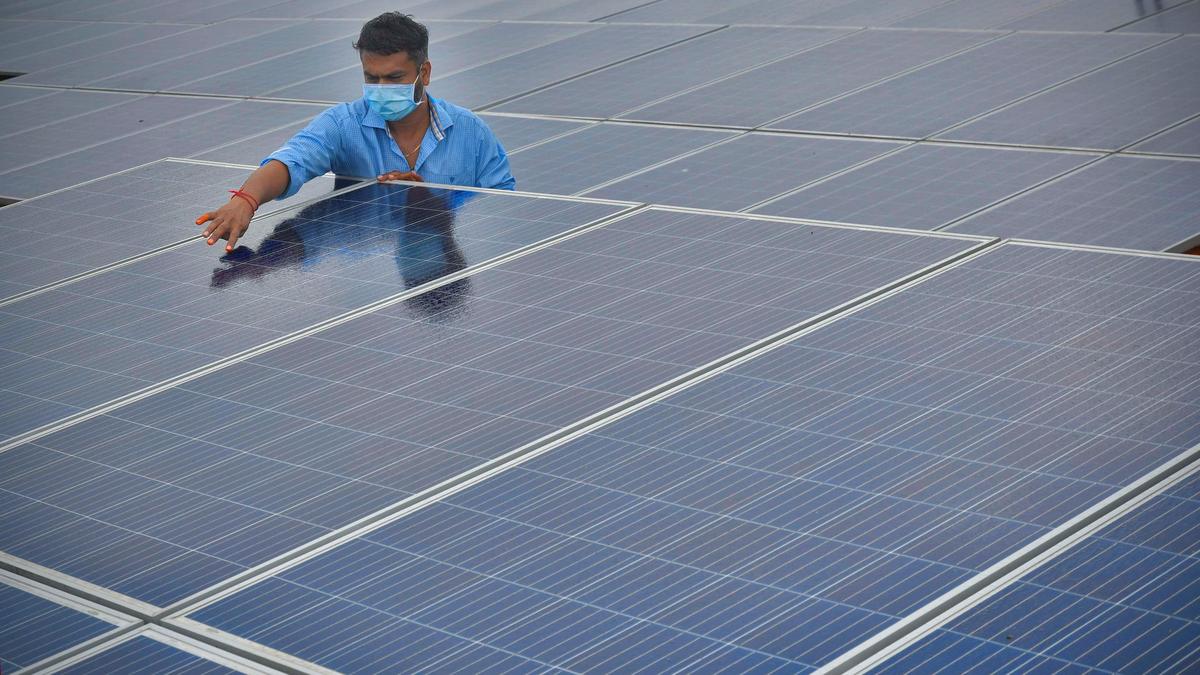
Under the existing framework for ALMM List-II for solar PV cells, net-metering projects and open access projects commissioned prior to June 1, 2026 are exempt from the applicability of ALMM List-II. View More
The initiative aligns with India’s target of achieving 100 GW of nuclear energy capacity by 2047. View More
Despite the profit dip, the company posted its highest-ever India quarterly deliveries at 830 MW and annual deliveries of 2,456 MW, underscoring strong execution momentum in its core wind energy business View More
State-owned NTPC is exploring new nuclear power projects. Site selection studies have begun in Andhra Pradesh, Madhya Pradesh, Gujarat, and Odisha. This initiative is part of NTPC's extensive 30 GW nuclear energy plan. The company aims to contribute significantly to India's ambitious nuclear capacity target. Investments will be substantial, spanning multiple states. NTPC is diversifying its energy portfolio. View More
New Delhi: State-owned NTPC has initiated site selection studies in four states, including Gujarat and Andhra Pradesh, to set up nuclear projects as part of its long-term 30 GW nuclear energy plan . The other two states are Odisha and Madhya Pradesh, according to a post-earnings presentation of NTPC. Also Read: India's power transmission infra set for Rs 9 trillion upgrade as renewable push accelerates: Report As part of its energy diversification strategy, NTPC is looking to set up 30 GW of nuclear projects in at least 14 states with investments worth lakhs of crores to contribute to the government's ambitious 100 GW nuclear capacity target by 2047. The company has "identified potential sites in multiple states and site selection studies commenced in Andhra Pradesh, Madhya Pradesh, Gujarat and Odisha", NTPC said in the presentation. Live Events It will be beneficial for NTPC to set up projects in the coastal states, as out of various other inputs, continuous water supply is a key requirement for a nuclear project, an expert said. Earlier, sources said NTPC will soon submit its first feasibility study for a nuclear project with the Department of Atomic Energy (DAE) to seek its approval. Also Read: Adani, GMR among shortlisted bidders for $400 million IntelliSmart deal Besides, the company was also in the process of conducting feasibility studies in two more states, they added. At present, NTPC is setting up a 4X700 MW nuclear project in a 49:51 per cent joint venture (JV) with Nuclear Power Corporation of India Ltd (NPCIL) in Rajasthan at an investment of about Rs 42,000 crore. In FY25, NTPC established a wholly-owned subsidiary NTPC Parmanu Urja Nigam Limited (NPUNL) with a focus on advanced nuclear technologies. Established in 1975 as a thermal power generator, NTPC Ltd has steadily expanded and diversified into new energy sources. According to the NTPC website, the company currently has an installed capacity of 90,667.8 MW at group-level, spanning coal, gas/liquid fuel, hydro and solar power. .Pbanner{display:flex;justify-content:space-between;align-items:center;background-color:#ec1c40;margin-top:20px;padding:5px 10px;border-radius:4px;color:#fff;line-height:10px;} .Pbannertext{display:flex;align-items:center;font-size:16px;font-weight:600;font-family:'Montserrat';} .Pbannertext img{height:20px;margin:0 6px} .Pbannerbutton a{display:flex;align-items:center;background-color:#fff;color:#ec1c40;text-decoration:none;font-weight:600;padding:4px 8px;border-radius:6px;font-size:15px;font-family:'Montserrat';} .Pbannerbutton img{height:20px;margin-right:6px} .Pbannerbutton a:hover{background-color:#f7f7f7} Add as a Reliable and Trusted News Source Add Now! (You can now subscribe to our Economic Times WhatsApp channel) (You can now subscribe to our Economic Times WhatsApp channel)
IntelliSmart Infrastructure, a leading smart meter platform, is nearing the end of its sale process, with an Adani Group entity among four shortlisted bidders. The transaction is expected to value IntelliSmart at approximately $400 million. Binding bids are anticipated by mid-June as shortlisted firms commence due diligence. View More
Mumbai: India's leading smart meter platform IntelliSmart Infrastructure has entered the final leg of its sale process, with an Adani Group entity in the four-bidder shortlist for the next round of negotiations, multiple people aware of the development told ET. The proposed transaction is expected to value IntelliSmart at an equity valuation of around $400 million (₹3,700 crore). Adani Energy Solutions, GMR Smart Electricity Distribution , GIC-backed Genus Power Infrastructures and Swiss fund Partners Group have advanced to the second round of discussions, with binding bids expected by mid-June. A deal may value co, backed by NIIF-EESL, at $400 m; binding bids likely by middle of June The shortlisted bidders have commenced due diligence, sources said. IntelliSmart, jointly owned by National Investment and Infrastructure Fund (NIIF) and financially stressed Energy Efficiency Services (EESL), had attracted nearly 10 initial bids and 4-5 potential buyers were likely to be shortlisted for detailed due diligence, ET reported last month. Emails sent to Adani, GMR, Genus Power, Partners Group and NIIF did not elicit any response till press time. Founded in 2019, IntelliSmart has secured orders for nearly 22 million smart meters from state utilities across India. Of these, the company has installed around 600,000 smart meters in Assam and about 500,000 in Uttar Pradesh. NIIF holds a 51% stake in IntelliSmart, while EESL owns the remaining 49%. EESL-a joint venture of NTPC, Power Finance Corporation, Rural Electrification Corporation and Power Grid Corporation of India-had outstanding long-term borrowings of ₹6,045 crore as of March 31, 2025, compared with ₹7,070 crore a year earlier. Live Events Adani Energy Solutions, India's leading private-sector transmission, distribution and smart metering company, recently said it has completed cumulative installations of 11.36 million smart meters. Its under-implementation pipeline stands at 24.6 million smart meters across 10 projects, with a revenue potential exceeding ₹29,500 crore. As India's leading advanced metering infrastructure service provider (AMISP), Adani Energy Solutions has a mandate to deploy 25 million smart meters across five states. Operational since January 2025, GMR's Uttar Pradesh smart metering initiative has secured three major orders worth ₹7,593 crore from UP discoms, involving the replacement of nearly 7.6 million conventional meters with smart meters. Swiss fund Partners Group, along with a consortium of global funds own a controlling stake in German smart metering portfolio company Techem, which has valuation of $7.5 billion. .Pbanner{display:flex;justify-content:space-between;align-items:center;background-color:#ec1c40;margin-top:20px;padding:5px 10px;border-radius:4px;color:#fff;line-height:10px;} .Pbannertext{display:flex;align-items:center;font-size:16px;font-weight:600;font-family:'Montserrat';} .Pbannertext img{height:20px;margin:0 6px} .Pbannerbutton a{display:flex;align-items:center;background-color:#fff;color:#ec1c40;text-decoration:none;font-weight:600;padding:4px 8px;border-radius:6px;font-size:15px;font-family:'Montserrat';} .Pbannerbutton img{height:20px;margin-right:6px} .Pbannerbutton a:hover{background-color:#f7f7f7} Add as a Reliable and Trusted News Source Add Now! (You can now subscribe to our Economic Times WhatsApp channel) (You can now subscribe to our Economic Times WhatsApp channel)
In a strategic move to bolster energy security, Coal India is gearing up to establish new coal-to-syngas facilities strategically positioned at mine pitheads or close to industrial users. This initiative comes in light of recent global gas supply challenges, prompting the company to actively seek partnerships with developers and industrial off-takers for these innovative projects. View More
New Delhi, State-owned Coal India plans to set up coal-to-syngas production units either at pithead locations or adjacent to user industries such as fertiliser units , direct-reduced iron and gas-based power plants amid disruption in gas supplies due to the West Asia conflict, sources said. Coal India Ltd (CIL), which accounts for over 80 per cent of domestic coal output, has already initiated steps to develop such coal-to-syngas facilities . In line with the National Mission on Coal Gasification and the government's vision to enhance domestic chemical and feedstock security, CIL intends to set up coal-to-syn-gas facilities to cater to the market demand for syn-gas in gas-based power plants/DRI or fertiliser plants, sources said. The company plans to develop such facilities either on Build-Own- Operate (BOO) or Build- Operate- Maintain (BOM) basis, with syngas to be produced from coal by developers or consortia, they said. Syngas serves as a versatile feedstock for the production of clean fuels, fertilisers, chemicals, and power generation. Live Events Coal India Ltd has already floated an expression of interest for identifying prospective bidders to develop coal-to- syngas facilities on BOO or BOM basis, where developers or consortia will produce syngas from coal under two proposed models, sources said. Under the first model, a syngas production facility will be set up at the CIL mine pit head areas with multiple industrial consumers. The primary aim is to establish syngas hubs within available CIL land, preferably at pit heads, to supply syngas to nearby industrial clusters. This model aims to significantly bring down logistics costs by minimising coal transportation and enabling industries to receive syngas economically through a dedicated pipeline network. Under the second model, the company plans to set up the syngas production facility adjacent to an existing gas-based power plant, DRI plant, fertiliser unit, or a single large industrial consumer. This arrangement is designed to optimise both operational efficiency and supply reliability by positioning the syngas plant in immediate proximity to the primary end-use facility. The objective of this model is the on-site generation of syngas next to the end user plant. By minimising the distance required for pipeline transport, the system ensures a dedicated and uninterrupted supply of syngas directly to a single anchor industry. This close integration supports tailored production to meet specific requirements of the off-taker. In continuation and support of this initiative, CIL is also in lookout of potential industrial off-takers who will utilise the syngas produced from such facilities as feedstock or fuel under long-term arrangements. The coal behemoth has also issued an expression of interest to assess market interest, preferred supply models, and commercial expectations of potential off-takers of syngas. The primary objective of the expression of interest is to identify the potential industrial off-takers who are willing to utilise syngas produced from coal-to-syngas facilities established by CIL or its designated SPV(Special Purpose Vehicle), JV (Joint Venture) under BOO or BOM mode. Coal India Ltd has been exploring possibilities to diversify into coal gasification to enable the production of syngas and downstream value-added chemical products. CIL also has diversified into coal gasification by incorporating two JV companies with other Maharatna PSUs. Bharat Coal Gasification and Chemicals Ltd (BCGCL) is a joint venture company (JVC) of CIL and BHEL , in which CIL holds 51 per cent shareholding to set up a coal to ammonium nitrate project in Lakhanpur, Odisha Coal Gasification India Ltd (CGIL) is a JVC of CIL and GAIL , in which CIL holds 51 per cent shareholding to set up a coal to Synthetic Natural Gas (SNG) project in Bhadarpur, West Bengal. .Pbanner{display:flex;justify-content:space-between;align-items:center;background-color:#ec1c40;margin-top:20px;padding:5px 10px;border-radius:4px;color:#fff;line-height:10px;} .Pbannertext{display:flex;align-items:center;font-size:16px;font-weight:600;font-family:'Montserrat';} .Pbannertext img{height:20px;margin:0 6px} .Pbannerbutton a{display:flex;align-items:center;background-color:#fff;color:#ec1c40;text-decoration:none;font-weight:600;padding:4px 8px;border-radius:6px;font-size:15px;font-family:'Montserrat';} .Pbannerbutton img{height:20px;margin-right:6px} .Pbannerbutton a:hover{background-color:#f7f7f7} Add as a Reliable and Trusted News Source Add Now! (You can now subscribe to our Economic Times WhatsApp channel) (You can now subscribe to our Economic Times WhatsApp channel)