
Latest Sectors News
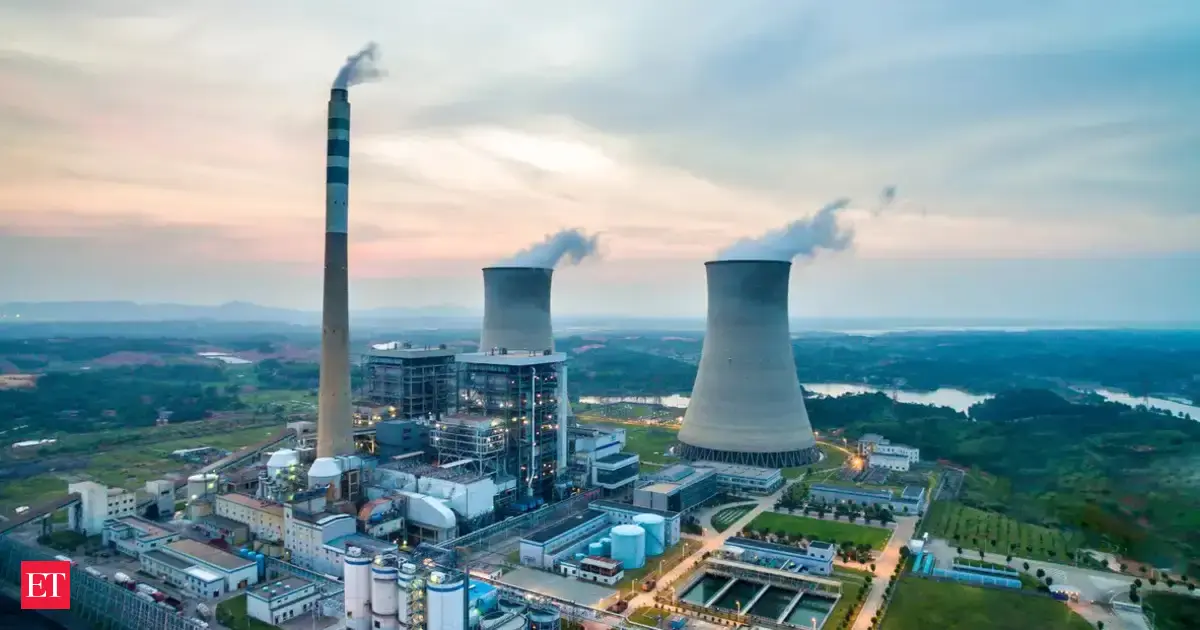
India is boosting its power generation capacity, focusing on nuclear energy. The nation aims to reach nearly 300 GW next year. Nuclear power is key for long-term energy security, targeting 100 GW by 2047. Tripura is set to receive urban infrastructure projects worth Rs 1,200 crore. Reforms are crucial for growth. View More
Guwahati: Union Minister for Housing and Urban Affairs and Power Manohar Lal Khattar on Sunday said that India is pursuing an aggressive expansion of its power generation capacity, with a major thrust on nuclear energy. After reviewing power and urban development projects with Tripura Chief Minister Manik Saha and Power Minister Ratan Lal Nath, the Union Minister said the country recorded an all-time high peak electricity demand of 270.8 GW on May 21 this year. To meet rising consumption driven by industrial growth, data centres, electric vehicles and households, the Centre plans to increase power generation capacity from the current 283 GW to nearly 300 GW next year, he told the media. The Union Minister said nuclear power would play a key role in India's long-term energy security. While the country currently generates around 8 GW of nuclear power and has another 9 GW under construction, the government has set a target of achieving 100 GW by 2047 through policy reforms and greater private-sector participation, the Power Minister said. He said a comprehensive power adequacy plan has been prepared up to 2029-30, factoring in projected demand and contributions from thermal, solar, hydro, nuclear and other renewable energy sources. Live Events Khattar said the state has considerable potential in solar power despite limited hydropower resources. A tender has already been floated for a 200 MW solar project, while under the PM Surya Ghar Yojana, between one lakh and two lakh rooftop solar installations are targeted by March 2027. The Minister announced that Tripura is expected to receive projects worth around Rs 1,200 crore within the next two months as part of a nationwide urban infrastructure programme involving investments of nearly Rs 4 lakh crore. He, however, expressed concern over the financial condition of the Tripura State Electricity Corporation Limited (TSECL), which is burdened with accumulated losses of about Rs 800 crore and transmission and distribution losses of around 26 per cent. The Minister also reviewed ongoing transmission projects and said new tenders for key transmission lines would be floated shortly to ensure the state's future power requirements are adequately met. Khattar said sustained reforms and investments would be critical for supporting the state's long-term growth trajectory. After Mizoram, the Union Minister on Sunday reviewed various affairs of power and urban sectors, including its infrastructure in Nath, who also holds the Agriculture portfolio, said that the meeting reviewed various activities of the state Power Department, ongoing development projects, and future plans for the sector. “Detailed discussions were held on the modernisation of power infrastructure, improvement of service quality, consumer-friendly initiatives, and strategies for future development,” he told the media. The Minister said that the officials and engineers of various state holders and government organisations, including the Tripura State Electricity Corporation (TSECL), also received valuable guidance on various measures and plans aimed at making Tripura’s power sector stronger, more reliable, and technology-driven. The review meeting was considered highly productive and significant in accelerating the growth of the power sector, which plays a crucial role in the overall development of the state and the welfare of its people, he added. Later, taking to his official X account, Union Minister Manohar Lal Khattar said: “Detailed deliberations were held on key issues concerning the Swachh Bharat Mission and the State’s power sector. Our extensive discussions focused on the implementation of RDSS ( Revamped Distribution Sector Scheme ), smart metering and transmission planning.” He said that special emphasis was laid on strengthening power infrastructure, improving DISCOM (Distribution Company) efficiency, reducing AT&C (Aggregate Technical and Commercial) losses, and accelerating the adoption of rooftop solar to ensure reliable and sustainable energy access across the state. Progress under PM-KUSUM (Pradhan Mantri Kisan Urja Suraksha evam Utthan Mahabhiyan) and PM Surya Ghar: Muft Bijli Yojana ( PMSGMBY ) were also reviewed in the meeting, with a focus on strengthening transmission infrastructure and expanding rooftop solar adoption. .Pbanner{display:flex;justify-content:space-between;align-items:center;background-color:#ec1c40;margin-top:20px;padding:5px 10px;border-radius:4px;color:#fff;line-height:10px;} .Pbannertext{display:flex;align-items:center;font-size:16px;font-weight:600;font-family:'Montserrat';} .Pbannertext img{height:20px;margin:0 6px} .Pbannerbutton a{display:flex;align-items:center;background-color:#fff;color:#ec1c40;text-decoration:none;font-weight:600;padding:4px 8px;border-radius:6px;font-size:15px;font-family:'Montserrat';} .Pbannerbutton img{height:20px;margin-right:6px} .Pbannerbutton a:hover{background-color:#f7f7f7} Add as a Reliable and Trusted News Source Add Now! (You can now subscribe to our Economic Times WhatsApp channel) (You can now subscribe to our Economic Times WhatsApp channel)
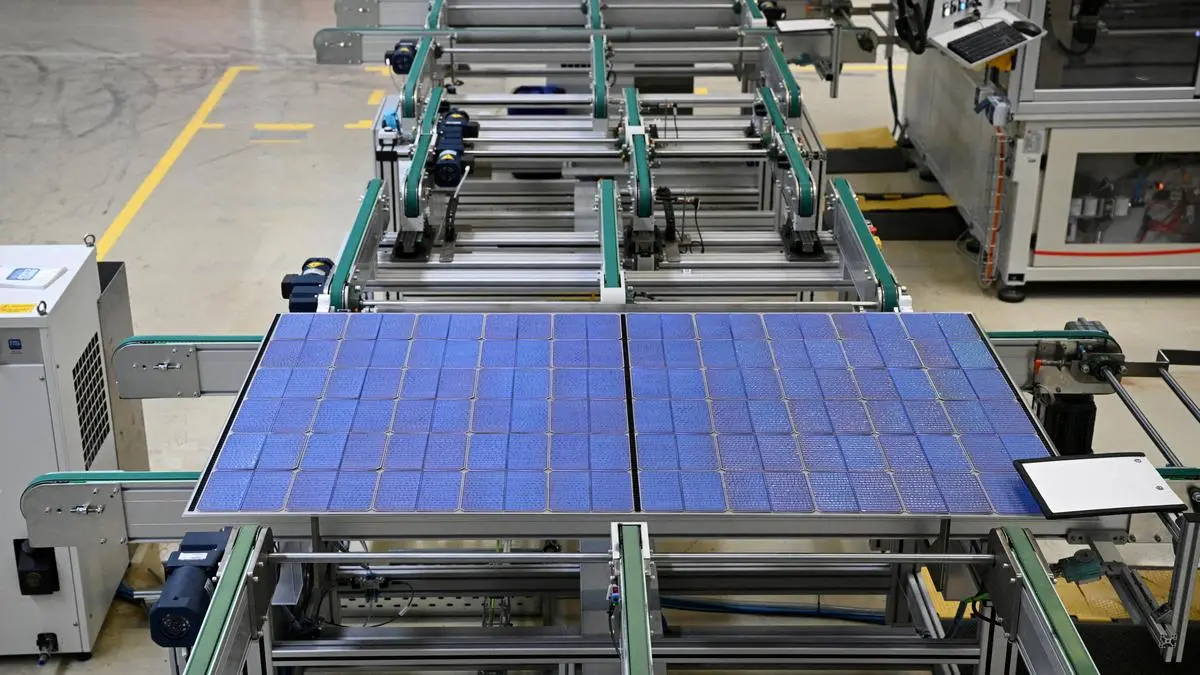
India’s cumulative solar photovoltaic (PV) cell manufacturing capacity reached 40 GW at the end of March 2026, with 5 GW added during January-March, noted JMK Research & Analytics. View More
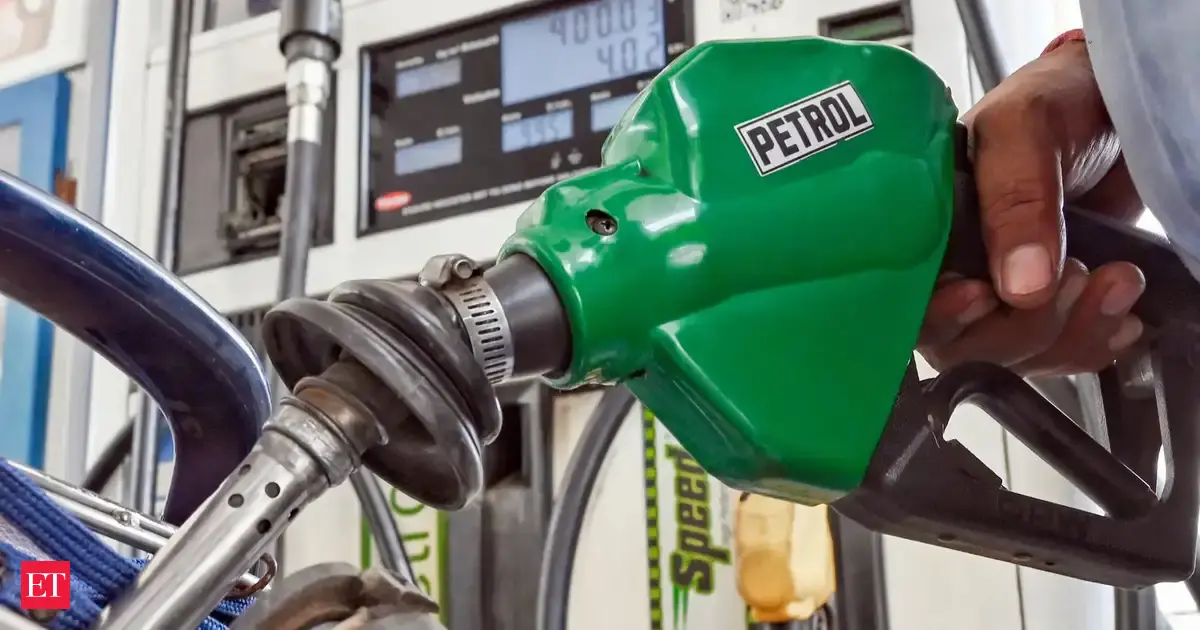
India will reduce its export duties on petrol, diesel, and aviation turbine fuel (ATF) starting June 1. The new rates are 1.5 rupees per litre for petrol, 13.5 rupees for diesel, and 9.5 rupees for ATF. These revisions are made fortnightly based on international crude oil and fuel prices. View More
India will cut its export duty on petrol diesel and aviation turbine fuel (ATF) for the fortnight starting June 1, its government said in a statement on Saturday. The duty on exports of petrol has been set at 1.5 rupees ($0.0158) per litre while that on diesel has been set at 13.5 rupees per litre, the statement said. Export duties on ATF have been set at 9.5 rupees per litre. The rates are being revised on a fortnightly basis and are based on the average international prices of crude oil, petrol, diesel and ATF during the period since the last review. There is no change in the existing excise duty rates on petrol and diesel cleared for domestic consumption. .Pbanner{display:flex;justify-content:space-between;align-items:center;background-color:#ec1c40;margin-top:20px;padding:5px 10px;border-radius:4px;color:#fff;line-height:10px;} .Pbannertext{display:flex;align-items:center;font-size:16px;font-weight:600;font-family:'Montserrat';} .Pbannertext img{height:20px;margin:0 6px} .Pbannerbutton a{display:flex;align-items:center;background-color:#fff;color:#ec1c40;text-decoration:none;font-weight:600;padding:4px 8px;border-radius:6px;font-size:15px;font-family:'Montserrat';} .Pbannerbutton img{height:20px;margin-right:6px} .Pbannerbutton a:hover{background-color:#f7f7f7} Add as a Reliable and Trusted News Source Add Now! (You can now subscribe to our Economic Times WhatsApp channel) (You can now subscribe to our Economic Times WhatsApp channel)

New windfall tax rates on fuel exports take effect from June 1, 2026. Taxes are back on diesel and aviation turbine fuel after a period of nil levies. Petrol exports will also attract a duty. These revisions reflect changes in global oil prices and refiner margins. The government reviews these rates fortnightly. View More
The government has notified revised windfall tax rates on fuel exports for the fortnight beginning June 1, 2026, with levies reinstated on diesel and aviation turbine fuel (ATF) after being held at nil in recent review cycles. As per the official notification, the duty on petrol exports has been set at Rs 1.5 per litre, entirely in the form of Special Additional Excise Duty (SAED), with no Road and Infrastructure Cess (RIC) applicable. Diesel exports will attract a duty of Rs 13.5 per litre, wholly as SAED, while ATF exports will be subject to an SAED of Rs 9.5 per litre. Also read: Oil prices tumble 11% for biggest weekly drop in 7 weeks. Where is liquid gold headed from here? The government clarified that there is no change in existing excise duty rates on petrol and diesel sold in the domestic market. The tax rates are reviewed every fortnight based on average oil prices in the previous two weeks. Live Events India first imposed a windfall tax on exports by oil refiners and producers in July 2022, announcing levies on petrol, diesel, and domestically produced crude oil. The government later extended the levy on exports of petrol, diesel, and ATF, as private refiners sought to sell fuel overseas to capitalise on robust refining margins rather than selling locally. The windfall tax on fuel exports is based on cracks, or margins, that refiners earn on overseas shipments, primarily the difference between the international oil price realised and the cost. Also read: Transport association urges government to cut fuel prices as crude falls to $90/barrel The levy has seen significant fluctuation over the past year. As recently as May 2025, the SAED on the export of diesel, petrol, and ATF had been retained at nil, reflecting softer global crude prices at the time. The June 1 revision signals a tightening of margins once again, prompting the government to step in. The windfall tax regime primarily affects large private refiners such as Reliance Industries , which exports a significant share of its refinery output, along with state-owned producers including ONGC and Oil India . .Pbanner{display:flex;justify-content:space-between;align-items:center;background-color:#ec1c40;margin-top:20px;padding:5px 10px;border-radius:4px;color:#fff;line-height:10px;} .Pbannertext{display:flex;align-items:center;font-size:16px;font-weight:600;font-family:'Montserrat';} .Pbannertext img{height:20px;margin:0 6px} .Pbannerbutton a{display:flex;align-items:center;background-color:#fff;color:#ec1c40;text-decoration:none;font-weight:600;padding:4px 8px;border-radius:6px;font-size:15px;font-family:'Montserrat';} .Pbannerbutton img{height:20px;margin-right:6px} .Pbannerbutton a:hover{background-color:#f7f7f7} Add as a Reliable and Trusted News Source Add Now! (You can now subscribe to our Economic Times WhatsApp channel) (You can now subscribe to our Economic Times WhatsApp channel)

Hitachi Energy India aims for a significant share of the booming Indian data centre market. The company plans to capture 30% of the industry's spending by offering a comprehensive "grid-to-rack" power solution. This expansion targets the growing demand driven by digital transformation and AI workloads. View More
Hitachi Energy India plans to tap into 30% of the overall spending in the country's data centre industry, from a previous aim of 10-15%, by offering a broad "grid-to-rack" power solution, Managing Director and CEO Venu Nuguri told Reuters. India's data centre market , valued at $5.55 billion in 2025, is projected to reach $13.11 billion by 2034, driven by digital transformation, cloud adoption and escalating AI workloads, according to consulting firm IMARC Group. Hitachi Energy India, a unit of Zurich-based Hitachi Energy, makes and supplies power equipment and grid technology for several industries, including data centers. It controls about half of India's high-voltage direct current (HVDC) market, manufacturing equipment that transmits bulk electricity over long distances. The firm had earlier pegged 10%-15% of total data centre spending in the country as its addressable market through both equipment and software offerings. Its "grid-to-rack" solution, according to Nuguri, integrates power infrastructure for energy-hungry data centres from the grid-level connection to server rack-level distribution. Live Events The solution would add another 10%-15% of power infrastructure spending, out of the overall data centre segment, to the company's addressable market, Nuguri said. This week, Hitachi Energy India announced a 20-billion-rupee ($210.53 million) investment in a greenfield, large power transformer facility in the western Indian state of Gujarat, taking its cumulative capex to 40 billion rupees across 19 factories in eight manufacturing locations. The company closed 2026 with a record order backlog of 296 billion rupees. The firm is also "actively looking into" acquisitions in data centres, digital layers, and power consulting, among others, to fill capability gaps, Nuguri said. India's peak power demand hit a record 270.8 gigawatts in May, up 68% from 148 GW in 2014, according to the Ministry of Power. Demand is projected to nearly double to 458 GW by 2032, data showed, a structural tailwind that Nuguri said the company counts among its key growth drivers. ($1 = 95.0000 Indian rupees) .Pbanner{display:flex;justify-content:space-between;align-items:center;background-color:#ec1c40;margin-top:20px;padding:5px 10px;border-radius:4px;color:#fff;line-height:10px;} .Pbannertext{display:flex;align-items:center;font-size:16px;font-weight:600;font-family:'Montserrat';} .Pbannertext img{height:20px;margin:0 6px} .Pbannerbutton a{display:flex;align-items:center;background-color:#fff;color:#ec1c40;text-decoration:none;font-weight:600;padding:4px 8px;border-radius:6px;font-size:15px;font-family:'Montserrat';} .Pbannerbutton img{height:20px;margin-right:6px} .Pbannerbutton a:hover{background-color:#f7f7f7} Add as a Reliable and Trusted News Source Add Now! (You can now subscribe to our Economic Times WhatsApp channel) (You can now subscribe to our Economic Times WhatsApp channel)
Reliance Industries Limited achieved a major milestone by securing the largest Samurai loan ever for an Indian company. It also completed three unique global financing deals in FY 2025-26. These achievements followed a significant credit rating upgrade by S&P Global Ratings. The company successfully tapped diverse international funding sources, demonstrating its financial strength and global reach. View More
New Delhi: Reliance Industries Limited executed the largest-ever Samurai loan raised by an Indian corporate and completed three first-of-their-kind global financing deals in FY 2025-26, as the conglomerate strengthened its access to international capital markets following a credit rating upgrade by S&P Global Ratings. S&P upgraded Reliance's international debt rating to A- from BBB+ in December 2025, placing the company two notches above India's sovereign rating, citing the growing contribution of its consumer-facing businesses and improved earnings stability. The upgrade is expected to widen Reliance's access to overseas capital pools and lower borrowing costs. Moody's Ratings rates the company at Baa2, one notch above sovereign, while domestic agencies CRISIL , CARE Ratings , ICRA Limited and India Ratings and Research maintain AAA (Stable) ratings. Read More: Mukesh Ambani forgoes salary for sixth straight year as Reliance clocks record profit According to the company's latest annual report, Reliance raised JPY 91.9 billion, or about USD 625 million, through a Samurai loan involving 10 Japanese and Taiwanese banks, marking the largest such financing by an Indian corporate and the third-largest by an Asian corporate overall. The proceeds were used to refinance maturing yen-denominated debt. Live Events The company also secured about USD 500 million equivalent in untied financing backed by Korea's export credit agency KSURE, becoming the first corporate globally to access the product. Separately, Reliance tied up about USD 600 million equivalent in untied facilities backed by Japan's export credit agency NEXI to finance its solar photovoltaic and battery gigafactory projects. The transaction marked NEXI's first untied corporate facility globally and carried what the company described as the longest average tenor for an export credit agency-backed financing. The three transactions underscore Reliance's growing ability to tap diversified global funding sources despite volatile market conditions driven by geopolitical tensions , tariff uncertainty, interest rate shifts and the rupee's sharp depreciation against the dollar during FY2025-26. Read More: World faces biggest-ever energy security crisis as Iran war disrupts fuel flows, warns IEA Reliance said it raised multi-currency financing at competitive rates and long tenors even as the rupee weakened to near 95 per dollar and domestic interest rates eased. The company's leverage and coverage metrics improved during the year. Interest coverage ratio rose to 8.83 in FY 2025-26 from 5.59 a year earlier, while debt service coverage ratio more than doubled to 4.03 from 2.06. Return on capital employed increased to 20.7 per cent from 14.6 per cent. As of March 31, 2026, Reliance reported gross debt of Rs 3.74 lakh crore and net debt of Rs 1.25 lakh crore, while maintaining a debt-to-equity ratio of 0.41:1. The company said its liquidity strategy remains focused on maintaining strong cash reserves, diversified financing sources and undrawn credit lines to support long-term capital expenditure and working capital needs. .Pbanner{display:flex;justify-content:space-between;align-items:center;background-color:#ec1c40;margin-top:20px;padding:5px 10px;border-radius:4px;color:#fff;line-height:10px;} .Pbannertext{display:flex;align-items:center;font-size:16px;font-weight:600;font-family:'Montserrat';} .Pbannertext img{height:20px;margin:0 6px} .Pbannerbutton a{display:flex;align-items:center;background-color:#fff;color:#ec1c40;text-decoration:none;font-weight:600;padding:4px 8px;border-radius:6px;font-size:15px;font-family:'Montserrat';} .Pbannerbutton img{height:20px;margin-right:6px} .Pbannerbutton a:hover{background-color:#f7f7f7} Add as a Reliable and Trusted News Source Add Now! (You can now subscribe to our Economic Times WhatsApp channel) (You can now subscribe to our Economic Times WhatsApp channel)
Reliance Industries achieved significant overseas financing milestones in FY26, securing the largest Samurai loan by an Indian company. Chairman Mukesh Ambani voluntarily continued to forgo his salary for the sixth year. The company posted record profits, demonstrating strong financial performance and robust growth. View More
New Delhi: Reliance Industries Ltd (RIL) said it secured multiple landmark overseas financing deals in FY26, including the largest Samurai loan raised by an Indian corporate, while Chairman and Managing Director Mukesh Ambani continued to forgo salary for the sixth consecutive year despite the company posting record profits. According to RIL's Integrated Annual Report 2025-26, S&P Global Ratings upgraded the company's international debt rating from BBB+ to A- in December 2025, reflecting the "rising contribution from less cyclical, consumer-facing businesses resulting in improved earnings stability." Also Read: RIL announces AGM date on June 19; updates on Jio IPO in focus "The rating upgrade will provide RIL access to new pools of capital at finer spreads," the company said in the annual report. The report said FY2025-26 unfolded amid "heightened market fluctuations" driven by tariff uncertainty, geopolitical tensions and volatility in currency and bond markets, but Reliance was still able to raise financing "across currencies and products at competitive cost for long tenors." Live Events Among the key transactions, Reliance tied up a JPY 91.9 billion, or around $625 million equivalent, Samurai loan. "This was the largest Samurai loan ever by an Indian corporate and the third-largest ever by an Asian corporate," the company said. The annual report also highlighted two export credit agency-backed financing transactions that were firsts of their kind globally. RIL said it secured around $500 million equivalent Korea Trade Insurance Corporation (KSURE)-supported untied facilities to finance capital expenditure. "This is KSURE's first untied facility for any corporate globally," the report stated. In another transaction, Reliance tied up around $600 million equivalent Nippon Export and Investment Insurance (NEXI)-supported untied facilities linked to its solar photovoltaic and battery gigafactories. "This is NEXI's first untied facility for any corporate globally. The facility has the longest average tenor for any Export Credit Agency supported facility globally," the company said. The company said its liquidity strategy focuses on maintaining "a strong cash reserve" and sufficient undrawn credit lines to manage market volatility and funding requirements. RIL's financial performance during FY26 remained strong, with consolidated revenue rising 9.8 per cent year-on-year to Rs 11,75,919 crore, while net profit increased 17.8 per cent to Rs 95,754 crore. "RIL has become the first Indian company to cross $10 billion in annual net profit," Mukesh Ambani said in his message to shareholders in the annual report. The report added that Reliance continued to fund its expansion plans "through strong internal accruals while maintaining a robust balance sheet." As of March 31, 2026, the company's gross debt stood at Rs 3,74,421 crore, while net debt stood at Rs 1,24,717 crore. The debt-to-equity ratio remained at 0.41:1. Also Read: Mukesh Ambani’s $4 billion Jio IPO hits Iran war roadblock Alongside the financing milestones, the annual report showed that Mukesh Ambani continued to draw nil remuneration from the company for the sixth straight year from FY2020-21 to FY2025-26. According to the disclosure, Ambani received "Nil remuneration from the company. This means no salary, no allowances, no perquisites, no retiral benefits, no commission, and no stock options for six years running." The company said Ambani had voluntarily decided to forgo his remuneration in June 2020 during the Covid-19 pandemic and had continued the decision thereafter. Reliance also noted that before the pandemic, Ambani had voluntarily capped his remuneration at Rs 15 crore annually since FY2008-09 for 12 consecutive years despite the company's growth in revenue and profitability. .Pbanner{display:flex;justify-content:space-between;align-items:center;background-color:#ec1c40;margin-top:20px;padding:5px 10px;border-radius:4px;color:#fff;line-height:10px;} .Pbannertext{display:flex;align-items:center;font-size:16px;font-weight:600;font-family:'Montserrat';} .Pbannertext img{height:20px;margin:0 6px} .Pbannerbutton a{display:flex;align-items:center;background-color:#fff;color:#ec1c40;text-decoration:none;font-weight:600;padding:4px 8px;border-radius:6px;font-size:15px;font-family:'Montserrat';} .Pbannerbutton img{height:20px;margin-right:6px} .Pbannerbutton a:hover{background-color:#f7f7f7} Add as a Reliable and Trusted News Source Add Now! (You can now subscribe to our Economic Times WhatsApp channel) (You can now subscribe to our Economic Times WhatsApp channel)

It is possible to play the investment theme of NTPC Green through the NTPC stock for investors seeking the comfort of the latter’s stable cash flow View More
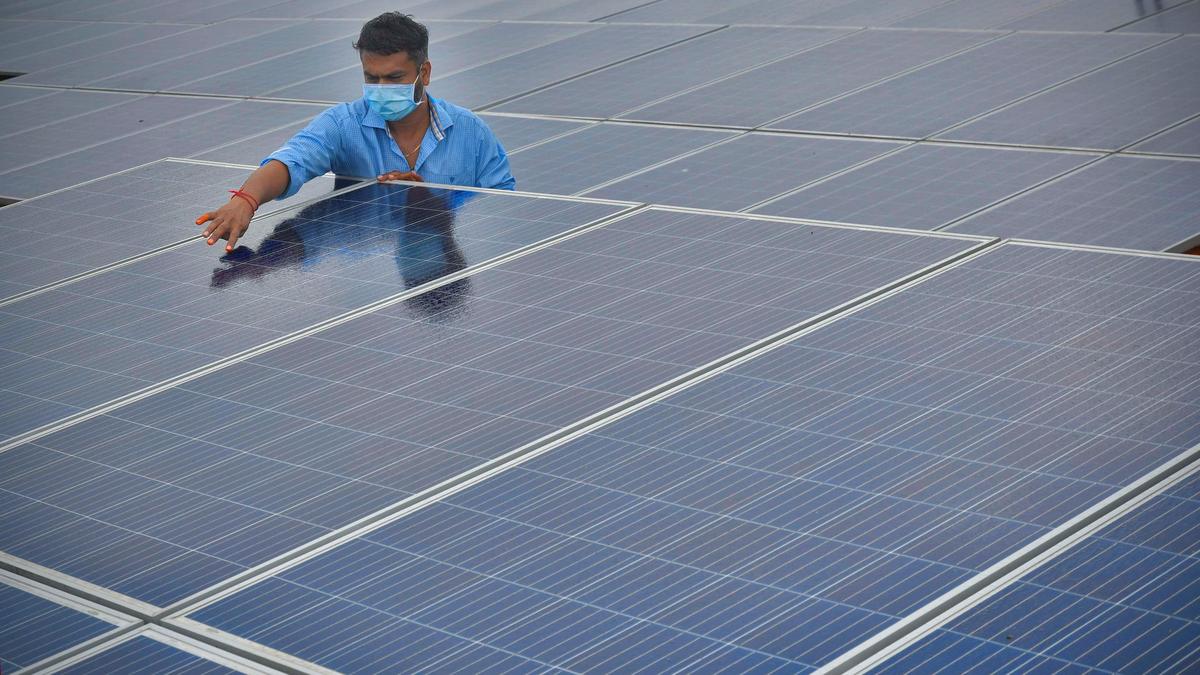
Under the existing framework for ALMM List-II for solar PV cells, net-metering projects and open access projects commissioned prior to June 1, 2026 are exempt from the applicability of ALMM List-II. View More
The initiative aligns with India’s target of achieving 100 GW of nuclear energy capacity by 2047. View More