
Latest Sectors News

LPG sales saw a significant drop of 24 percent in May compared to last year. Meanwhile, petrol and diesel sales by state-run companies increased. Aviation fuel sales also showed growth. This indicates a shift in fuel consumption patterns. More comprehensive industry data will be available soon. View More
New Delhi: LPG sales fell 24% year-on-year in May, a much steeper decline than the month before while petrol and diesel sales by state-run oil companies rose 4.8% and 6.4%, respectively. Aviation turbine fuel sales rose 1.8% from a year earlier in May, according to sales data from IndianOil , Bharat Petroleum and Hindustan Petroleum . The three state-run companies control 90% of petrol, diesel and aviation fuel market, and nearly entire domestic LPG market. Sales data for the industry, including private sector, slated to be issued by the oil ministry in a week, will provide a clearer picture of fuel consumption in May. In April, LPG sales by state-run companies had dropped about 16% year-on-year. The unusually high growth in diesel sales by state-run fuel retailers in May points to a significant demand shift away from pumps operated by private retailers. Diesel sales typically grow at a much slower pace than petrol due to the fuel's comparatively much larger consumption base. Yet, at 6.4%, diesel sales growth outpaced petrol in May, despite India consuming about two-and-half times more diesel than petrol. In many places, bulk diesel consumers shifted to retail pumps to take advantage of cheaper fuel available there. .Pbanner{display:flex;justify-content:space-between;align-items:center;background-color:#ec1c40;margin-top:20px;padding:5px 10px;border-radius:4px;color:#fff;line-height:10px;} .Pbannertext{display:flex;align-items:center;font-size:16px;font-weight:600;font-family:'Montserrat';} .Pbannertext img{height:20px;margin:0 6px} .Pbannerbutton a{display:flex;align-items:center;background-color:#fff;color:#ec1c40;text-decoration:none;font-weight:600;padding:4px 8px;border-radius:6px;font-size:15px;font-family:'Montserrat';} .Pbannerbutton img{height:20px;margin-right:6px} .Pbannerbutton a:hover{background-color:#f7f7f7} Add as a Reliable and Trusted News Source Add Now! (You can now subscribe to our Economic Times WhatsApp channel) (You can now subscribe to our Economic Times WhatsApp channel)

The delegation also visited NETRA's state-of-the-art in-house pilot facilities, including the 4 MW/1 MWh solar microgrid, a 3 MWh vanadium redox flow battery energy storage system View More

Recall Alan Greenspan's warning of irrational exuberance? It’s apt for AI. Split signals—weak US consumer confidence amid a stock boom—suggest it may be exposing America to instability risk while India’s investments in infrastructure are secure. Here's why View More
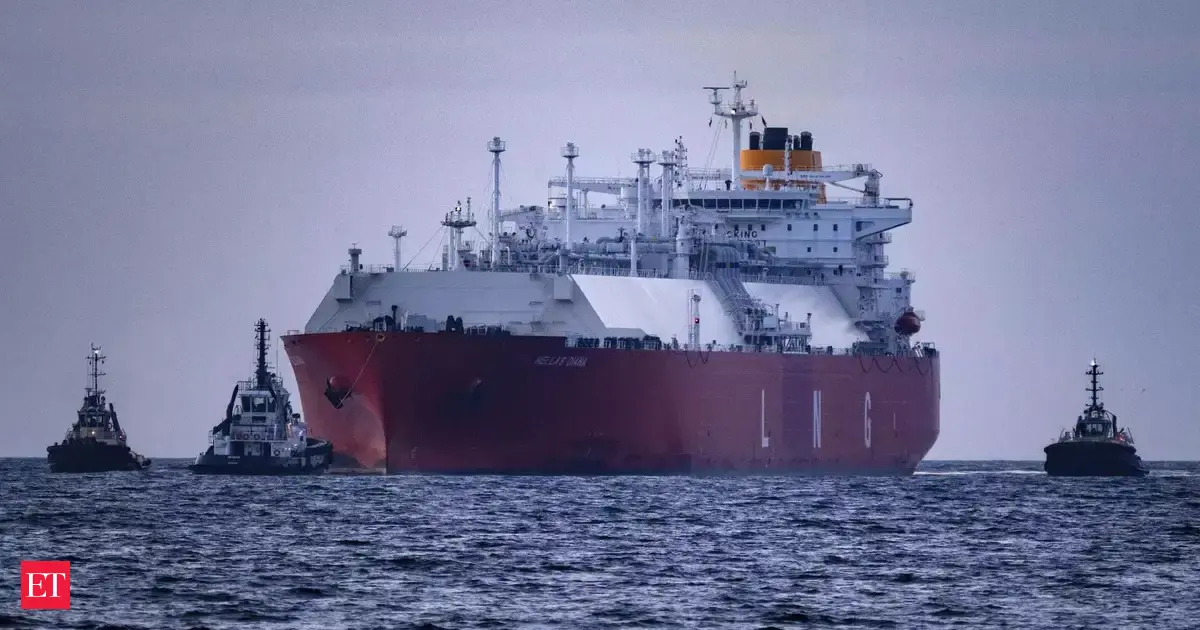
The closure of the Strait of Hormuz and the shutdown of Qatar’s LNG exports have pushed gas prices higher, but the disruption could ultimately lead to a prolonged global LNG glut, according to the analysis. The crisis has exposed the risks of relying on LNG supplies passing through Hormuz, prompting major Asian importers such as India, Bangladesh and Pakistan to seek alternative sources. View More
It may sound counterintuitive. After all, the Strait of Hormuz remains blocked. The world’s largest LNG plant is idled and Qatar says repairing it will take at least three years. And yet, the contours of a long-term surplus are already starting to emerge. The outlook for LNG prices is crucial in Europe and Asia, where the commodity is either burned to generate electricity and heat, or used as feedstock to produce chemicals and fertilisers. In those regions, where LNG prices go so goes inflation. ALSO READ | US says it struck Iranian drone command sites at the weekend The war in Iran has sent benchmark LNG prices sharply higher — although far below the all-time high set after Russia invaded Ukraine. In March, the Asian benchmark known as JKM briefly rose to about $30 per million British thermal units, up from less than $11 in February. For comparison, it jumped eight-fold jump in 2022, nearing $70. Unless the peace talks between Washington and Tehran fall apart and Hormuz remains closed beyond July, LNG prices are set to drop again — and remain low for an extended period. Live Events To understand why, we need to delve into the plumbing of the industry. The beauty of LNG is that once the gas has been super-cooled to about minus 160 Celsius, it transforms into a liquid that can be loaded into tankers and shipped around the world, very much like oil. Thus, LNG can reach any global customer, breaking the historical limitation of gas pipelines. Building those liquefaction plants requires huge upfront investments, with some costing between $20 billion and $30 billion. As a result, LNG companies only give the go-ahead on new facilities when they have secured enough clients to convince their banks a project is safe. That mechanism helps to keep the market relatively balanced, with supply expansion matching demand growth. Enter the US-Israeli war in Iran. The closure of the Strait of Hormuz removed 20% of the world’s LNG supply, leaving some importers, particularly in southwest and southeast Asia, desperately short. They won’t forget. The most-affected nations — think India, Bangladesh or Pakistan — are the kind of price-sensitive energy importers the industry is counting on as future consumers. Their response to the disruption will shape the LNG market for years to come. I anticipate both a supply and a demand reaction. Let’s start with supply. Having witnessed the closure of Hormuz, no sane policymaker in Asia is likely to consider the waterway safe again. Diversifying away from Qatar and the United Arab Emirates will become a priority. Therefore, Asian LNG buyers will support projects elsewhere, financing pipe-dream ventures that only 90 days ago looked destined to fail. We can summarize this as “everything outside Hormuz gets built,” with the crisis guaranteeing a construction boom outside the Persian Gulf. Since the turn of the millennium, the global LNG market has absorbed every supply wave fairly quickly, in two to three years. China swallowed a large amount of the 2009-2011 wave, when supply jumped by about 40% after the completion of several projects in Qatar. Europe absorbed the 2016-2019 wave, which came after a huge buildup in US export capacity on the back of the shale revolution, increasing global production by 45%. It helped that Europe had to cut its reliance on Russian gas from 2022 onward. Before the current war broke out, the market was contending with a third wave, which was set to last from 2026 to 2030, and a likely glut. This wave is not only still in the cards — though probably delayed about a year due to the closure of Hormuz — but it should be larger and likely longer lasting. Some will come from Asian buyers’ move to finance more and more projects in North America, Africa and Latin America. But Qatar will also want to increase production, using its low cost as incentive to find buyers. That expansion is delayed — maybe six months; maybe 12; maybe even 18 months. Whatever the length, it’s largely immaterial to what happens in 2030. Last year, the LNG industry greenlit the construction of 100 billion cubic meters of new capacity, the most ever, according to new estimates from the International Energy Agency . “There remains a pipeline of over 700 billion cubic meters of projects globally seeking final investment decision, including around 110 billion in the US that have received regulatory approval,” according to the IEA. Last year, global LNG production stood at nearly 600 billion cubic meters. If everything that could get built does get built, the global LNG supply will more than double. Would there be enough demand? I doubt it; or at least, I doubt it at prewar price levels. LNG costs will need to decline further to incentivize more consumption. It won’t be easy. LNG has suffered two reputational blows in four years: First Russia invading Ukraine, and now the Iran war . Again, no serious policymaker would wait for a third. For supply, diversification away from Hormuz will be key; in demand, the diversification will be away from LNG itself. Buyers have options: solar, with the help of batteries, and coal. Back in the 1970s, the oil crisis forced industrialized nations to embrace coal. At the time, they had very few options other than nuclear. This time, Asia can turn to cheap Chinese solar photovoltaic panels — and abundant coal. As such, the dirtiest of fuels may emerge from the conflict in Iran as an energy security commodity, not only for electricity generation, but also to manufacture fertilisers and plastics via coal-to-chemicals. It’s a story as old as the commodity market: Today’s high oil prices will sow the seeds of tomorrow’s low ones. For a short period, LNG costs may remain somewhat high as importing countries, particularly in Europe, rebuild their inventories ahead of the 2026-2027 winter heating season and everyone purchases a little more than needed, just in case the fighting in the Gulf flares up again. But a buyer’s market is around the corner. Now, just imagine that the Russia-Ukraine war ends too, pushing even more gas into the global market. Who knows when that happens, but it’s yet another reminder: The LNG market can move from famine to feast very quickly. (The views and opinions expressed in this article are solely those of the author and do not necessarily reflect the views of the publication, its editors, or management.) .Pbanner{display:flex;justify-content:space-between;align-items:center;background-color:#ec1c40;margin-top:20px;padding:5px 10px;border-radius:4px;color:#fff;line-height:10px;} .Pbannertext{display:flex;align-items:center;font-size:16px;font-weight:600;font-family:'Montserrat';} .Pbannertext img{height:20px;margin:0 6px} .Pbannerbutton a{display:flex;align-items:center;background-color:#fff;color:#ec1c40;text-decoration:none;font-weight:600;padding:4px 8px;border-radius:6px;font-size:15px;font-family:'Montserrat';} .Pbannerbutton img{height:20px;margin-right:6px} .Pbannerbutton a:hover{background-color:#f7f7f7} Add as a Reliable and Trusted News Source Add Now! (You can now subscribe to our Economic Times WhatsApp channel) (You can now subscribe to our Economic Times WhatsApp channel)
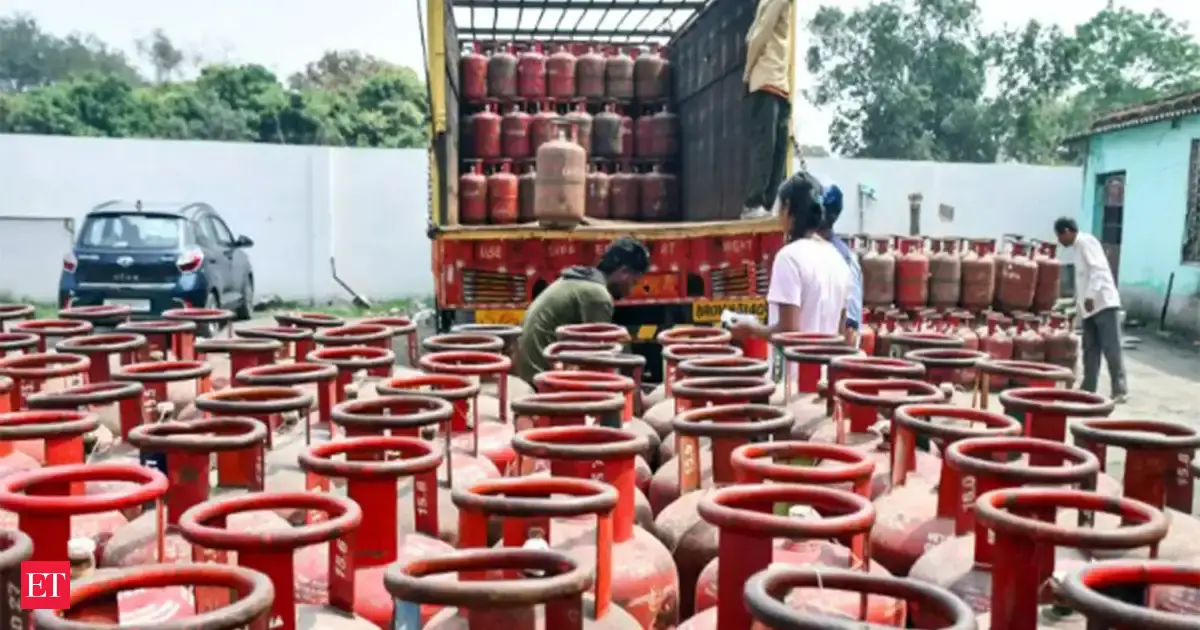
Commercial LPG price hike: Commercial LPG cylinder prices have risen from June 1. Hotels and restaurants will face higher input costs. Domestic cooking gas prices are unchanged, offering relief to households. The government assures adequate fuel stocks and is strengthening energy security. Refineries operate at optimum levels, and domestic LPG production is at record highs. Enforcement agencies are inspecting fuel sales to prevent hoarding. View More
New Delhi: The price of 19-kg commercial LPG cylinders has been increased from June 1, raising input costs for hotels, restaurants and other commercial establishments, while domestic cooking gas rates have been left unchanged, according to industry sources. In Delhi, the price of a 19-kg commercial LPG cylinder has been raised by Rs 42 to Rs 3,113.50. In Kolkata, the increase is steeper at Rs 53.50, taking the retail price to Rs 3,255.50. The price revision comes amid heightened efforts by the government and oil marketing companies (OMCs) to strengthen fuel security and ensure uninterrupted availability of petroleum products across the country. Also read | Refiners adjust to new crude mix as Hormuz crisis tightens supply Industry sources said the price of 5-kg Free Trade LPG (FTL) cylinders has also been increased by Rs 11. Following the revision, a 5-kg FTL cylinder will cost Rs 821.50 in Delhi. The revised rates came into effect on June 1. Live Events There has been no change in the price of domestic LPG cylinders, providing relief to household consumers at a time when global energy markets continue to remain volatile. The latest revision follows the government's assurance that adequate stocks of petroleum products are available and that there is no shortage of LPG, petrol or diesel in the country. Speaking at an inter-ministerial briefing on Friday, Sujata Sharma, Joint Secretary in the Ministry of Petroleum and Natural Gas, said the government is working to bolster energy security through strategic reserves and enhanced inventory management. She said OMCs have been advised to maintain a minimum LPG reserve equivalent to 30 days of consumption and that efforts are underway to strengthen crude oil reserves as well. Also read | India cuts export duties on petrol, diesel and aviation turbine fuel According to Sharma, all refineries are operating at optimum levels and domestic LPG production has reached record highs. She said inventories of key fuels remain comfortable and no instances of LPG distributors running dry have been reported. At the same time, authorities have observed unusual spikes in fuel sales in several regions. While part of the increase is attributed to seasonal agricultural demand, bulk purchases have also contributed to higher offtake. Government data showed overall fuel sales growth exceeding 30%, with 14 districts recording more than 100% growth in petrol sales. In contrast, six districts witnessed a decline of about 38% in sales by OMCs. To prevent diversion and hoarding, enforcement agencies have intensified inspections. Over the past four days, around 6,500 raids were conducted involving LPG distribution networks, resulting in multiple FIRs and arrests. Separate inspections at retail fuel outlets led to the seizure of significant quantities of petrol and diesel, along with legal action against violators. Sharma said domestic refineries are currently producing around 50-52 thousand metric tonnes of LPG per day against demand of about 72 thousand metric tonnes, with the balance being met through imports. She added that the backlog in LPG supplies has narrowed to around 4.5 days, indicating an improvement in distribution efficiency. The increase in commercial LPG prices is expected to have a bearing on operating costs for eateries, catering businesses and other commercial users, even as household consumers remain insulated from the latest revision. .Pbanner{display:flex;justify-content:space-between;align-items:center;background-color:#ec1c40;margin-top:20px;padding:5px 10px;border-radius:4px;color:#fff;line-height:10px;} .Pbannertext{display:flex;align-items:center;font-size:16px;font-weight:600;font-family:'Montserrat';} .Pbannertext img{height:20px;margin:0 6px} .Pbannerbutton a{display:flex;align-items:center;background-color:#fff;color:#ec1c40;text-decoration:none;font-weight:600;padding:4px 8px;border-radius:6px;font-size:15px;font-family:'Montserrat';} .Pbannerbutton img{height:20px;margin-right:6px} .Pbannerbutton a:hover{background-color:#f7f7f7} Add as a Reliable and Trusted News Source Add Now! (You can now subscribe to our Economic Times WhatsApp channel) (You can now subscribe to our Economic Times WhatsApp channel)
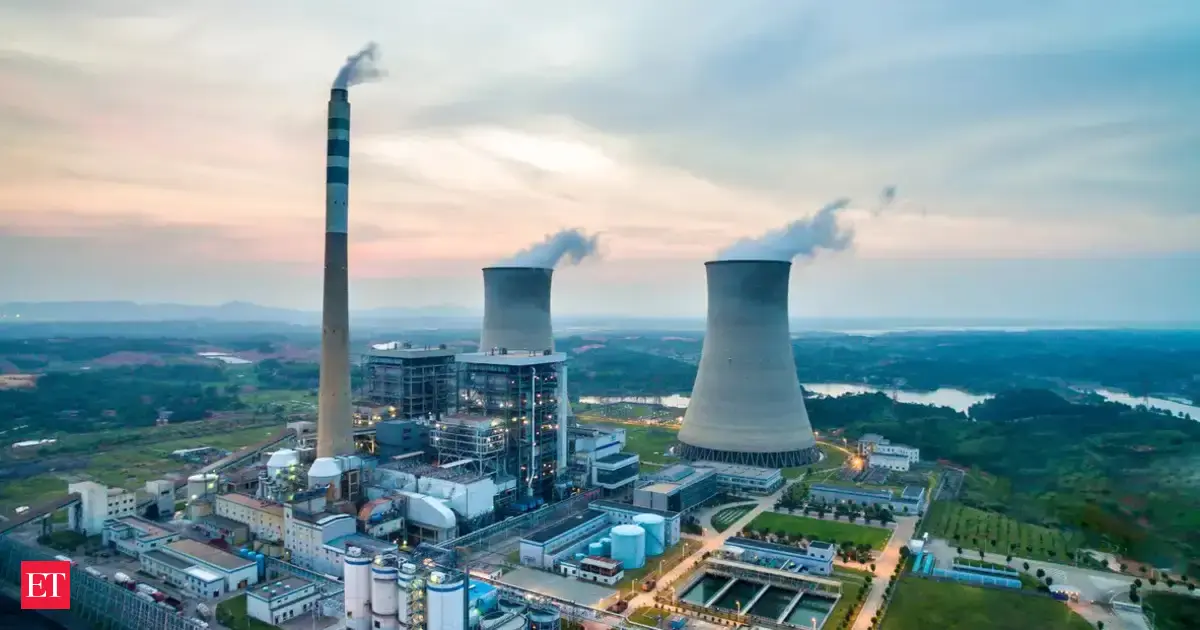
India is boosting its power generation capacity, focusing on nuclear energy. The nation aims to reach nearly 300 GW next year. Nuclear power is key for long-term energy security, targeting 100 GW by 2047. Tripura is set to receive urban infrastructure projects worth Rs 1,200 crore. Reforms are crucial for growth. View More
Guwahati: Union Minister for Housing and Urban Affairs and Power Manohar Lal Khattar on Sunday said that India is pursuing an aggressive expansion of its power generation capacity, with a major thrust on nuclear energy. After reviewing power and urban development projects with Tripura Chief Minister Manik Saha and Power Minister Ratan Lal Nath, the Union Minister said the country recorded an all-time high peak electricity demand of 270.8 GW on May 21 this year. To meet rising consumption driven by industrial growth, data centres, electric vehicles and households, the Centre plans to increase power generation capacity from the current 283 GW to nearly 300 GW next year, he told the media. The Union Minister said nuclear power would play a key role in India's long-term energy security. While the country currently generates around 8 GW of nuclear power and has another 9 GW under construction, the government has set a target of achieving 100 GW by 2047 through policy reforms and greater private-sector participation, the Power Minister said. He said a comprehensive power adequacy plan has been prepared up to 2029-30, factoring in projected demand and contributions from thermal, solar, hydro, nuclear and other renewable energy sources. Live Events Khattar said the state has considerable potential in solar power despite limited hydropower resources. A tender has already been floated for a 200 MW solar project, while under the PM Surya Ghar Yojana, between one lakh and two lakh rooftop solar installations are targeted by March 2027. The Minister announced that Tripura is expected to receive projects worth around Rs 1,200 crore within the next two months as part of a nationwide urban infrastructure programme involving investments of nearly Rs 4 lakh crore. He, however, expressed concern over the financial condition of the Tripura State Electricity Corporation Limited (TSECL), which is burdened with accumulated losses of about Rs 800 crore and transmission and distribution losses of around 26 per cent. The Minister also reviewed ongoing transmission projects and said new tenders for key transmission lines would be floated shortly to ensure the state's future power requirements are adequately met. Khattar said sustained reforms and investments would be critical for supporting the state's long-term growth trajectory. After Mizoram, the Union Minister on Sunday reviewed various affairs of power and urban sectors, including its infrastructure in Nath, who also holds the Agriculture portfolio, said that the meeting reviewed various activities of the state Power Department, ongoing development projects, and future plans for the sector. “Detailed discussions were held on the modernisation of power infrastructure, improvement of service quality, consumer-friendly initiatives, and strategies for future development,” he told the media. The Minister said that the officials and engineers of various state holders and government organisations, including the Tripura State Electricity Corporation (TSECL), also received valuable guidance on various measures and plans aimed at making Tripura’s power sector stronger, more reliable, and technology-driven. The review meeting was considered highly productive and significant in accelerating the growth of the power sector, which plays a crucial role in the overall development of the state and the welfare of its people, he added. Later, taking to his official X account, Union Minister Manohar Lal Khattar said: “Detailed deliberations were held on key issues concerning the Swachh Bharat Mission and the State’s power sector. Our extensive discussions focused on the implementation of RDSS ( Revamped Distribution Sector Scheme ), smart metering and transmission planning.” He said that special emphasis was laid on strengthening power infrastructure, improving DISCOM (Distribution Company) efficiency, reducing AT&C (Aggregate Technical and Commercial) losses, and accelerating the adoption of rooftop solar to ensure reliable and sustainable energy access across the state. Progress under PM-KUSUM (Pradhan Mantri Kisan Urja Suraksha evam Utthan Mahabhiyan) and PM Surya Ghar: Muft Bijli Yojana ( PMSGMBY ) were also reviewed in the meeting, with a focus on strengthening transmission infrastructure and expanding rooftop solar adoption. .Pbanner{display:flex;justify-content:space-between;align-items:center;background-color:#ec1c40;margin-top:20px;padding:5px 10px;border-radius:4px;color:#fff;line-height:10px;} .Pbannertext{display:flex;align-items:center;font-size:16px;font-weight:600;font-family:'Montserrat';} .Pbannertext img{height:20px;margin:0 6px} .Pbannerbutton a{display:flex;align-items:center;background-color:#fff;color:#ec1c40;text-decoration:none;font-weight:600;padding:4px 8px;border-radius:6px;font-size:15px;font-family:'Montserrat';} .Pbannerbutton img{height:20px;margin-right:6px} .Pbannerbutton a:hover{background-color:#f7f7f7} Add as a Reliable and Trusted News Source Add Now! (You can now subscribe to our Economic Times WhatsApp channel) (You can now subscribe to our Economic Times WhatsApp channel)
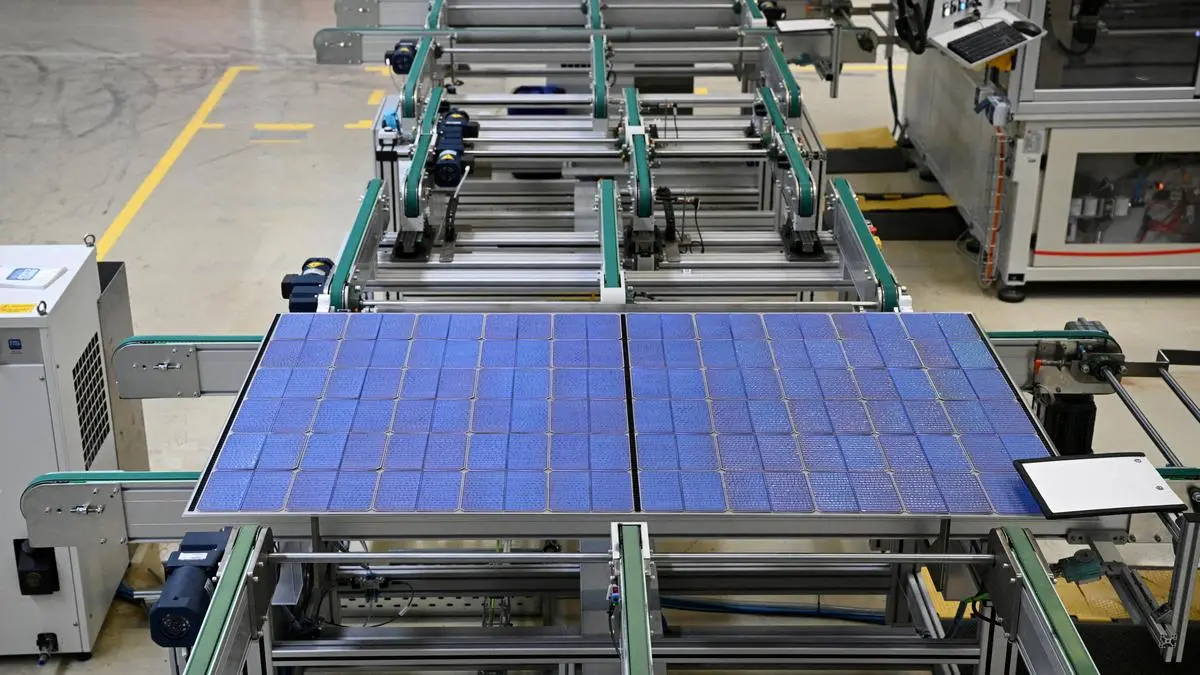
India’s cumulative solar photovoltaic (PV) cell manufacturing capacity reached 40 GW at the end of March 2026, with 5 GW added during January-March, noted JMK Research & Analytics. View More
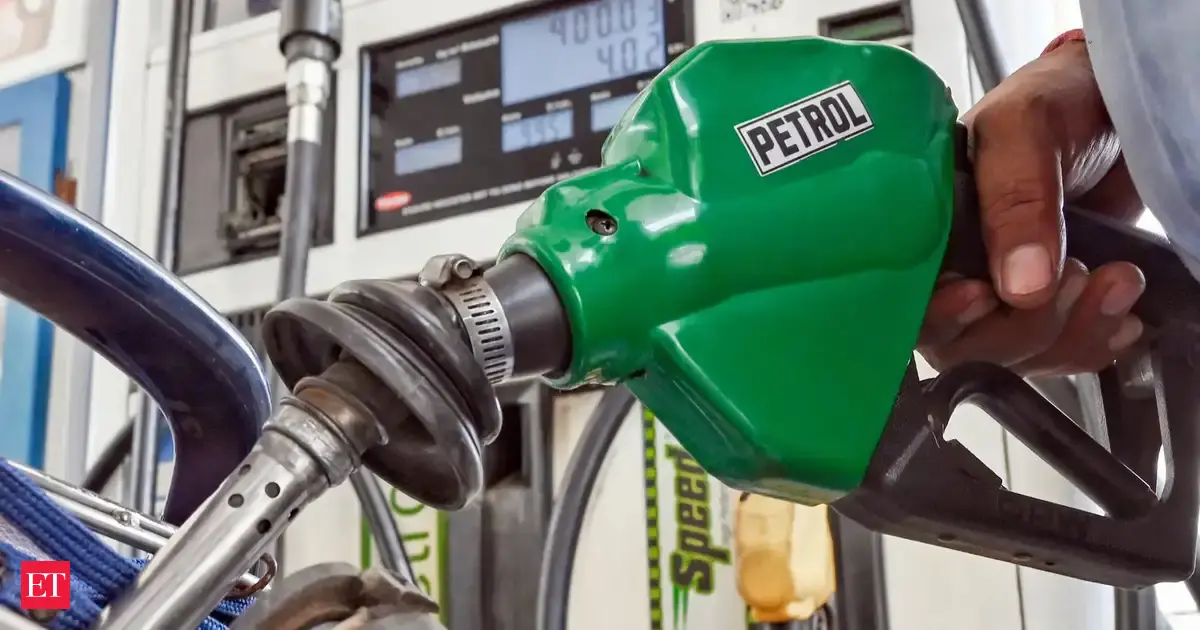
India will reduce its export duties on petrol, diesel, and aviation turbine fuel (ATF) starting June 1. The new rates are 1.5 rupees per litre for petrol, 13.5 rupees for diesel, and 9.5 rupees for ATF. These revisions are made fortnightly based on international crude oil and fuel prices. View More
India will cut its export duty on petrol diesel and aviation turbine fuel (ATF) for the fortnight starting June 1, its government said in a statement on Saturday. The duty on exports of petrol has been set at 1.5 rupees ($0.0158) per litre while that on diesel has been set at 13.5 rupees per litre, the statement said. Export duties on ATF have been set at 9.5 rupees per litre. The rates are being revised on a fortnightly basis and are based on the average international prices of crude oil, petrol, diesel and ATF during the period since the last review. There is no change in the existing excise duty rates on petrol and diesel cleared for domestic consumption. .Pbanner{display:flex;justify-content:space-between;align-items:center;background-color:#ec1c40;margin-top:20px;padding:5px 10px;border-radius:4px;color:#fff;line-height:10px;} .Pbannertext{display:flex;align-items:center;font-size:16px;font-weight:600;font-family:'Montserrat';} .Pbannertext img{height:20px;margin:0 6px} .Pbannerbutton a{display:flex;align-items:center;background-color:#fff;color:#ec1c40;text-decoration:none;font-weight:600;padding:4px 8px;border-radius:6px;font-size:15px;font-family:'Montserrat';} .Pbannerbutton img{height:20px;margin-right:6px} .Pbannerbutton a:hover{background-color:#f7f7f7} Add as a Reliable and Trusted News Source Add Now! (You can now subscribe to our Economic Times WhatsApp channel) (You can now subscribe to our Economic Times WhatsApp channel)
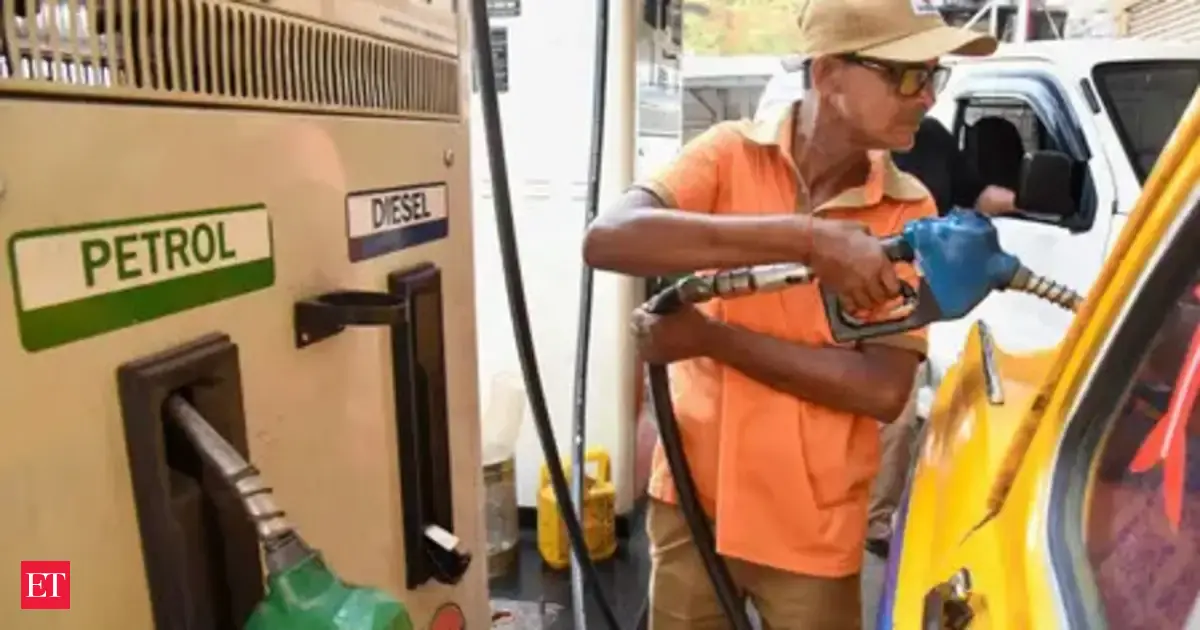
New windfall tax rates on fuel exports take effect from June 1, 2026. Taxes are back on diesel and aviation turbine fuel after a period of nil levies. Petrol exports will also attract a duty. These revisions reflect changes in global oil prices and refiner margins. The government reviews these rates fortnightly. View More
The government has notified revised windfall tax rates on fuel exports for the fortnight beginning June 1, 2026, with levies reinstated on diesel and aviation turbine fuel (ATF) after being held at nil in recent review cycles. As per the official notification, the duty on petrol exports has been set at Rs 1.5 per litre, entirely in the form of Special Additional Excise Duty (SAED), with no Road and Infrastructure Cess (RIC) applicable. Diesel exports will attract a duty of Rs 13.5 per litre, wholly as SAED, while ATF exports will be subject to an SAED of Rs 9.5 per litre. Also read: Oil prices tumble 11% for biggest weekly drop in 7 weeks. Where is liquid gold headed from here? The government clarified that there is no change in existing excise duty rates on petrol and diesel sold in the domestic market. The tax rates are reviewed every fortnight based on average oil prices in the previous two weeks. Live Events India first imposed a windfall tax on exports by oil refiners and producers in July 2022, announcing levies on petrol, diesel, and domestically produced crude oil. The government later extended the levy on exports of petrol, diesel, and ATF, as private refiners sought to sell fuel overseas to capitalise on robust refining margins rather than selling locally. The windfall tax on fuel exports is based on cracks, or margins, that refiners earn on overseas shipments, primarily the difference between the international oil price realised and the cost. Also read: Transport association urges government to cut fuel prices as crude falls to $90/barrel The levy has seen significant fluctuation over the past year. As recently as May 2025, the SAED on the export of diesel, petrol, and ATF had been retained at nil, reflecting softer global crude prices at the time. The June 1 revision signals a tightening of margins once again, prompting the government to step in. The windfall tax regime primarily affects large private refiners such as Reliance Industries , which exports a significant share of its refinery output, along with state-owned producers including ONGC and Oil India . .Pbanner{display:flex;justify-content:space-between;align-items:center;background-color:#ec1c40;margin-top:20px;padding:5px 10px;border-radius:4px;color:#fff;line-height:10px;} .Pbannertext{display:flex;align-items:center;font-size:16px;font-weight:600;font-family:'Montserrat';} .Pbannertext img{height:20px;margin:0 6px} .Pbannerbutton a{display:flex;align-items:center;background-color:#fff;color:#ec1c40;text-decoration:none;font-weight:600;padding:4px 8px;border-radius:6px;font-size:15px;font-family:'Montserrat';} .Pbannerbutton img{height:20px;margin-right:6px} .Pbannerbutton a:hover{background-color:#f7f7f7} Add as a Reliable and Trusted News Source Add Now! (You can now subscribe to our Economic Times WhatsApp channel) (You can now subscribe to our Economic Times WhatsApp channel)

Hitachi Energy India aims for a significant share of the booming Indian data centre market. The company plans to capture 30% of the industry's spending by offering a comprehensive "grid-to-rack" power solution. This expansion targets the growing demand driven by digital transformation and AI workloads. View More
Hitachi Energy India plans to tap into 30% of the overall spending in the country's data centre industry, from a previous aim of 10-15%, by offering a broad "grid-to-rack" power solution, Managing Director and CEO Venu Nuguri told Reuters. India's data centre market , valued at $5.55 billion in 2025, is projected to reach $13.11 billion by 2034, driven by digital transformation, cloud adoption and escalating AI workloads, according to consulting firm IMARC Group. Hitachi Energy India, a unit of Zurich-based Hitachi Energy, makes and supplies power equipment and grid technology for several industries, including data centers. It controls about half of India's high-voltage direct current (HVDC) market, manufacturing equipment that transmits bulk electricity over long distances. The firm had earlier pegged 10%-15% of total data centre spending in the country as its addressable market through both equipment and software offerings. Its "grid-to-rack" solution, according to Nuguri, integrates power infrastructure for energy-hungry data centres from the grid-level connection to server rack-level distribution. Live Events The solution would add another 10%-15% of power infrastructure spending, out of the overall data centre segment, to the company's addressable market, Nuguri said. This week, Hitachi Energy India announced a 20-billion-rupee ($210.53 million) investment in a greenfield, large power transformer facility in the western Indian state of Gujarat, taking its cumulative capex to 40 billion rupees across 19 factories in eight manufacturing locations. The company closed 2026 with a record order backlog of 296 billion rupees. The firm is also "actively looking into" acquisitions in data centres, digital layers, and power consulting, among others, to fill capability gaps, Nuguri said. India's peak power demand hit a record 270.8 gigawatts in May, up 68% from 148 GW in 2014, according to the Ministry of Power. Demand is projected to nearly double to 458 GW by 2032, data showed, a structural tailwind that Nuguri said the company counts among its key growth drivers. ($1 = 95.0000 Indian rupees) .Pbanner{display:flex;justify-content:space-between;align-items:center;background-color:#ec1c40;margin-top:20px;padding:5px 10px;border-radius:4px;color:#fff;line-height:10px;} .Pbannertext{display:flex;align-items:center;font-size:16px;font-weight:600;font-family:'Montserrat';} .Pbannertext img{height:20px;margin:0 6px} .Pbannerbutton a{display:flex;align-items:center;background-color:#fff;color:#ec1c40;text-decoration:none;font-weight:600;padding:4px 8px;border-radius:6px;font-size:15px;font-family:'Montserrat';} .Pbannerbutton img{height:20px;margin-right:6px} .Pbannerbutton a:hover{background-color:#f7f7f7} Add as a Reliable and Trusted News Source Add Now! (You can now subscribe to our Economic Times WhatsApp channel) (You can now subscribe to our Economic Times WhatsApp channel)