
Latest Sectors News

India's demand for transportation fuels and petroleum products is declining due to supply disruptions and higher prices stemming from the Iran war. Total refined product consumption dropped 6.5% in May, with subdued growth in petrol and diesel sales, indicating weakening economic activity. View More
New Delhi: A supply squeeze and higher product prices due to the Iran war are weighing on demand for transportation fuels and other petroleum products in India, while also pushing consumers towards alternatives. Total consumption of refined products fell 6.5% in May, from a year earlier, to 19.93 million metric tonnes, according to oil ministry data. The month saw subdued growth in transportation fuels sales- petrol was up 3.3% and diesel grew 1.5% while aviation turbine fuel (ATF) was flat. Sales of other products such as naphtha (29%), LPG (20.5%), bitumen (39.4%) and petcoke (11.3%) fell sharply. Petrol and diesel sales increase in May was around half the average growth recorded for the two fuels in FY26. Slowing fuel consumption is an indicator of weakening economic activity, said an industry executive. Live Events Alt Fuel Use on the Rise While softer diesel demand reflects sluggish activity in the transportation sector, lower bitumen consumption signals slow pace of road construction. Decline in naphtha and petcoke usage suggests tepid industrial activity, especially as alternative fuels such as natural gas have also become expensive and are seeing weak demand, the executive said. The near closure of the Strait of Hormuz and import curbs are at the heart of the slowdown in fuel consumption, a second executive said. “Supplies of LPG, bitumen, and petcoke from the Gulf region have been disrupted,” the executive said. “To compensate for lower LPG imports , domestic refiners are maximising LPG output, resulting in changes in the yield pattern of other petroleum products.” More naphtha is being diverted to boost LPG production, he said, while lower naphtha availability is driving consumers towards fuel oil, a cheaper alternative whose consumption rose 24% in May. Industry executives said a sharp rise in bulk diesel prices—about Rs 50 per litre compared with Rs 8 per litre for retail diesel—may also have curbed consumption as users sought alternatives or improved efficiencies. Higher prices at pumps run by private fuel retailers Nayara Energy and Shell also reflected on India’s subdued petrol and diesel sales in May, executives said. Sales at private retailers declined, while rising at pumps run by state-run refiners. Meanwhile, higher ATF prices prompted airlines to cut several flights, keeping national consumption flat last month. .Pbanner{display:flex;justify-content:space-between;align-items:center;background-color:#ec1c40;margin-top:20px;padding:5px 10px;border-radius:4px;color:#fff;line-height:10px;} .Pbannertext{display:flex;align-items:center;font-size:16px;font-weight:600;font-family:'Montserrat';} .Pbannertext img{height:20px;margin:0 6px} .Pbannerbutton a{display:flex;align-items:center;background-color:#fff;color:#ec1c40;text-decoration:none;font-weight:600;padding:4px 8px;border-radius:6px;font-size:15px;font-family:'Montserrat';} .Pbannerbutton img{height:20px;margin-right:6px} .Pbannerbutton a:hover{background-color:#f7f7f7} Add as a Reliable and Trusted News Source Add Now! (You can now subscribe to our Economic Times WhatsApp channel) (You can now subscribe to our Economic Times WhatsApp channel)


Aviation fuel prices have increased by about 10 percent. State-owned fuel retailers have introduced a price stabilization scheme. Domestic airlines can now get a fixed fuel rate for up to three years. This move aims to protect airlines and passengers from global oil price swings. Airlines opting for the scheme will pay Rs 115 per litre. View More
New Delhi: Aviation turbine fuel (ATF) prices were raised by around 10 per cent on Tuesday as state-owned fuel retailers rolled out a price stabilisation regime, offering domestic airlines a fixed fuel rate for up to three years in a move aimed at shielding carriers and passengers from sharp swings in global oil prices. Jet fuel for domestic airlines will now cost Rs 115 per litre, up from Rs 104.927, industry sources said. The new rate will be locked in for up to three years for airlines that opt to participate in the government-backed price stabilisation scheme. Airlines that do not opt for the scheme will pay market-linked prices, currently around Rs 142 per litre, similar to international carriers. Also Read: Govt's new ATF pricing mechanism to fix Delhi fuel price at Rs 115/litre for airlines: Civil Aviation Ministry Live Events Those opting into the price stabilisation scheme will continue to receive ATF at Rs 115 per litre, insulated from global benchmark fluctuations. While non-participating carriers will benefit from price declines, they will also face higher costs when international rates rise. Sources said the scheme is completely voluntary, and airlines will have to take a call if they want to participate in it. Under the voluntary scheme, participating airlines will pay a fixed free-on-board (FOB) benchmark price of Rs 86.32 per litre, plus airport charges, oil company margins and applicable taxes, resulting in an effective selling price of Rs 115 per litre in Delhi, Rs 114.5 in Mumbai and Rs 139 in Chennai. The new rate compares with a below-market level of about Rs 105 per litre in Delhi, which had remained unchanged for more than two months after the government allowed only a partial pass-through of higher global fuel costs triggered by the outbreak of the West Asia conflict in late February. The freeze had led to losses for oil marketing companies on aviation turbine fuel (ATF), similar to pressures seen in petrol, diesel and LPG segments. To address these losses, the Union Cabinet approved a Rs 10,000-crore price stabilisation scheme aimed at capping ATF prices and shielding airlines from volatility linked to geopolitical tensions, while also supporting the financial health of state-owned oil companies. Also Read: Airlines' fuel, vehicle replacement & roadways in focus as Cabinet announces key decisions worth Rs 30,290 crore Under the scheme, whenever global benchmark prices rise above the base rate of Rs 86.32, the government will provide an interest-free advance to oil marketing companies to cover the difference. When prices fall, the differential will be recovered from the companies and returned to the Consolidated Fund of India. ATF typically accounts for about 40 per cent of airline operating expenses and can rise to as much as 60 per cent during periods of sharp volatility. Sources said international jet fuel prices had climbed to as high as Rs 142 per litre in May from pre-war rates of Rs 60.50 per litre, raising concerns over airline operating costs and potential fare increases. The new arrangement, they said, is not a subsidy but a temporary stabilisation framework intended to smooth volatility in fuel prices while ensuring accountability, monitoring and full recovery of funds. For passengers, the most important benefit of this decision is that it will help to moderate sudden increases in the airfare that often result from sharp spikes in fuel prices. By reducing the exposure of airlines to extreme fuel price fluctuations, the government aims to minimise the pass-through of such costs to travellers and provide greater fare stability. .Pbanner{display:flex;justify-content:space-between;align-items:center;background-color:#ec1c40;margin-top:20px;padding:5px 10px;border-radius:4px;color:#fff;line-height:10px;} .Pbannertext{display:flex;align-items:center;font-size:16px;font-weight:600;font-family:'Montserrat';} .Pbannertext img{height:20px;margin:0 6px} .Pbannerbutton a{display:flex;align-items:center;background-color:#fff;color:#ec1c40;text-decoration:none;font-weight:600;padding:4px 8px;border-radius:6px;font-size:15px;font-family:'Montserrat';} .Pbannerbutton img{height:20px;margin-right:6px} .Pbannerbutton a:hover{background-color:#f7f7f7} Add as a Reliable and Trusted News Source Add Now! (You can now subscribe to our Economic Times WhatsApp channel) (You can now subscribe to our Economic Times WhatsApp channel)

A significant solar power project is set to be established in Sitapur, Uttar Pradesh. Defence Minister Rajnath Singh has approved a 250 MW solar power plant on defence land. This initiative marks a major step in renewable energy adoption. The project will also feature a Battery Energy Storage System. View More
New Delhi: Defence Minister Rajnath Singh has approved the establishment of a 250 mega watt solar power project in Uttar Pradesh 's Sitapur on an approximately 850 acres of vacant defence land. The defence ministry on Tuesday described the project as a "major step" towards promoting renewable energy while ensuring optimum utilisation of vacant defence land. Read more: Great Nicobar project not about defence, transshipment port but aimed at helping one businessman: LoP Rahul Gandhi This is the first-of-its-kind project undertaken by the defence ministry involving the development of a large-scale solar power generation facility with integrated Battery Energy Storage System (BESS) support on defence land, it said. The ministry said the initiative reflects the government's commitment towards clean energy, sustainability and reduction of dependence on conventional energy sources. Live Events "Besides strengthening long-term energy security for the defence forces, the project is expected to substantially reduce expenditure incurred on procurement of conventional grid power for defence establishments, resulting in significant savings to the government exchequer over the life cycle of the project," it said in a statement. NTPC Ltd is implementing the project through a competitive bid process to realise the most optimal energy pricing and savings for defence establishments, it added. The project will be implemented in close coordination with Integrated headquarters of the Ministry of Defence (Army) and Directorate General Defence Estates (DGDE). Read more: India to invest ₹13K-cr in dual use airport at Great Nicobar Island "The project represents a convergence of national security, energy security, technological innovation and environmental sustainability highlighting the commitment of the Ministry of Defence to leverage its assets in support of national development goals while safeguarding strategic interests," the statement said. .Pbanner{display:flex;justify-content:space-between;align-items:center;background-color:#ec1c40;margin-top:20px;padding:5px 10px;border-radius:4px;color:#fff;line-height:10px;} .Pbannertext{display:flex;align-items:center;font-size:16px;font-weight:600;font-family:'Montserrat';} .Pbannertext img{height:20px;margin:0 6px} .Pbannerbutton a{display:flex;align-items:center;background-color:#fff;color:#ec1c40;text-decoration:none;font-weight:600;padding:4px 8px;border-radius:6px;font-size:15px;font-family:'Montserrat';} .Pbannerbutton img{height:20px;margin-right:6px} .Pbannerbutton a:hover{background-color:#f7f7f7} Add as a Reliable and Trusted News Source Add Now! (You can now subscribe to our Economic Times WhatsApp channel) (You can now subscribe to our Economic Times WhatsApp channel)

The Wedding Company, a tech-driven wedding platform, secured $2.75 million in seed funding to enhance its services and expand its vendor network. View More
TheWeddingCompany.com, a wedding planning and fulfilment platform, has raised $2.75 million (Rs25 Cr) in a seed funding round led by Wellingdon Advisors LLP with participation from LVX, Tremis Capital, Synergy Capital Partners and angel investor Vivek Mathur (Elevation Capital ex-Partner) and Rahul Garg (Premji Invest Senior ex-Partner). The Wedding Company is building a full-stack, tech-driven platform that brings together essential wedding services from venues and décor to photography, catering, and logistics under one roof. The company has demonstrated growth momentum, scaling service orders from Rs51 crore in FY25 to Rs115 crore in FY26, marking a 225% growth. It is further targeting Rs350 crore service orders in FY27, driven by an expected 1,500 new wedding bookings. The newly raised capital will be deployed towards its wedding services catalogue, building a category management function, and expanding its vendor partner network to standardize service delivery at scale. Pawan Gupta, CEO, The Wedding Company said in a statement, “Our vision is to bring structure, transparency, and reliability to India’s largely unorganized wedding ecosystem. This fundraise validates our approach of combining technology with strong on-ground execution to deliver a superior and premium wedding planning experience,” Live Events Mohan Kumar, Founder of Avataar Ventures said, “The Wedding market is very large but a tough market to crack, it requires laser focus execution and an outstanding customer experience. TWC has mastered both. Its AI-powered wedding planning platform offers 11,000+ decor design options with visualisations on actual venue premises, enabling couples to experience and customise setups before execution.” Rahul Garg, Managing Partner, IGNITE Growth / ex-Senior Partner, Premji Invest said, “TWC offers high quality customer experience in one of India’s largest and most unorganised TAM of wedding businesses which lacks a national brand, offering a single point tech platform to customise and curate one of the most memorable experiences for any couple in their lifetime.” .Pbanner{display:flex;justify-content:space-between;align-items:center;background-color:#ec1c40;margin-top:20px;padding:5px 10px;border-radius:4px;color:#fff;line-height:10px;} .Pbannertext{display:flex;align-items:center;font-size:16px;font-weight:600;font-family:'Montserrat';} .Pbannertext img{height:20px;margin:0 6px} .Pbannerbutton a{display:flex;align-items:center;background-color:#fff;color:#ec1c40;text-decoration:none;font-weight:600;padding:4px 8px;border-radius:6px;font-size:15px;font-family:'Montserrat';} .Pbannerbutton img{height:20px;margin-right:6px} .Pbannerbutton a:hover{background-color:#f7f7f7} Add as a Reliable and Trusted News Source Add Now!

Indian industry is pushing for a clear framework to license and transfer technology for indigenous 700MW PHWR reactors to private players. This move aims to accelerate nuclear capacity expansion and attract vital investment. Ficci highlighted that structured technology transfer and licensing are crucial for faster project deployment and mobilising capital, ultimately strengthening India's nuclear power programme and project viability. View More
The industry has sought a framework for licensing and transfer of technology for indigenous 700MW pressurised heavy water reactor (PHWR) to private developers, suggesting that wider access to a standardised design could help expedite nuclear capacity addition and attract investment. In a representation to the government, the Federation of Indian Chambers of Commerce and Industry (Ficci) said structured, expeditious technology transfer and licensing would support faster deployment of nuclear energy projects and help mobilise the scale of capital required, people aware of the matter said. Ficci sought formal guidelines governing technology transfer, noting that greater clarity on licensing arrangements would also enable companies to move forward with partnerships and manufacturing commitments. In its letter to the Department of Atomic Energy, Ficci said standardised PHWR technology would provide a ready platform for scaling up India's nuclear power programme. The April letter, seen by ET, said adoption of technology would strengthen project viability. According to a September 2025 government report on the roadmap to scale nuclear energy capacity to 100 GW by 2047, the cost of PHWR reactors was Rs 15- 16 crore per MW, which translates to a levelised tariff slightly higher than Rs 6 per unit, excluding water and insurance charges of around 15 paise. Live Events If substantial manufacturing of equipment is indigenised, the capital cost of a pressurised water reactor may come down from the estimated Rs 30 crore per MW to Rs 22-25 crore, or a levelised tariff of Rs 6-6.60 per unit, it said. Concerted efforts will be required to bring down the capital cost and tariff, the report had said. The industry proposal comes as the government looks to significantly expand nuclear power capacity as part of its clean energy and energy security objectives. Indian companies are also keen on foreign collaboration for technology, and some are already holding discussions with potential partners, an industry executive said. “Companies are also looking at foreign technologies, provided they come with the right kind of economic framework,” the executive said. State-run power producer NTPC has signed non-disclosure agreements with Russia’s Rosatom and France’s EDF to explore collaboration on deploying large pressurised water reactor projects in India. .Pbanner{display:flex;justify-content:space-between;align-items:center;background-color:#ec1c40;margin-top:20px;padding:5px 10px;border-radius:4px;color:#fff;line-height:10px;} .Pbannertext{display:flex;align-items:center;font-size:16px;font-weight:600;font-family:'Montserrat';} .Pbannertext img{height:20px;margin:0 6px} .Pbannerbutton a{display:flex;align-items:center;background-color:#fff;color:#ec1c40;text-decoration:none;font-weight:600;padding:4px 8px;border-radius:6px;font-size:15px;font-family:'Montserrat';} .Pbannerbutton img{height:20px;margin-right:6px} .Pbannerbutton a:hover{background-color:#f7f7f7} Add as a Reliable and Trusted News Source Add Now! (You can now subscribe to our Economic Times WhatsApp channel) (You can now subscribe to our Economic Times WhatsApp channel)

The FIR was registered pursuant to a Madras High Court order directing a CBI probe into alleged irregularities in the procurement of 45,000 distribution transformers, which the Supreme Court later declined to stay View More
State-owned NTPC Ltd is seeking expressions of interest for developing thermal power units capable of operating at significantly lower loads, down to 25%. This move aims to enhance grid flexibility and support the integration of a growing share of variable renewable energy sources like solar and wind power. View More
New Delhi: As renewable energy accounts for a growing share of India's power mix, state-owned NTPC Ltd has invited expressions of interest (EoIs) for developing thermal power units that can operate at loads as low as 25% and, if needed, operate in two shifts. Thermal power stations can currently run at a technical minimum load of 55%, below which the plants experience significantly higher wear and tear. The move highlights the growing need for flexible generation to support grid stability. India's largest power generator is seeking technology providers and engineering, procurement and construction (EPC) partners for sub-critical thermal units in the 150-250 MW range that can quickly ramp up or down to balance fluctuations in solar and wind generation. The development gains significance as the grid integrates a rising share of renewable energy, increasing variability and requiring thermal plants to run at the technical minimum level of 55%. NTPC's thermal fleet is already operating at the technical minimum load during periods of low demand, a company official said. .Pbanner{display:flex;justify-content:space-between;align-items:center;background-color:#ec1c40;margin-top:20px;padding:5px 10px;border-radius:4px;color:#fff;line-height:10px;} .Pbannertext{display:flex;align-items:center;font-size:16px;font-weight:600;font-family:'Montserrat';} .Pbannertext img{height:20px;margin:0 6px} .Pbannerbutton a{display:flex;align-items:center;background-color:#fff;color:#ec1c40;text-decoration:none;font-weight:600;padding:4px 8px;border-radius:6px;font-size:15px;font-family:'Montserrat';} .Pbannerbutton img{height:20px;margin-right:6px} .Pbannerbutton a:hover{background-color:#f7f7f7} Add as a Reliable and Trusted News Source Add Now! (You can now subscribe to our Economic Times WhatsApp channel) (You can now subscribe to our Economic Times WhatsApp channel)

Even if the growth were to slip below 7 per cent as the RBI forecast suggests… macro stability measures and supply assurances will bring us back to a 7 per cent plus growth track in FY28, says CEA View More
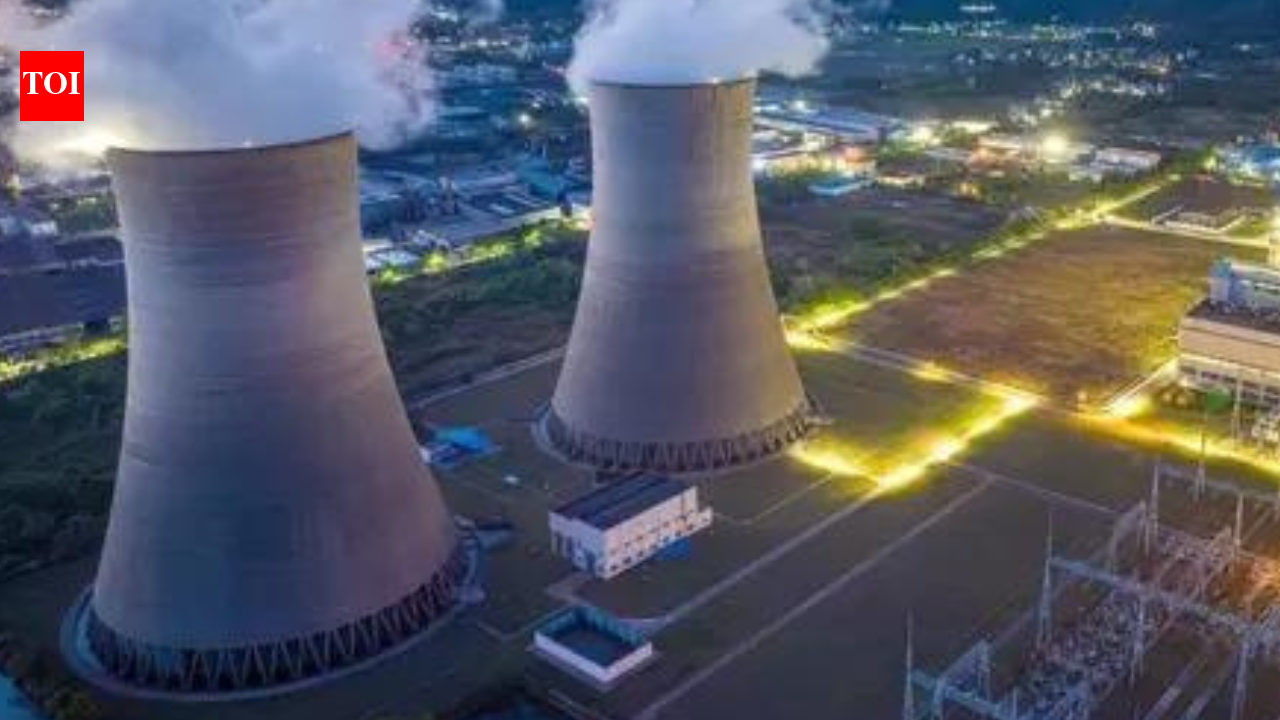
NTPC is setting up flexible coal-fired thermal power units to balance intermittent renewable energy generation and ensure grid stability. These sub-critical units, designed for two-shift operation and lower minimum loads, will provide crucial balancing support as renewable energy's share grows, reinforcing India's energy transition. View More