
Latest Sectors News

The hyperscalers are just beginning to figure out the consequences of the AI arms race, and now everyone seems to be against them. View More
I sure didn't want what happened to occur, at least not during my vacation, of all things. But it did, and we have to deal with the fallout head-on because it came as such a surprise to many. Imagine for a moment there were five geese â Amazon , Alphabet , Microsoft , Meta Platforms , and Apple â and they were laying golden eggs like mad. No other stocks have consistently produced eggs like these five. It was like a fairy tale. Now that the fairy tale ended a long time ago, their incredible businesses, tremendous leadership, and franchises â moats â keep them a big part of the S & P 500 and the biggest part of tech, which is the biggest part of everything. As long as nothing encroaches on their territories, these mega-caps can continue to invent and profit with their core businesses generating consistent gains. All you had to do was feed them your money, and they turned it into gold. Suddenly, it seems like the geese are being slaughtered. But that's just exchange-traded funds talking. The pain the geese feel â and they are still very much alive â seems existential. The fact is, however, that it's not. Not at all. What's happened is that they are producing okay eggs, good for scrambling. But you didn't buy them to own egg producer Cal-Maine , did you? Last week, I wrote a piece about what I would do if I were a hedge fund manager â basically, go short ahead of Micron's earnings (last Wednesday) and then figure out how to get back in at a lower price. I, too, didn't want to take the gains. I, too, recognize that these companies aren't any less great, even though they do a lot of poaching. Someone should step back and realize that Meta CEO Mark Zuckerberg, while quite brilliant, has not been able to put together a dream team. In fact, anyone who knows pro sports knows that a dream team is the kiss of death. It's now all hate and kisses. What really did happen here? Let's review. First, this whole space-race build-out for data centers has caught the eye of every politician and populist group, and these companies, save Meta and Apple, which have put together institutions designed to build things here on Earth â a commendable gesture, but not one that is getting enough praise. I know it: I study Apple's Advanced Manufacturing Fund and its efforts to onshore silicon, and I am suitably impressed. Billions of dollars make a difference. As well as the billions of dollars Meta is investing in its America's Workforce Academy, which will help train the people we need to build data centers. Decades of four-year liberal arts grads can't turn a screwdriver to hook up the transformers to the electrical system. I digress. The problem is that nobody, at this point, cares at all what they do. They can give away free candy at the corner of Wall and Broad, and no one would take it. They certainly wouldn't take it on Mission Street in San Francisco or anywhere in Seattle. And, yes, it looks like they aren't taking the candy in that warren of streets around Congress. These companies didn't realize the consequences. They are just beginning to figure out the consequences, and now everyone â I mean everyone, including the people who should like them â is against them. So, they are now viewed as a national plague. Of course, it doesn't have to be like this, but for many investors, it's too late. And that's because when you combine it with my second point â the coming white-collar job loss tsunami that almost no one has seen because there are still jobs galore â you get a genuine Stephen King boogeyman, a Pennywise the Dancing Clown. Pennywise is a fantasy. So it is the job loss situation. We happen to have two things going that are being conflated: a severe shortage of blue-collar workers, because of generations of looking down on those jobs or exporting them to other countries, and a white-collar workforce that is scared to death every time they read that a hyperscaler has come out with a program that will take their job away. Which brings me to my third point: These hyperscalers are phenomenal, and they can do things faster and make us smarter, but if we are not at the tiller, they will make mistakes that will end our careers. Sure, they are good at call centers and document creation. The agents do a magnificent job as force multipliers. But with the exception of a small handful of companies that were overstaffed or have pivoted to new businesses â who the heck knows what Oracle is really doing â it just hasn't happened yet. What we learned from the SpaceX IPO Let's put these three points together in a way that can be investable, or uninvestable, for that matter: the geese produce eggs that aren't that special, and we don't want to feed them because the returns are simply subpar versus other stocks. The companies are pilloried by everyone, and there is no combined narrative about what the heck we are doing. The narrative has gotten so corrupted that we are just betting now that Elon Musk, CEO of Tesla and SpaceX , can throw up one of the largest buildings ever built terrestrially, flick a switch, and outmode hundreds of billions of dollars' worth of data centers. I love Elon Musk. But the day that SpaceX went public, June 12, and the day after, now look like some sort of fantasy that is not going to end this nightmare. That was the moment we should have realized several things, and, if you please, I want to put it in numbered form. It's the perfect analog for what has happened. First, we needed to recognize that the money that went to SpaceX was not the traditional golden goose money from institutions and a smattering of individuals. It was a very 1999-type deal with heavy retail presence. It was an incredibly well-done deal. That it went up too much was not the underwriters' fault. Once public, it got hijacked by memesters who did their best to ramp it up overnight. That's been a game plan that has worked even for stocks as sizable as Palantir . It failed here. That's because the size of this deal and the amount of stock that is sloshing around and will be spawned is too great. Many institutions were thrilled to ring the register and were free to do so. The memesters were thrown back after two days' worth of nighttime hijinks. Unlike with smaller stocks, they didn't control the opening with their buys. So there were just immediate losses. Lightning struck that gang. They've gone back to manipulating penny stocks, knowing that law enforcement won't bother with them because this market is really all about caveat emptor. What we have come to realize, though, is that it is Musk-dedicated money. There is no golden goose with this man. There are just promises, many of which he made good on, and institutional buyers who regard him as the Warren Buffett of tech. Patience will get you everywhere. These institutions remind me of the firms that stick by Michael Saylor and Strategy . True believers cannot be dissuaded. The difference is that Saylor's playing nothing but defense now. I don't expect a defrocking. This guy has nine lives. And I don't want to say that Saylor, who is a total alchemist, is anything like the greatest inventor of our time. The intersection is the rabid fan base. You just need to know that these pools of money, the Musk money pool and the Saylor money pool, are dedicated only to their practitioners. So the actual events, whether it was the breakdown of crypto or the sale of SpaceX from $200 to roughly $153, did not raise more money for anything else. You don't see the golden geese getting anything. Why is that? Second, the companies building the data centers are not alchemists. They are real, they are good. But we forget how they got anointed. Their rally started in March of 2023, with the interest-rate shock and the subsequent mini-crisis at banks. As money fled from financials, it did something you rarely see: it went to tech. Specific tech that had figured out how to use the internet to make the most money. Each had something going on that made that happen. Microsoft had Azure, Google had YouTube, the largest communication medium on Earth, and a turbocharged Google Cloud Partners. Amazon had Amazon Web Services. Meta owned billions of eyeballs. Tesla had self-driving and robots, or at least the promise of them, which, because it is Musk, is enough. Then there was the oddity, Nvidia , which had a product so much faster and more durable that it became the basis for the data center. There was enough business for all of these companies. They were golden geese laying eggs all over the place. Their profitability was insane, and owning them became nirvana. And lastly, a couple of things happened that we never expected. ChatGPT was born, and it wasn't born by one of these elite companies. The artificial intelligence chatbot was developed by OpenAI, and had the market to itself. And it was a market like Apple's, which I have so far deliberately left out for later. Then Anthropic released Claude, a business-to-business product. The Street loves the latter model, the public loves the former, and is oblivious to the dichotomy. Two players change the game The hyperscalers didn't see this coming. At all. Sure, Microsoft bought a big stake in OpenAI, but OpenAI has always been a freeform effort. A bunch of companies backed Anthropic, but Anthropic never lost control, and these companies just turned their stakes into investments that they don't want to take profits in. Lots of people described the deals as circular, but that's because they were in diapers during the dot-com period. They have big mouths, though. What matters is that there were two new players with instantly recognizable products that made their companies magnets for ever higher fund raises. They reached trillion-dollar status with just a handful of backers, but the backers are venture capital, institutional money, hedge fund money, and Nvidia's money. All of these investments were geared toward the Anthropic IPO and, to a lesser extent, the OpenAI IPO. The latter, to a lesser extent, because it has a consumer-based model and an executive who has adopted a picaresque management tradition. These two companies changed the game, disrupted the Magnificent Seven, and made investing in the hyperscalers, except Apple, fraught. The eggs weren't golden anymore. They were more like the byproduct, copper: still needed but only at a price. Amazon, Microsoft, Meta, and Alphabet were threatened by no one until these two companies splashed onto the scene. They felt like the splash was more of a riptide. They decided to adopt a defensive stance of keeping up with the two Joneses, Anthropic and OpenAI, rather than the aggressive gambit of investing with them. Was it protection money? Was it a hedged bet? Was it a belief that if they built data centers, they would get their business? Was it all of those? I think the latter. In retrospect, Meta dropped out. It is building out power, but for whom? We don't know. Maybe just its own advertising model? That's an ugh, and that's why its stock is going down. A coherent statement from Zuckerberg right now, one that says, "We aren't going to spend this data center money and wreck our balance sheet," or, even better, "We are going to monetize the power by building a web services system," âeither one would get the stock out of the doldrums, which makes it a tantalizing investment still. Tesla went all in, building out data centers in a remarkable Musk way â buy a lot of Nvidia chips, string them together, and profit from them by renting them to hungry players like Anthropic and Google, both rather amazing because Google spends a huge amount of time bashing Nvidia and saying its chips are much, much better. How ironic. Google has a 15% stake in Anthropic and a gigantic semiconductor business, but it uses a Nvidia-based data center. You might suspect that Google's chips, as great as they may be, aren't as popular with users. They want Nvidia, which is a principal reason why Nvidia is the world's largest company for now. Microsoft released an AI product, Copilot, but it is widely regarded as the second fiddle to other AI products. That's bad, much worse than we all thought. Because while Microsoft has Azure, it also has a huge software business that can be disrupted, and that business looks more like the carrion of software-as-a-service (SaaS), to be quite pejorative about it. And it is building out data centers to support its AI and Azure businesses, but it might be overbuilding even as it says it throttled back spending. Amazon is just in it to win it. After stalling out, Amazon Web Services is going great guns. It has a $50 billion semiconductor business. It has Prime, which is very profitable, and advertising, which is extremely profitable. But along the way, due to its commitment to the data center build-out, it lost its pristine balance sheet. The company now feels like it did before it ever got profitable. Crucially, is it supposed to make money with its investment in AI next year? That's why people stay in it. That's why we stay in it. We trust CEO Andrew Jassy. We trust CFO Brian Olsavsky. Why not? Don't they deserve our trust? Alphabet, after initially stumbling on its AI strategy, has hit the jackpot with Gemini, its family of multimodal AI models, and has struck a deal with Apple that makes it relevant in AI, no matter what, by making it, as well as Google Search, the official Apple AI product. Apple proves that it is better to be lucky than good. It wasn't a matter of luck to have the best consumer devices; that's a given. It was lucky that the company didn't spend too much on AI because Google's doing that and then paying Apple to use its AI (we don't know the real terms of the deal but we know that when you combined the amount that Apple gets paid to be the destination for Google Search with how much it gets paid by Alphabet to use Gemini, it comes out ahead). Until last week, we thought Apple was the biggest winner, hence why its stock was the last man standing. Makes sense: if you have 2.5 billion devices out there and they have a "free" AI without the encumbrance of data centers, that's a fabulous business. Its balance sheet remains pristine. Alphabet, correctly sensing that there may not be enough money to finance SpaceX, Anthropic, OpenAI, as well as Amazon or Microsoft if they wanted to tap the markets, ingeniously raised money in a spot fashion. Wow, in retrospect, that was genius because it kept the balance sheet from being ruined. That's what kept people in that one. Nvidia was still a winner; you raised money to pay the piper. When you go into a data center, it is what you see. So, these companies managed to catch up to OpenAI but not Anthropic, which, while wildly promotional, has now captured the hearts and minds of Wall Street with its AI assistant Claude. It looked like everything could work out. If Amazon were right, it could start making money next year with these investments, and the spending could stop. Alphabet had its money and a winning AI combination because of Apple. SpaceX got its money and its two classes of stock, so it can now buy Tesla and remain true to its flock. Meta had its advertising business and a potential move into the data center business, which would likely boost its stock by 200 points. Microsoft had Azure and hoped it would dazzle us with something better than Copilot. OpenAI and Anthropic had their trillion-dollar valuations and Musk-like status, at least to the institutions that participated. It always seemed like OpenAI's private stock was walked up by ever-hopeful owners. That's right, they already owned it and kept buying. Anthropic? Still real-deal status: a company that could be profitable but was going for growth. An oligopolistic market And then? Storage happened. The most basic of chips â even as they are just different enough that you can't pit them together to get better prices â went from being tight in price to being stratospheric. We couldn't own SK Hynix or Samsung here. They are the biggest makers of storage. We can buy some real also-ran companies: Western Digital , Sandisk , and Seagate , plus a tremendous manufacturer in Micron . Every one of these was needed to go full-out. But it was harder than you think. Sandisk, Seagate, and Western Digital had been burned so many times over the last three decades that they were prudent in putting up plants. At last, in 2024, Micron told me I was being too aggressive in my demand forecast, which I had made because Nvidia CEO Jenson Huang expressed concern that there might not be another storage method. It wasn't out of nowhere, but these companies now have a legitimate oligopoly on storage. It looks like it might stay that way indefinitely because they need Applied Materials , Lam Research , and KLA to make the machines that produce all the chips they can sell. Good luck. These machines are next to impossible to procure. I like them more than I like Micron here and certainly more than Sandisk, Seagate, or Western Digital. Now this oligopolistic pricing has begun to really sting every customer, except Nvidia. Apple is complaining. The others are keeping quiet, but they are trying to pass on the price where they can. It's business-to-business, so we won't know the price. But we do know that any plans to become uber-profitable next year from AI may be dashed by the lack of storage. Not only that, but we realized that they weren't the dross turned into gold in the data center. There is Corning , because fiber is replacing copper. There are Coherent , Lumentum , and Cisco , all for optical. And, most importantly, there's the birth of agents, the part of the AI process that holds out the promise of some profitability for the hyperscalers. Agents, though, aren't powered by GPUs (graphics processing units), which are still needed. They are powered by CPUs (central processing units) made by AMD and Intel . As AMD makes both GPUs and CPUs, it is in the catbird seat. Intel? By dint of its CEO, Lip-Bu Tan, it is truly in the mix, using profits from otherwise commodity CPUs to make everything else, including packaging and foundries. Foundries. Keep that in mind. It's why Intel remains my favorite stock. It is the solution to so many problems. It can produce more chips, which will only play an ever larger role in the data center, perhaps dwarfing Nvidia's role. At one point, we thought that you would need four GPUs for every one CPU. But Intel CEO Lip- Bu Tan says that soon enough it might be reversed, four CPUs for every one GPU. Given that it seems to have unlimited power to produce CPUs â as does AMD â it is an intermittent Goose producer, making deals, making profits, and perhaps making the foundries that can save the industry from the stranglehold of the memory oligopolists. Last week, with that Micron quarter, it all came home to roost. The oligopolists have won. They have hurt Apple's profitability. They may have made it so that building data centers is just too prohibitive for everyone, and that the cost of using a data center, if you are Anthropic or OpenAI, is too high. Anthropic now has to rush its IPO, but into very unfriendly hands, given all the negatives I just traced. OpenAI? It must go public now. Risk it. Get the money that might have gone to Anthropic â now. We are now to the point that the unthinkable might have to occur. If OpenAI doesn't go public, it will run out of money, and Microsoft will buy it for much less than it is going for now. Can any of the others merge? The egos seem way too big. Apple is merging with no one. But what will Meta do if it doesn't build a data center? Will Amazon not become profitable in AI next year? Then what will it do? The market doesn't have the appetite it did for that sneaky Google and its spot offering. SpaceX is fine; there are enough true believers for the balance sheet to be irrelevant. Apple could miss the quarter because of the oligopoly and be revealed to be too expensive a stock. Nvidia is no longer the king of the hill, and it is moving quickly into sovereign AI, perhaps because Huang says the day is coming when these giants all run out of money. Because the public has lost its appetite and moved on to other things. You saw much more than just Micron's ascent last week. You saw the other growth stocks, the drugmakers, get premium multiples. That could last through earnings, but not if bond prices fall and yields rise. Some industrials are going higher, chiefly non-data-center ones. If the war in Iran is over, that means aerospace can rise. Ditto the banks. They should be AI winners, but have you seen any sign of that occurring? Just press releases. And last week, you saw the return of software stocks, as they aren't about to report and have gotten too cheap. I don't trust them, but the move seems more than just a couple of days' worth of points. It's all very unsettling. We stay in Amazon because of the promise of profitability in AI next year. We stay in Alphabet because it has the money. We stay with Meta because it seems they are ready to unleash the world's best data center cohort. We stay with Microsoft because it can develop better AI, and it might be able to buy OpenAI for a reasonable price if OpenAI fails to go public soon. We stay in Nvidia because it is ridiculously cheap, and it might cash in its winnings and just buy its stock, just like Apple did, taking out a quarter or even a third of its float. Why not? It worked for Apple; it will work for Nvidia. All ifs but doable ifs. It does make sense to trim Microsoft. Maybe even Amazon. I have said own it, don't trade it for Apple and Nvidia. But the day may be coming when I can't say it anymore. Now, remember, all of these ifs depend on a government that remains feckless and people who are too disparate to stop the data center build-out. But that will happen on its own soon enough, which is why everything tied to the data center is now suspect. Except one company: Intel. It is the only one with the optionality. It can bust the oligopoly. It can coin money on CPUs as the oligopolists do in storage. It can go into the lucrative packaging market because that's the world Lip-Bu Tan is from. I am not deriding the opticals. I know that Arm Holdings has its asset-light adherents. We are one of them. Qnity is going to go from a chemical company to a tech company and get its multiple ever higher. Same perhaps with Arm. To count Broadcom out seems silly, as it is the only answer to Nvidia. I still like Eaton and GE Vernova because they are long-term builders, but, like Vertiv , the multiples are shrinking. But I keep coming back to Intel. We need a sell-off to buy more. We could get one if OpenAI is listening â they aren't â or Anthropic makes a move to go public. We might have a sell-all-tech, meat axe call, which would allow us in. Or maybe one of the savior investors cashes out. Can you imagine if Nvidia did so and announced an accelerated share repurchase? I am now willing to call the golden geese brass geese until proven otherwise. The only certainty is Intel. The rest? They may not be as good as Johnson & Johnson , Eli Lilly , or Goldman Sachs . I repeat, every one of these hyperscalers has hope. If they simply read this piece and do what I say, they could realize that hope. Not hubris. The people know tech much better than I do. But by dint of my now 45 years in the business, I know stocks much better than they do. Ah, but my hole card is a three of clubs. Sadly, they won't even read this, let alone do it. So let's just stay tuned. (See here for a full list of the stocks in Jim Cramer's Charitable Trust.) As a subscriber to the CNBC Investing Club with Jim Cramer, you will receive a trade alert before Jim makes a trade. Jim waits 45 minutes after sending a trade alert before buying or selling a stock in his charitable trust's portfolio. If Jim has talked about a stock on CNBC TV, he waits 72 hours after issuing the trade alert before executing the trade. THE ABOVE INVESTING CLUB INFORMATION IS SUBJECT TO OUR TERMS AND CONDITIONS AND PRIVACY POLICY , TOGETHER WITH OUR DISCLAIMER . NO FIDUCIARY OBLIGATION OR DUTY EXISTS, OR IS CREATED, BY VIRTUE OF YOUR RECEIPT OF ANY INFORMATION PROVIDED IN CONNECTION WITH THE INVESTING CLUB. NO SPECIFIC OUTCOME OR PROFIT IS GUARANTEED.


Trump's election-related proposals faced legal setbacks last week as Republican senators resisted efforts and courts blocked key measures. Concerns about potential voter suppression and legal challenges are growing with the election approaching rapidly. View More

The staffing firm entered the construction segment around two years ago and currently deploys between 3,000 and 5,000 workers across projects spanning airports, roads, industrial facilities and other infrastructure developments View More

Some no longer see renting as a temporary stop on the path to homeownership but rather a long-term lifestyle choice, reflecting a shift in the American Dream. View More
Owning a home has long been part of the American Dream. But in the country's 250th year, many Americans feel the goal, a milestone of adulthood and a marker of financial success, eludes them.Homeownership is something many people still aspire to. More than half (58%) of respondents said they'd need to own a home to feel they'd achieved the American Dream, according to a CNBC and SurveyMonkey American Dream Pulse Survey, second only to reaching financial stability.But housing prices, borrowing costs and homeownership expenses are high. While homeowners can still build long-term wealth through their properties, experts say amassing equity can take longer today than it did for buyers in previous decades, given higher expenses and decelerating home value appreciation in today's market conditions.What's more, renting is now cheaper than owning in every large metro in the country, according to a January LendingTree analysis of Census data. But the decision is increasingly swayed by more than the immediate costs: Over roughly the last decade, a growing share of people also say it's more convenient or flexible to rent, it's less financially risky, and they prefer it, for the short- or long-term."I never stopped and asked myself: Is it a value of mine to actually own property?" says Marina Brochado, who bought and sold four different homes throughout her lifetime before she returned to renting in her 40s. Homeownership, she says, wasn't worth the hassle. (function(){function e(){window.addEventListener(`message`,function(e){if(e.data[`datawrapper-height`]!==void 0){var t=document.querySelectorAll(`iframe`);for(var n in e.data[`datawrapper-height`])for(var r=0,i;i=t[r];r++)if(i.contentWindow===e.source){var a=e.data[`datawrapper-height`][n]+`px`;i.style.height=a}}})}e()})(); Even millionaire renters, who could afford to buy a home in cash, are on the rise. "Why would I spend more to own a worse place in a worse neighborhood, that requires me going to the worst place on Earth, Home Depot, every Saturday?" says personal finance expert Ramit Sethi, who says renting in both New York City and Los Angeles is a better financial and lifestyle decision for his family than buying in either location.Higher-income households have been driving rental demand in the last five to 10 years, says Whitney Airgood-Obrycki, senior research associate at Harvard Joint Center for Housing Studies. That means a greater demand for buildings with premium amenities or space for a couple to grow their family.There are now more options in the rental market to suit Americans' changing tastes and evolving needs, from downtown apartments to single-family rentals to suburban options with a fenced-in yard, Airgood-Obrycki says. While homeownership remains out of financial reach for a growing share of Americans, she says, there's also "a shift in what's available and what's culturally acceptable given how expensive it is to buy."With other housing options now available, the dream is changing for some Americans.CNBC Make It spoke with renters around the country â millionaires, former homeowners, forever renters â for their thoughts on whether owning a home is still a part of their American Dream.As told to Jennifer Liu. Interviews have been edited and condensed for clarity. A homeowner's return to renting was 'the best decision' Marina Brochado, 44, lives with her wife, Brenna Brochado, 41, and 15-year-old teenager outside of Boston. They pay $2,900 per month to rent a two-bedroom, 2½ bathroom townhouse with a finished basement.I've bought and sold four different homes throughout my life. I decided to go back to renting about three years ago, and it's the best decision I've ever made.I got married in 2005 and we purchased our first home in 2008 in Raleigh, North Carolina. It was a four-bedroom, 2½ bathroom with a yard on a corner lot. It had a white picket fence and everything. It just felt like the thing to do: You get married, you buy a house, you get a dog, you have a kid. Marina and Brenna Brochado rent a townhouse outside of Boston.Zac Staffiere | CNBC Make It We moved to the Boston area around 2012 after my daughter was born. We rented a condo and ended up buying it. In 2016 we sold the condo and bought what was supposed to be our forever home. Then I split up with my ex, so we sold that.After my divorce, I bought a condo by myself in 2021, and a year into it, I realized that it was the biggest mistake I had made. All I did was look around and think about all the things that needed to get fixed. In my late 30s, I realized I'd rather use my time and money to travel, see live music, go on wellness retreats, or get really good Red Sox tickets. I went back to renting in 2023. My rent is $2,900. My last mortgage was around $2,200. The increased monthly cost is worth it because it's about the mental load for me. I feel like I'm so much more available to being a parent and a partner because I'm not spending all of my time stressing about when the next thing breaks, can I afford it? In our rental, we are able to afford someone to help clean or walk the dog when my wife and I have to work.I am Brazilian, so I moved here for the American Dream when I was 14. I thought I had made it when I got the white picket fence and the marriage. When I think about the American Dream now, it's more about being able to provide for a life that has the least amount of stress possible. We daydream about van life and traveling around the country. That, to me, would make me feel like I made it. A millionaire who says it's smarter to rent Ramit Sethi, 43, lives with his wife, Cassandra Sethi, 41 in New York City and Los Angeles. Sethi declined to say how much he pays in rent but says his fixed costs, including housing, cars, debt and groceries, take up 50% to 60% of his net pay.I've been renting by choice for over 20 years in some of the biggest cities in America, including San Francisco, New York and LA.I remember living in Mountain View and Palo Alto right after I graduated from college. I realized even in 2005 that it made absolutely no financial sense to buy and yet, every piece of advice that I heard was telling me I needed to buy, that rent was throwing money away, that equity is the greatest force in all of the universe. Today, it would cost more than twice as much to own the same place as I rent. So effectively, I am saving thousands of dollars every single month. What's quite shocking to people is that I have made more money renting for the last 20 years than I ever would have made owning. Cassandra and Ramit Sethi say it's cheaper for them to rent their homes in New York City and Los Angeles rather than buy, and they use their discretionary funds for things like travel.Said Karlsson People do not factor in phantom costs of homeownership including taxes, interest, maintenance, transaction fees. Most of all, they don't include opportunity cost, or the amount you could make if you took the down payment and invested it in the stock market. On a typical fixed 30-year mortgage, you are paying more towards interest than principal for [roughly] the first 20 years.It's important that people run the numbers. Specifically, ask: Is it a better financial decision to buy or to rent and invest the difference? If I buy, can I comfortably afford it? Are payments on this house less than 28% of my gross income, maybe even 32% or 34% in expensive cities?Secondly, we have to ask ourselves, do I want to buy a house? Why? It might be that I want to buy a house because I prefer to live in this area, I want to send my kids to a certain school, I love to decorate and renovate, or frankly, I just want it. But we don't ask those questions. We just go, "Oh, that's what everybody does. So I've got to do it, too." I'm not against homeownership. At some point, I think my wife and I will buy a house. I personally love interior design and have a vision for what a future house would look like. Any family reasons could influence us. Carefully running the numbers would influence us. I will say this: I know that whenever we buy a house, it is going to be the biggest financial mistake of our lives. And we will do it anyway, because you don't always have to make decisions based solely on the numbers. There are plenty of other reasons to make a decision, but you do have to know the numbers. For this family, buying a home would require a third salary Danelle Sandoval, 36, lives with her fiance, Gabriel Mariano, 32, and four kids ages 3 to 6 in Los Angeles County. They pay $3,750 for a three-bedroom, two-bathroom single-family home.Where we live in LA County, it's so expensive and out of reach to buy a home if you don't want to be house poor.The type of home we rent is selling for right under $1 million dollars in our neighborhood. We pay $3,750 for rent. If we were to buy a home of the same size, the mortgage would be about $5,700 per month, and likely more after taxes. That's almost $2,000 more per month. For us, it makes more sense to rent. We have kids and that $2,000 can go towards other things. Gabriel Mariano and Danelle Sandoval rent a single-family home in Los Angeles County.Andrew Evers | CNBC Make It For me, buying a home has not been a goal. My fiance and I both work for LA County. Even with two strong careers, it's just unattainable in the area that we live in. I calculated if we wanted to pay the same share of our income to a mortgage what we currently pay in rent, we would have to make $90,000 more a year. That's a whole other full-time job.We signed a two-year lease here because we're not going anywhere in one year. The market is crazy.As far as whether we'll buy a house, maybe one day, but it's not for us right now. I have friends that bought during the pandemic when home prices and mortgage rates were lower. They got in at a really good time, but I was not in the position during that time to buy a home, so it's like we missed our window of opportunity. A former homeowner says renting frees him of a 'mental burden' Nick Waddell, 29, lives on his own in Charlotte, North Carolina. He pays $1,489 per month to rent a studio apartment.I bought a two-bedroom, two-bathroom home in Columbia, South Carolina, about a year ago. I sold it in April because of the time, financial and mental burden it caused.As a homeowner, you're just constantly worrying about what's going to happen next. I remember there was a small crack on the crown molding of my ceiling in my living room, and I was just worried thinking, "Is something going to happen to the roof?"Having a yard was important to me at the time because I convinced myself I needed that space or in case I got a pet. Then I bought the home and realized I hardly ever used it. I thought I needed a home gym only to realize after I built it that I like going to an actual gym and having a community of people. I convinced myself I needed all these things out of a home, and then realized I didn't utilize them. Nick Waddell rents a studio apartment in Charlotte, North Carolina.Courtesy of subject I did take a step down in terms of size of place. My home was two bedrooms, but as a single guy, I only used about half of my house. Now I'm in a studio apartment in uptown Charlotte near the football and baseball stadiums.I view going from being a homeowner to a renter as an empowering move. I think a lot of people would view that as a step back. People think renting is just throwing money away. I don't really view it that way. Now I have my time freedom back, and I don't have any worries if something happens to my dishwasher or fridge. I just call maintenance. It's really freeing for me. I started a career sabbatical around the time I sold my house. The flexibility of renting has allowed me to take a step back out of my pharmaceutical sales career and not be overwhelmed worrying about a mortgage or if something happens to the home.I'm able to invest and save more of my money now that I otherwise would have been putting toward a mortgage and increased utilities. I also have more money for everyday things like going out on dates with my girlfriend. It's freed up more of my money to spend on things that I get more value out of. A forever renter says she has no plans to buy Ashlei Pollock, 33, lives with her husband, Brandon Pollock, 36, and three kids ages 11 to 15 in Davenport, Florida. They pay $2,830 per month to rent a five-bedroom, three-bathroom single-family home.We're originally from Colorado, and it's always been expensive to buy a home out there. Then we moved to North Dakota to work in the oil fields, but those crashed during Covid, so there wasn't money there anymore.Since we rented in North Dakota, we were able to relocate when we wanted and start new careers. If we owned a home in North Dakota and the oil went down, that would definitely affect us negatively. Brandon and Ashlei Pollock rent a single-family home in Davenport, Florida.Courtesy of subject We moved to Florida in 2020 and decided in 2021 that we definitely wanted to stay. By then, it was too late to buy with how much [home prices] went up. We started a power-washing business that my husband does full-time, plus working part-time at Disney for the benefits, and I'm a car salesperson.The interest rate on mortgages isn't great, and then the housing is just impossible to qualify for, and you have to have the income to support it. When we were looking at one point, the bank said we could afford a $1,200 mortgage. OK, I can afford a $1,200 mortgage, that's all you'll give me, but I'm paying three grand a month in rent, and you approved me for that?I would consider myself a forever renter. I don't have any idea of buying a home. If I do, it's going to be when the kids are older, and I'd maybe buy something smaller.I know that we could probably rent a house for cheaper, but it was important to me that our kids had their own rooms and a fenced-in backyard, and so we pay more for that. I've asked their opinion if they want to live in a house we own. They're happy in the house because we can still paint the rooms â we just have to paint them back. As long as they're happy, then I'm good. Take control of your money with CNBC Select CNBC Select is editorially independent and may earn a commission from affiliate partners on links.What credit score do you need to qualify for the Chase Sapphire Preferred Card?How much should a honeymoon cost? Hereâs the average price tag â and how to pay for yoursThe best hardship loans for bad credit of July 2026You can expect gas prices to remain elevated. Hereâs how to saveCan you pay student loans with a credit card?

Investors are increasingly rolling money from 401(k) plans to IRAs. Some observers fear they're exposed to poor investment advice. View More
Kathrin Ziegler | Digitalvision | Getty Images Individual retirement account assets dwarf those of 401(k) plans. IRAs held about $19.2 trillion at the end of 2025, while 401(k)s held $10.1 trillion, according to the Investment Company Institute, a trade group representing asset managers. Yet, relatively few people contribute money directly to IRAs. And, their annual savings limits are much lower than those of 401(k)s.Instead, IRAs are largely the repository of "rollovers" from workplace retirement plans, experts said. In other words, they capture money that originated in 401(k)s and similar plans but that investors subsequently moved at a legally specified point in time, such as when they changed jobs or retired. (function(){function e(){window.addEventListener(`message`,function(e){if(e.data[`datawrapper-height`]!==void 0){var t=document.querySelectorAll(`iframe`);for(var n in e.data[`datawrapper-height`])for(var r=0,i;i=t[r];r++)if(i.contentWindow===e.source){var a=e.data[`datawrapper-height`][n]+`px`;i.style.height=a}}})}e()})(); Nearly 6 million people rolled money into an IRA in 2023, up from about 4 million in the early 2000s, according to the most recent IRS data. Investors rolled $682 billion into IRAs in 2023 â more than triple the amount from the early aughts. By contrast, they made just $89 billion of direct IRA contributions in 2023. (function(){function e(){window.addEventListener(`message`,function(e){if(e.data[`datawrapper-height`]!==void 0){var t=document.querySelectorAll(`iframe`);for(var n in e.data[`datawrapper-height`])for(var r=0,i;i=t[r];r++)if(i.contentWindow===e.source){var a=e.data[`datawrapper-height`][n]+`px`;i.style.height=a}}})}e()})(); "People by and large don't save money in IRAs at all," said David Blanchett, a certified financial planner and head of retirement research for Prudential Financial. "All the money in IRAs is coming from rollovers." Rollover decisions are perhaps one of the most important financial choices many households will make, often involving hundreds of thousands of dollars or more, experts said. Cerulli Associates, a market research firm, estimates investors will roll over $941 billion to IRAs in 2026 and about $1.3 trillion in 2031. That growth comes as the financial industry defeated a Biden-era investor protection rule in federal court. The Trump administration declined to keep defending the rule, which sought to raise investment advice standards for insurance agents and others who solicit rollovers from retirement savers. Why rollovers from 401(k) plans to IRAs have grown Demographics play the largest role in the growth of rollover assets, experts said.Baby boomers are hitting traditional retirement age at a historic pace. More than 11,000 Americans per day â more than 4 million per year â are turning 65 years old, according to the Alliance for Lifetime Income, an insurance industry trade group. Many investors choose to roll their money from a workplace plan into an IRA upon retirement, experts said. watch nowVIDEO11:3911:39Delayed retirement may not work for everyoneMarkets and Politics Digital Original Video This is partly attributable to psychology, as workers who retire from an employer no longer wish to park their assets in the company 401(k), said Philip Chao, CFP, the founder and chief investment officer of Experiential Wealth, based in Cabin John, Maryland. Investors may also want to consolidate their financial accounts in one place, he said. Traditional â or, pretax â IRAs gained roughly $5.2 trillion of total assets from 2020 to 2025, according to Cerulli. Of that, rollovers accounted for $3.8 trillion, while contributions added just $119 billion, it said.Of the remainder, market appreciation added $3.9 trillion, while investors withdrew about $2.5 trillion. Pros and cons of rollovers Rollovers aren't necessarily appropriate for everyone, experts said. In fact, many Americans would generally be better off if they kept at least some of their money in their 401(k) plan after retirement, because they can generally access investments and certain services at "very competitive" prices relative to IRAs, Blanchett said.Once investors move their money from a 401(k) to an IRA, it's not possible to get back in, Blanchett said. Read more CNBC personal finance coverageRepublicans buy crypto more than Democrats, data shows. What's driving the divideFederal student loans have a new interest rate discount â hereâs who qualifiesAnnuity options are growing in 401(k)s, but adoption remains limitedIdentity theft victims face âunconscionableâ IRS delays, report saysCNBC's Financial Advisor 100: Best financial advisors, top firms rankedCNBC Elite Advisors: Top ultra-high net worth wealth management firms for 2026 Additionally, investors generally have greater legal protections in a 401(k) plan, Chao said. Employers have a legal obligation, known as a "fiduciary" duty, to serve the best interests of the workers who participate in their company retirement plan. However, that same duty may not exist outside the 401(k) plan context, depending on the scenario, experts said. Some observers are concerned that this leads certain financial salespeople to recommend rollovers when it's not in investors' best interest to do so. "So many people become victims of overzealous salespeople," Chao said. However, IRAs may make more sense in other scenarios, experts said.For instance, not all companies or 401(k) administrators allow for flexible withdrawals from a 401(k), making it difficult to draw money on an ad-hoc basis from such retirement plans, experts said. Choose CNBC as your preferred source on Google and never miss a moment from the most trusted name in business news.

Aditya Infotech's stock has rallied 427% since its IPO in July last year, pushing its valuation to a stretched 47x EV/Ebitda even as questions emerge over its reported market-share gains. View More
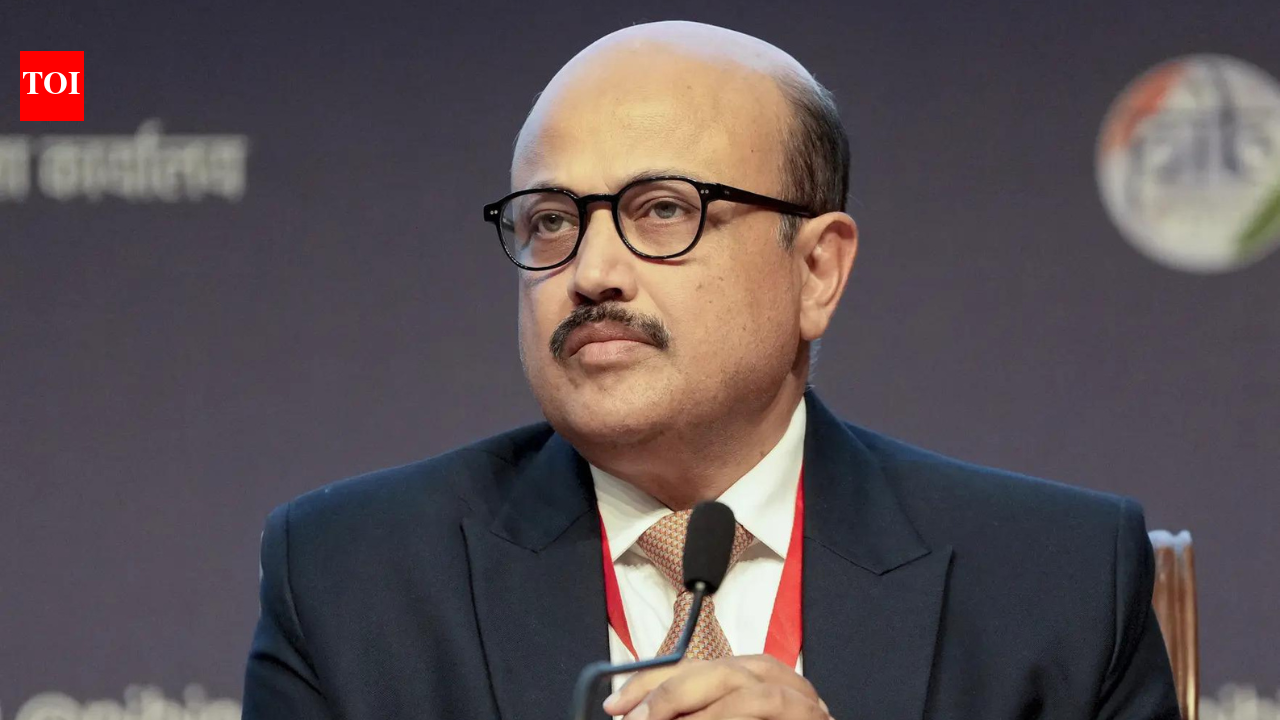
The Commerce Ministry is convening a stakeholder meeting on June 30 to discuss crucial reforms for Special Economic Zones (SEZs). The focus will be on harmonizing export promotion schemes and simplifying business operations within these enclaves. Discussions will cover issues like domestic payments, job work, and import substitution, aiming to modernize the SEZ policy in line with evolving global trade dynamics. View More

Bitcoin futures dropped to $58,995 on Thursday, over 50% below last year's peak, with predictions indicating a further decline to around $42,000-$44,000 by year-end. Profit booking across assets and rising AI investments contribute to selling pressure amid a strong U.S. Dollar Index. View More

The meeting will focus on issues related to the harmonisation of export promotion schemes and SEZ reforms, the official said. View More