
Latest Sectors News

After studying more than 200 parent-child relationships, parenting expert Reem Raouda shares the habits that help kids feel comfortable talking to their parents — from childhood through adulthood. View More
Many parents assume that if they're close to their child, their child will naturally open up to them.But after years of working with families and studying more than 200 parent-child relationships, I've found that closeness alone doesn't always mean children will feel safe opening up.Children are more likely to open up when they trust what happens when they do. The parents children continue turning to â at 7, 17 or even 27 â create space for difficult conversations.Here are seven things they do with their kids starting at an early age. 1. They regulate themselves before trying to regulate their child Kids are far more likely to open up when they aren't worried about how their parent will react.The parents who know the most about their child's inner world have learned not to make their child's emotions feel like a problem to solve or a threat to manage.Their children trust that they can bring hard things home. 2. They share who they are Many parents expect openness from their children while revealing very little of themselves.The parents whose children continue sharing their inner world don't hide behind the role of Mom or Dad. Their children know what excites them, what stresses them and what matters to them.Children are more likely to share what's on their minds when they don't feel like they're the only ones being vulnerable. 3. They ask about feelings, not just performance Most parents naturally ask about grades, sports, homework and accomplishments.The parents whose kids continue opening up ask different questions, too:"What felt hard today?""How did that go for you?""What are you thinking about lately?"These questions show children that their thoughts and feelings deserve as much attention as their accomplishments. 4. They don't make some emotions acceptable and others unacceptable Most parents have no problem embracing excitement and gratitude. Anger, jealousy, sadness and disappointment are another story.But children learn quickly which feelings are safe to share and which ones they need to hide. The parents who stay emotionally close to their children don't expect them to always be happy. They make room for the full range of human emotions.When children learn certain feelings aren't welcome, they often stop sharing them. 5. They repair after hard moments The parents I see with the closest relationships to their adult children know they aren't perfect. They apologize, revisit difficult moments and take responsibility.They'll say things like:"I was too hard on you earlier.""You didn't deserve that.""Can we try that conversation again?"Children need to know that relationships can withstand mistakes. Repair teaches them it's safe to come back after conflict. 6. They don't put their emotional needs on their child I've worked with many kids who become overly focused on keeping the adults around them happy. They think carefully about when to bring things up, hide mistakes or avoid difficult conversations. This is simply because they don't want to upset them.But the healthiest parent-child relationships free children from the responsibility of managing adult emotions.Children are much more likely to open up when they know they won't have to take care of everyone else's feelings afterward. 7. They invite instead of interrogate Parents often tell me, "I ask questions, but my child only gives me one-word answers."Asking more questions usually isn't the answer. Children open up when they feel genuinely curious about their thoughts and experiences â not when they feel like they're being interviewed.The parents who know the most about their children's lives create opportunities for conversation. They share stories about their own day, spend time together without an agenda, and make it easy for their children to talk when they're ready.Those small moments help children see you as someone they can turn to, even when conversations get difficult.Reem Raouda is a certified conscious parenting coach, speaker and author dedicated to one core idea: that loving your child and making them feel safe are not the same thing. She is the founder of The Safe Mom and creator of The Safe Mom Masterclass, helping parents raise emotionally healthy children through emotional safety, connection, and self-awareness. Find her on Instagram.Want to get ahead at work? Then you need to learn how to make effective small talk. In CNBC's new online course, How To Talk To People At Work, expert instructors share practical strategies to help you use everyday conversations to gain visibility, build meaningful relationships and accelerate your career growth. Sign up today! Take control of your money with CNBC Select CNBC Select is editorially independent and may earn a commission from affiliate partners on links.Buying the American Dream: The best tools, strategies and hacks for first-time house huntersHow to lower your electricity bill this summerIn a season of $1,000+ credit card bonuses, these are the 3 Iâd apply forHow to choose graduate student loans after the federal student aid overhaulMortgage rates will likely stay high amid the Iran war, experts say. Hereâs how to get the best deal anyway

South Carolina Republican Sen. Lindsey Graham died unexpectedly at 71. View More
Sen. Lindsey Graham (R-SC) talks to reporters outside of the West Wing of the White House on February 28, 2025 in Washington, DC. Following a heated exchange between Ukrainian President Volodymyr Zelensky and U.S. President Donald Trump in the Oval Office, Graham told reporters that Zelensky should resign. Chip Somodevilla | Getty Images News | Getty Images Sen. Lindsey Graham's death stands to scramble an array of Republican policy efforts, as Congress loses one of its top White House whisperers and coalition builders. Graham, R-S.C., who died at 71, was a titan of the Senate whose close relationship with President Donald Trump helped the upper chamber broker numerous deals and secure aid for allies such as Ukraine. Graham, who chaired the Senate Budget Committee, was integral to passing Trump's marquee reconciliation tax-and-spending law, known as the "one big, beautiful bill." He also served on the Appropriations, Judiciary, and Environment and Public Works Committees and was known to work across the aisle on policy issues. Graham's death comes as the Senate works to advance many of Trump's priorities before heading into a tough midterm election in November, and his passing is likely to complicate those efforts. Included in the long list of unfinished business is the SAVE America Act, Trump's sought-after voter-ID bill; a third reconciliation bill to address affordability and replenish the military; and the confirmation of Attorney General nominee Todd Blanche. SAVE America Act Graham was a staunch advocate for the SAVE America Act, Trump's laundry list bill to require voter ID and proof of citizenship to vote, along with several other White House priorities. Trump has been almost singularly focused on the bill, despite its steep odds of becoming law. Trump, in a Sunday call on NBC's "Meet the Press," lamented that the SAVE America Act will be harder to pass without Graham's support. "This is a big blow to the Save America Act, let me tell you," Trump said. "He was pushing for the SAVE America Act like crazy."The SAVE America Act, especially the version being pushed by Trump, faced steep odds of becoming law with or without Graham. It was far short of the 60 votes needed to overcome the Senate filibuster, given strong Democratic opposition. Graham's death, however, will make it more difficult for the Senate to communicate the steep odds of passing the SAVE America Act. Trump noted that he spoke with Graham Saturday night about the bill. "He called, and he said we're all set for the Save America Act," Trump said. "He literally called me about the Save America Act." Reconciliation 3.0 Graham would have been integral to any additional reconciliation packages Republicans aim to pass by the end of this year. The Budget Committee steers reconciliation bills, which must be budget-centric and comply with the Byrd Rule â an arcane Senate process that allows the upper chamber to skirt the 60-vote filibuster. Congress has already passed two reconciliation bills this year, including the one big, beautiful bill and a bill to fund immigration enforcement agencies after federal agents from those agencies shot and killed two American citizens earlier this year. A third package â still not entirely fleshed out and largely in flux â was expected to include military spending to replenish stockpiles depleted by the war with Iran, affordability issues and fraud. Graham's death now throws into disarray any planning he had done for that bill and leaves the Budget Committee without a chairman. Blanche nomination Acting US Attorney General Todd Blanche testifies at House Appropriations Committee Commerce, Justice, Science, and Related Agencies Subcommittee hearing on oversight of the Department of Justice, on Capitol Hill in Washington, DC, on June 2, 2026. Brendan Smialowski | AFP | Getty Images Trump's pick for Attorney General, acting AG Todd Blanche, now faces a new hurdle to Senate confirmation. Graham served on the Judiciary Committee and was next in line to take the gavel when the term of Chair Chuck Grassley, R-Iowa, ends. The Committee includes 12 Republicans and 10 Democrats, meaning any Republican defection, along with full Democratic opposition, would result in a deadlock. Graham's death brings that tally to 11 Republicans and 10 Democrats. Sen. Thom Tillis, R-N.C., who is retiring at the end of his term and also serves on the Judiciary Committee, is currently undecided on Blanche's nomination, though he said he has a positive predisposition toward him and has met with Trump's former personal attorney. Should Tillis defect now, along with all Democrats, Blanche's nomination would fail 11-10. Ukraine aid Ukraine's President Volodymyr Zelenskyy meets with U.S. Senator Lindsey Graham (R-SC), amid Russia's attack on Ukraine, in Kyiv, Ukraine May 30, 2025. Ukrainian Presidential Press Ser | Via Reuters Graham has been one of Ukraine's staunchest supporters as it repels Russia's invasion that began in 2021. He has been critical in shepherding money through Congress and greasing the wheels for Trump to support aid to Ukraine. The senator had just returned from Ukraine immediately before his death.Trump, who came into office pledging to end the war in Ukraine, was significantly more antagonistic to the country than his predecessor, former President Joe Biden. In the first days of his second term, Trump hosted Ukrainian President Volodymyr Zelenskyy and berated him publicly. Trump has also threatened to cut off aid to Ukraine on numerous occasions. Read more CNBC politics coverageTrump claims to be 'No. 1' on TikTok. What does that mean?What AI companies want for the millions they're spending on electionsPlatner quits Maine Senate race; Democrats set to pick new nominee After much lobbying from Graham, however, the president eventually warmed to aiding Ukraine as it fights Russia. Trump recently said Ukraine would be licensed to make Patriot missile interceptors, a long-range defense system that Ukraine has long sought. On Friday, Graham announced he and several other senators had reached a deal with the White House to advance an updated sanctions package aimed at Russia."As Russia intensifies its slaughter of civilians, it is imperative that the legislative and executive branches work together to create tools to exact a heavy price on those who buy Russian oil and natural gas, fueling the Putin war machine," the senators said. Choose CNBC as your preferred source on Google and never miss a moment from the most trusted name in business news.

A Bengaluru homebuyer has been waiting over six years for promised amenities after paying ?40 lakh for an apartment. He approached Karnataka RERA for relief and partly won the case. Here's what you can do if it happens to you. View More

Monthly mortgage and rental payments exceed 100% of an individual’s average monthly earnings in India, says report View More
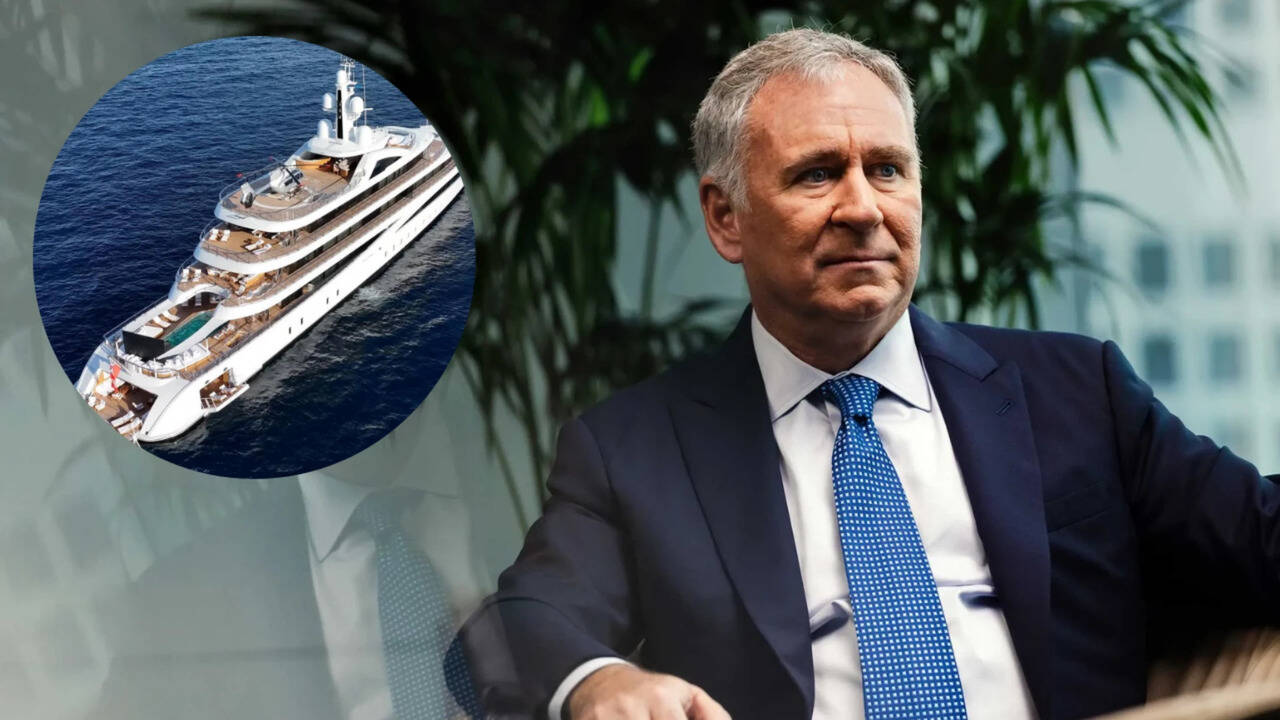
Billionaire Ken Griffin is advocating for amendments to Miami Beach's zoning laws to permit a private helipad, enhancing his luxurious portfolio that already includes a private marina and superyacht facility. The proposed helipad, situated on industrially designated land, is strategically distanced from residential neighborhoods. This request exclusively pertains to Terminal Island, where current regulations prohibit private helipads, aiming to establish a private transportation hub for the Citadel founder. View More

Gifts from family can be tax-exempt, but not always. Tax treatment varies based on the giver, value, and occasion. Here's when a gift is tax-free when it becomes taxable. View More
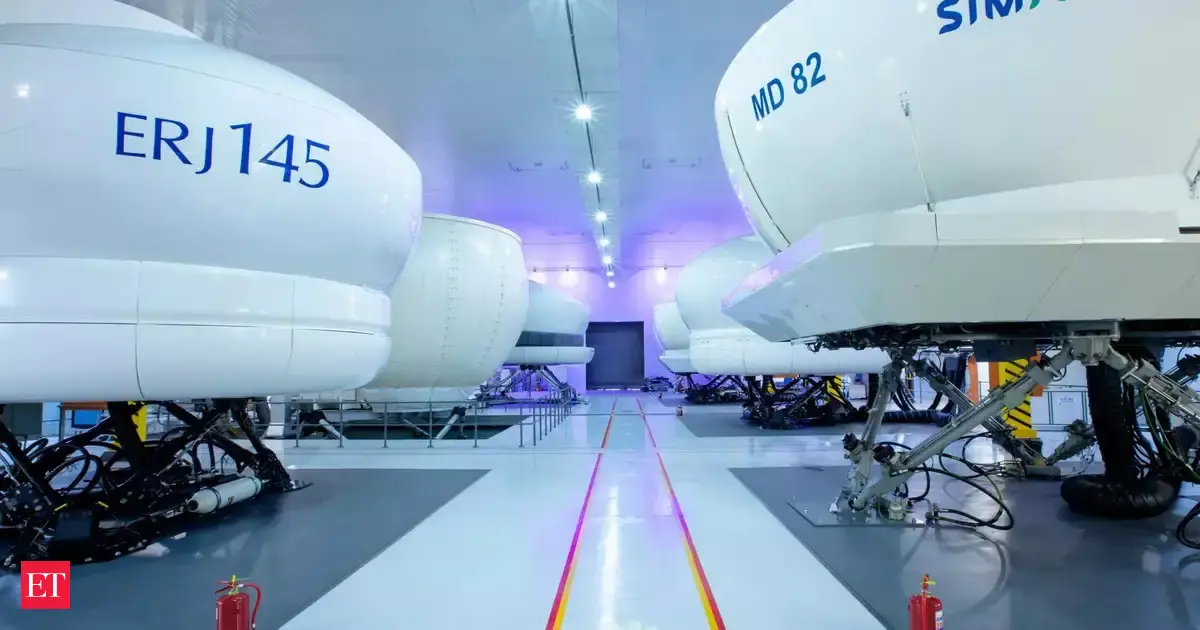
French firm Simaero will invest 200 million euros in India over ten years. The company plans to expand its aviation training facility in Gurugram. It aims to develop local engineering talent for simulator technology services. Simaero expects to operate four to six simulators by 2029. Artificial intelligence will enhance operational efficiency and learning experiences. View More
New Delhi: French company Simaero , which has set up its simulator training facility in India, plans to tap the country's local engineering talent in the specialised areas of simulator engineering and technology services. In a recent interview with PTI, Simaero's CEO Nicolas Moute said the company's long-term vision was to build a centre of excellence for aviation training that serves not only India but the wider South Asian region. "We are very optimistic about India. Every market has its challenges, but we see far more opportunities than obstacles," he said, adding that the company does not see any barriers that would prevent it from expanding its presence in the country. At the training facility in Gurugram, Haryana, the company recently launched its first Airbus A320 neo simulator and expects to add one or two more simulators in the near term, based on customer demand. "We could possibly expect to add a Boeing or regional ATR aircraft simulator. However, it would depend on our client's requirements. Live Events "Over the next five years, our objective is to operate between four and six simulators at this facility while also establishing at least one satellite training centre elsewhere in India," Moute said. Simaero, which owns and operates 21 simulators, has more than 300 clients across 80 countries, and has training centres in different countries, including France and South Africa. "One of the biggest advantages India offers is its highly skilled workforce. We see tremendous potential in developing local engineering talent, particularly in specialised areas such as simulator engineering and technology services," Moute said. The company also has plans to transfer knowledge and technical expertise to India. It undertakes complex work such as simulator upgrades, software integration, visual system enhancements, server replacements and simulator relocations. "We will train local engineers ourselves, working closely with our experienced teams from France, South Africa and other global centres...we expect our workforce to grow significantly, with Indian engineers taking on increasingly sophisticated responsibilities," the Simaero CEO said. While the Indian aviation market has been expanding with more aircraft and increased flight networks, there are challenges in pilot training capacity. A significant proportion of training for pilots from India happens overseas. To a query on the impact of Artificial Intelligence, Moute said AI is becoming an increasingly important part of aviation training, particularly in improving operational efficiency and enhancing the overall learning experience. "AI has the potential to make these training programmes more efficient by helping analyse training data, personalise learning pathways and optimise simulator utilisation. "It also supports more effective planning and scheduling, allowing airlines to make better use of both instructors and training capacity," he said. At the same time, Moute stressed that AI is designed to complement and not replace the expertise of instructors and proven training methodologies. In 2024, Simaero announced that it would make a total investment of 200 million euros in India in the next ten years for the training facilities. .Pbanner{display:flex;justify-content:space-between;align-items:center;background-color:#ec1c40;margin-top:20px;padding:5px 10px;border-radius:4px;color:#fff;line-height:10px;width: 100%;box-sizing: border-box} .Pbannertext{display:flex;align-items:center;font-size:16px;font-weight:600;font-family:'Montserrat';} .Pbannertext img{height:20px;margin:0 6px} .Pbannerbutton a{display:flex;align-items:center;background-color:#fff;color:#ec1c40;text-decoration:none;font-weight:600;padding:4px 8px;border-radius:6px;font-size:15px;font-family:'Montserrat';} .Pbannerbutton img{height:20px;margin-right:6px} .Pbannerbutton a:hover{background-color:#f7f7f7} Add as a Reliable and Trusted News Source Add Now! (You can now subscribe to our Economic Times WhatsApp channel) (You can now subscribe to our Economic Times WhatsApp channel)

Soluble fertilizer prices have surged sixty to one hundred percent over the past year. This sharp increase poses a significant risk to farmer consumption this Kharif season. Uncertain monsoon conditions could support demand for water-soluble products due to lower water usage. High prices may push farmers towards cheaper phosphatic alternatives like SSP. Consignments are arriving, and prices might ease after market distribution. View More
An uncertain monsoon could work in favour of India's soluble fertiliser makers this Kharif season, but a sharp rise in prices poses a bigger risk to demand, industry body SFAI said on Sunday. Prices of key inputs have surged 60-100 per cent over the past year due to China's export curbs and disruptions linked to tensions in West Asia, Soluble Fertilizer Association of India (SFAI) President Rajib Chakraborty said. "Current prices are almost 60 to 100 per cent up," Chakraborty told PTI, adding that monoammonium phosphate (MAP), which sold for around USD 1,000 per tonne over the last couple of years, is now trading at USD 1,500-1,600 per tonne. "An increase of USD 600 per tonne means it's a big thing," he noted. Asked about the biggest risk to the sector this season, Chakraborty said it was the possibility of a drop in consumption due to the price rise. Live Events "The moment it becomes very expensive, farmers stop using it," he said, adding that price control was not possible or within the industry's control. China's restrictions on exports of key products, coupled with the West Asia crisis, have disrupted shipments to India, forcing importers to explore alternatives such as Russia and the CIS region, he said, adding that availability from these sources also remains limited. Domestic manufacturing of soluble fertiliser is minimal, he said, leaving little scope to bridge the import shortfall from within the country. Despite the price rise, the immediate supply situation was not alarming due to a stock carryover from last year, when excess rainfall and flooding in key farming regions had led to poor consumption, Chakraborty noted. "So far, I don't see much of a problem," he said, but cautioned that a sharp pick-up in demand this season could strain the next round of supplies. India typically imports about 4 lakh tonnes of soluble fertiliser annually, a figure that has been rising year-on-year. Its total imports this fiscal are estimated at 2-2.5 lakh tonnes, with about 1 lakh tonne landed till June, he said, adding that the bulk of consumption happens between September and March. Chakraborty said high prices could push farmers towards cheaper substitutes, with many already turning to phosphatic alternatives such as SSP, which have a lower phosphorus content of 20-22 per cent compared to MAP's 61 per cent but cost significantly less. A shift back to conventional fertilisers like urea and DAP would also push up the government's subsidy bill, he pointed out. At the same time, Chakraborty said patchy rainfall this season could support demand for water-soluble products since they use far less water than conventional fertigation. Crops such as cotton, which typically receive two soluble-fertiliser sprays a season, could see higher use if dry conditions persist. "If there is no rain, there will be yellow leaves. So, they will tend to use more," he said, adding that adoption of speciality fertilisers tends to rise during periods of agricultural stress. He said consignments have started arriving at Indian ports, and prices, currently believed to be at their peak, could ease once these supplies are distributed through the market. The southwest monsoon has covered the entire country. However, the active spell has ended, and the IMD has warned that below-normal rainfall is likely from mid-July onward. .Pbanner{display:flex;justify-content:space-between;align-items:center;background-color:#ec1c40;margin-top:20px;padding:5px 10px;border-radius:4px;color:#fff;line-height:10px;width: 100%;box-sizing: border-box} .Pbannertext{display:flex;align-items:center;font-size:16px;font-weight:600;font-family:'Montserrat';} .Pbannertext img{height:20px;margin:0 6px} .Pbannerbutton a{display:flex;align-items:center;background-color:#fff;color:#ec1c40;text-decoration:none;font-weight:600;padding:4px 8px;border-radius:6px;font-size:15px;font-family:'Montserrat';} .Pbannerbutton img{height:20px;margin-right:6px} .Pbannerbutton a:hover{background-color:#f7f7f7} Add as a Reliable and Trusted News Source Add Now! (You can now subscribe to our Economic Times WhatsApp channel) (You can now subscribe to our Economic Times WhatsApp channel)

AI-related chip stocks have been volatile amid a debate over AI demand and spending. View More
In this articleBABANBISMETANVDASKHYFollow your favorite stocksCREATE FREE ACCOUNT Master | Moment | Getty Images Chip stocks have had a blistering rally over the past year as investors bet on the semiconductor sector's central role in the global AI infrastructure buildout.But renewed volatility around chip stocks has sparked a debate if this is a sign of broader concern about AI demand. In interviews with CNBC this week, several AI executives poured cold water over the idea that demand is slowing, even as they acknowledged that businesses are being more cautious on the cost of using AI."I somewhat think of AI demand as almost unlimited," Pat Gelsinger, the former Intel CEO and now general partner at Playground Global, told CNBC on Wednesday, adding that energy availability is "the only real limiter.""Because how much economic value do you get for increased intelligence? Almost infinite across every industry imaginable," Gelsinger added. watch nowVIDEO8:1308:13Pat Gelsinger: AI demand is almost unlimited, energy is real limitSquawk Box Europe Data center, chip player report supply constraints A number of factors have stoked volatility in markets around chip and AI data center-related stocks. An announcement from Meta that it will sell its excess AI computing capacity was in part a contributor to the sell-off. While Meta's stock popped on the news, it raised questions over whether this was a sign that there was broader overcapacity of compute out there. Elon Musk's xAI also rented its excess capacity out this year. And this week, Samsung, one of the world's biggest memory chip companies, forecast a gigantic rise in profit, but its stock fell. After a more than 360% rally in its shares over the last 12 months, the market questioned how much further it could go. None of these moves appears to have dampened demand for compute and the infrastructure behind it."What we're experiencing in terms of demand is extraordinary. There's much more demand than we're able to fulfil, and that's been our experience for some time now," Marc Boroditsky, chief revenue officer at Nebius, told CNBC on Thursday. Nebius is building data centers using Nvidia's GPUs. watch nowVIDEO4:0204:02Cerebras: Open AI's chip will compete will compete with other GPUsSquawk Box Europe Andrew Feldman, CEO of Cerebras Systems, said the example of Meta and xAI selling its excess capacity is a "unique" case. "For the industry as a whole, the demand for compute far outstrips available capacity, and we're short on data centers. I think we're short on, as an industry, many of the inputs to compute," Feldman told CNBC on Wednesday.Cerebras, which went public earlier this year, is one of a slew of semiconductor startups attempting to become major players in the data center market and challenge Nvidia. Rebellions, another chip startup from South Korea, which is backed by Samsung and SK Hynix, reported seeing similar ample demand."AI infrastructure momentum [is] still huge," Sungyun Park, CEO of Rebellions, told CNBC on Wednesday. "I personally believe it's not the signal saying that ⦠all the hyperscalers [are overinvesting] in the infrastructure," Park added in reference to the Meta and xAI news. watch nowVIDEO6:0606:06Rebellions is targeting an IPO in South Korea next year: CEO ParkSquawk Box Europe Lumentum, which sells photonics and optical products for connectivity in the data center, said its products are sold out for the next five years."We're trying to build up our capacity as much as we possibly can to fulfil a demand that we see out five years at this point," Michael Hurlston, CEO of Lumentum, told CNBC on Wednesday.Lumentum's stock is up around 600% over the last 12 months as investors pile into companies addressing key bottlenecks in the buildout of AI data centers. Enterprise spending to 'rationalize' Another big debate around the AI trade is how much enterprises are willing to pay for the technology.There has been a period of so-called 'tokenmaxxing' at enterprises where companies would encourage employees to use as much AI as possible no matter the result. The tools often used were those from frontier labs like OpenAI and Anthropic.But companies are now focusing more on the return on investment from AI, especially as those frontier models remain expensive relative to open source offerings from companies like DeepSeek or Alibaba.Nebius' Boroditsky said that tokenmaxxing is only worthwhile if an organization is seeing a return on investment as a result."The CFO bringing the hammer down and slowing spend should actually be looking for value or valuemaxxing," Boroditsky said, adding that AI should be applied to create value that justifies the spending. "We're seeing a shift now to more rationalization. We've seen it with every tech cycle, and that rationalization will definitely continue the demand," Nebius' Boroditsky said. watch nowVIDEO2:1002:10Nasdaq President: 'Significant' pickup in global firms listing in U.S.Europe Early Edition While frontier AI models are seen as the most advanced, there are a plethora of open source models that are close in performance and some that are less advanced. Different models have different capabilities, which can be used for specific tasks. Cerebras' Feldman said that in the future, certain models will be used in specific situations. For example, frontier models can be used for more advanced problems, while some workloads will shift to others."I think it's probably the case that you don't need a giant bus to go to the grocery store," Feldman said."Certain workloads migrate to some type of compute and easier workloads to others, and I think as we learn and become more sophisticated in our deployment of AI, the same thing will happen." Choose CNBC as your preferred source on Google and never miss a moment from the most trusted name in business news.