
Latest Sectors News

For investors anxious to hear more about Meta's plans to make money from its big AI spending, Mark Zuckerberg said there's a trade-off. View More
In this articleMETAFollow your favorite stocksCREATE FREE ACCOUNT Meta CEO Mark Zuckerberg holds a smartphone, as he makes a keynote speech at the Meta Connect annual event, at the company's headquarters in Menlo Park, California, U.S. September 25, 2024. Manuel Orbegozo | Reuters As Meta gobbles up land to construct massive AI data centers, CEO Mark Zuckerberg says there's a balancing act when it comes to deciding whether to sell excess capacity or to preserve it. Among the four major U.S. hyperscalers, Meta is the only one that doesn't have a business selling cloud infrastructure and services even though its capital expenditures rival that of its peers. But in recent months, Zuckerberg has been floating the possibility of launching a cloud business as a way to take advantage of its capacity stockpile in a resource-constrained market. As CNBC reported earlier this month, Anthropic is in preliminary talks to lease computing power from Meta."We're getting a lot of offers for compute at a significant premium over what we paid for it," Zuckerberg said on the company's second-quarter earnings call after the bell on Wednesday. "And we have more coding and productivity tools on our roadmap as well."Zuckerberg's comments came after Meta issued a weaker-than-expected revenue forecast for the third quarter and said free cash flow dwindled by 90% from a year earlier due to soaring capex. The stock sank more than 7% in after-hours trading, extending a slump that's pushed it down 11% for the year as of Wednesday's close. watch nowVIDEO5:5305:53T. Rowe Price's Tony Wang: Meta's core business needs to be growing above expectationsFast Money In the report, Meta bumped up the low end of its 2026 capital expenditure guidance by $5 billion, bringing the range to between $130 billion and $145 billion. Last week, Alphabet hiked the top end of its guidance to $205 billion and turned cash flow negative for the first time. And Microsoft said in its earnings report on Wednesday that capex for the year will be roughly $175 billion. Amazon reports results on Thursday. Investors have been seeking details on Zuckerberg's AI strategy, which has been scattershot and left Meta behind OpenAI, Anthropic and Google in the market for top models and services. "I think everyone wants clarity into what he wants to do in the compute business," Brent Thill, an analyst at Jefferies, told CNBC's "Closing Bell Overtime." Considering the trade-off Zuckerberg offered little by way of specifics on his plans, but he spelled out some of the various considerations at play."In terms of running the business, obviously, a common trade-off that we need to make is around how much do you monetize something today versus develop future assets," Zuckerberg said. "I think that it's always a portfolio."He said that in looking at a potential enterprise business, it's not just about selling capacity. The company also has API and productivity services it can offer as well as AI agents that it's building, Zuckerberg said. "And I think that there's just a very, very large opportunity there," he said. However, Meta needs ample compute capacity to satisfy its own AI ambitions, especially as the company begins aggressively rolling out new models under the leadership of AI chief Alexandr Wang. Earlier this month, Meta debuted the Muse Spark 1.1 model, which Wang said represents the "strongest model for agentic and coding work yet" and at a cheaper price than offerings from OpenAI and Anthropic. Alexandr Wang, chief AI officer of Meta, during the Bloomberg Tech conference in San Francisco, California, US, on Thursday, June 4, 2026. David Paul Morris | Bloomberg | Getty Images "It would be foolish to basically just sell all of the compute and take a short-term profit," Zuckerberg said. Zuckerberg acknowledged that jumping into the enterprise, where Meta has historically struggled, will require some hard work, and that the company has to learn how to do it. While he didn't reference hiring a sales force, it will be an essential move if Meta is serious about selling to businesses big and small. "That's going to be somewhat a new muscle that we build as a company," Zuckerberg said. "But I think it's a very important one that we build."Dave Brown, a former longtime senior executive at Amazon Web Services, is set to join the company, CNBC recently confirmed.A big challenge for Zuckerberg as he tries to sell Wall Street on his vision is his spotty track record. Zuckerberg's most notable whiff was the metaverse, and his effort starting in 2021 to reshape the company around a futuristic digital world. That project is still costing Meta billions of dollars a quarter. Meta's Reality Labs, which develops virtual reality devices and wearables, lost $4.62 billion in the latest period on just $431 million of revenue. Still, Meta is desperate to diversify its business beyond digital ads, which still account for 98% of the company's revenue, and to show that it can be an influential player in AI. Zuckerberg is all-in. "I get that this is sort of a big bet across the industry," Zuckerberg said. "My personal bet is that the people who invest in this are going to be rewarded and feel very good over time."WATCH: Jefferies' Brent Thill: Meta report was 'trifecta' of things that could go wrong. watch nowVIDEO3:4503:45Jefferies' Brent Thill: Meta report was 'trifecta' of things that could go wrongClosing Bell: Overtime Choose CNBC as your preferred source on Google and never miss a moment from the most trusted name in business news.

The ranking member of the House Committee on Energy is demanding SpaceX records and a tour of its data centers and power plants in and around Memphis. View More
In this articleSPCXFollow your favorite stocksCREATE FREE ACCOUNT watch nowVIDEO29:0129:01How Elon Musk's AI empire in Memphis became a cautionary taleTech The top Democrat on the House Committee on Energy and Commerce is demanding that SpaceX CEO Elon Musk provide a tour of his company's xAI data centers and power plants in and around Memphis, Tennessee. "Americans are concerned about what data centers and Big Tech's push for more AI means for their communities, jobs, property values, and future," Rep. Frank Pallone (D-NJ) wrote in a letter to Musk on Wednesday. "Electricity prices are skyrocketing, the electric grid is strained, our clean air and water are being polluted, and noise is wearing on communities' health and patience."Public opposition to data centers is rising in the U.S. after xAI's buildout in Memphis, and with others underway from OpenAI, Meta, Microsoft and Google. Gallup found in a survey published in May that seven in 10 Americans oppose the construction of an AI data center in their local area, with 48% strongly opposed.Pallone has demanded information about Musk's facilities by Aug. 11. SpaceX didn't respond to a request for comment. SpaceXAI's Colossus data center in Memphis, Tennessee on June 17, 2026.Andrew Evers, CNBC SpaceX's artificial intelligence facilities, known as Colossus and Colossus 2, include three data centers packed with cutting-edge Nvidia processors. They were built by xAI, before SpaceX acquired Musk's startup, which is the developer of Grok's AI models, chatbot and image editing tools.The facilities are at the heart of SpaceX's AI ambitions, as the company tries to compete with the likes of OpenAI and Anthropic, and to eventually build orbital data centers. Pallone excoriated SpaceX and Musk for a "disregard for the health and well-being of local communities." He said the company has created "a massive health risk" to neighbors by "trucking in off-grid gas turbines" to power the facilities, all without the proper permits and pollution controls.President Trump's Department of Justice has filed a motion to intervene, and to effectively help xAI fight off a lawsuit, which was filed by environmental advocates and the NAACP in Mississippi to stop the company's use of allegedly illegal, air-polluting turbines."The Trump Administration has essentially claimed that it alone decides whether SpaceXAI and other companies get a free pass to pollute unimpeded," Pallone wrote. "But just because the Trump Administration will bend over backward to give tech companies free rein over community air, water, and land does not make your actions legal." New Jersey Gov. Mikie Sherrill, a Democrat, enacted legislation earlier this month to ensure data center operators pay a fair share for electricity, instead of shifting costs to residents and businesses.Read the letter here. Choose CNBC as your preferred source on Google and never miss a moment from the most trusted name in business news.

Meta Platforms has strengthened its influence on India as Gen Z protesters widely relied on Instagram to raise their concerns against the Modi government. View More
In this articleBHARTIARTL-INRELIANCE-INETERNAL-INSWIGGY-INTRENT-INSBIFUNDS-INFLYFollow your favorite stocksCREATE FREE ACCOUNT Hello, this is Priyanka Salve, writing to you from Singapore.Welcome to the latest edition of "Inside India" â your one-stop destination for stories and developments from the world's fastest-growing large economy.The success of Gen Z protests in India has handed a surprise victory to Mark Zuckerberg's Meta, cementing its position as the most influential social media company in the world's largest democracy. But with great power comes greater government scrutiny. This week I explore how Meta's growing clout could be a double-edged sword for the company.Any thoughts on today's newsletter? Share them with the team. The big story The Gen Z protests that rocked India last week and forced Prime Minister Narendra Modi's government to act on its demands have marked the rise of two new political influencers in the world's largest democracy.One is the Cockroach Janta Party, a viral, social media-led youth movement that organized the protests. The second is Mark Zuckerberg's short-form video app Instagram, which was widely used by protesters to raise their concerns with the government and to record clashes with authorities.The appeal of the app among youth became even more evident when Modi made his first selfie-style Instagram video on July 23, in a bid to reach out to Gen Zs. It raked in a record 300 million-plus views within 24 hours and is nearing 400 million now. Modi has since made more videos and even directed his ministers to build their presence on Instagram. NEW DELHI, INDIA - JULY 20: Protesters gather as they take part in a demonstration organised by the Cockroach Janta Party (CJP) at Jantar Mantar during the opening day of Parliament's Monsoon Session on July 20, 2026 in New Delhi, India. A mix of protesters gathered in New Delhi on Monday as discontent bubbled over myriad issues, and as Sonam Wangchuk, an activist who was fasting in protest, was forcibly taken to hospital on Sunday. (Photo by Ritesh Shukla/Getty Images)Ritesh Shukla | Getty Images News | Getty Images As per data from digital intelligence provider Sensor Tower, Meta's WhatsApp had an average of 837 million daily active users in India, Instagram 501 million and Facebook 362 million so far this year. On the other hand, Google's YouTube had 646 million, and Elon Musk's X had 15 million, making Meta the dominant social media company in India. But this growing influence of Meta also exposes it to greater government scrutiny around content moderation, competition, privacy, and digital payments, experts said, adding the U.S. social media company faces similar probes in Europe and America.The Indian government earlier this month issued a stern warning to Instagram to remove child abuse ads on its platform that followed a warning to WhatsApp over the rollout of a username feature. Local media also reported Tuesday that the information technology ministry had summoned Meta's global policy heads over concerns about its "non-compliance with the Information Technology Rules, and the prevalence of deepfakes on platforms like Instagram and Facebook." The ministry was also miffed after access to Modi's selfie-styled video was briefly restricted on Facebook, as per reports. India's IT secretary expressed the government's displeasure at Meta, calling the action "disturbing" in an interview with news agency ANI. Social media's growing influence puts the government in a paradoxical situation where it wants to tighten compliance of these apps but is also deeply reliant on them for engaging with millions of Indians, experts told CNBC. Growing influence "Instagram's growing prominence, particularly among younger users and as a platform for public discourse, reinforces Meta's dominant position in India's digital ecosystem," Rohit Kulkarni, managing director and senior analyst covering internet and capital markets at Roth Capital Partners, told CNBC. Between July 18 and July 26, when the protests were at their height, the average daily active users on Instagram jumped 16% year-on-year to 531 million, according to Sensor Tower. During this period, Instagram's daily active users increased by 2.6%, while those for Facebook, YouTube, and WhatsApp remained largely flat. "Content consumption" via Instagram spiked in the last couple of weeks, Ujjwal Chaudhry, a partner at Analysys Mason, told CNBC, adding that as political parties embrace the platform, it will lead to further adoption across older age groups and further cement Meta's dominance in the country. India's internet and smartphone user base is second only to China, which more than a decade ago banned American social media and messaging apps, leading to the rise of local players such as WeChat, Weibo and Douyin. American internet giants lost complete access to hundreds of millions of users and major advertising and data revenue.  In sharp contrast, several attempts have been made by Indian entrepreneurs to create homegrown social media challengers, but they have had little success. So, the Indian market, with one of the largest youth populations, holds significant promise for U.S. big tech companies such as Meta, experts said. Meta has "raced ahead" and "is unparalleled" when it comes to social commerce, communication, and ad targeting in India, Neil Shah, vice president of research at Counterpoint Research, told CNBC. Internet behemoth Google, on the other hand, has a strong presence in web display or Android in-app advertisements."The trust and credibility that influencers provide on these [Meta's] platforms carry strong weight because targeting is highly algorithmic and personalized," he said.Greater engagement will lead to advertising growth for Meta, and Instagram has been extremely successful in attracting digital ad spends in India, experts said. But the country does not make a material contribution to Meta's top line due to lower per-user revenue as compared to North America and Europe, they added. "India represents one of Meta's largest long-term monetization opportunities," said Kulkarni of Roth Capital, as it is "strategically" far more important to Meta today than it is financially, he said. That makes the company vulnerable to state action, as its platforms drive tough conversations, taking on the role of online public squares of sorts that amplify anti-government voices. Meta did not respond to CNBC's request for comments. Need to know U.S. to see higher generic drug prices thanks to tariffs, Dr. Reddy's CEO warnsU.S. President Donald Trump's proposed tariffs on generic drugs will increase the price of these medicines for patients in the country, Erez Israeli, the chief executive of Indian drugmaker Dr. Reddy's Laboratories, told CNBC's 'Inside India'. How India's Gen Z forced Modi to listen, respond and actPrime Minister Narendra Modi's government caved under the pressure of student protests across India â a rarity in the current administration â underscoring the rising influence of Gen Zs in the world's largest democracy. On Saturday, India's Education Minister Dharmendra Pradhan resigned, a key demand of the student protesters who were voicing concerns over examination test paper leaks.Temasek-owned Manipal Hospital to raise over $1 billion in IPOTemasek-owned Manipal Hospital is planning to raise 97.05 billion rupees ($1 billion) via an initial public offering of shares. The issue will consist of a primary fundraise of over 80 billion rupees. The IPO opened on Wednesday and will close on Friday.Coming up July 31: Manipal Hospital IPO closes.Aug 5: Reserve Bank of India monetary policy decision. Choose CNBC as your preferred source on Google and never miss a moment from the most trusted name in business news.

Microsoft sees positive free cash flow for the new fiscal year as it changes accounting for data centers and office buildings. View More
In this articleAMZNMSFTFollow your favorite stocksCREATE FREE ACCOUNT watch nowVIDEO1:0701:07Microsoft shares pop on revenue beatClosing Bell: Overtime Microsoft shares moved 7% higher in extended trading on Wednesday after the software maker disclosed strong fiscal fourth-quarter revenue and called for steady 2026 capital expenditures.Here's how the company did relative to LSEG consensus:Earnings per share: $4.74 adjusted. That may not compare with the $4.24 adj. per share expected by LSEGRevenue: $90.01 billion vs. $87.62 billion expectedMicrosoft's revenue grew about 18% year over year in the quarter, which ended on June 30, according to a statement. Net income of $35.77 billion, or $4.81 per share, increased from $27.23 billion, or $3.65 per share, in the same quarter a year ago. Microsoft cited a $3.2 billion gain from its investment in artificial intelligence lab Anthropic and lower-than-expected costs tied to its first-ever voluntary retirement program. Meanwhile, its Xbox gaming business received an impairment charge. As of Wednesday's close, the software maker's shares have given up 19% so far in 2026, while the S&P 500 index has gained about 7%.  Investors have squeezed longstanding software stocks this year, acting on fears of disruption from generative artificial intelligence models.Meanwhile, Microsoft is confronting "some concentration risk" with its OpenAI relationship, especially with the ascent of open-source models, Deutsche Bank analysts, who recommend buying Microsoft stock, said in a note last week. Microsoft said in January that around 45% of its $625 billion in commercial remaining performance obligations were tied to OpenAI.When it comes to allocating computing capacity, CEO Satya Nadella has been trying to balance the needs of the Azure cloud, research and applications such as the Microsoft 365 Copilot assistant. If researchers get ahold of more AI chips for model training, that means fewer will be available for cloud clients.The company said commercial remaining performance obligations, a measure of unearned revenue and unrecognized revenue, increased 8% to $678 billion from the previous quarter. Sequential growth was driven by commitments from clients other than AI model developers, Microsoft said.Capital expenditures and finance leases for the quarter, at $41 billion, jumped 69%. Microsoft's finance chief, Amy Hood, reiterated plans for 2026 capital spending. But she said it will lengthen the useful life of office and data center buildings to 25 years from 15. And more future data center leases will appear as operating leases instead of finance leases, she said. The adjustment will lead to roughly $175 billion in capital expenditures, Hood said.For the 2027 fiscal year, Hood said she sees further growth in capital expenditures, pointing to "demand signals across our portfolio." Free cash flow, at $19.64 billion, plummeted 23%. Hood said she expects Microsoft to be positive free cash flow in the 2027 fiscal year.Microsoft's forecast includes $89.85 to $90.95 in fiscal first-quarter revenue, which would be up 16%. Analysts surveyed by LSEG were looking for $89.66 billion.Microsoft's Intelligent Cloud segment featuring Azure posted $39.31 billion in revenue, up 31.6% year over year and more than the $38.16 billion consensus among analysts polled by StreetAccount.Azure growth accelerated to 43%, or 43% at constant currency, compared with 40% in the prior quarter. Analysts polled by CNBC and StreetAccount had been looking for 40% and 40.2% Azure growth at constant currency.Microsoft said Azure revenue in the 2026 fiscal year exceeded $100 billion for the first time, up 41%. At that size, the business trails Amazon Web Services while remaining larger than Alphabet's Google Cloud.Hood projected 45% Azure growth at constant currency for the fiscal first quarter, above StreetAccount's 41.4% consensus. Read more CNBC tech newsMicrosoft beats Q4 cloud expectations as full-year Azure revenue tops $100 billionMeta's Reality Labs lost over $4.6 billion in second quarterMeta posts earnings miss, issues light revenue guidanceTim Cook's last earnings call comes at momentous time for Apple with stock at record The Productivity and Business Processes segment, which includes Office, Dynamics and LinkedIn, produced $37.85 billion in revenue, up 14.3% and above the $37.19 billion StreetAccount consensus.The company pointed to over 30 million paid seats for the Microsoft 365 Copilot work assistant. There were more than 20 million as of April.Hundreds of enterprise customers have purchased millions of seats for high-end E7 productivity software bundles, Nadella said on a conference call with analysts. He said the GitHub Copilot coding assistant now has 50 million users.Microsoft's More Personal Computing segment, containing Bing, Surface, Windows and Xbox, contributed $12.85 billion in revenue, which was down 4.4% and higher than StreetAccount's $12.17 billion consensus.The company said sales of devices and Windows licenses to device makers were down 7%. Technology industry researcher Gartner estimated that PC shipments declined 4.2%.Xbox revenue declined 10%. Earlier this month the unit's CEO, Asha Sharma, announced job cuts and said four studios would spin out.During the fiscal fourth quarter, Microsoft introduced a cost-efficient AI coding model, picked LinkedIn executive Dan Shapero to take over the business social network and lowered Xbox Game Pass subscription prices.Executives are scheduled to discuss the results with analysts and issue guidance on a conference call starting at 5:30 p.m. ET. Stock Chart IconStock chart iconMicrosoft stock chart. WATCH: Markets have decided Microsoft Azure is 'not a very exciting business', says Gabelli's John Belton watch nowVIDEO4:3304:33Markets have decided Microsoft Azure is 'not a very exciting business', says Gabelli's John BeltonClosing Bell: Overtime Choose CNBC as your preferred source on Google and never miss a moment from the most trusted name in business news.

The world's largest continent is becoming the center of the artificial intelligence race between the U.S. and China. View More
In this article700-HKFollow your favorite stocksCREATE FREE ACCOUNT Google's display at APEC Digital Weeks in Chengdu on July 23, 2026 did not focus on Gemini.Evelyn Cheng | CNBC BEIJING â The artificial intelligence race between the U.S. and China is heating up in the world's largest continent: Asia."The American strategy is to stop China from becoming the leading AI supplier for the rest of Asia ... and frankly the whole world," said Gary Dvorchak, managing director at The Blueshirt Group. While China's alternatives are cheaper, he pointed out the U.S. currently offers a more complete solution from chips to AI models.But the U.S. sales challenge was apparent at the Asia-Pacific Economic Cooperation "Digital Weeks" in the southwestern Chinese city of Chengdu this month. The U.S. left few public traces of its involvement in the event, despite a U.S. official and a U.S. business representative to APEC both highlighting AI in promoting the Chengdu event earlier this year. The subdued U.S. presence comes after Anthropic flip-flopped on its Fable AI model release due to abrupt U.S. policy changes, and new Chinese AI models have recently launched similar capabilities for far less. In contrast, last summer at the first APEC AI meeting in South Korea, Michael Kratsios, President Donald Trump's chief science and technology policy advisor, highlighted the U.S. AI Action Plan and the establishment of the American AI Exports Program, according to a White House transcript of his remarks. watch nowVIDEO6:4506:45Localized demand shields China AI from global semiconductor volatility: MSThe China Connection However, earlier this month Politico cited three former officials in reporting the Commerce Department has so far received a less-than-expected 78 applications for the American AI Exports Program. And on July 24 at an APEC High-level Forum on AI organized by China's cybersecurity regulator, Bill Guidera, deputy under secretary for innovation and engagement at the U.S. Department of Commerce, still focused on the AI exports program, according to materials reviewed by CNBC. He called broadly for Asia-Pacific partnerships, noting buyers can acquire a full U.S. tech stack or just portions through the exports program. "It is the brilliant design that shows the strength, security and capability of U.S. AI," Guidera said. The Commerce Department's International Trade Administration confirmed in a July 29 social media post that Guidera spoke in Chengdu. When asked about the Politico report, an ITA spokesperson said the volume of applications "exceeded our expectations." The White House did not respond to a CNBC request for comment. American business showcases were also limited. Google and Meta were the only U.S. companies that CNBC noted had booths at APEC as of July 23, among booths for Thailand and China, which were mostly Chengdu-based companies. The two U.S. companies respectively emphasized molecular AI system AlphaFold and AI applications for small businesses, rather than large language models.Google's government affairs vice president, Wilson L. White, only made passing references to Gemini in a speech on July 24, while Tencent Vice President Cai Guangzhong took the stage after White to emphasize growing adoption of its Hunyuan LLM and a cloud project in Thailand. Beijing's AI diplomacy China is hosting APEC this year, which comes at a critical moment of U.S.-China tensions and tech rivalry. Beijing has doubled down on the opportunity to emphasize its AI capabilities, which are mostly open-source versus largely closed U.S. models.Chinese President Xi Jinping announced at the World AI Conference in Shanghai on July 17 that China would provide developing countries with 5,000 opportunities in AI training and seminars, while developing AI application cooperation centers with Southeast Asia and other regions. Beijing then sent a high-ranking official, Vice Premier Zhang Guoqing, to advocate for developing tech standards with other Asia Pacific nations at the minister-level APEC Digital Weeks on July 23. Later that day, the 21 member economies, including the U.S., agreed to back open-source AI with "strong security.""The 'endorsement' of open-source models with strong security assurance gives China's open-weight strategy greater regional legitimacy, especially across emerging Asian economies where deployment cost and technological sovereignty are major considerations," said Wei Sun, principal analyst, artificial intelligence, Counterpoint Research. Forced integration But rather than a world divided into spheres of U.S. and Chinese AI, Sun expects a combination of the tech, especially in Asia.With more than 1,300 living languages in Southeast Asia alone, just using a U.S. or Chinese AI model isn't as straightforward as it looks.Governments in Asia and elsewhere are spending "billions" on AI systems tailored to local languages, according to privately funded startup Votee AI. CEO Pak-Sun Ting said he is working with at least five governments, including two in Southeast Asia, and that the startup is already making well over $10 million in revenue a year.Ting said entities in Southeast Asia tend to use Nvidia chips, especially for AI training, but may use other chips for running models. He noted Votee's open-source model for Cantonese speakers was developed partly using Alibaba's open-source Qwen model. AI's ability to generate economic returns remains critical regardless of origin."While the U.S. and China are fiercely competing in AI technology and diplomacy through distinct approaches, they ultimately cannot fully decouple from one another," said Yue Su, principal economist at the Economist Intelligence Unit.She pointed out the light U.S. presence at APEC wasn't that surprising given other events, such as a San Francisco AI Summit on July 24. South Korea's tech ministry organized the event, where President Lee Jae-myung sought to build on Korean chip and AI megaprojects by meeting with U.S. frontier AI model leaders Sam Altman of OpenAI, Dario Amodei of Anthropic and Jensen Huang of Nvidia. âCNBC's Jenny Lee contributed to this report. Choose CNBC as your preferred source on Google and never miss a moment from the most trusted name in business news.

The Federal Reserve on Wednesday followed through on expectations for no interest rate change. View More
Federal Reserve Chairman Kevin Warsh holds a press conference following a two-day meeting of the Federal Open Market Committee, as the Federal Reserve holds interest rates steady, at the Federal Reserve, in Washington, July 29, 2026.Evelyn Hockstein | Reuters The Federal Reserve on Wednesday followed through on expectations for no interest rate change, and Chairman Kevin Warsh offered little direction in his news conference. The meeting was notable for a surge in dissenting votes, while Warsh looked to provide some clarity on the board's thought process.Here are the five biggest takeaways from this week's Fed actions:The "family fight" returns: Three voters on the Federal Open Market Committee voted against the hold, favoring instead a quarter-percentage point hike. "I asked for a good family fight, and I got one. That's the purpose. That's the design feature," Warsh said. "There was a lot more interaction between and among my colleagues. It was a real family fight." All the "no" votes came from regional presidents: Lorie Logan of Dallas, Neel Kashkari of Minneapolis and Beth Hammack of Cleveland, none terribly surprising given previous statements they made.Another short and sweet statement: Other than detailing the "no" votes the statement was unchanged and still dramatically shorter than the Fed norm. "As before, the policy statement conveys just the facts. It's steering clear of forecasting, a choice we consider especially prudent at these uncertain times," Warsh said. "Uncertainty, however, does not mean a lack of clarity."Dedication to slaying inflation, but ...: Warsh again stated the Fed's resolve to keep inflation under control, but braced markets and the public that it won't be an easy fight nor will it end soon. "We've got no magic wand," he said. "This isn't something that we're going to be able to carry out in days or weeks."Revolt in the market: Despite the chairman's tough talk on inflation, markets weren't having it. Treasury yields at the long end of the curve soared, even as the policy-sensitive 2-year dipped. Translation: We think you're going to keep short-term policy rates in check, and it's going to create a ton of inflation later. The 30-year bond was the biggest gainer, roaring higher by 11.5 basis points to 5.211%, its highest yield since 2007 and seemingly undercutting Warsh's inflation warrior credentials.No clues on September: Investors looking to get any further hints on whether the Fed will hike at the Sept. 15-16 FOMC meeting were largely out of luck. The statement offered no clues, either on forward guidance or even on the reaction function, and Warsh was at best cryptic on which way he will push. "So I take seriously that the pullback of forward guidance requires some transition. Reform isn't easy, but our general judgment is going to help us make better decisions, and in so doing, satisfy our remit," Warsh said.They said it"No doubt, in some of your commentaries today, you'll talk about a divided Federal Reserve. Well, that's not the feeling I felt the last couple of days and the couple days before. What I felt was a group of professionals, all the different perspectives, different views, different judgments, but eager to roll up their sleeves and have a family fight, and eager to reform the way in which the Fed does policy." â Warsh, commenting on the tenor of the two meetings he's chaired so far."We have long argued that September not July is when Warsh faces a binding credibility test/trap. If inflation and/or the war and energy run relatively hot over the summer he will have to hike in order to preserve his credibility. The key difference is that September is in a broad sense data-dependent while July was Warsh preferences dependent." â Krishna Guha, head of global policy and central bank strategy at Evercore ISI."[T]he Warsh Fed seems to be turning a blind eye to the message the bond market's higher yields are sending about the inflation risks. Stay tuned. The reform-oriented Federal Reserve under Chair Warsh is looking like a bust. The bond market wants answers, but is getting nothing in return." â Chris Rupkey, chief economist at Fwdbonds. Correction: This story has been revised to reflect that president of the Federal Reserve Bank of Minneapolis is Neel Kashkari. A previous version misspelled his name. Choose CNBC as your preferred source on Google and never miss a moment from the most trusted name in business news.

"Cost went up, prices are going to go up," Qualcomm CEO Cristiano Amon said in an interview. View More
In this articleQCOMFollow your favorite stocksCREATE FREE ACCOUNT Qualcomm CEO Cristiano Amon delivers a keynote speech at Computex in Taipei, Taiwan June 1, 2026. Ann Wang | Reuters Qualcomm reported fiscal third-quarter earnings on Wednesday that were in line with analyst expectations, but it provided light guidance for current-quarter earnings on in-line revenue, blaming the ongoing supply crunch for computer parts, especially memory. Shares fell in extended trading. Qualcomm is taking concrete measures to expand its margins going forward, CEO Cristiano Amon said in an interview, including raising prices across the board starting on September 1 for the company's chips, most of which currently go to smartphone makers, and looking for other ways to streamline the company's supply chain. "Cost went up, prices are going to go up," Amon said. Here's how the chipmaker did versus LSEG consensus estimates: EPS: $2.21, adjusted, versus $2.23 estimatedRevenue: $9.95 billion versus $9.67 billion estimatedIn the current quarter, Qualcomm said it expects adjusted earnings per share of between $2.05 to $2.25 on revenue between $9.7 billion and $10.5 billion. Analysts polled by LSEG were expecting $2.36 in adjusted earnings per share on $10.02 billion of sales."The semiconductor industry is experiencing a broad-based increase in input costs, across wafer fabrication, assembly, test, advanced packaging, memory and other materials," Qualcomm said in its release, although, as management noted, "revenues continue to be healthy."The company's handsets business remains the largest slice of chip sales, although Qualcomm under Amon is looking to diversify to cars, smart glasses, and robots, and is targeting non-smartphone sales to be 60% of the company's revenues next year.Qualcomm reported $5.1 billion in handset chip sales, which was down 20% on an annual basis, and which the company said reflected a bottoming in the China market. Read more CNBC tech newsMicrosoft beats Q4 cloud expectations as full-year Azure revenue tops $100 billionMeta's Reality Labs lost over $4.6 billion in second quarterMeta posts earnings miss, issues light revenue guidanceTim Cook's last earnings call comes at momentous time for Apple with stock at record Amon said that dynamics in the smartphone market had made low-end and mid-priced phones less competitive because of affordability issues. He also said that even premium Android phones, where Qualcomm is dominant, were seeing customers looking for lower prices. "Consumer preference within the premium category is changing towards a preference to the lower end of the premium, as well to last year's phone, because of the memory price increases," Amon said. "There's also a change in gross margin because of the high supply cost that you're all hearing about," Amon added. "It's a temporary, short-term thing we are addressing with price increases."Qualcomm's automotive business was a bright spot. Qualcomm reported $1.59 billion in automotive sales. The company said in June that it was looking to report $10 billion in automotive revenue by 2029. It announced a chip supply deal with BMW for digital cockpit chips on Wednesday.The company is also looking to burst into the quickly-growing market for AI data center infrastructure. Amon said the was still on track to report $5 billion in data center revenue next year. On Wednesday, Qualcomm also announced that it had completed the acquisition of Modular, a buzzy software company making programming technology for AI, and the company said it would unveil its AI software platform at a conference in August. The company's chips for low-power industrial uses and smart glasses are reported as internet of things revenue. The unit's sales rose 9% on an annual basis to $1.83 billion in sales. Net income during the period was $2 billion, down 25% from $2.66 billion in the year-ago period. Qualcomm makes significant profit through its QTL division, which licenses its intellectual property for cellular connections and other chip technology to other companies. Qualcomm's QTL revenue was $1.28 billion, higher than the StreetAccount estimate of $1.26 billion. watch nowVIDEO5:5505:55Micron and Qualcomm bet on AI: Here's what to knowSquawk Box Choose CNBC as your preferred source on Google and never miss a moment from the most trusted name in business news.
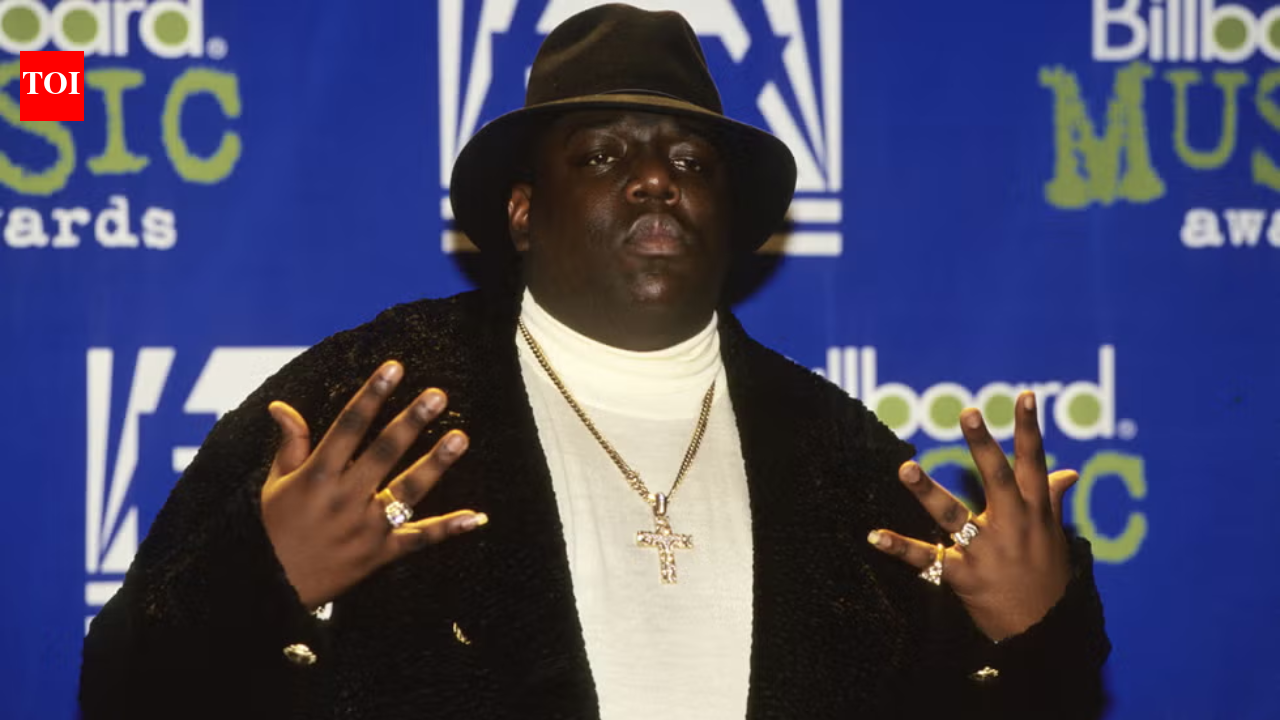
Christopher Wallace, aka The Notorious B.I.G., imparted wisdom that resonates even after his passing. He emphasized the importance of pursuing authentic passions and being fearless in one's pursuit of dreams. Encouraging the belief that the sky's the limit, he highlighted ideals rooted in intrinsic motivation and bravery. His posthumous album embodies these lasting messages that continue to inspire generations. View More

Even as broader tech names and momentum plays have faltered, Apple has hit new all-time highs. View More
In this articleAAPLFollow your favorite stocksCREATE FREE ACCOUNT watch nowVIDEO3:2403:24Here's how to play this tech giant's stock as it reaches a record highOptions Action Apple continues to prove itself as the ultimate market safe haven. Even as broader tech names and momentum plays have faltered, Apple has hit new all-time highs. Investors view the Cupertino titan as uniquely "above the fray," remaining largely insulated from the eye-watering AI capital expenditure cycles of the mega-cap hyperscalers while avoiding the supply chain exposure of pure-play chipmakers. It has also, so far, avoided some of the pain that some in the AI mosh pit have suffered recently. Stock Chart IconStock chart iconApple, YTD Heading into this quarter's earnings report Thursday after the bell, options pricing reflects this calm. The options market implies a modest post-earnings move of just 3.8%, making volatility premiums surprisingly reasonable across the board. Here two ways to play it into earnings, one to hedge and the other to play for a move higher. Strategy 1: The Low-Cost Portfolio Hedge (For Long Holders) For investors sitting on substantial gains, protecting profits ahead of the print is rarely this inexpensive. Institutional flow is already signaling a defensive tilt: one of the more notable institutional blocks that traded today was exactly that, a purchase of 3,500 August $310 puts; the trader paid $2.22/contract.The Cost: Protection costs roughly 65 basis points (0.65%) of the current share price. In this setup, long holders would be protected below $307.78The Setup: The $310 strike sits higher than where the stock traded during its previous quarterly report. Buying downside protection here allows long holders to lock in a substantial portion of the recent run-up while risking less than 1% of total position value. Strategy 2: Defined-Risk Call Buys (For Prospective Bulls) If you aren't long but want upside participation, buying shares outright asks a tremendous amount of your capital. Apple currently trades at 35x+ forward earningsâits highest valuation multiple since 2007. Chasing full-sized equity positions at peak multiples while the broader tape softens creates an uncomfortable risk/reward entry.Instead, prospective buyers should look to long calls or bull call spreads:The Benefit: Buying call options leverages upside potential if Apple beats expectations while strictly capping your maximum risk.Risk Management: You avoid full equity exposure if the stock's elevated 35x multiple experiences a sudden re-rating lower. The Takeaway Reasonable options pricing into this print creates clean opportunities on both sides of the trade. Long shareholders can lock in downside protection for pennies, while prospective bulls can capture potential earnings momentum without taking on full valuation risk at record-high multiples. Choose CNBC as your preferred source on Google and never miss a moment from the most trusted name in business news.

Trump has frequently posted policy announcements or other newsworthy information on Truth Social that have sent global markets hurtling up or down. View More
Sen. Adam Schiff (D-CA) and Sen. Elizabeth Warren (D-MA) arrive for a vote series at the U.S. Capitol on September 30, 2025 in Washington, DC.Kent Nishimura | Getty Images Sens. Elizabeth Warren and Adam Schiff asked the U.S. Securities and Exchange Commission to investigate whether Trump Media & Technology Group is violating the law by selling faster access to President Donald Trump's Truth Social posts."This appears to be an outrageous abuse of the President's office for his personal benefit that undermines everyday investors and the integrity of our markets, while enriching Wall Street and other wealthy insiders," the Democratic senators wrote in a letter to SEC chair Paul Atkins dated Tuesday.They asked Atkins to complete a legal analysis of Trump Media's new service, including laws that "prohibit insider trading and market manipulation," before it begins on Aug. 1.A Trump Media spokesperson pushed back in a statement to CNBC, accusing Senate Democrats of mischaracterizing the service "either out of ideological opposition to free markets or a failure to grasp the distinction between public and nonpublic information â or, quite possibly, both."The SEC declined to comment on the letter from Warren, the Senate Banking Committee's ranking member from Massachusetts, and California's Schiff, a member of the Senate Judiciary Committee.Trump's family is the largest stakeholder in the publicly traded company, which goes by TMTG and trades on the Nasdaq as DJT, the president's initials. Its share price, once viewed as a barometer for Trump's political standing, has fallen about 80% since the company began trading in late March 2024.TMTG operates Truth Social, the social media platform where Trump's account is the most followed by far, and the company has branched into numerous other sectors, including cryptocurrency and fusion power. Trump frequently posts policy announcements and other newsworthy information, including about the Iran war, that sends global markets hurtling up or down. He has also repeatedly used his account to promote individual stocks.On July 16, TMTG announced Truth API, a so-called licensed data service providing "real-time access to posts from the highest-ranking Truth Social accounts."The service "delivers a direct, licensed, real-time feed of the platform's most market-moving Truths," TMTG's interim CEO Kevin McGurn said in that announcement. TMTG has discussed charging up to $100,000 a month for the service, Reuters reported.Prior to retaking the White House, Trump transferred more than 114 million TMTG shares to a revocable trust overseen by his family, but still owns the stake indirectly. Read more CNBC politics coverageSpaceX stock-purchasing by Congress members fuels conflict concernsTrump: New tariffs 'doing the same thing' as the ones struck down by Supreme CourtAnalysis: Kevin Warsh has three reasons to hold off on a Fed rate hike this week The new service "threatens to undermine the integrity of capital markets," Warren and Schiff wrote Atkins.Trump "stands to profit from the launch of this service," as do the "firms and wealthy individuals that pay the subscription fee" to get his posts faster, the senators noted.Truth API could provide particular advantage to high-frequency trading firms, they warned. "While financial firms and analysts have relied on manual monitoring of Truth Social, the API automatically feeds around-the-clock Truth Social posts directly to those who are simply willing to pay up front for milliseconds of additional notice." Choose CNBC as your preferred source on Google and never miss a moment from the most trusted name in business news.