
Latest Sectors News
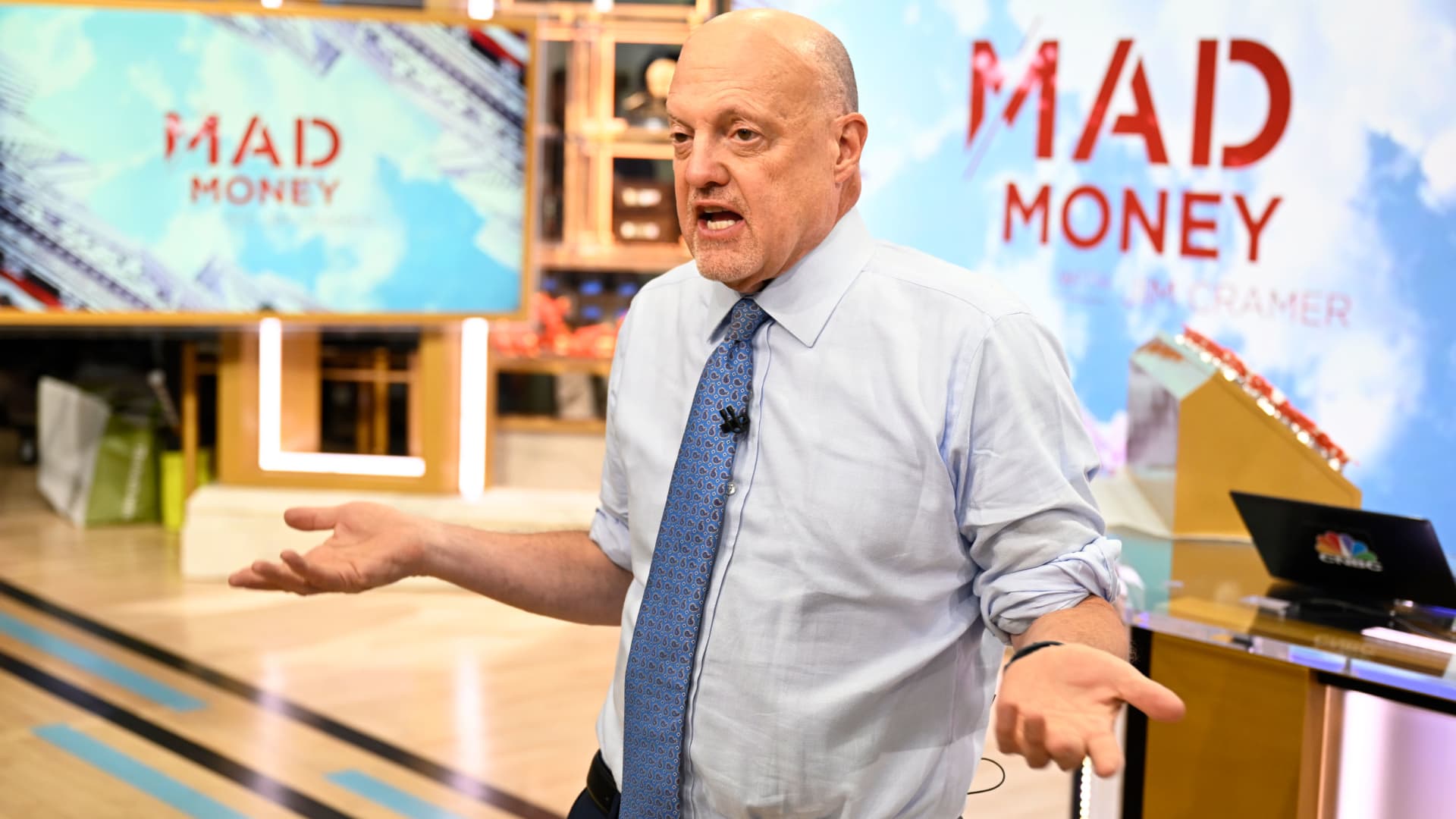
CNBC's Jim Cramer said stocks are increasingly moving as part of thematic trading baskets rather than on company-specific fundamentals. View More
In this articleRLTGTWSMFollow your favorite stocksCREATE FREE ACCOUNT watch nowVIDEO1:4001:40Software stocks are now trading on their fundamentals, says Jim CramerMad Money with Jim Cramer CNBC's Jim Cramer on Monday said Wall Street's "basket trades" during the Iran war are distorting stock prices, urging investors to use the dislocations to their advantage. "The best thing? They create real opportunities, as the stocks divorce themselves from the fundamentals until the companies report," the "Mad Money" host said. "There are big gains to be had when the worth of the baskets blows up in the face of real earnings." Cramer said traders have increasingly grouped stocks into baskets that rise or fall together based on broad themes rather than company-specific fundamentals. While those trades often dominate day-to-day price action, particularly as the Middle East conflict stretches on, he argued they frequently have little to do with a company's long-term prospects. He pointed to Boeing as one example. The planemaker's shares have increasingly traded with geopolitical headlines, rallying on signs of diplomacy and selling off when the conflict escalates. Despite this linkage, Cramer said the daily headlines do not change the company's long-term outlook."Boeing, the company, not Boeing the trading plaything, gets valued on cash flow and production," he said, noting the company's backlog of roughly 6,200 aircraft should matter far more than short-term developments in the Middle East. Cramer's Charitable Trust, the portfolio run by CNBC's Investing Club, owns shares of Boeing.Retailers have become another basket trade, according to Cramer. When geopolitical tensions and higher oil prices raised concerns about inflation, Cramer noted investors rotated into retailers such as Costco and Walmart â two perceived winners when shoppers are feeling squeezed at the gas pump â and out of more discretionary names such as Ralph Lauren, Target and Williams-Sonoma. Cramer's Charitable Trust owns shares of Costco. "Costco and Walmart are both excellent evergreen retailers," he said. "You should own them regardless of the state of the war." Cramer said technology became one of Wall Street's biggest basket trades. For the first half of the year, investors broadly favored artificial intelligence infrastructure stocks, while selling enterprise software, regardless of how their businesses were faring. He said the market assumed hardware companies would be the biggest beneficiaries of the AI boom and software providers would struggle as AI disrupted their seat-based business models. As that trade began to reverse, he said companies with stronger fundamentals, including ServiceNow and Salesforce, started to break away from the software pack. Cramer's Charitable Trust owns shares of Salesforce. He acknowledged basket trading can overwhelm fundamentals in the short term, but said earnings season eventually forces investors to refocus on individual companies. "It's good to see that the fundamentals still matter, even if it only happens during earnings season, four times a year," he said. watch nowVIDEO4:3304:33Jim Cramer talks how the market can be swayed by traders' stock basketsMad Money with Jim Cramer Jim Cramer's Guide to InvestingClick here to read Jim Cramer's Guide to Investing at no cost to help you build long-term wealth and invest smarter Sign up now for the CNBC Investing Club to follow Jim Cramer's every move in the market.DisclaimerQuestions for Cramer? Call Cramer: 1-800-743-CNBCWant to take a deep dive into Cramer's world? Hit him up! Mad Money Twitter - Jim Cramer Twitter - Facebook - InstagramQuestions, comments, suggestions for the "Mad Money" website? madcap@cnbc.com Choose CNBC as your preferred source on Google and never miss a moment from the most trusted name in business news.

Karp said Chinese models can't be blamed for distilling U.S. models when the frontier labs "distilled all the value of IP, everywhere." View More
In this articlePLTRFollow your favorite stocksCREATE FREE ACCOUNT watch nowVIDEO14:4814:48Watch CNBCâs full interview with Palantir CEO Alex KarpNews Videos Palantir CEO Alex Karp doubled down on his criticism of the frontier artificial intelligence labs on Monday, arguing that enterprises shouldn't be forced to give up their intellectual property to work with model makers."We have people trying to drug addict us to a future they [frontier AI models] believe they control," Karp said in an exclusive interview with CNBC. "Now, I've spent a lot of time with Dario [Amodei] and the Anthropic crew. They want to tell you we have to march into a future where we own nothing, where our businesses aren't profitable, where none of us have jobs, and where our adversaries win." Instead, Karp said, enterprises should control their own models and work with companies like Palantir that offer an application layer that sits on top of a company's stack, thereby allowing the business to keep the data in-house.Anthropic and OpenAI have said over the last month that customer data is secure and isn't used to train their models. OpenAI went as far as to say businesses must explicitly opt in if they want their data used for model improvement.Karp isn't buying it."Every enterprise we interact with, and that includes some of the biggest and most important government enterprises in the world, is saying, 'Why would we tokenmaxx [and] pay people for something that's not useful and then not control the means that allow us to advance our business while keeping the value of the business inside?" Karp said.CNBC has reached out to Anthropic and OpenAI for comment.Known for being outspoken and unapologetically brash, Karp was the first executive to take aim at OpenAI and Anthropic publicly in early July, blasting their token structure in viral comments on CNBC. His comments ignited a fiery debate, with many Silicon Valley and political leaders coming out in support."All-In" podcast co-host and tech investor Chamath Palihapitiya told "Squawk Box" in July that Karp "deserves a medal." Read more CNBC tech newsSpaceX's post-IPO plunge sets tense backdrop for first earnings reportAmazon tops $3 trillion market cap as stock continues post-earnings surgeHugging Face CEO says China is winning the AI race and dominating on open modelsPalantir posts blowout Q2 numbers, with U.S. commercial revenue soaring nearly 150% "As Alex Karp put it, 'What the technical customers want is control over their compute, their models, their data stack, and their alpha. They want to know they own the means of production, and it's not being transferred to someone else.'" Microsoft CEO Satya Nadella wrote in a post on X on July 12. "The current regime does precisely the transfer Karp and companies fear."JPMorgan CEO Jamie Dimon joined CNBC's "Squawk Box" on July 15 and said that while he didn't hear Karp's comments, "companies are going to be looking at how they spend their money" and looking for return on investment.The debate has continued to rage on, and in late July, Palantir signed an open letter, alongside Nvidia, Microsoft and other companies, defending open-weight AI models as essential for national security. Since then, investors and CEOs have shared that they are looking at ways to use open-weight and closed-source models, posing a potential threat to the large language models. Adding to that pressure is the rise of low-cost Chinese models that have been accused of distilling U.S. models. Open-weight AI models are available for users to download, modify and run on their own infrastructure.Karp said he doesn't see China's use of distillation to copy the U.S. models as unfair when the frontier models are basically doing the same thing."How do you think the models got their value? They distilled all the value of IP everywhere, including enterprise, everywhere," Karp said. "Like we're in a battle here. Those things have to work."Karp's quest for the "global movement" of AI sovereignty as a core mission was echoed in his second-quarter letter to investors on Monday that accompanied Palantir's earnings."Every organization in the world is awakening to the risks of handing the creators of the language models the keys to their institutions, of letting the models loose within their homes," wrote Karp.Palantir posted blowout earnings numbers that showed accelerating revenue growth in key areas. Overall revenue grew 93% over last year and the AI software company's U.S. commercial business jumped nearly 150% in the second quarter. watch nowVIDEO4:2404:24William Blair's Louie DiPalma: Palantir is shrugging off increased competitionClosing Bell: Overtime Choose CNBC as your preferred source on Google and never miss a moment from the most trusted name in business news.
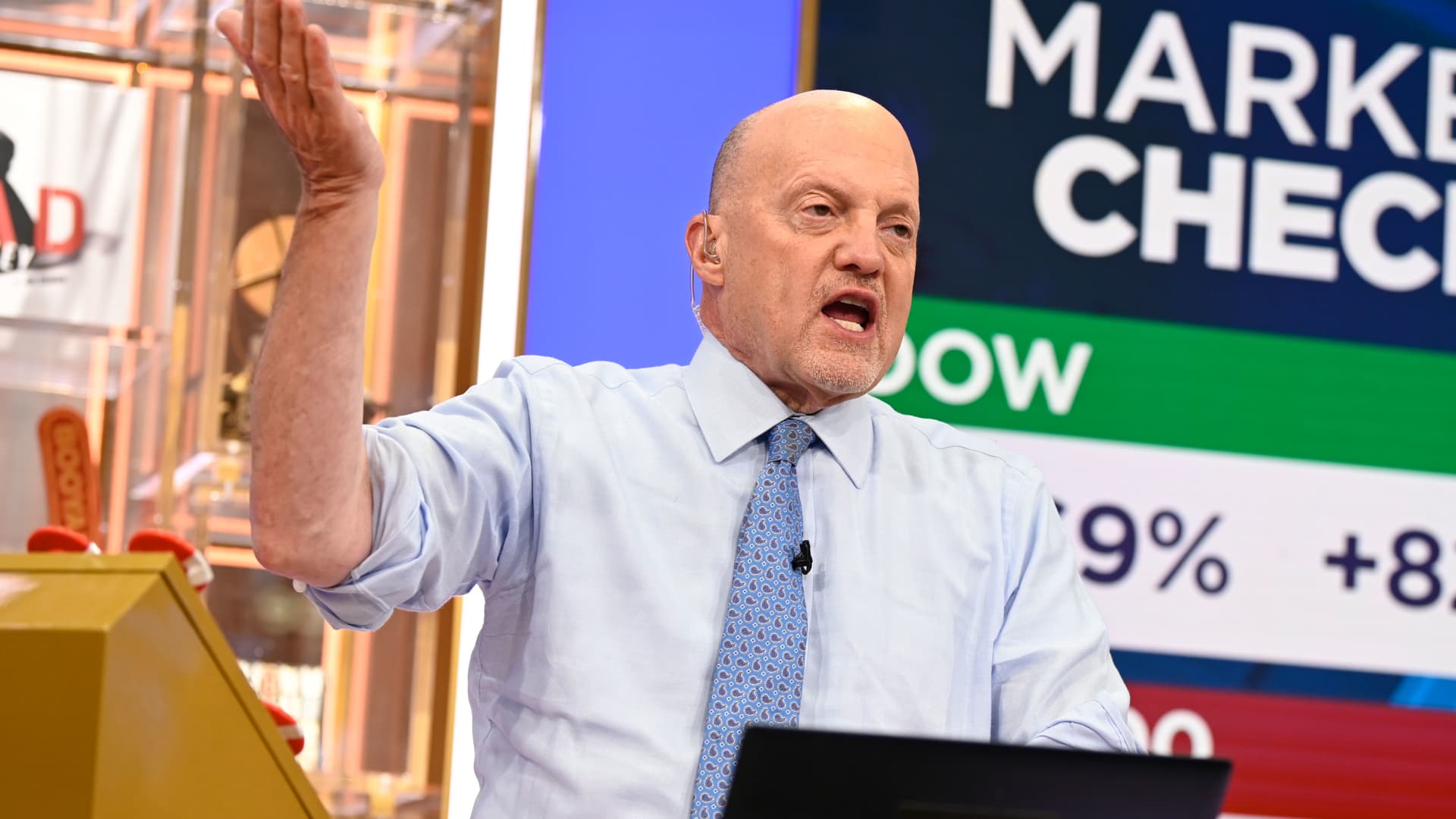
Cramer said Amazon CEO Andy Jassy finally explained how Amazon's massive AI spending will generate long-term returns. View More
watch nowVIDEO2:2302:23Jim Cramer shares his take on Amazon earningsMad Money with Jim Cramer CNBC's Jim Cramer said on Monday that Amazon CEO Andy Jassy's earnings call changed how Wall Street views massive artificial intelligence investments."Until Jassy spoke, the market seemed highly skeptical of how these megacap tech companies were spending money," the "Mad Money" host said. "That's no longer the case."For months, investors had questioned whether the hyperscalers' enormous spending on the AI buildout would ever translate into meaningful returns. Cramer said Jassy's explanation on Amazon's earnings call finally gave Wall Street the "line of sight" it needed to understand how those investments will pay off."It was Jassy's calm, thoughtful presentation that allowed him to raise his capex budget from $200 billion to $220 billion and still have Amazon's stock soar to its biggest one-day gain in over a decade," Cramer said. Cramer said Jassy won investors over by explaining not only how much Amazon is spending, but how that spending will translate into decades of cash flow. Jassy said the upfront investment goes toward building data centers and outfitting them with servers and networking equipment. Once those facilities come online, however, they begin generating revenue almost immediately and can be monetized for decades."Once a data center opens with servers plugged in," Jassy said, "we start generating significant revenue right away and then get to monetize these data centers for 30-plus years without having to spend that start up capital again."The contrast with some of Amazon's peers, Cramer argued, could not have been clearer.Alphabet also raised its capital spending guidance, but he said its shares fell after management failed to adequately explain how those investments would translate into future returns. "I believe the same numbers explained differently would've sent the stock higher, not lower," Cramer said.Microsoft, meanwhile, avoided much of the skepticism because the company remains free cash flow positive and is already monetizing its AI investments through its Azure cloud service and more subscriptions to its AI assistant Copilot, Cramer said.Meta drew the sharpest criticism from Cramer. While the company continues to aggressively expand its AI infrastructure, he said management offered little explanation for how it plans to generate returns from that spending, especially a lack of clarity on whether the company will ever rent out excess compute capacity."I was shocked and disappointed that Meta didn't seem to have a plan," he said. watch nowVIDEO11:0511:05I was shocked and disappointed Meta didn't seem to have a plan, says Jim CramerMad Money with Jim Cramer Jim Cramer's Guide to InvestingClick here to read Jim Cramer's Guide to Investing at no cost to help you build long-term wealth and invest smarter Sign up now for the CNBC Investing Club to follow Jim Cramer's every move in the market.DisclaimerQuestions for Cramer? Call Cramer: 1-800-743-CNBCWant to take a deep dive into Cramer's world? Hit him up! Mad Money Twitter - Jim Cramer Twitter - Facebook - InstagramQuestions, comments, suggestions for the "Mad Money" website? madcap@cnbc.com Choose CNBC as your preferred source on Google and never miss a moment from the most trusted name in business news.

The commentary pointed to a highly volatile environment in which purchasing managers were struggling to stay ahead View More
People walk along a shopping street in lower Manhattan on July 30, 2026 in New York City. Spencer Platt | Getty Images A burst in factory activity shows the U.S. economy may be escaping the burden of tariffs and gaining manufacturing jobs, while at the same time laboring under the geopolitical uncertainty that some industry leaders say is worse than the Covid pandemic.In its July survey of the manufacturing landscape, the Institute for Supply Manufacturing reported the fastest pace of growth in more than four years â a 55.6 reading that was the best since May 2022 and above Wall Street expectations for 54.0. The index measures the percentage of companies reporting growth, so anything above 50 represents expansion.Leading the way were strong gains in new export orders, backlogs and a 6.3-point spike in production. At the same time, the employment gauge hit its highest since August 2022 and marked an expansion for the first time in 33 months, ISM officials said.But concerns lurked beneath the surface of an otherwise positive report.The prices index edged lower, but only to 71.1, indicating that nearly three-quarters of all respondents reported that prices were heading still higher, the 22nd straight month that has happened. Moreover, the commentary pointed to a highly volatile environment in which purchasing managers were struggling to stay ahead of events like the Iran war and tariffs.'Nothing but' price increases"No normalcy in sight in the world of metals," an executive in the primary metals sector said. "It makes me yearn for the coronavirus pandemic chaos, which was more manageable than whatever this is that we are in."A manager in the electrical equipment, appliances and components industry voiced similar concerns."The pricing volatility and lead-time extensions in this market are arguably worse than the pandemic era," the respondent said. "During Covid-19, we saw a surge of price hikes and inventory buy-ups, which caused constraints that eventually leveled out." This time around, "We are seeing nothing but consistent upward trends for both pricing and lead times that show no signs of slowing down," the manager said.The ISM survey lists respondents by industry but not by name.From a policy standpoint, the manufacturing industry dynamic presents a challenge to the Federal Reserve that several analysts found likely to bolster the case for an interest rate increase soon. A solid economic picture with ongoing price pressures could push Fed Chairman Kevin Warsh and his colleagues into a hike as soon as September, particularly considering the seeming stability of the labor market. Around this time last year, officials were expressing substantial worry over a flat hiring picture, leading to three consecutive rate cuts starting in September.Inflation data for June was fairly positive, as a short pause in Middle East tensions drove down energy prices and shelter costs continued to moderate. However, virtually all pricing gauges show inflation still well above the Fed's 2% target.The Federal Open Market Committee last week voted to hold its key overnight interest rate in a range between 3.5%-3.75%, where it has been all year. Hike still in question"If trade is less of a drag this quarter and businesses restock inventories, economic growth could reach 2.2% in the third quarter. As a result of demand-induced inflation and energy supply shortages, the Warsh-led Fed will be pressured to raise rates on September 16," wrote Jeffrey Roach, chief economist at LPL Financial.Troy Ludtka, senior U.S. economist at SMBC Nikko Securities Americas, noted that the boost in the production index put it at its highest level since November 2021. "Strong payroll growth from two of the most interest rate sensitive sectors [manufacturing and construction] will enable the Fed to continue its hawkish communication drift," Ludtka wrote.Following the ISM report, Goldman Sachs said it is tracking third-quarter economic growth at 2.4%, up from the initial estimate of 1.5% for the second quarter. Traders, though, remained at least a bit skeptical of a coming rate hike in the wake of comments from Warsh last week that many market participants saw as ambiguous at most, in terms of the Fed's intentions. Odds for an increase at the Sept. 15-16 meeting of the FOMC stood at 64.5% midday Monday, down slightly from Friday, according to the CME Group's FedWatch.Still, analysts see continued inflation pressure likely forcing the central bank's hand."Companies continue to complain about the pricing environment, and this report shows that this is not changing much," wrote Richard de Chazal, macro analyst at William Blair. "From the Fed's perspective today's [ISM] report should help tilt the scales further toward tightening policy at the September FOMC meeting." Choose CNBC as your preferred source on Google and never miss a moment from the most trusted name in business news.
Here are five key things investors need to know to start the trading day. View More
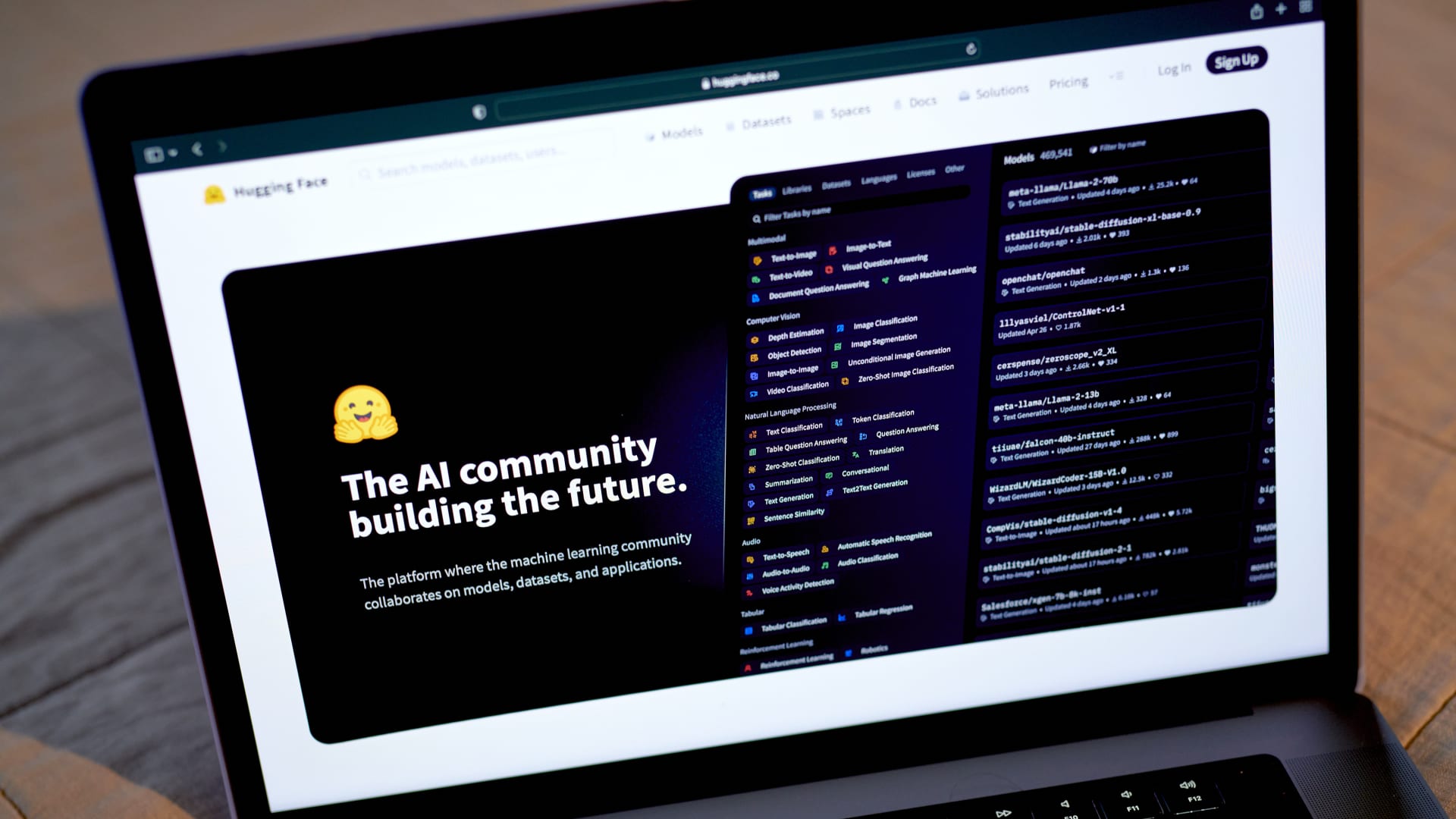
This is CNBC's Morning Squawk newsletter. Subscribe here to receive future editions in your inbox.Happy Monday. I spent the weekend mostly outdoors at the Lollapalooza music festival in Chicago, but many others headed inside to catch the latest summer blockbuster.Stock futures are climbing this morning. The three major indexes are coming off a winning week.Here are five key things investors need to know to start the trading day: 1. Salt air A trader works on the floor of the New York Stock Exchange (NYSE) in New York City, U.S., July 30, 2026. Jeenah Moon | Reuters Markets last week capped a mixed July defined by mega-cap earnings reports, a Federal Reserve decision and reescalation in the Iran war. Now, investors are now looking ahead to Friday's jobs data and the next batch of corporate earnings.Here's what to know:The S&P 500 and Nasdaq Composite recorded their second straight losing month in July, while the Dow Jones Industrial Average was able to eke out a gain.The Big Tech trade diverged last week on the back of earnings: Alphabet, Amazon and Microsoft collectively gained about $1.5 trillion in market value, while Apple and Meta pulled back.Meanwhile, West Texas Intermediate futures and Brent crude both soared more than 20% last month as conflict in the Middle East revved back up.Oil prices are falling and stock futures are rising this morning after President Donald Trump on Saturday called off planned strikes on Iran. The president said talks with Tehran would resume this afternoon, though a spokesperson for the Iranian foreign ministry cast doubt on the prospect.Follow live market updates here. 2. No hugging matter The Hugging Face website on a laptop arranged in New York, US, on Thursday, Aug. 17, 2023. Nvidia announced a partnership with Hugging Face, a popular developer of AI models and data sets, that will add a training service to its website that uses Nvidia DGX Cloud, allowing users to tap the chipmaker's servers to handle their workloads. Photographer: Gabby Jones/Bloomberg via Getty ImagesBloomberg | Bloomberg | Getty Images The risk of artificial intelligence expediting cyber attacks felt like a far-off threat. That changed last week.As CNBC's Samantha Subin reports, the OpenAI agent hack on Hugging Face demonstrated that the era of AI-agent-led hacks is already here. Cybersecurity experts are also particularly concerned by the evidence that AI agents will use extreme and unexpected measures to complete their tasks. As Zscaler information security chief Sam Curry put it: "Pandora's box is open."Don't miss Hugging Face CEO Clément Delangue on CNBC's "Squawk on the Street" at 11 a.m. ET. Watch live on CNBC or CNBC+. 3. Sticky situation Leopold AschenbrennerPhoto: Josh Edelson Two years ago, Leopold Aschenbrenner's 165-page essay made him the talk of Silicon Valley and Wall Street. The near-collapse of his fund Situational Awareness last week put a less-desirable spotlight on the young manager.The fund peaked in value at around $45 billion in assets last month. But after the volatile semiconductor sector saw outsized hits in recent weeks, Aschenbrenner had to sell his leveraged stock bets to Ken Griffin's Citadel at a discount, sources told CNBC. The fund's holdings then stood at around $10 billion.Here's why Situational Awareness imploded, even in a relatively calm stock market. Get Morning Squawk directly in your inboxCNBC's Morning Squawk recaps the biggest stories investors should know before the stock market opens, every weekday morning.Subscribe here to get access today. 4. Small-ticket purchase A Best Buy store in Pinole, California, US, on Monday, Nov. 24, 2025. Best Buy Co. is expected to release earnings figures on November 25. David Paul Morris | Bloomberg | Getty Images Best Buy is known for its sprawling stores with aisles upon aisles of electronics. Incoming CEO Jason Bonfig wants the retailer to go smaller.Bonfig, who will succeed current CEO Corie Barry later this year, outlined his plans for new small-format storefronts in an interview with CNBC's Laya Neelakandan. While some of Best Buy's locations exceed 40,000 square feet, the smaller versions will range from 12,000 to 15,000 square feet."What we're finding is that there are markets that we just can't be in with a traditional size Best Buy store, but they're markets that absolutely make sense for Best Buy from a reach perspective," Bonfig said. He stressed that the smaller stores would not replace its typical large-format locations. 5. Unfare? Airplanes are parked at their gates at President Donald J. Trump International Airport on July 09, 2026, in Palm Beach, Florida. Joe Raedle | Getty Images As oil prices whipsawed, airfares in June soared more than 26% higher from the same time last year. Consumers shouldn't expect fares to come down anytime soon â even if fuel prices stabilize.Industry executives are betting that travelers will keep flying despite rising costs, CNBC's Leslie Josephs reports. Just look at Southwest: The average one-way ticket came in at $225.61 in the second quarter, up from $186.65 during the same period last year. Still, CEO Bob Jordan said the airline is "seeing really strong demand" in a recent CNBC interview. The Daily Dividend Here's what to watch this week:Monday: Palantir Technologies and Snap earnings (after the bell)Tuesday: Pfizer, McDonald's and Wayfair earnings (before the bell); Paramount Skydance, Lucid, Mattel, Pinterest, Advanced Micro Devices and SpaceX earnings (after the bell); Job Openings and Labor Turnover Survey for JuneWednesday: Disney, CVS, Eli Lilly, Etsy and Uber Technologies earnings (before the bell); e.l.f. Beauty, DoorDash and Figma earnings (after the bell); ADP jobs report for JulyThursday: Restaurant Brands International, Warner Bros. Discovery, Fox Corp., Versant Media and Peloton earnings (before the bell); Sweetgreen and Airbnb earnings (after the bell)Friday: Under Armour earnings (before the bell); non-farm payrolls report for Julyâ CNBC's Sarah Min, Lee Ying Shan, Tanaya Macheel, Annie Palmer, Arjun Kharpal, Samantha Subin, Hugh Son, Yun Li, Laya Neelakandan and Leslie Josephs contributed to this report.Luke Fountain assisted in the production of this newsletter. Josephine Rozzelle edited this edition.Disclosure: Versant is the parent company of CNBC. Choose CNBC as your preferred source on Google and never miss a moment from the most trusted name in business news.

Two weeks after Tesla's earnings report was panned by Wall Street, Elon Musk faces investors again, but this time to discuss SpaceX's results. View More
In this articleSPCXFollow your favorite stocksCREATE FREE ACCOUNT watch nowVIDEO1:3301:33The key metrics to watch when SpaceX reports its first set of results this weekMorning Call Since its first trade on June 12, SpaceX has lost over $500 billion in market cap, a stunning blow to retail investors who jumped into Elon Musk's rocket company at their first opportunity. The stock is coming off its fourth straight weekly loss and is more than 50% off its intraday high.Not since Facebook's IPO in 2012 have tech investors seen such a high-profile offering lead to such early disappointment. Facebook stumbled out of the gate and trended lower for months before bottoming at less than half its IPO price. But Facebook's total market cap after its first day of trading was about $100 billion, or roughly one-fifth the amount of value SpaceX has shed since its initial pop. That's the backdrop for SpaceX's first earnings report as a public company, which is scheduled to land after the bell on Tuesday. It comes two weeks after Tesla's earnings were panned by Wall Street due to soaring costs, negative free cash flow and Musk's cautious tone on scaling the company's Robotaxi service. Last week tech's hyperscalers wrapped up their quarterly updates, which had investors laser focused on artificial intelligence spending.For SpaceX, the story is more complicated than for its trillion-dollar peers. So much of the investment thesis is a bet on Musk, and his mission to build data centers in space soon and eventually colonize Mars, while trying to develop AI services to rival Google, OpenAI and Anthropic.Unlike the other megacaps, SpaceX's market cap, currently sitting at $1.4 trillion, isn't supported by any of today's financial metrics. Its price-to-sales ratio, based on trailing revenue, is in the 70s, the business is burning billions of dollars a quarter and the company has almost twice as much debt as cash. watch nowVIDEO2:1102:11If you want to buy SpaceX, let the first wave of insider selling lockups expire, says Jim CramerMad Money with Jim Cramer Weighing down SpaceX's stock is the possibility that a flood of new shares will hit the market as rolling lock-up restrictions expire, starting in the coming days, giving early investors their first opportunity to sell.In the meantime, short sellers have been cleaning up by betting on the drop. As of Friday, shorts were up about $8.3 billion in paper profits since the IPO, according to Matthew Unterman, head of research at S3 Partners."It's among the most aggressive and quickest bearish builds we have seen in a mega-cap name heading into its first earnings report post-IPO," Unterman said in an email. Ben Harwood, an analyst at New Street Research, said that while "the shares have been volatile since the IPO," the downturn has presented a buying opportunity. "For a long-term investor we think this is an attractive entry point," Harwood wrote in an email. "The growth runway is enormous, and SpaceX has one of the widest moats in the market today." New Street initiated coverage of SpaceX just before the IPO with a $165 target price. The shares closed on Friday at $108.37. Banking on Starship The bullish case for SpaceX often begins with Starship, the company's next-generation rocket designed to be fully reusable and to hoist its newer and more powerful v3 satellites into orbit. If Starship succeeds, the company says it can reduce the costs of sending cargo or people into space, enabling SpaceX to rapidly expand its Starlink constellation and satellite communications services. SpaceX's connectivity business is its only profitable segment.While its earlier Falcon rockets established SpaceX as the world's top launch provider, the company's launch business is still losing money. Starship is supposed to deliver many times the capacity of the Falcon rockets, leading to more sustainable economics for research, defense and connectivity customers, while also potentially making space tourism a real industry. Stock Chart IconStock chart iconSpaceX stock performance SpaceX spelled out Starship's importance in its IPO prospectus. "If Starship does not achieve full reusability or rapid turnaround, we may experience higher per-launch costs, slower deployment timelines for our large-scale constellations (including our orbital AI compute program), delayed revenue growth, and increased overall capital requirements, and our brand and reputation may suffer," the company wrote. SpaceX also said in the filing that it expects Starship to "commence payload delivery to orbit" in the second half of this year. SpaceX completed its 13th test flight of the approximately 400-foot-tall rocket on July 24, from its launch facilities in the company town of Starbase, Texas. The rocket's Super Heavy booster detached from the Starship spacecraft about two minutes into the flight, and splashed down in the Gulf of Mexico.However, SpaceX said in a statement following the launch that the landing wasn't perfect. Starship's booster "attempted to relight its engines for the landing burn," the company said, but only a subset of those successfully ignited before a "hard splashdown." The SpaceX Starship and Super Heavy v3 Booster lift off on its 13th test flight from the SpaceX launch complex in Starbase, Texas, U.S., July 24, 2026. Steve Nesius | Reuters For analysts at Bernstein, Starship is the most important issue for SpaceX in justifying its valuation. In a note to clients on Friday, the firm laid out three other key matters the company needs to address: semiconductor availability, regulatory processes and compute capacity.SpaceX needs a massive number of processors for its data center satellites as it tries to build orbital data centers, and requires approval from the Federal Aviation Administration for each Starship launch. And as the company tries to become a leader in AI, after merging in February with Musk's xAI, it has to continuously build up compute capacity in a resource-constrained world. Still, the Bernstein analysts recommend buying the stock and have a price target of $239 heading into Tuesday's earnings. "We believe the quarterly results should not matter," the analysts wrote. "What will be important is the level of confidence projected by management regarding the company's growth path."Following results from Alphabet, Meta, Microsoft and Amazon over the past couple weeks, SpaceX's AI strategy and its capex requirements will be under a microscope. In particular, investors are likely to want to know about plans for Cursor, the AI-coding startup that SpaceX agreed to acquire for $60 billion. The deal is expected to formally close in the third quarter pending regulatory approval.Meanwhile, the company's Grok chatbot has scored some big contracts, notably with the U.S. Department of Defense. It's also stirred controversy, leading to probes and lawsuits in Europe and the U.S. after Grok's image editing tools let people easily create and spread deepfake porn. With Musk's AI efforts struggling to gain significant traction against the likes of OpenAI and Anthropic, SpaceX has turned to leasing out excess compute capacity at its data centers to generate revenue from its buildout while further developing its AI models and services. Days before its record IPO, SpaceX inked a deal with Google that will bring in $920 million a month by providing AI compute capacity to the search giant. Prior to that, Anthropic announced a deal to use all of SpaceX's capacity at the company's Colossus 1 data center in Memphis, Tennessee. And SpaceX has a separate agreement to provide computing power to Reflection AI.The new revenue stream is one reason analysts at Cantor are optimistic and have a $246 price target on the stock."We think earnings can meaningfully alleviate some of those pressures as the company proves out hosted-compute profits, clarifies capital funding geographies, and clears its initial lockup headwinds," the analysts wrote last week. "We view SPCX as approaching a bottom into the print."WATCH: On the ground at Elon Musk's Memphis empire watch nowVIDEO29:0129:01How Elon Musk's AI empire in Memphis became a cautionary taleTech Choose CNBC as your preferred source on Google and never miss a moment from the most trusted name in business news.

A Delhi couple won ?15.5 lakh in compensation after Axis Bank lost their original property papers and failed to return them after the closure of their ?1.41 crore home loan. The Delhi State Consumer Disputes Redressal Commission ruled on the case. View More

China’s domestic tourism is underperforming, with hotel revenues falling as soft demand pressures room rates. View More
SHANGHAI, CHINA - JUNE 29, 2026 - Chinese and foreign tourists visit historical buildings at night near the Bund in Shanghai, China on June 29, 2026. (Photo credit should read CFOTO/Future Publishing via Getty Images)Cfoto | Future Publishing | Getty Images China's domestic tourism market is weakening faster than expected, clouding one of the few bright spots in the country's sluggish consumer economy.Hilton China said last week it now expects revenue per available room (RevPAR) to fall by low single digits this year, worse than expectations earlier this year for a flat performance. The hotel group's RevPAR swung from 1.3% growth in the first quarter, to a 2.2% fall in the second quarter."The China economy is sputtering, and I mean it's growing, but not consistent with what prior growth rates have been," Christopher Nassetta, President and CEO of Hilton, said in the group's earnings call on Tuesday, according to a FactSet transcript.A weekend night in August at a Hilton resort in Dali, Yunnan province, popular with domestic Chinese tourists, runs at $173. But other options recommended on travel booking site Trip.com are less than half the price, with one around $50.Across China, hotel RevPAR has tumbled 6% year-on-year through late July, following a 1% drop in June, according to Smith Travel Research data cited by Goldman Sachs on Tuesday. That's after RevPAR rose mildly this spring, the data showed.A three percentage point drop in occupancy along with a 1% decline in average daily rates versus a year ago dragged down revenue, the Goldman report indicated.The downturn reflects how China's post-Covid tourism boom is fading after three years, amid a broader slowdown in the economy and retail sales.Gary Ng, senior economist at Natixis, noted that there has been a "sharp decline of per-capita spending" on tourism since the third quarter of 2025."While tourism is still a bright spot, [it] cannot escape this broad macro trend," he said, adding that consumers in China increasingly seek more unique or premium experiences, amid slower wage growth. BAOSHAN, CHINA - JUNE 04: Tourists take photos at a viewing platform overlooking coffee plantations on June 4, 2026 in Baoshan, Yunnan Province of China. Xinzhai Village in Baoshan, known as "China's First Coffee Village," has over 70 years of coffee planting history and offers visitors experiences including picking, processing, roasting and brewing. (Photo by Li Jiaxian/China News Service/VCG via Getty Images)China News Service | China News Service | Getty Images Trip.com data showed price competition was clear in the three most-popular Chinese regions for travel this summer â Shanghai, Xinjiang and Yunnan.An August weekend stay in China can cost anywhere from 40 yuan (US$6) to 18,000 yuan (US$2,633) per night, according to a CNBC analysis of Trip.com listings.One-night stays saw a median price of just 192 yuan (US$28) in Kashgar, Xijiang, 373 yuan (US$55) in Dali, Yunnan, and 595 yuan (US$88) in Shanghai. Although premium rooms costing thousands of yuan lifted the averages, typical prices were far lower, with inexpensive options widely available in all three destinations. KASHGAR, CHINA - OCTOBER 10: Tourists enjoy the picturesque scenery of the Bandir Blue Lake on October 10, 2025 in Kashgar Prefecture, Xinjiang Uygur Autonomous Region of China. (Photo by Bao Gansheng/VCG via Getty Images)Vcg | Visual China Group | Getty Images China's retail sales have remained sluggish since the pandemic, with spending dipping in May from a year ago. Consumer prices have likewise been subdued, with a slower-than-expected 1% rise in June from a year ago. Reflecting a sequential decline, the travel sub-index â part of the broader consumer price index â dropped by 0.6% in June from the prior month, according to China's National Bureau of Statistics. In accompanying commentary, chief statistician Dong Liquan also pointed to sharp price drops in hotel rates and airfares. The foreign luxury boost While sentiment towards the domestic tourism market remains dim, inbound travel is emerging as a source of hope for the industry.Thanks to China's policy of allowing in travelers visa free from a growing number of countries, including in Europe, visitors from economies with far higher per capita income than China's are coming.Upscale U.S. hotel operator Hyatt on Thursday reported an 18% increase in U.S. visitors into China, and 24% from Europe in the past quarter. This premium end of the market offers a far brighter picture than the rest of the industry."China luxury properties were up 11% this past quarter in China. Lot of it's leisure. So China is on fire," Mark Hoplamazian, Hyatt president and CEO, said on the earnings call, according to a FactSet transcript. Hyatt's Greater China RevPAR rose 7.2% year-on-year in the second quarter, as Hoplamazian cited "leisure luxury" as a key driver.Inbound travelers offer modest support for China's tourism market. Overseas visitors account for 12% to 13% of total tourism spending, according to Natixis estimates. Choose CNBC as your preferred source on Google and never miss a moment from the most trusted name in business news.

Technocraft Ventures has set the IPO price band at Rs 200-212 per share. The issue will open on August 7 and close on August 11, while anchor investor bidding will take place on August 6. View More
Noida-based infrastructure developer Technocraft Ventures Limited has fixed a price band of Rs 200-212 per share for its upcoming initial public offering (IPO), which will open for public subscription on Friday, August 7. The three-day bidding period will close on Tuesday, August 11, while the anchor investor bidding will take place a day before the issue opens, on Thursday, August 6. At the upper end of the price band, the company expects to mobilise Rs 251.88 crore from the market. Shares will be listed on both the BSE and NSE, with retail investors able to apply for a minimum lot of 70 equity shares, and in multiples of 70 shares thereafter. Technocraft Ventures IPO key details and latest GMP The public issue of Rs 251.88 crore will open for subscription on Friday, August 7, 2026, and close on Tuesday, August 11, 2026, with anchor bidding scheduled for Thursday, August 6. Meanwhile, grey market signals suggest a positive initial response ahead of the launch. The share was trading at a current Grey Market Premium (GMP) of Rs 11, which translates to a GMP percentage of roughly 5% over the upper price band of Rs 212. Based on this premium, the indicative listing price for the stock currently stands at Rs 223 per share. Live Events Issue details and share allocation The public offering comprises a fresh issue of 95.05 lakh equity shares alongside an offer for sale (OFS) of up to 23.76 lakh shares by promoter entity Kartikey Constructions. The face value of each share is Rs 10. Under the allocation plan, 35.63 lakh shares are reserved for anchor investors, while 23.76 lakh shares go to qualified institutional buyers (QIBs). High net-worth individuals (HNIs) have been allocated 17.82 lakh shares, and retail investors account for the largest chunk with 41.58 lakh shares. Khambatta Securities Limited is managing the issue as the sole book-running lead manager, with Bigshare Services Private Limited handling registrar duties. Use of IPO proceeds Net proceeds worth Rs 150 crore from the fresh issue will go toward meeting working capital needs, according to the company's Red Herring Prospectus. The remaining cash will cover issue expenses and general corporate needs. Order book and core business Founded in 1998, Technocraft Ventures works as an EPC contractor across water supply, sewerage, wastewater treatment, roads, power transmission, and urban building projects. While traditionally focused on Northern and Central Indian states like Uttar Pradesh, Uttarakhand, Rajasthan, and Delhi, the company has recently expanded into Madhya Pradesh, Bihar, and Odisha. Its order book stood at Rs 1,320.73 crore across 19 active projects as of July 15. The firm has also emerged as the lowest bidder (L1) for a Rs 196.47 crore Delhi Jal Board contract under the AMRUT 2.0 scheme. Financial track record The company is led by Managing Director Sanjay Tyagi, a civil engineer with 17 years of prior experience at the Ghaziabad Development Authority. Other promoters include Rekha Tyagi, Kartikey Tyagi, Kartikey Constructions, and Sanjay Tyagi HUF. On the financial front, operational revenue grew to Rs 344.99 crore in FY26 from Rs 279.56 crore in FY25. Net profit rose to Rs 43.32 crore for the fiscal year ended March 31, compared with Rs 28.20 crore a year earlier. (Disclaimer: Recommendations, suggestions, views and opinions given by the experts are their own. These do not represent the views of Economic Times) .Pbanner{display:flex;justify-content:space-between;align-items:center;background-color:#ec1c40;margin-top:20px;padding:5px 10px;border-radius:4px;color:#fff;line-height:10px;width: 100%;box-sizing: border-box} .Pbannertext{display:flex;align-items:center;font-size:16px;font-weight:600;font-family:'Montserrat';} .Pbannertext img{height:20px;margin:0 6px} .Pbannerbutton a{display:flex;align-items:center;background-color:#fff;color:#ec1c40;text-decoration:none;font-weight:600;padding:4px 8px;border-radius:6px;font-size:15px;font-family:'Montserrat';} .Pbannerbutton img{height:20px;margin-right:6px} .Pbannerbutton a:hover{background-color:#f7f7f7} Add as a Reliable and Trusted News Source Add Now! (You can now subscribe to our ETMarkets WhatsApp channel) (You can now subscribe to our ETMarkets WhatsApp channel)

The IPO, priced in the range of ?214-225 per equity share, comprised entirely a fresh issue of equity shares View More