
Latest Sectors News

India's real estate sector is on the rise, with innovative public market listings through specialized platforms. These enterprises demonstrate stability with recurring revenue and institutional support, drawing in investors. The surge began with flexible workspace providers post-pandemic, while residential developers and student housing firms are now eyeing their own listings. This movement creates new avenues for investment in the unfolding realty growth landscape. View More
Mumbai: India's real estate sector is expanding the range of assets being brought to the public markets as companies seek to tap investor interest in initial public offerings (IPOs). The evolving public market now features specialised platforms with recurring revenue and institutional backing across co-working, real estate investment trusts, student housing, education infrastructure, logistics parks, and managed development platforms. Read more: Most active funds beat benchmark indices last year: Motilal Oswal Study Rather than being dominated by conventional property developers, the next phase of listings is likely to feature specialised real estate platforms with recurring revenue models , institutional ownership and sector-specific growth opportunities. AgenciesMarket Evolution Co-working operators, REITs and education infra firms seek their growth capital through public listings Live Events "India's real estate IPO market is entering a new phase, one where institutionally managed platforms and not just conventional developers are stepping into the public markets," said Lata Pillai, senior MD and head of Capital Markets, India, JLL. "Backed by institutional ownership, transparent governance, predictable cash flows and scalable operating models, these businesses are opening the door to a new breed of listings for investors to explore." Flexible workspace operators led the first wave of post-pandemic public listings. Companies like WeWork India, IndiQube, Awfis, and Smartworks have already gone public, while The Executive Centre India recently filed for an IPO and Alta Capital-backed Tablespace is exploring a listing. "For a long time, private equity was the primary source of growth capital for specialised real estate businesses. As these platforms have scaled and established operating track records, the public markets are emerging as the next logical source of capital," said Deep Shah, AVP, Unistone, a Merchant Banking firm. "IPOs provide companies with the financial flexibility to fund expansion, pursue acquisitions, strengthen their balance sheets and diversify their sources of capital." Institutionally backed residential developers are also exploring the public markets. Bengaluru-based Assetz has filed draft IPO papers to raise over ₹1,200 crore, while positioning itself as a professionally managed, institutionally backed developer with a focus on governance and design-led residential projects. Another emerging category is student housing and education infrastructure. Centres of Learning Hillhouse-backed Elevate Campuses has proposed a ₹2,550 crore IPO comprising entirely a fresh issue of shares. The company plans to use the proceeds to expand its education infrastructure platform, including student accommodation and K-12 education assets. Among residential developers, Runwal Realty has filed draft papers for a ₹2,000 crore IPO, while Runwal Enterprises has received Sebi approval for its proposed ₹1,000 crore public issue. According to Pillai, as capital markets deepen and specialised real estate segments mature, we expect a wider range of platforms to tap public capital, unlocking fresh opportunities across realty growth story. .Pbanner{display:flex;justify-content:space-between;align-items:center;background-color:#ec1c40;margin-top:20px;padding:5px 10px;border-radius:4px;color:#fff;line-height:10px;width: 100%;box-sizing: border-box} .Pbannertext{display:flex;align-items:center;font-size:16px;font-weight:600;font-family:'Montserrat';} .Pbannertext img{height:20px;margin:0 6px} .Pbannerbutton a{display:flex;align-items:center;background-color:#fff;color:#ec1c40;text-decoration:none;font-weight:600;padding:4px 8px;border-radius:6px;font-size:15px;font-family:'Montserrat';} .Pbannerbutton img{height:20px;margin-right:6px} .Pbannerbutton a:hover{background-color:#f7f7f7} Add as a Reliable and Trusted News Source Add Now! (You can now subscribe to our ETMarkets WhatsApp channel) (You can now subscribe to our ETMarkets WhatsApp channel)
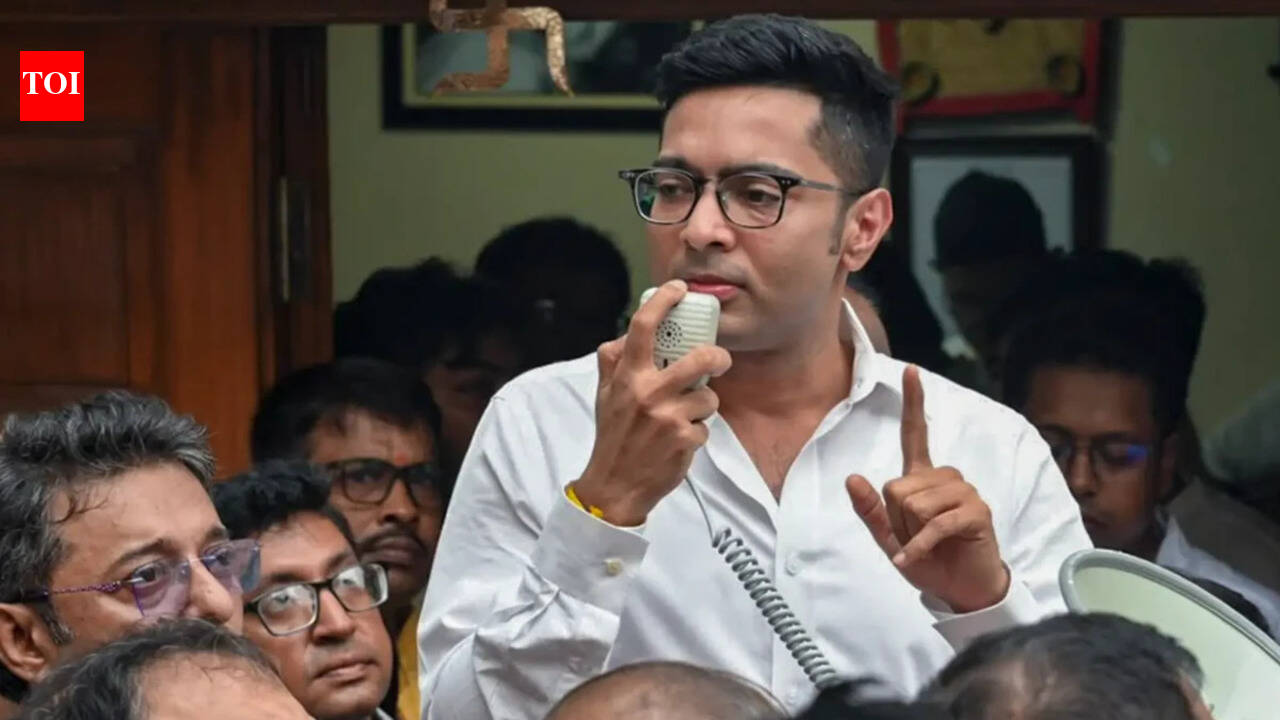
In a significant move, the Supreme Court has granted interim bail for one week to Sumit Roy, who serves as the personal assistant to TMC general secretary Abhishek Banerjee. Roy is implicated in the Salboni land-grabbing case, which followed the arrest of former TMC MLA Sujoy Hazra. Notably, the court has stayed Roy's arrest until it reconvenes for the next hearing. View More

South Korean babies are turning into mini shareholders, thanks to their parents' investment strategies. View More
Toddler girl looking at and holding a small stack of banknotes while with her other hand holding a credit card.Images By Tang Ming Tung | Moment | Getty Images South Korean parents are ramping up efforts to give their children a head start in building long-term wealth by opening investment accounts even before they learn to crawl out of their cribs.Brokerage accounts of kids under the age of one have nearly tripled from a year ago to about 15,000 in June at Mirae Asset Securities, the country's largest brokerage by market cap.New accounts openings for those under 9 have soared nearly 60% to around 185,000, the brokerage said, excluding duplicate accounts. That enthusiasm, triggered by Korea's AI-powered market rally, has sparked a trend toward generational wealth-planning, though the volatility in the domestic stock market has prompted investors to look for value beyond the border as well. Lee Hye-won, who works as a nurse, told CNBC that she and her spouse believed investing long term was a better choice than keeping money in savings or deposit accounts. "We felt that, when it comes to managing our children's accounts, the length of time invested matters more than the investment amount, so we opened an account for our first child at age 4, and for our second child right after birth," she said. The family invests about 300,000 won ($210) to 400,000 won per month in U.S. exchange-traded funds, mainly those tracking the S&P 500. Other parents are doing similar things. "I wanted to give my child the gift of time and the power of compounding during those years â that's why I opened the account right after her birth," said Lee Jun-hyeok, an office worker. "I'm also making small, regular investments in the Korean semiconductor sector and U.S. physical AIârelated stocks, both of which I see as having high growth potential," he said. Jae-joon Woo, professor of economics at DePaul University, told CNBC that parents will continue to open investment accounts for their children even if markets become more volatile. The phenomenon is here to stay "as long as equity investingâwhether in Korea or overseas marketsâis viewed as a reliable way to build long-term wealth," Woo said. "This could represent a gradual but meaningful shift from the traditional preference for real estate, which has long been the dominant form of household wealth in Korea," he added. Households held around three-quarters of their wealth in physical assets, primarily real estate, and the rest in financial assets, according to a survey by Ministry of Data and Statistics. Tax benefits The relatively high capital gains tax on property, particularly for short holding periods or multiple-home ownership, is another factor attracting more Koreans to the stock market, said Jeong-woo Park, senior economist for South Korea at financial services firm Nomura. Korea applies a progressive tax rate of 6% to 45% on capital gains from properties owned for two years or longer, according to the National Tax Service. The tax rate jumps to 40% to 70% for properties owned for less than two years. By contrast, most retail investors are not subject to capital gains tax when selling Korea-listed shares, unless they are a major shareholder. Gift tax is another reason parents are flocking to the stock market. Gifts of up to 20 million won from parents to a minor child are tax-exempt within once in a 10-year period, according to the Ministry of Government Legislation. So parents use that tax-exempt cash gift to invest in stocks."At first, our bigger concern wasn't which stocks to buy via our children's accounts, but rather how to handle gift tax. We looked into the relevant details ourselves and consulted with a tax accountant," said "leecoach_mom." However, for most middle-income households, the main motivation to invest in stocks for their children would be to save up for education or financial security, rather than reduce taxes, Woo of DePaul University said. Brokerages, government lure infant investors Kakaopay Securities, an online brokerage linked to the Korean internet conglomerate Kakao Corp., said last month that it plans to hand out stocks worth 100,000 won per infant born next year in an effort to expand its customer base. The government is also doing its part to make the stock market more accessible. In 2023, financial authorities revised guidelines to allow guardians to open accounts for their children remotely from their smartphones, without having to visit a branch. "Allowing parents to open accounts remotely has removed a significant practical barrier," Nomura's Park said."Further simplification would probably increase the number of minors' accounts, especially among households making small and regular investments," he said. "However, it would mainly affect participation rather than the total amount invested, which will continue to depend more heavily on household wealth, market conditions and tax considerations." Choose CNBC as your preferred source on Google and never miss a moment from the most trusted name in business news.

Grindr says AI is boosting engineering productivity, supporting a new $350-per-month premium tier and driving stronger subscriber growth and retention. View More
In this articleGRNDFollow your favorite stocksCREATE FREE ACCOUNT Grindr CEO George Arison in New York, June 4, 2026.Emma Rose Milligan | Bloomberg | Getty Images Grindr is betting that artificial intelligence can do more than just improve the dating app experience. It believes AI can simultaneously create a new premium subscription business while also dramatically changing how quickly its engineers build software. "Our strategy has always been to use AI everywhere we can," said CEO George Arison in an exclusive interview with CNBC.The LGBTQ-focused dating platform on Thursday reported second-quarter revenue of $138 million, up 33% from a year ago. The company also raised its 2026 guidance and now expects full-year revenue of approximately $540 million, up from $535 million, and adjusted earnings before interest, taxes, depreciation, and amortization of approximately $232 million, up from $227 million.Arison said the company's results are early evidence that his AI strategy is starting to pay off. Rather than focusing solely on consumer-facing features like Grindr's new premium AI companion called Edge, Arison is also deploying AI across the business to reduce the cost and time required to build new software products.Grindr estimated that total engineering output increased roughly 2.5 times between July 2025 and April 2026, the earnings presentation showed, despite maintaining roughly the same size engineering team."Before GenAI, producing that much technical output would have required roughly 200 additional engineers and approximately $60 million in annual cost," the earnings presentation said. Read more CNBC tech news'AI Kill Switch' bill needs to be passed this year amid ongoing rogue agent hacks, Rep. Lieu saysSpaceX stock could face further pressure as first batch of shares unlock since IPOGoogle is expanding its AI empire â and losing the people who built itHadrian valued at nearly $8 billion after fresh funding as money pours into defense tech The gains have allowed Grindr to release products faster without meaningfully increasing engineering head count, a trend investors are increasingly watching across the software industry as companies look for tangible financial returns from generative AI investments.While spending on large language models continues to rise, he said the return on investment has made the decision an easy one."We were on track to spend $6 million on tokens this year," Arison said. "I have zero qualms about that because the amount of productivity increase that I'm getting from that is orders of magnitude more, like 10-times more than the money that I'm spending on tokens. So it's a total no-brainer."Arison said Grindr has not eliminated any jobs because of AI adoption, but has aggressively expanded the use of coding assistants and software development tools from Cursor, Anthropic's Claude and Devin. "You can run these businesses in a far leaner way than people think you can, but you need much better management," said Arison.The company is testing pricing for its AI-powered Edge companion in select markets, including New York, where access costs as much as $350 per month. Initially, management expected Edge to primarily attract upgrades from its highest-paying subscribers. Instead, Grindr said, the customer mix has been broader."Our assumption was that only people who are Unlimited subscribers would move up to Edge," Arison said. "The data so far does not support that. There are people who are not Unlimited subscribers who were also moving to Edge, including people who don't subscribe at all."While Grindr did not disclose how many users have subscribed to Edge or where pricing will ultimately land, Arison said the company is "happy with the test results so far." Attendees on the dance floor at an afterparty following a Madonna Times Square pop-up concert, exclusively livestreamed to Grindr users, at a club in New York, June 4, 2026.Emma Rose Milligan | Bloomberg | Getty Images The early adoption rate could help validate one of Wall Street's biggest questions surrounding generative AI: whether consumers are willing to pay substantially more for AI-powered experiences. Morgan Stanley in July upgraded the stock to overweight from equal weight and raised its price target from $15 to $18, citing the "ultra-premium" subscription tier.The company's financial results suggest those investments are beginning to translate into business performance.Arison said subscriber retention has remained stronger than expected despite price increases across Grindr's premium membership tiers. "Churn is actually lower than we had expected it to be, which has led to more organic growth in the first half of the year," Arison said.Paying user count grew in the second quarter to 1.4 million, up 16 over last year, with average revenue per paying user reaching $25.51, a year-over-year increase of 12%. Choose CNBC as your preferred source on Google and never miss a moment from the most trusted name in business news.

"On the advice of my doctors, I'll maintain an intensive regimen of physical therapy from home during the state work period," the 84-year-old McConnell said. View More
Senator Mitch McConnell (R-KY) is seen during a Senate Committee on Appropriations, Subcommittee on Department of Defense budget hearing at the Dirksen Senate Office Building in Washington, DC on May 19, 2026.Nathan Posner | Anadolu | Getty Images Sen. Mitch McConnell, R-Ky., said Thursday he has been discharged from a rehabilitation facility and will keep up with his Senate work from home, as he continues to recover following nearly two months of medical care after a fall."On the advice of my doctors, I'll maintain an intensive regimen of physical therapy from home during the state work period," the 84-year-old senator said in a written statement.He added, "I'll continue to engage with my staff and colleagues on important Senate business."McConnell has not been seen or heard in public since he was hospitalized in mid-June after suffering the fall at his home in Washington and then contracting pneumonia.His staff has largely kept mum about the senior senator's condition, despite mounting scrutiny from the media and some elected officials.McConnell's aides have periodically released written statements from the senator providing brief updates on his recovery progress. Some of those press releases have included photos of a seated, smiling McConnell alongside his wife, former Transportation Secretary Elaine Chao. In one of them, McConnell is holding a newspaper, possibly to provide proof the photo was not taken earlier.But no video or audio of McConnell has been released so far, and the scant, largely text-based assurances of his improvement have only fueled more speculation. Read more CNBC politics and policy coverageKhanna to introduce âData Center Bill of Rightsâ as fight over AI power plants heats upKids Online Safety Act social media safety bill advances in SenateTrump admin refunds $100 billion in âliberation dayâ tariffs Kentucky's Democratic Gov. Andy Beshear recently urged McConnell to resign if he cannot prove his fitness for office.Thursday's press release did not include a photo.McConnell said in a July 12 statement that he was moved to a rehab center, where he has apparently remained for more than three weeks.He also revealed that, according to his doctors, he "briefly" lost consciousness in the fall. But he broke no bones and did not suffer a heart attack, concussion or stroke, and he has no tumors or hemorrhages, McConnell's statement said.On July 27, the congressional Office of the Attending Physician said doctors were meeting with McConnell at the facility every day, "discussing all aspects of his rehabilitation care."McConnell, the third-oldest member of the Senate behind Sens. Chuck Grassley, R-Iowa, and Bernie Sanders, I-Vt., has experienced numerous health scares in recent years, including multiple falls and verbal freeze-ups. He is not seeking reelection.McConnell's recovery could be critical to confirming President Donald Trump's pick for attorney general, Todd Blanche, this week.Republicans hold a narrow 53-47 majority in the Senate, which has been winnowed to 52 during McConnell's extended absence â meaning Blanche can only afford two Republican defections to be confirmed.If McConnell returns to the Senate, it could give the GOP a three-vote cushion to get the current acting attorney general across the finish line. Choose CNBC as your preferred source on Google and never miss a moment from the most trusted name in business news.

"We're taking decisive action to make UWM stronger, more liquid and better positioned to win for years to come," CEO Mat Ishbia said in a statement. View More
In this articleUWMCFollow your favorite stocksCREATE FREE ACCOUNT United Wholesale Mortgage at the NYSE, January 22, 2021Source: The New York Stock Exchange Shares in UWM Holdings, parent of United Wholesale Mortgage, plunged 35% on Thursday after the biggest U.S. mortgage lender suspended its dividend and raised fresh capital.UWM announced a $2.05 billion equity investment from Oaktree Capital Management and SFS Group Capital LLC, a newly formed investment vehicle owned by family of CEO Mat Ishbia. The family is also the majority owner of the NBA's Phoenix Suns. Pontiac, Michigan-based UWM also said it suspended its quarterly dividend to preserve capital."We're taking decisive action to make UWM stronger, more liquid and better positioned to win for years to come," Ishbia said in a statement.UWM shares have now collapsed about 83% from their 52-week high, set in September 2025. Stock Chart IconStock chart iconUWM Holdings year to date The capital raise comes as UWM's financial position weakened during the latest quarter. Total equity fell to about $1 billion as of June 30 from $1.6 billion at the end of March, while available liquidity stood at approximately $1.3 billion, including $498 million in cash and borrowing capacity.The moves come as mortgage lenders continue to grapple with one of the toughest operating environments in years. Investors have recently pushed up Treasury yields amid renewed expectations that benchmark Federal Reserve lending rates could stay where they are or even move up in the face of stubborn inflation. Elevated mortgage rates that are tied to the Treasury market have in turn kept homebuyers on the sidelines and limited refinancing activity, further dimming the outlook for the housing market.UWM lost $451.9 million on revenue of $888 million in the second quarter, reversing net income of $170.4 million in the first quarter and a profit of $314.5 million a year earlier. Mortgage originations totaled $39.7 billion in the second quarter, down from $44.9 billion in the prior quarter but were essentially unchanged from a year earlier. Choose CNBC as your preferred source on Google and never miss a moment from the most trusted name in business news.

Once a reliable gauge if economic health, "Dr. Copper" may be giving complicated signals this year. View More
In this article@HG.1Follow your favorite stocksCREATE FREE ACCOUNT An open-pit copper mine at Asarco's Mission Mine Complex in Sahuarita, Arizona, US, on Friday, March 6, 2026. Rebecca Noble | Bloomberg | Getty Images Copper surged to a record high Thursday, but the latest rally comes against a more mixed growth backdrop, making the once-reliable gauge of economic health, "Dr. Copper," harder to read.U.S. copper futures climbed to around $6.90 a pound Thursday, extending a rally in a metal used for construction, electronics, transportation and even AI applications. It then retreated to end the session after touching the new high. But instead of simply indicating stronger global growth, today's record price could be reflecting a combination of constrained supply, heavy grid investment, uncertainty around U.S. tariffs and rising demand for electrification.In the past, the metal was seen as a gauge on whether global economic activity was ramping up."The underpinning story of elevated copper prices has been data center and power grid demand to support the rapid AI industry expansion," William Osnato, Barchart director of commodity data research and analysis, told CNBC in an email, adding that surge in copper demand is "more acute and not the traditional broad economic growth that supports copper."Copper's price surge is also due to its limited supply and mining it is an expensive business and setting up new mines can take about 10 years, which can also slow down supply of the red metal.Michael Widmer, Bank of America's head of metals research told CNBC that the move wasn't really driven by copper demand but really driven by copper supply.Widmer said there is not a lot of mine supply growth and supply disruptions have been creating additional constraints. Mine growth has been weak, with disruptions in Chile, the world's biggest single copper producer. Heavy snow, rainfall and high winds have disrupted mining operations in the region.Potential U.S. Section 232 tariffs and China's crackdown on the availability of scrap copper have also tightened global supplies in 2026. Last year in June, President Donald Trump signed a proclamation to impose 50% tariffs on imports of semi-finished copper products and copper-intensive derivative products. Demand for copper has remained firm and is also closely tied to increased electrification rather than an economic boom. In the first half of this year, China's grid investment was up 13% year over year and the country recently announced an ambitious plan to invest approximately $574 billion in power grid upgrades.Thursday's move, however, came only after the news that Democratic Republic of Congo was officially banning copper and cobalt concentrates exports to encourage more domestic processing.Osnato said supply disruptions have been pushing consumers to pull metal out of London Metal Exchange warehouses and this is driving up refining costs. "It is definitely a new situation for Dr. Copper," he said. Choose CNBC as your preferred source on Google and never miss a moment from the most trusted name in business news.

Trump's reported phone calls to the Fed chairman will complicate his efforts to prove he will act independently on inflation and interest rates. View More
U.S. President Donald Trump arrives with incoming Federal Reserve Chair Kevin Warsh for Warsh's swearing-in ceremony at the White House in Washington, D.C., U.S., May 22, 2026. Jonathan Ernst | Reuters After years of hostility toward the Federal Reserve, President Donald Trump has lately taken a new tack. He treats Chairman Kevin Warsh as almost a member of the Cabinet.There is nothing in U.S. law that requires the Fed chairman to hang up if the president calls, and it is arguably beneficial for the nation's two most influential economic policymakers to understand where each is coming from.But Trump's embrace of Warsh comes with risks for the economy. Fed independence isn't some abstract moral norm. It exists to protect politicians from their instincts to run the economy too hot and to give central bankers reason to be deliberate in how they exercise their tremendous power over the economy. Trump has "spoken repeatedly" with Warsh since Warsh's confirmation as Fed chairman, The Wall Street Journal reported Wednesday. That marks a sharp change from the president's relationship with Warsh's predecessor Jerome Powell, whom Trump appointed and then soured on. Calendars published by the Fed show only one direct meeting between Trump and Powell during the president's second term through Warsh's swearing-in on May 22 â in addition to a messy episode when Powell and Trump toured a Fed construction site together. Read more CNBC politics and policy coverageKhanna to introduce âData Center Bill of Rightsâ as fight over AI power plants heats upKids Online Safety Act social media safety bill advances in SenateTrump admin refunds $100 billion in âliberation dayâ tariffs The White House doesn't deny Trump and Warsh have spoken. "President Trump has repeatedly stressed that he is giving Chairman Warsh the space he needs to restore confidence and competence in Fed decision-making," White House spokesman Kush Desai said in a statement. Trump respects Warsh's independence, Desai said.Trump took legal steps to undermine the Fed's independence under Powell. And yet the president seems to have turned over a new leaf with Warsh's arrival. Trump hasn't dropped his demands that the Fed cut interest rates, but he has said repeatedly that he trusts Warsh.The difference isn't policy but personnel. Trump was convinced that Powell was out to get him and was making interest-rate decisions to spite the president. Warsh can make the same decision â he hasn't changed the interest rates he inherited from Powell â and get a different result from Trump.Warsh has other allies in the Trump administration. Treasury Secretary Scott Bessent sharply criticized a Wall Street Journal reporter's coverage of the Fed in an X post Wednesday before the paper's story on the Trump-Warsh relationship ran. A Treasury spokeswoman didn't respond to questions about the post, but the upshot was clear. Here was the administration defending someone it sees as an ally against the hostile press.The Fed declined to comment about the report that Trump has been calling Warsh. The chairman has said he's secure in his relationship with the president. He told the Senate last month he's willing to hear just about anyone with a point of view. "I certainly don't feel uncomfortable receiving a call from the chairman of this committee or the president of the United States," Warsh said. He will make his own decisions about interest rates.A White House official said Thursday he wasn't party to the president's calls but believes the president is merely using Warsh as a sounding board, just like he does with other prominent people whose opinions he trusts. CNBC agreed to allow the official to speak anonymously to describe the president's thinking candidly. If Trump was pressuring Warsh to lower rates now, the world would know it, the official said. Trump would shout it from the rooftops, as he did with Powell. That hasn't happened.But that doesn't mean Warsh can rest easy about Trump's decision to treat him as a kind of shadow Cabinet official. Market commentators panned the chairman's performance at his second press conference last week. Warsh came out trying to give investors the impression he was on the edge of raising interest rates to fight inflation that has stayed above the Fed's 2% annual target for more than five years. But the chairman's answers to reporters' questions cast doubt on the more hawkish comments in his prepared remarks. Investors sold off long-term-government debt as a hedge against the possibility that Warsh might not follow through on his pledge to take swift action against inflation.The narrative that emerged was that Warsh had lost credibility. It isn't clear that's really the case. Market measures of inflation expectations, such as five-year inflation swaps, have fallen modestly since the Fed press conference, though they remain above 2%, according to LSEG data on Thursday afternoon. If inflation continues to ease, Warsh can keep rates on hold this year. But should inflation spike and expectations rise, Trump will have put Warsh in a difficult position. He would need to demonstrate that he is willing to act. And that wouldn't come cheap, said Timothy Geithner, a former New York Fed president and treasury secretary under President Barack Obama."The risk is for the economy is that he'll have to do more than otherwise would be necessary to earn that credibility," Geithner said of Warsh on CNBC Tuesday. Higher interest rates tend to slow the economy. Slowing the economy to prove a political point is the last thing a Fed chair should do. It would also be self-defeating for Trump, who won the presidency again in 2024 after inflation crippled President Joe Biden's administration. A congressman pointed out the irony to Warsh at a hearing last month. "Had your predecessor caved to Trump, and lowered interest rates below what economics would call for, we would have much higher inflation today," Rep. Brad Sherman, D-Calif., told Warsh. Republicans' would have taken a political hit, he said. "Your agency has saved Donald Trump from himself," Sherman said.Warsh didn't reply, but for a moment, he cracked a smile. Choose CNBC as your preferred source on Google and never miss a moment from the most trusted name in business news.

Shares of Elon Musk's rocket company were trading higher in Thursday's session even as a key lock-up provision expired. View More
In this articleSPCXFollow your favorite stocksCREATE FREE ACCOUNT SpaceX employees celebrate the market close of the SpaceX initial public offering (IPO) at the Nasdaq Marketsite on June 12, 2026, in New York City.Spencer Platt | Getty Images SpaceX believers are trying a new approach in the options market.Up until now, options flows were largely dominated by out-of-the-money call-buying, but the most popular directional trade on Thursday â albeit by a small margin â was selling puts. Of the $600 million in premium traded by midday, $316 million was in puts, with $166 million likely tied to sales of puts, SpotGamma data show. It's a bullish view, but more about the stock stabilizing rather than staging a huge rally. Stock Chart IconStock chart iconSpaceX shares in the past five trading days For the most part, volumes were split between puts and calls Thursday, but two of the biggest dollar-amount trades of the day were bullish combination trades that involved multimillion-dollar put sales alongside long call purchases â a structure known as a risk reversal that offers two points of bullish exposure: short a put and long a call.Shortly after the opening bell, someone collected a net $7.7 million million selling $12 million of the 90-strike puts expiring in June next year then bought $4.3 million worth of the 220-strike calls expiring the same date. It's effectively a bet that SpaceX won't be down another 20% ten months from now, with an additional wager that the stock could double.A smaller version of the same type of trade went off later in the afternoon when someone sold $3.5 million worth of 75-strike puts expiring in January 2028, then bought the same number of 185-strike calls of the same expiry. This time, the calls â worth $5 million â cost more than the puts brought in, meaning the trade was done at a debit.While relentless bullish call-buying in SpaceX options since their debut has so far been a contrarian indicator, these two big, unmistakably bullish trades that involve selling options â a tactic favored by bigger-money players â suggest some sophisticated traders think the stock might be finding a bottom.A quick look at the stock chart arguably adds technical evidence. SpaceX shares made a new low on Monday â a day before reporting earnings â but they have mostly traded close to $110 since July 23. Momentum to the downside has also slowed, with the 14-day relative strength index bottoming late last month and implied volatility falling to the lowest since June 30.There's also the fact shares are up on the day the first insider lock-up period is ending â an event many thought would lead to fresh selling of SpaceX stock. Choose CNBC as your preferred source on Google and never miss a moment from the most trusted name in business news.

Hyperscalers are still reporting impressive growth in operating cash flow. View More
Wall Street is fixated on all the money Big Tech is spending on artificial intelligence infrastructure. But not enough attention is being paid to all the cash still coming through the door at these hyperscalers. One of the dominant topics this earnings season has been the dwindling amount of cash remaining after all that AI spending, known as free cash flow. Amazon's and Alphabet's were actually negative in the June quarter, and Meta and Microsoft saw declines too. The concern is understandable because this is an important metric when evaluating the health of a business. But widening the aperture to focus on both the cash that arrives â operating cash flow â and what is left over paints a less-troubling long-term picture than a narrower discussion focused only on free cash flow. The hyperscalers' operating cash flows are still growing at impressive clips, offering reason to stick with their stocks through turbulence to reap the AI spending rewards later on. The simplest way to think about free cash flow is that it's the money left over after a company pays for its daily expenses and invests in new equipment and property â like data centers and the computer servers inside them. Investors love this pot of money for all the optionality that it provides. Companies use it to invest back in the business, pay down debt, and return some of it to their investors through dividends and stock buybacks. After all, cash is king. This is why investors do not simply look at a company's earnings â or net income, to use the accounting name â when evaluating the health of the business. Of course, earnings are crucial and form the basis of the most common way to value stocks on Wall Street ( a price-to-earnings ratio ). But earnings also include various non-cash charges, including a company's on-paper gains and losses on its investments; stock-based compensation; and depreciation expenses. That's a key difference versus free cash flow, and it helps explain the need for a metric that isolates the actual cash that remains after bills are paid and capital investments are made. So, when companies that used to routinely print tens of billions in annual free cash flow start putting up immaterial sums â or even outflows â investors understandably start to be concerned. Both Alphabet and Amazon's free cash flow was negative in the June quarter, falling 210% and 770% year over year , respectively. Meta's FCF contracted by 91%, while Microsoft's declined by a relatively tame 23% . The source of pressure was the same across the board: soaring capital expenditures to build more artificial intelligence infrastructure. Concerns about dwindling free cash flow are even more understandable given management commentary on earnings calls indicate that additional spending will be needed in the future. Plus, companies have started to tap debt and equity markets in order to sustain the spending. Alphabet is selling $85 billion in equity and on Thursday announced plans for a $25 billion bond sale . Meta and Amazon have also both tapped the debt markets this year to fund additional AI spending. There are pros and cons to those decisions. Selling stock helps keep borrowing levels and associated interest payments in check, at the expense of shareholder dilution (your investors now own a smaller percentage of a larger pie). Issuing bonds protects against shareholder equity, at the expense of the balance sheet (higher debt loads and more interest costs). But ultimately, neither is ideal as spending done with internally generated cash. That's why Jim Cramer has taken such issue with Alphabet's lack of a clear explanation into its spending. "I didn't like how they didn't seem to care about how much they were spending," he wrote in his Sunday column . It's one thing to spend, as all the hyperscalers are. It's another thing to spend without a thorough explanation as to why it is warranted, especially when it starts to impact shareholder equity and/or the balance sheet. Amazon provided a fantastic explanation of why the spending is needed and will eventually provide positive returns. Alphabet, on the other hand, provided almost no explanation, instead acting as if it was no big deal. Meta didn't have the most articulate explanation, but at least we heard CEO Mark Zuckerberg explain the various monetization paths available to them to ensure worthwhile returns in the future. At the moment, we have fewer questions about Microsoft's spend given positive momentum with AI assistant Copilot, accelerating growth at cloud unit Azure, and perhaps most important, the fact that free cash flow in the recently reported quarter was still very much in positive territory â to the tune of nearly $20 billion. The reality is that we recognize these companies cannot make money off AI infrastructure if they never spend to build it â just like Amazon, Microsoft, and Alphabet had to spend to build out their initial cloud services businesses, which have all become incredibly lucrative. And, as long-term investors, we're willing to accept that sometimes an investment opportunity looks so bountiful that management teams will determine it's appropriate to dent their free cash flow to seize it. It's not exactly a fun pill to swallow, but it's what we have on our hands with the hyperscalers at this stage of the AI boom. One reason that we're willing to accept it is that, when we take a holistic look at these companies' financials, we see encouraging trends on how much cash their businesses are generating from their day-to-day operations. In other words, we're not only looking at the endpoint (free cash flow). We're also looking at the starting point for calculating it (operating cash flow). This is what we mean by widening the aperture. Free cash flow shows the near-term burden of the AI buildout, but operating cash flow helps investors assess whether the underlying business can ultimately absorb that spending and, eventually, restore free cash flow to levels higher than we've ever seen, justifying the risk being taken on currently. Obtaining the operating cash flow figure starts with reported net income. You add back in all those non-cash charges, such as stock-based comp and depreciation, and subtract out any gains that added to net income but didn't bring in actual cash. The idea is to figure out how much cash actually came in or went out the door due to operations. Operations is the key term here. This is the cash flow that relies on sales and operating excellence. There is still plenty to like here. In the June quarter, Alphabet's operating cash flow surged about 40% year over year, while Amazon's increased by a similar amount. At Meta, operating cash flow was up nearly 25% in that time. Microsoft grew operating cash flow 30% versus the year-ago period. Those growth rates all indicate underlying businesses that are healthy and still capable of generating plenty of cash. Focusing only on what goes out the door â without considering what came in â paints an incomplete picture. That's especially true in the wake of Amazon CEO Andy Jassy's earnings call commentary , where he explained in detail the breakdown in capital expenditures allocated toward the actual data center building, which has a lifespan of about 30 years, versus the portion allocated to chips, which have a lifespan closer to six years. Jassy's masterclass was a reminder that we cannot forget to focus on operating cash flows during this historic capex cycle. Once the actual data centers are built â including both the physical buildings and the power infrastructure to turn the lights on â Amazon won't need to reinvest in those components for some three decades. Amazon starts spending capital on a data center two years "before we can put servers into them to start monetizing," Jassy said. "Once a data center opens with servers plugged in, we start generating significant revenue right away and then get to monetize these data centers for 30-plus years without having to spend that start-up capital again," Jassy said. What this means is that if you're considering the economics of an individual data center project, you need to model a huge outflow (capex) for data center construction for, say, two to three years. Then, that portion of capex goes away ; once the chips are installed and the data center is operational, it begins to contribute to operating cash flow for the next quarter century. This is not to say that capex overall won't sustain, or hold in the future, as more demand for AI computing power drives the need for more 30-plus-year buildings to be stood up. However, by then, it stands to reason the initial buildings will be yielding very healthy returns and are already bringing in cash, which would help justify the additional spending. Now, let's consider the shorter cycle portion of capex. That's all the money going to the chips and networking equipment that connects the servers together. This is arguably where more concern about capex spending levels should lie, simply because that is where obsolescence becomes an actual issue if demand for AI wanes. In other words, did companies spend a bunch of money on expensive, cutting-edge chips that are now sitting idle? The good news is that Jassy told Wall Street the return on investment here is much easier to see. "We typically purchase these a few months before putting them into service... If the demand isn't there, we won't spend the capital. ... On average, it takes a little less than three years to break even on that investment. The servers currently have a useful life of at least five to six years, and most of our AI capacity these days is being contracted for at least five-year terms." So, if we were to zoom in again and focus on the individual data center project level, the way to think about it is a large cash outflow for a few months on servers and networking gear, which then enters into contracted use for at least five years. This gives the company, in this case Amazon, three years to break even, with two-plus years of contributing to operating cash flow. That is why the operating cash flow needs more attention. It is telling you where the free cash flow can potentially go. If you do that, then the rally we saw in the hyperscale names following Amazon's earnings release, where Jassy laid all this out, makes much more sense despite the free cash flow dynamics. Jassy was the only one to spell it out this clearly, but given the similarities in the cloud businesses, it stands to reason that a similar dynamic is at play with Alphabet and Microsoft. The bottom line? Free cash flow is important because where it goes in the near-term may have an impact on shareholder equity and the balance sheet. Again, no free cash flow means funds need to be raised externally; equity offerings dilute shareholders, while debt offerings increase leverage and interest expense. However, if you want to know where free cash flow can potentially go in the long term, don't forget to pay attention to operating cash flow. Right now, that picture still looks pretty good. (Jim Cramer's Charitable Trust is long AMZN, META, GOOGL and MSFT. See here for a full list of the stocks.) As a subscriber to the CNBC Investing Club with Jim Cramer, you will receive a trade alert before Jim makes a trade. Jim waits 45 minutes after sending a trade alert before buying or selling a stock in his charitable trust's portfolio. If Jim has talked about a stock on CNBC TV, he waits 72 hours after issuing the trade alert before executing the trade. THE ABOVE INVESTING CLUB INFORMATION IS SUBJECT TO OUR TERMS AND CONDITIONS AND PRIVACY POLICY , TOGETHER WITH OUR DISCLAIMER . NO FIDUCIARY OBLIGATION OR DUTY EXISTS, OR IS CREATED, BY VIRTUE OF YOUR RECEIPT OF ANY INFORMATION PROVIDED IN CONNECTION WITH THE INVESTING CLUB. NO SPECIFIC OUTCOME OR PROFIT IS GUARANTEED.