
Latest Sectors News

Kerala will oppose the Centre's mining law amendments which affect state revenue. The state argues curbs on tax powers erode constitutional authority and cause losses. Chief Minister VD Satheesan announced formal protest and legal remedies exploration. Parliament passed the Mines and Minerals Amendment Bill, 2026 recently. This amendment invalidates state levies not yet deposited or recovered. View More
Bengaluru: Kerala will oppose the Centre's amendments to the Mines and Minerals (Development and Regulation) Act, 1957, arguing that curbs on states' powers to levy taxes and cess on mineral-bearing land would erode their constitutional powers and cause significant revenue losses. Chief minister VD Satheesan said the state would formally register its protest and explore legal remedies if the Centre moves to enforce the amended law. Both Houses of Parliament have passed the Mines and Minerals (Development and Regulation) Amendment Bill, 2026. The amendment seeks to invalidate state levies imposed before its commencement but not yet deposited or recovered. Satheesan described the provision as a "serious encroachment" on the constitutional powers of states and a threat to India's federal structure. .Pbanner{display:flex;justify-content:space-between;align-items:center;background-color:#ec1c40;margin-top:20px;padding:5px 10px;border-radius:4px;color:#fff;line-height:10px;width: 100%;box-sizing: border-box} .Pbannertext{display:flex;align-items:center;font-size:16px;font-weight:600;font-family:'Montserrat';} .Pbannertext img{height:20px;margin:0 6px} .Pbannerbutton a{display:flex;align-items:center;background-color:#fff;color:#ec1c40;text-decoration:none;font-weight:600;padding:4px 8px;border-radius:6px;font-size:15px;font-family:'Montserrat';} .Pbannerbutton img{height:20px;margin-right:6px} .Pbannerbutton a:hover{background-color:#f7f7f7} Add as a Reliable and Trusted News Source Add Now! (You can now subscribe to our Economic Times WhatsApp channel) (You can now subscribe to our Economic Times WhatsApp channel)
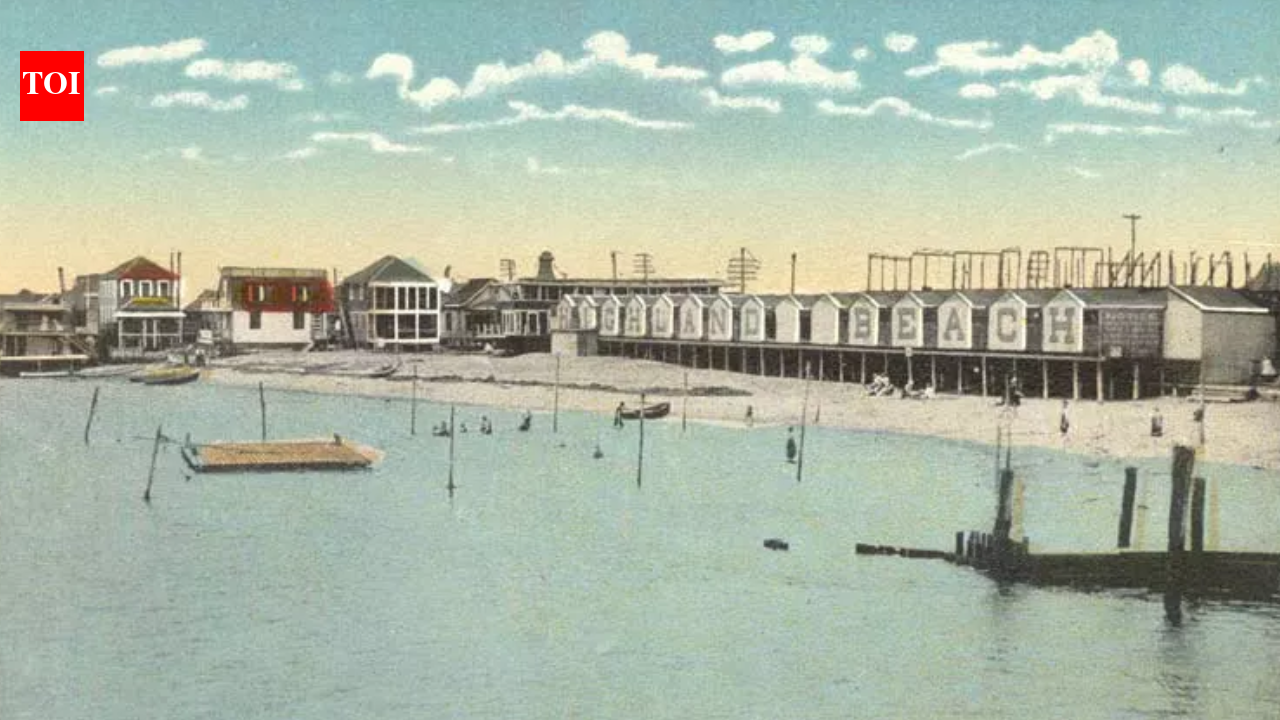
Exploring vintage postcards reveals a fascinating glimpse into coastal life in early New Jersey. Historian John Joseph Patrick Mulhern recounted his experiences on Sandy Hook, describing the thrilling days of tracking ships and conducting groundbreaking radio experiments. He vividly portrayed the operations of the Navesink lighthouses and the evolving landscape, showcasing the rich maritime heritage and community growth of the time. View More

West Bengal 7th Pay Commission has decided to set-up the website. It will provide details of the Commission’s activities, official notifications and opportunities for stakeholders to submit their views and relevant data. It will also allow employees & other stakeholders to submit memoranda to panel. View More

Parliament approved the Mines and Minerals Amendment Bill, 2026, on Thursday. This legislation empowers the central government to regulate state taxes on mineral rights. Excessive fiscal burdens were cited as a reason for the new restrictions. The move follows a Supreme Court verdict allowing states to levy additional mining taxes. A uniform fiscal framework will guide future mining tax impositions across the nation. View More
The Parliament passed the Mines and Minerals (Development and Regulation) Amendment Bill, 2026, Thursday. Both houses gave their nod to the bill by voice vote. This amendment allows the centre to regulate state governments’ powers to impose taxes, cess or other levies on mineral rights or mineral-bearing land. Speaking to journalists after the Rajya Sabha passed the bill, mines minister G Kishan Reddy said excessive fiscal burdens make mining operations commercially unviable, discourage mineral extraction , adversely affect mineral production and, in some cases, lead to mine closures. Responding to concerns raised by opposing members of parliament that this contravenes constitutional provisions, Reddy said the centre will get no share of the mining tax proceeds and the states will continue to be the primary beneficiaries. Also read: India well placed to make domestic commodity price discovery stronger, expand onshore hedging: Report ET reported on January 1, 2025, that the Centre was planning to curb excessive mining taxes imposed by states. The move to impose these restrictions follows a 2024 Supreme Court verdict allowing states to levy additional taxes on mining operations in their territories. The verdict was followed by fresh mining taxes in Karnataka, Jharkhand and Tamil Nadu. Live Events According to Reddy, any fiscal burden imposed on mineral extraction should be guided by a uniform and balanced fiscal framework across the country. He said the framework for putting these guardrails on states will be put in place. “The cumulative incidence of different levies should not become disproportionate to the economic value and profitability of the mining operations,” Reddy had said while introducing the bill in the Lok Sabha. .Pbanner{display:flex;justify-content:space-between;align-items:center;background-color:#ec1c40;margin-top:20px;padding:5px 10px;border-radius:4px;color:#fff;line-height:10px;width: 100%;box-sizing: border-box} .Pbannertext{display:flex;align-items:center;font-size:16px;font-weight:600;font-family:'Montserrat';} .Pbannertext img{height:20px;margin:0 6px} .Pbannerbutton a{display:flex;align-items:center;background-color:#fff;color:#ec1c40;text-decoration:none;font-weight:600;padding:4px 8px;border-radius:6px;font-size:15px;font-family:'Montserrat';} .Pbannerbutton img{height:20px;margin-right:6px} .Pbannerbutton a:hover{background-color:#f7f7f7} Add as a Reliable and Trusted News Source Add Now! (You can now subscribe to our Economic Times WhatsApp channel) (You can now subscribe to our Economic Times WhatsApp channel)

Sonu Nigam reshuffles property portfolio: Rs 2.9-cr Karjat land sales followed by Rs 1-cr Andheri buy View More
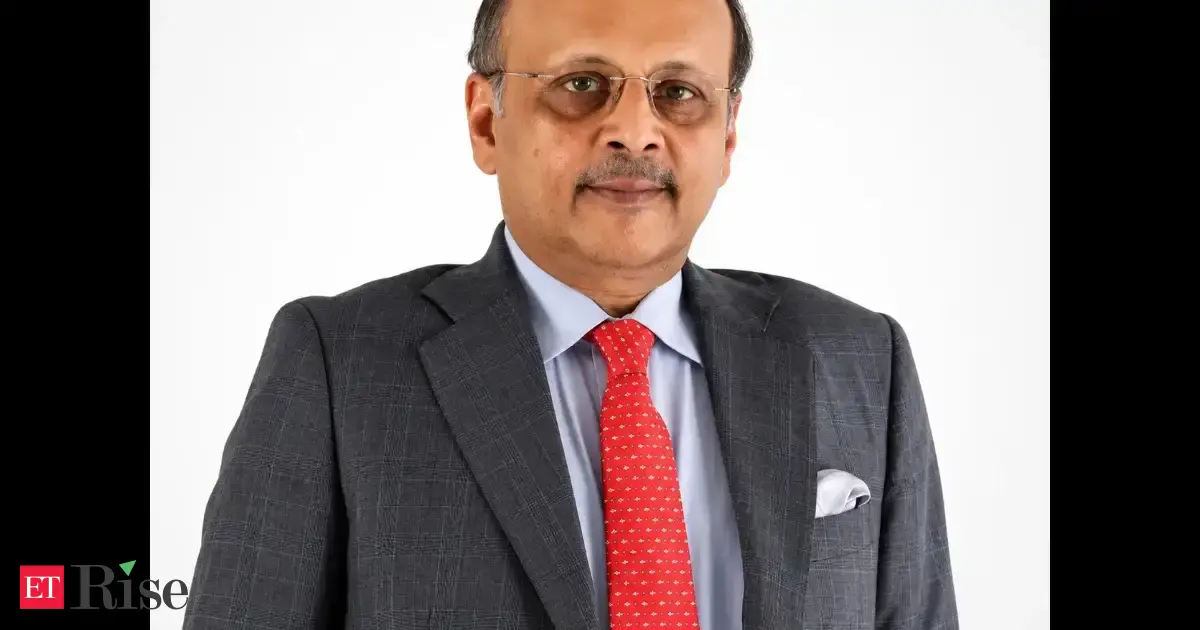
India's textile exports to the UK and EU are on the verge of expansion in the next fifteen months, driven by new FTAs that level the playing field with other nations. As the Indian denim sector prioritises sustainability with an emphasis on water conservation, boosting garment production capabilities and workforce skills will be key to reap the benefits. View More
India’s textile exports to the UK and the European Union (EU) will increase by 30-40% in the next 15 months due to the recently signed trade agreements, says Sharad Jaipuria , Chairman, Denim Manufacturers Association (DMA). In an exclusive chat with The Economic Times Digital on the sidelines of Gartex Texprocess India in the capital, Jaipuria, who is also the CMD of Ginni International Ltd, discusses the growth potential of India’s textile industry, including denim, in the context of recent FTAs . He also emphasises the importance of skilling for the industry to maintain a competitive edge. Edited excerpts: The Economic Times Digital (ET): India has the world’s second-largest denim manufacturing capacity after China. What gives India an edge in denim today, and where do you see the biggest opportunity for the industry going forward? Sharad Jaipuria (SJ): India produces about 1,600 million metres denim annually, which is quite a significant capacity. The advantage in India is that most of the mills are vertically integrated. Every facility—from spinning and weaving to denim manufacturing, of course—is integrated. The missing link is that not everybody has garment capacity. Few mills have extensive garment facilities, which is the requirement for most international buyers. I am sure other mills will also now set up garment facilities because with free trade agreements (FTAs), India will have duties at par with Bangladesh, Pakistan, and other countries. Value-added products will be much better for India in the future because of the FTAs. Live Events ET: India still has a relatively smaller share in the European textile market compared to countries like Bangladesh. How significant could the UK and EU trade deals be in expanding India’s textile and denim exports? SJ: India’s share in the European textile market is only around 3%. The volume is very low. They get most of the textiles from countries like Bangladesh and Pakistan and some from Turkey. Then we had the disadvantage of almost 12% duties compared to Bangladesh or Pakistan. Since FTAs have been already signed and may come into effect in the coming months, I expect India’s exports to these European countries to grow by 30-40% in 15 months. We also anticipate another annual increment of 10-15%. This gives a big boost to exports of textiles as well as garments from India to Europe and the UK. ET: Sustainability has become a major priority for global textile buyers, while denim is particularly water- and chemical-intensive. How is the Indian denim industry responding to this shift, and what changes are you seeing across the industry? SJ: Everybody is talking about sustainability, and it is happening because everyone now cares for the environment. In India too, most textile mills are seeing what they can do best for the environment, starting with recycled cotton, pesticide-free cotton, and consuming less water in manufacturing denim and garments. The government has also made it mandatory to recycle water, which is leading more manufacturers to adopt such practices. ET: What is the role of associations like DMA in the industry’s growth? What are some of the significant policy changes that can help the textile industry moving forward? SJ: DMA is a platform where the industry people put their minds together. Then it connects with the government to understand the issues faced by manufacturers or factories. If any policy changes are required, then we talk to them. Also, if there is a chemical producer or technology company in India, it could be more interesting to understand. It’s one platform where they can come and speak and showcase their technologies so the entire industry can take advantage. In terms of policy changes, the Commerce Ministry has intensified its push with several FTAs signed in recent months. The government is also considering how to increase manufacturing capacity so that value addition happens in the country, eliminating the need to go to Bangladesh, Vietnam, or Sri Lanka. Many state governments—new states like Chhattisgarh and others—have also come up with very proactive policies to facilitate setting up garment industries, making it easier for entrepreneurs to increase production in India. ET: What strategy should textile manufacturers adopt to maximise the benefits of the FTA? SJ: We must prepare ourselves. Naturally, we have to be in touch with the customers. It takes time for sampling. We have to do sampling with them. We must understand their requirement and produce accordingly. Also, we need to have the right kind of garmenting facility. They have to come and approve. It is a pretty time-consuming process when you set up garment plants also. If we don’t have the right garment factories approved by them, they will not buy. Most of the larger players in India are enhancing their garment production capacities to produce and supply garments because what goes from India is mostly fabric, not garments. Similarly, many people from Bangladesh and other countries would like to set up garment factories here in the near future so that garments can be exported duty-free from India to many of these countries after the various FTAs. ET: What are some of the major consumer trends currently taking shape in the denim industry? SJ: One is, of course, sustainability. Besides this, comfort is really at centre stage. Denim has become more comfortable. Even for travel, earlier it used to be thick denim, but now there is leisure denim as well, which is easy and breathable so that you don’t sweat in it. The trend is also changing in the fashion sector—ladies and children are looking at more colour options, not just indigo dye. So, a lot of colours are coming in now. ET: What impact are technology and artificial intelligence (AI) having on the denim industry? SJ: India has been slow on AI. But the benefit is expected to come very soon. I would expect that we will see much more changes within 12 months. ET: What was the impact of the West Asia crisis on the textile industry, and how did it respond to disruptions caused by this geopolitical shock? SJ: This disruption is happening because of war, so the buyer also becomes cautious in the process. So many of these markets are slower because of this disruption. And then, you know, freight costs have also increased sharply. So that has been adding to the cost. So, the exports—what should have happened, the growth of exports that should have happened—could not happen. They are suffering. ET: If we compare India’s denim industry to that of Vietnam or Bangladesh, what is India’s position and how can it improve? SJ: As far as denim is concerned, India is on the top. With the benefit of the FTA, we are at par with many of these countries, whether it’s Vietnam, China or Cambodia. Except that in India, the focus is only more on cotton. The government is also understanding that and reducing the duty and encouraging the production of garments. Now India is also moving towards MMF (man-made fibres) fabrics. On the garmenting side, India was earlier not doing garmenting since export potential was less because of higher duties. However, with the incentives given now by the central and state governments for encouraging garmenting, I am sure in the next two or three years, a lot of garmenting potential will come, and India will be competitive in textiles. For example, the UK and Europe FTAs are likely to show impact in the next six to nine months. After that, an increase of 30% can be expected in the next 12 months. Thereafter, a sustained growth of 10% annually is anticipated. ET: Is there anything textile exporters need to be more mindful of in the current environment, particularly in their strategies? SJ: Skilling of workers is very important. The skill levels are even lower compared to Bangladesh and Pakistan. Corporates setting up garment facilities on a very large scale will also need to focus on skilling workers to increase productivity. For example, we have seen in the case of Apple phones. Apple not only set up plants but also gave training to 40,000-50,000 people because some of the largest exporters of mobile phones are here. Similarly, garment factories will come up here. The incentives that are being given by the central and state governments will help. I think skilling is also very important. FTA signing is one part; the other part is skilling. For the last 30 years, we have talked about India having the advantage in textiles, but we did not have the chance to take the advantage. We should not let this opportunity pass. .Pbanner{display:flex;justify-content:space-between;align-items:center;background-color:#ec1c40;margin-top:20px;padding:5px 10px;border-radius:4px;color:#fff;line-height:10px;width: 100%;box-sizing: border-box} .Pbannertext{display:flex;align-items:center;font-size:16px;font-weight:600;font-family:'Montserrat';} .Pbannertext img{height:20px;margin:0 6px} .Pbannerbutton a{display:flex;align-items:center;background-color:#fff;color:#ec1c40;text-decoration:none;font-weight:600;padding:4px 8px;border-radius:6px;font-size:15px;font-family:'Montserrat';} .Pbannerbutton img{height:20px;margin-right:6px} .Pbannerbutton a:hover{background-color:#f7f7f7} Add as a Reliable and Trusted News Source Add Now!

Navi Ltd. is preparing for an Indian IPO targeting up to $315 million, with JM Financial, Kotak Mahindra Capital, Goldman Sachs and JPMorgan advising. The fintech firm seeks a valuation of up to $2 billion and plans to file by December. The offering is expected to comprise only a primary share sale. View More
Fintech startup Navi Ltd. is preparing to formally kick off the process for an initial public offering in India, seeking to raise as much as 30 billion rupees ($314 million), according to people familiar with the matter. The company, founded by former Flipkart co-founder Sachin Bansal, has appointed JM Financial Ltd ., Kotak Mahindra Capital Co., Goldman Sachs Group, Inc. and JPMorgan & Chase & Co. as advisers for the offering, the people said, asking not to be identified because the discussions are private. The IPO is expected to comprise a primary share sale, with no secondary offering by existing shareholders, the people said. Navi is seeking a valuation of as much as $2 billion and is targeting to file the prospectus by December, they added. Deliberations are ongoing and details including the size, valuation and timing of the IPO could change, the people said. Representatives for Navi and the banks didn’t immediately respond to requests for comment. Navi joins a growing roster of Indian financial-services firms preparing to tap the equity markets in the coming months, including Muthoot Fincorp Ltd., Truhome Finance Ltd., InCred Holdings Ltd., Moneyview Ltd. and Hero FinCorp Ltd. Companies have raised about $7 billion through IPOs in India so far this year, compared with $22.3 billion in all of 2025, according to data compiled by Bloomberg. Live Events The company previously filed a draft prospectus in March 2022 for an IPO of as much as 33.5 billion rupees and received regulatory approval in September that year. It later deferred the offering amid subdued investor sentiment stemming from domestic and global headwinds. Navi is a diversified financial-services company with businesses spanning lending, mutual funds, health insurance and UPI payments. Bansal founded the company after leaving Flipkart in 2018 following Walmart Inc.’s $16 billion acquisition of the Indian e-commerce company. .Pbanner{display:flex;justify-content:space-between;align-items:center;background-color:#ec1c40;margin-top:20px;padding:5px 10px;border-radius:4px;color:#fff;line-height:10px;width: 100%;box-sizing: border-box} .Pbannertext{display:flex;align-items:center;font-size:16px;font-weight:600;font-family:'Montserrat';} .Pbannertext img{height:20px;margin:0 6px} .Pbannerbutton a{display:flex;align-items:center;background-color:#fff;color:#ec1c40;text-decoration:none;font-weight:600;padding:4px 8px;border-radius:6px;font-size:15px;font-family:'Montserrat';} .Pbannerbutton img{height:20px;margin-right:6px} .Pbannerbutton a:hover{background-color:#f7f7f7} Add as a Reliable and Trusted News Source Add Now! (You can now subscribe to our ETMarkets WhatsApp channel) (You can now subscribe to our ETMarkets WhatsApp channel)

A property buyer who paid ?6.5 crore for a property valued at ?8.85 crore for stamp duty purposes won relief from a ?2.35 crore tax addition. ITAT Mumbai ruled that a higher stamp-duty value alone cannot prove undisclosed investment under Section 69B without evidence of extra payment. View More

Playo has emerged as one of India's leading sports-tech platforms by transforming recreational sports from a simple venue-booking service into a thriving community ecosystem. View More
With India's recreational sports environment picking up speed, Playo has discreetly become one of the country's leading sports networks, driven by its community. With operations spanning 150 cities and five countries, the Bengaluru-based sports-tech firm currently links more than five million users, providing access to venue discovery, playing partners, coaching, insurance, and sports services. Playo has achieved profitability and capital efficiency by prioritizing community engagement over customer acquisition, even though they've secured less than $1 million in outside funding. In this conversation with The Economic Times Digital, Gauravjeet Singh, Founder and CEO of Playo, talks about leaving investment banking to build the company, creating a sustainable sports-tech business, balancing growth with profitability, and why India's next fitness revolution will be driven by participation in sport rather than just exercise. Edited excerpts. Economic Times (ET): You left a successful career in investment banking to build Playo in 2015. What inspired you to take that leap, and what gap in India's sports ecosystem convinced you this could become a sustainable business rather than just another booking app? Gauravjeet Singh (GS): Sports had always been an important part of my life growing up, but like many working professionals, I gradually stopped playing once I entered the corporate world. When I wanted to get back into sport, I realised it wasn't easy. Finding a venue was one problem, but finding people to play with was an even bigger one. More importantly, I noticed that people were not giving up sports because they didn't enjoy them; they had simply lost access to an ecosystem of friends and places that made playing easy. That was the insight behind Playo. We were not trying to build a booking platform. We wanted to build the operating system for recreational sports by solving every friction that prevents people from playing, whether it's discovering venues, finding fellow players, organising games or eventually accessing coaching, equipment and other services. The larger opportunity was never venue booking. It was enabling millions of adults to rediscover sport as part of everyday life. ET: Playo has evolved from a court-booking platform into what you describe as India's largest community sports platform. How would you explain the business in simple terms to someone who has never used the app, and how has that evolution shaped your long-term vision? Live Events GS: The simplest way to describe Playo is that we help people connect and play sports. Booking a venue is only one small part of that journey. Our platform helps people discover venues, join games, meet other players, improve through coaching, access sports equipment, and increasingly, benefit from services like injury insurance and equipment protection. Today, we facilitate nearly 2 million playing sessions every month across over 150 cities and five countries. Over the years, we have realised that our real product is not booking infrastructure. It's helping people build healthier lifestyles, stronger friendships, and lasting communities through sport. That understanding has shaped our long-term vision of building a full-stack sports participation ecosystem rather than a transactional marketplace. ET: The sports-tech space has seen several players over the years. What differentiates Playo from competitors, and what has enabled it to build a community of over five million users while remaining largely organic? GS: We have always believed that community is our biggest differentiator. Many platforms view venue booking as the end product. We see it as the starting point. You can watch a movie alone, but you cannot play sports alone. Sports are inherently social. They require teammates, opponents, and communities. Every month, Playo facilitates over 600,000 new player connections through our Pay & Join feature. These are 600,000 complete strangers who meet offline to play because of us. Nearly five million messages are exchanged between users on the platform every month. These interactions create relationships that go far beyond transactions. Our growth has largely been organic because people do not simply return to book another court. They return because they've found a community they enjoy playing with. When your product becomes part of someone's lifestyle rather than just their utility stack, retention follows naturally. ET: Your platform today spans venue discovery, player matching, coaching, insurance, and partnerships with brands like Amazon and Decathlon. How does Playo's business model work, and which revenue streams are contributing the most to growth today? GS: Venue bookings continue to be our largest revenue driver, but from day one we believed that every activity around playing sport represented an opportunity to create value. As our user base and ecosystem matured, we expanded into coaching, trainer discovery, corporate sports, retail partnerships, wellness vouchers, sports injury insurance (of which we sell 125,000 policies every month) and equipment protection. Partnerships with brands like Amazon and Decathlon allow us to extend the user experience beyond the game itself. Our philosophy has always been to increase wallet share by solving more problems for people who play, rather than simply trying to maximise transactions within one category. As participation grows, adjacent services become natural extensions of the platform. ET: Playo has achieved profitability with less than $1 million in external funding. What were some of the toughest decisions that helped you build a capital-efficient business, and how do you balance growth with profitability? GS: Limited capital forced us to build discipline very early. We could not afford to grow through discounts or marketing-led acquisition, so we had to build a product people genuinely wanted to return to. Every investment had to improve user experience, retention, or monetisation. We have remained gross-margin positive from day one and have consistently focused on strong unit economics rather than vanity metrics. That meant saying no to growth opportunities that weren't sustainable, prioritising product over marketing, and constantly improving operational efficiency. Profitability should not come at the cost of growth, nor should growth come at the cost of financial discipline. The right balance is achieved when every incremental investment creates long-term value rather than temporary scale. ET: How has the business grown over the last few years in terms of revenue, user engagement, and partnerships? What metrics do you believe best reflect Playo's progress today? GS: We have grown consistently at around 70% year-on-year in revenue over the last couple of years. Our consolidated revenue grew from approximately Rs 28 crore in FY25 to around Rs 40 crore in FY26, while maintaining healthy gross margins. Today, Playo serves over five million users across over 150 cities in five countries and facilitates nearly two million playing sessions every month. We also enable over 600,000 new sports friendships every month and have built an ecosystem of over 5,000 venue partners. Beyond scale, some of the metrics we value most are retention and engagement. Around 20-25% of users continue using the platform even after twelve months; our average user actively plays 2.5 sports, and nearly five million direct messages are exchanged every month between users. Those metrics tell us we're building lasting habits rather than occasional transactions. ET: Badminton and pickleball are witnessing tremendous momentum across urban India. How do you see sports participation evolving in the country, and what role can technology play in making recreational sports more accessible and habitual? GS: We are seeing a fundamental cultural shift. Earlier, fitness was largely associated with gyms. Today, more people want movement that is enjoyable, social and sustainable. That's why sports like badminton, pickleball, box cricket and padel are growing rapidly. Interestingly, we have found that pickleball often acts as a gateway sport. Once people rediscover the joy of playing, they do not limit themselves to one sport. The average Playo user participates in around 2.5 different sports. Technology's role is not to replace human interaction but to enable it. It can help match players by skill level, organise games, recommend venues, simplify payments, and remove every friction that prevents someone from playing. Ultimately, technology should help people spend less time on screens and more time on courts. ET: Looking ahead, what are your priorities for Playo over the next three to five years? Are you focused on deeper penetration in India, international expansion, new services, strategic partnerships, or even fundraising to accelerate the next phase of growth? GS: Our focus remains unchanged: getting more people to play. India remains a massive opportunity because sports participation is still in its early stages. At the same time, we're steadily expanding internationally across markets where organised recreational sports are gaining momentum, particularly in the Middle East and South Asia. We will continue expanding the ecosystem around playing by strengthening community features, coaching, corporate wellness, retail partnerships, insurance, and other participation-led services. As AI evolves, we'll also use it to deliver more personalised experiences, improve player matching, and deepen engagement. Fundraising has never been an objective in itself. If capital helps accelerate the right opportunities while preserving our long-term philosophy, we'll certainly consider it. But our North Star will continue to be building a fundamentally strong, profitable business that makes sport a lifelong habit for millions of people. .Pbanner{display:flex;justify-content:space-between;align-items:center;background-color:#ec1c40;margin-top:20px;padding:5px 10px;border-radius:4px;color:#fff;line-height:10px;width: 100%;box-sizing: border-box} .Pbannertext{display:flex;align-items:center;font-size:16px;font-weight:600;font-family:'Montserrat';} .Pbannertext img{height:20px;margin:0 6px} .Pbannerbutton a{display:flex;align-items:center;background-color:#fff;color:#ec1c40;text-decoration:none;font-weight:600;padding:4px 8px;border-radius:6px;font-size:15px;font-family:'Montserrat';} .Pbannerbutton img{height:20px;margin-right:6px} .Pbannerbutton a:hover{background-color:#f7f7f7} Add as a Reliable and Trusted News Source Add Now!