Latest Sectors News

It's the latest AI model from China to close the performance gap with leading U.S. AI labs. View More
In this article2513-HK100-HK700-HKZLABBABAFollow your favorite stocksCREATE FREE ACCOUNT watch nowVIDEO2:4402:44National security issues remain around Chinese AI models, says Constellation Research's Ray WangThe Exchange Chinese startup Moonshot AI has unveiled a new model it says closes the gap with leading U.S. offerings and surpasses OpenAI and Anthropic's most capable systems on some benchmarks.Kimi K3 still trails Anthropic's Claude Fable 5 and OpenAI's GPT 5.6 Sol on overall performance, the company said on Friday, but consistently outperformed other tested models. The model beat Claude Opus 4.8 and GPT 5.5 â models that sit just behind Anthropic and OpenAI's leading-edge systems â on benchmarks including coding and general agents, according to Moonshot. It's China's largest AI model so far, with 2.8 trillion parameters, referring to the size of its neural network. "Despite persistent hardware/compute capacity constraints in China, K3 demonstrates that pre-training scaling, paired with architectural innovation, can still deliver step-change gains for flagship Chinese models," Bank of America analysts said in a note led by Alex Liu.The release comes as the race for AI supremacy between the U.S. and China intensifies. Chinese AI models are already gaining traction among Western companies as they close the performance gap with U.S. rivals and remain cheaper to use than the most advanced offerings from American labs. U.S. lawmakers are considering how to curb the growing adoption of Chinese AI models by homegrown companies. Another DeepSeek moment? Patrick Moorhead, the CEO and chief analyst at Moor Insights and Strategy, characterized the market's reaction to the new Kimi K3 model as "an over-reaction shockingly similar the DeepSeek panic," explaining in a post on X that despite the technology's advances, "We are far away from super-intelligence."Moorhead said in the post that large language models, or LLMs, like Kimi K3 will only "accelerate and grow the inference market faster than without," underscoring a general shift in the tech sector from merely focusing on the size and presumed capabilities of a model by itself to the overall application that the technology powers. Perplexity CEO Aravind Srinivas told CNBC last week that there's more focus from startups and developers to figure out the best methodologies for using AI models that can power their apps, instead of squarely focusing on one gigantic, underlying system. That's part of the reason why the freely available OpenClaw technology became so popular with developers earlier this year. The so-called harness lets coders more easily swap in and out various AI models that power digital assistants so they can take a series of actions without needing to rely on one single LLM by itself."The model alone is no longer the product," Srinivas said at the time. "It is the harness, the orchestration system that puts the model inside a very capable harness and pairs the model with a lot of tools." Read more CNBC tech newsElon Musk's Memphis AI empire is the epicenter of the data center backlashChinese startup Moonshot AI unveils Kimi model it says rivals OpenAI, AnthropicSpaceX stock falls after Starship test flight abortedMicrosoft's Nadella criticizes Anthropic's Fable for being 'editorially controlled' Moorhead attributed what he believes to be an overreaction to Kimi K3's release to politics, telling CNBC in an email that "There's a big debate in Washington DC about whether the U.S. should use Chinese open source models and if U.S. companies should enable the Chinese to use their models.""The latter is ironic as the Chinese seem to be doing fine with their models," Moorhead said.Lu Zhang, the founder and managing partner of the Fusion Fund, said that despite the widespread attention models like Kimi K3 can receive, most of the developers that use the technology are "from the startup ecosystem, less from the large corporate side." These coders will often swap one AI model out when there's a more powerful version available or at least one that's cheaper and more efficient to run in their respective apps, she explained.And while these AI models may seem extremely powerful at first glance, they are not "plug and play" and they require a lot of technological know-how from developers to actually make use of their underlying capabilities, Zhang said.Although general discourse involving the open-weight AI model space can often involve the broader "narrative of U.S.-China competition," Zhang said that there are several U.S. companies that are increasingly debuting open-weight AI models.Two of those are Thinking Machines and DeepReinforce, which is backed by Zhang's fund.She said it was only a matter of time that a more advanced open-weight AI model captured the zeitgeist, given how fast the overall space is moving.Similar to how the debut of DeepSeek's R1 AI model in 2025 generated attention for presumably being more cost-efficient relative to proprietary technologies, the current hoopla over Kimi K3 can be attributed to rising concerns about AI's overall cost and ability to generate returns on investment.Simon Koser, the chief product officer at the AI startup Tzafon, said that Kimi K3 is legitimately impressive in that it is performing well in areas like coding, and developers at AI labs could find it compelling. "Cost has become a huge thing for some of these labs," Koser said, underscoring how AI leaders like Anthropic and OpenAI may feel some pressure from cheaper AI models being available on the market.Still, there are many ways to use the technology, and not every AI model excels in every task despite what the initial benchmark tests may show. Certain AI models may react differently when put in production versus when they are tested, and there's no true jack-of-all-trades AI model that's superior to everything else on the market. "It's going to seem like a lot of people are changing," Koser said. "But in practice, I'm not sure if the shift is that huge." China's AI shock Founded in 2023, Beijing-based Moonshot AI is one of China's leading model builders. It raised $2 billion at a more than $20 billion valuation in May, Bloomberg reported.Backers include Chinese tech giants Alibaba, which makes the Qwen series of AI models, and Tencent.Chinese AI rivals' shares dropped on news of the release. Z.ai, which released a new model to much fanfare in June, saw its stock plummet 28% on Friday. MiniMax Group, another Chinese model company, fell 16%."K3 raises the capability ceiling for China AI models, shifting the burden of proof to other independent AI labs," said Liu. Earlier this week, Alibaba saw its stock buoyed by news that it was partnering with Apple in China. However, shares dropped 4% Friday."For Alibaba, while it benefits from broad AI training/usage growth for its cloud service given tight compute environment, Alibaba Qwen's "open-source leader" narrative may face some tests," said Liu. watch nowVIDEO4:0604:06Chinese President Xi Jinping pitches China as leader of new global AI orderSquawk Box Choose CNBC as your preferred source on Google and never miss a moment from the most trusted name in business news.

The public is as depressed about the economy as it has been since the years just after the pandemic, according to the All-America Economic Survey. View More
watch nowVIDEO7:4307:43CNBC All-America Economic Survey: 25% of respondents are optimistic about the economy and the futureSquawk Box Despite a booming stock market and improving inflation numbers, the public is as depressed about the economy as it has been since the years just after the pandemic and increasingly concerned about the cost of everyday goods, according to the latest CNBC All-America Economic Survey.The result: continued deeply negative approval numbers for President Donald Trump yet only a modest advantage for Democrats when it comes to the public's preference for control of Congress.The survey of 1,000 registered voters nationwide, with a margin of error of plus or minus 3.1%, found that 61% of the public is pessimistic about the current state of the economy and about the outlook for the future. That is the highest percentage since December 2023, when the country was just emerging from the pandemic-era inflation. Only 25% are optimistic about the economy now and for the future.Here are the full results from the survey"More voters expect things to get worse by a 41/29% margin, leaving the electorate in a distinctly sour mood heading into the midterm election cycle,'' said Micah Roberts, partner at Public Opinion Strategies, the Republican pollsters for the survey.In response to higher prices, 47% of the public report cutting back on essential items, like food and medical care, up 6 points from the April survey. Zoom In IconArrows pointing outwards Two-thirds say they are reducing purchases of nonessentials, like eating out and entertainment, up 5 points. Registered voters also say they are reducing travel and using credit cards in greater percentages than they did in April.These numbers come amid a recent decline in oil and gasoline prices and stand in contrast to steady and modest growth reported in national retail sales. But the national numbers could be driven by spending from the wealthy. The All-America survey finds that 60% of those with incomes below $30,000 are reducing their outlays for essentials, compared with just 35% of those with incomes above $100,000. Read more from the CNBC All-America Economic Survey:Full results from the CNBC All-America Economic SurveyEconomic outlook is worsening and Trump is getting blamed, CNBC survey findsDemocratic socialists top MAGA candidates among voters in CNBC's All-America poll The survey's Democratic and Republican pollsters both say the modest drop in gasoline prices over the past several weeks is not enough to offset the lingering effects of both the recent and past surges in prices."People are still paying a lot more for stuff than they were a year and a half ago, two years ago, and that's recent enough in memory that it still hurts and it still drives a lot of anger,'' said Jay Campbell, partner at Hart Research, the Democratic pollster for the survey. "When gas prices drop 50 cents for a month, that's just not enough to make up the difference." Low marks on the economy Trump's approval ratings remain deeply underwater, though largely unchanged from the CNBC April survey. The latest survey found the president's net approval rating at 40%, with 59% disapproving, 1 point worse than the April survey. Sixty percent disapprove of his handling of the economy, compared with 38% approving. Both changes are within the poll's margin of error but, at -22, place the president the most underwater he has been in his political career.The survey also found the public disapproving of Trump's handling of the war with Iran by a 63% to 35% margin, and his handling of inflation and the cost of living by a 68% to 31% margin.Still the Democratic Party has just a 4-point advantage on congressional preference, unchanged from April, as it appears the party is only benefiting modestly from the dissatisfaction with the economy and the Iran war."It means Democrats have an advantage at this point now, five months out from the election, but it's not an overwhelming advantage," Campbell said. "It doesn't point to a wave at the moment and I think that's what my baseline is."Both pollsters pointed to a sharply divided electorate being "locked into" their parties and reluctant to switch sides however much concern they may have with the economy. The survey found, for example, partisans digging in and increasing their support for their chosen party compared with April, largely offsetting each other and leading to no change in the overall preference for congressional control.It's also an environment where each party has been defining the other by their extremes and having some success doing so. Half of all voters say they are unlikely to support a democratic socialist candidate, with 32% saying they would support one. An endorsement by the president is somewhat worse, with 52% saying they would not support such a candidate. Worst of all are self-described MAGA candidates, which the survey found 57% of the public said they would be unlikely to support. Split on the issues On the most pressing issues, both parties have their own advantages. Democrats have a 7-point lead on the most important concern, the cost of food and groceries, and a 3-point lead on the second-most important issue, "protecting democracy." But Republicans lead by 22 points on the third issue â immigration and border security â the largest advantage on any of the 10 issues on the list. That's followed by a 6-point Democratic lead on housing and an 18-point advantage on the cost of healthcare.Democrats, independents and women, especially women 18-49, put the cost of food as the top issue. So do white voters and voters of color, along with voters in all income groups, except the very top income group who single out "protecting democracy." Republicans are the only major demographic group for whom immigration is the top issue. Meanwhile, voters aged 18-34 elevate housing to the top spot, with 46% saying it's a major issue. The cost of food for the youngest cohort is a distant second at 33%.Among the starkest divisions in the survey are those surrounding the war with Iran, which has lost support compared with the April survey. Just 48% of the public believe the military action against Iran is worth it to disrupt the country's ability to develop nuclear weapons, down from 53% in April. Half the country say it's not worth it, up from 44% in the prior survey. The president's net approval on dealing with Iran fell to -28, 3 points worse than the prior survey.Trump is underwater with parts of his own party on the Iran war. Just 47% of non-MAGA Republicans, who represent about a third of the GOP, approve of the president's handling of Iran, with 50% approving. By contrast, 86% of MAGA Republicans support the president's handling of the issue. Choose CNBC as your preferred source on Google and never miss a moment from the most trusted name in business news.
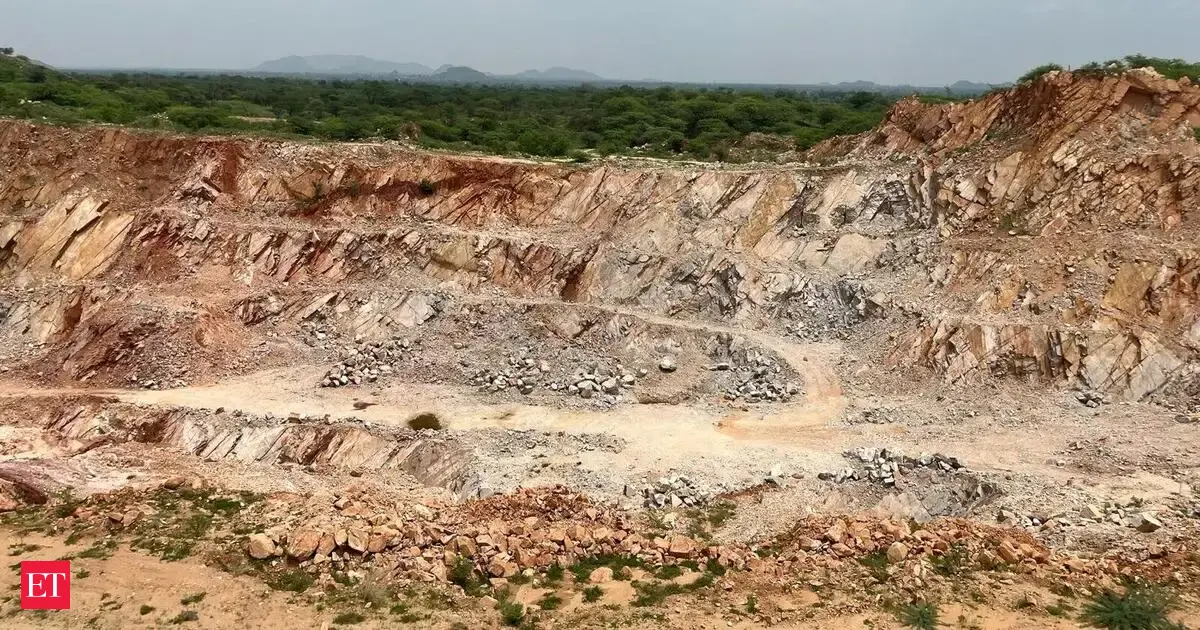
The Centre has issued guidelines for states to claim ?5,175 crore in incentives under the SASCI 2026-27 scheme by accelerating mine operationalisation, boosting mineral production and implementing mining reforms. States must operationalise 79 auctioned mineral blocks by December 31 to qualify, with incentives linked to clearances and governance performance. View More
New Delhi: The finance ministry has firmed up guidelines for states to claim incentives worth ₹5,175 crore for expediting operationalisation of mines , improving mineral production and implementing key governance reforms under the Scheme for Special Assistance to States for Capital Investment (SASCI) 2026-27. States will need to bring 79 auctioned major mineral and critical mineral blocks into production, equivalent to 10% of the 684 blocks auctioned by states and the Centre until March 31, as per the guidelines. States will have to operationalise the mines by December 31. Rajasthan and Madhya Pradesh need to operationalise at least 13 mines each to qualify for the incentive, Odisha eight, Karnataka and Chhattisgarh seven each, Gujarat six and Maharashtra five, with the rest to be done by other states. Of the total outlay, ₹ 2,500 crore has been earmarked for operationalisation of mines, ₹2,000 crore for implementation of mining reforms and ₹675 crore for rewarding top performers under the State Mining Readiness Index . Live Events The biggest incentive is linked to operationalisation of mines. States will receive ₹20 crore for every major mineral block auctioned during 2026-27, with forest, environment and land clearances already in place, subject to a maximum payout of ₹200 crore. .Pbanner{display:flex;justify-content:space-between;align-items:center;background-color:#ec1c40;margin-top:20px;padding:5px 10px;border-radius:4px;color:#fff;line-height:10px;width: 100%;box-sizing: border-box} .Pbannertext{display:flex;align-items:center;font-size:16px;font-weight:600;font-family:'Montserrat';} .Pbannertext img{height:20px;margin:0 6px} .Pbannerbutton a{display:flex;align-items:center;background-color:#fff;color:#ec1c40;text-decoration:none;font-weight:600;padding:4px 8px;border-radius:6px;font-size:15px;font-family:'Montserrat';} .Pbannerbutton img{height:20px;margin-right:6px} .Pbannerbutton a:hover{background-color:#f7f7f7} Add as a Reliable and Trusted News Source Add Now! (You can now subscribe to our Economic Times WhatsApp channel) (You can now subscribe to our Economic Times WhatsApp channel)

The escalating standoff comes as the fragile truce signed by the U.S. and Iran last month showed further signs of unravelling View More
In this handout photo by Morteza Akhoundi via Getty Images, a damaged bridge lies in a riverbed, following U.S. airstrikes carried out a day earlier, on July 17, 2026 in the southern Hormozgan Province, Iran. Contributor | Getty Images News | Getty Images Iran on Friday claimed it had targeted U.S. military forces in Syria and Bahrain, widening its attacks in the region as the U.S. completed its sixth consecutive night of strikes on the Islamic Republic.The escalating standoff comes as the fragile truce signed by the U.S. and Iran last month showed further signs of unravelling. The interim agreement was intended to reopen the strategically vital Strait of Hormuz and stop the fighting.U.S. Central Command said overnight that it had completed its latest major wave of strikes against Iran, hitting dozens of military targets, including air defenses, logistics infrastructure and maritime capabilities. In a social media post, Centcom said more than 50,000 service members were operating across the Middle East, adding that they "remain vigilant, lethal, and ready." Iranian state media said the U.S. air attacks overnight had killed eight people and wounded 20, reportedly alleging that American strikes had hit civilian infrastructure, including bridges, a train station and an airport. CNBC could not independently verify the report. watch nowVIDEO3:5703:57Hormuz and Bab el-Mandeb closure would trigger economic 'catastrophe': AnalystAccess Middle East Iran's Revolutionary Guard, meanwhile, said that it attacked a U.S. command center in Syria's al-Tanf region, according to state media. There was no immediate comment from the U.S. military or the Syrian government. The U.S. military said in February that it had completed the withdrawal of forces from the strategic al-Tanf military base, which sits near the Syrian border with Iraq and Jordan.Syria has sought to avoid being drawn into regional hostilities, with President Ahmed al-Sharaa telling a Chatham House event in March that the country would "remain outside" the conflict unless it is subjected to direct attacks. Kuwaiti authorities said Friday that one of the country's power generation and water desalination stations was hit in an Iranian attack, causing widespread damage. The 'Al-Riqqa' oil tanker (L) and 'Al-Yarmouk' oil tankers sail in the Arabian Gulf waters, off the coast of Kuwait City on June 27, 2026. Yasser Al-zayyat | Afp | Getty Images Kuwait's Electricity Water and Renewable Energy Ministry said via social media that it had extinguished a blaze triggered by the attack and was working to assess the damage and get the station working again. Kuwait is known to be overwhelmingly dependent on desalination for drinking water, with almost 90% of the arid nation's water demand satisfied through seawater desalination plants.Air raid sirens were activated in Bahrain overnight, with the country's Defence Force saying it had intercepted multiple aerial attacks from Iran. The alert followed a claim by Iran that it had targeted U.S. aircraft at the Sakhir airbase in Bahrain.Jordan and Qatar also both said they had intercepted Iranian missiles. Trump: 'We are likewise winning big in Iran' U.S. President Donald Trump has insisted the war with Iran is going well, saying Thursday in a primetime address to the American public: "We are likewise winning big in Iran, and you will see the fruits of that labor very, very shortly." The U.S. president had threatened to strike Iran's bridges and power plants next week if the country refused to return to the negotiating table. US President Donald Trump addresses the nation from the East Room of the White House in Washington, DC on July 16, 2026. Saul Loeb | Afp | Getty Images Ian Lesser, distinguished fellow at GMF, a Washington-based think tank, said there appears to be a risk of the U.S. and Iran becoming mired in a so-called forever war."There's a risk of this, but of course we were in essentially a cold and occasionally hot war with Iran for decades," Lesser told CNBC by video call."I think in some sense this is misjudgment by the current administration. But it is also part of a pattern in the American approach to the use of force, that we have enormous capability and enormous operational prowess and we are hobbled by strategic mistakes," he added.Oil prices were higher on Friday, firmly on track to register bumper weekly gains.International benchmark Brent crude futures with September delivery advanced 1.7% to trade at $85.72 per barrel, while U.S. West Texas Intermediate futures with August delivery gained 2.2% to trade at $80.63.Both oil contracts are up more than 11% so far this week and on track for their best weekly performance since late April. Choose CNBC as your preferred source on Google and never miss a moment from the most trusted name in business news.

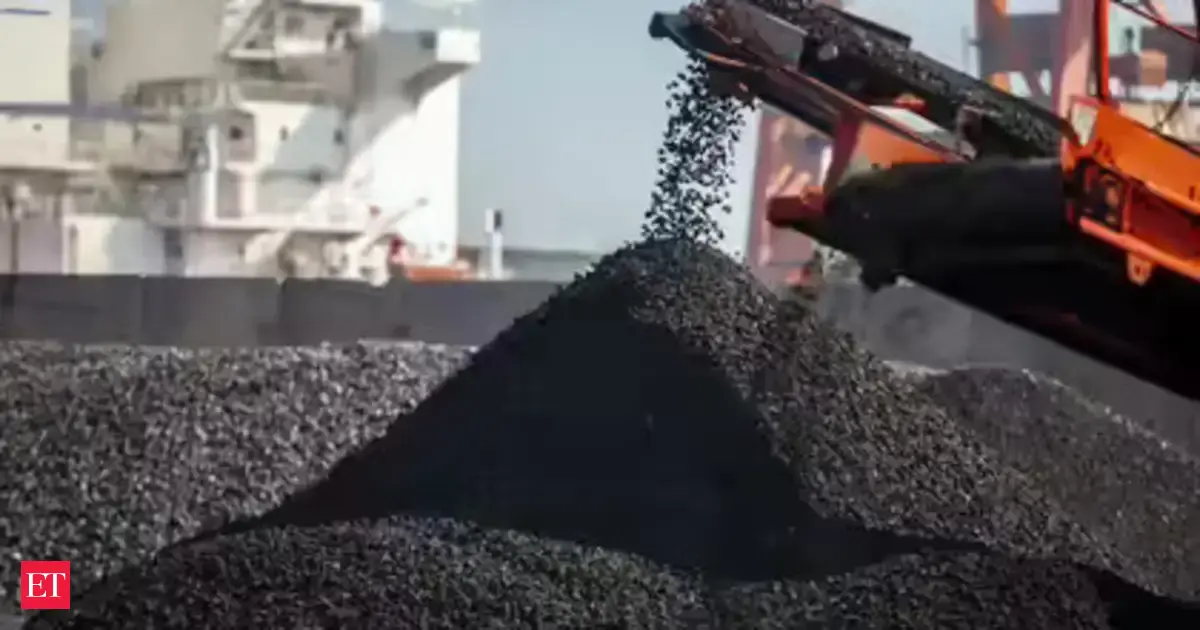
Nearly one thousand hectares of forest land in Chhattisgarh's Raigarh may be diverted for two coal mining projects. The Pelma open cast mine and Purunga underground coal block projects received in-principle approval from the Environment Ministry. These projects involve diverting over 360 and 620 hectares of forest land respectively. The forest advisory committee recommended stage-one approval with conditions for compensatory afforestation. View More
A total of nearly 1,000 hectares of forest land in Chhattisgarh's Raigarh may get diverted for two separate coal mining projects, following an in-principle approval by the Environment Ministry's forest advisory committee. The first project, which involves diverting over 360 hectares (ha) of forest land, pertains to the Pelma open cast mine of the state-owned South Eastern Coalfields Limited (SECL). In 2023, SECL signed an agreement with Pelma Collieries -- a subsidiary of the Adani Enterprises Limited -- to operate the mine. The other project, requiring the diversion of more than 620 ha of forest land, relates to mining at the Purunga underground coal block by Ambuja Cements Limited , a subsidiary of the Adani Group. The Environment Ministry's forest advisory committee (FAC) recommended stage-I (in-principle) approval for the diversion of forest land for both the projects during its meeting on July 7. The stage-I clearance stipulates conditions, including compensatory afforestation, which must be fulfilled before stage-II formal diversion approval can be granted. Live Events Mining at the Pelma mine in Raigarh's Tamnar tehsil will result in cutting more than 52,000 trees, according to the FAC meeting minutes. The project is located within a high conservation value (HCV) zone, meaning the forest land needing diversion comprises very dense forest patches. The mining site is adjacent to the Kelo river as well. However, the FAC observed, as stated in the meeting minutes, that "the state government submitted that the proposal, being a mining project, is site-specific in nature with no feasible alternative location". The committee also noted that there had been movement of wild elephants in and around the land proposed for diversion. In the case of Pelma mine, tree felling will be confined to 9.982 ha out of the 621.331 ha of forest land proposed for diversion, according to the meeting minutes. This will be done to establish approved surface infrastructure. Because the project involves underground mining, it may cause tensile strain -- the horizontal stretching of the ground surface as underground workings cause the overlying earth to shift -- of 4.48 mm/m in the forest area, meaning a one-metre stretch of surface ground would deform by more than four millimetres. "Accordingly, appropriate mitigation measures shall be implemented by the state government, at the cost of the user agency (project proponent), to reduce tensile strain on the surface," the FAC recommended. If subsidence exceeds the predicted level, the project proponent will have to pay the net present value -- a monetary quantification of the ecological services provided by the diverted forest area -- and carry out compensatory afforestation under ministry guidelines. In the event of any adverse impact on forest cover due to subsidence, safety measures will have to be implemented by the project proponent in coordination with the state forest department. .Pbanner{display:flex;justify-content:space-between;align-items:center;background-color:#ec1c40;margin-top:20px;padding:5px 10px;border-radius:4px;color:#fff;line-height:10px;width: 100%;box-sizing: border-box} .Pbannertext{display:flex;align-items:center;font-size:16px;font-weight:600;font-family:'Montserrat';} .Pbannertext img{height:20px;margin:0 6px} .Pbannerbutton a{display:flex;align-items:center;background-color:#fff;color:#ec1c40;text-decoration:none;font-weight:600;padding:4px 8px;border-radius:6px;font-size:15px;font-family:'Montserrat';} .Pbannerbutton img{height:20px;margin-right:6px} .Pbannerbutton a:hover{background-color:#f7f7f7} Add as a Reliable and Trusted News Source Add Now! (You can now subscribe to our Economic Times WhatsApp channel) (You can now subscribe to our Economic Times WhatsApp channel)

The surge comes as China's auto exports have boomed in recent years as the country's appetite for new models has cooled. View More
watch nowVIDEO6:0606:06Chinese EVs push into the UK marketAutos MAIDSTONE, England â Izzy Woodrow is a believer.Four weeks ago, he joined the small but growing number of Brits who have bought a Chinese-made vehicle."I've got a car that I enjoy driving [and is] super comfy. It's very quiet and the fit and finish is great and the technology experience is enjoyable " Woodrow said during an interview at Lipscomb Cars in Maidstone, England. The Geely dealership southeast of London opened within the past year.It's part of a trend, as sales of Chinese-made autos have been surging in the United Kingdom.  In 2015, Brits bought just 384 Chinese vehicles imported into the country, according to Mobility Global, an automotive consulting firm. By 2020, that number climbed to 25,302, and last year it topped 285,000.Despite selling just two Geely models, Lipscomb has been attracting buyers like Chris and Tracy Smith."It's value for money, and what you're getting in equipment as opposed to some of the top brands that are selling for probably more money, but with less accessories on it," said Chris Smith.Analyst Will Roberts of Benchmark, an automotive consulting firm, said Chinese-made vehicles from companies like BYD are no longer a novelty in the U.K."I remember noticing the first BYD crossing London Bridge a couple of years ago, and that was a big moment in a way. Ever since then, it's just become second nature," Roberts said. A BYD Co. Sealion 7 EV charging at a roadside charge point in central London, UK, on Monday, Feb. 9, 2026. Jason Alden | Bloomberg | Getty Images China's auto exports have boomed in recent years as the country's appetite for new models has cooled. In the first half of 2026, retail auto sales fell 26% while auto exports were up 72% compared with last year, according to the China Association of Automobile Manufacturers.While all of Europe has seen an influx of Chinese-built cars and SUVs, the U.K. stands out because it does not charge an additional tariff on plug-in hybrid electric vehicles, which is the case in the European Union.That has provided an opening for Chinese automakers."It becomes an excellent size market that's progressing well towards electrification and is in demand for some cheaper vehicles with that void to fill," Roberts said.Many Chinese models are priced several thousand pounds below comparable models from legacy automakers. For example, a new Volkswagen Tiguan plug-in hybrid built in Germany sells in the United Kingdom for just over £43,000 ($58,000).  By comparison, the BYD Seal U built in China costs almost £10,000 less. Executives for legacy automakers, including the United States' so-called Big 3, have long complained that subsidies the Chinese government provides automakers allows those companies to sell cars for far less than other automakers in Asia, the U.S. and Europe. Despite those complaints, China auto exports keep growing. "The Chinese are coming into Europe with really attractive cars at really attractive prices with technology that sort of blows away what they can buy from a European manufacturer, " former General Motors board member Jon McNeill told CNBC.At Lipscomb Cars, dealer John Panda-Noah said he believes the competitive pricing might get buyers in the door, but the fit, finish and technology in a new Geely are what wins them over."When they see the car, they're blown away by how good they look," he said. Choose CNBC as your preferred source on Google and never miss a moment from the most trusted name in business news.

The address, delivered four months before the US midterm elections, focused largely on election security and Trump's longstanding claims about election fraud. View More

Last month, an unoccupied Zoox robotaxi drove into an active emergency fire scene that was clouded with smoke, the company said. View More
In this articleAMZNFollow your favorite stocksCREATE FREE ACCOUNT A Zoox autonomous robotaxi in San Francisco, California, US, on Wednesday, Dec. 4, 2024. David Paul Morris | Bloomberg | Getty Images Amazon-owned Zoox recalled software in 105 of its robotaxis over concerns its vehicles failed to detect heavy smoke and drove into it.Zoox notified the National Highway Traffic Safety Administration of the recall on July 8 and said it became aware of the smoke detection issue following an incident last month. On June 20, an unoccupied Zoox robotaxi encountered heavy smoke that obscured an active emergency fire scene that was not cordoned off with cones, the company wrote in its report. The vehicle entered the scene, then braked hard while attempting to steer away before coming to a stop, Zoox said. The company said the incident took place in Las Vegas.A Zoox teleguidance employee instructed the vehicle to reverse, then first responders placed traffic cones to block off the scene, according to the report.Zoox said it investigated the incident and determined it's "the only event of this kind" that has occurred. No injuries were identified. Read more CNBC tech newsElon Musk's Memphis AI empire is the epicenter of the data center backlashChinese startup Moonshot AI unveils Kimi model it says rivals OpenAI, AnthropicSpaceX stock falls after Starship test flight abortedMicrosoft's Nadella criticizes Anthropic's Fable for being 'editorially controlled' Amazon acquired Zoox for $1.3 billion in 2020. The company operates driverless buggies that have no steering wheel or pedals, and feature four carriage-style seats that face inward, giving them a shuttle-like atmosphere. Zoox currently offers free rides in parts of Las Vegas and San Francisco, and it's allowing select users to hail its robotaxis in small zones in Miami and Austin, Texas. Testing is also underway in six other U.S. cities. The voluntary recall comes after NHTSA Administrator Jonathan Morrison last week issued a directive to autonomous vehicle developers to ensure their vehicles get out of the way of first responders. Morrison said in the letter that the agency has "identified a clear pattern of driverless AVs interfering with law enforcement and other first responders," citing incidents where AVs drove into active emergency scenes, blocked the paths of ambulances or firefighters, or failed to recognize or respond to flashing lights, flares, smoke, fire and traffic cones. He called on AV developers and operators "to immediately focus their resources on fixing this issue" and present their solutions to the agency by the end of the month. The letter doesn't name specific AV companies. Zoox issued several software recalls last year to address issues over lane crossings, as well as its ability to predict the movement of other vehicles and pedestrians. The company is racing to catch up to Alphabet's Waymo, which is the dominant robotaxi service in the U.S., with a fleet of about 4,000 automated vehicles in the country. Last month, Waymo recalled about 3,900 robotaxis after some of its vehicles drove into closed construction zones on freeways, increasing "the risk of a crash." WATCH: NHTSA's Morrison: AV developers need to address first responder issues watch nowVIDEO9:5609:56NHTSA's Morrison: Automated vehicle developers need to address issues involving first respondersSquawk Box Choose CNBC as your preferred source on Google and never miss a moment from the most trusted name in business news.