
Latest Sectors News

Investors are betting that how people spend their time and money will change dramatically due to artificial intelligence. View More
Belgian electronic music festival Tomorrowland came to Shanghai for the first time in July 2025.Hero Esports Hi, this is Evelyn, writing to you from Beijing. Welcome to the latest edition of The China Connection â a snapshot of what I'm seeing and hearing from local businesses.The rise of artificial intelligence could be creating an unexpected winner in China: the experience economy. The big story Money might be piling into AI, but for BAI Capital's Annabelle Yu Long, the Chinese consumer is still king. An "unintended consequence" of AI is the transformation of how humans interact with each other â and the businesses around them, she said. That means now is the "best time" to get in on the consumer trends of the future, which will require much more focus on offline experiences.Beijing-based BAI Capital, whose roots lie in German media conglomerate Bertelsmann, raised $800 million in May for its latest U.S. dollar fund â a relative rarity in China's venture capital world, which has recently leaned more on local investors for Chinese yuan-denominated funds.Long said she looks for three things when making investments: that the companies are regulation-neutral, consumer-facing and market-oriented. "Not all technology has to be nerdy, has to be aerospace, quantum computing, so-called hard core," she said. "If I was able to invest into the next TikTok, ByteDance ... I'd be more than happy to do it, in addition to the Nintendos, the Sonys and Panasonics arising from China. I see it happening now."Global investors have long eyed the potential of China's hundreds of millions of consumers. But spending has remained sluggish since the pandemic, while money has flowed instead into AI, chips and hardware. Retail sales turned negative in May before eking out 1% growth in June.In an effort to boost spending, China launched a nationwide trade-in subsidy program in 2024, encouraging consumers to trade in old goods for new ones. Local authorities, meanwhile, are trying other ways to get residents and foreign tourists to spend. The traditional Wangfujing shopping district in downtown Beijing is trying to revamp itself with more in-person experiences, such as a forthcoming themed area featuring virtual reality and characters from iQiyi's online dramas.Sharon Tan, CEO of consultancy Beijing Lyvion International, which is working on the Wangfujing project, said she is also looking to get Vogue parent Condé Nast on board. Young people's demands ultimately shape consumer venues, Tan told reporters this month. Condé Nast did not immediately respond to a CNBC request for comment.In new measures published July 13, Chinese policymakers made clear that their focus over the next five years is to support experience-focused consumption, such as in the performing arts and sports. 'Genuine offline social connections' Belgium's Tomorrowland electronic music festival came to China last year, with its first event in Shanghai. It was held in partnership with Dino Ying's Hero Esports and INS Land, which is backed by BAI."As artificial intelligence becomes increasingly widespread, online content will become more homogeneous, and there will be more and more AI slop," Ying said. "We therefore believe consumers will increasingly seek a return to genuine offline social connections. People will have a growing need for face-to-face interaction."The emphasis on offline is striking, coming from someone heavily involved in China's first premium video game Black Myth: Wukong, which became an overnight success two years ago.But Hero Esports is moving quickly. Initial conversations about Tomorrowland's China expansion only started in early 2025, Ying said. By November that year, the first festival was live, and it's due to return in October this year. Ying's INS Land complex also operates a nightclub and other entertainment venues throughout the year.If tickets to the venue now cost 200-300 yuan ($30-$44), they will cost 10 times more in the future, BAI's Long said. "Because offline experience, really to smell the sweat [and] dance in real music with real people â [that] will become the ultimate luxury." Need to know U.S. trade official says 'very few' Nvidia H200 AI chips have been shipped to China"The bottom line is very few shipments against licenses for H200s and equivalents have taken place. It's a very small quantity of chips," Under Secretary of Commerce for Industry and Security Jeffery Kessler said at a congressional hearing.'Listing is a must': Chinese humanoid startups are rushing to launch IPOsLimX founder Will Zhang compared the situation to Chinese electric car startups. "Once the technology is mature, if [the company] doesn't list, then like WM Motor, it may disappear," he said in Mandarin, translated by CNBC.BrainCo bets the future of brain tech is wearableThe company's bionic hands, approved by the U.S. Food and Drug Administration, read an amputee's neural and muscular electrical signals and translate intended movements into finger motions. Coming up July 16 - 29: 2026 APEC Digital Weeks in ChengduJuly 27: China's memory chip company CXMT is reportedly to list Choose CNBC as your preferred source on Google and never miss a moment from the most trusted name in business news.

The FDA's investigation into the source of the cyclosporiasis outbreak is causing confusion as companies and consumers alike navigate new updates. View More
In this articleYUMFollow your favorite stocksCREATE FREE ACCOUNT Packages of Taylor Farms salad greens are displayed at a Safeway store on July 16, 2026 in Kings Beach, California. Justin Sullivan | Getty Images The Food and Drug Administration's reversal on a key piece of its cyclosporiasis investigation has sparked confusion in the U.S., but the agency said Monday that it has not changed its main conclusions about the outbreak.The agency said Sunday a test that indicated a sample of iceberg lettuce supplied by Taylor Farms de Mexico carried the cyclospora parasite was a false positive. However, that only applies to one specific shipment of lettuce supplied by the company, which the agency does not believe was the vehicle that sickened more than 1,600 people and potentially thousands of others.In a Monday clarification, the agency said its false positive does not change its prior conclusion that the outbreak is linked to shredded iceberg lettuce from central Mexico supplied by Taylor Farms, which was also served at some Taco Bell locations. The agency is still advising Americans not to eat recalled iceberg lettuce."FDA's traceback investigation and outbreak data continue to converge on shredded iceberg lettuce from Taylor Farms locations in central Mexico," it said in a statement. "FDA will continue to work with federal and state partners to investigate this multistate outbreak and ensure products implicated in this outbreak have been removed from the market."Investigators are continuing to examine what exactly caused the outbreak, which can lead to symptoms similar to a bad stomach bug for days or even weeks. CNBC has reached out to the FDA for details on the next phase of the investigation, including whether additional ingredients or suppliers are under scrutiny and whether the agency expects to issue further guidance. The agency has not yet responded.The false positive test comes as the developing investigation creates uncertainty for both consumers and the food industry. While the FDA has said not to eat iceberg lettuce from Taylor Farms, some diners have stayed away from salads altogether as the number of cases rises. "Unfortunately, this latest development may add further confusion to what has already been a complex situation for consumers," said Frank Yiannas, former deputy commissioner of food policy and response at the FDA.Though industry analysts do not expect the outbreak to have a long-term impact on Taco Bell or other restaurant chains, it could at least temporarily hit sales, based on foot traffic data, and cause a one-to-two quarter hit for companies linked to it. Foot traffic at Taco Bell sank roughly 19% on Friday compared to the day-of-the-week average so far this year, according to data from research firm Placer.ai. What the FDA's false positive means In foodborne outbreak investigations, a false positive can happen when an initial screening signal isn't reproduced during confirmation testing. Some doctors have pointed out that cyclospora is particularly challenging to recreate in the lab.But it has not caused a shift in how public officials view the root of the outbreak.The Department of Health and Human Services in Michigan, where the outbreak has seen explosive growth, says it continues to recommend that people purchase whole heads of lettuce rather than pre-washed, bagged or pre-mixed salad kits. The agency added that based on interviews with more than 2,000 infected patients, many of them did not report eating lettuce at a restaurant, though they frequently said they ate the leafy green in some setting. Taylor Farms said Monday morning it will continue its voluntary recall of implicated iceberg lettuce from central Mexico, and Taco Bell has already started to remove the suspected lettuce from restaurants in affected states.The ripple effects go beyond those companies. Walmart said Monday that it proactively removed four bagged salad kit products, which are under its Marketside brand and supplied by Taylor Farms, from stores across 27 states even though it said there was no indication that its products are part of the outbreak."There have been no confirmed illnesses associated with these products at this time," the company said in a statement. "We are working closely with our supplier and took immediate steps to remove the products from sale."Former FDA Commissioner Dr. Scott Gottlieb suggested to CNBC that the test result does not clear Taylor Farms of its link to the outbreak. The Friday recall was for a product that was imported several weeks ago and was separate from the lettuce that tested positive with the FDA, he said. He also noted that because cyclospora has an incubation period of up to two weeks and lettuce has a short shelf life, it is important to test multiple shipments, even if they originated from the same farm.While the outbreak may be sourced to a single vendor for now, it's possible the contamination has already spread wider, according to Dr. Norman Beatty, an associate professor of medicine at the University of Florida College of Medicine."We may find that this current outbreak may have led to additional outbreaks because of the nature of this parasite," Beatty told CNBC. "The reason why this is important for this current outbreak is because there's over 30 states where this has been isolated, and there could be other smaller outbreaks occurring in other regions." Restaurant fallout For restaurants, uncertainty is proving as challenging as the outbreak itself. Salad-focused chains and other operators that rely heavily on fresh produce are left without knowing whether any other ingredients are still a potential risk. Taco Bell told CNBC in a Saturday statement that it had voluntarily removed all suspected lettuce from its locations within 72 hours of beginning the process and adjusted its supply chain accordingly. The company added that it is "confident" that consumers can eat safely at its locations."Clearly, this is a nationwide industry-wide issue, not a Taco Bell-specific issue," the company said. "We hope that other members of the industry are taking the same degree of immediate action and accountability for the consumer as we have."Taco Bell isn't the only restaurant seeing its business slow, according to Placer.ai. Other restaurant chains that sell lettuce, including Chopt, Panera Bread and Chipotle, also saw declines in traffic Friday, the firm said.As headlines about the outbreak swirled last week, the industry's top advocacy group stressed it is taking food safety seriously. "The Food Code requires that every restaurant must have a manager that is food safety certified on every shift," said National Restaurant Association CEO Michelle Korsmo in a post on LinkedIn. "We'll continue to support public health officials as they investigate the outbreak and ensure our members have the information they need to evaluate their food safety decisions," she added.And despite the false positive result, Taylor Farms and Taco Bell parent Yum Brands are still navigating the reputational fallout of an outbreak that prompted product removals and widespread headlines. Even so, restaurant analysts previously told CNBC they did not expect a long-term financial hit for the companies linked to the outbreak.Shares of Yum Brands are down nearly 9% in the last five days. Choose CNBC as your preferred source on Google and never miss a moment from the most trusted name in business news.

Oil prices edged higher following Trump's Truth Social post vowing, "Every time Iran kills an American Soldier they will pay for that killing many times over!" View More
Arleigh Burke-class guided-missile destroyer USS Frank E. Petersen Jr. (DDG 121) sails behind the Nimitz-class aircraft carrier USS Abraham Lincoln (CVN 72), June 27, 2026. Frank E. Petersen Jr. is deployed to the U.S. 5th Fleet area of operations to support maritime security and stability in the Middle East.Courtesy: U.S. Navy President Donald Trump vowed that the U.S. would retaliate harshly after three American service members were killed during recent fighting with Iran."Every time Iran kills an American Soldier they will pay for that killing many times over!" Trump wrote on Truth Social, adding that he has delivered that "directive" to "every Leader in the Military."The angry post came after the U.S. military attacked a range of Iran's military sites and assets overnight as it worked to clear the Strait of Hormuz for oil tankers and other commercial vessels that have been blocked during the war.U.S. Central Command on Sunday night targeted "Iranian military command centers, air defense and coastal surveillance sites, maritime capabilities, missile and drone launch sites, and communications networks," it said in a post on X.The three-hour barrage of strikes "further diminish Iran's ability to attack commercial vessels and civilian mariners transiting the Strait of Hormuz," Centcom said.But traffic through the strait, the economically vital waterway that 20% of the world's oil passed through before the war began in late February, remains far below its prewar averages. Just 30 "verified transits" in the strait were identified between Friday and Sunday, tracking firm Kpler said Monday morning.The strain on global oil supplies caused by the tumult in the strait threatened to get even worse Monday, when Iran-backed Houthi militants in Yemen declared a maritime embargo against Saudi Arabia. Oil prices on Monday morning nevertheless ticked lower, after Iran's Foreign Ministry spokesman said messages are still being exchanged through intermediaries despite the escalating conflict. But prices edged back up following Trump's post.Brent crude futures, the international benchmark, were last seen trading 32 cents higher at $88.42 per barrel. U.S. West Texas Intermediate crude futures were up 1 cent to $82.50 per barrel.Both Washington and Tehran have repeatedly accused each other of violating a temporary ceasefire deal reached in June. Trump, frustrated by continuing hostilities centered around the Hormuz Strait, this month declared the ceasefire "over," prompting the U.S. to restart its retaliatory blockade of Iranian ports in the Gulf.The U.S. death toll from the Iran war has now risen to 17. Iranian authorities said Sunday that at least 50 people were killed and more than 500 wounded in the renewed U.S. strikes this month."The memorandum said little about how disputed incidents would be investigated or how a breach in one area would affect obligations elsewhere," Michael Feller, chief strategist at Geopolitical Strategy, said of the June deal. The memorandum's ambiguity meant the incident quickly became a dispute over whether the agreement still existed, he noted. U.S. strikes have widened in recent days to target civilian infrastructure, including the Bonji desalination plant that cut off water supplies to about 10,000 people. Tehran has also retaliated across the Gulf with fresh attacks on targets in neighboring countries, including Bahrain, Saudi Arabia and Jordan. The Kuwaiti army said Monday that its air defense systems were intercepting "hostile" drone attacks from Iran. The U.S. Embassy in Bahrain's capital, Manama, said Monday that it has information suggesting Iran may seek to target unspecified locations in the city. Sirens sounded across Bahrain as authorities urged residents to take shelter.Iran's Revolutionary Guard said Monday that two oil tankers "exploded" attempting to travel through the "unsafe and dangerous route south of the Strait of Hormuz." The Iranian authority has warned vessels against using the U.S. and Oman-backed southern corridor, insisting that only Iranian-designated routes are permitted.Despite the reported slowdown of traffic through the strait, U.S. officials insisted flows were still holding up. Energy Secretary Chris Wright said Sunday that about two-thirds of pre-conflict traffic â roughly 14 million barrels a day â is moving through the choke point. Around 20 million barrels of crude oil and refined products passed through the waterway before the war. In an interview with ABC on Sunday, Wright said public reports indicating most shipping traffic has stopped in recent days are not true, estimating it was at about two-third of normal flow. Choose CNBC as your preferred source on Google and never miss a moment from the most trusted name in business news.

Tuesday evening's second-quarter earnings report is the perfect stage to do just that. View More
Capital One poured more than $35 billion into acquiring credit card rival Discover. After a couple of lackluster quarters and a slumping stock price, CEO Richard Fairbank must now prove to investors that the deal is the game-changer that was promised. The perfect stage to do that is Tuesday evening when Club name Capital One reports second-quarter results. The first earnings beat in the past two quarters would be a good start, considering higher-then-expected expenses have contributed to the back-to-back profit misses. In all, Capital One has racked up $1.8 billion in integration expenses incurred since the Discover deal closed last May, according to a securities filing for Q1 ended on March 31. To improve investor sentiment following its Q2 release and prevent a repeat of past post-earnings stock drops, management must do more than just account for its spending â it needs to connect the dots. Capital One needs to clearly outline how these deal expenses can accelerate its broader transformation with Discover now under its belt. The Street is looking for Capital One to report EPS of $4.75 on revenue of $15.77 billion in the second quarter, according to LSEG. It's tough to compare year-over-year results due to the complexity of the Discover integration. But those estimates would be sequential improvements over the first quarter of 2026 and Q4 of 2025. During last week's July Monthly Meeting, Jim Cramer said , "Fairbank has to explain why he made the acquisition. He has to rationalize the business." Jim believes the CEO will do exactly that this quarter, giving the Capital One shares a chance over time to revisit their all-time highs of around $259 on Jan. 6. Trading around 9 times forward earnings, Jim said that Capital One is the "cheapest major bank in the country." A complicating factor near-term is the stock's 20% rally since hitting a 52-week low of just over $174 on June 11. We don't like it when stocks spike ahead of earnings because it raises the bar on what investors are willing to pay for earnings. In this case, the bar here is still pretty low â and despite its quick five-week pop, shares would still need to jump some 24% to reach those record highs again. So, maybe that recent climb won't be as much of a factor as it normally can be. COF 1Y mountain Capital One YTD Share price aside, Capital One needs to keep its eye on the ball and provide more visibility toward hitting its stated Discover deal goals of over 15% earnings per share (EPS) accretion and $2.7 billion in annual total synergies by 2027. Synergies are just a fancy way to describe the kind of value a company expects to be added from the deal. They include not just cost savings from layoffs, but also new revenue opportunities made possible by combining the businesses. Capital One insists those targets remain on track. Capital One was happy to add Discover's massive credit card base, but Discover's payment network was something it did not have, which put it at the mercy of Mastercard and Visa . Moving its cards over to the Discover network will allow Capital One to process its own transactions and to begin to save on the costly fees that Mastercard and Visa charge. Capital One has "substantially completed" the conversion of its debit cards to the Discover network, CFO Andrew Young said in April. Moving cards to the Discover network is "more of a next year thing," Fairbank said. Owning the payments network makes Capital One more of a one-stop shop like American Express â though Capital One serves a wide income spectrum, while Amex's clientele are more affluent. Capital One's acquisition of corporate expense management platform Brex, which closed in April , also makes it look more like Amex. "The earnings performance has been a little bit mixed the last couple of quarters. Can they really start driving these cost synergies or at least tell that story?" according to Club portfolio director Jeff Marks. "So far, it's been about investments and heavy investments to really take advantage of the Discover deal and building out that global network. So now as shareholders, we want to see the cost synergy side as well." This is especially important because it's the one variable Capital One can actually control, as a series of outside forces â including economic uncertainty and President Donald Trump 's policy threats â pressured the stock in 2026, which is still down 14% year to date. Back in January, the stock declined over 6% in a session after Trump called for a one-year, 10% cap on credit card rates. This would've put a huge dent in fees, which is the main way Capital One makes money. The president, however, never followed through on the proposal, which would have required congressional approval. Fast forward, and Capital One stock still hasn't bounced fully back. Persistent inflation, elevated oil prices due to the Iran war, and speculation that the Federal Reserve's next monetary policy move might be an interest rate hike have left investors cautious of pouring money into consumer-linked names like Capital One. While higher rates can benefit credit card companies on the revenue side, they can also increase defaults and lead to consumers spending less money. Worries have been heightened even more as the United States has become a "K-shaped economy,"Â Argus analyst Stephen Biggar said, meaning that wealthy households are thriving on rising asset values while persistent inflation on everyday essentials squeezes lower-income families. That puts Capital One more at risk as the company's book has more exposure to subprime borrowers. "The K-shaped economy is resulting in some underperformance at the lower income level," Biggar, who has a buy rating on shares, told CNBC in an interview. "Capital One is very exposed to this. [Credit cards] are basically 70% of their business, and so that has caused some concerns about the stock."Â The analyst also pointed to Capital One's "fairly large" reserve build last quarter. That's money set aside to cover potential future losses. He said the market might have viewed that as a negative because it highlighted "that they expect some weakness or deterioration in credit quality." Hopefully, Capital One won't need those reserves, as the major banks that have reported earnings thus far have not cited consumer health as a big concern. Wells Fargo CEO Charlie Scharf said during its latest post-earnings call: "Consumer spending is higher, charge-offs are lower, and savings investments are growing across customer segments. Businesses are cautious, but balance sheets and cash flows remain strong, resulting in strong credit performance. Scharf added: "Concerns around affordability and inflation exist, but the labor market and wage growth remain strong. The markets and U.S. economy have absorbed macroeconomic and geopolitical uncertainty well." Scharf's views on consumer behavior are especially important and relevant to reading the tea leaves on what Capital One may report. Wells Fargo, also a Club name, has a huge consumer banking and lending business, with credit cards emerging as a growth opportunity for the bank. It reported a 46% year-over-year increase in new credit card accounts during the second quarter. (Jim Cramer's Charitable Trust is long COF, WFC. See here for a full list of the stocks.) As a subscriber to the CNBC Investing Club with Jim Cramer, you will receive a trade alert before Jim makes a trade. Jim waits 45 minutes after sending a trade alert before buying or selling a stock in his charitable trust's portfolio. If Jim has talked about a stock on CNBC TV, he waits 72 hours after issuing the trade alert before executing the trade. THE ABOVE INVESTING CLUB INFORMATION IS SUBJECT TO OUR TERMS AND CONDITIONS AND PRIVACY POLICY , TOGETHER WITH OUR DISCLAIMER . NO FIDUCIARY OBLIGATION OR DUTY EXISTS, OR IS CREATED, BY VIRTUE OF YOUR RECEIPT OF ANY INFORMATION PROVIDED IN CONNECTION WITH THE INVESTING CLUB. NO SPECIFIC OUTCOME OR PROFIT IS GUARANTEED.

AMC options surged out of the gate this morning with over 300,000 contracts traded as of writing. View More
In this articleAMCFollow your favorite stocksCREATE FREE ACCOUNT watch nowVIDEO1:1601:16Options traders pile into AMC shares following strong box office weekendOptions Action Asymmetric warfare. A long absence. Fierce loyalty. Of course, while many associate these themes with Christopher Nolan's "The Odyssey," it could also aptly apply to the never-ending saga that is AMC and the army of "ape" traders.AMC options surged out of the gate this morning with over 300,000 contracts traded as of writing, almost five times the 30-day average and a top 20 stock in the entire market by options volume. Flows were very bullish, with almost 100,000 calls bought, compared to 62,000 calls sold and under 10,000 puts bought, following the film record box office.In addition to "The Odyssey" breaking records, AMC reported earnings today that beat analysts' expectations and showed double-digit revenue growth."America's fascinated with The Odyssey this weekend," AMC CEO Adam Aron said on CNBC's "Squawk Box" this morning. AMC theatres received 4.3 million guests globally across the weekend, Aron added. Stock Chart IconStock chart iconAMC 5-day chart Monday's rally adds to an almost four-month-long climb in AMC shares to just under 150%. That said, for bulls who've been in the stock since its heyday as a retail "meme" favorite after Covid, it's far from a coming-home party. Shares are still down 99% from its all-time high above $700 in 2021. Of course, the options market played a key role in the meme stock mania, often leading underlying shares of AMC.More than $6 million in options premium exchanged hands Monday, with $5.5 million tied to call contracts.The most popular options contracts by dollar amount were the 2 and 2.5-strike calls expiring Aug. 21, which were on offer for 39- and 20 cents, respectively. The most popular trade by volume was the 3-strike call with the same expiry, which needs a 34% rally to break even.Traders willing to spend more on premium may want to watch Imax, up 37% the past year with call options showing some life today, but not nearly as busy as AMC trading."As a result of Covid there was a lot of experimentation but what Hollywood has learned over the last several years is people love to go to movie theaters," Aron said in the interview. "Studio after studio is turning out movie after movie designed for the big screen." watch nowVIDEO7:2307:23AMC Entertainment CEO Adam Aron on record Q2 results: People love to go to movie theatersSquawk Box Choose CNBC as your preferred source on Google and never miss a moment from the most trusted name in business news.

AMD is taking aim at Nvidia with Helios, its first AI rack system, and has landed Microsoft as a new customer, joining Meta, OpenAI and Oracle. View More
In this articleAMDFollow your favorite stocksCREATE FREE ACCOUNT watch nowVIDEO17:3617:36AMD rivals Nvidia with first AI system, signing Microsoft and MetaTech After a decade-long comeback, chip giant Advanced Micro Devices is preparing to ship its first rack-scale system for artificial intelligence, called Helios, to a growing list of customers that now includes Microsoft.It's the first rival to Nvidia's wildly popular Grace Blackwell and Vera Rubin systems, and is aiming to give the world's most valuable chipmaker its first real competition in years. Microsoft announced Monday it will use the Helios system in its data centers, joining Meta, OpenAI, Oracle and others in a race to grab as much compute as possible. AMD will begin shipping to customers, including Microsoft, later this year. Shares of AMD climbed more than 4% on Monday. Microsoft stock climbed more than 1%.Details about financial terms or the amount of compute capacity weren't disclosed."We are expanding the Azure infrastructure portfolio with AMD Helios to give customers the performance, scale and choice they need to build and run the next generation of AI applications," Microsoft CEO Satya Nadella wrote in a press release.The new Helios system will power frontier model inference for Microsoft, its AI customers and support Azure AI services. Microsoft will also add two new computing instances run on AMD's latest "Venice" central processing units, or CPUs, one for agentic AI and data pipelines, and another for semiconductor design.It's the continuation of a longtime partnership, with AMD chips powering Microsoft's Surface PCs and Xbox gaming consoles for many years. In 2023, Microsoft was also the first to adopt AMD's MI300X graphics processing unit, or GPU, that rivaled Nvidia's AI chips. Microsoft also deploys its own Maia chips in its data centers.Like its peers, Microsoft needs as much compute as possible, especially as it ramps up its own model development and allocates more computing capacity to research and development. In June, it announced seven models built in-house. Microsoft's AI efforts thus far have seen mixed results, from its 365 Copilot AI assistant to its GitHub Copilot coding agent. It's the worst-performing "Magnificent Seven" stock so far this year.Microsoft is part of a growing number of big companies turning to AMD for AI acceleration. AMD says eight of the top 10 AI companies run workloads on its Instinct GPUs, including OpenAI, Cohere and Elon Musk's SpaceXAI, which is part of SpaceX. An AMD employee installs a the first Helios rack-scale AI system in a data center lab in Rockdale, Texas, on June 24, 2026. Helios comes in four customizable configurations, and this is the one Meta will deploy later this year.Andrew Evers | CNBC In February, Meta announced it'll use up to 6 gigawatts of AMD GPUs over time, starting with 1 gigawatt deployed on Helios racks later this year. OpenAI and Oracle also made major commitments to deploy Helios this year, with India's largest IT company, Tata Consultancy Services, committing to use it as well.CNBC got the world's first detailed look inside a Helios system, from the Texas data center lab where it's being developed and tested.'Lowest cost per token'Named for an ancient Greek god who pulls the sun across the sky with the help of four horses, Helios brings together four things AMD does in-house: GPUs, CPUs, networking and software."We're very focused on providing the best total cost of ownership, the lowest cost per token, all in," data center head Forrest Norrod told CNBC about AMD's first-generation system. "And our customers are telling us that we're achieving that."In May, AMD CEO Lisa Su told CNBC's Jim Cramer that Helios has "significant benefits" over Nvidia's rack-scale systems, "when you're talking about inference and when you're talking about memory bandwidth and memory capabilities."While AMD wouldn't comment on cost, the Futurum Group estimates Helios will cost between $5 million and $5.5 million. That's compared with Futurum estimates of $3.5 million to $4 million for Nvidia's second-generation rack-scale system, Vera Rubin. At up to 7,000 pounds, Helios is also wider and heavier than Nvidia's Vera Rubin.Nvidia controls more than 95% of the data center GPU market, according to the Futurum Group. AMD only holds some 4.5% of the market, but Helios could change that."I think there's a serious case in which AMD does great and can get to 20% and 25%. And by the way, this is hundreds of billions of dollars of revenue," said Daniel Newman, analyst and CEO of the Futurum Group. Read more CNBC tech newsElon Musk's Memphis AI empire is the epicenter of the data center backlashAMD launches Helios, its first rack AI system to rival Nvidia, adding Microsoft as newest buyerTSMC is accelerating Arizona factory build-out to capitalize on AI 'megatrend,' CFO saysLeather jacket worn by Nvidia CEO Jensen Huang goes for just under $1 million at Sotheby's auction In the first quarter of 2026, data centers made up the majority of AMD's revenue, up 57% year over year. AMD told CNBC that it plans to book tens of billions in data center AI revenue starting in 2027, the majority coming from Helios.In data center CPU market share, Intel remains the clear leader, but AMD has steadily been gaining ground. This CPU leadership sets AMD apart from Nvidia, which launched its first server CPU in 2021 and shifted strategies to renew focus on the chips this year.'A very different AMD'Norrod called Helios "our baby," as he showed CNBC the system's core chips. Each of its 18 compute trays has four Instinct GPUs powered by a single EPYC central processing unit.It was these EPYC data center CPUs that helped AMD regain a decade of lost leadership in the data center market. In 2003, AMD had a groundbreaking data center CPU that helped it rapidly gain nearly a quarter of the market, but that slice withered away following a series of delays and missteps that led to major layoffs and shrinking revenue by the time Su took the helm."Under Lisa's leadership for the last 12 years, it's been a very different AMD," Norrod said.Things turned around after the company unveiled the first EPYC server CPU on stage in 2017."One of the things that we did is we laid out our road map in detail for three generations, which is very unusual," he said. "And we delivered exactly what we said."Part of AMD's road map included plans to launch Helios with the current MI400 series of GPU.Each Helios tray also has up to 12 networking chips made with technology AMD acquired when it bought Pensando in 2022. It was one of several acquisitions that has helped enable Helios development in the last few years. AMD's largest purchase to date was programmable chip company Xilinx for nearly $50 billion in 2022. AMD also acquired server maker ZT systems for nearly $5 billion in 2025, and a series of software companies that helped it develop ROCm, its open-source alternative to Nvidia's widely adopted CUDA software ecosystem.Counterpoint Research analyst Neil Shah said AMD's Helios chips are "on par" with Nvidia GPUs and CPUs, but the "secret sauce is in the software and optimization." "With CUDA, I think Nvidia has a bigger ecosystem, and it's quite ahead versus AMD," he said.With Helios, AMD has the opportunity to make substantial strides, depending on how well early deployments fare."The question is going to be: Is AMD winning because they are technologically superior? Or does AMD win because there's just such a constraint on capacity that if they can build it, someone will buy it?" Newman said.WATCH: First look at Vera Rubin, Nvidia's AI system that's 10 times more efficient than Grace Blackwellâ CNBC's Jordan Novet contributed to this report. Choose CNBC as your preferred source on Google and never miss a moment from the most trusted name in business news.
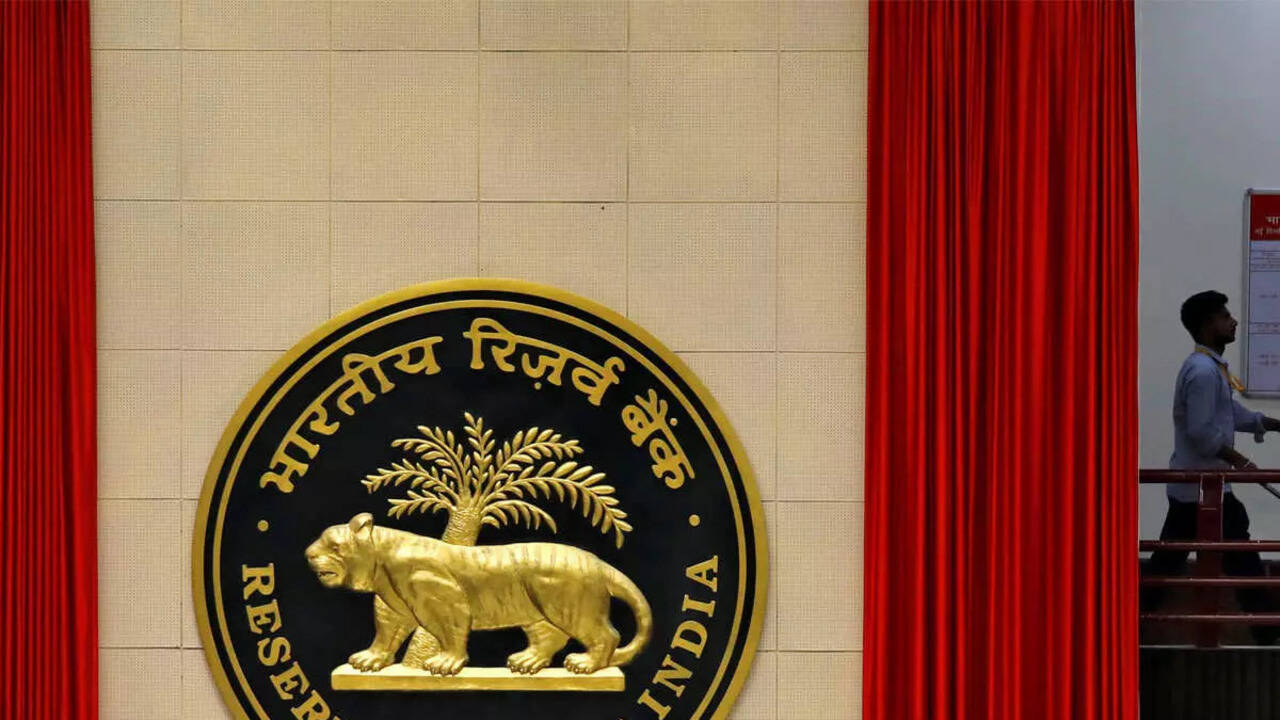
The Reserve Bank of India's special swap facility attracted $20.72 billion by July 17. Most of this money arrived through Foreign Currency Non-Resident deposits. Overseas Foreign Currency Borrowings and External Commercial Borrowings also contributed to inflows. This facility was launched to strengthen India's balance of payments and encourage capital. Banks anticipate a significant rise in FCNR(B) deposits before the September deadline. View More

Both Delhi and Chennai, being established logistics hubs, offer robust infrastructure and mature industrial ecosystems for companies, said industry experts. View More

The draft amendments will apply to buildings and building complexes with a proposed built-up area of 20,000 square metres or more View More

Ryanair's first-quarter profit took a 34% hit as consumers delayed bookings due to the Middle East crisis, while struggling airlines face a "difficult winter." View More
In this articleRYAAY0RYA-GBFollow your favorite stocksCREATE FREE ACCOUNT This photograph shows an aircraft of low-cost Irish airline Ryanair parked at the Thessaloniki airport "Makedonia", in Thessaloniki on May 7, 2026.Sakis Mitrolidis | Afp | Getty Images Ryanair warned on Monday that struggling European airlines are facing a "difficult winter" ahead, as the budget carrier reported first-quarter profit that took a 34% hit due to consumers delaying bookings amid the Middle East crisisThe airline saw its profit after tax in the April to June quarter fall to 538 million euros ($615.3 million), down from 820 million euros the previous year. Ryanair said 20% of its unhedged fuel was exposed to price spikes, while ticket fares declined 6%. Operating costs also rose 11% to 3.81 billion euros as the price of its 20% unhedged fuel more than doubled in the quarter.Shares were last seen down 6.8%. The stock is up nearly 5% this year.The company's jet fuel for 2027 is currently 80% hedged at $67 per barrel, and 15% hedged for 2028 at $85 per barrel. "Q1 fares (which benefitted from a full Easter during April 2025) required stimulation as the Middle East conflict led to consumer hesitancy, concerns about EU jet-fuel shortages, economic uncertainty and later bookings," Ryanair CEO Michael O'Leary said. O'Leary added that the company's "conservative hedging policy" insulates it from the volatility of oil prices as the Middle East turmoil continues, giving it a "cost advantage over all other EU competitors," while "unprofitable airlines face a difficult winter." Travelers were anxious to book their summer holidays at the onset of the war, forcing Ryanair to lower fares, which means despite increased traffic, revenue still took a hit, John Strickland, aviation analyst and director of JLS Consulting, explained on CNBC's "Squawk Box Europe" on Monday. "We've [got] over 715,000 people flying with us today," Ryanair's CFO Neil Sorahan said on CNBC's "Squawk Box" on Monday. "No shortage of bookings. No shortage of people traveling. They're just booking that little bit closer in. watch nowVIDEO5:2705:27Ryanair Group CFO Neil Sorahan: We could see weaker airlines fail over the next few monthsSquawk Box "I think there was some hesitancy back early in the first quarter, where there were some concerns around fuel supply. We all know that's not an issue. Lots and lots of fuel to get people out and back home again. Just good value for consumers in the market at the moment." Ryanair issued conservative guidance for the rest of its financial year, with operating costs highly dependent on the price of its unhedged jet fuel. Meanwhile, profit after tax remains "highly sensitive" to adverse geopolitical developments, including escalating conflict in the Middle East and Ukraine, the company said."Despite a recent, slight uptick in volumes, and less price stimulation, Q2 pricing is trending modestly down (y-o-y), and the final H1 fare outcome is heavily dependent on the strength of close-in bookings in Aug. and Sept," O'Leary said. "As is normal this early in the year, we have zero H2 visibility, so it remains far too early to provide any meaningful FY27 PAT guidance." Winter 'failures' coming CFO Sorahan noted that the Middle East conflict will lead to some "shakeout in capacity" in weaker European airlines. "There are a lot of carriers out there that don't have the cost base that Ryanair has, don't have the balance sheet," Sorahan said. "We paid down our final bond, 1.2 billion, in May, so we're now effectively debt-free, and we own all of the assets." "So I think once you get into the winter period, some of the weaker carriers are going to find it very difficult, and we may see some failures over the next number of months," Sorahan continued. The average price of jet fuel has surged to $127 per barrel for the week ending 10 July, up 41% from the prior year, per the International Air Travel Association's Jet Fuel Price Monitor.At the time, the International Energy Agency warned that Europe could run out of jet fuel in a matter of weeks, as the majority of its jet fuel imports came from the Middle East. The region has had to look to international markets to secure alternative supply. JLS' Strickland noted that a few smaller airlines have failed in recent weeks, with winter bringing even greater pressures from failures to cancelations. "I would expect to see much more severe cancelations in the weaker winter season this year than we've seen for a long time across a whole range of airlines if fuel prices stay high." watch nowVIDEO3:3603:36High fuel prices could spur winter flight cuts, says airline analystEurope Early Edition CEO O'Leary said in April: "We can guarantee people there'll be no price increases, no fuel hedging, no fuel surge levy surcharges, regardless of what happens to summer supply," he added. Strickland said the company benefits from a "load factor active revenue passive approach," which means selling seats at marginally low rates, while expecting passengers to spend on additional services."Of course, any passenger in a seat, even if the actual ticket price is low, they'll spend something, maybe just a cup of coffee on board, but it could well be an extra bag, or buying a rental car through Ryanair. So that's a massive driver, around about 20- 25% or so of the company's total revenues," Strickland said. Choose CNBC as your preferred source on Google and never miss a moment from the most trusted name in business news.