
Latest Sectors News

Walt Disney initiated a secret land acquisition strategy in Florida to develop Walt Disney World. The effort involved purchasing over 27,000 acres through front companies to maintain anonymity. This acquisition began in 1964 and was publicly revealed in 1965. While Disney did not survive to see the completion, his vision ultimately changed entertainment in America. The project included creating the Reedy Creek Improvement District for efficient management of infrastructure. View More

RBI rules may entitle customers to compensation when banks miss deadlines for services such as resolving failed digital transactions, closing credit cards, returning property documents or correcting credit reports. Compensation varies by case, from ?100 per day to ?5,000 per day. View More


Citi has helped Indian companies raise nearly $16 billion through debt and equity markets in 2026 and advised on M&A transactions worth over $36 billion amid strong deal activity View More
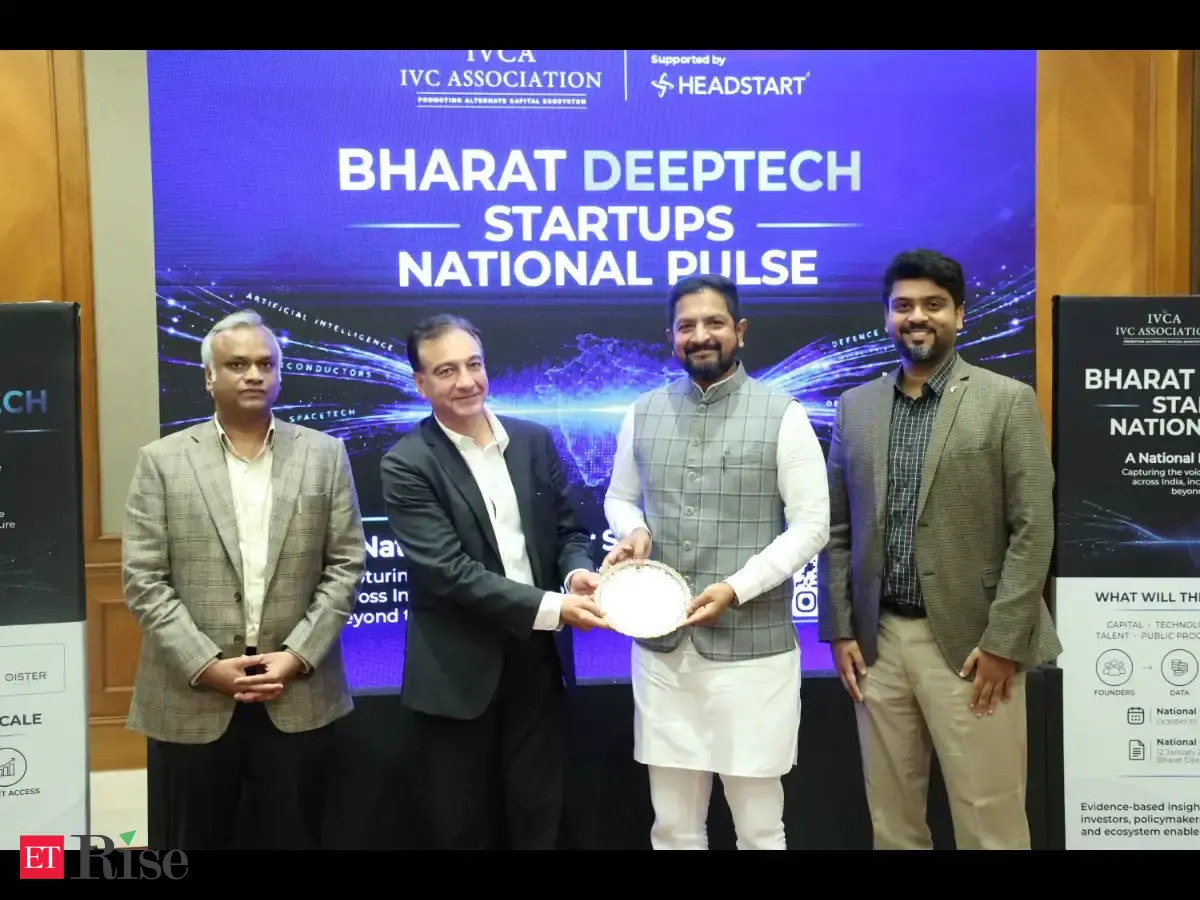
IVCA has announced a collaboration with Headstart Network Foundation to enhance India's DeepTech entrepreneurship ecosystem. This partnership includes hosting Bharat Pitchathon 2026 and launching the IVCA Bharat DeepTech Startups: National Pulse initiative. The National Pulse aims to gather insights from founders across various regions, capturing their experiences and challenges. View More
BENGALURU: The Indian Venture and Alternate Capital Association (IVCA), on Thursday, announced a collaboration with Headstart Network Foundation to strengthen engagement with India’s DeepTech founder ecosystem. As part of the collaboration, IVCA will join Bharat Pitchathon 2026 as a co-host and launch IVCA Bharat DeepTech Startups : National Pulse — a national, founder-led intelligence initiative designed to capture the experiences, challenges and priorities shaping DeepTech entrepreneurship across India. The collaboration comes as India’s DeepTech ecosystem enters a critical phase of scale across semiconductors, artificial intelligence, space, defence, biotechnology, quantum and clean energy. As global attention increasingly turns towards India for technology and engineering talent, the expansion of Global Capability Centres (GCCs), indigenous technology companies and science-led startups is further strengthening the country’s role as a base for R&D, technology development and innovation. Policy recognition is also evolving to reflect the longer development cycles and distinct needs of science-led ventures. IVCA’s Bharat DeepTech Report 2026 mapped capital flows across the sector, finding that Indian DeepTech attracted $11.4 billion in cumulative venture capital funding across 957 deals between 2015 and 2026 YTD, with 2025 recording the highest annual funding at $2.96 billion. Building on this investment-led view, the National Pulse will add a founder-led lens, capturing perspectives from established metropolitan hubs as well as Tier 2 and Tier 3 cities and emerging innovation clusters that remain underrepresented in ecosystem data and conversations. Through Headstart’s grassroots network across 30+ cities and IVCA’s engagement across private capital, industry, government and policy, the National Pulse will bring together credible data, founder sentiment, insights, statistics and stories from across India. The objective is to build a more representative picture of who is building DeepTech, where innovation is emerging, what founders need to scale, and how those requirements vary across regions - creating a stronger evidence base for investors, policymakers, corporates and ecosystem institutions. Rajat Tandon, President, IVCA, said in a statement, “India’s DeepTech opportunity will be built not only in our largest startup hubs, but increasingly across the hinterlands of the country. By joining Bharat Pitchathon 2026 as a co-host, IVCA intends to bring its investor network closer to founders across India - creating more opportunities for investor-founder engagement, mentorship and market access, while helping build a stronger pipeline of investable DeepTech companies from beyond the metros. This engagement also gives us an opportunity to listen systematically to founders across the country. Through IVCA Bharat DeepTech Startups: National Pulse, we want to capture their experiences, priorities and challenges - from capital and infrastructure to commercialisation, talent, customers and policy - and translate these insights into a stronger evidence base for investors, industry and policymakers. Ultimately, the objective is to connect more founders with capital and networks while ensuring that the next generation of India’s DeepTech companies can emerge from every part of the country.” Live Events Founder inputs for the National Pulse will be gathered alongside Bharat Pitchathon 2026 and through IVCA and Headstart’s wider ecosystem networks, enabling participation from established metropolitan hubs, Tier 2 and Tier 3 cities, and emerging innovation clusters across the country. The initiative will examine who is building DeepTech in India, where innovation is emerging, how companies are progressing from research and technology development to market adoption, and where founders continue to encounter barriers to capital, infrastructure, customers, talent and policy support. Highlighting the importance of capturing perspectives from founders beyond India’s traditional startup hubs, Gautham Sivaramakrishnan, Director, Headstart Network Foundation, said in a statement, “Some of India’s most promising early-stage DeepTech startups originate far beyond the metro cities. Headstart has consistently championed non-metro founders in their earliest days, from Sunfox in Dehradun and BonV in Bhubaneswar to hundreds of others who initially struggled with access to venture capital, but have gone on to raise hundreds of crores. These founders possess world-class talent and the ambition to build at scale, yet they face persistent visibility gaps with investors centered in cities like Mumbai, Gurugram, and Bengaluru. Bharat Pitchathon has always bridged this divide by unearthing promising startups across sectors nationwide. Partnering with IVCA this year enables us to double down specifically on DeepTech and integrate regional founder realities directly into the national narrative through IVCA’s Bharat DeepTech Startups: National Pulse” It will also capture founder sentiment, near-term priorities, policy asks and founder stories, while identifying regional strengths and ecosystem gaps across participating states. These insights will feed into the first IVCA Bharat DeepTech Startups: National Pulse Report, to be launched at the Bharat DeepTech Summit 2027, and establish a recurring founder-led intelligence layer for investor, industry and policy conversations. The collaboration brings together IVCA’s convening role across investors, industry and government with Headstart’s grassroots founder & incubator network across 30+ cities. Together, the two organisations will use Bharat Pitchathon 2026 as a national platform to surface founder perspectives, strengthen connections between DeepTech companies and the capital ecosystem, and build a more representative view of opportunities and bottlenecks across India’s emerging innovation hubs. IVCA will anchor the research and industry engagement for the National Pulse, while Headstart will support founder outreach and ecosystem participation through its city network. .Pbanner{display:flex;justify-content:space-between;align-items:center;background-color:#ec1c40;margin-top:20px;padding:5px 10px;border-radius:4px;color:#fff;line-height:10px;width: 100%;box-sizing: border-box} .Pbannertext{display:flex;align-items:center;font-size:16px;font-weight:600;font-family:'Montserrat';} .Pbannertext img{height:20px;margin:0 6px} .Pbannerbutton a{display:flex;align-items:center;background-color:#fff;color:#ec1c40;text-decoration:none;font-weight:600;padding:4px 8px;border-radius:6px;font-size:15px;font-family:'Montserrat';} .Pbannerbutton img{height:20px;margin-right:6px} .Pbannerbutton a:hover{background-color:#f7f7f7} Add as a Reliable and Trusted News Source Add Now!
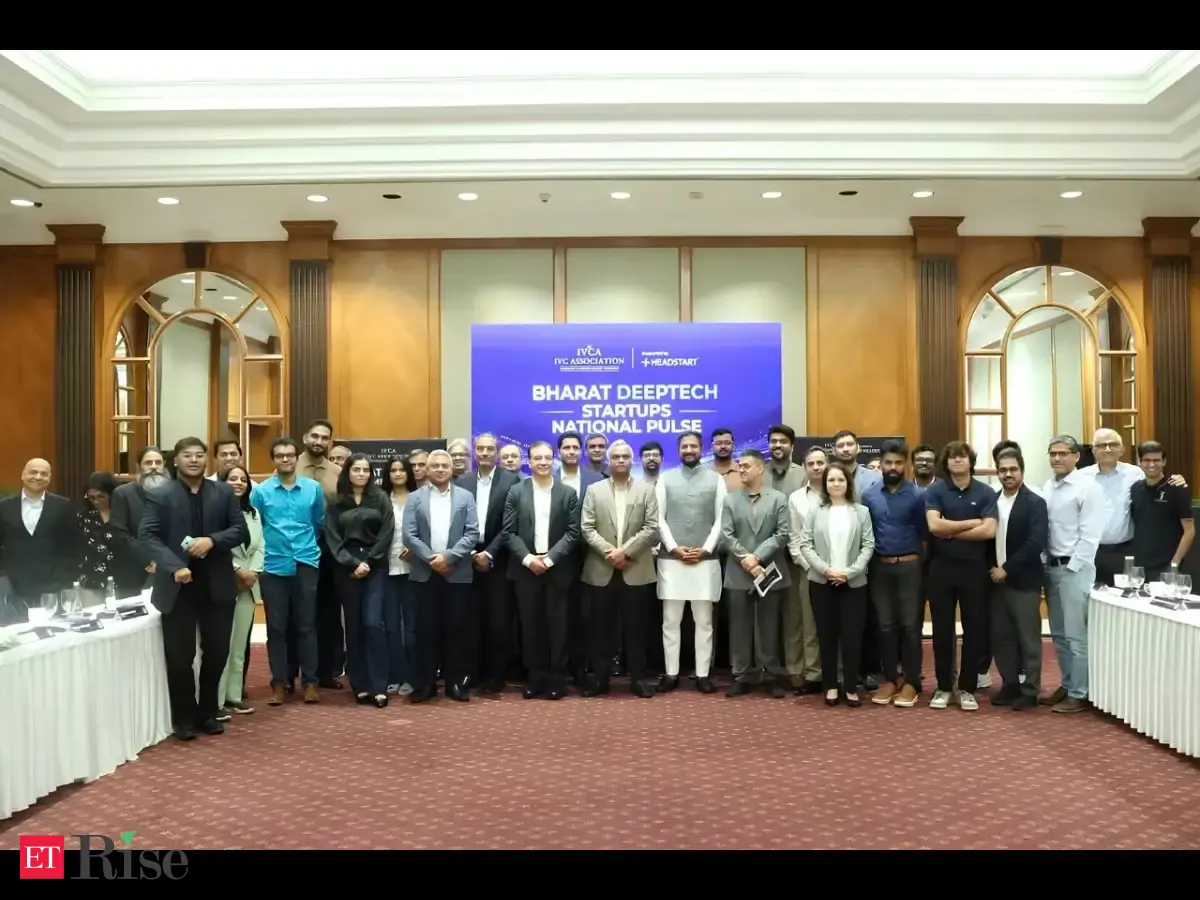
The Bharat DeepTech Roundtable took place in Bengaluru, organized by the Indian Venture and Alternate Capital Association. It brought together investors, policymakers, and industry leaders to discuss the commercialization of DeepTech. View More
BENGALURU: The Indian Venture and Alternate Capital Association (IVCA) convened the Bharat DeepTech Roundtable in Bengaluru, chaired by Priyank Kharge, Minister for Home Affairs, Information Technology, Biotechnology and E-Governance, Government of Karnataka. The closed-door discussion brought together investors, founders, policymakers, research institutions and industry leaders to identify practical steps to move Indian DeepTech ventures from research and demonstration to commercial adoption and scale. Held under the theme “From Mission to Market: What India Must Fast-Track, and What It Must Urgently Build”, the roundtable highlighted a proposed state-level government–investor co-investment framework covering joint funding, intellectual property and R&D. Participants called for beginning with a focused pilot, backed by clear accountability, before expanding the model. A joint framework for government–investor collaboration was identified among the next steps. The discussion also highlighted Karnataka’s “Government First” approach, under which the state outlined support for startups addressing public challenges through pilots, funding, sandbox environments and access to government databases. The state also agreed to explore shared Graphics Processing Units (GPUs) access through existing facilities and invited investors and ecosystem partners to engage with its Centres of Excellence. Kharge said in a statement, “Karnataka has always believed that innovation must translate into real-world impact. Our focus is on creating an environment where DeepTech startups can move beyond research and successful pilots to commercial deployment and scale. Through our Government First approach , we want to provide startups with opportunities to test, validate and deploy solutions to public challenges, while improving access to infrastructure, technology and markets. We are also keen to explore stronger collaboration with the investor community, including co-investment opportunities, to support promising technologies and build globally competitive companies from Karnataka.” A central concern was the shortage of capital at the research and proof-of-concept stages, particularly Technology Readiness Levels 1–3. Participants stressed the need to mobilise more patient domestic capital and create stronger pathways to follow-on funding. Equally pressing was the gap between successful pilots and commercial contracts: startups often demonstrate their technologies but struggle to secure first customers, procurement orders and repeat business in India. Live Events Manufacturing and enabling infrastructure emerged as another priority. Proposals included investor-run Centres of Excellence, shared rapid-prototyping facilities, improved access to compute, and faster approvals for hardware and manufacturing ventures. Participants also pointed to opportunities for Indian companies to build capabilities in imported components, specialty materials and other critical subsystems, supported by stronger domestic demand. Rajat Tandon, President, IVCA said in a statement, “India has made significant progress in building its DeepTech ecosystem, but the next phase depends on bridging innovation and commercialisation. Access to patient capital at the research and proof-of-concept stages remains critical, alongside pathways to first customers, manufacturing and scale. Our discussions with the Government of Karnataka highlight opportunities for investors, government and industry to collaborate. At IVCA, our partnership with Headstart will support DeepTech startups beyond metros, across India’s hinterlands. We will also collaborate with state and central governments to engage more corporates and GCCs in our DeepTech initiatives, developing practical models for co-investment, technology adoption and long-term growth.” The discussion explored the role of government as an early buyer, procurement opportunities extending to components and suppliers, and closer collaboration among startups, corporates and Global Capability Centres. Participants also called for greater access to international markets, stronger visibility for founders in Tier II and Tier III cities, and a more coordinated approach to connecting research, investment and industry. Among the proposed next steps are a joint government–investor collaboration framework, continued engagement with Karnataka’s innovation and market-access programmes, and a process to carry the roundtable’s recommendations to relevant government departments. The discussion’s consolidated themes will also inform IVCA’s ongoing DeepTech engagements ahead of the Bharat DeepTech Summit in New Delhi on 12 January 2027. .Pbanner{display:flex;justify-content:space-between;align-items:center;background-color:#ec1c40;margin-top:20px;padding:5px 10px;border-radius:4px;color:#fff;line-height:10px;width: 100%;box-sizing: border-box} .Pbannertext{display:flex;align-items:center;font-size:16px;font-weight:600;font-family:'Montserrat';} .Pbannertext img{height:20px;margin:0 6px} .Pbannerbutton a{display:flex;align-items:center;background-color:#fff;color:#ec1c40;text-decoration:none;font-weight:600;padding:4px 8px;border-radius:6px;font-size:15px;font-family:'Montserrat';} .Pbannerbutton img{height:20px;margin-right:6px} .Pbannerbutton a:hover{background-color:#f7f7f7} Add as a Reliable and Trusted News Source Add Now!

The sisters had a legal claim to their mother's property, but decades of silence and evidence of exclusion weakened their case before the court. View More
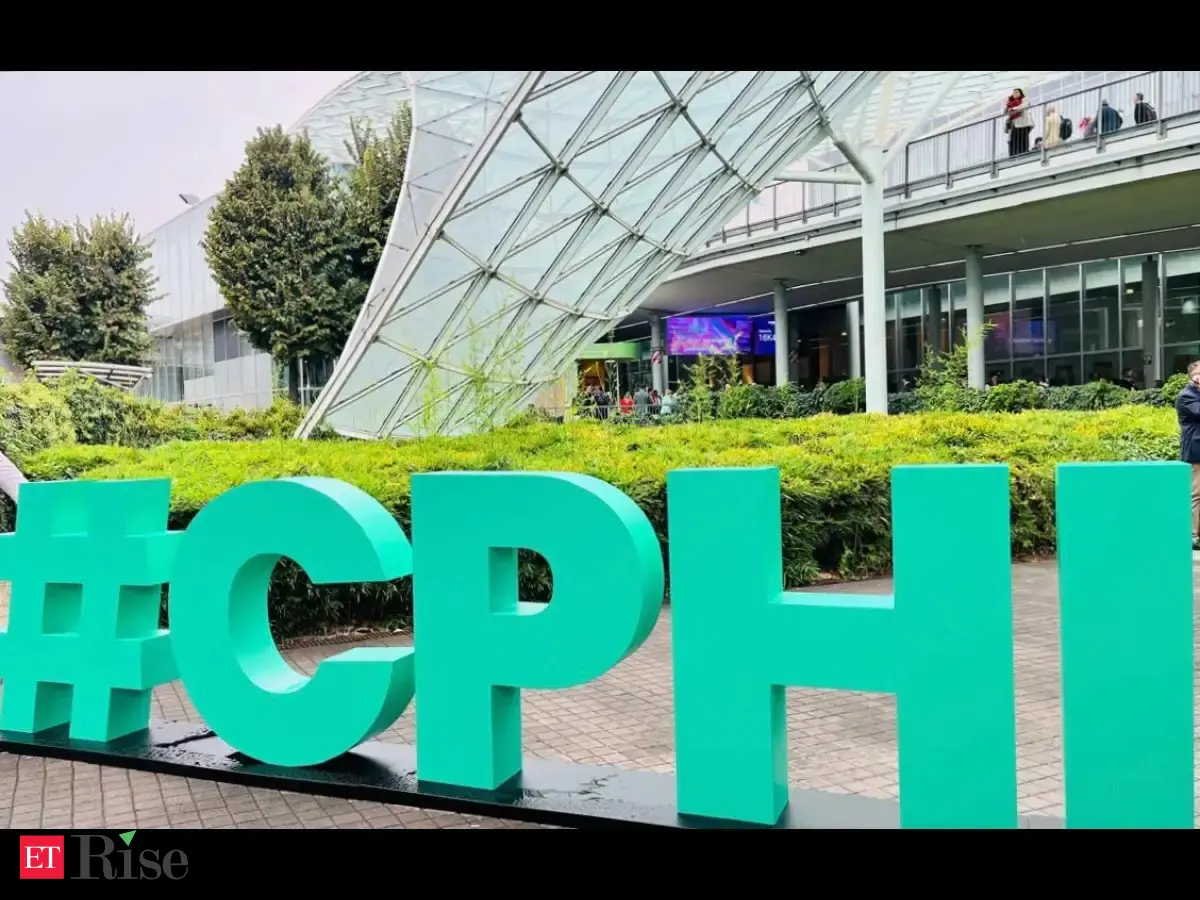
At CPHI Milan, Indian pharma players are looking beyond traditional exports, using partnerships, licensing, CDMO, and differentiated products to expand their global footprint as geopolitical and supply-chain risks reshape the industry. View More
MILAN: Indian pharmaceutical companies at CPHI Milan , Italy’s flagship pharma and chemicals expo, are looking to expand their businesses beyond traditional generic exports, as they explore collaborations, licensing deals, contract manufacturing, and higher-value products . The shift comes as geopolitical tensions, tariffs, and supply-chain disruptions push drugmakers to diversify markets and build a stronger foothold in global pharmaceutical supply chains . In today’s turbulent economic environment, the opportunity for Indian drugmakers is no longer limited to manufacturing medicines at lower costs for overseas markets and selling them overseas, companies at the expo told The Economic Times Digital . They said the focus is now shifting towards becoming strategic partners to global drugmakers through R&D, CDMO (contract development and manufacturing), licensing, co-development and access to regulated markets. B. Partha Saradhi Reddy, Chairman of Hetero Group, said the scale of customer engagement at CPHI reflected the event’s importance to the company's global strategy. “It’s all about meeting our global customers. We have close to 700 meetings in three days,” Reddy said. Officials from companies such as Cipla , Mankind Pharma , Cadila Pharmaceuticals, and Akums told The ET Digital that they are leveraging the Milan event to pursue partnerships, licensing opportunities, and international business. At the same time, several Indian companies are moving into oncology, respiratory products, biosimilars , specialty and chronic therapies, while expanding CDMO and product-development capabilities. Live Events The common thread visible at CPHI is a shift in India’s pharma export playbook: from selling more generic products overseas to becoming a more integrated and higher-value part of the global pharmaceutical supply chain. CPHI becomes a global deal-making platform For Indian players, the CPHI collaborations are more than just selling finished drugs. Cipla’s North America business came to Milan to strengthen existing partnerships and explore opportunities across generic medicines , specialty pharmaceuticals, oncology, respiratory products, and biosimilars. “We come to CPHI to attract new partners,” Cipla North America CEO Mark Falkin said. The Mumbai-headquartered pharma major has entered an exclusive partnership with China’s Qilu Pharmaceutical to license and commercialise QL2107, a biosimilar to pembrolizumab, in the US. The company is also expanding its US respiratory portfolio, having received approval from the USFDA for the generic Advair Diskus and the first AB-rated generic of Ventolin HFA. According to Falkin, the company is positioning itself for another phase of global growth. “Cipla is a 90-year entity, and we are positioning ourselves for the next 90 years, serving customers globally,” he said. At the expo, Mankind Pharma is pursuing both inbound and outbound opportunities. Prakash Aggarwal, President of strategy at Mankind Pharma and associated with Bharat Serums & Vaccines, said CPHI is being used to explore global products for in-licensing as well as opportunities to take Mankind’s R&D assets to international partners. “It’s a platform where we meet partners for in-licensing of products which are developed globally, as well as for out-licensing opportunities from our own R&D pipeline,” Aggarwal said. Delhi-based Akums Drugs & Pharmaceuticals is not behind; at the expo it is taking a broader approach, exploring contract manufacturing, product development, licensing, co-development, technology partnerships, distribution, and market-entry collaborations. “We are actively exploring new opportunities to build strategic partnerships across geographies and business models,” Shivangi Jain, Executive Director of Akums Drugs & Pharmaceuticals, said. The company is targeting both developed and emerging markets and wants to use its manufacturing, R&D and product capabilities to strengthen its regulated-market presence. Moving beyond traditional generics For Indian pharma, international expansion is increasingly about partnerships and market access, not exports alone. The shift is also visible in what Indian companies are trying to sell. Officials from Cadila Pharmaceuticals said the company is putting greater emphasis on CMO and CDMO opportunities. Surendra Narayan Singh, Vice President of Cadila's CDMO business, said global customers were looking for partners that could combine manufacturing capability with quality and delivery reliability. “Global partners are looking for reliable quality, reliable delivery, and a company that understands their requirements even before they articulate them,” Singh said. The pharma major is investing in dedicated facilities for injectables and oral solid dosage products and in new technologies for global markets. The common thread visible at CPHI is a shift in India’s pharma export playbook: from selling more generic products overseas to becoming a more integrated and higher-value part of the global pharmaceutical supply chain. The company has also seen strong interest at CPHI and is looking to convert that pipeline into business. “The expression of interest has been tremendous. There is a lot of traction, and we hope to convert this into sizeable business,” Singh said. Global drugmakers increasingly want partners that can support development, technology transfer, regulatory requirements, and production at scale. That raises the bar for Indian suppliers. Cost remains important, but quality, intellectual-property protection, regulatory compliance and supply security are becoming equally critical. Surat based Anupam Rasayan is pursuing a similar move up the value chain, from intermediates towards advanced intermediates and APIs in selected areas. The company is also targeting products where technical capability and supply security matter more than commodity-scale pricing. “We don’t want to compete with China in the commodity market,” Gopal Agrawal, CEO of Anupam Rasayan, said, adding that the strategy is to focus on specialised and higher-value products where Anupam can compete on chemistry capabilities, quality, supply security, and customer relationships rather than price alone. Geopolitics forcing companies to diversify Notably, the Indian pharma companies’ expansion is taking place against a more uncertain global backdrop. Tariffs, geopolitical tensions and shipping disruptions are forcing pharma companies to rethink market concentration and supply chains. Hetero operates in 120 countries, giving it a broad geographical footprint. But Reddy said geopolitical shocks can still affect individual markets. Recent turbulence in the Middle East, he said, had affected business in the region, although other markets remained relatively stable. For Indian pharma, international expansion is increasingly about partnerships and market access, not exports alone. The shift is also visible in what Indian companies are trying to sell. Geopolitical turbulence is something which we have to live with,” Reddy said, stressing that companies now need to factor geopolitical risks into business planning and costs. He added that tariffs were not Hetero’s biggest concern, but higher US tariffs could eventually increase the burden on patients and hurt global price competitiveness. He also lauded India's push to conclude more free-trade agreements, saying greater clarity could help companies plan international business. Other companies are also responding by deliberately spreading their market exposure across geographies. Cadila’s Singh mentioned that no single market contributes more than 20% of Cadila’s revenue, reducing dependence on the US or any other individual geography. Mankind is taking a different route by shifting its portfolio towards higher-margin chronic, specialty, and R&D-backed products. “The focus is on increasing the portfolio towards chronic and specialty assets, as well as R&D-backed assets,” Aggarwal said. The strategy is designed to give companies more room to absorb pricing and trade pressures while reducing dependence on any single market or product category. Europe+1 creates another opening for India As a result of supply chain pressures, rising energy and operating costs are making some manufacturing in Europe less competitive, creating room for suppliers outside the region. Anupam Rasayan’s Agrawal described this as “Europe plus one”—European companies continuing to serve their markets while looking outside the region for cost-efficient and reliable manufacturing. “Europe plus one is definitely a strategy which we are looking at,” Agrawal said. He added that some products were being discontinued in Europe because production had become uneconomical, while incremental demand could increasingly be served from countries such as India. According to him, the yet-to-be-tapped opportunity for Indian pharma and speciality chemical firms is not necessarily about replacing China. In his view, Indian companies can target products where customers want an additional manufacturing base because of cost, supply-chain or geopolitical considerations, he added. For suppliers, however, cost alone will not be enough, Agrawal added. With this focus, Anupam has built warehouses in Europe, the US, and Japan to strengthen supply reliability and is looking to move further up the value chain. “For China+1 to actualise, the global buyer needs to trust you for supply security, IP protection, quality and logistics resilience,” Agrawal said. The reporter attended CPHI Milan at the invitation of Anupam Rasayan. .Pbanner{display:flex;justify-content:space-between;align-items:center;background-color:#ec1c40;margin-top:20px;padding:5px 10px;border-radius:4px;color:#fff;line-height:10px;width: 100%;box-sizing: border-box} .Pbannertext{display:flex;align-items:center;font-size:16px;font-weight:600;font-family:'Montserrat';} .Pbannertext img{height:20px;margin:0 6px} .Pbannerbutton a{display:flex;align-items:center;background-color:#fff;color:#ec1c40;text-decoration:none;font-weight:600;padding:4px 8px;border-radius:6px;font-size:15px;font-family:'Montserrat';} .Pbannerbutton img{height:20px;margin-right:6px} .Pbannerbutton a:hover{background-color:#f7f7f7} Add as a Reliable and Trusted News Source Add Now!
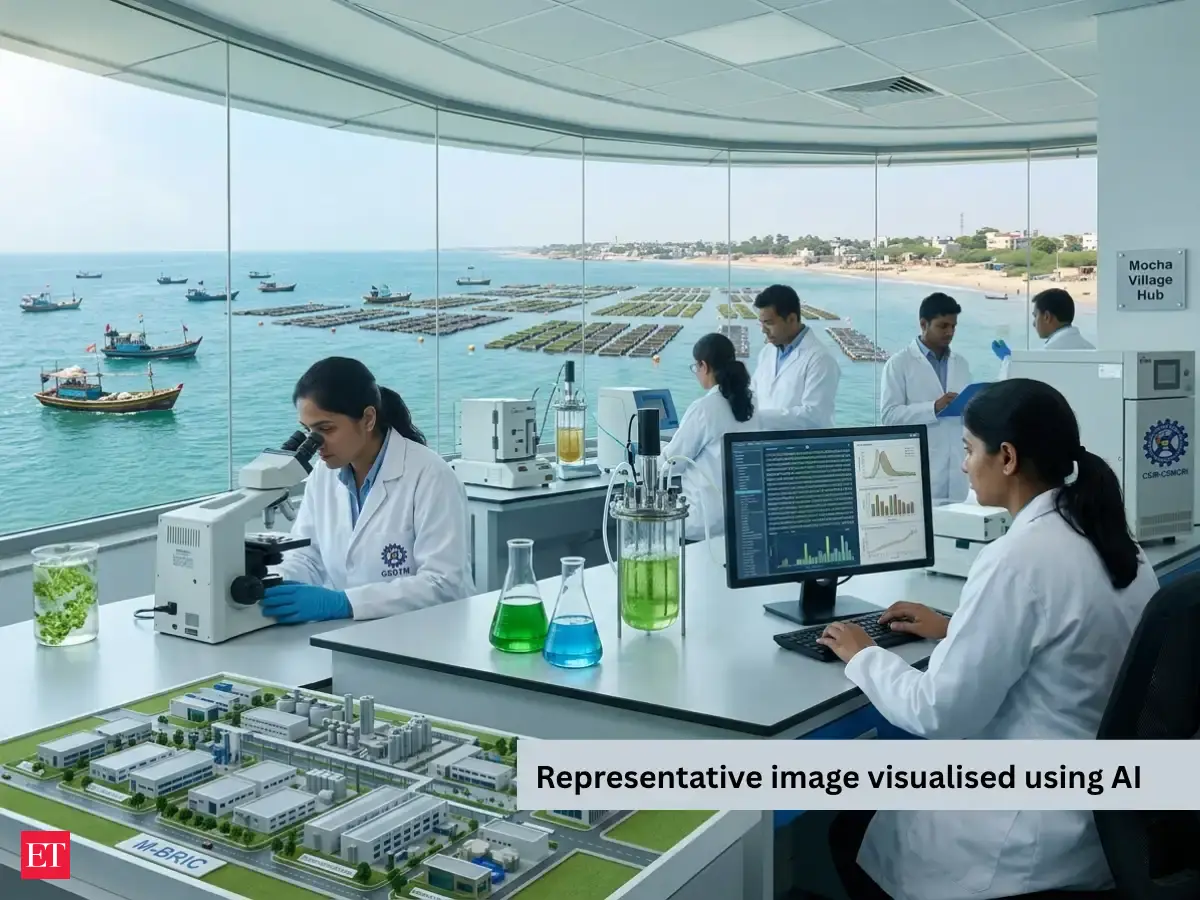
An initiative of the Gujarat State Biotechnology Mission (GSBTM), Department of Science and Technology, the proposed corridor is envisioned as an integrated ecosystem connecting marine science, biotechnology research, field cultivation, technology development, pilot-scale biomanufacturing, entrepreneurship and commercialisation, according to the Chief Minister's Office. View More
Gujarat is planning to invest Rs 100 crore over five years to develop a Marine Biotechnology Research & Innovation Corridor (M-BRIC) in Mocha village in Porbandar district. The proposed project aims to turn the state's marine biological resources into high-value products while creating new business and livelihood opportunities for coastal communities. The initiative is being led by the Gujarat State Biotechnology Mission (GSBTM) under the Department of Science and Technology. It is planned as an integrated ecosystem connecting marine research, biotechnology, manufacturing, startups and commercialisation. Gujarat marine biotechnology corridor: What is M-BRIC? The proposed M-BRIC corridor will bring government departments, research institutions, universities, industries, startups, MSMEs and coastal communities together on a common platform. The objective is to build a complete value chain, from identifying marine biological resources and conducting research to developing technologies, testing products, scaling up manufacturing and taking them to the market. Read more - Railways targets 11 trains with 40+ hour journeys: Passengers may soon see a big change in how coaches are cleaned en route The government plans to use technologies such as genomics, bioinformatics and advanced bioprocessing to develop products from marine resources. Rs 100 crore investment over five years The Gujarat government has proposed an investment of Rs 100 crore over five years for the development of the corridor. An MoU is proposed between GSBTM, the Department of Science and Technology and CSIR-Central Salt and Marine Chemicals Research Institute (CSIR-CSMCRI) for setting up M-BRIC. Live Events CSIR-CSMCRI is expected to serve as a key scientific partner, contributing expertise in areas including seaweed biotechnology, marine bioproducts, saline agriculture, bioprocessing and technology transfer. Read more - Not showing on Google Maps, but Delhi Traffic Police says Barapulla Phase-III is heavily congested: Why it is happening and what commuters should do Mocha in Porbandar to be the main hub Mocha village in Porbandar district has been identified as the principal hub for the proposed marine biotechnology corridor. The location is expected to connect marine research with field cultivation, processing, entrepreneurship and participation from coastal communities. The network could also extend to other parts of Saurashtra and Gujarat's coastline. Microalgal biorefineries are proposed at salt-pan facilities associated with CSIR-CSMCRI in Bhavnagar. Seaweed processing cluster planned A dedicated seaweed-processing cluster is also part of the proposal. It will have facilities for receiving, washing, pre-processing, extracting, drying, powdering, packaging, storing and quality testing seaweed. A state-level seaweed brood bank is proposed to supply elite planting material of Kappaphycus alvarezii and Gracilaria dura. The corridor will also explore the production of seaweed-derived substances such as agar, alginate and carrageenan, which are used across multiple industries. From seaweed to nutraceuticals and biofertilisers Gujarat's marine resources, including seaweed, microalgae, marine microorganisms and saline ecosystems, could be used to develop a range of products. The proposed applications include: Biofertilisers and biostimulantsNutraceuticals and cosmeceuticalsAquafeed and animal nutrition productsEnzymes and biosurfactantsPharmaceutical intermediatesMarine-derived biomaterialsOmega-3 fatty acids and other bioactive compoundsPhycocolloids and other seaweed-based products The focus will be on moving beyond the conventional extraction of marine resources towards technology-driven industries with greater value addition. Startups and pilot manufacturing to get support M-BRIC is also expected to include incubation facilities for startups and entrepreneurs. Pilot-scale bioprocessing and biomanufacturing facilities will help companies test technologies and products before moving towards commercial-scale production. The proposed ecosystem will also support prototype development, intellectual property protection, regulatory assessment, licensing and technology transfer. Coastal communities to get training The project is not limited to industrial development. The government plans capacity-building programmes for coastal youth, seaweed farmers, fishing communities, women-led enterprises, MSMEs, students and entrepreneurs. Training could cover seaweed cultivation, aquaculture, marine biotechnology, genomics, bioinformatics, natural products, bioprocessing and entrepreneurship. The initiative is intended to create new livelihood opportunities while connecting local communities with the growing marine biotechnology industry. Blue economy and sustainability focus Environmental sustainability is expected to be a key part of the proposed corridor. The government plans to promote the efficient use of marine biomass through a biorefinery model, with the aim of reducing waste and increasing the value obtained from resources such as seaweed and microalgae. The project also envisages environmental monitoring, biodiversity assessments and responsible utilisation of marine genetic resources. Research into blue carbon and climate-resilient coastal development is another proposed area of work. Gujarat's push for the blue bioeconomy The M-BRIC project is being developed in line with Gujarat's biotechnology ecosystem, India's Blue Economy priorities and the BioE3 framework. With the proposed Rs 100 crore investment, Gujarat aims to create a dedicated platform where marine research can move from laboratories to commercial products, while also supporting startups, industries and coastal livelihoods. Inputs from ANI .Pbanner{display:flex;justify-content:space-between;align-items:center;background-color:#ec1c40;margin-top:20px;padding:5px 10px;border-radius:4px;color:#fff;line-height:10px;width: 100%;box-sizing: border-box} .Pbannertext{display:flex;align-items:center;font-size:16px;font-weight:600;font-family:'Montserrat';} .Pbannertext img{height:20px;margin:0 6px} .Pbannerbutton a{display:flex;align-items:center;background-color:#fff;color:#ec1c40;text-decoration:none;font-weight:600;padding:4px 8px;border-radius:6px;font-size:15px;font-family:'Montserrat';} .Pbannerbutton img{height:20px;margin-right:6px} .Pbannerbutton a:hover{background-color:#f7f7f7} Add as a Reliable and Trusted News Source Add Now! (You can now subscribe to our Economic Times WhatsApp channel) (You can now subscribe to our Economic Times WhatsApp channel)
