
Latest Sectors News

Michael Nussen transferred his Brooklyn property to William Nussen for $10 following a financial dispute. This led to a significant court ruling regarding the fraudulent nature of the transfer. The court found no fair consideration in the property conveyance amid claims against Michael for unpaid rent and loans. Evidence indicated the transfer aimed to hinder creditor collection, raising serious concerns. View More
Michael Nussen transferred his Brooklyn property to William Nussen for $10 following a financial dispute. This led to a significant court ruling regarding the fraudulent nature of the transfer. The court found no fair consideration in the property conveyance amid claims against Michael for unpaid rent and loans. Evidence indicated the transfer aimed to hinder creditor collection, raising serious concerns. View More
Michael Nussen transferred his Brooklyn property to William Nussen for $10 following a financial dispute. This led to a significant court ruling regarding the fraudulent nature of the transfer. The court found no fair consideration in the property conveyance amid claims against Michael for unpaid rent and loans. Evidence indicated the transfer aimed to hinder creditor collection, raising serious concerns. View More
Michael Nussen transferred his Brooklyn property to William Nussen for $10 following a financial dispute. This led to a significant court ruling regarding the fraudulent nature of the transfer. The court found no fair consideration in the property conveyance amid claims against Michael for unpaid rent and loans. Evidence indicated the transfer aimed to hinder creditor collection, raising serious concerns. View More
Michael Nussen transferred his Brooklyn property to William Nussen for $10 following a financial dispute. This led to a significant court ruling regarding the fraudulent nature of the transfer. The court found no fair consideration in the property conveyance amid claims against Michael for unpaid rent and loans. Evidence indicated the transfer aimed to hinder creditor collection, raising serious concerns. View More
Michael Nussen transferred his Brooklyn property to William Nussen for $10 following a financial dispute. This led to a significant court ruling regarding the fraudulent nature of the transfer. The court found no fair consideration in the property conveyance amid claims against Michael for unpaid rent and loans. Evidence indicated the transfer aimed to hinder creditor collection, raising serious concerns. View More

When siblings or family members sell jointly owned inherited property, LTCG tax is calculated separately on each person's ownership share. Here's how co-owners can calculate gains, claim tax exemptions and avoid disputes over ownership percentages. View More

The court also observed that the right to reside in a property forms part of the maintenance that parents are entitled to under the Maintenance and Welfare of Parents and Senior Citizens Act, 2007. View More

By bringing manufacturing facilities, ports, and logistics infrastructure closer, these corridors can streamline supply chains, reduce logistical bottlenecks, and make operations more efficient for occupiers. View More
India’s warehousing map is entering a new phase of evolution. While proximity to consumption centres and highways has traditionally dictated location strategy, the rise of export-oriented manufacturing is introducing a new variable into the equation: proximity to global trade gateways. As per a recent CBRE report, almost 95% of the country’s trade volume and 70% of its value are carried out via maritime modes, with policy initiatives and investments worth over Rs 5.8 lakh crore aiding in the modernisation of the industry. India’s current coastline features 12 major ports and more than 200 non-major ports, with two additional major ports, namely Vadhavan Port and Galathea Bay Port, under construction and expected to become operational within the next five years. The increasing globalisation of manufacturing means that access to ports is becoming an important consideration alongside highways and consumption centres. This is because of the impact that location can have on logistics factors, such as transport costs, dwell time, inventory turnover, and logistics visibility. Consequently, the warehousing geography of the country is evolving from being consumption-centric to a geography that is equally production- and trade-oriented. When the port becomes part of the warehouse equation For such export-import-dependent companies, the key value proposition offered by grade A warehouses will be in their ability to integrate the factory and the gateway, as well as the gateway and the hinterland. There is a range of industries, including auto components, electronics, chemicals, and textiles, which could benefit from supply chains that minimise inland transport, handling, and uncertainties. The key issue then shifts from proximity to the port to location in a wider system of integration of manufacturing centres, gateways and domestic markets. Live Events Such situations are unfolding in a variety of distinct coastal industrial corridors . In the JNPT-Mumbai-Pune area, the key value proposition is provided by a combination of a gateway port and an existing manufacturing centre. The Mundra industrial zone in Gujarat provides the same for the West and North Indian hinterlands. To the south, there is the Chennai-Ennore-Krishnapatnam area for manufacturing and east coast port facilities, along with Vizag and Kakinada. Visakhapatnam is positioning itself not just as a site for shipyards but as a maritime industrial centre that would take advantage of its port facilities, manpower, engineering skills, and linkages. Sagarmala concentrates on port connectivity , port-driven industrialisation, and multimodal transport. It has 845 projects to the tune of Rs 6.06 lakh crore under implementation, and Sagarmala 2.0, funded by Rs 85,482 crore, is expected to bring in another Rs 3.6 lakh crore in investments. The government is implementing these projects in 11 industrial corridors with Rs 3,000 crore allocated for the National Industrial Corridor Development and Implementation Trust (NICDIT) under the Union Budget 2026-27. Meanwhile, dedicated freight corridors are enhancing the railway connectivity between gateways and industrial nodes in the hinterlands. This is because improved road and rail connectivity makes potential locations outside of urban agglomerations viable for businesses. The challenge is not to locate all warehouses adjacent to ports but to identify locations where port connectivity meets industrial demand, multimodal logistics potential and attractive land economics. The port-centric development has also facilitated clustering of manufacturing plants along the multimodal corridors. Development of Special Economic Zones (SEZs) near the ports has contributed to this phenomenon through availability of industrial land and efficient trading processes. This broader change is also backed by the Maritime India Vision 2030, which involves over 150 schemes with planned investment of Rs 3-3.5 lakh crore. The goal is to enhance logistics efficiency and the maritime capacity of India. Grade-A warehouse near port requires different operational requirement Graded-A warehousing that is associated with ports needs specific infrastructure, such as those that are customs-bonded or FTWZ (Free Trade Warehousing Zone)-compliant, near CFSs (Container Freight Stations) and ICDs (Inland Container Depots), high floor loading capacity, good docks, truck marshalling yards, and parking space. Having a strong presence in Tier-II and Tier-III cities is emerging as a key strategic advantage, driven by improving connectivity to existing and upcoming ports and the growth of manufacturing and consumption hubs. As industrialisation expands beyond major metropolitan areas, these cities are playing an increasingly critical role in shaping the future of warehousing and logistics. The increase in cargo volume and improved connectivity is one of the reasons behind the rise in Grade-A logistics parks and FTWZs. FTWZs, with their advantages of deferred duties and increased inventory flexibility, can accommodate global supply chain operations. Further enhancements through regulatory changes have made it more lucrative. The Union Budget 2026-27 envisages a transformation of the customs warehousing system through the adoption of self-declaration, electronic monitoring, and risk-based inspections to help minimise delays and compliance expenses. It becomes even more desirable for Grade-A assets that can incorporate EXIM (Export-Import) functions from the start without major adjustments. Another major criterion that must be considered is the environmental sustainability factor. For international manufacturers and logistics operators, energy efficiency, renewable energy adoption, water conservation, and adherence to green building standards are key considerations. The market is growing, so are the choices for developers According to Colliers, Grade-A industrial and warehousing space leasing in the eight top Indian cities stood at 11 million sq. ft in Q1 2026, showing a year-on-year growth of 22%. While third-party logistics (3PLs) constituted one-third of all leases, e-commerce companies and automobile businesses also performed strongly in terms of leasing, making them two-thirds of the total demand. The warehousing story of India is now moving beyond the traditional hubs of consumption. With the emergence of port-integrated manufacturing hubs and corridors, coastal industrial corridors are generating demand in themselves and adding value throughout the real estate landscape. For developers, investors, and occupiers alike, port-integrated corridors and SEZs have much to offer by way of scale, connectivity, and stability. The combination of manufacturing and ports and logistics infrastructure within such corridors can streamline supply chains and reduce logistical bottlenecks and make operations more efficient for the occupiers, while also allowing developers to build institutional-quality warehouses in new places. The author is Joint Managing Director, TVS Industrial & Logistics Parks. Views are personal. .Pbanner{display:flex;justify-content:space-between;align-items:center;background-color:#ec1c40;margin-top:20px;padding:5px 10px;border-radius:4px;color:#fff;line-height:10px;width: 100%;box-sizing: border-box} .Pbannertext{display:flex;align-items:center;font-size:16px;font-weight:600;font-family:'Montserrat';} .Pbannertext img{height:20px;margin:0 6px} .Pbannerbutton a{display:flex;align-items:center;background-color:#fff;color:#ec1c40;text-decoration:none;font-weight:600;padding:4px 8px;border-radius:6px;font-size:15px;font-family:'Montserrat';} .Pbannerbutton img{height:20px;margin-right:6px} .Pbannerbutton a:hover{background-color:#f7f7f7} Add as a Reliable and Trusted News Source Add Now!
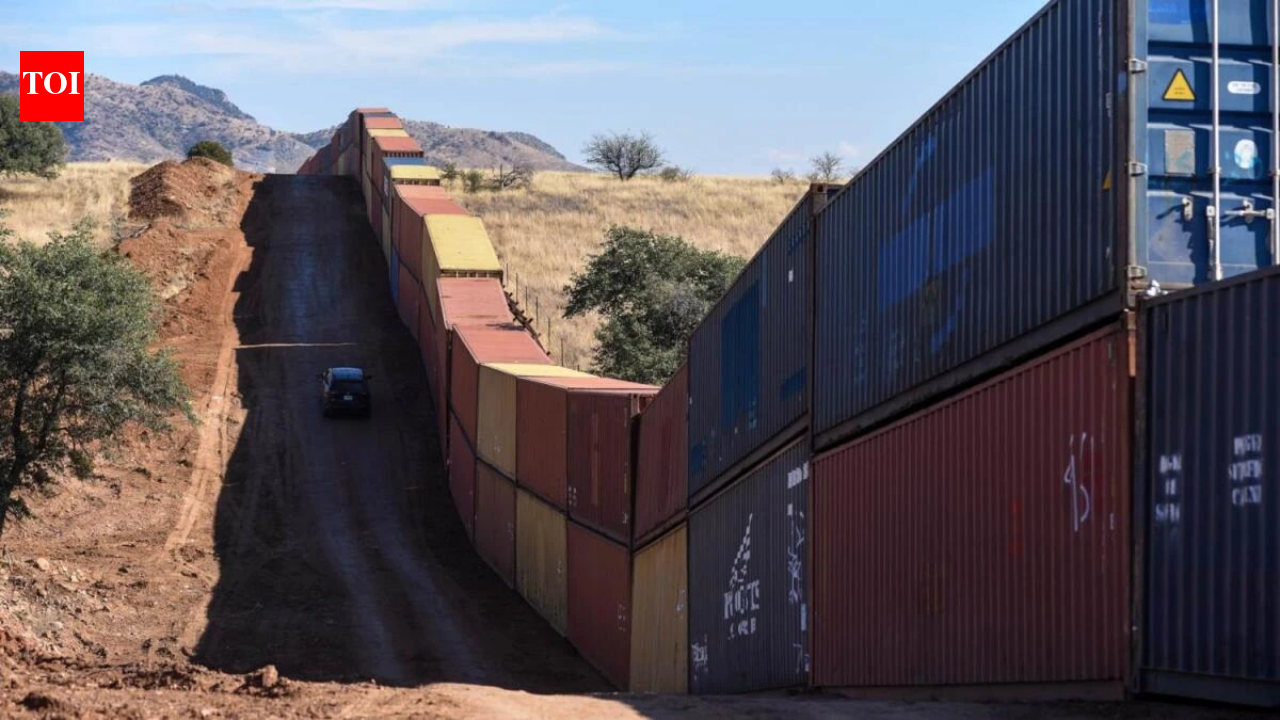
Boxes of Hope has joined forces with La Frontera to transform steel shipping containers into affordable housing solutions. With a vision to establish between 350 and 450 rental units, the initiative will also provide essential services like behavioral healthcare and job training. Currently in the planning phase, with fundraising underway, the project aims to commence site development by 2027, addressing Tucson's growing affordable housing crisis as many await support. View More