
Latest Sectors News

The wildfires in Spain and France advanced quickly because of tinderbox conditions worsened by successive heatwaves the two countries have experienced since May. View More

Saudi Arabia intercepted two ballistic missiles from Yemen, Greek security sources told Reuters, as fighting in a second front in the Iran war escalates. View More
Fighters supporting the Aden-based internationally-recognised Yemeni government gather during a vigil along the Red Sea shore in Khokha, in Yemen's western Hodeidah province on July 20, 2026, calling for a resumption of hostilities with the Huthi group currently controlling the capital Sanaa. (Photo by Khaled ZIAD / AFP via Getty Images)Khaled Ziad | Afp | Getty Images Saudi Arabia said on Saturday that its coalition forces struck Houthi militia in Yemen after the Iran-backed group claimed to have attacked two Saudi oil tankers in the Red Sea earlier in the week.Air defenses in Saudi Arabia reportedly intercepted two ballistic missiles from Yemen.The latest salvos appeared to indicate an escalation in fighting in a second front in the Iran war.The Saudi strikes "focused solely on legitimate military targets that the terrorist Houthi militia uses to threaten commercial vessels in the Red Sea," Major General Turki Al-Malki, spokesperson for the Saudi-led Coalition to Restore Legitimacy in Yemen, said in a statement.On Thursday, U.S. President Donald Trump said he would hold Iran responsible for further attacks by the Houthis, after the militant group said it had struck the Saudi tankers."If they do this again, the U.S. will hold Iran responsible, in that the Houthis are a Surrogate and/or Proxy of Iran, and major military punishment will be inflicted upon Iran and, of course, the Houthis, themselves," he said in a Truth Social post.The Houthis declared a maritime embargo against Saudi Arabia on Monday, threatening to cut off the kingdom's oil exports through the Red Sea and the Bab el-Mandeb Strait.Al-Malki said the Houthis had carried out a "reckless and cowardly act by targeting commercial vessels in the Red Sea."Reuters quoted Greek security sources as saying that air defense systems in Saudi Arabia intercepted two ballistic missiles from Yemen on Saturday targeting oil refineries in Yanbu, a day after U.S. forces launched fresh air strikes on Iran.Saudi Civil Defence said it issued several warnings for Yanbu, located on the Red Sea, and later said the danger had passed. There were no immediate official reports of damage.The defense system was operated by Greek military personnel, the sources were quoted as saying.U.S. forces had launched air strikes on Iran late on Thursday and early on Friday, the 13th consecutive night of attacks.The military reportedly attacked a merchant vessel that was trying to breach its blockade of Iran's ports,The Associated Press quoted U.S. Central Command spokesman Capt. Tim Hawkins as saying that American forces disabled the M/T Lavine in the Gulf of Oman after the ship attempted to run the blockade at least four times.Trump said he will soon make a decision on whether to launch a "massive attack" on Iran.At the same time, Pakistan is looking for ways to restart stalled peace talks between the U.S. and Iran, Reuters reported Friday morning, citing three Pakistani sources.Speaking to Axios on Thursday, the president said that the proposed strikes would be bigger than anything seen in the war so far, and that Iran has not "received enough pain yet."â Reuters and The Associated Press contributed to this report. Choose CNBC as your preferred source on Google and never miss a moment from the most trusted name in business news.

Investors navigated everything from escalating tensions in the Middle East to key tech earnings reports to healthcare developments. View More
It was a tough week for stocks, as investors navigated everything from escalating tensions in the Middle East to key tech earnings reports to healthcare developments. Logging their second straight weekly losses, the S & P 500 slipped 0.6%, while the tech-heavy Nasdaq fell 2.1%. Here's a closer look at what drove the trading action. Oil prices are back in the driver's seat Oil spiked for a third week in a row on Iran war uncertainty. U.S. benchmark West Texas Intermediate crude jumped more than 8%, while international Brent crude surged nearly 10%. Oil prices jumped on Monday after President Donald Trump warned that Iran would pay for the deaths of three U.S. service members "many times over." They gained momentum throughout the week after Trump threatened again to bomb Iranian bridges and power plants and Secretary of State Marco Rubio said Tehran was not serious about reaching a deal to end the fighting. By Thursday, fears that the conflict could spread beyond Iran intensified after Houthi militants claimed attacks on Saudi oil tankers in the Red Sea, sending Brent crude above $100 a barrel for the first time since before the U.S. and Iran reached an interim ceasefire agreement last month. While oil prices pulled back Friday on hopes of restarted U.S.-Iran peace talks, the week's sharp move higher underscored how quickly geopolitical tensions can reshape the market narrative. The surge in crude reignited inflation concerns, pushing the 10-year Treasury yield to its highest level since January 2025. With the Federal Reserve meeting next week, the odds of an interest rate hike went up. According to the CME FedWatch tool , the markets are now pricing in a nearly 35% probability of a quarter-point increase in rates, up from just a 13% chance one week ago. Wall Street raises the bar for AI spending Artificial intelligence remained a dominant theme of earnings this week, and investors made one thing clear: They're no longer willing to reward massive spending without seeing a clear path to returns. Club holding Alphabet became the clearest example after reporting Wednesday evening better-than-expected revenue and earnings and Google Cloud growth of 82% year over year. Shares of the Google parent fell 7% on Thursday, as investors focused on Alphabet's decision to once again increase its capital expenditures (capex) outlook. Management now expects to spend between $195 billion and $205 billion on capital expenditures this year and signaled spending will rise again in 2027. With free cash flow turning negative, Wall Street is becoming increasingly skeptical that hyperscalers can continue pouring hundreds of billions of dollars into AI infrastructure without showing a greater financial payoff. Alphabet was the fourth worst performer in the Club portfolio this week, down 7.8%. Capex levels will be the focus when our three other hyperscalers â Amazon , Meta Platforms , and Microsoft â report next week. Club name Intel 's results this past Thursday night told the other side of the story. The chipmaker delivered its strongest quarterly revenue growth since 2011 , fueled by a 59% jump in data center revenue as enterprises continue investing aggressively in AI infrastructure. However, we were slightly disappointed that Intel did not announce a major foundry customer. On Tuesday, Intel did announce cybersecurity company Fortinet as its first named foundry customer. Several other companies, including Apple , have been rumored to be partnering with Intel, but no formal agreements have been announced. Intel opened higher Friday but reversed lower, closing down nearly 8%. That put Intel 3% in the red for the week. Data center-exposed earnings mixed GE Vernova served as a prime example of why investors need to look beyond the headline numbers. Shares fell roughly 8% on Wednesday after the Club holding missed Wall Street's earnings-per-share (EPS) estimate. While a miss is never ideal, we think investors focused on the wrong metric . The more important number was order growth, which surged 88%, driven by exceptionally strong demand across the firm's Power and Electrification businesses, which are key to running AI data centers. For a company like GE Vernova, orders provide a much better gauge of future growth than quarterly earnings because they reflect customer demand rather than past deliveries. To us, this is exactly the kind of long-term story investors should embrace. Shares of GE Vernova rebounded 4.7% on Thursday, but fell 1.6% on Friday. They ended the week down roughly 4.1%. Dover , on the other hand, reinforced why we think it's time to move on . Shares of the industrial firm dropped almost 8% on Thursday after delivering a mixed quarter, with earnings narrowly topping expectations but revenue falling short. While the company has meaningful exposure to attractive secular growth areas like AI data centers, those businesses account for only about 25% of expected 2026 revenue. The remainder of its portfolio is spread across a collection of slower-growing industrial businesses, making it difficult for investors to view Dover as a pure-play beneficiary of the AI themes driving the market. We already trimmed the position twice in June, locking in double-digit gains. Shares of Dover rebounded 2.2% on Friday but finished the week down 5.6%. Healthcare catalysts While technology dominated much of the week's attention, two of the Club's healthcare names delivered reminders that some of the market's most compelling long-term growth stories exist beyond AI . Eli Lilly announced encouraging late-stage data for its next-generation obesity drug, triple-acting retatrutide. Shares rose 2% on Thursday's news. The therapy has generated excitement because it has demonstrated greater weight loss than Lilly's own Zepbound and Novo Nordisk 's Wegovy. Investors initially focused on management pushing its regulatory filing into the first quarter of 2027. We think the more important takeaway is how Lilly plans to file. Rather than using the traditional new drug pathway, the company intends to submit retatrutide as a biologic, a route that generally provides stronger intellectual property protections and exempts the drug from Medicare price negotiations under the Inflation Reduction Act. In our view, a slightly later launch is a reasonable tradeoff if it extends the commercial life of what could become one of Lilly's most valuable products. Shares of Lilly gained 1.4% for the week. Johnson & Johnson also delivered an important positive surprise after the FDA approved its Ottava robotic surgery system months earlier than investors expected. Shares rose 2% on the news on Wednesday. The approval gives J & J a foothold in the rapidly growing robotic surgery market, long dominated by Intuitive Surgical , and provides an important catalyst for its MedTech business, which has recently lagged the company's pharmaceutical segment. J & J stock finished 4.1% higher for the week. (See here for a full list of the stocks in Jim Cramer's Charitable Trust.) As a subscriber to the CNBC Investing Club with Jim Cramer, you will receive a trade alert before Jim makes a trade. Jim waits 45 minutes after sending a trade alert before buying or selling a stock in his charitable trust's portfolio. If Jim has talked about a stock on CNBC TV, he waits 72 hours after issuing the trade alert before executing the trade. THE ABOVE INVESTING CLUB INFORMATION IS SUBJECT TO OUR TERMS AND CONDITIONS AND PRIVACY POLICY , TOGETHER WITH OUR DISCLAIMER . NO FIDUCIARY OBLIGATION OR DUTY EXISTS, OR IS CREATED, BY VIRTUE OF YOUR RECEIPT OF ANY INFORMATION PROVIDED IN CONNECTION WITH THE INVESTING CLUB. NO SPECIFIC OUTCOME OR PROFIT IS GUARANTEED.
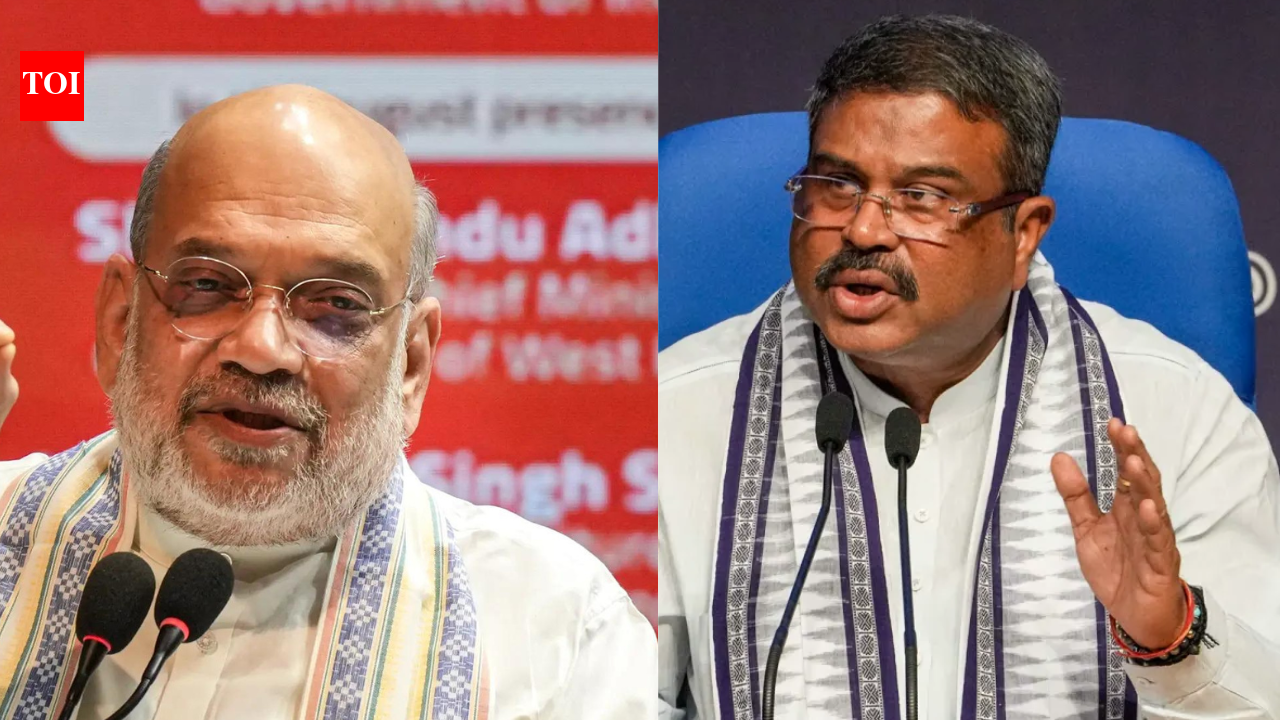
Union Home Minister Amit Shah stated the country and students are more important than any position. He reaffirmed the Modi government's commitment to reforms against paper leaks. Dharmendra Pradhan resigned as Union Education Minister amid nationwide protests over the NEET-UG paper leak. Pralhad Joshi was given additional charge of the education ministry later that day. The government respects youth sentiments and ensures justice for NEET aspirants. View More

Moviegoers are traveling, lining up and paying premiums to see Christopher Nolan’s ‘The Odyssey’ in scarce Imax 70 mm screenings. View More
In this articleGOOGLCNKWBDFollow your favorite stocksCREATE FREE ACCOUNT General views of the TCL Chinese Theatre during opening weekend for the Christopher Nolan film, "The Odyssey" in Imax on July 18, 2026, in Hollywood, California.AaronP | Bauer-Griffin | Gc Images | Getty Images For Mike Rohlfing to see "The Odyssey" in theaters this week, the 39-year-old marketer set off on a hero's journey of his own.Rohlfing, along with his wife and three kids, drove approximately 900 miles round trip by minivan from their home in St. Louis, Missouri, to Grand Rapids, Michigan. Their destination: One of the select movie theaters offering Imax 70-millimeter screenings for director Christopher Nolan's adaptation of the epic poem."It's an incredible format," Rohlfing told CNBC. "It was definitely worth it to me to travel such a long distance."Rohlfing isn't the only one going out of his way to experience the Universal film in this hard-to-find style.A-list actors like Zendaya and Anne Hathaway may line the cast list, but the breakout performance is coming from the large-scale, analog viewing experience beloved by Nolan and his fans. Exclusive data shared with CNBC shows how significantly the film revved up interest for higher-priced Imax 70 mm screenings.It's part of a class of higher-end screening types known as "premium large formats," or PLFs. An adult Imax 70 mm ticket for opening weekend ran the typical attendee $27.77, according to EntTelligence. That's 81% more expensive than the average cost of admission across formats."Imax 70-millimeter film has become among the hottest tickets in the world," Imax CEO Richard Gelfond said Thursday on a conference call with analysts. "Fans are flying across countries, if not continents, to experience 'The Odyssey' and Imax 70 millimeter." Mike Rohlfing in the projection room of an Imax 70 mm theater in Michigan.Courtesy: Mike Rohlfing 'Historic' demand During opening weekend, Gelfond reported that an average screen equipped for 70 mm brought in a "massive" box-office haul of $153,000. Imax 70 mm screenings of "The Odyssey" will run for months, Gelfond said.But Imax can't quickly multiply screening counts to meet the surge of interest. That's because only a small share of total Imax theaters are big enough and equipped with the high-cost machinery necessary to project the gigantic rolls of 70 mm film. Imax lists 25 theaters across the U.S. and an additional 16 internationally with its 70 mm presentations of "The Odyssey.""We could have more of them and we're exploring ways to do that, but in a way, it's like a Rolls-Royce," Gelfond said of Imax 70 mm auditoriums. "There are a finite number of locations that really can support the economics of it." (function(){function e(){window.addEventListener(`message`,function(e){if(e.data[`datawrapper-height`]!==void 0){var t=document.querySelectorAll(`iframe`);for(var n in e.data[`datawrapper-height`])for(var r=0,i;i=t[r];r++)if(i.contentWindow===e.source){var a=e.data[`datawrapper-height`][n]+`px`;i.style.height=a}}})}e()})(); Also, Nolan's film is the first feature film shot entirely with Imax 70 mm cameras. Other directors have used the format for smaller, often action-packed scenes, within more conventionally filmed features. Even with limited screens, Cinemark told CNBC that demand for its Imax 70 mm showings in states including Colorado and Texas is "exceptionally strong." Regal said the almost-three-hour picture became the chain's top Imax 70 mm-displayed movie.The Imax 70 mm theater within the Indiana State Museum â the only film house running this format in the Hoosier State â added an additional one-week run in August due to "historic" demand.More than half of audience members on the first days of showings traveled at least 50 miles, according to Neale Johantgen, the Indiana theater's manager. His team welcomed visitors from more than 20 states and fielded requests from moviegoers attempting to score tickets from places as far-flung as Switzerland. "Demand's never been higher," Johantgen said. "It's awesome." The Regal Irvine Spectrum has reopened with a new high-tech look including the dramatic hallway lighting leading to the Imax theater on Sept. 17, 2020, in Irvine, California.Gina Ferazzi | Los Angeles Times | Getty Images The 'crème de la crème' Given the limited availability, securing an Imax 70 mm ticket has become a battle in itself. Theaters are running screenings around the clock, but even the showtimes in the early hours of the morning are booking out. Some theaters put Imax 70 mm tickets on sale a year in advance.Morgan Bernados couldn't get through the queue for her local theater in the San Francisco Bay Area when a batch of seats dropped a few months ago. After the 27-year-old nonprofit worker switched focus to an Imax 70 mm screen located roughly 90 minutes away, she was able to snag tickets for a Monday night showing."It felt like buying concert tickets," said Bernados, who compared the process to the frenzy around Taylor Swift's Eras Tour. "There definitely is a 'FOMO' element."Ashton Jones was only able to secure seats in a 3 a.m. showtime for the sole Imax 70 mm theater in his home state of Georgia. The 26-year-old information technology administrator consumed a Red Bull energy drink around the film's halfway mark to stay alert. After the closing credits rolled and Jones made the approximately hourlong drive home, it was nearly time to clock in for his workday."It was fun," Jones said. "But I was hurting the next day." Imax's stock outperformed peers last year, with investors viewing the company's premium offerings as a key factor for getting consumers to see movies in theaters. Wall Street anticipates more upside ahead: Most analysts have a buy rating and the average price target suggests shares can add another 12% over the next year, according to LSEG.Imax blew past analysts' earnings expectations when reporting second-quarter earnings on Thursday, resulting in one of the stock's biggest single-session gains in recent history. The Canada-based firm also reported a year-over-year increase in signings and installations within its network."They really create an experience that you can't replicate at home," said Steve Frankel, senior research analyst at Rosenblatt Securities, a Wall Street firm. "The 70-millimeter experience is really the crème de la crème." Stock Chart IconStock chart iconImax over the last 5 years How Imax 70 mm became part of the buzz Nolan and the movie's stars have encouraged viewers to see the blockbuster in Imax 70 mm. But box-office trackers also credit social media users and young moviegoers with playing a leading role in creating buzz for this type of screening for "The Odyssey."Conversation volume in social and news media around the Imax 70 mm format approximately doubled in the five-day stretch beginning July 17, according to data from Meltwater analyzed exclusively for CNBC. Overall sentiment around the topic grew increasingly positive in that period, the monitoring firm said. L to R: Director Christopher Nolan with Cinematographer Hoyte van Hoytema, ASC on set of his film THE ODYSSEY, written, produced, and directed by Christopher Nolan.Courtesy: Melinda Sue Gordon | Universal Studios Relative Google search volume for "Imax 70 mm" is forecasted to set fresh records this month, the company's data shows. It last hit new highs around Nolan's release of "Oppenheimer," the Oscar winner for Best Picture, in the summer of 2023. Imax 70 mm has "really captured the attention of more than just die-hard cinema fans," said Shawn Robbins, founder of Box Office Theory and director of analytics at Fandango, who added that it has started "to kind of spread out into the pop-culture lexicon." Robbins said he expects "The Odyssey" to return to Imax 70 mm theaters during slower periods in the fall release calendar. He said the excitement could drive interest for upcoming movies being presented in the same format like Warner Bros. Discovery's "Dune: Part Three," due out in December. Decision time For consumers like Alexandria Kinsey, comparing viewing formats for "The Odyssey" resulted in an education in theater jargon. The Washington-area resident said she used TikTok to research the difference between screening types with names such as "XL" and "Dolby Cinema." Viewings publicized as simply being in "Imax" or "70 mm" are different from the true Imax 70 mm experience, she discovered."I was like, 'What does all of this mean?'" Kinsey said. "It's overwhelming."Kinsey ultimately settled on a Dolby Cinema showing but hopes to see the film again in Imax down the road. While the Kinsey said events like concerts have felt increasingly expensive amid the postpandemic "funflation" phenomenon, the 28-year-old found premium-format movies to be an affordable luxury that fits into her budget. Matt Damon stars as Odysseus in Christopher Nolan's "The Odyssey."Universal Rohlfing, the St. Louis-based marketer, has become a disciple of Imax 70 mm among friends and on social media.When packing the car, Rohlfing made sure there was room for the special Imax collectible popcorn bucket released in conjunction with "The Odyssey." Imax said it sold more than 10,000 of the carriers, with some drops of the item selling out within minutes.Rohlfing has made a habit of cautioning friends to ensure Imax screenings project film. If the theaters use digital rather than analog, Rohlfing said viewers end up with an experience that he jokingly describes as "lie-max.""I'm somewhat notorious for being an Imax purist," Rohlfing said.Disclosure: Versant Media is the parent company of CNBC and Fandango. VIDEO19:1019:10Watch CNBC's full interview with AMC Entertainment CEO Adam Aron Choose CNBC as your preferred source on Google and never miss a moment from the most trusted name in business news.

Being a beekeeper is harder than ever, but David Bradshaw is determined to protect his hives. View More
For David Bradshaw, beekeeping has always been a family affair. Bradshaw, 70, is the second-generation owner of Bradshaw Honey Farms in Visalia, California. His father, Howard Bradshaw, founded the farm in the backyard of their home in 1958.As a young child, David Bradshaw remembers playing outside and "learning not to get too close" to the beehives, he says. Since then, he's been stung "thousands of times," but that hasn't deterred him from sticking with the business.He's also gotten the next generation involved: Bradshaw's daughter works full-time on the farm, where she manages honey bottling operations, and his son helps out as needed. And, he says, "in a way, I guess my bees are my kids" too. Founding the family farm Before he started Bradshaw Honey Farms, Howard Bradshaw worked as an aircraft mechanic and raised bees as a hobby. According to David, he left his job to focus on beekeeping full-time after witnessing a fatal workplace accident. "I remember as a kid, he just came home crying â probably the first time I saw my dad cry," David Bradshaw recalls. "He said, 'I quit. I'm not going back. Bees are much safer.'"In 1970, the Bradshaw family, including David and his four siblings, moved to a five-acre property in Visalia, where Howard Bradshaw built his honey operation and began renting his bees to local farmers to pollinate their crops. A young David Bradshaw among the beehives in his family's backyard.Courtesy of David Bradshaw Was David Bradshaw always interested in taking over the honey farm? "Heck no," he says. As a "teenage rebel kid," he wanted to become a car mechanic. But his father needed help with the bees, so he got an associate's degree in agricultural mechanics and started working on the farm instead. By the mid-80s, Bradshaw says that he and his father each owned 2,000 bee colonies. Howard Bradshaw was thrilled to have his son take on more responsibility at the farm. "He said, 'All I need is a lunch pail, and you tell me what to do,'" David Bradshaw recalls. "He was happy as could be."The duo ran Bradshaw Honey Farms together until Howard passed away in 2019 at age 81. Working in 'wide open spaces' David Bradshaw still operates Bradshaw Honey Farms from that same property in Visalia, where he lives with his wife, but his bees travel all over the San Joaquin Valley to pollinate crops and make honey.He rents his bees out to farmers in a yearly rotation that starts with the almond bloom, dropping off his hives in almond orchards in mid-February. Next, he takes the bees to pollinate cherries and prunes, before moving on to oranges, lemons and grapefruit in late spring. From summer through early fall, Bradshaw takes his bees to the Sierras so that they can stock up on pollen and make some honey from native plants. Zoom In IconArrows pointing outwardsBradshaw tends to his bees.Courtesy of David Bradshaw Extracting honey is long, hard, hot work, according to Bradshaw. He and his employee collect the honey supers â specialized boxes that sit atop the hives and store surplus honey â from each colony. Using a forklift, they load the heavy supers into Bradshaw's truck and drive back to the Visalia property, where they spend "days and days extracting honey." Bradshaw's daughter bottles the honey to sell.When his bees aren't busy pollinating crops, Bradshaw rents pastures from local farmers, particularly cattle ranchers, to host his hives while the bees rest and build up their food stores for winter. Many are willing to lend their land in exchange for a steady supply of free honey, Bradshaw says. Bradshaw rents land from local ranchers and farmers for his bees to rest and gather pollen.Courtesy of David Bradshaw "If you're a beekeeper of any size, you have to rely on the generosity of farmers and ranchers to allow you to put bees on their land," he says. "You need wide open spaces, and you need to be constantly moving them." Keeping up with rising costs The majority of Bradshaw Honey Farms' revenue comes from renting out the bees for pollination services, according to documents reviewed by CNBC Make It. Over the last decade, "the bees just have not been making very much honey," he says, and as domestic honey production has declined, the market has flooded with cheaper imported honey products. Bradshaw still sells small batches of honey, though it's no longer a major source of revenue. He also sells custom beekeeping equipment and bee food supplements through the farm's online store, and extracts honey for other local beekeepers to make some extra income. Zoom In IconArrows pointing outwardsBradshaw sells small batches of his honey via the farm's online store.Courtesy of David Bradshaw Bradshaw Honey Farms brought in about $1.8 million in gross income last year, according to documents reviewed by CNBC Make It, but after expenses, the business ended the year at a loss. Labor is one of the farm's biggest expenses, with two full-time employees, including his daughter. Rising fuel prices and tariffs on key supplies like honey bottles have added extra financial challenges, he says. Bradshaw typically lives on "what's left over" after all the bills are paid, but for the past few years he's had to draw on his savings, which are now "down to zippo," he says. "I'm constantly putting the money back into the business," he adds. "It's a legacy that I feel responsible for." Protecting the hive In the bee business, "you depend on Mother Nature," Bradshaw says, but nature doesn't always cooperate. If there's not enough rain, the plants won't grow, which diminishes the pollen supply. If it rains too much, the bees can't leave their hives to gather food, so Bradshaw has to supplement their stores with artificial protein and sugar syrup. Zoom In IconArrows pointing outwardsA frame of bees from one of Bradshaw's hives.Courtesy of David Bradshaw One of Bradshaw's primary concerns is parasitic mites, which can weaken or kill honeybees and transmit deadly diseases like deformed wing virus. He and his employees regularly medicate the bees to prevent mites, but once a virus gets into the hive, "you're done for," he says. Bradshaw estimates that he lost about 60% of his bee population in 2025, in large part due to viral infections caused by mites. He's far from alone: 62% of commercial honeybee colonies in the U.S. died between June 2024 and February 2025, according to a survey from nonprofit bee research organization Project Apis m. published in April 2025. Beekeepers reported that the primary causes of death were parasites, pathogens, exposure to pesticides and inadequate nutrition."Our challenge right now is to make sure the bees get to next year," Bradshaw says. Fighting for the farm's legacy Bradshaw says he worries about the future of Bradshaw Honey Farms, and about the future of the American beekeeping industry as a whole. Many independent beekeepers are giving up and selling their operations to larger corporations, he says. "They're just saying, 'Forget it, it's just too difficult.'"There's one key prerequisite to being a beekeeper, according to Bradshaw: "You have to care about the bees." People who go into beekeeping with the sole aim of making money typically don't last in the business, he says: "In the end, they just give up." But Bradshaw says he can't imagine doing the same: "I'm a beekeeper inside out," he says. "I'll probably do it 'til I die."Despite the difficulties of the past few years, Bradshaw says he still feels that the bee business "has been really good to me." The best part of his job is "the feeling of accomplishment when you make a nice honey crop, when you have thriving bees," he says. "There's just nothing like it."Want to get ahead at work? Then you need to learn how to make effective small talk. In CNBC's new online course, How To Talk To People At Work, expert instructors share practical strategies to help you use everyday conversations to gain visibility, build meaningful relationships and accelerate your career growth. Sign up today! Take control of your money with CNBC Select CNBC Select is editorially independent and may earn a commission from affiliate partners on links.Should you use a home equity loan or HELOC to supplement your income? Here are 3 better alternativesMore Americans are taking out personal loans. Hereâs how to know if you shouldCNBC Points Pro: With so many limited-time credit card bonuses available, which is right for me?Best travel insurance for parents visiting their children in U.S.These banks are offering cash bonuses of up to $5,000. Hereâs how to apply

Distillation has long been a topic for AI wonks, but it's become a hot-button issue of late as techies and lawmakers debate how it should be regulated. View More
Jeff Dean, head of artificial intelligence at Google LLC, speaks during a Google AI event in San Francisco, California, U.S., on Tuesday, Jan. 28, 2020.David Paul Morris | Bloomberg | Getty Images Earlier this year, Google AI lead Jeff Dean, on a podcast, discussed a concept that, at the time, was hardly spoken about outside of wonky tech circles: distillation. In talking about the development of Google's AI models, Dean said that he and colleagues discovered artificial intelligence distillation techniques because Google was looking to improve performance on its systems without relying on one large image recognition model. "Through distillation, which is a key technique for making the smaller models more capable, you have to have the frontier model in order to then distill it into your smaller model," Dean said in February. Five months later, distillation has suddenly become a hot-button topic from Silicon Valley to Washington, D.C., as techies and lawmakers debate whether the practice is turning into a national security threat and enabling China to catch the U.S. in the high-stakes AI race. Concern bubbled up late last week after Chinese lab Moonshot AI released Kimi K3, and users quickly found it to be competitive with the best commercially available AI from Anthropic and OpenAI.Unlike the leading U.S. AI companies, which sell access to proprietary models, Moonshot and other Chinese labs are offering so-called open-weight models that allow users to download the technology, tweak it and run it wherever they want. Some government officials attribute Moonshot's ability to catch up so quickly to distillation, describing it as theft of American intellectual property, specifically by incorporating Anthropic's frontier Fable model. "We have information that Moonshot AI distilled Anthropic's Fable for the development of its K3 model," White House advisor Michael Kratsios posted on X on Wednesday. "To do this they developed a sophisticated internal platform to conduct large scale distillation against U.S. models, allowing them to quickly switch between multiple methods of access to avoid detection." watch nowVIDEO3:1703:17Chinese startup Moonshot AI unveils new model, closing performance gap with U.S. rivalsSquawk Box Europe At a high level, distillation refers to the use of answers from a chatbot or work product from an advanced AI model to train another model. The practice is controversial because, depending on how it's used, it can allow a model developer to create a competitive offering by simply using the output from companies that have invested many millions or billions of dollars developing the most sophisticated training technology. "It's almost like someone went to the lectures, read the textbook, and did all the hard work of doing the homework," said Pukar Hamal, founder of AI security firm SecurityPal. "Then some other student is like, 'Hey, I didn't do that. Can I just copy your work?'"Whether it was Kratsios' post or something else, the biggest tech heavyweights on the planet came together on Friday in what might be unprecedented fashion to make their position clear. After a series of social media posts throughout the week, tech giants Nvidia, Microsoft, Meta, Palantir joined with more than 20 other companies to release a letter urging policymakers to avoid "premature restrictions" on open-weight AI models that would "stifle competition or drive innovation overseas.""Distillation, or the practice of using one model's outputs to help train or improve another, is a widely used technique for model improvement, evolution, and validation," they wrote. Complicating the China problem The emergence of distillation presents a conundrum to U.S. policy makers, who have long been concerned about Chinese technology in terms of both IP theft and national security issues. Colin Shea-Blymyer, a research fellow at Georgetown's Center for Security and Emerging Technology, said the U.S. government is trying to figure out its position. The government could argue that Chinese and Russian companies "have used the outputs of hardworking American models to make themselves more performant, and so they have an unfair advantage there," Shea-Blymyer said.Box CEO Aaron Levie was one of the signatories of Friday's letter. Levie said in an interview that to stay competitive, U.S. companies need to be able to access the best technology, no matter where it's developed. "Generally the arc is going to be that the more innovation that there is, whether that's from the U.S. or China or otherwise, you should expect more AI progress, and generally it'll bend toward being even lower cost and more efficient over time," Levie said. Although much of the current discourse centers on Chinese open-weight AI models like Kimi K3, many companies have incorporated the distillation technique when creating their own models, said Shashi Bellamkonda, research director at Info-Tech Research Group. Nvidia, for instance, used distillation as part of the training process for its Llama Nemotron series of models, as detailed in an accompanying research paper."It is a legitimate and a very valuable technique to train a smaller, cheaper model on outputs of a larger model, and is practiced all the time," Bellamkonda said. Dario Amodei, co-founder and chief executive officer of Anthropic, during an interview on "The Circuit with Emily Chang" at Anthropic's headquarters in San Francisco, California, US, on Thursday, April 30, 2026. Jason Henry | Bloomberg | Getty Images However, Anthropic has a different view, because the company sees how its models are being used and has a burgeoning business to protect. In February, the company said its Claude capabilities were being distilled on an "industrial scale" by China's DeepSeek, Moonshot, and MiniMax, which used about 24,000 fake accounts, generating 16 million exchanges. Anthropic, which is valued at close to $1 trillion and has aspirations of going public in the near future, said stopping illicit distillation was a matter of national security. "Anthropic and other US companies build systems that prevent state and non-state actors from using AI to, for example, develop bioweapons or carry out malicious cyber activities," the company said in its February post. And stopping it requires "rapid, coordinated action among industry players, policymakers, and the global AI community."OpenAI and Anthropic are banning distilling in their terms of service. Bellamkonda said they're essentially suggesting that using their larger models without authorization represents potential IP theft.But with AI costs skyrocketing, companies will do whatever it takes to drive efficiency. Hamal said he would have no problem using Chinese open-weight models like Kimi K3 at SecurityPal, which automates security assessments using AI. He says it could save them a lot of money. "We would make sure that there's no nefarious backdoors in the code," Hamal said. "But hosting it on our own infrastructure after we've done an assessment, why not?" One big problem for Anthropic and OpenAI as they try to make their case about IP theft is that both companies have relied on other sources of content to build their models, and have been sued for doing so. Max Pritt, an attorney for Boies Schiller Flexner who represents book authors in copyright litigation against AI firms, said the government is in the same boat. "The administration, at least publicly, has focused its efforts on the protection of technology companies' intellectual property, while remaining silent in large part about creators and individuals' intellectual property that was used without authorization," Pritt said. WATCH: China's AI firms are finding ways to monetize even as their models remain open watch nowVIDEO3:4903:49Goldman Sachs discusses how China's AI firms plans to monetize its free AI LLMsSquawk Box Asia Choose CNBC as your preferred source on Google and never miss a moment from the most trusted name in business news.

There's a right way and a wrong way to use cryptocurrencies such as bitcoin for portfolio diversification, financial advisors and market analysts said. View More
Alistair Berg | Digitalvision | Getty Images There have been some lofty claims made about cryptocurrency in the past, including that it will replace government-issued money, prove as groundbreaking as the smart phone and democratize the financial system. But most investors point to a fairly ordinary reason for holding the digital assets: to diversify their investment portfolio. The catch: There's a right way and a wrong way to use digital assets such as bitcoin for diversification, financial advisors and market analysts said. Diversification is an important facet of a sound portfolio, advisors said. At a high level, it helps reduce investment risk.Nearly half of crypto investors â 45% â say diversification is the primary reason they hold the asset, according to a report published this month by the Urban Institute, a think tank. In fact, diversification was investors' No. 1 motivator, according to the report. (function(){function e(){window.addEventListener(`message`,function(e){if(e.data[`datawrapper-height`]!==void 0){var t=document.querySelectorAll(`iframe`);for(var n in e.data[`datawrapper-height`])for(var r=0,i;i=t[r];r++)if(i.contentWindow===e.source){var a=e.data[`datawrapper-height`][n]+`px`;i.style.height=a}}})}e()})(); In other reasons, 27% of the investors said they believe crypto is the future, 11% said they would make more money in crypto than other investments, and 5% said they don't trust the U.S. dollar, according to Urban, which surveyed 3,194 U.S. adults in January. It defines crypto owners as those who report owning cryptocurrency such as bitcoin, solana, ethereum, XRP, stablecoins, memecoins and other digital coins.The findings suggest that investors are looking to crypto as part of a more traditional investment strategy, whereas in the earlier days of its roughly two-decade existence, investors largely held it to be countercultural and nonconformist, experts said. Read more CNBC personal finance coverageTrump Accounts: Who is eligible, how $1,000 deposits work and how to open oneStudent loan borrowers on new RAP plan can lose key benefits if they pay lateAI can make you 'boring' at work, professor says: How to avoid the pitfallsAARP to Congress: 'We strongly object to fast-tracking Social Security changes'CNBC's Financial Advisor 100: Best financial advisors, top firms rankedCNBC Elite Advisors: Top ultra-high net worth wealth management firms for 2026 "As crypto gets more widely integrated into mainstream financial markets, and becomes just another asset, it makes sense that it'll be separated from the anti-establishment views that drove early adopters," said Dan Cassino, a professor of political science at Fairleigh Dickinson University and the author of "Bitcoin Bros: Masculinity, Cryptocurrency, and the Future of Men." Overall, it's a good sign that people are thinking of cryptocurrency in investment terms, said Douglas Boneparth, a certified financial planner and president and founder of Bone Fide Wealth in New York. "When the primary motivation moves from ideology or speculation toward portfolio construction, that's a sign of maturation," said Boneparth, who is also a member of the CNBC Financial Advisor Council.However, just how effective crypto can be as a diversifying asset "depends entirely on the quality of the execution," he said. 'A good complement' to traditional investments watch nowVIDEO4:2204:22Crypto pricing is bleak but not unexpected, says Token Bay CapitalSquawk Box Europe There are different ways to diversify an investment portfolio. For example, investors can diversify between asset classes by owning a mix of stocks, bonds, cash, commodities and crypto, among others. They can also diversify within asset classes, such as by holding both U.S. stocks and international stocks.The basic premise is to have assets that don't move in tandem, but instead move up and down independently of each other, said Veronica Willis, a senior investment strategist on the asset allocation team at Wells Fargo Investment Institute.That way, when stocks drop, investors can rely on other asset classes to serve as a ballast.Bonds are a traditional way to diversify away from stocks. Over the past 10 years, bonds have displayed a low correlation to U.S. stocks, with a 0.02 correlation to the S&P 500 stock index, Willis said. Aa correlation of 1 means the assets move perfectly in tandem â meaning there isn't a diversification benefit. A correlation of zero means there is no relationship, while a negative correlation means they move in opposite directions.Meanwhile, digital assets have a correlation of 0.2 with the S&P 500 over the past decade, Willis said. That's higher than bonds but still "very low," she said."Cryptocurrency tends to be a diversifier, so over the long-term it can be a good complement to more traditional investments," said Jim Ferraioli, director of crypto research and strategy at the Schwab Center for Financial Research. Boneparth said bitcoin, in particular, "earns its place in a portfolio on diversification grounds." It has "a return history that is genuinely distinct from stocks and bonds over long time horizons," said Boneparth. "For investors who are thinking about currency debasement, geopolitical instability or simply want an asset with different fundamental drivers, that is a meaningful addition." Diversification benefit is not 'unconditional' Investors who turn to cryptocurrency for diversification need to be prepared for volatility, experts said. During some downturns, you might see red across your portfolio, they said."Correlations between bitcoin and equities tend to spike during periods of acute market stress, when investors sell whatever is liquid," Boneparth said. "So, the diversification benefit is real but not unconditional." watch nowVIDEO4:3604:36From one safe haven to many: Why the worldâs wealthy are diversifying globallyConverge Crypto tends to move with stocks during broad market sell-offs because digital assets are a "hybrid" between diversifying assets and growth assets, Willis said. Growth assets tend to have high potential for investment returns but are also high-risk, she said. While all types of crypto don't necessarily move in tandem with bitcoin, it's the primary driver of the asset class's returns since it has the largest market share, she said."When investors start to get spooked a little bit, and get rid of their risk-on assets, crypto gets bundled in with that," Willis said.In short: Don't rely on crypto as your only diversifier, she said. Correlations can also change over time, experts said. "Assets that were once great diversifiers may no longer be so," Amy Arnott, a portfolio strategist for Morningstar, wrote in a May 2025 article. For example, in the 10 years through April 30, 2025, bitcoin and other "major cryptocurrencies" had a correlation of less than 0.4 relative to stocks, bonds, real estate, gold, commodities, and other asset types, Arnott wrote. However, bitcoin had a correlation of 0.55 when measured against U.S. stocks for the trailing three-year period ending in April 2025, up from correlation numbers near zero or even below zero in some previous periods, she wrote. What is the best crypto allocation? Your allocation to cryptocurrencies is an important factor, Boneparth said. Many financial advisors say that a 1% to 2% investment in the digital assets is a good allocation. "Above 5%, bitcoin's volatility can begin to dominate the portfolio's overall risk profile," Boneparth said. "At that point it stops functioning as a diversifier and starts functioning as the primary bet." Willis said she recommends a roughly 2% to 3% allocation to crypto. Even then, she said, she largely recommends it only for investors for whom growth is an investment goal, as opposed to more conservative investors who seek income, for example.Small allocations blunt the overall risk and impact of volatility, she said. "If you're a longer-term investor, we think [digital assets] can add some attractive diversification benefits," Willis said. "But that doesn't take away from it being a highly volatile asset." Choose CNBC as your preferred source on Google and never miss a moment from the most trusted name in business news.

Warren Buffett believes he and other very wealthy Americans are under-taxed but by giving his fortune to charity, he won't be paying billions in potential levies to the government. View More
In this articleBRK.BBRK.BFollow your favorite stocksCREATE FREE ACCOUNT (This is the Warren Buffett Watch newsletter, news and analysis on all things Warren Buffett and Berkshire Hathaway. You can sign up here to receive it every Friday evening in your inbox.)The special edition of this newsletter two weeks ago on Warren Buffett's decision to speed up his annual donations from his $140 billion of Berkshire Hathaway shares to four family foundations generated an unusually large number of emails from readers.Some praised his generosity, some questioned whether money going to foundations would really help people in need, especially elderly, impoverished Americans, and some accused Buffett of using philanthropy to avoid paying estate and capital gains taxes.Buffett has often said it doesn't bother him to pay taxes, and he takes pride in the billions Berkshire Hathaway has sent to Washington.He believes he is "under-taxed in relation to what society has delivered to me," and has often complained his secretary pays a higher tax rate than he does when payroll taxes are taken into account, and because capital gains are taxed at a lower rate than ordinary income.That led President Barack Obama to propose a "Buffett rule" that would have imposed a 30% minimum tax on Americans earnings more than $1 million a year. It was rejected by the Senate in 2012.Even though he's proud to pay taxes, Buffett joked in 1998, "I don't send along any voluntary payments to the I.R.S, I want you to understand."In a 2017 interview on CNBC's "Squawk Box" as Congress was considering a GOP-sponsored bill that would have eliminated the 40% estate tax over several years, Buffett and Becky Quick explored his views, touching on the tension between advocating for an estate tax while personally avoiding it: watch nowVIDEO3:4603:46Why Buffett opposes elimination of the estate taxCNBC Interviews BECKY QUICK: You said earlier that this is not a tax reform bill. It's a tax cut.WARREN BUFFETT: A tax cut.BECKY QUICK: What do you think about it?WARREN BUFFETT: Well, I â I don't think I need a tax cut.But â for example, the current proposal eliminates the estate tax. And it's not a death tax. There are going to be 2.6 million people die this year in the United States. And there'll be 5,000 tax returns that people â estates that pay tax.So if you start going to a funeral every month, it's going to be 40 years on average before you go to one where there's any estate tax due. It's a very pejorative term.The truth is if they pass the bill that â they're talking about â I could leave $75 billion to a bunch of children, and grandchildren, and great-grandchildrenâ and if left it to 35 of them â they'd each have a couple billion dollars. They could put it out at 5 percent, have 100 million.I mean, is that a great way to allocate resources in the United States? Because that's what you're doing with â for the tax code, is you're affecting the allocation of resources.So if they were lucky enough to come out of the right womb, have the right name, Buffett, they could sit there and build tombs for themselves like Egyptians â pharaohs never dreamt of.They could â they could â they could do anything. And â and capitalism is all about intelligent allocation of resources.Now, some people say, "Well, you don't have to worry about that because they'll blow it all."But if they (LAUGH) blow it all, that means that they â you know, that they've done some done things with some important resources. And that's â that's not good for capitalism. I don't think it's good for the children. I sure as â I sure don't think it's good for society when there's a ton of un â inequality â to start with.And â so I â I would â I think that's a terrible mistake, for example.BECKY QUICK: However â let's play devil's advocate here.WARREN BUFFETT: Sure.BECKY QUICK: You have three children who have foundations that each of them are running. Do you think that they're a better allocator of that money than the federal government?WARREN BUFFETT: I â I do. But I â I â I don't think that setting it up so children, grandchildren â let's say I died when they were 20. I don't think they'd be the same individuals that they are. I didn't â encourage that foundation program until they were in their 40's and â and I'd seen what they'd done with their lives â and they â and they'd had a chance to live for a long time, going to public schools, living just like other people in Omaha live.But I â I just think that â I don't think we should have our Olympic team 20 years from now be the eldest sons of the Olympic team currently. And âBECKY QUICK: So it's the dynastic âWARREN BUFFETT: The dynastic âBECKY QUICK:  âimpact of money.WARREN BUFFETT: I don't think â I don't think â a dynastic system with huge sums of wealth â and bear in mind the wealthy are so much wealthier now than they were 25 years ago. We're talking about the 400 now having 2.4 trillion against 90 billion â 25 times as much money.So you have â sprinkled around â you have these children and grandchildren that â that just with those 400 could have two â 2.4 trillion passed down to them.That's a lot of resources in this country with a $20 billion G â not even quite a 20 bill â trillion-dollar G â GDP.I think â I think it goes totally against what's built this country, what this country stands for.And if those 5,000 people can't stand to spend the 20 or 25 billion, they've got lots left over. Believe me.And incidentally it would be bad for philanthropy. I mean â people would â a certain number of people would elect to set their kids up with â you know, billions and billions of dollars rather than â than have it go to philanthropy.But I don't think that's the primary reason. But I do think that'd be a byproduct.The bill Buffett and Becky were discussing did not pass, but the exemption has been increased over the years to its current level of $15 million per person. Berkshire closes Abel's first big deal as CEO One day after Taylor Morrison shareholders approved the deal, Berkshire Hathaway has closed its $6.8 billion acquisition of the homebuilder.In a news release, CEO Greg Abel is quoted as saying, "This best-in-class national homebuilder will lead our vision for a unified site-built homebuilding operation."In a departure from its previous practice of usually having subsidiaries operate individually, Berkshire will integrate Taylor Morrison's brands into its Clayton Properties Group to "serve renters, entry-level, move-up, and resort lifestyle segments."When the deal was announced in late May, Warren Buffett told CNBC's Becky Quick, "Greg did that faster than I could have done it, smoother than I could have done it, and I never talked to the CEO. He has launched." watch nowVIDEO3:3303:33Berkshire Hathaway buys Taylor Morrison for $6.8 billionSquawk Box Analysts, including Margaret Whelan, founder and CEO of Whelan Advisory, told us Berkshire's move to buy Taylor Morrison suggested the housing market had bottomed and would be improving."I assume sophisticated buyers would wait and buy later or pay less if they thought the market was still going down." watch nowVIDEO4:4704:47Taylor Morrison CEO says Berkshire Hathaway deal marks âa very exciting timeâ for the companySquawk on the Street BUFFETT & BERKSHIRE AROUND THE INTERNET Some links may require a subscription:The Motley Fool: Berkshire Hathaway's Cash Pile Now Earns More in a Year Than Most S&P 500 Companies Report in Total Profit. Here's the Math.Benzinga: Senator Backs Berkshire Stock In Post-Buffett Era as Other Congress Members BailBarron's on MSN: Berkshire's equity portfolio is rallying, but the Apple sales still stingInc.: Warren Buffett Says This Simple Test Can Keep Leaders From Making a Career-Ending Mistake BERKSHIRE STOCK WATCH Four weeks Zoom In IconArrows pointing outwards Twelve months Zoom In IconArrows pointing outwards BRK.A stock price: $744,999.99BRK.B stock price: $494.93BRK.B P/E (TTM): 14.73Berkshire market capitalization: $1,068,830,909,412Berkshire Cash as of March 31: $397.4 billion (Up 6.5% from Dec. 31)Excluding Rail Cash and Subtracting T-Bills Payable: $380.2 billion (Up 3.0% from Dec. 31)Berkshire repurchased $234 million of its shares in Q1 2026. BERKSHIRE'S TOP EQUITY HOLDINGS - Jul. 24, 2026 Zoom In IconArrows pointing outwards Berkshire's top holdings of disclosed publicly traded stocks in the U.S. and Japan, by market value, based on the latest closing prices.Holdings are as of March 31, 2026, as reported in Berkshire Hathaway's 13F filing on May 15, 2026, except for:Alphabet, which includes the $10 billion in shares that Berkshire agreed to buy directly from the company, as announced on June 1, 2026. Berkshire has not yet formally disclosed whether the transaction has been completed. The entry is a combination of Class A and Class C Alphabet shares. The market price is a weighted average of the prices of the two classes.Mitsubishi, which is as of April 30, 2026The full list of holdings and current market values is available from CNBC.com's Berkshire Hathaway Portfolio Tracker. QUESTIONS OR COMMENTS Please send any questions or comments about the newsletter to me at alex.crippen@nbcuni.com. (Sorry, but we don't forward questions or comments to Buffett himself.)If you aren't already subscribed to this newsletter, you can sign up here.Also, Buffett's annual letters to shareholders are highly recommended reading. There are collected here on Berkshire's website.-- Alex Crippen, Editor, Warren Buffett Watch Choose CNBC as your preferred source on Google and never miss a moment from the most trusted name in business news.

Evangelicals, labor unions and anti-AI-data-center activists are part of a groundswell worrying about how fast technology is changing. View More
In this article.IXICFollow your favorite stocksCREATE FREE ACCOUNT Demonstrators march during a protest against artificial intelligence (AI) in San Francisco, California, US, on Saturday, July 11, 2026. Jason Henry | Bloomberg | Getty Images The emerging coalition of religious leaders, labor unions and local activists that worries about artificial intelligence and the broader economic upheaval it portends poses a political problem for anyone who gets on the wrong side of that issue. And President Donald Trump is the person most at risk.AI is positioned right in his blind political spot. The industry and its rapidly developing technology threaten to overwhelm Trump's often-uncanny ability to sense changes in the political winds and could damage his party's fortunes in the midterm election and the longer-term legacy he values. Trump seems aware of the danger, yet can't help himself from hurtling toward it. On Thursday, he touted commitments by data center developers and utilities not to raise electricity prices, nodding to fears across the country that a surge in data center construction will spike Americans' energy bills. The pledge is a no-brainer for the likes of OpenAI and Oracle, giving them political cover as the complex economics of making changes to aging U.S. grids plays out over years and decades. But Trump couldn't help but align himself with the companies, even at an event at the Environmental Protection Agency on the pledge that was designed to show he's looking out for the little guy. He exhorted the assembled governors and other local officials to sell their constituents on data centers. "You can't fight it. You have to go with it," he said. Someone is going to get rich on data-center development, and it might as well be you, he told the audience. "If you don't take all that money, somebody else is going to take it. You might as well do it yourself." Read more CNBC politics coverageTrump imposing 50% tariffs on certain Canadian goods over alleged trade discriminationTrump says Netanyahu won't be arrested in New York, pushing back on MamdaniSen. Darline Graham running for full term to replace late brother Lindsey Graham Here's the thing about getting rich. If Americans sniff a chance it could happen to them, they don't need to be told twice to get behind it. That's why crypto and prediction markets are ideas that can't be killed, no matter how unlikely it is that you, personally, will really get rich off them. When it comes to artificial intelligence, however, rank and file Americans just aren't buying the idea that Big Tech is handing them a golden lottery ticket. Trump can tout the stock market boom all he likes â the Nasdaq composite has had 20 record closes this year â but too few Americans have enough of a stake in the market for rising share prices of a select few tech companies and the indexes that contain them to overcome their worries about job instability and the continuing concentration of wealth.To wit, Elon Musk's SpaceX looked like a great opportunity for those who were able to invest early. For those Regular Joes fortunate enough to have a few bucks in a brokerage account during its IPO last month, shares are down 30%.And now add to the class-and-wealth problems of AI a heavyweight political coalition that has sway with the voters Trump would most like to persuade. The president may be willing to write off Pope Leo XIV, who issued an influential encyclical in May warning that AI needed guardrails to protect our humanity. But Trump can't so easily swipe away the same language when it comes from the heart of the evangelical movement here in the U.S.Walter Kim, president of the National Association of Evangelicals, praised the pope's warnings on AI. "There are positive benefits, but there are also extraordinary harms," Kim said on CNBC's "Squawk Box" on Wednesday. Kim worried that the prominence of AI in healthcare, education and warfare risks taking human beings out of the loop on our most important decisions. "It is, as the Pope described in his recent encyclical, the construction of a Tower of Babel, the trust in a technology that reflects human hubris, that not only disconnects us from God but disconnects us from each other," Kim said.Kim's evangelical group doesn't endorse candidates and isn't threatening any kind of overt political campaign against Trump. But Kim's message is a warning sign that the ground is shifting, even among a voting bloc that has backed Trump since early in his first presidential run.Other groups whose favor Trump and fellow GOP politicians might want to win are being even more blunt. Republicans made a play for union support under Trump to mixed success. Increasingly, if they want to win union backing, that will require taking AI concerns more seriously.Liz Shuler, president of the AFL-CIO, the largest U.S. labor federation, laid that out at the union's convention last month."For all of those candidates who are already out there starting to run for president in 2028, if you want to hold the highest office in the land, hear these words: Working people should come before algorithms," she said.Shuler doesn't claim to be anti-AI, but she wants to see the new technology help more than the tech firms and their investors. So does Sean O'Brien, head of the International Brotherhood of Teamsters, who spoke at the Republican National Convention in 2024. "We've never had a seat at the table," he said in a recent event with Palantir CEO Alex Karp organized by the center-right group American Compass.Karp, who grew up in a union household, chimed in, "I think the biggest challenge to AI in this country is political unrest."The potential for that unrest is clear in the nationwide rumbling against data centers. It may be liberal New York state that has moved first to impose a moratorium on building data centers under Gov. Kathy Hochul. But so far, the issue isn't polarized along familiar lines. A majority â 53% â of conservative Republicans opposes building data centers locally, according to a June poll by the Yale Program on Climate Communication. A majority of registered voters, or 58%, shared that opposition to local data center construction, as did 74% of liberal Democrats, in the poll.The religious right, labor unions, and the broad coalition of local activists are all coming together to say, "slow down" on AI. The politicians who listen will find a powerful groundswell of support behind them.Those who don't? Well, Election Day in November is just 101 days away. Choose CNBC as your preferred source on Google and never miss a moment from the most trusted name in business news.