Latest Sectors News
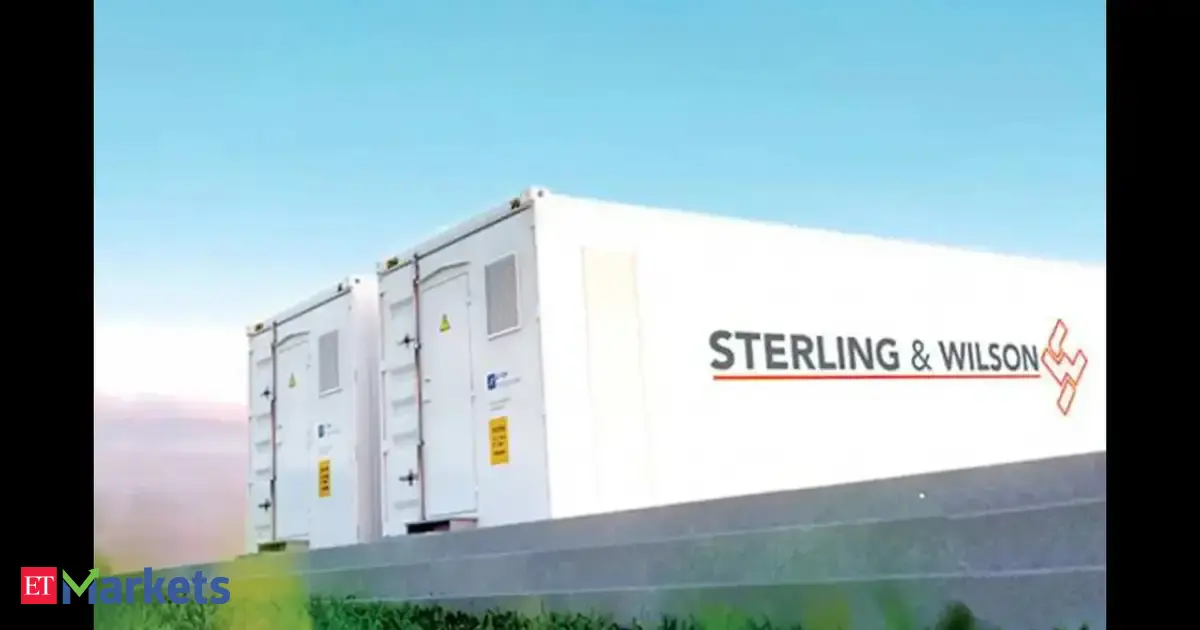
Sterling & Wilson plans a ?1,500 crore IPO for its generator unit. Proceeds will fund the company's significant global and domestic expansion plans. The generator business has seen strong momentum, driven by data centre growth. Its order book nearly doubled in FY26, reaching ?2,900 crore. This move aims to strengthen its market position and meet rising demand. View More
Mumbai: Engineering, procurement and construction company Sterling & Wilson is preparing to launch an initial public offering (IPO) of about ₹1,500 crore for its generator manufacturing subsidiary, Sterling Green Power Solutions (formerly Sterling Generators), according to multiple people familiar with the development. ICICI Securities and IIFL Capital have been appointed lead managers to the issue. The proceeds will primarily be used to fund the company's expansion, the people said. Headquartered in Silvassa, Sterling Green assembles and distributes diesel generator sets with capacities ranging from 250 kilovolt-amperes (kVA) to 5,000 kVA. It operates across India, the Middle East, Africa, Australia and Malaysia, and plans to strengthen its global footprint by setting up a facility in Dubai in FY27 to serve customers in Europe and the US. Agencies The company also plans to establish a manufacturing plant in Pune to meet rising domestic demand. It has earmarked capital expenditure of ₹90-100 crore over FY27 and FY28 for the expansion. Queries sent to a Sterling & Wilson spokesperson did not elicit a response till press time. Live Events Sterling Green was previously a subsidiary of Shapoorji Pallonji & Company, which held a 56% stake as of March 31, 2024, with the remaining shares owned by chairman Khurshed Daruwala and his family. According to a CareEdge Ratings report, Shapoorji Pallonji's holding fell to 42% by March 31, 2025, after a secondary share sale to a group of investors, resulting in Sterling Green ceasing to be its subsidiary. The company has seen a sharp improvement in business momentum, driven largely by the rapid expansion of the data centre industry. According to a recent Crisil Ratings report, Sterling Green's order book nearly doubled in FY26, taking its order book-to-revenue ratio to around 3x. The order book stood at about ₹2,900 crore as of May 1, 2026, with nearly 80% of orders from marquee customers including Adani, AirTrunk and DAMAC. Provisional revenue for FY26 rose to ₹1,167 crore from ₹868 crore in FY25, while operating margin remained healthy at 11.5%, compared with 12% a year earlier. .Pbanner{display:flex;justify-content:space-between;align-items:center;background-color:#ec1c40;margin-top:20px;padding:5px 10px;border-radius:4px;color:#fff;line-height:10px;width: 100%;box-sizing: border-box} .Pbannertext{display:flex;align-items:center;font-size:16px;font-weight:600;font-family:'Montserrat';} .Pbannertext img{height:20px;margin:0 6px} .Pbannerbutton a{display:flex;align-items:center;background-color:#fff;color:#ec1c40;text-decoration:none;font-weight:600;padding:4px 8px;border-radius:6px;font-size:15px;font-family:'Montserrat';} .Pbannerbutton img{height:20px;margin-right:6px} .Pbannerbutton a:hover{background-color:#f7f7f7} Add as a Reliable and Trusted News Source Add Now! (You can now subscribe to our ETMarkets WhatsApp channel) (You can now subscribe to our ETMarkets WhatsApp channel)

India's primary market momentum continues with over two dozen issuers planning IPOs. These companies aim to collectively raise approximately ?35,000 crore in the upcoming month. New-age companies like Zepto and PhonePe are expected to lead this significant market activity. Investor appetite is returning as markets stabilize, following a subdued first half. This robust pipeline signals a strong third quarter for IPO launches this year. View More
Mumbai: After a successful initial public offering (IPO) by SBI Funds Management in July, the largest so far this year, India's primary market momentum is set to continue in August. More than two dozen issuers are preparing to collectively raise about ₹35,000 crore through IPOs next month. After a strong showing in the second half of 2025, IPO activity slowed this year due to geopolitical uncertainties arising from the Iran war and weak foreign institutional flows, which roiled markets and made both issuers and investors cautious. April and May were especially dull but things have picked up since then. According to investment bankers, as many as 25 companies are expected to hold IPOs next month. New-age players such as Zepto, PhonePe and Shiprocket are expected to lead the pipeline. Agencies Right Launch Window Walmart-owned payments company PhonePe is planning an issue of around ₹12,000 crore, followed by quick commerce firm Zepto (₹8,010 crore) and logistics platform Shiprocket (₹2,342.35 crore). Live Events SBI Funds Management raised ₹9,813 crore and is set to be followed by Manipal Health Enterprises (₹9,275.22 crore) on July 29 to 31, with the stock listing on August 5. This will be the second billion-dollar IPO of 2026 after that of SBI Funds, which was subscribed 41.66 times. "There are a number of high-quality issuers which have filed draft prospectuses with Sebi and continue to look at the right window to launch their IPOs," said Prashant Gupta, partner and national practice head, capital markets, Shardul Amarchand Mangaldas. "While global stock markets (including India) have remained volatile in recent weeks, the primary market in India has been active with a number of QIPs (qualified institutional placements) and now IPOs, including large deals such as SBI AMC, which have done well." Bankers and lawyers said companies are keen to complete their IPO launches in August, due to timing considerations. These include the expiry of Sebi approvals that were extended until September, getting ahead of large upcoming offerings such as those from NSE and Jio Platforms Ltd, and avoiding the inauspicious shraadh (pitru paksha) period that could dampen investor participation. Among IPOs slated for August, Truhome Finance has proposed a ₹3,000 crore offering, while Juniper Green Energy is targeting up to ₹1,800 crore and Innovatiview India is planning a ₹2,000 crore public issue. Gaja Alternative Asset Management has outlined a Rs 656.2 crore issue, according to investment bankers. Others planning IPOs next month include Ardee Industries, Dhoot Transmission, Hy-Tech Engineers, Learnfluence Education, ARCIL, Shankesh Jewellers, Priority Jewels, Leap India, Parijat Industries, Skyways and MV Electrosystem, bankers said. Along with these, Prism (OYO), Elevate Campuses, Horizon Industrial Parks, Varmora Granito and Molbio are also gearing up for IPOs next month. Investor appetite returns "With markets stabilising and investor appetite returning, companies that were waiting on the sidelines are now coming to market," said Bhavesh Shah, managing director and head, investment banking, Equirus. "We continue to expect India to raise around $20 billion through IPOs this calendar year, underlining the depth and resilience of the primary market." The IPO market saw a steady start to the year, with January and February seeing 10 issues raising a total ₹12,927 crore, followed by March, which saw eight IPOs with an issue size of Rs 5,852 crore, according to Prime Database. Activity tapered off in the second quarter, with April recording just two issues raising ₹1,076 crore while May saw no issues, as the market lost steam. Momentum picked up again in June, with seven IPOs collectively garnering ₹2,718 crore. July has already seen 10 IPOs raising ₹26,279 crore, making it the strongest month so far this year. So far this year, 37 IPOs have raised a total of ₹48,852 crore. Data points to a relatively subdued first half, with patchy activity and a complete pause in May. The sharp rebound in July, however, signals that the third quarter of 2026 could see a much heavier pipeline of IPO launches compared with the first two quarters. Subdued H1 "After a relatively subdued first half, the August pipeline reflects improving issuer confidence, despite an extremely volatile market owing to geopolitical issues," said Pranav Haldea, MD, Prime Database. The broader pipeline remains robust. As many as 178 companies had received Sebi approval to raise about ₹2.9 lakh crore through IPOs until July 24. Another 70 companies planning to raise ₹1.80 lakh crore are awaiting regulatory clearance. .Pbanner{display:flex;justify-content:space-between;align-items:center;background-color:#ec1c40;margin-top:20px;padding:5px 10px;border-radius:4px;color:#fff;line-height:10px;width: 100%;box-sizing: border-box} .Pbannertext{display:flex;align-items:center;font-size:16px;font-weight:600;font-family:'Montserrat';} .Pbannertext img{height:20px;margin:0 6px} .Pbannerbutton a{display:flex;align-items:center;background-color:#fff;color:#ec1c40;text-decoration:none;font-weight:600;padding:4px 8px;border-radius:6px;font-size:15px;font-family:'Montserrat';} .Pbannerbutton img{height:20px;margin-right:6px} .Pbannerbutton a:hover{background-color:#f7f7f7} Add as a Reliable and Trusted News Source Add Now! (You can now subscribe to our ETMarkets WhatsApp channel) (You can now subscribe to our ETMarkets WhatsApp channel)

Unlike most central banks, the MAS manages medium-term price stability by managing the Singapore dollar exchange rate against a trade-weighted basket of currencies. View More
In this article@LCO.1Follow your favorite stocksCREATE FREE ACCOUNT Commercial buildings illuminated at dusk in Singapore, on Monday, Feb. 2, 2026. Photographer: SeongJoon Cho/Bloomberg via Getty ImagesBloomberg | Bloomberg | Getty Images Singapore on Monday tightened its monetary policy for a second consecutive time, moving preemptively against a renewed oil price surge even as inflation at home stays subdued.The Monetary Authority of Singapore said it will increase the rate of appreciation of the Singapore dollar's nominal effective exchange rate policy band "very slightly," with the adjustment smaller than April's. The width of the band and the level at which it is centered were left unchanged. Unlike most central banks, the MAS conducts its monetary policy by managing the Singapore dollar exchange rate against a trade-weighted basket of currencies within an undisclosed band, rather than setting interest rates. "In an environment of continued heightened uncertainty, this calibrated adjustment to the policy stance builds on the tightening in April," the MAS said in its statement.Singapore's core inflation, which excludes accommodation and transportation costs, ticked up to 1.6% in June from 1.4% in May, near the bottom of the MAS's 1.5%â2.5% forecast range for this year, with headline inflation at 1.9%.While transportation fuel prices quickly rose since the onset of the U.S.-Iran conflict, softer services inflation, particularly healthcare, communication, and education, helped offset much of the upward pressure on prices, according to BMI, a FitchSolutions company. "Imported-cost pressures typically pass through to broader consumer prices with a lag, so we still expect inflation to rise in the coming months," the intelligence group said. Singapore's near-total reliance on imported energy leaves it exposed to higher oil prices. Brent crude climbed back above $100 a barrel last week after Houthi militants attacked two Saudi tankers in the Red Sea, deepening a supply threat that had eased before the collapse of the Middle East ceasefire.The economy has so far shrugged off the turmoil as AI demand powers electronics exports. Singapore's gross domestic product expanded 5.7% in the second quarter from a year earlier, beating the 5.5% median estimate in a Reuters survey and well above the government's full-year projection of 2%â4%. Choose CNBC as your preferred source on Google and never miss a moment from the most trusted name in business news.

It's not the spend, it's the return. View More
It's not the spend, it's the return. That's what Friday's technology stock plunge said. I think it just might be the most significant tech selloff in more than a year. We need to know â potentially â what we are facing. We need to know if the trillion-dollar spigot is drying up â or it is just a dry spell. For my Charitable Trust, the portfolio we use for the CNBC Investing Club, we have been consolidating and gradually trying to shrink traditional tech â semis, software, data center â and move into other kinds of tech, namely tech-infused pharma and aerospace. We tried to make Intel â not Nvidia â the focal point of the portfolio, concerned that there are not enough new move-the-needle customers still out there for Nvidia. No, I'm not giving up Nvidia. It is still amazing, and I think it will have a bang-up quarter. But the "action" in the stock is speaking too loudly. The action in Apple is screaming that its decision, made intentionally or de facto, not to spend hundreds of billions on AI, is brilliant. It's having the best month in three years. Tons of critics second-guess Apple's decision-making. That's wrong. Apple decided a long time ago that much would flow to it if it made the best handhelds. It does. That allowed it to pick and choose which hyperscaler-chat-bot company it wanted to affiliate with, because they have quickly turned into commodities. Google had no choice but to virtually give it away â at least on a net basis â because Google Search has become suspect in its return while Gemini is no Claude from Anthropic. So, we gravitated to a new company, late for now, Intel, because we could see that the ratio of graphics processing units (GPUs) â Nvidia's giant, expensive chips â to central processing units (CPUs) â Intel and Advanced Micro Devices (AMD) â and perhaps, Arm Holdings , if it can get foundry time, even as it is partners with Intel) was quickly changing. When Lip-Bu Tan took over as CEO of Intel, the ratio was about four GPUs for every one CPU. Now, he told me last Thursday, it's about one CPU for every one GPU. Soon, data centers will have four CPUs for every one GPU. The gross margins on the GPUs are far more bountiful than on CPUs. A well-run Intel can change that. This is a well-run Intel. Plus, the CEO is perhaps the most dedicated semiconductor investor who knows how to spend the money wisely to build foundries (factories to manufacture chips) that are in short supply. Most important, he knows packaging, which is the equivalent of bundling CEOs to make them more powerful now that it is getting harder and harder to make nodes smaller and more powerful. The notion of Moore's Law â Gordon Moore, an Intel founder â that you can keep making ever-more-powerful smaller chips may have run out â Or definitely has run out, according to Jensen Huang. When in doubt, go with Jensen. So, we went with Intel, betting on an upside surprise. As usual, we buy slowly for the Trust. We had a little more than half a position on betting against ourselves that the company would report a spectacular number. We lost the bet. It was spectacular, maybe better than that, and it traded up more than 10% in last Thursday's after-hours session. High-fives all around. We looked good. Now I was out on Long Island to throw a rehearsal dinner for special nuptials, the marriage of my stepson, Will Detwiler, who has had that position for 21 years and lots of rearing, and his incredible now-wife Caroline (Win With) Willkie. It was a rather sizable prelude to the actual affair, a rehearsal dinner so large that it had a rehearsal for the rehearsal dinner. I was confident of the market's reaction to Intel even as I lacked confidence in the market. It's more than a tad difficult being long much of anything when you have a president talking about saturation bombing of a crafty opponent that seems to be a state that has more missiles than people. We're back to where the war or wars or who knows what can drive oil to where bears can confidently discuss 5% to 6% inflation. My confidence was misplaced. Entirely. I got up early Friday, not to disturb the participants, took a call from American Express , which we told you would cause selling pressure, and out of one retina saw Intel trading not at $109 but $106.30. Then, $106.28 and then $106.20, and the cadence was both sickening and relentless. Hardly a stand was made before market hours. Count the upticks on a couple of hands. After it went to $103 and change, soon before Friday's open, you could calculate how much it would be down on the day. I switched mentalities and went into thank-my-lucky-stars mode to have plenty of room to buy; if we still wanted to. Which brings me to the essence of this beautiful Sunday's piece after a picture-perfect wedding where I forced myself to be in the non-stop present, something I had only been capable of at one wedding-mine â and two Super Bowls. So, what the heck happened here? Why did Intel close down nearly 8% on Friday? I have heard lots of reasons for the tech sell-off. The most preeminent is that the market has decided to exercise its power to stop the spend. With Alphabet 's stock reeling almost forty points below what once looked like a terrifically priced secondary â at least, before we heard that Google was going to up its capex again â it looks like many sellers decided enough is enough. We won't reward spending with a higher market capitalization. That was a brutal judgment, especially given that Google Cloud had an implausibly tremendous quarter â cue the interview of Thomas Kurian, the head of Google Cloud and often called the LeBron James of tech, a statement with refreshed poignancy given my proclivity for the Philadelphia 76ers. That Alphabet call had me wishing for Ruth Porat back in the CFO role, and her 80-plus calls under her belt to explain why the spend keeps getting upped. Yes, we can say "to meet demand," as now CFO Anat Ashkenazi said multiple times while sprinkling in positives about Alphabet's balance sheet. I have found both statements painful. That's because Alphabet's balance sheet, with an income statement showing negative cash flow, is no longer the belle of the ball. It's okay, not great. If you owned Alphabet for its rock-solid balance sheet and buyback, you are thinking of a different Alphabet, one of yesteryear. The real pain, though, comes from this "meet demand" statement that we heard so much. I am not sure if Alphabet knows what it means to a market that's starting to lose a lot of money in these hyperscalers when it hears "meet demand." We are definitely not looking for companies to "meet demand." We are looking for them to "make money." We aren't hearing anything like that. The only company making money here with Alphabet is Apple. This "meeting demand" stuff is wearying. I feel like the Trust owns companies that are losing fortunes on everything they make, but they are going to make it up in volume. What's happened is, at last, we have come to accept not that these companies don't know what they are doing. I am sure that Alphabet feels that if you build it, profits will come â but there are better stories elsewhere. What do I need this spending horror show when I can get behind Club name Johnson & Johnson ? The technology behind the materials science of 3M doesn't require billions of dollars to lose, well, billions; it just makes money. Again, I am not in the camp that the emperor has no clothes. One of these emperors to be will, perhaps, Anthropic because it is business-to-business (B2B) and we love the stickiness of B2B; the fickle nature of the OpenAI business-to-consumer (B2C) paradigm is viewed to be the culprit for the leaky bucket of that shop. Oh boy, OpenAI has to come public in the worst way; thank you very little. In some ways, it doesn't matter whether you sell tech because you don't see a return or you sell tech because you think these companies lack any discipline. Either way, hundreds of billions of dollars are leaving the cohort. That's why I am wondering if this damned-the-sellers-full-speed-ahead mentality is coming to an end. Which brings me back to the all-encompassing selling of Friday. When you are watching the stock of Intel sink, you can say that it's going down because you didn't get the Wall Street analyst price target bumps you thought it would. They were disappointing. But AMD had a meeting simultaneously, and the only companies that can give Intel a run for the money right now are Nvidia, when it reports late next month, and AMD right now. Shares of AMD sank, too, but not as viciously as Intel, but at a brisk pace. The selling was ferocious. By the end of the session, as the wedding flowers abounded, the Fosforo (my wife's agave spirits company) flowed, and the toasts were readied, you could almost see the selling morph from being about the discipline of capex to a rumor of a cut in capex by a hyperscaler. That someone blinked. I don't know if someone actually did blink. I suspect we will find out Monday. But if someone, other than a supplier, doesn't come out soon and say "we are beating and raising our numbers," I suspect that a trillion dollars' worth of market cap comes right off the top of all the behemoths who still ply AI. No illusions here. We cannot have a sustained rally with tech bleeding through the eyeballs. There are too many companies that have run up to see that happen. We know that the Dow Jones Industrial Average has been able to resist, and the S & P 500 has only slightly faltered, but the Nasdaq is back in charnel house mode. I say we keep tilting away from traditional tech. We stay close to see if someone forecasts a profit, which could lift all boats, and we recognize that there are not enough companies left who still need the hardware, at least not right now. Bottom line Why, then, Intel? Because the only way to amortize all of the spend now is with AI agents, and agents are run on Intel's CPUs. That and robots. We know that robots are such a huge market that they can't be left just to Tesla. I think all of the hyperscalers are going to have to offer them. They are not a GPU product as much as a CPU market â robots are packed with them. Right now, we have lots of use cases both in and out of the data centers, but the next great demand wave, I believe, comes from robots that are B2B to business and then B2C. The current demand for all sorts of tech will sustain the CPU. But I think that robots give us the use case that will keep the stocks in some demand after the companies own up to what might be a sensible pause in spend. I sense we will know soon enough whether it's just a rumor of a pause or an actual one. Either way, keep moving toward new and different tech while backing only Intel when it comes to old tech. A pause could be so jarring that, initially, we won't buy the pausers, but let's not get ahead of ourselves. And remember, a beat and raise from just one hyperscaler changes the entire equation; and three more of them â Amazon , Meta Platforms , and Microsoft â report earnings this week. And oh yeah, fellow Club holding Apple also reports this week . (Jim Cramer's Charitable Trust is long INTC, NVDA, AAPL, AMZN, META, MSFT. See here for a full list of the stocks.) As a subscriber to the CNBC Investing Club with Jim Cramer, you will receive a trade alert before Jim makes a trade. Jim waits 45 minutes after sending a trade alert before buying or selling a stock in his charitable trust's portfolio. If Jim has talked about a stock on CNBC TV, he waits 72 hours after issuing the trade alert before executing the trade. THE ABOVE INVESTING CLUB INFORMATION IS SUBJECT TO OUR TERMS AND CONDITIONS AND PRIVACY POLICY , TOGETHER WITH OUR DISCLAIMER . NO FIDUCIARY OBLIGATION OR DUTY EXISTS, OR IS CREATED, BY VIRTUE OF YOUR RECEIPT OF ANY INFORMATION PROVIDED IN CONNECTION WITH THE INVESTING CLUB. NO SPECIFIC OUTCOME OR PROFIT IS GUARANTEED.
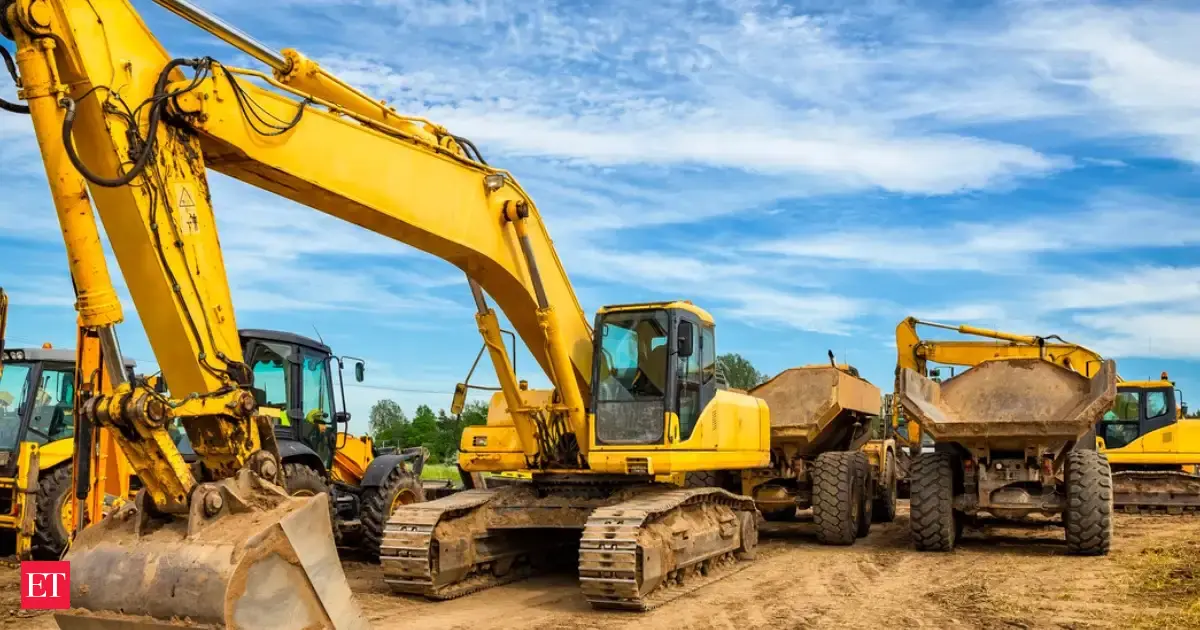
The Union Cabinet is poised to evaluate a new incentive scheme aimed at enhancing the production of advanced construction machinery domestically. As infrastructure development surges, the need for specialized equipment is escalating. The proposal, having completed inter-ministerial discussions, is now pending cabinet approval. Once approved, industry consultations will begin promptly. View More
New Delhi: The Union Cabinet is expected to soon consider an incentive scheme for construction and infrastructure equipment manufacturing, a senior government official said. The scheme was announced in the 2026-27 budget and approvals are expected by August-end. Sector executives said growing infrastructure development across ports, high-speed rail and highways is driving demand for specialised equipment such as tunnel boring machines and large cranes. "Inter-ministerial discussions are complete and the scheme is ready for union cabinet approval," the official told ET, adding that consultations with industry on the guidelines and implementation framework would begin after the Cabinet clears the proposal. The budget proposed a scheme for the enhancement of construction and infrastructure equipment manufacturing to strengthen domestic production of high-value, technologically advanced equipment. "This can range from lifts in a multi-story apartment, fire-fighting equipment, large and small, to tunnel-boring equipment for building metros and high-altitude roads," finance minister Nirmala Sitharaman had said. Live Events "India's share of global mining construction equipment industry size has doubled-from around 2.5% to 4%-and is expected to rise to about 6.5% over the next five years, placing it among the world's fastest-growing major markets," according to a report by Boston Consulting Group (BCG) and CII . The growth is being driven by the government's infrastructure push. "Roads pull earthmoving and paving fleets, railways pull TBMs, piling rigs and viaduct cranes, and ports and airports pull specialised handling cranes," the BCG-CII report said. .Pbanner{display:flex;justify-content:space-between;align-items:center;background-color:#ec1c40;margin-top:20px;padding:5px 10px;border-radius:4px;color:#fff;line-height:10px;width: 100%;box-sizing: border-box} .Pbannertext{display:flex;align-items:center;font-size:16px;font-weight:600;font-family:'Montserrat';} .Pbannertext img{height:20px;margin:0 6px} .Pbannerbutton a{display:flex;align-items:center;background-color:#fff;color:#ec1c40;text-decoration:none;font-weight:600;padding:4px 8px;border-radius:6px;font-size:15px;font-family:'Montserrat';} .Pbannerbutton img{height:20px;margin-right:6px} .Pbannerbutton a:hover{background-color:#f7f7f7} Add as a Reliable and Trusted News Source Add Now! (You can now subscribe to our Economic Times WhatsApp channel) (You can now subscribe to our Economic Times WhatsApp channel)

Who are the six members of the Centre's NTA exam reforms task force? Meet Nandan Nilekani, S Somnath, Tapan Deka, V Kamakoti, Anita Karwal and Amrit Lal Meena. View More

A missing property document can lead to legal disputes over inheritance. Estate planning is essential for ensuring asset distribution aligns with one's wishes and minimises conflict among heirs after the owner's death. Here are the key components of estate planning. View More

Many Americans in the 50-55 age range have 10 to 15 work years left, extending 401(k), IRA growth investing, but they can't afford an ill-timed market crash. View More
In this article.SPXFollow your favorite stocksCREATE FREE ACCOUNT A man looks over the plunging stock market indices at the Nasdaq MarketSite, December 20, 2000, in New York City's Times Square. Chris Hondros | Hulton Archive | Getty Images While baby boomers hog most of the attention in conversations about retirement, Gen Xers are marching toward the same destination, and in many cases, without key financial benefits of the former generation. Retiring by 55 in America is mostly a relic of the defined benefit pension plan-funded past. Now, most people in the 50-55 range are still looking at 10 to 15 working years ahead. That extends the years during which they are continuing to contribute to 401(k) plans and IRAs to grow their wealth, and time in the market is the greatest long-term advantage investors have. But the closer an individual gets to retirement, the more an ill-timed market crash can seriously set them back. Gen X is the age group â roughly defined as those born between 1965 and 1980 â heavily impacted by the shift from defined benefit to defined contribution pensions, as workplace pensions became less common. Only 14% of Gen X workers have a traditional pension, compared with 56% of boomers, according to research from Alliance's Retirement Income Institute. When broken down by generation, Gen Xers are the least financially prepared generation for retirement by nearly every measure. "While baby boomers dominate the headlines, Generation X faces an even greater retirement crisis," the authors wrote. The situation can leave a Gen Xer to watch their retirement fund warily. A decade of strong returns has placed many investors, particularly those a few years out from retiring, heavily weighted in S&P 500 mutual funds and ETFs, riding the record stock market gains right up to the cusp of retirement. But history is littered with instances of crashes that, for the unlucky, happen at the worst possible moment. The Amazon dotcom bubble stock chart is a good example. Investors who bought at its 1999 dot-com peak had to wait a full decade before the stock reclaimed that old high, finally breaking through to new records in late 2009. The broader S&P 500 tells a similar slow-road-to-recovery story. After bottoming out in October 2002 following the dot-com bust, the index took nearly five years to climb back to a new high in 2007 â a high that didn't even hold, as the Great Recession erased it almost immediately. Measured from the bottom of that second crash, in March 2009, it took another four years before the S&P 500 finally cleared its old 2007 peak for good, in March 2013. watch nowVIDEO2:0102:01Ken Griffin on AI: 'There's obviously echoes of the dotcom bubble in this moment'Money Movers Depending on how you count it, that's anywhere from four to thirteen years of being underwater, all depending on which crash and which trough you're measuring from. And for someone three to five years from retirement, that's not an academic timeline. Certified financial planner Ernie Cave, founder of Cave Wealth Management, says that what goes down will ultimately go up, but when matters to retirees. "History shows that markets recover, but retirees don't get to choose whether that recovery takes one year or several. If you're forced to sell investments while they're depressed to generate income, those shares are gone forever and can no longer participate in the recovery," Cave said. This is why what financial advisors call the "sequence-of-returns" risk is so dangerous. How to gradually move away from S&P 500For starers, investors who are already thinking about retirement should avoid being starstruck by the S&P 500's gains and how well it has done for them. "One of the biggest mistakes I see is investors approaching retirement with nearly all of their assets in an S&P 500 fund simply because it has performed well over the last decade," Cave said. The S&P 500 is an excellent long-term investment, but it might not be the right place for money you'll need during the first several years of retirement, he added. "The problem isn't owning an S&P 500 fund. The problem is asking the same fund to pay next year's bills and fund retirement 25 years from now," Cave said. He advocates steering retirees toward a diversified "war chest." "We typically want approximately two years of expected portfolio distributions protected in cash or very short-term investments, with roughly five years of anticipated withdrawals covered by cash, treasuries, CDs and high-quality bonds. The remaining long-term assets can stay invested for growth," Cave said. The purpose of a retirement war chest, according to Cave, isn't to shed equities or eliminate market declines. "It's to reduce the chance that a retiree is forced to sell long-term investments during one," he said. More from ETF Strategist:Here's a look at other stories offering insight on ETFs for investors.Some ETFs compete on price, but fees shouldn't always be biggest concern: analystTrump accounts get more support from companies, donors: Here's who is eligibleSurprise year-end income could derail your tax strategy â how to plan for itThere's still time to maximize the 0% capital gains bracket for 2025Single-stock ETFs can amplify returns, analyst says, but there's 'significant risk''Trump accounts' could give your child up to $1,000 for free. What to knowETFs make it easy to invest in gold â taxes may be the tricky part. What to know$6 billion 'Trump accounts' donation provides more kids with free money: How to claim itBond ETFs are gaining investor attention. What to know before you buyBoomers are less bullish on ETFs than younger generations â with good reason Investors nearing retirement don't necessarily need dramatically less exposure to stocks, but they do need a clearer separation between money they'll spend soon and money that can remain invested through the next market cycle. "Retirement doesn't eliminate the need for growth. It changes which dollars can afford to wait for it," Cave said. Some Gen Xers are on a glide path to retirement â literally â and that hopefully has limited their exposure to market volatility. A glide path is the gradual shift of a portfolio from stocks toward bonds as an investor approaches and moves through retirement, reducing exposure to a market downturn right when it would hurt most. "A glide path gradually changes the portfolio as a client gets closer to retirement," said Elias Friedman, a CFP and founder at Kadima Wealth. Build a temporary bond tentAnother shield against a crashing market is a bond tent, a strategy of temporarily increasing bond holdings in the years just before and after retirement â the highest-risk window for a market downturn. "Both options can reduce the chance of having to sell stocks after a major stock market decline. From my experience, clients are more accustomed to a glide path approach to investing," Friedman said.Unwinding a bond tent isn't about waiting for some signal that the danger has passed, Friedman said â no one can reliably call that moment, and trying to is really just market timing by another name."The client has many options regarding how to handle this risk. For example, consider a bond or CD ladder or short- to intermediate-maturing securities. You don't have to put all of your money back into the market at one time," Friedman said. "Smart clients will tactically do this along with the occasional portfolio rebalance. This helps mitigate some of the risks." Whatever the path, Friedman says that any transition should be gradual rather than making a large reallocation change at retirement. "Think of it as going for a cross-country drive on the highway and then slamming on the brakes. I have found gradually slowing down makes the drive less stressful and more comfortable," he said. But this market is different from past ones in at least one important way, says Asher Rogovy, chief investment officer of Magnifina, a registered investment adviser: AI and the increased prominence of a handful of tech stocks in the S&P 500. "Traditionally, 20 to 30 individual stocks provided ample protection against company-specific risk. Today, an estimated 40% to 50% of the S&P 500's market value sits in companies tied to a single theme: AI," Rogovy said. If past is prologue, that could mean this won't end well, Rogovy said. "We've seen this story before. The dot-com bubble involved similar levels of index concentration, and the aftermath should give us pause,"he said. "Concentration risk is inherent to cap-weighted indices. Notably, investing an equal amount in each S&P 500 company would have avoided much of the decline and achieved new highs years sooner," Rogovy said. The S&P created an equal-weighted version of the index in 2003, and there are now many funds and ETFs that offer the option of having core S&P 500 exposure be equal-weighted. But Rogovy doesn't think there is any pure stock strategy that can fully escape a market crash, so he says the most consequential decision for anyone approaching retirement is the split between stocks and bonds. "Because most people know stocks far better than bonds, that's where an investment advisor can prove invaluable. By combining a bond allocation with disciplined rebalancing and value investing, an advisor can construct a portfolio to withstand volatility to protect a client's retirement," he said. For a Gen Xer right now, the biggest danger is the concentration of companies in an S&P 500 fund, said Mike Dunlop, CFP and co-founder of Ignite Planning in Cedar Falls, Iowa. "Right now, seven of them make up over 30% of the whole thing. For somebody that's 50 to 55 years old, the real danger isn't a crash, it's a crash at the wrong time â or sequence-of-returns risk," Dunlop said. "If the market drops 30% the year you retire and you're pulling money out to live on in that year, you're selling at the bottom to buy your groceries and gas, and that chunk never gets a chance to recover," he said. "A near-retiree doesn't have a lost decade to give up," he added.His fee-only financial planning firm has been moving some portion of client assets out of core S&P 500 fund or total stock market index funds and reallocating into large-cap value â "the same stock market, just not betting the whole retirement on the top seven names," Dunlop said. Choose CNBC as your preferred source on Google and never miss a moment from the most trusted name in business news.
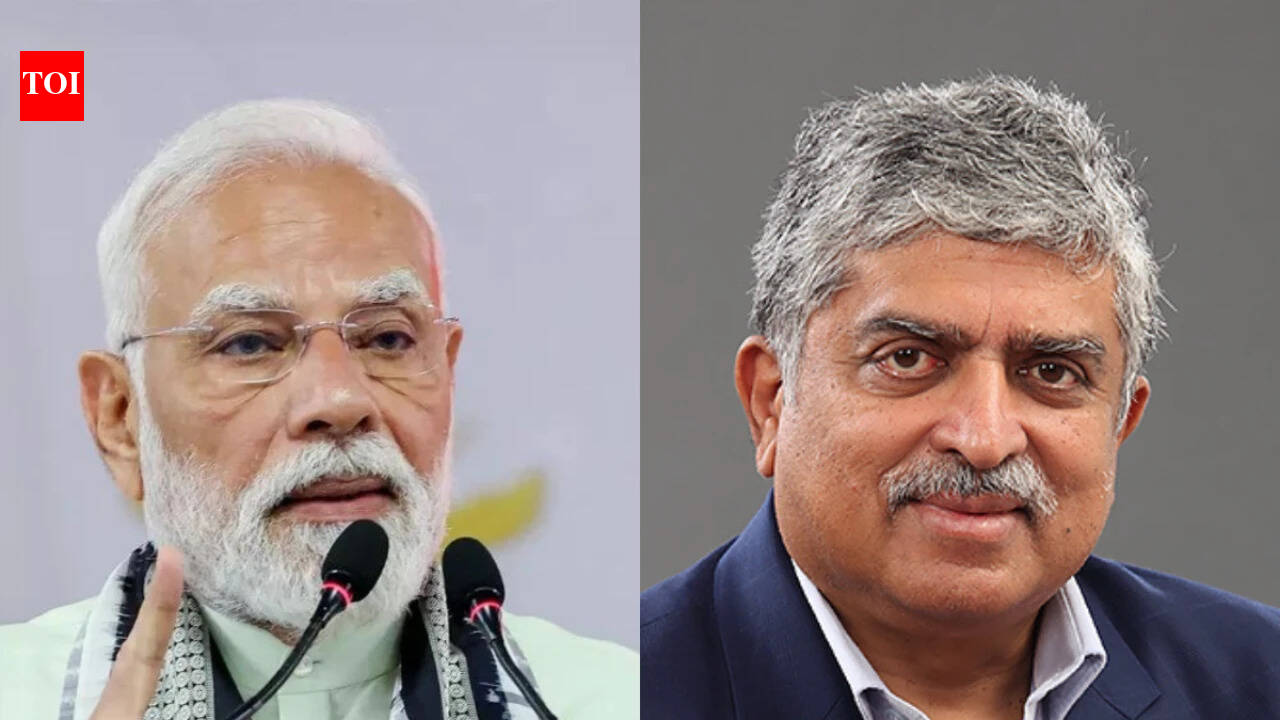
High-powered task force to recommend tech-driven, leak-proof reforms for NTA and public exams. View More
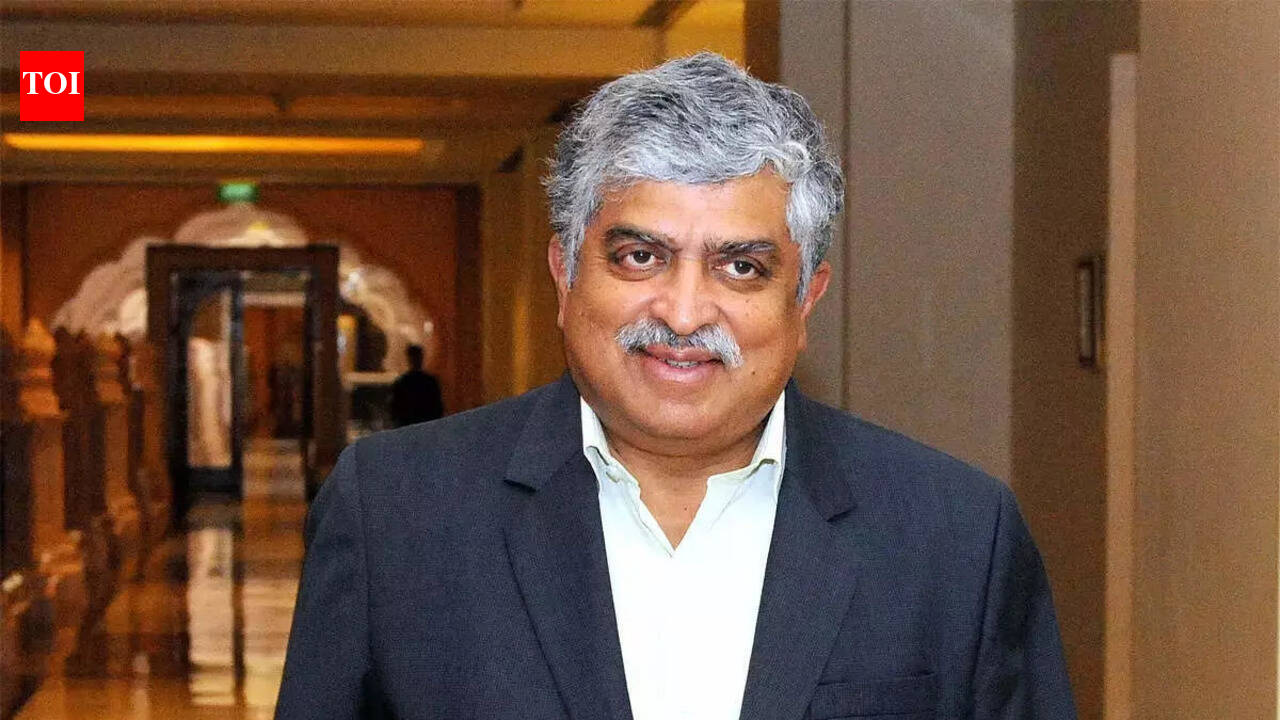
Prime Minister Narendra Modi announced a high-powered task force for examination reforms. Nandan Nilekani, Infosys co-founder, will lead this important government initiative. The task force includes prominent figures from ISRO and IIT Madras. This development follows recent student protests and a minister's resignation. The government aims to address broader reforms within the education sector. View More