
Latest Sectors News

Bard College's long-time leader Leon Botstein has faced pressure since the DOJ released documents about his communications with Jeffrey Epstein. View More
FILE PHOTO: President of Bard College Leon Botstein speaks during the "Changing Landscapes: From the Digital Classroom to the Global Campus" panal during the TIME Summit On Higher Education on Oct. 18, 2012 in New York City. Jemal Countess | Getty Images Bard College President Leon Botstein announced Friday that he will retire at the end of June after 51 years leading the prestigious New York liberal arts school, a day after a law firm retained by its Board of Trustees delivered a critical report about his relationship with the late notorious sex offender Jeffrey Epstein."Nothing that President Botstein did in connection with his relationship with Jeffrey Epstein was illegal," WilmerHale attorney Jamie Gorelick wrote in a summary to those trustees, which CNBC obtained."But President Botstein made decisions in the course of that relationship that reflect on his leadership of Bard," wrote Gorelick, who served as a deputy attorney general in the Clinton administration.Bard retained WilmerHale in February to review its 79-year-old president's relationship with Epstein after details about their communications were made public with the release by the Department of Justice of documents, which made clear they were more extensive than previously known.Botstein, who is a renowned orchestral conductor, had said he cultivated Epstein as a donor for Bard, which is located in Annandale-on-Hudson. His pursuit of Epstein came several years after the shady money manager pleaded guilty in Florida state court to soliciting a minor for prostitution and served a 13-month jail term."President Botstein forcefully argues that Bard's need for funds was paramount," Gorelick wrote in her summary of her report for Bard's trustees."His view was, 'I would take money from Satan if it permitted me to do God's work,' " Gorelick noted."President Botstein said that he did not see a risk to Bard's reputation in pursuing Epstein or thepotential risk to Bard students of exposure to Epstein, nor did he consider that his actions could validate and legitimize Epstein to potential victims or their parents," the attorney wrote."In his public statements and his statements to the Bard community, President Botstein minimized and was not fully accurate in describing his relationship with Epstein."Epstein, in addition to Botstein, had friendships with many high-profile people, including President Donald Trump, former Harvard President Larry Summers, and Andrew Mountbatten-Windsor, the brother of King Charles III of Britain. Epstein died in 2019 from suicide in a Manhattan jail, several weeks after being arrested on child sex trafficking charges.A woman who answered the phone at Botstein's home on Friday referred questions to the college's media affairs department, which did not immediately respond to requests for comment by CNBC. Botstein's retirement statement Botstein, 79, did not mention the WilmerHale report or Epstein in his retirement announcement, which touted his role in Bard's $1 billion endowment campaign, which was completed in January.He said in an email to Bard students and faculty that he had previously informed the Board of Trustees of his intention to retire, "and focus my energy as faculty member, teacher, and musician.""I will continue with the Bard Music Festival, SummerScape, and the Bard Conservatory and will live at Finberg House," he wrote. Read more about the Jeffrey Epstein filesList: High-profile people burned by past dealings exposed in the Epstein filesGates Foundation reviewing Jeffrey Epstein ties, will slash 20% of staff: WSJJeffrey Epstein victims will get House committee hearing, James Comer saysMelania Trump blasts claims about Jeffrey Epstein and herEpstein files: Pam Bondi testimony to House panel canceledBill Gates interview about Jeffrey Epstein by House Oversight set for June 10Epstein files: Commerce Secretary Lutnick set for May 6 interview by House OversightTrump fires Attorney General Pam BondiEpstein files: Buffett says he hasn't talked to Bill Gates 'since the whole thing was unveiled'Epstein victims get $72.5M from Bank of America settlementEpstein victims sue Trump administration, GoogleHouse committee subpoenas Attorney General Pam BondiGoldman Sachsâ Ruemmler, Bill Gates, Leon Black will testify to House panelBill Clinton on Jeffrey Epstein: 'I saw nothing, and I did nothing wrong'DOJ withheld Epstein files about claim Trump sexually abused minor: MS NOW The executive committee of Bard's Board of Trustees, in a statement obtained by CNBC, said the board "is grateful to President Botstein for his five decades of service to Bard College, his countless accomplishments and the lasting impact of his leadership."But the committee also noted that he submitted his retirement on Thursday, after WilmerHale's review of communications between him and Epstein was sent to the board. WilmerHale's findings about Bard's president Gorelick, in her summary, wrote that Botstein, in deciding to pursue possible donations from Epstein in 2012, did not try to understand the details of Epstein's 2008 conviction for soliciting a minor girl for prostitution, and that he "disagreed with the view expressed by a senior faculty member, whom he had asked to help with a proposal to Epstein, that Bard should not engage with Epstein.""President Botstein relied on his view that a person convicted of crimes involving sex with aminor â 'an ordinary sex offender', in his words â could be presumed to be rehabilitated in the same way that any other convicted person should, in his view, be given that presumption," Gorelick wrote.She said Botstein did not discuss with the board whether to accept donations from Epstein or whether he could "appropriately accept payments from Epstein."President Botstein did not disclose to or flag for the Board, when it approved the contributions made by an entity called Enhanced Education in 2011 and 2012, that these funds were from Epstein." Gorelick wrote.And when the billionaire Leon Black made a donation to Bard in 2014, "which President Botstein understood had been made at Epstein's behest, were disclosed only as funds from Black," Gorelick wrote."In 2016, President Botstein accepted fees under a consulting agreement with an Epstein entity," Gorelick wrote. "He did not disclose the agreement to the Board on the ground that he intended to donate those funds to Bard."The lawyer said that Botstein explained that the funds "were donated to Bard by rolling them into his and/or his wife's contributions over the years and were not separately identified as coming from Epstein.""For this reason, the documents cannot confirm for the Board the contribution of those fees to Bard." Gorelick wrote.Owen Denker, a Bard student who is the spokesman for the group "Take Back Bard," which had sought to oust Botstein after revelations about his ties to Epstein, in a statement to CNBC, said, "While we are pleased with Leon Botstein's decision, to step back, it does not go nearly far enough.""He needs to cease teaching and conducting immediately," Denker said."Furthermore, we need to see the systemic culture of sexual abuse addressed, and shared governance including faculty, staff, and students to ensure similar negligence does not occur again," Denker said. Choose CNBC as your preferred source on Google and never miss a moment from the most trusted name in business news.
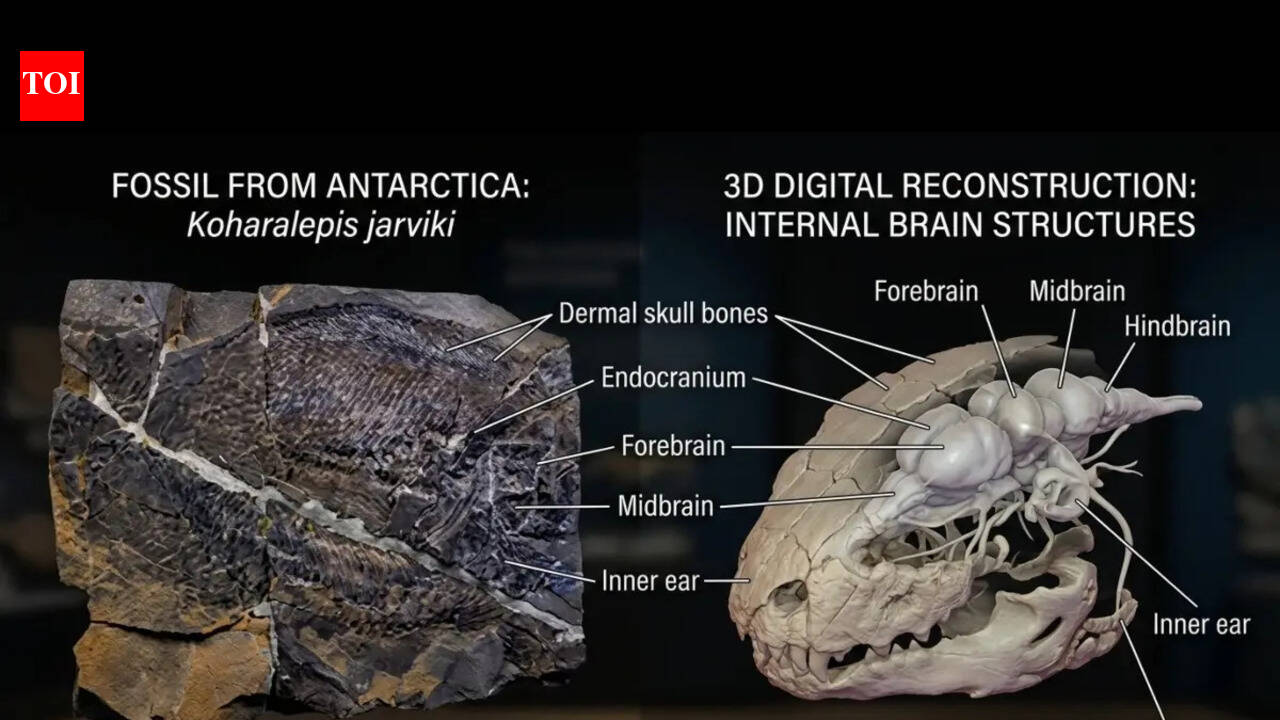
Antarctic fish fossils are shedding light on early animal evolution, specifically the transition to land. A remarkably preserved skull of *Koharalepis jarviki*, from the Devonian period, reveals adaptations for shallow water life, including advanced senses and early air-breathing capabilities. This discovery offers crucial insights into the era preceding terrestrial animal colonization. View More

Northstowe's Hindu community faces a significant challenge as they bid for a faith/community land plot to establish their first temple. Currently, families travel 40 miles for worship, impacting cultural connection. Hindu Samaj Northstowe proposes an interfaith hub with prayer rooms and a temple, competing with a church-led bid offering multi-faith spaces. View More

Treasury yields were little changed on Friday as investors assessed the latest report from the Institute for Supply Management. View More
In this articleUS30YUS2YUS10YFollow your favorite stocksCREATE FREE ACCOUNT The Federal ReserveGetty Images Treasury yields were little changed Friday after data on U.S. factory activity showed an expansion in April that was slightly below expectations.The yield on the 10-year U.S. Treasury note â the key benchmark for mortgage lending and auto loans â fell 1 basis point to 4.38%. The 2-year Treasury note yield, which more closely tracks short-term Federal Reserve interest rate policy, rose less than 1 basis point to 3.888%.One basis point is equal to 0.01%, and yields and prices move in opposite directions. On Friday, the Institute for Supply Management April manufacturing index totaled 52.7, unchanged from March and slightly below the 53.0 that economists polled by Dow Jones had expected.The prices paid component of the index surged to the highest level since April 2022 as companies experienced higher energy costs in the wake of the Iran war, as well as elevated tariff charges."Net, net, the ISM manufacturing index is holding onto its 2026 expansion trend which is a good thing for the economic outlook," said Chris Rupkey, chief economist at FWDBONDS. "The only troubling finding being that inflation is rearing it ugly head in a way that has not been seen since 2022."The personal consumption expenditures price index, the Federal Reserve's preferred measure of inflation in the economy, rose 0.7% in March, the Commerce Department said Thursday. That put the annual inflation rate in line with Wall Street forecasts at 3.5%, but far above the Federal Reserve's 2% target.Core PCE, which excludes volatile food and energy prices, was below the headline readings, increasing 0.3% in March versus February and 3.2% against the same period a year ago.The Commerce Department on Thursday also reported that first-quarter gross domestic product grew at a 2% seasonally adjusted annual pace in the first quarter, up from 0.5% in the fourth quarter of 2025 but lower than Wall Street economists' consensus estimate calling for 2.2%.Earlier this week, the Fed voted to keep the benchmark federal funds rate on hold between 3.50% to 3.75%.â CNBC's Jeff Cox and Lim Hui Jie also contributed to this report. Choose CNBC as your preferred source on Google and never miss a moment from the most trusted name in business news.

Tragedy struck on the outskirts of Jammu as an under-construction bridge collapsed, claiming the lives of two workers. A massive rescue effort involving Army, NDRF, and SDRF is underway. One injured worker was rescued, while at least one person remains feared trapped. The sudden cave-in offered no warning to the laborers. View More

Every weekday, the Investing Club releases the Homestretch; an actionable afternoon update just in time for the last hour of trading. View More
Every weekday, the CNBC Investing Club with Jim Cramer releases the Homestretch â an actionable afternoon update, just in time for the last hour of trading on Wall Street. It's a new month, but it's more of the same for the S & P 500. The broad index is on its way to another record close Friday after wrapping up its best month since November 2020 on Thursday. Oil prices fell on Friday after Iran reportedly responded to Washington's latest changes to a draft agreement to end the Iran war. President Donald Trump said he was "not satisfied" with it, which helps explain why crude moved off its session lows. Still, as of 2 p.m. ET Friday, U.S. oil benchmark WTI was down more than 3%, to about $101.50 a barrel. The divergence in performance across the Club's portfolio in April reinforces our belief that there are essentially two markets right now â the data center stocks and everything else. On the "winning" side were the AI and data center-related names that have powered much of the market rally. Arm surged nearly 40% last month, while Broadcom and Alphabet each jumped more than 30%. The resurgent Amazon wasn't far behind, and electrical equipment supplier Eaton and glassmaker Corning also posted standout gains, underscoring the strength tied to anything benefiting from the AI buildout. On the other side, Cardinal Health and Johnson & Johnson were among our laggards, reflecting the market's disinterest in most healthcare names. Nike was our worst-performing stock in April, though most of those losses came early in the month in response to its disappointing earnings report on the night of March 31. After closing at $42.62 on April 10, the stock drifted a little higher and traded above $44 on Friday. Sky-high memory prices were a big theme during this jam-packed week of earnings. All of the five megacap tech companies that reported are contending with the AI-driven price surge. Plus, some of the memory companies themselves reported (Western Digital and Sandisk). On Wednesday evening, Meta directly cited the increase in memory pricing as the primary cause for its raised capital expenditures guidance . Microsoft also said rising component costs were responsible for about $25 billion worth of their calendar 2026 capex guide of $190 billion . Then on Thursday evening , Apple told investors to expect the memory price headwind to be with us for a while. As investors in companies hurt by memory prices, we must pay attention to what we're hearing from the likes of Sandisk and others. They're the ones that are actually responsible for the supply (or, in this case, the lack thereof). Looking at SanDisk's earnings call from Thursday night, its customers are reacting to the surge. Sandisk said it's seeing increased interest in multi-year supply agreements, with five signed to date valued at over $11 billion. The commitments come with locked-in purchase commitments and a mix of fixed and variable pricing. The longest of these commitments is five years. From Sandisk's vantage point, these agreements serve to ensure consistent demand and help protect against the boom-and-bust cycles that have historically plagued the memory makers. It's a major shift in business strategy. SanDisk didn't name the five customers with supply deals, but the CFO called them "very meaningful customers." So, we can assume these customers have deep pockets, and some of them may even be Club names. What do these supply deals mean for the signees? For starters, they serve to ensure a consistent supply and, in turn, help them ensure that few or no sales go unrealized due to a lack of supply. The risk with these agreements is that if demand wanes, the customers would still be on the hook financially. It goes to show the memory makers have a lot of leverage right now. However, we're not too concerned. Of course, any company spending tens of billions of dollars on AI hardware will need to demonstrate a return. But we think all the Club holdings that may have signed one of these deals are doing a good job forecasting future supply needs. If anything, they've proven to be too conservative in recent years and left revenue on the table. A final thought: While these deals are multiyear in nature, the mix of fixed and variable pricing is important to keep in mind. This means that the commitments should help with supply and, by extension, sales. But it also means the customers will still have some exposure to price fluctuations resulting from demand dynamics. For that reason, expect margin performance to remain under close scrutiny in the coming quarters and, perhaps, beyond. Club names Eaton, Arm Holdings and Dupont report next week. Eaton has a history of selling off post-earnings, so that's something we're keeping in mind. For Arm, we expect CEO Rene Haas to highlight continued strength in CPU orders, but with the stock up more than 100% since its last report, the bar is high and it may take a lot to push shares meaningfully higher. Corning is also hosting an investor day on Wednesday, and we think there could still be more upside ahead. We'll have previews for all four Club names in our week ahead column Sunday. Other companies reporting next week include Palantir , Vertex Pharmaceuticals , AMD , Novo Nordisk , Disney , CVS , and Gilead Sciences . We're also keeping a close eye on the April jobs report due Friday, which is a key read labor market strength and may help shape expectations for the Fed's next move. (See here for a full list of the stocks in Jim Cramer's Charitable Trust.) As a subscriber to the CNBC Investing Club with Jim Cramer, you will receive a trade alert before Jim makes a trade. Jim waits 45 minutes after sending a trade alert before buying or selling a stock in his charitable trust's portfolio. If Jim has talked about a stock on CNBC TV, he waits 72 hours after issuing the trade alert before executing the trade. THE ABOVE INVESTING CLUB INFORMATION IS SUBJECT TO OUR TERMS AND CONDITIONS AND PRIVACY POLICY , TOGETHER WITH OUR DISCLAIMER . NO FIDUCIARY OBLIGATION OR DUTY EXISTS, OR IS CREATED, BY VIRTUE OF YOUR RECEIPT OF ANY INFORMATION PROVIDED IN CONNECTION WITH THE INVESTING CLUB. NO SPECIFIC OUTCOME OR PROFIT IS GUARANTEED.

Home Minister Amit Shah celebrated the return of Lord Buddha's holy relics to Ladakh after 75 years, calling it a "historic reunion" and the "living land of Dhamma." The fortnight-long exposition of the Piprahwa relics, marked by prayers and rituals, aims to reinforce India's Buddhist heritage. The event highlights peace and compassion amidst global unrest. View More

The April 7 high of $113 in Western Texas Intermediate crude futures will likely be broken, traders on the prediction markets platform think. View More
In this article@CL.1@LCO.1Follow your favorite stocksCREATE FREE ACCOUNT Gas prices over $6.00 are displayed at a Shell station across from the Marathon Petroleum Corp's Los Angeles Refinery on April 02, 2026 in Carson, California. Justin Sullivan | Getty Images News | Getty Images Western Texas Intermediate crude futures haven't hit their highs in 2026 yet, according to traders on Kalshi. Users on the prediction markets platform think that there's a more than 50% chance that prices will reach nearly $127 per barrel this year, far higher than the current closing high of nearly $113 per barrel on April 7. Traders also estimate there's a 63% chance that prices will cross $120 per barrel. While WTI prices remain off their highs from before the U.S. and Iran announced a ceasefire to the war in the Middle East, they're considerably higher than their lows of $82.59 on April 17. window.addEventListener("message",function(a){if(void 0!==a.data["datawrapper-height"]){var e=document.querySelectorAll("iframe");for(var t in a.data["datawrapper-height"])for(var r,i=0;r=e[i];i++)if(r.contentWindow===a.source){var d=a.data["datawrapper-height"][t]+"px";r.style.height=d}}}); Prices are above again $100, and Brent crude prices hit a new post-war high this week. However, oil prices retreated on Friday after Iran sent a revised peace proposal to the U.S., though President Donald Trump said he's not satisfied with the country's proposals. Some of the post-ceasefire decline in WTI oil prices has been reversed as there's no clear path to Iran reopening the Strait of Hormuz nor to the U.S. ending its naval blockade of the passageway. While traders think the highs in oil prices haven't been hit this year, the range they think prices will trade has shrunk. In early April, before the ceasefire, traders thought there was a more than 50% chance prices traded above $150 per barrel. Traders now place just a 26% chance of that happening. Disclosure: CNBC and Kalshi have a commercial relationship that includes a CNBC minority investment.Markets shift and headlines fade, but the core principles of building long-term wealth remain constant. Join us for our third CNBC Pro LIVE, where investors of all backgrounds - from financial professionals to everyday individuals - come together to cut through the noise and gain actionable strategies for smarter, more disciplined investing. No matter where you're starting from, you'll leave with clearer thinking, stronger strategies. Enter your email here to get a discount code Choose CNBC as your preferred source on Google and never miss a moment from the most trusted name in business news.

March saw many chip stocks drop amid concerns over the AI buildout, but their fortunes have reversed in April. View More
In this articleINTCNVDAAAPLAMDMETAFollow your favorite stocksCREATE FREE ACCOUNT This report is from this week's The Tech Download newsletter. Like what you see? You can subscribe here.After a month or so in the doldrums as investors rode a wave of anxiety about the AI buildout, chip stocks have hit a real purple patch again in April.In March, Nasdaq's PHLX Semiconductor Sector Index â comprising the 30 largest U.S.-traded chip companies â saw a 6.3% decrease. Last month, the narrative reversed, with the index soaring 35.2% since the start of April as of market close Wednesday as investors ploughed into the sector. Intel has been one of the standouts. The company had its best day since 1987 last Friday, on the back of earnings that topped estimates and issued upbeat guidance. Nvidia's market cap breached the $5 trillion mark ahead of its earnings, and Apple's stock rose Thursday after it posted revenue growth for the most recent quarter that beat estimates and its guidance was better than expected.Many U.S. chip darlings, including AMD and Micron, have also surged, as have a number of Europe's leading semiconductor companies. "The semiconductor tape we have seen this month is nothing short of historic," Bruce Bateman, chief analyst at Omdia, told me. "We are talking about winning streaks not seen since the 1970s." Intel Xeon 6 processors are shown to CNBC at Intel's advanced packaging facility in Chandler, Arizona, on November 17, 2025.Tony Puyol The surge The rally in semiconductor stocks over the past month reflects a combination of renewed confidence in the AI infrastructure cycle, stronger earnings commentary and the sense that demand is broadening "beyond just a few obvious AI winners," said David Miller, senior portfolio manager at Catalyst Funds.In the U.S., sentiment is supported by the belief that AI demand is turning into real revenue growth, leading to higher earnings estimates, Miller told me. Concerns over hyperscalers massive AI spending plans announced at the start of 2026 saw a $1 trillion selloff in February, but investors have steadied their resolve in recent weeks."Continued positive news flow and earnings results from the AI infrastructure players has allowed investors to get a better level of comfort with the size of the capital expenditures taking place, which has led to sentiment turning positive," said Michael Field, chief equity strategist at Morningstar.Some of the surge is related to the Iran war, Bob Savage, head of markets macro strategy at BNY told me, as chip orders have increased in anticipation of supply chain disruptions. Ignoring geopolitics? But, while the market is pricing a "clean narrative" of growth, it's "overlooking a massive wall of physical reality," Bateman told me.The Iran war has also created critical bottlenecks, which are hitting the core of chipmaking, he added. Exports of helium, a key material in chipmaking and other manufacturing processes, have already been significantly curtailed by the fighting, and some European companies have faced delays to semiconductor deliveries from Asia due to flight path disruption.The U.S. data center buildout is also reportedly seeing delays and shortages of key equipment like transformers. "We aren't seeing a lack of interest; we're seeing a lack of capacity," said Bateman.Other analysts are far more bullish, putting their faith in demand for compute continuing to grow â spurring on those big AI infrastructure projects."The sector can still move higher if three things remain true," said Miller. "Hyperscaler capex stays resilient, earnings estimates continue to move up, and investors remain convinced that AI infrastructure spending is producing real returns." Latest updates Anthropic in talks with investors to raise funds at a $900 billion valuation, a person familiar with the matter told CNBC.Samsung Electronics reported an over eightfold increase in first-quarter operating profits on Thursday, hitting a new record and beating analysts' estimates on the explosive growth of its chip business.A major data center company paused investment in AI infrastructure projects in the Middle East amid the Iran war, its CEO told CNBC.The Department of Defense is expanding its use of Google's Gemini AI model, about two months after it dropped Anthropic, designating it as a supply chain risk, the Pentagon's AI chief confirmed to CNBC.Top researchers are jumping ship from Big Tech firms like Meta and Google to launch startups and raising huge funding rounds in the process, as investors bet big on the commercial potential of early-stage AI labs. Quote of the week David Silver. Credit: Peter Catchpole. And lastly, some rather lofty words from the founder of a new AI startup.Announcing Ineffable Intelligence's $1.1 billion raise at a $5.1 billion valuation just months on from launching, founder David Silver â a former top researcher at Google DeepMind â said the company was aiming to "transcend the greatest inventions in human history, such as language, science, mathematics and technology."Big talk. Choose CNBC as your preferred source on Google and never miss a moment from the most trusted name in business news.

“FX intervention will only get them so far,” one strategist said after the yen surged. View More
In this articleJPY=Follow your favorite stocksCREATE FREE ACCOUNT Bird's-eye view of central Tokyo including Tokyo Tower at sunrise hours.Vladimir Zakharov | Moment | Getty Images The Japanese yen surged against the dollar on Friday, extending gains that came the previous day after officials in Tokyo said they stood ready to intervene in the foreign exchange market. Friday saw the Japanese currency rise as much as 0.7% versus the greenback, extending a Thursday rally that saw it jump by as much as 3% against the dollar. By 5:35 a.m. ET, the yen had pared a lot of Friday's gains, but erased the losses incurred since the U.S.-Iran war began on Feb. 28. Stock Chart IconStock chart iconUSD/JPY On Thursday, Reuters reported that Japanese officials had stepped in to prop up the faltering yen by buying the currency, citing anonymous sources. "I won't comment on what we'll do ahead. But I will tell you that Japan's Golden Week holidays âhave just started," Japan's top foreign exchange diplomat Atsushi âMimura later told reporters, according to the news agency, fueling speculation that further intervention was in the cards. It came after Japanese Finance Minister Satsuki Katayama's said on Thursday that officials were nearing "decisive action" in the FX market, as the yen fell to a 1-year low of around 160.72 against the dollar. A weak yen can provide a boost to the domestic economy â for example, by making Japanese goods more attractive to overseas buyers. But it can also have adverse effects, such as making imports more expensive â exacerbating a key problem the country is facing as the conflict in the Middle East drags on. Japan is a net importer of oil, with more than 90% of its crude oil imports sourced from the Middle East. The spike in oil prices prompted by the effective closure of the Strait of Hormuz, a critical shipping route that has been a central point of contention throughout the two-month Iran war, has fueled concerns about the outlook for Japan's economy. The country's debt burden has also risen over the past year as borrowing costs have grown. Yields on Japanese government bonds rose after Prime Minister Sanae Takaichi's tax-cutting and spending plans triggered a sell-off, and continued to rise amid a broad downturn in global sovereign debt markets as investors priced in rising inflation and hawkish central bank policy in the wake of the Iran war. Japanese bond yields now sit at multi-decade highs. Stock Chart IconStock chart iconJapanese government bonds Chris Iggo, chief investment officer for core investments at BNP Paribas Asset Management, told CNBC's "Squawk Box Europe" on Friday that attitudes toward Japanese assets had shifted in recent years. "For a lot of my career, the widow-making trade was being long Japanese equities, and short Japanese bonds. I think it has switched now," he said. "I think you want to be long Japanese equities, because of what's happening in technology and industrials and robotics, but the macro situation is pointing towards higher rates. And I think why the Yen has sold off is that the market has lost a little bit of confidence in the Bank of Japan."On Monday, the Bank of Japan held its key policy rate steady, while hiking its inflation outlook to 2.8% from 1.9% and halving its economic growth forecast for 2026 to 0.5%. "The Bank of Japan is stepping back from its tightening schedule since the war started," Iggo told CNBC. "And I think that's what's worrying the bond market and that's what's affecting the yen."Steve Englander, Head, Global G10 FX Research and North America Macro Strategy at Standard Chartered Bank, told CNBC's "Squawk Box Europe" on Friday that Japanese officials may have "felt some pressure from the U.S. to keep a lid on" foreign exchange interventions.Last year, the U.S. Treasury Department added Japan and eight other economies to a "Monitoring List" of trading partners "whose currency practices and macroeconomic policies merit close attention." It came after President Donald Trump said last April that his administration had factored "currency manipulation and trade barriers" into calculating his so-called reciprocal tariffs on individual countries. But Englander said authorities had reached a point where "enough is enough" as the weak yen worsened the pricing picture in Japan.  "I think that they don't see much good coming from a weaker yen, especially because the yen weakness exacerbates oil price hikes in terms of reducing domestic purchasing power," he explained. He told CNBC that episodes where yields correlated with a weaker yen were "really bad news as far as market confidence goes.""So I think that between the oil story, the U.S. pressure story, and the fact that it's just not doing them any good [they had to intervene]," he said. "Japanese exports should be booming, but they're not. There's a reason the yen is at 160 â they're not firing on all cylinders."Looking ahead, markets are broadly anticipating further intervention from Japan, Englander added. "What's unclear is how much they [already] did, but it does look as if they intervened, and the subsequent warnings that we've gotten are telling the market that they probably will intervene again, and that's certainly what options markets are pricing right now," he said. In a note on Friday morning, Jordan Rochester, head of FICC strategy for EMEA at Mizuho Bank, agreed that more intervention is likely imminent. "We are not out of the woods," he said. "Japan has been threatening FX intervention for months and has now, by confirming it to reporters yesterday, finally delivered. [Officials] have made it clear that more intervention can follow again."But Rochester questioned how impactful the intervention in currency markets would be in terms of safeguarding the Japanese economy. "Longer term, unfortunately, for Japan the currency will remain under pressure the longer this war/blockade goes on and oil remains strong," he said. "FX intervention will only get them so far. For the FX intervention to truly succeed it will need a bit of good luck with lower oil prices and global interest rates." Choose CNBC as your preferred source on Google and never miss a moment from the most trusted name in business news.