
Latest Sectors News

NASA's Artemis II mission crew is testing survival suits while approaching the Moon, aiming to set a record for the farthest distance humans have traveled from Earth. View More

We have three big headwinds draggins stocks down, and one long-shot solution. View More
We don't have enough money coming into the stock market to handle the three big IPOs that are headed our way. Certainly, we can all be excited about how SpaceX could be a $2 trillion company, OpenAI is raising money at an $830 billion valuation, and Anthropic is worth $380 billion and will probably be far larger before launching. I am far more concerned, though, about where all that money will come from. Right now, our valuations for these companies are being set by institutions that seem like they have limitless amounts of money. You never hear of any real resistance to any price. OpenAI, if you recall, was valued at $500 billion and then, a few weeks later, at $830 billion, with nothing real happening other than continued user growth. The numbers almost seem to be made up. There's no price-to-earnings multiple; these companies lose gobs of money. There are no plans to make money. They can justify their profitless natures because they are all in those once-in-a-lifetime moments where they are pulling away from the pack, and they can only stall themselves by insisting on being profitable. The marketplace itself is exerting no discipline whatsoever. All fun and games â until someone gets hurt. This market has so much work cut out for it. We have the ongoing war in the Middle East, where the presumption is that air power can destroy the current Iranian regime and force the Strait of Hormuz to open. So far, that has not been the case. We do know that the market cannot go up as long as oil goes higher. It's just axiomatic. There's no saying, "This time it is different," as there is nothing different about a commodity that, when it goes higher, knocks everything else down. You can argue that we have more oil than in the past. But then look at the price of the pump. You can say that artificial intelligence is creating more value, but it is not going to make up for the earnings-per-share losses in the S & P 500 . With an 11.4% jump on Thursday, U.S. oil benchmark WTI crude for May delivery rose almost 12% over the previous four-day stretch, its sixth positive week out of seven. No one doubts the inflationary drag of oil. To state it in an even more obvious way: The market can't go up as long as the war goes on. It doesn't get hit as hard as we would expect because President Donald Trump seems to have the stock market in mind in some of his thinking. He knows that if he keeps saying the war will be over in two to four weeks, there will be reluctance to leave the market. Who wants to jump out only to find out that the war ended two days after you left? I don't know about you, but at this point, I wish he would state his war aims and get them done regardless of the time frame. The market is a false god when it comes to war. It means nothing to anyone other than those who think it measures their job performance. When I hear about these two-to-four-week estimates without an endpoint, I try to figure out how a war can end when you are trying to get the other side to agree to something â and not you yourself. We can't force ourselves to do something. We can only force the Iranians in charge to do something, and they don't have the same time frame we do. That results in an endless drag on the market and does not create an atmosphere where you want to invest in stocks. Yes, if you are in already, you might not want to get out if the war is about to be over. But nobody in their right mind would say, at least at this point, "Let me get into this market because the war is about to end." That means this market is at risk of a cash crunch. Think of it like this. What are the demands this market is placing on our money? First, it wants us to come in sight unseen, thinking that the president has a handle on what's about to occur in Iran. Maybe he does. Maybe he knows their pain threshold. Maybe he's not taken the gloves off yet. Maybe he really is thinking about bombing the Iranians back to the Stone Age. That term is attributed to Air Force General Curtis LeMay, who led the firebombing campaign against Japan during World War II. There's a lot of hazy acknowledgment of LeMay and the Stone Age phrase in his autobiography, "LeMay, My Story." These days, anyone can click on Gemini and learn about it and what LeMay did or didn't say. Let's put it this way: LeMay was a hawk on Vietnam, which is what the phrase refers to. By implication, he wanted to destroy the North Vietnamese will with intense carpet bombing. Given that his World War II air campaign led to perhaps hundreds of thousands of civilian deaths, many took the phrase to mean he wanted the same thing to happen in North Vietnam. Three years after he allegedly said the phrase to his biographer, he walked it back because it was just so harsh he didn't want to be affiliated with it. Somewhat discordantly, we now have a president threatening to do to the Iranians what the biggest hawk on the Vietnam War later tried to distance himself from â even as the conflict was still on. LeMay ran as the vice-presidential candidate with George Wallace in 1968 and denied ever saying anything that was in his own autobiography, albeit ghostwritten. To summarize my first point: We have a president who is willing to set the equivalent of no limits on his bombing campaign, except that it will win in two or four weeks, but we don't know what a win is. That's not an environment where you are looking to put money to work, even when the market is oversold. Second headwind: Much of the market is on hold because we don't know where rates are going. Right now, it is very comfortable to be on the sidelines. We get relatively good money even with some inflation, while we don't have any capital risk. Many historically cheaper stocks will struggle to rise without lower short-term rates. Plus, we have this new camp that says we have to raise rates because of inflation. I think that's unlikely, but it has been introduced into the discourse by prediction markets and commentators, so it can't be removed so easily. If rates were to rise, it is difficult to see how we would have anything but a horrendous bear market. Remember, there is a ton of money that is not long, and therefore would do better in a bear market. Everyone, theoretically, has a "vote" in predicting what the Federal Reserve will do â as opposed to actually being able to vote â so we get a percentage of people predicting a rate hike who are clearly cheering the bear. The longer the war goes on, the longer the likelihood of a persistent inflationary wave. When you read about plastics and aluminum plants being knocked out in the Persian Gulf, you have to start thinking of higher prices for those that use those materials, from breweries to personal computers. Human lives are taken every day in this war. It saps everything. Third challenge: We are on the verge of running out of money. The big three expected IPOs â SpaceX, Anthropic, and OpenAI â are all amazing companies that are revolutionizing the world. Institutions and individuals want a piece of these. But let's face it, there isn't a handy pool of capital just waiting for these three. Something will have to be sold to buy them. If they are added to the S & P 500 immediately, something will have to be sold to buy them. There is no pool of capital waiting around in the S & P for them. The pressure these deals could put on the market is immense. Of course, the syndicate desks are aware of it. Perhaps they decide to restrict the float to a small amount. That would, theoretically, raise the price of the remaining stock that doesn't trade. I have no idea how the S & P will adjust for that. We don't know whether a price is artificial or real if the syndicate desks only let a sliver of it reach the public. No matter what, let's surmise that a whole lot of new stock will be created, and that will not be good for the rest of the market. It's not like SpaceX is going to generate a lot of buying away from SpaceX. Both Anthropic and OpenAI are more likely to be zero-sum destroyers than creators. Just look at what AI first did to software-as-a-service stocks, and then to enterprise software as a whole. To sum up: first, we have a war that might be over soon or might not, depending on both Iran and the United States, without a clear off-ramp and without a clear set of negotiations, which seem a bit more chimerical than a week ago. Second, we have an inflationary bout that will worsen as the war goes on, making it less likely that we get a Fed rate cut. Third, we have too much stock being created to sustain an advance. Under these circumstances, do we really see Nvidia challenging $200 a share again? Can we really invest in Microsoft , thinking that its Copilot initiative is about to rival Anthropic's charms? Will the retail-housing-banking complex that benefits from consumer spending somehow see pent-up demand flow back into stores and stocks? Anything is possible. And anything that has occurred before is usually a prelude to positives that can't yet be seen. Plus, if you really want to get fanciful but certainly possible, what if the president says, "The Iranians have chosen to open the Strait of Hormuz. They have given in. We are done here, provided they don't try to restart nuclear weapons, which, if they do, we will be back to bomb again."Â And then he leaves. At that point, we will face our third headwind: not enough money for all the deals. That, alone, is troubling. We will go down if the syndicate desks let too much stock trade. But if they don't? Then all three negatives will be vanquished, and you will wish you had bought when you had the chance. However unlikely that positive scenario is, believe me, it is why we aren't down the typical 20% on the S & P, which has always been the case when oil doubles. I had hoped we would get so oversold on the S & P Short Range Oscillator that it would give us an almost artificial 20% drop â many stocks are already there. That hasn't happened. So we wait. We sit on our hands. What else is there to do? (See here for a full list of the stocks in Jim Cramer's Charitable Trust.) As a subscriber to the CNBC Investing Club with Jim Cramer, you will receive a trade alert before Jim makes a trade. Jim waits 45 minutes after sending a trade alert before buying or selling a stock in his charitable trust's portfolio. If Jim has talked about a stock on CNBC TV, he waits 72 hours after issuing the trade alert before executing the trade. THE ABOVE INVESTING CLUB INFORMATION IS SUBJECT TO OUR TERMS AND CONDITIONS AND PRIVACY POLICY , TOGETHER WITH OUR DISCLAIMER . NO FIDUCIARY OBLIGATION OR DUTY EXISTS, OR IS CREATED, BY VIRTUE OF YOUR RECEIPT OF ANY INFORMATION PROVIDED IN CONNECTION WITH THE INVESTING CLUB. NO SPECIFIC OUTCOME OR PROFIT IS GUARANTEED.

Reports Apollo Global Management is planning a second HQ in the US South renewed debate over a business exodus under NYC Mayor Mamdani. Data doesn't support it. View More
In this articleFollow your favorite stocksCREATE FREE ACCOUNT Zohran Mamdani, mayor of New York, center, during a ground breaking ceremony for Timbale Terrace in New York, US, on Wednesday, Feb. 18, 2026. Bloomberg | Bloomberg | Getty Images Fears of a corporate exodus from New York City are likely to be a recurring feature of New York City Mayor Zohran Mamdani's term, with each business real estate decision magnified as a potential tipping point signal that the Democratic Socialist's tax, real estate and wealth policies are pushing businesses away. The debate was amplified last week amid reports that private equity giant Apollo Global Management was planning to add a second headquarters outside New York City, in a southern U.S. state like Florida or Texas. Since being elected, Mamdani's administration has said it will look at every viable option to help raise revenue and fill a $5.4 billion budget deficit for the city, but his preference has not changed from what he ran on: "tax the rich." That has resulted in a political standoff with New York State Governor Kathy Hochul, who facing her own reelection campaign, has said she will not approve increased taxes on corporations and the wealthy. "It's a fragile environment today and we should be careful with this budget," said Steven Fulop, Partnership for New York City president and CEO, on CNBC's "Squawk Box" Monday. His group represents corporate, investment, and entrepreneurial firms. In an op-ed he co-authored last week, Fulop warned that any plan to tax the rich and businesses will ripple through the cost equation for every New Yorker. "With New Yorkers already leaving the state in search of a lower cost of living, further raising prices could send even more folks packing and undermine the state's long-term economic growth," he argued in the Newsday piece."Large companies [are] certainly exploring other options: cheaper labor costs, lower taxes, less political uncertainty," Vikram Malhotra, managing director, real estate equities at Mizuho, wrote via email.That's nothing new. Lower-cost regions like the U.S. South are increasingly attracting both businesses and workers with cheaper real estate, lighter tax burdens, and fewer regulatory hurdles. Wall Street is diversifying its office space footprintFinance firms are among the big corporations that have been heading south and expanding into Texas and Florida from both U.S. coasts. JPMorgan just built a new office building in Manhattan, but has more workers in its Dallas offices than New York City. Cathie Wood's ARK Investment Management moved from New York City to St. Petersburg, Florida. Wells Fargo is moving its wealth management headquarters from San Francisco to West Palm Beach. Ken Griffin's hedge fund giant Citadel moved its headquarters from Chicago to Miami, a relocation announced back in 2022. Griffin remains involved in at least one major new project in New York City. While all these moves reflect a longer-term trend that is a risk for New York City, data from commercial real estate firm JLL covering the first quarter of Mamdani's term shows that demand for office space and rents in Manhattan are up, while vacancies are down, continuing a trend that was in place at the end of last year before Mamdani's term began, though overlapped with his winning of the election. JLL says companies are continuing to sign leases and compete for high-quality space in top-tier buildings, which is allowing landlords to push rents higher. Leasing volume for high-quality office space reached 8.5 million square feet in Q1, while vacancies dropped by 2.2 percentage points to 13.5%, according to JLL. Rents were up by 3.5% year-over-year. While the commitments to long-term space are notable, the decisions are a mix of maintaining footholds and new growth. American Express announced in February it will build a new headquarters in lower Manhattan. Bank of America signed a 20-year commitment to its New York City office space in March. "Even with the economic uncertainty increasing almost daily, first quarter 2026 NYC office leasing activity was strong, and a substantial commitment by American Express at 2 World Trade illustrates that New York is still the place where large occupiers need/want to be," said JLL vice chairman Evan Margolin in a statement.An AI boom inside Manhattan building leasesAnother major factor in the Manhattan office market's strength is the AI boom. According to JLL, leasing activity from AI companies in the first quarter represented roughly half of 2025's total leasing volume. JLL described the AI rush as one typified by firms racing to "lock in space."Among the biggest AI deals in Q1: Nscale Global Holdings' lease at One Vanderbilt, which JLL says was the highest rent ever recorded in New York ($320 per square foot) and the first time an AI company earned that distinction. Booming legal AI firm Harvey signed a 92,000-square foot expansion at One Madison Ave.But the AI boom implies another source of uncertainty for the city's real estate future. "The land grab for talent and space is immediate, but uncertainty is driving how they commit," JLL noted in its quarterly review. "AI companies in New York are taking significantly more space than their current headcount requires, in anticipation for the hiring they expect to do."JLL added that a notable feature of these leases is AI firms "demanding flexible lease structures with built-in adjustment mechanisms and reconfigurable facilities." The AI activity, Margolin warned, "is a trend that is reminiscent of the dot com boom (and we can all remember how that ended)." But he added "this time they're clearly focused on top-tier buildings in prime locations, which is pushing the class A market to new highs."Business leaders are cautious, weighing the city's costs as new taxes are debated. Companies that rely on access to talent, capital, and clients may continue to stay in New York. At the same time, the next office, the next team, or the next expansion is more likely to land somewhere cheaper. "That's the reason why you will see some sort of gradual exodus over time," Fulop told CNBC.Even with rents and net absorption of office space up, and vacancies down, JLL described the overall market demand as "stable" and the development activity as "measured."Any decision by a big corporation to leave New York has an impact on the city's economy, with the risks including higher unemployment and lower tax revenue, according to Malhotra. And for the office real estate market specifically, higher vacancy and lower rent growth pressures the businesses of commercial real estate companies, he added.Fulop warned that policy decisions made now could determine whether New York captures future growth or continues to lose on the margins. "I think that disconnect is largely because of politics, and that's the kind of thing that we've got to push back on," he said. watch nowVIDEO8:0008:00NY's wealth tax battle is turning into a state vs. city showdown: Partnership for NYC's Steven FulopSquawk Box Choose CNBC as your preferred source on Google and never miss a moment from the most trusted name in business news.

The Artemis II moon mission crew on Sunday (local time) described their experience of watching a side of the moon that has never been seen before. The 10-day journey around the Moon began on 1 April, making it the first human lunar mission in over 50 years. View More

The crime surfaced on the night of April 1, when a male body was discovered partially burnt. While the face was destroyed beyond recognition, a forearm tattoo allowed for identification View More

As many as 38 companies, including SBI Funds Management and Manipal Health Enterprises, filed preliminary IPO papers with Sebi in March 2026, signalling improving issuer sentiment even as regulatory timelines contributed to the surge. View More
As many as 38 companies, including SBI Funds Management and Manipal Health Enterprises, filed preliminary IPO papers with Sebi in March 2026, signalling improving issuer sentiment even as regulatory timelines contributed to the surge. This marks a sharp jump from 22 filings in March 2025 and 16 in March 2024, data from the Securities and Exchange Board of India (Sebi) showed, indicating a stronger pipeline of public issues. The momentum is expected to continue, with several high-profile companies, including the National Stock Exchange (NSE) and Reliance Industries' telecom arm Jio, preparing to submit their draft papers in the coming weeks, according to merchant banking sources. In addition, Singapore-based Sembcorp Industries' Indian renewable energy arm, Sweden-based Modern Times Group's subsidiary PlaySimple, TPG-backed online lending platform Fibe and Tiger Global-backed BatterySmart are also likely to file DRHPs soon, they added. Of the 38 companies that filed their draft papers with Sebi, a total of 9 firms, including Zetwerk, SNVA Traveltech, Rediff.com India, Torrent Gas, Synergy Advanced Metals, Garuda Aerospace, and Sohan Lal Commodity Management, opted for the confidential filing route. Live Events According to an Axis Capital report, as many as 64 companies have filed Draft Red Herring Prospectuses (DRHPs) wth Sebi and are awaiting clearance, while 124 companies have already received regulatory approval but are yet to hit the market. Another 20 firms have filed confidential DRHPs since March 2025. The report further noted that FY2025-26 (up to March-end) saw 109 mainboard IPOs, of which 69 listed above their issue price, while three companies were yet to debut on the exchanges as of March 31, 2026. The IPO market is expected to gain further momentum in the first quarter of FY2026-27, supported by a robust pipeline, with a large number of companies both awaiting Sebi approval and holding valid approvals for launch, it added. So far in 2026, 18 companies have launched IPOs, with 8 issues hitting the market in March alone despite volatile market conditions and geopolitical tensions. On the other hand, digital payments company PhonePe temporarily deferred its public market listing process due to the current geopolitical conflicts and market volatility. However, Sameer Nigam, PhonePe's CEO, stated the company remains committed to a public listing in India. Market participants said the spike reflects a combination of improved issuer confidence and regulatory considerations. Feroze Azeez, Joint CEO at Anand Rathi Wealth, said the surge cannot be attributed to timelines alone. "It is a mix of both issuer confidence and regulatory compliance pushing filings before March-end, but it would be too simplistic to attribute it only to timelines," he said. Echoing a nuanced view, Pratik Loonker, MD & Head- ECM and Co-Head- Financial Sponsor Group at Axis Capital, said the trend is driven more by preparedness than outright confidence. "Given regulatory approval timelines and the difficulty of timing markets, companies are filing early to stay ready for favourable windows as they emerge. Regulatory approvals are valid for up to 12 months," he said. Typically, companies tend to file towards the end of the financial year to keep their approval window open. However, the scale of filings this time is notable, with more than a dozen firms submitting DRHPs in the last two days of March alone, Azeez added. Importantly, the quality of companies entering the IPO pipeline also points to improving sentiment. According to sources, new-age insurance distribution platform Turtlemint is on track with its IPO plans and has received encouraging investor feedback in recent weeks. Institutional investors have already begun preparatory processes, with the company eyeing a launch in the next available market window. Similarly, Kerala-based Learnfluence Education, which operates under the brand Lakshya, is expected to file an updated offer document with Sebi soon. Experts note that companies moving ahead with IPO plans in the current environment largely fall into two categories-- those with strong institutional backing and demand visibility, and those with pressing capital requirements. Others may wait for better price discovery and improved market stability. "This reflects a broader shift from a liquidity-driven cycle to a fundamentals-led market," Loonker said. Azeez added that the supportive macroeconomic backdrop and healthy earnings outlook are giving companies the confidence to plan listings. At the same time, private equity investors seeking exits are further contributing to the robust pipeline. "While timelines may have influenced the timing, the intent to tap the markets is clearly backed by confidence," he said. .Pbanner{display:flex;justify-content:space-between;align-items:center;background-color:#ec1c40;margin-top:20px;padding:5px 10px;border-radius:4px;color:#fff;line-height:10px;} .Pbannertext{display:flex;align-items:center;font-size:16px;font-weight:600;font-family:'Montserrat';} .Pbannertext img{height:20px;margin:0 6px} .Pbannerbutton a{display:flex;align-items:center;background-color:#fff;color:#ec1c40;text-decoration:none;font-weight:600;padding:4px 8px;border-radius:6px;font-size:15px;font-family:'Montserrat';} .Pbannerbutton img{height:20px;margin-right:6px} .Pbannerbutton a:hover{background-color:#f7f7f7} Add as a Reliable and Trusted News Source Add Now! (You can now subscribe to our ETMarkets WhatsApp channel) (You can now subscribe to our ETMarkets WhatsApp channel)

The U.S. military continued to search for a missing American airman on Saturday after an F-15E fighter jet was shot down over southwestern Iran. View More
A USAF McDonnell Douglas F-15E Strike Eagle lands at RAF Lakenheath on July 22, 2025, in Lakenheath, United Kingdom.Simon Galloway | Getty Images News | Getty Images The U.S. military continued to search for a missing American airman after an F-15E fighter jet was shot down over southwestern Iran on Friday. One crew member has been rescued, but the second remains unaccounted for, with both U.S. and Iranian forces searching.Iran and the U.S. confirmed Tehran downed the two-seat F-15E jet, while separately two U.S. officials said the pilot ejected from a U.S. A-10 Warthog fighter aircraft that crashed in Kuwait after being hit by Iranian fire.Two Black Hawk helicopters engaged in the search for the missing crew member in Iran were hit by Iranian fire â but made it out of Iranian airspace, two U.S. officials told Reuters.The possibility that the airman could be captured has raised concerns in Washington about potential leverage for Tehran. The incident marks the first time Iranian forces have successfully downed a U.S. combat aircraft since the war began.President Donald Trump said Saturday in a Truth Social post: "Remember when I gave Iran ten days to MAKE A DEAL or OPEN UP THE HORMUZ STRAIT. Time is running out - 48 hours before all Hell will reign [sic] down on them." On March 26, Trump said he would extend a pause in attacking Iran's energy facilities by 10 days to April 6 at the request of the government of the Islamic Republic.In a televised address from the White House on Wednesday, Trump told Americans that he expects the Iran war to last another two to three weeks, but said the conflict was close to an end."We are going to finish the job, and we're going to finish it very fast," he said.Iran's foreign minister, â in principle, âleft the door open for peace talks with the U.S. amid talks about mediation from Pakistan, but he gave no sign â of Tehran's willingness to bow to Trump's demands."We are deeply grateful to Pakistan for its efforts and have never refused to go to Islamabad. What we care about are the terms of a conclusive and lasting END to the illegal war that is imposed on us," Foreign Minister Abbas Araqchi said on X.Pakistan told the Associated Press on Saturday that efforts to broker a ceasefire are "right on track." Debris strikes Oracle building in Dubai, UAE says Iran continued launching waves of missiles and drones across the region, with the United Arab Emirates saying it intercepted dozens of incoming threats in the past 24 hours.The office of U.S. tech giant Oracle in Dubai was damaged by falling debris, the city's media office said, as Iran continued to fire projectiles across the Middle East in retaliation for U.S. and Israeli strikes. Oracle's office in Dubai damaged by what is believed to be debris following an aerial interception of an Iranian projectile. April 4, 2026.CNBC "Authorities confirm that they responded to a minor incident caused by debris from an aerial interception that fell on the facade of the Oracle building in Dubai Internet City," the Dubai Media Office said in a post on X. No one was injured in the incident, the media office said.Oracle didn't immediately respond to a request for comment emailed by CNBC.A CNBC journalist in Dubai reported hearing multiple interceptions overnight. Cruise missiles reassigned to Iran conflict: Report The U.S. military reportedly is assigning the majority of its stealth Joint Air-to-Surface Missile-Extended Range, or JASSM-ER, cruise missiles to the war in Iran, according to a Bloomberg News report. The move will leave just 425 of the powerful missiles in reserve elsewhere, according to Bloomberg.The decision to reassign the $1.5 million weapons from stockpiles in the Pacific came at the end of March, Bloomberg reported, citing a person with direct knowledge of the matter. Long Range Anti-Ship Missile and a JASSM-ER Missile are displayed at the Lockheed Martin exhibition stand during the Security Equipment International (DSEI) at London Excel on September 09, 2025, in London. The DSEI hosted defense equipment manufacturers from around the world at a 4-day exhibition in London.John Keeble | Getty Images News | Getty Images U.S. revokes green cards, visas of several Iranians The Trump administration has revoked the green cards or U.S. visas of at least four Iranian nationals connected to the current or former Iranian government, including two who have been detained by immigration authorities and are to be deported.The action were taken after Secretary of State Marco Rubio determined they were no longer eligible for either lawful permanent resident status, or to enter the United States, the Associated Press reported.In a statement on Saturday, the State Department said the niece and grand-niece of former Iranian Revolutionary Guard Corps chief Qassem Soleimani, who was killed in a U.S. airstrike near the Baghdad airport in 2020, had been arrested late Friday by immigration agents after Rubio revoked their green cards."Hamideh Soleimani Afshar and her daughter are now in the custody of U.S. Immigration and Customs Enforcement," the statement said, adding that Afshar's husband has also been banned from entering the United States.Afshar and her daughter had been living a "lavish lifestyle" in Los Angeles for many years while publicly supporting the Iranian government and anti-American attacks, according to the statement.She is "an outspoken supporter of the Iranian regime who celebrated attacks on Americans and referred to our country as the "Great Satan," Rubio said in a post on X. "The Trump administration will not allow our country to become a home for foreign nationals who support anti-American terrorist regimes." Bushehr nuclear power plant hit Separately, a projectile struck near Iran's Bushehr nuclear power plant overnight, killing at least one worker and damaging part of the facility, according to Iranian authorities. The International Atomic Energy Agency said there was no increase in radiation levels but warned of the risks of attacks near nuclear infrastructure.Iran's Foreign Minister Araghchi warned that repeated strikes on the site could trigger a wider regional disaster, while signaling Tehran is not prepared to quickly enter negotiations, saying any talks must result in a "conclusive and lasting" end to the war. A reactor building at the Russian-built Bushehr nuclear power plant in Bushehr, Iran.Getty Images Russia's state nuclear company Rosatom evacuated a further 198 â of its staff from the Bushehr nuclear âplant, Russian news agencies reported. Rosatom has been evacuating staff from the â plant âsince the Iran war broke â out at the end of February.Still, Iran's Revolutionary Guard has threatened attacks on a swath of U.S. tech companies with operations in the Middle East, including Nvidia, Apple, Microsoft and Google.The Guard warned on Tuesday that 18 tech companies would be considered as "legitimate targets" in retaliation for U.S. and Israeli strikes on Iran."From now on, for every assassination, an American company will be destroyed," they said in a Guard-affiliated Telegram channel.The list of companies also included Cisco, HP, Intel, IBM, Dell, Palantir, JPMorgan, Tesla, GE, Spire Solutions, Boeing and UAE-based artificial intelligence company G42. Read more U.S.-Iran war newsU.S.-Iran war 'tax' begins to hit American businesses and consumersIndia makes first Iranian oil purchase in seven yearsU.S. fighter jet shot down in Iran, one crew member rescued: MS NOWDefense startups eye Iran war windfall as U.S., Gulf states turn to techTrump threatens to destroy Iranian infrastructureTrump speech paints grim picture for oil â over 600M barrels at riskArmy chief of staff fired by Hegseth, sources sayIran and Oman drafting protocol to 'monitor' Hormuz Strait traffic: IRNAIran demands guaranteed ceasefire to end war permanently: ReutersAnalysis: Trump's Iran speech ignores the risks of a return to the 1970sIran's war propaganda homes in on Trump with Lego memesTrump Iran speech: War is nearly over, vows 'extremely hard' hits comingTrump says Iran wants ceasefire, U.S. wants Hormuz Strait open firstMore from CNBC Politics James Henderson, CEO of risk management firm Healix, said the rise in threats against tech companies is not a flash in the pan, but is a sustained pattern."Tech assets are now treated as part of the conflict, not peripheral to it," Henderson told CNBC."It also signals that future crises may target data centers and cloud platforms as much as traditional strategic sites," he added.Iran struck Amazon Web Services data centers in the Middle East in early March, causing outages in a number of apps and digital services in the United Arab Emirates. Petrochemical zone struck in Iran Iranian state media reported air strikes at a petrochemical zone in southwestern Iran, with five people reported injured so far. A projectile also hit an auxiliary building near the perimeter of Iran's Bushehr nuclear plant, the Tasnim news agency said, killing one person. The operations of the plant were unaffected.Russia's state nuclear company Rosatom evacuated a further 198 of its staff from the site on Saturday, Russian news agencies reported, in evacuations already planned before the latest incident.The Israeli military, meanwhile, said it had carried out "a wave of strikes" on âTehran.Israel has been waging a parallel campaign against Iran-backed Hezbollah in Lebanon after the militant group fired at Israel in support of Iran. Early on Saturday, Israel's military said it was striking the militants' infrastructure sites in Beirut.â CNBC's Terri Cullen, the Associated Press and Reuters contributed to this report. Choose CNBC as your preferred source on Google and never miss a moment from the most trusted name in business news.
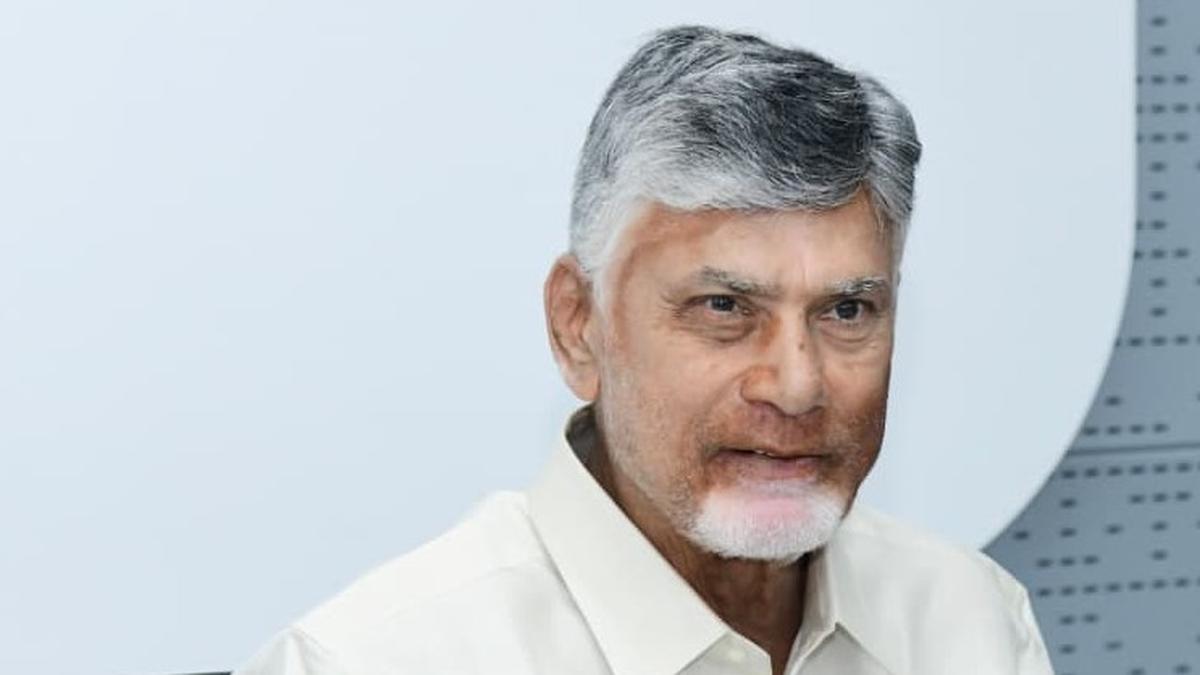
CM Naidu reviews progress of work by contractual agencies involved in capital construction View More

A U.S.-Iran war 'tax' is beginning to hit consumers as diesel and jet fuel prices rise and stress business profitability, and there is no relief in sight. View More
In an aerial view, Pilot Travel Center gas and diesel prices are displayed near a highway on April 02, 2026 in Lockhart, Texas. Oil Brandon Bell | Getty Images News | Getty Images Nick Friedman, co-founder of Tampa-based College Hunks Hauling Junk and Moving, says his business has been facing multiple headwinds. High mortgage rates have dampened the real estate market, while rising insurance premiums are eating into operating costs. Now there's the U.S.-Iran war and a surge in diesel fuel prices that is eating into profit margins. Yet, he doesn't feel like he can raise prices. "We are in a bit of a Catch-22," said Friedman. "Our fear would be if we start raising prices it will hurt our customers." Bigger companies, he says, can probably get away with adding fees. As rapidly rising fuel costs are cascading across the American economy, that is exactly what some are doing.United Airlines and JetBlue both raised prices on baggage this week. Amazon announced a 3.5% "fuel surcharge" on sellers.Amazon described the surcharge as "meaningfully lower" than levies applied by other major carriers in a statement to CNBC. JetBlue said as operating costs rise, it "regularly evaluates how to manage those costs while keeping base fares competitive and continuing to invest in the experience our customers value."For Friedman, that evaluation isn't easy. "If you have to fly, you have to fly," he said.But as Friedman's moving company considers whether to raise prices, "I don't know that we have that luxury," he said. Customers can choose to trade down to a moving service that is cheaper and maybe less protected, or even assemble some buddies with pickup trucks to help with a move, leaving Hunks' 2,000-truck fleet increasingly idle. But filling up the trucks with gas is also an expensive proposition. Friedman says that historically, fuel has taken 3 to 5 percent of revenue as an expense line item, but has doubled to 6 to 10 percent since the war started. "It is very difficult from a business perspective," Friedman says. Hunks runs on a franchise model with over 200 locations, putting many franchisees in precarious positions. Stock Chart IconStock chart iconWTI oil prices year to date 2026. While Friedman's business is uniquely exposed to the war with its reliance on trucking, higher diesel and jet fuel prices are about to hit a lot more businesses. "Discretionary spending is typically where the cycle starts. Consumers pull back from items which are discretionary first," said MassMutual Wealth chief investment officer Daken Vanderburg. Vanderburg says higher energy prices act as a tax on consumers because they ripple across so many goods and services. If the war and its disruption is short, consumers will dip into savings and weather the higher costs. But a longer-duration conflict will cause consumers to cut back. "That slows growth and hits spending, and does it quite quickly," Vanderburg said. While many in the market were expecting President Donald Trump's speech to the nation earlier this week to outline an end to the war, his words left the timeline unclear and the market unsettled. Unlike past economic shocks to the system, such as the Great Recession or Covid, there will be fewer tools for the government to use to lessen the blow for businesses and consumers. "Policy is likely not riding to the rescue like it did during the Covid era," Vanderburg said. The Federal Reserve is caught in its own conundrum. The central bank has not indicated any greater likelihood it will ease rates to stimulate the economy, given the risk it could push inflation higher. In fact, the market was recently betting the Fed would be more likely to raise rates given the surge in oil prices. But Fed Chair Jerome Powell also indicated this week he saw no reason to consider a rate hike, noting short-term oil shocks are usually a factor that central banks look past when analyzing inflation and longer-term inflation expectations remain well anchored. A price shock across the boardThe U.S. economy, more so than economies in many other countries, is propped up by consumer spending, with almost two-thirds of the economy powered by consumers. Where those dollars go will dictate where the economy goes, Vanderburg said. While the economy had been slowing even before the outbreak of war, he says there is one cushioning factor for the American consumer compared to the oil crisis of the 1970s, a country that is far less dependent on imported oil. But he added that cushion can only soften the blow. "This is headed toward sustained, compounding cost pressure across every industry that touches fuel, which is effectively every industry," said Herman Nieuwoudt, president of IFS Energy & Resources. Nieuwoudt says what we're seeing right now isn't a single price shock. "It's the consequence of the largest energy supply disruption in modern history layered on top of six years of structural volatility," he said. "These disruptions cascade through manufacturing, packaging, agriculture, transportation, and retail in ways that take months to fully materialize," he added. watch nowVIDEO4:0404:04Port of LA on potential 'spillover effects' from the Middle East conflictSquawk Box Asia Costs will rise across the board, and the companies that can see disruption coming, adapt their operations in real time, and make faster decisions about where to allocate resources will weather this far better than those still running on quarterly planning cycles. But he added that companies relying purely on surcharges without addressing their own operational efficiency are on borrowed time â probably two to three quarters before customers and competitors force a reckoning. For consumers, Nieuwoudt says the pain at the pump is first, but that is only the beginning. Higher costs will gradually show up across airfares, groceries, shipping costs, and manufactured goods. Economists say the existing K-shaped economy is about to get a twin phenomenon, with the indispensable (airlines, car repairs) and the giants (JetBlue, Amazon) having more latitude to raise prices, whereas smaller businesses and discretionary services are caught in a vise between raising prices and turning off customers, or keeping prices down while sacrificing margins. Higher airfares should not be a surprise. Delta Air Lines CEO Ed Bastian told CNBC several weeks ago that given current demand, there is room to raise fares as a response to higher oil prices if needed. "Even with the war going on, our revenues, our bookings are up 25% year over year," Bastian said. In early March, United CEO Scott Kirby told CNBC higher airfares were likely on the way to cover rising fuel costs. watch nowVIDEO3:4503:45United Airlines CEO Scott Kirby: I think fares will continue to go up in line with oil pricesSquawk on the Street "American consumers are resilient and the current situation is no exception," said Federico Bandi, a professor of economics and finance at the Johns Hopkins Carey Business School. Other brands may not be as fortunate as the airlines with demand and pricing momentum. Bandi says there has been a shift away from discretionary spending towards necessities, and within necessities, there is an accelerating shift from brand names to generic products. "A prolonged equilibrium in which companies attempt to pass unusually large energy costs (or pervasive tariffs) onto consumers will not be sustainable. The persistence of the current shocks, and companies' readiness to re-adjust prices when costs return to some degree of normalcy, will be central to consumers' confidence and their future decisions," he said. Economic vulnerability from import tariffs, government shutdowns, and rising health care costs, among other policy changes, lead Fernando Lozano, a professor of economics at Pomona College, to conclude that "patience is very short" and consumers will have very little tolerance for new fees. The shipping sector economics may be a major test, and consumers may have to choose what matters more: paying more for faster service or saving money by waiting for an order. "We are seeing the end of the 'fast and free' shipping era as a default expectation. The current disruptions are forcing a reset, and what's emerging is a model based on choice and value," said Josh Steinitz, chief strategy officer at shipping and fulfillment software company Auctane. Steinitz says the current crisis is pushing both businesses and consumers to reconsider the true cost, and worth, of getting a product to a doorstep.The United States Postal Service has asked for an 8% surcharge for package and express deliveries. The best way to think of a fuel surcharge, according to Steinitz, is as a "volatility tax" on shipping. "It's how carriers manage unpredictable oil prices, but for a small business, it feels like a new, unavoidable cost that appears on every single shipment they send," Steinitz said. As opposed to the stability it provides the carriers with, "when small business owners see the fee on their invoice it feels less like a shock absorber and more like a direct financial impact they have no control over," he said. This leaves business owners and consumers in a vise. Friedman thinks wistfully of his days starting Hunks with his friends and an old cargo van at the dawn of the Great Recession. "At that point, we were a scrappy start-up, and it forced us to become resourceful and gritty," Friedman said. He says the company will now have to rely on some of that same grit, but with 2,000 trucks to fuel up, and less room to shift margins and pricing, it feels different right now. "It's pinching everyone," he said. Choose CNBC as your preferred source on Google and never miss a moment from the most trusted name in business news.

Revelations about Jeffrey Epstein's ties to Bill Gates have strained his friendship with Warren Buffett and the Omaha billionaire's annual multi-billion-dollar donations to the Gates Foundation. View More
In this articleBRK.BBRK.AFollow your favorite stocksCREATE FREE ACCOUNT (This is the Warren Buffett Watch newsletter, news and analysis on all things Warren Buffett and Berkshire Hathaway. You can sign up here to receive it every Friday evening in your inbox.) Buffett may end donations to Gates Foundation over Bill's ties to Epstein Revelations in the Jeffrey Epstein files about the notorious sex offender's connections to Bill Gates have severely strained, and perhaps ended, the Microsoft co-founder's famous friendship with Warren Buffett.They could also prompt Buffett to cut off his annual multi-billion-dollar donations to the Gates Foundation.In a one-hour-plus sit-down interview (full audio and transcript appear below) that aired on Tuesday's "Squawk Box," Buffett told Becky Quick he has not talked to Gates "at all since the whole thing was unveiled."Asked if he is still "good friends" with Gates, Buffett replied they'd had "great times together," but "until it gets cleared up ... I just don't think it makes sense to do a lot of talking."Noting that his "memory is no good anymore," Buffett added, "I don't want to be under oath, in terms of trying to remember everything over 30 years, or 20 years, the foundation's done, or anything like that.""I didn't have anything to do with it, except I put money in it." watch nowVIDEO10:4510:45Warren Buffett on Epstein files: Haven't spoken to Bill Gates 'since the whole thing unveiled'Squawk Box In response to Quick's question on whether he will continue to give money to the Gates Foundation, Buffett said, "I'll wait and see what unfolds ... I don't have to make that decision today. And I haven't made it today." "I've learned things I didn't know about something for all these years."Buffett said he doesn't think "Bill had anything to do with girls or the island or anything like that," but he still wants to learn more as revelations continue.Buffett is relieved he "never came near" Epstein, calling him a "sensational conman" who preyed on others' weaknesses, although that "doesn't excuse the people on the other end." Warren Buffett, Bill and Melinda GatesLacy O'Toole | CNBC In 2006, Buffett wrote to Bill and Melinda Gates that he was "irrevocably committing" to make annual gifts of Berkshire shares to their foundation "throughout my lifetime," as long as at least one of them was actively involved, the gifts did not become subject to a tax, and the foundation actively spent the contributions on its philanthropic activities.The letter also said Buffett's will would "provide for a continuation of this commitment ... after my death."Two years ago, however, Buffett confirmed to the Wall Street Journal the Gates Foundation "has no money coming after my death."The previous November, he had announced that his three children would be jointly responsible for giving away almost all his wealth after he dies. Buffett: I sold Apple shares 'too soon' In the interview, Buffett conceded he started reducing Berkshire's massive Apple stake "too soon," but added with a laugh, "I bought it even sooner. So, it worked out."As of the end of December, the position had been cut by 75% since sales began in the fourth quarter of 2023. Zoom In IconArrows pointing outwards Over that time, Apple's stock price has increased by almost 50%. Zoom In IconArrows pointing outwards Even after the selling, however, Apple remains Berkshire's largest equity position with a market value of $58.3 billion, which is roughly 18% of the portfolio.If Berkshire had kept the 915.6 million shares it held as of Sept. 30, 2023, the stake would be worth more than $234 billion.In that hypothetical, it would be almost 48% of the portfolio.Buffett said, "I'm very happy to have it be our largest holding. I was not happy to have it be as large as almost everything else combined." watch nowVIDEO4:4704:47Warren Buffett on Apple: I sold too soonSquawk Box "It's not impossible that Apple would get to a price [where] we would buy a lot of it," he added. "But not in this market. I mean, it just isn't going to happen in this market." Buffett still has a hand in Berkshire's investing decisions Buffett said that even though he stepped down as CEO at the end of last year, he still comes into Berkshire's offices every day as chairman and is involved in some investing decisions.But, he added, "I won't make any that [new CEO] Greg [Abel] thinks are wrong." watch nowVIDEO7:2507:25Warren Buffett says heâs still making calls on investments at Berkshire, flags âtinyâ new buySquawk Box Buffett said he had made "one tiny purchase," but he's not finding many potential buys despite the stock market's recent declines, which he said aren't substantial and "nothing to make you excited." Fed should have a 'zero' inflation target Buffett says he "wouldn't want the responsibility" of running the Federal Reserve, but he wishes the central bank "had a zero inflation target" instead of its current goal of a 2% annual increase."Once you start saying you're going to tolerate 2%, that compounds pretty dramatically over time... I don't like that particular goal." watch nowVIDEO7:0507:05Warren Buffett: I wish the Fed had a zero inflation targetSquawk Box In the government's most recent report, the February consumer price index was up 2.4% versus the same month last year. Buffett: Iranian atomic bomb would raise risk of nuclear catastrophe For a long time, Buffett has been concerned about nuclear proliferation, calling it "the ultimate problem of mankind" in 2006.While he doesn't know how to fix the problem, he does know that "it'll be more difficult if Iran has the bomb than [if] they don't." watch nowVIDEO7:4307:43Warren Buffett: The world is more dangerous with Iranian nuclear weaponsSquawk Box Buffett, however, wouldn't say whether he thinks the U.S. should try to seize Iran's enriched uranium. Buffett revives charity auction with NBA star, may get hoops lesson Warren Buffett is teaming up with the Golden State Warriors' Stephen Curry and his wife, lifestyle entrepreneur Ayesha Curry, for a charity auction. The winning bidder for "A Seat at the Table," and up to seven guests, will share a June 24 lunch in Omaha with the trio.The eBay auction starts May 7 at 7:30 p.m. PT and ends exactly one week later.Proceeds will be split between San Francisco's Glide Foundation and the Currys' Eat. Learn. Play. Foundation that is "working to transform the school experience for a generation of Oakland students." watch nowVIDEO9:0909:09Warren Buffett teams up with NBA superstar Stephen Curry for charity lunch, reviving iconic auctionSquawk Box In his CNBC interview, Buffett revealed that he will personally make matching donations to the two groups."Steph is the hero of millions and millions of people. So, I really think it'll work."AP reports that in a video call with reporters this week as he prepared to resume playing after missing more than two dozen games due to a knee injury, Curry, 38, said Buffett, 95, wants a lesson on how to shoot a basketball."If not a permanent basketball hoop, I'm pretty sure there's going to be a mobile one out there so I can make good on my promise to teach him some form."We'll see how he can do. I haven't seen any video of a Warren Buffett jump shot, but we'll see." Stephen Curry #30 of the Golden State WarriorsBob Donnan | Reuters Buffett's lunch auctions raised more than $53 million for Glide over two decades. In 2022, what was then called the "grand finale" of the series was won by an anonymous bidder for $19 million.In this week's interview, Buffett said he had "run out of gas" but revived his participation in the auction, at least for this year, because it had "fizzled" without him and "it would have killed me to have it just die off." Berkshire shares start week with a win, ending 8-day losing streak Shares of Berkshire Hathaway ended Monday with a 1.3% gain, breaking a string of eight consecutive daily losses that began on March 18.It was their longest losing streak in more than seven years.Both the Class A and Class B shares also advanced on Tuesday and fell Wednesday.On Thursday, BRKA managed a very small gain, while BRKB dropped slightly.The U.S. stock market was closed for Good Friday. Zoom In IconArrows pointing outwards The eight-day losing streak pushed the A shares down 4.7% and the B shares fell 4.9%.They erased a bit more than a third of those losses this week.  The full Buffett interview The entire 70-minute interview with Buffett is available in video form for CNBC Pro subscribers.There is also audio of the entire conversation in this episode of "Squawk Pod."BECKY QUICK: Warren, welcome. It is wonderful to see you this morning.WARREN BUFFETT: It is fun to be on.QUICK: You are on for an interesting reason.For 22 years, you had been holding an annual luncheon â an auction for a luncheon â to benefit the Glide Foundation in San Francisco.You retired from that â from doing that â back in 2022 after you'd raised more than 50 million dollars. I think the last auction that you raised â that you did â raised â 19 million âBUFFETT: 19 million.QUICK: â one hundred dollars [$19,000,100] for the Glide Foundation.And you kind of hung it up and said that was going to be the end.You are back with a new announcement today that there is a new auction that is coming, with a twist.This time it's Warren Buffett, Stephen Curry and Ayesha Curry, and they're going to be having a new luncheon to benefit not only the Glide Foundation, but the Currys' foundation as well, which is, Eat, Learn, Play.And this auction is going to be held May 7th. It starts at 7:30pm Pacific time. It closes on May 14 at 7:30pm exactly.And all of the benefits of that is going to go to benefit these two foundations, Glide and the Eat, Learn, Play Foundation.How did this come about? Why did you unretire from this?BUFFETT: Well, let me tell you first how I got into it, because my first wife, Susie, was living in San Francisco and she said to me, this guy is real. (Laughs) And â and âQUICK: This guy being Cecil.BUFFETT: Cecil. Yeah, Cecil Williams, who came to that church in 1963. And it was a dying church in a changing part of the neighborhood in San Francisco. And they weren't glad to see him, the hundred or so parishioners that were left.But he turned it into something that became â it gave hope and life to people that the world had given up on.And I went on Sunday still expecting something less than that â (laughs) â and I watched Cecil, and I could see what he was doing, and he was for real.And so, Susie, at some point, said, why don't you do something to raise some money for him? You know, and so, I think she actually selected the idea of the lunch, and then we did the lunch.The first three lunches brought 25 thousand dollars each because they were localized. And then we got the idea of going on eBay. And then we started getting bids from around the world.And it just generally kept moving up, although it wasn't every single year, but it just â it just put us on the map.And as the final amount, 19 million, was raised â now that was kind of raised because it was the last one, I think. I was doing (inaudible) that had bought an earlier lunch, but I didn't make any calls to him or do anything. He just turned out to be â it inspires people. And Smith & Wollensky, as you know, covered it in New York sometimes.QUICK: That's often where you had the lunch with the winners of this.BUFFETT: And some of them wanted to be anonymous. And a couple came to Omaha along the line because they had some special thing they wanted to talk about.But I think everybody felt like they were glad they did it, and I was glad to do it, and âQUICK: So why'd you stop?BUFFETT: Well, I ran out of gas. (Laughs)I â you know, I got to be what, 93 at that time, or something like that. And it just â same reason I gave up teaching.I teach â I was â I taught every year from when I was 21 till 88 or 89. And there just came a period when your body said different things to you. And you should turn it over to somebody, just like I did at Berkshire.I mean, at different times, on different things, but I â and so we thought we had a continuation of it all set up, and then for one reason or another, it fizzled.And so the last two years they â well, I think the first year, some board member made up some members â but basically the auction disappeared.QUICK: So they haven't had the funds coming in.BUFFETT: No. And Cecil Williams was about my age in all this â and it got so I couldn't understand him on the phone or anything like that, but all he wanted was this to continue.And so, I don't know where the idea came from exactly, but I said I would do one more, just to get us started again and to have Steph Curry join us, I mean, in the Bay Area. I mean, it's just a natural. And âQUICK: Right. The Eat, Learn, Play Foundation that Stephen and Ayesha Curry have set up is in the Bay Area as well, so they're âBUFFETT: Exactly.QUICK: â locally focused on all of these things.For people who don't know, the Glide Foundation was also, it was highlighted in the movie "The Pursuit of Happyness" with Will Smith. So people may have a little bit of an idea of what that's about.Why Steph Curry? How did that come about?BUFFETT: Well, I mean, who can say it better?I mean, he's worked with the kids in Oakland. I mean, these are kids between five and 15, or something like that, and he plays basketball with them.And I mean, he's a terrific guy. I don't â you know, I haven't met him personally.QUICK: But you did talk to Stephen and Ayesha.BUFFETT: We had a long talk on the phone.And it's his baby, and he can carry it forth.And, incidentally, whatever is bid this year, I will make the equal contribution. I don't think â Steph doesn't know this yet â but I will make an equal contribution to both Glide and to âQUICK: The Currys' foundation.BUFFETT: Yeah, the foundation.And, you know, just go on to new heights, I mean âAnd Steph is the hero of millions and millions of people. So, I think it â I really think it'll work. I think it will continue to be what Cecil hoped it to be.And it would have killed me to have it just die off. And as much what Cecil poured into it himself, he believed everybody was worthwhile. And the world had given up on these people. And he may have started giving a little bit of food to them before he got through â he was doing all these things at Glide. And he never gave up on anybody.QUICK: And I know you've said that Astrid really liked him, too.BUFFETT: Oh yeah. It â Astrid is my second wife.And you couldn't help but like him. I mean, when you watched him up there with people that the world had given up on and he says to them, I'll feed you. I'll have a bed for you. We'll have a vocation for you. You know, we're not going to give up on you. And never did.QUICK: Warren, this is the first time that we're sitting down with you since you stepped down from the position of CEO of Berkshire Hathaway.BUFFETT: Yeah.QUICK: It was a long, long run â very successful run. How is your life different today?BUFFETT: Well, it's not much different, except for the â I mean, I go in every day.QUICK: To the office?BUFFETT: Yeah, I go in every day to the office. I don't accomplish hardly anything.I mean, in terms of â (Becky laughs) â  it just takes me way longer to do things.And [CEO] Greg [Abel] is so good. It was kind of embarrassing how good he is, because he has covered â you know, we've got about two hundred businesses within Berkshire, you know, that came about â and I can't name the managers' names or their wives' names, or â and I haven't seen them, you know, in a long time.It's easier just to write the letter once a year and kind of do my own thing.Greg covers more ground in a day than I would in a week, even when I was at my peak, let alone my present condition.So it's a move that, in many ways, I could have done it earlier, and Greg would have been better than I was. But you know â and I can still contribute just a tiny bit.QUICK: Well, are you still involved in making investments at all?BUFFETT: Yeah. Yeah. It âBut I won't make any that Greg thinks are wrong. And he'll run â he's starting to get a few calls, and he'll call me about them. And like me, he doesn't like them, you know â (laughs) â but âQUICK: Calls for deals, you mean?BUFFETT: He'll keep me posted. Yeah, Well, yeah.It's investment bankers calling him.QUICK: OK.BUFFETT:  And, they'll sell â you know, they will try to sell anything.But I cut them off in about 10 or 15 seconds, and he's â he spends more time with them, but I don't know where he gets his time, because he plays hockey with his â I mean, it isn't like he's as fanatic as I was, in terms of running the place. But with no more apparent effort, he just covers so many bases.QUICK: In terms of what you're doing with investing â I mean, that's a huge amount of money. How much cash does Berkshire have on hand at this point?BUFFETT: I don't know the exact number, but it's not much different than before. So you know, it's probably north of 350 billion in cash and Treasury bills.QUICK: Yeah. So âBUFFETT: We bought 17 billion this week.QUICK: Seventeen billion of T-bills?BUFFETT: Of T-bills.QUICK: Berkshire is the largest owner of T-bills?BUFFETT: I think we're probably the largest bidder. And ironically, I got involved in Solomon [Brothers] because they bid for too many bills.And I don't think they'd get mad at us now â (laughs) â if we bid for too many, but â you're not supposed to go over 35 percent or something in the auction. And of course, you bid through the primary dealers. But I don't even know the mechanics that well.But one fellow in our office handles all the mechanics of the stocks and bonds we buy.QUICK: Mark Millard.BUFFETT: Yeah, exactly. At anyplace else they'd have 25 or 30 people. And he loves what he does, and I love what he does. (Laughs)He's down the hall about 20 feet. About every hour â or hour and a half â he brings me in what we've done. And sometimes âQUICK: What Berkshire has done, just in terms of the markets that day?BUFFETT: Yeah, I call him â I call him before the market opens, because I see what's been going on, you know, pre-market, and probably change the limits only. I don't get lots of different stocks or anything like that.Every now and then, I'll let it do something, and I will change (inaudible) prices daily.QUICK: But you don't do that â you don't check with Greg before you're doing that? You check with Greg on a regular âBUFFETT: Well, Greg gets the sheet every day.QUICK: Oh, he does, too.BUFFETT: He doesn't get it quite as fast as I get it. I mean â but he â it probably gets sent over at the end of the day or something of the sort.And if Greg differed with me on anything, we wouldn't be doing it.QUICK: But you're still making new purchases?BUFFETT: Pardon me?QUICK: You're still making new purchases?BUFFETT: Got one tiny purchase, but we aren't finding things that â we weren't finding them before.QUICK: Well, let's talk about that. The market has come down substantially. You've âBUFFETT: Not substantially.QUICK: Well, you've got both the Dow and the Nasdaq in correction territory. It's the worst performance on a quarterly basis for stocks in about four years. Do things look cheaper to you?BUFFETT: No.Three times since I've taken over Berkshire, it's gone down more than 50 percent. I mean, if you look at the markets of â the worst, probably, was the 2007-8 period, although it was that one Monday, when you had 21 percent in a day. I mean, this is nothing. I mean, it âQUICK: But this is nothing to make you get excited and think there's huge valuation drops?BUFFETT: Well, if they're 5 or 6 percent cheaper, that doesn't â we aren't in it to make 5 or 6 percent, I mean â but â we're not a big seller, either.In the end, we own businesses. Sometimes there's wholly owned, sometimes they're partly owned. That's what I like to own.And two thirds of our money, or more, is in our businesses.And we bought Occidental Chemical on January 3rd. That was 9.7 billion.And as far as I'm concerned, that's got some advantages, some disadvantages, versus owning a stock, but it's got the same principles attached to it.It is a business, and it's a business we expect to own, you know, indefinitely. I mean âQUICK: Are you, I mean, it doesn't sound like you're necessarily finding businesses that you want to own flat out either, not just purchasing portions of them if you've got 350 billion dollars-plus sitting around.BUFFETT: Yeah, and we get calls all the time, and there's so many calls. But like I said, it takes me five seconds to say no. It takes â Greg's a little more polite than I am, but â (laughter)I â I mean â it â I'd just as soon get the calls just to see what people are doing. But they aren't offering anything that's at an attractive price, and what they want is a trade.QUICK: Are you waiting for the next big drop in the market to deploy that cash, and if so, when do you see that coming?BUFFETT: Yeah, if there is a big decline, we will deploy. I mean â but we won't â we will deploy it because stocks are attractive or businesses are attractive to us, and we are not planning to sell them next week or next month, so we want to be right on them.And we've had our American Express stock 30 years without having a âyou know â Coca-Cola, close to 40 years â 35 years.And on the other hand, there's things I change my mind on fairly quickly.But the goal is to own the owned businesses. And when we buy Occidental Chemical, we expect to own that 50 years from now. You know, the world can change in some way, but that is â we do not, we do not buy that with a thought of resale.QUICK: You've sold a lot of stock that's done very well for you, Apple âBUFFETT: Well, I sold it too soon.QUICK: Yeah. It made billions âBUFFETT: But I bought it even sooner. So, it worked out. (Laughter)Yeah, I think we've made over a hundred billion dollars in that, pretax.QUICK: Yeah. But you're regretting it? You say you sold it too soon?BUFFETT: No. No, no. I don't have any ability to predict what stocks will do next week or next month. And I will buy them if they're cheap. I'll buy a whole lot of them if they're cheap and I think I really understand the business.And Apple is still our largest single investment.QUICK: And you like it that way?BUFFETT: Yeah, well, if I didn't like it, I could sell it. (Laughs)Yeah, no, I can âI think it's a remark â it's better than any business we own outright.Now, we own a railroad that's worth more money than our Apple position, for example. They're both looked at the same way. I mean, they're both, they're both businesses.I expect the â I think it's more predictable, in a certain sense, that the railroad will be around 50 or a hundred years from now, but it doesn't earn the rate remotely on capital than Apple does.I mean, Apple is a business that, you know âYou've got one [iPhone], probably, and your kids have got them. I mean, you know, it's âQUICK: Not one, we've got like 20 of them.BUFFET: Yeah.QUICK: Devices.BUFFETT: And actually, the Bell Telephone Company was that way at one point, but they were regulated.QUICK: Well, do you worry about regulation coming for some of these big tech companies, in particular, Apple?BUFFETT: I think the consumer's in love with them too much. I don't â I don't think Washington will do anything that really destroys something that every one of their voters likes â (laughs) â and they're using themselves.So I mean, it's a remarkable product that way.Just think of something that is as useful as the Apple is. I mean, it's â Tim â Tim Cook has done better with the hand [than] Steve Jobs.He couldn't have done what Steve Jobs did, but Steve Jobs handed him a hand that â Steve would not have done as well.Steve picked him. I mean, when you get right down to it. And Tim is a fantastic manager. And he's a good guy. And somehow he gets along with everybody in the world, which is, you know, that's â that's a technique I wouldn't have, for example. (Laughter)Certainly my partner, Charlie Munger, wouldn't have had it. (Laughs)But, it â I'm very happy to have it be our largest holding.I was not happy to have it be as large as almost everything else combined.QUICK: OK, that makes sense. Um âBUFFETT: Although at a price I was â (laughs)QUICK: Right.BUFFETT:  And they couldn't âQUICK: Hold it up âBUFFETT: It's not impossible that Apple would get to a price, we would buy a lot of it, but not in this market. I mean, it just isn't going to happen in this market.QUICK: How much would stocks have to come down for you to think that this is really attractive, if it's âBUFFETT: Well, it depends on the stock. Some stocks â now, generally speaking, they move together to quite a degree, but â but I don't think I know what the market's going to do.I do think I've got a reasonable idea of what a business is worth. I have no idea what the stock market's going to do, and I don't think anybody else does, either.QUICK: You don't necessarily follow tech companies and Apple, people look at as a tech company, but you always looked at as a consumer company.BUFFET: It's a consumer âQUICK: Yeah.BUFFETT: â company. QUICK: So what do you do about all of these tech stocks and the AI trends that are there? Do you try and follow any of that? Do you get involved in any of those industries?BUFFETT: Well, I don't because I'm â A, I wouldn't be any good at it, and besides, I'm so late to the game.I am not learning new things well. I still don't know what to do with the phone, but I just recognize the fact that â that, you know, you're going to have one, and your kids are going to want one. And â and it is a terribly useful â I mean, it's incredibly useful.And you get something that's useful and offered worldwide, and where, to some extent, you're a little worried about maybe moving your photos from one system to another.(Laughs)All I had to do was go out to Nebraska Furniture Mart and talk to customers â is what, that's what I did 60 years ago at American Express when they looked at â like they were, you know, done for, on the salad oil scandal.And I went down to the Omaha National Bank, and I said, are you getting a premium for American Express tickets? They can sell their travelers check for more than Citigroup, Bank of America, you know, Barclays, everybody had â and they were getting a premium at the same time. Everybody else was worried about them getting in â getting out of business.And the same thing, when they actually started their card, they were going up against Diners Club and Carte Blanche, who had come first. And they came â they came on later. And instead of coming in at a cut price, they came in at a price above the competition.That â that says a lot about â (laughs) â about how consumers felt about American Express.QUICK: Yeah.Warren, let me ask you about the economy, because the Fed is in a bit of a quandary right now, just trying to figure out which one of its mandates it's more worried about.Is it worried about inflation potentially rising more? Is it worried about the jobs market and, you know, potential decline in economic output?What â what of those two issues would worry you most if you were at the Fed right now?BUFFETT: Well, if I were at the Fed, the thing I'd worry about, always, is, you know, you're the reserve currency of the world.I mean, so you've got very smart people, very sophisticated people. The American dollar looks, you know, like nothing can happen to it. And I don't see how anything could happen to it.But, if it does happen to it â (laughs) â I would â I would â I wouldn't want the responsibility of running the Fed.QUICK: But what would you âBUFFETT: I mean, the world will be dependent on it doing it. And last time, in 2007 and '08, you had Congress that essentially felt they knew more about it than, you know, secretary of Treasury.And so they really gummed things up when they â when they turned on TARP the first time. And I mean, it was â I think now people better understand what â the Fed can print money.QUICK: The Fed can print money, and we have a president, President Trump, who would like to see the Fed cut rates. Would you cut rates if you were there right now?BUFFETT: I don't know what â what I'd do there. I mean, I think that Jay Powell in â when â when the epidemic broke out â I think he acted in March of whatever â 2020.And I think if he'd waited two or three weeks, it would have been a disaster. Once the dominoes start toppling, they just start toppling and â and that line is shorter than anybody thinks, and it topples faster.And I think he did exactly the right thing, and he â he did it even stronger than [Paul] Volcker did. You know, I mean, he â he and Volcker are my heroes at the Fed.QUICK: Did they keep rates low for too long? I mean, I think that's â as they didn't worry about inflation, as they said it was going to be transitory? Because I think even Powell himself said that he might wish he'd turned it sooner.BUFFETT: Well, I wish they had a zero inflation target.QUICK: Right.BUFFETT: But, I mean, once you start saying you're going to tolerate two percent, that compounds pretty dramatically over time.And you're saying to people, if you're getting less than two percent on your money, you're going backwards.And, actually, if you pay tax, you may pay tax on the two percent. You know, I mean âI don't like â I don't like that particular goal. But âQUICK: So, inflation is maybe what you'd be more concerned about? I mean, that's what Greenspan â Alan Greenspan always said.BUFFETT: Yeah. I would be â I would care about inflation. I would compare â what I really would care about is the stability of the banks.QUICK: Yes.BUFFETT: I mean, the banking system is, in some sense, is very strong. In the other sense, it is very fragile.I mean, JPMorgan, in the last couple annual reports reported doing 10 trillion of business per day.Now, that's an unsecured policy. Now, they know what they're doing. Believe me. (Laughs)I mean, there's nobody smarter than JP â but I don't want  â I didn't want, during the 2008 period â I didn't want anything unsecured, you know, out there for a day. I mean, who knew?Nobody was any good. You know, I mean, it â the world is very interconnected and everybody panics. (Laughs)I mean, it â you know, they may say they don't, but you can call the biggest investment banking firms and they don't â and they say â well, they don't answer the phone, even, if things get bad enough.And if they do answer the phone, they â you know, they say 10 bid, 20 offered, subject. (Laughs)QUICK: Yeah. I mean, Joe will talk about that day that you mentioned in â where the Dow was down 21 percent. I think he was, at that point, he said it himself. He was hiding under his desk for the calls that were coming in.BUFFETT: Yeah. And âQUICK: Because when liquidity disappears, it disappears âBUFFETT: Twenty-one percent, and that was some day, and it just kept coming.And most of the specialist firms, which then counted for more, in terms of the stability of the markets. They were broke. I mean, as I remember, they went around to their banks and said, just don't pull the loans, you know.But they â they â people â they were supposed to keep making markets, but people just kept hitting the bid.And you can widen the spread out. You got circuit breakers now, all kinds of things.But when people are scared, they're scared. And people â if you yell fire in a crowded theater, everybody runs.Still, it still pays to beat people to the door, you know â(laughter) â and I can get trampled, you know, so, I will stand back there and say everybody to stay calm, you know? But that's because I can't run fast.On the other hand, when people come back into the theater, they come in one at a time. They know they don't have to get into it. But when people panic, they panic.QUICK: But is it the banking system we should be concerned about right now, or is it the shadow banking system, the private credit, at this point?BUFFETT: Well, it's all parts of the banking system because they all affect each other and the troubles from one can spread over to another. And, well, you saw what happened, I mean, in 2008.QUICK: But at risk of potentially â I don't want people to say that you are commenting on what's happening in the private credit situation right now.What do you think of the private credit situation right now? Are there enough concerning issues there that you worry that it could cause a contagion âBUFFETT: I don't think I know.QUICK: OK.BUFFETT: I don't â I do not think I know what â but, therefore, I want to be prepared for anything. And, therefore, we will always have â we'll always have cash around and we'll have Treasury bills.We won't have money market funds. We didn't have them in 2008. We won't have commercial paper â  in 2008.There's just one thing that's legal tender. And, you know, if you own Treasury bills â and we happen to own â we don't own Treasury bonds way out, I mean âBut every Monday, the Treasury has to sell bills. And as long as they got to sell, you know, X billions worth of bills, I mean, they can't â they can print some money to do it, and they'll do it.QUICK: But just to put a fine point on it, you don't think you know what's happening out there? You've had this huge cash hoard of 350 billion dollars.It's just there waiting for any time. It's not that you necessarily think that there's something on the horizon. It's just the longer time goes âBUFFETT: Oh, sure. No, I always want to have âQUICK: Yeah.BUFFETT: â cash.And I never want to buy anything just because people think the market is going up. (Laughs)I mean, the idea that people think they know what the market's going to do is just crazy.I mean, the idea that they would shout out to the world, you know, that something they really knew â (laughs) â I mean, that's like saying if they had gold â found gold in their backyard, they'd come on television and say, here's where the gold is in my backyard, you know, I mean? (Laughs)I mean, they're selling something.QUICK: They want other people to follow, you mean?BUFFETT: Well, they know that there's a certain â I mean, there's people in the United States and other parts of the world, but you've seen how much they like to gamble.And, basically, you have this incredible cathedral called the American economic system. Nobody's seen anything like it. I mean, it's the cathedral of all cathedrals.But attached to it is a casino and people can walk back and forth between the two.And believe me, people like to gamble. I mean, they gamble with the odds against them in the market.They can actually gamble if they â well, they really aren't gambling if they do it â but, I mean, if they just buy a stock and sit for 50 years â (laughs) â  if they got a group of them, they're going to do fine.I mean, the American capitalism system works. And betting against the house does not work. (Laughs)I mean, it's just â it's so simple. But, people do like to gamble. I mean âQUICK: When you say gamble âBUFFETT: On my honeymoon âQUICK: â are you talking âBUFFETT: I had my honeymoon in 1952.QUICK: Yes.BUFFETT: We went through Las â Susie and I â we just got in my Aunt Alice's car, and we drove and we went through Las Vegas at the time.And I watched all these people, who were dressed well, and they'd flown on jets. They'd flown, you know, for many hours, spent much money and everything else, to go and pull handles, you know, or do something that was mathematically dumb.And I thought, this is the land of opportunity. (Laughs)I told her we were going to get rich.I mean, how can you have people who have perfectly decent IQs rushing to do dumb things, which they do, and industries build on it. Now, it's become legalized. And the more they open it up, the more people like to do it.They like to do it in the stock market. And actually in the stock market, at least they got a favorable expectancy if they just sit tight.QUICK: Right.BUFFETT: But they don't sit tight, of course, if they, if they're gamblers.QUICK: So, you're not a fan of prediction markets, of legalized sports gambling, even of day trading. Is that basically what you're saying? BUFFETT: Well, I don't think â I don't think you can stop it once you open it up. And once the states found out that they could pay about 60 cents on the dollar, or something like that, whatever they may have different systems for different states. There was one state it was legal in when I was a kid, and we've been around for hundreds of years.But then once people saw that was working â (laughs) â other places took it up. And of course, rich people love it because they don't have to pay. I mean, you know, to the extent that the states raise money from people who that â where the dollar really means something to them, actually relieves the taxes on me or other rich people.I mean, it's not direct. I mean it â but it's â it's the net effect.So I don't like things that make a sucker out of people. I don't like them. I particularly don't like them when the government sponsors them.I don't think the government should play its â I don't think the function of the government is to play its people for suckers.QUICK: My dad has always said the lottery is a tax on the stupid. Gambling, same thing?BUFFETT: It's a tax â it's a tax on stupidity.But it's â but I'm not mad at the people that are stupid. (Laughter)No, I really am not. I mean, you can't help it, you know, to some extent. If you're human beings, you're geared that way when somehow, you know, it's developed within the humans.I don't like it when the government that they elect decides they're going to profit off that sort of activity.And I particularly, âI think it's kind of cynical. I don't think â I don't think you should have a cynical government. I mean it's âQUICK: Warren, let me let me shift gears and ask a little bit about what you think that is happening â that's happening â about what's happening in the Middle East right now.BUFFETT: What's happening with what?QUICK: What's happening in the Middle East.BUFFETT: Oh.QUICK: There's a lot of ways we could go with this, but why don't we start with just what it means for crude oil and energy in particular?Berkshire owns a utility company. What do these higher prices mean?BUFFETT: Well, it â it means the two oil positions we have, Chevron and Occidental âQUICK: Yeah.BUFFETT: â go up a lot.But that doesn't mean I can go around predicting what will happen next. I don't know what's going to happen tomorrow over there.QUICK: Yeah.You, for a long time, were involved with the nuclear initiative. I think still are funding that. And I know your very first priority in philanthropy was the nuclear problem.BUFFETT: I think it's the problem.  I think, it â well, I'll put it this way. When I was â when I went to school â grammar school â they told me the sun was going to burn out in four and a half billion years.QUICK: Yeah.BUFFETT: I took that pretty philosophically. I mean â (laughs) â I could handle that.And now, you've got nine countries, including, you know, a guy in North Korea. I mean â and there will be â something [will] happen.And we worried enormously about it when there were two. And we had perfectly â we had really pretty sane leaders in Kennedy and Khrushchev. You know, I mean, you were not dealing with unstable people or anything like that. And, you know â[During the Cuban Missile Crisis in 1963] The ships turned around, but people were hiding under their desks with two.I mean, just think how you feel with North Korea having it and Iran wanting to get it. I mean, it â it is â and I don't have an answer for that.I mean, we did the right thing in 1938, given â or 1939. You can go look at it. It's all over the internet. The most important letter ever written.And Leo Szilard could not get the message to â he was a famous nuclear physicist, a terrific one â very funny, too â and he couldn't get the message to [President Franklin] Roosevelt, but he knew if [physicist Albert] Einstein signed the letter, that it would get there. And he finally got Einstein to sign the letter [warning that Germany might develop an atomic bomb and suggesting the U.S. start its own nuclear program].And that letter was a month before the Germans started rolling into Poland.And I don't think Roosevelt understood U-235 any better than I do. (Laughs)I mean, you know, but he knew if Einstein signed it, he better do something.And the funny thing is, of course, he was doing it because he was worried about the Germans getting it. And it was actually used on the Japanese.But it â we â we haven't learned to live with it.Now, we've been â we've gone 80 years since then. We've had a lot of close calls. I mean, we've had training tapes put in there that â that almost got the president to do something. They've had them â I mean â there is no way that the planet has an expectancy of 500 years now when it was four and a half billion when I was a kid, and âWe had to do it. I'm not faulting anybody. My dad was in Congress. He would have voted for it. I mean, everybody rejoiced on VJ day. You know, I mean, it â it â but there was no way we could undo it.QUICK: Well, I think the question becomes today â [former U.S. ambassador to the United Nations] Nikki Haley was just on "Squawk Box" right before you. And she was saying she thinks the president should go in and find the enriched uranium in Iran right now. And that's a controversial position. It âBUFFETT: It's a controversial â but I would be â I would be, for one way or another, if I were the president of the United States â I don't want to be president of the United States â (laughs) â  I don't want that âI one time asked one president, I said, you know, if â if the Soviets had launched â so they already were in the air, and our policy was mutually assured destruction, would you have told Strategic Air Command, unleash ours, knowing that it wasn't going to â I mean, it was going to just kill millions and millions and millions more people and add to a supe- polluted atmosphere, that who knows what is going to happen? I mean, it â and now we have âQUICK: What was the answer?BUFFETT: The answer. Well â the an â  this president said â he said, I've thought about that every day.Because some major shows up at midnight âQUICK: Yeah.BUFFETT: â and says, we have incontrovertible â this is not â this is not geese above the North Pole. This is not a training tape that got put in by mistake.We know they're in the air and you've got 10 minutes to make a decision. Mr. President, what do I tell SAC to do? Do we unleash ours?And I used to be on the SAC advisory board, but  â (laughs) â believe it or not â the â but that was for political purposes as they put people on that, truly, because they were always looking for more money, and they just figured if â and I don't blame them.QUICK: But what did the president say? What was his answer?BUFFETT: He said, I thought about it every day during the time I was in office. He was an ex-president.QUICK: But did not give an answer on what he actually âBUFFETT: No, he said â I think the answer is yes. I would tell him to do it. That is the policy of the United States of America.QUICK: Yeah.So if you were the president today, or if you were advising the president today, what would you say about going after the enriched uranium in Iran?BUFFETT: I would say that one way or another, in the next hundred years â maybe it's two hundred years, who knows â but one way or another, something will happen that causes it to be used. And we can't take what's out there now.And if you thought it was dangerous with the Soviets and us â but Khrushchev, who was [a] perfectly rational guy, probably â Kennedy â just wait till we â wait till we're dealing with, you know, the guy in North Korea that criticizes haircut or something, I mean âOr â or, I would say the most dangerous thing is actually somebody that's got their hand on the switch who is dying themselves, or is facing enormous embarrassment, he figures if I go, everybody goes.QUICK: If you're cornered, yeah, if you're cornered.BUFFETT: Yeah.QUICK: So that's still rises to the level of one of the most important and âBUFFETT: It is.QUICK: Yeah.BUFFETT: It's just that I don't know the answer for it. But I do know that the â it'll be more difficult if Iran has the bomb than if they don't.QUICK: Yeah.Warren, I'm going to shift topics again.You have given away almost 60 billion dollars since 2006, when you first started giving money away. The bulk of that has gone to the Bill Gates Foundation.What have you thought about all the emails in the Epstein files related to Bill Gates?BUFFETT: Well, I won't say what I thought about them, particularly related to Bill Gates.But I would say, it astounds me how human people are. (Laughs)It â here you had a guy that was a convicted guy, a sensational con man, and the percentage of people that he knocked off, I mean, whether it was â he found their weakness.It might have been sex. It might be power. It might be â whatever it might be. And I don't see how anybody could have pulled that off. And then â and of course, all these figures think that it's going â when he dies, that "ha" â you know, they've â they've â they basically lied about it before. But I mean, you know, it âQUICK: They lied about their associations with Epstein, you mean?BUFFETT: Well, I mean, you know, they've rationalized it one way or another.But â and now it's all getting opened up and, of course, I'm just â I'm so happy the guy didn't â that he didn't stop in Omaha ever â I mean â or that I didn't live in New York.If I had lived in New York, at some party â I would have been at some damn thing â and where people always are asking to take a picture, and I usually do â I'm so used to doing it with students â I always do these gag pictures where I'm picking some guy's pocket or proposing to some woman or some damn thing â (laughs) âAnd â I â thank heavens, I â I never â and I never came near the guy.And I had read the article in "Vanity Fair" in 2003 that âQUICK: The one that lay â that laid out who â what a mysterious and strange âBUFFETT: And it didn't quite âQUICK: â  figure he was.BUFFETT: It went as far as somebody who that's worried about libel suits goes.QUICK: Well, it made him sound like a fraud, for sure. Yeah, I've read that article recently âBUFFETT: Well, the guy was a con man.QUICK: â at your suggestion.BUFFETT: â and the interesting thing is, you know, he got his start at Bear Stearns âQUICK: Yeah.BUFFETT: And they knew him. They knew he lied to them on all kinds of things. And âAnd Ace Greenberg was a good friend of mine. Well, Jimmy Cayne may have been actually running the firm by then, I'm not sure.But Ace Greenberg always was looking for â he had a guy that the son of a friend of mine, that he hired just to be his ferret.His â and his job was to look for anything that was old or large that traders might have stuck in their desk or  â I mean, he was worried about â about people.But somehow â Ace's daughter, I guess, was dated by â dating Epstein or something.And that guy must have been the con man of all time (inaudible).QUICK: But it's one thing to be a con man. It's another thing to be trafficking minors.BUFFETT: Absolutely.QUICK: It's sexual prostitution.BUFFETT: Well, and be prosecuted.And even though he managed to jiggle his way through that thing with, you know, whoever the attorney general was then â it â one way or another, he â he did not really spend much time in his cell, you know, and âBut he had a way of conning everybody. I mean, he probably â who knows what he offered the guys, you know, to do that. He could con anybody.QUICK: Have you been concerned âBUFFETT: He found their â he found their weakness.QUICK: Have you been concerned âFirst of all, have you learned things from the Epstein files?BUFFETT: Sure. I can't read them myself because my eyesight is so bad, but I've got a friend â (laughs) â that reads them avidly for me.And it is astounding to me that anybody could be that successful as a con person.But you know, PT Barnum said it many years ago, too â (laughs) â there's one born every minute.And, you know, men are going to like sex. And some â some of them are going to like not paying taxes.And whatever it was, he figured out what their weakness was, and then he was â had this ability to prey on them.But that doesn't excuse the people on the other end. I mean âQUICK: Right. What â what are the consequences for what âBUFFETT: The consequences should â are very likely to be, in my view, the same thing that happened back in 1969 when the Johnson administration left and the Ford Foundation hired a whole bunch of people that were let go from government.And it'll take â it takes something where Congress feels that, net, they're better â they're better off going after the foundations than not.And foundations have got plenty of â I mean, money, and foundations have plenty of more power in Washington.I mean, it's kind of â it's kind of irritating. We can talk about that later, maybe.But in '69, I think Wilbur Mills was â (inaudible) as head of the Ways and Means Committee. I don't remember exactly how it came about, but that was the last â  that was a big revision of what foundations could do.QUICK: OK.BUFFETT: I think this is the same â is going to have the same effect.QUICK: Is there anything that you've read, or been read, from the Epstein files that concerns you about the money that you donate to the Gates Foundation â money you've given in the past or money that you may have âBUFFETT: There was a lot â there was a lot I didn't know.QUICK: Like what?BUFFETT: What is very clear â well, I didn't know a lot of things.I mean, there were three trustees of the foundation âQUICK: You, Bill and Melinda.BUFFETT: â and I was one of the three.Now, we only met once a year. I did not ask probing questions.I mean, you know, if I had â if I thought I had to ask probing questions, I would â wouldn't have put the money in, in the first place.But  â (laughs)But â and incidentally, the guy, the CEO of the foundation, wasn't necessarily present during all these things, but he's not the real CEO. I mean, in the end, Bill ran the foundation.And it was â and â but I learned â learned, I guess â I guess â when the divorce action happened, because I resigned a month later â less than a month later, I think.QUICK: What did you learn then that âBUFFETT: I learned that I didn't know what was going on â (laughs) â and â which didn't mean something terrible was going on, necessarily, but I certainly didn't know what was going on.We didn't â and I didn't ask the questions, either, though.I mean, in terms of being on the foundation board â or it â it was â I made a decision on it in 2006 and â and I didn't think butting into so many marital problems â (laughs) â or anything like that was particularly appropriate at foundation meetings.But they went through and they talked about all these little things that didn't mean anything and â and then they've hired a few people that â that are really bad news, you know. And I never met any of those people, you know. That â that guy âQUICK: You're talking about Boris Nikolic?BUFFETT: Yeah. And I â I don't even know what âQUICK: He was mentioned pretty prominently in the Epstein files.BUFFETT: I never heard of him.And I, you know, I was around the â that â that guy, so far in the proceedings, I mean, he looks like a terrible guy to employ. Now, I've employed terrible people, but we've gotten rid of them.QUICK: Boris Nikolic eventually was gotten rid of at the foundation as well.Have you talked to Bill Gates about any of this?BUFFETT: I haven't. No. I haven't talked to him at all since the whole thing was unveiled.I don't want to be in a position where I know things â (laughs) â at the moment.I could get called as a witness.QUICK: Are you going to continue to give money to the Gates Foundation? You have every June since 2006.BUFFETT: Well, yeah, actually, I agreed to do it every year, but I've done it around June 30 most of the time, and I'll wait and see what unfolds.The stock isn't going anyplace. It isn't like I'm giving it all away to something else, or won't have it.But I'll wait and see what âI'm learning â I've learned things I didn't know about something â for all these years. And âI didn't know how the marital thing would play out. I mean, I just didn't know about it.You can guess sometimes that people aren't getting along, you know, at a given time. But that's true in every marriage. (Laughs)There are times when they get irritated with their spouse, or something like that. So âIn any event, I'll just wait and see. And there's three and a half million, or whatever it is, pages. I mean, it is astounding.QUICK: In the Epstein files.BUFFETT: In the Epstein files.And there's a lot of redacted stuff. And obviously, anybody that was involved in Epstein, I mean, they've been miserable, probably from the moment they learned that things are going to get released. And that â and they can't bury it now. I mean, it's gone too far.QUICK: Are there situations â I guess you're caught in a position where if you don't âBUFFETT: The money's all going to get given it away. That's for sure.QUICK: Right. If you don't give the money to the Gates Foundation, are you in violation of the pledge that you made? Or if you do give the money, are you condoning the behavior that has taken place?That you may or may not â that you may not have â we haven't learned everything, potentially, yet, about.BUFFETT: That's why I want to learn.QUICK: Yeah.BUFFETT: I don't have to make that decision today. And I haven't made it today.But I do keep reading things. I mean, I (inaudible) â somebody reads them for me, actually.And I â I was always astounded somewhat by the Epstein thing when it was taking place.But what this reveals about humans and the degree, whether â whether it's money or whether it's sex or whatever. I mean, this guy found people's weaknesses, but they did do things. (Laughs)QUICK: Yeah.BUFFETT: I don't think â if you ask me my personal opinion, I don't think Bill had anything to do with girls or the island or anything like that.But I am learning things about all kinds of stuff when I read this, and it is ruining one person after another.I mean â it â it's just astounding to me how bad âPeople always do things. I mean, there's consensual sex and all kinds of things.But â but this guy â how many hours are there in the day? I mean, three and a half million, or whatever â (laughs) â of his communications, and all the thinking that goes into âAnd â and he found people's weaknesses. And boy, did he know how to use it.And he used â he obviously used this guy, Boris somebody. And he used the woman at Goldman Sachs, I mean, just every place you looked.QUICK: Yeah. Yeah.BUFFETT: I've never seen anything â (laughs) âAnd I'm sure that once you get rid of the redacting of a few things, you know, you're going to learn more.QUICK: So you're waiting to hear what else comes from the files âBUFFETT: Sure.QUICK: â potentially what comes from congressional hearings?BUFFETT: Yeah.I think they may change the law on foundations, too.QUICK: You may think â I'm sorry, you think âBUFFETT: I think â I think there's a good chance. But Congress doesn't act that fast â they â they â so  the âBut â I â I just think that â that Congress reacts to whatever the public's mad about, and they'll be mad about the Epstein thing.QUICK: But you said that you think they could change the law on foundations as a result?BUFFETT: Oh yeah. I think there could be major foundation hearings.QUICK: And the changes that would go after the foundations, that would do what, strip their tax status?BUFFETT: Congress will want to look like they're doing something about it. And foundations have done a lot more lobbying in the past.I mean, there's been â hasn't been any anti-foundation lobbying to speak of. And there's been âthe foundations are there, and everybody goes to Washington.QUICK: Do you âBUFFETT: It's astounding to me how â how â no â Washington is â it's really become important. That's where the money is doled out. That's where the rules are doled out.QUICK: Do you think the foundation â foundations in general â have done good work? Do you think the Gates Foundation has done good work?BUFFETT: Oh, I'm sure they've done some good work.I don't think they'd be around if they hadn't done some good work.The question is whether the rules get changed in terms of what they can do, or their taxation gets âI mean, look at â look at the Harvard, I mean â you know, that â it â it âOnce public opinion changes, Congress changes. You know, it's â it's just the way it works.QUICK: Are you sorry you've given the money to the Gates Foundation?BUFFETT: No. No. I'm âQUICK: So you're happy that it's gone âBUFFETT: Yeah, well I mean, I â it's âBut I wish that certain things hadn't happened, obviously.But I don't â but it isn't like they're stealing money for themselves or anything like that.I mean, Bill pours his efforts into it. Melinda poured her efforts into it. The present guy that runs it does â he's â he's a guy who I'd hire myself, you know, I mean it â it âQUICK: Mark Suzman.BUFFETT: Yeah.QUICK: Yeah.BUFFETT: And â and  I think he's actually the best CEO they've had, you know, and I don't envy his job. But I also â I also think that â that I'll wait and see. (Laughs)They've got 96 billion dollars that they're sitting on now.QUICK: At the foundation.BUFFETT: At the foundation.Nobody's got anything like that.QUICK: Although Bill has also said that he plans to spend that money down âBUFFETT: Well âQUICK: â pretty rapidly over the next 20 years.BUFFETT: He's got plenty of his own money. Add to it. (Laughs)I don't â I don't know what will happen.QUICK: There's been â you and Bill and Melinda also created the Giving Pledge âBUFFETT: Yeah.QUICK: â where you got billionaires around the world to sign up and agree that they would give away at least half of their wealth, either while they were living or upon their death. And you got hundreds of people to sign up to that. There's âBUFFETT: Two hundred and some âQUICK: Yeah, 250-some âBUFFETT: Yeah.QUICK: â people to sign up to that.BUFFETT: It â it's astounded me that we've gotten that many, and we âLook, what â what Bill has done, and which I give him credit for, is he's taken it abroad. And you're changing â you're changing the behavior of societies to some small degree.The United States is â now they've got it partly by laws that favor it, too, and everything else. But âThe United States is an experiment, not only in a lot of other ways, but also, actually, in terms of private philanthropy.And Bill has made small, little cracks in that around the world, which I think always defies centuries and centuries of behavior.So â his â the energy he brings to anything he's involved in is incredible. I mean, you know âI'm too lazy. (Laughs).I'm not going to go around the world. I just, you know â I feel we launched something good, and I feel that there is no one that's a member of the Giving Pledge that is giving less than they would have given otherwise.Now we never told them what to give it to. We never told them when they should give it. We didn't make it a legal pledge, I mean âBut, we really got response on that.QUICK: There has been â there've been some articles written recently about the backlash in certain sectors, technology billionaires, in particular â Peter Thiel, Marc Andreessen â who have said that they don't like the Giving Pledge, and they think it's woke.BUFFETT: If â if they don't like it, they don't have to belong to the â (laughs)They can retire from it.They didn't make a legal pledge, anyway.QUICK: Right.BUFFETT: There may be any one of a lot of reasons why rich people don't like other rich people â or who knows what happens â (laughs) âBut â but I would say this, that  â well, I just would bet a lot of money that nobody is giving less because of it than they would have otherwise given.And a fair number of people â not â not huge numbers â but not insignificant numbers either â are giving it earlier or giving more.The biggest objection that people would raise with me, and it usually was by the mother, was that they just didn't want to become targets of articles about how rich they were. And you can't blame them for that.I mean, they're worried about â they can be worried about anything, but âA lot of people joined.One guy even joined, because he â he said, all I want is to have lunch with Becky Quick. (Laughter)I said, I think â I think â and he didn't â he didn't follow through, apparently, but â but âQUICK: No, I never heard from him.BUFFETT: But â but I mean that âIf you get a lot of billionaires, you get a lot of peculiar people, but they â (laughter) â they âNot that that's peculiar. I know I shouldn't present you with that.But it was amazing, to me, the reception we got. And we just started dialing.QUICK: Yeah.BUFFETT: And we hit the obvious â I mean, obviously, it's fallen off â the rate of additions.And obviously, you know, we made â we genuinely said we're not judging the people.We're not going to judge whether if they made their money in liquor. We weren't, you know âWhat counts is what â what they're doing with it, you know. I mean, that's all we're talking about, is, for God's sakes, you know, give away half of it.And that's so different from a â for a family that's got a family farm for a hundred years, and they planned on giving it to their kids and all kinds of things â than it is for some guy like me that just made it in stocks, you know, I mean.It would be a big, emotional decision if I were like a bunch of â well, you've got certain very rich farmers, you know, that own lots of acreage, and they've been building it their whole life for their â turn over to their kids, and they buy the farm next to them and everything. So, it â it âI think I â I feel good about the Giving Pledge.QUICK: You said you haven't talked to Bill about any of the issues that have come out from the Epstein files. Are â are you still good friends with him?BUFFETT: We've had great times together. But â and he's treated me better than I think he's probably treated anybody else. I mean, he's arranged trips that â that â arrange for the kinds of foods I like, to the Wall Street Journal being in China, or what â I mean, he's been terribly thoughtful with me throughout this.But I think until it gets cleared up, I don't â I just don't think it makes sense to do a lot of talking.For one thing, I don't want to be under â my memory is no good anymore.I don't want to be under oath, in terms of trying to remember everything over 30 years, or 20 years, the foundation's done, or anything like that.I didn't have anything to do with it, except I put â put the money in. But âAnd you may say, you can â you can say, well, you're derelict in not â in not doing it.But I'm giving money to my children's foundations and I've never looked at what they give, either, you know. I mean, I just â I â I trust people.And I think I've trusted very good people. But I think âI can see where if somebody gets a guy like Epstein involved in their life, they don't want to talk about it.QUICK: Yeah. Yeah.BUFFETT: You know, I wouldn't â I mean, it's been very useful to me that Bill never said, come on along, I want you to meet â (laughs) â Epstein.So he â he could have â he could have done things that that would have been â screwed up my life.I'd have gone along with him. If â if he'd said to me, after the annual meeting or sometime, and he said, you know, I'm going to New York, why don't you fly along, and there's this interesting guy, or something, I probably would have gone, you know.And so, I've got him to thank for not doing that.But you can't get away from what happened, either. And â and you can't get away from the fact that foundations are a peculiar â they're something that our country has really endorsed, I mean, charitable deductions, and donor advised funds and all of that sort of thing.And that's worth looking at, probably more often than every 30 or 40 years.Foundations just â what they do is they lobby, just basically leave us alone. (Laughs)QUICK: We â we have 87 seconds left in the show.Any other thought that you'd like to throw in, because I don't think we've covered enough ground.BUFFETT: Well, I think the interesting thing is, you've got America, which is the wonder of the world.And at the same time, you've got a great number of people that â and they're just as much human beings as you or I â (laughs) â and you know, they may not â they may not have the same IQ or anything like that, but I think the differentials are too great, but I also think it's worked.So how do you actually solve all that through an entity which is basically broken down into two sides that sort of automatically vote against each other no matter what the issue is. I mean âQUICK: You mean Democrats and Republicans?BUFFETT: Yeah, Democrats and Republicans. I mean âQUICK: We have 20 seconds.BUFFETT: It â (laughter) â it's become more partisan than â than ever. And â and we're more prosperous than ever than anybody ever dreamt.So you have to say, capitalism's worked. But it still needs, you know â it âI guess we're finished.QUICK: We're finished, three seconds.You â you start âAre you a Democrat or a Republican?BUFFETT: I've been both. And I â I was â I was actually on the ballot as a Republican in 1960, but â and my dad was very Republican.I went to the Democratic side. And now I'm an independent. (Laughs)QUICK: OK. We're going to leave it on that, and that's enough of a tease till the next time we talk with you. But Warren, thank you very much for your time.BUFFETT: It's a lot of fun. BUFFETT & BERKSHIRE AROUND THE INTERNET Some links may require a subscription:Bloomberg (subscription): Berkshire Hires Banks for Yen Bond Offering in Volatile MarketBarron's on MSN: What Warren Buffett gets wrong about the Fed's inflation targetInvestopedia: Warren Buffett Shows Why Favoring 'Approximately Right' Beats Precise Mistakes for InvestorsBarron's on MSN: Berkshire, Travelers join US plan to insure shippers in the Hormuz StraitBarron's on MSN: Buffett isn't getting carried away by this Iran Trump bump. Neither should markets. BERKSHIRE STOCK WATCH Four weeks Zoom In IconArrows pointing outwards Twelve months Zoom In IconArrows pointing outwards BRK.A stock price: $716,300.00BRK.B stock price: $477.35BRK.B P/E (TTM): 15.38Berkshire market capitalization: $1,029,723,025,349Berkshire Cash as of December 31: $373.3 billion (Down 2.2% from Sept. 30)Excluding Rail Cash and Subtracting T-Bills Payable: $369.0 billion (Up 4.1% from September 30)Berkshire resumed stock repurchases on March 4, 2026, but has not said whether it made any additional buys after that date.(All figures are as of the date of publication, unless otherwise indicated) BERKSHIRE'S TOP EQUITY HOLDINGS - Apr. 2, 2026 Zoom In IconArrows pointing outwards Berkshire's top holdings of disclosed publicly traded stocks in the U.S. and Japan, by market value, based on the latest closing prices.Holdings are as of December 31, 2025, as reported in Berkshire Hathaway's 13F filing on February 17, 2026, except for:Mitsubishi, which is as of August 28, 2025Mitsui, which is as of September 30, 2025The full list of holdings and current market values is available from CNBC.com's Berkshire Hathaway Portfolio Tracker. QUESTIONS OR COMMENTS Please send any questions or comments about the newsletter to me at alex.crippen@nbcuni.com. (Sorry, but we don't forward questions or comments to Buffett himself.)If you aren't already subscribed to this newsletter, you can sign up here.Also, Buffett's annual letters to shareholders are highly recommended reading. There are collected here on Berkshire's website.-- Alex Crippen, Editor, Warren Buffett Watch Choose CNBC as your preferred source on Google and never miss a moment from the most trusted name in business news.