
Latest Sectors News

Investors are bracing for impact after the U.S.'s attacks on Iran, a move they see as carrying far larger market consequences than the Venezuela campaign. View More
A plume of smoke rises following a reported explosion in Tehran on February 28, 2026. (Photo by AFP via Getty Images)- | Afp | Getty Images Follow CNBC's live coverage of the U.S.-Israel strikes in IranMarket watchers are bracing for turbulence after the U.S. confirmed it has launched "major combat operations" in Iran, a move investors say could carry far greater market consequences than the recent run of geopolitical flare-ups.U.S. President Donald Trump said the U.S. military has begun "major combat operations" in Iran.Several ministries in the southern part of the Iranian capital, Tehran, were targeted, Reuters quoted an unidentified Iranian official as saying.Markets have been unfazed and accustomed to absorbing recent geopolitical and economic shocks and headlines, including Trump's announcement of a hike in U.S. tariffs on all imports to 15%, as well as the administration's capture of former Venezuelan President Nicolás Maduro."This has definitely bigger ramifications than Venezuela," said Florian Weidinger, CIO at Santa Lucia Asset Management. "Venezuela was ... only really relevant for people who care about that particular heavy crude," Weidinger told CNBC. The country's heavy, sour crude can be challenging to extract, though it is prized by specific, complex refineries, particularly in the U.S. "That's why it's a bigger risk. You would expect oil to tick up a bit more violently next week as a result of that," he added. Oil to shoot up, pivot to safety Venezuela currently produces an average of 800,000 barrels of crude oil per day, well below its peak of 3.5 million barrels per day, or bpd, in the 1990s."Venezuela was a production story. [Iran] is a chokepoint story," said Kenneth Goh, director of private wealth management at UOB Kay Hian in Singapore. Located in the gulf between Oman and Iran, the strait is recognized as one of the world's most important oil choke points. About 13 million barrels per day of crude oil transited the Strait of Hormuz in 2025, accounting for roughly 31% of global seaborne crude flows, according to data from market intelligence firm Kpler.In June 2025, when Israel struck Iranian nuclear sites, equities sold off sharply at the open, then recovered once it became clear the strait was not disrupted."That is the pattern markets will reference on Monday," Goh said, adding that there could be a flight to safety with a strengthening of the U.S. dollar, Japanese yen, and a rush into gold. Other market watchers echoed the same. Alicia GarcÃa-Herrero, chief economist for Asia-Pacific at Natixis, similarly expects a "rough and risk-off" open on Monday, with global equities potentially down 1% to 2% or more, U.S. Treasury yields falling 5 to 10 basis points, and oil jumping 5% to 10%.But "no hero bets," she said, cautioning that investors should wait for Iran's response. Short campaign vs. 'regime change endeavor' That said, some money managers said that risk-off positioning has been building for weeks, potentially providing some buffer against initial volatility once trading gets underway.Weidinger noted that some cross-asset moves have already reflected "a little bit of a crisis environment," citing firmer oil and stronger demand for Treasurys in recent weeks.While the markets have anticipated this development, investors are closely monitoring whether the latest move by the U.S. remains a short, concentrated campaign or escalates into a prolonged regional conflict.Quantum Strategy's David Roche framed the market impact in terms of duration and whether Iran would attempt to close the Strait of Hormuz. If the conflict is short and contained, he said, the risk-off move and oil spike could be brief. If it turns into a longer, three-to-five-week "regime change endeavor," markets would react "rather badly" as investors price in a wider conflict and longer oil disruption.A prolonged retaliation by Iran would also be particularly impactful for Asian markets, given their reliance on stable energy supplies and trade routes, said Global X ETFs' investment strategist Billy Leung, who expects global equities to open lower with heightened volatility, especially in high-beta and cyclical sectors.Â

US and Israel struck Iran’s military and naval forces, prompting Tehran to retaliate. Explosions and air-raid sirens were reported across Doha, Abu Dhabi, Dubai, Manama, Riyadh, and other Gulf cities as Iran targeted US bases with missiles and drones. View More

Investors last week wrestled with the impact of AI adoption on various sectors and the overall economy. This coming week is a wildcard after the U.S. and Israel attacked Iran. View More
Stocks swung wildly last week as investors wrestled with the impact of artificial intelligence on various sectors and the overall economy. This coming week is a wildcard after the U.S. and Israel attacked Iran. President Donald Trump said Saturday that "major combat operations" in Iran started overnight, with American and Israeli strikes on military and nuclear targets there. Trump called on the Iranian people to "seize control of your destiny" and overthrow the Islamic leadership regime. Iran has reportedly retaliated with missile attacks on U.S. military installations in the Mideast. The president had signaled Friday that an attack could happen soon, expressing displeasure over nuclear talks with Tehran. "We're not exactly happy with the way they're negotiating. They cannot have nuclear weapons," he said. The big question for investors in the week ahead is how will markets react. Wall Street has been absorbing geopolitical and economic strife in stride from the recent tariff upheaval to last month's U.S. capture of Venezuelan President Nicolas Maduro to the U.S. previously attacking Iranian nuclear sites back in June 2025. The current matter, however, is far more serious. Oil prices soared Friday on concerns about what is now transpiring in Iran and the risk of crude supply disruptions out of the Mideast. Stocks had a rough session Friday on the worries about AI hurting the economy that have been dogging the market for weeks. The nail in the coffin was Friday's hotter-than-expected producer price index for February, as persistent inflation was added to the laundry list of unknowns. Fears about AI-driven job losses were heightened further after fintech firm Block laid off nearly half of its workforce . For the month of February, AI disruption and broader macro concerns knocked the S & P 500 and Nasdaq down nearly 1% and 3.4%, respectively. Those were the worst monthly losses for the indexes since March 2025. Last week, financial names ( Capital One and Wells Fargo ) took a beating, while industrial AI plays ( Corning ) soared. Traditional enterprise software stocks ( Salesforce ) bounced, while cybersecurity names ( CrowdStrike and Palo Alto Networks ) plunged. The chipmakers ( Nvidia and Broadcom ) also sank. Ultimately, the S & P 500 and the Nasdaq ended the week lower by 0.4 and nearly 1%, respectively. Here are three forces that drove the market and the Club's portfolio over the past week. Chips down, AI industrials up The market wasn't very happy with chip stocks. Nvidia shares fell nearly 6.7% last week despite posting better-than-expected quarterly results and forward guidance on Wednesday evening. It has nothing to do with the company's fundamentals. "It's a reflection of the idea that hardware [stocks have] gotten too high," Jim Cramer said on Thursday. Nvidia fell 5.5% on Thursday another 4.2% on Friday. Fellow AI chipmaker Broadcom fell in tandem with Nvidia that day, and ended the week with a nearly 4% loss. These declines highlight the market's broader rotation away from chip stocks. Broadcom reports earnings after close this coming Wednesday. While chips were down, AI industrials were up. That was good news for Corning, which benefits from increased demand for data centers because of its fiber optic cables. Corning jumped 7.8% last week, continuing a banner year for the AI infrastructure powerhouse. Our biggest weekly portfolio winner was Qnity Electroncis , which makes essential materials required to produce high-performance AI chips. Shares jumped 11.7% last week, boosted by Qnity's blockbuster earnings on Thursday. It was the first quarter since Qnity split from DuPont back in November. Software swings Salesforce bounced last week following a sustained period of underperformance. The stock advanced 5.2% over the past five trading sessions â the enterprise software's best weekly performance since early December. The rotation of capital from sky-high hardware into down-and-out software helped, but so did Salesforce's better-than-expected earnings report Wednesday evening. We liked what management had to say about new deals for Agentforce, the company's crucial AI-powered platform. The release wasn't enough to convince us that Salesforce is in the clear when it comes to AI-driven disruption risks to its seat-based business software-as-a-service model. After the earnings print, we lowered our Salesforce price target to $250 per share from $300 to account for the price-to-earnings multiple compression happening throughout the sector. We maintained our 2 rating . Cybersecurity stocks have gotten caught up in the software trade as well. CrowdStrike and Palo Alto Networks fell at the start of the week after AI startup Anthropic announced a new cybersecurity tool. The news caused concerns around increased competition. Both stocks popped midweek though with the rest of software on Wednesday and Thursday. Still, CrowdStrike closed Friday's session lower. For the week, CrowdStrike lost 4.3%. Palo Alto, which took its lumps the prior week after a better quarter but noisy guidance, saw shares last week actually gain 0.15%. During the Club's February Monthly Meeting on Friday, Jim reiterated that cyber should not be down like the rest of software. But he said he recognizes the market does. As a result, he thinks the Club should own only one cyber name. He perfers CrowdStrike, which reports earnings after this coming Tuesday's close. Banks get beat up Financial names were pressured this week after a viral research report last Sunday stoked concerns about AI's impact on the economy. Citrini Research warned that rapid AI adoption could lead to massive white-collar layoffs, leading to double-digit unemployment in 2028. The report also said there could be a huge dent in consumer spending. Bank stocks, which are closely tied with U.S. consumer health, tumbled on the research. Capital One, Wells Fargo and Goldman Sachs each declined on Monday, the first trading session after the report was published. We used the weakness in Wells Fargo and Capital One as a buying opportunity on Tuesday, given that it seems like the moves lower were an overreaction. "We read a frightening screed about how AI will wipe out the white collar economy taking down the credit card companies. It was a novel argument and it crushed Wells Fargo and Capital One," Jim said during the Monthly Meeting. "We are grateful to the writers for the opportunity to buy these stocks at such low prices." Capital One ended the week 6% lower, while Goldman fell 6.8%. Wells Fargo was our worst Club stock last week, losing more than 8%. (See here for a full list of the stocks in Jim Cramer's Charitable Trust.) As a subscriber to the CNBC Investing Club with Jim Cramer, you will receive a trade alert before Jim makes a trade. Jim waits 45 minutes after sending a trade alert before buying or selling a stock in his charitable trust's portfolio. If Jim has talked about a stock on CNBC TV, he waits 72 hours after issuing the trade alert before executing the trade. THE ABOVE INVESTING CLUB INFORMATION IS SUBJECT TO OUR TERMS AND CONDITIONS AND PRIVACY POLICY , TOGETHER WITH OUR DISCLAIMER . NO FIDUCIARY OBLIGATION OR DUTY EXISTS, OR IS CREATED, BY VIRTUE OF YOUR RECEIPT OF ANY INFORMATION PROVIDED IN CONNECTION WITH THE INVESTING CLUB. NO SPECIFIC OUTCOME OR PROFIT IS GUARANTEED.

U.S. President Donald Trump said Iran has continued to pursue nuclear weapons despite ongoing negotiations to end its program. View More
In this articleUAMYFollow your favorite stocksCREATE FREE ACCOUNT watch nowVIDEO8:0608:06Trump says Iran hit by U.S. military combat operationsNews Videos Follow CNBC's live coverage of the U.S.-Israel strikes in IranThe U.S. military has begun "major combat operations" in Iran, U.S. President Donald Trump confirmed on Saturday, as Iranian missiles targeted several Middle Eastern cities."Our objective is to defend the American people by eliminating imminent threats from the Iranian regime, a vicious group of very hard, terrible people," Trump said in a video message on his Truth Social account.A U.S. official confirmed earlier that American forces attacked Iran by air and sea, Reuters reported. It also cited an unidentified Iranian official as saying that several ministries in the southern part of the Iranian capital, Tehran, were targetedIsrael also launched a Saturday attack on Iran's capital, with a cloud of smoke rising from the city's downtown. Explosions were heard in key cities around the Middle East, including Jerusalem, as Iran launched counterattacks. CNBC producer Joan Muwahed in Dubai reported hearing two explosions over the city in the United Arab Emirates. 'Bigger ramifications than Venezuela': Markets brace for impact after U.S. strikes Iran Qatar and the UAE condemned Iranian missile counterattacks."The State of Qatar expresses its strong condemnation of the targeting of Qatari territory with Iranian ballistic missiles, considering it a flagrant violation of its national sovereignty," Qatar's Ministry of Defense said in a statement.A UAE statement said: "the Ministry of Defense announced that the country was subjected today to a blatant attack by Iranian ballistic missiles, which was dealt with by the UAE air defenses with high efficiency and a number of missiles were successfully intercepted."The Israel Defense Forces said it had identified missiles launched from Iran toward Israel."Defensive systems are operating to intercept the threat. In the past few minutes, the Home Front Command has sent a precautionary directive directly to mobile phones in the relevant areas," the IDF said in a tweet. watch nowVIDEO1:2401:24Explosions heard, flights canceled as U.S. and Israel strike IranAccess Middle East Elsewhere, Bahrain said the service center of the U.S. Fifth Fleet was subjected to a missile attack. The U.S. embassy in Bahrain's capital, Manama, issued a security alert warning of "imminent drone/missile attack in Bahrain".In a tweet, the embassy urged "U.S. citizens in Bahrain to shelter in place, review security plans in the event of an attack, and to stay alert in case of additional future attacks. U.S. Embassy personnel are sheltering in place."The U.S. embassy in Abu Dhabi, the capital of the United Arab Emirates, also issued a shelter-in-place alert. Failed negotiations? The Saturday attacks come after the United States had assembled a vast fleet of fighter jets and warships in the region in an effort to pressure Iran into a deal over its nuclear program. Trump warned earlier in February that "really bad things" would happen unless Tehran agreed to a nuclear deal. The U.S. and Iran held a third round of talks in Switzerland on Thursday to try to resolve a standoff.Ahead of the discussions, U.S. Secretary of State Marco Rubio said Iran's reluctance to talk about its ballistic missile development program, alongside its nuclear program, was a "big, big problem." Iran had said it was willing to compromise when it came to its nuclear program, but had repeatedly said Tehran's missile program had never been part of the talks' agenda. Explosions heard across the Middle East as Iran retaliates against U.S. attacks; flights disrupted However, Trump said Iran has continued to pursue nuclear weapons despite ongoing negotiations to end its program."[In] Operation Midnight Hammer last June, we obliterated the regime's nuclear program at Fordow. And Isfahan. After that attack, we warned them never to resume their malicious pursuit of nuclear weapons, and we sought repeatedly to make a deal," Trump said. "But Iran refused.""Instead, they attempted to rebuild their nuclear program and to continue developing the long range missiles that can now threaten our very good friends and allies in Europe, our troops stationed overseas and could soon reach the American homeland," he said. In addition to the capital Tehran, the cities of Isfahan, Qom, Karaj and Kermanshah were targeted.Anadolu | Anadolu | Getty Images A Pentagon duty press officer said the department has received CNBC's emailed requests for comment but made no further statement.A senior Middle East diplomat who has direct knowledge of the recent talks between Iran and the U.S. told MS Now: "Yet again, when negotiations get close to success ... Israel has intervened to preempt diplomacy."Israeli Prime Minister Benjamin Netanyahu thanked Trump for "his historic leadership" and said that Iran's government "must not be allowed to arm itself with nuclear weapons that would enable it to threaten all of humanity."Iran, meanwhile, harshly condemned the attacks, accusing the U.S. and Israel of "grossly violating" Iran's territorial integrity and national sovereignty. 'Grave consequences' French President Emmanuel Macron said the outbreak of war between the U.S., Israel and Iran carries "grave consequences.""The ongoing escalation is dangerous for all. It must stop. The Iranian regime must understand that it now has no other option but to engage in good faith in negotiations to end its nuclear and ballistic programs," Macron said, and called for an "urgent" meeting of the United Nations Security Council.Russia was unequivocal in its condemnation of the U.S. and Israeli strikes."It is particularly reprehensible that these strikes are once again being conducted under the cover of the renewed negotiation process, ostensibly intended to secure long-term normalisation of the situation around the Islamic Republic of Iran," Russia's Foreign Ministry said in a statement. This combination of pictures created on April 09, 2025 shows US Middle East envoy Steve Witkoff after a meeting with Russian officials at Diriyah Palace, in Riyadh, Saudi Arabia, on February 18, 2025 (L); and Iran's Foreign Minister Abbas Araghchi speaking to AFP during an interview at the Iranian consulate in Jeddah on March 7, 2025.Evelyn Hockstein | Amer Hilabi | AFP | Getty Images Energy market participants have been closely monitoring the escalating geopolitical tensions, with oil prices climbing to six-month highs after Trump said he was considering a military strike against Iran.Iran, a founding member of OPEC, is a major oil producer and sits at the heart of the strategically vital Strait of Hormuz, through which about 20% of the world's oil passes.-- Riya Bhattacharjee, Victor Loh and Emma Graham contributed to this story

The Xiaomi 17 starts at 999 euros ($1,179) while the Xiaomi 17 Ultra starts at 1,499 euros, with the device priced the same as its predecessor. View More
Xiaomi launched the Xiaomi 17 Ultra at Mobile World Congress in Barcelona on March 28. 2026.Xiaomi Xiaomi launched its latest flagship smartphones globally on Saturday as an unprecedented surge in memory chip prices threatens to dampen sales. The Xiaomi 17 and 17 Ultra represent the Chinese technology giant's top tier devices aimed at challenging the likes of Samsung and Apple in the high-end segment of the market.Xiaomi, which is the third-largest smartphone player globally, has maintained the prices of the devices versus last year's flagship, even amid the huge jump in memory prices that are critical for smartphones. The Xiaomi 17 starts at 999 euros ($1,179) while the Xiaomi 17 Ultra starts at 1,499 euros. In the first quarter of the year so far, memory prices have soared between 80% and 90%, Counterpoint Research said. This surge has been driven by a shortage of memory chips with supply being directed toward data centers for AI. Memory is an expensive component in a smartphone. Smartphone prices could rise 13% in 2026, according to a Gartner forecast from Februrary. IDC forecasts the smartphone market to decline 12.9% in 2026 as a result of the chip crunch.Analysts suggest companies selling more expensive phones will be more insulated and able to absorb the cost.The bulk of Xiaomi's volume comes from mid-range devices, a category that could take a hit to demand from any price rises. While its higher end devices will be unlikely to offset any losses."This year will be even worse because Xiaomi does not have a very strong premium share which means that they cannot rely on the premium segment to offset low margins in other devices like Apple and Samsung can," Francisco Jeronimo, a vice president for data and analytics at IDC, told CNBC. In November, Xiaomi management warned that the industry would likely have to raise smartphone prices in 2026. Ben Wood, chief analyst at CCS Insight, said that Xiaomi will likely have to hike prices of their low-to-mid-tier devices. While Xiaomi still makes the bulk of revenue consumer electronics, the company has been ramping up its electric vehicle business in China, which now accounts for around a quarter of all sales. That's become an important source of revenue amid the memory crunch. Xiaomi reported a 3% year-on-year decline in smartphone revenue in the September quarter, the last publicly-available financial figures. But sales at its electric car business surged nearly 200%.

The outlooks of Life Time and Planet Fitness show the divergence in spending between higher- and lower-income consumers. View More
In this articlePLNTLTHFollow your favorite stocksCREATE FREE ACCOUNT watch nowVIDEO2:4002:40What two of Americaâs most popular gyms tell us about the âK-shapedâ economyCNBC Digital Original Video Two of the largest U.S. gym operators delivered the same headline in their latest earnings reports: strong growth.But beneath the surface, Life Time Group Holdings and Planet Fitness told very different stories about the American consumer. They highlighted a widening divide between higher-income households that continue to spend freely and more price-sensitive consumers who are beginning to show signs of strain. The Planet Fitness logo is seen on the outside of its gym at the Loyal Plaza in Loyalsock Township, Pennsylvania.Paul Weaver | Lightrocket | Getty Images Both companies reported double-digit percentage revenue growth, rising memberships and expanding footprints in 2025. Their respective outlooks for 2026, however, point to a "K-shaped" economy, a term used to describe a split in spending trends between higher and lower-income groups. Here's what we learned. Life Time: Affluent consumers keep spending Life Time's earnings reinforced that affluent Americans are still shelling out, especially on their health and wellness.In the fourth quarter, the company's total revenue rose 12.3% year over year to $745.1 million. CFO Erik Weaver attributed the increase to "continued execution in our centers," including higher average dues and stronger utilization of in-center businesses.The company, which operates large-format fitness clubs with amenities like pools, spas and cafes, increased membership dues last year by roughly $10 to $30 per member. The change did not slow demand â membership and engagement have continued to climb.A growing share of Life Time's revenue is coming from in-center spending, which topped $191 million in the fourth quarter. Members are taking full advantage of additional personal training, spa services and food and beverage as they treat the space as a lifestyle destination. Average revenue per center membership was $882, up 10.8%. "It's a super engaged membership model instead of a non-use membership model," said Life Time Group Holdings CEO Bahram Akradi. "We are basically operating at optimal levels of that right now."Despite having far fewer locations than Planet Fitness, the company generates significantly more revenue, underscoring the higher spending power of its customer base. "The model proved its resilience throughout a macro-challenged 2025 in which in-center revenue grew," said Mizuho analyst John Baumgartner. "And see downside risks limited by a memberships skew favoring high-income households and differentiated club activities."The results suggest higher-income consumers remain relatively insulated from broader economic pressures and continue prioritizing discretionary wellness spending. Planet Fitness: Sales grow, but outlook disappoints The strength area of the new Planet Fitness at 226 Harvard Avenue in Allston. Pat Greenhouse | Boston Globe | Getty Images Planet Fitness also reported strong growth, adding 1.1 million new members in 2025 and delivering double-digit percentage revenue gains. Investors, however, focused on its outlook, which fell short of Wall Street expectations. The company projected slower fiscal 2026 revenue growth of 9% and weaker same-store sales than expected at 4% to 5%, which raised demand concerns. However, Planet Fitness remained positive about growth, saying the anticipated pullback in membership was temporary."Our join trends were impacted by the storms and cold weather in late January across many of our markets, and we experienced a slightly higher cancel rate last month than anticipated," said Planet Fitness CFO Jay Stasz. "Notably, recent attrition trends are returning in line with our expectations."Planet Fitness has also been testing price hikes in some markets, which it expects to fully roll out in summer 2026. It's also investing in new amenities like red light therapy and additional classes to increase revenue per member and attract younger members. That strategy could support long-term growth, but some analysts are skeptical, saying the "guidance gap" between Planet Fitness' results and Wall Street expectations is particularly frustrating."The company now faces a credibility hurdle," said Stifel analyst Chris Cull. "Is 2026 guidance conservative, or are the out-year targets unrealistic? Until the company provides a clearer path to acceleration, we expect the stock will likely churn."A softened 2026 outlook suggested some uncertainty about how much further its core customers can stretch their spending. The widening consumer divide Together the results highlight a broader shift in the U.S. economy. Higher-income consumers, reflected in Life Time's performance, continue to absorb price increases and spend on premium experiences. Meanwhile, Planet Fitness suggest even though price-sensitive customers are engaged, they're more reluctant to spend.That's not a problem unique to fitness and has appeared across industries. Airlines are racing to build out luxury offerings as higher-income travelers continue to spend. Meanwhile, fast-food companies are leaning on value meals to attract more price-sensitive customers, reinforcing the idea of a K-shaped economy. Planet Fitness' performance in the coming quarters could serve as an indicator of how much discretionary spending capacity remains for lower- and middle-income consumers.William Blair analyst Sharon Zackfia lowered her firm's projections for Planet Fitness' 2026 member growth to 800,000 from 1 million given projected weakness in the first quarter, which typically accounts for 60% of full-year sign-ups. Still, the guidance did not dampen the firm's optimism about the company."We reiterate our Outperform rating and continue to view the brand's long-term outlook as robust given its industry-leading low-price/non-intimidating club format," said Zackfia.For now the fitness industry is offering a clear signal: Consumer spending remains strong, but is increasingly divided.

In folding its Intrinsic project into the main company and out of "Other Bets," Google is aiming to mimic its Android strategy for robots. View More
In this articleGOOGLFollow your favorite stocksCREATE FREE ACCOUNT Intrinsic CEO Wendy Tan White has led the company to graduate out of Alphabet's "Moonshot" factory X.Intrinsic Google became a powerhouse in smartphones by creating the Android operating system and partnering with handset makers in need of an answer to Apple's iPhone. Now the search giant has a similar plan for tackling robotics. Earlier this week, Google announced that Intrinsic, an internal robotics software project, will be moved from the "Other Bets" category into the main company.Just as Android runs across phones and tablets from devices made by Samsung, Motorola, China's Xiaomi and others, Intrinsic does the same for robotic systems, though the partnering companies have far less recognizable names. They include FANUC, Universal Robots and KUKA, which all primarily focus on industrial robots. Prospective competitors include Amazon and Tesla. McKinsey projects the market for general purpose robots could reach $370 billion by 2040, opening up a potentially large opportunity for Google as artificial intelligence moves from the digital world of chatbots, image generation and AI agents to the physical world. Intrinsic says on its website that it's building an operating system so manufacturers "can focus more on solving the problem, and not the plumbing." Like with Android, developers tap ready-made capabilities from Intrinsic to develop applications more efficiently."We're trying to make it accessible for anyone," Intrinsic CEO Wendy Tan White told CNBC in an interview last year. "It doesn't matter what the hardware is and it doesn't matter what the AI model is. We will help you put that together so you can have access to it." By being inside Google, Intrinsic will be closer to the company's AI models, infrastructure and cloud tools. It will continue operating as a distinct group within Google, remaining under the Intrinsic brand and the leadership of Tan White, who helmed the company as it graduated from Alphabet's X "moonshot factory" in 2021. watch nowVIDEO2:5702:57Google DeepMind, Boston Dynamics partner to bring AI to humanoid robotsTechCheck Google has a complicated history with robotics. In 2013, Alphabet bought Boston Dynamics, known for its walking robots, and Schaft, a Japanese humanoid robotics company. It also purchased several vision startups. After several years spent trying to build a clear business in the space, Google sold Boston Dynamics and Schaft in 2017 to SoftBank for an undisclosed amount. The recent explosion in AI has changed the game. In mid-2025, Google debuted two new AI models, Gemini Robotics and Gemini Robotics-ER (extended reasoning), bringing generative AI into physical action commands to control robots. Google said in a blog post at the time that it would partner with Apptronik, a Texas-based robotics developer, to "build the next generation of humanoid robots with Gemini 2.0."Last month, Google teamed up with Boston Dynamics to integrate Gemini into Atlas humanoid robots built for manufacturing environments. In November, Google's DeepMind unit hired the former CTO of Boston Dynamics.Intrinsic's team will work closely with DeepMind's AI technology stack, from research and model development through deployment and daily operations in manufacturing and logistics, the company said. It will also work more closely with Google's Gemini, infrastructure and cloud teams.Intrinsic technology chief Brian Gerkey said in an interview that the company has the advantage of building on top of DeepMind's models, adding specialized data and "standing on the shoulders" of its technology.Late last year, Intrinsic and Foxconn announced a partnership to deploy AI robots for electronics assembly in Foxconn's U.S. factories. AI server manufacturing in its current form is primarily a mix of rigid automation and manual production. Google has been pouring money into data centers and hardware to try and keep up with soaring usage of AI tools and models. Amin Vahdat, Google's AI infrastructure boss, told employees that the company has to double its serving capacity every six months in order to meet demand for AI services, CNBC reported in November."You want to push into the areas where there's a lot of investment going into the end market," Tan White said. "And right now, the electronics market is just going nuts, partly because of the need for more products and compute. There's huge demand." A 2025 Deloitte survey of 600 manufacturing executives found that 80% of respondents plan to invest 20% or more of their improvement budgets in smart manufacturing initiatives, with a focus on foundational tools and technologies. Intrinsic's flagship product, Flowstate, is a web-based platform that allows users to build robotic applications without having to write thousands of lines of code. The company also has open-source tools that can help with building robot applications, similar to Google's approach with Android. Tan White said that Google CEO Sundar Pichai has even made the comparison to the company's mobile strategy."He said this is the Android of robotics," Tan White said, noting that Pichai worked on Chrome and Android before he became CEO. "I think he has a lot of credibility."WATCH: AI robots may outnumber working human population in a few decades watch nowVIDEO4:3904:39AI robots may outnumber human workers in a few decades: ex-Citi execSquawk Box Europe
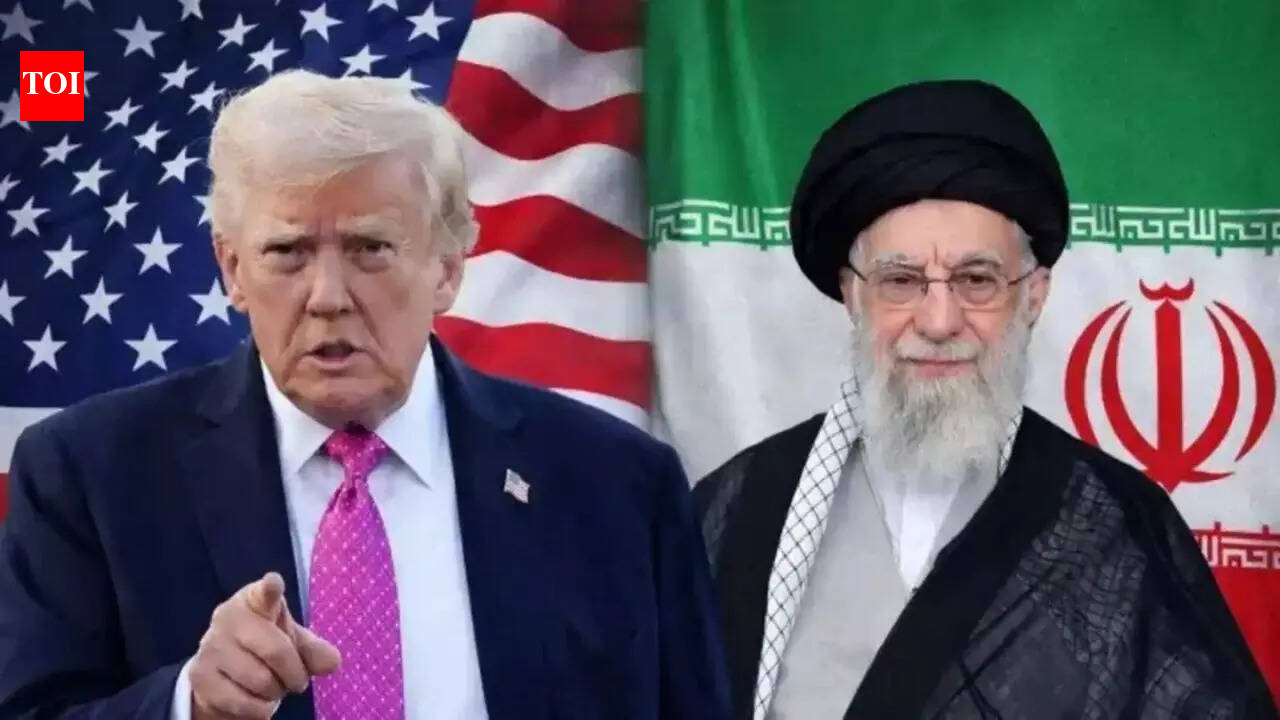
Multiple explosions rocked Tehran after Israel announced a pre-emptive military strike, aiming to reduce perceived threats. Iran's Supreme Leader Ayatollah Ali Khamenei has reportedly been moved to a secure, undisclosed location amid the escalating crisis. The United States is believed to have supported the operation, intensifying regional tensions. View More

The RBI has introduced comprehensive Acquisition Finance rules, allowing banks to fund up to 75% of M&A deals, significantly boosting domestic corporate activity. View More
In a decisive move aimed at creating a stronger, more competitive corporate environment and enhancing the role of commercial banks in the mergers and acquisitions (M&A) activities in India, the Reserve Bank of India (RBI) recently released the Commercial Banks – Credit Facilities Amendment Directions, 2026, introducing a comprehensive framework for Acquisition Finance, a move that is likely to significantly reshape India’s M&A landscape. The amendments form part of RBI’s broader revision of the Credit Facilities Directions , 2025, a process underway since October 2025 when the draft regulations were first released, which included parallel reforms on bridge financing, loans against securities, and a dedicated chapter on lending to Capital Market Intermediaries (CMIs). Yet, it is the detailed and long‑awaited Acquisition Finance Chapter that stands out as a transformative shift for corporate deal‑making. Adding to this momentum, the RBI followed this up with the “Foreign Exchange Management (Borrowing and Lending) (First Amendment) Regulations, 2026” replacing several constraints under the erstwhile External Commercial Borrowing (ECB) framework with a more flexible, market-aligned structure to assist India Inc in raising offshore capital at market linked rates and widening the pool of eligible lenders and borrowers. The revised acquisition finance framework now permits banks to fund up to 75% of the acquisition value in M&A transactions resulting in a change of control. This shift is expected to meaningfully accelerate domestic M&A activity, facilitating consolidation and strengthening the balance sheets of Indian companies. The specific inclusion of compulsorily convertible debentures (CCDs) alongside equity shares, permissibility of acquisition being either at the target company or its holding company level and possibility of staggered acquisition to control provides some flexibility in acquisition structuring. Earlier, banks’ ability to finance acquisition by Indian companies was constrained by ambiguous classifications, forcing corporates to rely on NBFCs or special situation funds (AIFs) or foreign portfolio investors funding investments through privately placed NCDs. The new framework for acquisition finance for commercial banks provides clarity, enabling banks to participate meaningfully in M&A financing of equity stake purchase in domestic or foreign companies as strategic investments. Also, the benefit of acquisition financing is available to both listed and unlisted companies meeting the INR 500 crore net worth threshold and a 3-year profit track record. Live Events The permission to extend acquisition finance to unlisted companies subject to their obtaining an investment‑grade rating is a welcome development and marks a clear shift from the 2025 draft framework, which limited such borrowing only to listed companies. For India’s large family-owned conglomerates and unicorns that remain unlisted, this is a particularly significant development. In parallel, the revamped ECB framework represents a major structural shift, moving away from fixed all‑in‑cost ceilings to a market‑linked pricing regime. This change enables well‑rated Indian corporates to benefit from reduced borrowing spreads while attracting a broader set of global lenders. The recognition of limited liability partnerships (LLPs) as eligible borrowers ensures parity between LLPs and companies in accessing overseas debt. By opening the lender pool to now cover any non‑resident entity, including those based in IFSC , the framework dismantles long‑standing bottlenecks and enhances the overall availability of capital. Additionally, liberalization of end-use restrictions means ECB is now available for entities in the Indian real sector which are engaged in construction development activity and in development of industrial parks, subject to conditions which are broadly aligned with the FDI policy. While ECB still cannot be utilized towards transacting in listed / unlisted securities, the proceeds can be used for strategic corporate actions such as merger, demerger, arrangement, or acquisition of control, in accordance with the applicable regulations. The months ahead will reveal how eagerly banks and corporates embrace these new rules, but the direction is clear, a more transparent, disciplined, and competitive acquisition environment for India Inc. that supports long term value creation through strategic leverage rather than short term gains. All eyes now turn to revision to the regulations governing foreign investment in India, as announced by the finance minister in her Budget speech. If the government follows through, it could complete a regulatory hattrick by allowing foreign owned or controlled companies in India from taking domestic leverage for partly funding long term strategic acquisitions. Author is Partner & National Head – Deal Advisory – M&A Tax, PE KPMG in India. .Pbanner{display:flex;justify-content:space-between;align-items:center;background-color:#ec1c40;margin-top:20px;padding:5px 10px;border-radius:4px;color:#fff;line-height:10px;} .Pbannertext{display:flex;align-items:center;font-size:16px;font-weight:600;font-family:'Montserrat';} .Pbannertext img{height:20px;margin:0 6px} .Pbannerbutton a{display:flex;align-items:center;background-color:#fff;color:#ec1c40;text-decoration:none;font-weight:600;padding:4px 8px;border-radius:6px;font-size:15px;font-family:'Montserrat';} .Pbannerbutton img{height:20px;margin-right:6px} .Pbannerbutton a:hover{background-color:#f7f7f7} Add as a Reliable and Trusted News Source Add Now!

The Pentagon clash with Anthropic and Friday's severe response from Trump and Defense Secretary Hegseth highlights a growing war over who controls military AI. View More
watch nowVIDEO10:2410:24Anthropic trying to put limitations on its AI models 'really has no standing', says Brent SadlerSquawk Box The Department of Defense's clash with Anthropic over the integration of artificial intelligence into military operations, and who sets the limits on usage, reached a peak this week with Defense Secretary Pete Hegseth giving the AI company until 5:01 p.m. ET Friday to cede to the government's demands. Anthropic didn't budge, and shortly after 5pm, Hegseth made the break official in a post on X, declaring that "Anthropic's stance is fundamentally incompatible with American principles" and as a result its relationship with the United States Armed Forces and the federal government permanently altered. Hegseth directed the Pentagon to designate Anthropic a "supply-chain risk to national security," meaning no contractor, supplier, or partner that does business with the United States military may conduct any commercial activity with Anthropic.In the broader context, the battle between military and industry over AI is just getting started. The Pentagon is colliding with the private companies that control AI in a way that has not been tested in the post-World War II era. On Thursday, Anthropic refused Hegseth's demand to loosen certain safeguards of its models for military use, including mass domestic surveillance or fully autonomous weapons, because it violates company policies, though the Pentagon said the technology must be available to support "all lawful uses." "It is the Department's prerogative to select contractors most aligned with their vision," Anthropic CEO Dario Amodei wrote in a statement on Thursday. "But given the substantial value that Anthropic's technology provides to our armed forces, we hope they reconsider."The standoff highlighted the emerging reality that private firms developing frontier AI may seek to set their own limits on how the technology is deployed, even in national security contexts. In July, the Defense Department awarded contracts worth up to $200 million each to four companies â Anthropic, OpenAI, Google DeepMind, and Elon Musk's xAI â to prototype frontier AI capabilities tied to U.S. national security priorities. The awards signal how aggressively the Pentagon is moving to bring cutting-edge commercial AI into defense work. The urgency is reflected in internal Pentagon planning as well. A January 9 memorandum outlining the military's artificial intelligence strategy calls for the U.S. to become an "AI-first" fighting force and to accelerate integration of leading commercial AI models across warfighting, intelligence, and enterprise operations. "There are no winners in this," Lauren Kahn, a senior research analyst at Georgetown's Center for Security and Emerging Technology, told CNBC in a recent interview about the standoff between the Pentagon and Anthropic. "It leaves a sour taste in everyone's mouth."What it does do, though, is mark a shift â a departure from decades of defense innovation during which governments themselves controlled the technology as it was created."For most of the postâWorld War II era, the U.S. government defined the frontier of advanced technology," said Rear Admiral Lorin Selby, former chief of naval research and current general partner at Mare Liberum, an investment firm that specializes in maritime technology and infrastructure. "It set the requirements, funded the foundational research, and industry executed against government-driven specifications. From nuclear propulsion to stealth to GPS, the state was the primary engine of discovery, and industry was the integrator and manufacturer." AI, Selby said, has inverted that model. "Today the commercial sector is the primary driver of frontier capability. Private capital, global competition, and commercial data scale are advancing AI at a pace that traditional government R&D structures cannot easily replicate. The Department of War is no longer defining the edge of what is technically possible in artificial intelligence â it is adapting to it," he said.  United States Secretary of War Pete Hegseth speaks during a visit to Sierra Space in Louisville, Colorado on Monday, Feb. 23, 2026. Aaron Ontiveroz | Denver Post | Getty Images This reversal in the balance of power over technology carries both opportunity and risk. "We shouldn't be in a place where private companies feel that they have leverage over the U.S. government or Western allies because of the technological capability they are providing," said Joe Scheidler, aâ¯former associate director and special advisor at the White House and co-founder and CEO of AI start-up Helios. "Technologists should build and do that responsibly, but governments should be the entities making the decisions." Anthropic did not respond to a request for comment. The DoD provided a link to Hegseth's X post.Why the military needs private AI Public-private partnerships have long supported U.S. defense innovation, from World War II industrial mobilization to modern aerospace and cybersecurity programs. But artificial intelligence is different because the most advanced capabilities are increasingly concentrated in commercial firms rather than government labs. "Strong public-private partnerships are what gives America its edge," Scheidler said. "You will not find a more dynamic and innovative talent pool than that of the American entrepreneurial community. The idea of trying to replicate that level of innovation within government itself ⦠is difficult." That concentration is precisely why governments seek partnerships, but according to Selby, the dependency is also primarily driven by speed. "The innovation cycle in venture-backed firms moves in months. Traditional acquisition cycles move in years. Without commercial AI providers, the government would be slower, less adaptive, and far more expensive," he said. watch nowVIDEO3:1203:12Here's what's behind Anthropicâs fight with the PentagonSquawk Box Europe When critical national security tools are developed by private companies, "the main change is that the government no longer fully controls the development of its most advanced technological tools," said Betsy Cooper, director of the Aspen Policy Academy and former advising attorney for the U.S. Department of Homeland Security.â¯Â Commercial AI systems are typically built first for broad markets rather than military missions, which can create gaps between how companies design their technology and how governments want to deploy it, Cooper said. That misalignment can become more pronounced when corporate policies, reputational concerns, or global customer pressures conflict with government objectives, a dynamic now visible in the Anthropic dispute. "Companies may not want to risk negative reaction from their customer base if their product is used for highly controversial reasons â for instance, to create autonomous lethal weapons or commit preemptive killings before crimes are committed," Cooper said. Government has longer-term leverage Despite the shift toward commercial technology, defense leaders are unlikely to relinquish control over mission critical systems. "The first thing to understand is that from what I have seen to date, the DoD is not going to give up final control," said Brad Harrison, founder of Scout Ventures, an early-stage venture capital firm investing at the intersection of national security and critical technology Innovation. "The government still wants to understand everything that goes into it and all the dependencies and risks."  Harrison, who is a former U.S. Army Airborne Ranger and West Point graduate, said AI could eventually influence decisions such as how to intercept incoming threats, so "the government is going to be extremely cautious with how they let AI interact with those data layers," he said. "Nobody wants to be the person responsible for Skynet," he said, referring to a fictional AI from the "Terminator" universe that caused a nuclear war. Governments also retain powerful tools to influence companies, including procurement decisions, export controls, and regulatory authority. "The government has a lot of leverage," Harrison said. "If you don't want to work with them, they have a lot of ways to make that a very difficult decision," he added. But leverage flows in both directions, at least for now, according to Selby. "In the short term, companies with scarce AI talent and proprietary models may hold significant influence. In the long term, sovereign governments retain regulatory authority, contracting power, funding scale, and if necessary, legal compulsion," he said. The most important question, in Selby's view, is "whether we build a durable public-private compact that treats AI as foundational national security infrastructure rather than just another vendor relationship." Risks in new military-Silicon Valley industrial complexExperts say the issue is ultimately less about whether companies or governments hold permanent leverage and more about how the relationship evolves as AI becomes central to national power. "If we build alignment and resilience into the public-private relationship, AI can strengthen national security while preserving innovation," Selby said. "If we fail to do so, we risk a future in which capability is abundant but alignment is brittle," he added. There are many new forms of risk in the emerging military-Silicon Valley industrial complex. For example, reliance on externally developed AI could introduce vulnerabilities if systems fail unexpectedly or become unavailable, particularly if military units grow accustomed to them during operations. "Over-reliance could prove deadly," said Shanka Jayasinha, founder of Onto AI, a company that develops AI tools for military, healthcare, financial organizations, and enterprise solutions, describing scenarios where special operations units depend on AI-enhanced mission-coordination tools during deployments. If those systems fail after prolonged use, "many lives would be in danger," he said. Vendor lock-in is another concern. As AI platforms become embedded in workflows, replacing them may become difficult. "With the current speed of progress in AI, it is tough to unseat any incumbent," Jayasinha said. Harrison, however, says one risk the Pentagon won't expose itself to is being captive to a single company. "The U.S. government is not going to be dependent on any one Silicon Valley company," he said "They will very methodically test systems, control the data layer, and move step by step." OpenAI CEO Sam Altman, who has had a contentious relationship with Anthropic and Amodei, issued a statement to his employees on Thursday offering some peer-level support for the AI rival's "red lines" that are at the heart of the Pentagon conflict. The Pentagon issued its own very clear statement on the importance of Anthropic or any single company in a post on X from Under Secretary of War for Research and Engineering Emil Michael on Thursday night: "It's a shame that @DarioAmodei is a liar and has a God-complex. He wants nothing more than to try to personally control the US Military and is ok putting our nation's safety at risk. The @DeptofWar will ALWAYS adhere to the law but not bend to whims of any one for-profit tech company." Anthropic had said before the decision became official on Friday afternoon that should the government "offboard" Anthropic, "we will work to enable a smooth transition to another provider, avoiding any disruption to ongoing military planning, operations, or other critical missions."Late on Friday afternoon, President Donald Trump ordered every U.S. government agency to "immediately cease" using technology from Anthropic. "The Leftwing nut jobs at Anthropic have made a DISASTROUS MISTAKE trying to STRONG-ARM the Department of War, and force them to obey their Terms of Service instead of our Constitution," Trump said in a post on Truth Social.The Trump administration said that there will be a period of six months for Anthropic technology to be phased out of critical military usage specifically.One approach likely to receive even greater focus in the future is building what some technologies call "sovereign AI architectures" â systems designed to allow governments to maintain independence from vendors while still benefiting from commercial innovation. "We talk a lot internally about this notion of sovereign intelligence and vendor independence," Scheidler said, contending that the U.S. ecosystem remains broad enough to prevent over-reliance on any single provider. "There are new ideas emerging on a daily basis, and we don't have to rely on one vendor to do that," he said. Powerful Democrats were quick to attack the Trump administration moves against Anthropic, with Sen. Mark Warner (D-VA), Vice Chairman of the Senate Select Committee on Intelligence, saying in a statement on Friday afternoon that Trump's directive, "combined with inflammatory rhetoric attacking that company, raises serious concerns about whether national security decisions are being driven by careful analysis or political considerations." President Trump and Secretary Hegseth's efforts "pose an enormous risk to U.S. defense readiness and the willingness of the U.S. private sector and academia to work with the IC and DoD, consistent with their own values and legal ethics," he stated. Warner also alleged the moves against Anthropic could be a "pretext to steer contracts to a preferred vendor" whose safety and reliability record recently has been questioned within the government, likely a reference to a Wall Street Journal report from Friday about Elon Musk's xAI artificial intelligence tools.At the present moment, Harrison says a lot has changed from the period during the past decade when Big Tech was highly sensitive to uses of its tech within the military, such as the 2018 furor at Google over Project Maven. With an anticipated $1.5 trillion defense budget and other companies in the AI space getting in on massive contracts while showing less resistance, such as Palantir on a U.S. Navy deal worth nearly $500 million, Harrison says hardball from the Pentagon is going to be the stance. Harrison said he doesn't 100% agree with this approach, describing it as "unhealthy" for the relationship between business and government, but added that the message has been broadcast: "'Hey, you're going to do it my way, and if you don't do it my way, you're out,'" he said.