
Latest Sectors News

The immediate impact is likely to be in deal closures, investments and investor sentiment in UAE, particularly Dubai. In the long-term, however, Dubai will remain an attractive real estate destination. View More
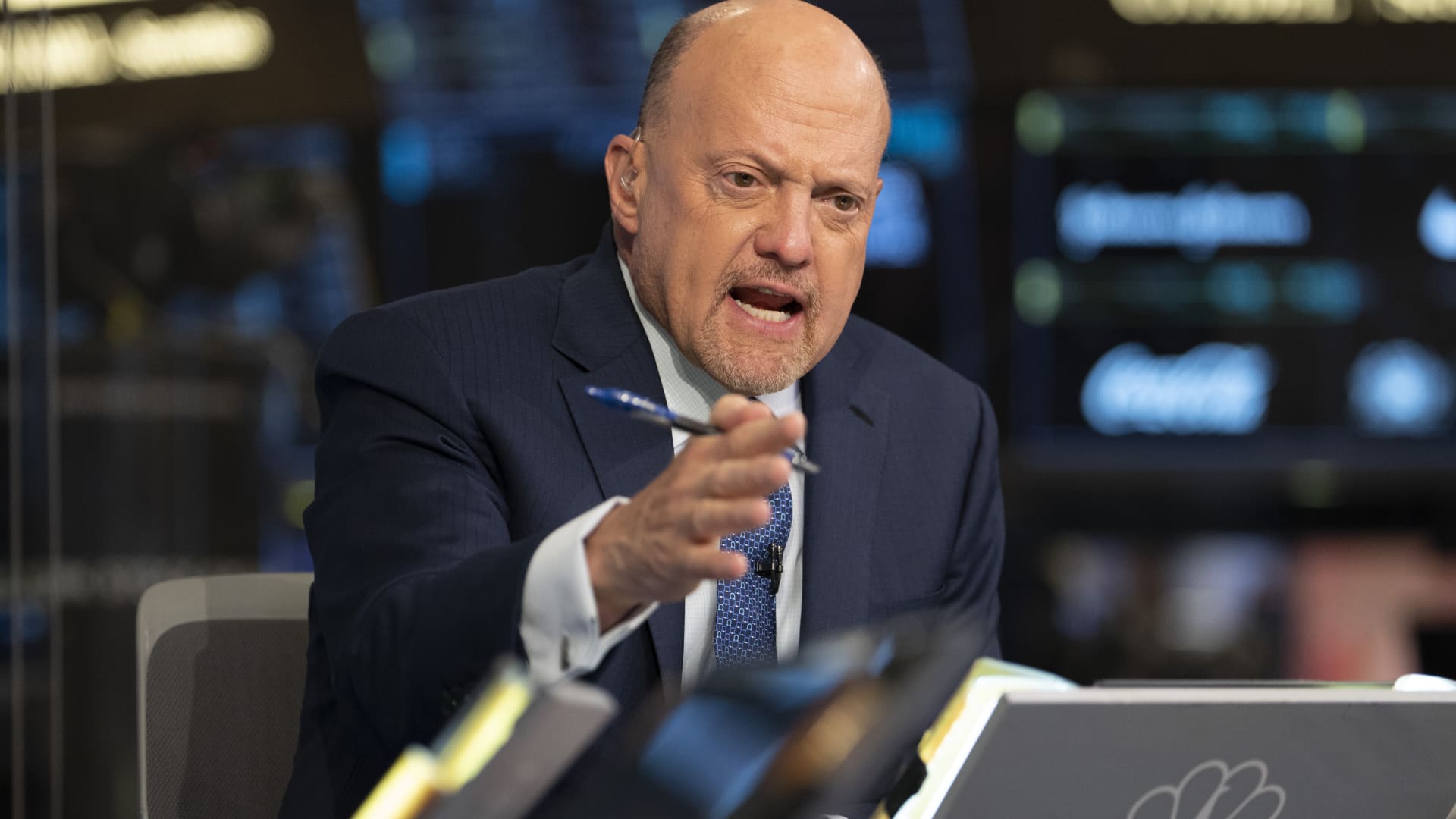
So, what's the plan? View More
When you get as many things going wrong as there are right now, you do not think about opportunity; you think about safety. I get that. We have the most uncertain of times in the Mideast after the U.S. and Israel attacked Iran this weekend. We have a man-made inflationary event â the closing of the world's chief oil artery, the Strait of Hormuz. The skyrocketing of oil prices will make it so the Federal Reserve can't help us, even under President Donald Trump 's soon-to-be Fed chairman, Kevin Warsh. We are no longer in the "canary in the coal mine" stage when it comes to private equity; we are in the recognition stage, recognition that things are going awry and losses, big losses, are coming. And, we have an assault on the world's largest company, Nvidia, from its own customers. So, what's the plan? Sell, sell, sell? Get out now? Moments like this are why I wrote my new book, "How to Make Money in Any Market." The easiest thing in the world is to sell. Many of you right now might say that the only stocks that you can own are so-called safety stocks. If you look at the Club portfolio, you would be drawn to owning Procter & Gamble, Bristol Myers Squibb , and Eli Lilly â because those are the three that will hold up if we go into a recession. Oh, and believe me, having been in the news business long enough, the operative question is a by rote one: Ask all guests, call all sources, and ask when the recession will begin? Don't even ask them if there will be one; just pinpoint a date. Look, that's a fine scenario. It's important to warn people of the dangers that can occur. It's valuable. But it's only one view. I like to be more constructive. I like to be more constructive because history says to be more constructive. Every time there has been a severe downturn, the stock market has come back, not always with the same stocks, but it has come back. I like to think about "what could go right" with the situations I mentioned just now and figure out ways to stay in the market, so I can take advantage of the chaos. You can pick individual stocks we recommend. You can buy index funds. But there is no hurry; we aren't even oversold yet. Profit from the chaos First, you can't profit from the chaos if you don't have any money. You can't be on margin â buying stocks with borrowed money â because we don't know how long these pain points might last. All we know is you don't want to be in a situation where the problems can last longer than you. Take some hits. Get off margin. Let this be your lesson. Second, there are two kinds of stocks I would sell. I would sell the oils because they are up artificially. The world is awash in oil, and there will be more produced by those who have extra to take advantage of the moment of supply disruption. It will be awkward, and it will feel terrible to sell Exxon Mobil here. I get that. But those are the stocks that are most inflated versus their fundamentals. Anyone who remembers the Gulf War in 1990 knows these are the ones that rollover first after the initial spike that gives you a chance to sell. Oil will come to the market. The quick spike is a lucky moment to say goodbye for those who had the foresight to own these stocks. Well played. I would also sell the consumer staples. I don't want to take a quick gain in Procter & Gamble because we are not traders. However, at this moment, it is the most overvalued stock in the portfolio on 2026 fundamentals. These kinds of stocks are not going to get the multiple expansion they used to. There are more competitors, higher raw costs, and less heft versus the retailers than at any time in history. P & G does not tell Walmart what to do anymore, and it can't boss around Walgreens or Rite Aid â because the former is going away and the latter already went. Sure, P & G gets a gain from the weak dollar. But that's been the spur. I have no next spur other than fear. We â Jeff Marks, our Club director of portfolio analysis and I â will debate selling some Procter & Gamble as soon as we are allowed to sell per our Club trading rules. Third, the problems in finance are real but were exaggerated by the "Apocalypse Soon" memo that came out on Sunday, Feb. 22. It talked about the white-collar workforce being wiped-out because of AI. Monday, Feb. 23, was a brutal moment. The S & P 500 dropped more than 1% that session enroute to a lower week and capping a terrible February, the worst monthly decline for the index since March 2025. This shrewdly predictive tale of woe, entitled "The 2028 Global Intelligence Crisis," is from an outfit we never heard of called Citrini Research. It was cogent. It scared people. I don't know whether it was dystopian fun or a real jeremiad, maybe both. But suddenly, it crystallized the crisis that's going to be predicated on superfast, self-written code, the likes of which Anthropic pumps out with the ease of a fourth grader. It foresees a domino effect: The white collar class will rapidly become jobless from the "Anthropics of the world" and start defaulting on credit, and stop spending altogether. We are a country that runs on white-collar employment, now superfluous under this vision, and a service economy, which would disappear in two years. Welcome to the depression of 2028, as the Citrini report protends. Cembalest to the rescue After the vibe coding H-bomb started ticking, we got a bit of a reprieve from cooler heads, like that of Michael Cembalest, the top JPMorgan strategist, and the best thinker on Wall Street. ("Vibe coding" is a term that has sprung up to describe software writing by AI models such as Anthropic's Claude.) Cembalest shrewdly questioned the entire Citrini thesis, urging us to accept that humans are more than friction â a main portion of "The 2028 Global Intelligence Crisis." The vibe coding bots â the all-powerful-economy busters â are not going to wipe out real estate salespeople or credit card companies or DoorDash, or a host of other day-to-day activities that were the ground zero of the memo. American Express will survive, under Cembalest's view of the future. If anything, he made clear that AI is going to create more but different jobs, while others will disappear. There could be stagnation at some workplaces and growth at others. The beauty of the now infamous, or famous, Citrini memo, as it came to be called, is that it looked at all the amazing friction that's out there and logically had the AI coders destroy it. The overarching mistake? We are humans, and humans don't think of themselves as friction. Many times, it looks like the machines can do it all. But they can't. For example, we don't want the cheapest flight that can be found by bots; we want the best one for us. We don't want to pay a hefty couple of percent to Mastercard, but the system needs Mastercard , and it needs its fraud protection, which is why blockchain hasn't taken off. Too much fraud that can't be undone under blockchain, the decentralized digital ledger technology that underpins bitcoin. Take that, American Express and Capital One shorters. Can AI wipe out the edifice that is real estate with its surfeit of salespeople? No. Real estate has already been brought down to the lowest common denominator â a website entry with a price. But the amazing thing about real estate is that it has to be sold, as always. We are not going to be able to have every industry be overrun by AI. DoorDash will turn out to be ingrained and not wiped out by the fly-by-night vibe coders because you need onboarding and customer service. Most importantly, for a day, at least, we realized that while white-collar jobs might be stagnating, the survivors are using AI to advance themselves and get more done while not needing to hire as many people. Put simply, the Citrini memo storyline is going to be dead wrong. Millions of jobs won't be wiped out. But it has made us realize that we are not going to make as much money if we work in some service enterprises like Salesforce , or, perhaps, Visa . Those companies will still be with us. We will see more and more AI, but it can't wipe out so many companies by 2028 that we will have a huge downturn. The memo demonstrates some possibilities for AI, but it can't be the monster that's depicted. Even if it were to be so, it will be a slow-moving monster. The memo demonstrated what could occur, however unlikely. It just had the wrong, super-fast timeframe. Dorsey says, not so fast It was all way too fast because we like what we have. Sure, there is friction, but it is meaningful friction that isn't easily destroyed. Cembalest will ultimately be right, and sanity returned, for a bit. Then, when the Citrini memo was still warm, we â out of nowhere â got instant verification of it when the elusive Jack Dorsey decided that he was going to lay off 40% of Block staff because of AI. The stock on Friday soared 17% on the news. Shareholders have to hope that Dorsey, who also co-founded Twitter, can make this transformation happen. Revenue has been going up for this service company with a good lending arm. But the market capitalization of Block has been going down. It was $47 billion in 2023. Even after Friday's rally, it's now $38.7 billion. Maybe what can save them from irrelevance is a total overhaul, with software taking care of many jobs. It might happen. Maybe the place is bloated from Covid-era hiring. Maybe it's bloated because it is poorly run. Or maybe it does have a lot of superfluous jobs in a new, AI-driven world. We don't know. We don't even care. We just saw the future, and it is Block. How about that 40% number? As someone who has run a business with 300 people, TheStreet.com, that needed to slim down to 200, I had to make this kind of wholesale job reduction, too. Dorsey pulled something that only a lunkhead would possibly do: He has created an amazing reason for all of the good people to jump ship. Who is going to stay at a company where you have a 40% chance of being laid off? You think that everyone in charge of a company where the market has not endorsed your model, despite its hefty EBITDA (earnings before interest, taxes, depreciation, and amortization) doesn't want to fire 40% of the people that work there to get its market capitalization to soar? Only a bozo would announce that kind of layoff, though. You might as well pick the names out of a hat, good names and bad. Why? Because the exodus is so urgent, not from the people who are fired but from the people who may be fired. So, 40% is needlessly aspirational, and the announcement of it all is rather lunkheaded. I happened to have been in a firing war room as we fired the good with the bad. The Grim Reaper, however, anticipated our executions, and many good people left. Why, then, did Dorsey do it knowing that's exactly what would happen? For precisely what did occur: a callous jump in valuation. It is entirely possible that he had hired too many people in his absentee CEO-dom, and maybe the company can afford a 40% reduction. Maybe it is so bloated that it should be a 50% reduction. Whatever. It was an instant verification of the Citrini memo. The software stocks, especially the software-as-a-service (SaaS) stocks, gave up the ghost. Who can afford to be in the stocks that offer expensive wares that can make your company more efficient, which is what these white-collar services do. The software companies that had been so valuable to your institution may be totally unnecessary, as the white-collar workers who run them. I think that we underestimate the survival of these software vendor companies. Many weren't AI-oriented â but, like the incredibly run ServiceNow , have shifted to be AI-oriented. The most cogent case proved to be Salesforce, which happened to rally hard on its earnings. Salesforce has seen its market capitalization shrink well ahead of when many fear it will no longer be needed because of self-written code. When Salesforce reported its latest quarter , it got credit for its AgentForce platform, which develops virtual agents instantly for any company that needs them to automate processes with little to no human intervention. The product has had a remarkable uptake. But it can't offset the high single-digit growth of what I call RemainCo, the non-AI, SaaS portion of Salesforce's business. When Salesforce reported, a short squeeze ensued. The rally didn't last long. And, by Friday, we were back to thinking that the destruction of the market capitalization of software stocks was a given, and we can't pay up for these companies. Their stocks still had to be sold; it is just a matter of time before their revenue will slow. Sure, it will take time. But an outfit like Salesforce is just in denial. That means we will see continued market pressure on the software companies' worth and profitability. No, it won't happen at lightning speed, as Citrini lays it out. But it will happen. It could mean a rapid fall off of the non-AI portion of Salesforce. Not rapid enough to impact the sales of the company, just the multiple of the stock. Ultimately, I think AI kills call center jobs and low-end white-collar jobs over time. It might make some more efficient and others fodder. The market has spoken: I am too bullish. Things are going to get really ugly, and the market knows it. Dorsey will be right. Salesforce's upbeat leader, Marc Benioff, with his notion that the SaaS-pocalypse won't occur, is wrong. It is going to happen. Just you wait. So, the Citrini thesis made it to the end of the week, and it drowned out both Benioff and Cembalest's counters. They died in Dorsey's swimming pool. The private equity problem You have to marvel at the perfect storm of the Dorsey-Citrini negativity, dovetailed with the potential demise of the next pillar of tomfoolery, the private equity and private credit firms. These firms had been the envy of the old-line investment banking houses. They burst on the scene with incredibly profitable business models a couple of decades ago and just got stronger and stronger until a couple of weeks ago. Literally. That's when they were revealed to be nothing more than houses of bad risk. In reality, these firms had been doing OK, not great, because the stock market wasn't providing the liquidity it once did for their well-tuned portfolio companies to come public. They were suddenly "revealed" to be nothing but bad bankers with tranches of private credit lent to the firms that Citrini pinpointed. Of course, I am using Citrini as a shorthand. It is more appropriate that I use Blue Owl Capital , the principal credit culprit of the moment. Let's go over Blue Owl, a five-year-old company known for private equity work, even though it's a lot more than that. Over the last few years, this market has experienced incredible growth in enterprise software, and Blue Owl has helped fund it by providing financing to the companies that went private in the field. The two firms that have proselytized the recapitalization of enterprise software the most in this field are Thoma Bravo, with about $184 billion in assets, and Vista Equity Partners, with about $100 billion. Thoma Bravo and Vista have been bullish on enterprise software as a category, which has been relatively immune to the economy. It's been a tremendous source of targets for ages. These two lucrative firms are the linchpin of the hysteria we see now because of AI. They have bought billions of dollars' worth of public enterprise software companies that were doing well, but have not been rewarded by the stock market. They would therefore take them private, fix them, grow them, and then bring them public. Classic example: Anaplan, a Thoma Bravo company that went private in 2022 for $10.7 billion. Anaplan is a general consulting company with little to no AI that has now been loaded with AI by Thoma Bravo, and it is in the re-IPO (initial public offering) stage right now. It was meant to fit this current stock market perfectly. It is amazing how much better the company is than it was when it went private. If we didn't have this morass, I thought an Anaplan IPO would be well-received as a kind of pure-play AI consulting company â kind of like SAP or an Accenture super-charged with intelligence. A genuine code-writer for the new world. It doesn't matter right now, though. It is, in a word, wrong. The wrong time, the wrong place, even as it is AI. The stock market doesn't seem crazy about it because no one trusts anything software right now. Thoma Bravo is a terrific company. When I look at most of its portfolio companies, I marvel at how well they are doing and how much better than they were before Thoma Bravo took them over. Of course, Thoma Bravo has some clunkers like any other private equity firm. But its record is pretty impeccable, and, most importantly, the companies it owns are much, much better when they were public. It is a beautiful portfolio with only a handful of companies that are in arrears. Some would argue that Vista, its competitor, is even better. Both have better records than almost any company in this take-private and then bring-public-again industry. They are the envy of this world and, until recently, regarded as the best of the entire sector. It doesn't matter. They are the nucleus of the bear case. That's because, in order to take companies private, Thoma and Vista have to take down debt. That debt has been syndicated to a host of private equity companies. Most of those private equity companies, like Blackstone , KKR , Carlyle Group , Apollo , and Ares , have really exceptional credit analysts, with whole groups of technology people who can examine and decide whether a slice of high-risk debt is worth taking on. These companies can wrap up a host of these high-risk loans and put together products that, when loaded up with debt, can offer attractive yields both to institutions and to individuals. As good as these wraps might be, though, they are the locus of fear. Wall Street is convinced that these indebted companies are going to fail. The fear could be justified if Thoma Bravo and Vista are weak in their work. But, as I just said, they aren't. They are money good on most of their properties and are very shrewd when it comes to introducing AI into their organizations. This is a fearful market, though, and these loan packages are now viewed as being weak. The marketplace thinks Thoma Bravo and Vista didn't do their job well. Again, that's wrong. But that doesn't seem to matter right now. To most of the smart people I know on Wall Street, these loan packages are just a bad agglomeration of private credit. That's another despised portion of the market that used to be loved because it generated high yields at a time of Federal Reserve-mandated low yields. The thought, the incredibly pessimistic thought, is that those who bought the debt of too many high-risk enterprise software companies may not make it because of the amazing AI products out there now, even as the portfolio companies of the two biggest private equity firms are about AI. They embrace AI more than most public portfolio buyers. When I look at their portfolios, I see a host of companies that could come public if they had to, just not at much of a premium or perhaps a discount to where they went private. Let's skip from the older, go-private companies â call them the Apollo-Blackstone faction, and venture into the riskiest private equity-private debt outfit, Blue Owl, a $300 billon manager that, out of nowhere, has become the riskiest company on Earth. The company embraced enterprise software like no other. It is thought to be a terrible buyer of loans, even as that's not clear. To be blunt, rather than being the smartest guys in the room, they are thought to be knuckleheads and bought everything to do with heavily indebted loan packaging, both public and private. Their loan portfolio is said to, well, stink. They had two funds that had regular redemptions where institutions and individuals wanted out in far bigger numbers than the illiquid portfolios could allow. So, Blue Owl foolishly shut down that method of redemption. Instead, they tried to merge some of the ne'er-do-well firms. That failed. So, instead, again, they came up with this complicated idea to sell some of the loans at what they said were near par and then started giving the proceeds to the owners of this private credit rather than have traditional redemptions. They sold a gigantic $1.4 billion in loans. Now, here's the real issue. Blue Owl made it clear that these loans were pretty regular and that it had a lot of good loans to choose from. It made it clear that most of the loans were sold to good arms-length outfits, and one was sold to an insurance company that Blue Owl managed. The management at Blue Owl might have thought this was smart. The marketplace thought it was ill-advised. Rather quickly, the bears came out and presumed that Blue Owl cherry-picked the best loans and sold most of them to the three arms-length investors and the rest to the captive insurance company. Perhaps Blue Owl didn't realize the marketplace would view it like that. Maybe it had no choice. Maybe it was a terrific way to deal with the redemptions. At this moment, though, perception is everything, and Blue Owl was viewed as a suspect parvenue to the private-credit world and a total dingbat to emphasize private equity firms. So, within a week, again, the marketplace viewed Blue Owl, a big and recently revered firm, as the point of pain. If AI is destroying traditional software firms and there are many private equity firms taken private and many of the loans were syndicated to outfits like Blue Owl and the ones Blue Owl got were packaged and sold to institutions and individuals and a host of investors decided they didn't want own highly levered tranches of these companies and they want to redeem them in traditional fashion and Blue Owl would no longer let them, then the private equity world was done. Stick a fork in it done. It didn't matter if the whole daisy chain was wrong; it's where we are. Oh, and in case you thought that we weren't, many of these companies had what they call business development companies in their portfolio, which are considered to be risky, too risky for traditional banks because the bank examiners wouldn't let them be taken down. Some of these business development companies, including those of Blue Owl, have these. They can be publicly traded. And almost all of them are being slaughtered. Does that make sense? Yes, because, again, they are filled with high-risk loans, packaged and brought public by these same firms. Who wants those? Right now, only rubes. They are the Achilles' Heel of this process. Some of the companies in these business development packages are going bad. Some of these companies are trimming their distributions. All of them are under pressure. Making matters worse, they are being compared to the mortgage problem of 2007. You can't put that negative to rest. That's where we are now. A horrendous spot that looks like we are all going to be crushed under the weight of terrible loans, many of them made by Vista and Thoma Bravo â and many of them thought to go bad soon because of AI. Look, it doesn't matter if that is a false narrative; it is the narrative, and it is why all of the banks are going down as they, too, are said to be infected by these kinds of loans, as well as all sorts of other loans of companies that may be going bad. Nvidia can't catch a break Let's put a hangman's bow on these and go to the final issue: Nivida . Last week, Nvidia reported a terrific quarter . It happened to do so exactly when all of tech was being roiled by the Citrini memo and a sense that the users of Nvidia chips could be in trouble, even as they aren't. Maybe they won't be ordering as many. Not true. But we still had one more, one-two punch. Just when Nvidia reported, both Amazon and Alphabet launched a full-court press hyping their own chips. These chips are far less expensive than those of Nvidia, and they are having great success because they dwell on the inference side of these monster chip platforms, not just the training side. On Friday evening, Nvidia revealed a similar product. If it weren't for Iran, the similar product would be noticed and Nvidia would be back in the driver's seat. Nvidia is so big and so important to this market that when its stock fell from $196 to $176, it caused a wave of selling that wasn't staunched. Perhaps, again it will be, maybe not. Bottom line Let's bring everything together. A war in Iran will boost inflation. That may cause the Fed not to cut interest rates, even as the soon-to-be new Fed chief has said he will. At the same time, the private credit world is said to be teetering because it is based on syndicated and damaged private equity loans. Sophisticated investors know that stinks. Private equity firms are going to go down because so many companies will be wrecked by AI. That's conjecture. But that is the narrative. The proverbial canaries in coal mines will then cause a recession. AI is so powerful that the recession is going to wipe out the economy and create a permanent class of unemployed white-collar workers. Plus, the bellwether of AI, Nvidia, seems to be on the verge of peaking. With all that on the table, we seemingly have an apocalyptic moment, the moment that we are in right now. What do I say? I say this is all so attenuated as to be ridiculous. Fear prevails, however, until otherwise dispelled. I don't know how or when it will be vanquished, but I know it will. But until then, that's where we are as of Monday morning. Brace yourselves. When what I just talked about becomes common parlence we could see a good amount of selling. To me, it means to look at a host of companies away from this gigantic group. I want you to go back and listen to the Club's February Monthly Meeting from Friday. You will know what to do, what kind of companies to buy, and how classic this selloff really is. I like the moment. I am alone. (Jim Cramer's Charitable Trust is long PG, BMY, LLY, CRM, NVDA, AMZN, GOOGL. See here for a full list of the stocks.) As a subscriber to the CNBC Investing Club with Jim Cramer, you will receive a trade alert before Jim makes a trade. Jim waits 45 minutes after sending a trade alert before buying or selling a stock in his charitable trust's portfolio. If Jim has talked about a stock on CNBC TV, he waits 72 hours after issuing the trade alert before executing the trade. THE ABOVE INVESTING CLUB INFORMATION IS SUBJECT TO OUR TERMS AND CONDITIONS AND PRIVACY POLICY , TOGETHER WITH OUR DISCLAIMER . NO FIDUCIARY OBLIGATION OR DUTY EXISTS, OR IS CREATED, BY VIRTUE OF YOUR RECEIPT OF ANY INFORMATION PROVIDED IN CONNECTION WITH THE INVESTING CLUB. NO SPECIFIC OUTCOME OR PROFIT IS GUARANTEED.

Investors will grapple with how to trade the fallout of the U.S. and Israel's joint action in Iran. View More
In this articleTSLANVDAAVGOPLTRUSOFollow your favorite stocksCREATE FREE ACCOUNT Thick plumes of smoke rise over the residential areas of the Iranian capital following airstrikes amid ongoing U.S.â"Israel attacks as multiple explosions are heard across the city in Tehran, Iran on March 01, 2026. Fatemeh Bahrami/ | Anadolu | Getty Images We hear it all the time on CNBC â markets hate uncertainty, and the events over the last 48 hours have changed the face of international politics in a way that will leave investors across the globe scrambling to understand the ramifications.The coordinated strikes on Iran by U.S. and Israeli forces â Operation Epic Fury â have upended a global order in place since the end of World War II and triggered a new era of politics, not just in the Middle East, but between international allies and adversaries alike.For the latest developments, follow CNBC's live updates: How will markets and investors react? What are knee-jerk reactions versus longer-term adjustments that will need to be made to investment strategies?Here are some of the assets to watch over the week. Sell-off in the Middle East Stock markets across the Middle East came under pressure on Sunday, in the first trading session for equities since the attack. Saudi Arabia's Tadawul, Oman's Muscat index and Bahrain's exchange all traded in the red, while many of the other markets in the region did not open. Indexes in Dubai, Abu Dhabi and Israel are set to resume trading Monday. The impact is expected to reverberate across global markets. The oil trade Oil markets will be the epicenter of volatility in the wake of the attacks. Traders are predicting that the Brent crude price will spike above $80 a barrel, according to Verisk Maplecroft. The outlook comes despite OPEC's recent decision to increase output earlier and by more than previously planned. Stock Chart IconStock chart iconOil prices expected to spike following Operation Epic Fury Strait of Hormuz disruption Oil price volatility will be exacerbated by the closure of the Strait of Hormuz. Global shipping companies, including Maersk, MSC, Hapag-Lloyd and others, have suspended all vessel transit through the route until further notice. Iran's Revolutionary Guard claimed to have struck a number of oil tankers in the Gulf in retaliatory strikes. It was unclear when the strait would reopen. Some vessels were being rerouted around Africa, adding time and cost to shipments. Airline chaos There has been a huge disruption to air travel, with almost all the Middle East region's airspace closed since the strikes began. Over 1,500 flights were cancelled across the region Sunday, while flight-tracking site FlightAware said more than 19,000 flights had been delayed globally. Airlines are expected to remain under pressure as carriers work to reopen routes and arrange repatriation flights. AI and Iran The strikes also intersected with the market's broader focus on artificial intelligence. Until recently, investors had centered on AI's potential to reshape industries worldwide. While that theme may seem far removed from events in Iran, there appears to be an overlap between the two. According to a report from Axios, the U.S. military used Anthropic's Claude AI technology to support its strikes on Iran, even as the company was blacklisted by the Pentagon over how its technology is used. Anthropic has resisted Pentagon demands to allow unrestricted military use of Claude, and the Defense Department has moved to label the company a "supply chain risk" over that dispute. What comes next What the rest of the week will bring remains unclear. President Donald Trump told CNBC's Joe Kernen that U.S. military operations in Iran are "ahead of schedule." In a market spooked by uncertainty, it will be the 'known unknowns' that keep investors on edge.

An ex-New York resident, identified as Ndiaga Diagne, is suspected of carrying out a deadly shooting at a Texas bar. Law enforcement sources suggest a possible motive of vengeance related to US actions in Iran, citing a "Property of Allah" hoodie and an Iranian flag symbol. View More

U.S.-Israeli strikes on Iran intensified after Supreme Leader Khamenei's death, leading to regional tensions. Iran retaliated with missile attacks on Israel and U.S. bases. View More


What travelers need to know after the strikes in the Middle East. View More
In this articleTRVFollow your favorite stocksCREATE FREE ACCOUNT Stranded passengers wait at the Velana International Airport in Male on March 1, 2026 after the cancellation of several flights destined for the Middle East. Mohamed Afrah | Afp | Getty Images Travelers are stranded as far away as Australia, Brazil and the Maldives after the U.S. and Israel launched strikes on Iran this weekend. With airspace in the region still closed, getting home could be a challenge at least several days. Here's what to know: Why are flights disrupted? Around 3,000 flights have been cancelled since the conflict in Iran began Saturday and subsequent attacks by Iran continue to impact other parts of the region, according to aviation-data firm Cirium.Airspace was closed over a large swath of the Middle East, suspending flights to and from Dubai International Airport, one of the busiest hubs in the world, Tel Aviv, and Doha, Qatar. More than 40 flights were forced to divert early Saturday morning after the attack prompted airspace closures in the region. That means customers connecting through major hubs in the region are also affected, with vacationers, business travelers, and other flyers stranded around the world. Read more U.S.-Iran newsFollow CNBC's live coverage of the U.S.-Israel strikes in IranWTI oil prices jump on fears Iran attack will lead disruptionWhat travelers need to know after the U.S., Israeli strikes on IranIran after Khamenei: What's next and what it means for the country?Iran may 'lash out harder' following Khamenei's deathHow the attack on Iran could impact global oil market and economyWhat we know as markets brace for turmoil When will travelers be able to get home? That remains unclear. As of 11:30 a.m. ET, regional airspace closures continue to affect flights. Airlines will have to reposition their aircraft, which are spread out around the world. For example, the Airbus A380s, the largest passenger airplanes in the world, that Etihad operates are located in several cities, including London, Paris, Toronto and Singapore. Four are on the ground at its base in Abu Dhabi, Flightradar24 said Sunday. However, Etihad was starting to reposition aircraft at its Abu Dhabi hub, should airspace reopen. Read more about military conflicts' impact on commercial flightsAirlines divert, cancel more Middle East flights after Iran attacks U.S. military baseAirlines cancel Israel flights, tour operators scramble to change trips after attacksRussiaâs invasion of Ukraine is driving up air cargo costsNo-fly zones, canceled flights: How Russiaâs invasion of Ukraine is disrupting air travel Qatar Airways has one A380 at its Doha base, while others are in Sydney, Bangkok and elsewhere.Israeli airline El Al paused ticket sales and said its priority over the coming weeks will be to ensure ticket-holding travelers can return home.Airlines have all issued waivers for affected destinations.Major carriers are also likely to add extra flights once airspace reopens to accommodate the surge in demand. The State Department didn't immediately comment on its plans, but special flights were added around the world to get travelers home when the Covid-19 pandemic began in 2020. Will travel insurance help? Standard travel insurance policies generally don't cover events that have already happened or developed, whether it's a military strike or a hurricane. Travelers would need to have purchased a more expensive option called "cancel anytime" insurance that allows them to do just that.âCNBC's Contessa Brewer contributed to this article. Read more CNBC airline newsUnited Airlines is overhauling its MileagePlus loyalty program to favor credit cardholdersSpirit Airlines sells more planes, calls back 500 flight attendants from furlough ahead of spring breakFAA abruptly halted El Paso flights over Defense Departmentâs plans for anti-drone technologyPressure mounts on American Airlines CEO as carrier lags rivalsSouthwest ends open seating after 54 years. Hereâs what the last flight was like

The Middle East has been thrust into a widening conflict, causing investors to brace for risk-off trades once markets reopen. View More
In this articleUSOEISXOMCVXCOPFollow your favorite stocksCREATE FREE ACCOUNT JERUSALEM - FEBRUARY 28: People take shelter as Iran launched missiles and drones towards Israel following the US-Israeli attacks, in Jerusalem on February 28, 2026. Mostafa Alkharouf | Anadolu | Getty Images The U.S. and Israel launched their most aggressive attack ever on Iranian targets over the weekend that killed the Islamic state's longtime supreme leader Ayatollah Ali Khamenei, thrusting the region into a widening conflict as Tehran retaliates with air strikes across the Middle East. Here's what we know so far as investors brace for impacts when markets open after the weekend. Iranian Supreme Leader killed Iran's state media announced Khamenei's death early Sunday. Trump, making the biggest foreign-policy gamble of his presidency ahead of the mid-term election in November, called the killing "the single greatest chance for the Iranian people to take back their Country." Trump also warned on Truth Social that the "heavy and pinpoint bombing will continue, uninterrupted throughout the week or, as long as necessary to achieve our objective of PEACE THROUGH THE MIDDLE EAST AND INDEED, THE WORLD!" The president had stated on Saturday that the aggressive strikes were aimed at ending a decades-long threat from Iran and ensuring it could not develop a nuclear weapon. Read more U.S.-Iran newsFollow CNBC's live coverage of the U.S.-Israel strikes in IranWTI oil prices jump on fears Iran attack will lead disruptionWhat travelers need to know after the U.S., Israeli strikes on IranIran after Khamenei: What's next and what it means for the country?Iran may 'lash out harder' following Khamenei's deathHow the attack on Iran could impact global oil market and economyWhat we know as markets brace for turmoil Missiles fired at Gulf states Iran retaliated with an unprecedented wave of strikes across the Middle East, targeting several nearby countries that host U.S. military bases, as well as Israel. In Israel, sirens and mobile-phone warnings sent people rushing to air raid shelters as Iran launched a series of missile barrages that were mostly intercepted. Blasts were reported in the United Arab Emirates, Jordan, Qatar and Bahrain, Saudi Arabia, with footage showing people fleeing a smoke-filled passageway at Dubai International Airport. Drone strikes have caused damage and injuries at Dubai International Airport and Zayed International Airport in Abu Dhabi. It comes after the Iranian foreign ministry, in a statement Saturday, said the country "will not hesitate" in its response to the U.S.-led strikes. Separately, a spokesperson for Iranian armed forces reportedly warned that "we will teach Israel and the U.S. a lesson that they have never experienced in their history."In a Truth Social post Sunday, meanwhile, Trump warned Tehran against further retaliatory moves, threatening to "HIT THEM WITH A FORCE THAT HAS NEVER BEEN SEEN BEFORE" if Iran continued to strike. Market hedges Investors are braced for risk-off trades once markets reopen after the weekend, with potential gains expected in so-called safe-haven assets like the U.S. dollar and gold, while equities could pull back. Offering some indication of how markets could respond, on crypto-exchange Hyperliquid, which allows 24/7 trading, perpetual swap futures tied to oil jumped nearly 5% to $71.7 per barrel, while those for gold rose roughly 1.2% to $5,334 per troy ounce. Bitcoin was rattled in the hours immediately after the bombing began on Saturday before recouping some of the losses to finish the day 1.8% higher at $66,725. The cryptocurrency slipped to $66,325 as of 4:48 a.m. EST on Sunday. Oil moves Oil market participants have been closely watching the conflict, which risks a major oil supply shock in the Middle East. Bob McNally, a former White House energy advisor to former President George W. Bush, predicted crude future prices could rise by $5 to $7 per barrel when trading opens at 6 p.m. ET Sunday, if there is no sign of de-escalation. Stock Chart IconStock chart iconBrent crude Iran is the fourth-largest oil producer in the Organization of the Petroleum Exporting Countries (OPEC) and could threaten to make the Strait of Hormuz â a narrow waterway that connects the Persian Gulf and the Arabian Sea â unsafe for commercial traffic. This could see oil prices spike above $100 per barrel, McNally said. More than 14 million barrels per day flowed through the Strait in 2025, or a third of the world's total seaborne crude exports. About three-quarters of those barrels went to China, India, Japan and South Korea. China, the world's second-largest economy, receives half of its crude imports from the Strait. Investors reassess risk For markets, a key question is what comes next.Standard Chartered's Global Head of Research Eric Robertsen said in a note that investors had already been underpricing geopolitical risk.The U.S. dollar is only modestly weaker year-to-date, but the dispersion beneath the surface is telling: commodity-linked currencies are outperforming, he said, suggesting markets are paying for exposure to scarce resources and terms-of-trade winners.Ben Emons of FedWatch Advisors argued that leadership strikes in Tehran raise regime-change tail risks and leave an uncertain endgame. Markets could swing between risk-on relief â if regime collapse removes the threat of oil blockades or nuclear escalation â and risk-off persistence if conflict drags on and supply disruptions intensify, he said.The immediate pressure point may be energy. A sustained surge in crude prices would ripple quickly through inflation expectations and hit Asia's oil-importing economies hardest, analysts say.As trading resumes, how oil prices and the U.S. dollar trade versus Asian currencies will be the first real signal of how seriously this shock is being priced in. Travel chaos Airlines canceled hundreds of flights while dozens of others were rerouted mid-flight due to closed airspace over a large swath of the Middle East. Some services were paused until at least the end of next week. Travel chaos spread as far as Brazil and Australia. Airspace closures also forced carriers to scrub flights that would normally transit the region.More than 1,800 flights in and out of the Middle East countries were canceled on Saturday, according to aviation data firm Cirium, with another 1,400 flights in and out of the region were canceled for Sunday.Qatar Airways said it was temporarily suspending all flights, while Dubai-based Emirates said service at Dubai International Airport, one of the world's busiest airports, was halted. â CNBC's Spriha Srivastava, Spencer Kimball, Pippa Stevens and Leslie Josephs contributed to this story.

Energy analysts are bracing for a possible oil supply shock after U.S. strikes on Iran reignited fears of disruptions in the Strait of Hormuz. View More
In this article@LCO.1USOFollow your favorite stocksCREATE FREE ACCOUNT Tankers are seen at the Khor Fakkan Container Terminal, the only natural deep-sea port in the region and one of the major container ports in the Sharjah Emirate, along the Strait of Hormuz, a waterway through which one-fifth of global oil output passes on June 23, 2025. Giuseppe Cacace | AFP | Getty Images Oil markets are bracing for a possible supply shock after U.S. strikes on Iran over the weekend reignited fears that flows through the Strait of Hormuz could be disrupted.Follow CNBC's live coverage of the U.S.-Israel strikes in IranWhile analysts expect an immediate "knee-jerk" reaction to oil prices when trading resumes in New York on Sunday evening, the bigger question is whether tensions could escalate into a sustained interruption of Gulf exports. "At this point, it seems we are looking at a full-scale military conflict between the U.S. and Iran, which would be unprecedented and the trajectory impossible to assess," said Vandana Hari, CEO of energy research firm Vanda Insights."If it carries on for days with Iran and its proxies retaliating to the fullest extent, we are looking at the worst-case scenarios for oil, including a major disruption of oil flows through the Middle East," Hari told CNBC. This is unless the U.S. is able to pre-emptively disarm the Iranian navy and military, as well as ensure tanker traffic through the Strait of Hormuz continues to flow normally.With tensions escalating, attention has shifted back to the Strait of Hormuz, where any disruption would have immediate and outsized consequences for global oil and LNG flows. Stock Chart IconStock chart iconOil prices year-on-year Positioned between Oman and Iran, the strait serves as a critical transit route - and potential chokepoint - for global crude, with about 13 million barrels per day moving through it in 2025, equal to approximately 31% of all seaborne oil flows, Kpler data showed.It links major Gulf producers including Saudi Arabia, Iran, Iraq and the United Arab Emirates to the Gulf of Oman and the Arabian Sea.Reuters reported on Saturday that an official with the European Union's naval mission, Aspides, said commercial vessels had received VHF radio messages from Iran's Revolutionary Guards warning that "no ship is allowed to pass the Strait of Hormuz."The official was quoted as saying that Tehran had not formally confirmed any directive to close the waterway. Early indications are of a broader scale attack on Iran, with counterattacks which could escalate to draw in multiple Gulf countries.Saul KavonicMST Marquee Reuters noted that Iran has repeatedly threatened over the years to block the narrow passage in response to attacks against the Islamic Republic.Iran has in the past repeatedly threatened to block the narrow passage in response to attacks against the Islamic Republic.Bob McNally, president of Rapidan Energy Group, who had advised clients for weeks that conflict was a 75% probability, called it "a very serious development" for the world's oil and gas markets given their dependence on Hormuz production and flows.The larger question is duration, industry veterans emphasized. The extent of any oil and LNG price spike will depend on the duration and scope of any disruptions to Gulf production and flows, McNally said. Read more U.S.-Iran newsFollow CNBC's live coverage of the U.S.-Israel strikes in IranWTI oil prices jump on fears Iran attack will lead disruptionWhat travelers need to know after the U.S., Israeli strikes on IranIran after Khamenei: What's next and what it means for the country?Iran may 'lash out harder' following Khamenei's deathHow the attack on Iran could impact global oil market and economyWhat we know as markets brace for turmoil The worst-case scenario?: Triple digit oilAnalysts say the potential scenarios range from limited disruptions to Iranian exports to a full blockade of Hormuz.The nightmare for global markets is not just lost Iranian barrels, but a broader disruption to shipping through the strait."Early indications are of a broader scale attack on Iran, with counterattacks which could escalate to draw in multiple Gulf countries," said Saul Kavonic, head of energy research at MST Marquee.Kavonic said markets will initially price in a spectrum of risks â from the loss of up to 2 million barrels per day of Iranian exports to attacks on regional infrastructure or, in the extreme, a disruption of passage through Hormuz."If the Iranian regime feels they face an existential threat, attempts to block the Strait of Hormuz cannot be ruled out," he said, though he added that the U.S. and its allies would likely deploy military escorts to protect shipping lanes. An infographic titled "Strait of Hormuz" created in Ankara, Turkiye on June 17, 2025. Anadolu | Anadolu | Getty Images Should Iran succeed in closing the Strait, the implications for the global oil markets could be severe."This could present a scenario three times the severity of the Arab oil embargo and Iranian revolution in the 1970s, and drive oil prices into the triple digits, while LNG prices retest the record highs of 2022," Kavonic noted.Brent crude settled at $72.48 on Friday, bringing its year-to-date gain to about 19%. U.S. West Texas Intermediate (WTI) closed at $62.02, up roughly 16% so far this year.Andy Lipow, president of Lipow Oil Associates, said the attacks will significantly heighten the risk of an oil supply disruption in the region, even though Iranian oil facilities have not been directly targeted so far.Lipow described the worst-case outcome as "an attack on Saudi oil infrastructure followed by a complete closure of the Strait of Hormuz." He estimates the probability of that scenario at about 33%, given Iran may feel cornered.

Iran's strategic allies Russia and China have made strong diplomatic protests, but analysts say neither is in a position to offer meaningful support. View More
In this articleCAASUAMYXOMSHEL-GBFollow your favorite stocksCREATE FREE ACCOUNT Rescue forces operate at a building hit by an Iranian missile strike in Tel Aviv, Israel, on Sunday, March 1, 2026. Bloomberg | Bloomberg | Getty Images The escalating conflict in the Middle East is fueling fears that Washington's pursuit of regime change in Iran, and Tehran's retaliation, could destabilize regions from the Gulf to Europe, leaving global leaders scrambling to assess the fallout.Follow CNBC's live coverage of the U.S.-Israel strikes in IranThe U.S. and Israel launched joint strikes on Iran over the weekend, killing the Islamic Republic's Supreme Leader Ayatollah Ali Khamenei, prompting waves of attacks by Tehran across the region. President Donald Trump made it clear in a video message Saturday following the initial wave of U.S.-Israel strikes on Iran that his objective was "eliminating imminent threats from the Iranian regime, a vicious group of very hard, terrible people." Geopolitical analysts warned that Saturday's strikes could be the opening salvo of a sustained military campaign aimed at dismantling the Iranian regime, with the U.S. seeking to assert dominance over the world's most critical oil-producing region. "The scale of the strikes by the U.S. and Israel, along with the apparent goal of regime change in Iran, suggest the military conflict could escalate rapidly and unpredictably," said Rexon Ryu, President of The Asia Group, a business consultancy firm. "There is substantial immediate risk for regional and potentially global escalation, as Iran may now use any available option to respond." "The previous strikes were targeted at the nuclear weapons program," said David Silbey, a professor of military history at Cornell University, referring to the 12-day war in June last year when the U.S. and Israel launched air strikes that damaged three key Iranian nuclear sites. But "this one will be much broader, aimed at command and control, headquarters and leadership, and the military and secret police generally," said Silbey. "Since there doesn't seem to be a U.S. ground campaign in the offing, the goal is to get the regime overthrown domestically, either by a popular uprising or a palace coup." Silbey warned that Iran could respond with retaliatory attacks, including missile strikes on Israeli and U.S. military bases and vessels in the Persian Gulf, as well as potential terrorist operations across the Middle East, Europe and the United States."If the regime feels threatened, it'll lash out harder than it would if it thought it could ride out the attacks," Silbey said.The latest conflagration has already spread to other parts of the Gulf region. Iranian missiles targeted Israel and multiple Gulf states, including the UAE, Qatar, Bahrain, Saudi Arabia, Kuwait and Jordan, all countries with air bases containing U.S. assets."Years of Iranian détente-building with the Gulf may be over," said Aysha Chowdhry, principal at The Asia Group. watch nowVIDEO1:2401:24Explosions heard, flights canceled as U.S. and Israel strike IranAccess Middle East Russia and China on the sidelines Both Russia and China have offered statements condemning the U.S., and that will likely continue to be the case even as the situation escalates, but analysts say neither is in a position to give more meaningful material support. China, a critical economic lifeline for Iran amid heavy Western sanctions, purchased more than 80% of Tehran's shipped oil in 2025, accounting for 13.5% of all crude China imported by sea. Iran has also been a vital supplier of military drones and missiles to aid Moscow's warfare efforts in Ukraine. But years of grinding war in Ukraine have hollowed out Russia's capacity to project power beyond its borders, said Matt Gerken, chief geopolitical strategist at BCA Research. With its military overstretched and its economy under sustained pressure from Western sanctions, Moscow's influence in the Middle East is set to diminish further, Gerken added. Iran's Deputy Defence Minister Majid Ebnoreza (L) shakes hands with China's former defence attache to the USA Zhang Li after speaking during a plenary session of the Xiangshan Forum in Beijing on September 19, 2025. Greg Baker | Afp | Getty Images But Beijing has refrained from coming out in strong support of Iran as Washington continued to build up its military presence in the Gulf in the lead up to the attack. Instead, it has focused on encouraging diplomacy and regional security. Analysts are watching for potential signs of whether this latest Middle East conflict could risk derailing the U.S.-China diplomatic engagement and even President Trump's planned visit to Beijing later this month. In a statement Saturday night, a spokesperson for China's foreign ministry urged the U.S. and Israel to "immediately stop military actions" in the region and restore dialogues, calling for "respect of Iran's sovereignty, security and territorial integrity." Trump and Chinese president Xi Jinping discussed issues including Iran, Taiwan and trade in a phone call on Feb .4. "Beijing may seek concessions on issues more directly related to its interests, such as Taiwan and trade, in exchange for its significantly watered-down messaging on Iran," said Ahmed Aboudouh, a fellow at Chatham House, a London-based policy think tank. A weakened Iran, paradoxically, may suit Chinese interests. "The weaker the Iranian regime gets, whether from U.S. or Israeli military strikes or domestic unrest, the more diplomatically, economically and technologically dependent on China it will become," said Aboudouh. For the longer term, China will likely feel pressure to assert dominance in the region. "China will need to make a demonstration of power projection in its region to deter American military action and create a sphere of influence," though for now, oil supply vulnerabilities may limit its options, Aboudouh said. Collapsed talks The military actions appeared to have have, at least for now, shattered any remaining prospect of a negotiated settlement over Iran's nuclear program. The U.S. and Iran had engaged in three rounds of indirect talks with a focus on reaching a deal on Iran's nuclear and ballistic missile programs and Washington lifting economic sanctions on the country. With Iran's regime at a moment of "critical vulnerability," Washington and Jerusalem were unable to get guarantees of denuclearization and disarmament from Tehran and decided that they "could not afford to miss the opportunity to reshape the region," Gerken said.