
Latest Sectors News

The U.S. team of Vance and special envoys Steve Witkoff and Jared Kushner made progress with Iran during the Islamabad talks, the vice president said. View More
US Vice President JD Vance (R) speaks during a news conference after meeting with representatives from Pakistan and Iran, as US President Donald Trump's son-in-law Jared Kushner (L) and US Special Envoy to the Middle East Steve Witkoff (C) watch, in Islamabad on April 12, 2026. Jacquelyn Martin | Afp | Getty Images Vice President JD Vance, after returning from unsuccessful negotiations with Iran over the weekend, said Monday that it is up to the Islamic Republic to make the next move on peace talks with the U.S."Whether we have further conversations, whether we ultimately get to a deal, I really think the ball is in the Iranian court, because we put a lot on the table," Vance said in a Fox News interview.He stressed that if America's "red lines" on Iran's nuclear ambitions are met, "then this can be a very, very good deal for both countries."The remarks came hours after the U.S. started blocking ships from entering or exiting Iranian ports in the Strait of Hormuz, in what President Donald Trump says is an attempt to pressure Tehran's leaders back to the negotiating table.The blockade was announced shortly after U.S. negotiators departed from peace talks in Islamabad without securing a deal to end the war.It was also aimed at forcing Iran to reopen the strait, a vital pathway for oil shipping whose de facto closure during the war has since global energy prices soaring."We can't let a country blackmail or extort the world, because that's what they're doing," Trump said of Iran on Monday.Vance told Fox, "We need to see the Strait of Hormuz fully open. And this is, frankly, one of the things where the Iranians tried to move the goalposts during the negotiation."The fragile 14-day ceasefire with Iran, which began last week, was premised in part on Tehran agreeing to reopen the strait, Vance said."But we haven't seen that full reopening. So our expectation is that the Iranians are going to continue to make progress to opening the Strait of Hormuz, and if they don't, it's going to fundamentally change the negotiation that we have with them," he said.The blockade provides "additional economic pressure" on Iran, he said.All of America's "red lines" for a peace deal stem from the position that Iran can never have a nuclear weapon, the vice president said.Washington and Tehran could not reach final agreements, Vance said, on Trump's two non-negotiables: removing Iran's enriched uranium from the country, and implementing verification measures to ensure that they cannot obtain nuclear weapons.The U.S. negotiating team of Vance and special envoys Steve Witkoff and Jared Kushner made progress with Iran during the Islamabad talks, the vice president said. Read more CNBC politics coverageTrump: U.S. will blockade Strait of Hormuz after Iran talks failVance heads back to the U.S. after Iran peace talks break downAllies pull support for Swalwell after sex assault allegationsJudge told to reconsider halt on Trump's White House ballroomRep. Eric Swalwell denies sexual assault allegationsTrump's 250-foot 'triumphal arch' would loom over PotomacEpstein victims will get House committee hearing, Comer saysWhite House warned staff against Iran war bets on prediction markets "They moved in our direction, which is why I think we would say that we had some good signs. But they didn't move far enough," he said."And so what we decided is, you know what, given that we don't think this current team and this current timeline is going to be able to make a deal, let them go back to Tehran, we're going to go back to Washington, and that's where we are today," he said.Asked if more talks are in the pipeline, Vance said, "It's a question that would be best put to the Iranians, because the ball really is in their court.""There really is, I think, a grand deal to be had here," he said, "but it's up to the Iranians, I think, to take the next step.""The president, wants the Iranian people to thrive and succeed. He has had his negotiation team put on the table a serious proposal," Vance said. The ball is in Iran's court. Did we make progress? Yes, but we're going to find out from the Iranians whether we can make that ultimate bit of progress that gets us to a big deal." Choose CNBC as your preferred source on Google and never miss a moment from the most trusted name in business news.


San Francisco Police Department officers recovered a document from the suspect that detailed his intentions, according to a filing. View More
OpenAI CEO Sam Altman attends an event to pitch AI for businesses in Tokyo, Feb. 3, 2025.Kim Kyung-hoon | Reuters A man accused of throwing a lit Molotov cocktail at the home of OpenAI CEO Sam Altman's home last week was trying to kill him, and was motivated by hatred of artificial intelligence technology, prosecutors said Monday.The suspect, Daniel Moreno-Gama, is being charged with attempted murder in the case, the San Francisco District Attorney said on Monday. Moreno-Gama is also facing federal charges, including attempted damage and destruction of property by means of explosives and possession of an unregistered firearm, according to a release from the Department of Justice. "The charges announced today reflect a deeply concerning escalation from intent to action targeting a private residence and a technology company with violence," FBI Acting Special Agent in Charge Matt Cobo said in a statement.In a press conference on Monday, Cobo said, "This was not spontaneous. This was planned, targeted and extremely serious."After Moreno-Gama was arrested following his attack on Friday, San Francisco Police Department officers recovered a document in his possession that detailed his intentions, according to a complaint filed in San Francisco federal court on Monday. Moreno-Gama expressed his aim to kill Altman and warned of humanity's "impending extinction" from AI.Altman is not directly named in the filing, but it describes "Victim-1" as the chief executive of "a research company that deploys and develops artificial intelligence (AI) and operates in interstate and foreign commerce." In the first section of the document, titled "Your Last Warning," Moreno-Gama "stated he 'killed /attempted to kill' Victim-1." He also listed the names and addresses of several additional AI executives, board members and investors, the complaint said. The second section of the document explored the purported risks that AI poses to humanity, and was titled "some more words on the matter of our impending extinction," according to the filing. Moreno-Gama closed the document by writing a letter directly to Altman, according to the filing, stating that, "if by some miracle you live, then I would take this as a sign from the divine to redeem yourself."FBI Director Kash Patel said Monday that the agency and its partners conducted an operation in Texas that was related to the attack on Altman's home. Daniel Moreno-GamaSource: Northern District of California. On Friday, Moreno-Gama threw "a lit Molotov cocktail-style incendiary device at" Atlman's home at roughly 3:37 a.m., the complaint said. The device caused a fire at the top of the driveway gate, but no injuries were reported and Moreno-Gama fled. The suspect arrived at OpenAI's headquarters at around 5:00 a.m., threw a chair against the glass doors and threatened to "to burn it down and kill anyone inside," according to the filing. Officers responded to the scene and Moreno-Gama was arrested. An OpenAI spokesperson confirmed the attack in a statement on Friday and said, "Thankfully, no one was hurt.""We deeply appreciate how quickly SFPD responded and the support from the city in helping keep our employees safe," OpenAI said in its statement. "The individual is in custody, and we're assisting law enforcement with their investigation."On his personal blog on Friday, Altman addressed the attack and shared a photo of his family, writing that he "underestimated the power of words and narratives." He said it has been an "extremely intense, chaotic, and high-pressure few years," and he called for toning down the "the rhetoric and tactics" within the AI industry.Altman's home was the apparent subject of a second attack involving gunfire on Sunday. Two individuals were arrested. WATCH: OpenAI memo touts Amazon partnership watch nowVIDEO2:0502:05OpenAI memo touts Amazon partnershipTechCheck Choose CNBC as your preferred source on Google and never miss a moment from the most trusted name in business news.

"If interest rates were spiking, this market would be very different," CNBC's Jim Cramer said Monday. View More
In this article.SPXBMYUS10YFollow your favorite stocksCREATE FREE ACCOUNT watch nowVIDEO2:3502:35The Fed will most likely 'asterisk' inflation from tariffs and the war as one-offs, says Jim CramerMad Money with Jim Cramer CNBC's Jim Cramer said Monday that Wall Street's resilience in the face of escalating geopolitical tensions shows investors are focusing less on the Iran war itself and more on a key driver of stock valuations: interest rates."I think I've been negligent in bringing up the power of low rates, because it's the reason the bulls keep winning when it seems like they should be slaughtered," said the "Mad Money" host. "Let's not overthink it. If interest rates were spiking, this market would be very different."Despite a surge in oil prices tied to supply disruptions from the Straight of Hormuz, the S&P 500 has rallied in recent weeks back to within 1.5% of its January record close â a move that runs counter to historical patterns, Cramer said. Typically, a sharp rise in energy costs would weigh heavily on equities. "But history is being disobeyed and ignored," he said. The reason, according to Cramer, is that the interest rates on government bonds have rolled over after initially jumping in response to the U.S. and Israel attacking Iran on Feb. 28. That dynamic is allowing investors to continue paying higher valuations for stocks, even as geopolitical risks persist. The benchmark 10-year Treasury yield topped out on March 27. The S&P 500's lowest close of the year came on March 30. "As long as the rates don't move higher, the new Fedâ¦certainly isn't going to raise short rates and they might even be able to bless us with [rate] cuts," he said, referring to Kevin Warsh, President Donald Trump's nominee to replace Jerome Powell as chair of the Federal Reserve. Powell's term is set to expire next month. Cramer argued that while higher oil prices are contributing to inflation, their broader economic impact may be less pronounced than in past energy shocks. Vehicles are more fuel efficient these days, and the country's reliance on natural gas â which remains far cheaper domestically than abroad â provides a key advantage in keeping inflation relatively more tame. "Natural gas â not oil â is our secret weapon," he said.That could also shape how the Fed responds. While recent inflation data has been elevated in part due to tariffs and energy costs, Cramer said central bankers may treat those pressures as temporary when considering future rate cuts."The Fed will most likely asterisk these increases as all one-off price increases," he said.For investors, Cramer's key takeaway is that interest rates and their impact on stock valuations, not geopolitics, remains the primary driver of share prices. When rates are going higher, investors generally want to pay less for every dollar of future profits than they were before, leading to something known as price-to-earnings multiple compression."What's the Strait of Hormuz have to do with the price-to-earnings ratio of Bristol Myers?" he said. "The answer is nothing."Cramer said the market's ability to look past events in the Middle East and focus on other crosscurrents was evident in Monday's trading session. Beaten-up software stocks like Salesforce and Microsoft were among the market's best performers, while energy stocks lagged. Ultimately, Cramer said the market's resilience underscores the importance of staying focused on fundamentals â particularly interest rates â rather than reacting to every geopolitical headline. watch nowVIDEO11:5511:55The president's moves may be erratic but the impact on stocks has been very limited, says Jim CramerMad Money with Jim Cramer Jim Cramer's Guide to InvestingClick here to download Jim Cramer's Guide to Investing at no cost to help you build long-term wealth and invest smarter. Sign up now for the CNBC Investing Club to follow Jim Cramer's every move in the market.DisclaimerQuestions for Cramer? Call Cramer: 1-800-743-CNBCWant to take a deep dive into Cramer's world? Hit him up! Mad Money Twitter - Jim Cramer Twitter - Facebook - InstagramQuestions, comments, suggestions for the "Mad Money" website? madcap@cnbc.com Choose CNBC as your preferred source on Google and never miss a moment from the most trusted name in business news.

One Chinese company claims it has the recipe for success in the increasingly competitive smart glasses market View More
In this articleBABAFollow your favorite stocksCREATE FREE ACCOUNT .ido-promo__content { box-sizing: border-box; width: 100%; background-color: #f0f0f0; padding: 2px 20px 2px 20px; font-family: Lyon, Helvetica, Arial, sans-serif; font-size: 18px; line-height: 1.66; } This report is from this week's CNBC's The China Connection newsletter, which brings you insights and analysis on what's driving the world's second-largest economy. You can subscribe here. Hi, this is Evelyn, writing to you from Beijing. Welcome to the latest edition of The China Connection â a succinct snapshot of what I'm seeing and hearing from local businesses.Today, I talk to a smart glasses exec about why price-conscious Chinese consumers are paying $100 more for AI frames. What's his strategy for taking on Meta's Ray-Ban Display outside China? The big story While smart-glasses wearers in the U.S. got a small corner screen with the release of the Meta Ray-Ban Display, here in China, two companies are selling smart frames with a virtual display that sits right in front of the user. At the top of China's sales rankings is Rokid. Despite a price tag about $100 higher than its closest rival Alibaba, Rokid's AI-powered frames have held first place for the past three months, according to online electronics retailer JD.com. That's a big deal in budget-conscious China.One of Rokid's most popular features is a virtual screen that scrolls through the text of a prepared speech during a presentation. It's popular with company executives and government officials, Gary Cai, vice president of the company, told me. "A lot of people buy our glasses for this teleprompting capability," he said in Mandarin, translated by CNBC.Rokid is ramping up sales globally â it held 3.9% market share last year â while Alibaba also plans an overseas rollout after showing off its smart glasses at the Mobile World Congress in Barcelona this year. Meanwhile, Meta says it has delayed the overseas release of the Ray-Ban Display due to inventory constraints and "unprecedented" U.S. demand.Rokid currently ships its AI display glasses to countries including the U.K. and Canada, according to its website â but not the U.S. The frames retail outside China for $599; that's less than the Meta Ray-Ban Display, which starts at $799 but is not officially sold in China, where a firewall blocks access to Facebook. The global AI glasses market is expected to grow by more than 70% this year to 15 million unit sales, according to Omdia, which predicts Chinese sales will double to 2.1 million frames.But AI glasses with virtual displays are still niche â expected to grow only modestly to account for just 10% of global sales, according to Jason Low, Shanghai-based research director for connected life at Omdia.He noted that in China, however, despite some "rudimentary" displays, consumers prefer them because they want to interact with their devices in this way.Technically, Rokid and Alibaba use augmented reality technology to display green-colored text and some images with their glasses, while Meta offers a colored screen. And the fact that Meta's frames are Ray-Ban certainly makes them fashionable. But in China, Rokid users on social media say they like the central display because it makes navigation easy when riding a bike, for example, and it allows them to order a coffee by talking while walking.This spring, Rokid integrated AI agent OpenClaw into its frames, allowing users to manage their AI assistants by talking to their glasses. Critically for its commercialization plans, Rokid also lets users complete Alipay mobile payments by looking at QR codes, and use AI agent store features to connect with Teslas, do homework tutoring and manage internet-connected home appliances. Misa Zhu, CEO and founder of Rokid, presents the company's newest pair of smart glasses in collaboration with Bolon in Hangzhou, in China's eastern Zhejiang province, on Nov. 13, 2025.Hector Retamal | Afp | Getty Images Early days Getting consumers to adopt new tech, not to mention new hardware, is far from easy.For years after its founding in 2014, Rokid struggled to gain customers, even as â in the spirit of "try before you buy" â passengers on Hainan Airlines were able to watch movies with the glasses. Younger rivals such as Xreal leaped ahead with better hardware. Now, Rokid is reportedly planning to file for an initial public offering in Hong Kong by the end of April. The startup did not respond to a request for comment on its plans.Cai acknowledged that previous versions of Rokid's glasses, before the current display technology, were used primarily as a niche product by gamers.But he said the company's close relationships with its suppliers allowed it to manufacture the newer AI display glasses at scale â and 20 grams lighter than Meta's. Rokid already generates 40% of its revenue outside mainland China, and aims to sell up to 1 million pairs this year, including through a collaboration with eyewear brand Bolon.Still, will that be enough to help Rokid survive? Cai predicts large companies â such as ByteDance and Huawei â could join Alibaba in entering the smart glasses market. Chinese parts manufacturers also want in. At the Consumer Electronics Show in Las Vegas earlier this year, Chinese laser company Appotronics showed off its rival optical engines â including one for color display. Michael Chen, general manager of Appotronics' innovation center, told me at the time that the company planned to meet with Google and Meta after the expo. Smart glasses still present many privacy issues that need to be resolved, Cai said. But he is bullish on the technology as it develops, saying that AI-powered display glasses could have the potential to render smartphones obsolete. Need to know Business trumps politics in China's efforts for an Iran ceasefireChina says it has made "active efforts" to end the conflict, but even a political studies director at a state-affiliated think tank underscores that for Beijing, the bigger worry is the Iran war's economic impact.Ray Dalio is optimistic about a planned Trump-Xi meetingThe hedge fund magnate told CNBC's Eunice Yoon in Shanghai that he expects the U.S. and Chinese presidents to discuss trade and capital flows at a highly anticipated meeting in Beijing next month.Alibaba launches a China AI data center using homegrown chipsTogether with China Telecom, the e-commerce company is opening a data center in southern China that uses 10,000 of Alibaba's Zhenwu semiconductors. On the same day, Alibaba CEO Eddie Wu announced he will head a newly created internal tech committee.BYD and KFC team up in China for battery charging stationsThe Chinese EV giant is working with KFC parent Yum China to let drivers order drive-thru meals from inside their cars, while using nine-minute fast chargers for vehicle batteries at fried chicken stores. Coming up April 14: China March trade dataApril 16: China Q1 GDP along with retail sales, industrial production and investment data for MarchApril 16 - 25: Beijing International Film FestivalApril 19: 2026 Beijing Yizhuang Half Marathon and Humanoid Robot Half MarathonApril 20: People's Bank of China monthly loan prime rate release Choose CNBC as your preferred source on Google and never miss a moment from the most trusted name in business news.

Oracle has lost more than a fifth of its value this year on AI disruption concerns. View More
In this articleORCLHUBSWDAYTEAMADBENOWCRMFollow your favorite stocksCREATE FREE ACCOUNT Oracle Corporation rings the Opening Bell at the New York Stock Exchange on Feb. 3, 2026.NYSE Oracle's stock surged nearly 13% as software shares, beaten down by artificial intelligence disruption fears, clawed back some year-to-date losses. Shares posted their best day since September. Adobe jumped more than 6%, while Salesforce rallied 5%. ServiceNow, HubSpot, and Workday rallied about 7% each. Cybersecurity stocks also gained, with Tenable and SentinelOne each adding more than 7%. CrowdStrike rose 6%.The rally came as investors saw hope in a future peace deal between Iran and the U.S.Software stocks hit selloff mode this year on concerns that new AI tools from the likes of Anthropic and OpenAI will displace their longstanding business models. Fears of new cyber risks have also pressured cybersecurity companies. Read more CNBC tech newsOpenAI touts Amazon alliance in memo, says Microsoft has 'limited our ability' to reach clientsOpenAI announces first permanent London office after halting UK Stargate projectVibe check from inside one of AI industry's main events: 'Claude mania'Vance, Bessent questioned tech giants on AI security before Anthropic's Mythos release The worry is that AI models will allow customers to build websites, software, and apps within minutes, and eat away at software's future growth and profit margins. Some of these models could also open up capabilities for hackers.In recent months, tech executives have been quick to dismiss the concerns, calling them "overblown."That's done little to quell the sell-off.So far this year, HubSpot has shed nearly half its market value, while Atlassian has slumped more than 60%. Several companies, including Atlassian, have also cut employees to fuel AI projects. Oracle has lost a fifth of its value and ServiceNow has plummeted more than 40%.The selloff is also contributing to panic in the private credit market, where software is a major borrower. Investors worry the selloff could lift default risks across the sector.WATCH: SaaS companies will have to become AI companies if they don't want to be acquired, says Citizen's Patrick Walravens watch nowVIDEO4:3804:38SaaS companies will have to become AI companies if they don't want to be acquired, says Citizen's Patrick WalravensClosing Bell: Overtime Choose CNBC as your preferred source on Google and never miss a moment from the most trusted name in business news.
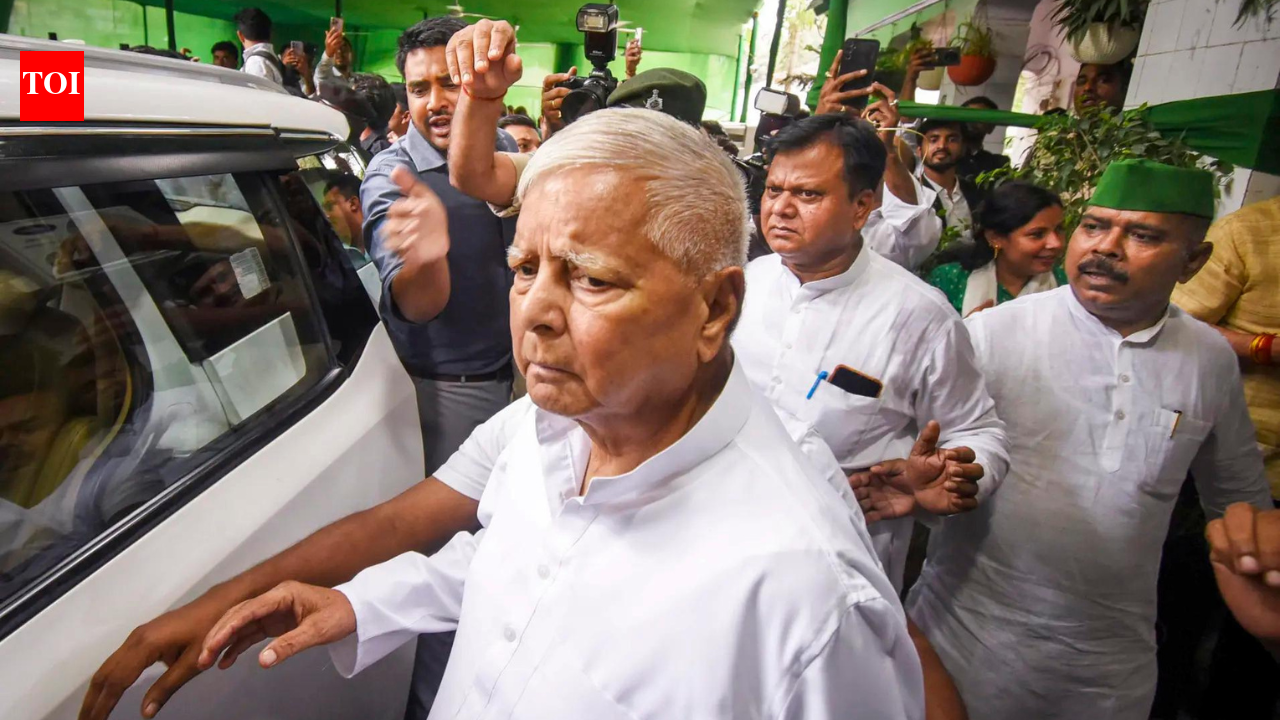
The Supreme Court has refused to quash the FIR against Lalu Prasad in the land-for-jobs case. However, the court granted him exemption from appearing before the trial court and allowed him to raise the issue of sanction requirement during the trial. View More

Treasury yields edged lower on Monday as investors remained optimistic that a resolution for the conflict in the Middle East would be achieved. View More
In this articleUS30YUS2YUS10YFollow your favorite stocksCREATE FREE ACCOUNT Spencer Platt | Getty Images Treasury yields edged lower on Monday as investors remained optimistic that a resolution for the conflict in the Middle East would be achieved, even after the breakdown of talks between Iran and the U.S.The yield on the 10-year U.S. Treasury note â the benchmark for government borrowing â was lower by more than 2 basis points at 4.291%.The 2-year Treasury note yield, more sensitive to short-term Federal Reserve interest rate moves, fell more than 2 basis points to 3.774%. The longer-dated 30-year Treasury bond yield was down 2 basis points at 4.894%.One basis point is equal to 0.01%, and yields and prices move in opposite directions. Yields were higher earlier in the day but then reversed course after President Donald Trump said on Monday that the U.S. has "been called by the other side" and that they want to "make a deal very badly."Investors also reacted to the surging price of crude oil â which will filter down to higher gasoline costs for drivers and diesel fuel for U.S. truckers â and the start of a U.S. blockade of Iranian ports after talks between Washington and Tehran over the weekend failed to produce an agreement to end the Middle East war.The fixed income market continued to price in the implications of Friday's inflation report for March, which showed core prices rising less than feared, despite the takeoff in energy prices since the start of the Iran war.On a headline basis, the most recent U.S. consumer price index reading came in at its highest level in two years, stoking concerns that the energy price shock will spread through the economy and lift costs for goods and services."Markets are trying very hard to look through this," Rob Haworth, senior investment strategy director at U.S. Bank Asset Management, said of the effect of energy prices on inflation. "The 10-year Treasury between 4% and 4.35% is probably okay. If we start spending a lot of time above 4.5%, that tells us there's a lot of inflation worry in the market."The housing market showed signs of weakness Monday. Existing home sales in March were worse than expected, dropping to their lowest level since last June. Choose CNBC as your preferred source on Google and never miss a moment from the most trusted name in business news.

Although the government could pay billions of dollars in tariff refunds, consumers shouldn't expect to see money back, according to a CNBC CFO Council survey. View More
watch nowVIDEO2:4302:43Dow's bull run is likely on pause, but earnings safe unless oil at $120: CFOsThe Bottom Line Even though the Supreme Court struck down a large portion of President Donald Trump's tariff agenda â with a judge later ordering the government to prepare to potentially pay billions of dollars in refunds to importers who paid the tariffs â consumers shouldn't expect to see any money back.That's according to the latest CNBC CFO Council quarterly survey. While 12 of the 25 chief financial officers said their company plans to apply for tariff refunds, none said they intend to directly share that money with customers. Six of those polled said they did not plan to pass on any portion of the tariff refunds they might receive, seven were not sure and 12 answered "not applicable." Read more CNBC personal finance coverageTariff refunds unlikely to benefit consumers, CNBC CFO Council survey findsAverage tax refund is 11% higher, latest IRS filing data showsSocial Security 2027 cost-of-living adjustment estimate rises with gas pricesHere's the inflation breakdown for March 2026 â in one chartHow 'married filing separately' status could affect Trump tax breaks this seasonStudent loan forgiveness may be pricier to access after new changesPersonal assistant pleads guilty to defrauding elderly couple out of $10 millionGas prices should soon start slowly easing if ceasefire holds, analysts sayHow to save money on flights as airlines raise pricesThere's a key number to know before making a last-minute IRA contributionWith gas above $4, drivers across the U.S. say they're cutting backNational College Decision Day is approaching. How to maximize aidMailing your tax return too close to the deadline comes with a riskAverage tax refund is up $350 compared to last year as IRS deadline nearsCNBC's Financial Advisor 100: Best financial advisors, top firms ranked Ten of the executives in the C-suite said they think it could take a year or longer to receive repayment, and only three of the CFOs expected repayment this year. The other 12 CFOs said they do not plan to apply for tariff refunds.The CFO Council survey is a sampling of views from chief financial officers at large organizations across sectors of the U.S. economy. CFO Council members took the survey between March 23 and April 2. Meanwhile, the legal battle over Trump's tariffs is far from over. The same day the Supreme Court ruled in February that "reciprocal tariffs" were illegal, Trump announced a new "global tariff" rate of 10% under a separate statute, Section 122 of the Trade Act of 1974, for a period of 150 days. He later said he would increase global tariffs to 15%. US President Donald Trump speaks during a meeting with Chancellor Merz (CDU) at the White House. Topics include the war in Iran, the tariff dispute between the EU and the USA, the Russian war of aggression against Ukraine and China policy. Kay Nietfeld | Picture Alliance | Getty Images Tariffs are taxes on imports from foreign nations and are paid by U.S. entities that import the item. Businesses often bear some of the cost and pass on the rest to consumers through higher prices. In this way, tariffs have had an overall inflationary impact on the economy, economists say. Even if companies were to receive refunds, the CNBC CFO Council survey results are "not a surprise," said Mark Zandi, chief economist at Moody's.After factoring in the hefty toll on U.S. businesses, including higher costs and supply chain adjustments to reduce tariff exposure, CFOs may be thinking "this is just compensation," Zandi said, "they are going to hold on to those [refunds]." The Trump administration may pressure companies to pass those savings on, he added, "but that will be very difficult to do." Where tariff rebate efforts stand The president has floated the idea of putting some tariff revenue directly in the hands of Americans, in the form of a tariff dividend check. However, any such broad-based benefit program would require legislation passed by Congress. Both Democrats and Republicans have tried to capitalize on Trump's tariff agenda ahead of the 2026 midterm elections. No legislation has been approved yet, although several tariff refund bills have been introduced in Congress. Last year, Sen. Josh Hawley, R-Mo., introduced the American Worker Rebate Act of 2025, which pitched a stimulus check funded with tariff revenue. The Senate referred that bill to the Committee on Finance, where it remains. In March of this year, Sen. Martin Heinrich, D-N.M., introduced another bill that would create a new tax rebate for those hit by higher costs for everyday items due to the now-defunct tariff regime. Heinrich's bill, dubbed the Tariff Refunds for Working Families Act, would tap the $166 billion collected by the tariffs to fund the new rebate. That legislation has also been referred to the Committee on Finance.Other efforts, including the Trump Tariff Rebate Act introduced by Rep. Tim Burchett, R-Tenn., and the American Consumer Tariff Rebate Act of 2026, introduced by Rep. Henry Cuellar, D-Texas, are sitting in House committees. "The likelihood of tariff refunds passing in Congress still seems remote," said certified financial planner Stephen Kates, a financial analyst at Bankrate. "A Republican-backed bill would all but admit that tariffs were a policy mistake, even if it would be initially popular to send out checks," he said. "Democrats have little incentive to support such a measure ahead of the midterms, since the costs of tariffs and higher gas prices are widely associated with Republicans."Subscribe to CNBC on YouTube. Choose CNBC as your preferred source on Google and never miss a moment from the most trusted name in business news.