
Latest Sectors News

The development comes a day after US Secretary of State Marco Rubio said that the US could accomplish its military objectives in the war against Iran 'without any ground troops', and amid ongoing talks with Iran. View More

Switzerland unveils a unique construction practice where empty frameworks, called Bauprofile, map future buildings with poles and lines. This allows residents to visualize and challenge developments before construction, fostering transparency and public participation in urban planning. The system ensures informed objections by presenting proposals at full scale, bridging the gap between abstract plans and tangible reality. View More

Jim Cramer says the market sell-off is driven by rising oil tied to the Iran war, with tech stocks taking a huge hit. View More
watch nowVIDEO4:3304:33It was another week when it paid to get out of anything in tech that used to be good: Jim CramerMad Money with Jim Cramer CNBC's Jim Cramer outlined his game plan for the week ahead, warning that a relentless rise in oil tied to the Iran war is continuing to pressure stocks â and could signal more downside."Another miserable week. Four weeks since the war started and it's been pretty darn awful," Cramer said Friday on "Mad Money," adding that "the history of oil shocks is littered with bear markets, 20% drawdowns that say raise cash."Stocks finished lower Friday led by the Nasdaq down 2.15%, the Dow Jones Industrial Average dropping 1.73% and the S&P 500 falling 1.67%, logging its fifth straight weekly decline.With the conflict difficult to predict, Cramer said one trade has consistently done well. "Right now, the one thing that's been consistently right is to buy oil stocks. Every time they're down. Every time they're up. It just doesn't matter, because crude is headed higher."That dynamic has fueled a rotation out of tech stocks. "They're all bad now, including the once loved, now disliked Nvidia," he said, noting investors now favor "they don't mind the soda stocks, any pharma stock, and I gotta tell ya they like the oil drillers. Tech, nothing."Here's what Cramer will be watching next week:MondayMarkets will likely remain driven by developments in the Iran war. With the Strait of Hormuz, a critical oil passageway, still constrained, and tensions between the U.S. and Iran still high, it's likely that oil goes higher and therefore, stocks go lower. TuesdayMcCormick & Company reports with a potential catalyst tied to talks to acquire Unilever's food brands. "I love this combo. I hope it works out," Cramer said. After the close Nike reports. "There's no line of sight for Nike to return to greatness," he said, citing challenges in the China market, along with competition and inventory issues. Investors will also get the monthly JOLTS (Jobs Opening and Labor Turnover Survey) report from the Bureau of Labor Statistics. WednesdayConagra Brands is set to report earnings, offering a read on the packaged food group that's been under pressure. The report comes alongside retail sales which will deliver a pulse on consumer spending health. Cramer said weaker economic data may be needed for the Federal Reserve to justify cutting interest rates.ThursdayResults from commercial lighting company Acuity Brands will offer insight into construction. The stock is down 25% year-to-date tied to the slowdown in housing and construction, an industry where "there's very little hope in acceleration," right now, Cramer said.FridayThe jobs report arrives on Good Friday, when markets are closed. Cramer said softer data could help support the case for lower rates. Still, sentiment remains deeply negative. "Right now, we have as much pessimism about stocks as we did when the Covid pandemic swept through us," he said.The bottom line: "These declines aren't just about tech. They're about what you get when you have both inflation and higher interest rates," Cramer said. Until oil declines and the war ends, Cramer says the market's pressure is unlikely to ease. watch nowVIDEO12:1912:19Jim Cramer looks ahead to next week's market game planMad Money with Jim Cramer Jim Cramer's Guide to InvestingClick here to download Jim Cramer's Guide to Investing at no cost to help you build long-term wealth and invest smarter. Sign up now for the CNBC Investing Club to follow Jim Cramer's every move in the market.DisclaimerQuestions for Cramer? Call Cramer: 1-800-743-CNBCWant to take a deep dive into Cramer's world? Hit him up! Mad Money Twitter - Jim Cramer Twitter - Facebook - InstagramQuestions, comments, suggestions for the "Mad Money" website? madcap@cnbc.com Choose CNBC as your preferred source on Google and never miss a moment from the most trusted name in business news.

President Donald Trump on Friday issued an executive order to pay Transportation Security Administration agents during the shutdown. View More
watch nowVIDEO3:1203:12Trump deploys ICE agents to airportsPolitics With an end to the Department of Homeland Security shutdown in sight, House Republicans on Friday bristled at the deal their Senate colleagues sent them overnight, potentially imperiling the funding bill and threatening to extend the shutdown that's led to worsening airport delays.The Senate early Friday morning advanced a bill to fund most of DHS, except for Immigration and Customs Enforcement and parts of Customs and Border Protection, in a move to end the partial government shutdown that has disrupted air travel across the U.S., as Transportation Security Administration agents go without paychecks and miss work. That bill immediately met resistance in the House. Speaker Mike Johnson, R-La, on Friday afternoon confirmed a plan to ditch the Senate proposal and instead try to pass a stopgap funding bill for all of DHS through May 22. The stopgap measures advanced out of the House Rules Committee on Friday, teeing up a vote as soon as later this evening."This gambit that was done last night is a joke," Johnson told reporters. "The Senate Democrats have foisted upon this appropriations process their radical, crazy agenda. They want to reopen the borders and they want to stop the deportation of dangerous, criminal illegal aliens."Any such effort would need to go back to the Senate for final approval and would extend the shutdown.It is also not likely to pass in the Senate, where most lawmakers have already left town. Minority Leader Chuck Schumer, D-N.Y., on Friday called the proposal "dead on arrival.""We've been clear from Day One: Democrats will fund critical Homeland Security functions â but we will not give a blank check to Trump's lawless and deadly immigration militia without reforms," Schumer posted to X.A move by President Donald Trump to pay TSA agents during the shutdown may lessen urgency for Congress to act fast. According to a DHS statement posted to X on Friday, TSA agents could start seeing payments as soon as Monday, giving Republicans some breathing room to continue negotiating."President Trump has already ordered that TSA agents will be paid, and that machinery is in process right now," Johnson said. "We will reduce the lines and the waits at the airlines. We'll make sure that those who are protecting us are paid."Schumer and other Democrats view the version of the bill that advanced out of the Senate largely as a win.After weeks of Republicans fighting Democrats on their calls to remove funding for Immigration and Customs Enforcement from any potential deal, the Senate bill does exactly that, though it does not include the changes to ICE's immigration enforcement practices that Democrats had demanded. Those immigration enforcement cuts raised the hackles of the conservative House Freedom Caucus. Talking with reporters at the Capitol, Rep. Andy Harris, R-Md., who chairs the group, said they would only support a version of the bill that adds back ICE and CBP funding, plus a federal voter identification requirement, a key component of an unrelated bill that Trump and his congressional allies had tied to DHS funding. "The only thing we're going to support is adding that funding into the bill, adding that voter ID, sending it back to the Senate, make them come back and do their work," Harris said.House Democrats, meanwhile, expressed general support."The only thing standing between ending this chaos or not are House Republicans," House Minority Leader Hakeem Jeffries told reporters. "There's a bipartisan bill that emerged from the Senate with uniform support, and it should be brought to the floor immediately." Read more CNBC government shutdown coverageTSA funding update: Senate tees up House vote to end DHS shutdownTrump says he will sign an executive order to 'immediately pay' TSA agentsDelta suspends perk for Congress members, cites DHS shutdownICE deployed to some U.S. airports as long security lines persist Senators had scrambled much of the week to strike a deal before the recess scheduled to start on Friday, but as talks broke down late Thursday, Trump intervened and announced via Truth Social that he would pay TSA agents via executive order. The shutdown began in February in the weeks after federal agents shot and killed two U.S. citizens in Minneapolis as part of a federal immigration crackdown. Democrats demanded changes in ICE and DHS more broadly and refused to fund the department.Friday's vote in the Senate was a step toward ending that impasse, though it was far from a kumbaya moment.Senate Appropriations Committee Chair Susan Collins, R-Maine, said in a statement that Democrats "remained intransigent and unreasonable" in their DHS funding demands."Congressional Democrats have done real damage to the appropriations process by repeatedly forcing government shutdowns and refusing to fund entire agencies," Collins said. "Their refusal to fund ICE and Border Patrol leaves our borders and our country less secure and sets a precedent that they may one day come to regret."Republicans have vowed to restore funding to ICE via a second party-line legislative package using the Senate "budget reconciliation" procedure they used to pass last year's tax and spending bill. Republicans' next measure with ICE funding may also include a grab bag of other issues, including defense funding and the SAVE America Act, a Trump-backed voter ID and noncitizen voting bill that has captivated the right flank of the GOP in recent months."This bill will focus on ensuring ICE and other vital functions of homeland security, as well as the U.S. military and efforts to increase voter integrity, are Democrat-resistance proof," Senate Budget Committee Chair Lindsey Graham, R-S.C., said in a post to X on Thursday. Budget reconciliation is a procedural tool that requires only a simple majority to pass â as opposed to the 60 votes usually required to overcome a filibuster in the Senate â provided its components have some spending or revenue impact. â Dan Mangan and Karen Sloan contributed to this report.This is a developing story. Please check back for updates. Choose CNBC as your preferred source on Google and never miss a moment from the most trusted name in business news.
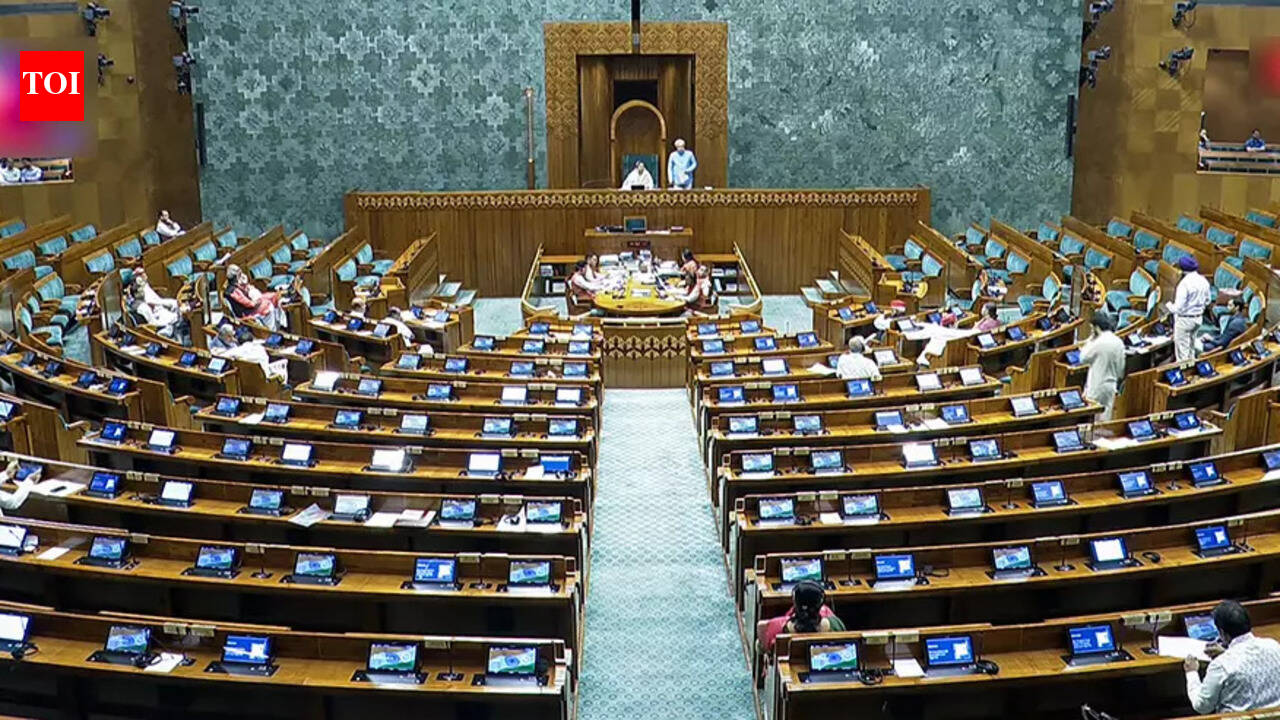
The bill — introduced in Lok Sabha on Friday — proposes to amend Section-11 of the Public Premises (Eviction of Unauthorised Occupants) Act that at present provides for six months’ jail or with Rs 5,000 penalty or both. As per the proposal, the fine would be 5% of land value for every year of occupation or both — penalty and jail. Officials said this would deter encroachment and check land grabbing. View More

Online ?furniture ?rental platform ?Rentomojo has filed for an initial ?public ?offering ?in ?Mumbai, according to a ?draft prospectus dated Friday. View More
Online furniture rental platform Rentomojo has filed for an initial public offering in Mumbai, according to a draft prospectus dated Friday. The company is selling new shares worth up to 1.5 billion rupees ($15.85 million), while existing shareholders , including venture capital firm Accel , is selling up to 28.4 million shares, the filing showed. .Pbanner{display:flex;justify-content:space-between;align-items:center;background-color:#ec1c40;margin-top:20px;padding:5px 10px;border-radius:4px;color:#fff;line-height:10px;} .Pbannertext{display:flex;align-items:center;font-size:16px;font-weight:600;font-family:'Montserrat';} .Pbannertext img{height:20px;margin:0 6px} .Pbannerbutton a{display:flex;align-items:center;background-color:#fff;color:#ec1c40;text-decoration:none;font-weight:600;padding:4px 8px;border-radius:6px;font-size:15px;font-family:'Montserrat';} .Pbannerbutton img{height:20px;margin-right:6px} .Pbannerbutton a:hover{background-color:#f7f7f7} Add as a Reliable and Trusted News Source Add Now! (You can now subscribe to our ETMarkets WhatsApp channel) (You can now subscribe to our ETMarkets WhatsApp channel)

Oil prices traded higher after U.S. President Donald Trump said Iran had allowed 10 oil tankers to pass through the Strait of Hormuz. View More
In this article@CL.1Follow your favorite stocksCREATE FREE ACCOUNT watch nowVIDEO4:5204:52Nordic American Tankers CEO: Hormuz to reopen under global pressureMorning Call Oil prices on Friday closed at their highest level in more than three years, as President Donald Trump's pivot to negotiations with Iran failed to ease market fears about the huge supply disruption in the Middle East. U.S. crude oil prices rose 5.46% to close at $99.64 per barrel. International benchmark Brent crude prices gained 4.22% to settle at $112.57. These are the highest levels since July 2022 when Russia's invasion of Ukraine shook energy markets. U.S. crude hit a session high on Friday of $100.04 before retreating slightly. The contract finished out the week about 1% higher while Brent was flat. Trump's move to give Iran a 10-day extension to open the strategically vital Strait failed to soothe supply concerns. The president said in a social media post on Thursday that talks with Iran were "going very well" despite "erroneous statements to the contrary by the Fake News Media, and others." As part of the announcement, the U.S. president said he would pause attacks on Iran's energy infrastructure through to April 6. Iran has not yet commented on Trump's latest remarks. Meanwhile, two container vessels owned by China Ocean Shipping Company tried to pass through the Strait but were turned back, according to the ship tracking firm MarineTraffic. China is an ally of Iran and the Islamic Republic has previously said friendly ships can pass through the Strait. This was the first attempt by a major container carrier to cross the sea route since the war started, the firm said. COSCO is the world's fourth-largest shipping line by capacity.The "developments overnight suggest the situation in the Strait of Hormuz remains highly unstable," the firm said in a social media post. Stock Chart IconStock chart iconOil prices since the start of the year Speaking during a Cabinet meeting on Thursday, Trump also said that Iran had allowed 10 oil tankers to pass through the Strait of Hormuz this week as a "present" to the U.S.Markets have been closely monitoring developments in the Strait of Hormuz for signs of disruption or de-escalation, as tensions between Washington and Tehran continue to inject volatility into energy prices. Trump's remarks suggested that at least some oil shipments are continuing to move through the waterway, potentially easing immediate supply concerns.However, analysts cautioned that the broader oil market remains increasingly fragile, even if isolated shipments resume."The oil market did not underreact to the disruption in the Strait of Hormuz; it absorbed it," said Paola Rodriguez-Masiu, chief oil analyst at Rystad Energy."For nearly four weeks, markets have shown remarkable resilience ⦠supported by a combination of pre-war surplus, crude-on-water, and policy barrels that provided a temporary buffer and kept prices contained. That phase is now ending," she said.According to Rystad, the global system has shifted from "buffered to fragile" after weeks of supply losses and inventory drawdowns, leaving little room to absorb further shocks.Nearly 17.8 million barrels per day of oil and fuel flows through the Strait of Hormuz have been disrupted, the firm estimated, with close to 500 million barrels of total liquids lost so far. Choose CNBC as your preferred source on Google and never miss a moment from the most trusted name in business news.

The average IRS tax refund is up 10.9%, based on new filing data. Here's what you can expect. View More
Pheelings Media | Istock | Getty Images The average tax refund is 10.9% higher so far this season, compared with about the same period in 2025, according to the latest IRS filing data.As of March 20, the average refund amount for individual filers was $3,571, up from $3,221 roughly one year ago, the IRS reported on Friday. The IRS data reflects about 79 million individual returns received, out of about 164 million expected through the April 15 deadline. Read more CNBC personal finance coverageAverage IRS tax refund is up 10.9%, latest filing data shows1.4 million filers face tax refund delays amid IRS paper check phaseoutFamily caregivers now provide $1 trillion worth of care annually, AARP findsHigher gas prices from Iran war could offset Trump's bigger tax refundsSingle women see homeownership as 'a wealth-building tool,' economist saysAmid March Madness, NY Fed highlights sports betting toll on credit healthSocial Security benefits can top $100,000 a year for some couplesIran war may further 'chill' an already frozen job market, economist saysMore than 7 million student loan borrowers are in a defunct payment planLawmakers warn of price gouging amid Iran war â experts point to supply shocksDonating from your IRA has tax advantages. A bipartisan bill may expand optionsBlackRock CEO Fink: Trump accounts may be 'significant' wealth-building toolThe uneven cost of tariffs: Why some households will pay more than othersWhen it comes to private credit, 'some caution is reasonable,' advisor saysCNBC's Financial Advisor 100: Best financial advisors, top firms ranked Many filers are seeing higher tax refunds compared to the previous season based on changes enacted via President Donald Trump's "big beautiful bill." But the difference hasn't been as large as some early predictions for the average filer.In a March 4 House Ways and Means Committee hearing, Frank Bisignano, Social Security Administration commissioner and IRS CEO, said that certain filers claiming Trump's new tax breaks were seeing average refunds that were $775 higher than last year.These filers claimed Trump's new deductions on Schedule 1-A, which feeds into individual tax returns, he said. The form includes the deductions for tip income, overtime earnings, seniors and auto loan interest.  The size of refunds has been a focus for Republicans as many Americans wrestle with rising costs. With the November midterm elections approaching, affordability has been a key issue for both parties in the fight for control of Congress. How average tax refunds could shift After several weeks of average refund data, it's "less likely we're going to see a major change" before the April 15 tax deadline, William McBride, chief economist at the Tax Foundation, told CNBC.But the average could still rise as taxpayers claim the bigger deduction for state and local taxes, known as SALT, he said. Trump's legislation raised the SALT limit to $40,000, up from $10,000, for 2025."It's a pretty big deal for higher-income folks that live in expensive cities," McBride said. "Those people don't tend to file [tax returns] early." While many tax forms arrive by late January, higher-earning investors could wait longer for forms detailing brokerage account assets or business income, experts say. However, you must itemize tax breaks, rather than claim the standard deduction, to benefit from the more generous SALT cap for 2025. During tax year 2022, nearly 90% of returns used the standard deduction, based on the latest IRS data. In the same year, about 15 million returns claimed the SALT deduction, fewer than 10% of filings.For 2025 returns, there could be more itemizers due to the SALT deduction change, experts say. watch nowVIDEO4:5304:53Will tax refunds deliver? Here's what to knowSquawk Box Choose CNBC as your preferred source on Google and never miss a moment from the most trusted name in business news.

Federal and New York City authorities arrested a man this week who they allege plotted to firebomb the Staten Island home of a pro-Palestinian activist, the latest in a string of politically motivated violence cases in the city. View More

Many filers are facing tax refund delays amid the IRS push to phase out paper checks. Here's what to know if you receive a CP53E notice. View More
Tunyada Kongkapan | E+ | Getty Images A growing number of filers are facing tax refund delays amid a government-wide phaseout of paper checks.    House Ways and Means Committee Democrats this week sent another letter to Treasury Secretary Scott Bessent, with "additional concerns" about roughly 1.4 million IRS notices sent to filers about refund delays related to paper payment requests. At the time of the lawmakers' initial letter, dated March 9, they said more than 830,000 taxpayers had received such notices. The IRS notice, known as CP53E, asks taxpayers for updated banking information to receive refund payments via direct deposit. Recipients have 30 days to provide these details via an IRS online account, or the agency will issue a paper refund after six weeks.  "This matter is time sensitive and urgent as individuals and families facing delays need their tax refunds to offset the high cost of gas, food and basic necessities," the lawmakers wrote.The refund payment change stems from an executive order signed by President Donald Trump in March 2025, which requires government agencies to shift from paper to electronic payments. The IRS in September announced the transition to paper payments to protect taxpayers, speed up refunds and reduce costs. The Treasury did not respond to CNBC's request for comment about the letter from House Ways and Means Committee Democrats. Read more CNBC personal finance coverageAverage IRS tax refund is up 10.9%, latest filing data shows1.4 million filers face tax refund delays amid IRS paper check phaseoutFamily caregivers now provide $1 trillion worth of care annually, AARP findsHigher gas prices from Iran war could offset Trump's bigger tax refundsSingle women see homeownership as 'a wealth-building tool,' economist saysAmid March Madness, NY Fed highlights sports betting toll on credit healthSocial Security benefits can top $100,000 a year for some couplesIran war may further 'chill' an already frozen job market, economist saysMore than 7 million student loan borrowers are in a defunct payment planLawmakers warn of price gouging amid Iran war â experts point to supply shocksDonating from your IRA has tax advantages. A bipartisan bill may expand optionsBlackRock CEO Fink: Trump accounts may be 'significant' wealth-building toolThe uneven cost of tariffs: Why some households will pay more than othersWhen it comes to private credit, 'some caution is reasonable,' advisor saysCNBC's Financial Advisor 100: Best financial advisors, top firms ranked Many Americans are seeing bigger tax refunds this season due to the changes enacted via President Donald Trump's "big beautiful bill." As of March 13, the average refund amount for individual filers was $3,623, up by about $350 from one year ago, according to the latest IRS data. That windfall could be offset by higher fuel prices amid the Iran war, depending on how long the conflict lasts, some economists say. The price of gasoline on Friday was at a nationwide average of $3.97 a gallon, up by about 33% from one month ago, according to AAA.The Trump administration has been focused on the size of tax refunds as many Americans struggle with the rising costs of fuel, groceries, housing and other living expenses. Affordability is a key issue for both parties as the November midterm elections approach. The shift to electronic tax refunds During the 2025 filing season, roughly 94% of individual taxpayers opted for refunds via direct deposit by providing banking details on their returns, according to the National Taxpayer Advocate. The remaining filers, about 10 million taxpayers, received refunds via paper check.The IRS transition from paper checks to electronic payments affects "a range of populations," Omeed Firouzi, a practice professor and director of the low-income taxpayer clinic at Temple University's Beasley School of Law, told CNBC.Firouzi, who submitted comments to the Treasury via the American Bar Association ahead of the change, said the policy could significantly impact "unbanked" taxpayers, senior citizens, unhoused individuals or younger filers who move more frequently.If you receive a CP53E notice, you must provide banking details via an IRS online account within 30 days, or the IRS will issue a paper refund after six weeks. But some filers don't have easy access to Wi-Fi, or computers, he said. While Firouzi said he supports the reasons for phasing out paper checks, the implementation has added "more administrative paperwork and burdens that seem to be counterintuitive."   watch nowVIDEO4:5304:53Will tax refunds deliver? Here's what to knowSquawk Box Elaine Maag, a senior fellow at the Urban-Brookings Tax Policy Center, told CNBC she agrees with the Treasury that paper refunds have been "problematic" for a variety of reasons.Paper checks have more errors, they don't always reach the right person and the agency prefers more secure forms of payment, she said.But "when you move quickly, and you implement a policy without advance notice, it's very difficult for people to react," Maag said. Ultimately, delayed tax refunds can create "financial hardships" for some filers, such as delays on important purchases, medical care or turning to higher-cost financial services, she said. Choose CNBC as your preferred source on Google and never miss a moment from the most trusted name in business news.